Text: Claire Lessiau
Photographs: Claire Lessiau & Marcella van Alphen
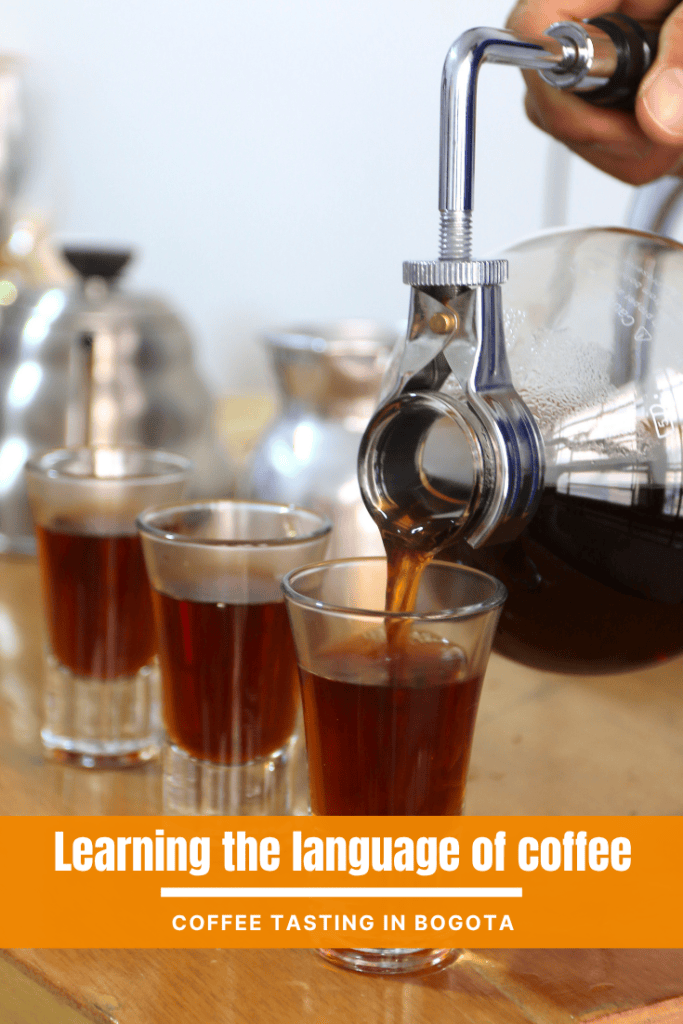
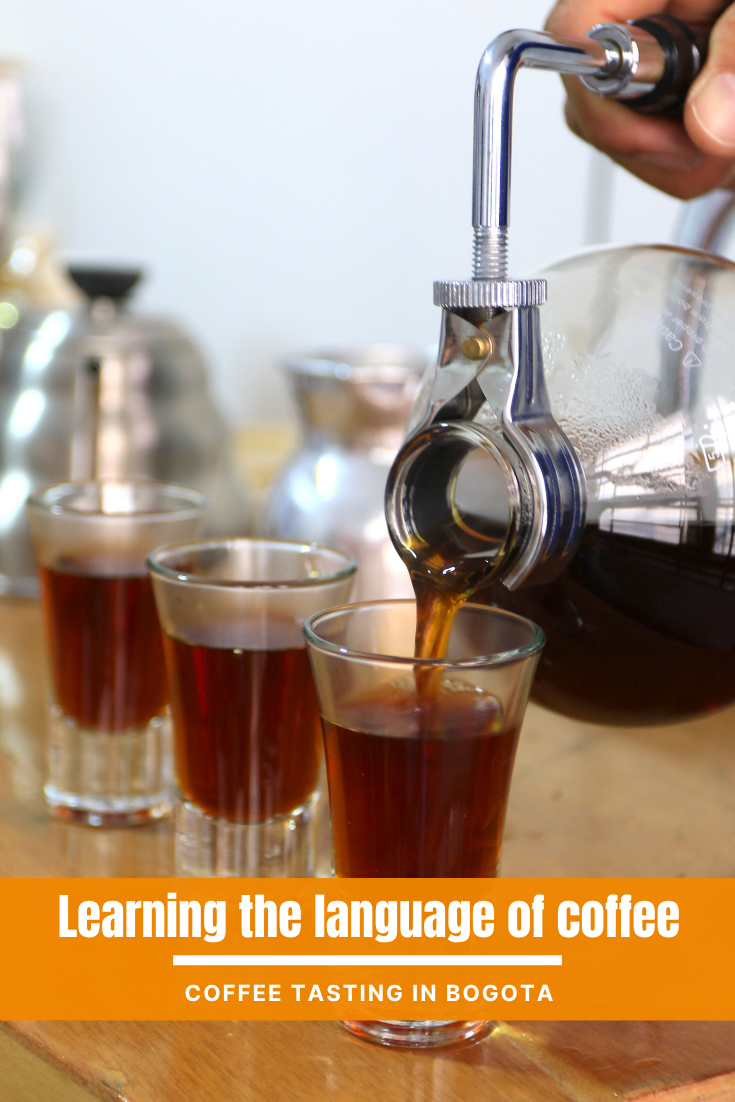
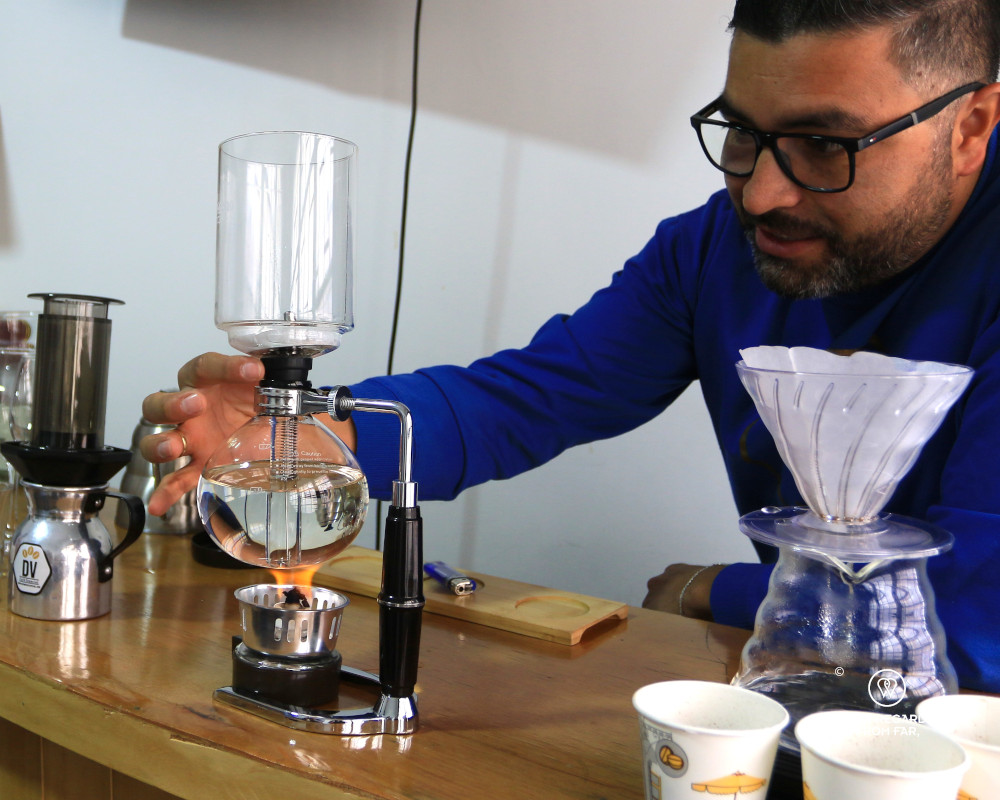
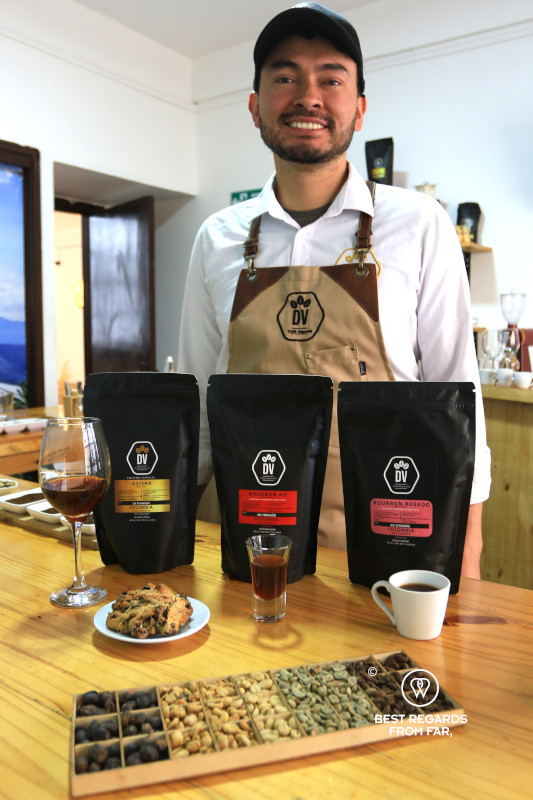
On a street corner of the bustling La Candelaria area in the historic heart of Bogotá, Leandro Galindo Giraldo cofounder of Divino Café welcomes us with the generous smile of a passionate man. The third generation of coffee growers from Pitalito, Huila —“where the best coffee in the world grows” as Leandro says it with pride— he is dedicated to sourcing and crafting not only the highest quality coffee with the fairest conditions for the farmers, but also to educating coffee lovers about specialty coffees…
Pin it for later!
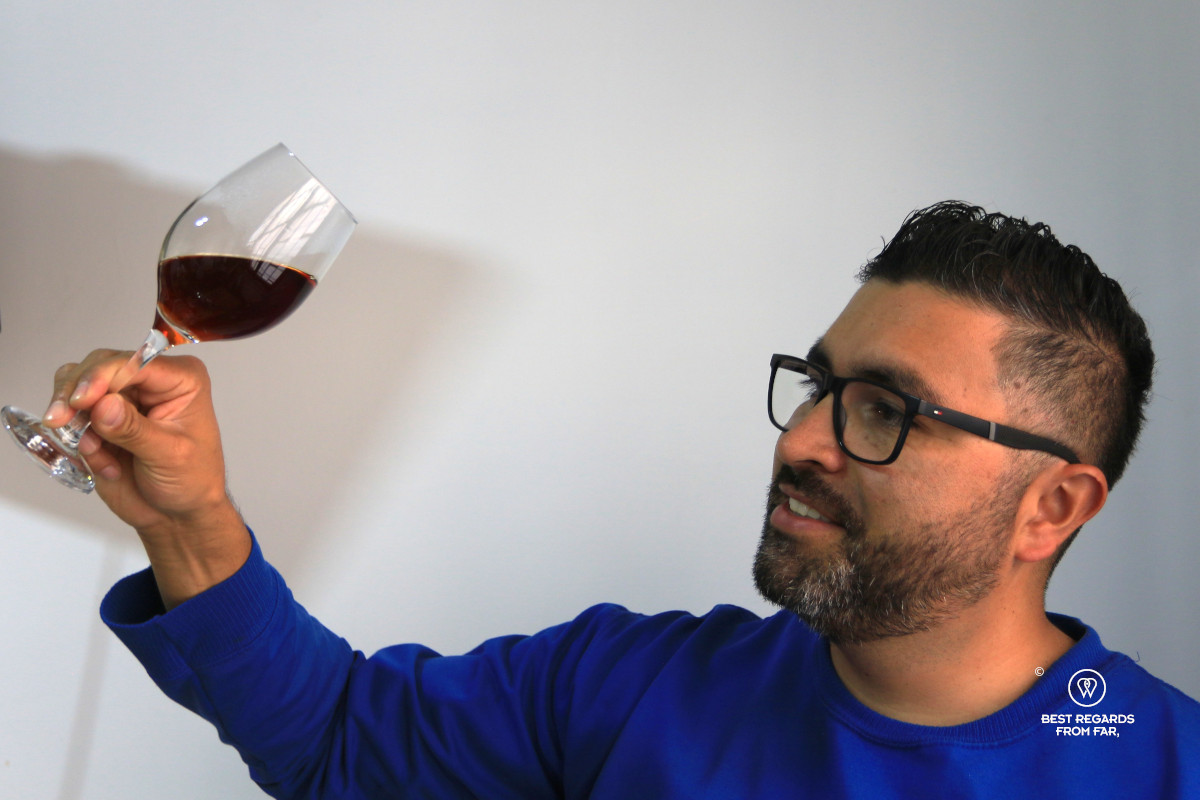
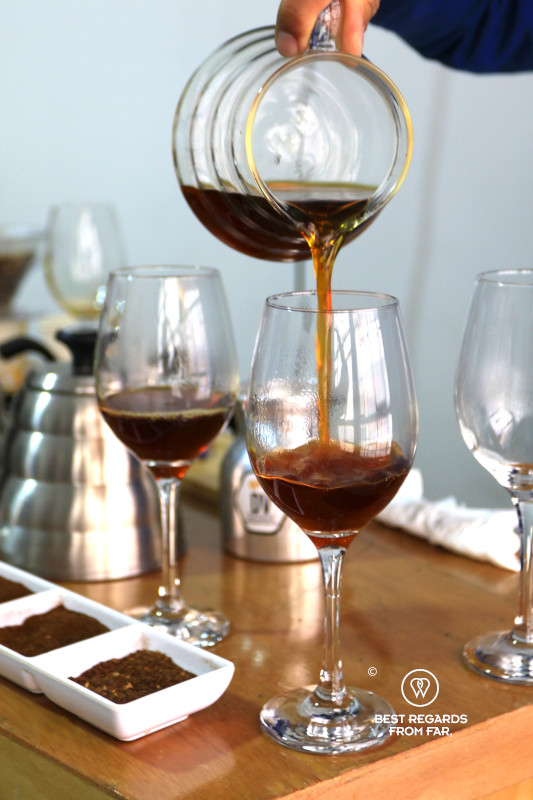
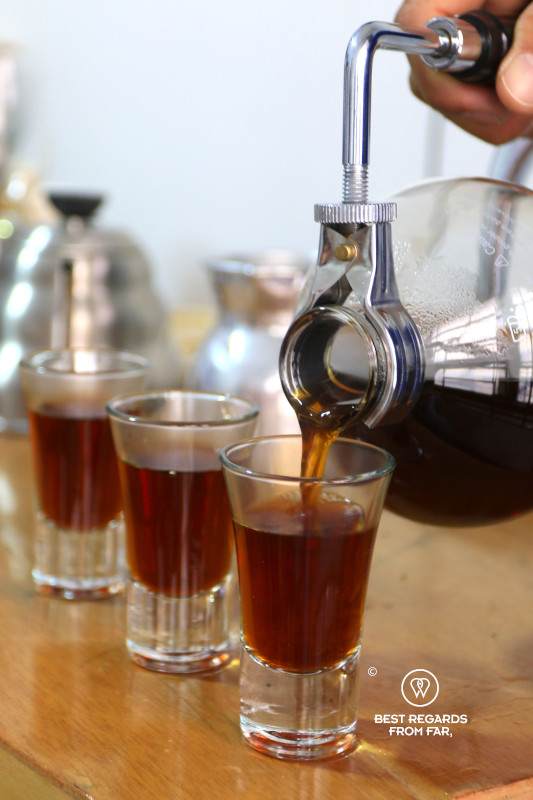
The coffee arrives in a wine glass.
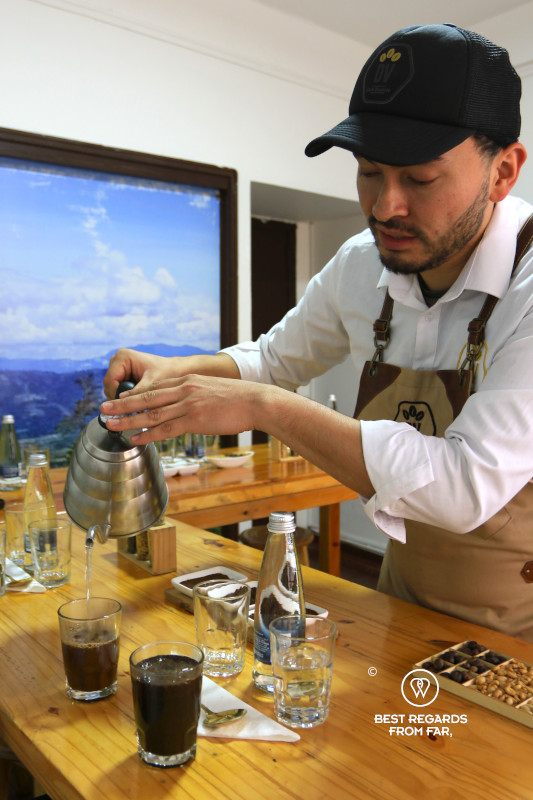
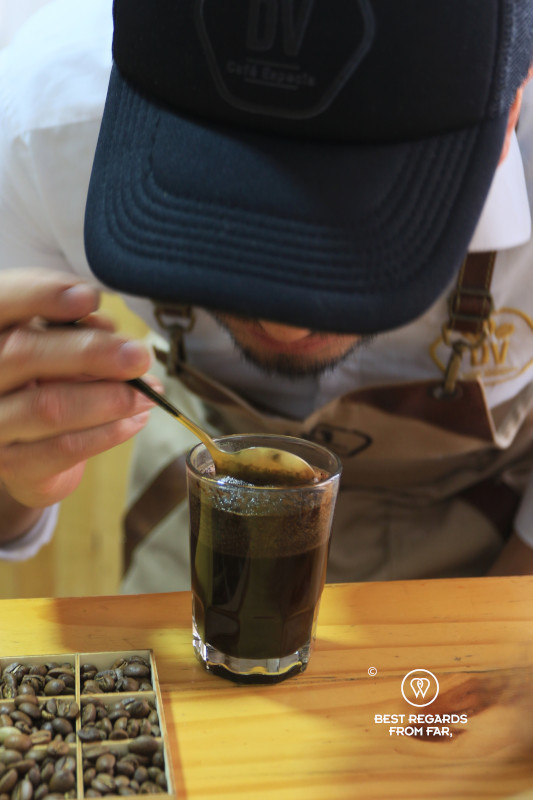
Before allowing us to drink it, Leandro Galindo Giraldo asks us to look. Then to swirl. Then to smell. Only then can we take a sip, drawing in enough air to send the liquid across the palate.
The cup is a Geisha, one of coffee’s most prized Arabica varieties. Floral notes appear first, followed by red fruit and honey. Its body is so light and its perfume so delicate that it feels closer to tea than to the dense, bitter drink many of us have been taught to call “strong coffee.” As it cools, it becomes even fruitier.
A Coffee Lesson in La Candelaria
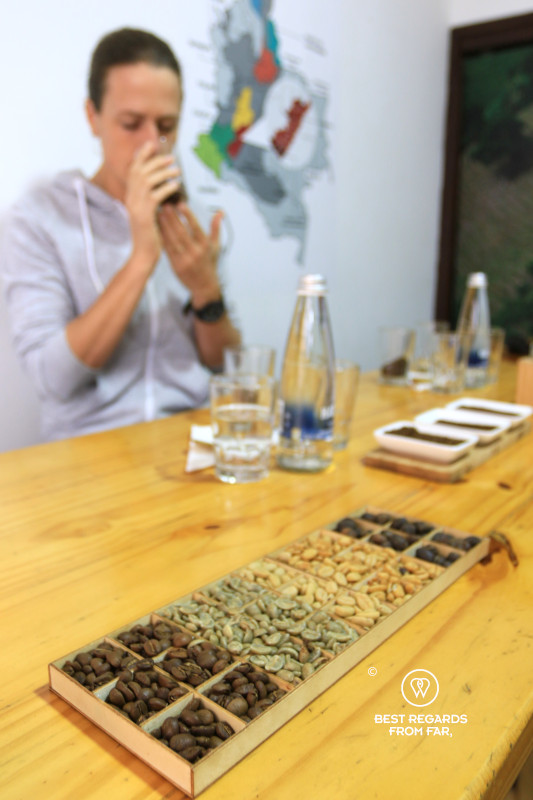
“All the senses are involved when enjoying good coffee,” Leandro explains inside Divino Café’s tasting room, arranging samples in front of us. The ritual recalls a wine tasting or a tea ceremony: attention changes the experience, and calling on all our senses has something meditative, projecting us immediately in the now.
First, Forget What “Strong” Means
Colombian coffee is often described as delicate with slight saltiness and acidity, smooth and clean. Yet a country of extreme altitude gradients where Arabica bushes are grown from 600 meters (1,969 feet) of altitude to 2,200 meters (7,218 feet) counting more than half a million coffee-growing families, cannot be reduced to a single flavor profile. The terroir expresses itself in every cup of specialty coffee.
The first misconception Leandro dismantles is that intensity equals quality. Longer roasting tends to mute the distinctive terroirs of the coffee beans, and the industry has understood this well. What is sold to us as a dark or Italian roast is often a way to camouflage average or low quality coffee by roasting intensely. The bitterness marketed to us as strength masks uninteresting flavor profiles and makes consistency easy to reach for mass-produced brews. Worse, when in need for a caffeine boost, a common misconception is that bitter is better. On the contrary, with a longer roast, the caffeine is more burnt, with a quick high-pressure water passage over the beans like in an espresso machine, less caffeine is transferred to the cup.
The world of specialty coffee shifts the focus to the flavor profile, just like when tasting a fine wine.
How to Taste Specialty Coffee
Appearance
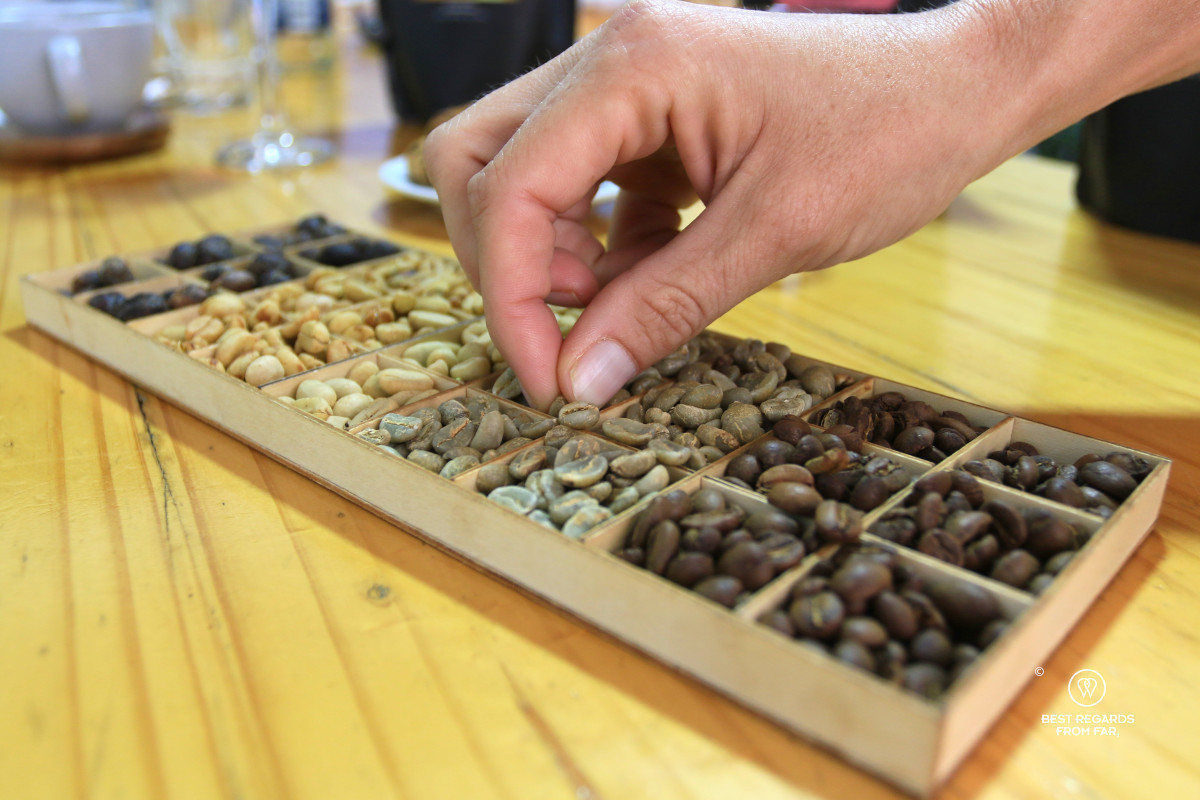
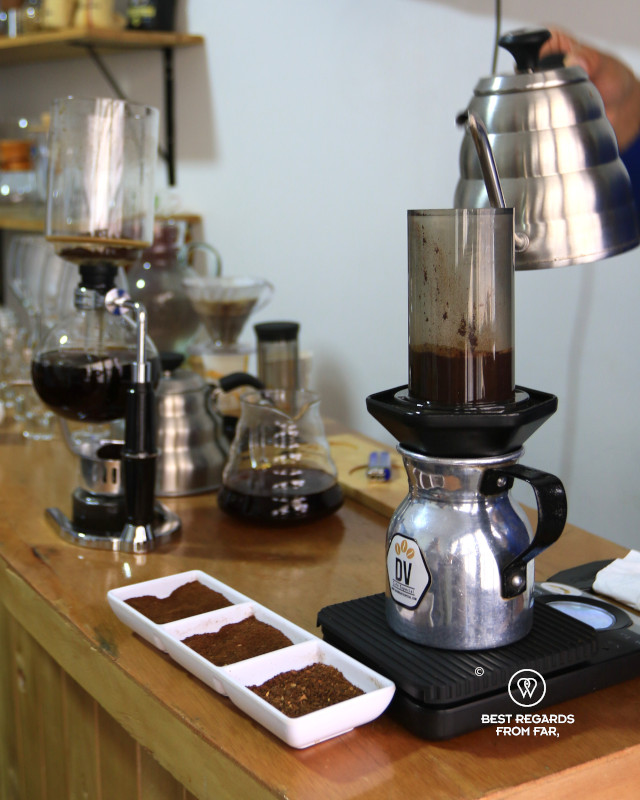
We start by carefully observing the color of the ground coffee beans: a quality coffee has a deep and uniform color, without pale or scorched fragments. A black color is often synonymous with a loss of aromatic complexity and highlights a dominant bitter flavor.
In espresso, appearance includes the hazelnut-colored foam known as crema, an essential part of an espresso and many baristas highlight the fact that high pressure extraction is necessary to create it. Fresh coffee with its high content of carbon dioxide produced during roasting creates this foam and the natural oils present in the beans stabilize the thin bubbles. With every brewing method used by Leandro, we observe a persistent foam layer, highlighting the freshness of his specialty coffee and his control of the brewing process.
Fragrance
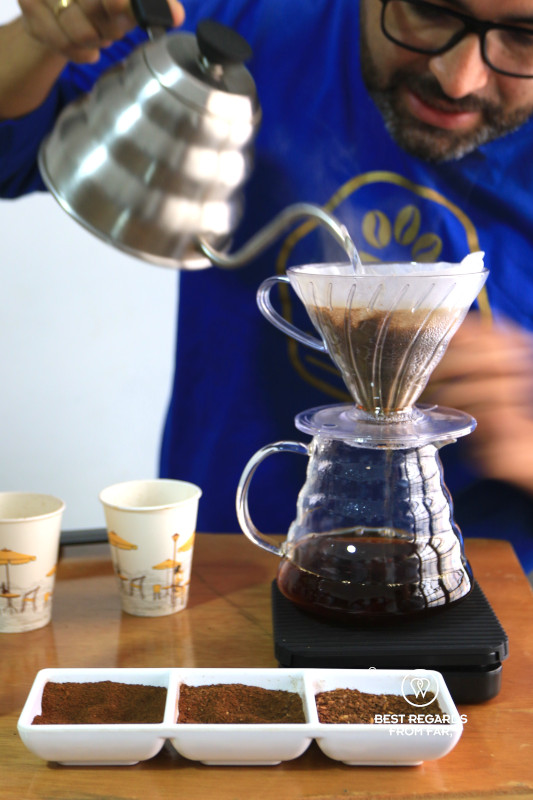
Before water is added, Leandro asks us to inhale the fragrance of the freshly ground beans. The first sample releases sweet, fruity, and floral notes. The second recalls damp earth and smoke.
Does the fragrance feel clean or musty, vivid or flat, sweet or heavily roasted?
Grinding releases the coffee’s volatile aromatic compounds into the air, which is why whole beans retain their expression better than pre-ground coffee. For the most aromatic cup, buy beans and grind only what you are about to brew.
Add Water: Aroma
Once the coffee is brewed, fragrance becomes aroma. Heat carries new compounds towards us and intensifies the contrast between the two samples. The sweetness is reinforced on our first sample while the smokiness of the other exudes even more. Aroma is the first suggestion of what the palate will encounter.
A specialty coffee will have a complex and balanced aroma depending on beans, altitude, cultivation, and roasting. Actually, about 900 aromatic components can be picked up on (and almost half of them get lost when the beans are ground and packaged: the reason why buying coffee beans is the coffee aficionado’s way!).
Taste: A Search for Balance
Leandro encourages us to sip with air, much as a wine taster would. The inelegant little slurp has a purpose: it disperses the coffee across the tongue and sends aromatic molecules towards the nose from inside the mouth.
A good coffee should not have bitter, astringent, or burnt flavors that erase everything else, but should instead have a pleasant, balanced, and harmonious taste. Bitterness is not automatically a defect either. A small amount can provide structure, just as it does in dark chocolate. What matters more is the complexity of the profile, ensuring that more than one note can be picked up. What we do not want is a harsh, burnt or aggressively astringent character.
Body & Texture
The body and texture of the coffee are also important in assessing its quality. Body refers to the mouth feel of the coffee, while texture refers to the consistency and viscosity of the liquid. A good specialty coffee should be medium to full bodied, with a silky smooth mouth feel. A poor quality coffee may have a thin body and a watery texture.
The Geisha in our wine glass is a counterexample: its thin texture is an expression of its delicateness and elegance, not a signal of a poor extraction.
Aftertaste
After swallowing, we pay attention to what remains. A good coffee should have a clean and lingering aftertaste, with no chemical nor metallic flavors. Maybe honey, fruit, cacao or flowers?
Waiting a little longer, the cooling cup often makes sweetness, acidity, and aroma easier to distinguish. The Geisha slowly unfolds.
What “Specialty Coffee” Really Means
For years, specialty coffee was commonly reduced to a threshold on a 100-point tasting scale. The Specialty Coffee Association (SCA) now defines specialty more broadly, whether in terms of attributes such as a wide variety of flavors, aromas, acidity or mouth feel, or informational data like origin, producer, processing, growing practices.
The older SCA scoring language is still widely encountered. The score used to grade coffees between 0 and 100 points. Anywhere above 89 is outstanding while 84 to 86 points used to provide the best value for money.
How to Buy Better Coffee
Demand a Precise Origin
“Colombia” is vast! Look for the department and municipality, then the farm, association, or named producer. A detailed package may also identify the variety, elevation, harvest, processing method, and tasting notes.
The term single origin can refer to one farm, one producer group, or a defined region, depending on the seller. It promises geographical focus, not automatically superior quality or fair payment. The more precise the information, however, the less anonymous the chain becomes.
Ethics
Keep in mind that many small producers cannot afford the Rainforest Alliance or Fair Trade logos supposed to help consumers choose as these come after expensive consulting processes. Let the indications on the package guide you: when it goes down to the farm level, chances are that you are at the farm level.
Always seek cafés and roasters that name producers and describe long-term buying relationships.
Read the Process & Roast
Washed, honey, and natural describe how fruit was removed and offer clues to the cup’s likely style.
The roast level matters just as much. If you enjoy fruit, flowers, and transparent acidity, begin with a light or medium roast. If you prefer cacao, toast, and deeper bitterness, move to darker.
Check the roast date, buy whole beans, and grind them only upon using them. Also note that they should be consumed within six months for the best tasting experience.
How to Prepare Yourself Your Favorite Cup of Coffee
Step 1: Recipe, Choose the Ratio
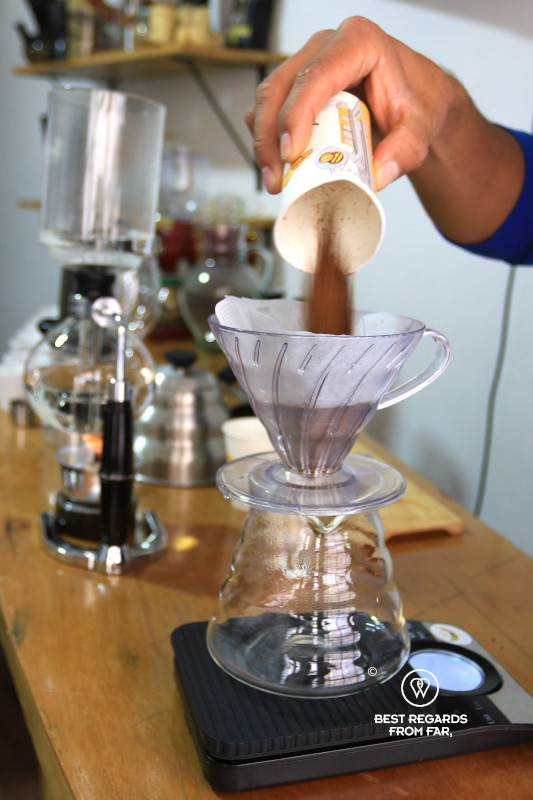
The perfect cup is subjective. A repeatable cup is not. Leandro reaches for a scale because precision matters. The quantity of ground coffee used to brew a cup varies based on whether one appreciates coffee mild, medium, or strong.
For a medium intensity, 8 percent of mass of coffee is ideal (or 16 grams—2 tablespoons—for a 200 milliliter-cup of water), while 7 percent for mild, and 10 percent for strong should be used.
Step 2: Control the Water Temperature
The ideal water temperature for the flavors of the coffee to open up to the fullest without burning it is boiling temperature minus 8 degrees Celsius (46 Fahrenheit). Practically, bring the water to a boil, remove it from the heat and wait a minute before adding it to the coffee.
Step 3: Match the Grind to the Extraction Method
Clean the paper filter with hot water for better distribution of the flavors, and warm up the coffee pot.
When creating more turbulence by adding water you create more oxygen which burns more of the grains which creates more acidity. Pouring it slowly makes it a bit more balanced.
The type of grinding is very important because the extraction time is estimated depending on the thickness of the ground grain. The thicker the grain, the slower the extraction, meaning that a fine grind is ideal for espresso methods, a medium grind for drip methods lasting between 3 to 5 minutes (Chemex, V60, Melitta, Kalita, and electric drip coffee maker), and a coarse grind for immersion methods such as the French press lasting for 6 minutes or longer.
***
Coffee’s journey to Colombia began far away. Arabica originated in the forests of Ethiopia and South Sudan, traveled to Yemen, and, over centuries, moved through Asia, Europe, and the Americas. The exact route into Colombia remains debated; possibly with a passage through Dutch Suriname and later French networks during the 18th century.
One of the country’s most irresistible coffee stories comes from Santander. In the 1830s, the priest Francisco Romero is said to have assigned an unusual penance to parishioners in Salazar de las Palmas: plant coffee trees. The practice is credited with helping the crop spread across the northeast before it expanded into Colombia’s central and western mountains.
Today, Colombian coffee bushes have conquered the world. By the end of the tasting, the word coffee feels short. It comes with a single origin, a farmer, a variety, a process, a roast, and a recipe.
Travel tips:
- Divino Café Especial offers guided origin-coffee tastings and brewing experiences at its historic-centre location. Reserve ahead if you want the complete tasting rather than simply visiting for a cup, and confirm the current address when booking.
For more in Colombia, click on these images: