Text & photographs: Claire Lessiau & Marcella van Alphen
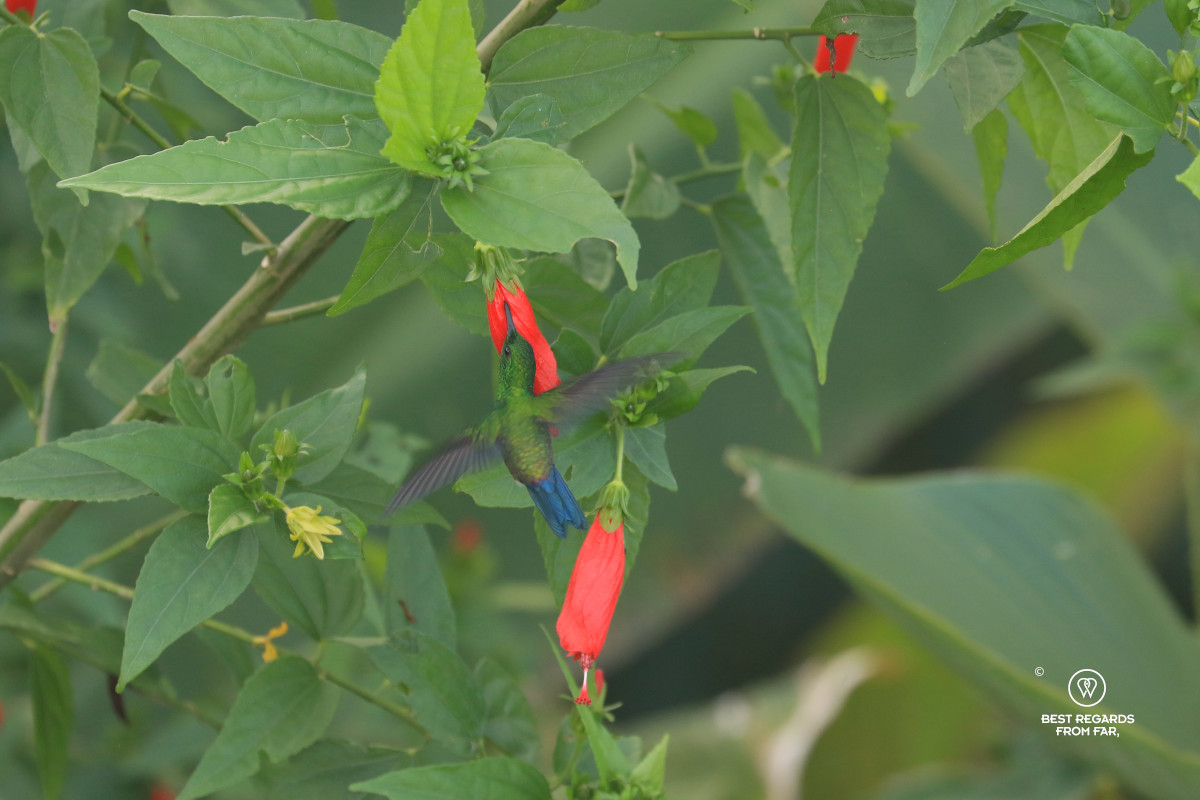
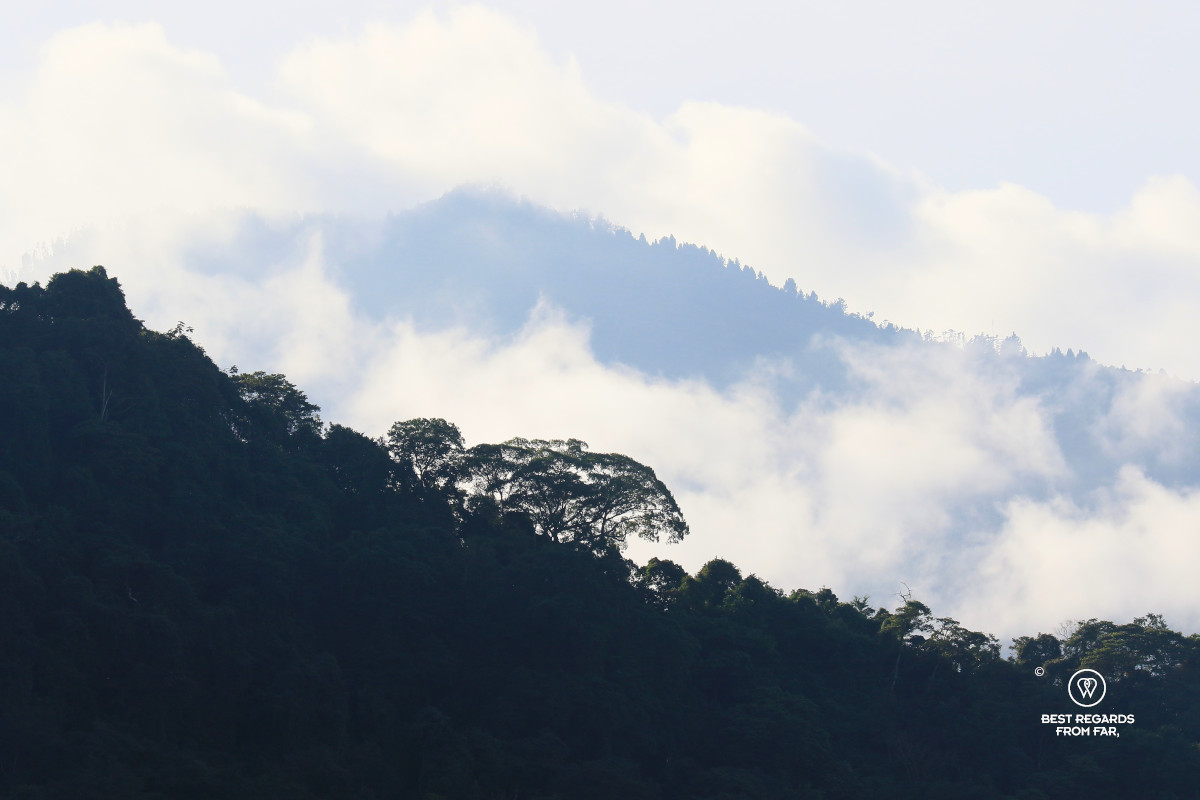
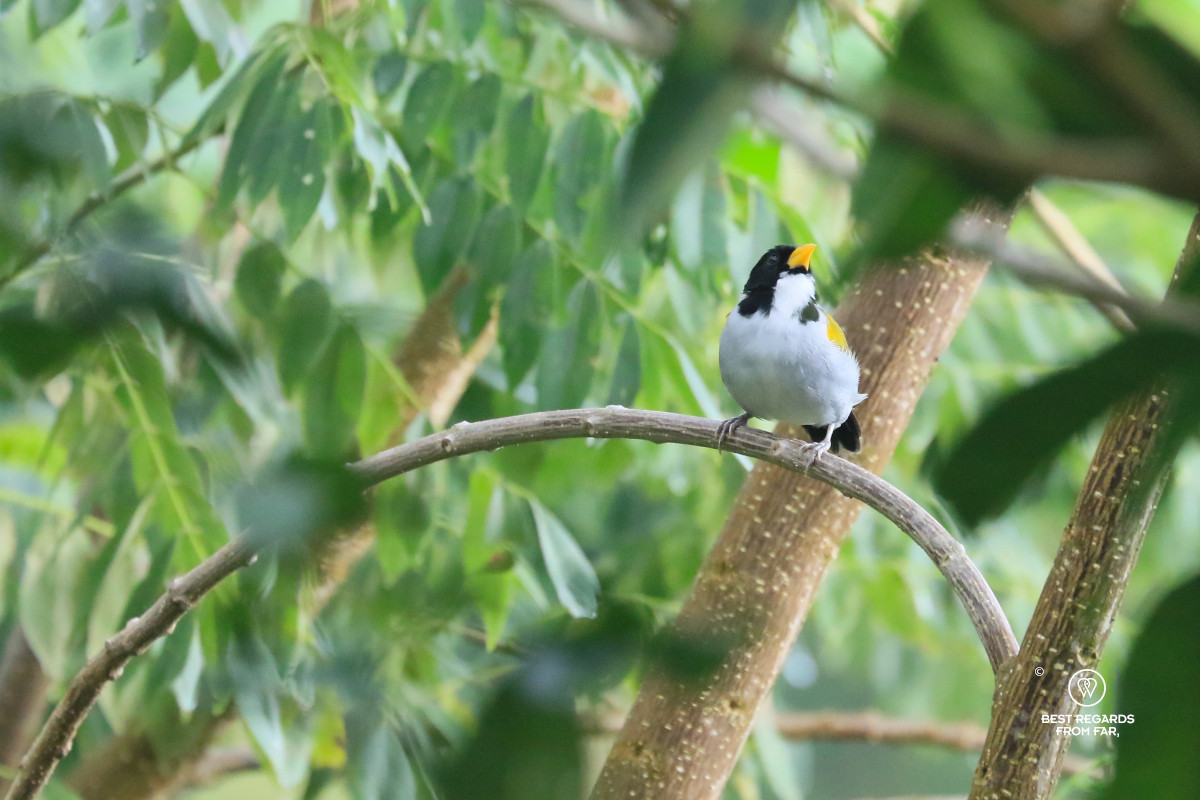
A howler monkey has been calling from the forest since before sunrise. Its deep calls roll across the slopes of Mundo Nuevo in northern Colombia. As the sky brightens, toucans and smaller colorful birds take over, competing with one another from the evergreen tree tops above which the mist rises slowly. In our kitchen the coffee machine adds its own growl to this morning’s soundtrack.
Pin this article for later!
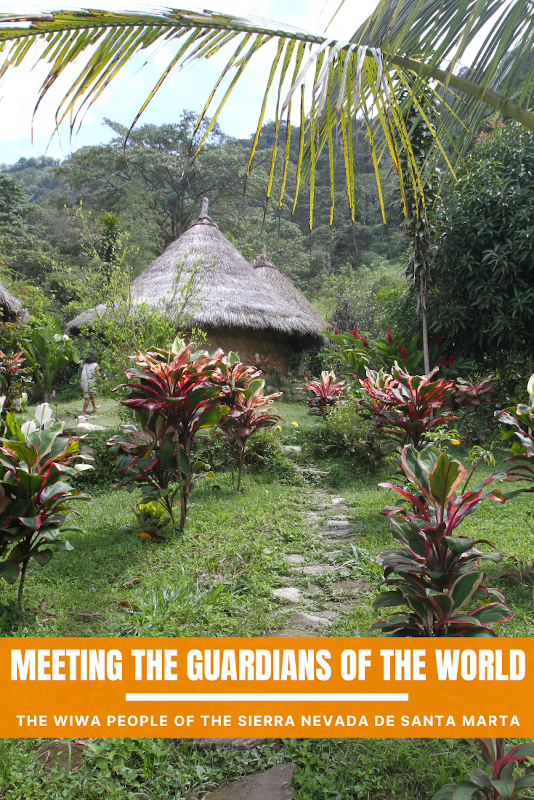
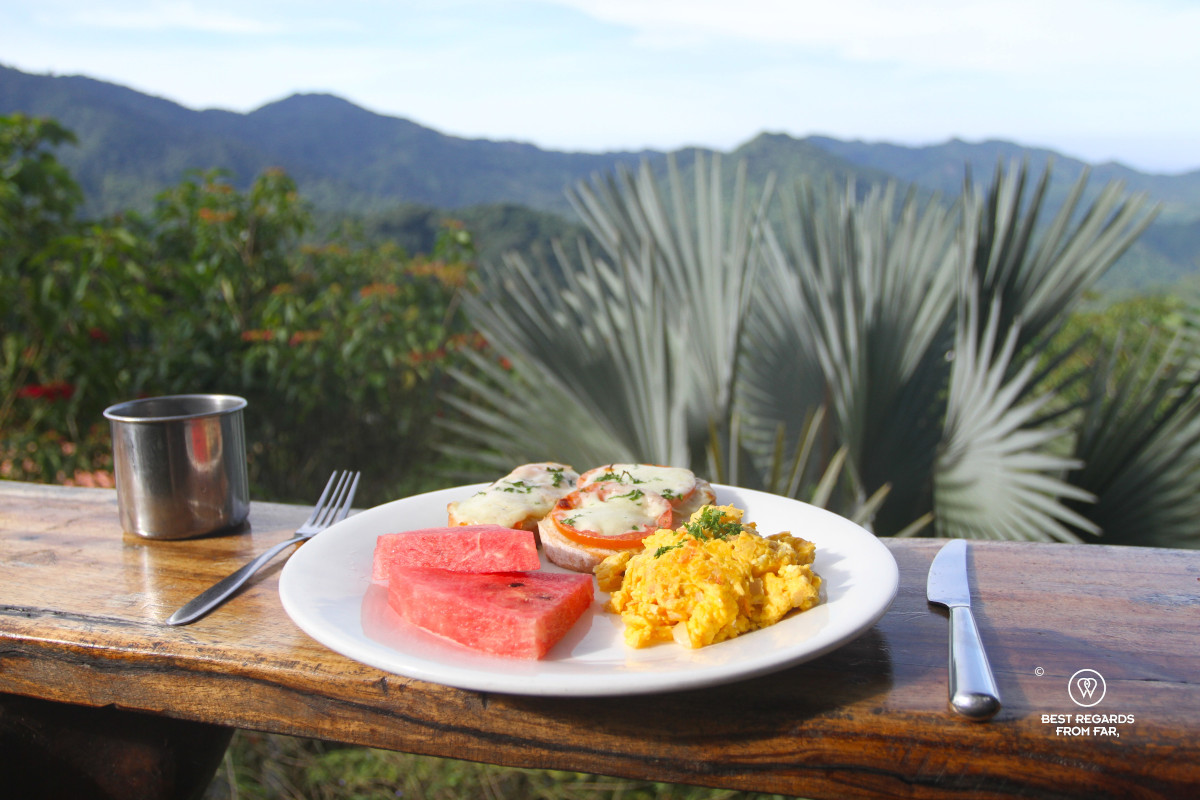
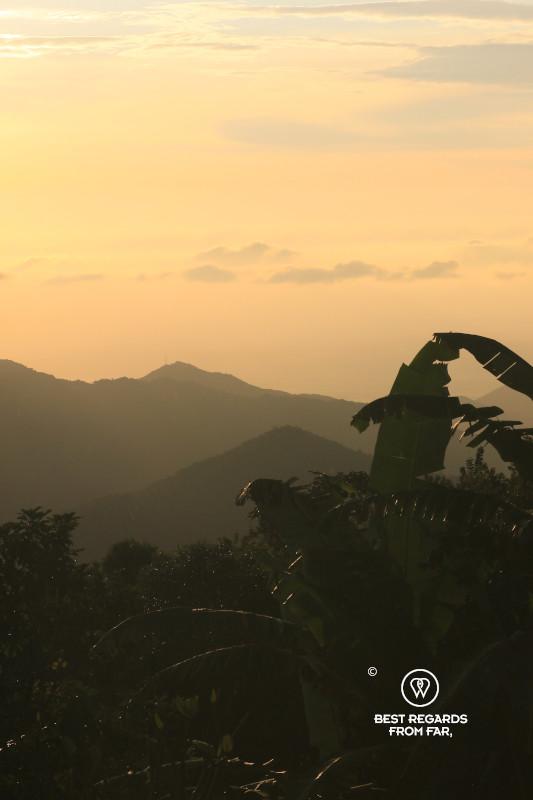
From the open dining room overlooking the forest, we sip our locally-grown Arabica observing how the sun gently bathes the slopes of the cloud forest of the Sierra Nevada de Santa Marta. Higher up, out of sight, its high peaks and páramos are also sacred to the Indigenous people of the mountains such as the Wiwas whose calling is to guard what they consider the heart of the world. As daylight reaches the ridgeline, the Caribbean Sea appears at the foot of the sierra. The buzzing city of Santa Marta lies only about 12 kilometers (7.5 miles) away as the crow flies, and the nearby village of Minca with its backpackers’ hostels is only at the foot of the track that leads to this secret and precious realm that feels a world apart. Mundo Nuevo offers more than a comfortable eco-lodge, it offers a vision, more meaningful, more sustainable, and more inclusive.
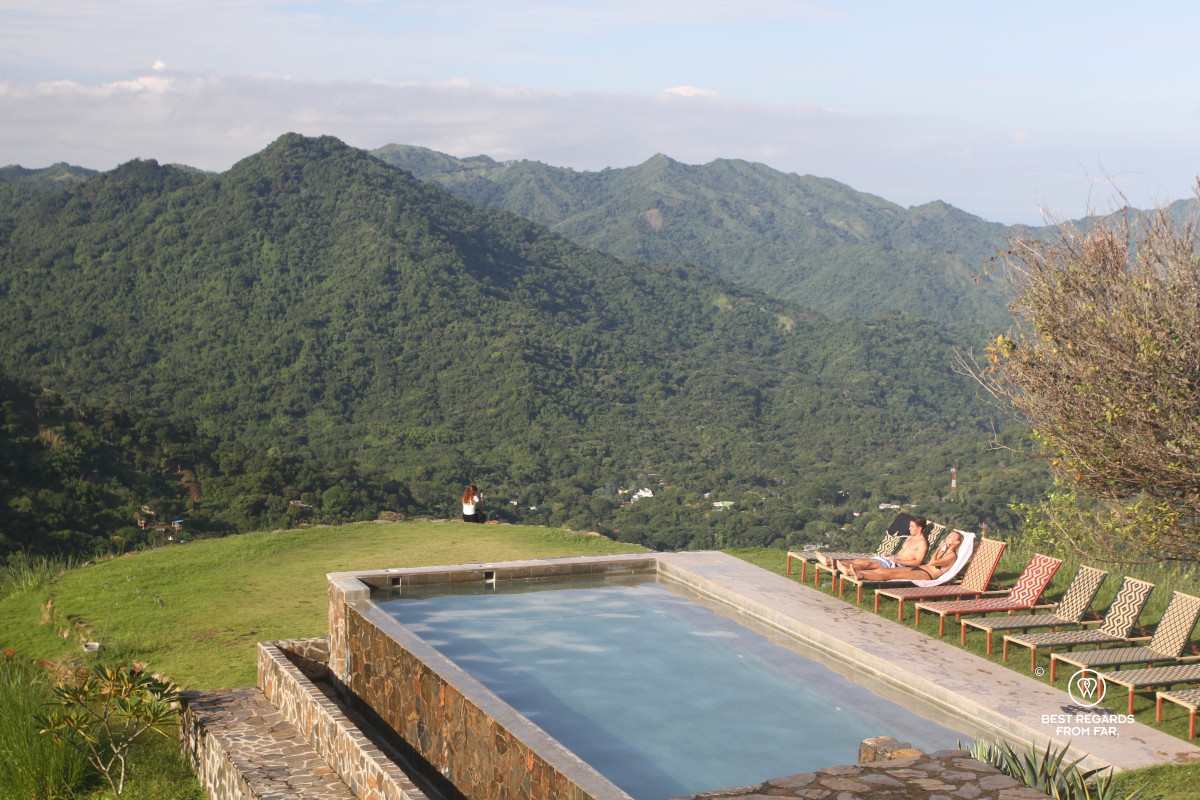
A Mountain Range unlike Any Other
Completely unrelated to the Colombian Andes, the Sierra Nevada de Santa Marta rises almost directly from the Caribbean Sea to snow-capped peaks close to 6,000 meters (19,685 feet) high. Within a remarkably compact area, its slopes pass through tropical dry forest, humid jungle, cloud forest, and páramo before reaching high-alpine environments and the remnants of tropical glaciers.
This is also one of the oldest geological formations in South America. Long before the Andes reached their present shape, the Sierra was already emerging and moving through immense tectonic forces. Today, rivers born high in these mountains flow towards the Caribbean and sustain Indigenous settlements, farms, towns, and cities far beyond.
For the Arhuaco, Kankuamo, Kogui, and Wiwa, however, the sierra is far more than a remarkable landscape. It is the Heart of the World: a living system in which peaks, rivers, stones, plants, animals, and celestial bodies are connected. What happens to one element affects all the others, including us.
These Indigenous people of the mountains call themselves the Elder Brothers, responsible for maintaining this balance. Outsiders are considered the Younger Brothers: technologically more advanced maybe, but forgetful of their responsibilities towards the Earth.
Descendants of the Tairona
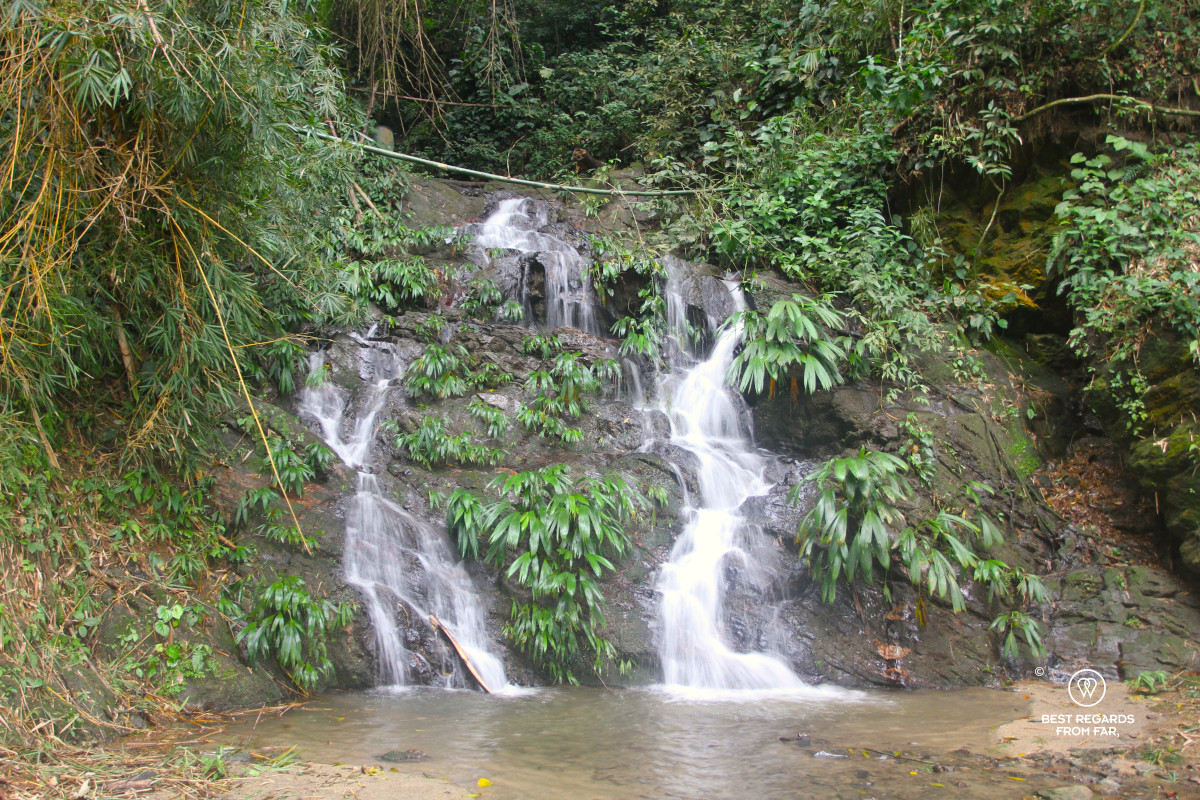
Before the Spanish conquest, the slopes around Mundo Nuevo formed part of the world of the advanced pre-Columbian Tairona civilization. Their settlements were linked by stone paths, staircases, and trade routes running from the Caribbean coast into the high mountains. They transformed steep terrain into habitable landscapes through sophisticated terraces, drainage channels, and irrigation systems.
Ciudad Perdida, or Teyuna, is the best-known example of this civilization, but it was only one settlement within a much wider network. The precision of Tairona engineering can be found in their gold-work that can now be admired in Colombia’s museums: finely cast pendants, figures, and ceremonial objects that reveal both technical mastery and a complex symbolic universe.
The arrival of the Spaniards devastated these societies. Many Indigenous people were killed, enslaved, or forced deeper into the sierra. Yet the culture did not disappear. Its descendants protected their languages, knowledge, and traditions in remote valleys and highland settlements, passing them on through oral teaching and daily practice.
Today, roughly 70,000 people belonging to these four Indigenous groups live in and around the Sierra Nevada. They share a broad spiritual and ecological vision while remaining distinct communities, each with its own language, history, and identity. In 2022, UNESCO recognized their ancestral knowledge as Intangible Cultural Heritage of Humanity.
The Wiwa Village of Awindua
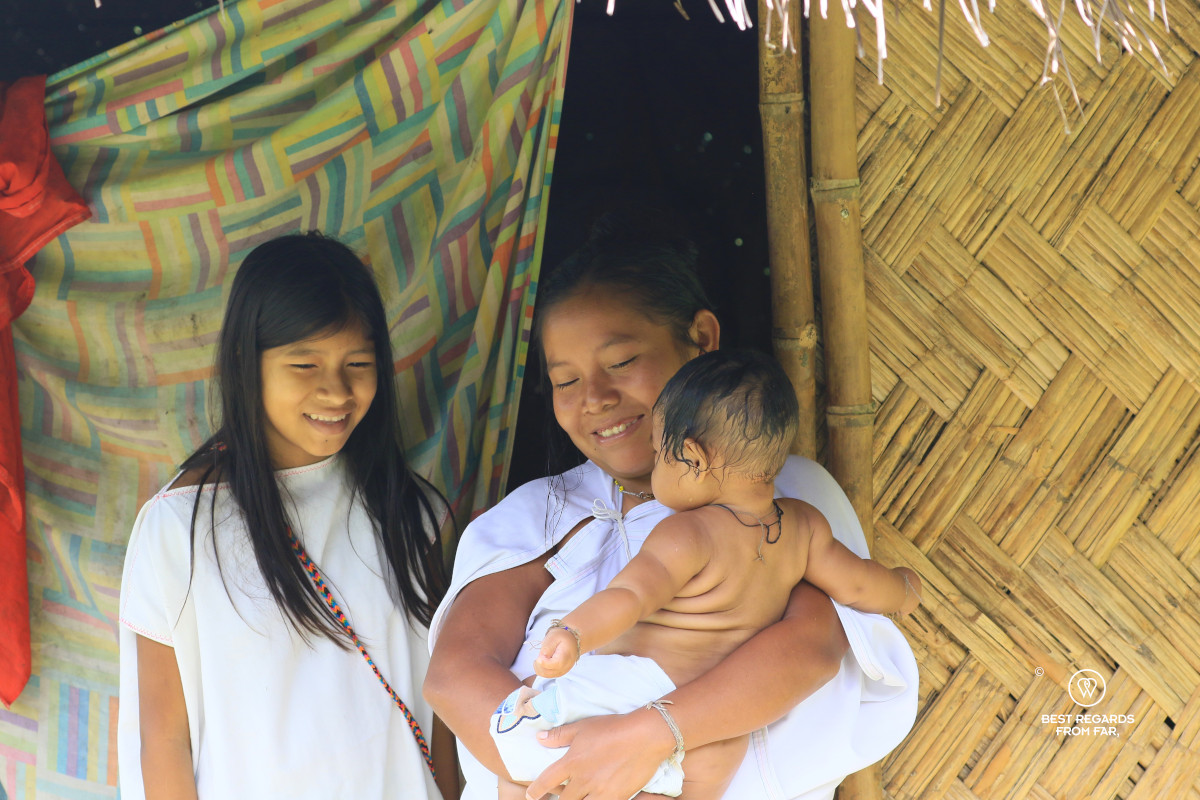
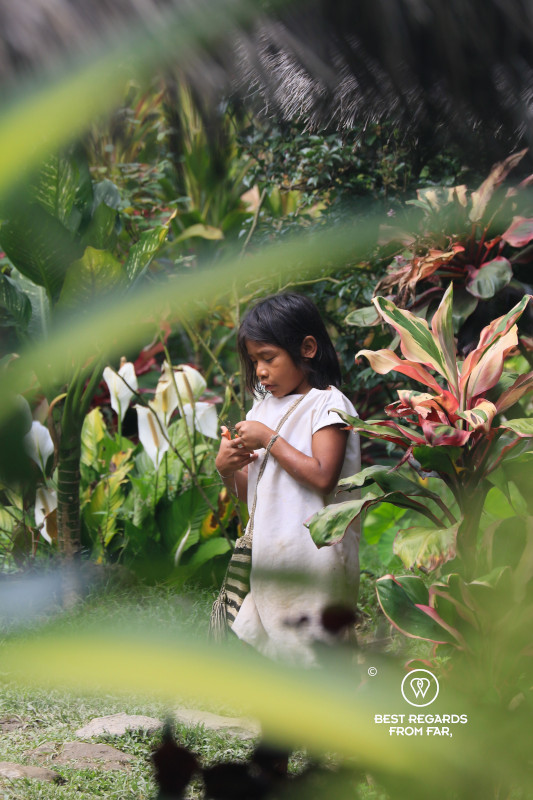
Unfortunately, Indigenous groups have been discriminated against, and a small group of Wiwas may have found a haven at the foot of Mundo Nuevo. A short walk below the eco-lodge stands Awindua, a small Wiwa village that is not an archaeological reconstruction or a staged attraction, but the home of these guardians of the Earth.
This haven happened rather unexpectedly by a meeting between a young and idealistic Belgian-French gardener roaming Colombia in search for a place where he could develop a more sustainable way of living, and a young Wiwa man named Luntana Gil who was looking for somewhere to stay. His parents had sent him from their community in the sierra to study Spanish in Minca. They hoped that learning the language used by Colombia’s government institutions would allow him to represent and defend his people more effectively.
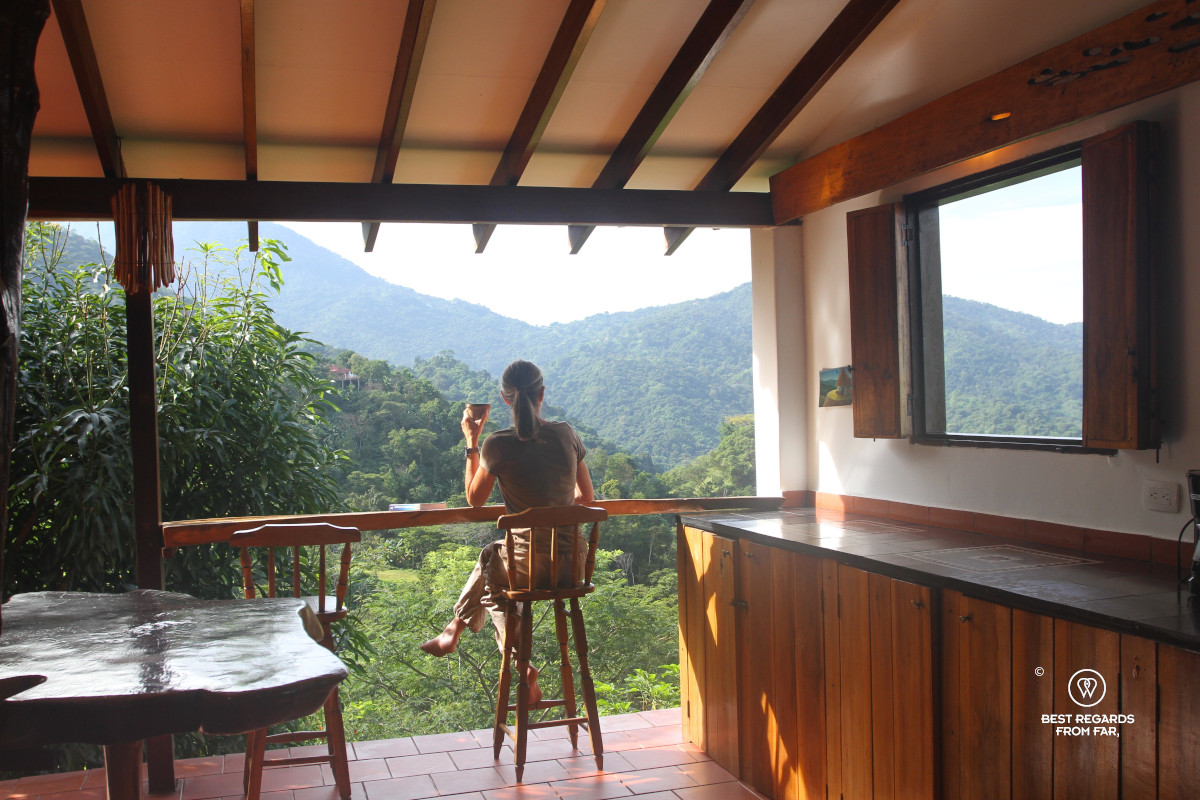
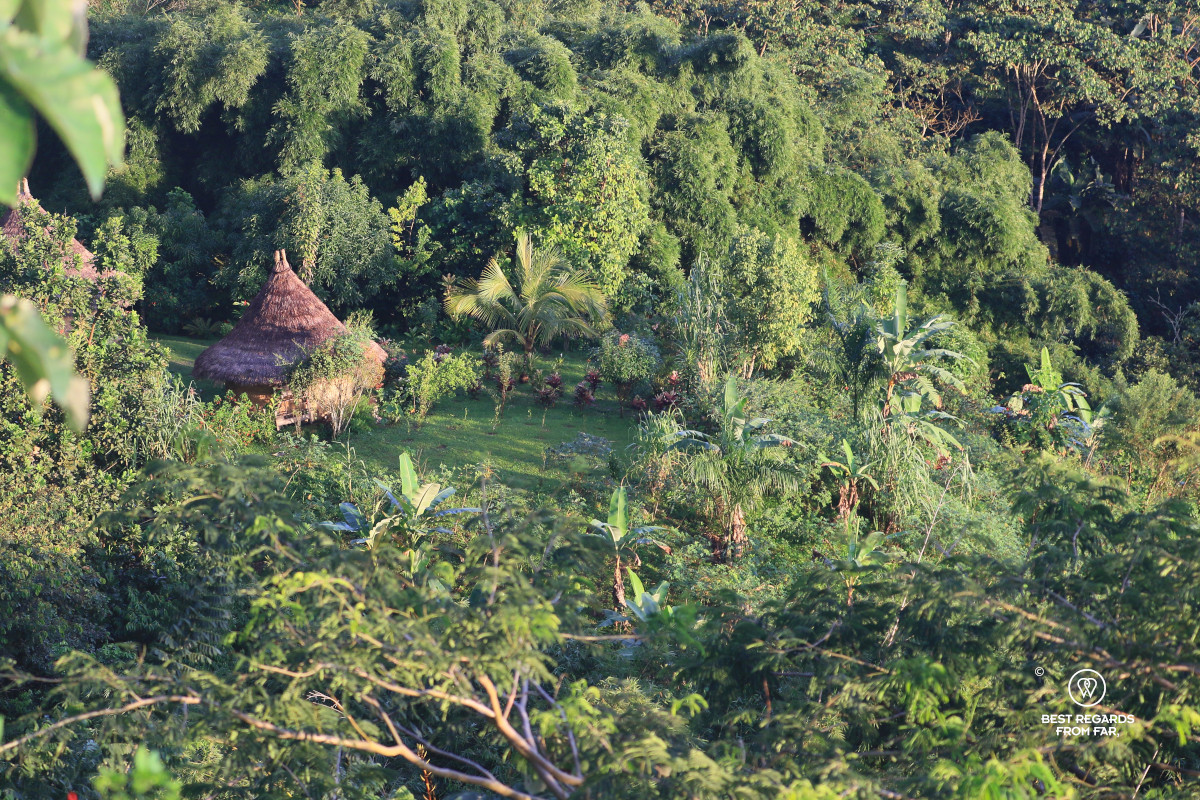
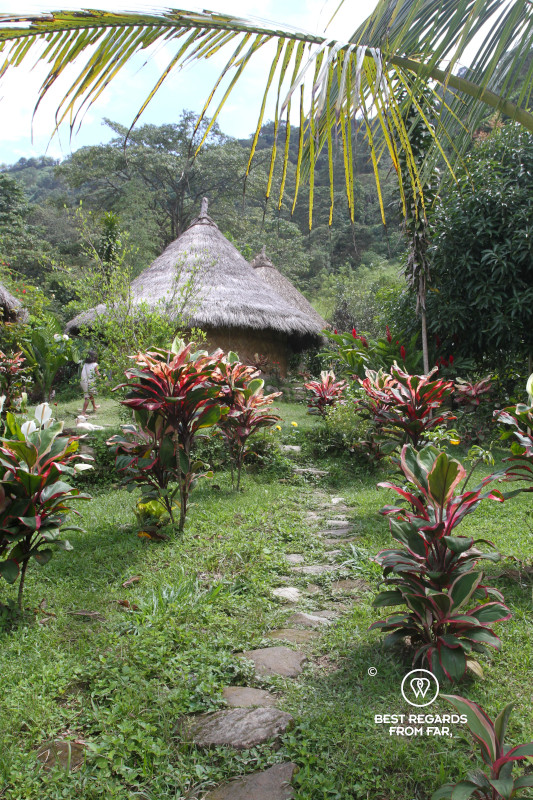
Phil made a farmland on a ridge above Minca his new world. After years of work, cattle pasture and coffee cultivation have made room for Indigenous vegetation, permaculture projects, and the eco-lodge. As Luntana and Phil’s friendship and respect for each other deepened, Luntana’s family decided to settle at the foot of the Mundo Nuevo ecolodge. They all, including some Mamos or spiritual leaders, built four traditional huts on a flat with a magnificent view on the mountains. They named the village Awindua, or “Mundo Nuevo” in Damana, the Wiwa language.
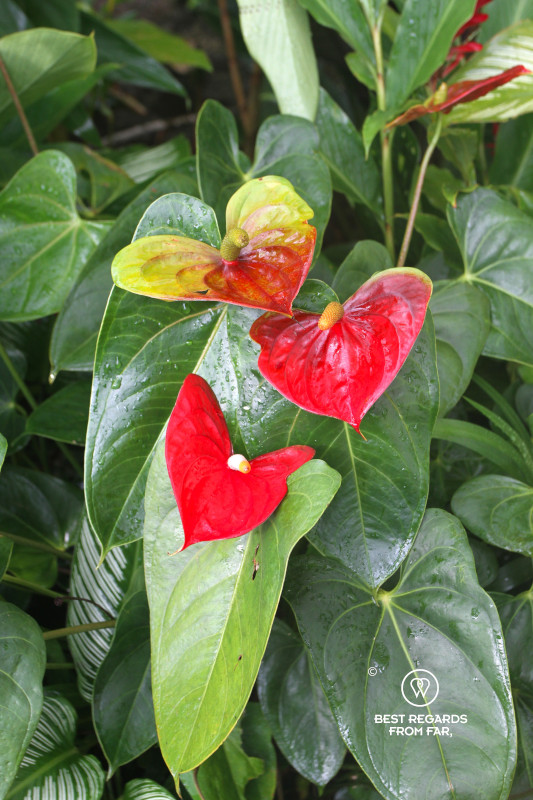
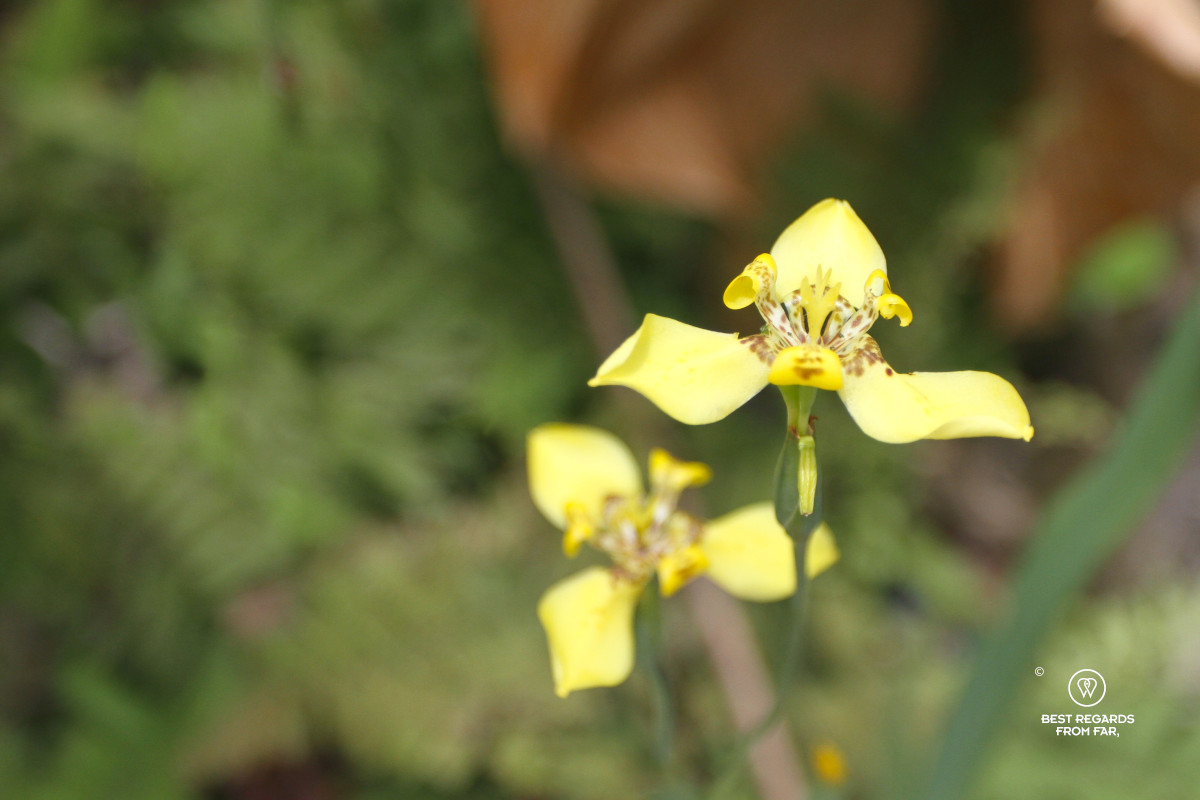
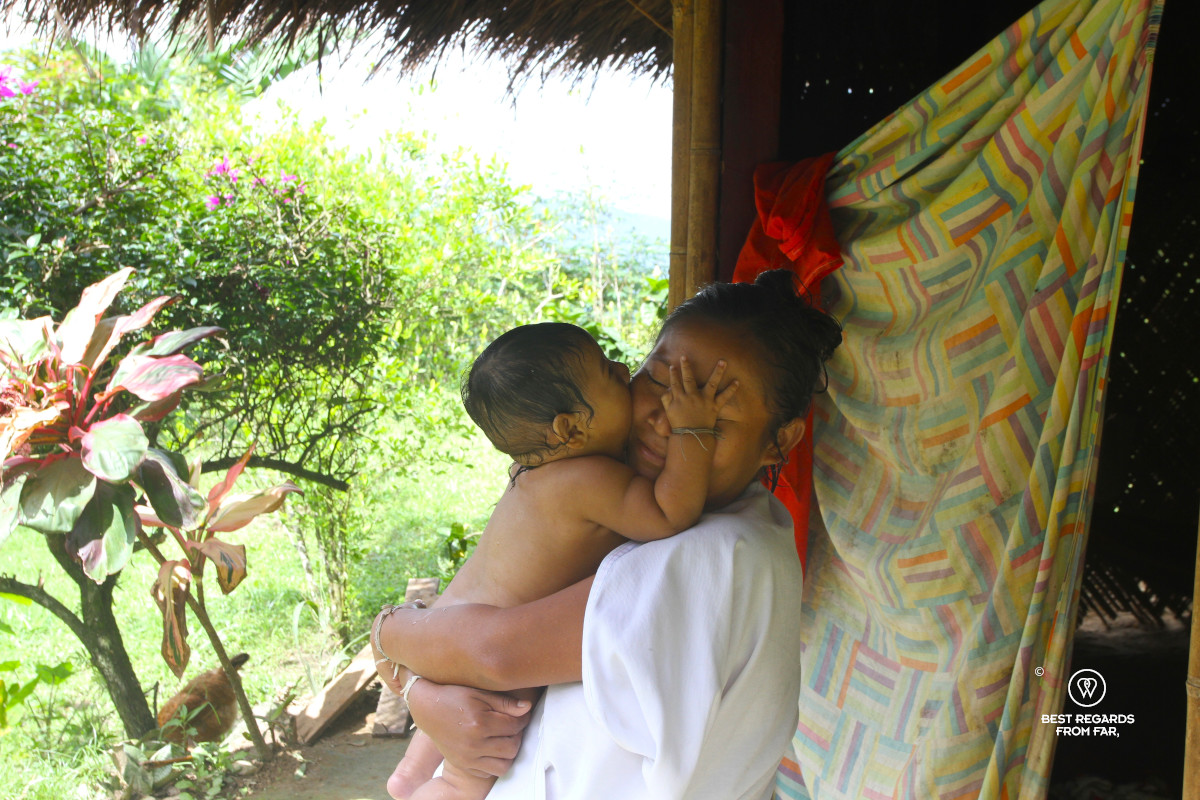
Guardians of nature, the Wiwas are also part of the modern world. Some members joined the Mundo Nuevo team in an unusual partnership between an Indigenous family and a foreign lodge owner in the Colombian mountains. After more than ten years, it has become an example. The balance works and Awindua has not become a village where travelers are promised a meet and greet with Indigenous people. It is an authentic village where outsiders do not simply arrive uninvited.
Building Sustainably with a Deep Knowledge of the Earth
As we exit the forest and arrive in Awindua, the huts show how closely Wiwa architecture responds to climate, available materials, and community life.
Walls are made from earth mixed with plant material and dried into simple blocks. Roofs are densely thatched, floors are compacted earth, and timber provides the supporting structure. The buildings can be dismantled, repaired, or rebuilt without any permanent waste. Inside, smoke from the fire rises into the thatch. Rather than damaging the roof, the soot helps preserve it, preventing rot and pests.
Men and women traditionally sleep in separate houses, often in hammocks, and the walls may be woven differently according to the building’s function. In larger settlements, dozens of huts can form a village organized around family, practical, and ceremonial needs.
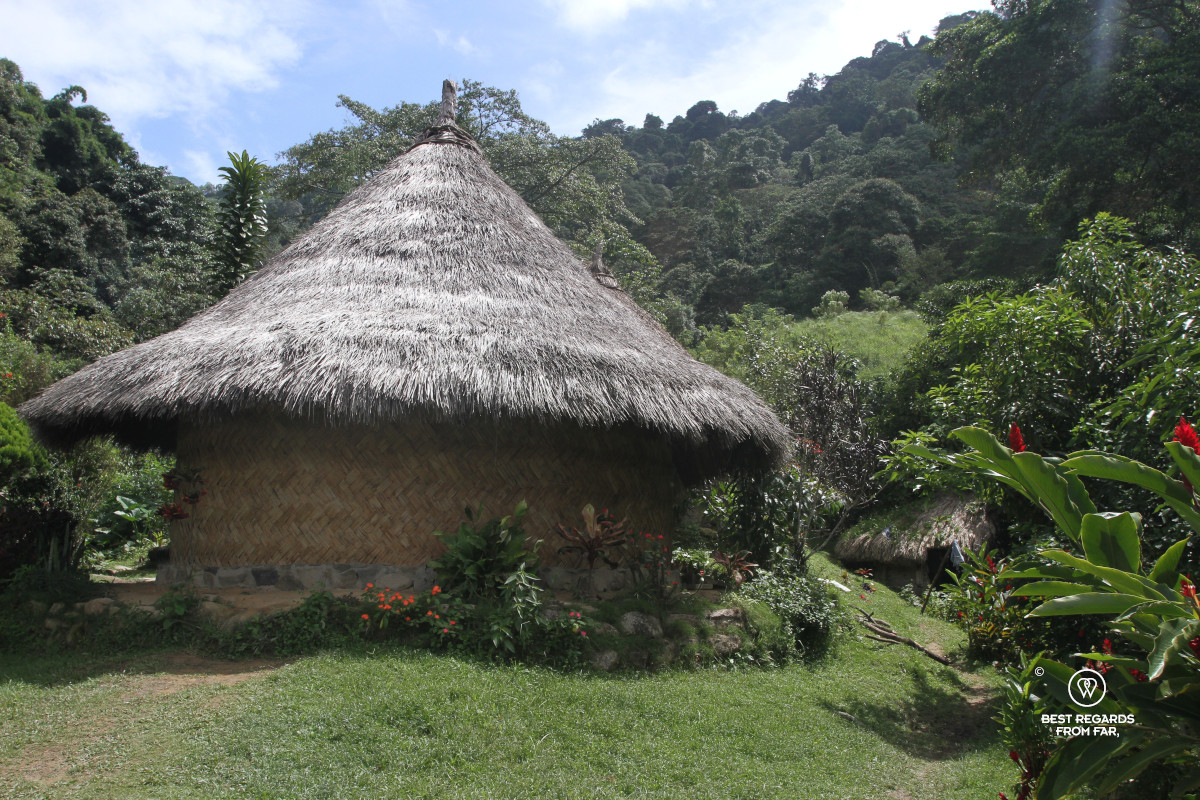
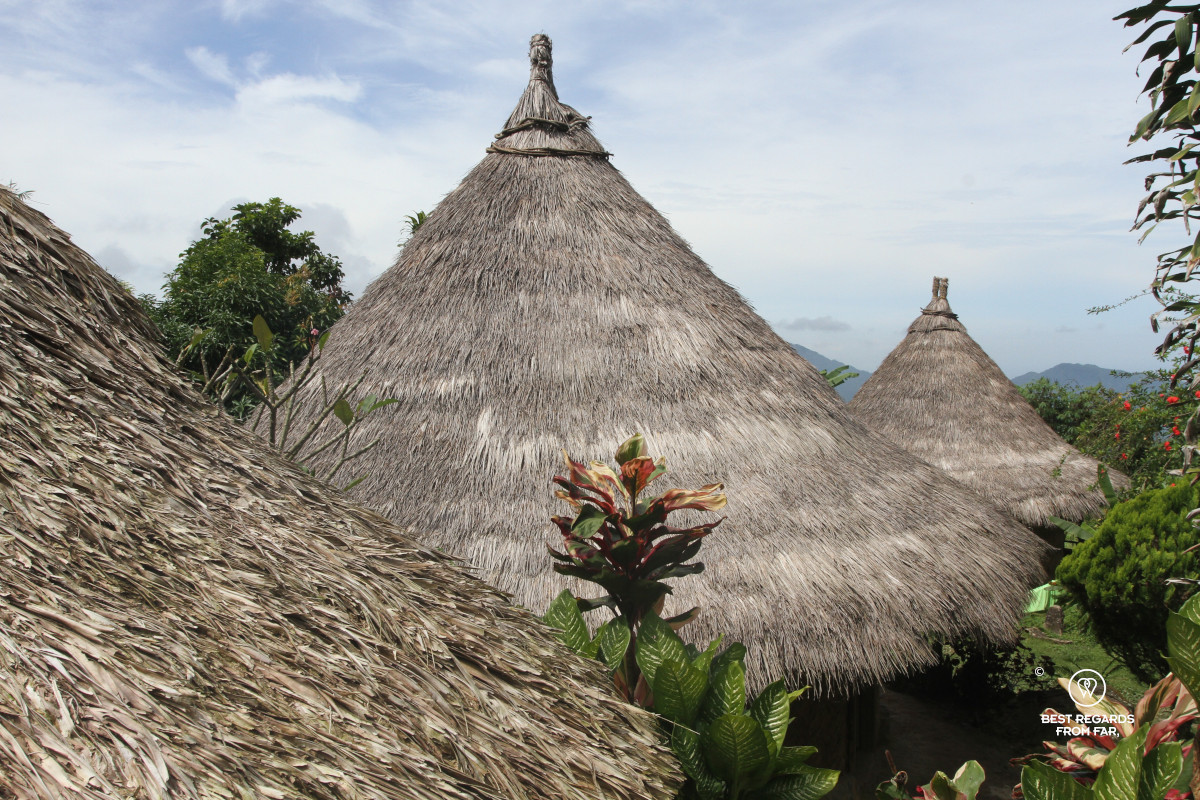
We continue further into the village. Beyond the first hut, four stones stand together at roughly 930 meters (351 feet) above sea level. They could seem insignificant to a passer-by but are deeply meaningful to the Wiwa: they mark ecological thresholds.
At this altitude at this specific location taking into account rainfall, soil, and orientation, they indicate the limit at which certain plants, including fique — the fibrous plant used to craft mochilas, the Wiwa shoulder bag that has become a sought after souvenir for many tourists while it is in fact a strong community marker with its symbols and patterns —, grow successfully. Similar markers exist at other elevations for other species. Mamos and Sagas — the knowledgeable men and women recognized as spiritual authorities — undergo years of preparation to read the mountains and guide their people.
***
At Mundo Nuevo, an unexpected friendship led to the wisdom of the Elder Brothers to reach the Younger Brothers. Respect and shared values have bridged the gap between two cultures that seemed oppose in almost every way. A new world has emerged. One in which a tourism business with modern and comfortable infrastructures, and a traditional Wiwa village are in a symbiotic relationship in a bio-diverse ecosystem that is thriving.
The Elder Brothers have been protecting the Heart of the World for centuries. The least we Younger could and still can do, is listen.
Travel tips:
- Book your accommodation at Mundo Nuevo: the luxury suites have the most mesmerizing views, and the vegetarian food is delicious!
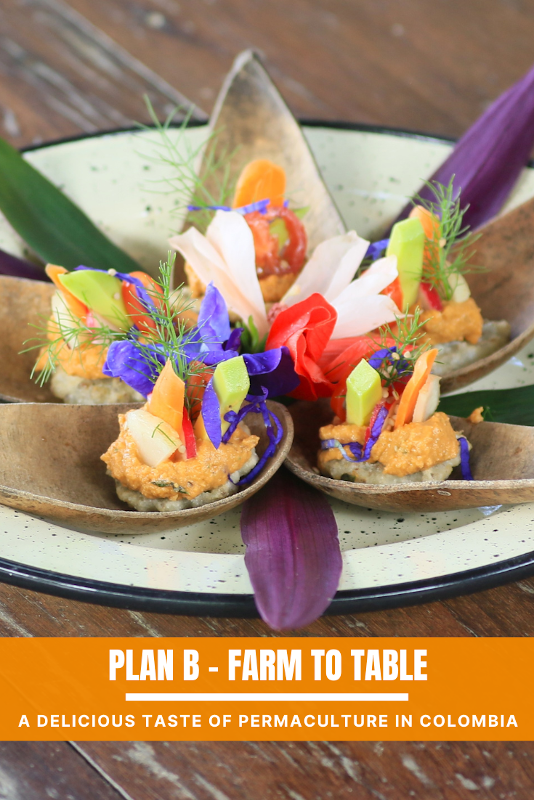
- By prior arrangement, Mundo Nuevo can organize many different activities from the excellent Plan B farm-to-table experience to conversations with Indigenous people about their territory, traditions, and everyday practices, coffee workshops, and more. Make sure you plan enough time to immerse yourself in this beautiful new world.
- Check out this interactive map for the specific details to help you plan your trip and more articles (zoom out) about the area!
For more in Colombia, click on these images: