Text: Marcella van Alphen
Photographs: Claire Lessiau & Marcella van Alphen
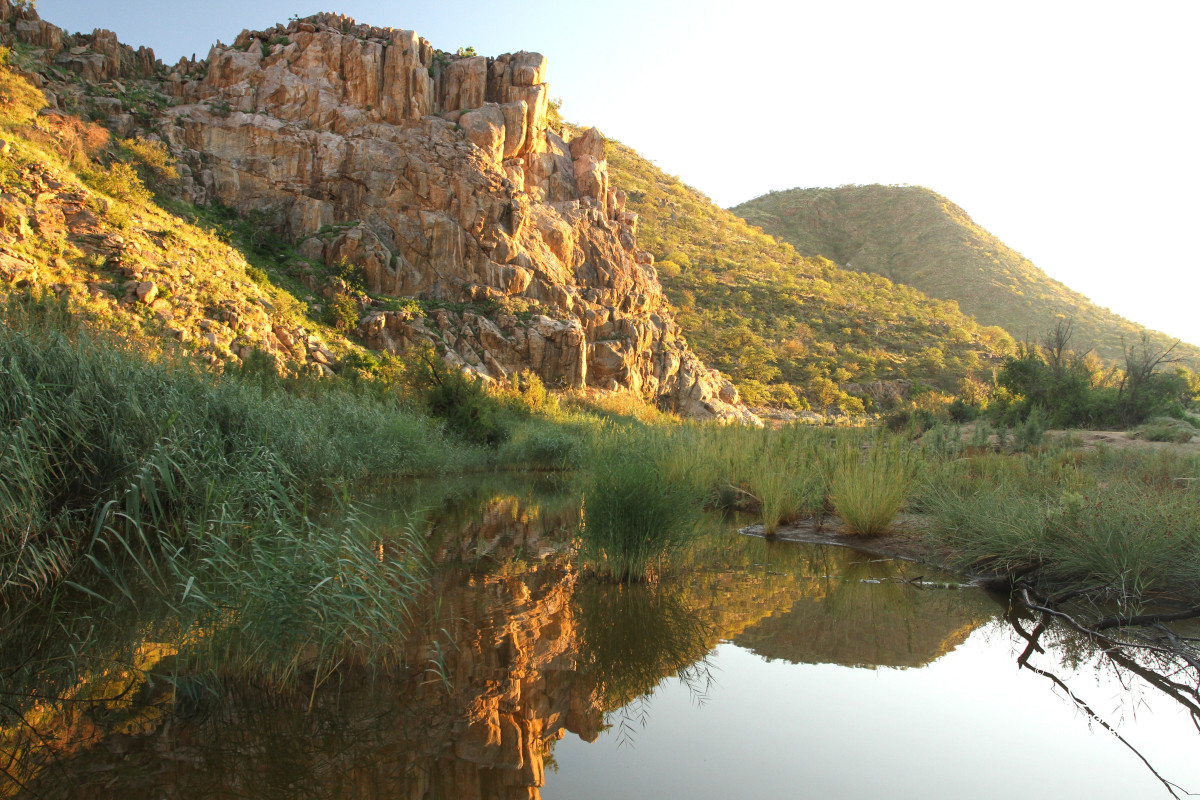
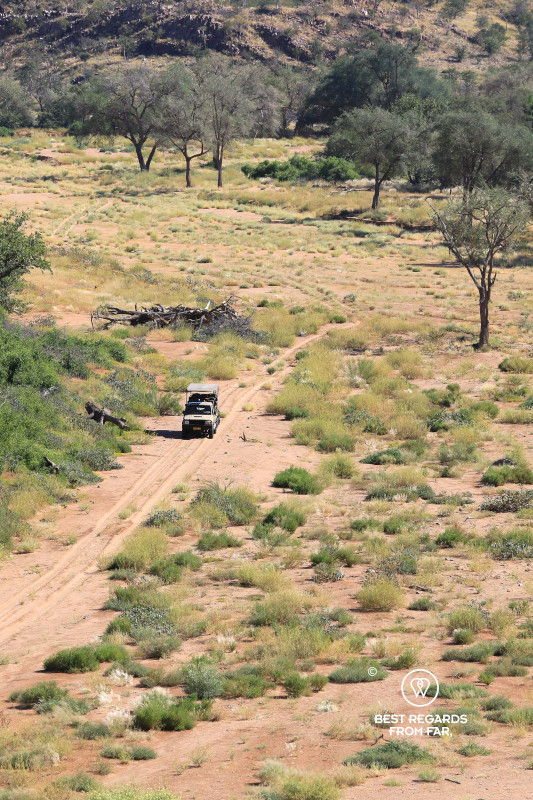
Early-morning light reaches the granite outcrops before it touches the dry riverbed of the Huab River through which we are being driven. Overhead, thousands of red-billed Quelea create wavy patterns in the sky as the small birds flock together and set out for the day. From the game-drive vehicle, pearls of morning moisture cling to the green tall reeds that form a natural tunnel above the Land Cruiser, hiding what lies beyond. Once through, we watch the rounded rocks change from grey to warm ochre, revealing ledges, cracks and caves: ideal leopard habitat. Deon Brummer, owner of Huab Lodge and a passionate conservationist, brings his 4×4 to a halt and scans the slopes with his binoculars. He focuses on how every track, tree, rock and exposed ridge helps explain how wildlife uses this river valley that he fiercely protects.
Pin it or bookmark it for later!
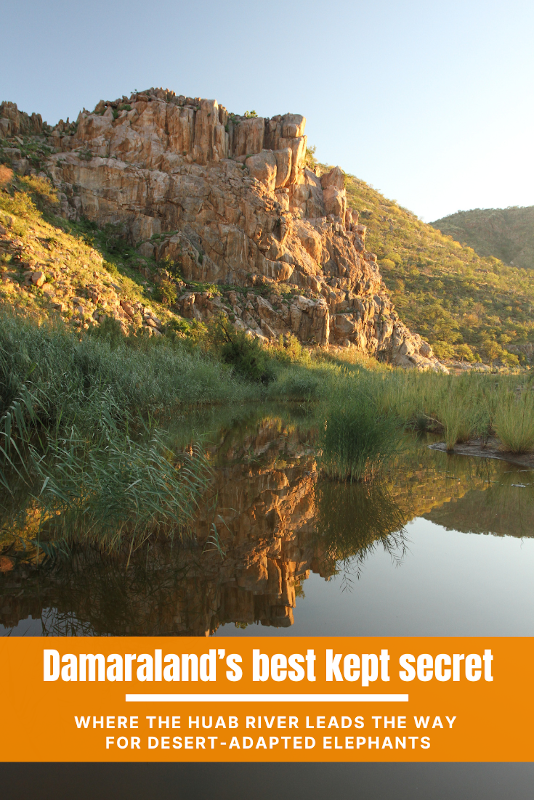
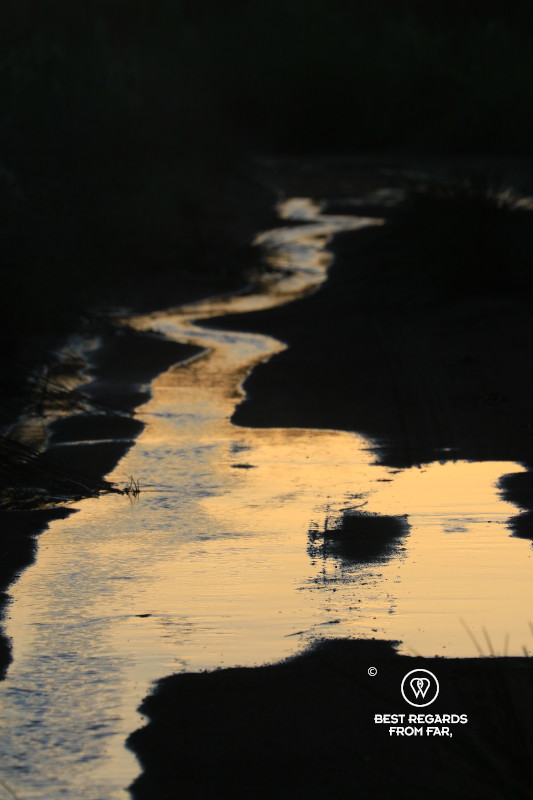
We step into the soft pale sand of the Huab River that is today summed up to a very small stream near the lodge’s natural spring. Its understated appearance is only seasonal and deceptive. Heavy rain in the catchment can turn the Huab into a roaring river in no time. “Huab” means water in Khoekhoegowab, the language spoken by the Damara people of Damaraland, this remote province of Namibia where the desert-adapted elephants still roam wild and free. It has been a while since the last big rain and at a first glance everything seems dry, yet there is a lot going on below us. Once the surface flow disappears, moisture remains under the sand, sustaining the many trees that surround us and sustaining animals through the dry country.
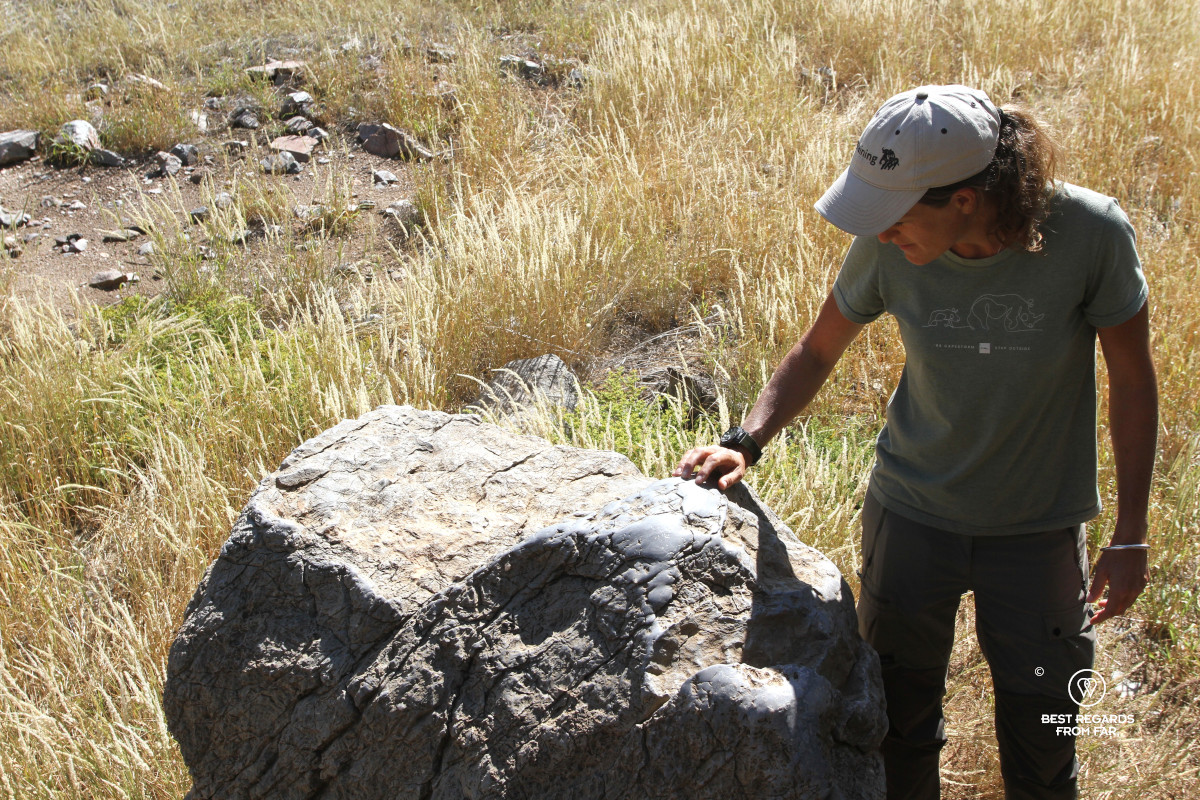
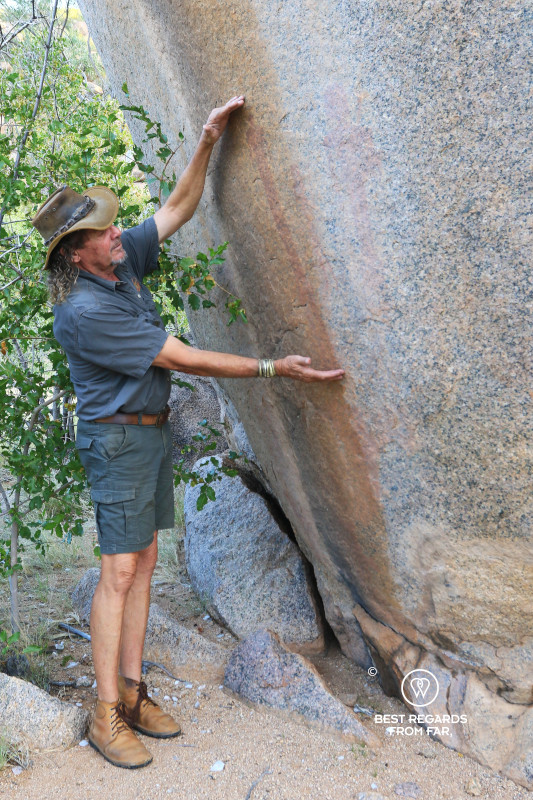
Deon knows this river through years of following elephant tracks and watching the effects of rainfall. He reads the geology as closely as the tracks. A dark grey rock emerges from the earth with unusually rough sides and a shiny, polished upper surface. On long-used elephant routes, rough stones have been rubbed smooth by generations of elephants that have scratched their bellies on them. “The polish is evidence of centuries of elephants passing through this riverbed”, Deon explains with a smile when we run our hands over the soft rock in awe. Then stopping mid-sentence to show us where an elephant crossed the riverbed to share a vivid story about his last elephant encounter while he was having a coffee in the river bed with guests. “About that… let me show you a really good coffee spot”, Deon suggests.
Coffee in the Riverbed
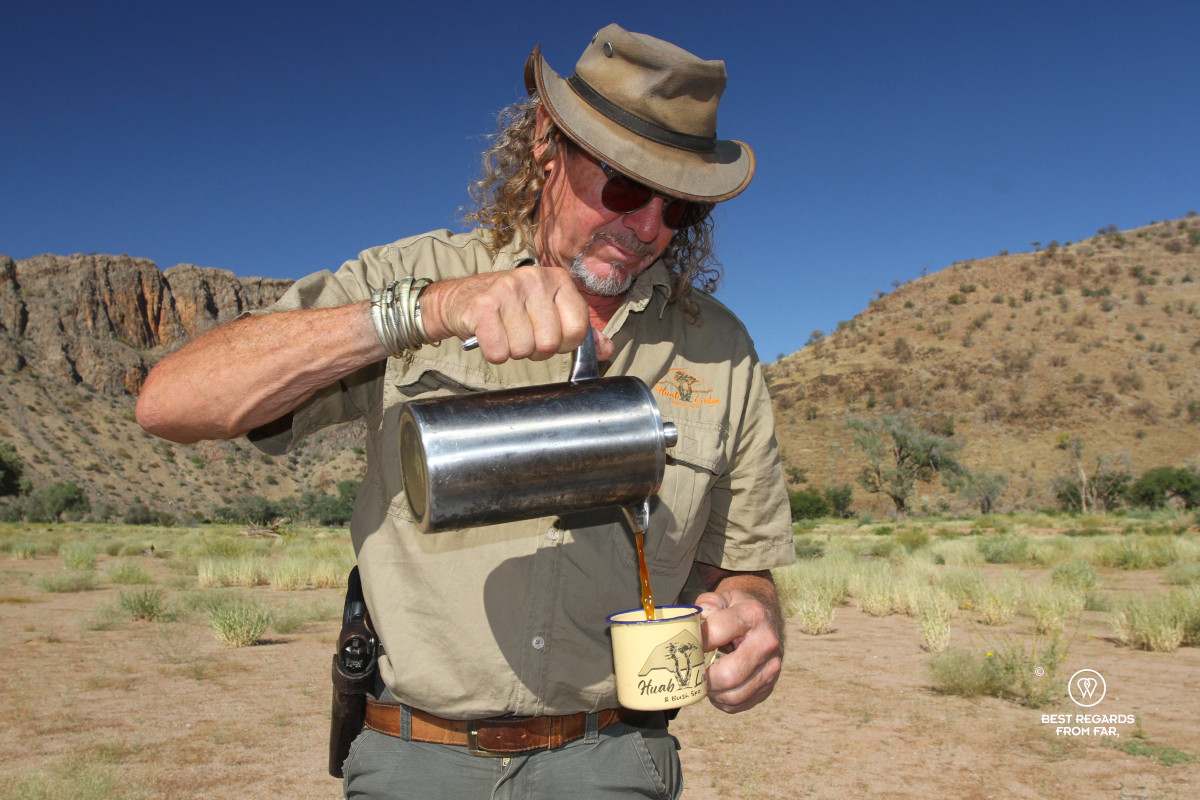
He stops the 4×4 in the riverbed and takes out a Kelly kettle, a simple piece of equipment well-suited to a morning in the bush. With a few dry twigs, Deon starts a small fire in its base, feeding it with parsimony. The flames are drawn up through the kettle’s central chimney, warming up the water as we take a seat.
As we dunk home-baked rusks in the freshly brewed coffee, the conversation turns from his previous elephant encounter to the far more serious business of keeping rhinos alive. West of the C35 gravel road, the communal Huab Conservancy extends across a vast, sparsely populated landscape used by free-roaming black rhinos and desert-adapted elephants. Rangers monitor the rhinos every day, recording signs and movements, remaining alert to poachers. The patrols are essential: suspicious tracks noticed too late can have fatal consequences for an already critically endangered black rhino.
A former hunters’ camp has been repurposed as an anti-poaching base. Beyond protecting the black rhinos, the anti-poaching team also clears wire snares intended mainly for mountain zebra and oryx whose meat can be sold in towns. The human – wildlife conflict does not stop there, communal grazing, commercial farming, tourism, and mining all compete for space and income in Namibia.
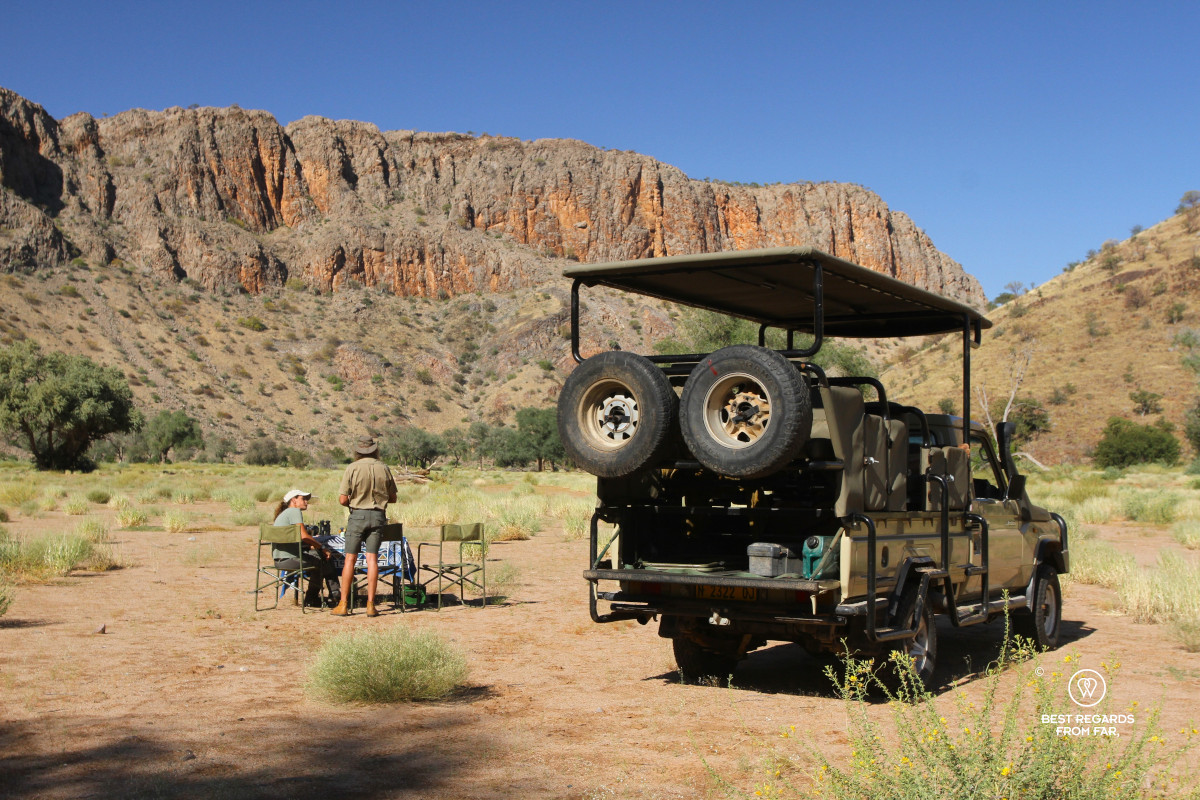
The Brummer’s ambition is larger than protecting individual animals. Huab Lodge occupies a commercial farm managed for conservation rather than livestock production. Deon is working with neighbouring landowners to keep the upper Huab open, get fences down, and connect it to conservancy land farther west. Most have agreed; a few still need convincing. If the remaining fences can be removed or made wildlife-friendly, animals will be able to follow the river towards the Atlantic rather than meeting barrier after barrier, following their ancient migration path still stored deep in their DNA.
Reading the Signs
The coffee equipment is packed away and we continue along the Huab, spotting steenbok, klipspringers, dassies and baboons. In the soft sand, kudu tracks are far easier to find than the animal that made them. Deon slows down for each sign, and together we analyse who passed, in which direction and how recently.
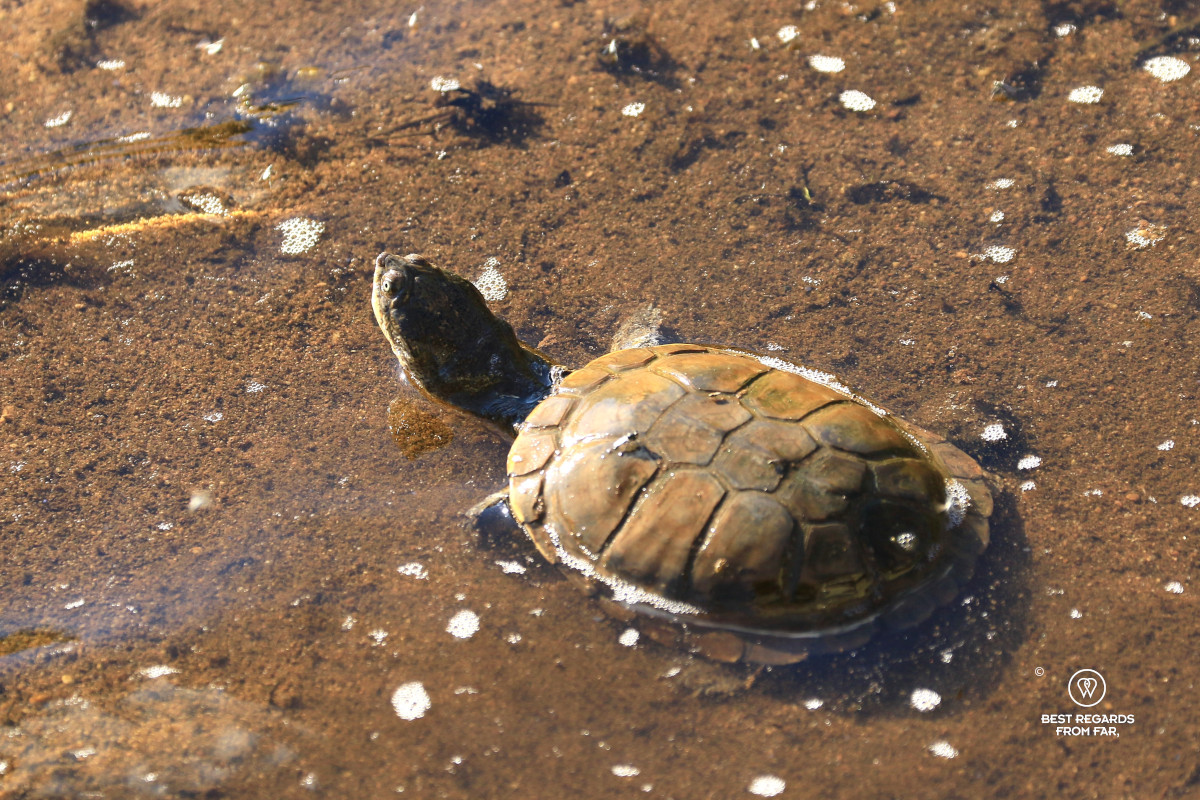
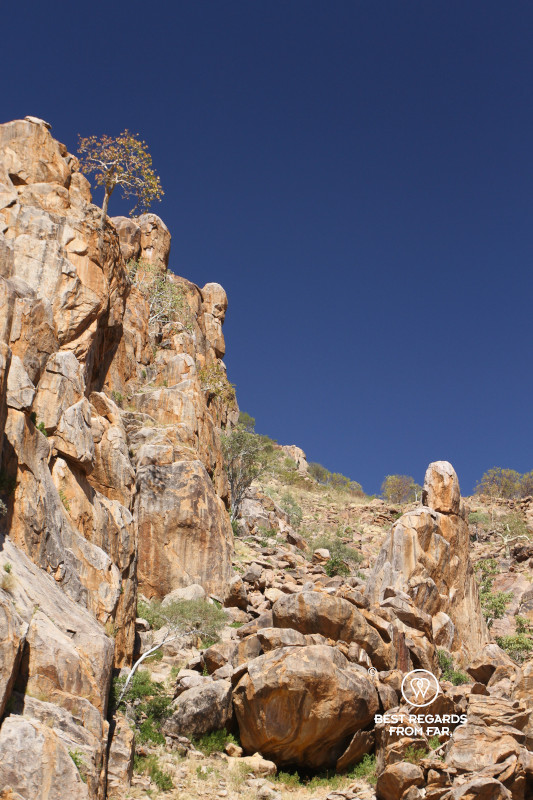
Above the river, a pair of Verreaux’s eagles nest on the cliffs. Their presence reinforces what the broken granite already suggested: this is excellent habitat for animals that rely on height, ledges and concealment. Far below the eagles, yellow mongooses, black-backed jackals, warthogs and an African rock monitor occupy very different levels of the same dry ecosystem. All may become prey for the elusive leopards that live here too.
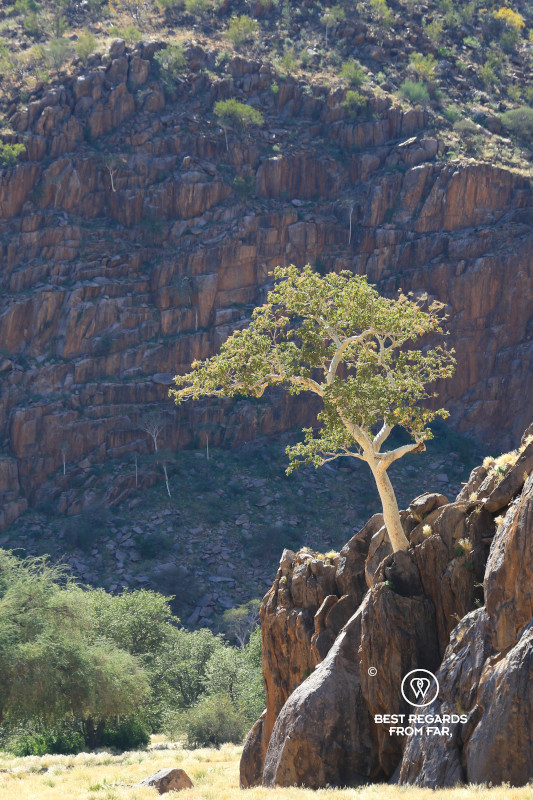
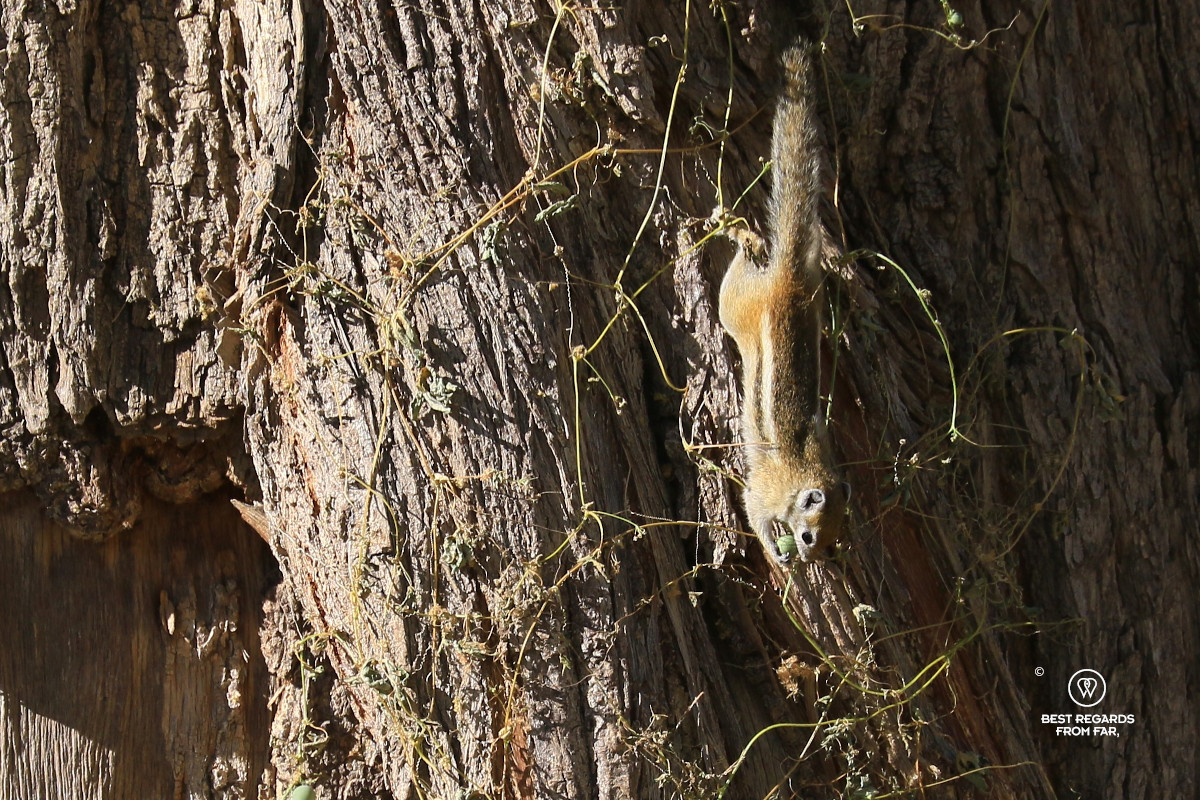
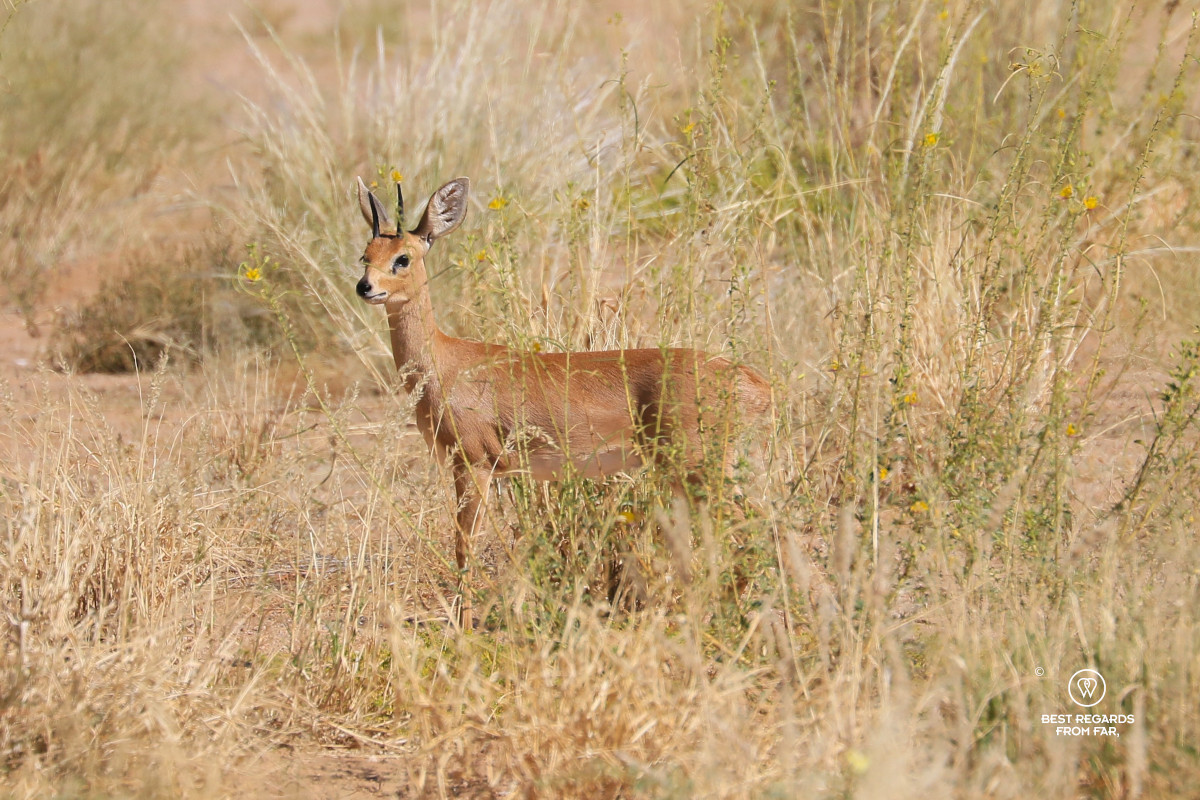
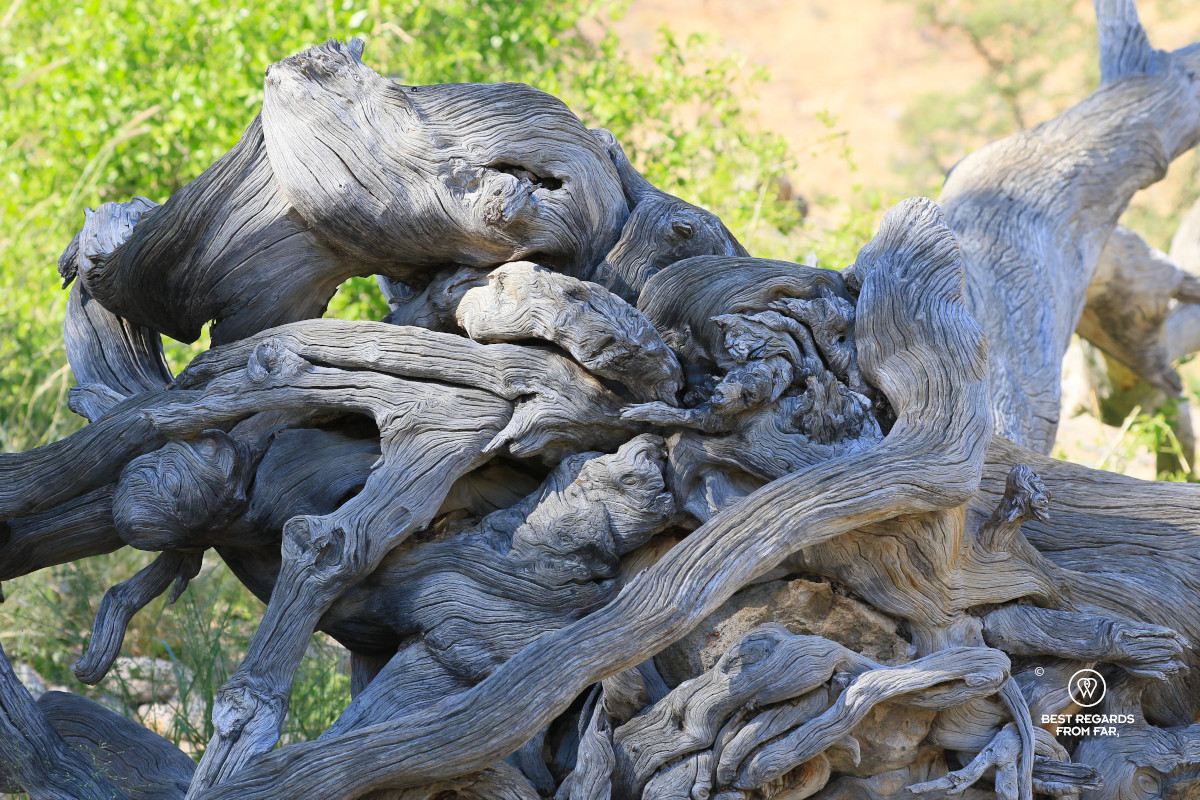
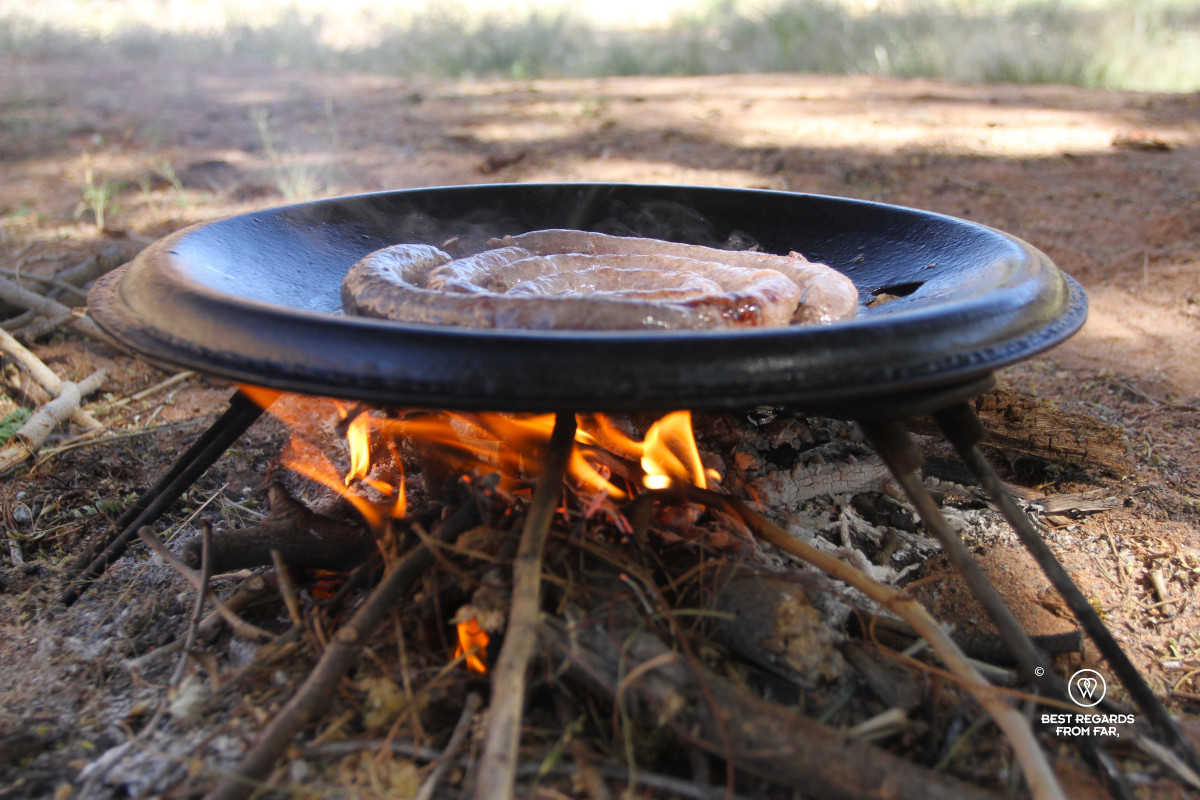
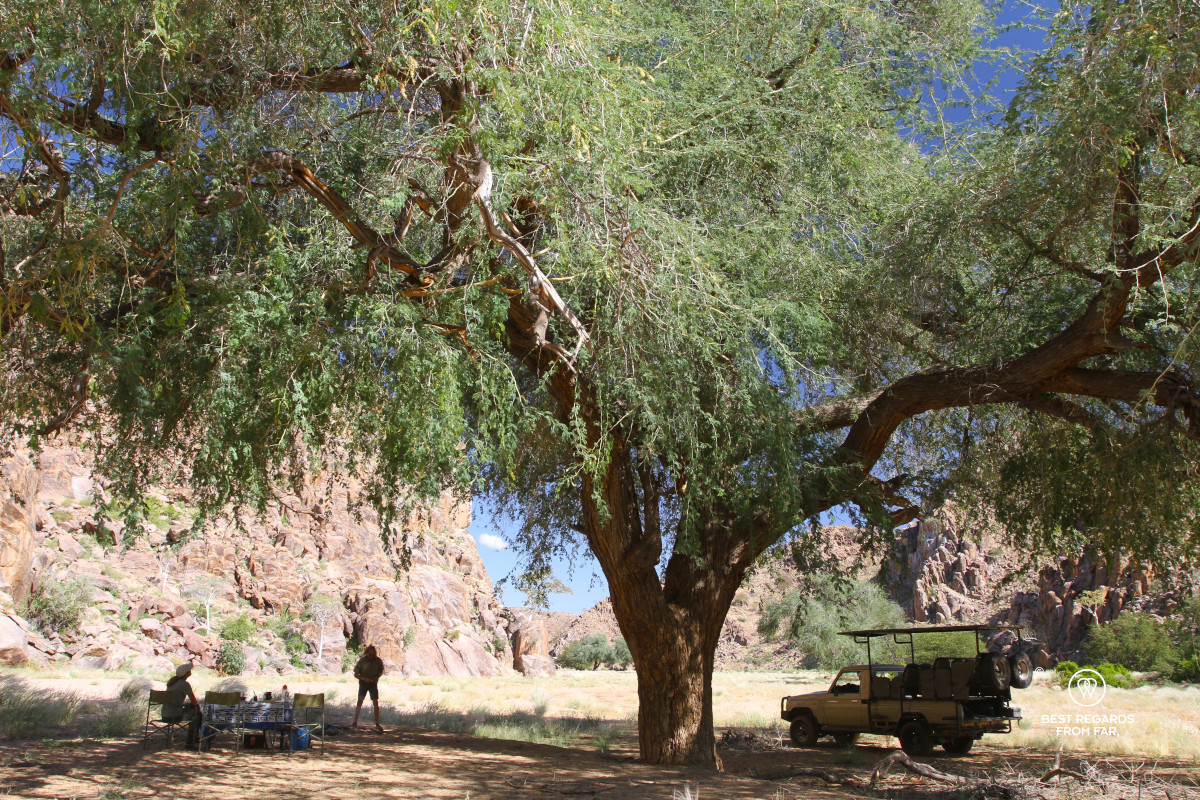
In the heat of the day we seek shelter under a massive centenarian tree while Deon lights another fire to barbecue a traditional sausage with toasties, a wonderful surprise with a cold glass of wine. We will explore one more hidden corner in search for the desert-adapted elephants before it is time to return to the lodge.
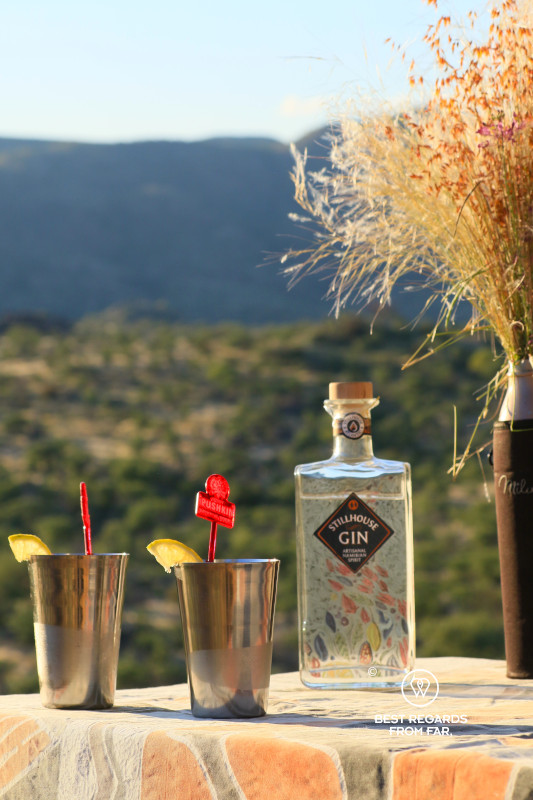
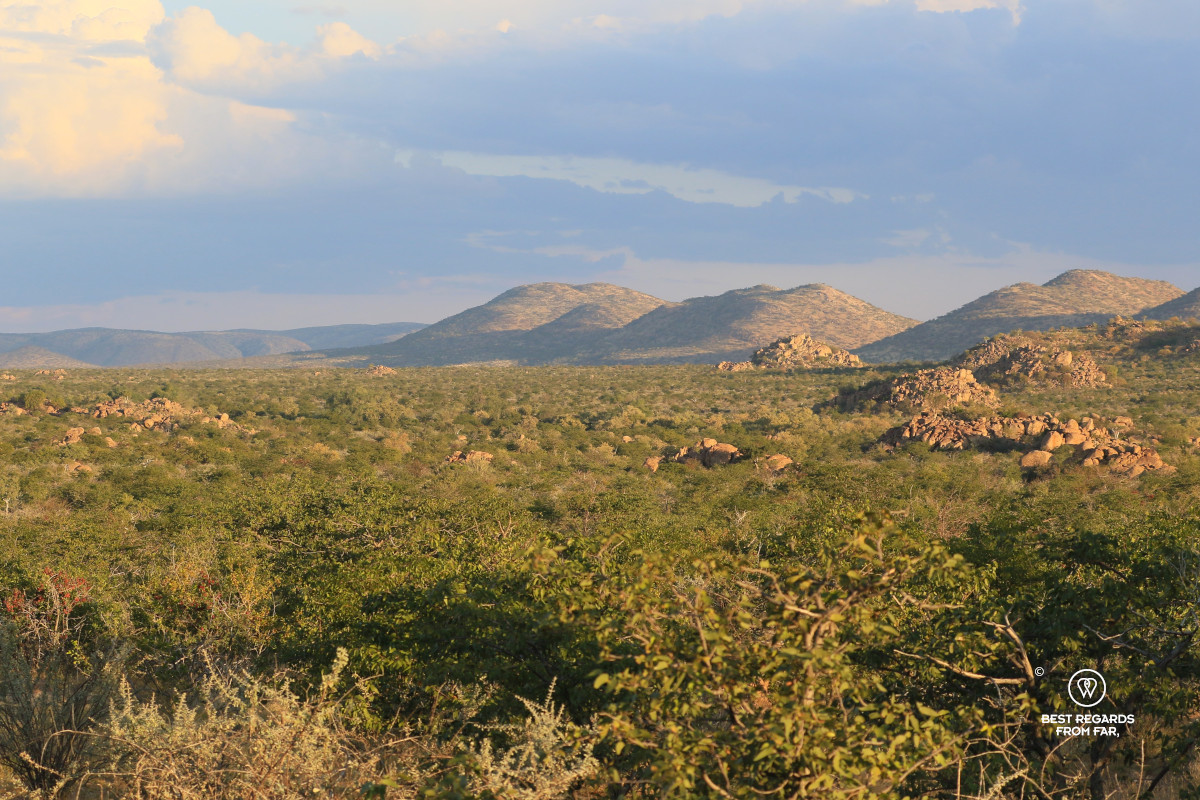
After some more exploration of the stunning area, learning about elephant behaviour and encountering many birds, we head back. For today the elephants remain out of sight, but their routes, tracks and feeding signs accompany us back to the lodge where Lidia Brummer welcomes us warmly. Their absence is part of the experience. These are not animals confined for predictable viewing like in a game reserve; they are truly wild and can cover many kilometres in a day and move according to water, food and disturbances. A sundowner from one of the higher grounds near the lodge shows how vast the landscape stretches under the setting sun, and how diverse the mesmerizing terrain is.
A Lodge Shaped by its Hosts
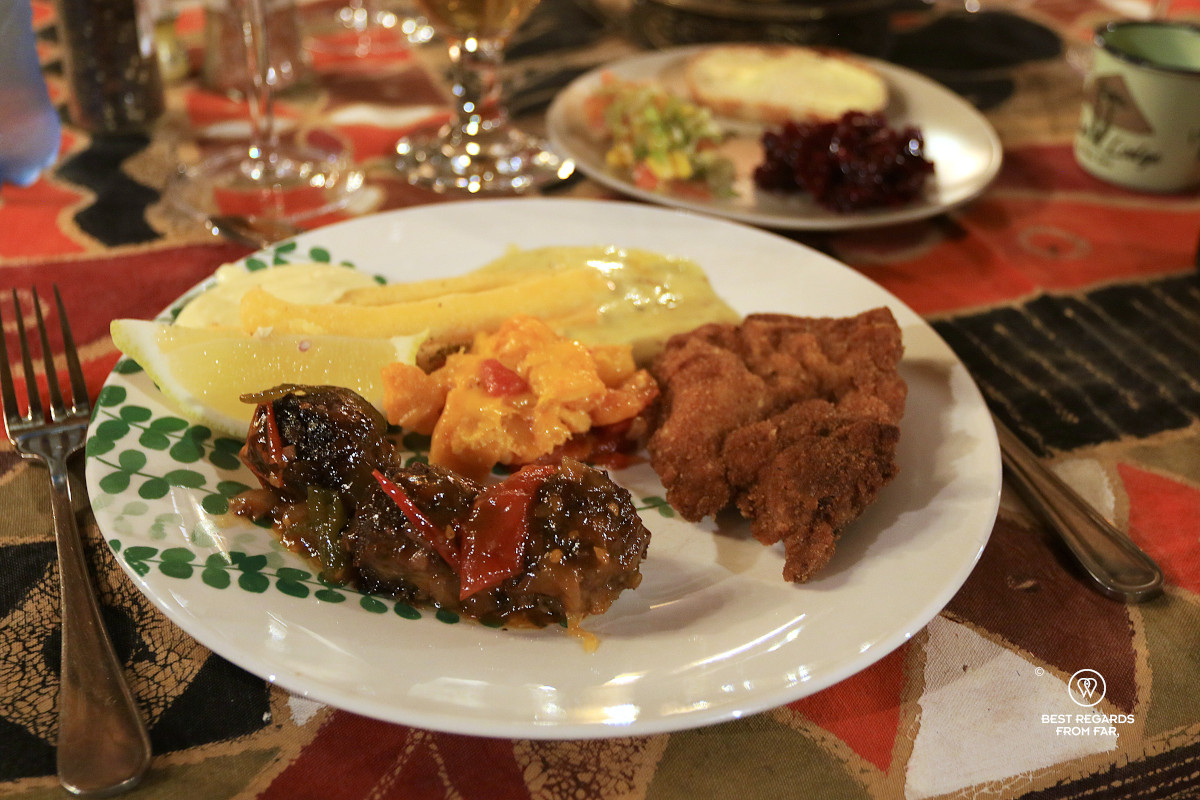
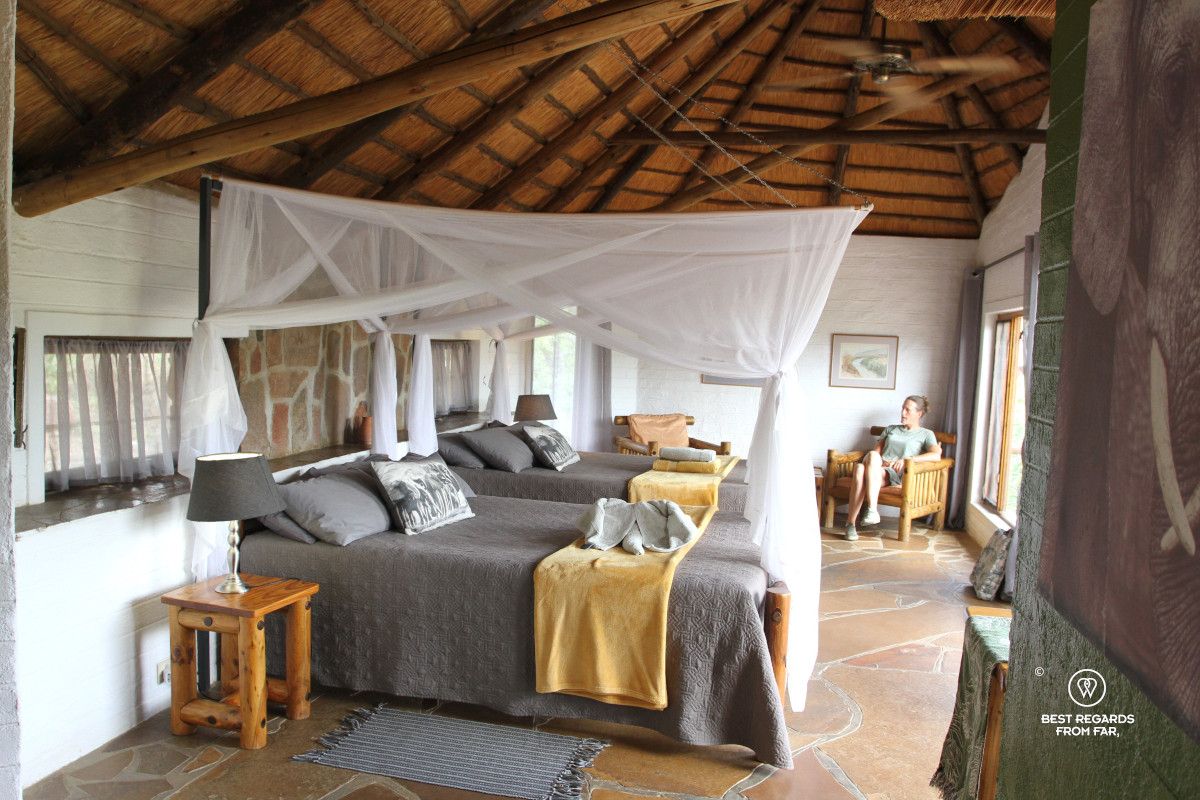
That evening, the communal table is set beneath the eye-catching majestic thatched roof of Huab Lodge. The chef introduces the menu: bacon-wrapped carrots with honey-mustard sauce and delicious homemade bread, followed by lamb chops, beef skewers and salads, and homemade cheesecake to conclude.
The meals are as much about savouring as they are about exchanging as Deon and Lidia, a teacher for more than two decades before the couple took over Huab Lodge, eat with their guests every night. Their involvement, passion and dedication makes the lodge feel more than personal. Discussions about elephants, geology, lodge life and the practical difficulties of conservation abound.
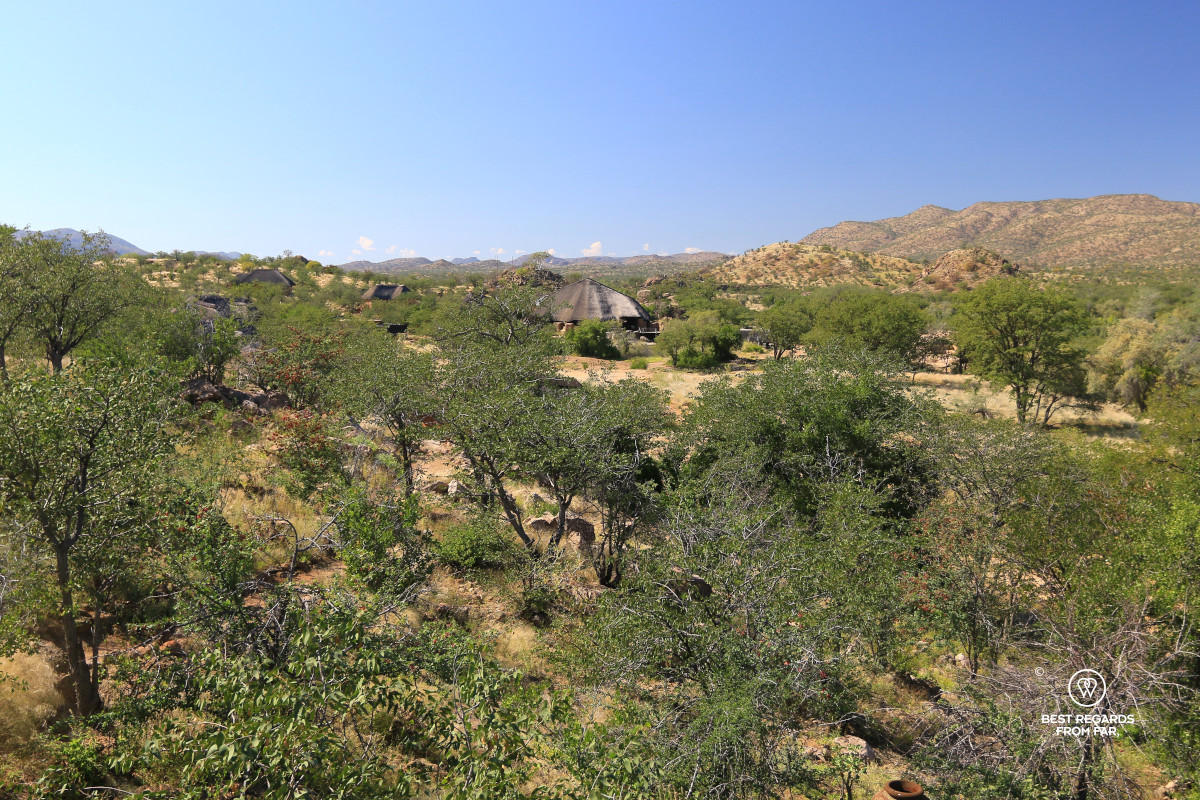
Huab Lodge is indeed a very special place and it is easy to understand why Lidia and Deon took the plunge. Huab Lodge sits at the end of the gravel road, with no through traffic, settlement or other accommodation beyond it, just the conservancy. The beauty of the land captivates everyone who is lucky enough to experience it.
An Easy Morning: Flowers and a Hot Spring
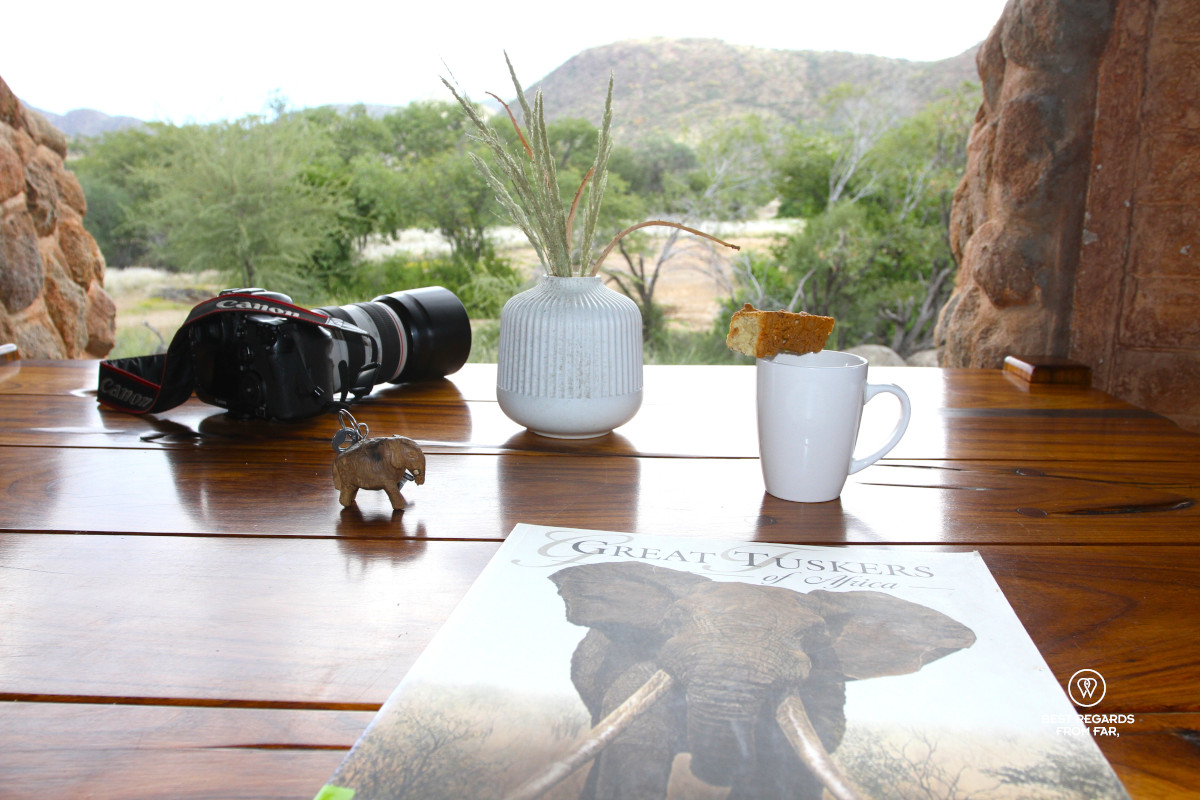
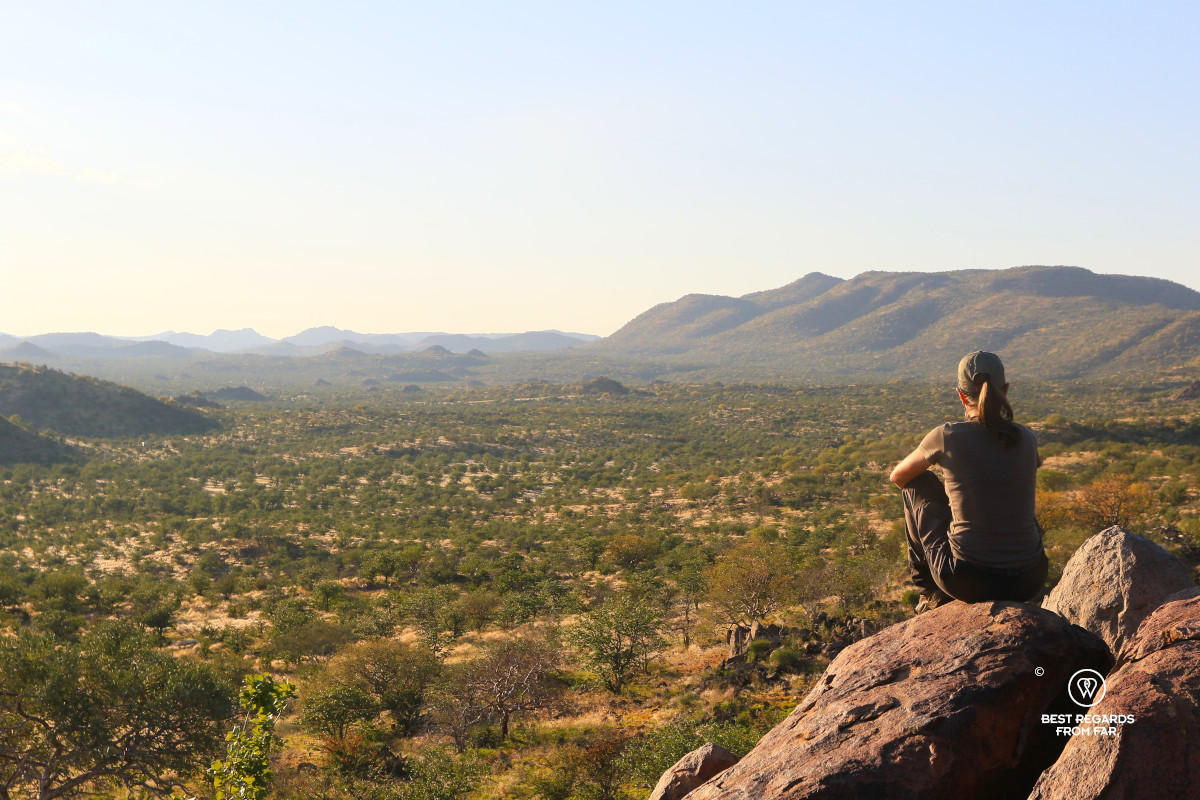
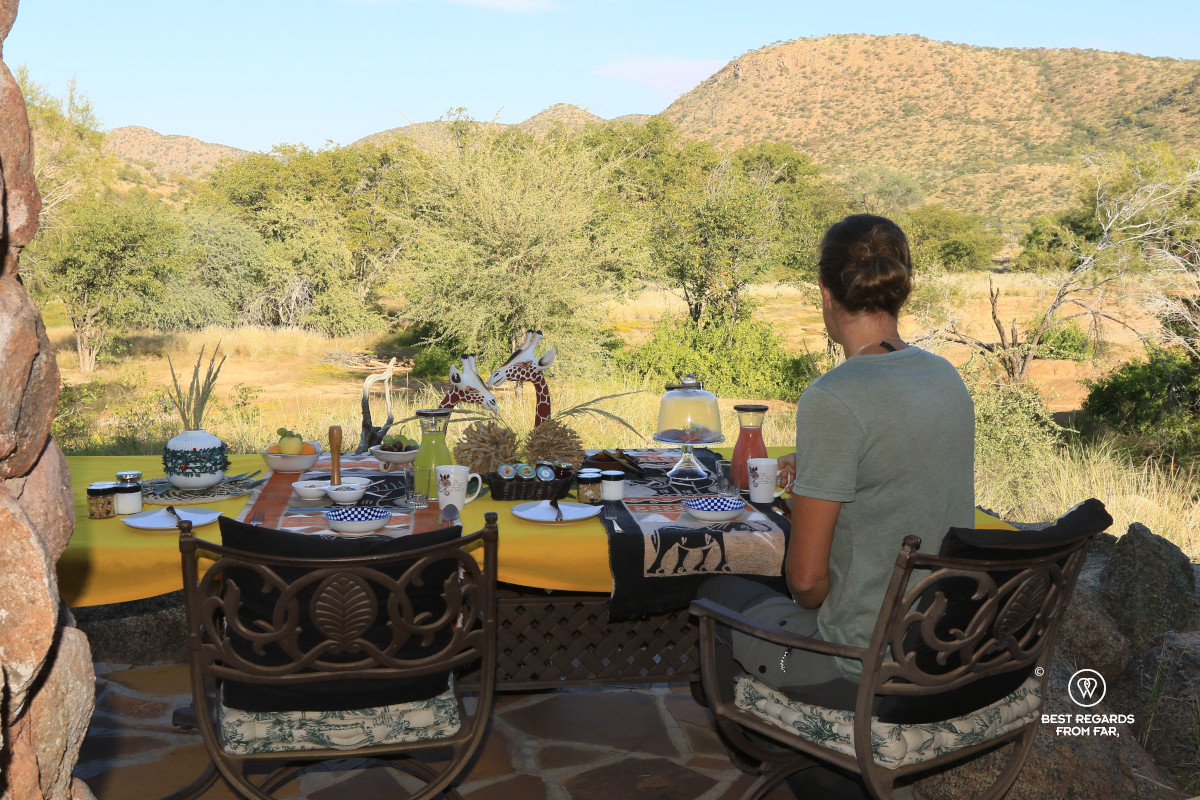
The following morning we set out for a guided walk from the lodge and the red-billed Queleas fly over once more in their morning routine. Walking changes the scale. The path curves through silver bushman grass, mopane and ana trees. Sterculia trees cling to the granite koppies (rocky outcrops) where their bark and foliage attract elephants. We examine tracks and take in the beauty of colourful flowers before reaching a viewpoint that we share with a colony of rock hyraxes, the closest relatives to elephants according to taxonomy. Meanwhile, Lidia has set a generous, healthy breakfast overlooking the riverbed. Birds of all kinds move among the flowers between us and the river while we take time to simply enjoy.
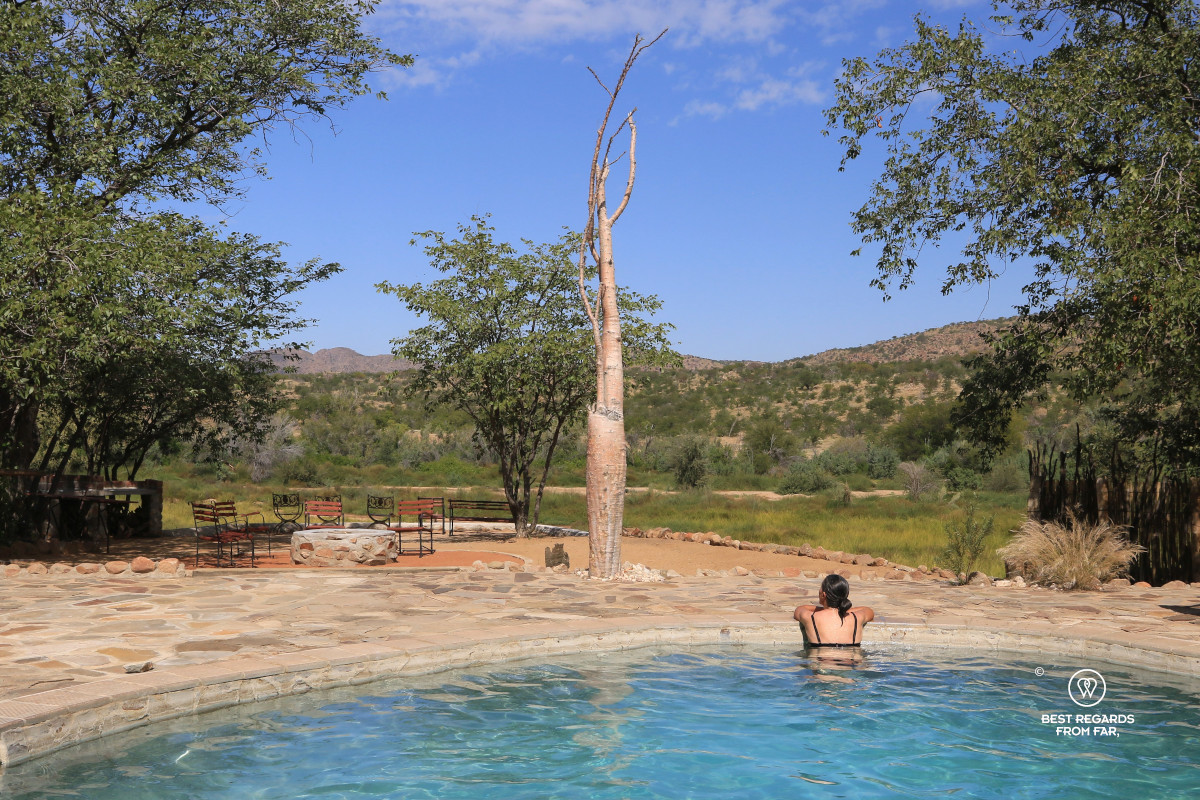
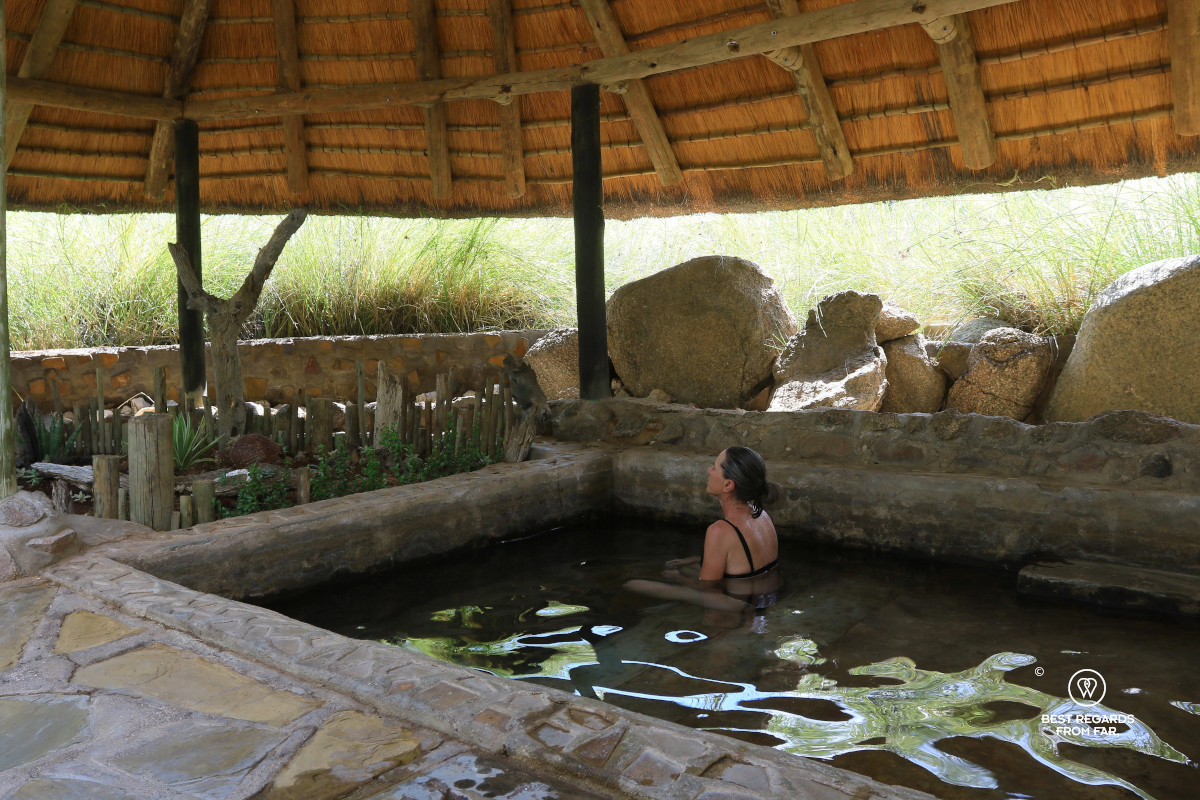
“Let me show you our hot spring”, Lidia suggests after breakfast. Below large granite boulders, the lodge’s natural spring emerges at roughly 70°C (158°F) and is cooled to around 35°C (95°F) for relaxing bathing. Under a wooden shelter, the thermal pool has the simplicity of an outdoor onsen. Soaking there while looking towards the riverbed and listening to birds is meditative.
Ancient and Recently Discovered Rock Art
Deon later fetches us for another drive. We take a different direction today and are baffled by how varied the landscape is. In the distance a dark dolerite ridge rises from the ground and disappears again.
Rock art adds a much older human layer to the Huab. Deon shows us some surprisingly well-preserved rock art that was discovered by his adventurer son with a Bushman’s soul. The paintings show that people were using these lands to hunt and have passed through for millennia, long before borders divided it. Looking closely at the ground we find old spear points. A bit further, Deon shows us a German grave, a reminder of the genocide that took place to rob Namibia of its resources, a recent and dark page of the country.
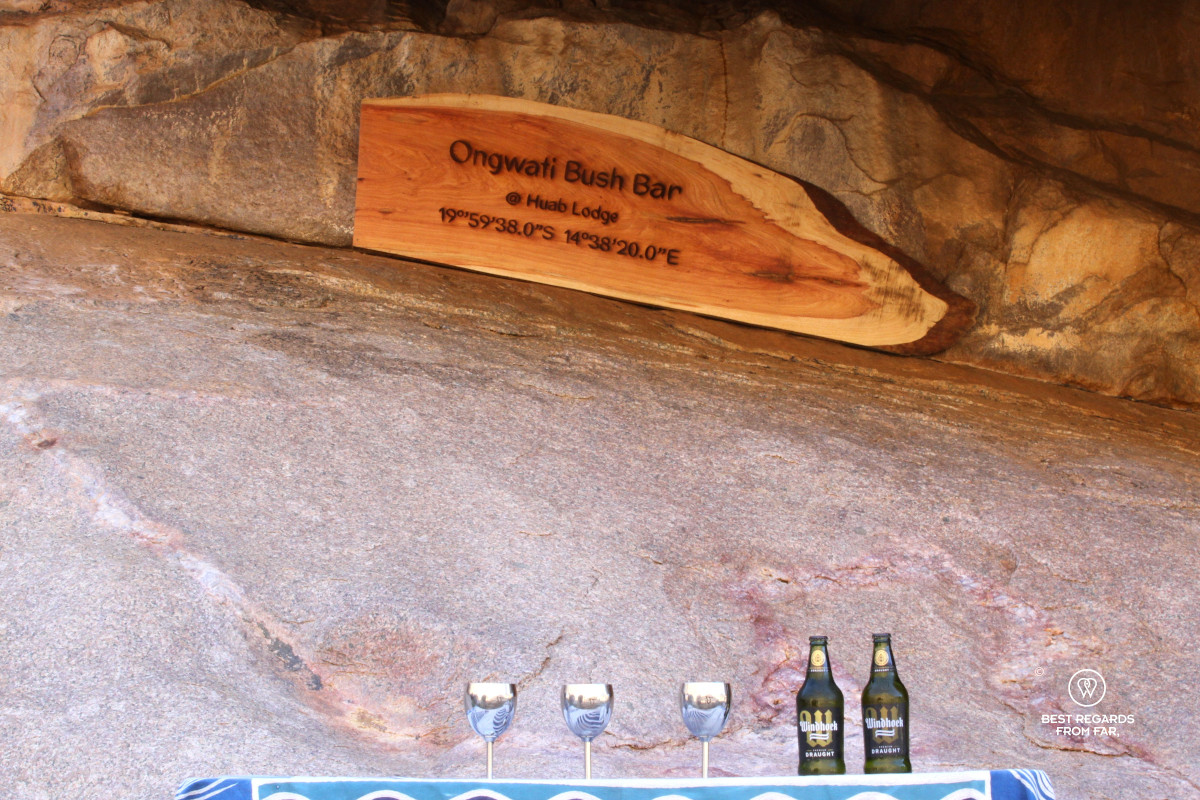
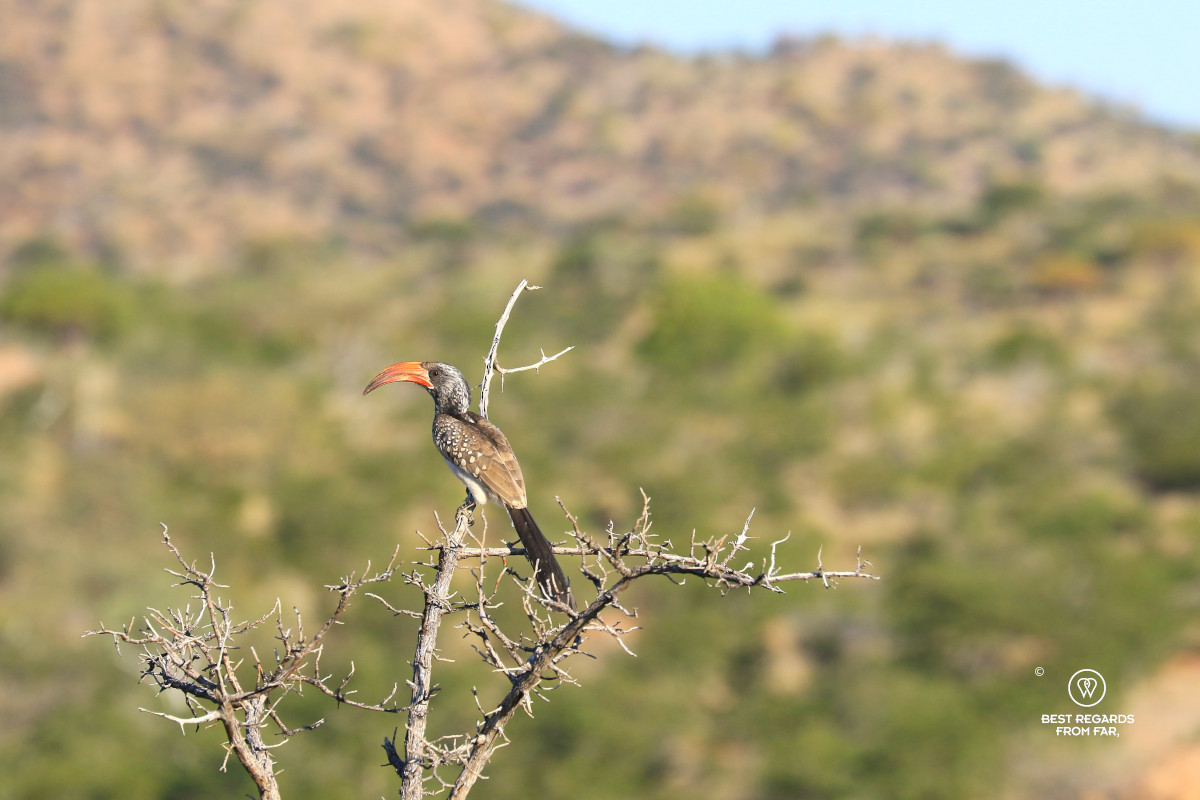
During our sundowner, an African grey hornbill follows the dry riverbed, while a red-billed Monteiro’s hornbill gives its hollow call from the thornveld. From the viewpoint, the last clouds turn pink above the mountains in the distance as the temperature drops.
We Will Return
Three nights at Huab Lodge allow to reconnect with ourselves and connect with the land and truly appreciate the Huab as a living corridor. Huab Lodge may not deliver a desert-elephant sighting every day, even if sometimes it may as well. What it offers is even more lasting: the chance to explore the animals’ habitat with people who know it intimately and are fighting to keep it connected. By the time we leave, the dry Huab no longer looks empty. It is a river waiting for rain, an animal highway and the backbone of an ambitious conservation project.
The elephants may have eluded us this time. The Huab did not. This land has captivated us, and we know we will be back one day.
Travel tips:
- To fully unwind and take in the beauty of the Huab we strongly recommend to make sure to spend 3 nights at the Huab Lodge.
- Check out this interactive map for the specific details to help you plan your trip and more articles (zoom out) about the area!
For more in Namibia, click on these images: