Text & Photographs: Claire Lessiau
Founded by the Almoravids in 1070 at the western foothills of the Atlas Mountains, Marrakesh became the capital of a Berber empire that stretched from the edge of Senegal to central Spain and from the Atlantic coast to Algiers. Capital of successive dynasties and later overshadowed by Fez, the Red City experienced another golden age under the Saadians in the 16th century. Marrakesh was not only a cultural and religious center but also an important trading hub and stopping point for caravans traveling the spice routes. The movement of people, ingredients, and ideas greatly influenced Moroccan gastronomy.
Pin it for later!
Today, this imperial city (one of Morocco’s four historic imperial capitals and its fourth-largest city) has been developed as the country’s major tourism hub. To truly experience Marrakesh and Moroccan culture away from the Jemaa el-Fnaa Square where macaques and snakes sadly perform for tourists while tortoises are illegally traded, we push open the doors of two very different kitchens: one devoted to promoting Morocco’s culinary traditions, the other to reinventing them.
For The Most Traditional Moroccan Cooking: The Culinary Arts Museum
Enter the Palace
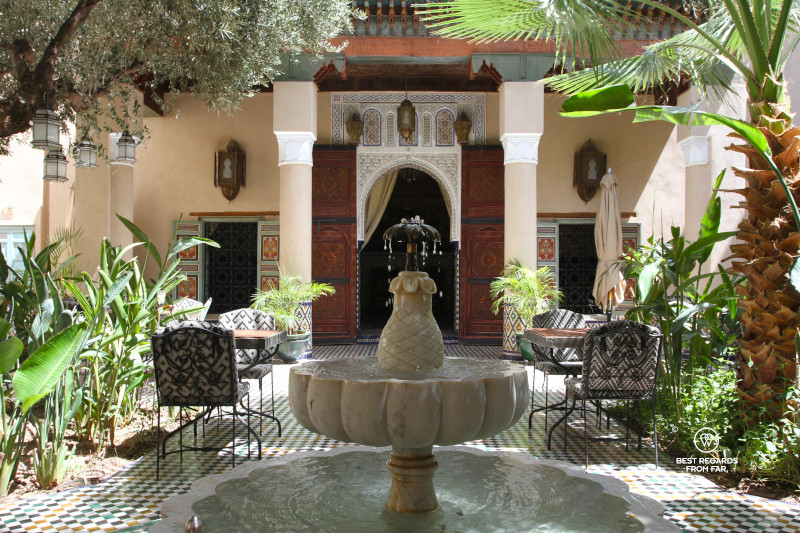
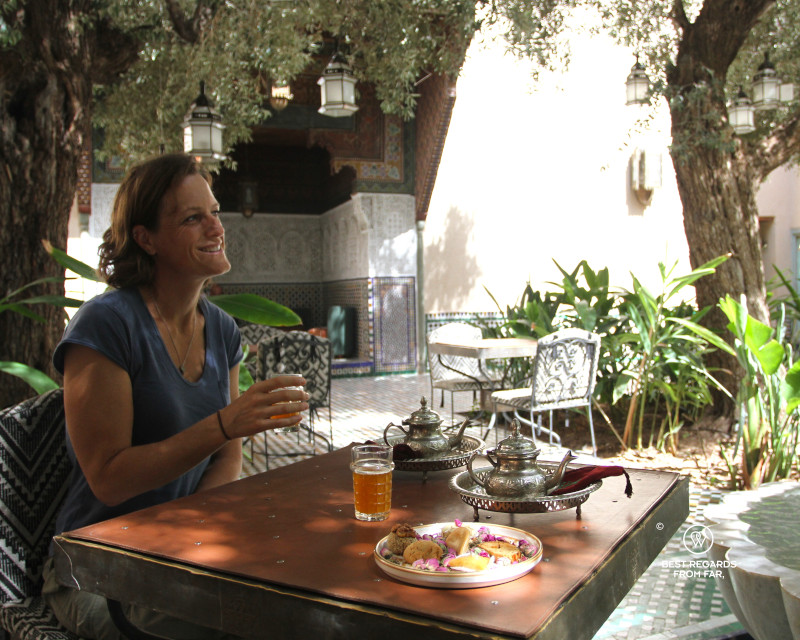
The entrance is unassuming, like many larger shops hidden within Marrakesh’s medina. Inside, the hostess welcomes us with warm Moroccan hospitality and leads us to an interior courtyard, where intricate woodwork and natural light transform the atmosphere. There, Nouhaida, our guide to Moroccan gastronomy, joins us and leads us toward an unexpected gem: a beautiful garden shaded by century-old olive trees. This riad was once part of the neighboring Bahia Palace, built by the grand vizier Si Musa in the 1860s. Descending from a family of black slaves which served the Moroccan royal government, Si Musa reached the highest offices in the country and paved the way for his son who also became a grand vizier. The palace, with its 150 rooms, can be visited. But sipping a mint tea and nibbling on delicious kaab el ghazal (horns of gazelle, a small crescent-shaped Moroccan pastry with almond paste and a hint of orange blossoms originally from Fez) while listening to the central fountain and birdsongs seems an even better way to experience the lifestyle of Morocco’s late-19th-century elite, sheltered from the chaos of the medina.
Tea: From Nobility to National Drink
The legend credits the Queen Anne of England for introducing tea to Morocco in the 17th century in exchange for British prisoners of war. Once reserved for the nobility, tea has become Morocco’s national drink. Mint tea mixed with Chinese green tea is now the symbol of Moroccan hospitality. With its fair amount of sugar to soften its bitterness, the tea is poured dramatically as high as possible above the glass to show the guests how welcome they are, while aerating it. We raise our glasses with Nouhaida. “Bssaha!” she says: May it enter your body with health.
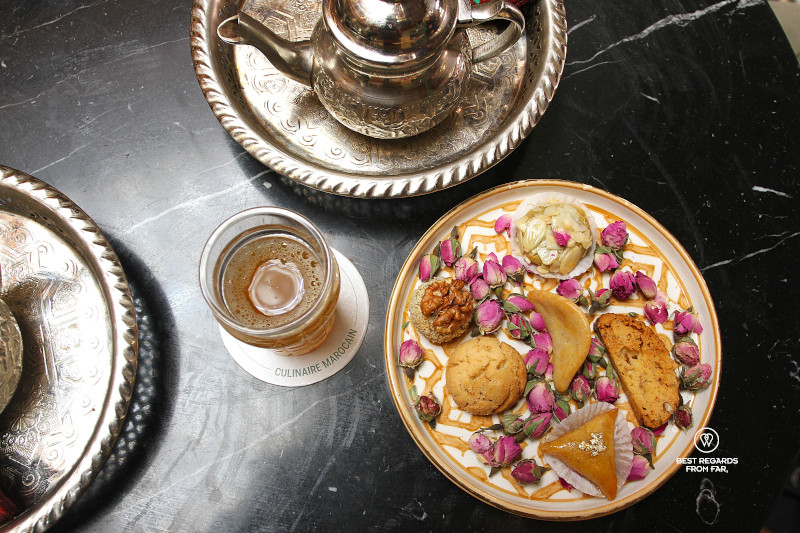
She presents some butter ghoriba, shortbread cookies made with flour, sugar, and butter, and flavored with citrus zest, cinnamon, and orange blossoms. They crumble and melt in the mouth. A selection of Moroccan pastries arranged over a bed of Damascus roses satisfies our sweet tooth and whets our appetites for what is still to come.
The Distinctive Features of Moroccan Gastronomy
Yet, before wearing our aprons, Nouhaida takes us on a culinary journey across Morocco to discover the country’s regional traditions and distinctive features.
Fez, an imperial city for almost 700 years, is the cradle of many of today’s most refined Moroccan dishes. At a time when sugar was a luxury, wealthy households welcomed guests by adding hints of sweetness to savory dishes. The delicious pigeon pastilla is the perfect example: layers of delicate warqa pastry filled with shredded pigeon, eggs, roasted almonds and cinnamon, and sprinkled with icing sugar. The result is simultaneously savory, sweet, crisp, rich and aromatic.
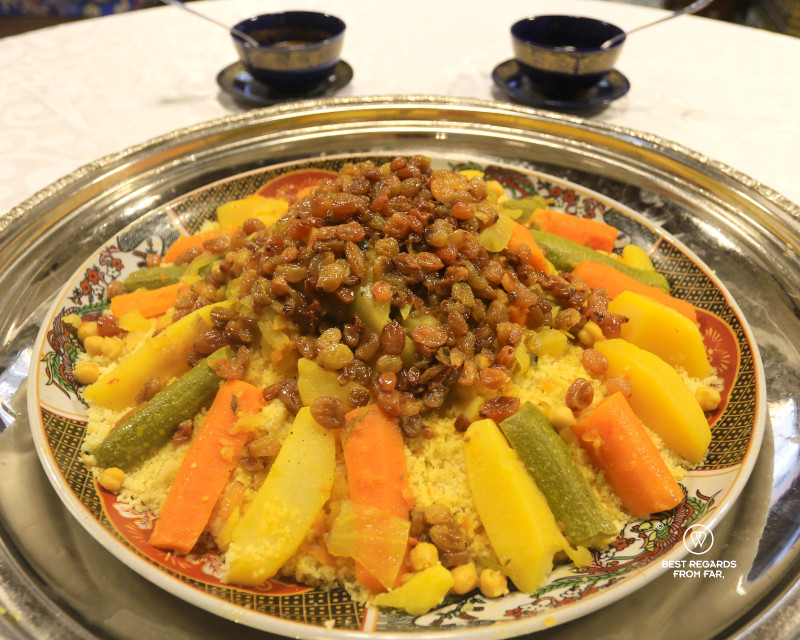

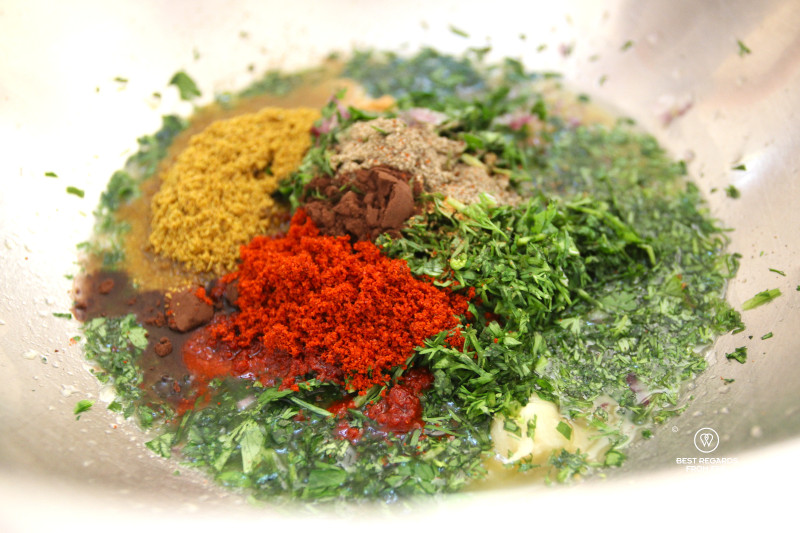
What makes Moroccan gastronomy particularly distinctive is also the rich mix of spices, which creates intense aromas without being overly spicy. Ras el hanout (which means “top shelf”) may be the best example. Recipes vary widely incorporating anywhere from 10 to 40 spices. Some even claim 100 for the most complex blends! Cumin, coriander, black lime, dried capers, and also many spices coming from the Far East such as cardamom, black and white peppers, long pepper from the Himalayas, mace and nutmeg, dried ginger, allspice, star anise, cloves, cinnamon, turmeric… Precious and expensive spices were used in this ancestral condiment that is often a closely guarded secret and a chef’s signature recipe.
Cooking with a Dadda
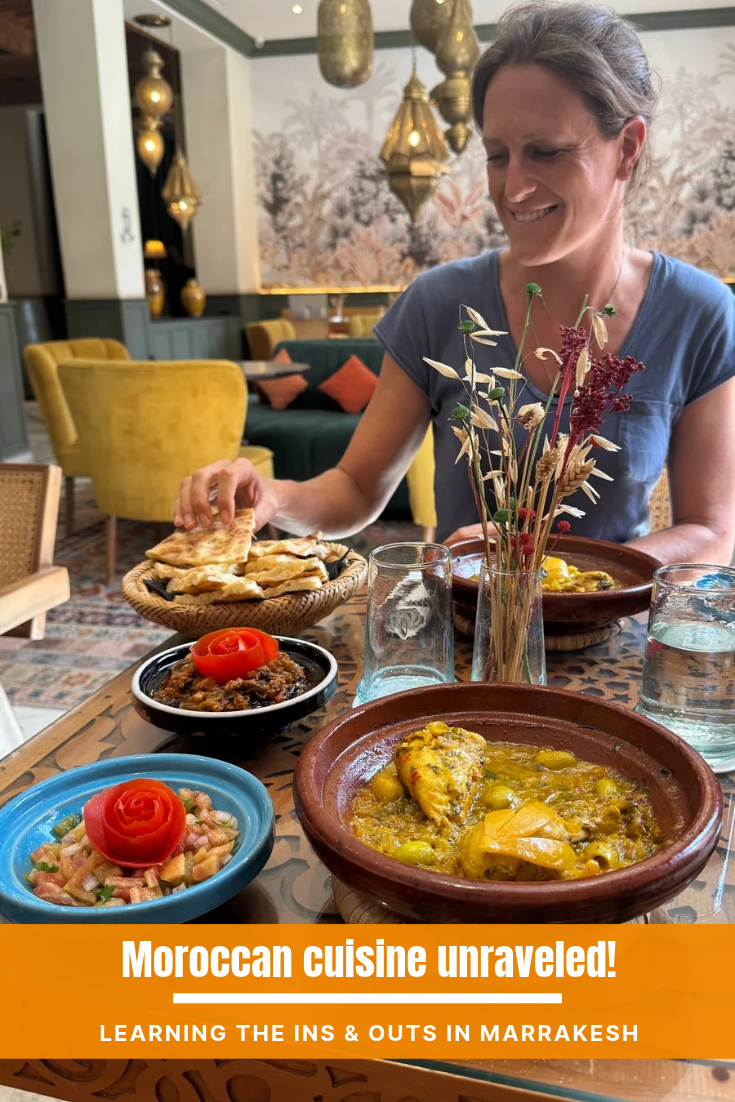
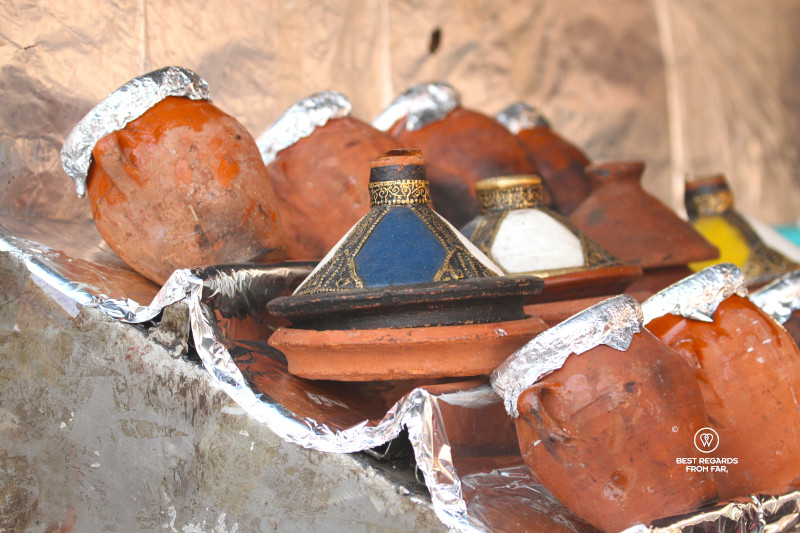
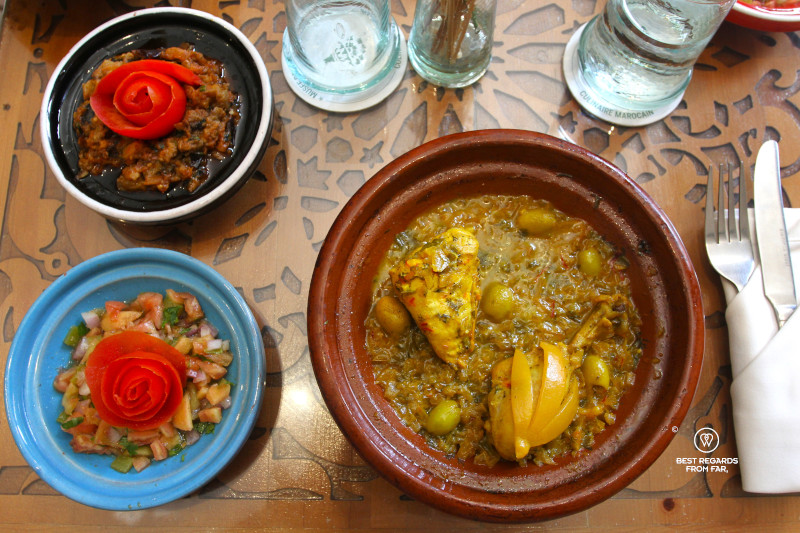
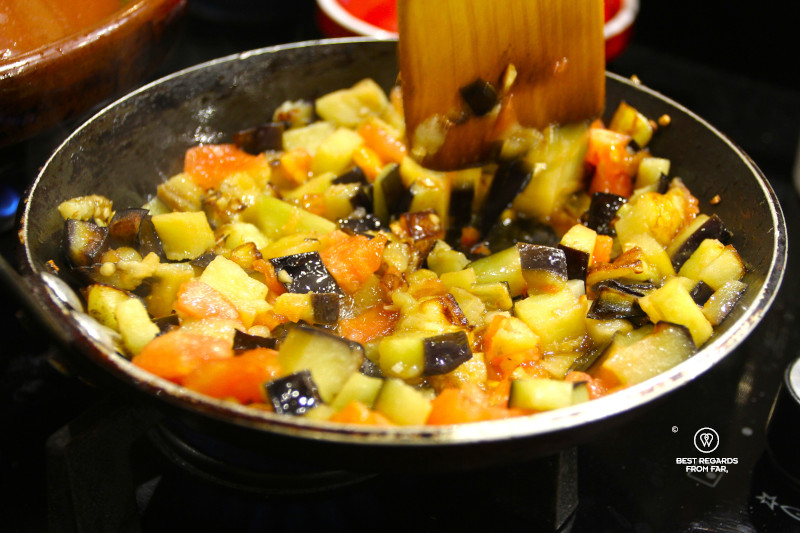
Nouhaida leads us into a large kitchen that can accommodate more than 20 guests. Our dadda enters with a broad smile. In Morocco, the term refers to the women traditionally responsible for feeding and caring for a household. Daddas are the keepers of traditional recipes and culinary know-how. As such, the menu we are about to cook is deliberately traditional: zaalouk, a smoky eggplant purée, chicken tajine served with tannourt, an Amazigh* flatbread baked on heated stones in a clay oven, and pastilla for dessert.
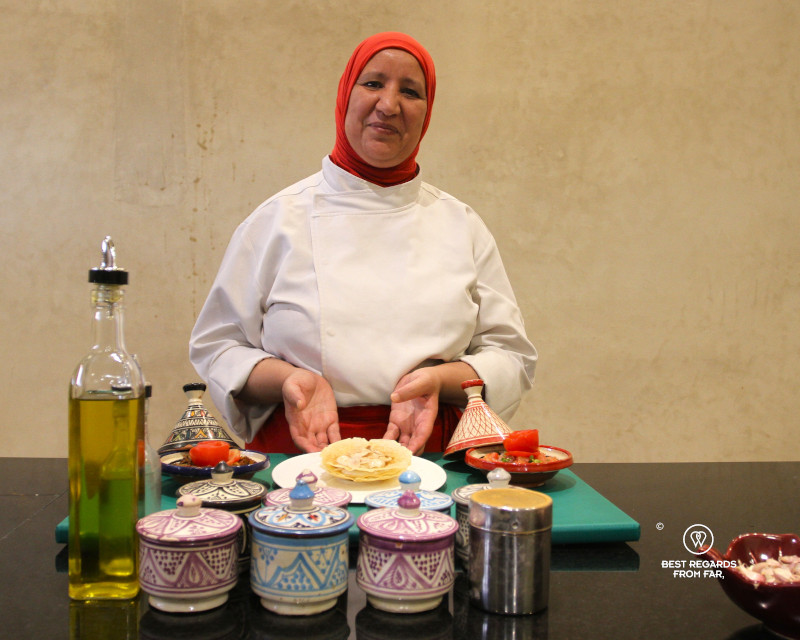
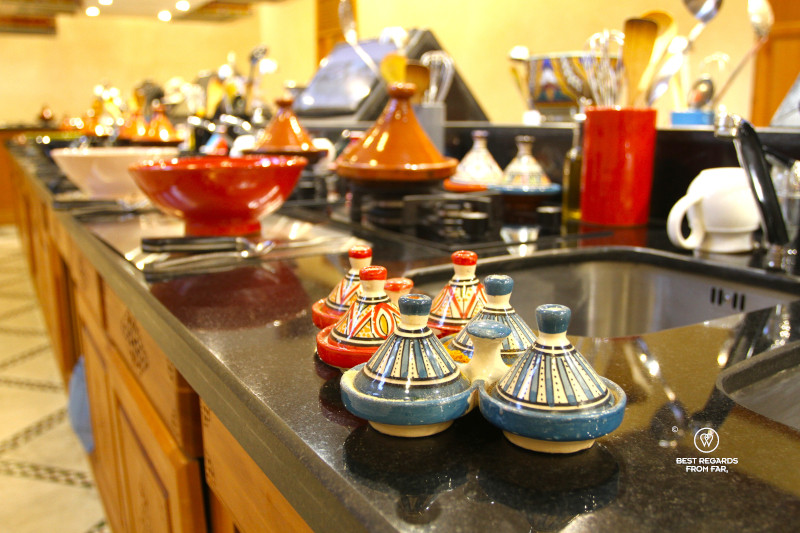
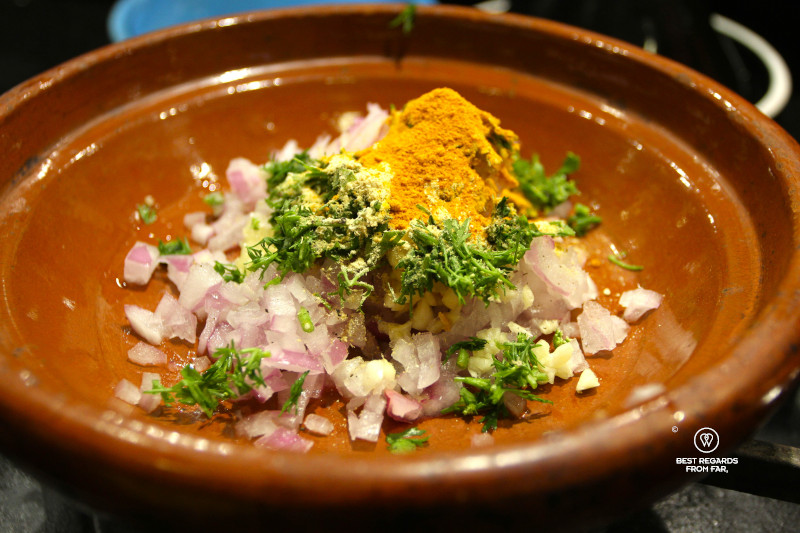
The dadda begins chopping the vegetables which have been prepared for us in advance, leading the way while Nouhaida translates and guides us through the process. They both watch our progress carefully, stepping in when necessary. Bit by bit, we complete every step needed to cook the perfect tajine at our cooking station. The eggplant purée takes shape as well, giving our arm muscles a workout as we transform cooked eggplant into a smooth, silky purée. The pastilla is easier: we simply assemble the layers of crisp dough and orange-blossom-flavored cream.
The three-course lunch is brought down to the restaurant area, and we settle in to enjoy what we have made. We take our time, trying to detect every nuance of flavor, and each dish tastes all the better for having prepared it ourselves.
For a Healthy & Innovative Edge: The House of Fusion
In the heart of the medina of Marrakesh, a heavy wooden door opens. The cute face and sweet eyes of an Aïdi, better known as the Atlas shepherd dog, greet us before Edwina Golombek does so. An Australian who has lived in Morocco for more than 20 years, Edwina invites us into the riad she renovated herself. The smell of freshly brewed coffee fills the air.
Edwina is a chef by passion. Her cooking is also a tribute to her late son, a celebrated chef who sadly died of cancer in his twenties.
The spices of Morocco and the traditional local recipes have inspired her for years, and she has made them her own, incorporating elements of the Mediterranean diet to make her dishes healthier, and adding an Australian sense of adventure to bring variety to the ubiquitous tajine.
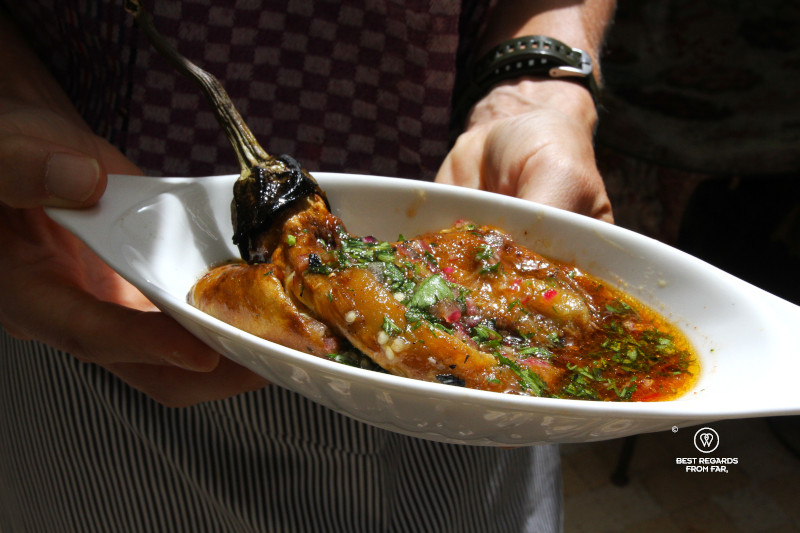
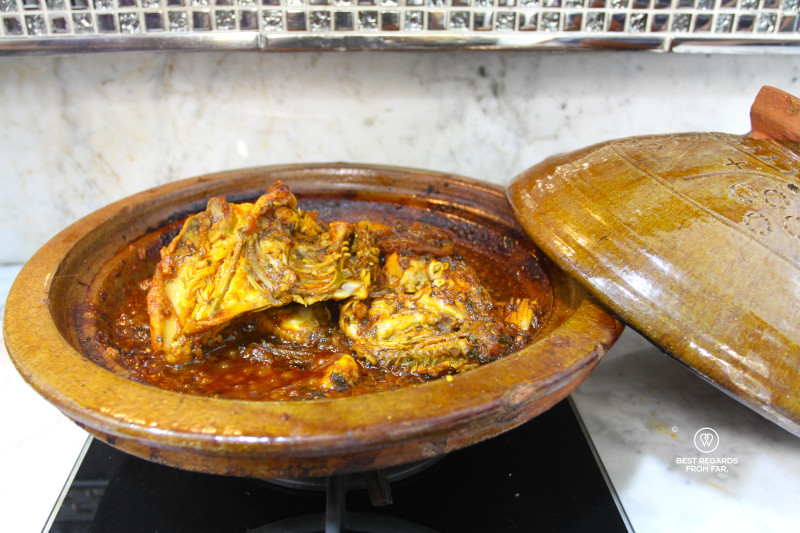
She shares her enthusiasm for cooking and experimenting through private classes during which she creates the menu together with her guests. Sipping coffee, ideas begin to emerge. Edwina enthusiastically suggests possibilities, asks for our reactions, modifies recipes, and scribbles down the final choices… in Arabic. Cucumber sorbet, blistered eggplants, grilled peppers on a cashew chermoula (North African marinade and condiment), Chinese radish mash and orange saffron chicken tajine make the cut. Edwina teaches us enough Arabic to politely navigate the local market…
The Souks of Marrakesh
We leave the riad and plunge into the narrow labyrinth of the souks of Marrakesh’s medina. Along the main tourist thoroughfare, the layout has changed. With a disapproving look, Edwina points out cafés and souvenir shops that could just as easily be found in Paris or Barcelona. A little farther on, the traditional organization of the souks is still visible, grouped according to trades, with workshops clustered together according to their specialties. To this day, more than 2,600 Moroccan artisans representing 20 guilds work here.
We, naturally, head for the food.
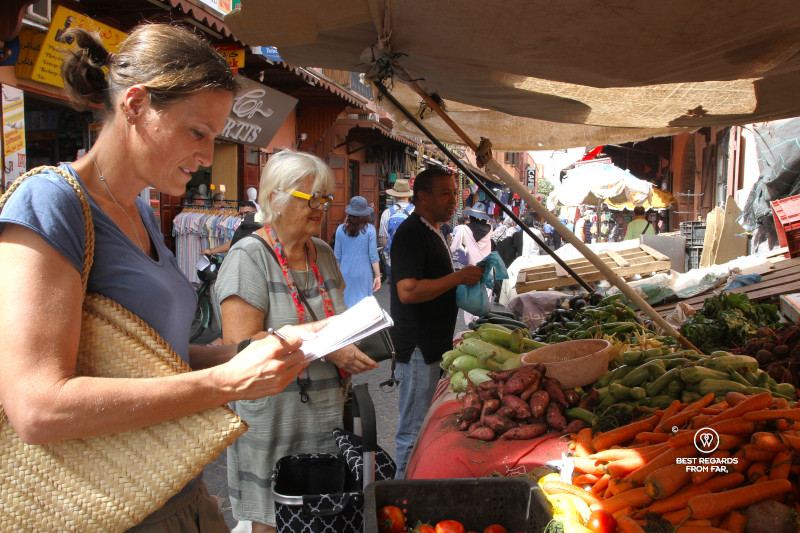
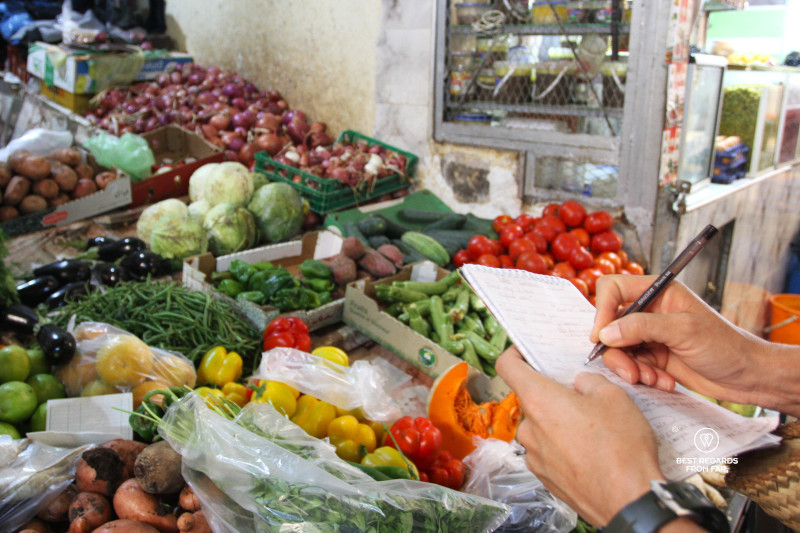
At first, we approach the vendors shyly: “Salam alekoum… Afaq atini…” (hello, please may I have). We gain confidence as vendors pick the ingredients we asked for from their colorful displays.
Edwina teaches us to distinguish male from female eggplants by looking at the mark on the bottom: a more elongated shape or a rounder one. For our grilled eggplant dish, we want fewer seeds, so we look for the males.
Into our basket go nana (mint), matisha (tomatoes), zitoun (olives), jiha (cucumber), djej (chicken) and more.
“Safi baraka shukran… Bislema” (that’s all, thank you… Goodbye).
On our way back, we pass by stalls selling saffron: “Don’t buy it here, it’s often fake, and it’s hard to tell!” Edwina warns. She has her own supplier, she explains, who provides the highest-quality saffron. “He gets me the first opening of the crocus flower,” she continues. The crocus flower opens many times indeed, and is the most aromatic for the first opening when the stem is very stiff. “Watch carefully when the vendor puts the saffron on the scale: you want the stem to be very stiff,” Edwina concludes. Unfortunately, she says, some scams go even further. What is sold to unsuspecting tourists may not be lower-quality saffron at all, but the stem of another flower that has simply been dyed.
The Cooking Class with an Expert Chef
Moroccan hospitality always begins with tea.
Before we start cooking, we prepare ours together. We wash the Chinese green tea vigorously, and twist and break mint and rose pelargonium leaves to release their oils.
Following Edwina’s instructions, we add a mix of carefully selected spices: sage, thyme, lemon verbena, star anise, cinnamon, ginger, black chocolate powder…. and three sprays of rose water for more floral notes. “The sugar is important to wake up the herbs and quieten down the bitterness of the green tea,” Edwina states as she adds some cubes in. Then, in the traditional Moroccan way, three times, the tea is lifted high and poured back into the pot before serving. So much fragrance and so many flavors!
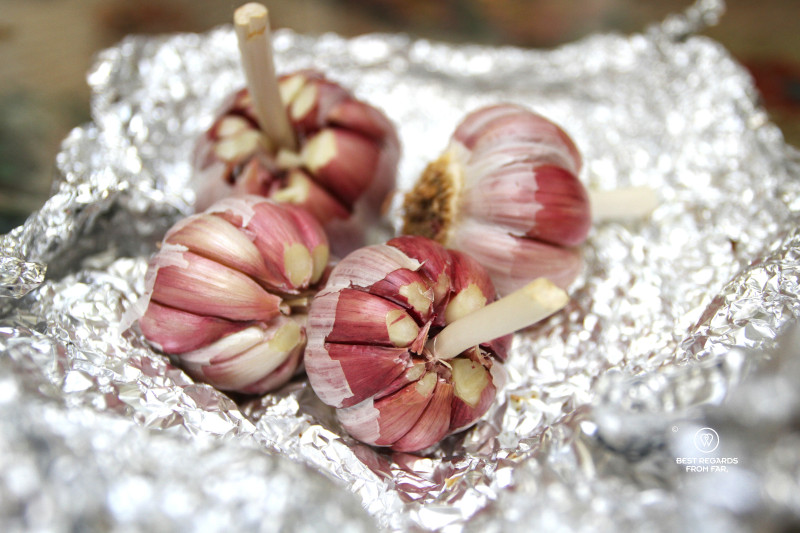
We begin with locally grown pink Berber garlic, trimming the tips before wrapping the bulbs in foil and putting them into the oven. Garlic is fundamental to Moroccan cuisine, and appears in dish after dish.
“Set the mandolin to 1.3 for the onions,” Edwina instructs. We stare blankly. She immediately pivots and demonstrates the technique.
At the center of the kitchen counter sits an arsenal of spices: ginger, cumin, sugar, salt, pepper, paprika, and more. For every dish, Edwina begins with precise amounts of each ingredient by the teaspoon. That is where the magic is, and balance is the secret.
We follow her lead, preparing one dish after another. Occasionally she rescues one of our mistakes with the serenity of an expert chef.
Moroccan Breads
Bread is a staple of the Moroccan diet.
In remote villages, many households still bake their own bread, while markets offer a wide variety of shapes and textures.
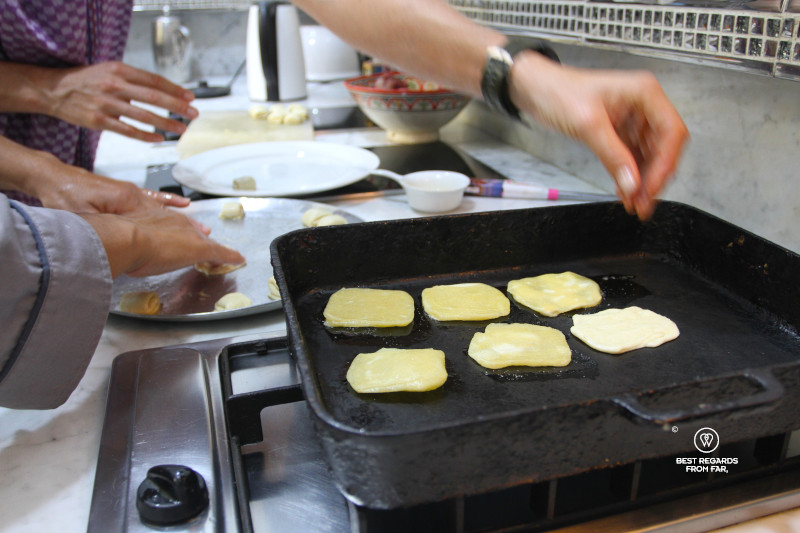
With Edwina, we make batbouts, small, round, yeast-based breads that are flattened and cooked on the stove. As the dough rises and opens, it naturally forms a pocket, perfect for stuffing.
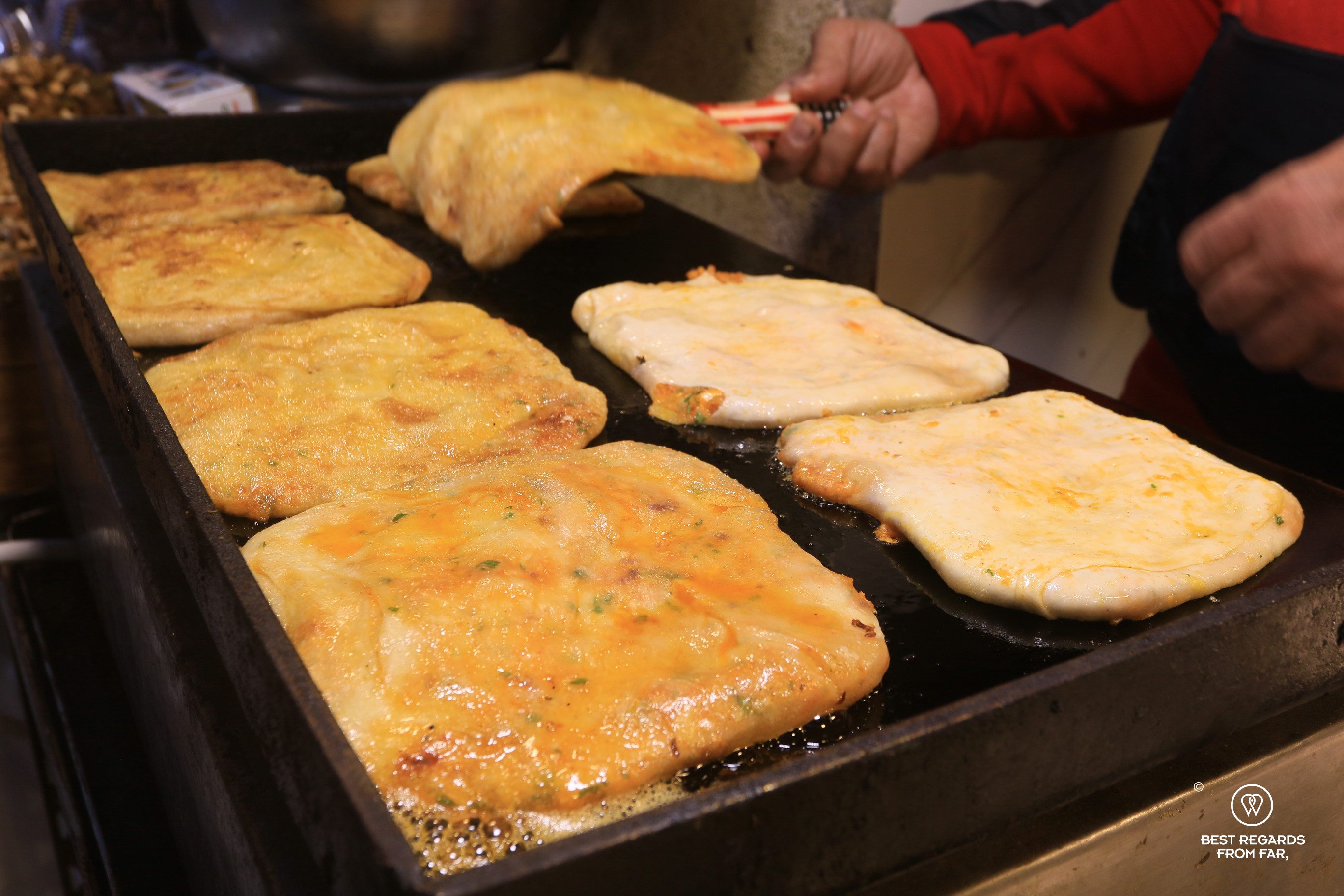
We also fry some msemen, a layered Moroccan flatbread made without yeast and with a generous amount of olive oil.
We knead it with strength to activate its glutinous chain, a technique that is trickier than it looks but gets easier with practice. In some of the breads, we add a bit of roasted garlic for extra flavor.
Savoring the Eight-Course Lunch
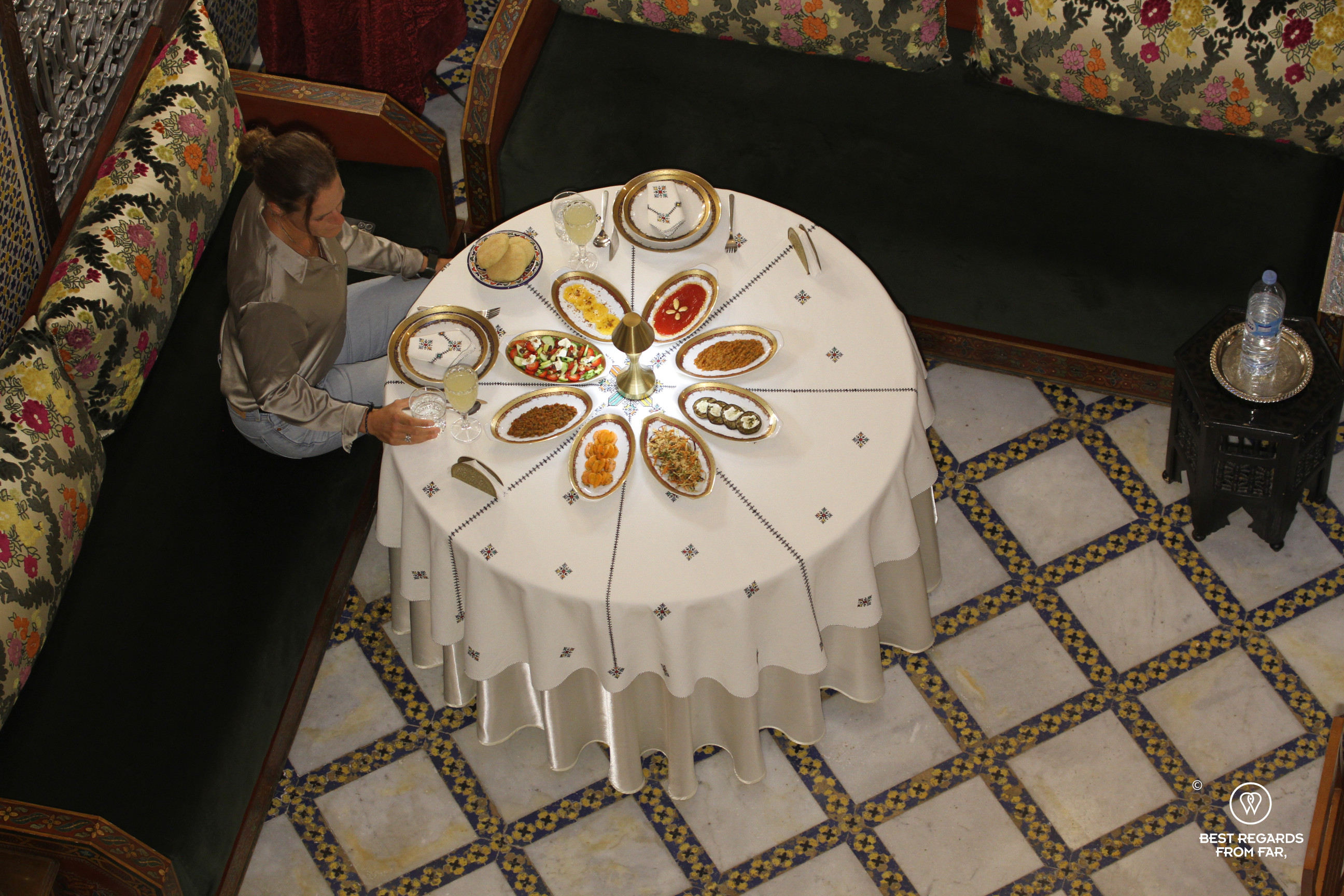
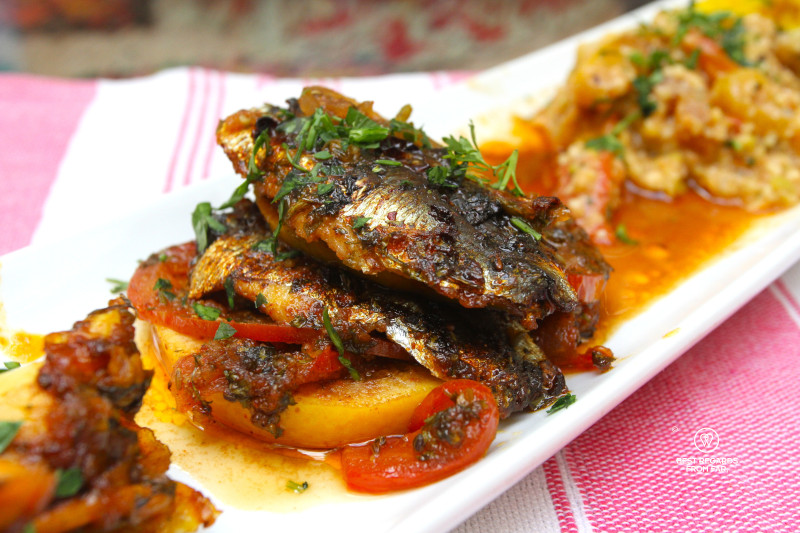
After hours of cooking together and smelling the delicious aromas, everything is ready and we are eager to taste Edwina’s recipes! Portions of each dish are carefully plated on a long platter. The breads, still hot from the stove, sit on the table.
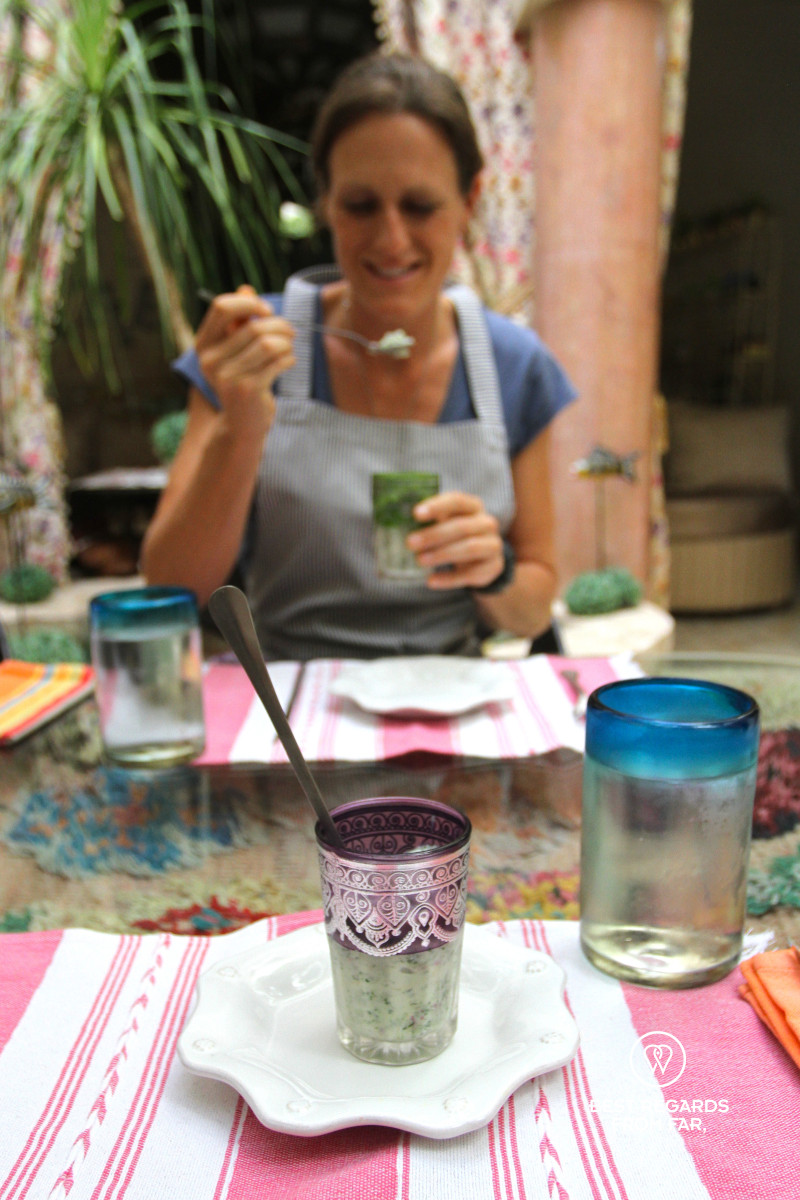
The cucumber sorbet with mint, onions, lemon juice, and condensed milk is refreshing, with just a touch of sweetness for a perfect balance.
“The Chinese radish (or daikon) has a peppery entrance that we leveraged nicely,” Edwina states, satisfied. The orange, garlic, onions, and saffron complement the radish.
The blistered eggplants haven’t made it to the table as we couldn’t resist having them while cooking!
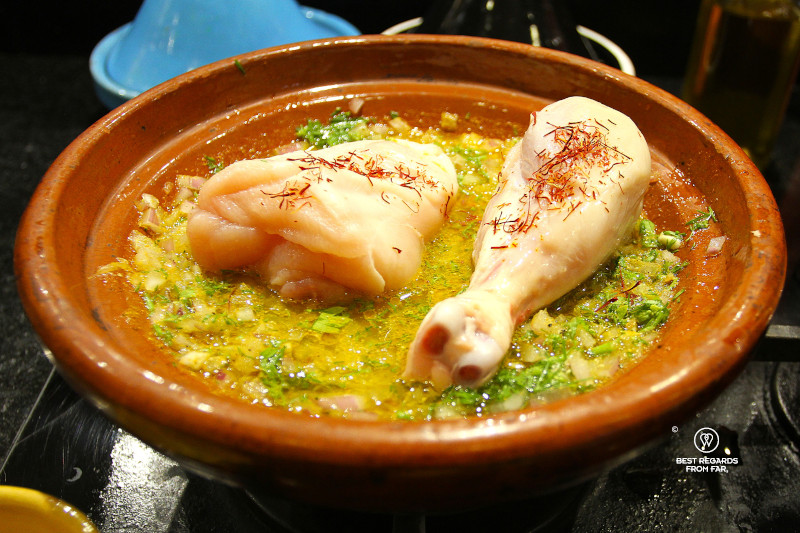
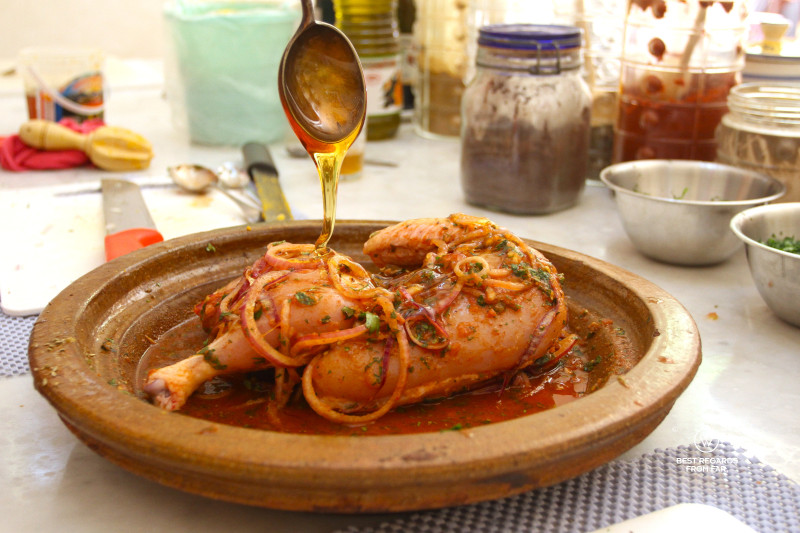
A citrus-and-saffron chicken tajine follows. The fresh chicken is very tender, and the mix of spices makes it fragrant and flavorful.
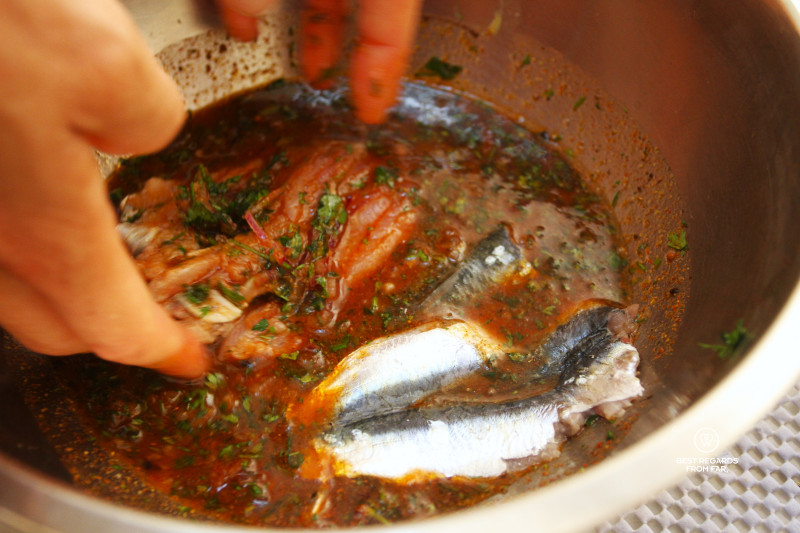
Sardines served over a salsa of sliced onions, orange, tomato, and cinnamon are a healthy source of protein.
The olive-and-cashew chermoula topping the grilled peppers adds crunchiness and a delicious nutty touch.
Edwina’s inspiration is unmistakably Moroccan, and her mastery of spices reflects decades of experimentation. Chef Edwina’s way, having her recipes infused in various influences from the spice souk to Australia and the Mediterranean, and adapted to new ingredients, may be the utmost respect for Moroccan cuisine, echoing its very roots.
*Amazigh (plural: Imazighen) people are often referred to as Berber as this large indigenous group used to be called by outsiders. Their language is Tamazight, which has become an official language of Morocco alongside Arabic in 2011.
Travel tips:
- Make sure to book your cooking class at the Culinary Arts Museum. The museum itself is interesting while visited with one of the onsite guides. Its garden is a lovely place to enjoy a tea or else.
- For a private and in-depth experience that includes a market tour, book your cooking class at The House of Fusion.
- Check out our interactive map for more in the area (black pins lead to an article):
For more in Morocco, click on these images!