Text: Claire Lessiau
Photographs: Claire Lessiau & Marcella van Alphen
Prologue: Kalaat M’Gouna — Morocco’s Rose Capital
The rose capital of Morocco, Kalaat M’Gouna is where the Damask roses handpicked in the surrounding valley of the Dadès are processed into rose water, essential oils, body lotions, soaps, deodorants, and a myriad of fragrant products.
Pin it for later!
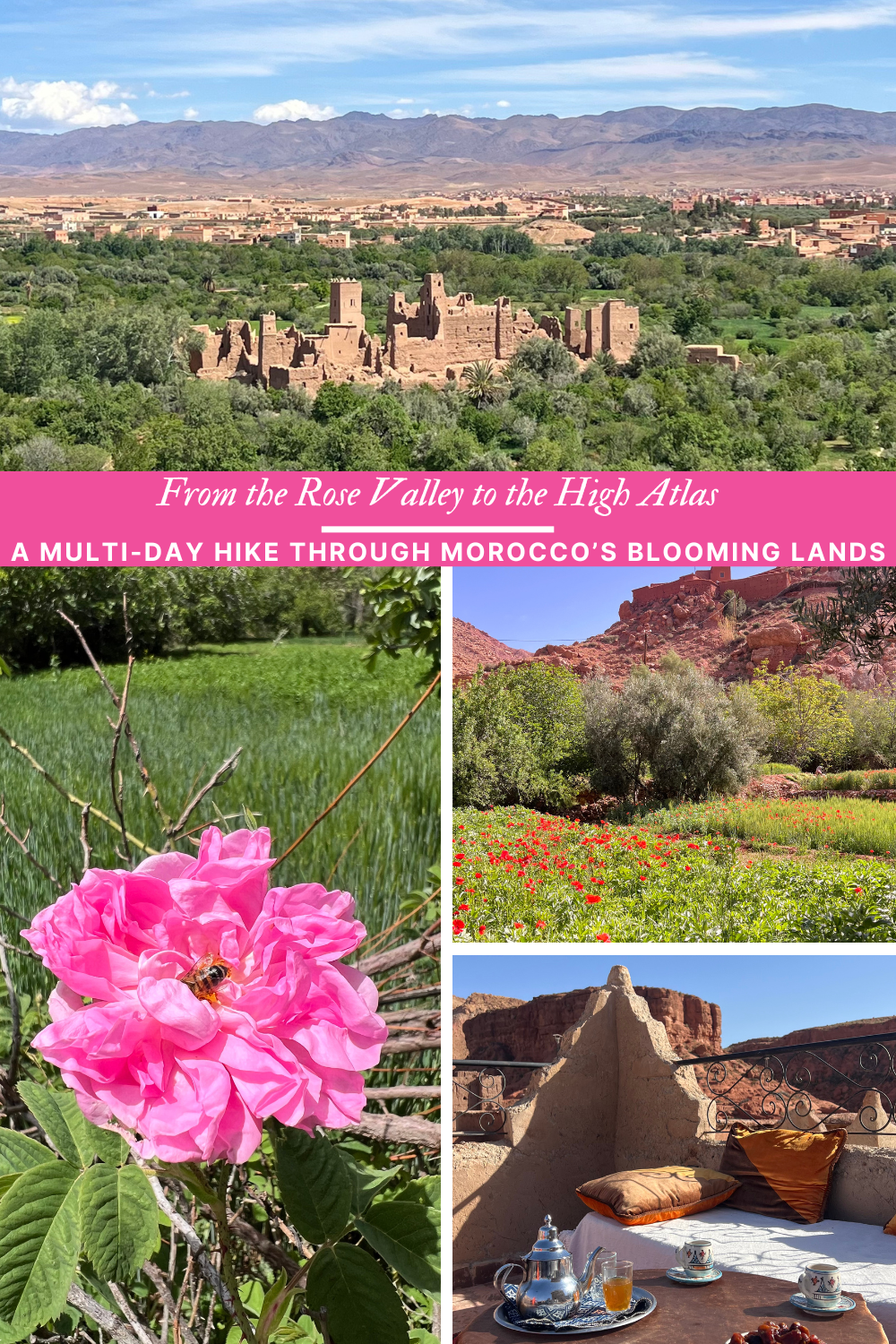
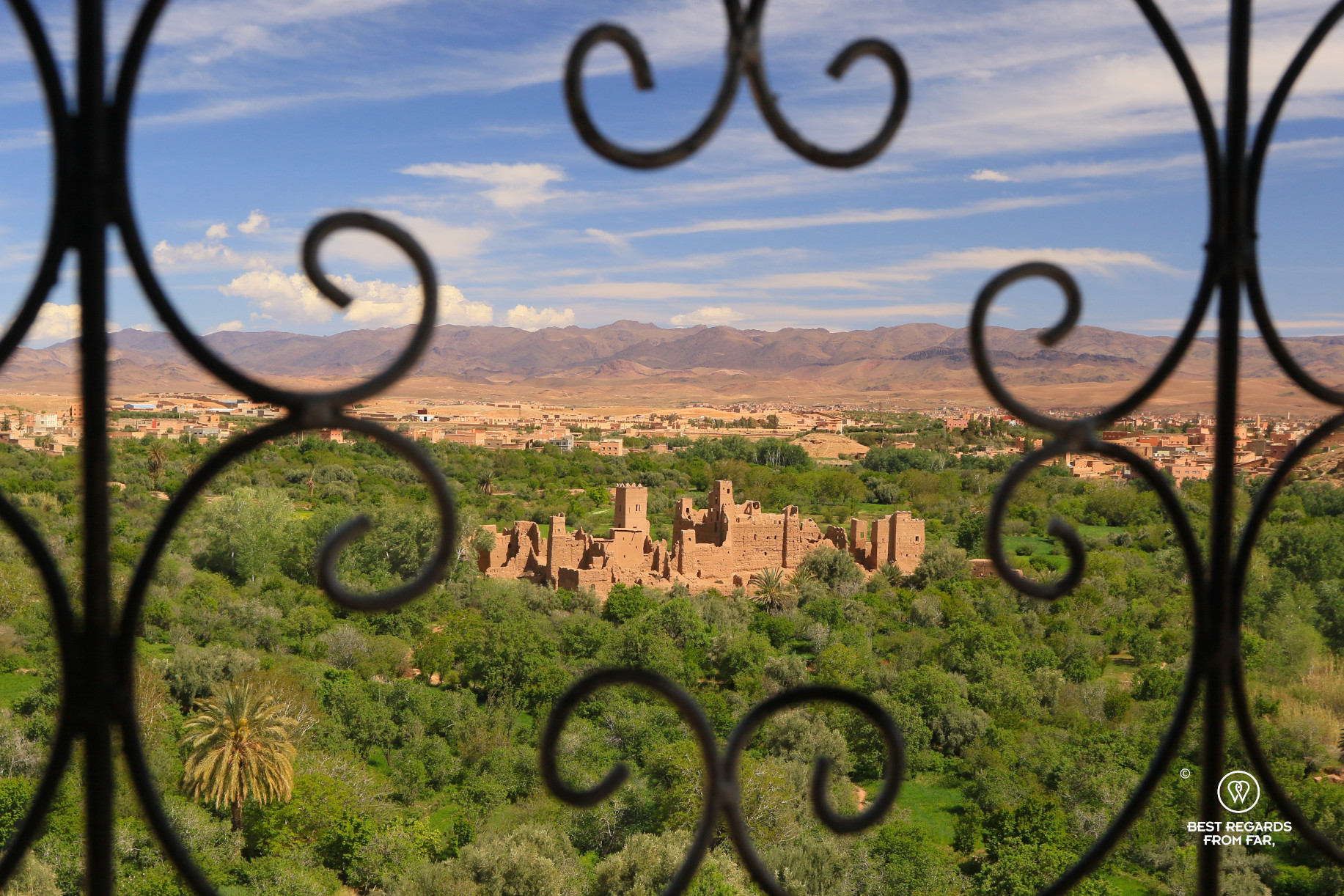
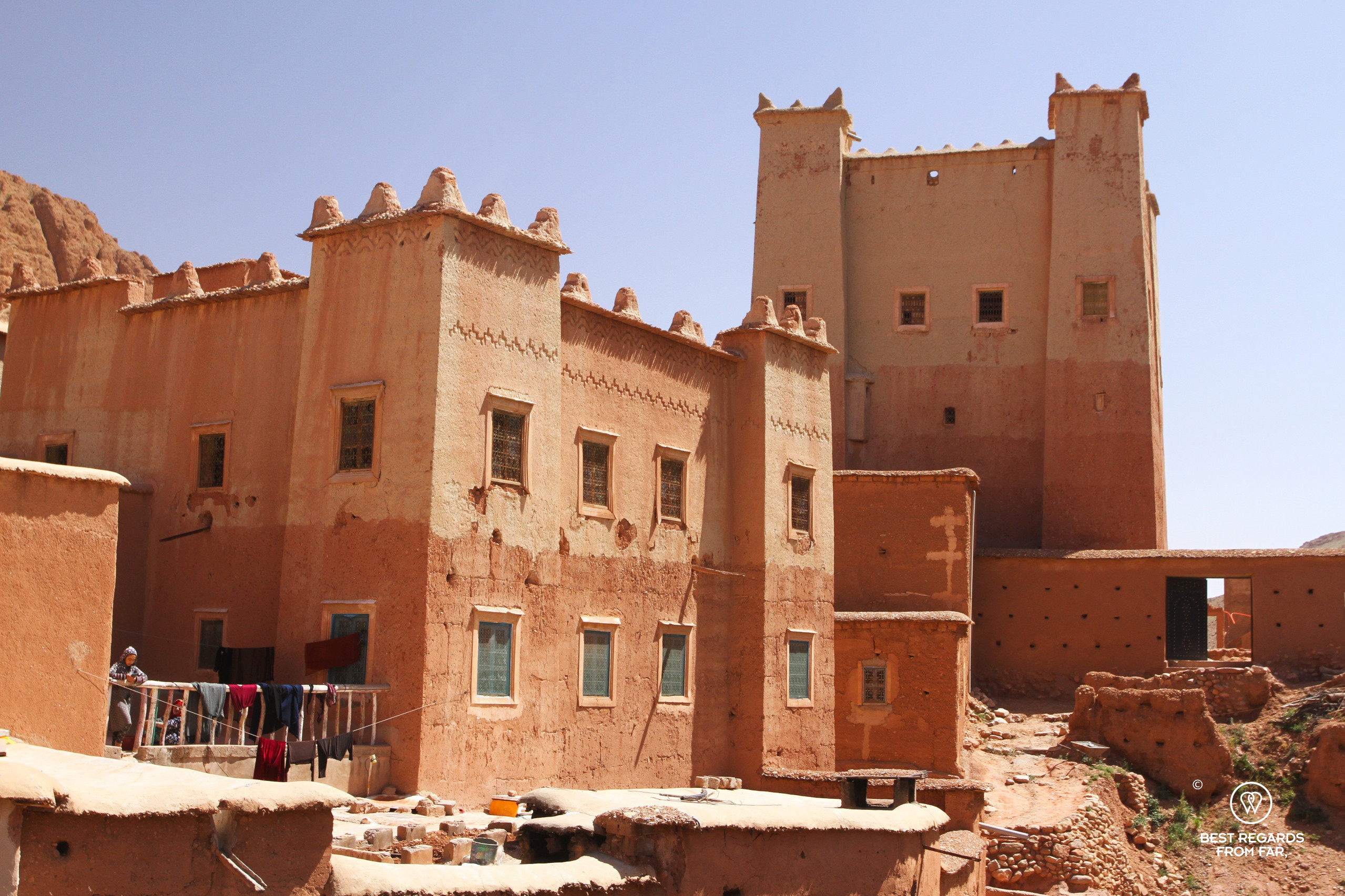
Crossing the lively town animated by its souk, constructions slowly make room for the gardens. Narrow footpaths weave through a mosaic of cultivated plots separated by rose trees. The ruins of an ancient adobe kasbah contrast as they tower above the green fields.
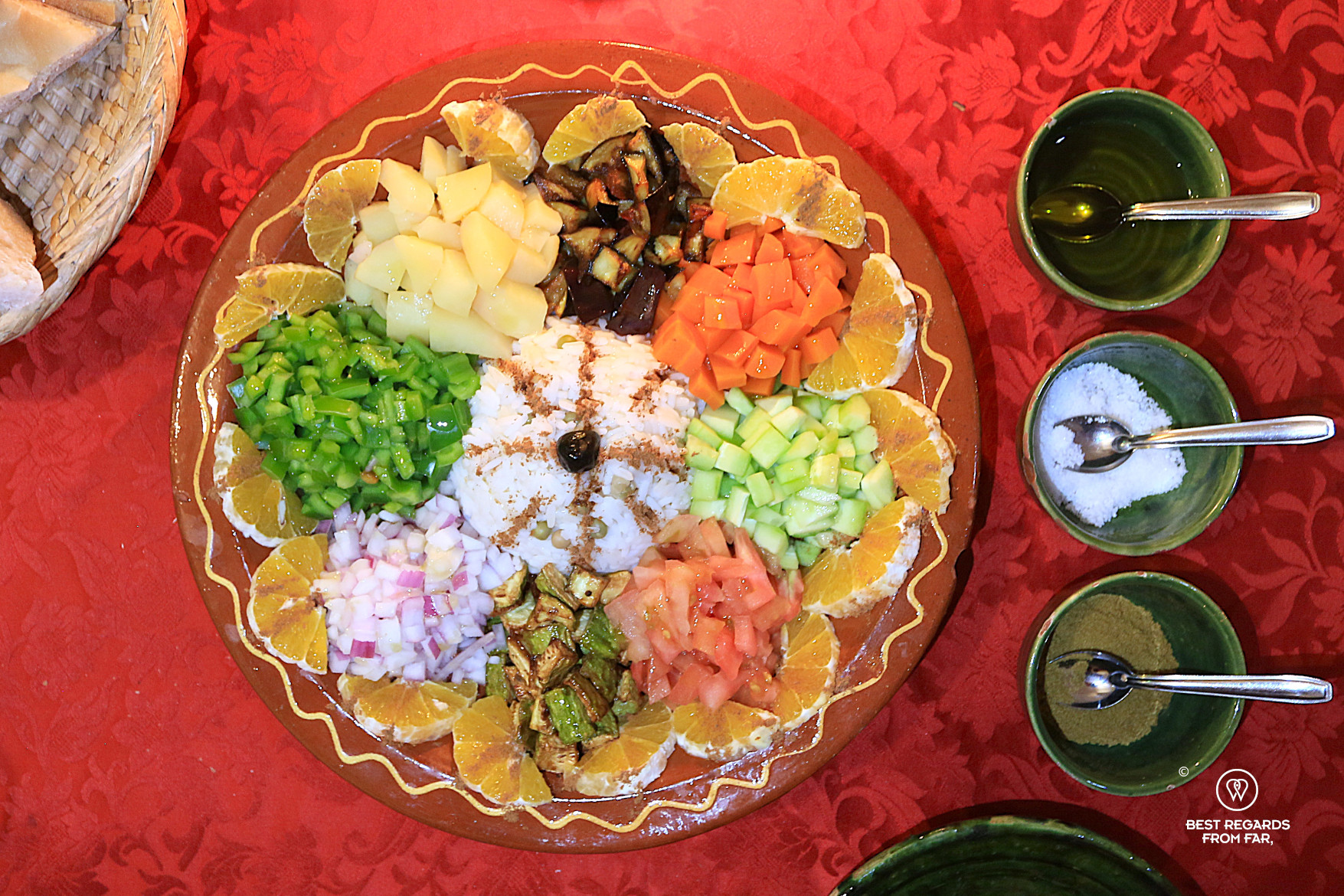
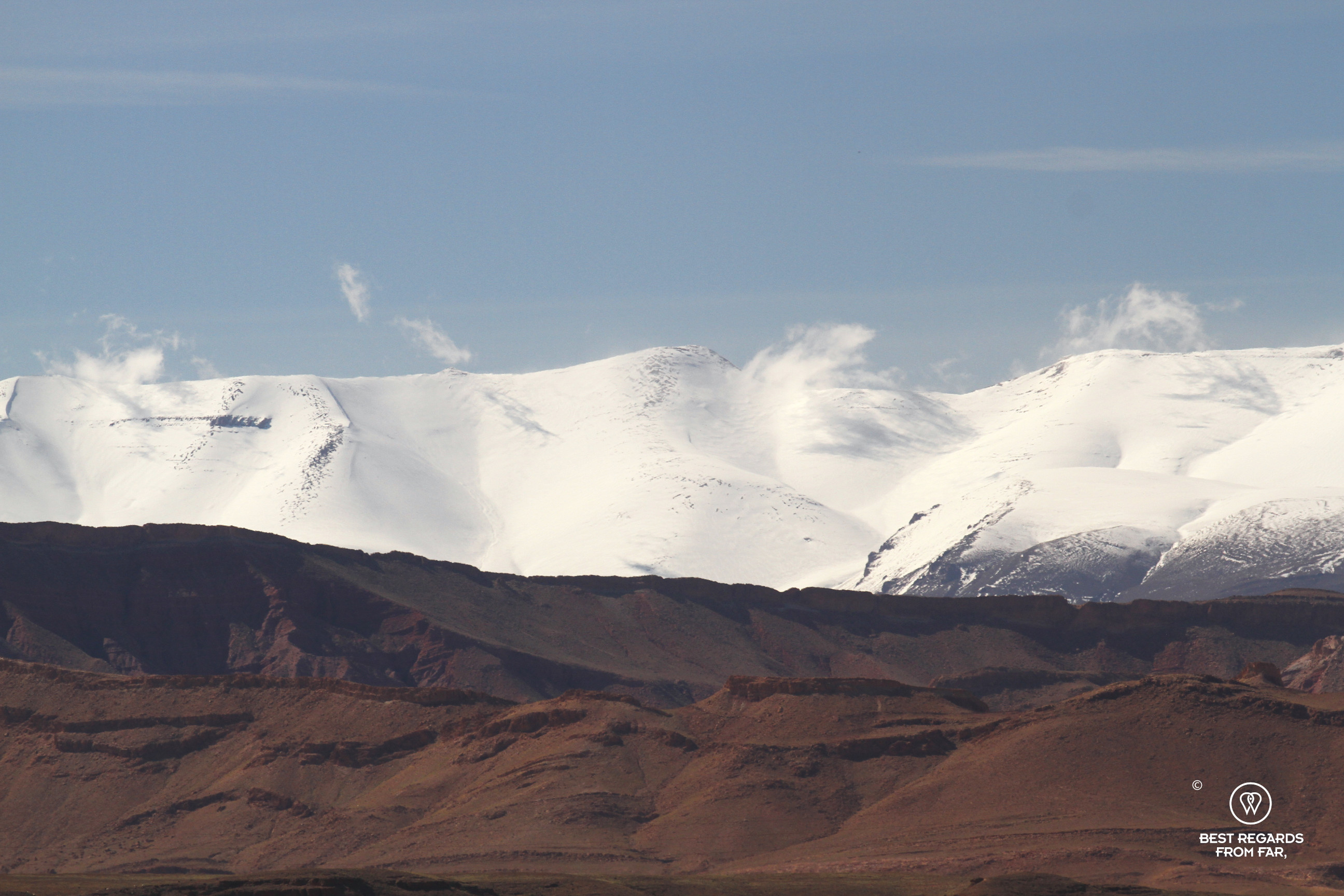
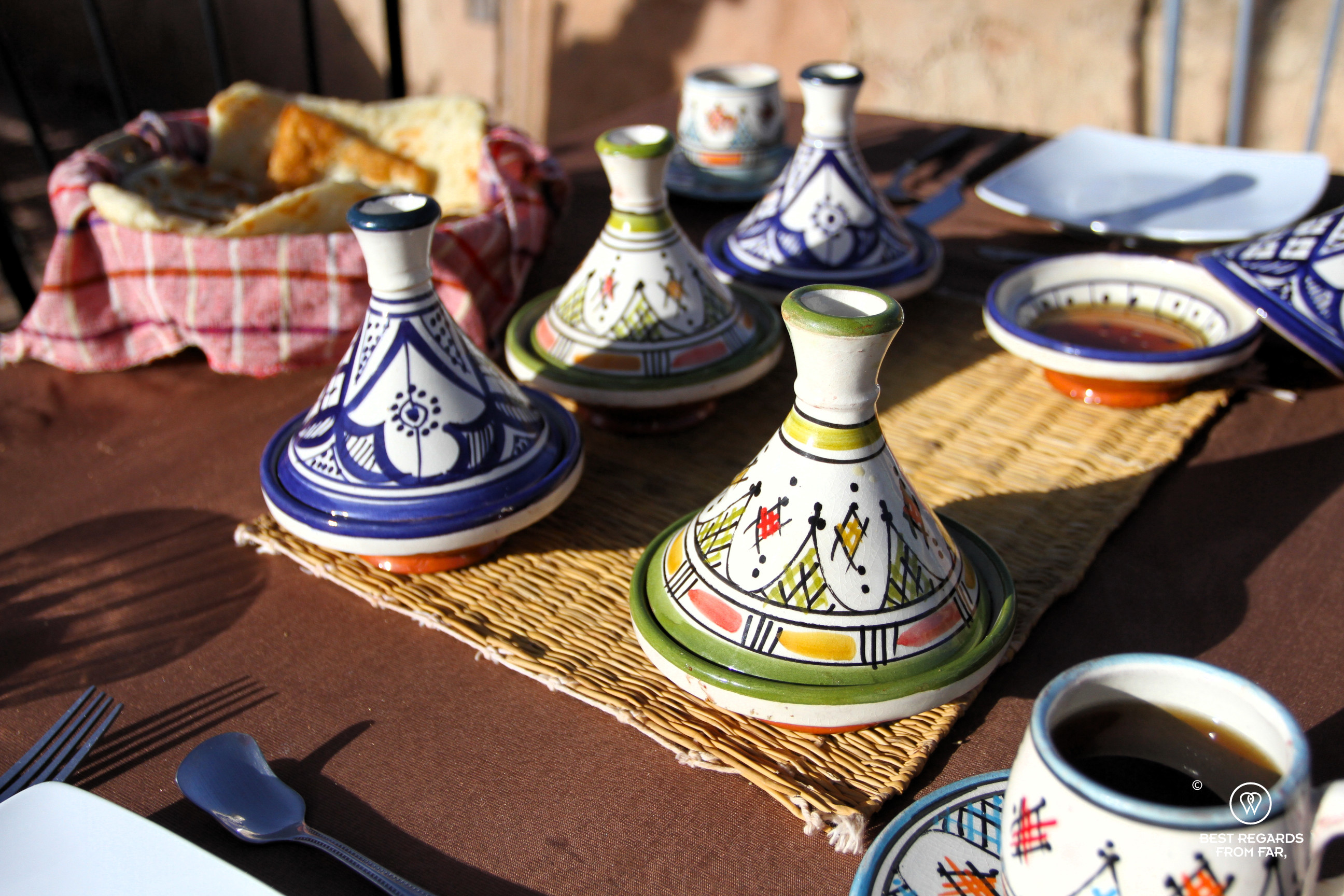
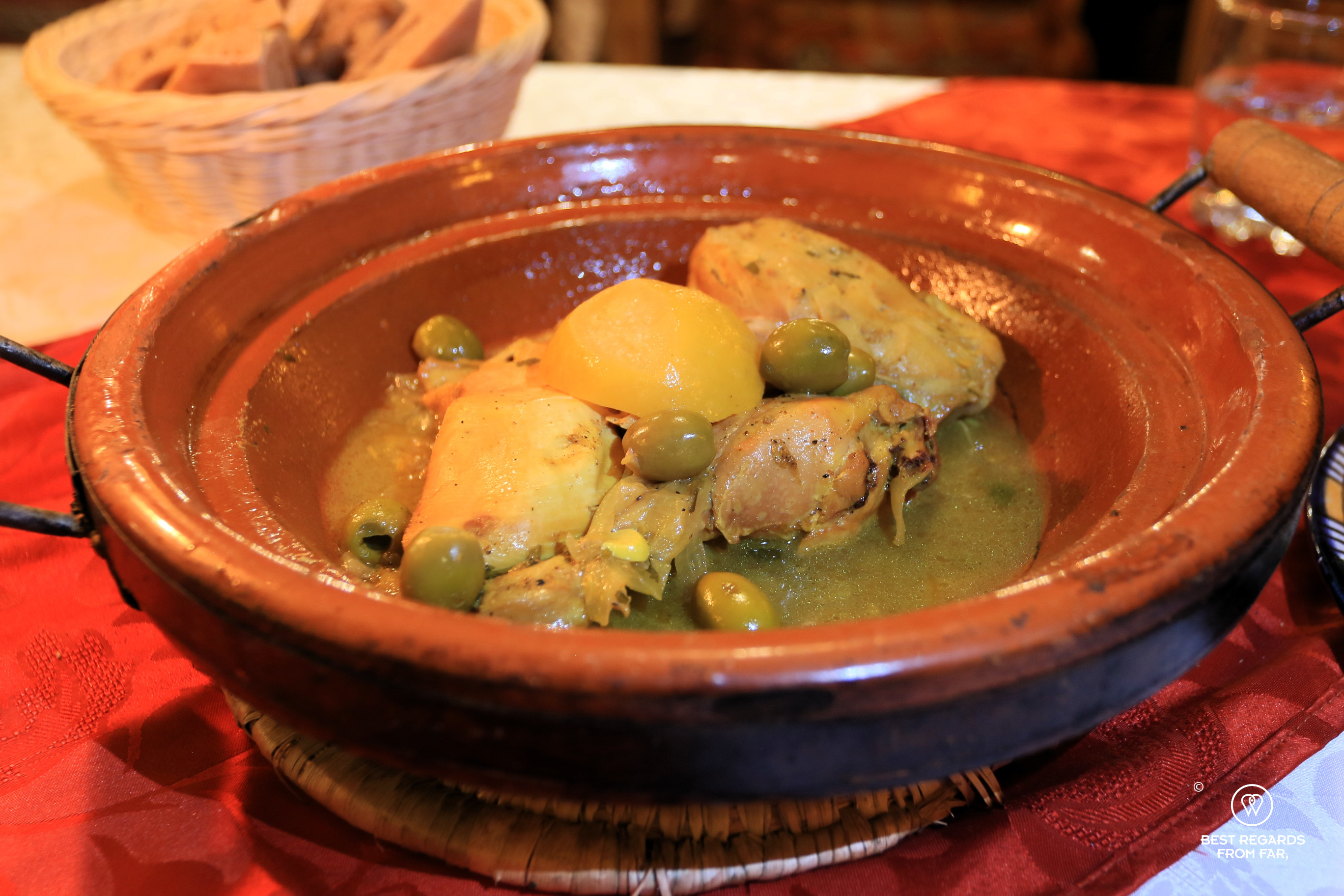
From the terrace of the Kasbah Itran guesthouse, we take in the expansive views. In the far distance, the majestic High Atlas Mountains dominate with the silhouette of the snow-capped M’Goun Peak, Morocco’s third highest and arguably its most challenging to conquer. For now, our host is preparing a Moroccan dinner for us with its array of starters and its tajine, followed by fresh fruits, a welcome fuel for the days to come.
Day 1: Into the Heart of the Valley of the Roses — From Kalaat M’Gouna to Bou Tharar
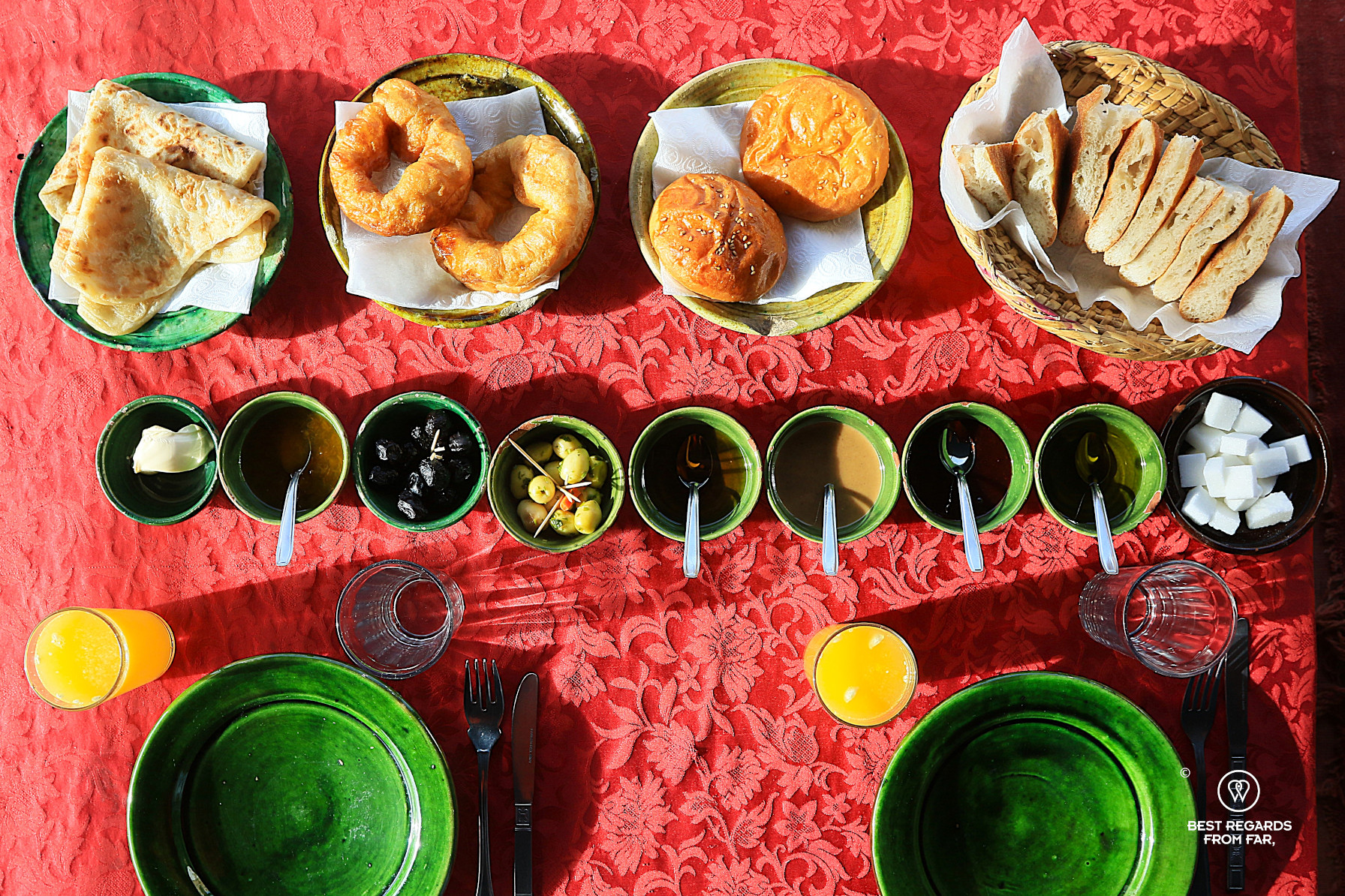
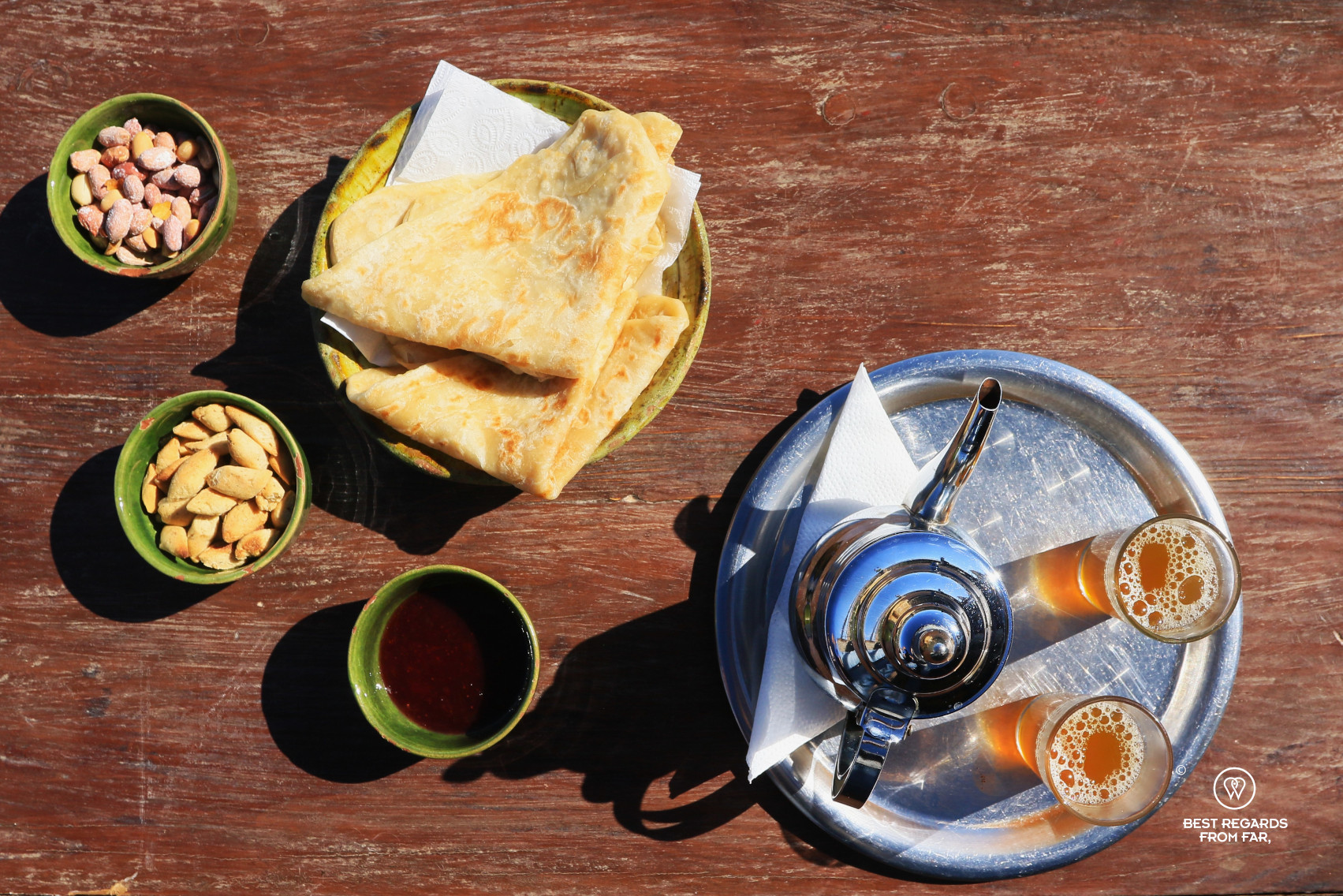
We wake up in the comfortable kasbah to a spectacular sunrise. A thin veil of clouds hovers above the green gardens and the old adobe Kasbah, catching the sun’s early rays as they spill over the Valley of the Roses, turning them in shades of soft pink and vibrant orange. It is hard to get enough of this view, and we enjoy a generous Moroccan breakfast served on the rooftop terrace of the kasbah. As we sip freshly brewed mint tea and taste warm msemen drizzled with honey, homemade apricot jam, and rich olive oil with khobz bread, the valley slowly awakes beneath us.
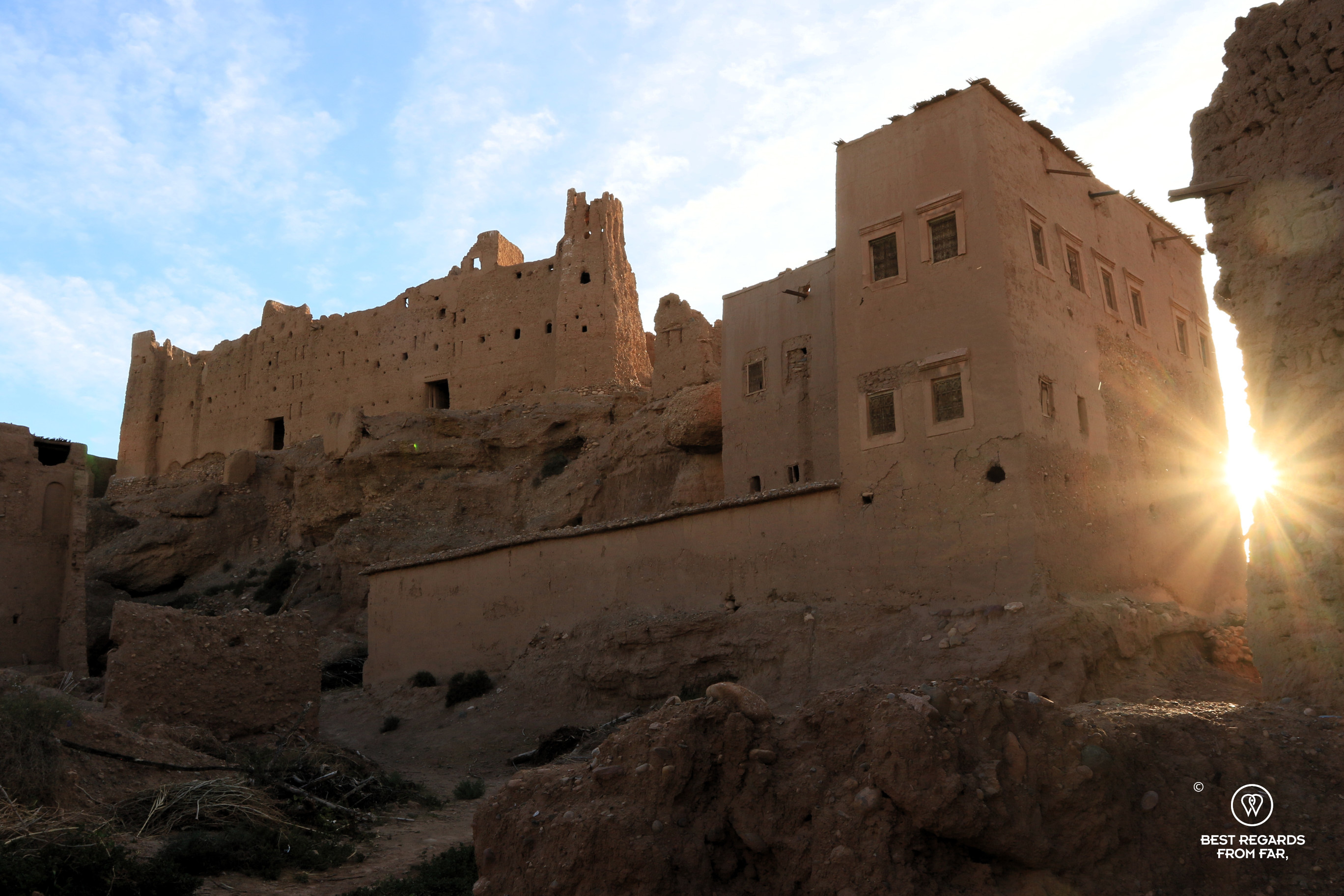
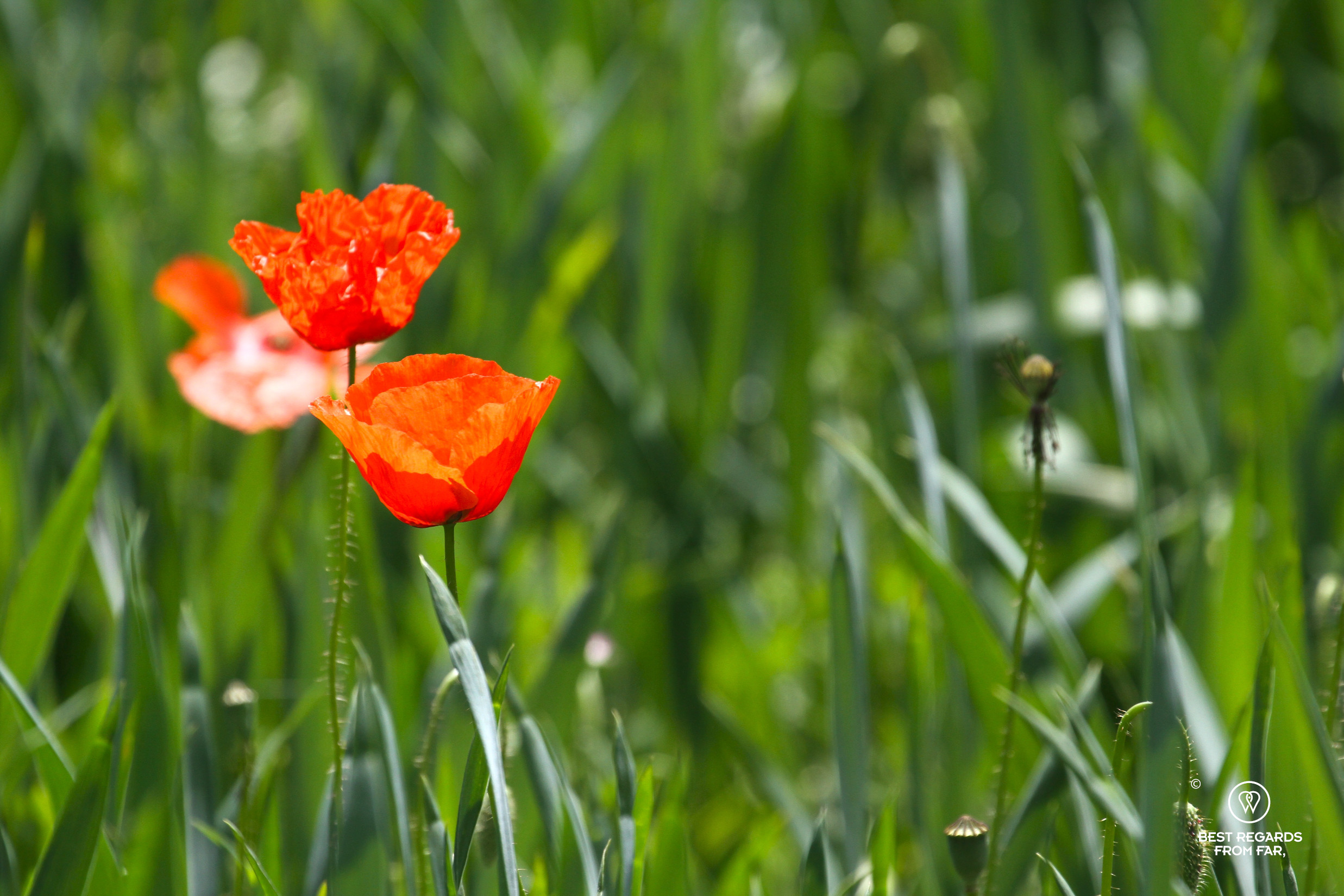
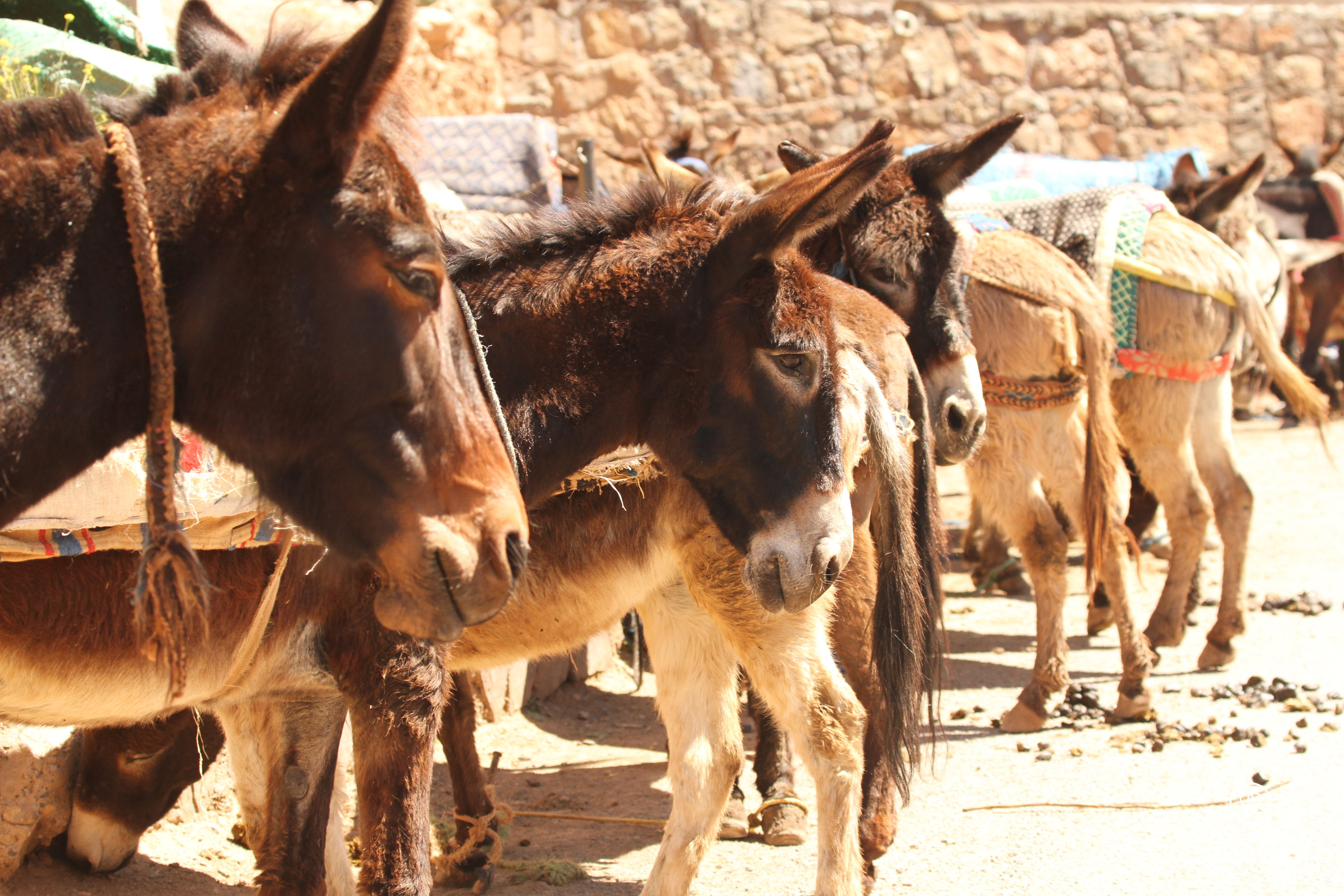
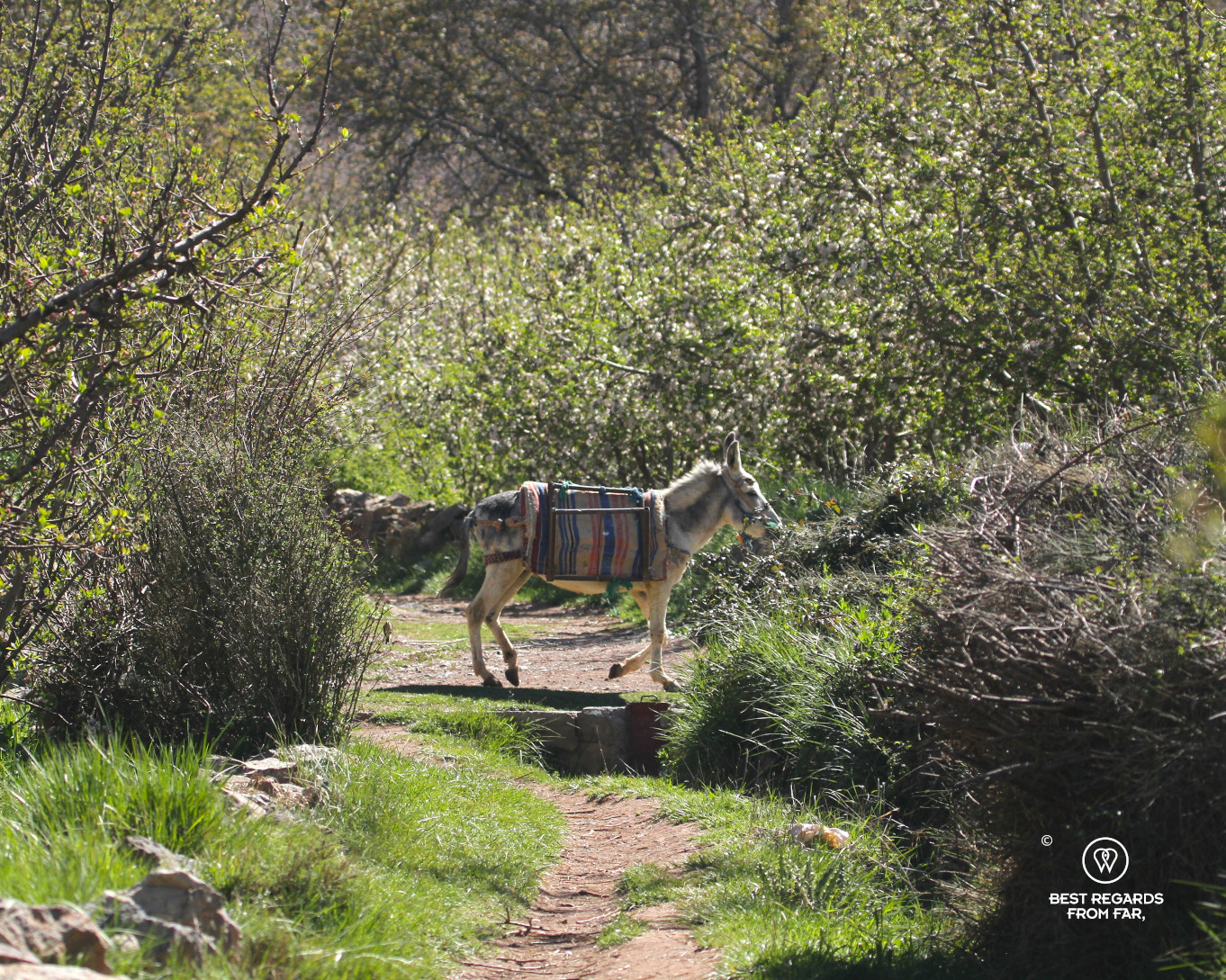
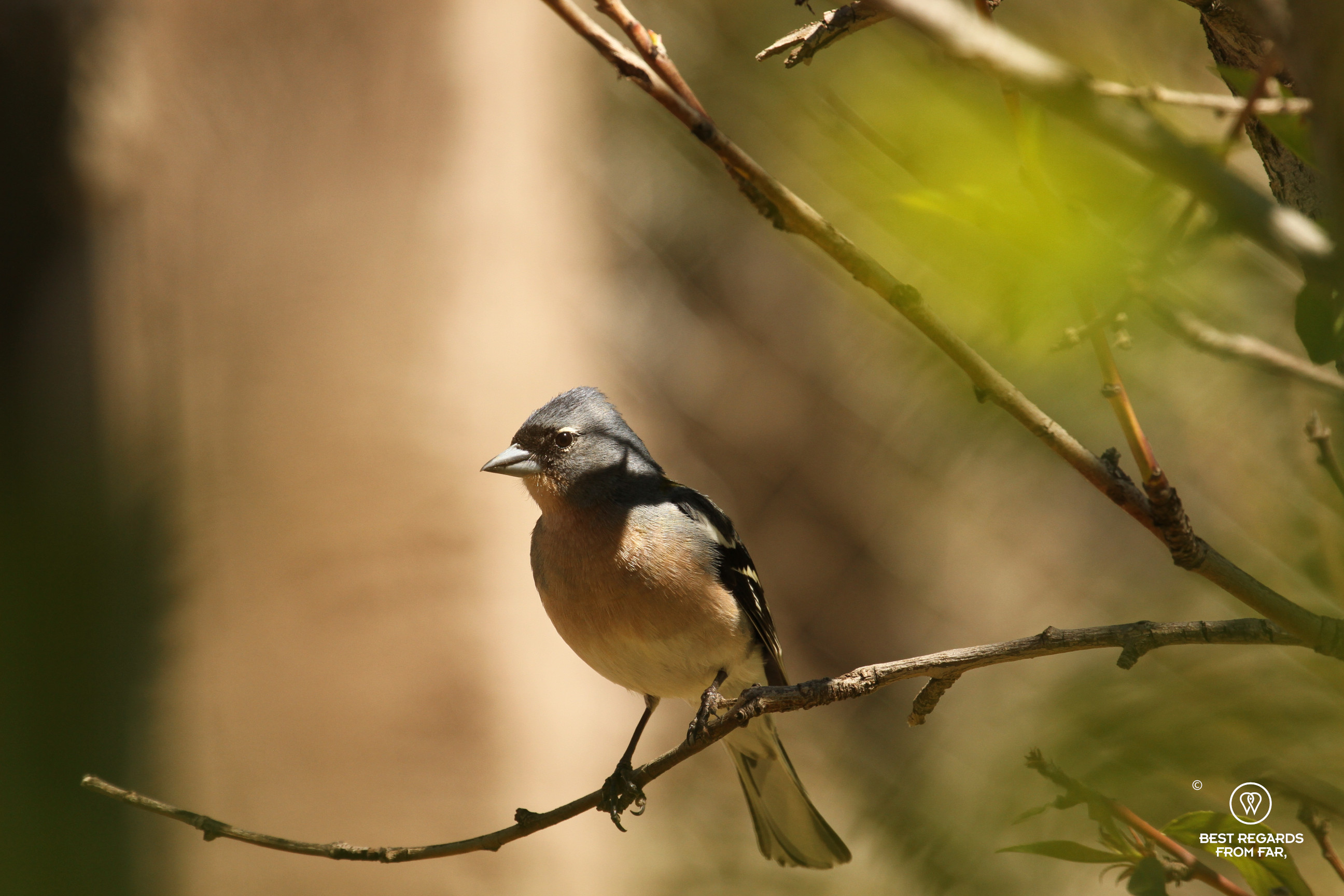
As we set off from Kalaat M’Gouna toward the mountains, we soon abandon the quiet paved road that winds through sleepy villages for quiet trails amongst the cultivated patches between craggy orange slopes. We slalom the narrow trails flanked by lush gardens leaving way to farmers with their donkeys. In this unexpected patch of green, life thrives in a quiet intensity. We walk to the songs of birds and the low hum of bees darting from bloom to bloom from a scarlet poppy amongst small fields of barley and wheat to a pink rose. Almond, fig, olive, and vine-laced trees offer welcome shade.
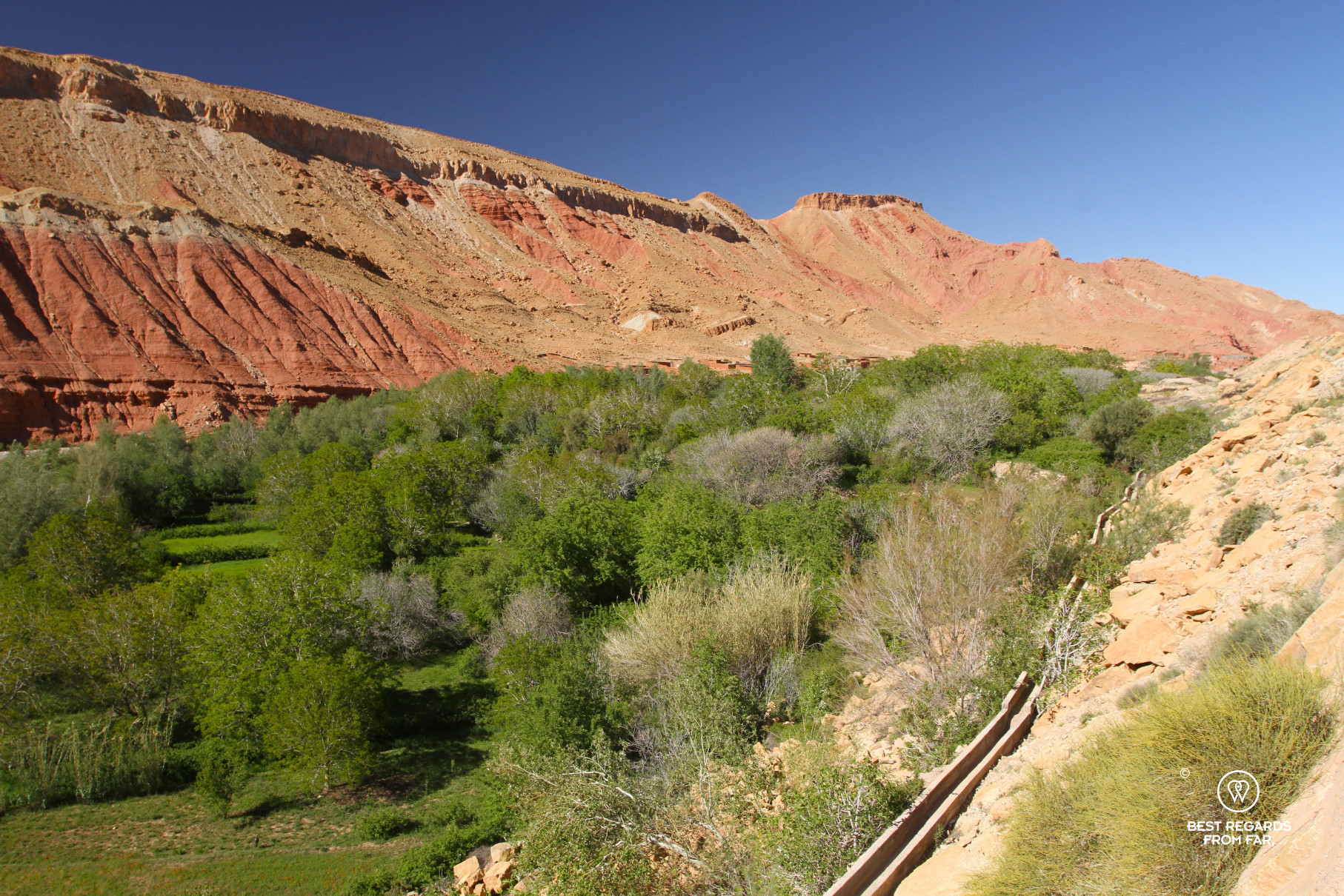
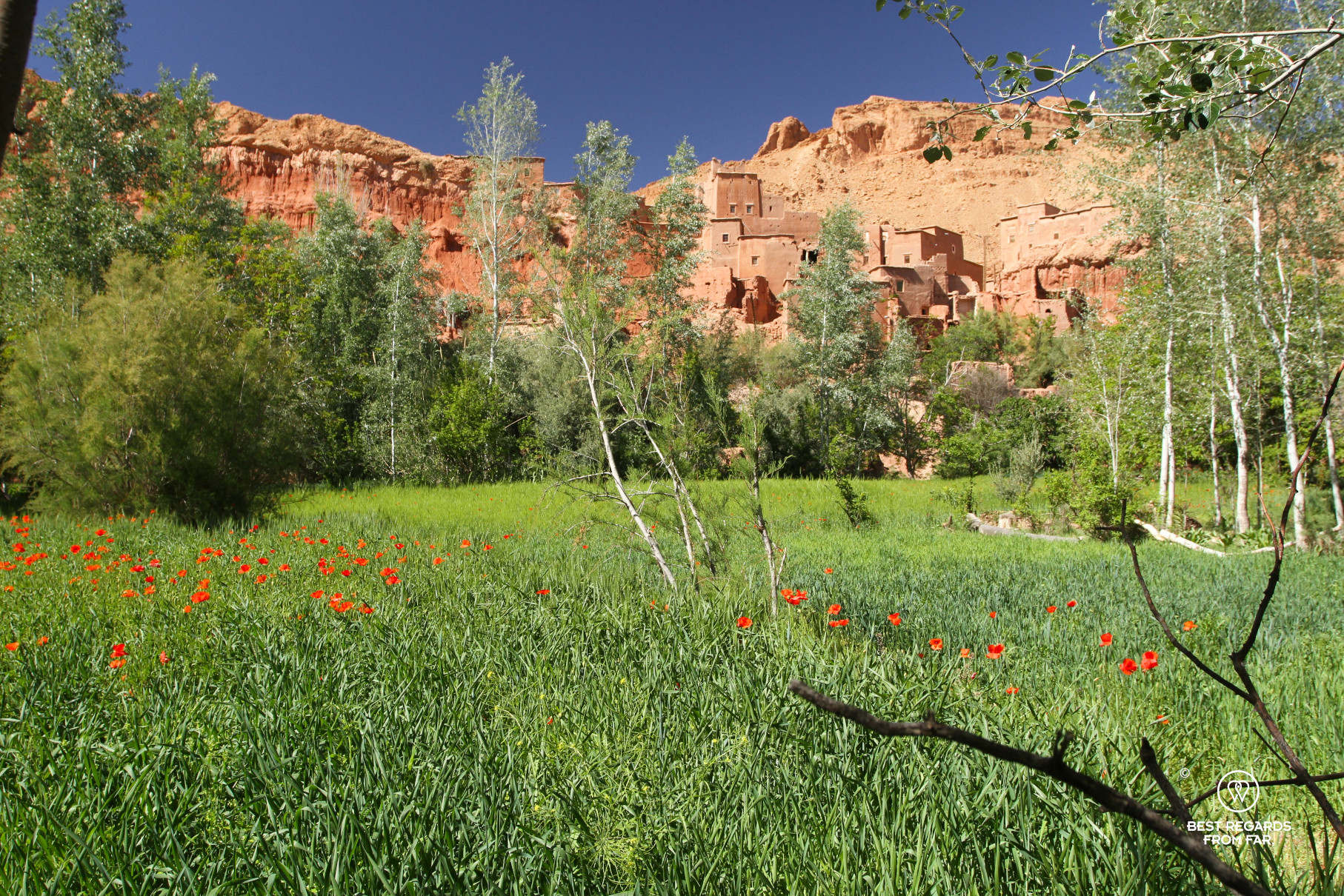
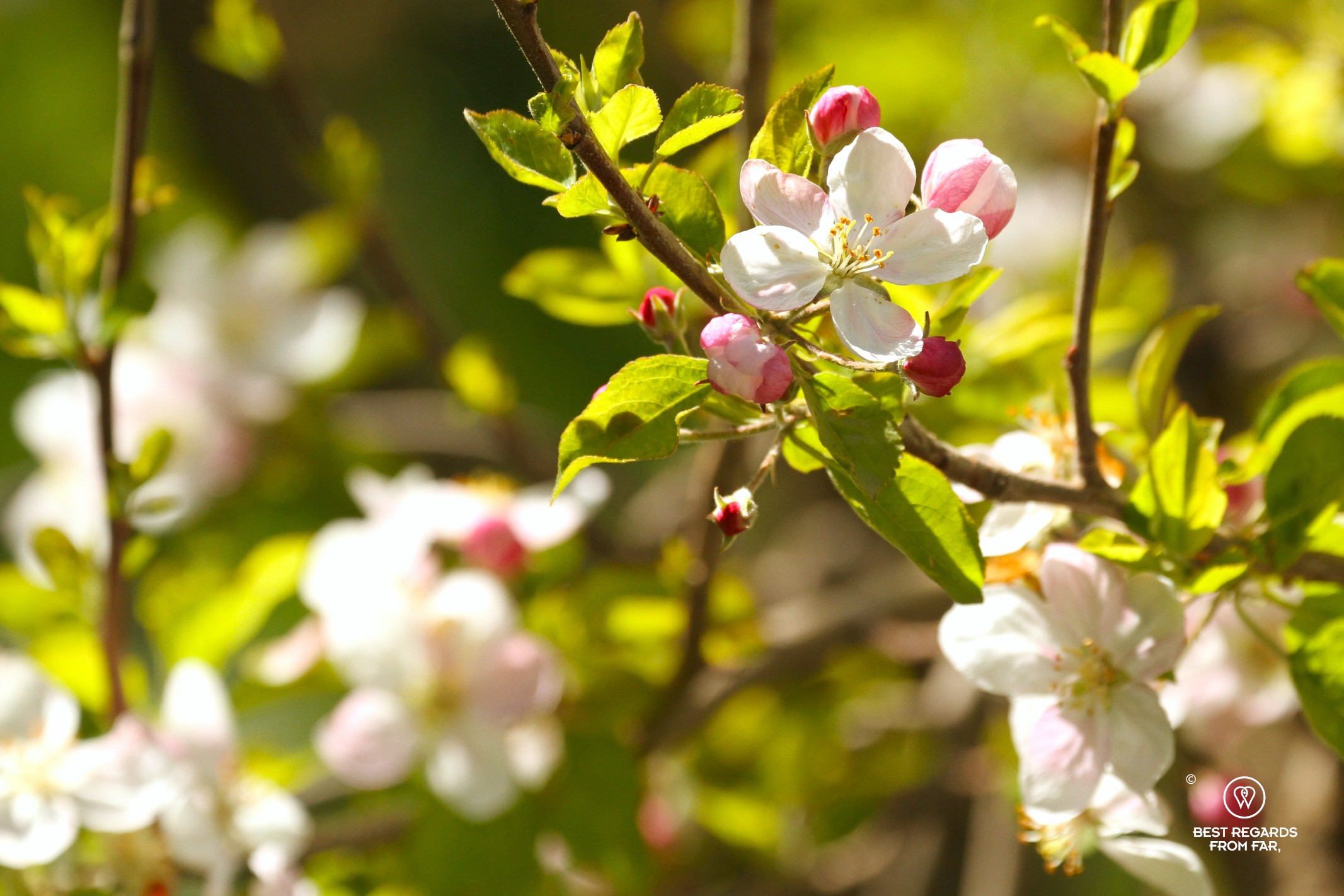
The true stars of the Valley of the Dadès are the roses. By mid-April, the famed Rosa damascena—the Damask rose—are still timid. A few early bloomers already release their heady fragrance into the soft air, but most remain tightly furled. Introduced from the namesake city by pilgrims coming back from Mecca in the 10th century, they were initially planted as hedges to keep goats out of crops. Last century, the beloved King Mohammed V requested that his palace were to be sprayed with rose water. The crop developed in the Valley of the Dadès now nicknamed the Valley of the Roses. Today, some plots are dedicated to these Damask roses that have become central to the local economy, and a real cash crop alongside the subsistence farming of the Berber villagers.
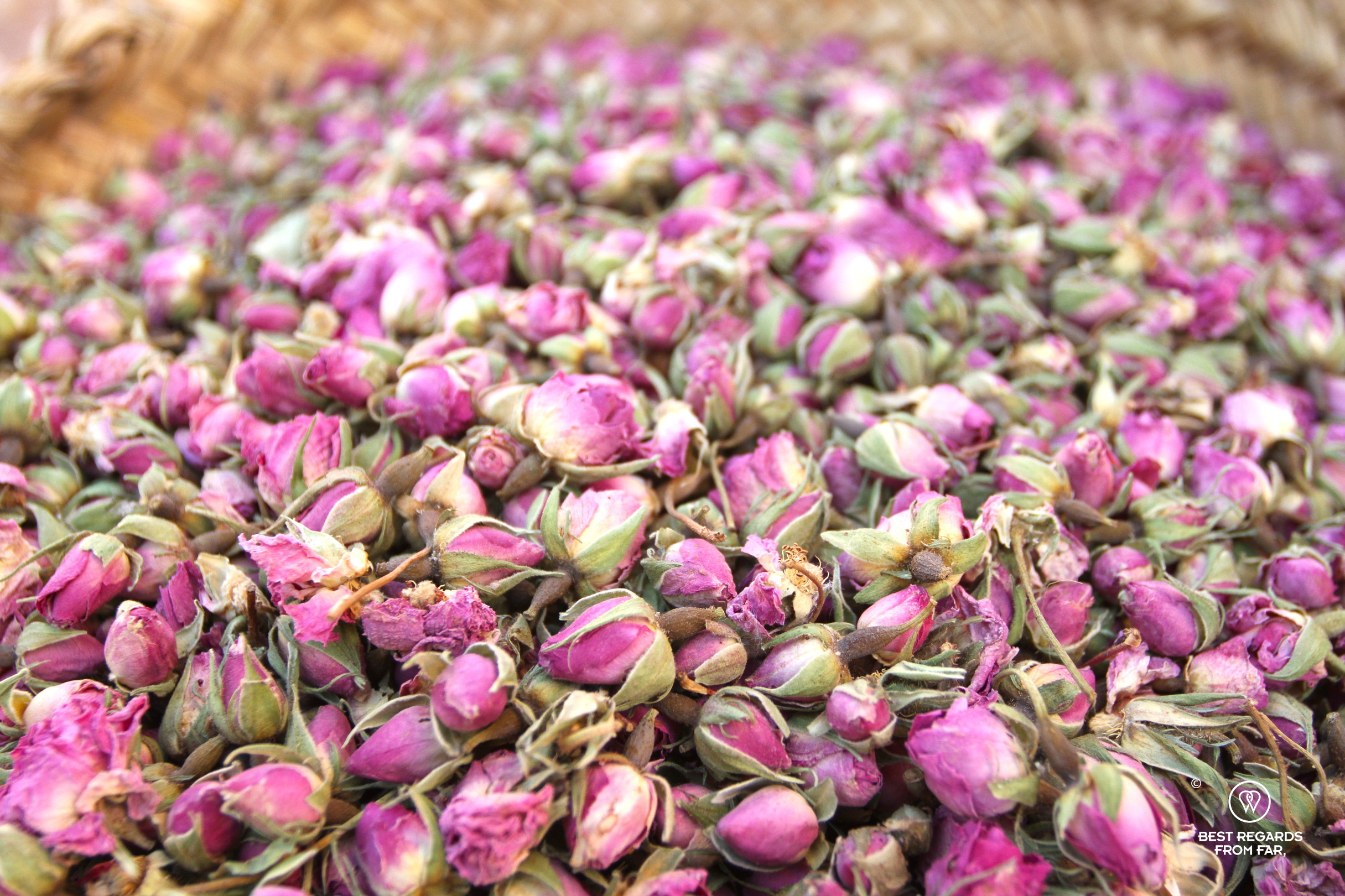
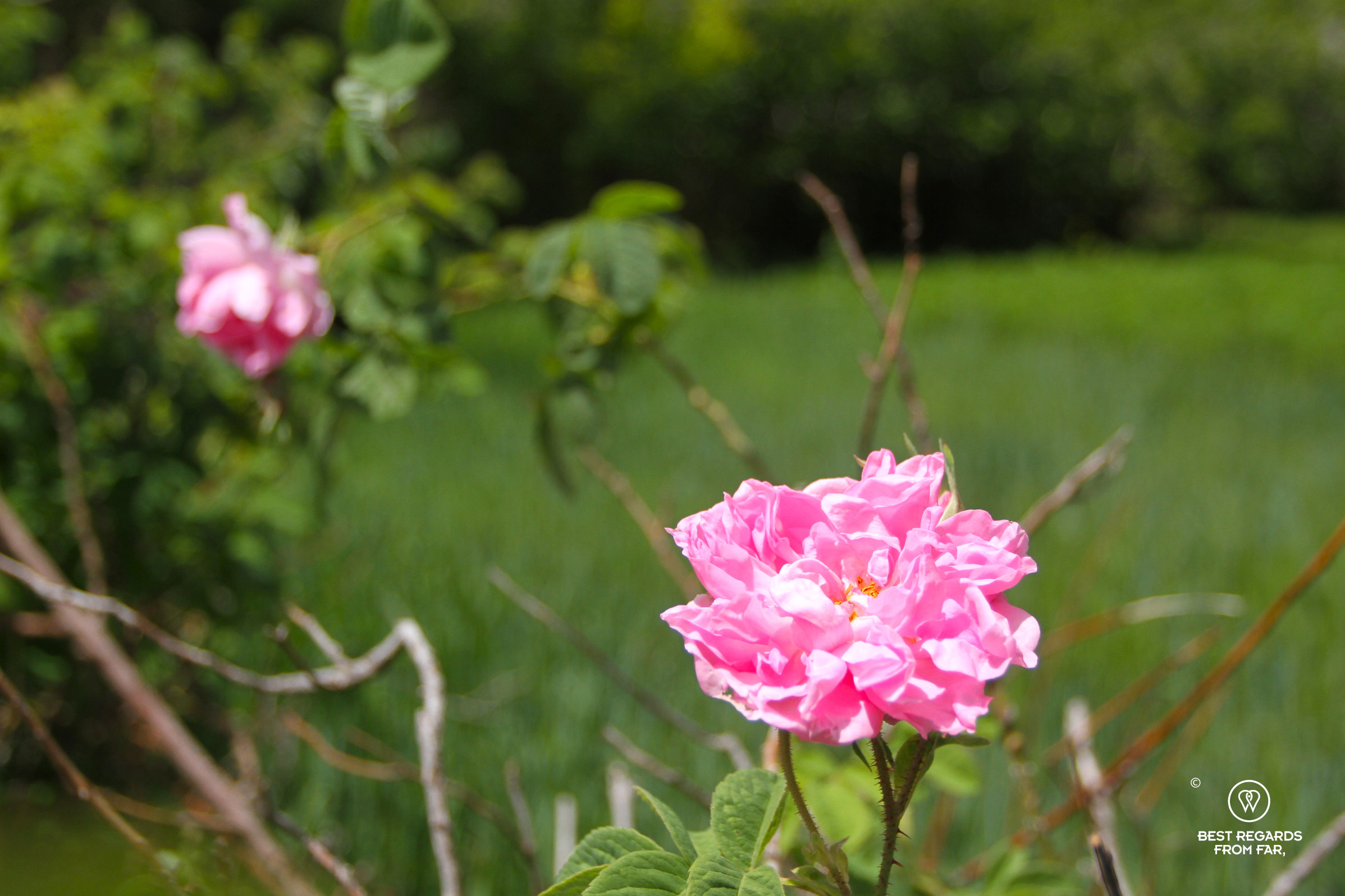
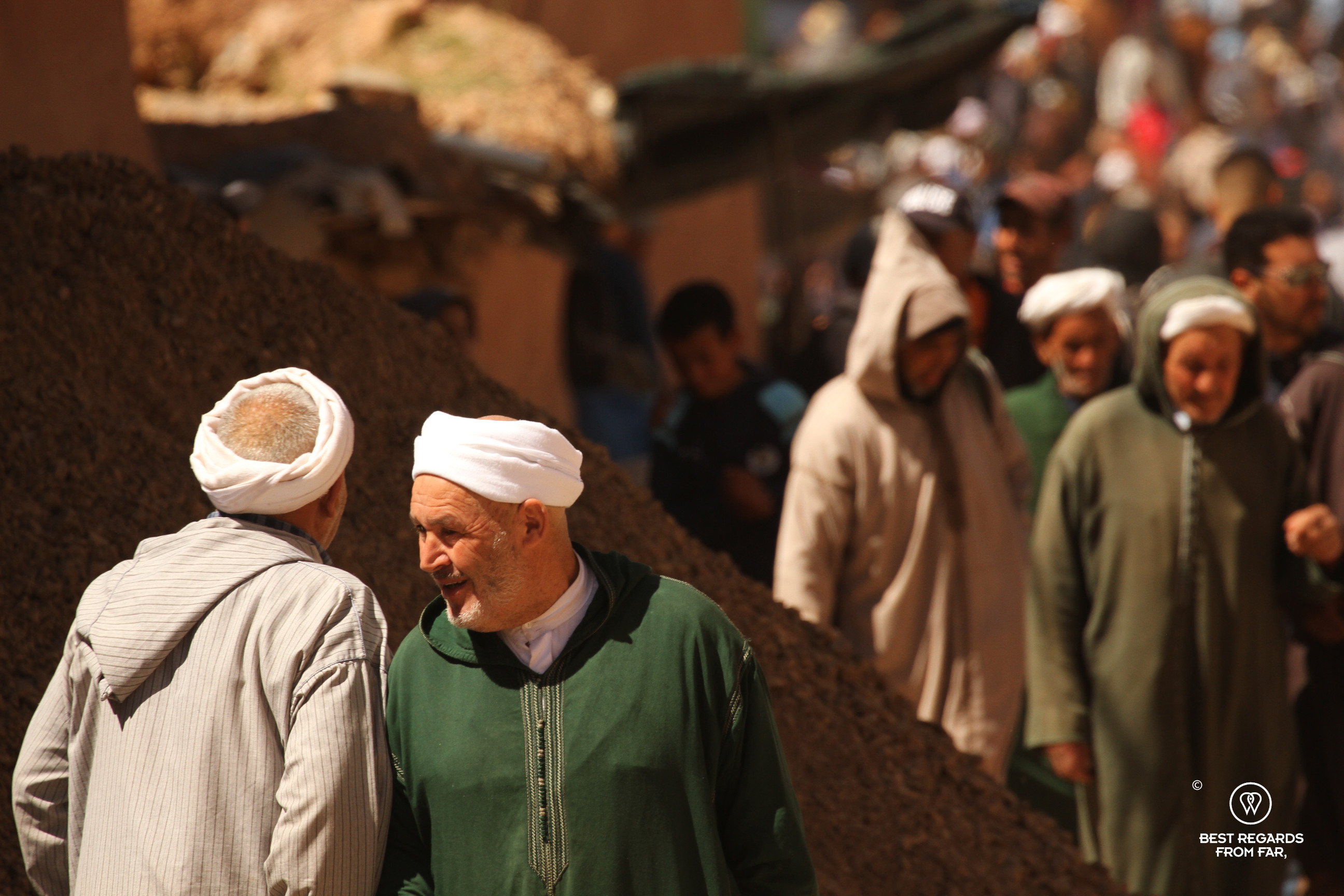
Soon women will come down the valley from surrounding villages to harvest the precious rose in the early morning before they open and bring them to local cooperatives where they will be sorted, weighed, and either processed fresh or laid to delicately dry in the shade. Dried roses, more valuable than fresh, are sold long after the harvest ends, often at peak prices. For now, some women and children aided by donkeys attend to the fields keeping an attentive eye on the pink flowers.
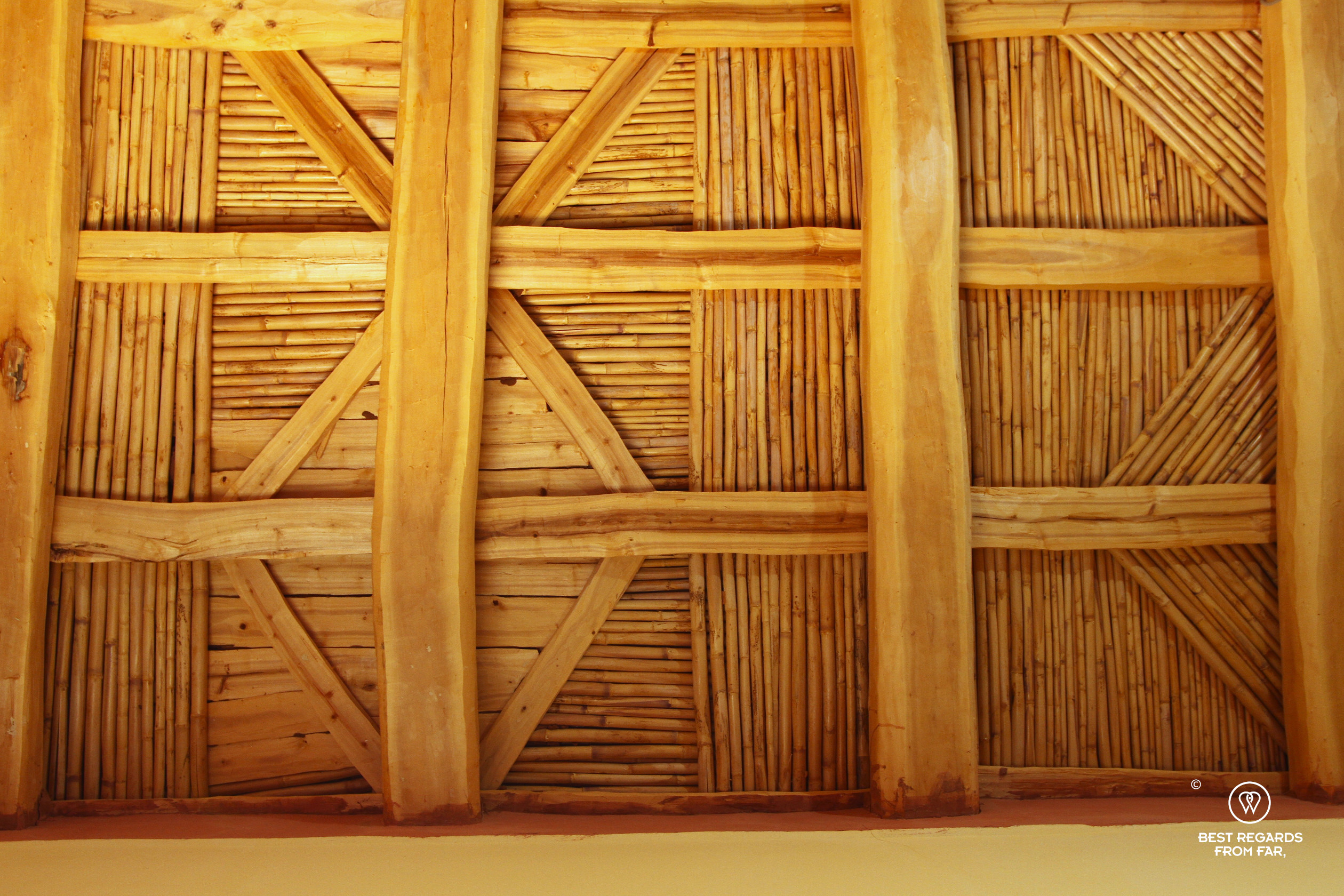
As we descend closer to the river, the scent shifts. Poplars and reeds grow thick along the banks, their cool, woody fragrance drifting in the air. These same trees, long used by Berber builders, still form the ceilings of traditional adobe homes and fortified kasbahs.
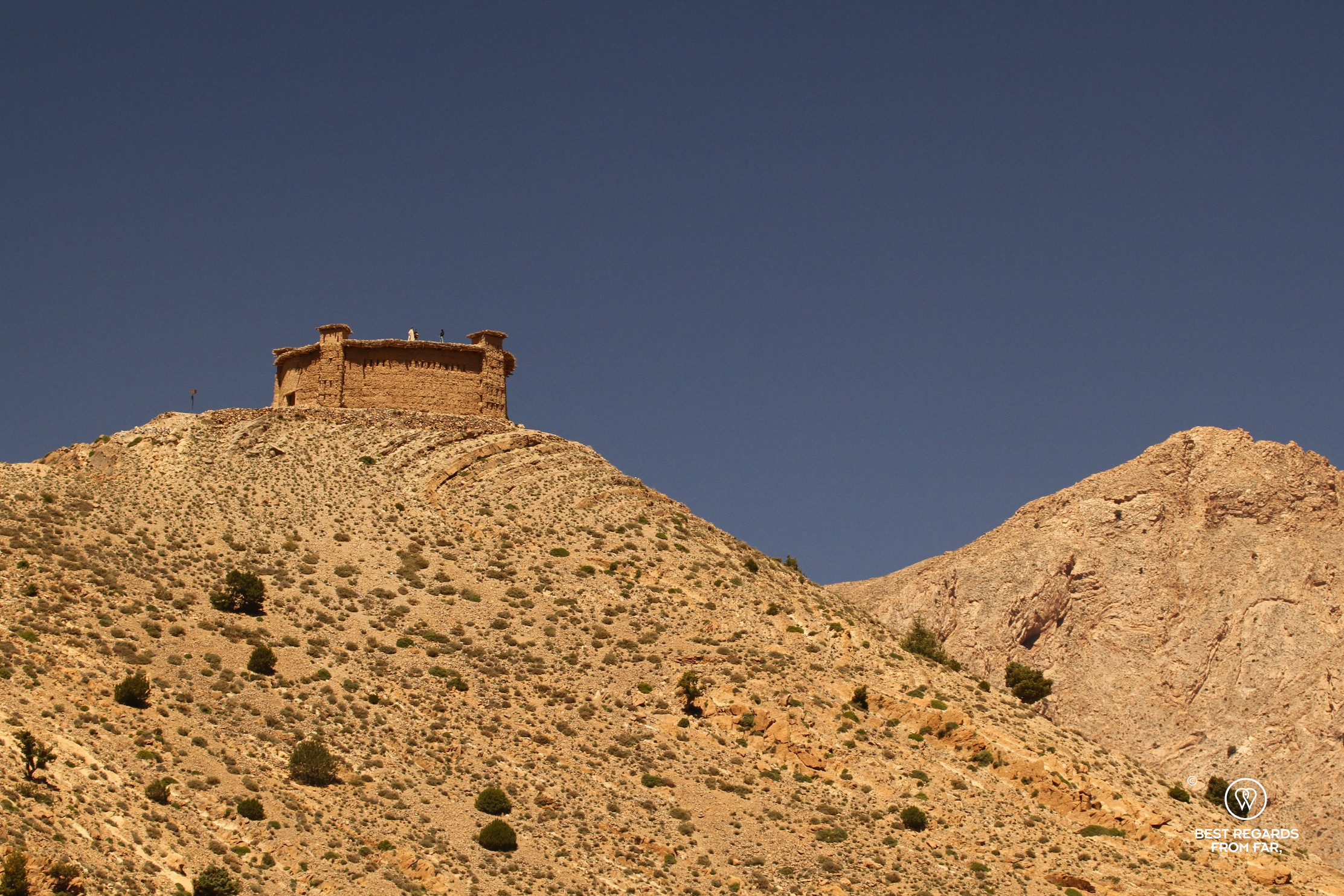
We arrive in photogenic Bou Tharar (altitude: 1,600 meters, 5,250ft), a serene village nestled at the gateway of the M’Goun Gorge. An old kasbah, its adobe walls softened by time, still stands at the river’s confluence.
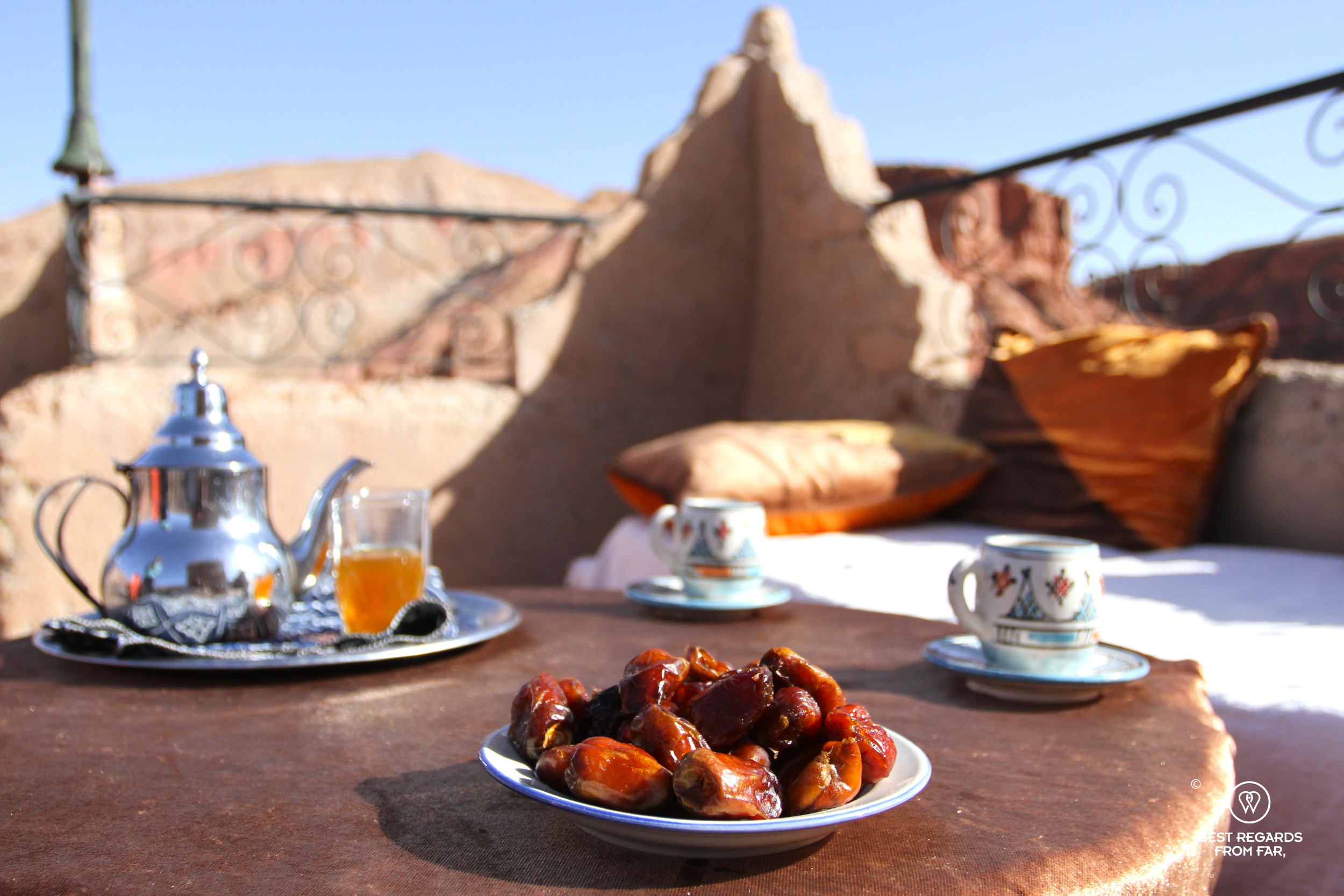
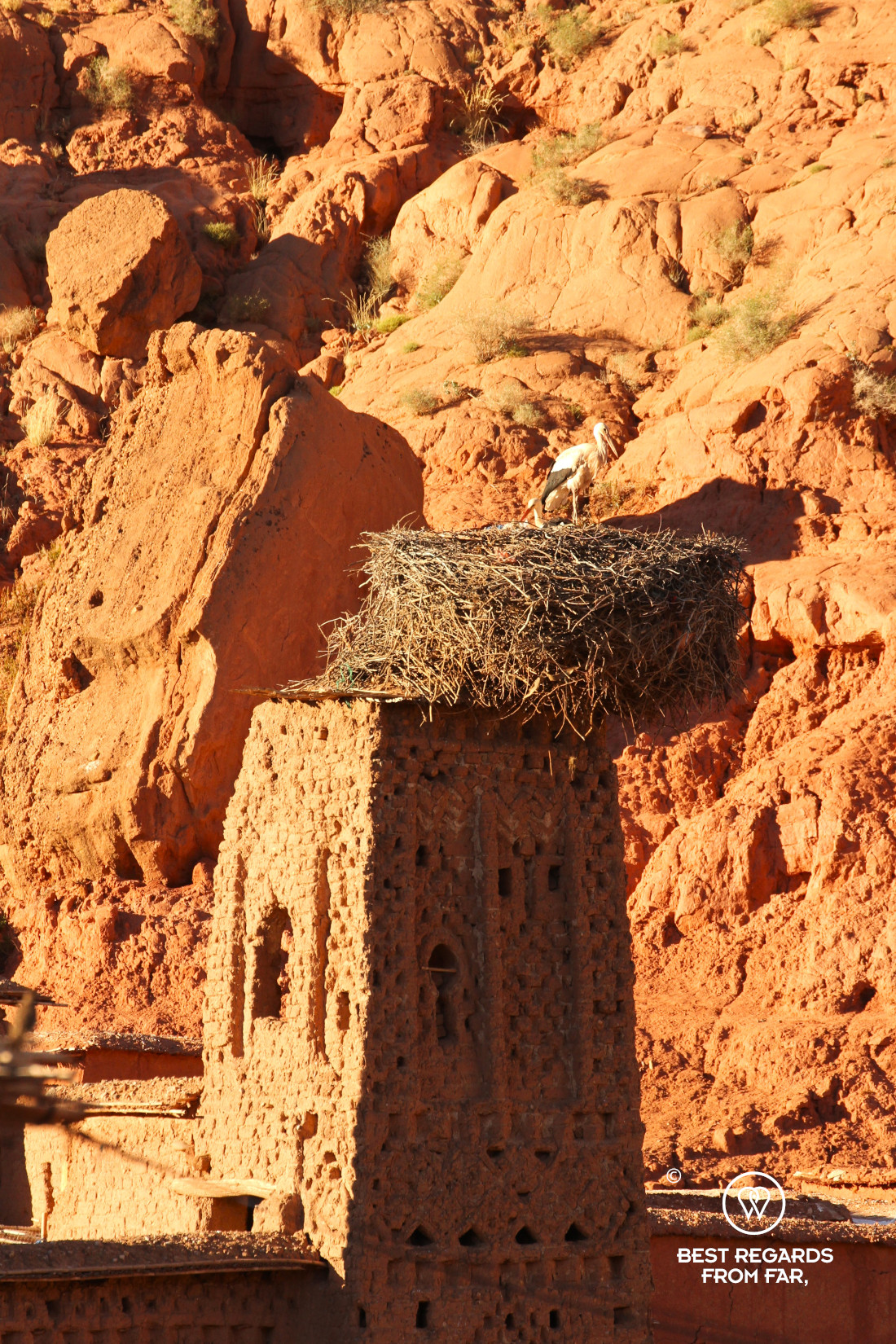
Our host, Mohamed, welcomes us at the Kasbah des Montagnes, where sweeping views of the valley stretch out before us. From the rooftop terrace, we enjoy the traditional welcome tea as we watch storks nest atop the crumbling towers of an old kasbah. Below, the Valley of the Roses begins to glow in the golden light.
Day 2: Into Allemdoun – Along the Valley of the Roses
As the Gorge of M’Goun are not walkable given the high water levels, we adapt our route toward the village of Allemdoun. The day begins with a walk through the sprawling kasbah that gradually dissolves into a quiet village of adobe homes. Green-painted doors punctuate the earthen facades, echoing the lush fields along the river—symbol of hope and vitality in a religion born of the desert.
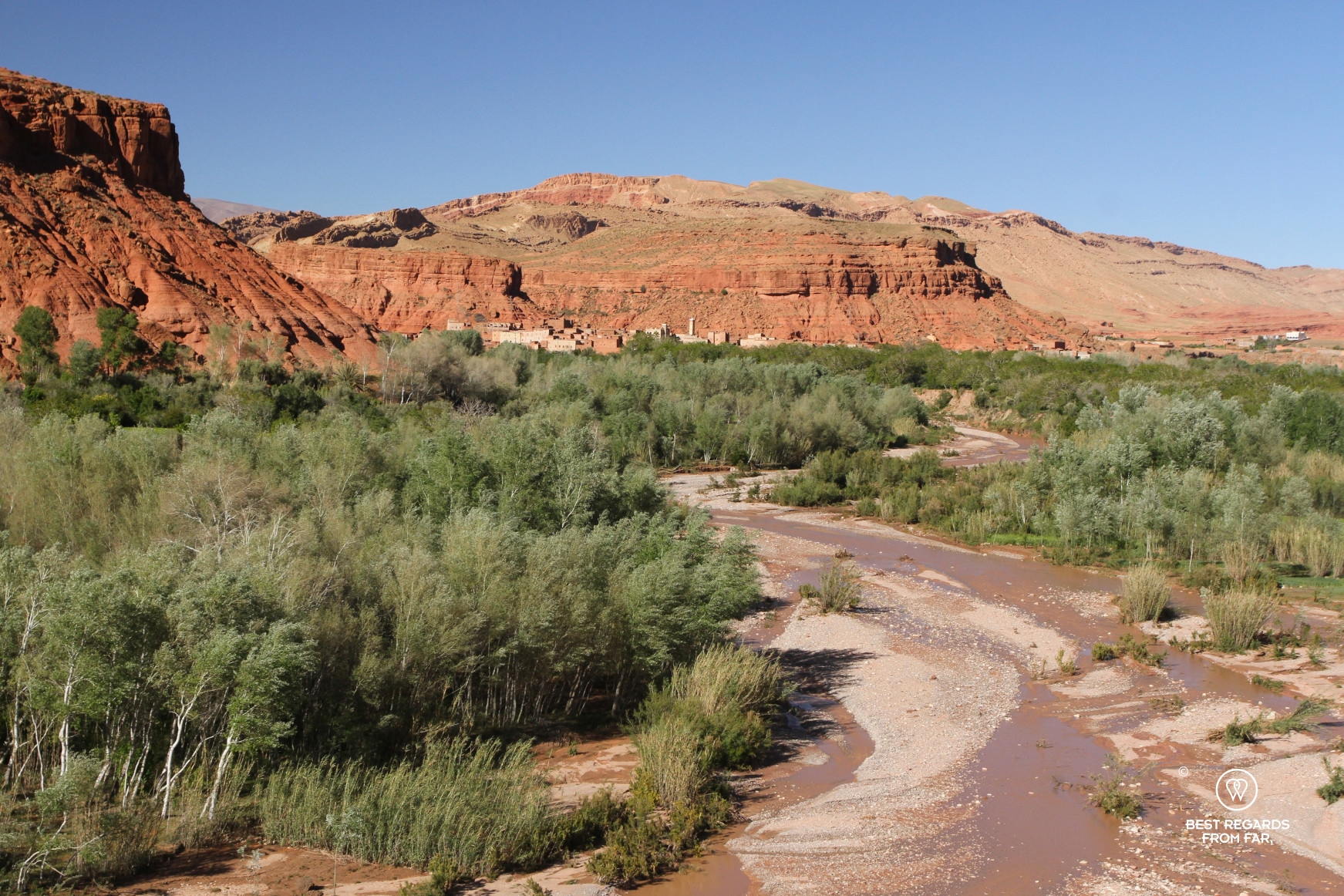
Just beyond the kasbah, the Agouti River poses our first real challenge. After several years of drought, swollen by recent rains, the water level and flow rate make it difficult to cross. Some makeshift bridges allow us to pursue. As the gorge narrows upstream, the current quickens, making any attempt to wade through—especially with our heavy backpacks that need to stay dry with our camera gear—risky at best, impossible at worst. With the Oati Gorge flooded and impassable, we have no choice but to change course to reach the village of Allemdoun.
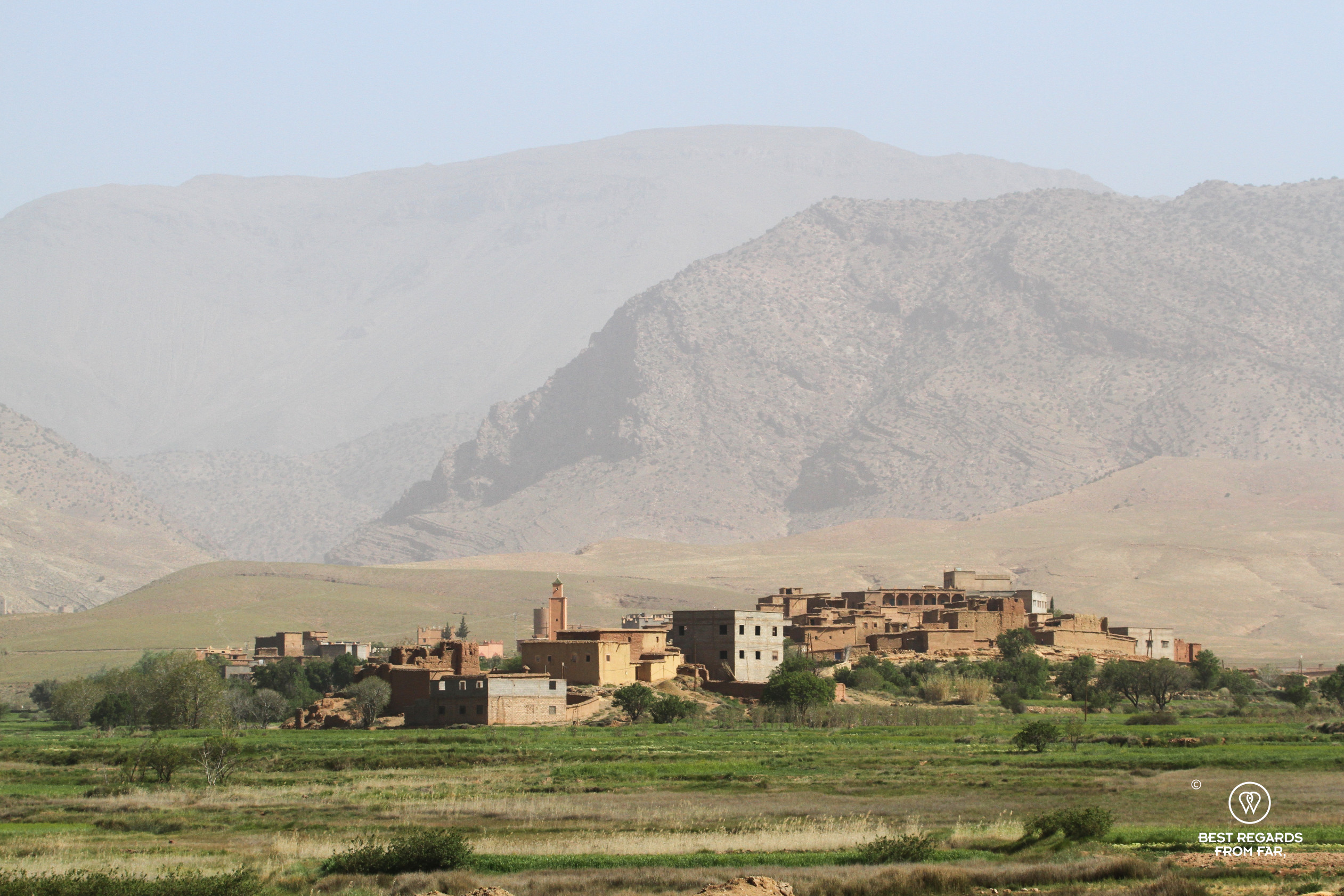
We climb toward Allemdoun via a rugged mountain pass, following a dry wadi. As soon as we move away from the river, the terrain transforms dramatically with no tree in sight. Like on an Impressionist painting, rain has turned the orange arid slopes in strokes of light green, attracting goats and donkeys to graze.
Eventually, the village of Allemdoun emerges in the distance, blending into the mountainside with its adobe houses and circled by patches of green. A humble guesthouse with a hearty tajine is our shelter for the night in this remote and unforgettable corner of Morocco.
Day 3: Into the Happy Valley – Nature Always Wins
Despite another attempt to wade through the Gorges of M’Goun we link via a mountain track from Allemdoun, we are unsuccessful and have to forget about hiking along this canyon. We ended up more than hip-deep barely a meter from the bank in a strong current where it was hard to keep our balance despite our hiking poles. With the recent heavy rainfalls and the steady melt of deep snowpack on the surrounding peaks, the water level is not even close from receding. Nature is stronger and calls for humility.
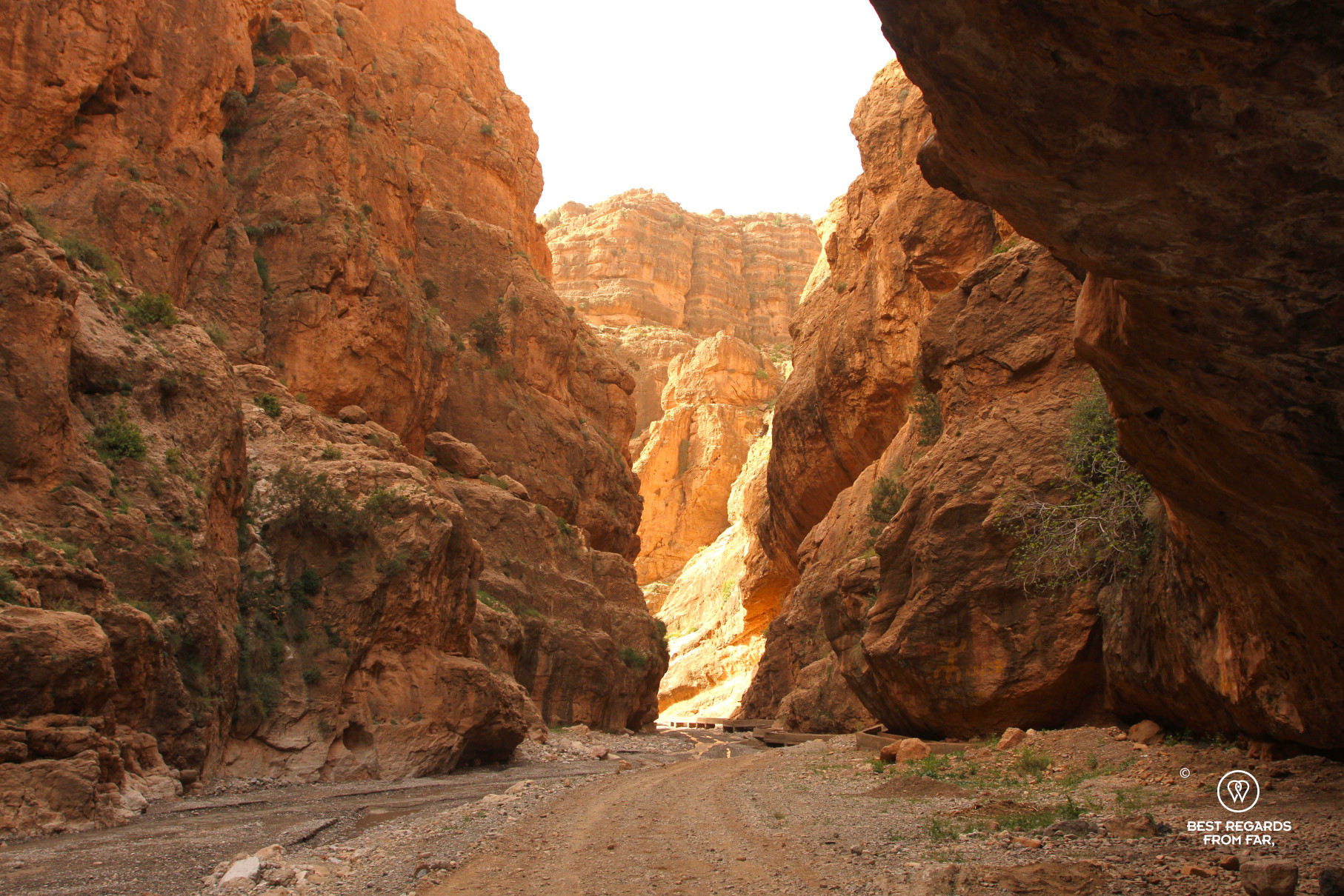
Instead, we turn the challenge into preparation for greater heights to come—namely, the summits of M’Goun and Toubkal. Our new goal: to conquer Morocco’s highest mountain road pass on foot crossing the 3,000 meter (10,000-foot) elevation line. In the scenic Gorge of Amejgag with its vertical cliffs that slowly widens, we must get our feet wet. The wading is only ankle-deep and allows us to reach the mountain track. On the other side, the view opens up on a desolated and raw nature with the endless ridgelines of the Central Atlas.
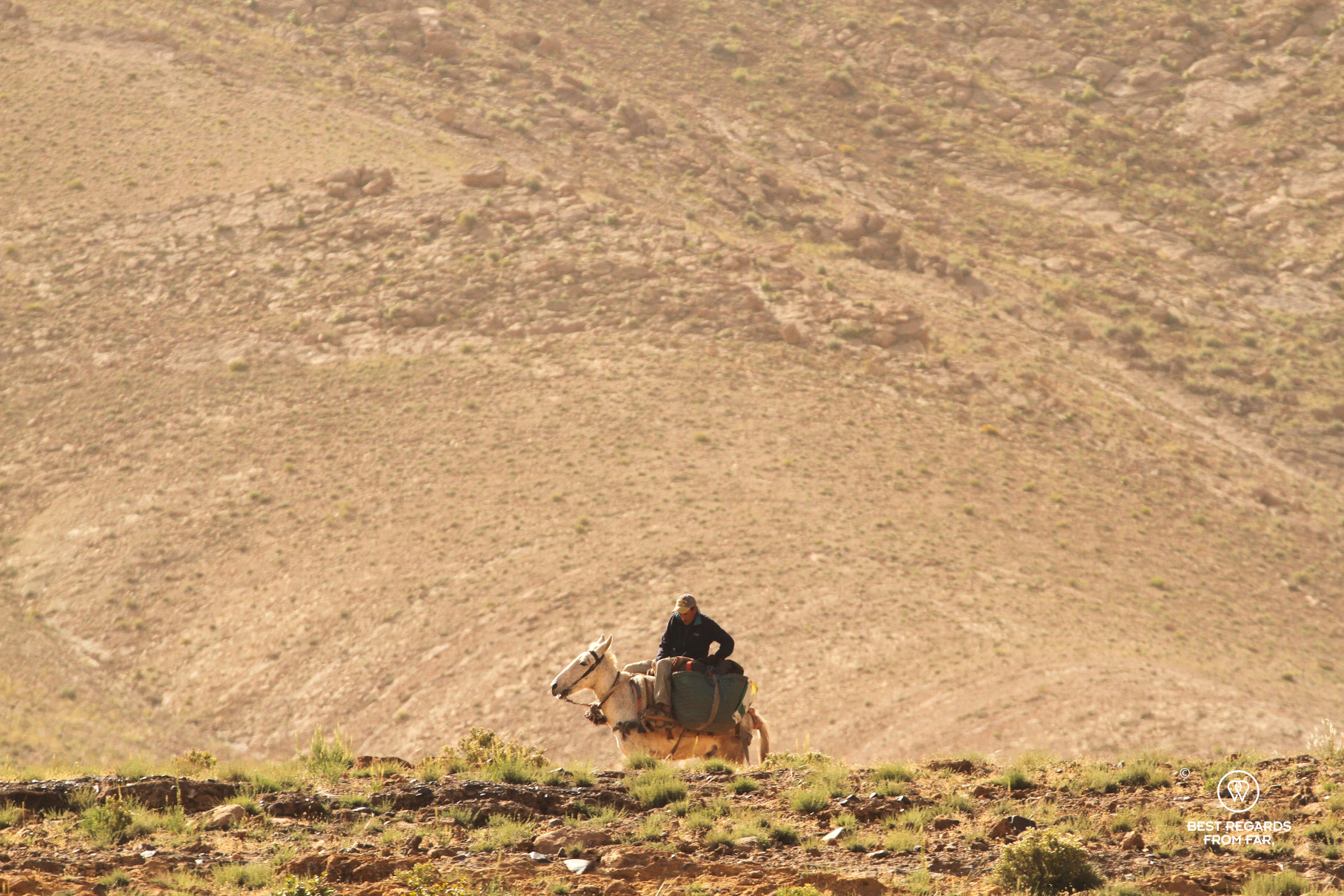
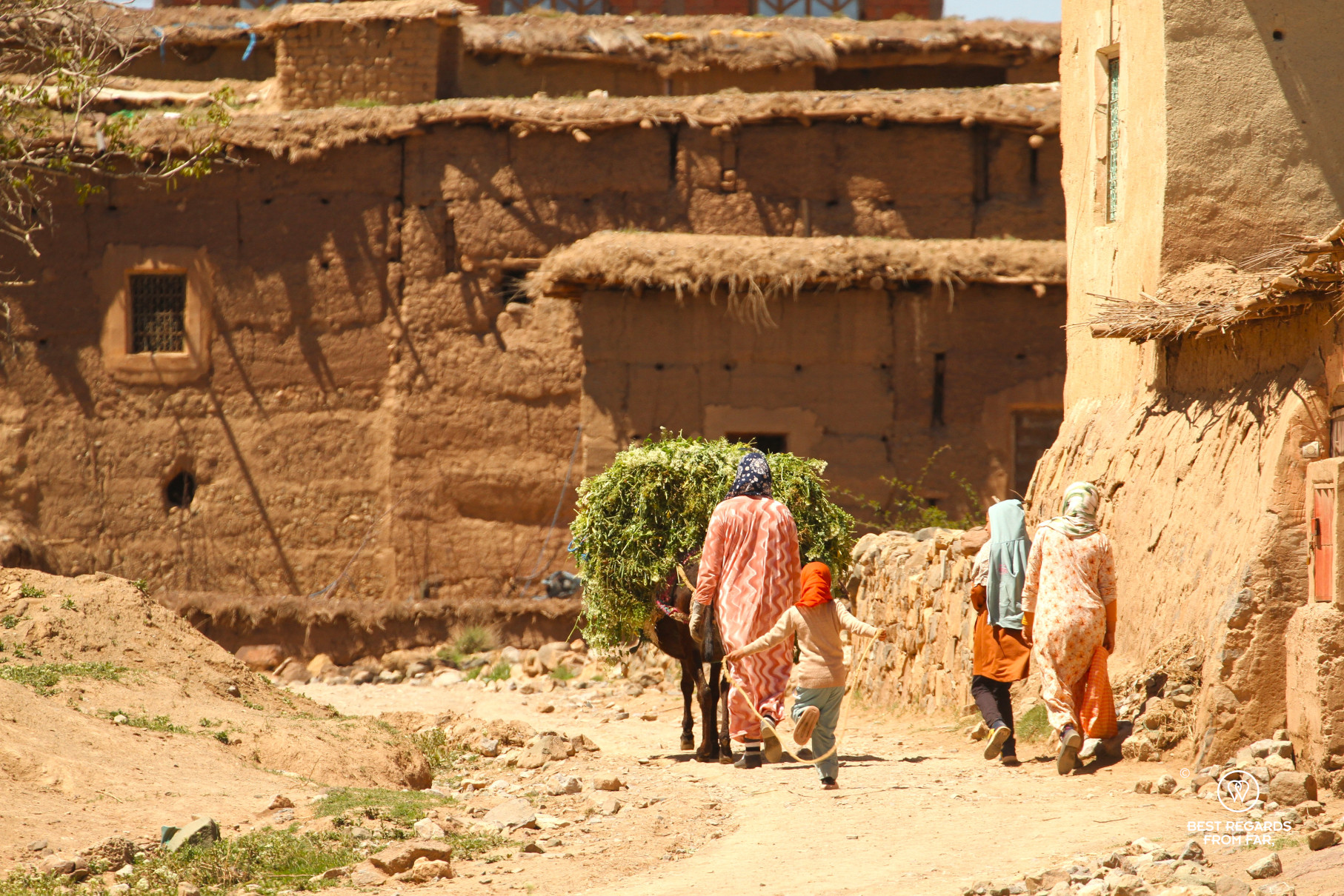
Some simple stone shelters show sites of occupation of some of the remaining nomadic Berber tribes of Morocco. Though increasingly rare, this way of life persists in these remote highlands and in remote parts of the Sahara. We crossed paths with a solitary man leading a donkey carrying supplies and a few bleating young goats en route to reunite with his family tucked somewhere in the folds of the mountains.
Having earned our passage through the high pass, we let our legs rest and take in the scenery from the comfort of our transport. Descending into a dramatic valley and climbing once more, we finally arrive in the famed Aït Bouguemez Valley, affectionately known as the Happy Valley to honor its fertile land, the perfect place for a few days of rest before reaching new heights!

Travel tips:
- Every kasbah referred to in this article can arrange transport and activities from a few hours to multi days.
- The Kasbah des Montagnes prides itself with setting up multi-day outings with mules, tents if needed, cook, and official guides.
- Careful, many fake guides propose their services around the Valley of the Dadès (and often hotels refer to fake guides for a back shish). Given the mountainous area and the gorges in which flash floods are unforgiving, make sure you are led by an official and insured guide. Morocco Hike Tours comes highly recommended.
- We highly recommend to plan for a couple of nights at the Dar Arfa guesthouse in the Happy Valley to enjoy the peacefulness of this beautiful area and genuine Moroccan hospitality.
- Check out our interactive map for more in the area (black pins lead to an article):
For more in Morocco, click on these images: