Text: Claire Lessiau
Photographs: Claire Lessiau & Marcella van Alphen
In the forested hills of Quindío, the coffee region of Colombia, a former coffee picker and reluctant cocaine chemist has transformed an abandoned farm into a model of biodiversity and social equity. From soil to cup, walk a coffee plantation, and hear the life stories that cannot be found in history books.
Pin it for later!
***
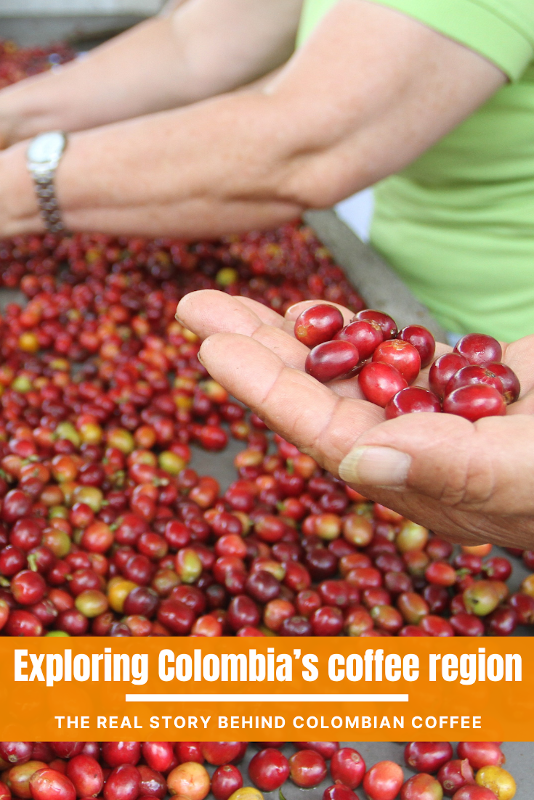
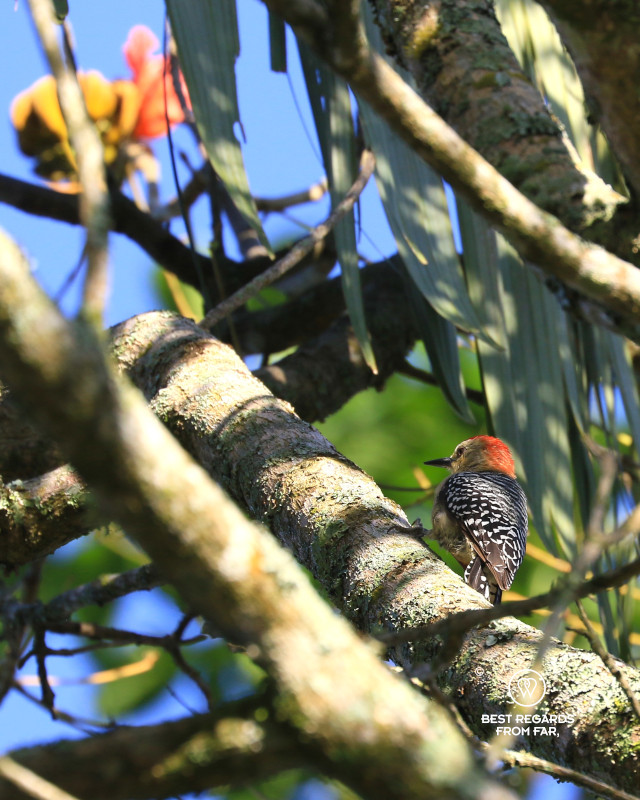
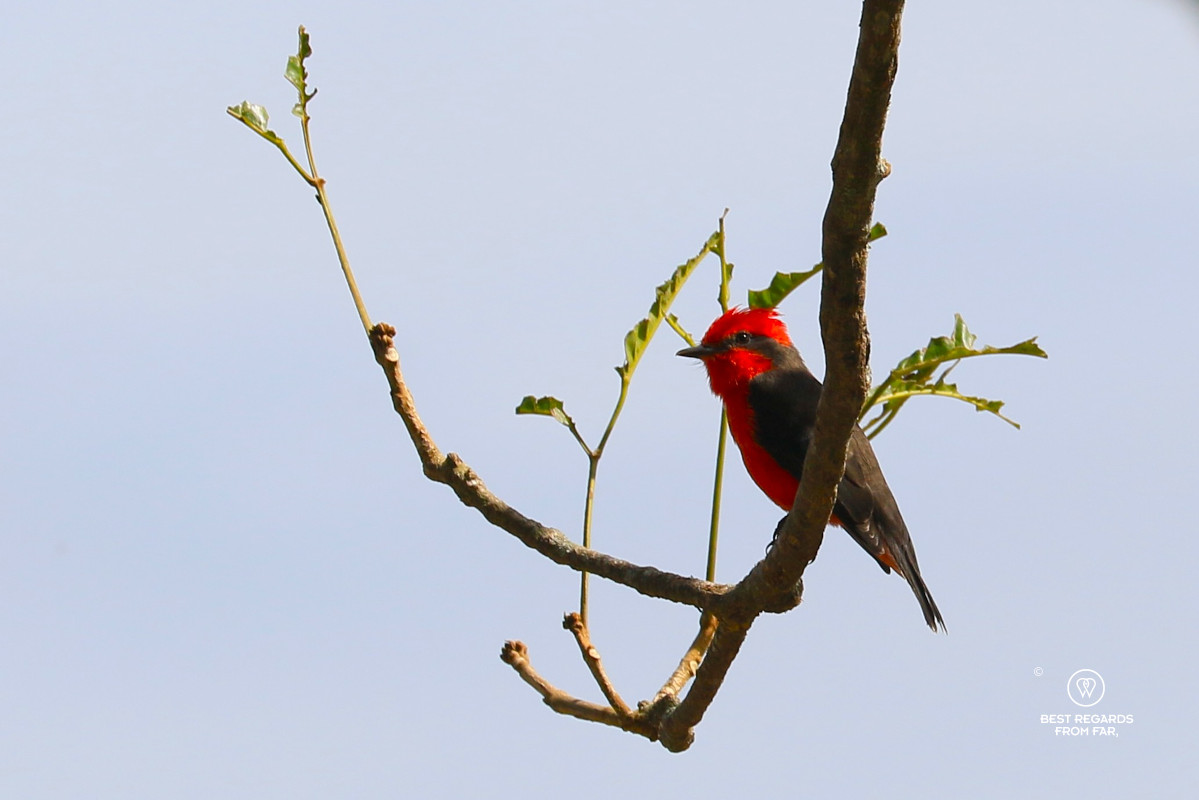
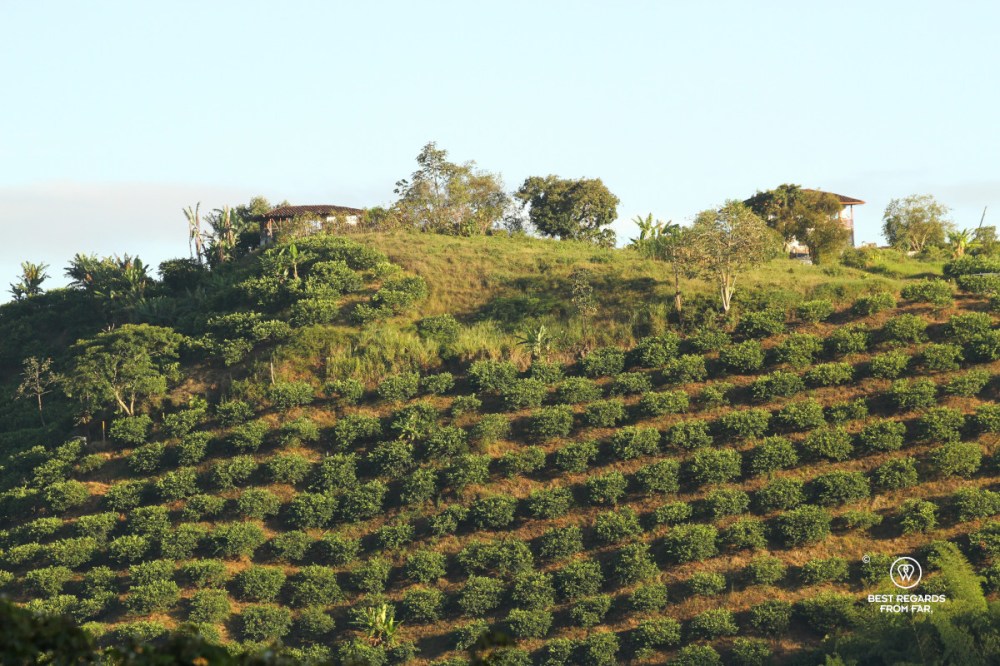
It is a steep up and steep down track that leads us to the Finca La Alsacia where the Hane specialty coffee grows. In the early in the morning, many birdsongs resonate. Splashes of bright colors fly from branch to branch. It is hot and humid and the thick canopy provides respite. A few recognizable bushes with dark green shiny leaves and red coffee cherries grow in the shade of majestic trees.
A Forest Haven
Even before we meet Don Leo, the owner of Finca La Alsacia and the man behind Hane Coffee, it is clear that sustainability here is not a slogan designed for a label, but the essence of the farm.
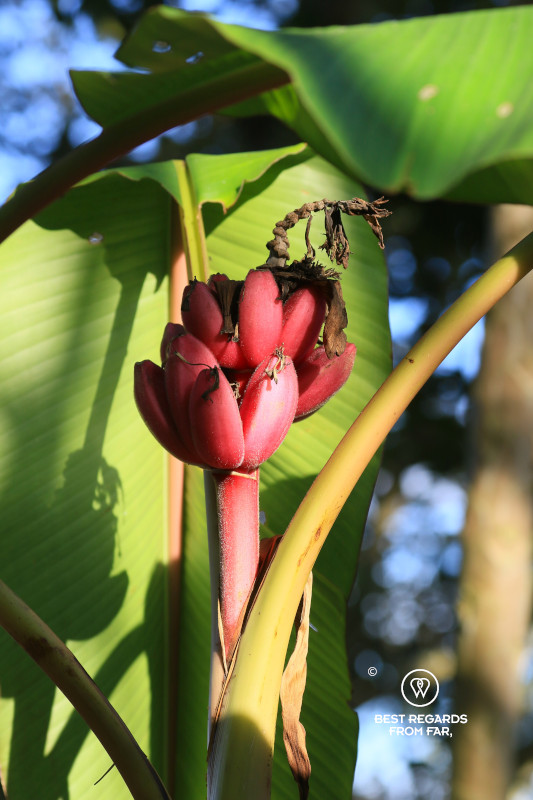
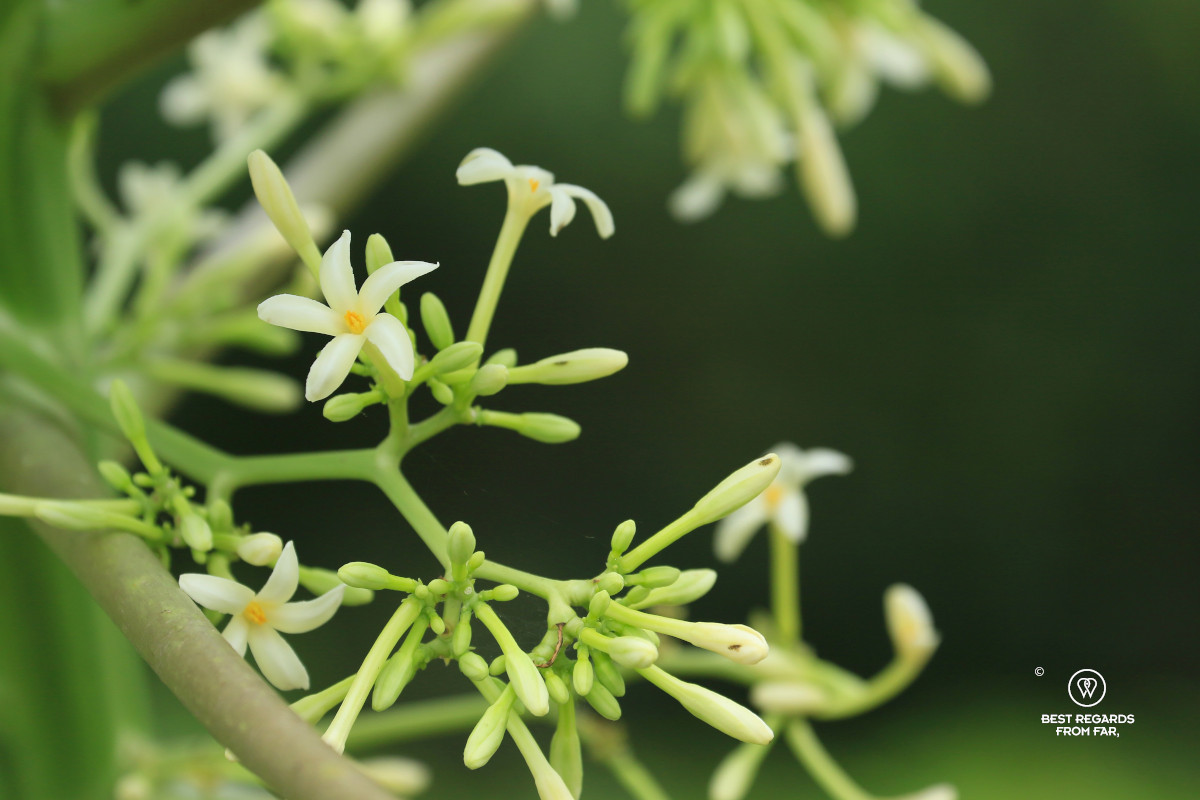
As we walk its ground, banana and plantain leaves spread like parasols over red cacao pods. There are papayas, pineapples and yucca, too. More shade for the coffee bushes is provided by citrus trees, while guava and the delicious custard apple are seen on other branches. Eight varieties of avocado leave ample choice when it comes to which one to pick up for lunch. Beans and other leguminous plants help return nitrogen to the soil, while fallen leaves, coffee husks and other organic matter are composted to enrich it. More than 1,200 trees grow across the finca that looks more like a forest than a regimented plantation.
Beneath this canopy several Arabica varieties grow, the only species grown in Colombia. Don Leo decided on the resilient Colombian cultivar Castillo, the historic Bourbon and the prized Geisha. “Arabica alone says too little about what will eventually be tasted in the cup,” explains Don Leo. The terroir (altitude, soil and climate) and the process (fermentation and roasting) all leave their mark.
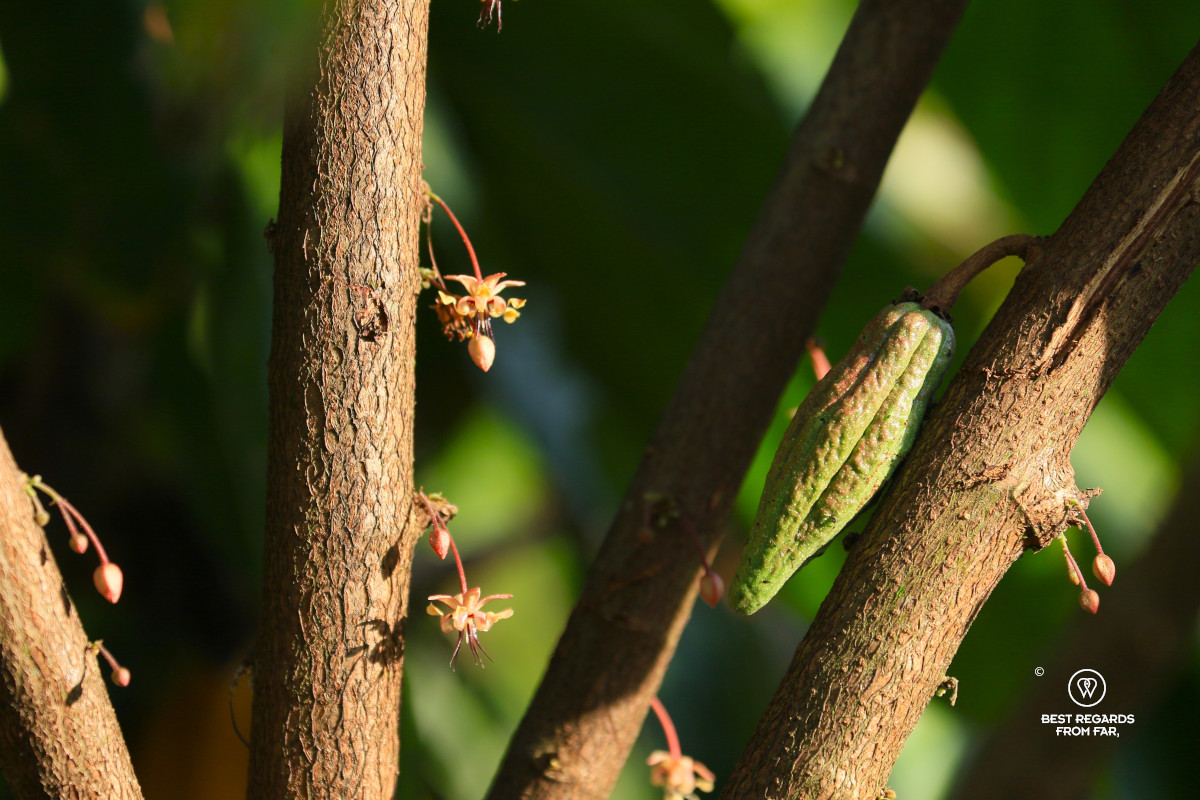
“There are too many monocultures today,” Don Leo tells us as he picks up a ripe avocado for lunch and several bananas. The lack of biodiversity calls for chemicals to enrich the soil or stop pests. Here, the finca‘s polyculture does much of that work naturally and nature takes care of itself in a sustainable way.
We pass by the small white blossoms of the coffee bush that release a scent reminiscent of jasmine. Arabica can pollinate itself by wind, yet bees and hummingbirds improve pollination while birds move through the canopy feeding on insects and fruits. It is not a monoculture but a complete ecosystem in which coffee is one species among many, and in which each species contribute to the well-being of the others, us included.
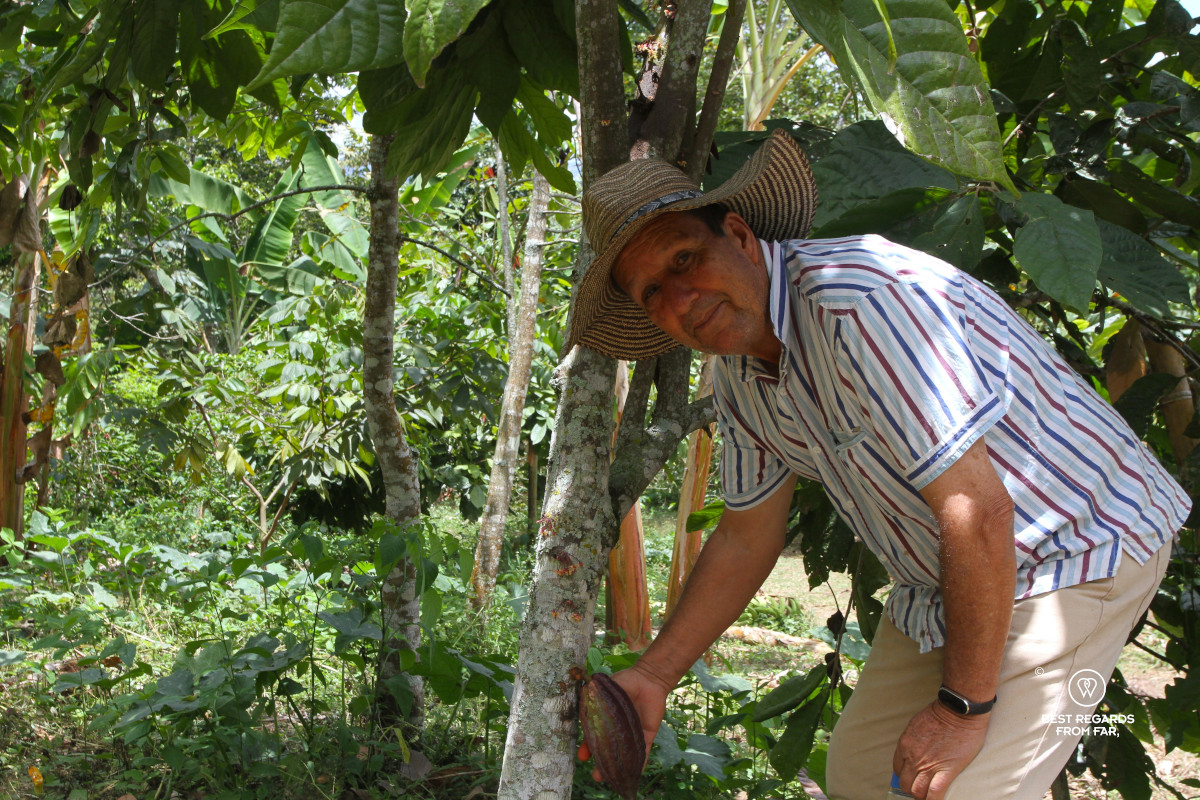
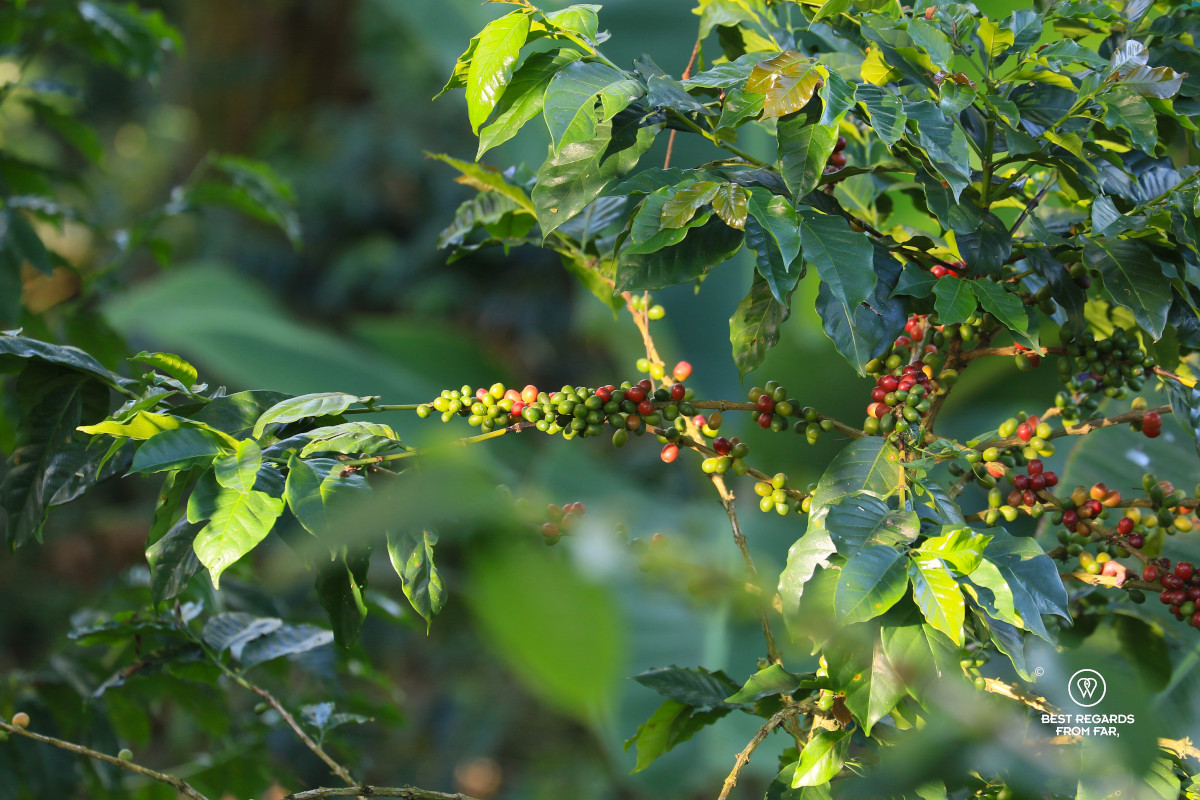
That vitality is all the more striking that La Alsacia used to be an abandoned farm, and that Don Leo once thought he was condemned to a life of humiliation as a coffee picker.
The Dark Years of the Campesinos
Back at the house, a worker brings us freshly brewed coffee. Don Leo thanks her, settles into his rocking chair and lifts the cup to his nose. For a moment, a grin of satisfaction brightens his face. Then, as he begins to tell us his life story, it gives way to a shadow.
Today in his seventies, Don Leo was born in Chocó, in northwestern Colombia, along the Pacific coast. One of 16 children, poverty and violence forced the family from its land in the 1960s. He spent only a few months at school to learn to read and write, before starting to work on a coffee plantation to help support his family at around the age of ten. They were poor but happy. The landowners treated them, the campesinos (peasants), all like members of an extended family. They ate together and lived close to one another.
On the morning of the 18th of July 1975, the frost blanketed Paraná and São Paulo in Brazil. This exceptional climatic phenomena happened in a stronghold of coffee production in world’s number 1 coffee producing country. The “Black Frost” destroyed or badly damaged 1.5 billion coffee bushes. With the world’s leading producer suddenly facing a devastated crop, international coffee prices soared. Across the border, some Colombians called it the “Holy Frost” as the country rose immediately from second to first producer in the world.
However, this success of Colombia’s coffee boom became its downfall. Over a couple of years, the price of coffee rose six-fold. With a massive and unexpected influx of foreign currency to trade the country’s dominant export, inflation seemed unstoppable. It fueled social violence as little of that new wealth reached the people picking the cherries protecting the coveted two seeds we know as coffee beans. Pickers continued to earn miserable wages while landowners accumulated fortunes.
Owners who had once lived alongside their workers sold cheaply or abandoned their land as guerrilla violence and extortion spread. New buyers combined smaller plots into haciendas, replacing modest homes with villas, electric fences, swimming pools and saunas. They paid the guerrillas the demanded protection money. Farm workers were crowded into barracks, poorly fed and barely paid. For the first time social discrimination occurred. Don Leo remembers: “Because of this injustice, I cursed my life as a coffee picker.”
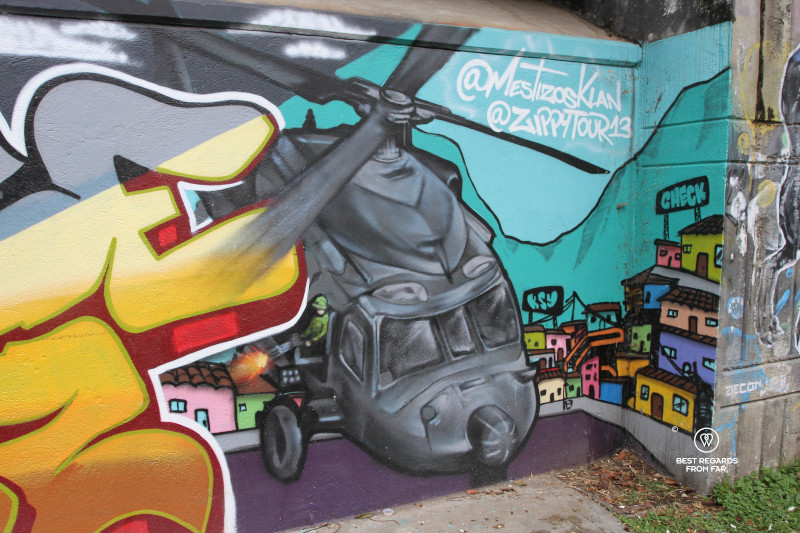
The coffee boom did not create Colombia’s armed conflict. Its origins reached much further back into battles over land, profound rural inequality and the political violence known as La Violencia (1948-1960). Over the decades that followed, left-wing guerrillas, state forces, drug-trafficking organizations and right-wing paramilitaries all fought for territory and power, with rural communities caught between them.
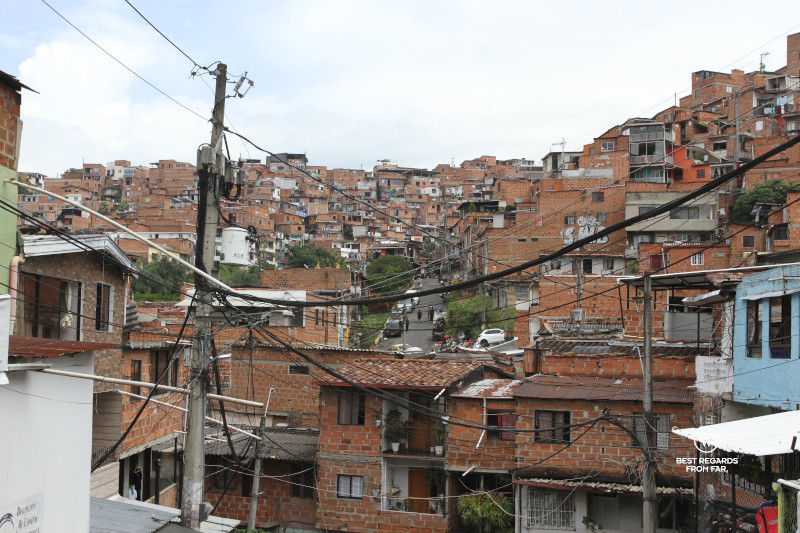
Colombia experienced one of the largest forced displacements of rural populations in modern history, with millions driven from their land during decades of armed conflict. Many peasantfamilies across the country arrived in improvised settlements on the edges of cities without education nor secure work.
The Fields that were not Coffee
By 1980, Don Leo had joined the ranks of nomadic laborers moving wherever they heard that the pay might be better. A promise of coffee work took him north to the Sierra Nevada de Santa Marta. He was told he could earn three or four times his usual wage. When he arrived, however, no coffee plants were waiting, only never-ending marijuana fields.
He had no money for the return journey, no room, and little to eat: he worked in illegal farming.
Driven by American consumer demand, American traffickers drove up the price of Colombian marijuana, ensuring that most of it was exported to the lucrative U.S. market. The marijuana boom led to a new level of tremendous brutality, eventually forcing Don Leo to flee.
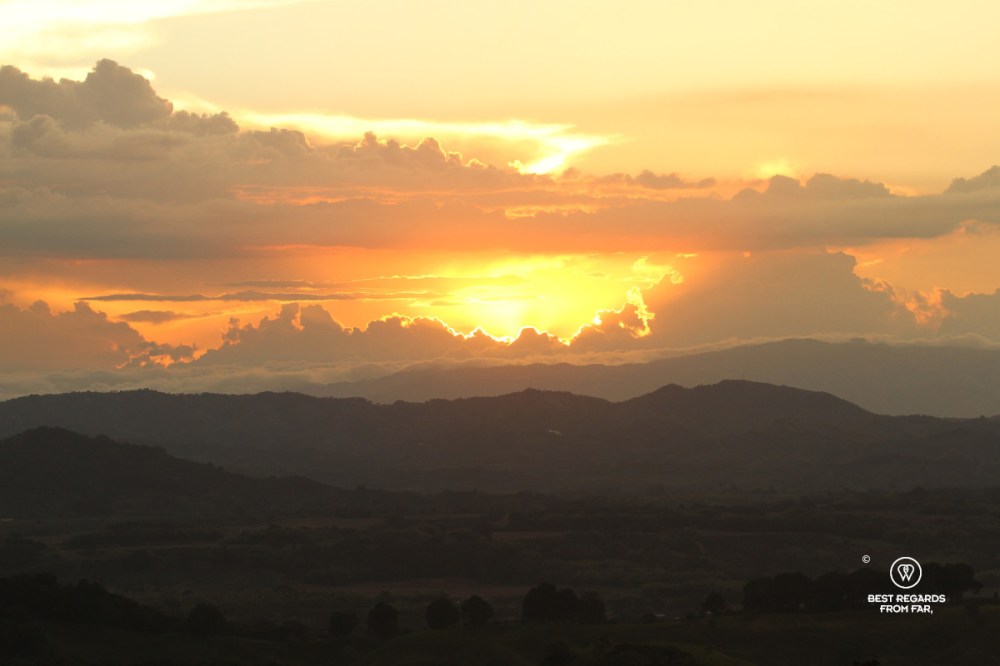
In 1984, after spending days and days paddling a canoe, he and a few others reached a vast plantation near Colombia’s border with Brazil. This time, the beautiful, unfamiliar shrub covering the land was coca.
After several weeks picking leaves, he became curious about a man working apart from the others in a makeshift processing site. The older man was turning the harvest into coca paste, simply mixing the leaves with water, sodium bicarbonate, gasoline, and sulfuric acid in a pit lined with thick, heavy plastic. Within days, Don Leo noticed that the man’s hands were trembling as he mixed the substances, a symptom of malaria. In such isolation, this was a death sentence. In only a few days before dying, the chemist taught Don Leo how to replace him.
For 71 days, the former coffee picker processed coca paste.
When his pay arrived, the amount was beyond anything he had imagined ever owning. He also knew that his lifespan would be very short in this business. Walking away was not an option. He decided to escape that same night.
The river offered the clearest route out, but it was also the first place the traffickers would search. Instead, Don Leo followed its course on foot through dense rainforest. He lost sense of time. Insects covered him; hunger, exhaustion and illness took over. Members of a Huitoto Indigenous community found him close to collapse and helped him reach a settlement. From there, through a succession of journeys, he eventually made his way back to his wife and young son.
He gave half of the money he had earned to his parents. With the rest, he and his wife opened a small shop in the quietest town they could find. It grew steadily over the years, and one shop became several.
A Return to the Land
By 2009, Don Leo sold everything but a small car so his son could travel to university for his biology and agronomy studies. Then, he bought an abandoned finca outside Buenavista, in Quindío, at the heart of Colombia’s coffee country.
La Alsacia had been left behind after its owner got shot dead by the guerilla he refused to pay. Just like the hacienda owners, he demolished the crumbling down house and built a large one in its place, with many bedrooms and bathrooms. But his was not to indulge in a lavish lifestyle, this was to house his workers on the farm and live amongst them. Every worker should sleep in the same bed he had, receive a decent wage, and eat the same food as the owner’s family. At Finca La Alsacia, social justice is not a notion, it is implemented and workers are treated as equal human beings, not as production machines.
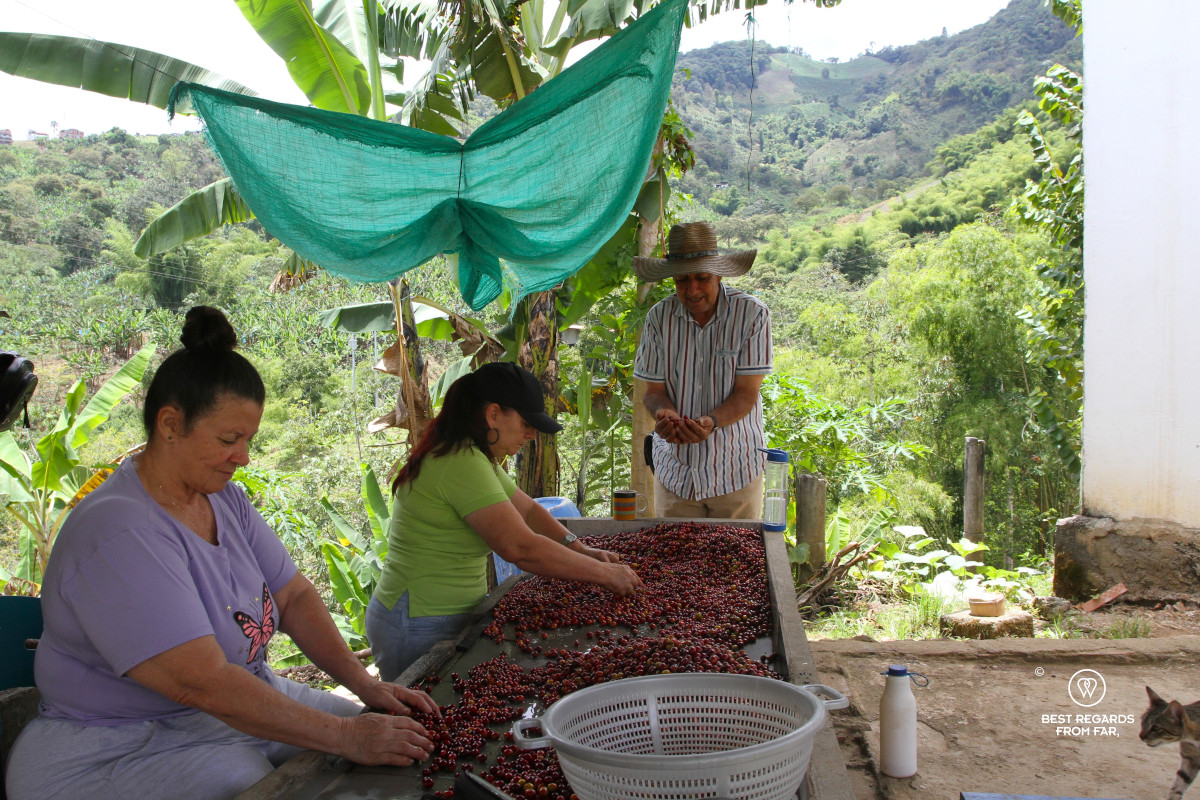
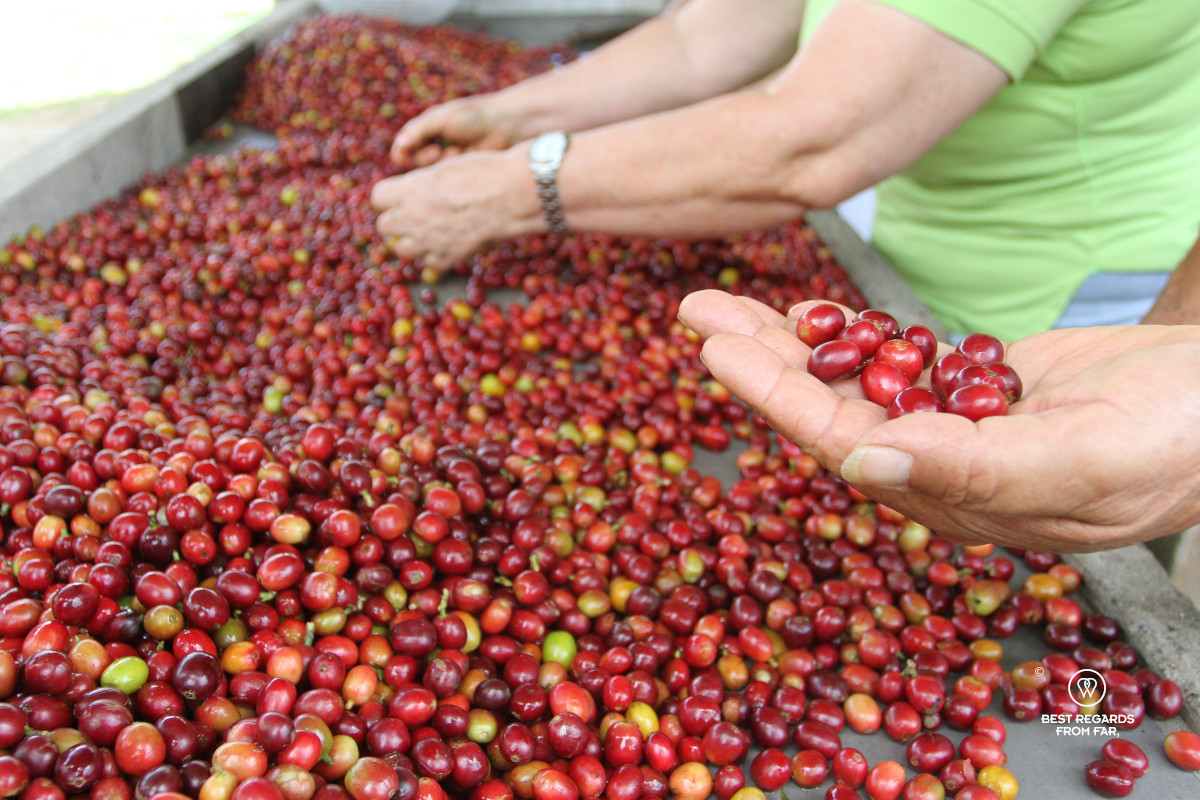
Yet, it is a vast forest, and Don Leo was far from being out of the woods. When he sold his first harvest in 2012, the price did not even cover the cost of producing it. Illegal crops could generate more money, but returning to them was unthinkable. His only viable route was quality.
He experimented, refined the cultivation and processing, and eventually placed second in a coffee competition. Today, Hane Coffee is sold at the finca and through specialty outlets, insuring a better price. Yet coffee sales alone do not guarantee La Alsacia’s survival. Visitors do.
Tour income helped the family build its small processing facility and buy a roaster, allowing more of the value to remain at the farm instead of passing immediately to intermediaries.
Beyond the income, it is also a way for Don Leo to tell his life story, a story that sheds light on events the government wants to keep quiet, and maybe a therapy as well for a man who suffered from post-traumatic stress and spent six months in a psychiatric clinic as a result.
His is the story of how a simple farmer of high ethics and morals could become a coca-paste processor, how ordinary people are dragged into illegal farming, and how in his case, this drug money allowed him a new start, and to build social justice and sustainability he never experienced himself but during his very early years.
From Cherry to Bean
Coffee demands relentless attention. During harvest periods, the cherries at La Alsacia are picked by hand approximately every 20 days. Only the ripe red fruits enter the best lots, which makes the work especially demanding on Quindío’s steep slopes.
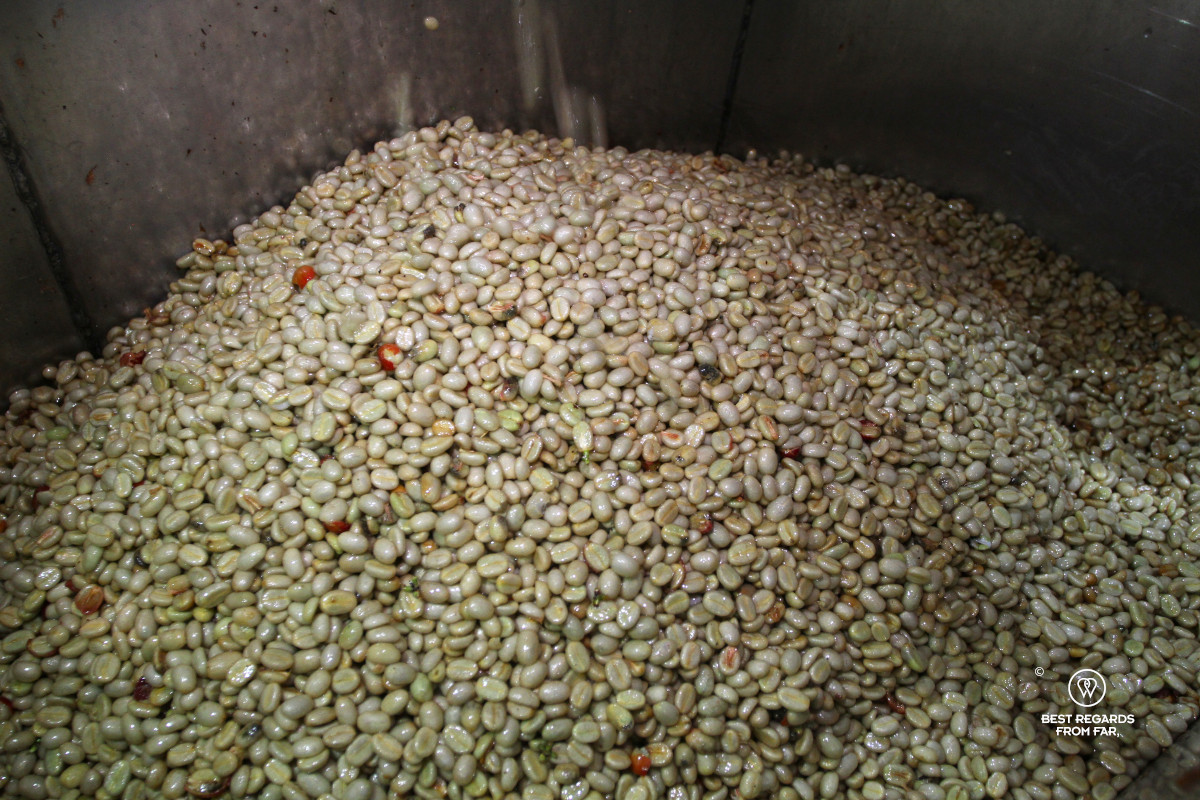
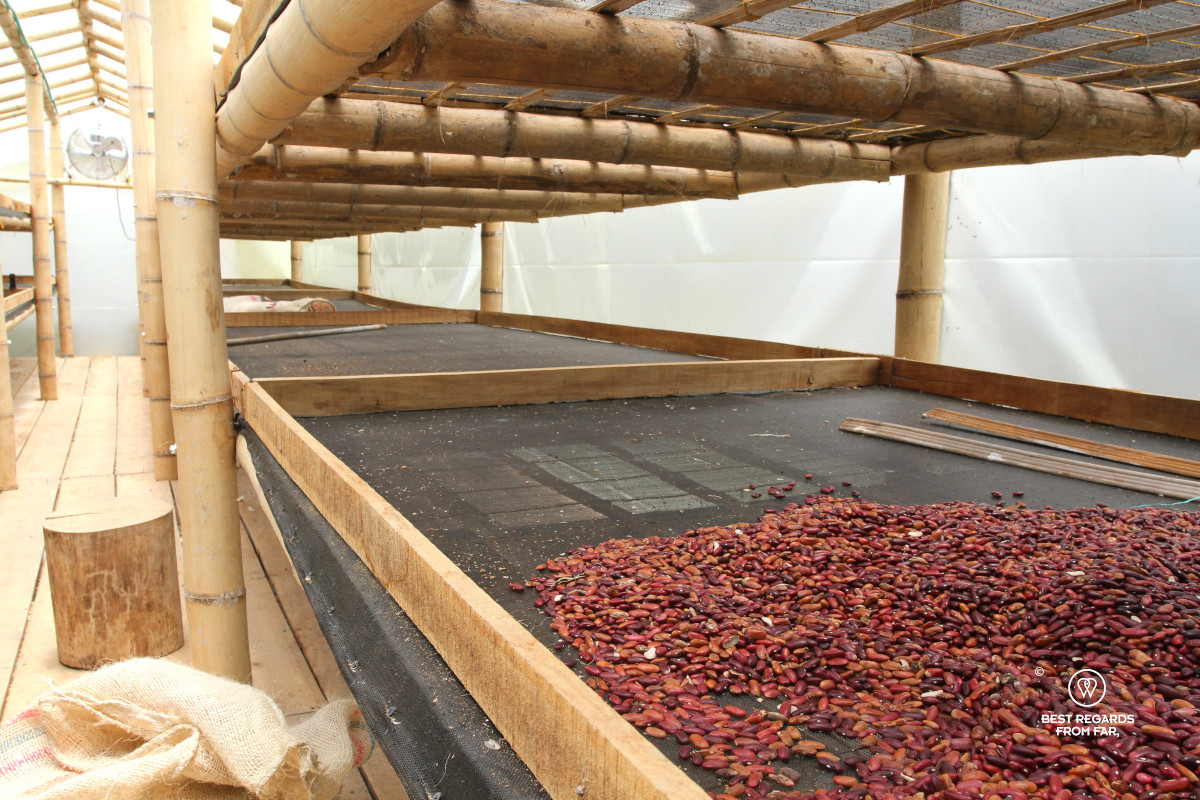
The picked cherries are soaked in water. Low-density or damaged fruits tend to float and can be removed while the denser cherries sink. Don Leo’s wife and a worker then inspect the crop by hand, looking for insect damage, uneven color, and other defects before separating the best fruit from the second-quality lot.
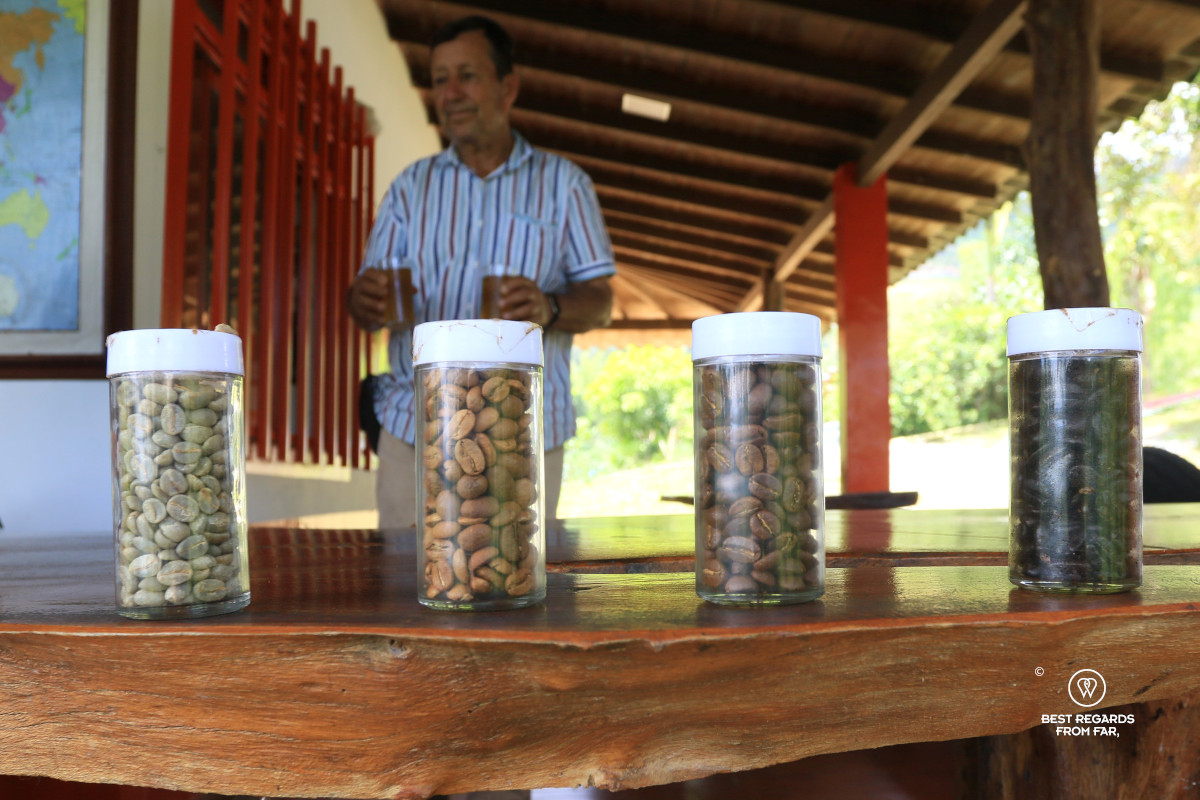
The beans are then fermented and dried in the greenhouse, either with the husk for a woodier feel, or with the mucilage for the sweet honey coffee, or after being washed for a citric and floral taste.
Once the beans have reached the correct moisture level, a hulling machine removes the dry parchment and sorting equipment grades them by screen size (12, 14, 16 and 18 at La Alsacia) before a final quality selection. Only 16 and 18 are sold in grains and the other are ground.
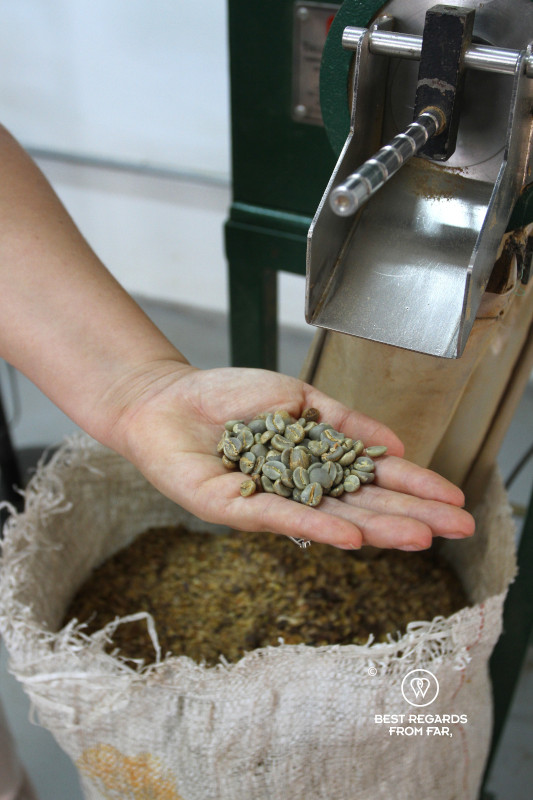
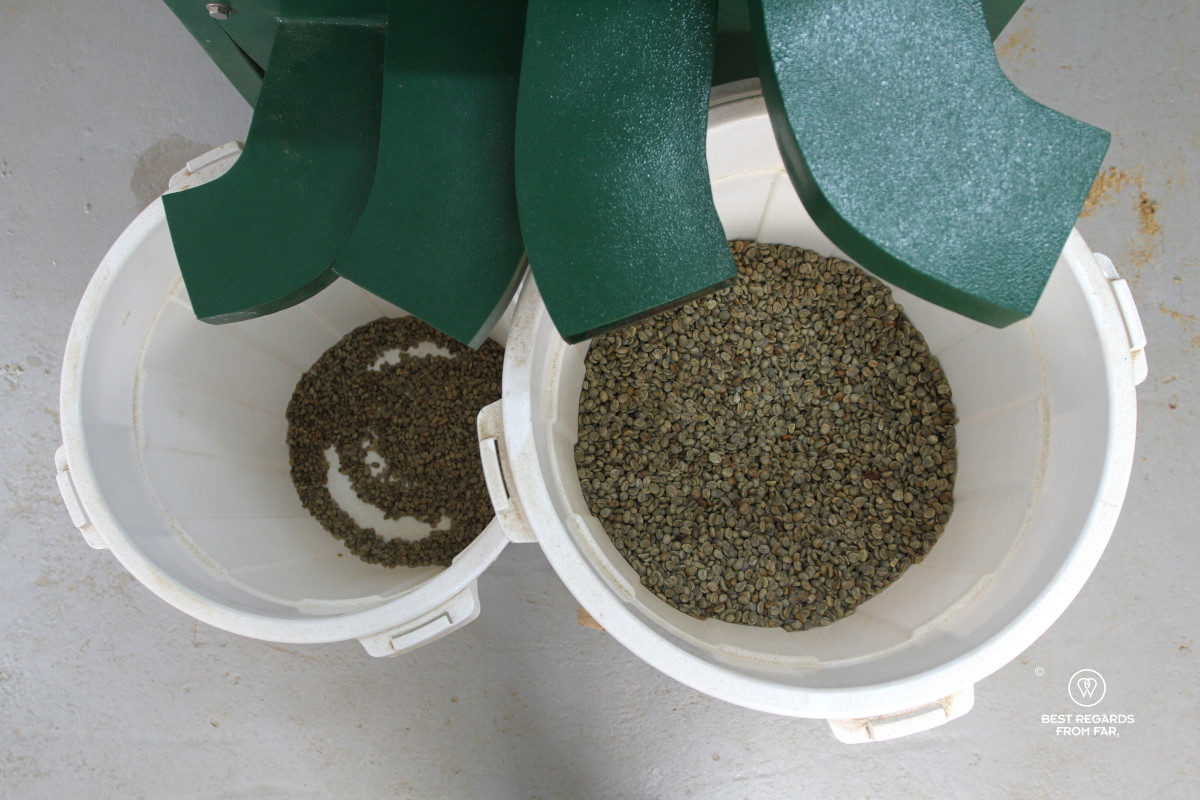
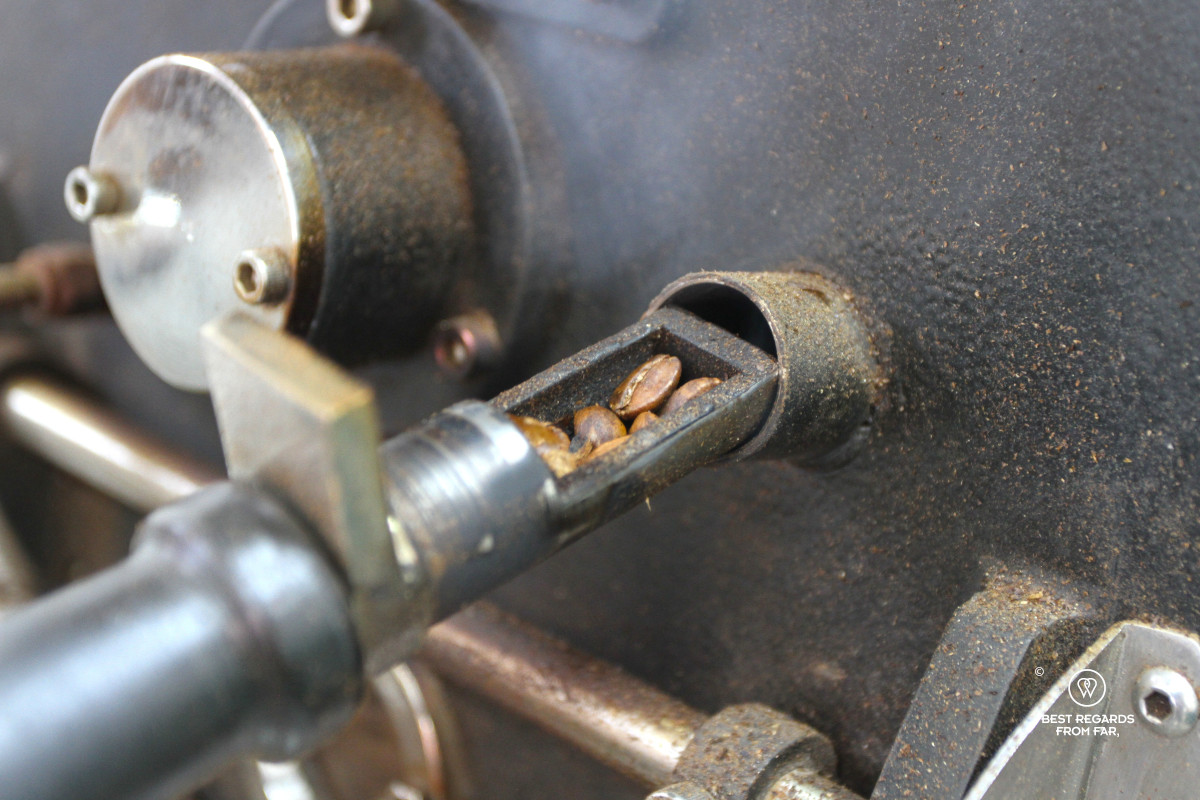
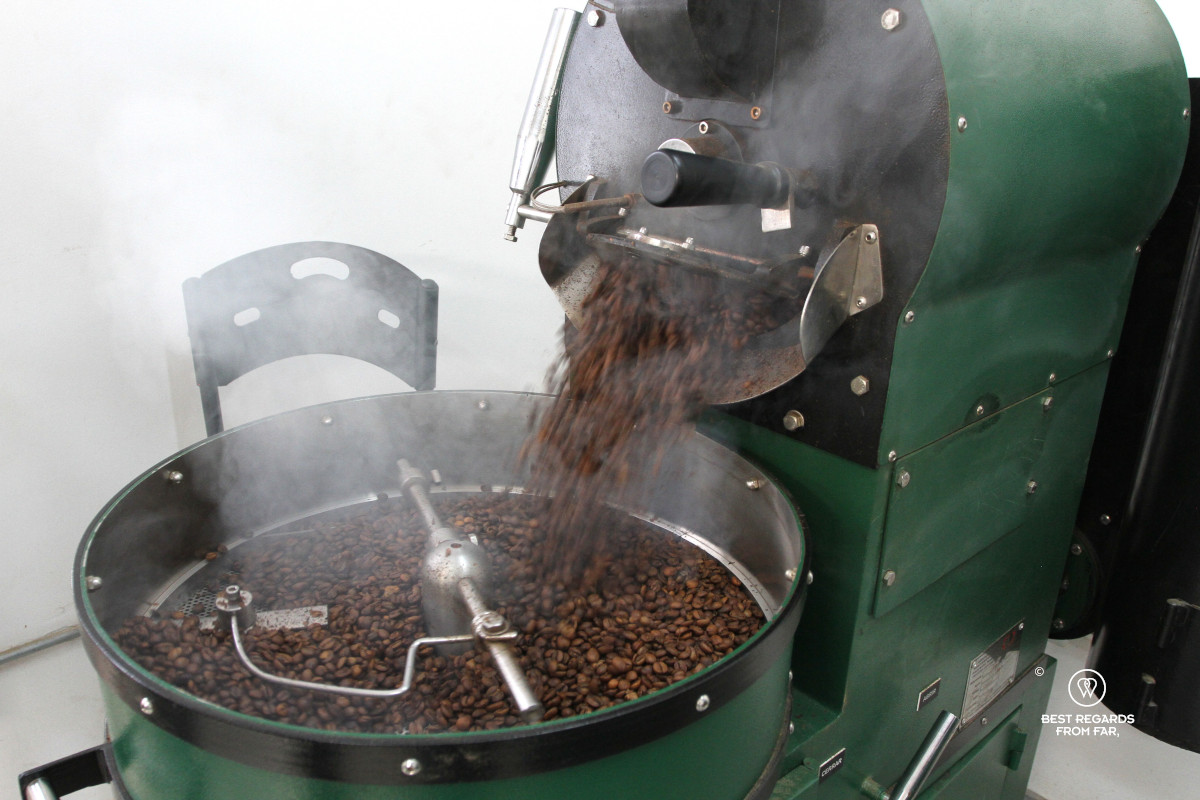
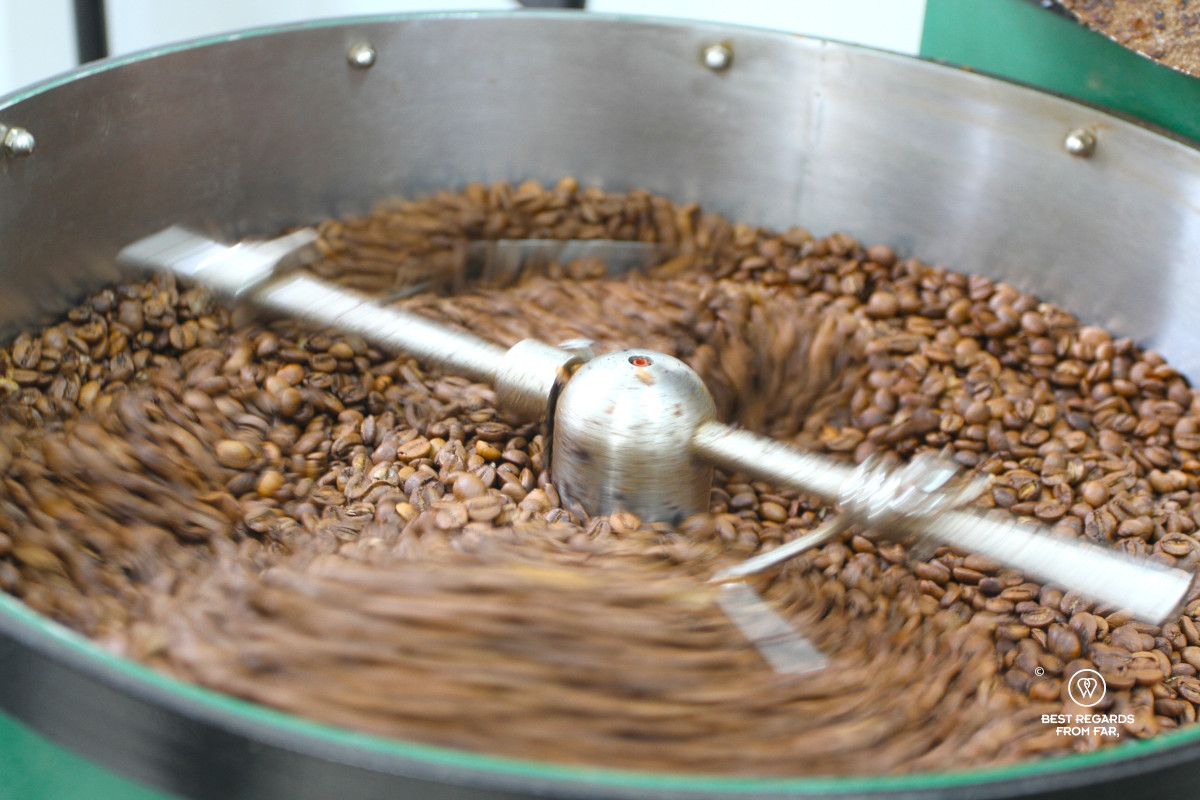
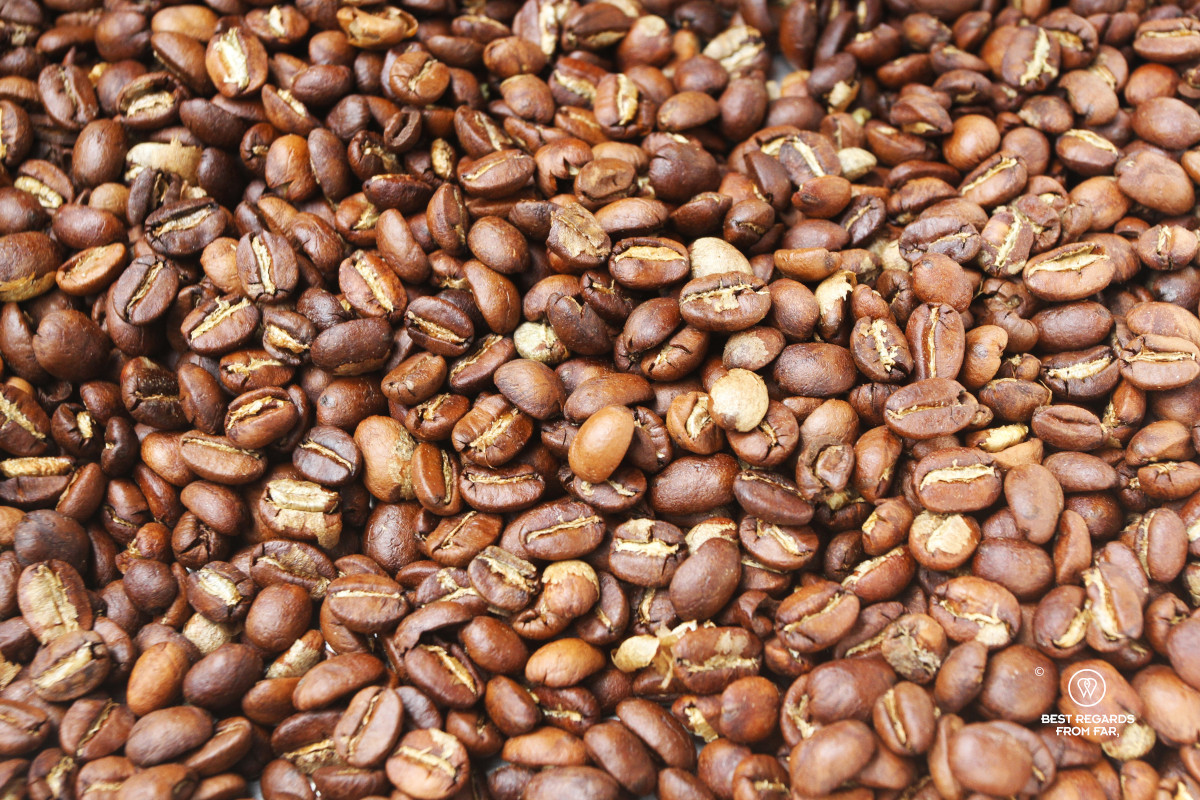
Roasting is another transformation entirely. First, the remaining moisture evaporates and the beans heat through also burning sugars in a dehydration and caramelization process to build aroma and sweetness. Pressure then expands the beans until the audible “first crack,” after which the roaster controls the development of flavor. Hane favors a medium profile that preserves the identity of the variety and the terroir of the finca. A darker roast develops more bitterness and roast-derived flavors that take over the characteristics of the bean itself. Bitterness should not be confused with caffeine strength, a common misconception.
A Seat at the Same Table
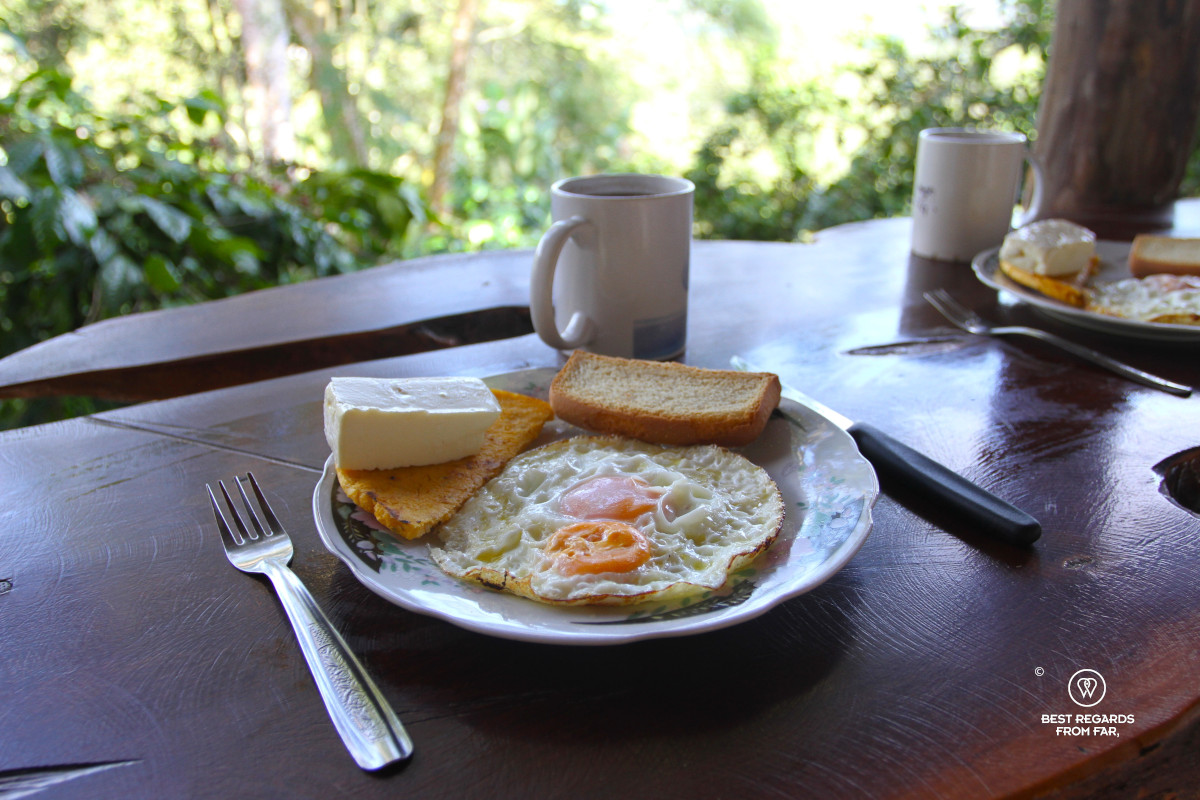
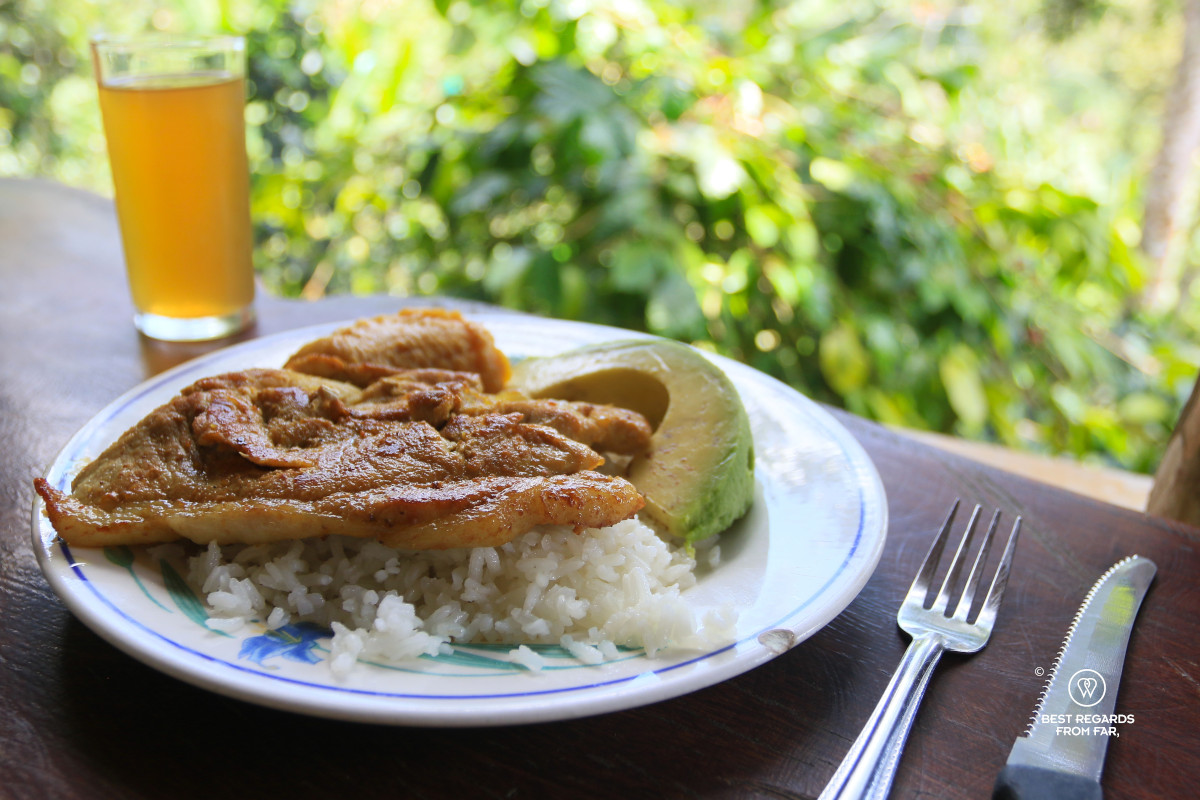
By lunchtime, the avocado collected on the trail has reached the kitchen. Don Leo’s wife has been cooking since early morning, transforming ingredients harvested the day before into a substantial menú campesino.
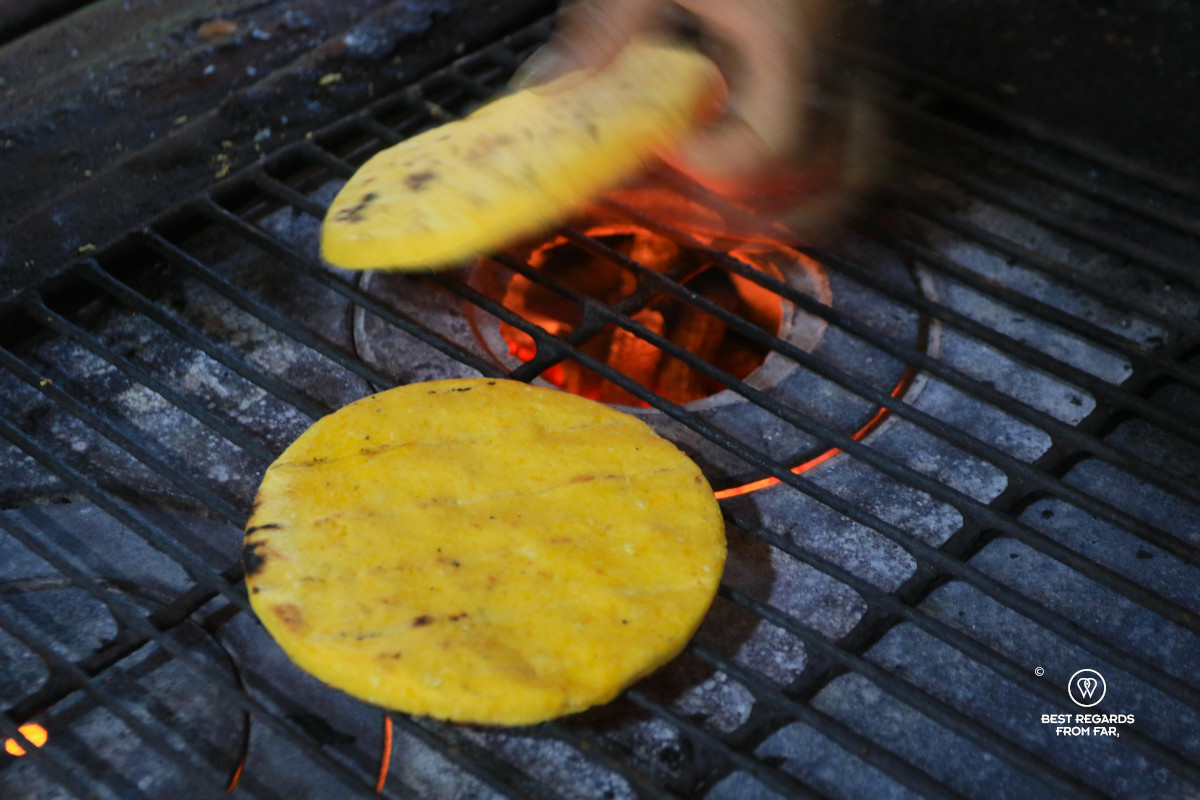
The starter is a hearty soup filled with potatoes, yucca and plantain, made to sustain people working on the steep slopes of the finca. It is followed by a nice piece of chicken on rice, and the avocado we picked. Owners, laborers, and visitors sit down to the same meal, at the same table. And of course, we all finish on a cup of coffee that we appreciate even more now that we truly see what is in it from bean to cup.
The circle is now complete. The plants shading the coffee feed the people tending it. The waste from processing nourishes the soil or fuels the next stage of production. Visitors help finance equipment that lets the family retain more control over its crop. And the large house houses owners, workers, and tourists if they wish to stay under the same roof.
Notes:
- It is estimated that coffee farmers earn only two US cents from every cup of coffee sold. Coffee producers frequently experience extreme poverty and are forced either to turn to illegal crops or migrate to the cities. Small-scale farmers cannot afford paying for a “Fair Trade” or organic certification that benefit corporations, so to make an impact, focus on specialty coffee.
Travel tips:
- Make sure to book your Caficultur experience at Finca La Alsacia and to taste and bring back some Hane Coffee.
- Check out this interactive map for the specific details to help you plan your trip and more articles (zoom out) about the area!
For more in Colombia, click on these images: