Text & Photographs: Marcella van Alphen & Claire Lessiau
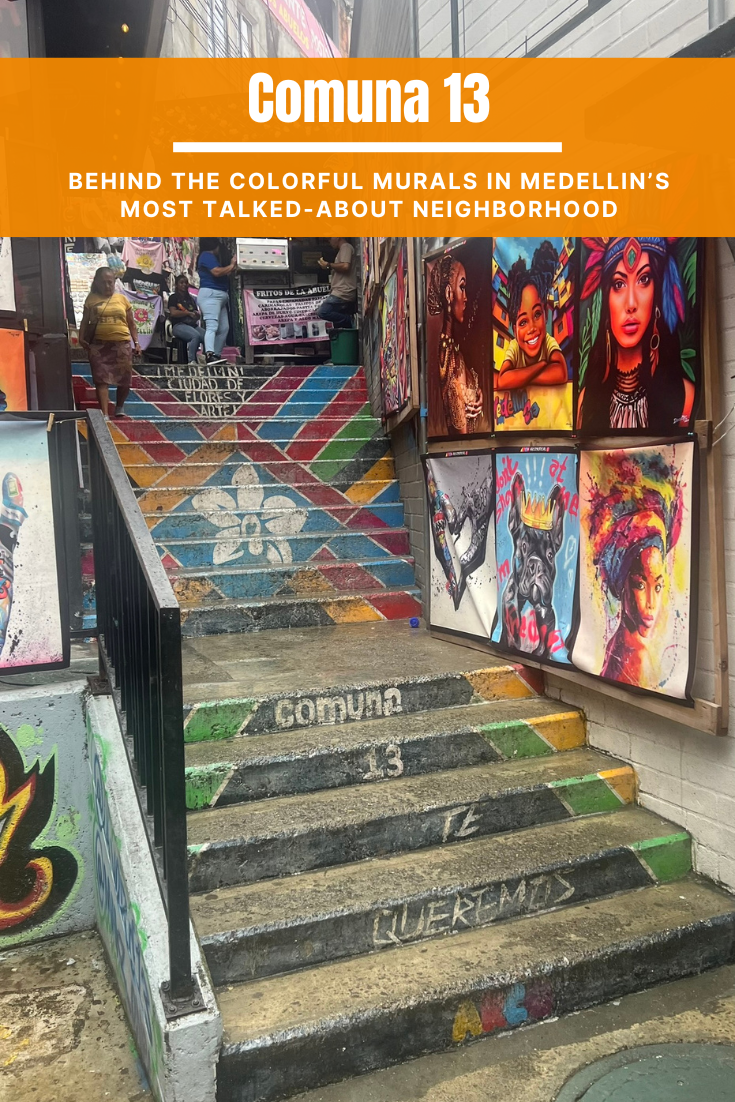
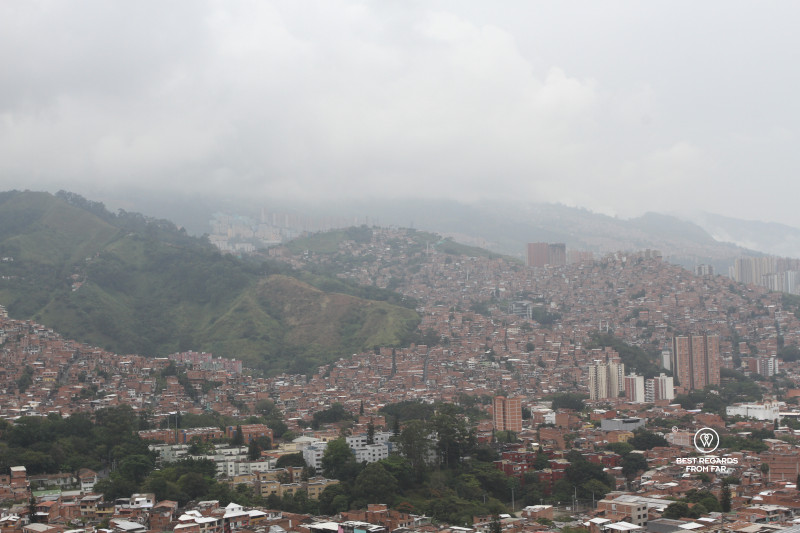
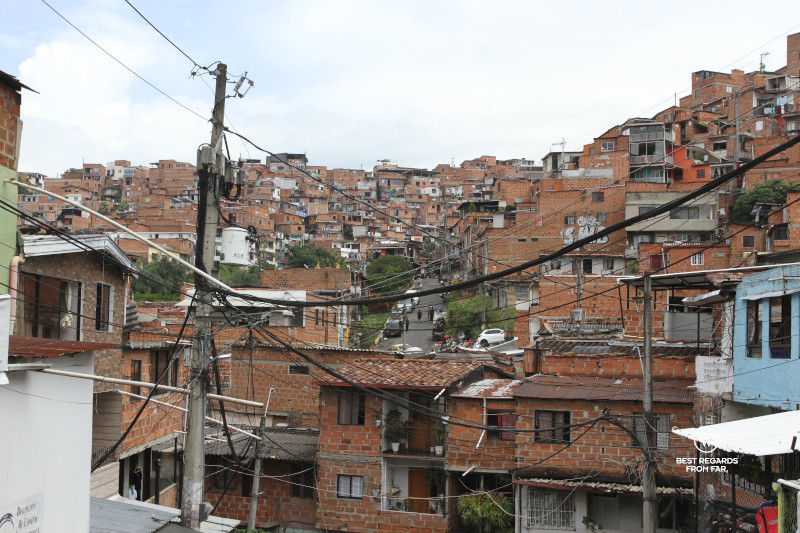
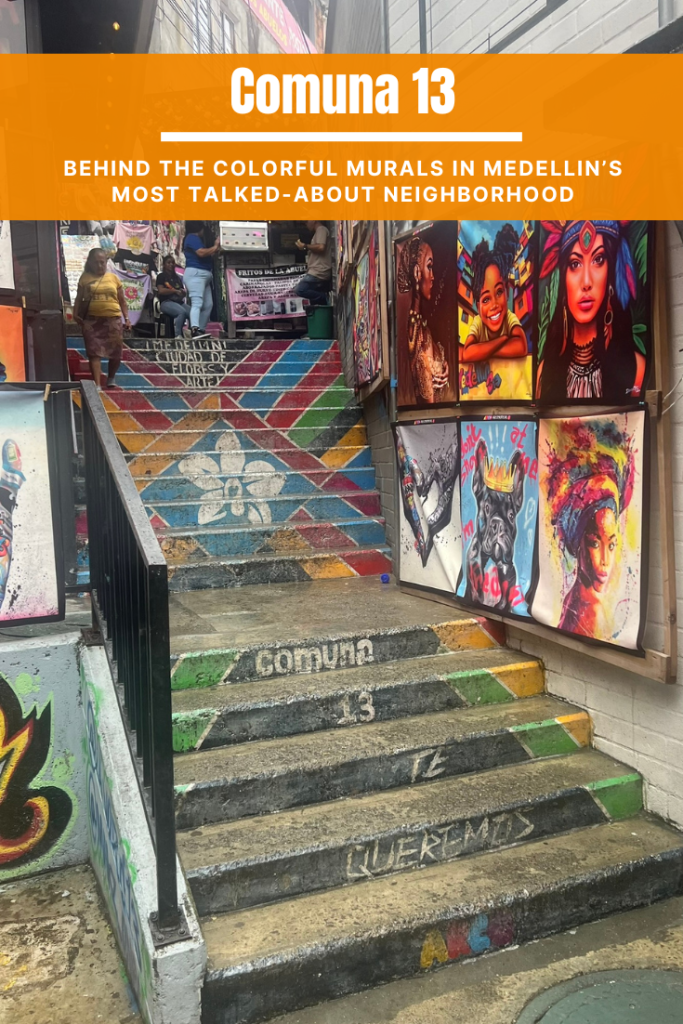
From Medellin’s valley, Comuna 13 appears as a dense mass of brick and concrete houses climbing the steep western hills where tourists take selfies. Up close, homes seem stacked on top of one another. Narrow alleys disappear between them, staircases connect different levels, and loud music echoes.
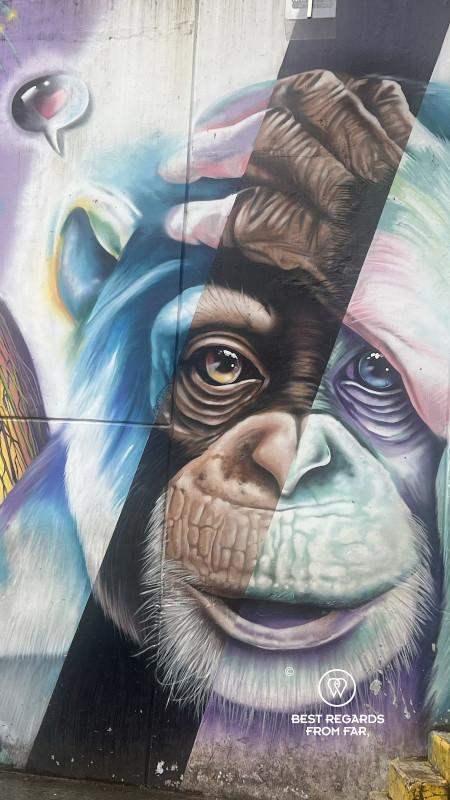
Today, visitors come for the colorful murals, hip-hop performances, panoramic views, and outdoor escalators. Yet there is much more to Comuna 13 than its transformation into one of Medellin’s most popular neighborhoods.
As we walk its streets with our local guide, Lizbeth, the murals begin to reveal a history of migration, guerrilla control, paramilitary violence, forced disappearances, and community resistance. With Lizbeth, we begin to understand the meaning behind the Instagramable murals.
Pin it for later!
From Rural Village to Urban Neighborhood
We meet Lizbeth in San Javier, one of the main neighborhoods of Comuna 13. A comuna is an administrative district made up of several neighborhoods, and this one is among Medellin’s most densely populated.
It is hard to believe that San Javier was once a rural settlement outside the city. Wealthy Medellin families owned haciendas here on the surrounding hills, where coffee and mandarins were grown.
The assassination of political leader Jorge Eliécer Gaitán in Bogota in 1948 triggered the Bogotazo riots and intensified the conflict known as La Violencia, the 1948 to 1953 civil disruptions in which 200,000 died. Political affiliations were not safe anymore and Medellin offered anonymity, employment, and greater access to education. In the 1950s though, Medellin’s textile industry expanded rapidly. Factories multiplied, workers were needed and increasing violence in the countryside pushed families toward urban areas.
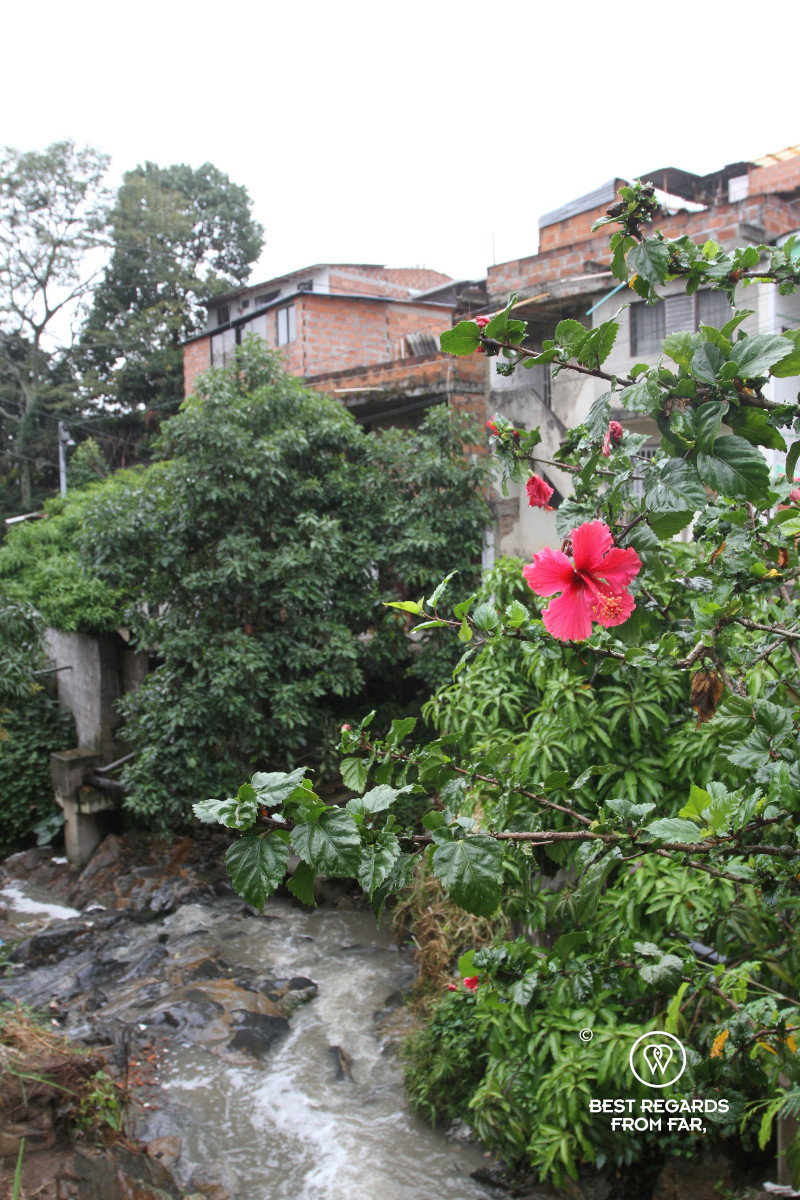
Later waves of displacement brought more families to the hillsides. With little government support, they built informal settlements – no running water, electricity, schools, transportation, nor permanent police protection.
A Strategic Territory
As we continue uphill, Lizbeth explains that Comuna 13’s geography is central to its history. Routes through the surrounding mountains connect Medellin with Western Antioquia, the Gulf of Uraba, and ultimately Panama and the Caribbean. Controlling this territory meant controlling the movement of people, weapons, supplies, and drugs.
The steep slopes, narrow alleys, hidden passages, and easy access to the mountains made Comuna 13 difficult for the authorities to control and valuable to armed groups. Antonio Nariño Square once marked the boundary between a relatively safe section of the neighborhood and the more dangerous territory beyond it. Yet, the borders between armed groups were not always visible. A teenager walking into the wrong street could be accused of spying for a rival organization, often with fatal consequences.
The FARC, ELN & Urban Militias
During the final decades of the 20th century, guerrilla organizations established influence in Medellin’s poorer neighborhoods.
The best known are the Revolutionary Armed Forces of Colombia, or FARC, and the National Liberation Army, or ELN. Around 2000, militias connected to both groups operated in parts of Comuna 13, alongside the local Comandos Armados del Pueblo, or CAP.
These organizations presented themselves as defenders of communities neglected by the state, promising security and claiming to fight inequality and political exclusion. However, there was a bigger agenda, and their protection came with control. The militias imposed rules, recruited young people, racketed, restricted movement, and punished. Different groups sometimes collaborated and sometimes fought each other. Residents had to navigate shifting boundaries while trying to work, care for their families, or attend school.
The Spread of the Coca Economy
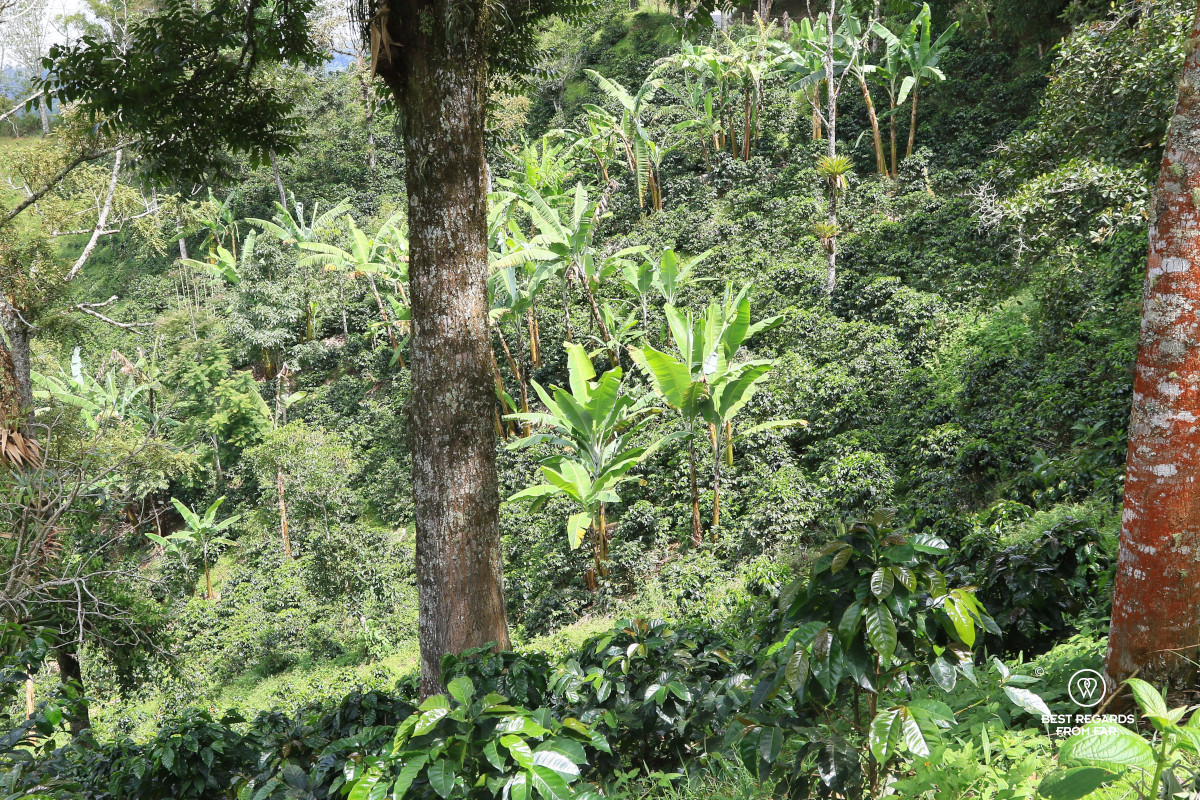
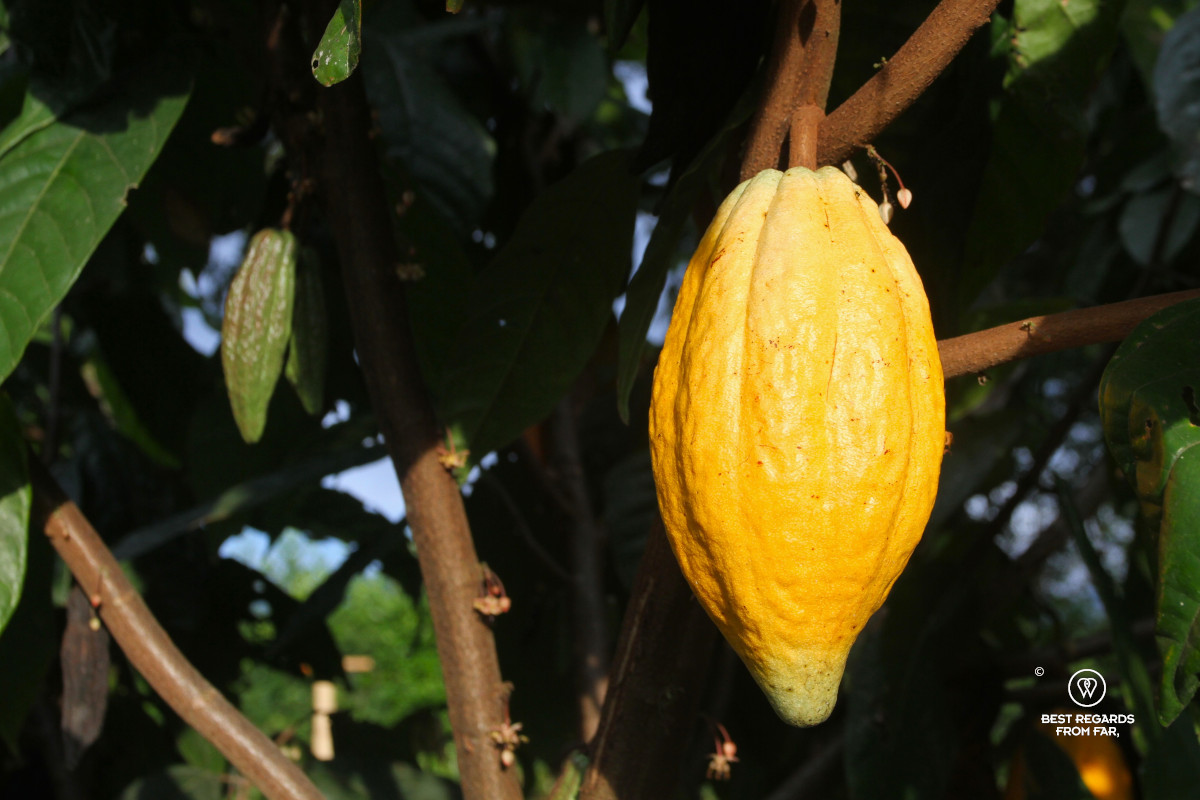
As we walk, history meets Lizbeth’s life story. When she was about five years old, she visited relatives in Cauca, in southern Colombia. She remembers playing near a field of plants unknown to her with a powerful smell. A laboratory operated nearby. Her grandparents used to grow coffee, cassava, basil, tomatoes, and passion fruit, until one of her uncles asked for a plot for his own crop… Coca had become more profitable…
Often with no choice being stuck between poverty and and armed organizations, the stories or regular rural men who worked in the coca industry at least during a few years of their lives are very common in Colombia. Extortion, violence, and fear forced more families toward cities such as Medellin.
Years later, the Colombian authorities eradicated the coca crops, spraying glyphosate herbicide over coca-growing regions and financing alternative harvests. Actually, to this day, farmers are compensated as they transition to lawful crops.
From Escobar to Don Berna
By the 1980s, wealthy landowners, business owners, and drug traffickers had become frustrated with guerrilla kidnappings and extortions. The authorities could not protect them, and they contracted private armed groups.
The Castaño brothers became central figures in the growth of Colombia’s paramilitary movement after their father was kidnapped and killed by guerrilleros. What began as revenge developed into one of the country’s most powerful criminal organizations.
Paramilitaries claimed to fight guerrillas, but they often targeted entire communities they suspected of helping them. Living in a guerrilla-controlled area, or being denounced by a neighbor was enough to become a target. Comuna 13 was not only Pablo Escobar’s territory. Escobar influenced violence across Medellin and recruited gunmen from poor neighborhoods, but the conflict here involved guerrilla militias, paramilitaries, drug traffickers, local criminal groups, and government forces.
After Escobar’s death in 1993, other figures filled the spaces left by the Medellin Cartel. One of the most important was Diego Fernando Murillo, known as Don Berna. Closely linked to the Castaño brothers, he became a major paramilitary and criminal leader, ready for anything for power and money.
The White Handkerchiefs
In 2002, the Colombian government launched a series of police and military operations to remove guerrilla militias from Comuna 13.
During Operation Mariscal in May 2002, intense gunfire trapped civilians inside their homes. A teenage boy was injured while playing video games. His mother and best friend tried to get him to a hospital, but the shootings made it impossible to move through the streets. A local woman stepped outside waving a white piece of cloth. She called on the armed forces to stop shooting and insisted that her neighbors were civilians, not guerrilleros. Other residents joined her with white handkerchiefs… The teenager survived. Many of his friends and other residents did not.
Operation Orion & the Missing
Five months later, in October 2002, the government launched Operation Orion, the largest urban military operation of Colombia’s armed conflict.
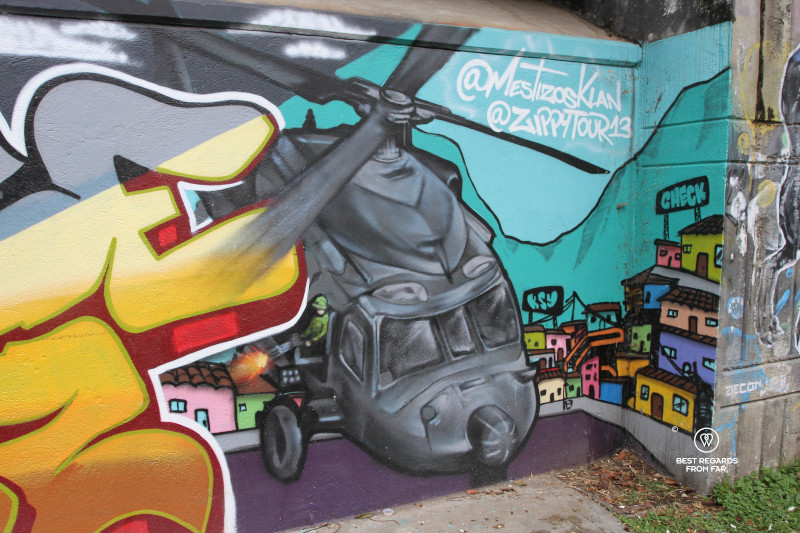
Army and police entered Comuna 13 with armored vehicles and helicopter support. The official objective was to remove the guerrillas and restore state control. The operation weakened the FARC, ELN, and CAP, but did not immediately bring peace. Residents and human-rights organizations reported random arrests, excessive use of force, and cooperation between security forces and paramilitary groups. Many young men disappeared…
At the end, guerrillas lost control, but Don Berna’s paramilitary groups consolidated their presence…
La Escombrera
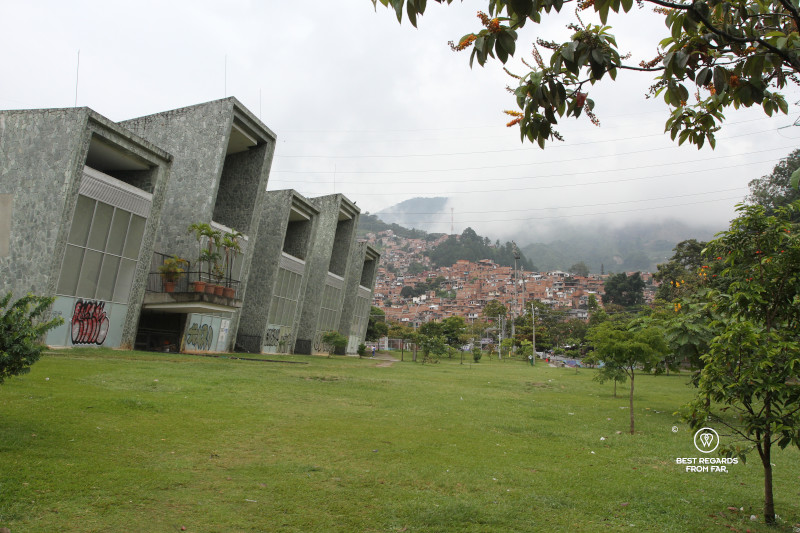
From the streets of Comuna 13, the mountains are visible. Somewhere in those hills lies La Escombrera, a vast dumping ground for construction debris.
For more than two decades, families insisted that paramilitary groups had buried victims of forced disappearance there. Mothers, wives, and daughters continued searching despite repeated delays and failed excavations. Their claims have since been confirmed. Human remains have been recovered from the site, identified, and returned to families, while the search continues.
The murals in Comuna 13 recall these events, these kids, these people, and lost relatives, and families still demanding answers.
Hip-Hop & the Escalators
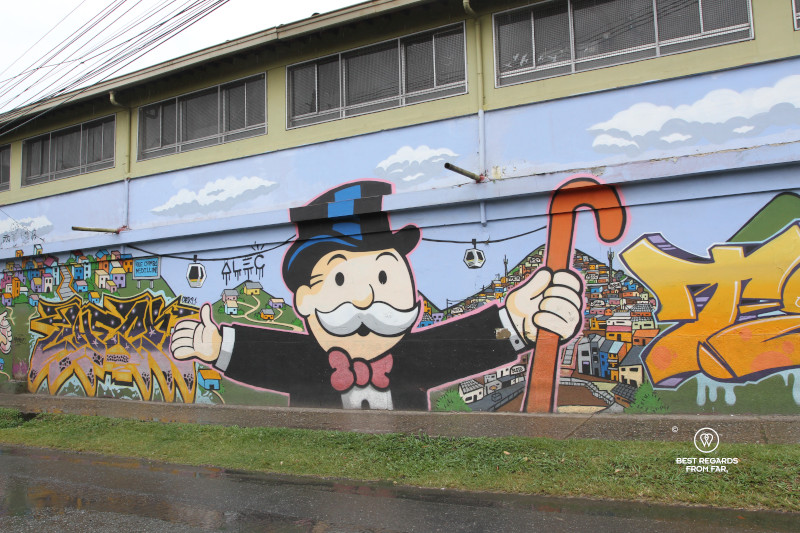
During the most violent years, teenagers gathering in the streets were often viewed as potential criminals. Hip-hop, rap, breakdancing, and graffiti allowed young residents to express themselves in a peaceful way while fighting trauma.
Today, dancers perform on small platforms, rappers gather crowds, and artists work in studios beside cafés and shops, and with graffiti’s as a background. Beyond the bright colors, they tell the stories of this neighborhood for those who take the time to look at them.
Tourists ride the escalators that helped connect neighborhoods in Las Independencias, now one of Comuna 13’s best-known landmarks. From the upper levels, we look across the dense hillsides and the city beyond. It is easy to understand why this terrain was so difficult to control, with its immediate access to the mountains.
A Transformation under Way
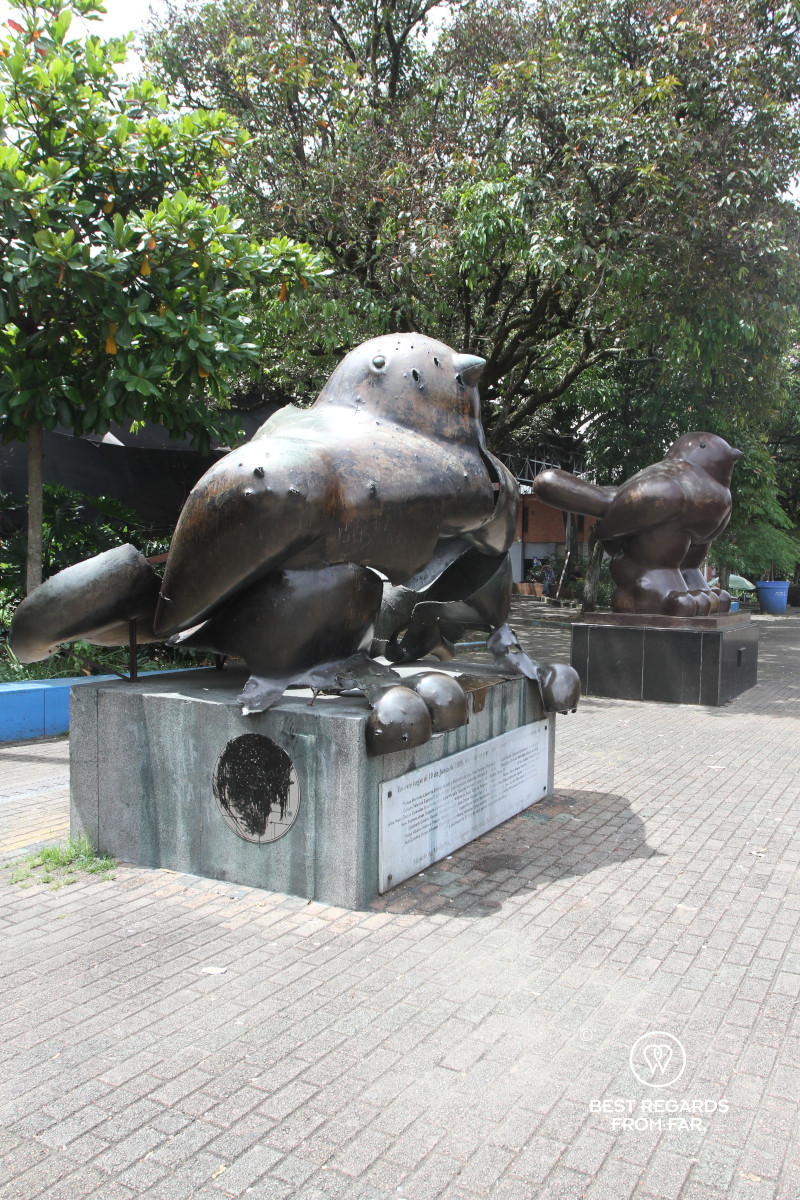
It would be easy to end the story here: a violent neighborhood transformed through art and tourism. Yet, extortion and criminal control continue in parts of the neighborhood – they have adapted and are simply less visible. Some coffee shops and bars are still under guerilla’s control.
Comuna 13 is neither the dangerous no-go zone it once was nor the success story presented by some tourism campaigns. It is a living neighborhood shaped by migration, guerrilla control, paramilitary violence, political neglect, community action, public investment, art, and tourism.
Travel tips:
- Zippy Tour supports local projects and businesses and provide jobs to guides from the community. Book your tour!
- Avoid tours centered mainly on Pablo Escobar, and please do not buy anything showing him: think about what you money fuels.
- Check out this interactive map for the specific details to help you plan your trip and more articles (zoom out) about the area!
For more in Colombia, click on these images:



Very cool!Sent from my iPhoneOn Jul 17, 2026,
Thanks Heather! Do you remember visiting Comuna 13 when we were in Colombia?