Text & Photographs: Marcella van Alphen & Claire Lessiau
It is surprisingly quiet in Jagalchi Market, South Korea’s largest fish and seafood market in the modern city of Busan, its second largest city. While modern skyscrapers tower over the busy harbor, the country’s largest (world’s seventh!), the market itself seems out of time. The concrete floor is wet. The smell of fish is omnipresent. Geared up with sharp knives and rubber aprons, some ajumma (middle-aged married women) skillfully process different types of seafood brought in at the break of dawn.
The Jagalchi Market began to grow after Korea’s liberation from Japanese forces in 1945. It expanded following the Korean War during which Busan remained one of the only two cities in South Korea untaken by the North Korean communist troops. However, the history of the harbor of Busan is much older, as it first opened for diplomacy and trade in 1407. As ships carried people across the seas, the area around the port developed into a center of cultural exchange contributing to Busan’s vibrant culinary scene…
Pin it for later!
Inside the Jagalchi Market
Escaping the North Korean army during the Korean War, refugees flocked to Busan, and areas such as today’s popular Gamcheon developed frantically. They settled and tried to make ends meet, and the fishing industry developed further. Post-Korean War, ajumma played a prominent role at Jagalchi Market. At times rough around the edges, they took to the streets to sell goods, contributing to the market’s unique atmosphere. Today, some still descale, gut and sometimes debone the catch of the day by their stalls. Others cook the fresh seafood on the spot for hungry fishermen and passersby.
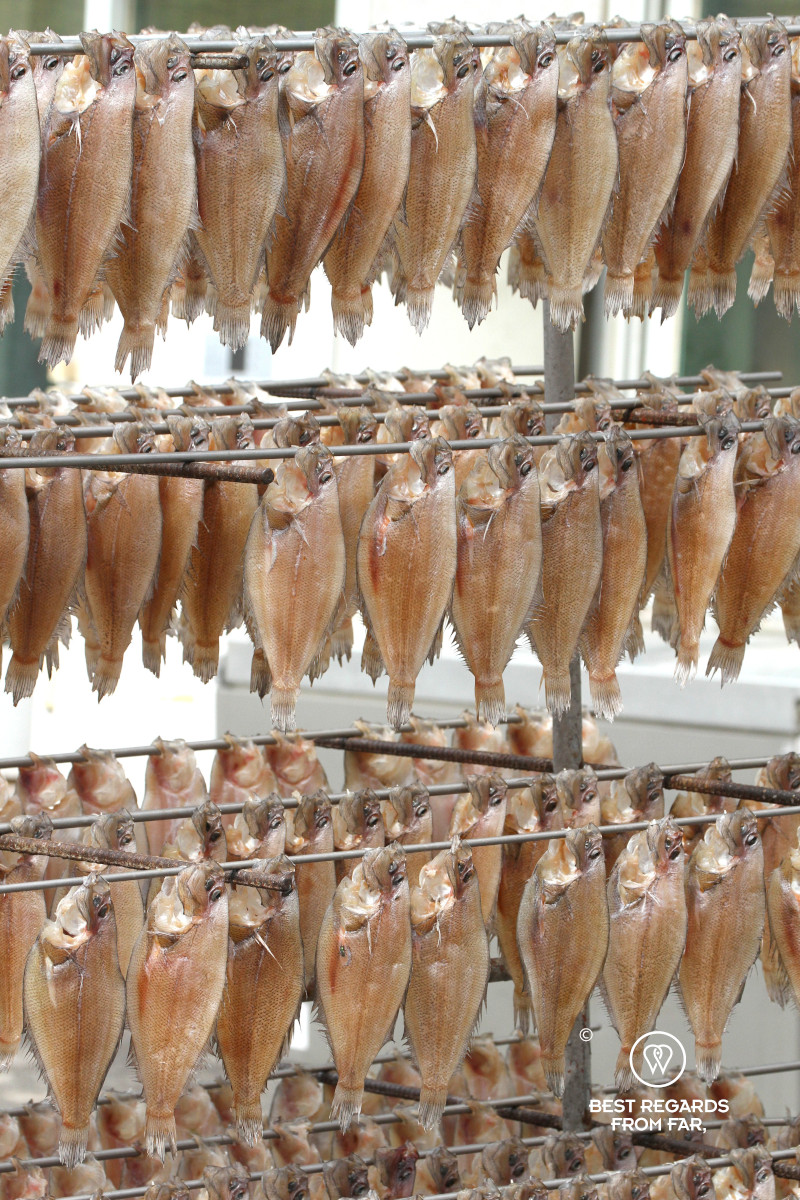
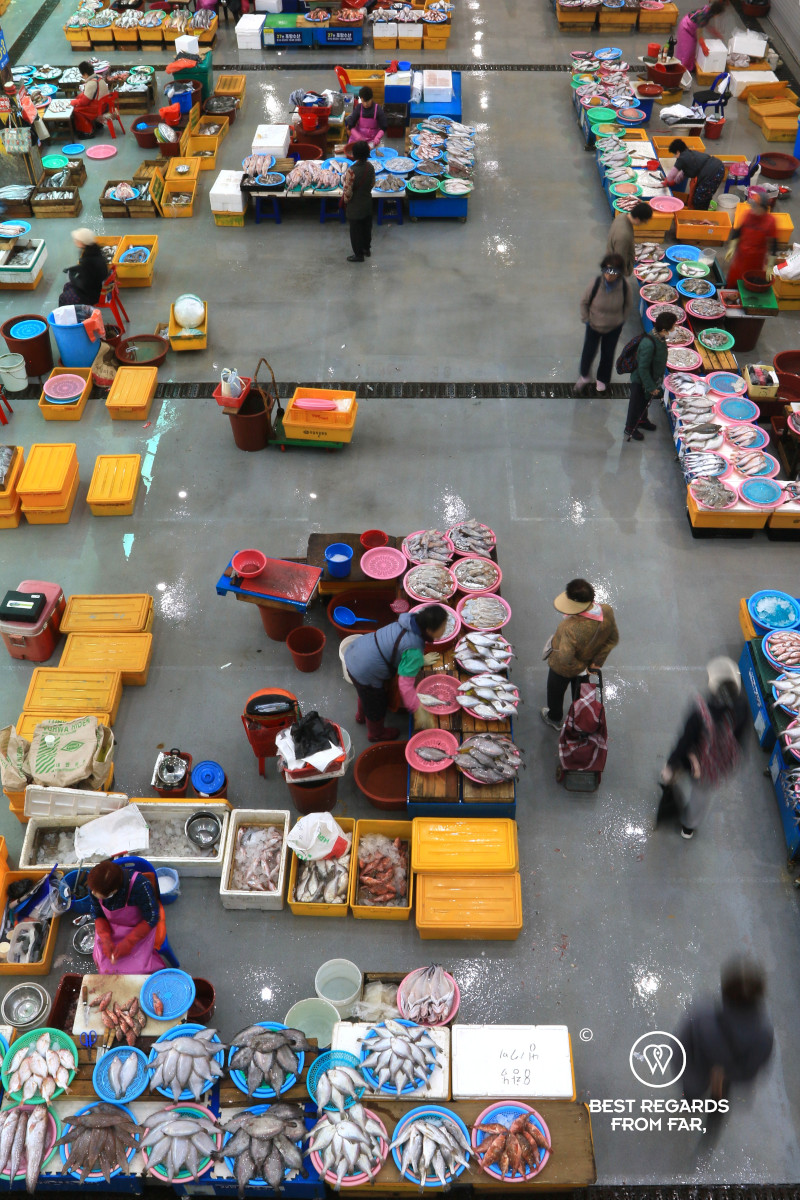
Although not as extensive as Japan’s Tsukiji Fish Market, Jagalchi Market is an attraction in its own right. Its stalls spread deep over more than three kilometers (short of two miles) into the narrow surrounding streets. Beyond seafood in all possible forms from dried to still swimming, seaweed, fruits and vegetables, and kimchi of course are also laid out on the market stalls.
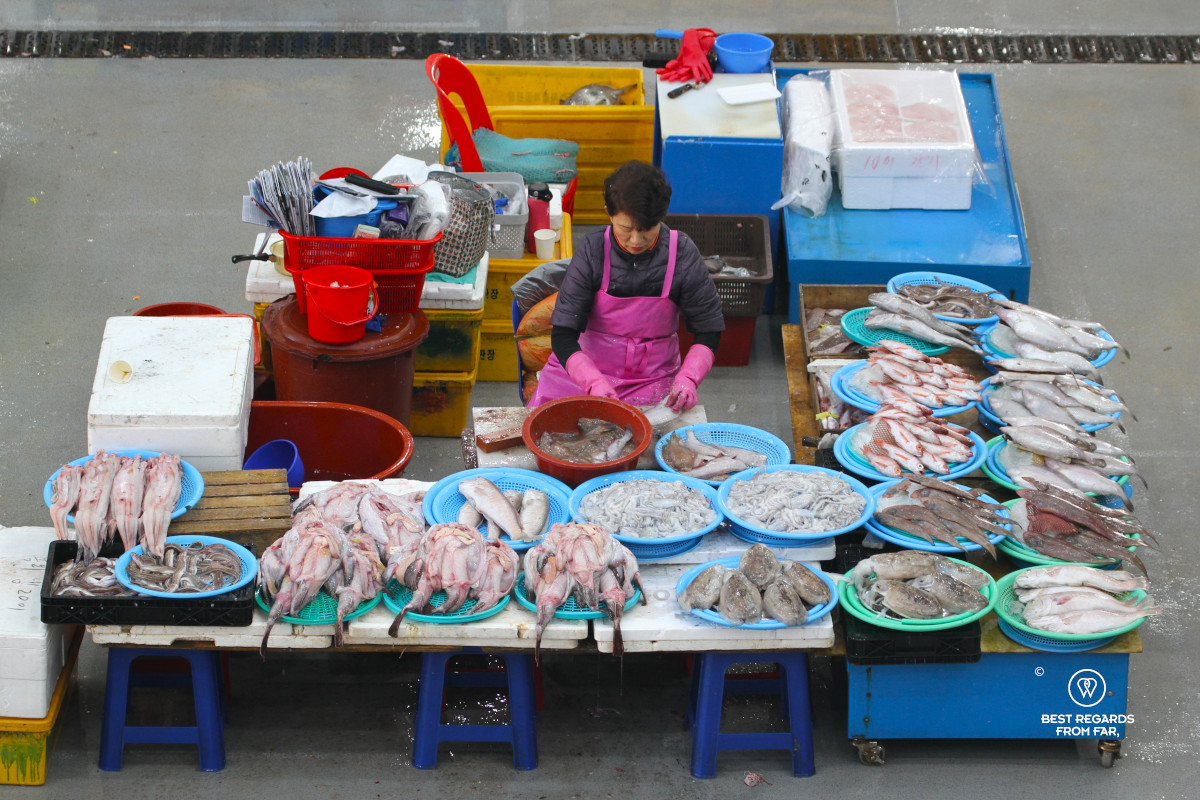
The Ingredients behind Korean Cooking
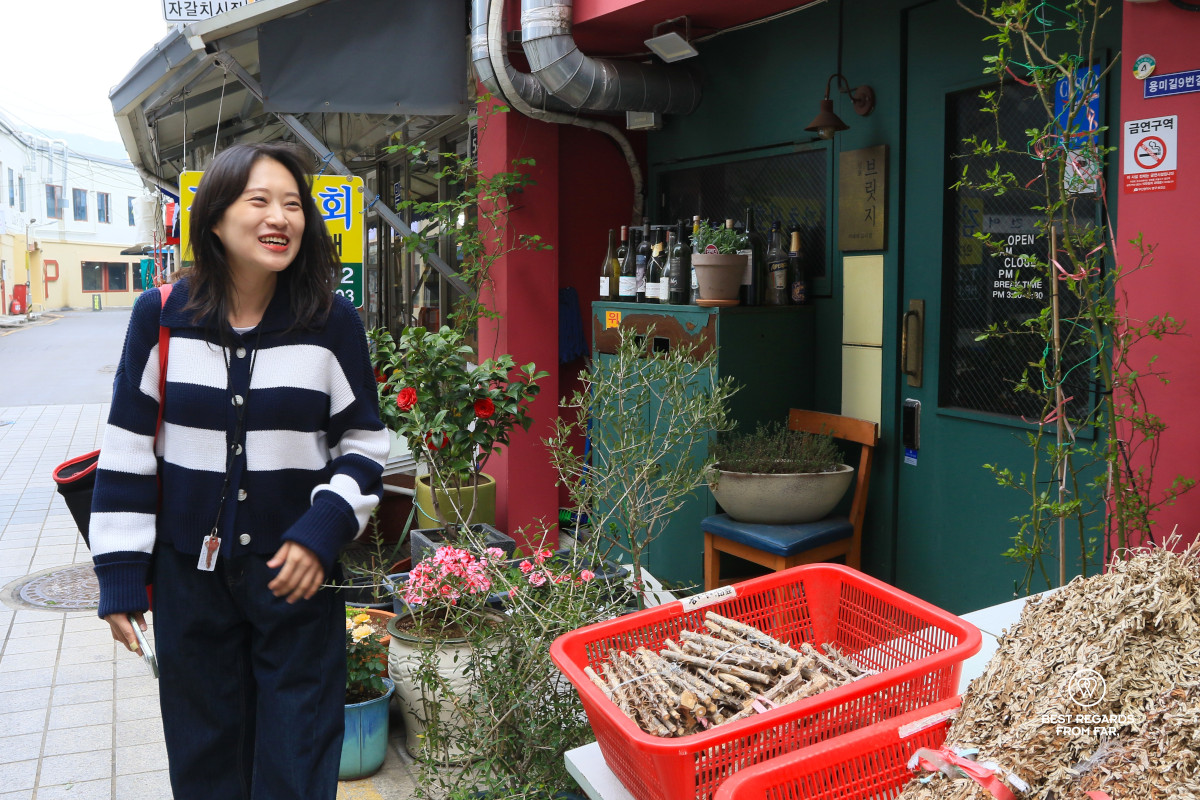
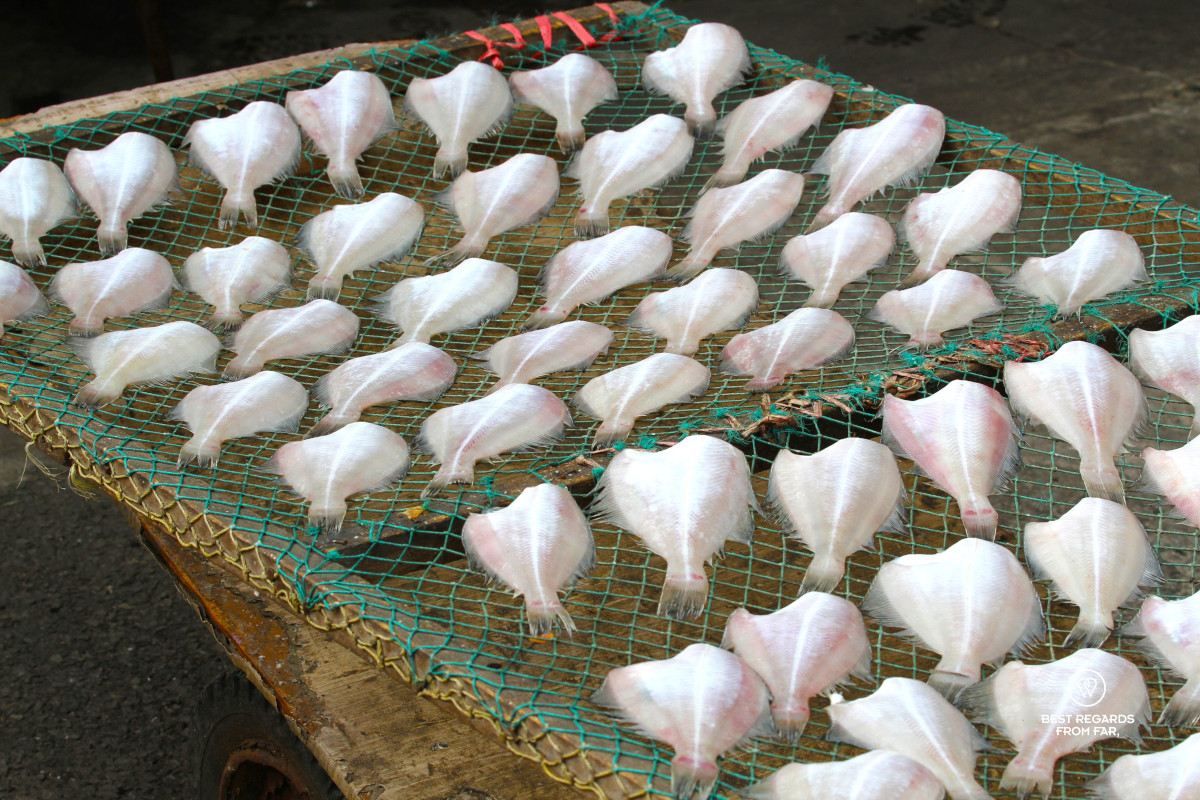
Born and raised in Busan, Chef Jiyou Kang guides us from stall to stall through the dried-seafood section of the Jagalchi Market. She enthusiastically points out the kelp and dried anchovies, or myeolchi, that her grandmother uses to make an umami-rich broth.
Smaller dried anchovies are used in the common side dish myeolchi-bokkeum, in which they are stir-fried and mixed with soy sauce, syrup, and sesame oil. Miyeok, or sea mustard, is especially popular with women who have recently given birth. Rich in iodine, it is traditionally believed to support milk production. Its long strands are also associated with longevity and are therefore generally left uncut. Dried pollock is omnipresent and also frequently used in broths and soups.
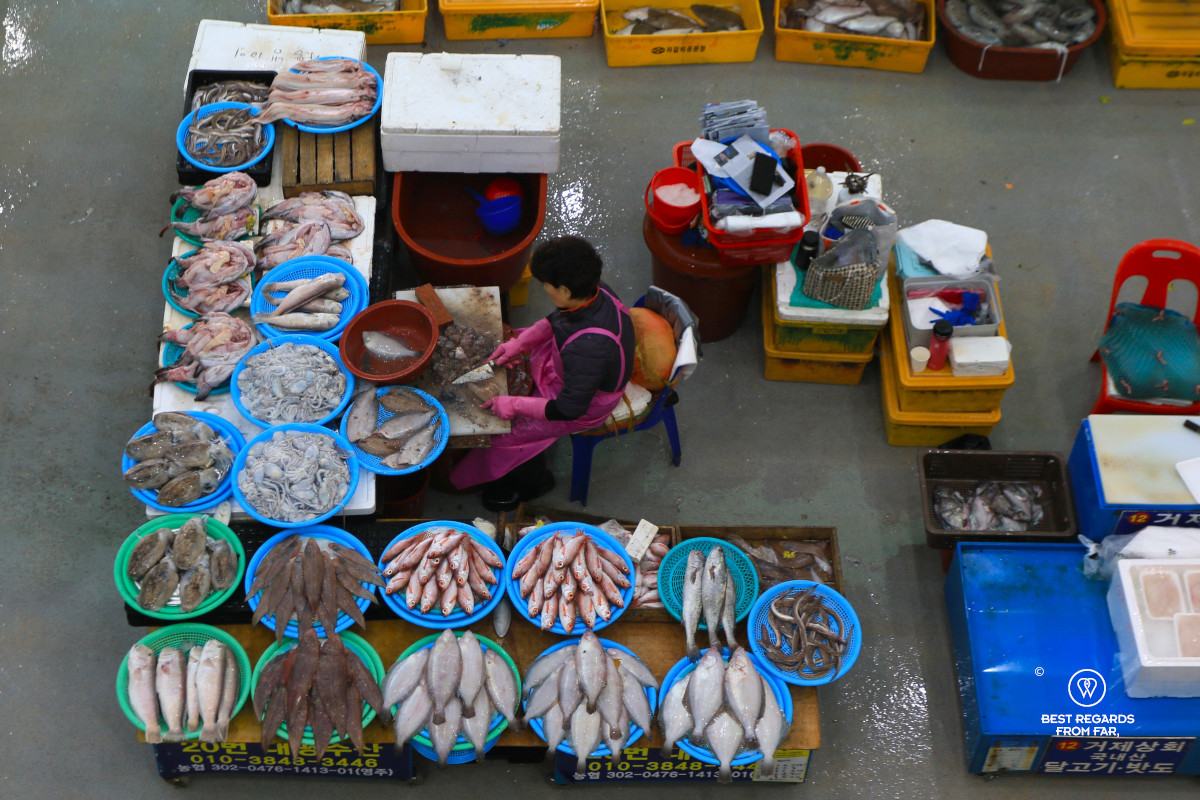
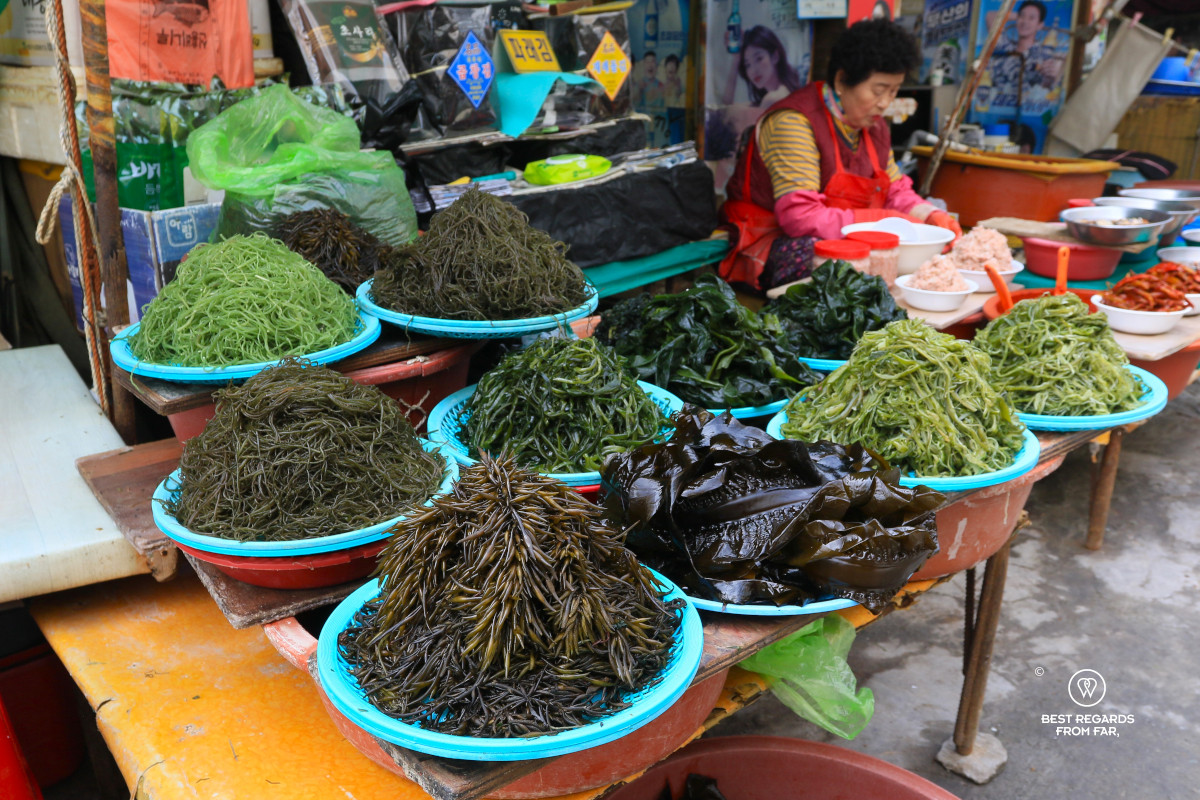
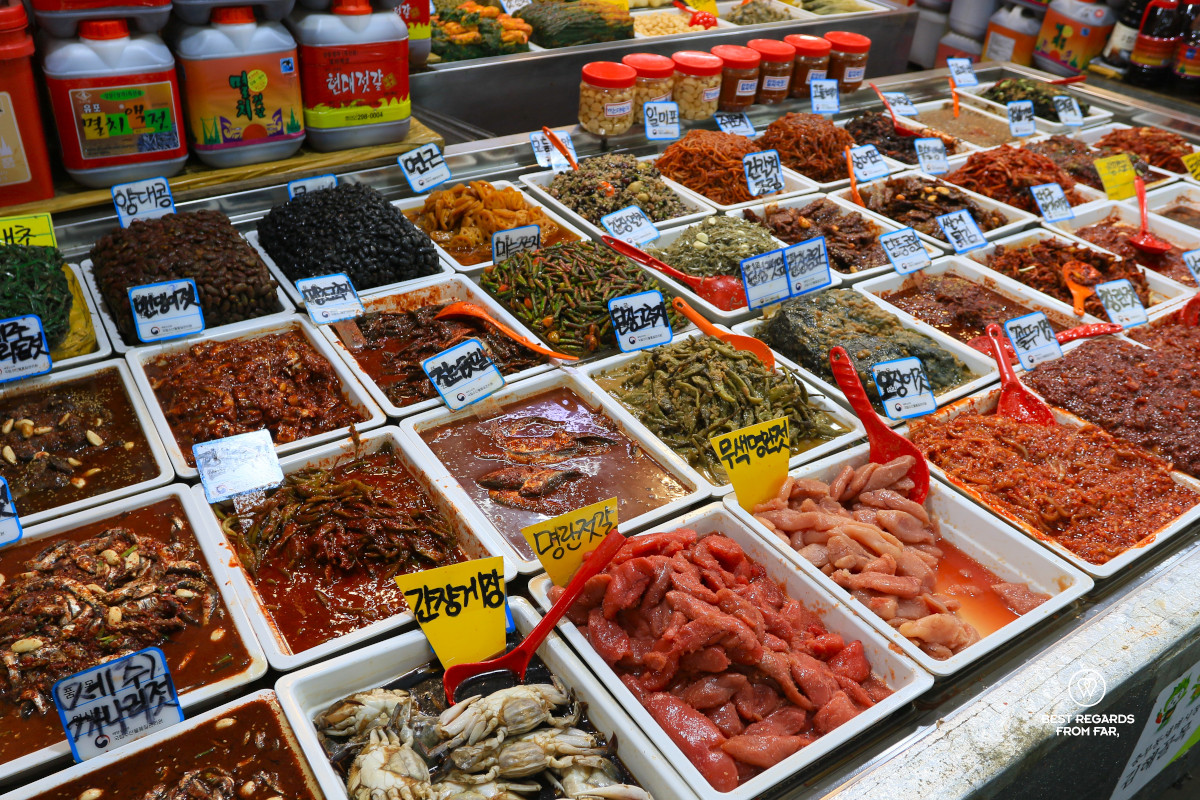
With her indefectible smile, Chef Jiyou explains the many dishes that contain these products and points out ingredients that are completely unfamiliar to us. One of them is chija, the dried fruit of the gardenia plant, which is used to give pickled radish, rice cakes, and noodles their yellow color. In addition to coloring food, it is also used in traditional Korean medicine to reduce body heat and stress, she explains.
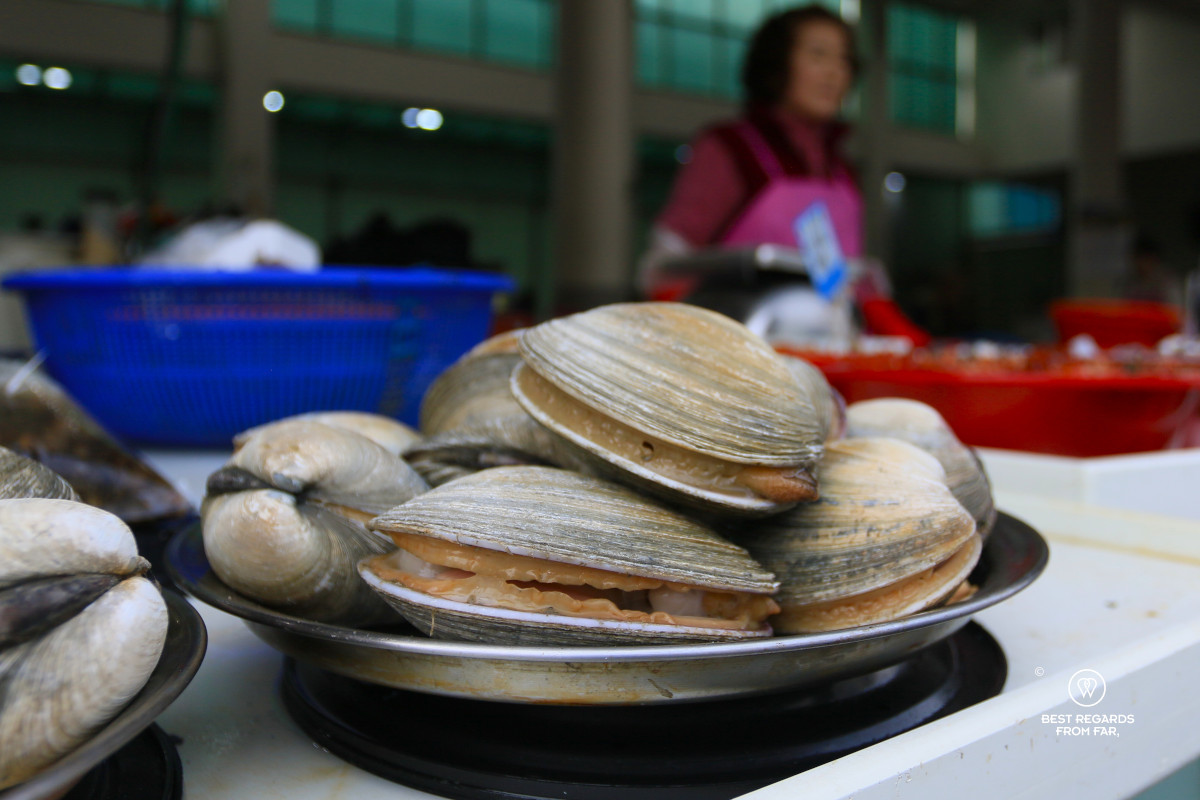
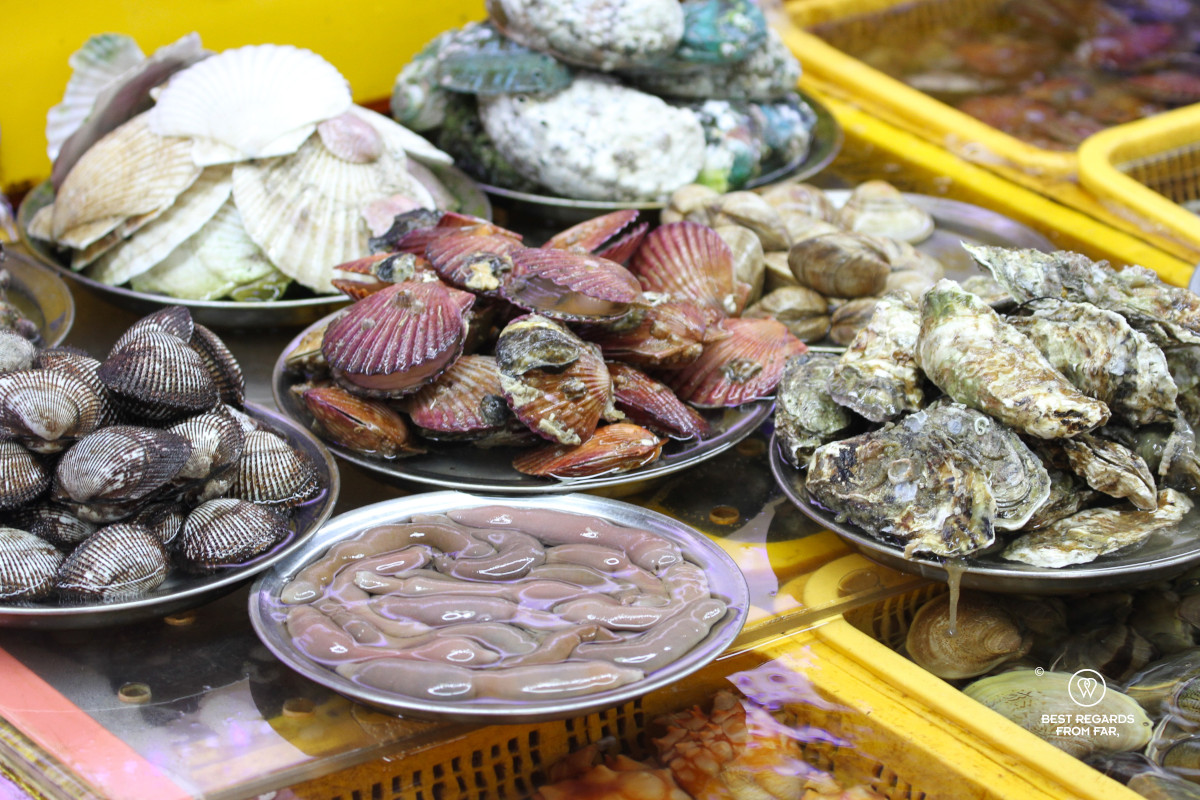
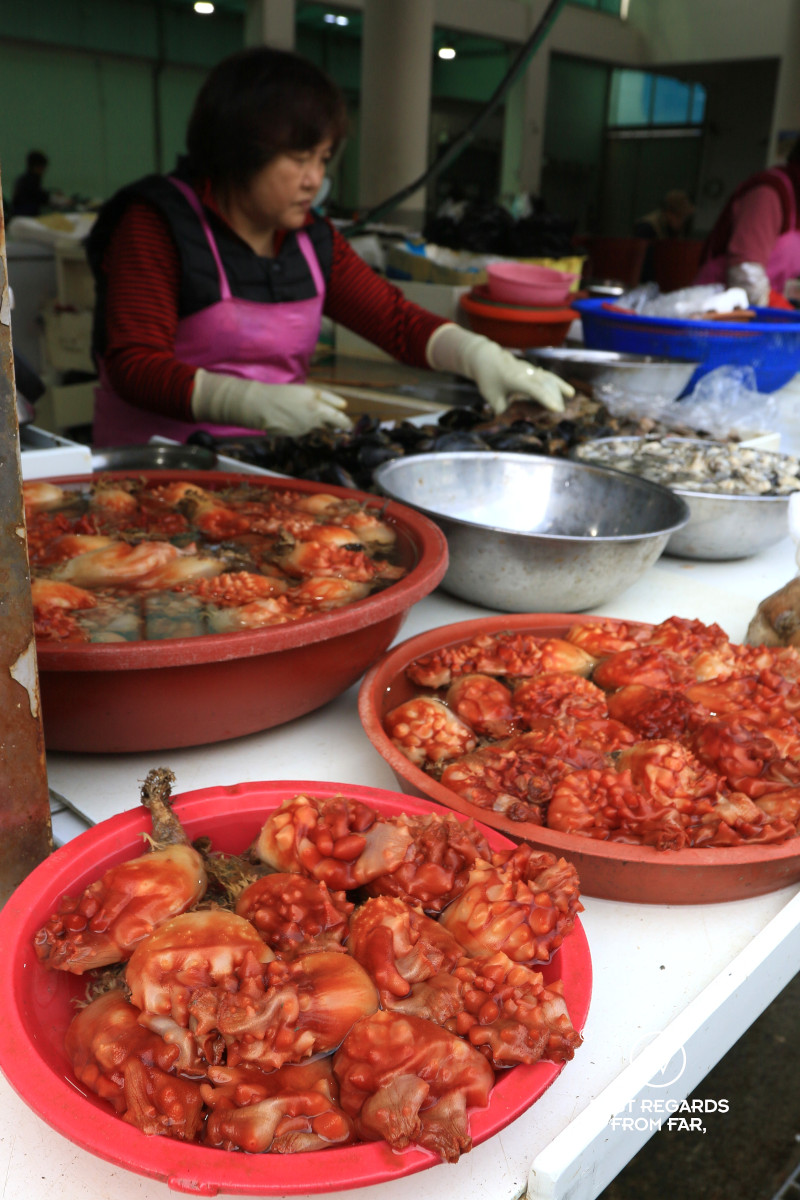
A few blocks away, in the live seafood market, tanks are filled with abalone, crabs, shellfish, sea cucumbers, squid, clams, scallops, massive oysters and mussels, shrimp, prawns, and sea squirts that squirt water at us as we pass.
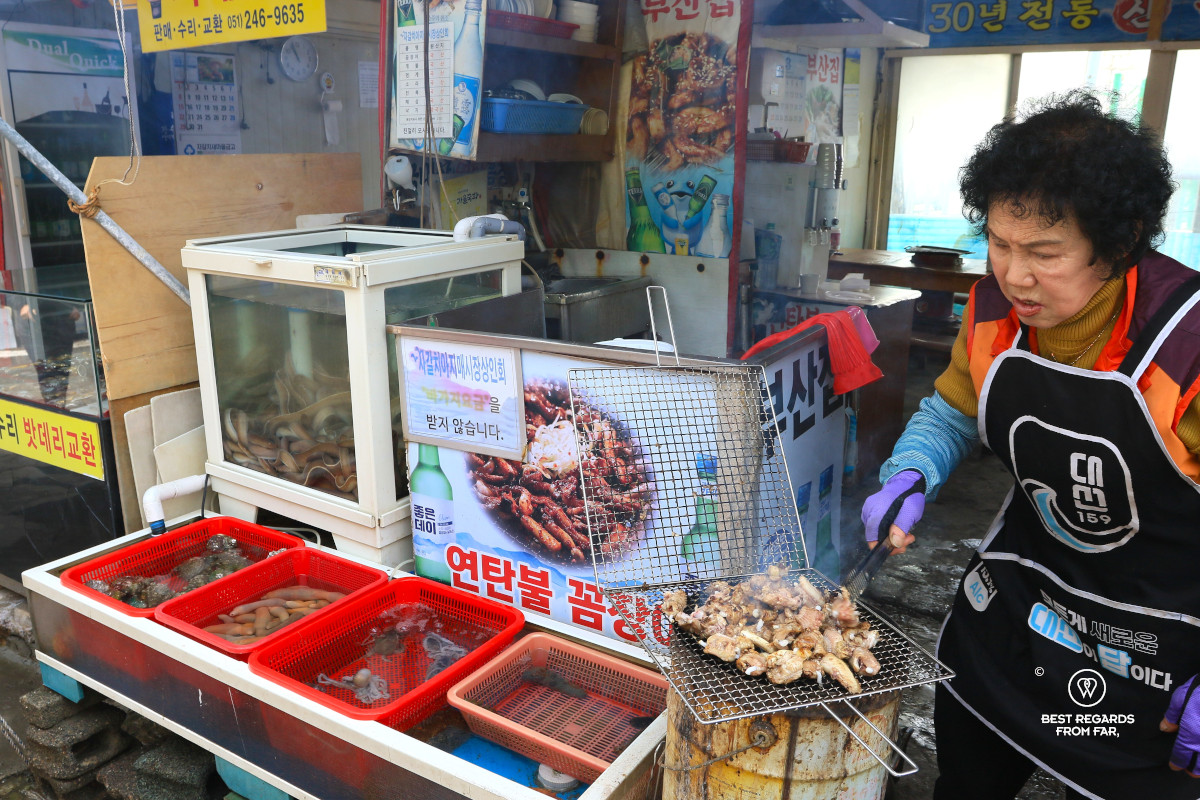
In another section of the market, patrons queue for one of Busan’s local delicacies: hagfish, or gomjangeo. This eel-like fish is skinned, chopped into pieces, and grilled over charcoal, often in a spicy sauce. It is washed down with generous amounts of beer, even early in the morning. We skip on it, as we need to build an appetite for the Korean meal that we are going to prepare with Chef Jiyou in her lovely cooking studio, just around the corner.
From Market to Cooking Studio
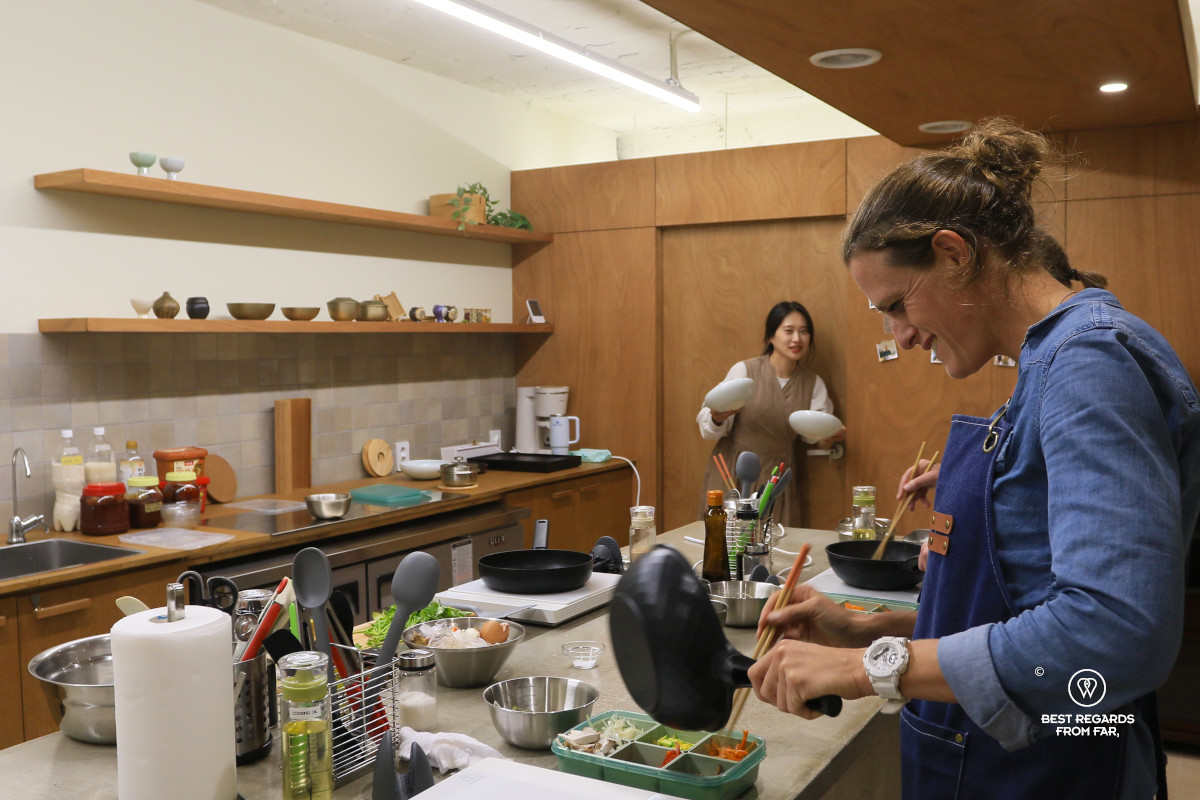
The young entrepreneur welcomes us into her brand-new cooking studio for our Korean cooking class. Chef Jiyou serves us a beautifully presented herbal infusion made of dried and roasted sword bean, or jakdu-kong-cha.
We sip the slightly nutty hot drink while she explains the five-color system called obangsaek, which is paramount to Korean gastronomy. Each color represents one of the five elements and is traditionally associated with a balanced and healthy meal. For instance, red bell peppers, carrots, red meat, and chilies contrast with zucchini, perilla leaves, spinach, and cucumber. Egg yolk and squash stand for yellow, and soybean sprouts, rice, radish, and lotus root represent white. The dark colors of seaweed, shiitake mushrooms, and black sesame seeds symbolize black.
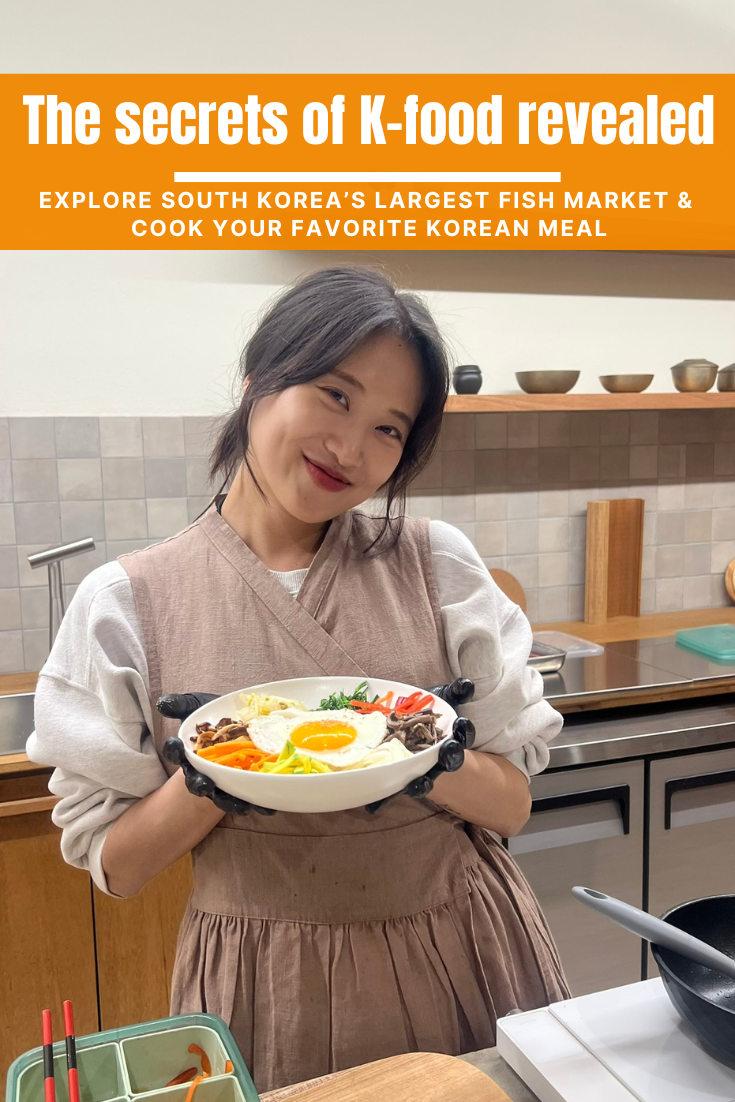
One of the clearest examples of obangsaek may very well be South Korea’s most iconic dish: bibimbap. With humble beginnings in farming communities as a “mixed cooked rice” (as it literally translates) made of leftovers, bibimbap has evolved into a symbol of Korean gastronomy, and remains a locals’ popular favorite.
Learning to Cook Bibimbap
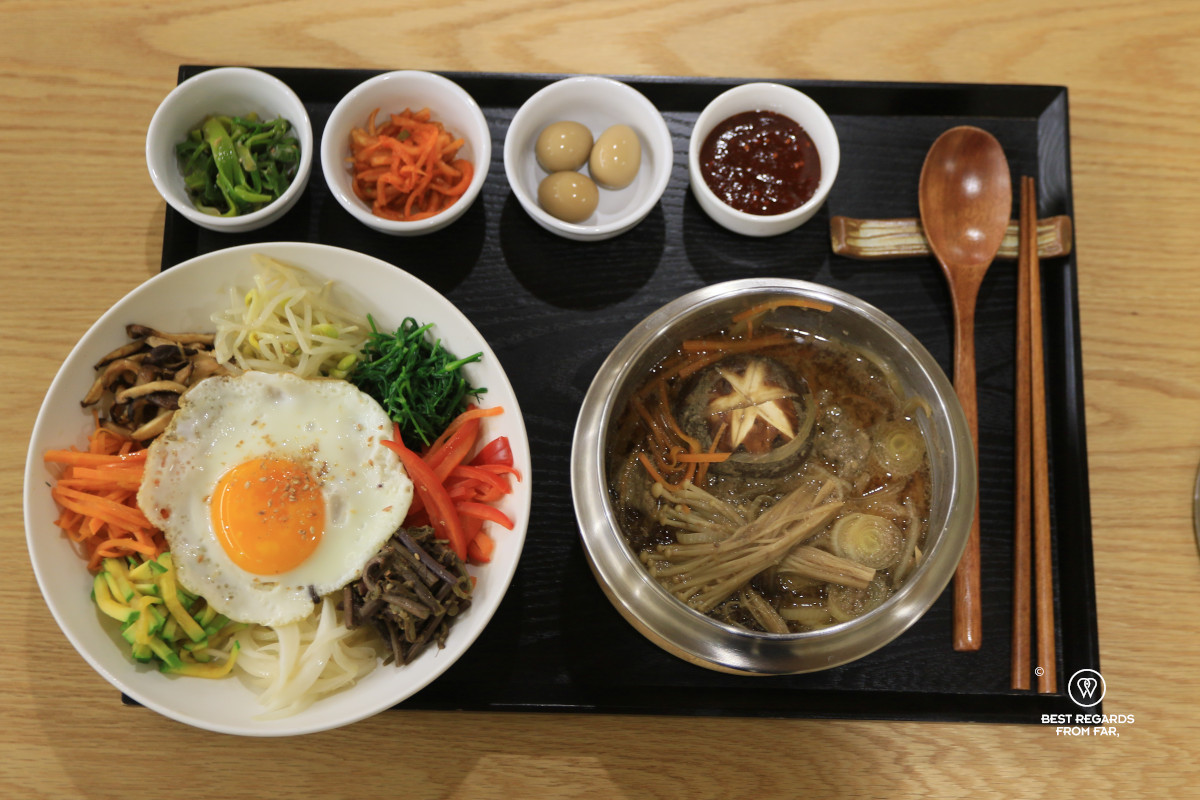
For today’s bibimbap, we slice the different vegetables into pieces of about two centimeters in length (a bit less than an inch): mushrooms, carrots, zucchini, soybean sprouts, and bell peppers to represent the obangsaek colors. We stir-fry each ingredient separately on our own induction stove, beginning with the lightest colors and adding a pinch of salt. We then arrange them over a bowl of rice, together with small mushrooms, soybean sprouts, and a type of asparagus, paying close attention to the harmony of the dish. Each of the five colors is represented by two different ingredients, carefully placed opposite each other.
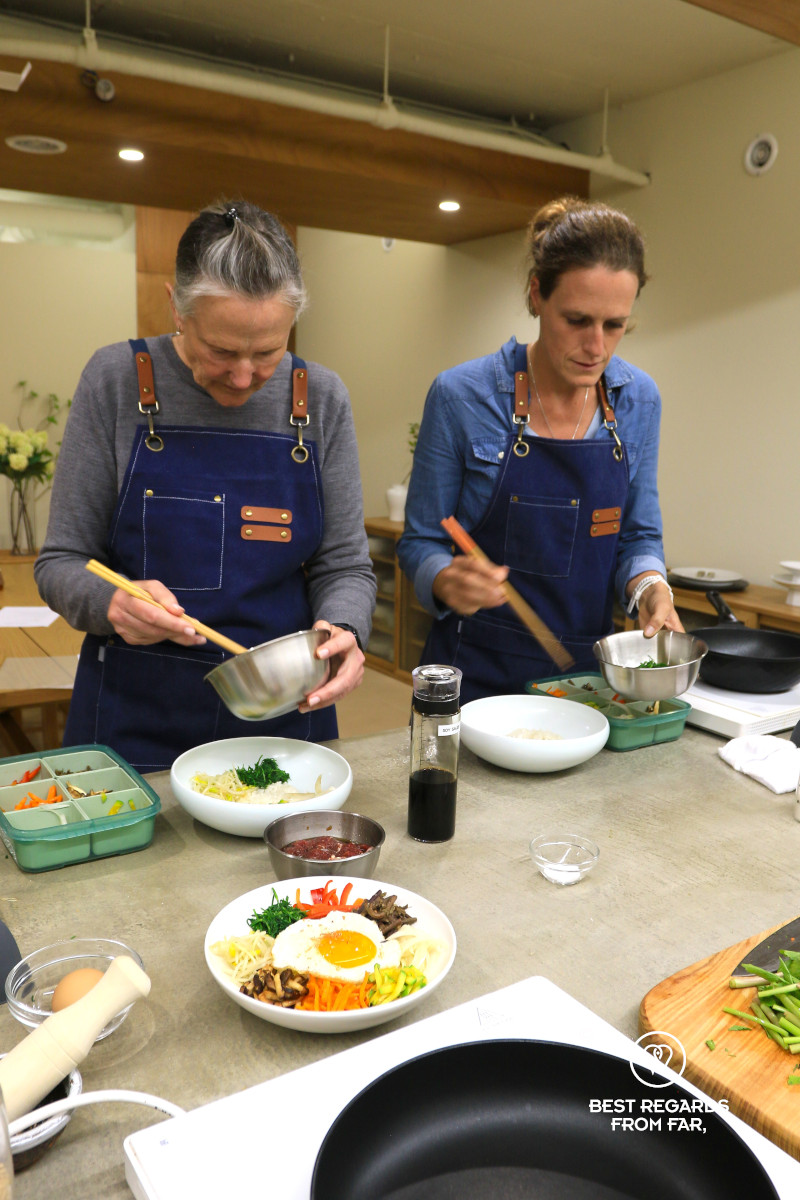
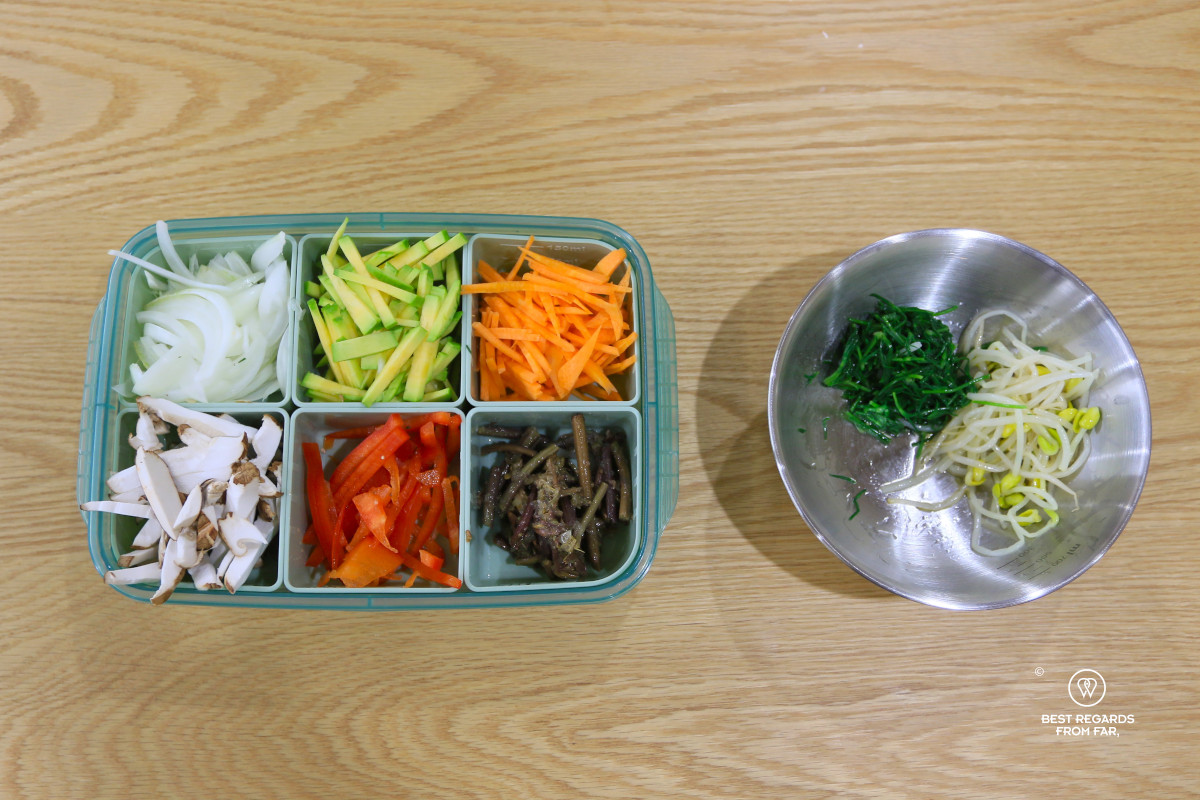
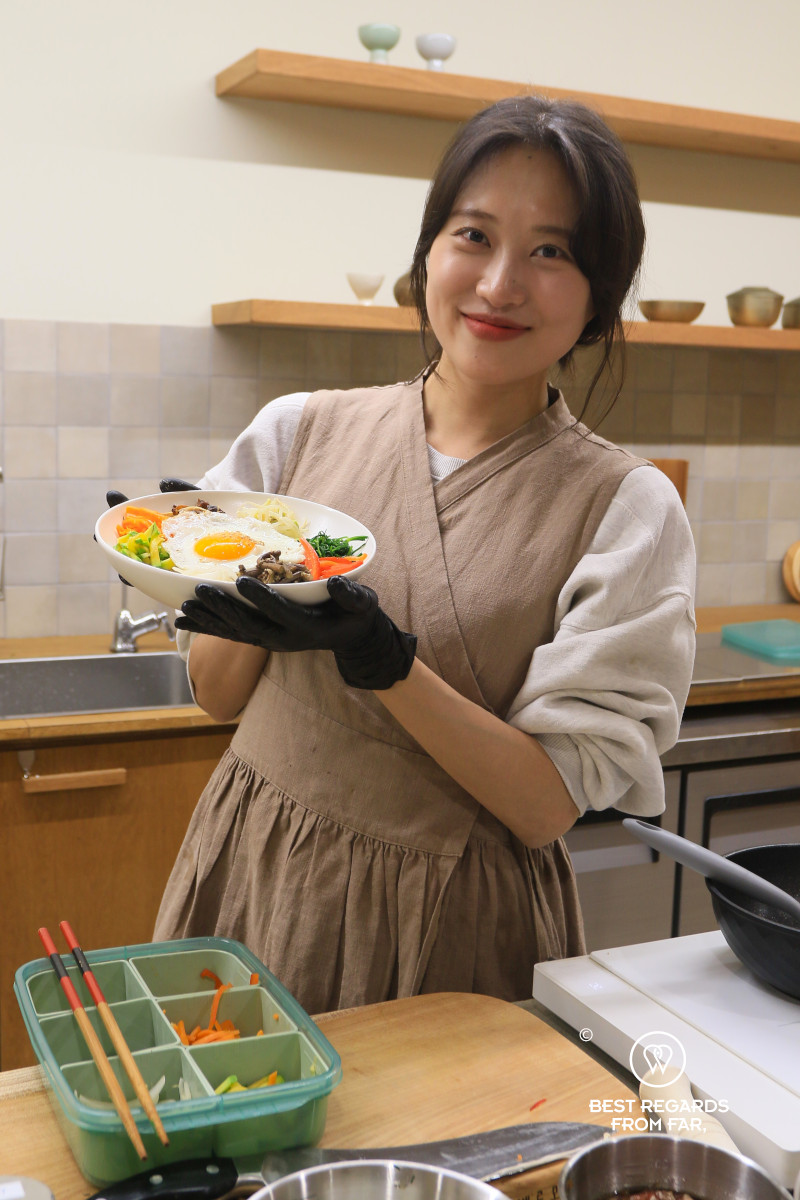
Topped off by a sunny side up egg, and drizzled with a generous splash of sesame oil and crushed sesame seeds, our bibimbap looks perfect! According to the Korean culinary rules, our bibimbap meets the criteria as it contains at least 12 ingredients (13 to be precise in this recipe taught by Chef Jiyou).
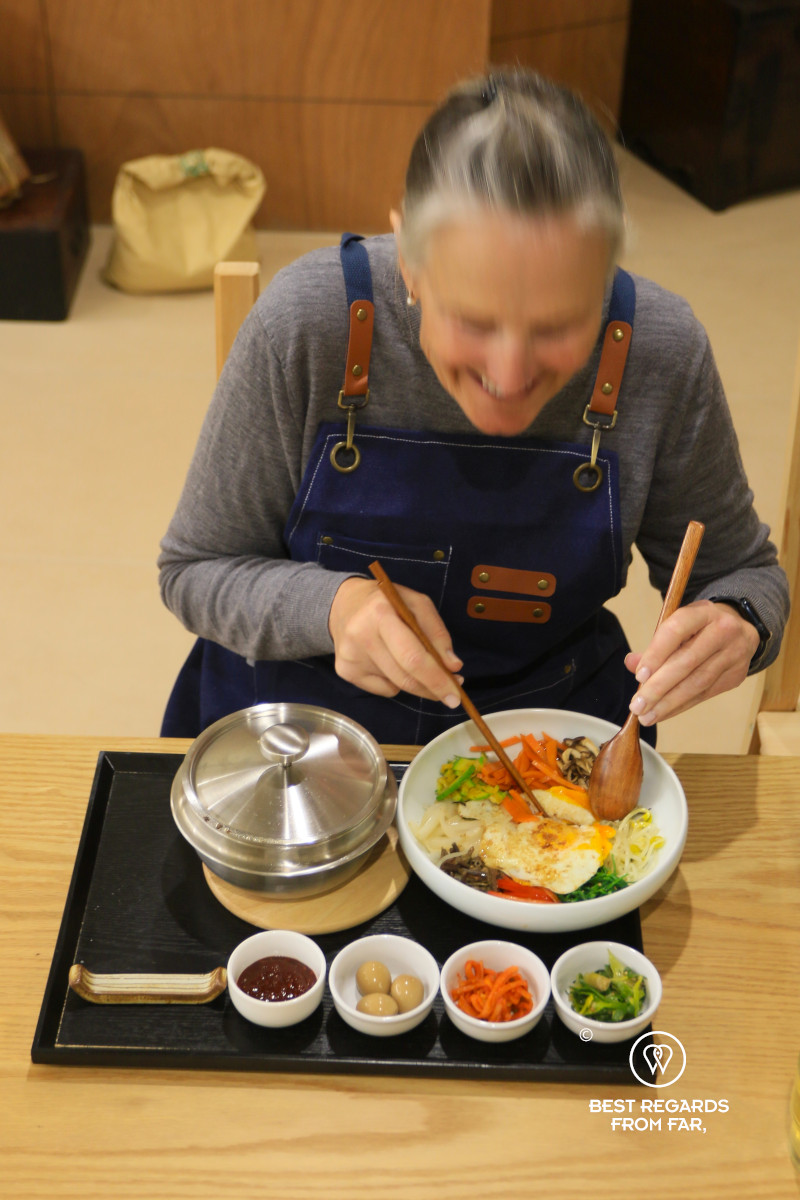
In the Korean tradition, the beautiful and colorful bibimbap is eagerly messed up. Following the lead of Chef Jiyou, we take our chopsticks in one hand and vigorously mix the entire dish until the carefully separated ingredients form an even, colorful, and absolutely delicious rice mixture!
The Making of Ganjang, Paramount to Bulgogi
Another popular Korean dish awaits: bulgogi. Its roots are often traced back to the Goguryeo Period (37 BCE–668 CE) in the northern part of the Korean Peninsula, and it has spread in South Korea as refugees from the Pyongan region fled to the south.
Technically not a complicated dish to prepare, much of its flavor comes from ganjang, the fermented Korean soy sauce that Jiyou learned to make from her grandmother. Although most people today buy ready-made soy sauce, the traditional process is complex and peculiar to each family tradition. In the method Jiyou learned, soybeans are soaked in water for 12 hours, boiled, mashed, and shaped into firm blocks called meju. These are dried and turned every day for one week.
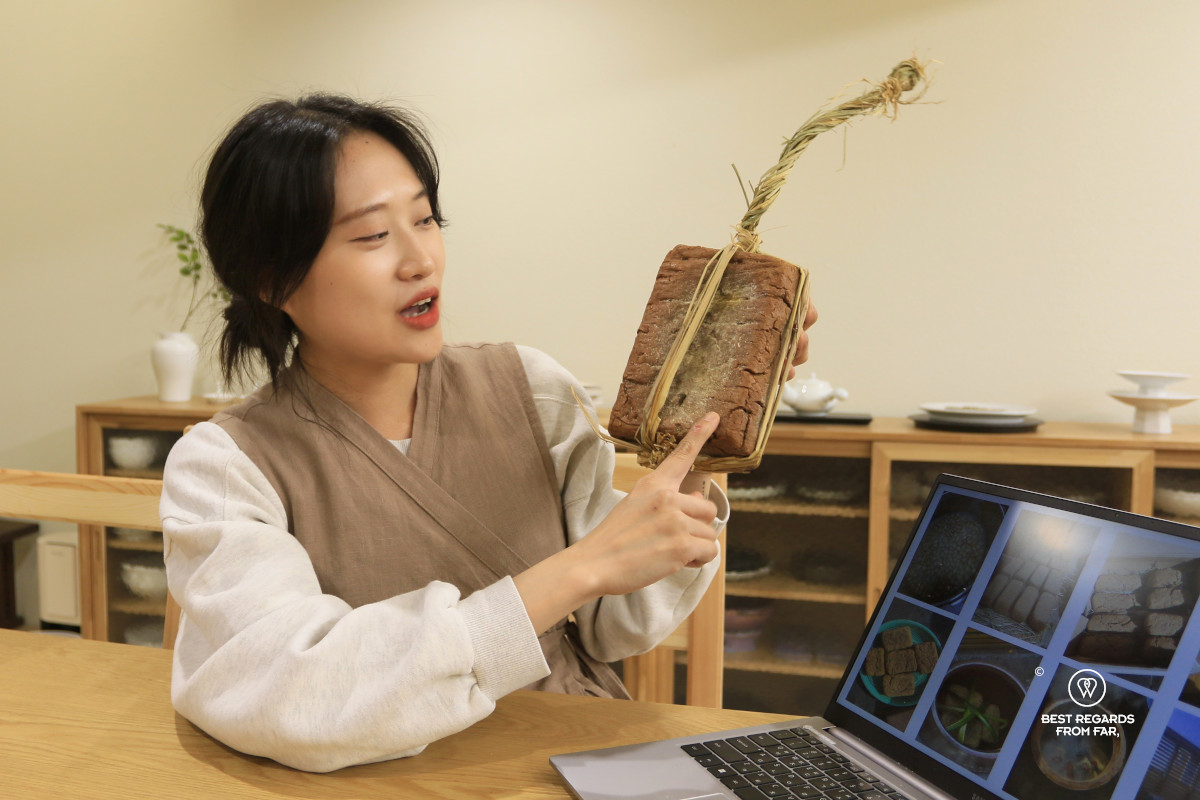
Traditionally, rice straw is tied around the blocks to assist with fermentation. The meju is then hung in a warm, well-ventilated place, allowing microorganisms to develop and contribute to its deep umami flavor. After about two weeks, the mold is scraped off, and the dried blocks are placed in a large earthenware jar filled with brine. Kelp, pieces of charcoal, and dried chilies may also be added.
After 60 to 70 days in the jar, the dark liquid is transferred to a different jar, and aged for at least six months. Some ganjang is aged for as long as three years, developing even more complex flavors.
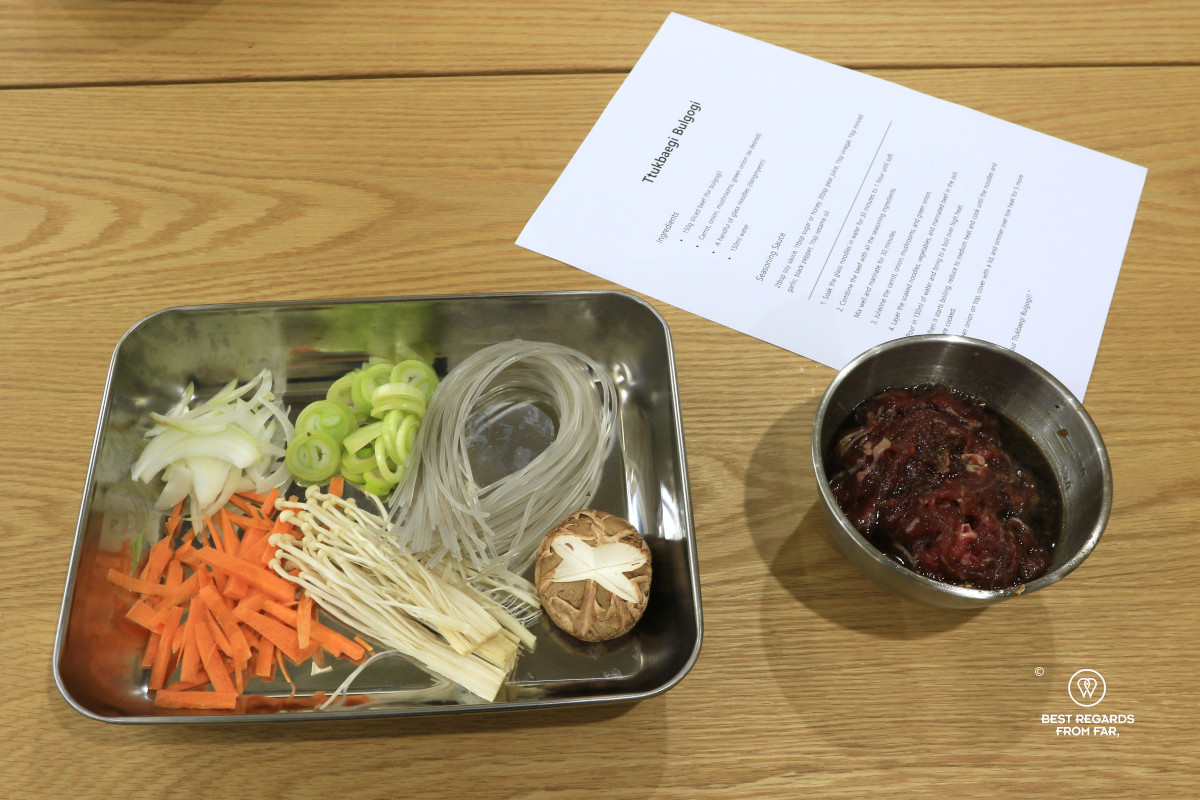
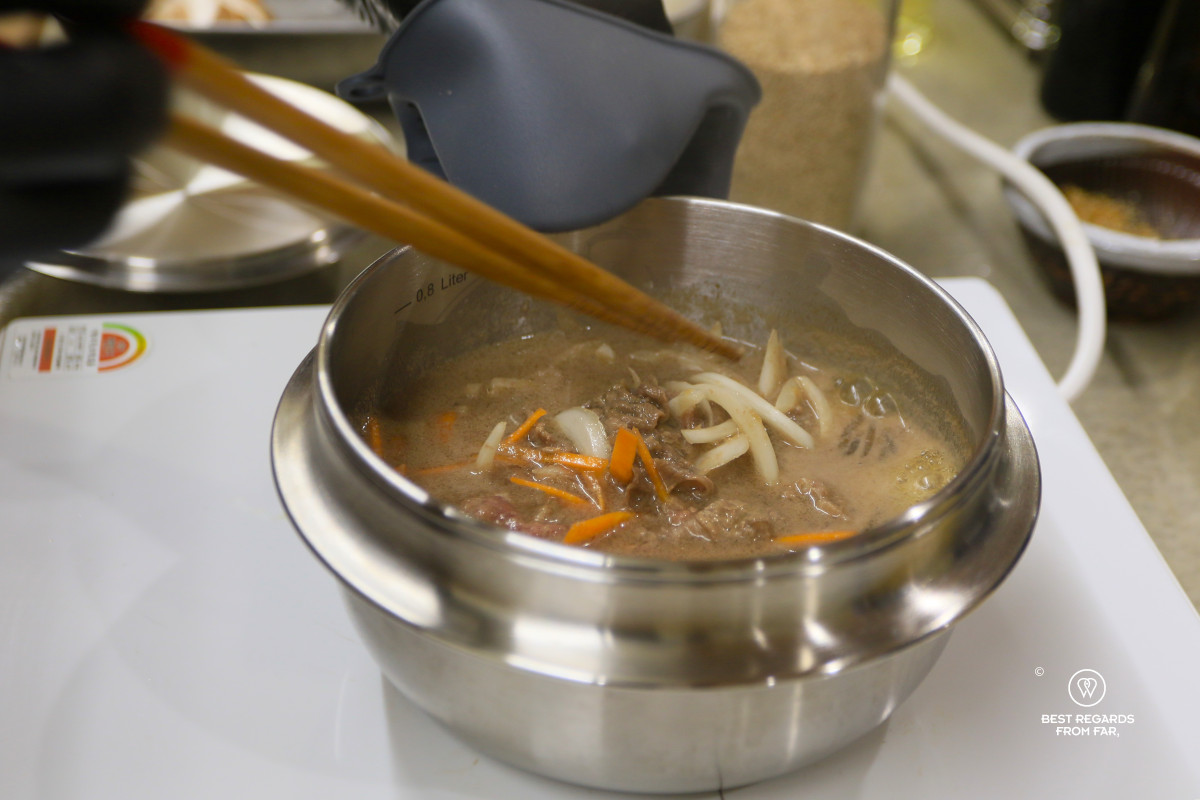
We marinate the very thinly sliced beef in ganjang while finely slicing an onion, scallions, and a carrot. We also cut a star from the cap of a large mushroom for decoration. We cook the meat with the vegetables, glass noodles, and mushrooms. A handful of smaller mushrooms is added toward the end, as well as the green parts of the scallions and the star mushroom to preserve their textures and present beautifully.
Gathering around the Korean Table
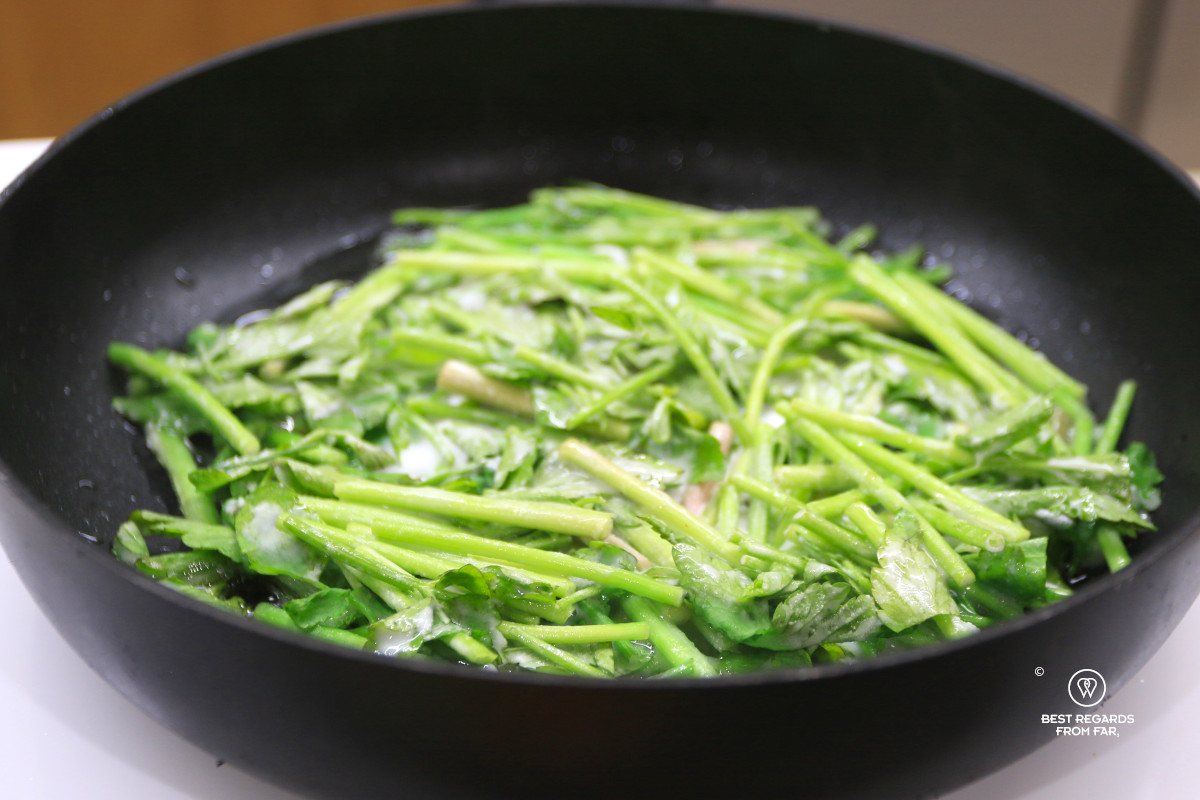
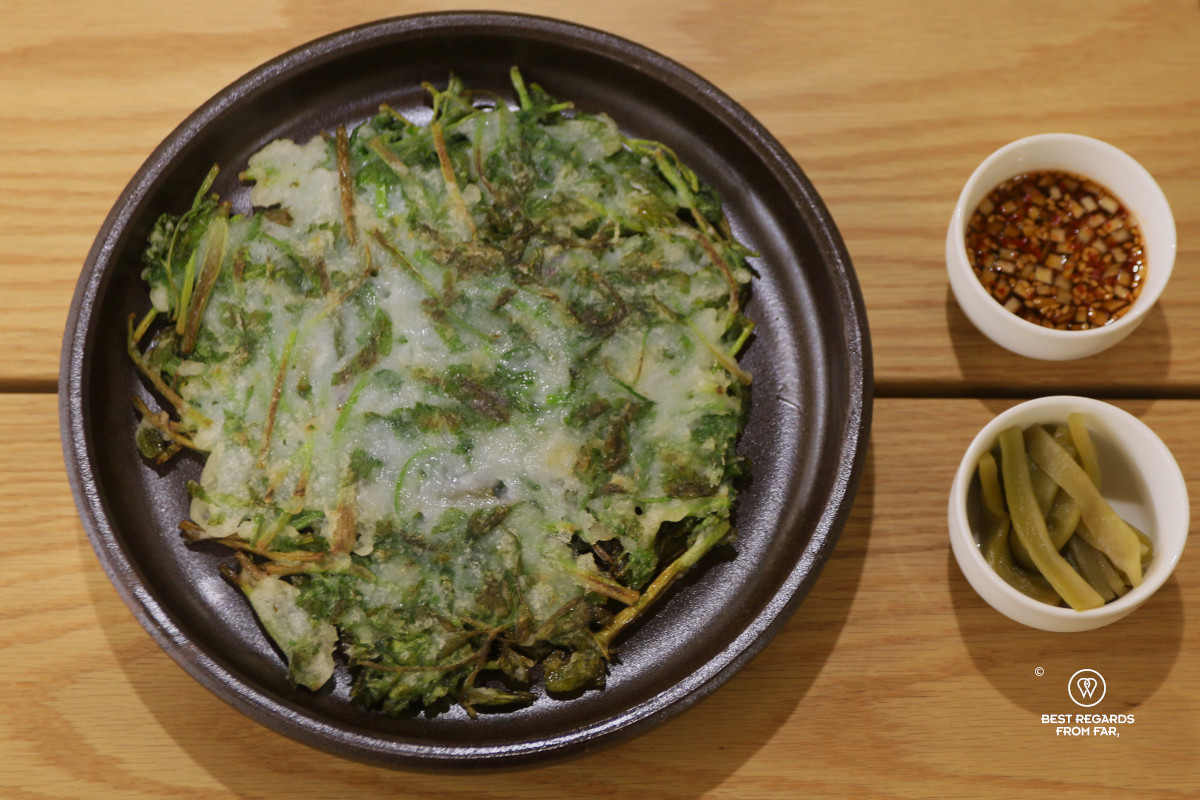
As we sit around the table marveling at our Korean dishes, Chef Jiyou prepares a chive pancake with bracken greens and blanched soybean sprouts. She coats them in a batter made with sparkling water for extra crispiness. After frying the buchujeon (literally “chive pancake”) in the pan with a lot of dexterity and one pair of wooden chopsticks, she brings it to the table for us to enjoy.
***
While Korean food can seem a bit intimidating on local markets, at street food stalls, or when deciphering menus in Hangul (the Korean alphabet), Chef Jiyou has managed to introduce us smoothly and deliciously to Korean gastronomy.
More than a foodie experience, this cooking class is a plunge into the rich and millennium-old Korean culture, and what better place for this plunge than into the warm waters of Busan Harbor, a historic crossroad where Korea’s unique culinary heritage is well alive and kicking?
Travel tips:
- Book your cooking class and market tour with Chef Jiyou at Baeromodi in advance. Chef Jiyou keeps the classes small, with a maximum of six participants, and the menu varies according to the day, season, and availability of ingredients.
- To stay connected and to avoid expensive roaming fees, we used and eSim from Sim Local which made this trip through South Korea a lot easier!
- Check out our interactive map for more in the area (black pins lead to an article):
For more in South Korea, click on the images below: