Text & Photographs: Claire Lessiau & Marcella van Alphen
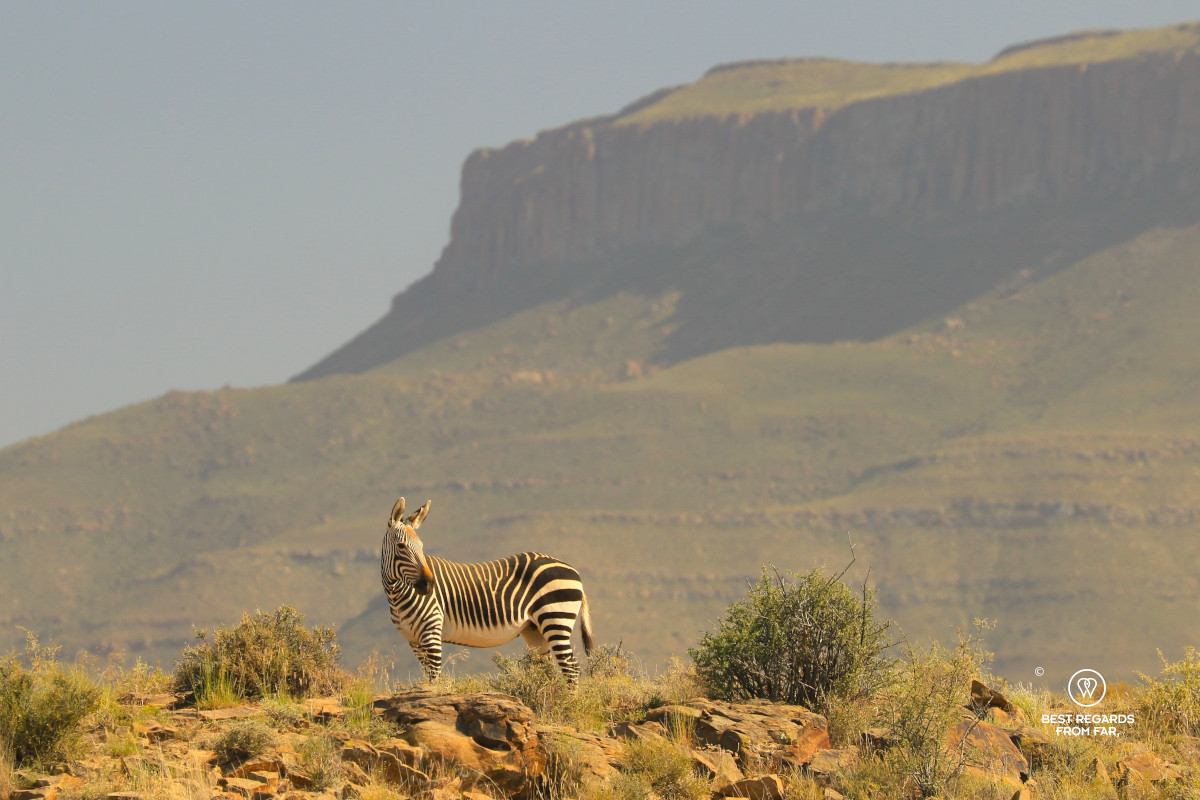
The Karoo stretches across the western interior of South Africa like a vast, quiet ocean of stone and dust. The semi-arid landscape is defined by wide horizons, sparse and low vegetation, and an almost overwhelming sense of remoteness. Only a few settlements dot the region that has become a stargazing hotspot. Rain is scarce, the summer Sun scorches the plains, and winters can cloak the surrounding mountain tops with a thin layer of frost or even snow. Yet despite the harsh conditions, the Karoo is far from empty and teeming with an amazingly well-adapted wildlife if one takes the time to take a closer look.
Pin it for later!
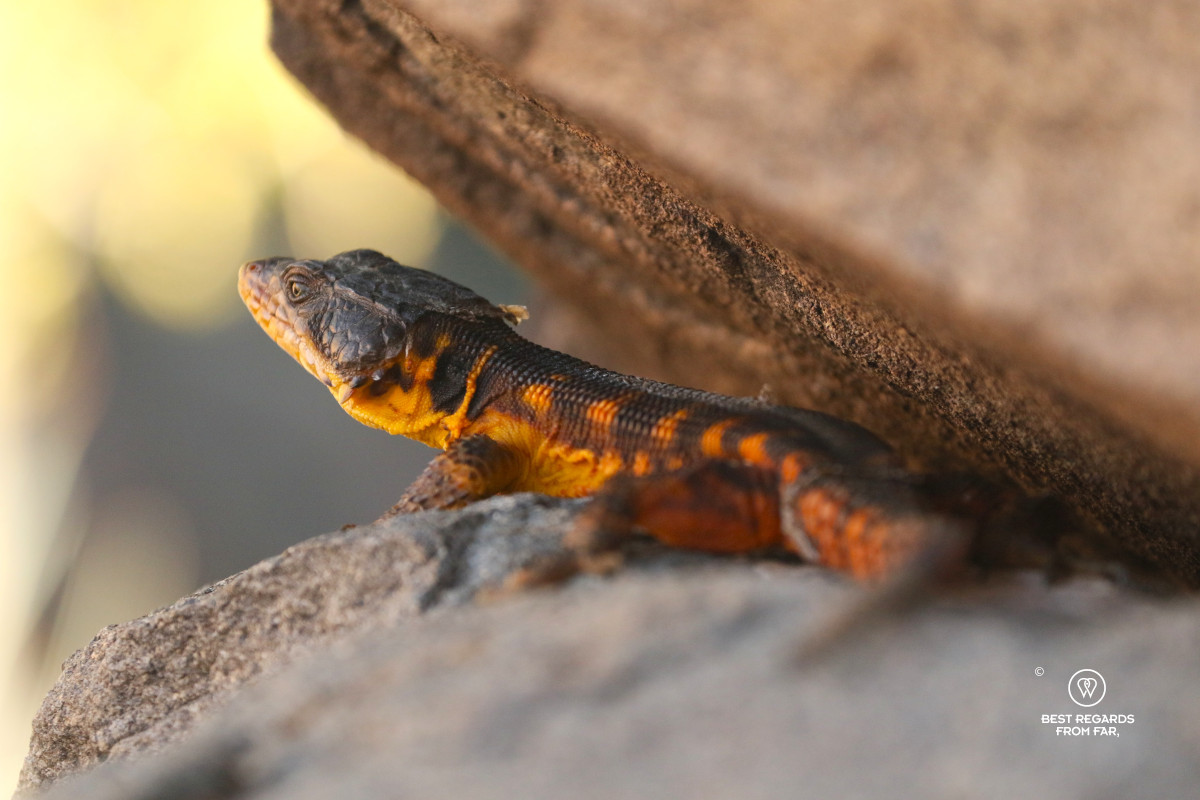
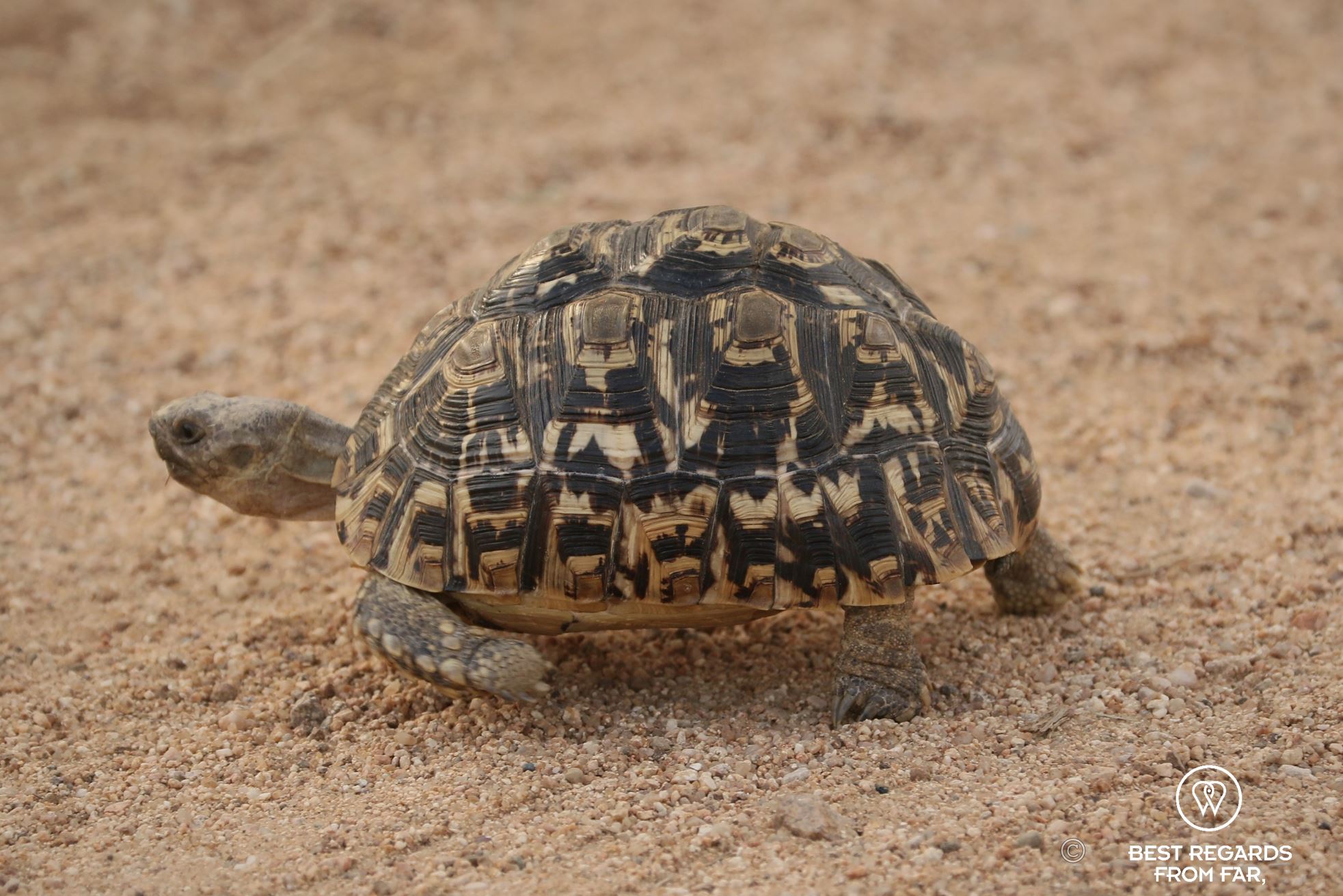
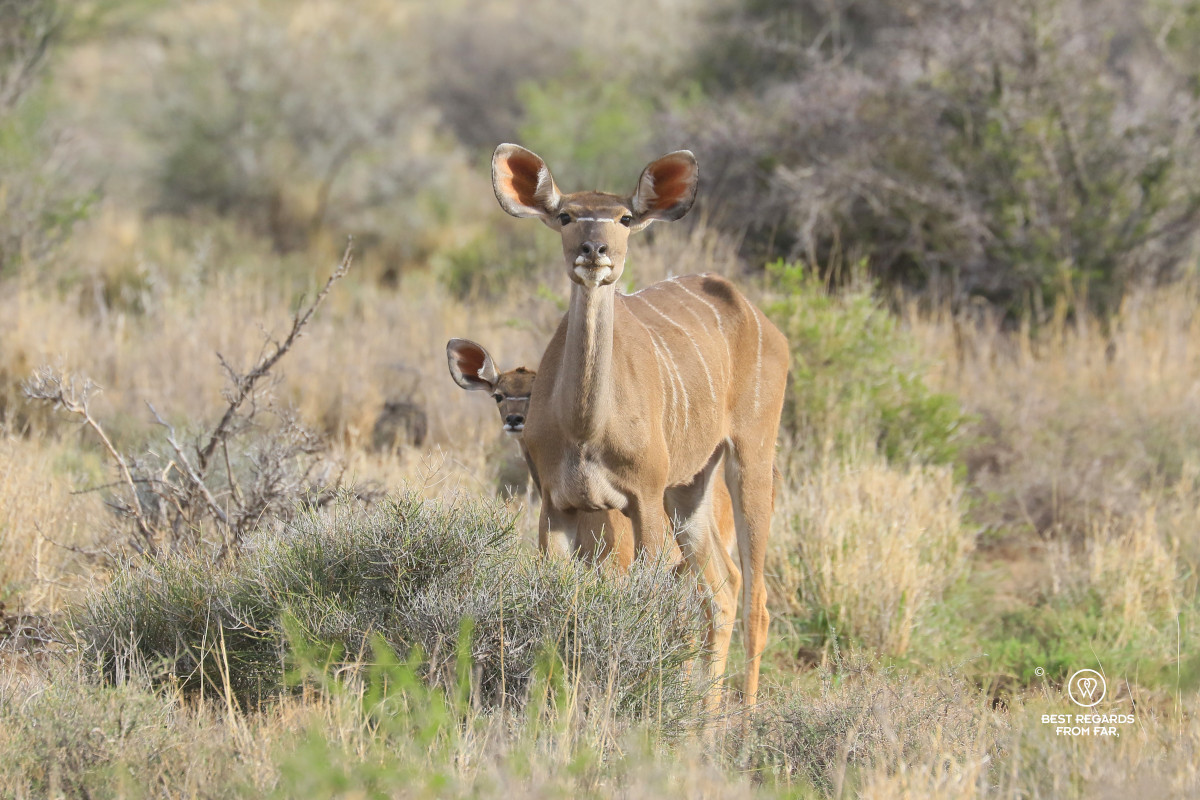
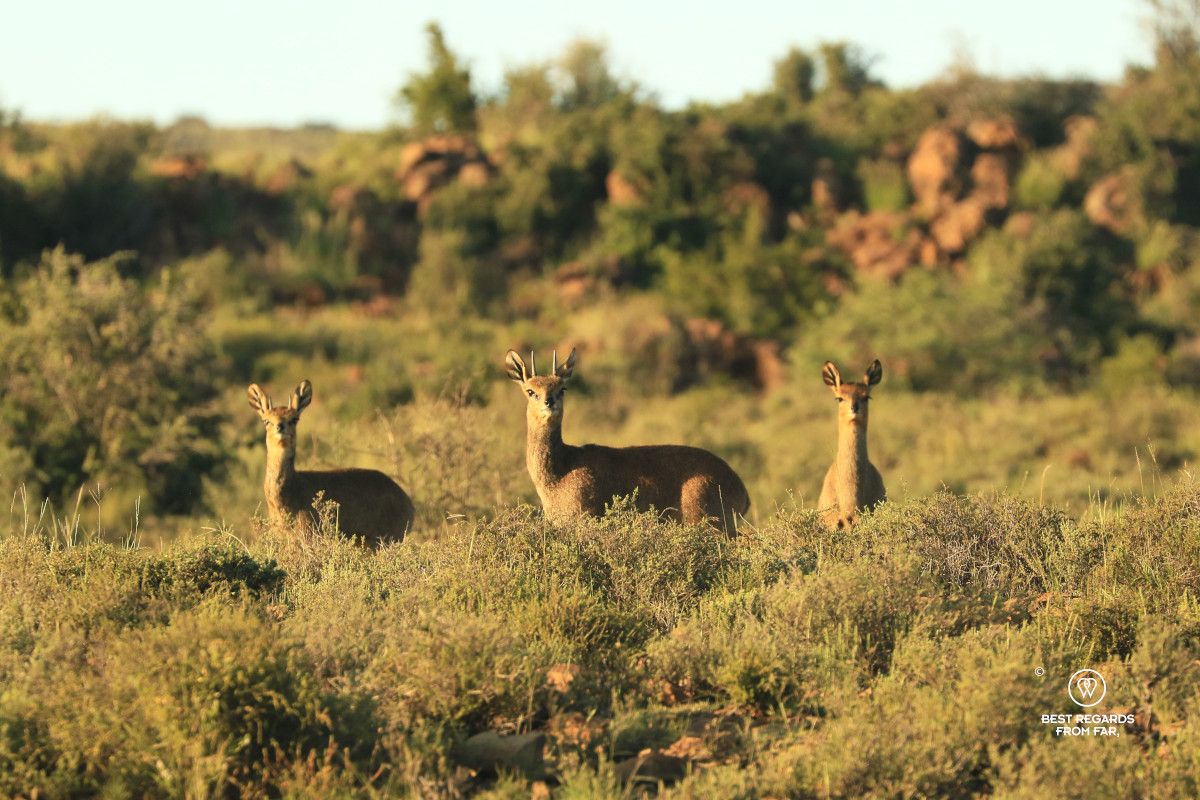
Herds of springbok move across the open veld, red hartebeest roam the plains, and even the elusive elands often appear in the distance, majestically. Black-backed jackals call at night and ostriches forage across the vast plains, their heads down. Even the smallest creatures have found ways to survive here, tortoises, lizards, scorpions…
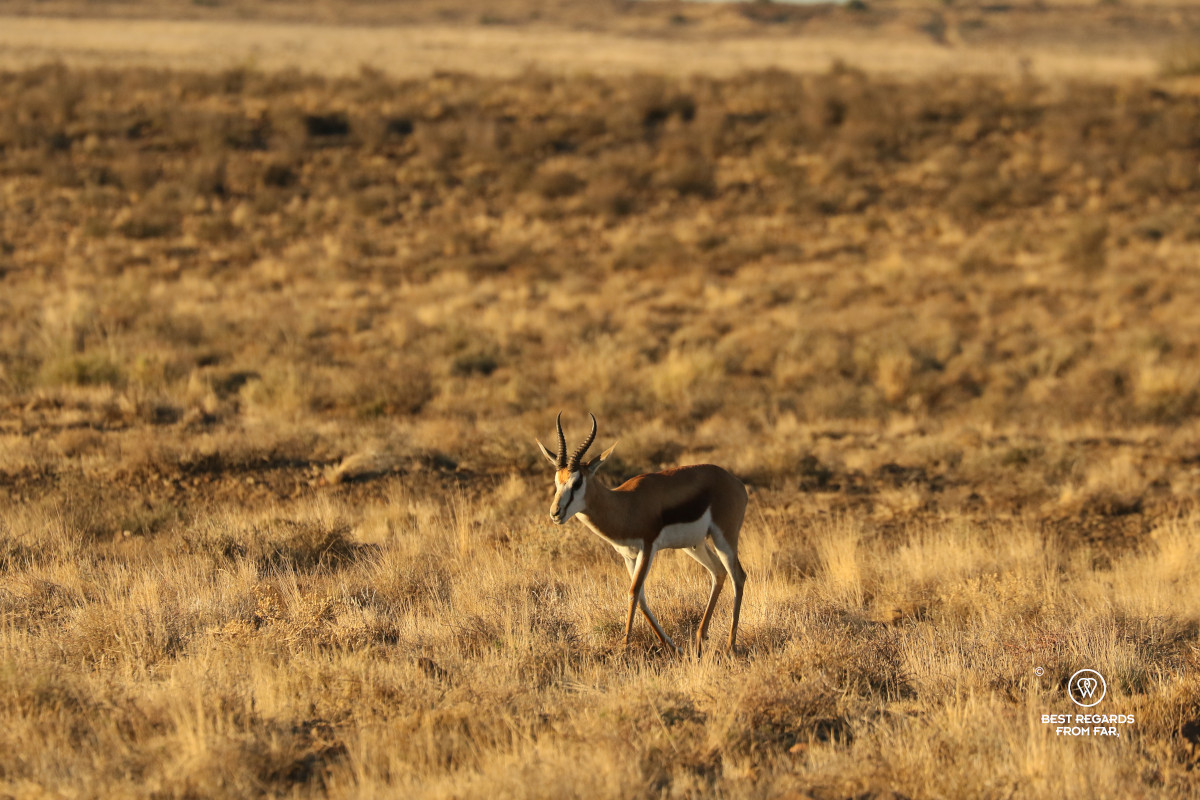
While the Kruger National Park attracts most safari-goers as a premier game-viewing destination and one of the continent’s earliest and most celebrated conservation areas, the Karoo has long been overlooked, and its precious Nama-Karoo biome was badly degraded by centuries of livestock farming. Since 1979, its unique flora, fauna, and landscapes have been protected in the 75,000-hectare (185,330 acres) Karoo National Park, its establishment also encouraging private conservation efforts across this fragile land.

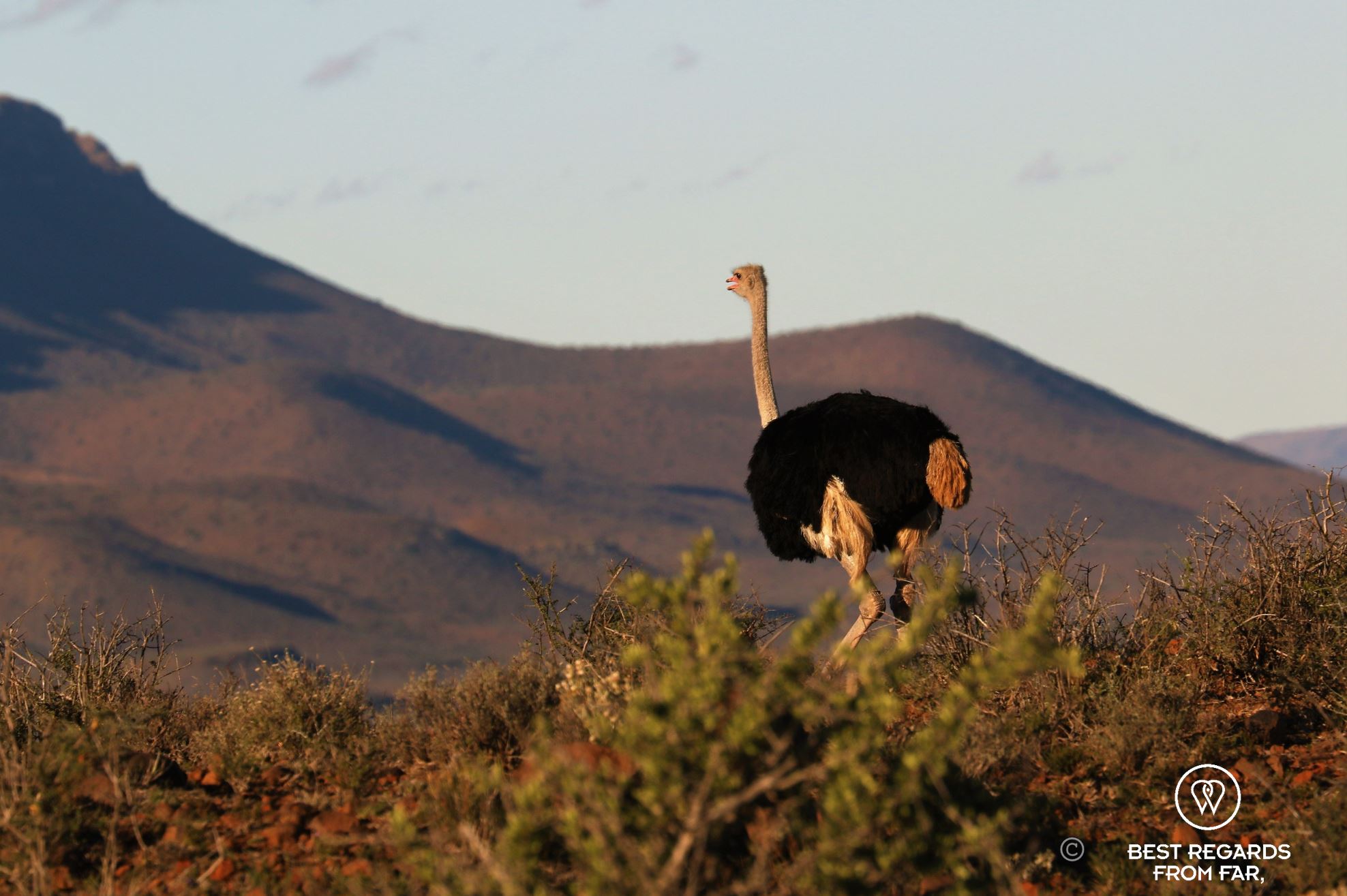
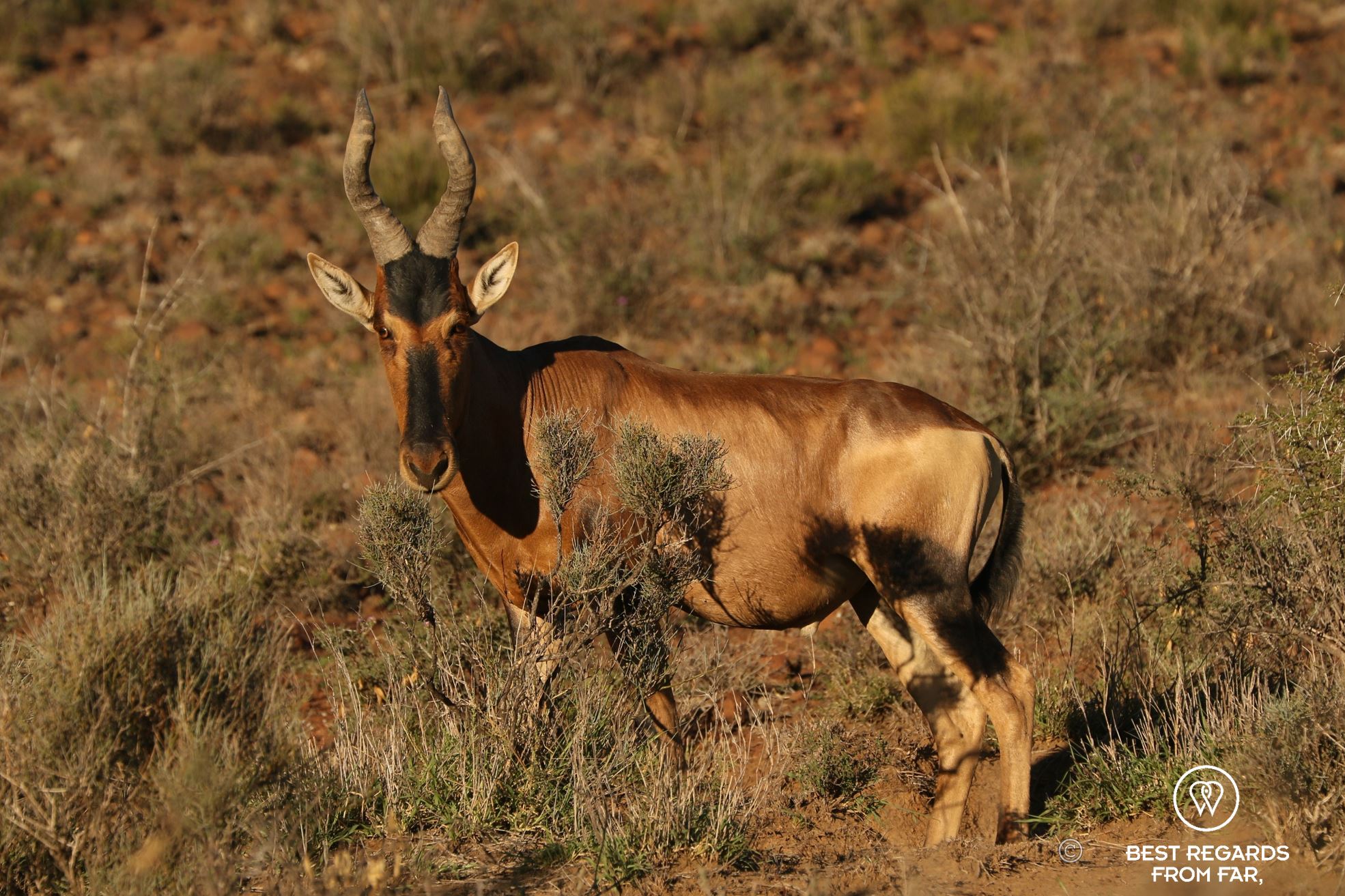
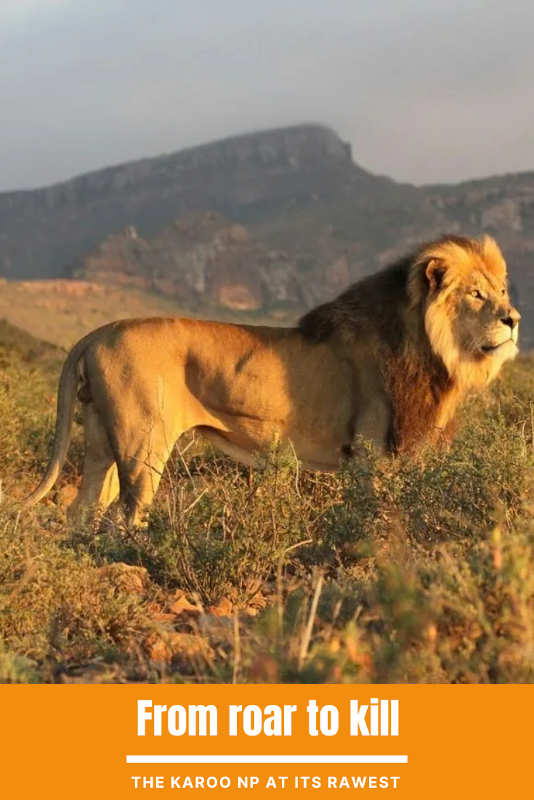
Predators are returning as well. Lions were reintroduced to Karoo National Park in 2010 after more than a century of absence, restoring the ecological balance. Seeing them, however, is rare. The park is massive with only a few tar roads and adventurous 4×4 tracks, the terrain open, and wildlife encounters require patience. Maybe that is why the Karoo National Park remains one of those hidden gems for the more demanding travellers, as we are…
The Roar of Africa’s Most Powerful Predator at Night
Beginner’s mistake… I have not checked the Moon phase. As we enter the Karoo National Park eager to spend the evening under the amazing southern hemisphere night sky, a full Moon rises. Coming back from a tracker course after spending weeks in the bush, the Karoo NP evokes remoteness to us more than a safari destination, and I cannot help feeling slightly disappointed as I go to bed under a brightly lit sky where I barely see the Milky Way.
As I lay in the bed of the cottage at the Karoo’s main rest camp in the early hours before dawn, a shot of adrenaline rushes through my body. This sound is unmistakable by anyone who has ever heard it before. It is faint and far though, and I listen carefully. Silence. Did I imagine it? Can it be? I hardly dare to breathe to not make any noise… There it is again! The deep roar of a lion, miles away.
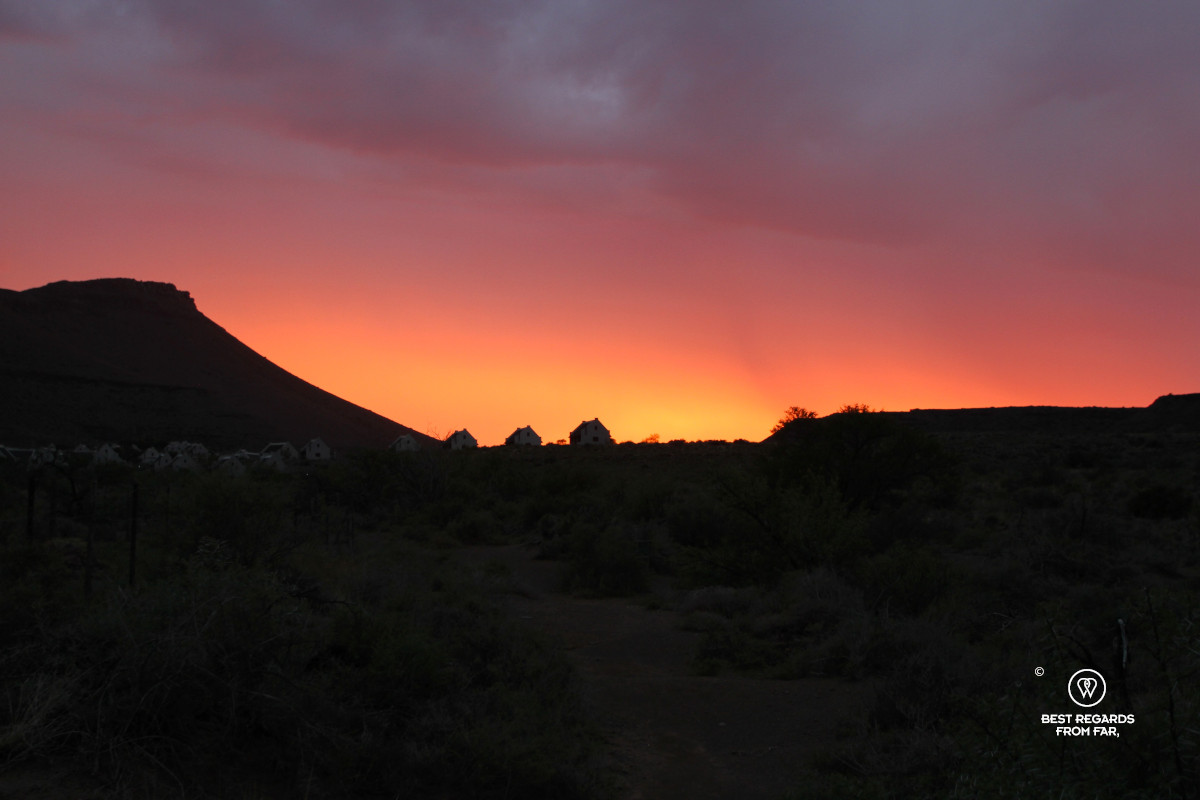
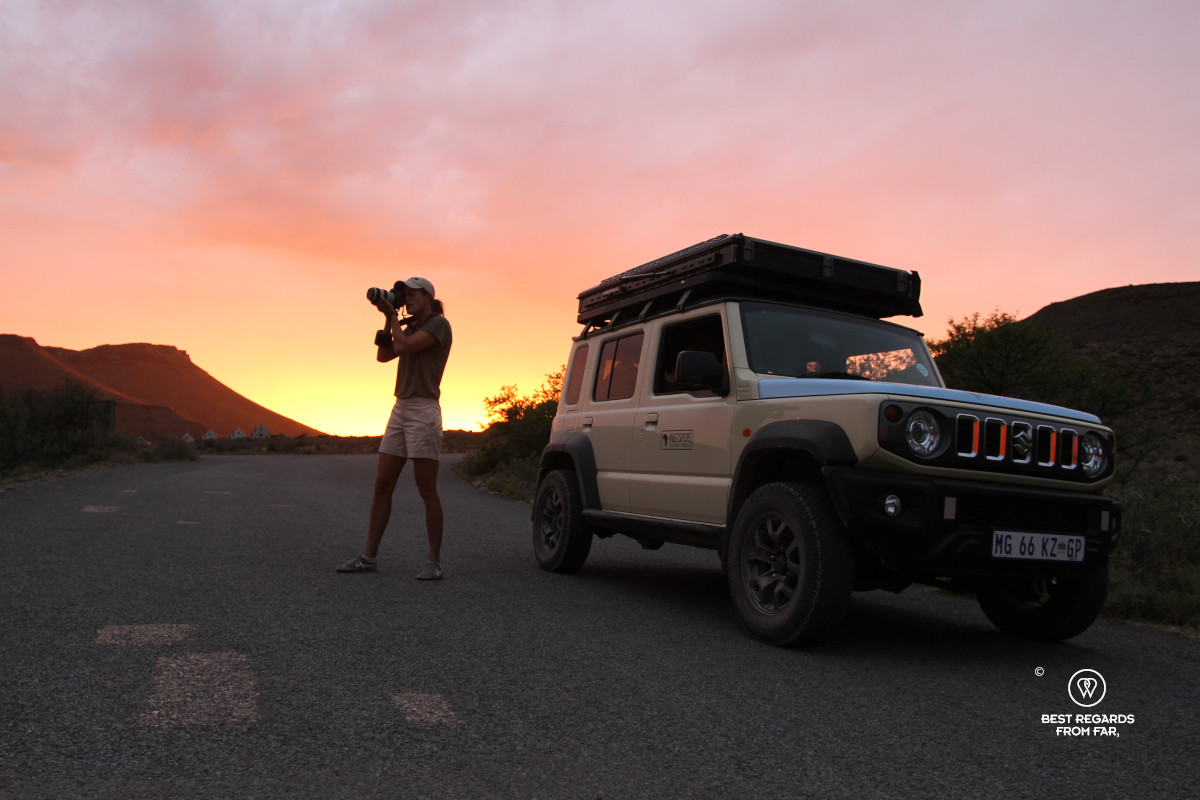
The roar of a lion carries over up to 8 kilometres (5 miles). It is 4 am and I leave the comfort of my bed to step onto the veranda of the Cape Dutch cottage, instinctively turning into the direction of the sound. There is a breeze, allowing me to determine where the wind comes from. Fully in my element and wide awake, I stay up and keep listening to the occasional roar. I study the park map. We are allowed to drive only after sunrise, and at 6 am sharp, we start the engine of our 4×4 with a fresh thermos of coffee, a few rusks, and our hopes and camera gear.
Tracking the Lions in the Karoo
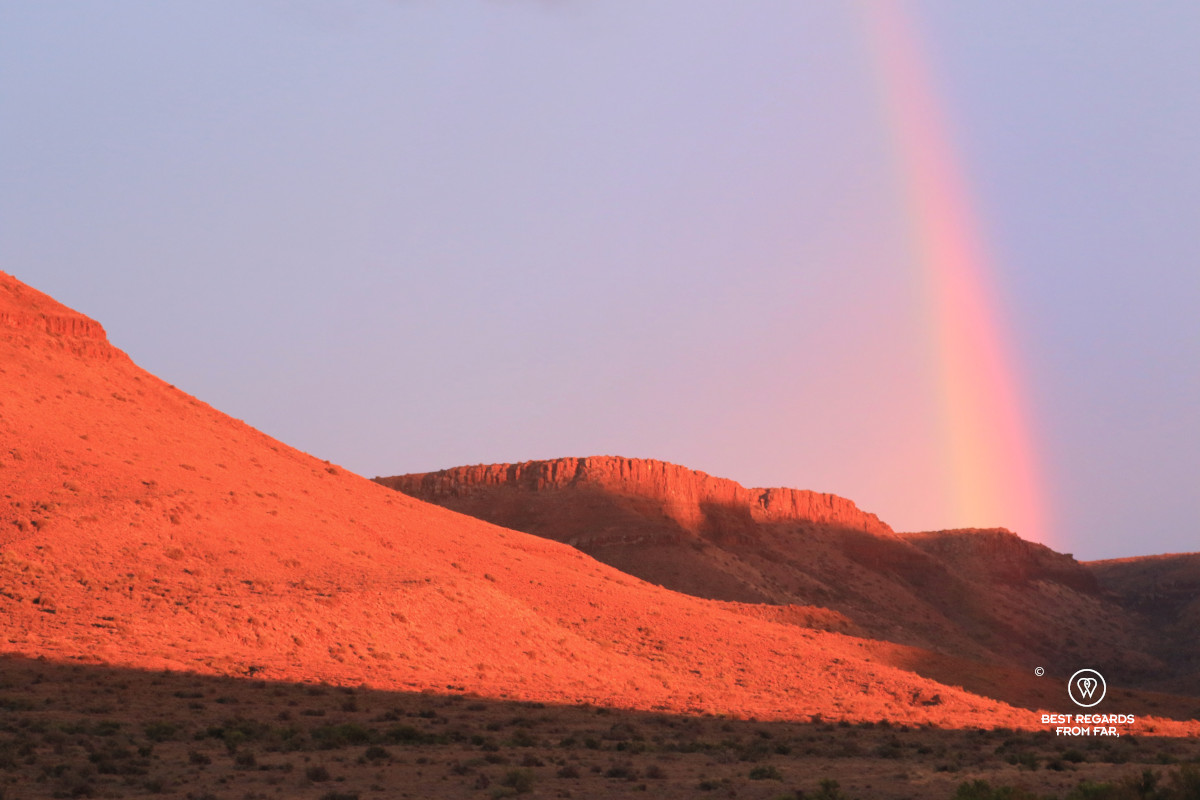
We drive into the direction where the roars came from. We have not heard it for the last hour and a half. It is a long shot, but worth taking, all the more that nature is offering us a magic moment. The sunrise taints the African sky in warm hues while lighting these dramatic landscapes in golden colours.
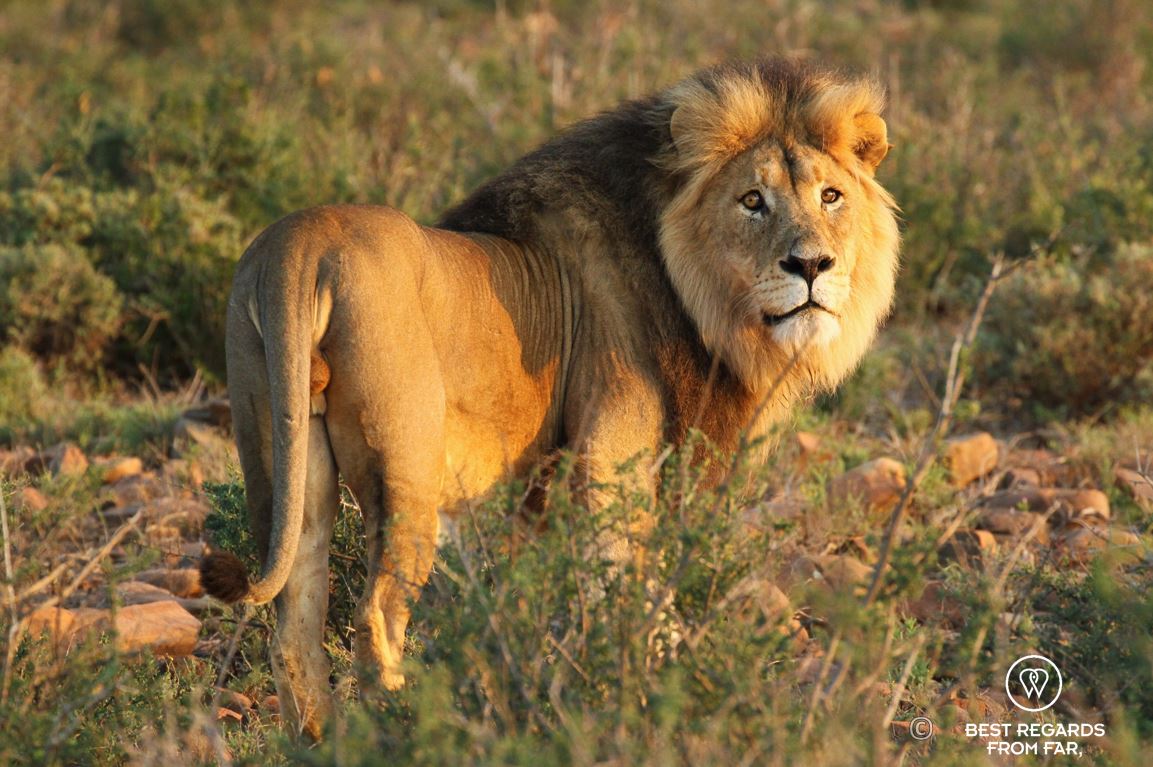
At a constant speed of 25 kilometres per hour (15 mph), we intensely examine every shrub of dry vegetation we pass, and scan the horizon frantically. Suddenly, my heart leaps. The silhouettes of two full grown lions appear in the distance! We slow down, and approach slowly to not startle them. We are the only vehicle out this morning, and they do not seem to care about us. These beautiful lions in their prime are walking along on the tar road with swag, habitually scent marking their territory. As the sun continues to rise, it reddens the beautiful deep brown manes of these two brothers.


A Unique Encounter
Suddenly one of them stops in his tracks. He lifts his head, his nose in the wind. His majestic mane waves in the warm morning breeze. He has picked up on a scent that we cannot even perceive. His behaviour changes instantly. The lion gets into motion. He crosses in front of the bonnet of our 4×4 Suzuki Jimny. He starts trotting along the side of the road. His brother follows in tow. He leaves the road and lowers his body, increasing his speed. Hunting mode for sure…
At once, they both take a sharp turn to then disappear into a dry riverbed. We lose sight but continue to drive, reading the landscape, and predicting where they may come out. We bring the car to a halt, and we both cannot believe what is about to unfold in front of our eyes…


The Oryx’s Final Run
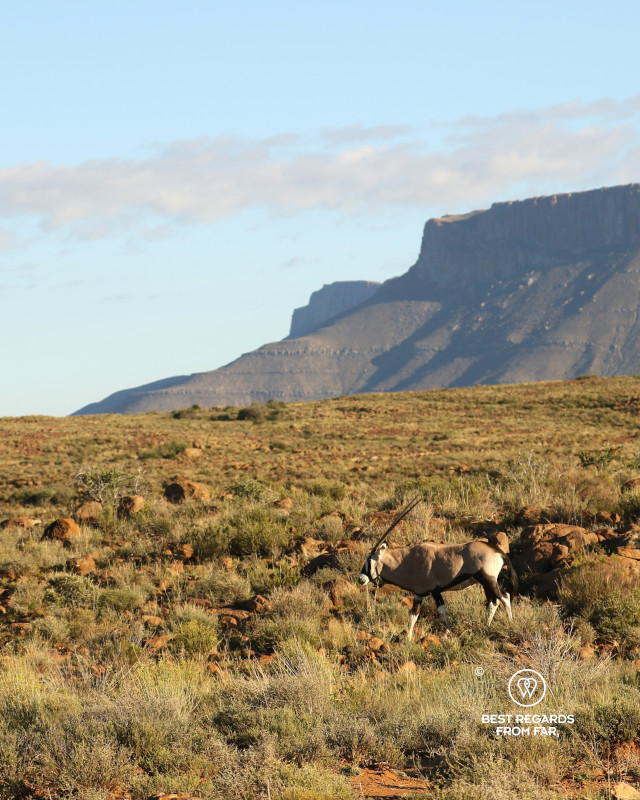
A majestic oryx gemsbok appears from the dry riverbed. The large antelope is running for his life towards the road, the lion in hot pursuit. Despite the dust kicked up by the large mammal, the predator’s deadly stare is razor-sharp and determined. With only a 30 percent success rate when hunting, the oryx might stand a chance…
When close enough, the lion jumps. His front claws lock into the rump of the gemsbok. His rear paws tackle and unbalance the long-horned antelope. Within seconds the lion locks his jaw on the throat of the oryx. He comes to a halt with the lion hanging onto him. He knows it is game over…

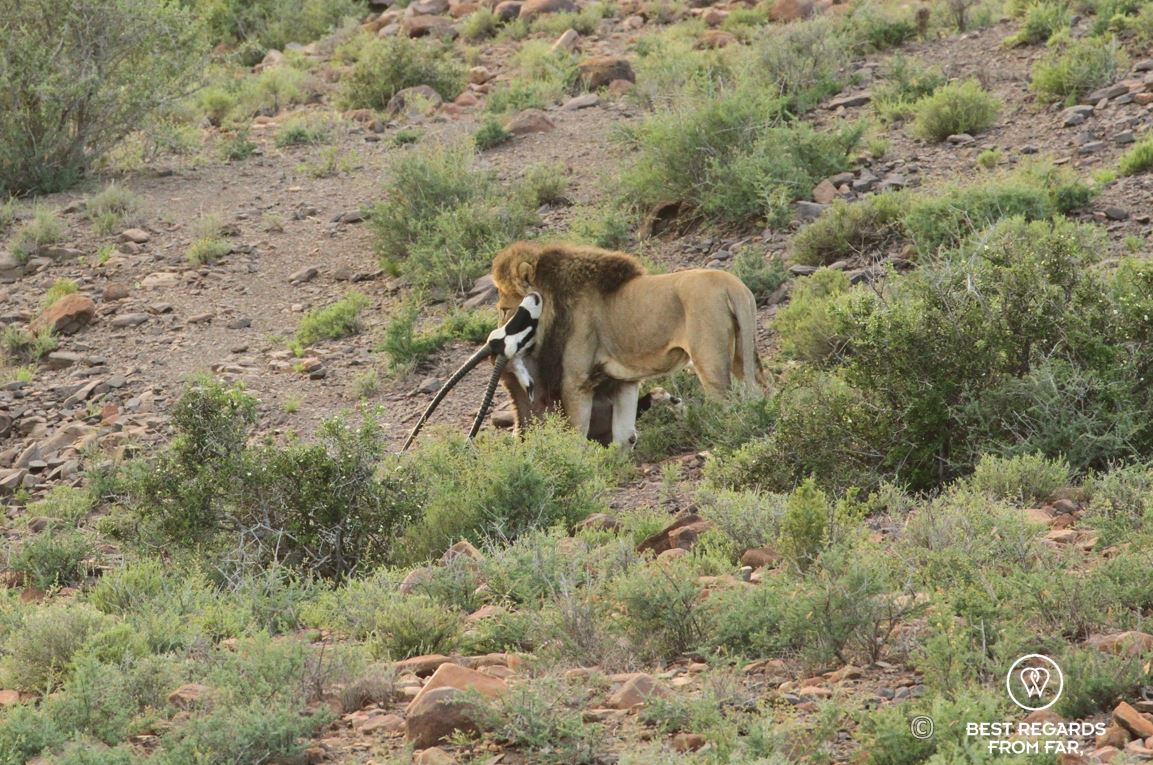
There is no resistance. No battle. Not a sound from the oryx, nor the lions. After a minute or so, it starts staggering and slowly falls onto the rocky soil. The lion is suffocating him. The second lion observes the whole scene. There is no need to assist. He remains on quiet standby, licking his lips in anticipation. We observe how a life slowly gets taken, not judging, letting nature follow its course. It is nature at its rawest. It just is, and does not require any human emotions as subtext.
Feasting Time
The second lion gets impatient and starts pulling on the belly of the lifeless oryx. It seems somewhat oddly respectful of the lions to wait until the gemsbok is dead before digging in. Hyenas and wild dogs would have started tearing on the flesh while the animal is still running.
While feeding, one of the lions stares into a specific direction. We follow his gaze: two lionesses, one cub in tow eagerly approach over the plain. The males tolerate them on the kill, such a rare moment to witness. The whole pride feasts at the same time, with the males scolding the cub occasionally just as a reminder of who is in charge. Showing a canine is enough for the young one to behave.


We spend another half hour quietly observing these five lions while they share and finish the oryx together. Contrary to other hunts we have witnessed and the textbook theory, it is an unusual sighting. Generally, the lionesses orchestrate the hunt, and are often chased off their kill by the dominant male of the pride. Even with vulnerable cubs, he will feed first so that he can protect his territory and pass down his strong genes. The weakest cubs do not always make it, and the lionesses have to keep hunting.
The lions sluggishly move away from the carcass, mouths open, breathing heavily with round bellies. Their fur and faces blood-stained, they slowly walk out of sight towards a nearby waterhole and probably some shade to spend the next 20 hours or so digesting.
***
The full Moon had hidden the stars, but it revealed something far rarer. A distant roar in the night, a hint carried on the wind, and the patience to follow the signs led us to one of the most remarkable wildlife encounters we have ever witnessed.
The time spent in the bush is always rewarding as long as it is not rushed. Nature is a book waiting to be read, a story written in tracks, scents, sounds, and subtle movements. One just needs the knowledge and patience to decipher it, and this time, the Karoo gave us a chapter we will never forget.
Note:
- In hindsight, we noticed a puncture on the rump of the oryx that can be seen on the photographs. When the lion picked up a scent, or maybe even a sound, it may very well have been a fight between two male oryx as their long horns are unforgiving. The scent of blood was enough to get him into hunting mode, and the rest of the story unfolded.
Travel tips:
- Cottages and campsites are available at the Karoo NP, booking is essential through the SANParks website.
- Check out our interactive map for more in the area (black pins lead to an article):

