Text: Claire Lessiau
Photographs: Claire Lessiau & Marcella van Alphen
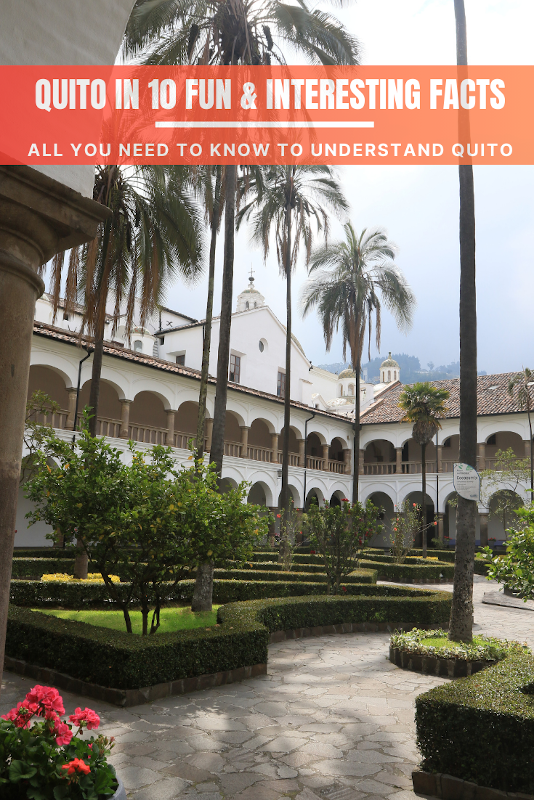
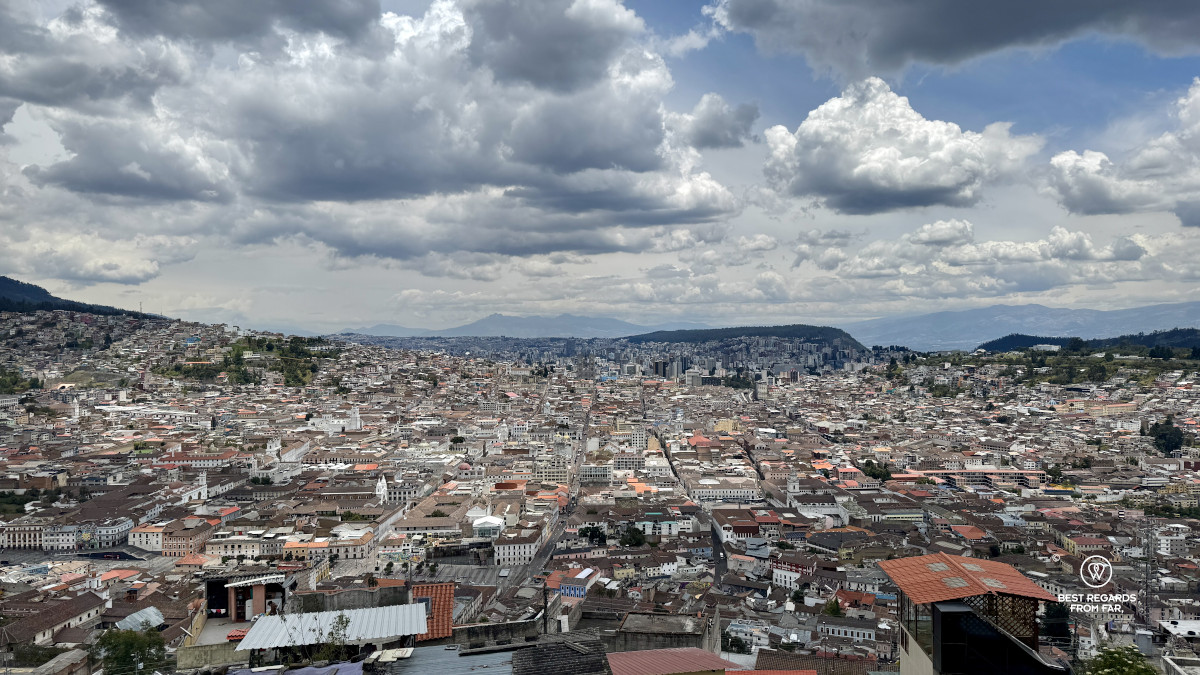
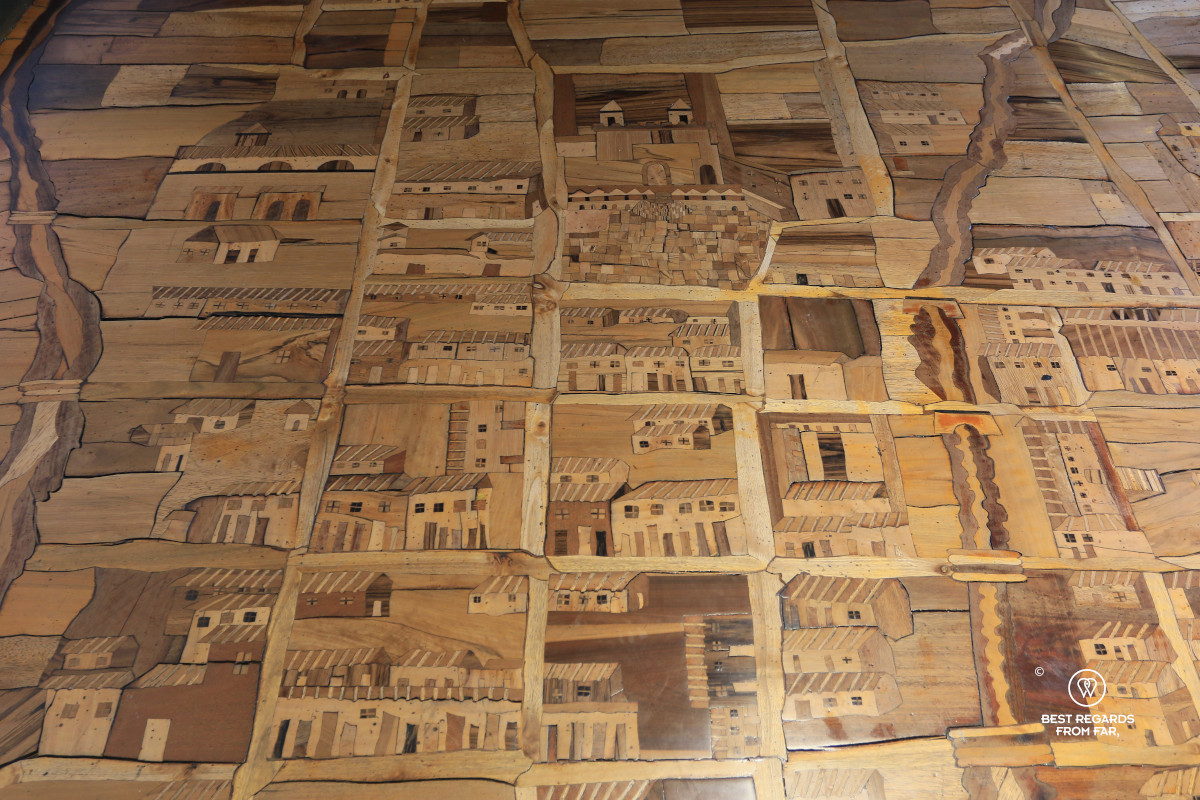
Perched at 2,850 meters in the Andes, Quito is one of the world’s oldest continuously inhabited capitals. Neither an Inca city nor a colonial one, its historic center is the largest and best-preserved in Latin America. Its UNESCO World Heritage heart framed by volcanoes boasts narrow cobblestone streets, baroque churches, and grand plazas that pulse with daily life. Quito is not a city to rush but to experience slowly.
Like it? Pin it for later!
1. Before Empires: 10,000 Years of Human Experimentation
Long before the Incas arrived and long before the Spanish Conquest, the Quito basin was already a place of human settlement. Archaeological evidence traces continuous occupation back more than 10,000 years B.C., when early populations began organizing themselves around subsistence, symbolism, and an intimate relationship with their environment.
From 3,500 BC onward, agriculture emerged as a gradual technique from domestication of some of the vegetables that are the most eaten today to shaping the land. By the time the Incas arrived in the late 1400s, Quito was the heart of a complex society with its own religious structure and political organization.
While Quito was founded in 1534 by the Spaniards, its history had begun thousands of years earlier…
2. The Inca Conqueror Barely Lasted in Ecuador
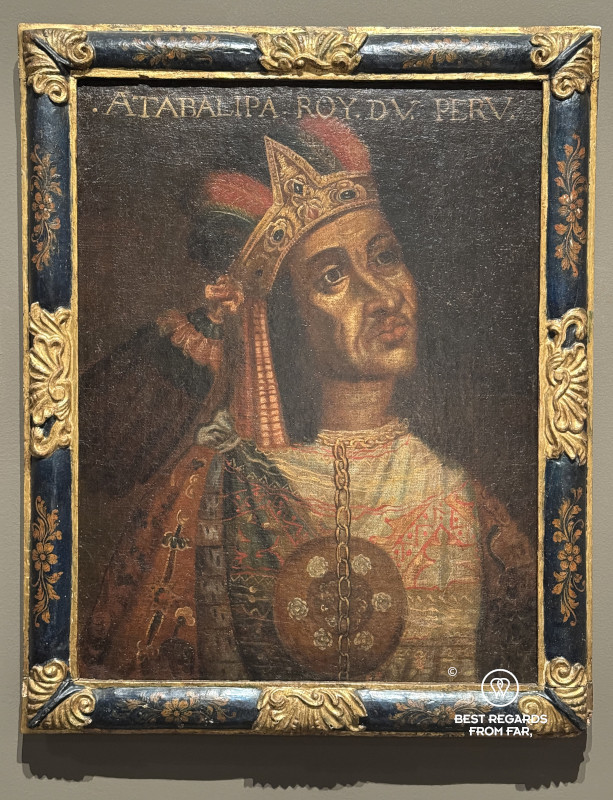
The Inca presence in Ecuador was surprisingly short: roughly 80 years in the south between 1470 and 1532, and barely 40 in the north. Yet brevity did not prevent impact.
With an empire that expanded over 4,000 kilometers (2,485 miles) along the spine of the Andes, encompassing six of today’s countries (Colombia, Ecuador, Peru, Bolivia, Chile, and Argentina) and ruled over more than 12 million people, the Incas defined Quito as their second capital, after Cusco.
The Inca Trail—none of its 60,000km (37,000 miles) is visible in Quito today—extended all the way here. Trade and military routes were consolidated, Quechua introduced as the unifying language of the Incas, and the cult of the sun firmly established.
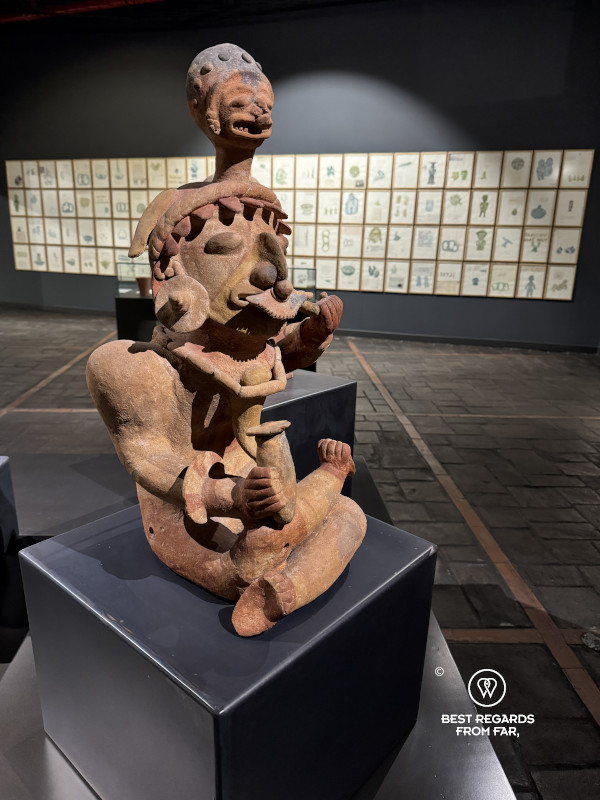
After having conquered Cusco, as the Conquistadors were approaching, hoping to find more gold to satisfy their insatiable thirst, the Inca general Rumiñahui ordered the total destruction of the Incan city. Hardly any traces of the Incas are to be seen in today’s Quito but for some shy stonework in the foundations of some colonial buildings, or some ceramics and jewelry at the excellent Casa del Alabado Pre-Columbian Art Museum.
3. El Panecillo: The Hill That Divides and Defines Quito
The prominent El Panecillo Hill in the center of Quito was considered a sacred site and sun temple by the Incas before the Spaniards colonized the area, and known as Yavirac. None of it remains today.
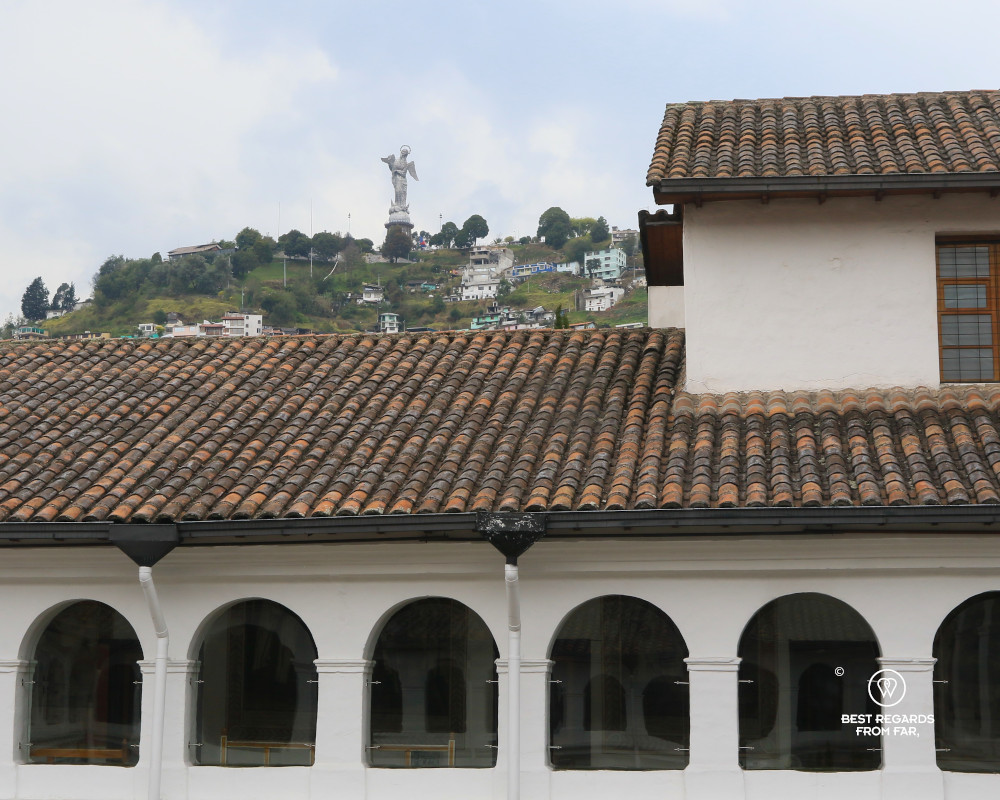
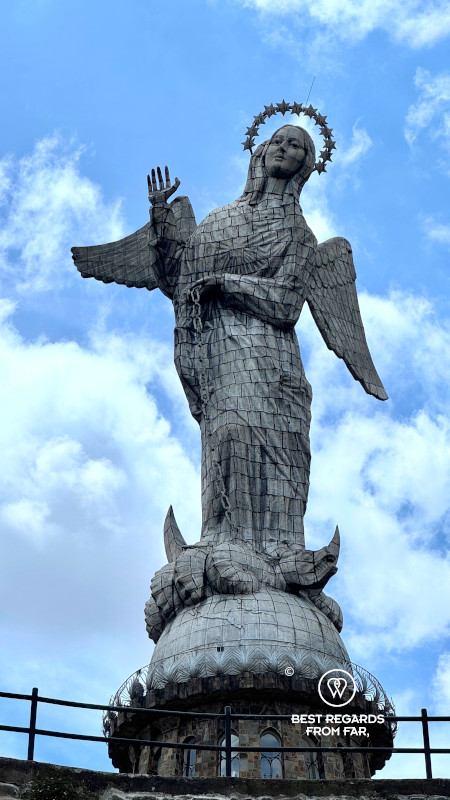
Instead, El Panecillo (or “Small Piece of Bread” due to its round shape) borders the southern side of the historic center. It is crowned by the Virgin of Quito, a winged Madonna balancing atop a globe, her foot pressing down on a snake representing Satan. Inspired by a local 18th-century sculpture, the 30-meter (98ft) tall aluminum statue stands guard over Quito from El Panecillo Hill.
From up, a 180-degree view opens up on the city with the majestic peaks in the background. Volcanoes shape the horizon—Cayambe (5,790m ; 18,996ft), Cotocachi(4,939m ; 16,204ft), Imbabura(4,610m ; 15,124ft), Cerro Puntas (4,452m ; 14,606ft), and Mojanda (4,290m ; 14,074ft).
4. Living with a Volcano That Will Erupt Again
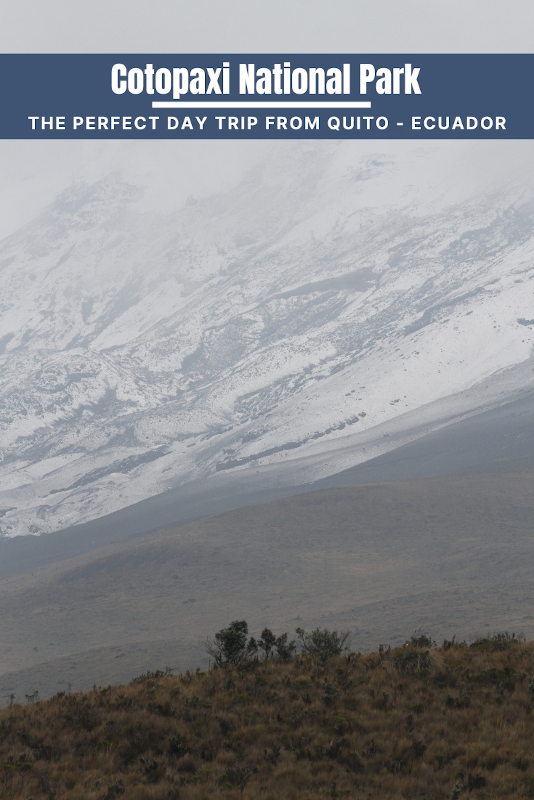
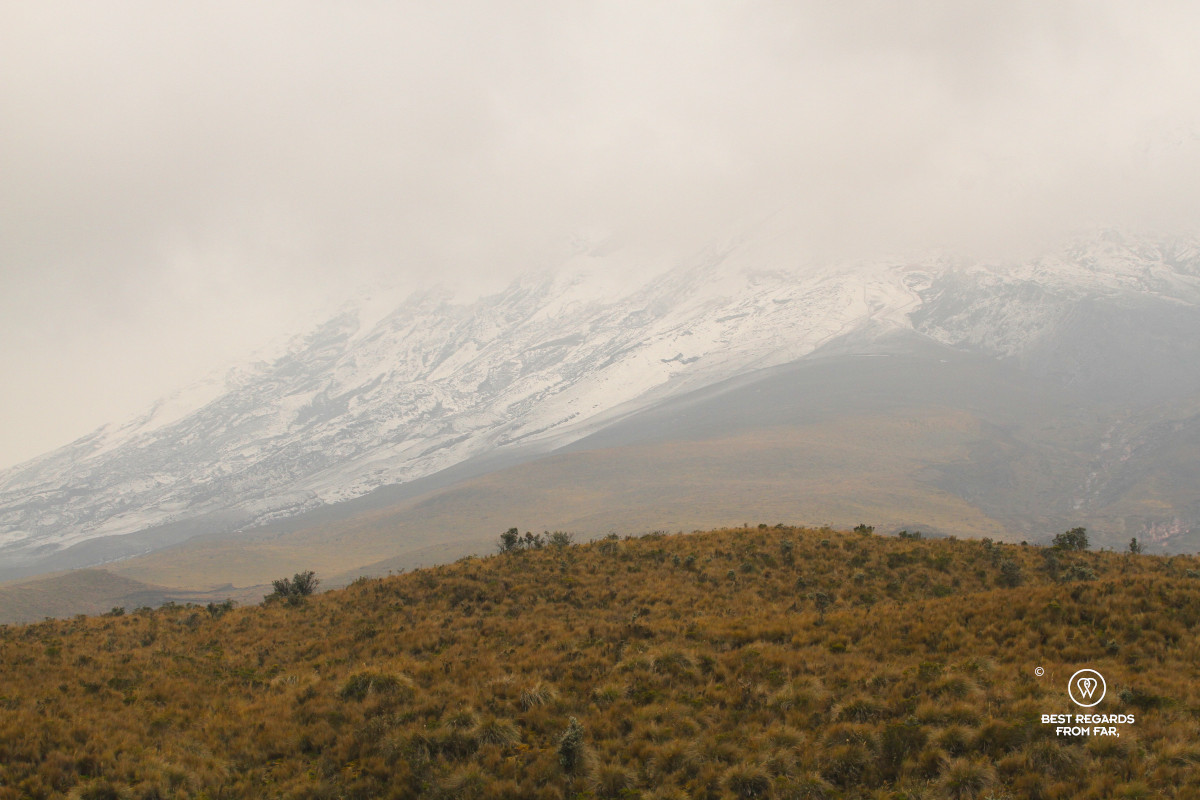
Not visible from El Panecillo Hill, Cotopaxi stands about 50 kilometers (31 miles) south of the Ecuadorian capital.
One of the world’s highest active volcanoes, Cotopaxi last erupted in 1768, at a time when no one lived on its slopes. Today, nearly 100,000 people do, drawn by its fertile soil.
There is no debate about whether Cotopaxi will erupt again. It will. The only uncertainty is when. Quito lives with this knowledge calmly, as if the noise of the political instability could cover the great volcano.
5. Chocolate, Shells & Bones, or How to Express Wealth
Before gold became a colonial obsession, wealth in this region was communicated more subtly.
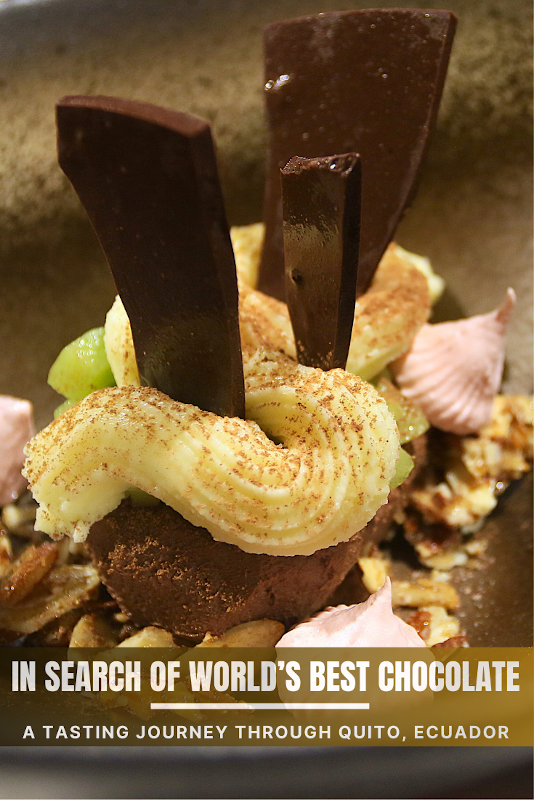
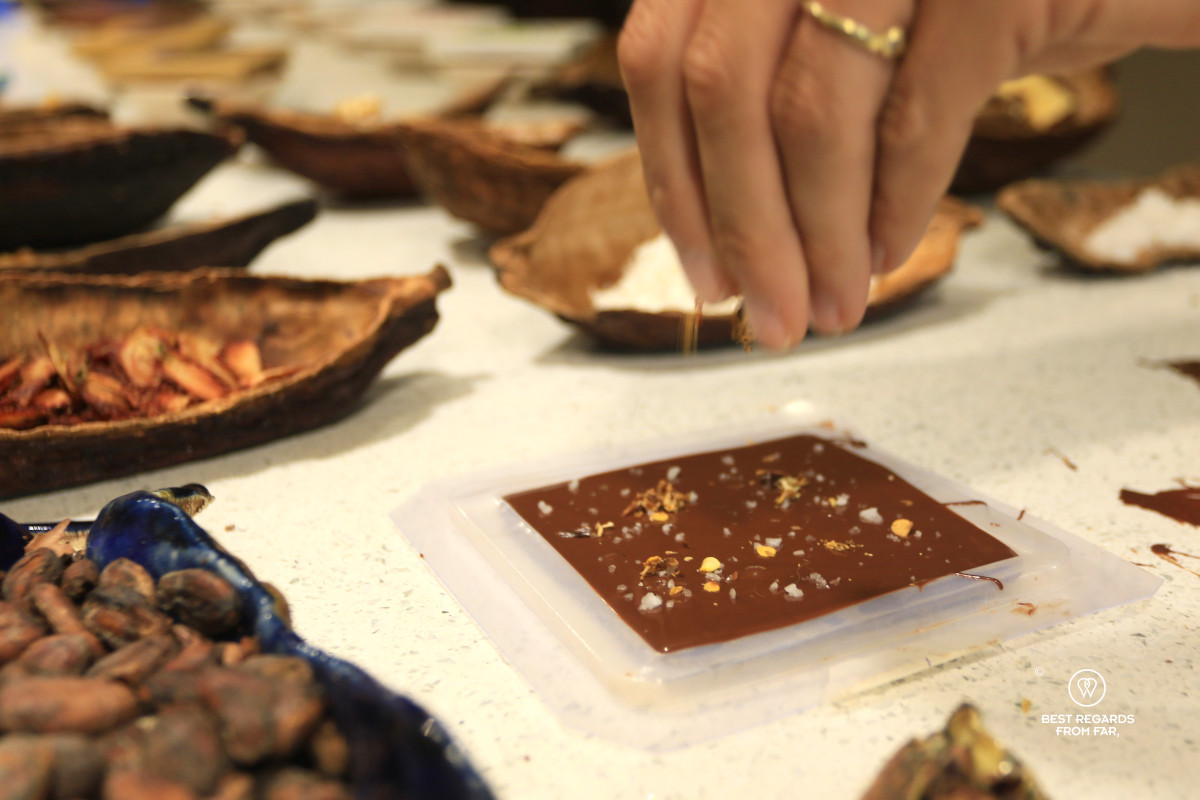
Cacao was consumed as a ceremonial drink, a marker of status and ritual importance. Today, you can follow the chocolate trail in Quito.
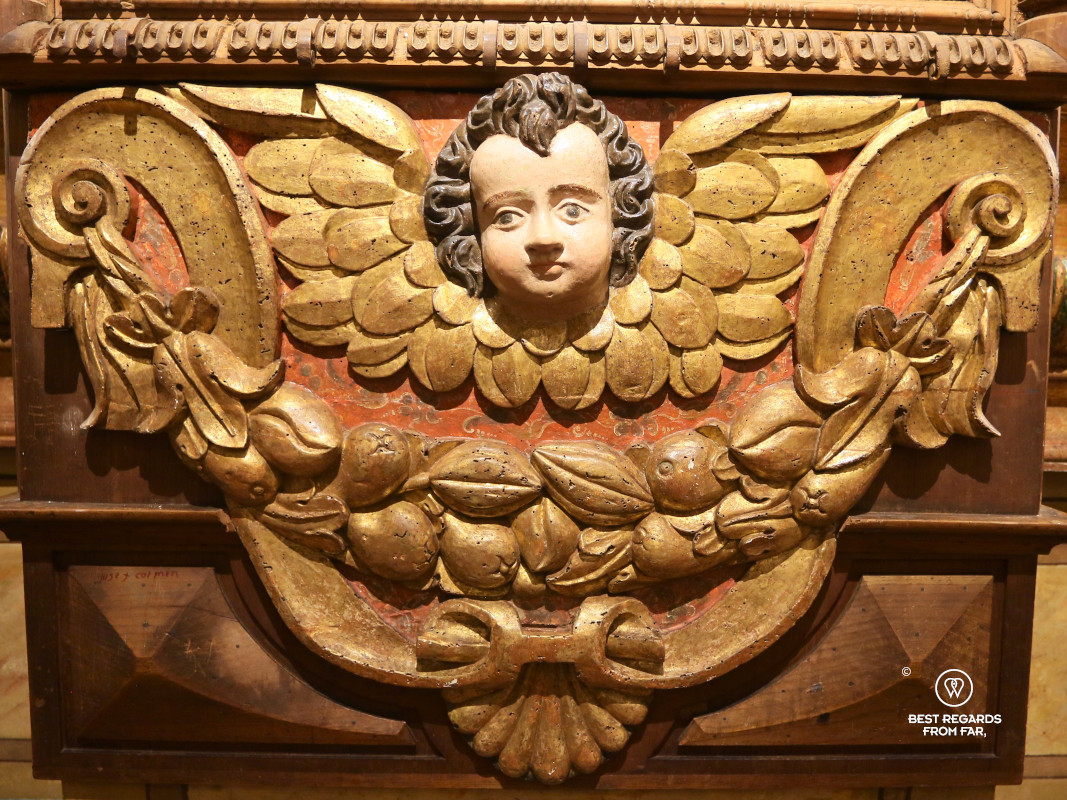
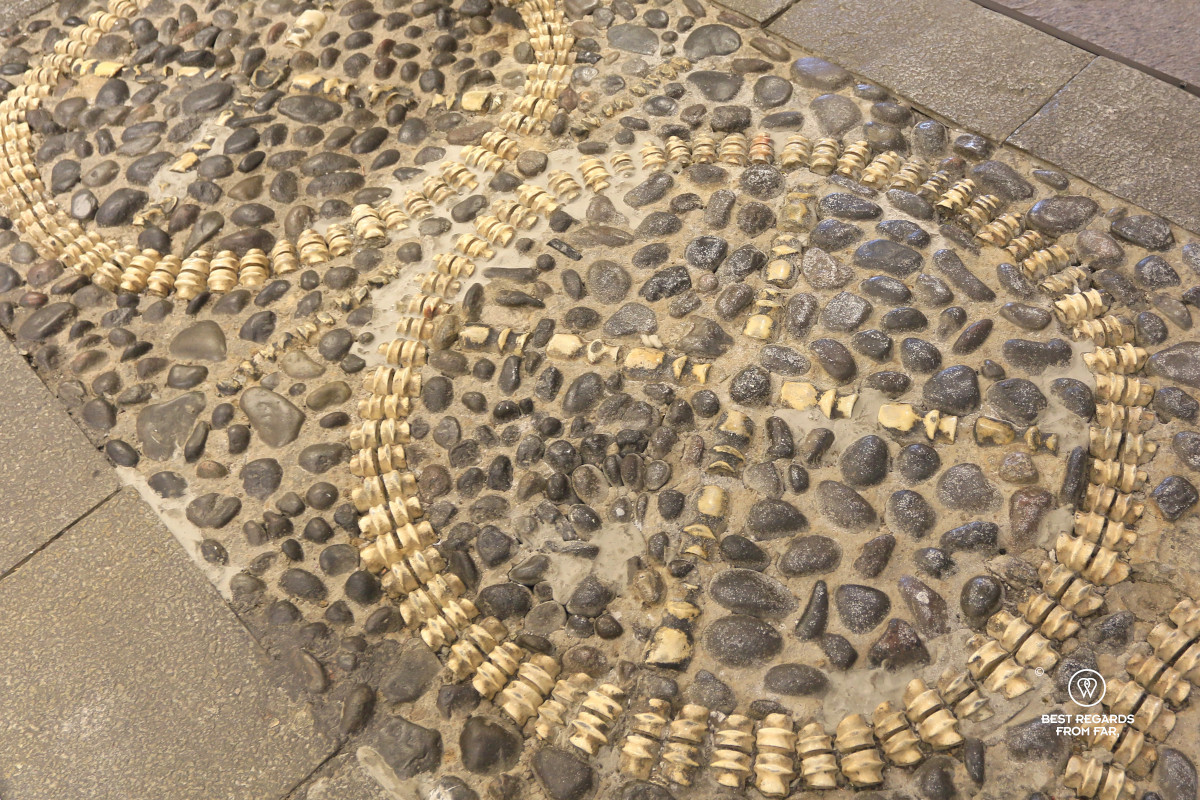
For the pre-Colombian cultures, the spiny Spondylus shells were prized not only for their beauty but for their predictive power. Harvested by women diving off the coast, their appearance signaled El Niño and the coming rains, an important information in an agricultural society.
Even bones had meaning. In colonial Quito, displayed at a home’s entrance, they announced prosperity: proof that meat could be eaten regularly.
6. People Still Stop by the Best Hospital in Town—That Has Been Closed for 50 Years…
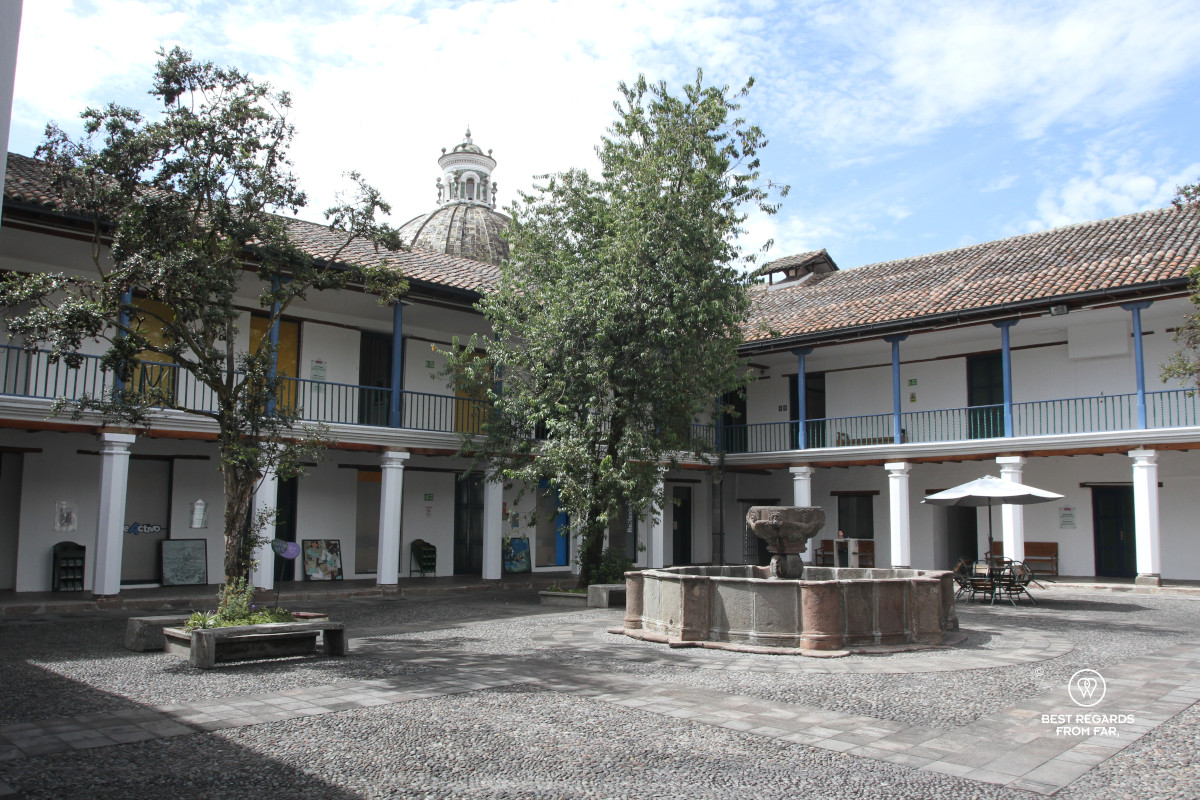
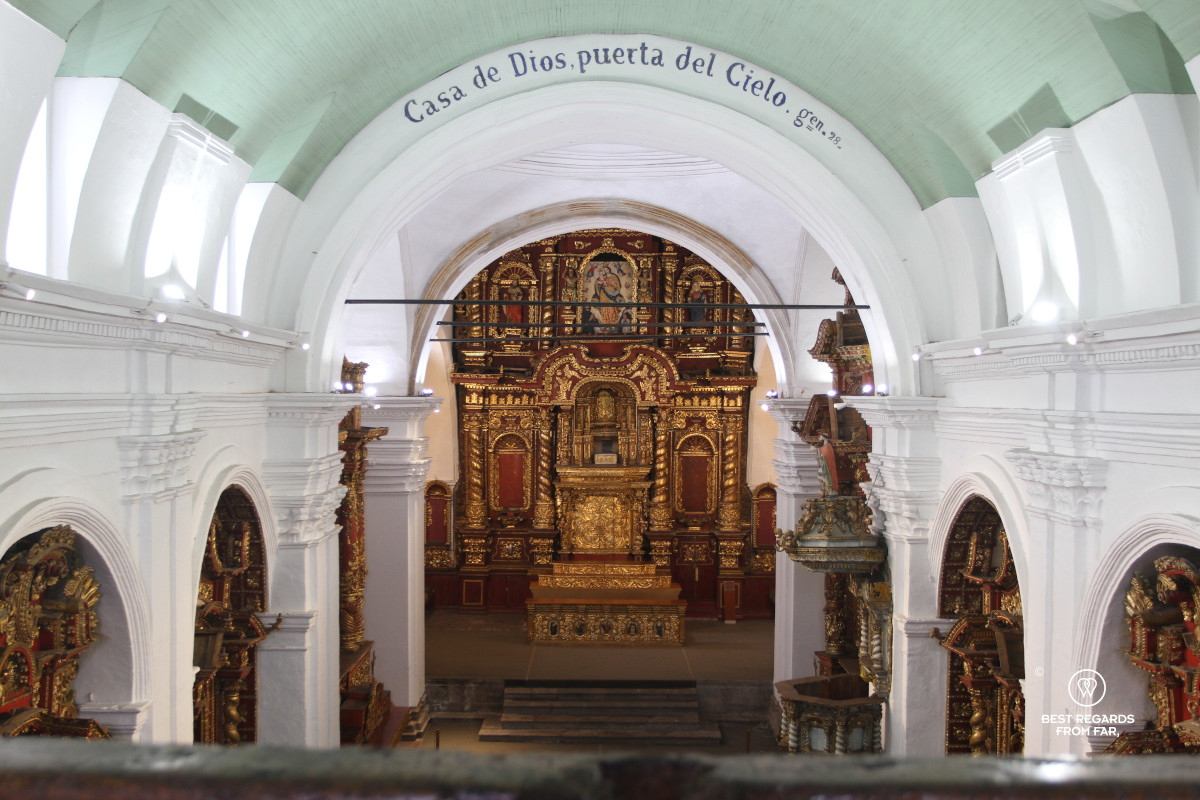
Today’s excellent City Museum is located in the former San Juan de Dios hospital. Closed in 1974 after 409 years being a hospital, it was the oldest hospital of Ecuador, and as such has the best reputation as some Ecuadorians still remember family stories of ancestors being cured between these walls. The Carmelite sisters who used to live in the monastery across the street in the Carmen Alto—today a religious museum—used to care for the patients of the hospital.
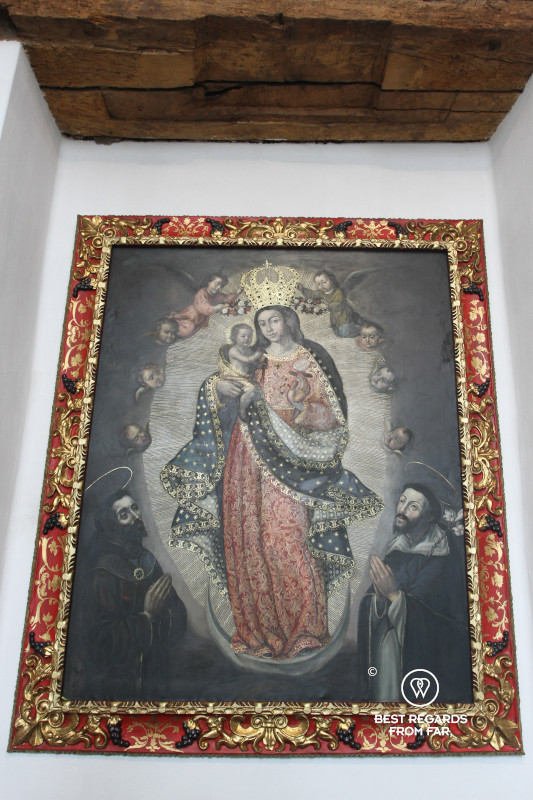
Actually, every day, some people still stop in the street in front of the painting of The Virgin of the Angels to pray in what used to be the chapel of the hospital.
7. 14 Languages, 1 Small Country
Ecuador appears compact on a map, but linguistically, it is very rich.
Spanish—Castellano—is the dominant and official language of Ecuador, while the indigenous Quechua and Shuar hold official status for intercultural exchanges. Beyond these, another 11 indigenous languages continue to be spoken in their regions of origin, representing several distinct language families.
Some tongues—Caranqui, Pasto, Chonos, Puruhá, and Panzaleo—vanished entirely between the 17th and 19th centuries. Others, like the Barbacoan languages (most likely coming from the south of Colombia) are still spoken with some highly endangered idioms—Awapit, Tsafiki and Cha’palaachi.
The Chicham languages of the Amazonas region such as Shuar, one of the co-official languages taught in schools and spoken by the Jivaros, and Achuar. Siona, Secoya also come from the Amazon region and represent the Tucanoan languages. While there were about three dozen Zaparoan-speaking tribes at the beginning of the 20th century, most of them have become extinct before being recorded. Today, about a hundred speakers remain in the Amazon rainforest where other isolated languages such as Wao, and Cofán are also spoken.
8. Hard to Avoid Rice in Ecuador, Yet…
Rice feels inseparable from Ecuadorian cuisine today. Yet it arrived surprisingly late.
In the early 20th century, as US companies built Ecuador’s railway network, Chinese workers were brought in to help construct the lines. With them came rice. Today, it is grown in the country and also imported as it spread very fast across the country, eventually becoming a daily staple—often served alongside native frijoles (black beans).
As far as the railroad, it is barely used today in Ecuador.
9. When Marriage Wasn’t Optional—Unless You Married God
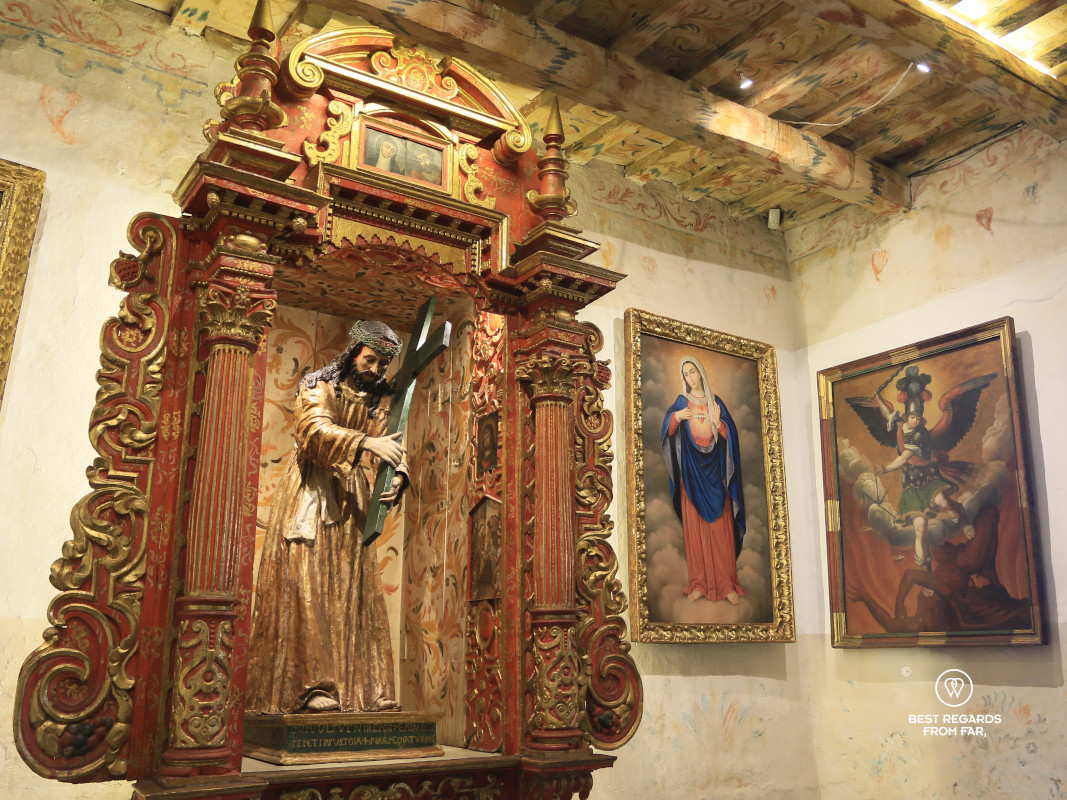
For centuries, women in colonial Quito had limited paths to independence. Marriage was expected. Yet, many did not want to marry and live an independent life instead. Their only other option was to marry Jesus…
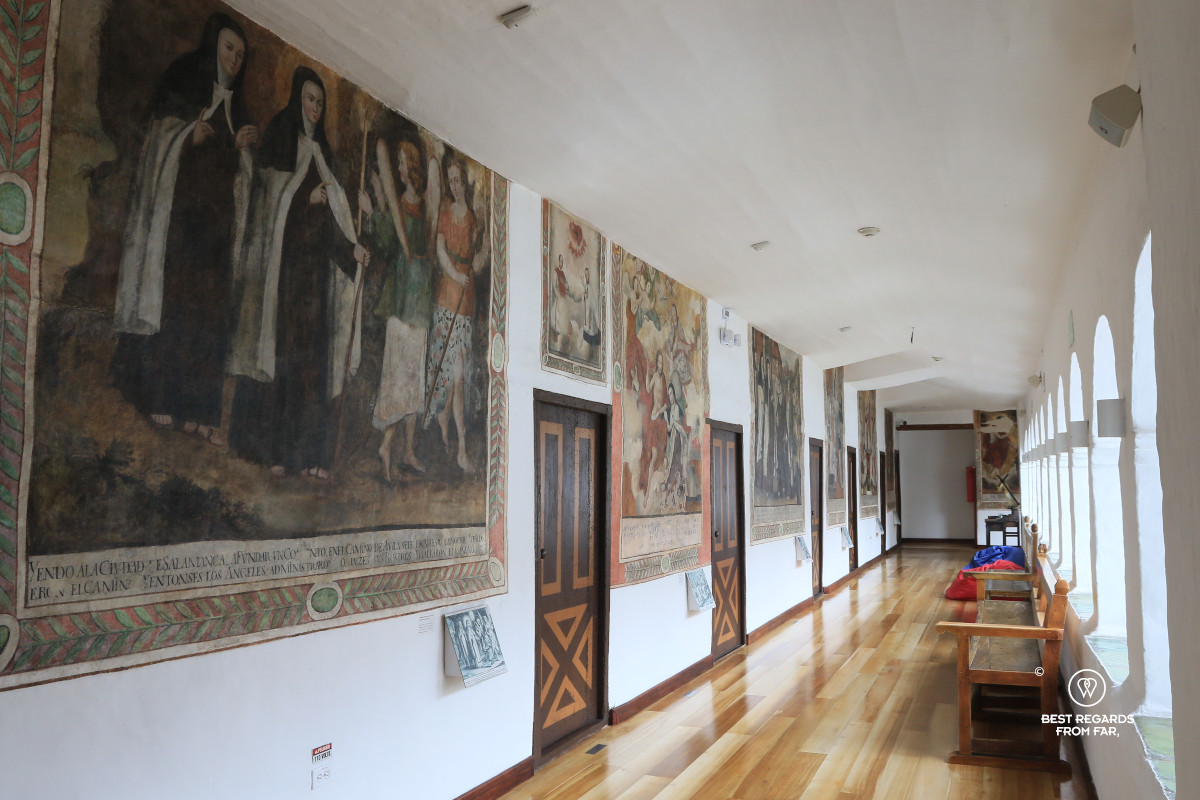
The convent offered a way out. Behind cloistered walls, women could avoid marriage, manage property, pursue education, and live communally. Entry that required 9 years of preparation and a dowry did not deter the suitors. At its height, Quito’s Carmelite convents housed around 100 sisters. Today, fewer than 20 remain.
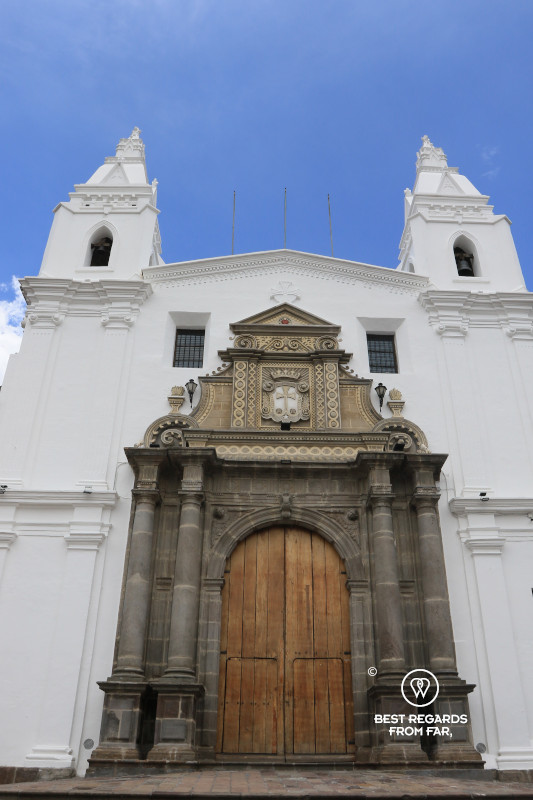
10. Not All Brides of God Were Equal
Even within the convent, inequality persisted.
Admission required a dowry paid to the order. The size of this payment determined not only status, but attire. Black veils were reserved for wealthy women of Spanish descent who could read, write, and understand Latin. Their tasks would include sewing, playing music and administrative duties. White veils were assigned to indigenous or mixed-race women who performed the hardest physical labor.
It is only in 2004 that the system of the dot was abandoned for the Carmelite sisters of the convent of the Alto Carmen…
Travel tips:
- If you like chocolate, make sure to read our article to follow the chocolate trail in Quito!
- The Museo de la Ciudad is excellent to understand Quito.
- Check out this interactive map for the specific details to help you plan your trip and more articles (zoom out) about the area!
For more in Ecuador, click on these images: