Text: Marcella van Alphen
Photographs: Claire Lessiau & Marcella van Alphen
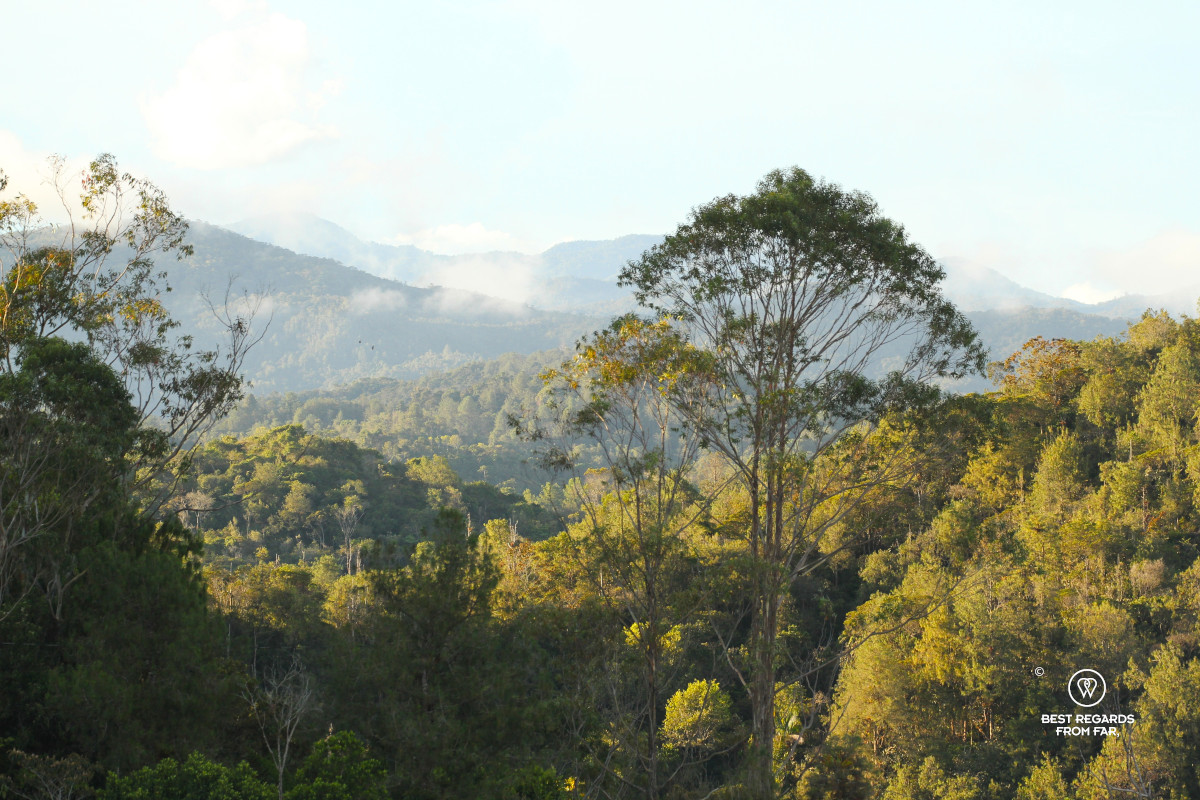
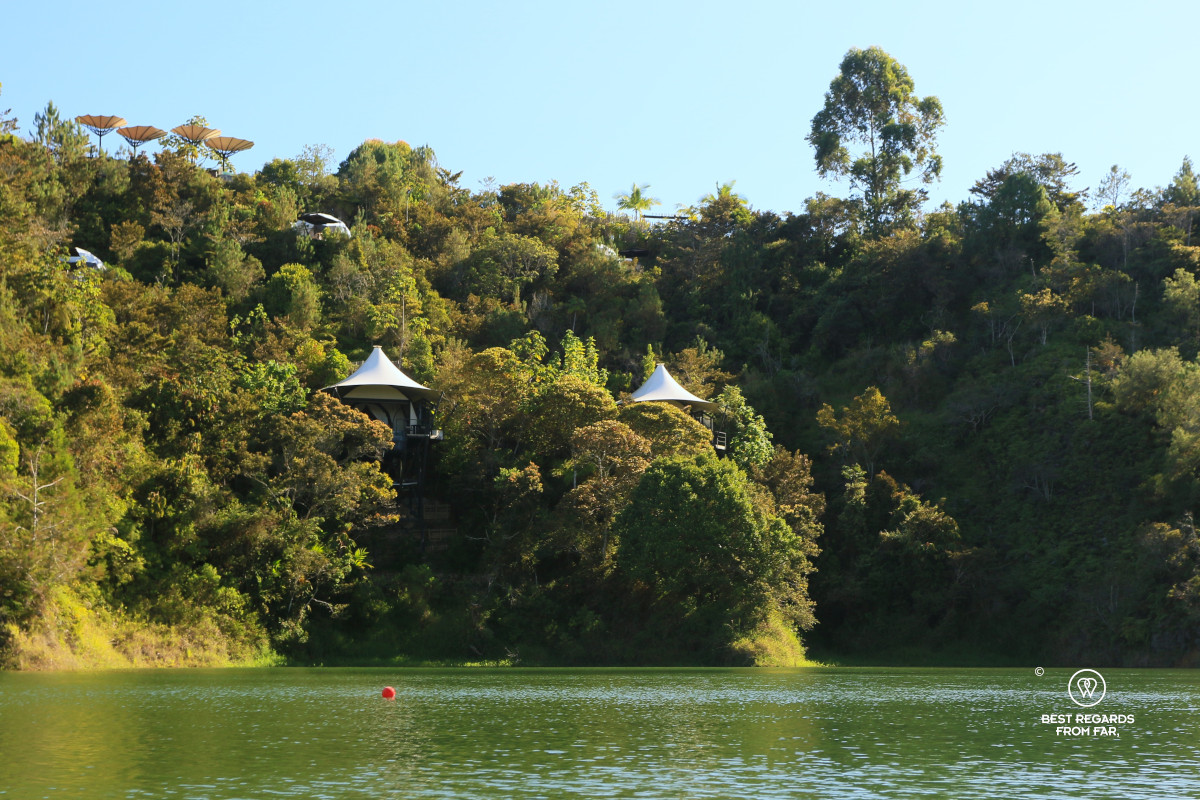
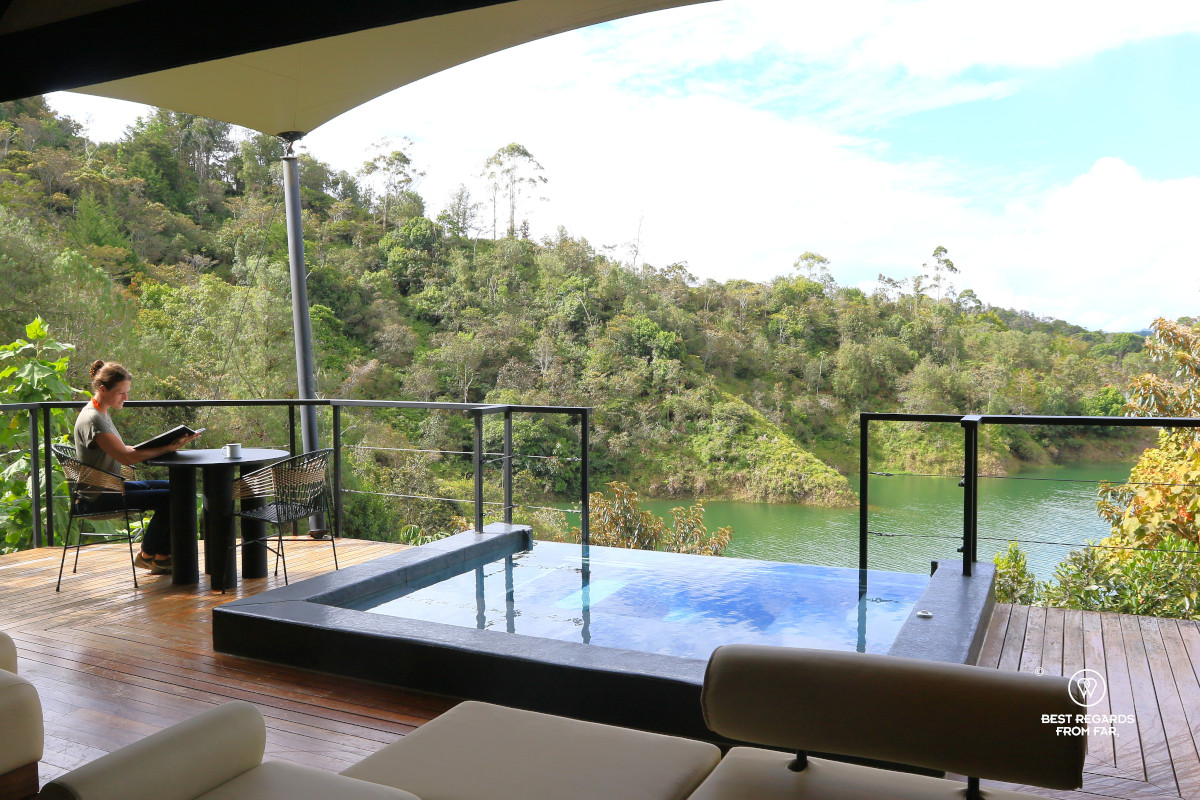
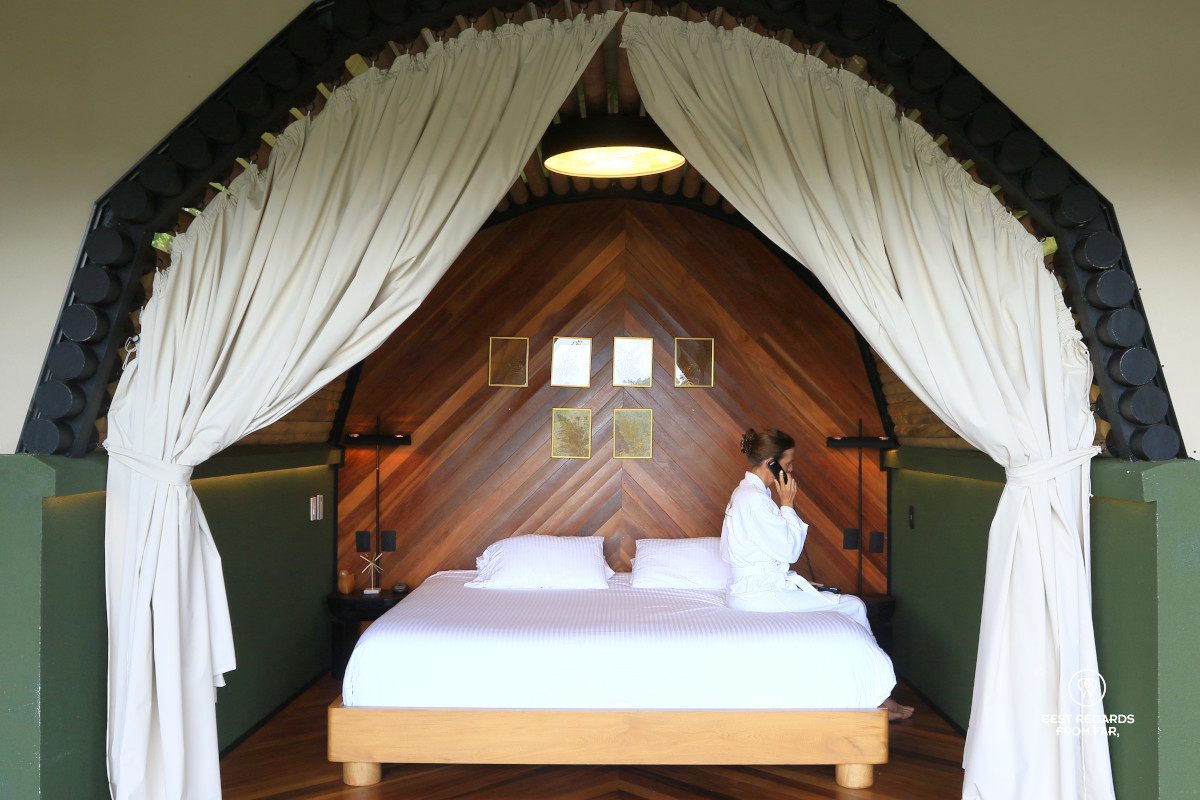
The sound of crickets and tree frogs slowly fades away. Waking up slowly, I open my eyes and notice the nearby silhouettes of the trees bordering the lake becoming more distinct as the light changes. Puffy clouds take on a warm hue, and I feel a gentle breeze on my skin as it passes through the tent, anchored on a steep slope plunging toward El Peñol Lake. Tropical birds begin their morning chant while noisy chacalaca’s, arguably Colombia’s loudest birds that double as alarm clocks, settle on a nearby branch. Not quite ready to leave the comfortable king-size bed, yet eager to fully take in the serenity of this place, I move to the open veranda next to our private pool for a meditation session, focusing on the emerald waters, birdsongs, and my breathing. It is not often that one wakes up like this, in such bliss, emerged in both nature and comfort.
Perched above El Peñol Lake, less than 80 kilometers (50 miles) from Medellin, Bosko is not simply a place to stay but a place to rethink how landscapes, low-impact architecture, and solitude can coexist in one of Colombia’s most visited regions.
Like it? Pin it!
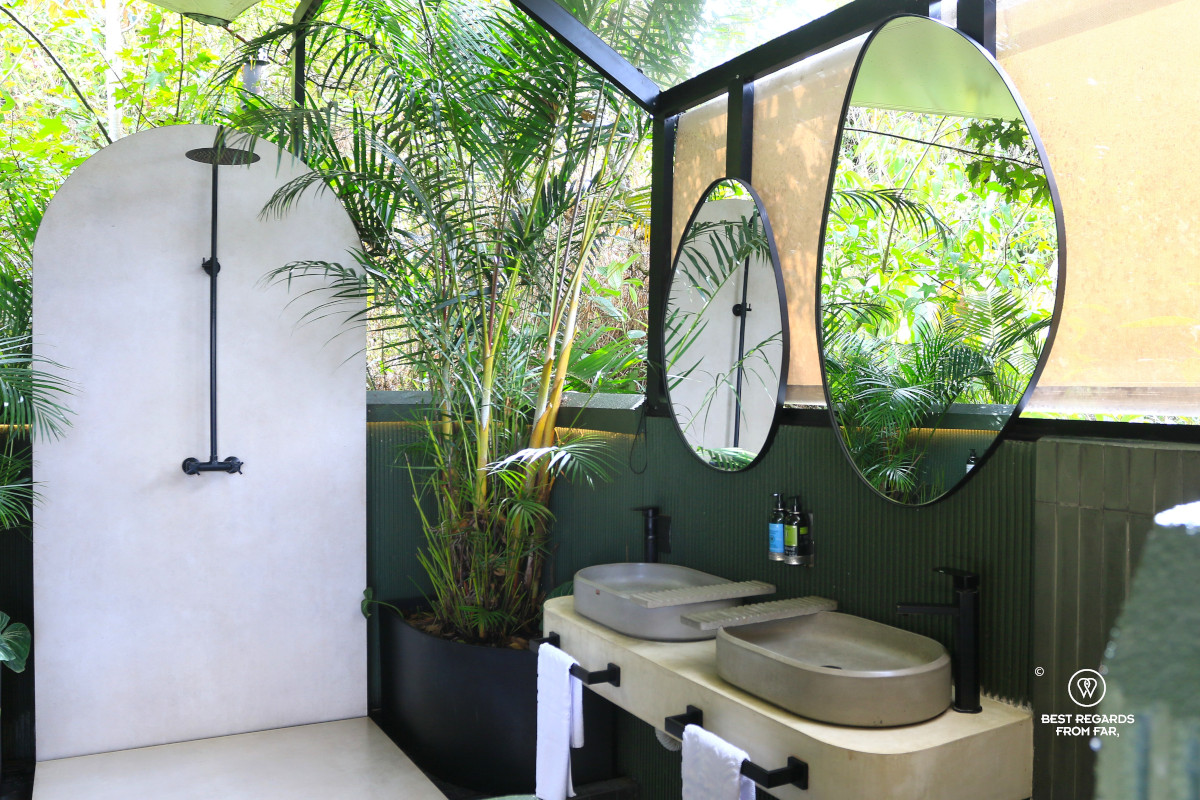
I break the silence of my meditation by switching on the kettle, then rinse off under the outdoor rain shower, inhaling the subtle perfume of flowers that surround our presidential mush-room, as the luxurious tented accommodation at Bosko is called. Soon the scent of freshly brewed Colombian coffee fills the space while we quietly lay out our plans for the day, still reluctant to disturb the peaceful morning.
El Peñol Lake: A Transformed Landscape
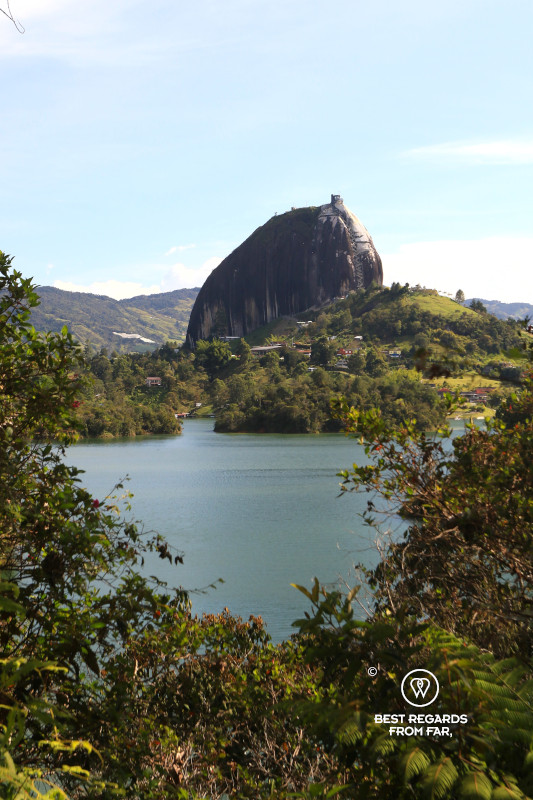
Despite its tranquil appearance, El Peñol Lake is a man-made body of water, created in the 1970s as part of one of Colombia’s most ambitious hydroelectric projects. Covering approximately 2,200 hectares (5,436 acres), the reservoir remains a key contributor to the country’s energy supply and has fundamentally reshaped the geography of the region. Hilltops became islands, valleys and villages were submerged, people displaced, and a new relationship between water and land had to be established, one that continues to define local life and tourism today.
The name of the lake is derived from the Peñol de Guatapé, a massive granite monolith that sticks out a vertical 200 meters (656 feet) from the otherwise lush and hilly landscapes. Considered to be sacred to local indigenous tribes that inhabited the area before the arrival of the Conquistadors, it can be climbed today as staircases have been bolted in. While climbing the monolith is the objective for most visitors of the region, a stay at Bosko makes it hard to trade the serenity of this place for a view shared with hundreds of people.
Choosing Stillness Over the Bucket List
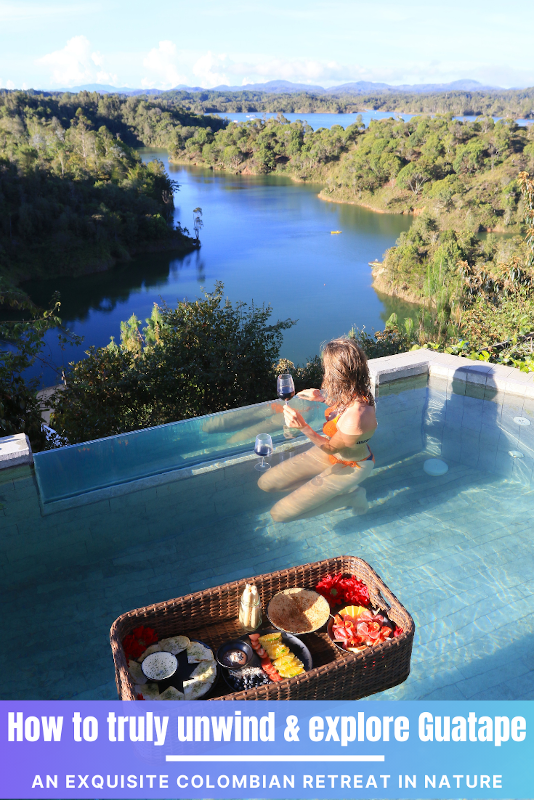
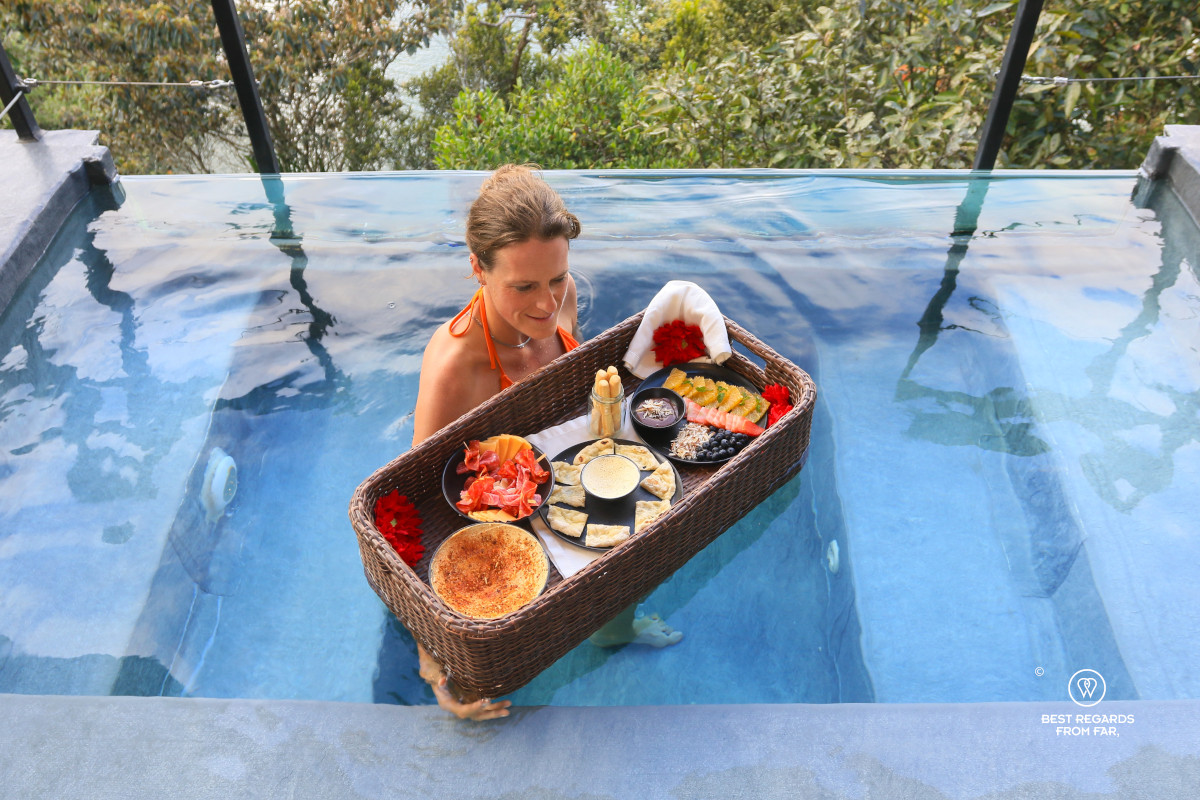
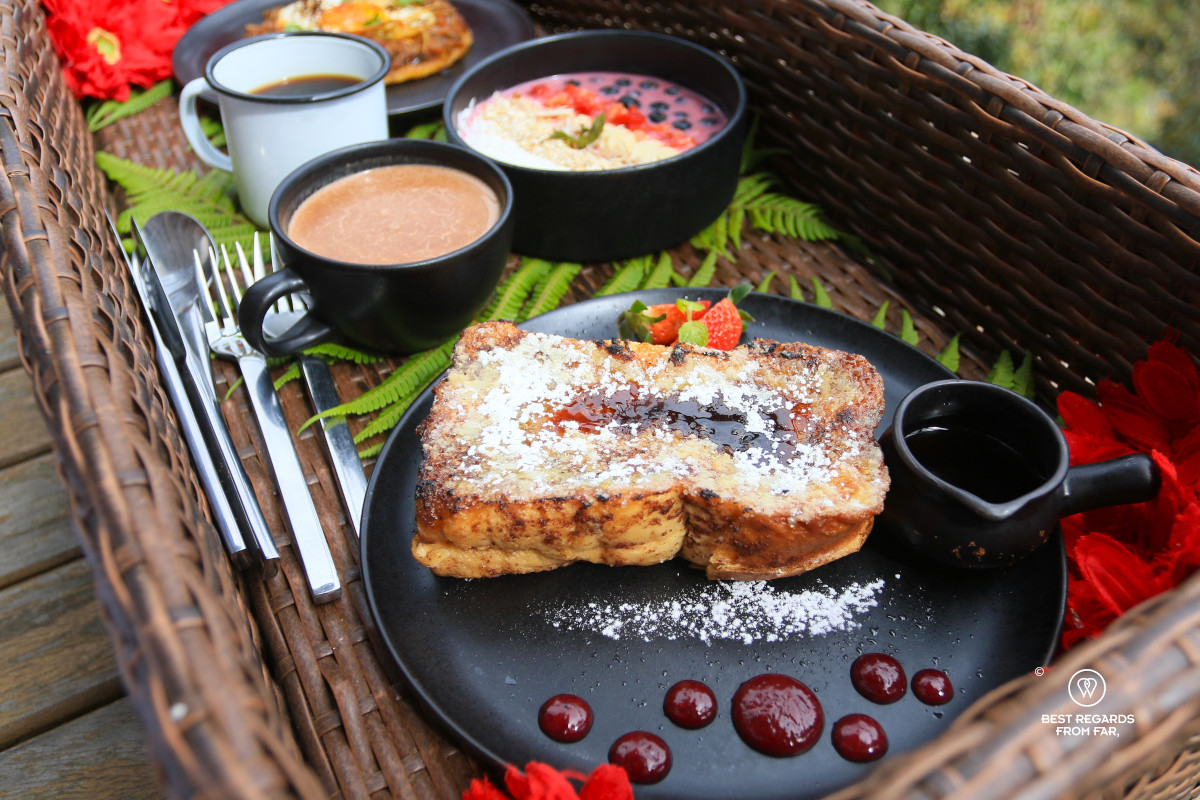
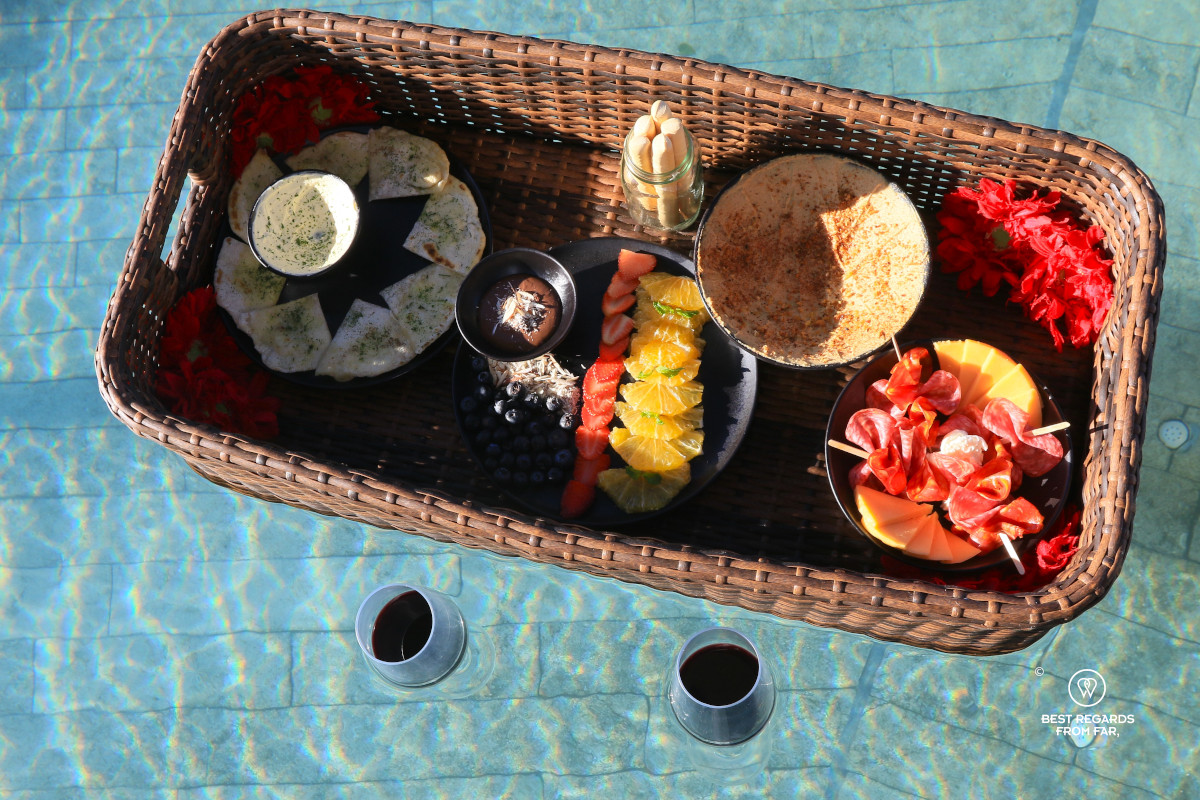
While day-trippers queue for panoramic views atop the Piedra del Peñol, life at Bosko is lived at a much slower pace. A soft knock announces the delivery of our breakfast… One that we would not have wanted to miss. A floating tray with a mix of savory, sweet, and fruity dishes decorated with tropical flowers and served with a thermos of fresh and thick Colombian hot chocolate and coffee is being lowered down into our warm pool. Sitting half-submerged, overlooking the lake, the delicious and beautifully presented breakfast turns into a true feast for all our senses and an unforgettable experience.
It is just an easy stroll down to the pontoon where our kayak awaits. With our cameras in the dry bag, we paddle out to explore the lake. The water is calm, and the banks teeming with birdlife. Wild orchids reflect themselves in the lake with their delicate blossoms just inches above the surface.
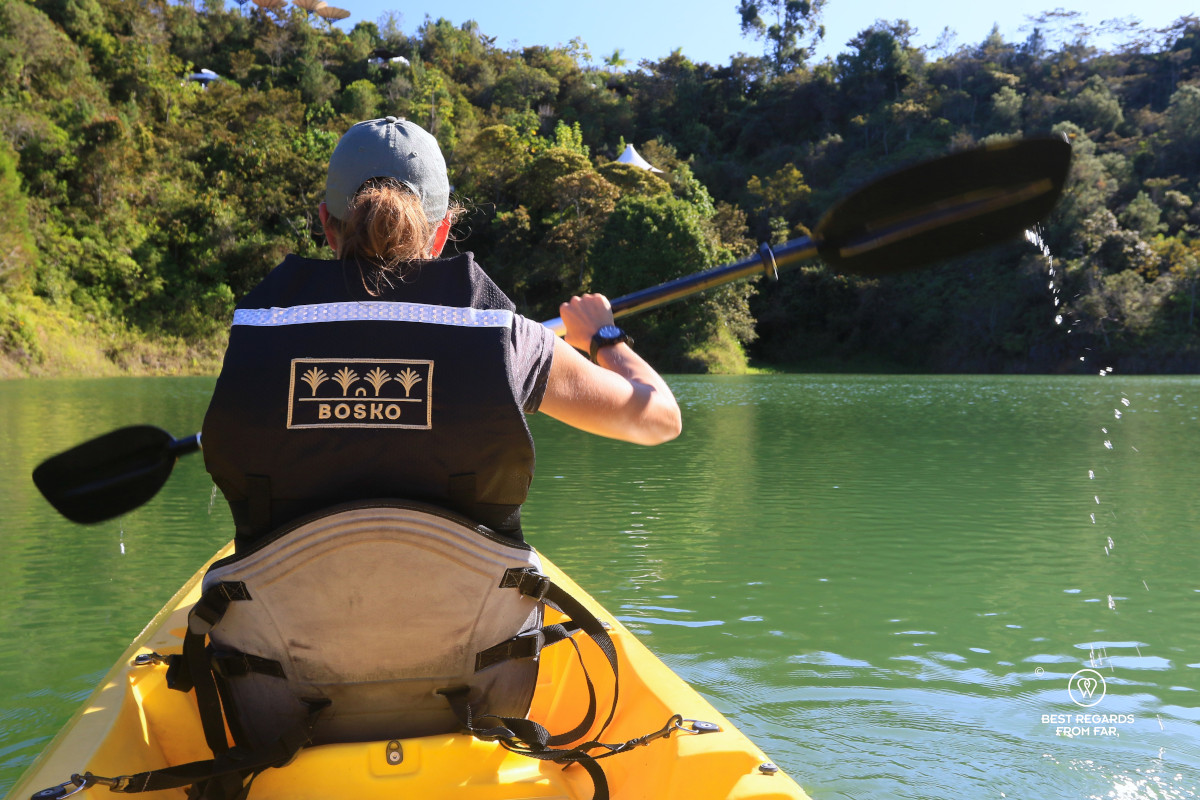
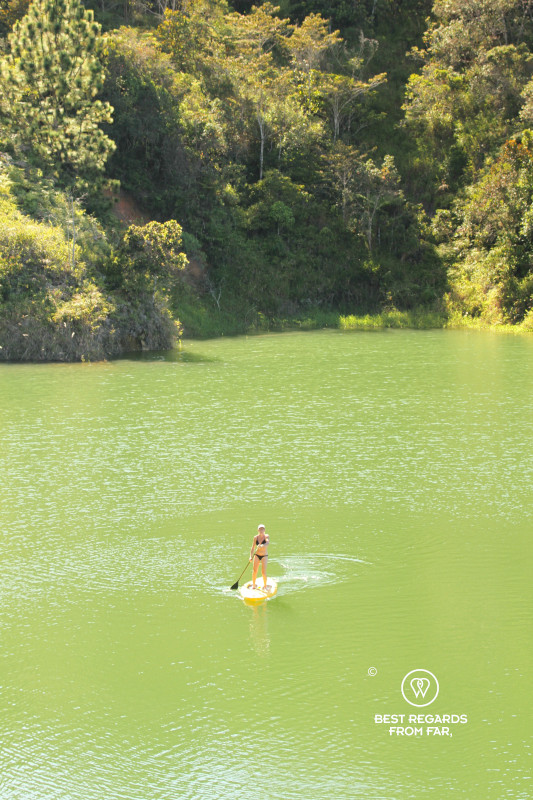
As we venture further, the atmosphere changes. The noise of engines announces tour boats carrying day-visitors across the lake in bursts of screams and music. We follow a fish eagle flying from branch to branch. The raptor turns around and so do we, paddling back toward the peace and quiet that define the specific corner where Bosko stands on the Peñol Lake.
As we enter our room, two massage tables have been set up, a welcome reward after the morning’s paddle and the utmost restorative luxury.
Guatapé: Colorful Murals & Cobblestones
The Peñol Rock is not the only attraction drawing Colombians and international visitors to the region. The nearby small town of Guatapé, founded in 1811, appears to be one of the most photogenic towns of Colombia along with Barichara and Salento.
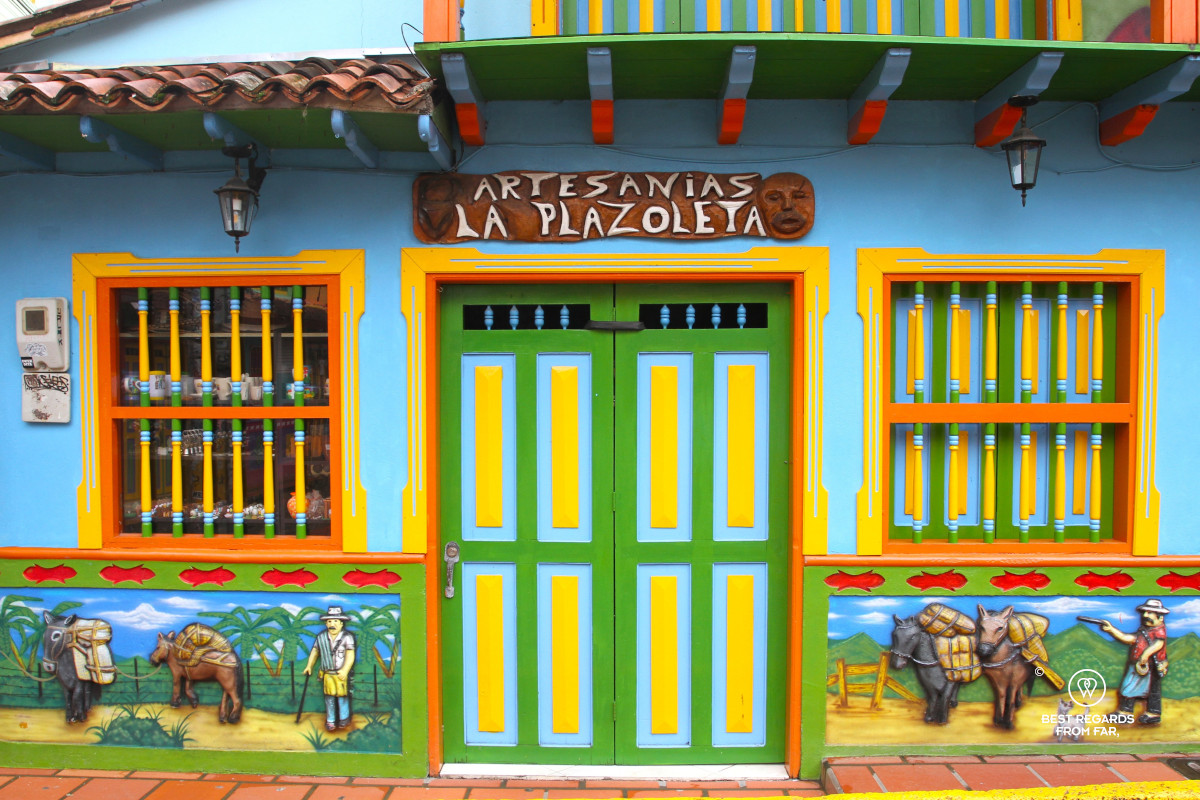
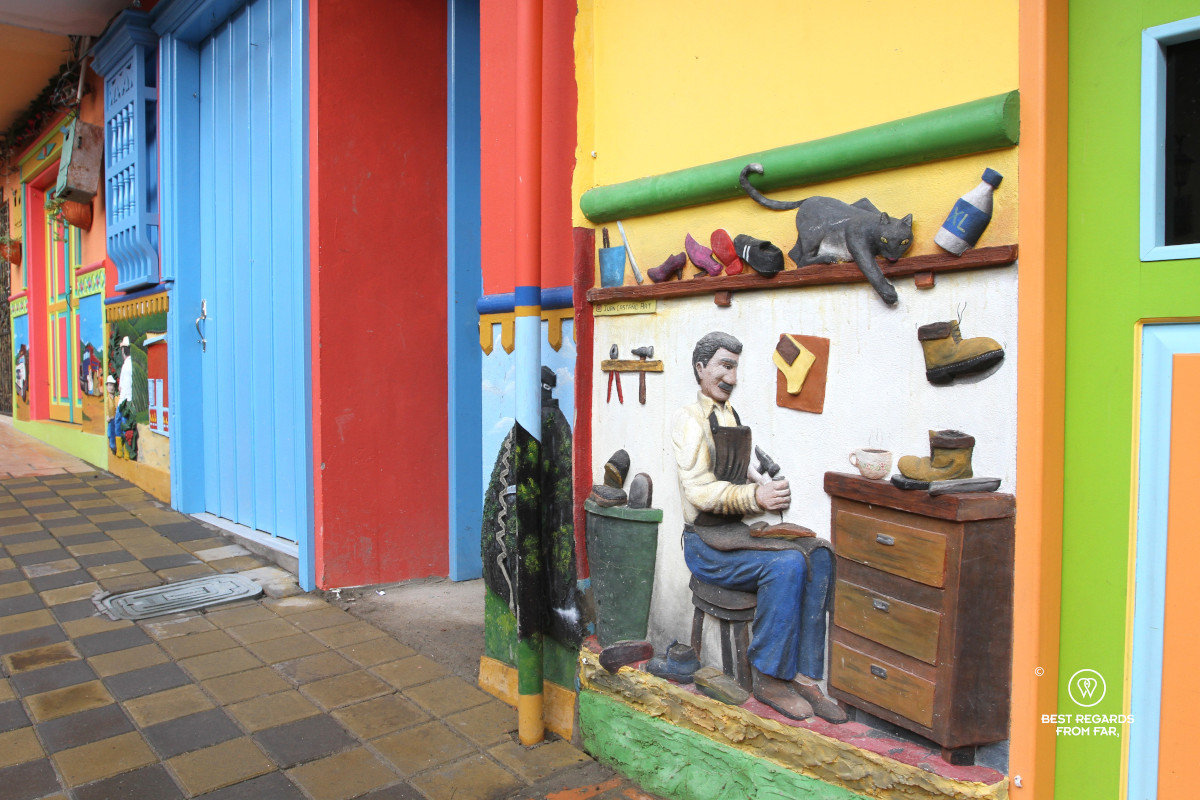
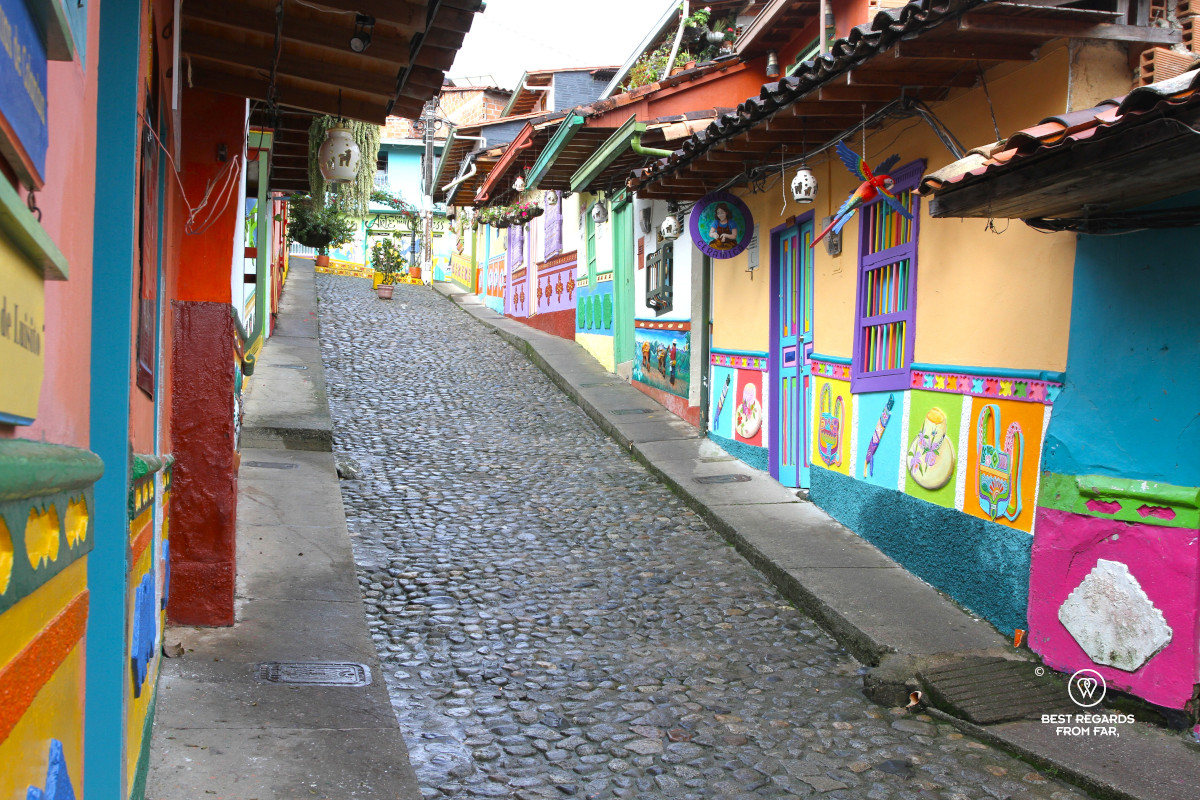
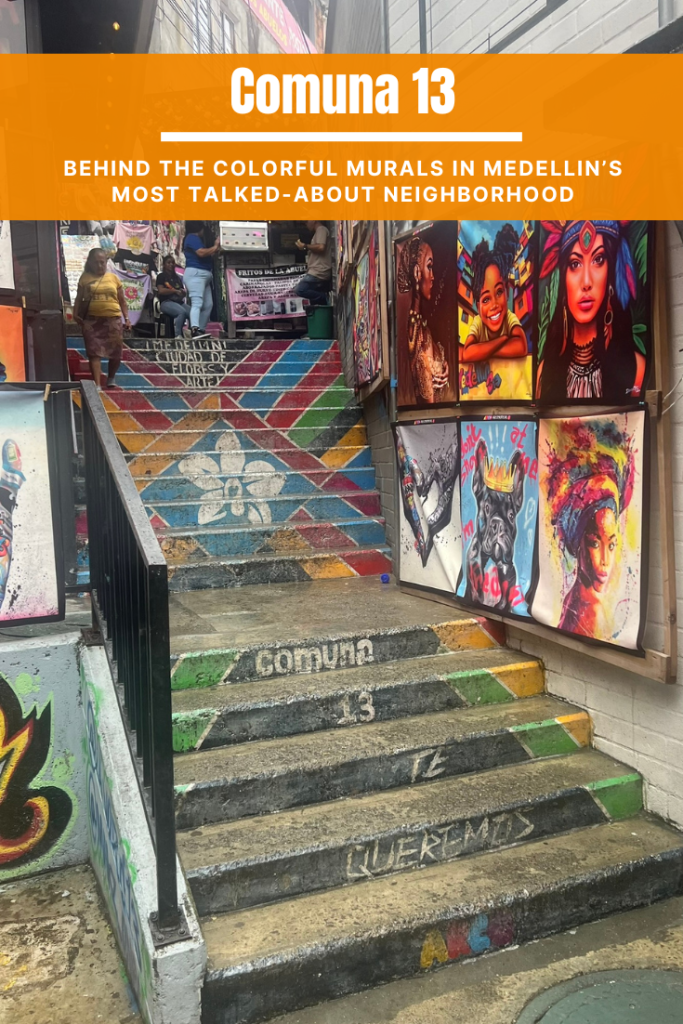
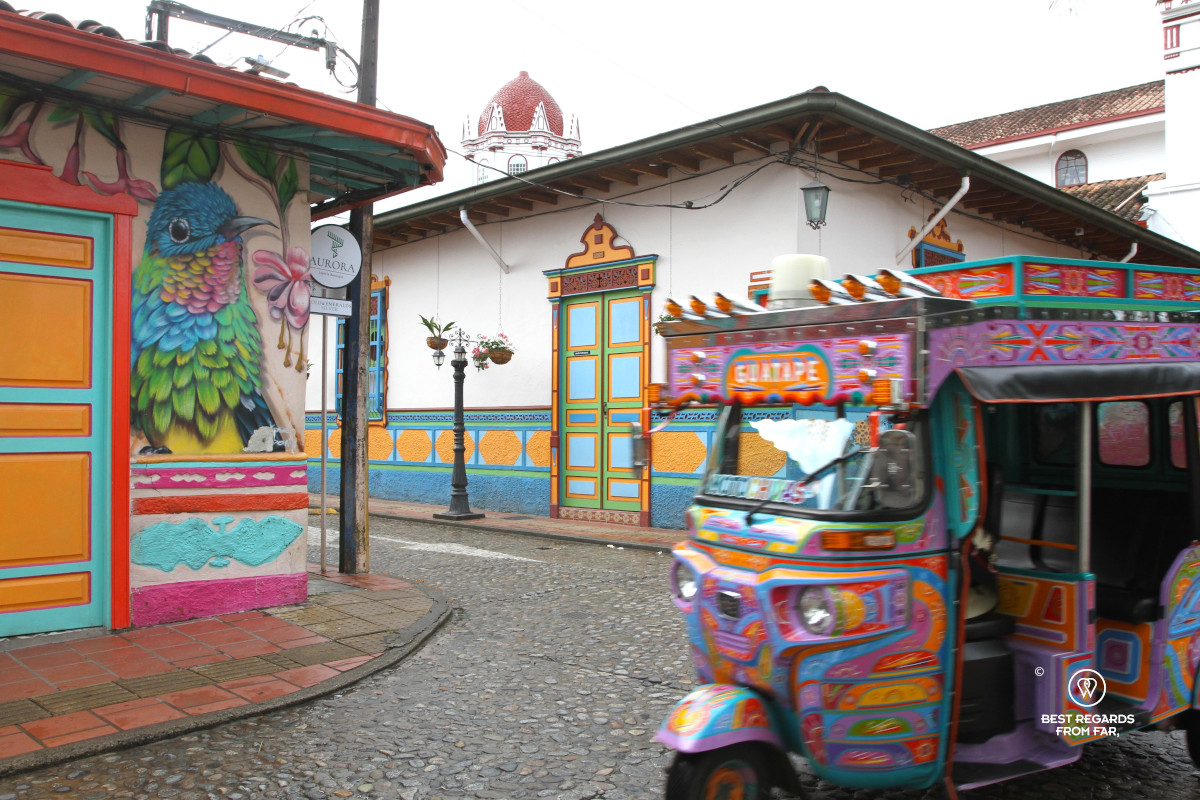
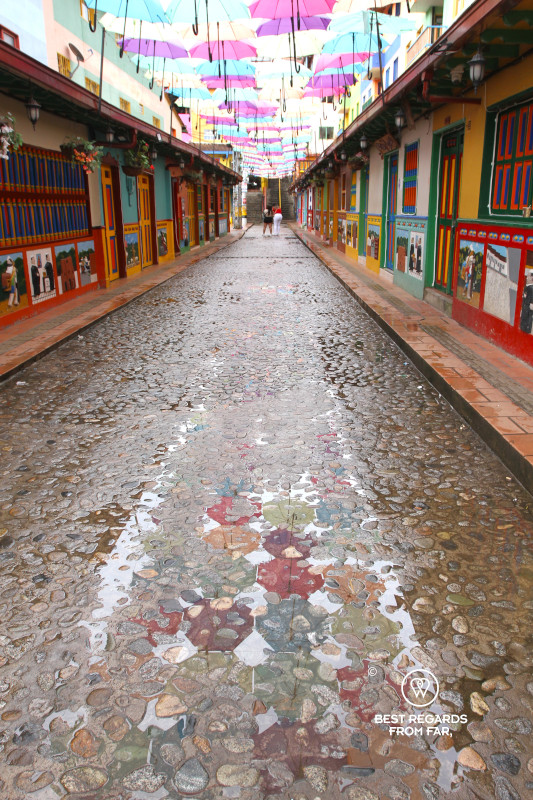
Flashy tuk-tuks transport tourists between cafés, plazas, and viewpoints on bumpy cobblestoned streets. Guatapé is famous for its unique zócalos: vividly colored, three-dimensional murals adorning the lower halves of buildings throughout the town. Dating back to the early 20th century, these high relief panels depict scenes of local life: agriculture, wildlife, religious motifs, and historical narratives, and function as both decoration and storytelling. Entire streets are covered as they smoothly interconnect with one another. The details are striking and fun to observe. Most façades of Guatapé are imaginative and even colorful umbrellas cover some streets for an extra joyful atmosphere.
While Guatapé thrives on its visibility and color, Bosko remains surprisingly discreet, only a five-minute tuk-tuk drive away, yet worlds apart.
Returning to Bosko
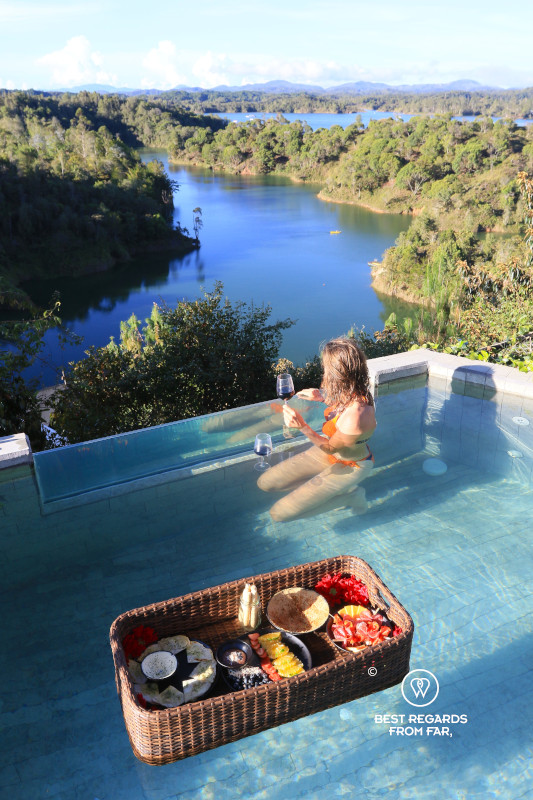
Back at Bosko, we enjoy the sky pools overlooking El Peñol Lake. Another floating tray comes in, this time with strawberries, blueberries, oranges with a thick local chocolate dip on one side, hummus and fluffy warm flatbread, cold cuts, and cheese on the other. A floating glass of red wine remains within easy reach at all times as we take in the incredible view over the captivating lake at sunset. The light softens, bird calls change, and new scents rise from the forest. The serenity that defined the morning returns, this time even more contemplative.
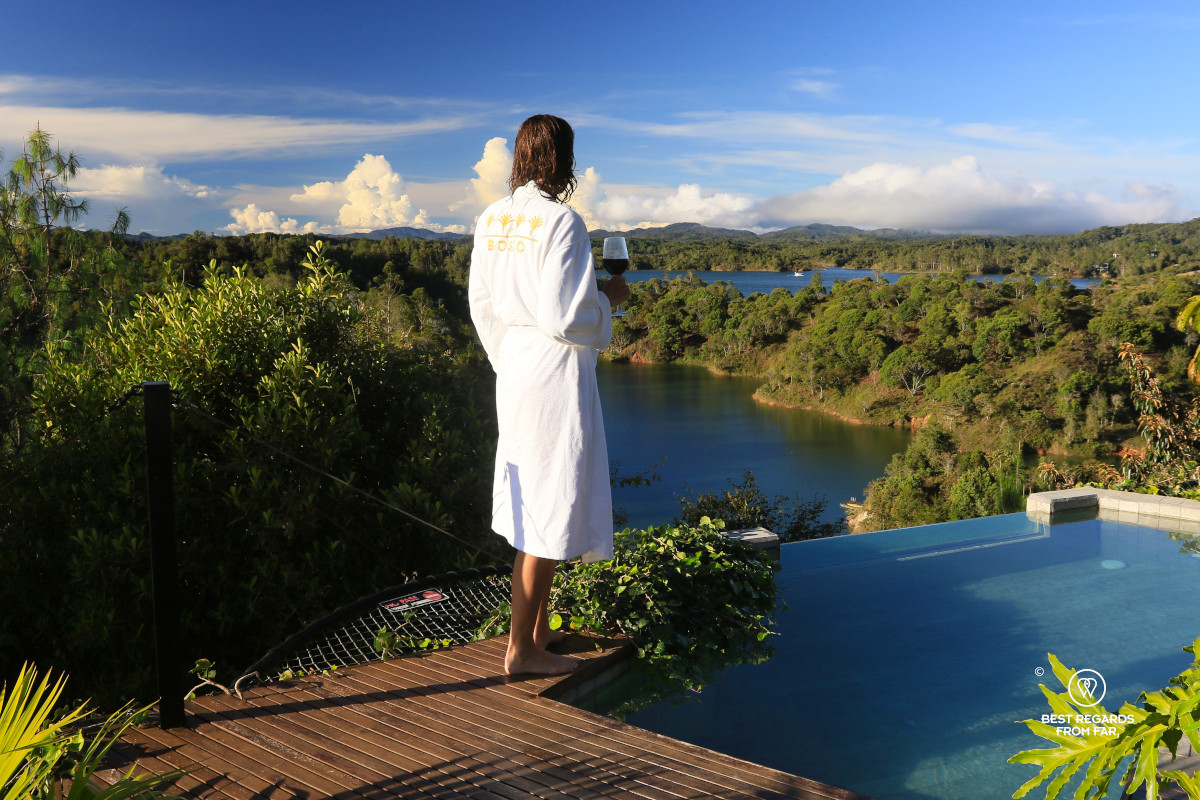
Back in the privacy of our suite, the light fades fast, the birds fall silent one after the other, and the lake settles into darkness only to reveal itself again with the glorious rise of the sun.
***
While hydroelectric projects completely change a place and displace local populations, they can also create opportunities. The area surrounding Guatape has managed to reinvent itself with some thriving ecotourism projects such as Bosko. Close to the second largest city of Colombia, it is a haven where a true reconnection with nature can take place.
Travel tips:
- To experience Guatapé and the El Peñol Lake in utmost luxury, make sure to book your room at BOSKO ahead of time.
- Check out this interactive map for the specific details to help you plan your trip and more articles (zoom out) about the area!
For more in Colombia, click on these images: