Text & Photographs: Marcella van Alphen & Claire Lessiau
Cape Town itself has so much to offer that it is sometimes hard to leave the city behind. Yet, its region, the Western Cape that encompasses the famous South African vineyards, offers endless experiences in a stunning nature, best enjoyed from gems of accommodation for a nice getaway. Only an hour and a half from Cape Town, Wellington, here we come!
Like it? Pin it!
Day 1
With a warm breeze on our skin, we leave Cape Town behind on our pistachio green 300cc Vespa. With every kilometre on our two-wheeler, the city makes place for wide horizons and vineyards while the Hawequa Mountains seem to rise taller as we are getting closer. There is something about riding rather than driving that sharpens the senses. Distance becomes something we feel rather than we measure, and stopping seems easier.
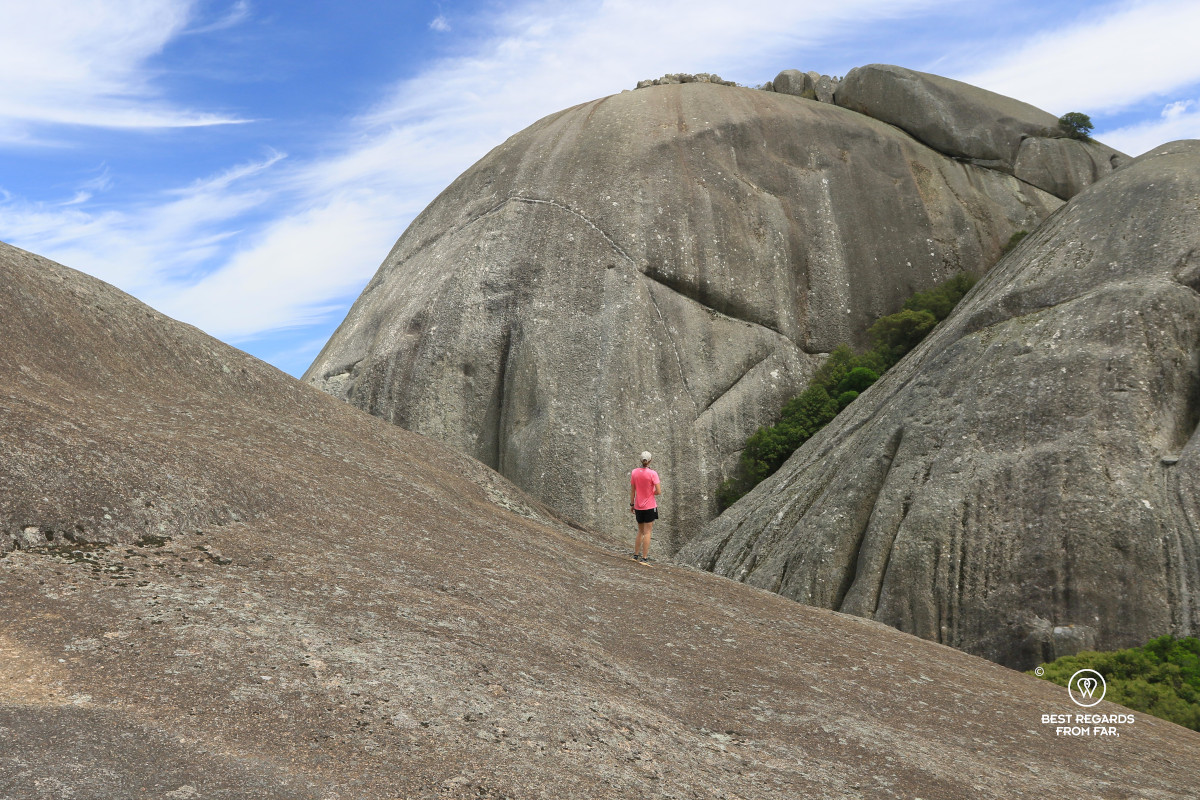
Our stop for the morning is Paarl Rock. Founded in the late 17th century, Paarl is one of South Africa’s oldest settlements, known for its monumental granite outcrop that somewhat reminds us of a small version of Yosemite’s famous Half Dome. Afrikaans is the predominant language here with 85 percent of its population speaking it, and the farming culture still goes strong with mostly vineyards, orchards with apples, pears and peaches, olive groves, and small-scale livestock farming. Higher along the slopes, the fynbos grows in abundance.
Hike to the Top of Paarl Rock
After just 40 minutes of cruising, we park at the trailhead to Paarl Rock in a residential street shaded by trees. Views get better as we make our way up through the fynbos with blooming protea flowers to a shady picnic area near the Meulwater Botanical Garden. Soon, the trail leads us straight onto the rocks. We keep following the trail markers of painted footsteps over the granite slabs that capture the heat of the late morning sun.
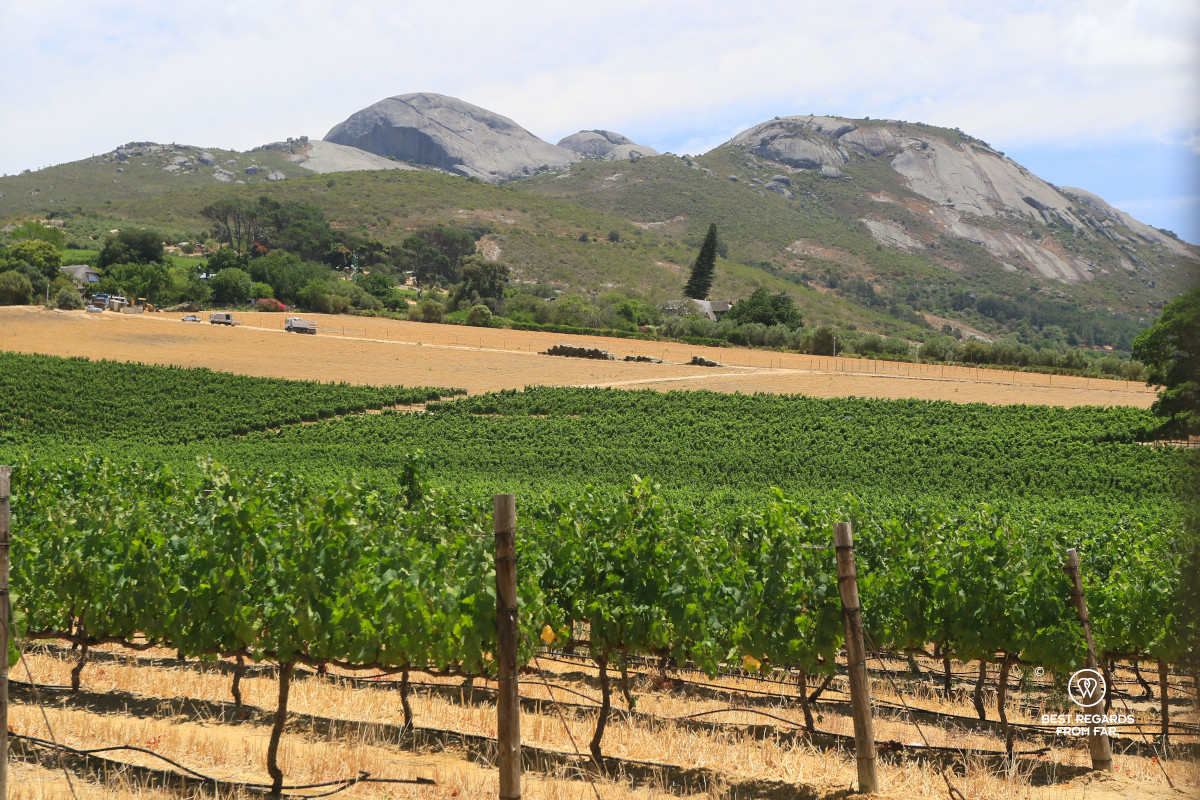
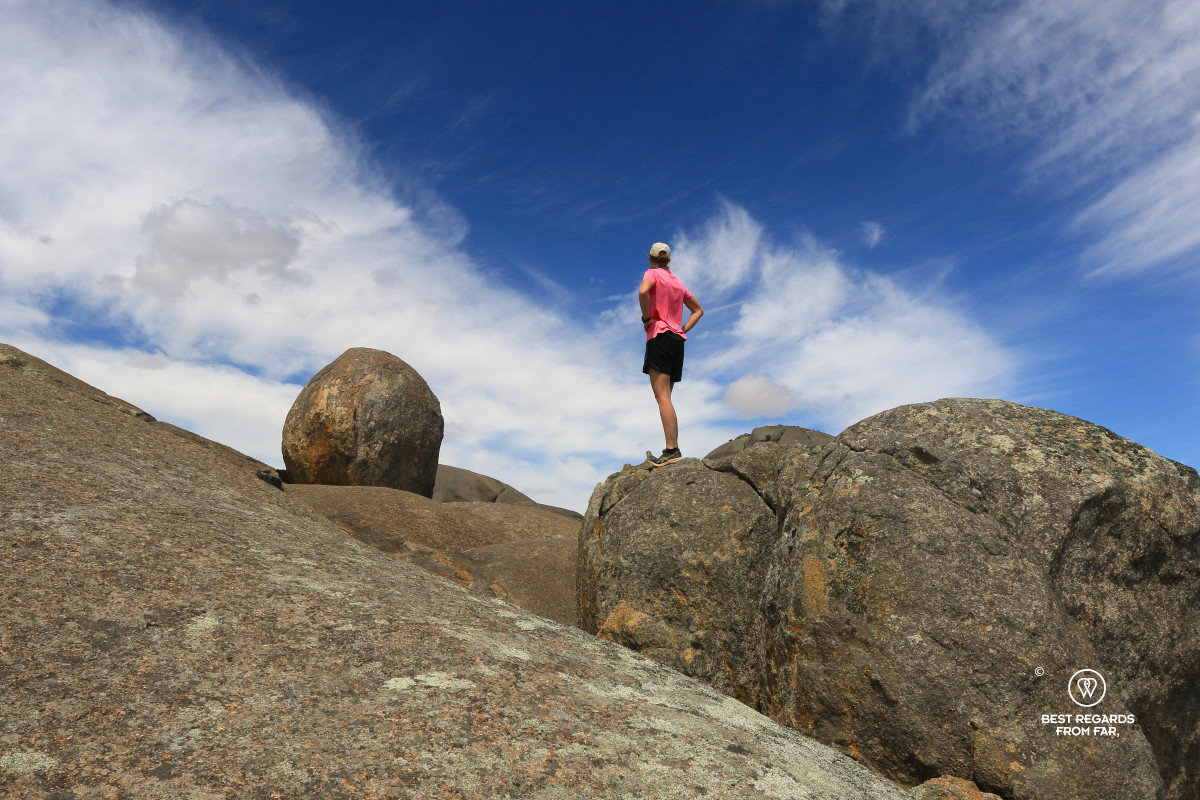
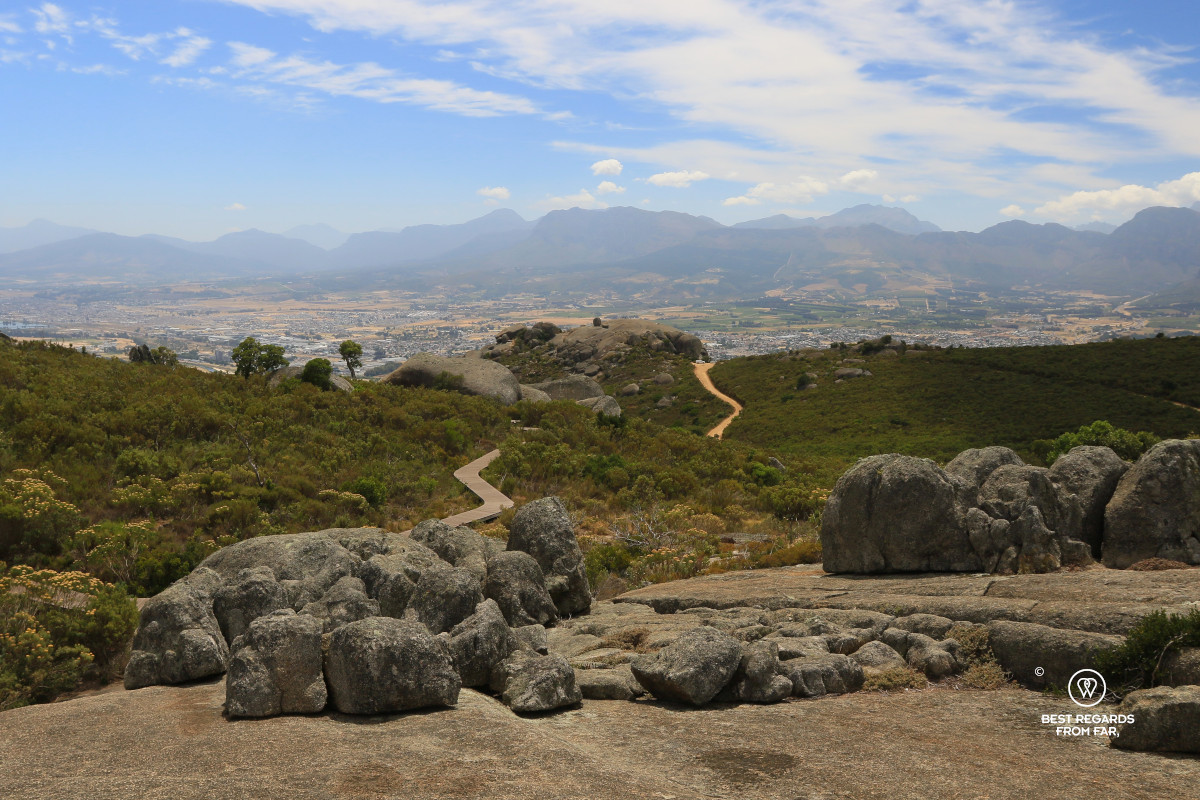
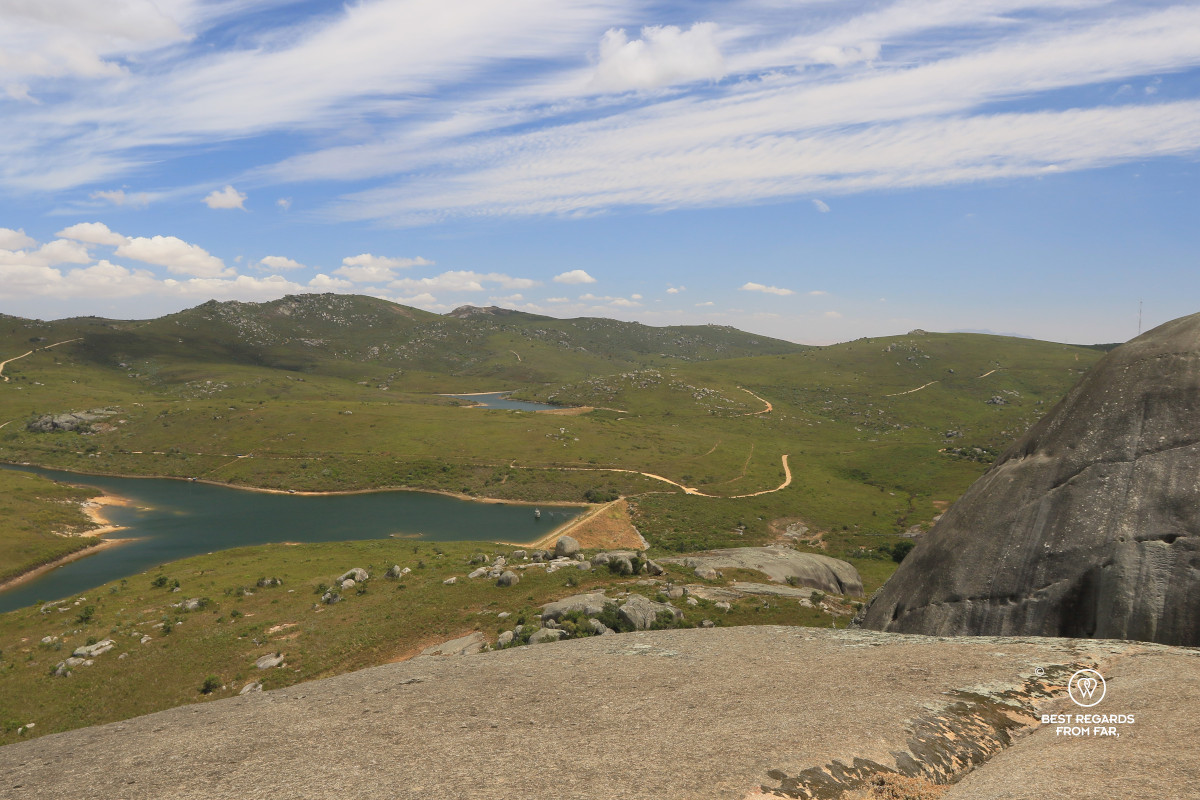
At the top, the reward is a patchwork of vineyards and fields stitched over the valley floor with the Berg River winding through. The distant silhouette of the Hawequa mountain range that we will also explore during this getaway looks inviting.
Pushing further to the top of the nearby Bretagne Rock which is even more fun to summit, with the chain-link railing adding a thrilling touch reminiscent of Half Dome. The name of the rock recalls the Huguenots, these French Protestants who were fleeing the religious wars and who have set up the wine industry in South Africa. From the summit of Britannia Rock, a non-obstructed 360-degree panorama rewards us: on one side, the lakes of the Paarl Mountain Nature Reserve surrounded by the fynbos, while on the other side, the agricultural landscape of the sun-drenched Paarl Valley.
The return hike along the same way is smooth and quick and we eagerly hop onto our Vespa to move to the next destination a short 20-minute-ride away.
Staying in Luxury at Val du Charron Wine Estate
From Paarl, we head to the Val du Charron wine estate in Wellington, our home for the next two nights.
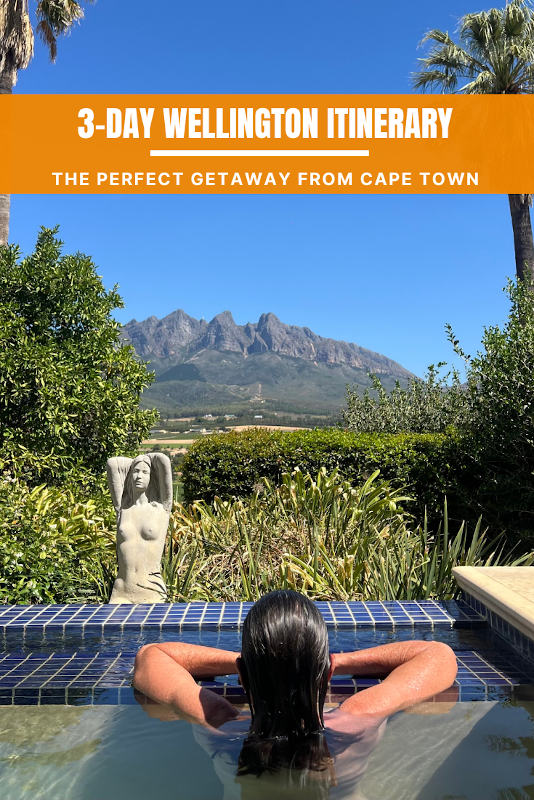
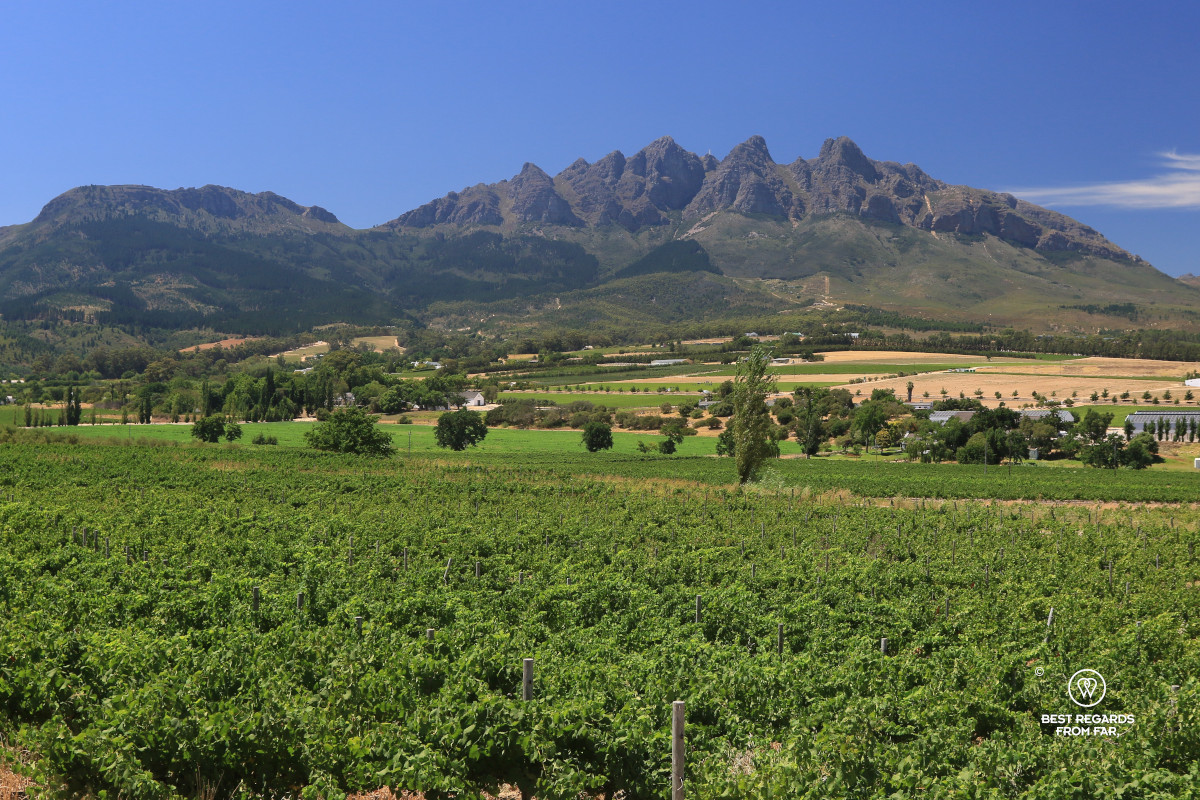
The domain combines French heritage with captivating South African storytelling. The once wagon maker’s shed has been converted into the Coach House, a luxurious accommodation with private pools and unbeatable views on the dramatic Hawequa Mountains. In this rugged landscape that used to be roamed by wild animals, the wagon maker’s shed was an important stop for many Boers before they continued their Great Trek across the mountains looking for new farmland, fleeing from the British rule of the Cape.
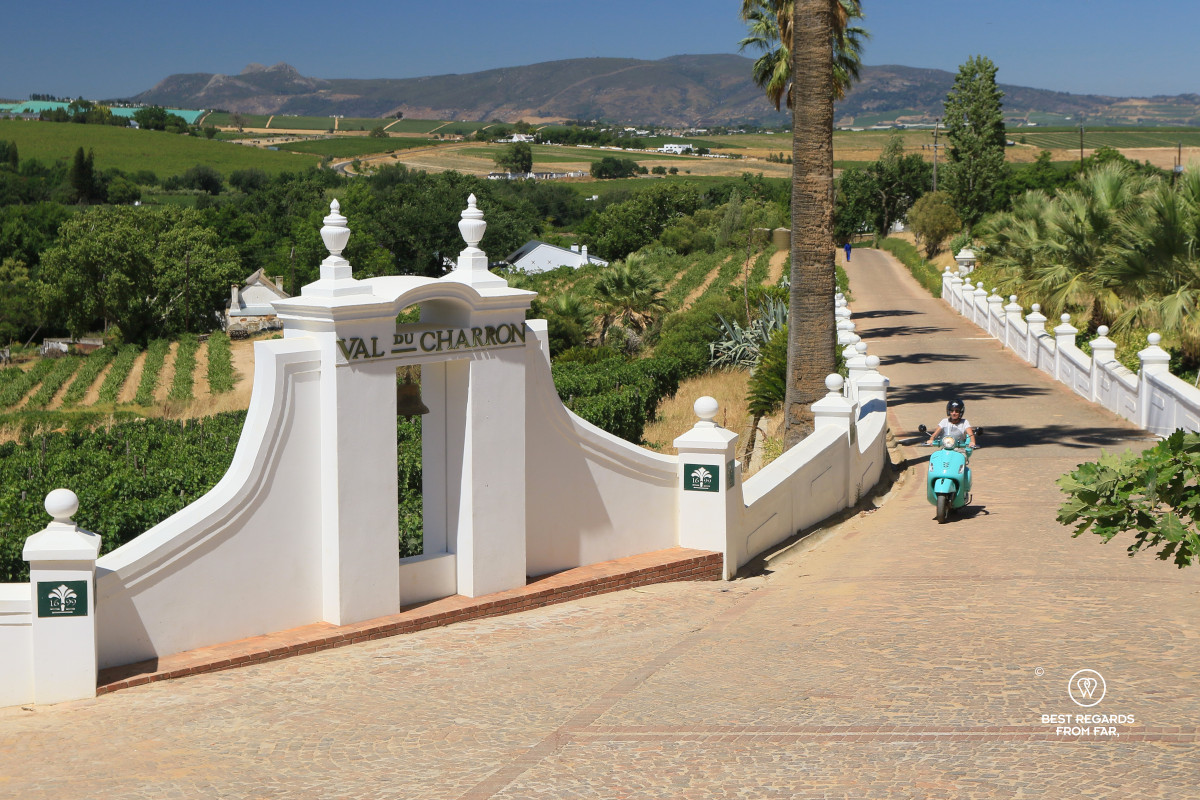
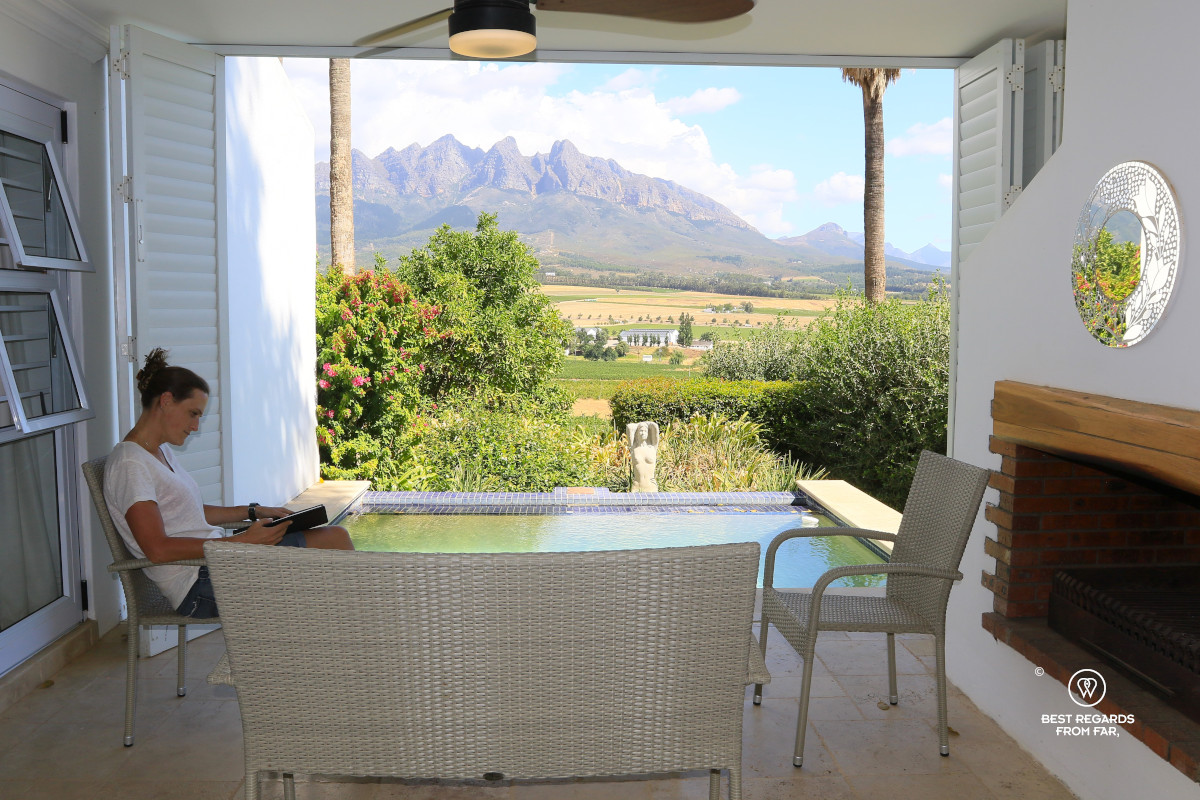
We reflect on South Africa’s vibrant history from our private pool overlooking the vineyards towered by some of the last folds of the Cape Fold Belt. The refreshing dip allows us to escape the heat of this summer day before Val du Charron’s wine tasting that seems a must while staying on a wine estate.
More than Wine Tasting, Storytelling at Val du Charron
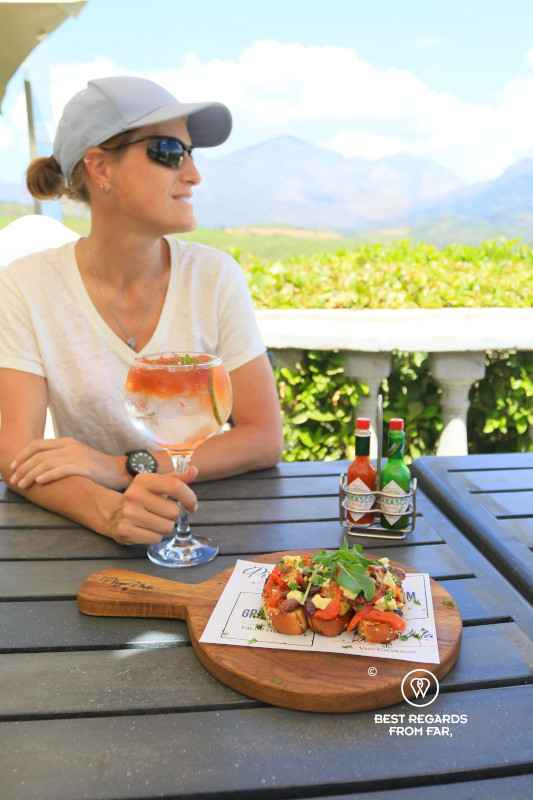
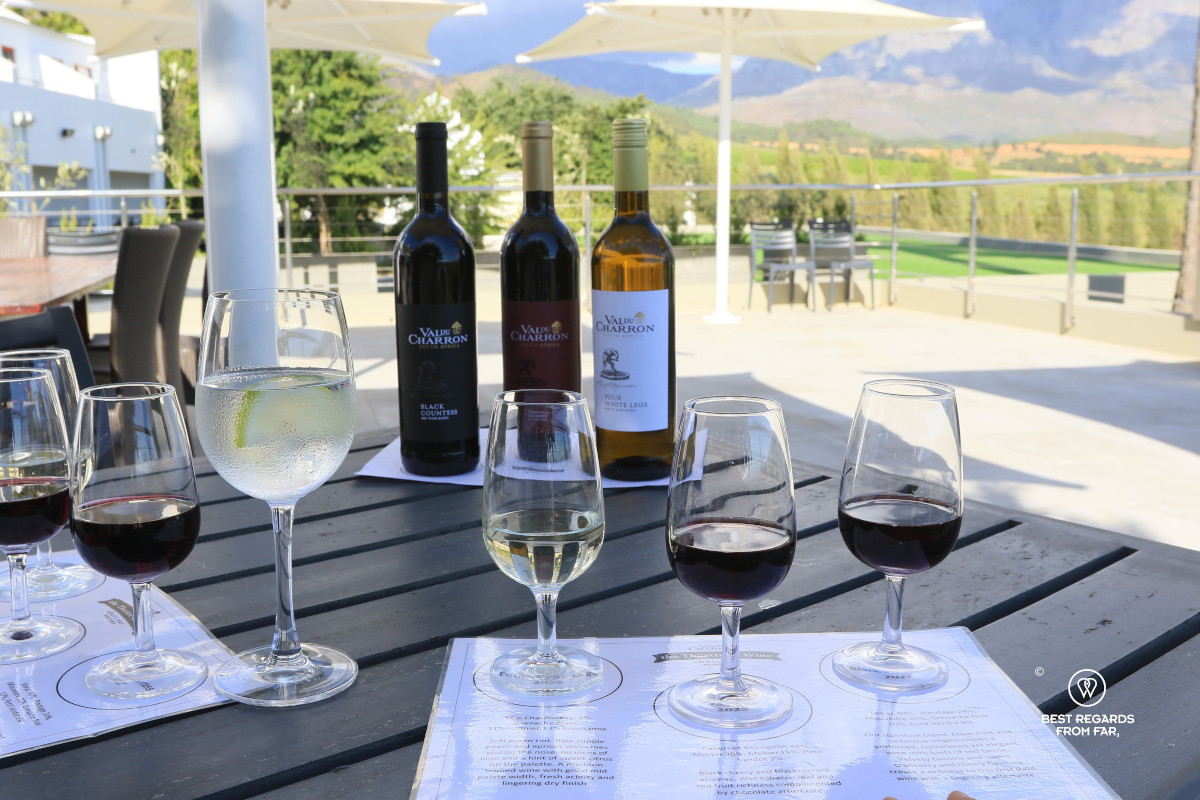
On the large terrace of the Grillroom restaurant, a table is set with the three flagship wines crafted at Val du Charron with grapes grown on the property. More than a tasting, the story behind each wine is compelling and brings the region and its pioneers alive.
Four White Legs or Why the Bain’s Kloof Pass is haunted
A blend of Chardonnay (68%), Roussanne (13%), Viognier (11%), and Grenache Blanc (8%), the white wine is softly green-tinted, with ripe peach and apricot on the nose, hints of lime on the palate, and a lingering dry finish. Maybe the story behind the wine is even more captivating than the medium-bodied, fresh, and quietly complex wine.
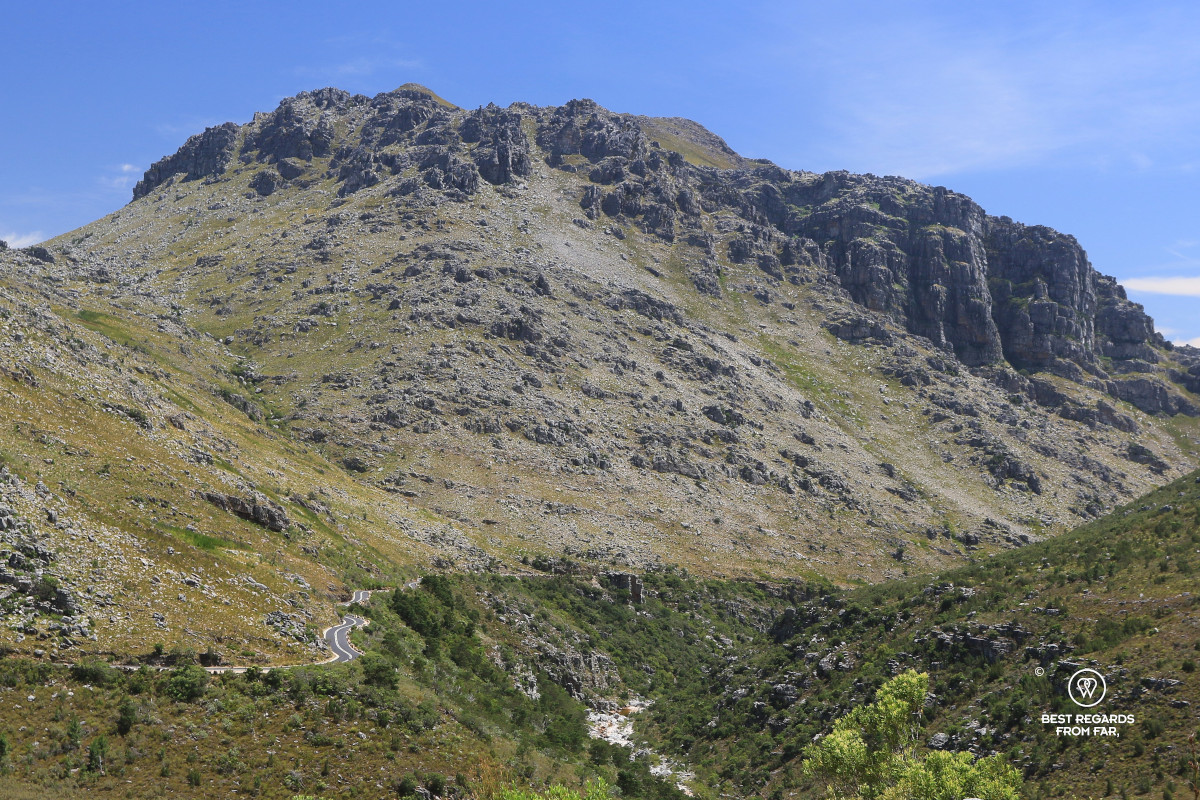
The Four White Legs traces back to the nearby Bain’s Kloof Pass. Built by Andrew Geddes Bain using convict labour in the 1850’s, the pass became a critical route between the interior of the Western Cape and its coast. As such, it was guarded by a toll gate.
An unusual exemption in the toll system allowed free passage for the horses with four white legs. Predictably, travellers whitewashed the legs of their horses to try and pass for free. Local legend has it that the toll keeper used to curse them all, and that the pass is cursed. Some say that to this day, on full-moon nights, they hear the sounds of the galloping of those horses that cheated the toll keeper, and they hear the ghosts of the convicts that constructed the pass, as many fell to their death.
Today, it is renowned as one of the most dramatic mountain passes of South Africa, and yes, it is on any worthwhile Wellington itinerary…
Erasmus, the womanizer
Named after Pieter Erasmus den Deen, this red blend (Cabernet Sauvignon 48%, Merlot 30%, Malbec 15%, Petit Verdot 7%) carries a different energy. The wine opens with black cherry and blackcurrant aromas, followed by wet tobacco leaf and red fruit richness, finishing with a subtle chocolate note. A wine with character for sure that seems to do justice to Erasmus himself –Dutch born, first owner of the farm (1699), and an incorrigible womanizer who must have had many stories to tell after a few of these glasses…
Erasmus’ spirit may be found in his 17th century wine cellar –now the family-friendly Pizza Vista restaurant. The original beams still show signs of their first owners while the outside terrace offers views over the vineyards and the Hawequa Mountains. A great location to take in the changing colours of the mountains as the sun slowly sets.
The Black Countess
Val du Charron’s signature blend —Shiraz, Pinotage, Mourvèdre, Grenache Noir, and Petit Verdot— is perfumed and elegant, yet grounded and resilient. Red berries, velvety tannins, and a lingering finish make this our favourite, and the story behind its label may be even better.
Named after Martha Solomons, the daughter of a freed slave, it is in her illegal tavern in the nearby township that she met a drunkard English man named Harry Grey in 1838. Enamoured, she followed him to only discover he was married with children. Harry convinced his wife to hire Martha as a maid. About a decade later, the wife finally succumbed to illness and the two got married. Only after Harry’s death did Martha find out that her husband, actually the Earl of Stamford, came from money. Martha became a countess, though she was never accepted by society. The Black Countess used her inheritance to start local farm schools, regardless of the children’s gender or race.
Day 2
Fynbos: Reconnecting to Nature & its Wild Intelligence
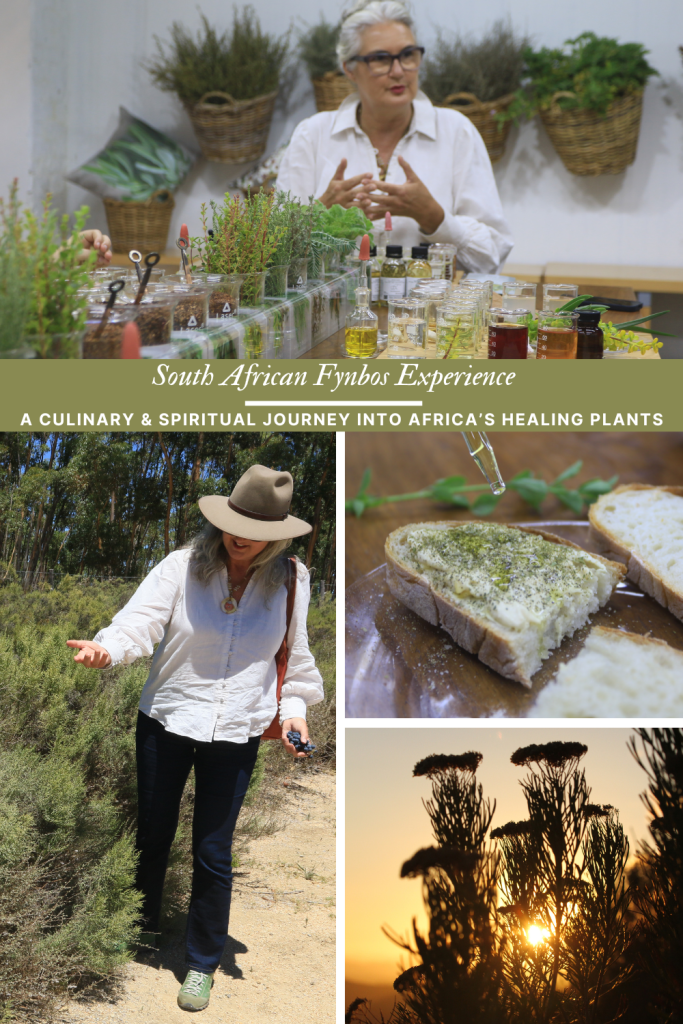
Sunrise bathes the slopes of the mountains in hues of pink and puts a spotlight on world’s most bio-diverse botanical wonder in terms of number and density of endemic species: the fynbos. Here the slopes are covered in this ancient vegetation rich in scents, colours, flavours, and healing properties. More than a plant biome and an important UNESCO World Heritage Site, these powerful tiny little plants with their superpowers offer a gateway to reconnecting with nature and our senses.
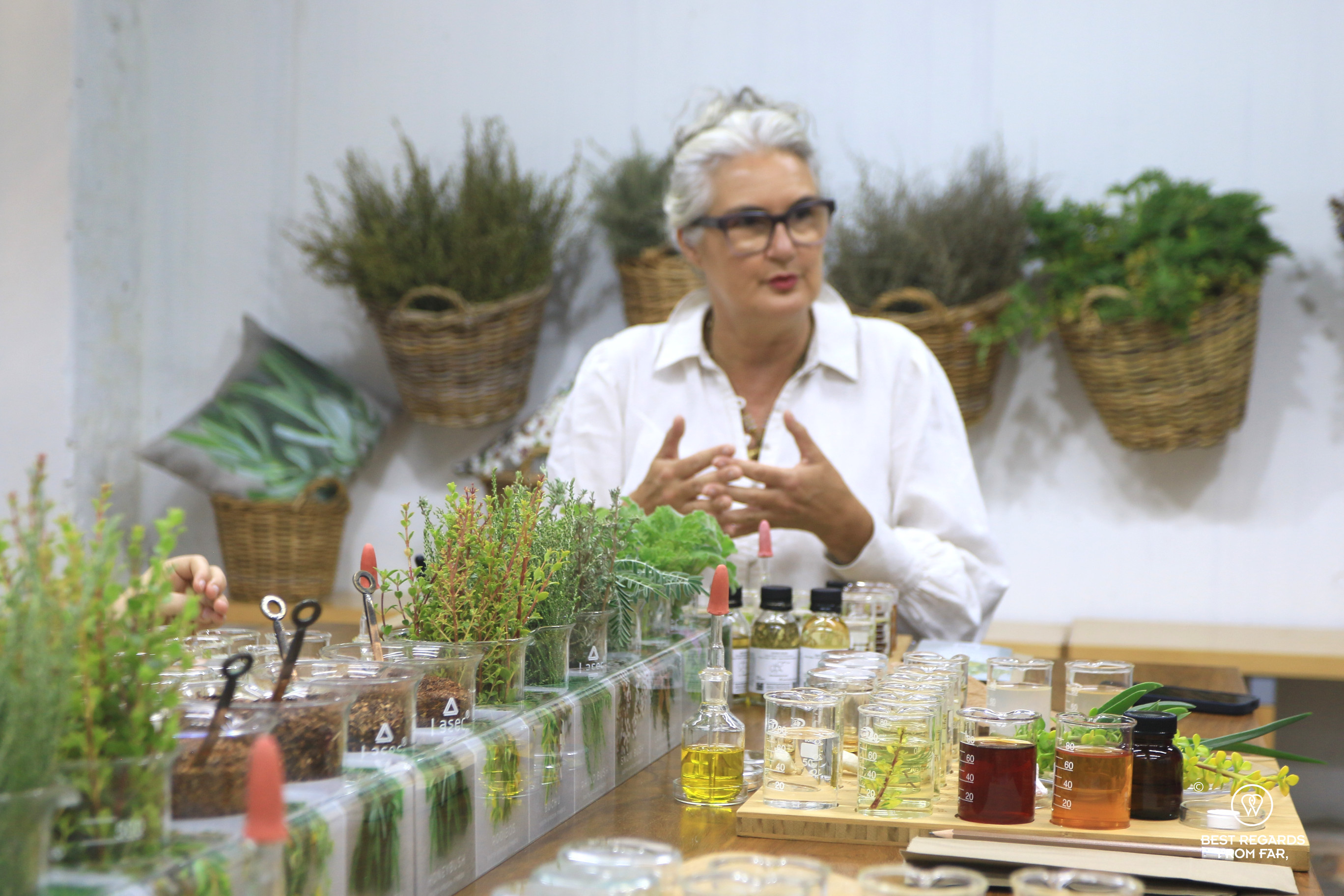
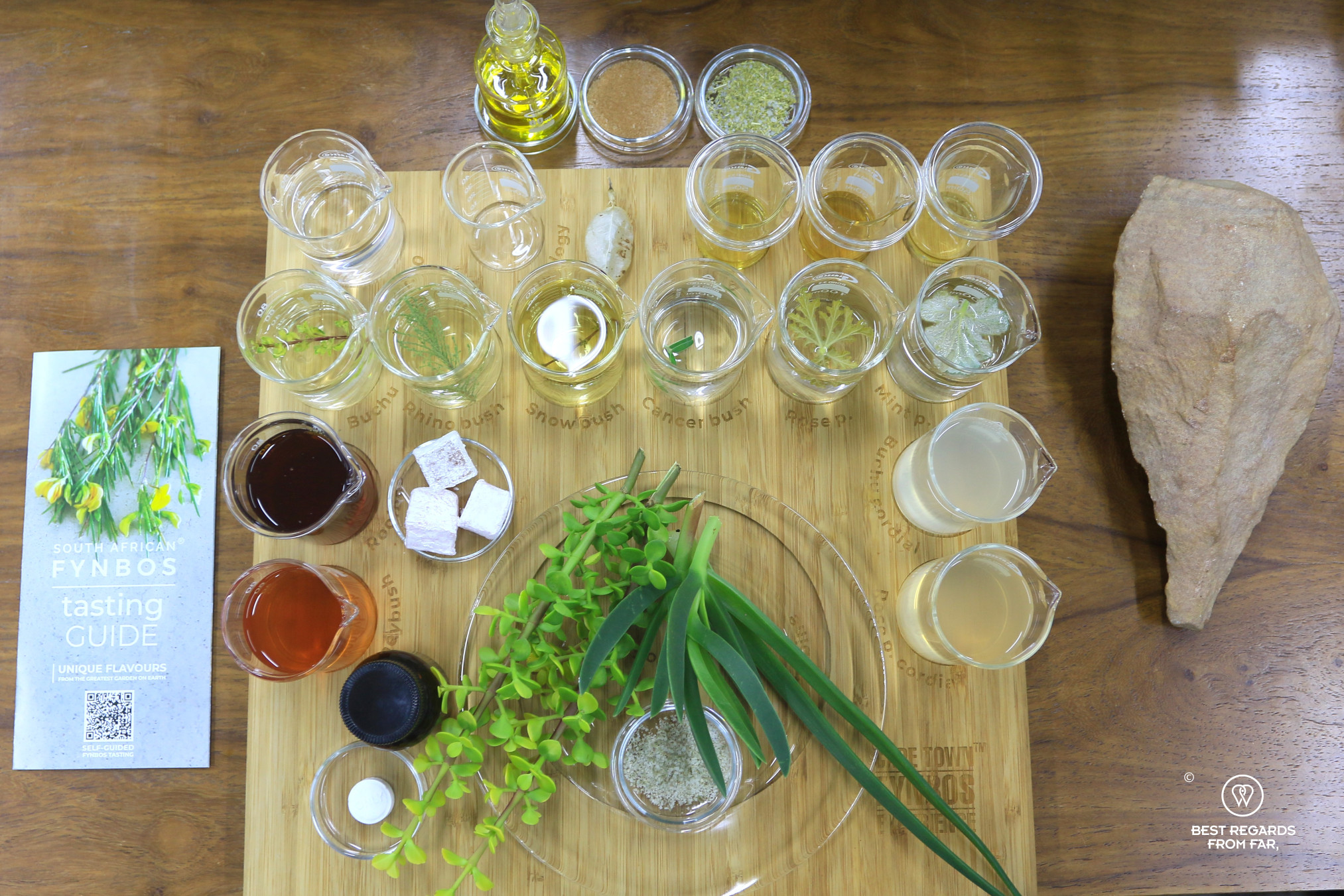
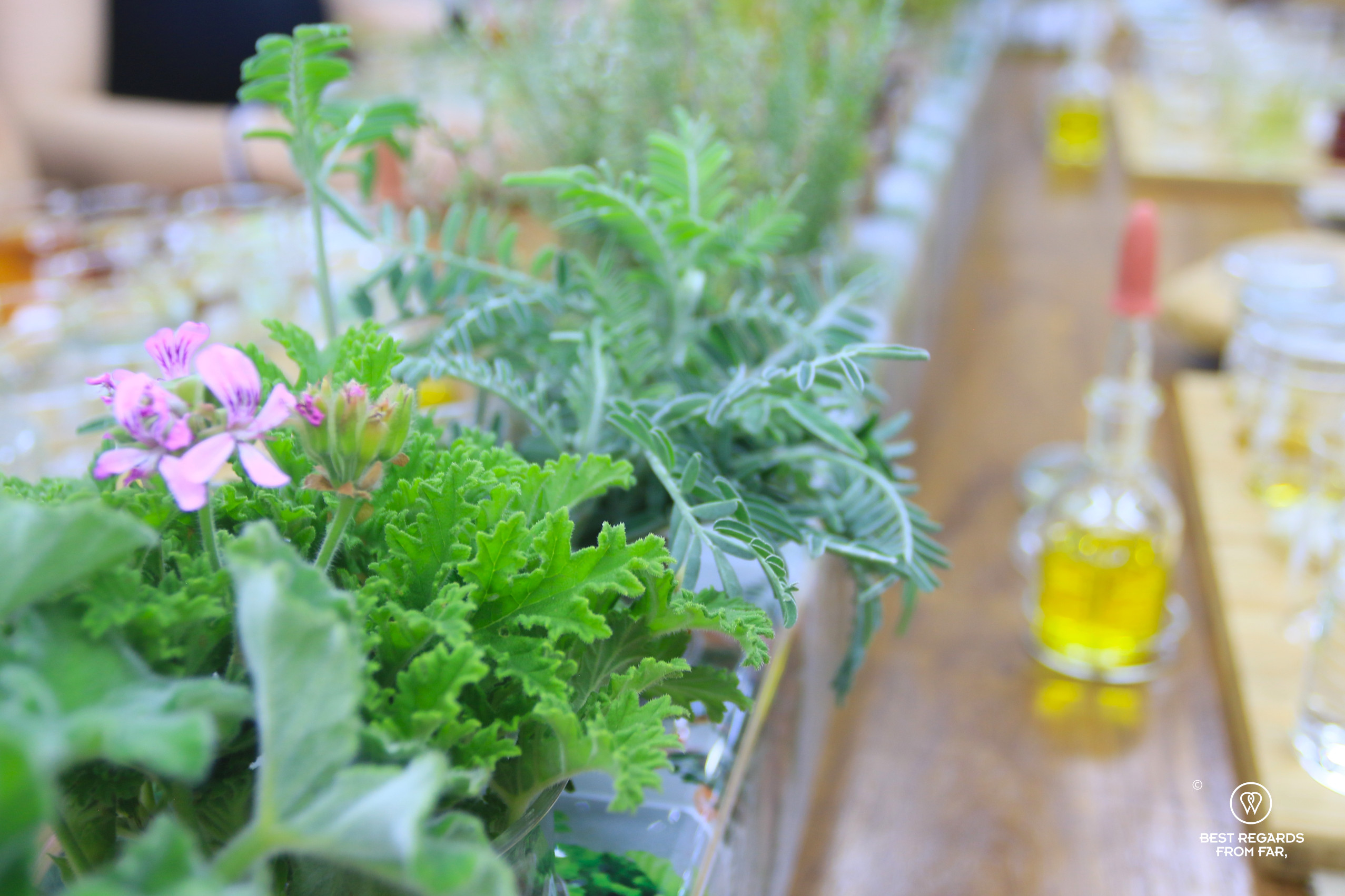
A short ride from Val du Charron, Giselle Courtney, founder of African Fynbos Experience, introduces us to this refined world that remains hidden for most. We taste different fynbos infused concoctions, each with their own healing properties, distinct flavour patterns and colours, and learn about how they all interact with each other.
We move into blending our own fynbos cocktails and conclude with an interactive lunch during which we experiment with different fynbos salts and herbs that Giselle has prepared to enhance the flavours of locally sourced biltong, fresh bread and butter, artisanal cream cheese, hummus and even chocolate!
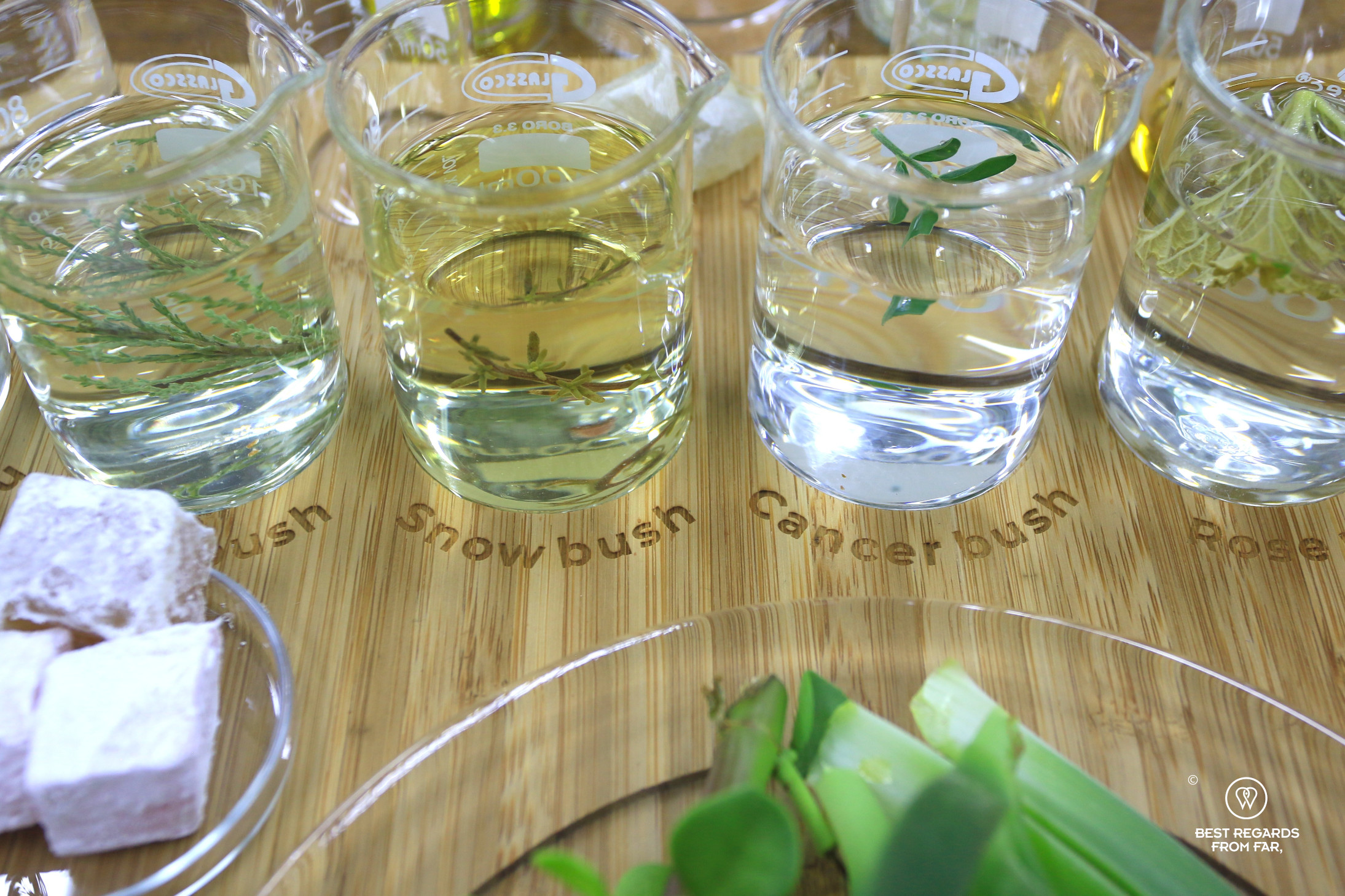
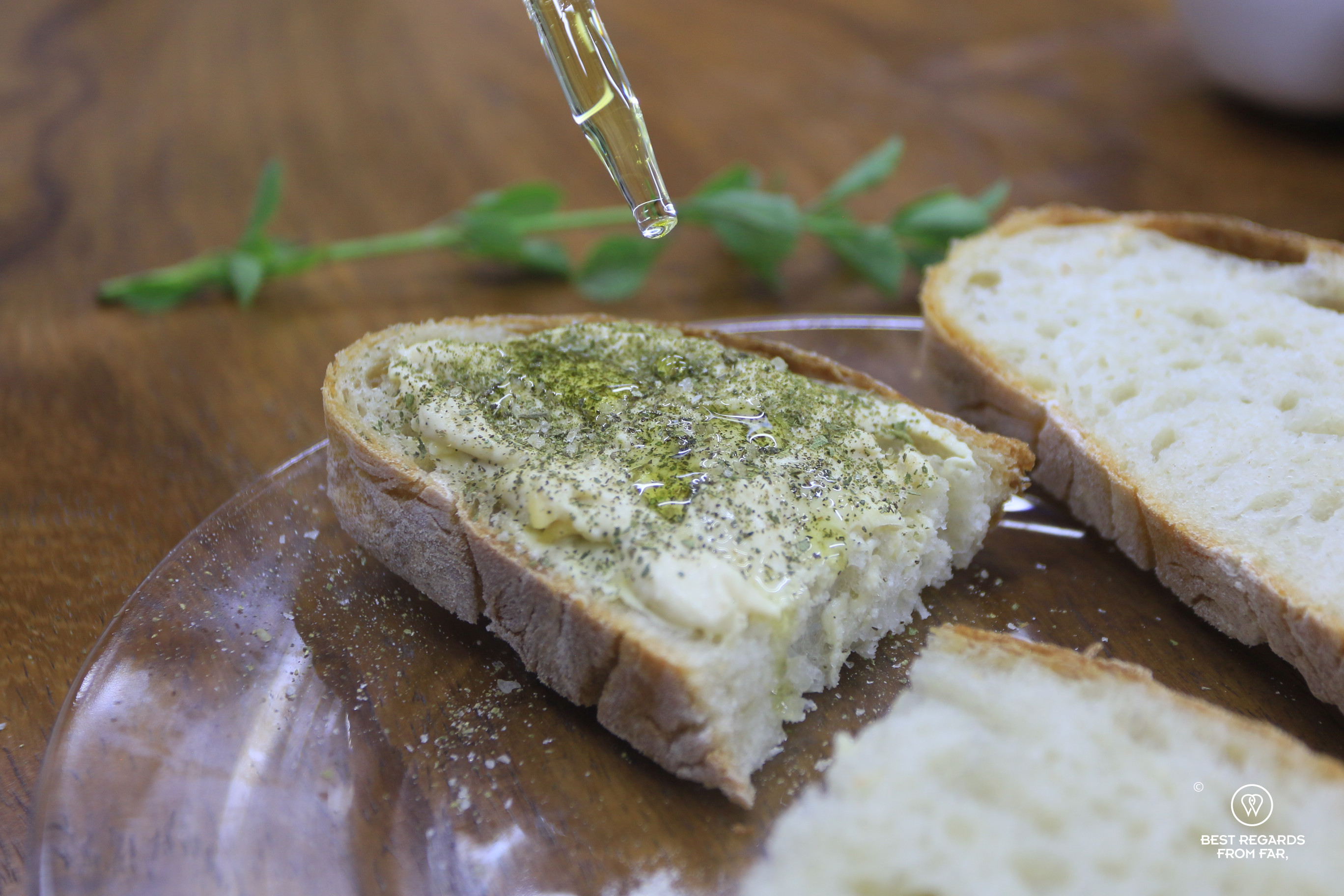
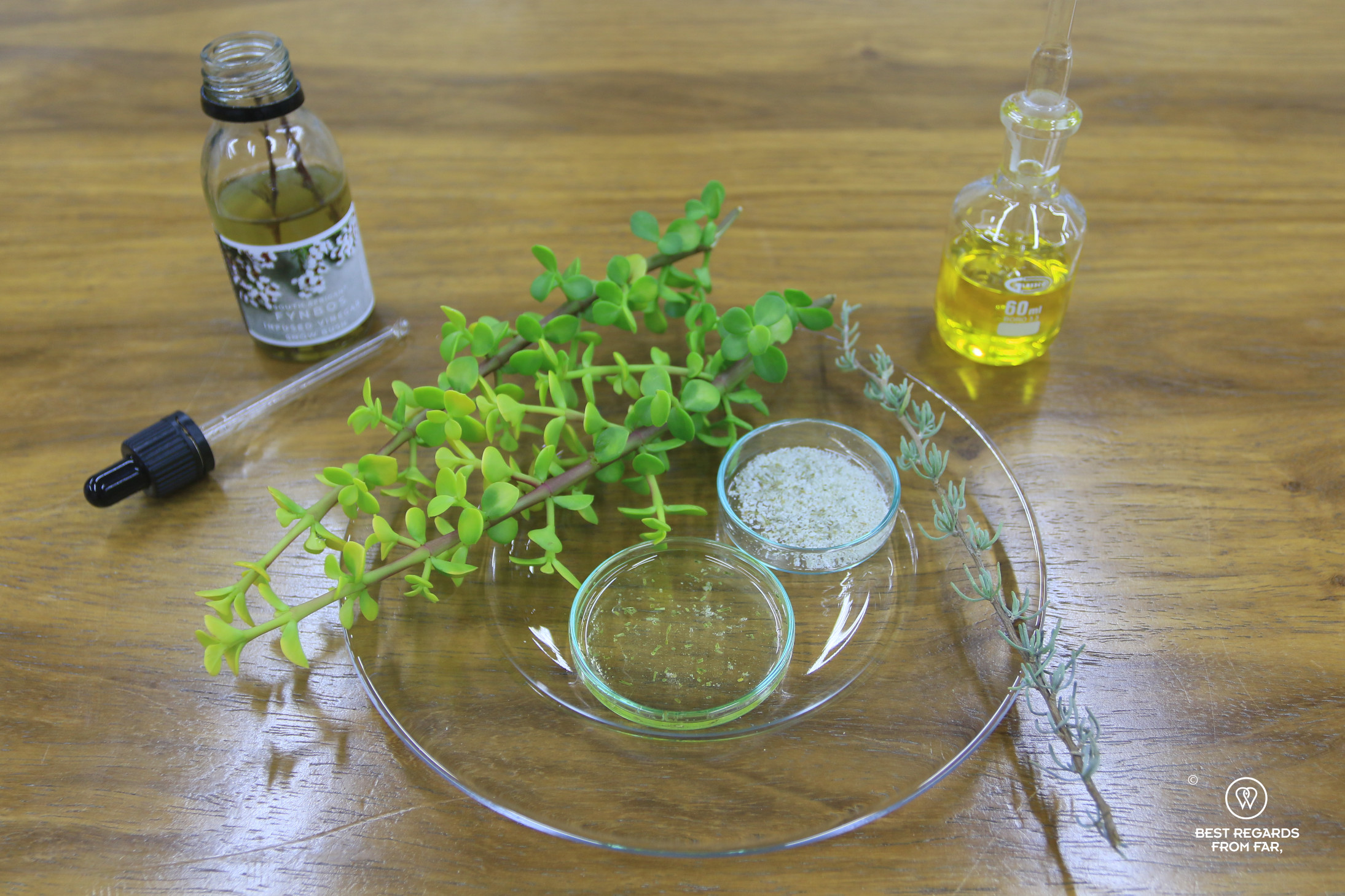
The experience being so inspirational, we have dedicated a specific article entitled “South Africa’s Secret Garden: Taste, Smell & Heal with Fynbos” to dive deeper.
James Sedgwick Distillery: South Africa’s Premium Whisky
In the afternoon, we steer our Vespa to the nearby James Sedgwick Distillery, home to Bain’s Whisky that got established in 1886, the only commercial whisky distillery on the African continent. The visit begins, somewhat dangerously, with an Old Fashioned made from their entry-level whisky, ginger ale, and bitters.
Our guide, Duane, leads us through the process of whisky making. The distillery produces single grain, single malt, and blended whiskies, as well as the Old Buck gin. Malting, done only for the single malt, involves steeping barley, allowing it to germinate, and then halting the process with the smoke of peat imported from Scotland.
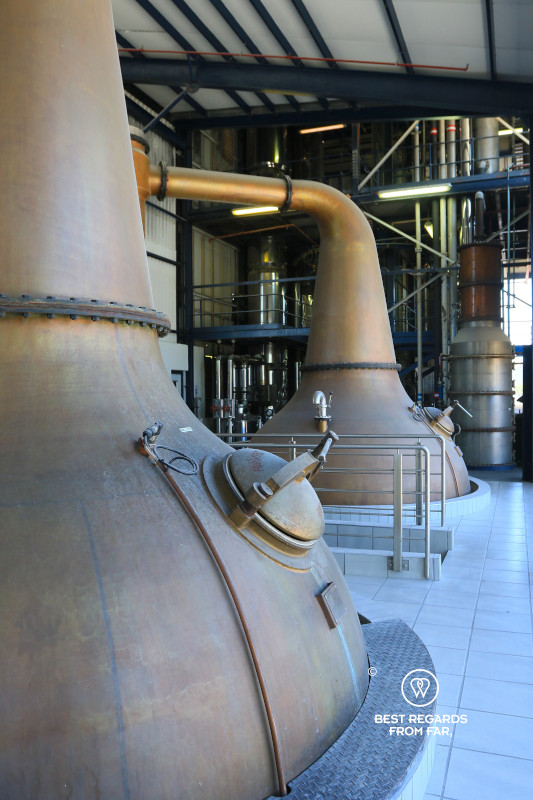
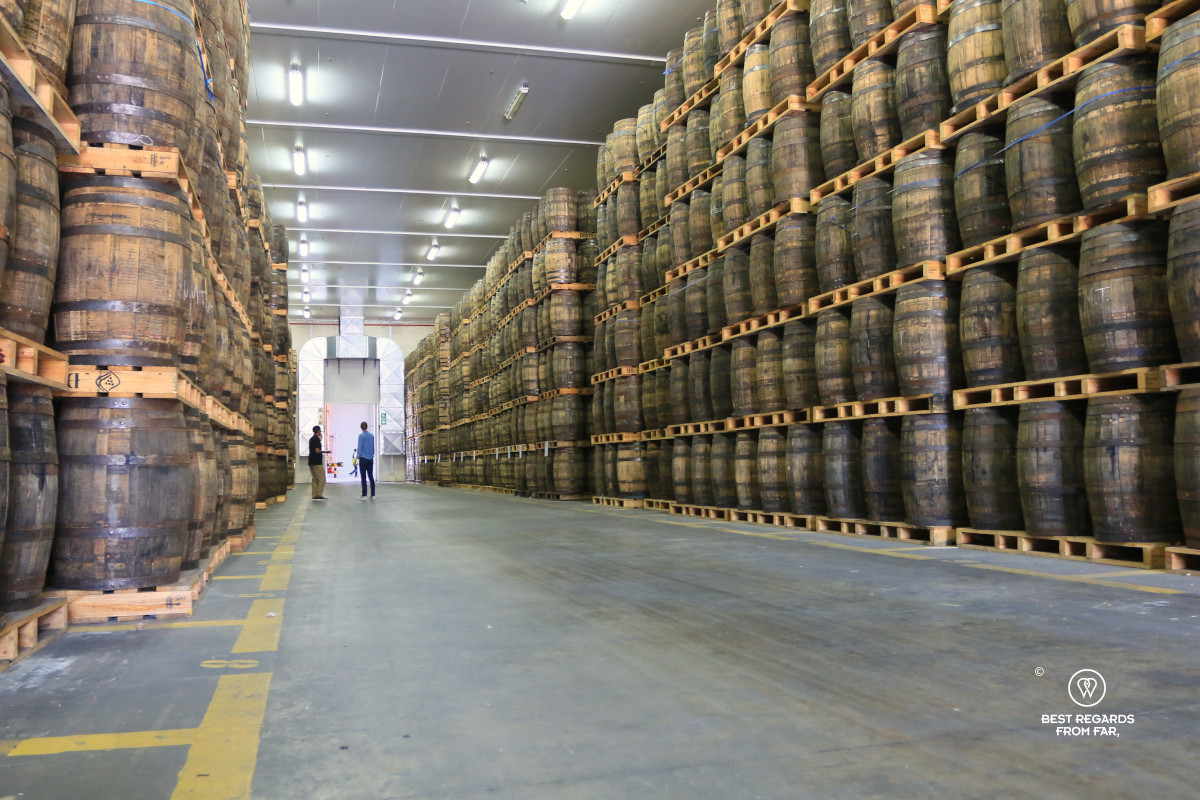

Fermentation takes place in vast tanks we pass by, turning sugars into alcohol over three days. Distillation follows, separating heads, hearts, and tails in towering copper stills. The grain whisky production runs continuously, producing millions of litres a year, while the single malt is made only one month annually, constrained by the availability of Scottish peat.
Ageing happens in American oak barrels, where up to 80 percent of the whisky’s character is formed. South Africa’s climate accelerates this process, with a higher “angel’s share” than in colder Scotland. The sharp edges soften faster.
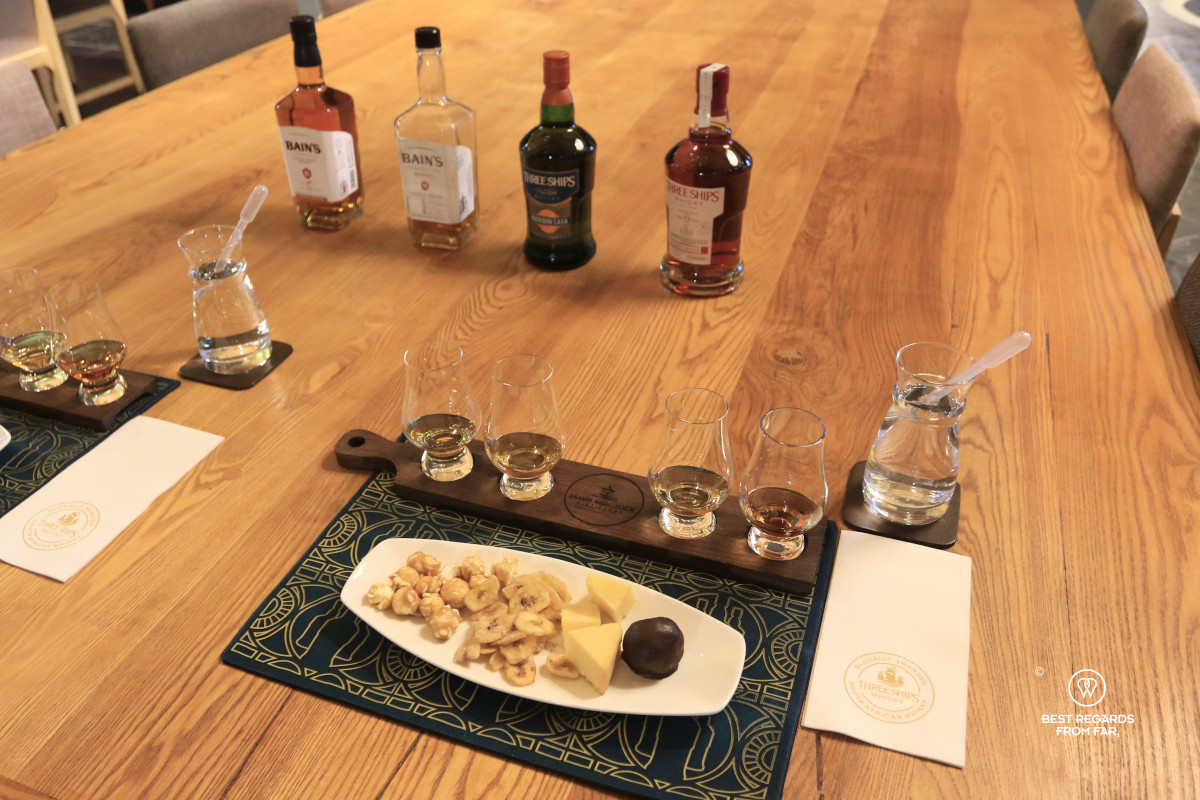
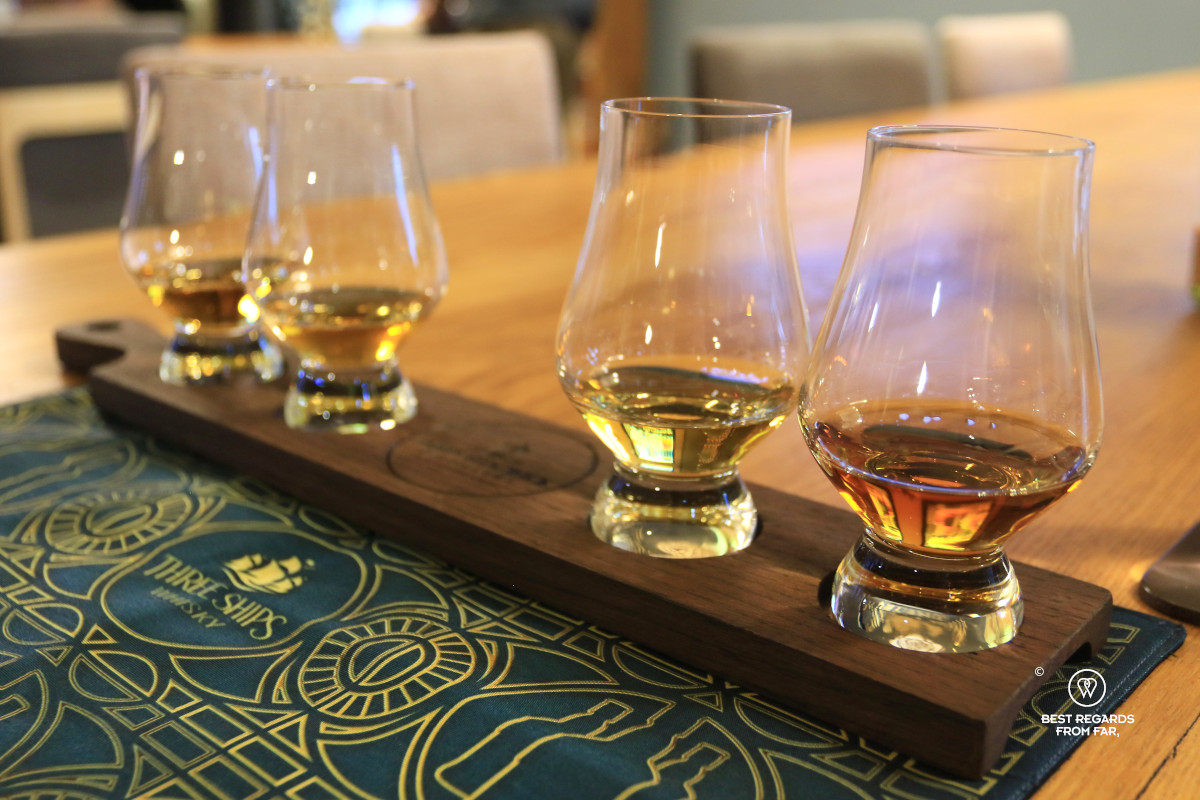
The tasting unfolds slowly: neat, then with a drop of water, then adjusted to personal preference. We move from grain to blend (the Three Ships, aged five years) to the single malt, aged 13 years in sherry barrels. Sweet popcorn, banana crisps, smoked cheese, and chocolate-covered date balls accompany the tasting flight, an original way and great reminder that not only wine but also whisky has a great pairing potential.
Golden Hour in Wellington
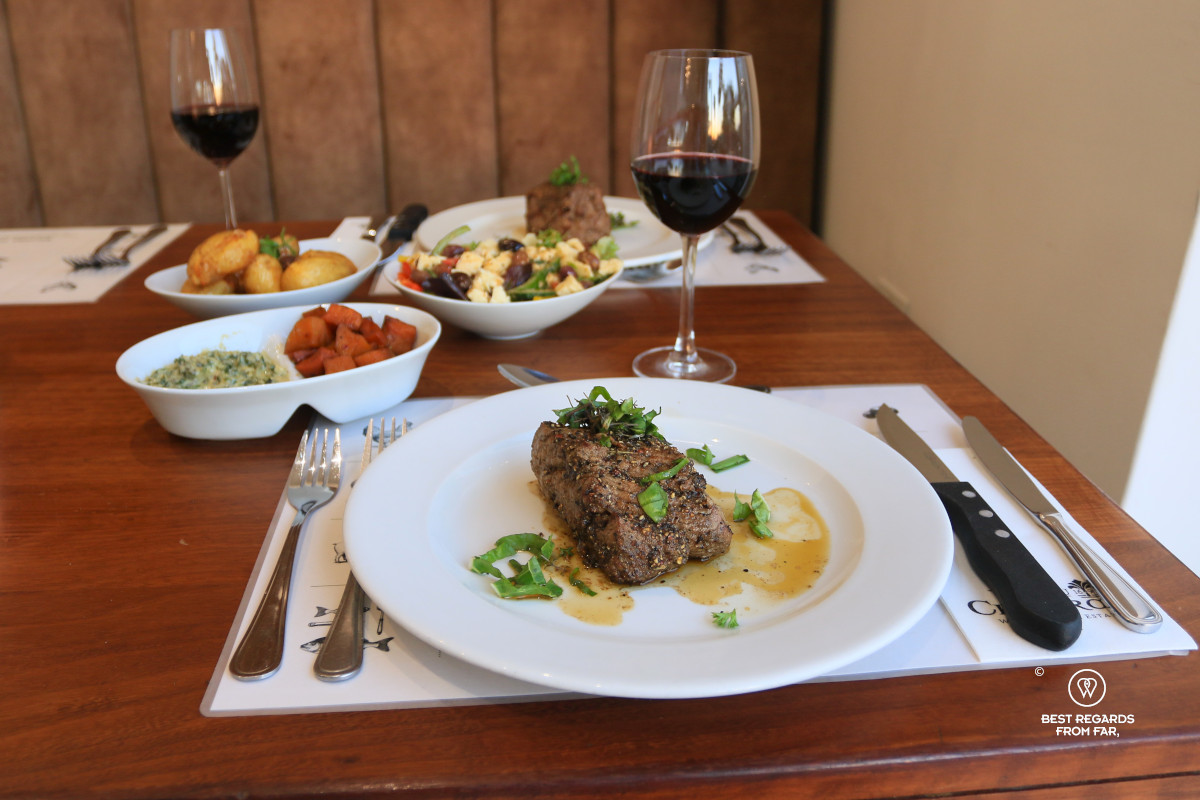
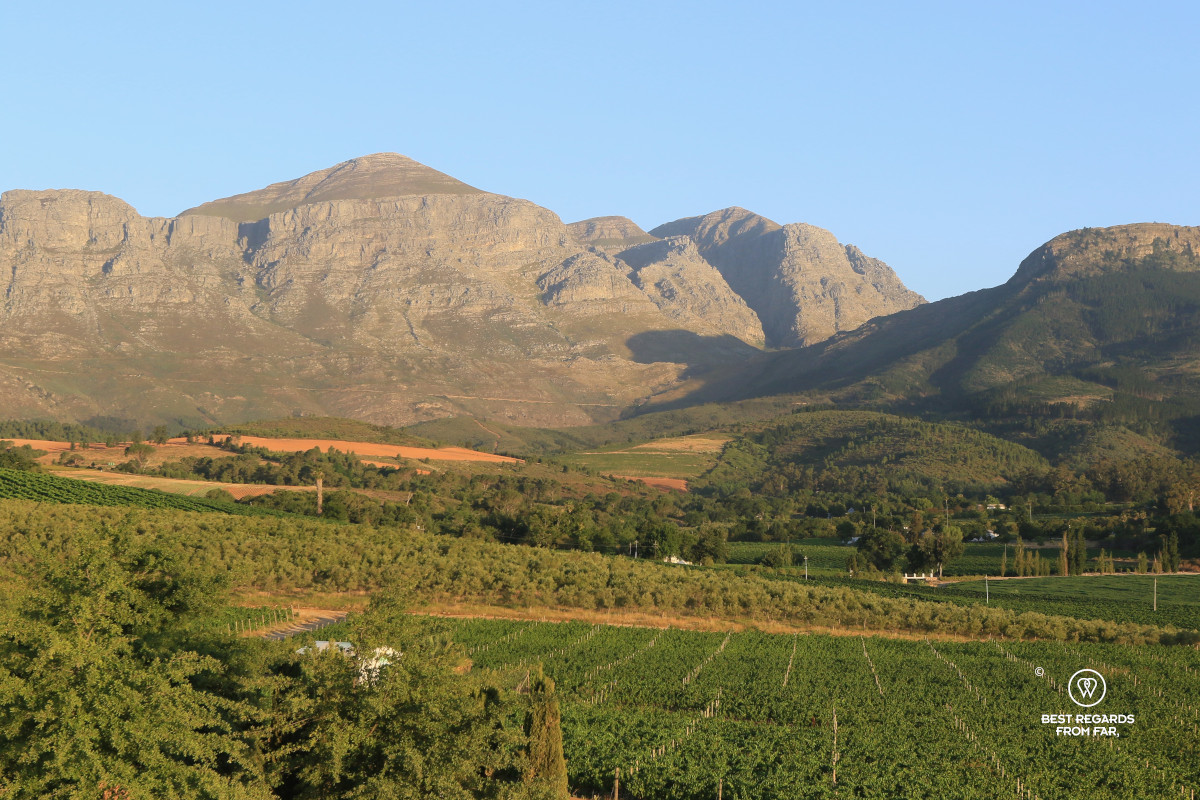
Late afternoon in Wellington does not demand much of us. A simple return to Val du Charron for pool time feels exactly right. Many vineyards remain to be explored but one can only taste so much in a short amount of time. Dinner at the estate’s Grillroom, an unfussy steakhouse where locally sourced meat and wine conclude the day during another African sunset on the mountains.
Day 3
Bain’s Kloof Pass & Crystal Pools
The recently tarred Bain’s Kloof Pass is one of the highlights of the region. The road snakes through dramatic sandstone formations, crossings rivers, and deep folds in the land, following a route carved by human hands but dictated by geology.
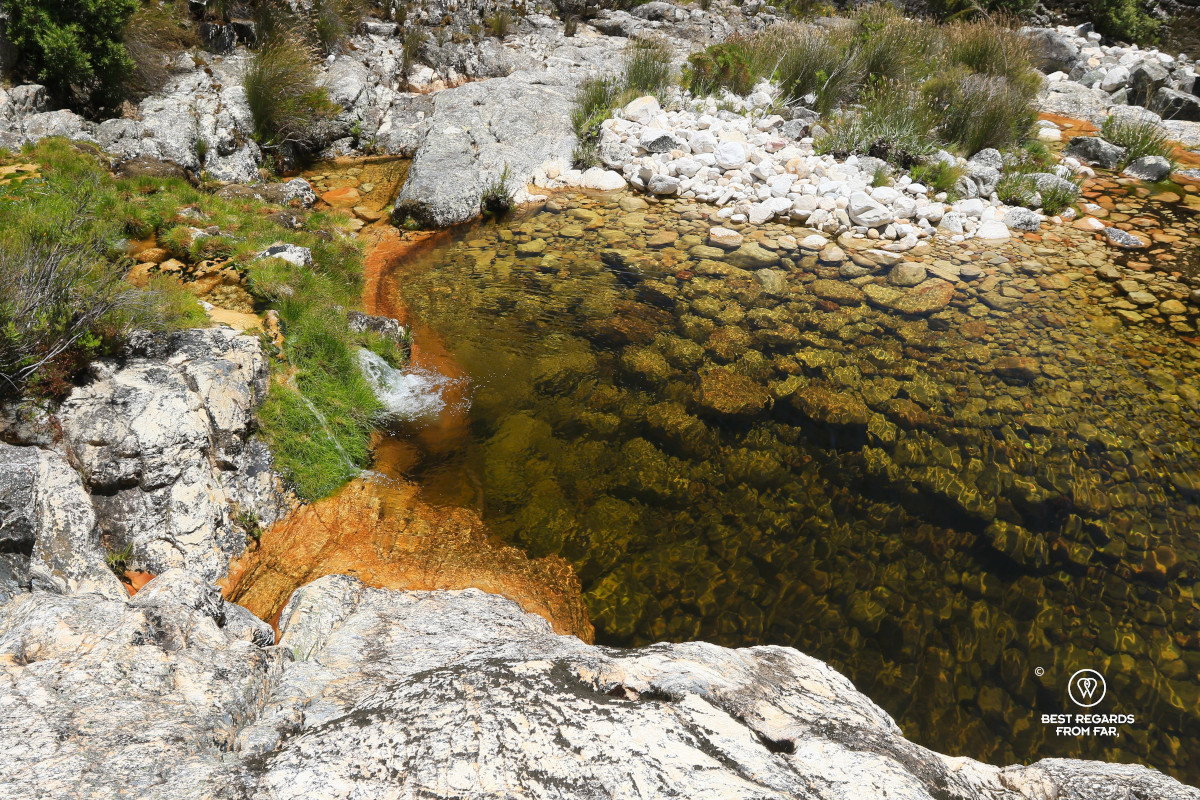
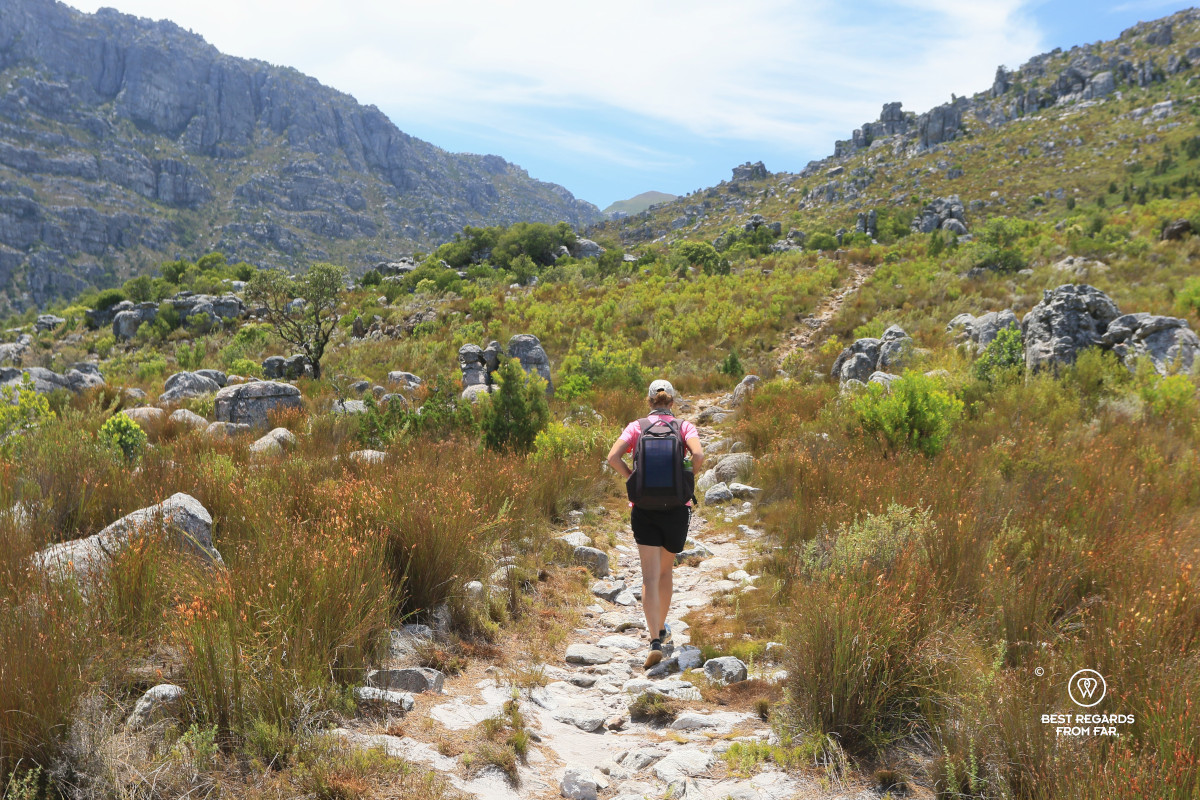
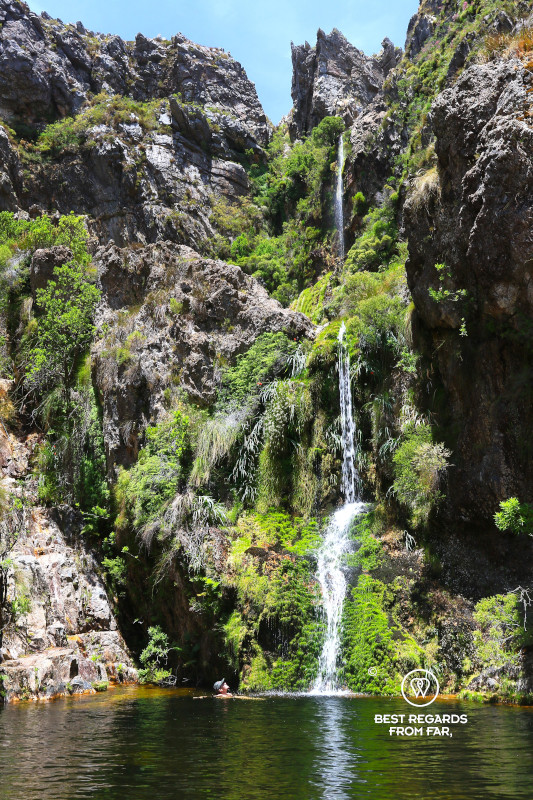
Only driving it would be a shame… At its col, we park our Vespa, and start our hike to the Crystal Pools along the Bobbejaans River. The lack of shade along the trail is unforgiving, but the reward at the end is worth every step: a clear rock pool fed by a tall waterfall flowing along the rugged rocks turned green by the vegetation with a few contrasting red flowers. The paradisiac scenery, a candy to the eye, and the refreshing plunge to the quacking the frogs, otherworldly.
***
By mid-afternoon, we head back to Cape Town, refreshed and with an even deeper love for the region and understanding of its history, resilient plant life, and the Free Burgers and Huguenot refugees who made it their home.
Once known as Limietberg, because it marked the furthest point reachable on horseback in a single day —the outer limit where freed farmers of the Cape Colony could settle— today, Wellington has grown into an ideal getaway from Cape Town. Still largely off the beaten path and underrated as a wine region, it is, in fact, the nursery of South African wine, producing much of the country’s rootstock. Its terroir, shaped by diverse soils and cool mountain microclimates, is a hidden gem that deserves far more attention.
Travel tips:
- Stay in style at Val du Charron and make sure to book one of the three rooms in the Coach House.
- To live the African Fynbos Experience, make sure to book ahead of time with Giselle.
- Booking your distillery tour and tasting at the James Sedgewick Distillery is required in advance.
- Interested in the crystal pools? A hiking permit is required and can be arranged online through Cape Nature. Once arranged you will get the code for the gate.
- To get around make sure to secure you Vespa with Cape Town Vespa Rentals.
- Val du Charron is part of the Cape Country Routes collection.
- Check out our interactive map for more in the area (black pins lead to an article):
For more in & around Cape Town, click on these images: