Text: Marcella van Alphen
Photographs: Claire Lessiau
In the beating heart of South Africa’s Western Cape, among sweeping mountains, vineyards, and wild and rich coastlines, lies world’s most biodiverse botanical wonder in terms of number and density of endemic species: the fynbos. This ancient vegetation—rich in scents, colours, flavours, and healing properties—is more than a plant biome and an important UNESCO World Heritage Site. These powerful tiny little plants with their superpowers offer a gateway to reconnecting with nature, our senses, and even our earliest memories as human beings.
Pin it for later!
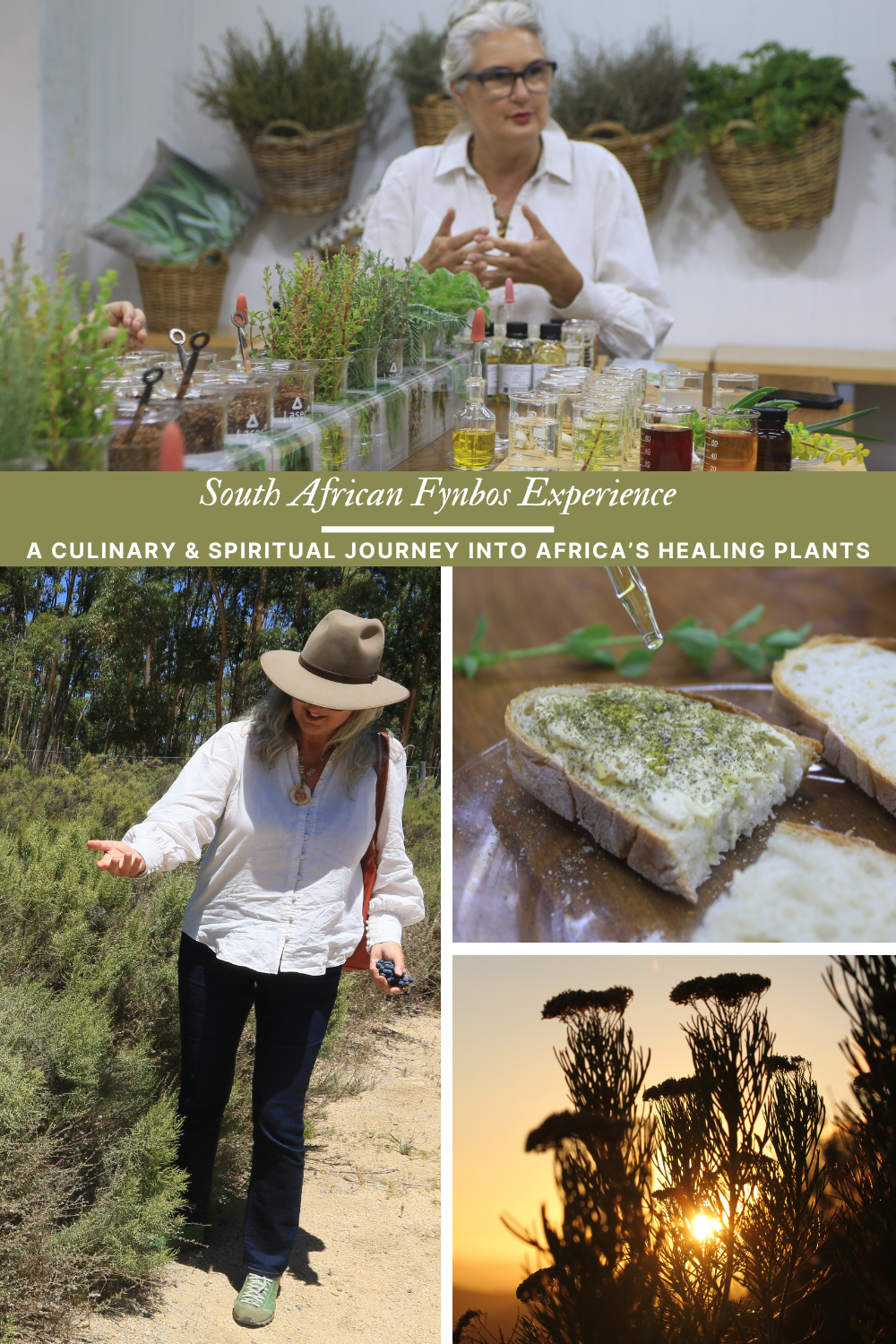
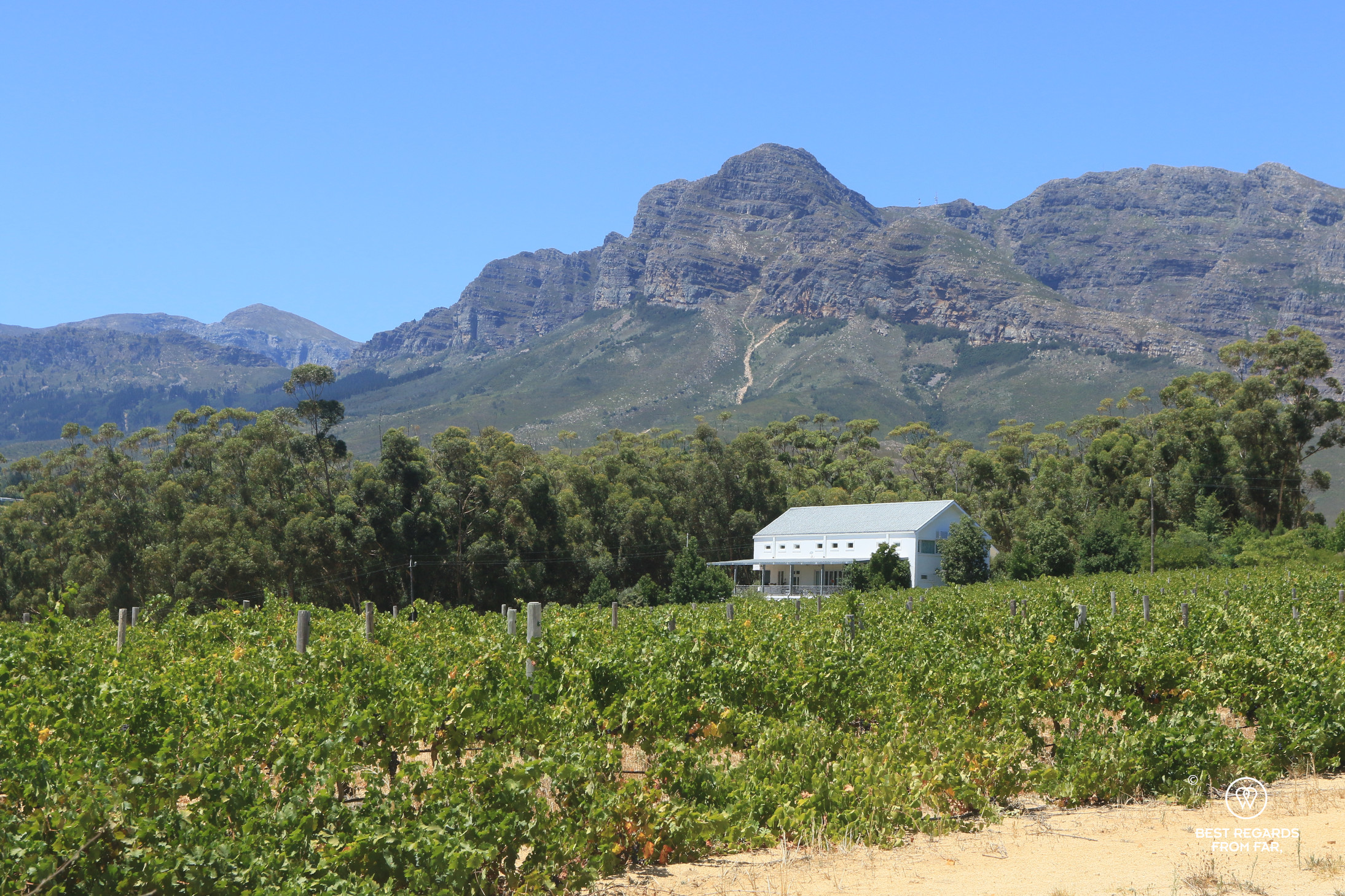
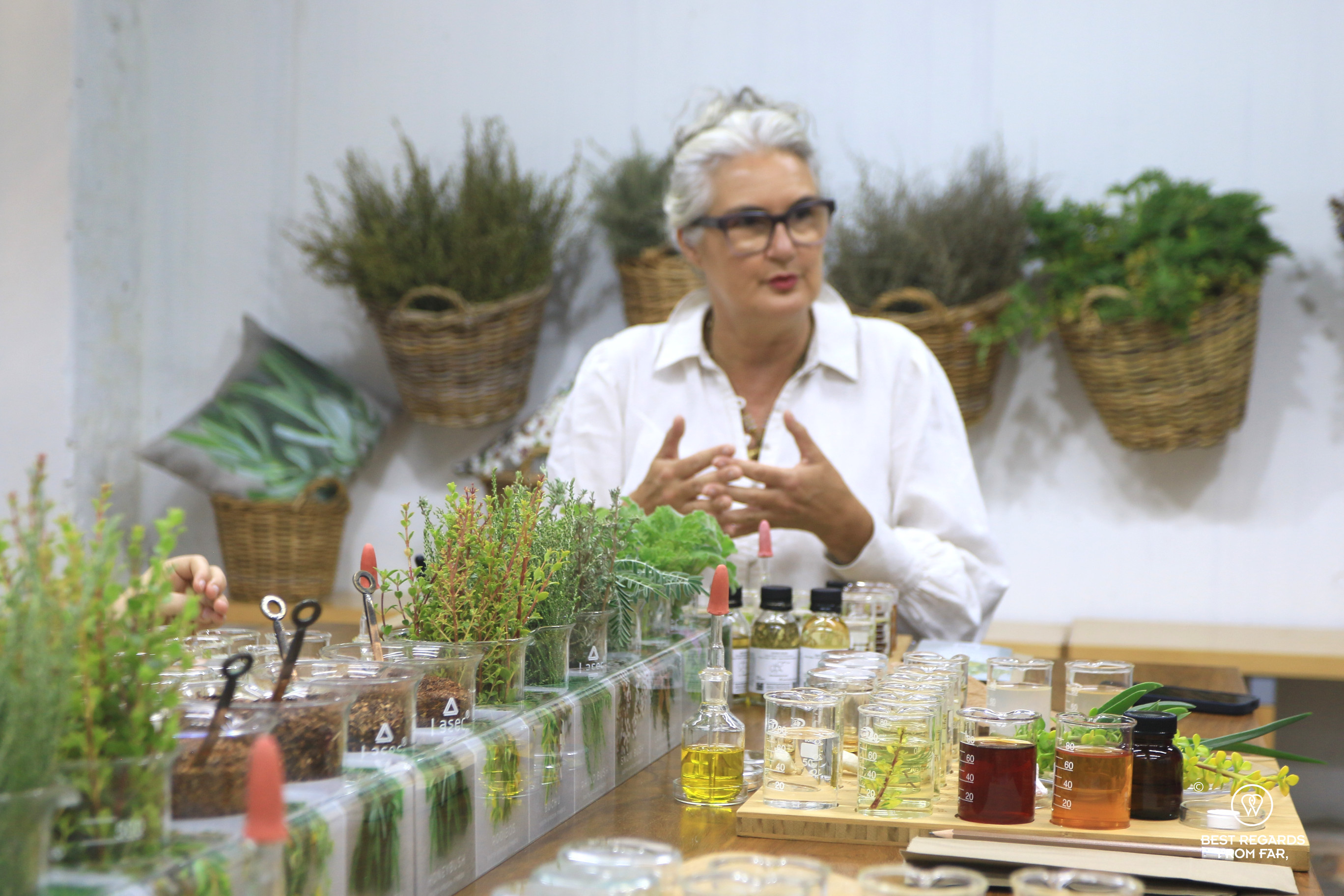
At her farm in Wellington surrounded by the precious fynbos, Giselle Courtney, founder of African Fynbos Experience, welcomes us with a warm embrace before kicking off her workshop in her serene fynbos botanical cellar. We immediately feel that we are not just participants: we are fully immersed, guided by Giselle’s passion and knowledge as she introduces us into the sensory world of fynbos.
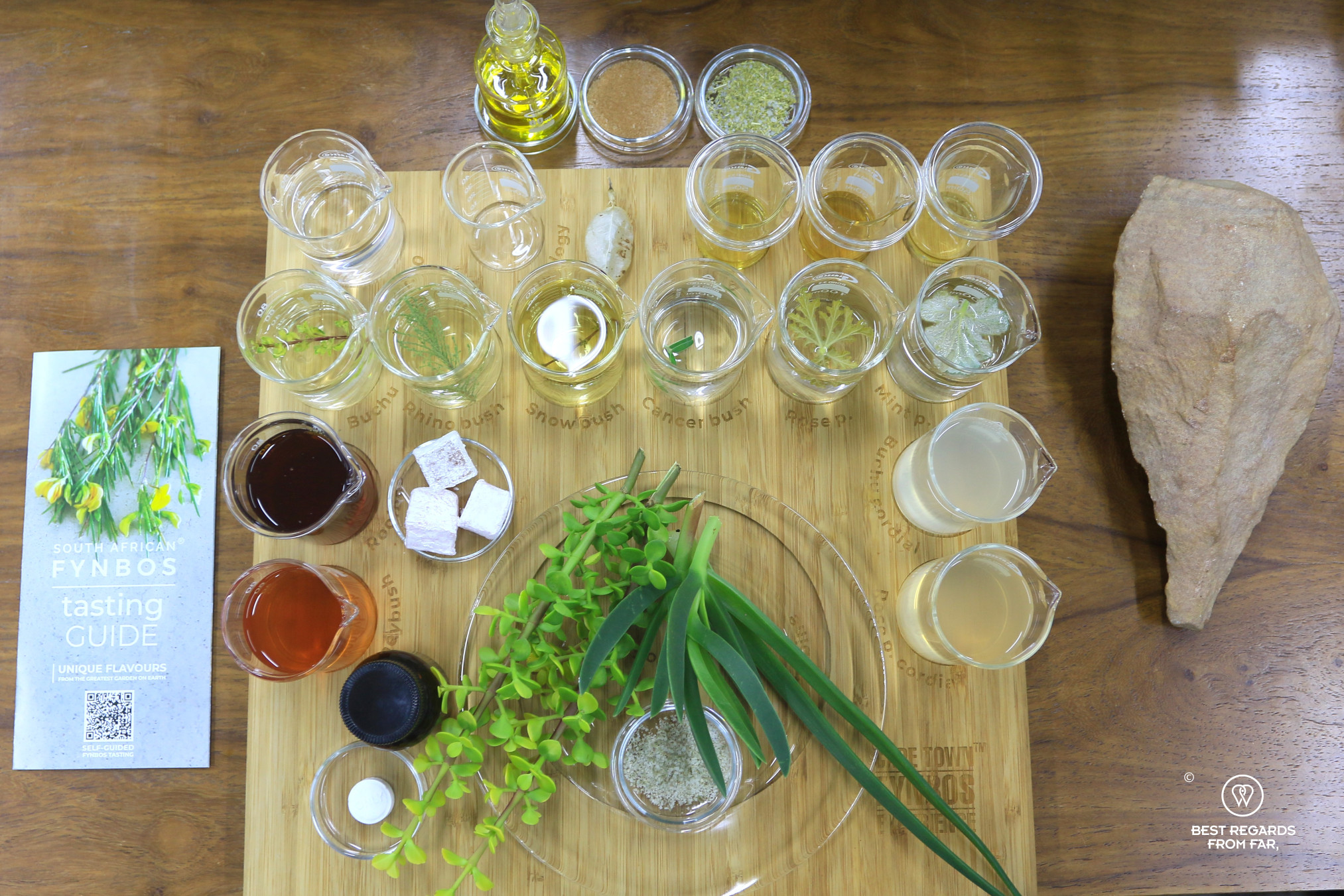
In front of us, different freshly picked fynbos set the stage. Giselle has prepared her engaging workshop by priory infusing water for each of us with different types of fynbos, neatly presented on a wooden board with corresponding captions. After taking in the different textures, scents and physical appearances of the plants, we take a first sip of honeybush-infused water. Closely related to the now well-known bold and earthy rooibos, the soft and honey-like sweet flavours of the subtle honeybush dance on our tongues. Strong in anti-oxidants, it is used by traditional healers to fight inflammation and to boost the immune system while it also makes for a delicate caffeine-free herbal tea. The second tasting, that of rooibos (equally rich in anti-oxidants), catapults me straight back to the Cederberg where this bush thrives. On the palate, notes of rosehip and caramel come through while I sense the warmth of the sun and the terroir of the sandy and acidic soil.
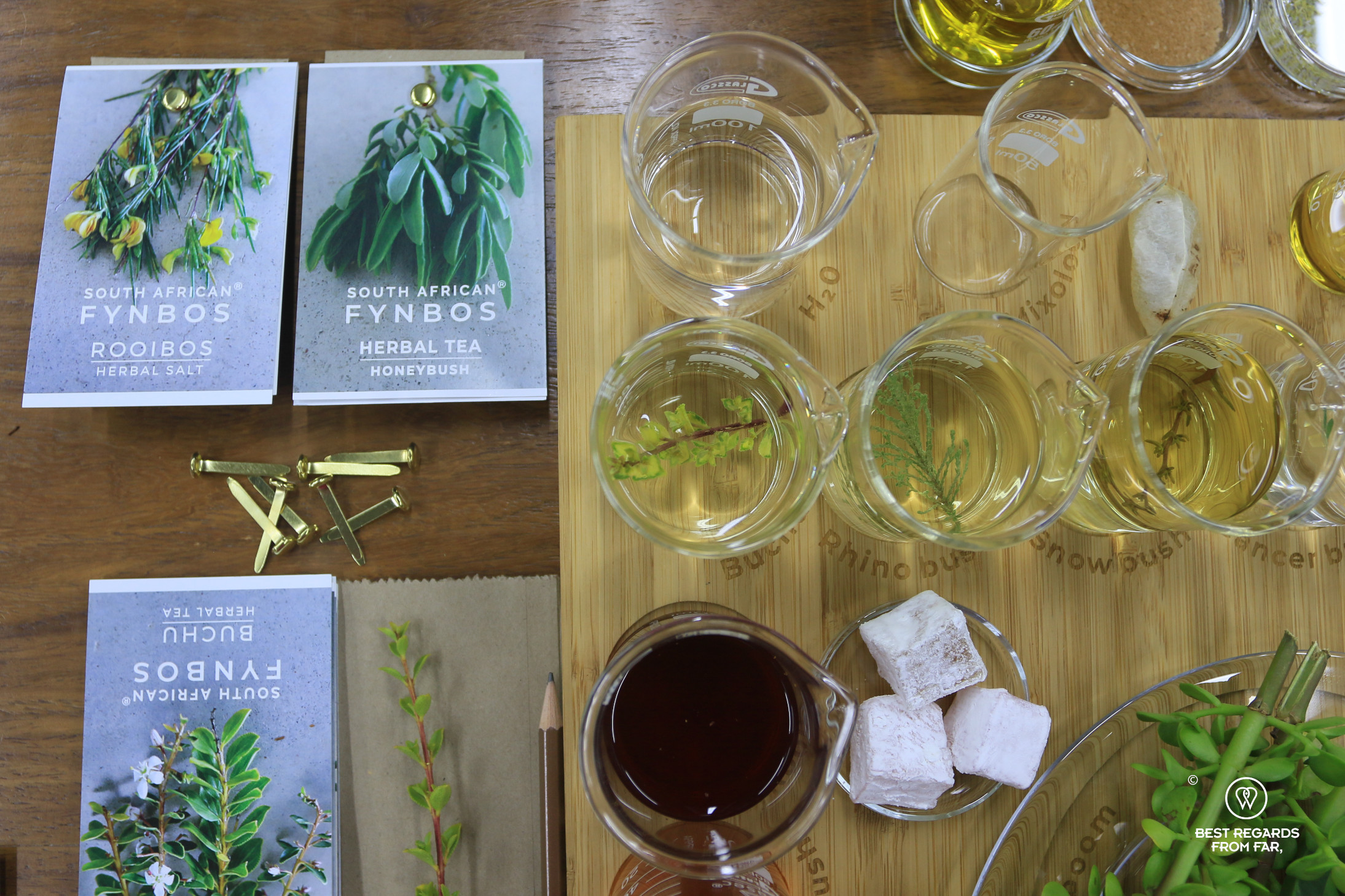
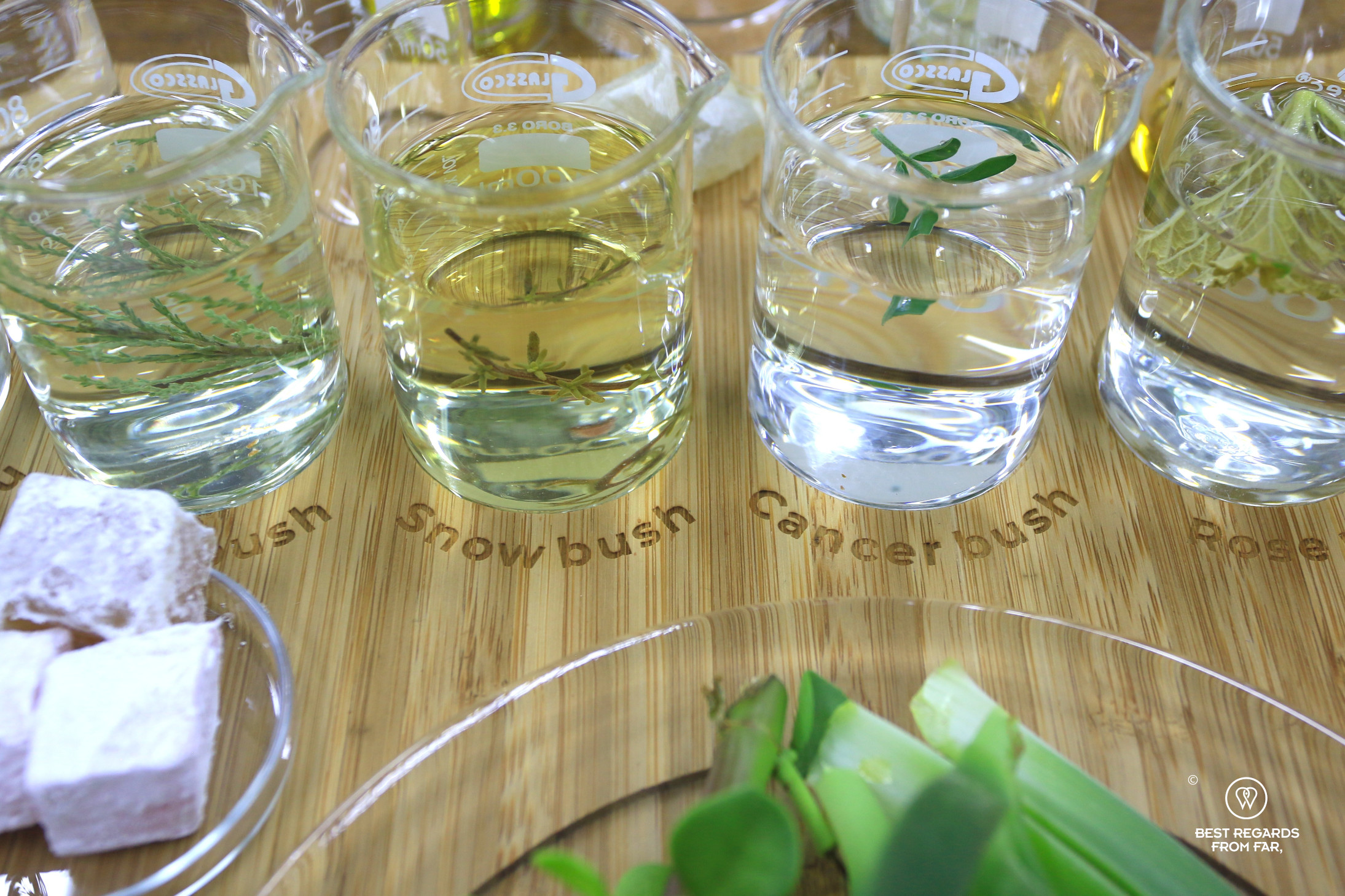
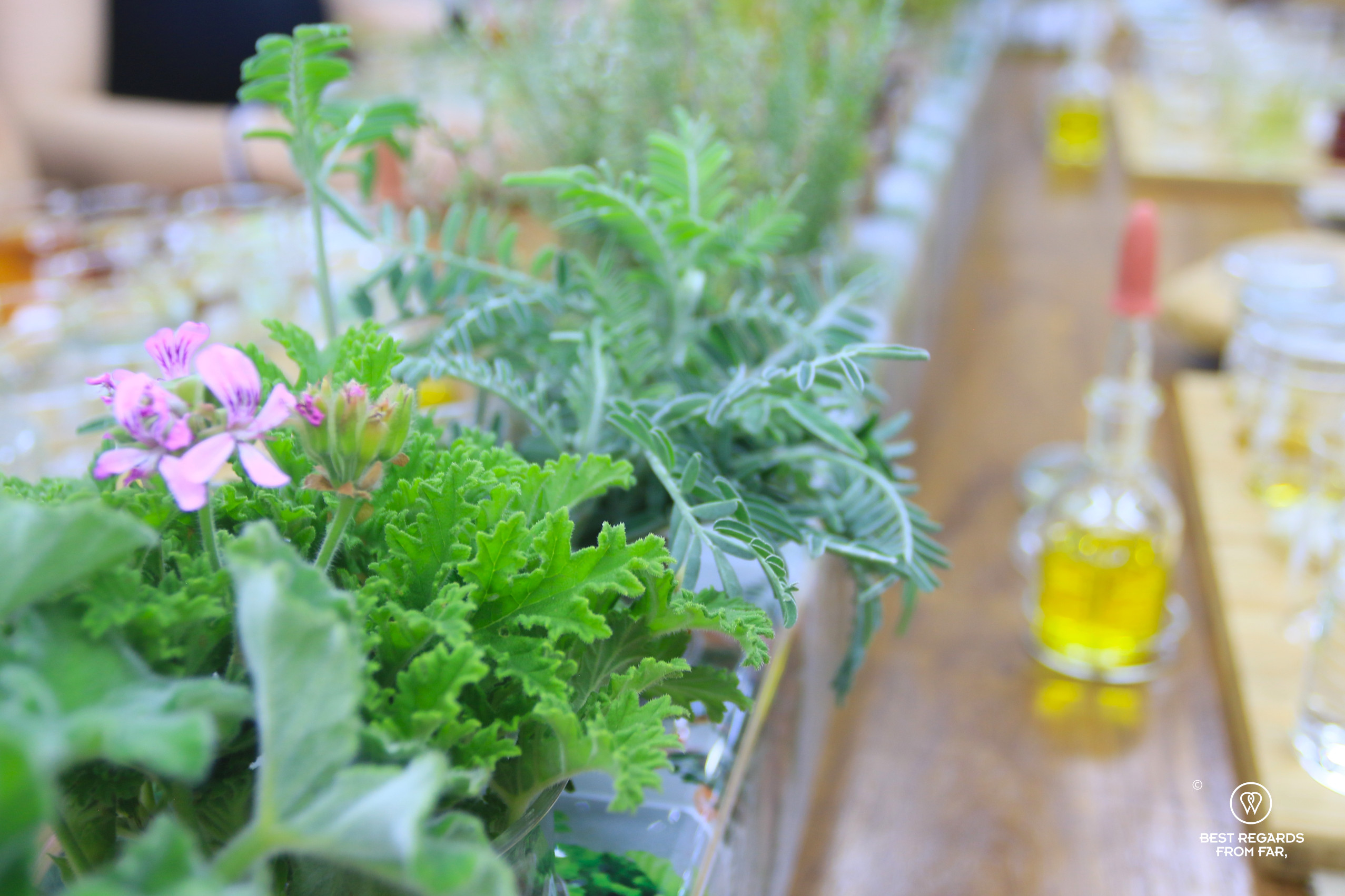
We move on to the lesser-known rhino bush, also known as renosterveld, and rub it between our palms, coaxing out its resinous and earthly scent. A bit bitter in taste, rhino bush with its anti-inflammatory powers has been used as a traditional medicine to cure colds and skin conditions. Snow bush follows, its cooling perfume more delicate and recalling that of wild rosemary. In the harsh fynbos environment, plants develop symbiotic relationships to survive and thrive. Rhino bush, today protected and found in the De Hoop Nature Reserve, and snow bush grow together in nutrient-poor and drought-prone environments and support each other’s roots. The rhino bush creates a micro climate by providing shade and a break from the wind for the snow bush to flourish while the aromatic leaves of the snowbush deter herbivores and pests. Both support insects and birds, much needed for the fynbos to survive.
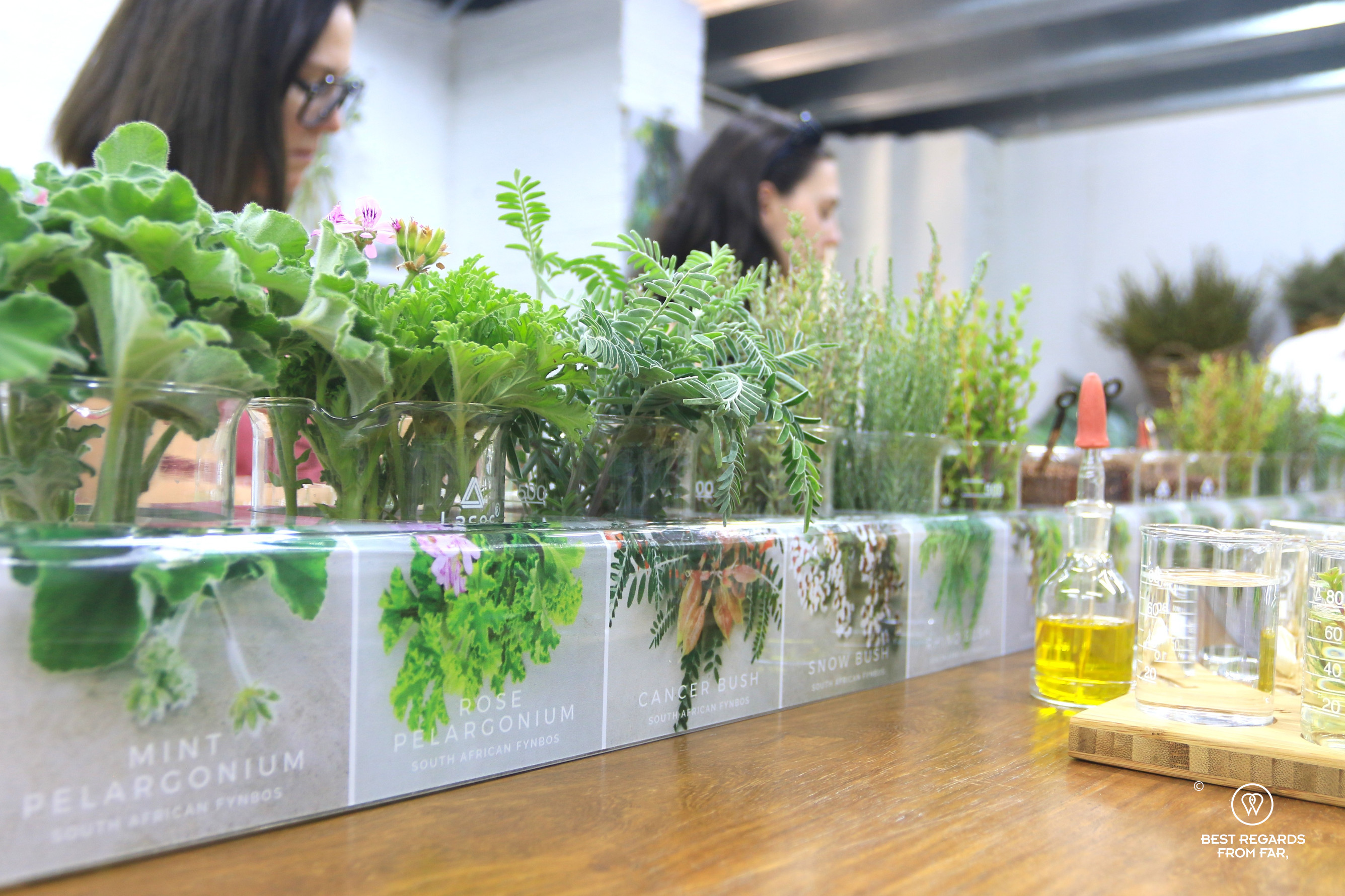
While discussing what nature can teach us, we taste the immune-boosting bitter infusion of the powerful cancer bush which properties are hidden behind its coral blossoms, the floral notes of the rose pelargonium, cooling mint pelargonium and surprisingly spicy nutmeg pelargonium, Cape mountain sage and silverbush.
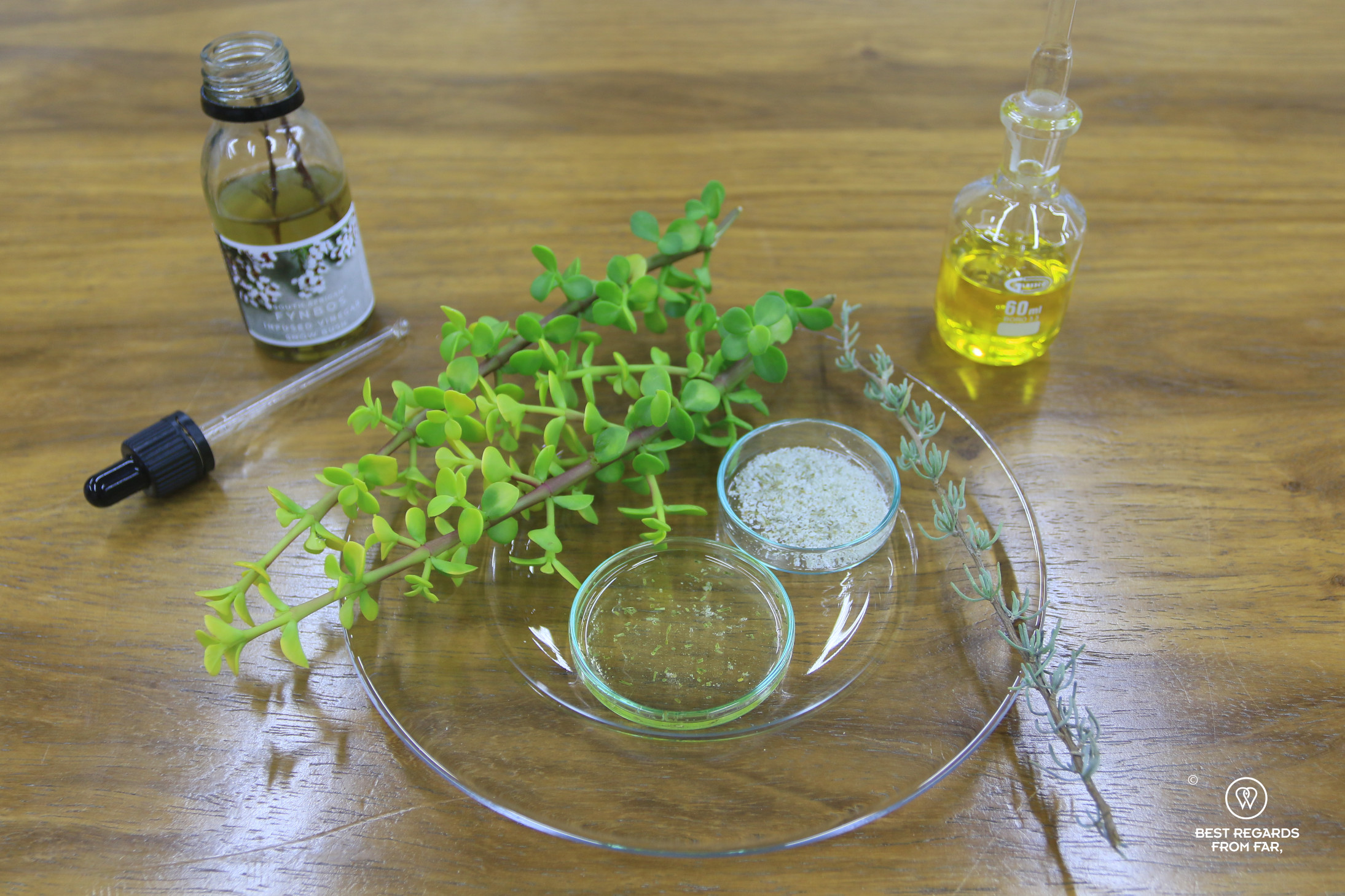
Spekboom crunches between our teeth, bright and sour when tasted fresh: the thick and moist edible leaves which are rich in vitamin C are a reminder of subsistence as the ancient Khoisan people relied on them for their survival in times of drought. While spekboom is a popular garden and house plant, hardly anyone realises that these are succulents that have kept one of world’s oldest lineages—which holds genetic ties to the deep African ancestry shared by all humankind—alive.
Each with their own medicinal purposes and characteristics, the workshop proves to be a great discovery into the Cape Floral Kingdom that no visitors to Cape Town can ignore as soon as they venture in Table Mountain National Park in the heart of the city.
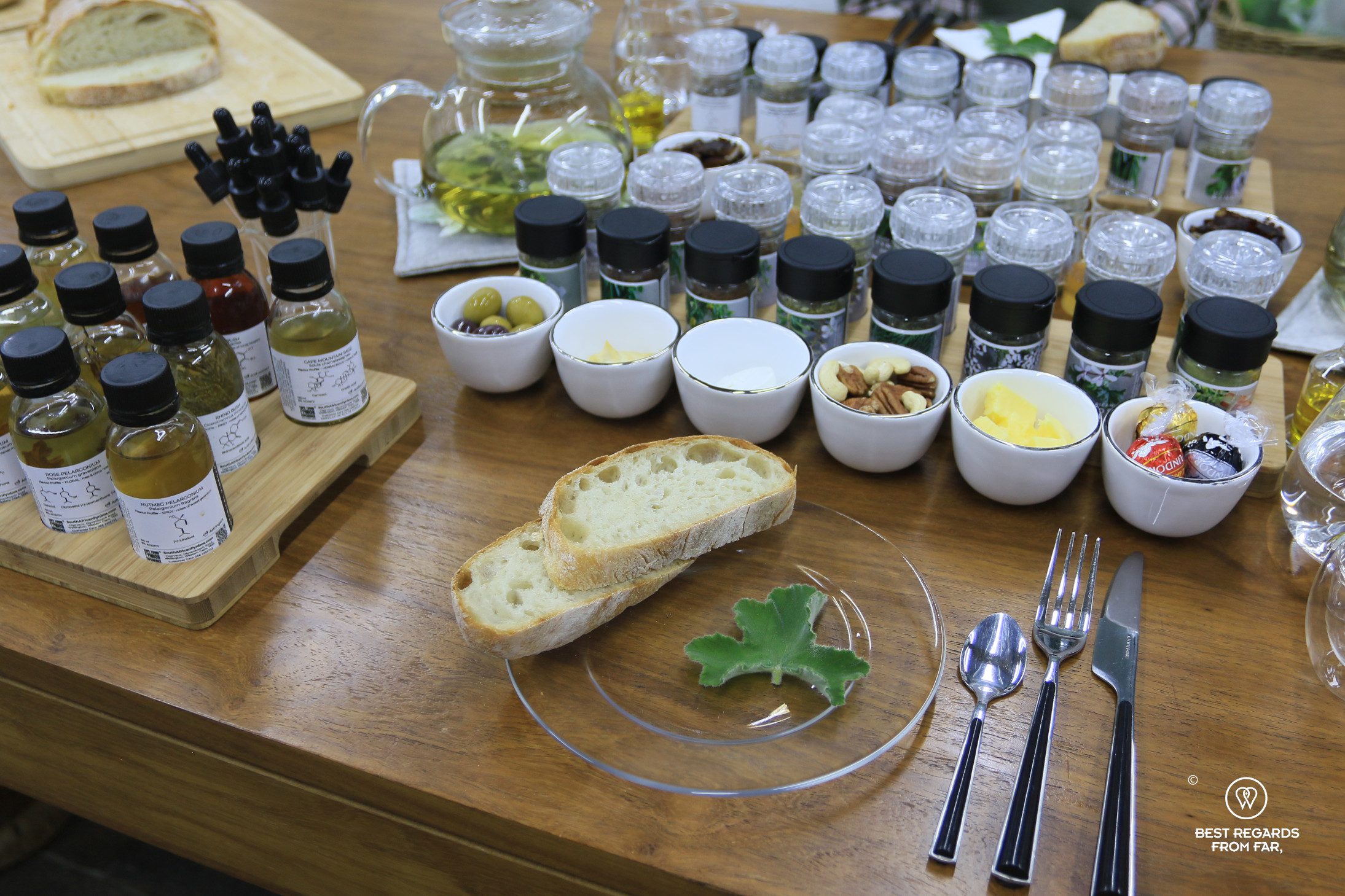
Then, with laughter and curiosity, we move into cocktail mixing. We decorate our glasses with rims dipped in crushed fynbos, sugar, and salt, turning every drink into a unique creative blend. I decide to infuse my brandy with a minty spark of buchu. I add a bit of piny rhino bush to my shot of gin and finish my vodka with an infusion of refreshing snow bush. Each plant reveals its personality.
We leave the cellar behind and stroll Giselle’s garden to observe, touch and smell the fresh fynbos in its natural environment. “If you have found the place where you could die, then you have found the place where you can live”, Giselle whispers while running her hands through the delicate lilac flowers of Cape mountain sage bordering her driveway. As we listen, the fynbos begins to speak of history: Giselle traces our human lineage back to this landscape. At Pinnacle Point near Mossel Bay, the earth holds evidence of early humans who understood the plants and lived in deep reciprocity with the land. Here, our workshop blurs the line between past and present while the scents somehow activate a familiar memory encoded in the deepest nucleus of our cells. While walking among the vegetation, we feel the wind, inhale the wild aromas and realise this is no longer just a workshop: this is a remembering and a spiritual journey.
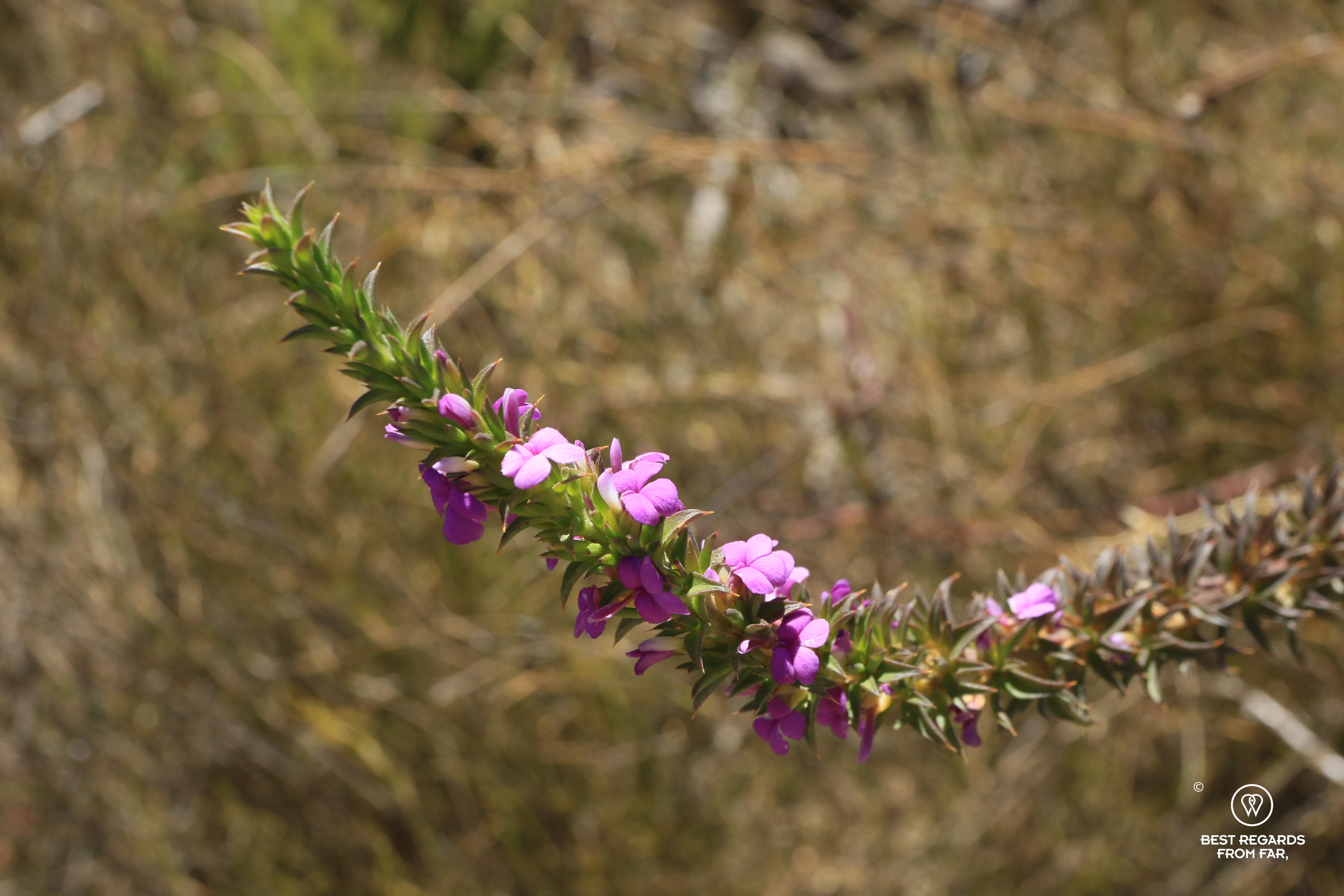
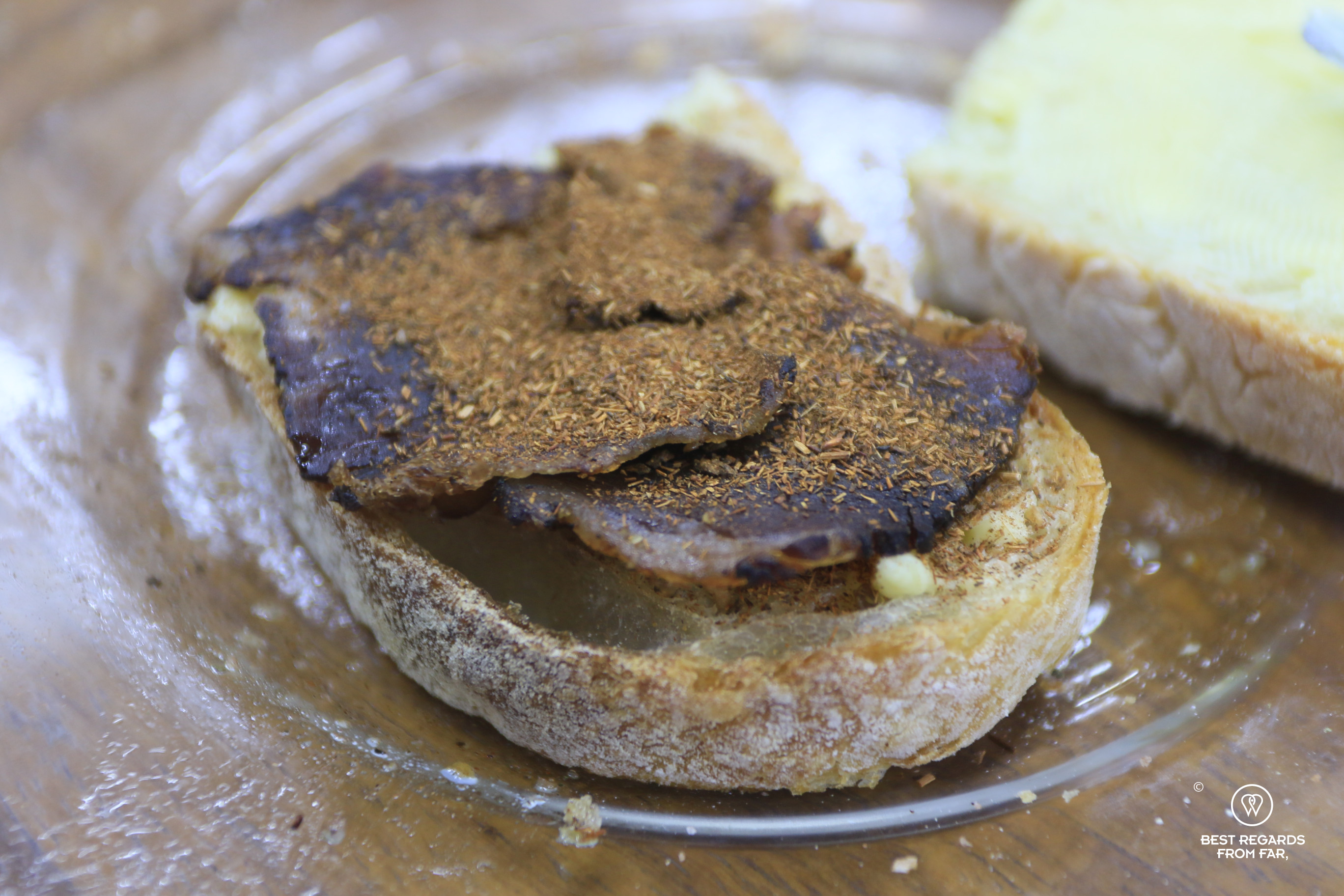
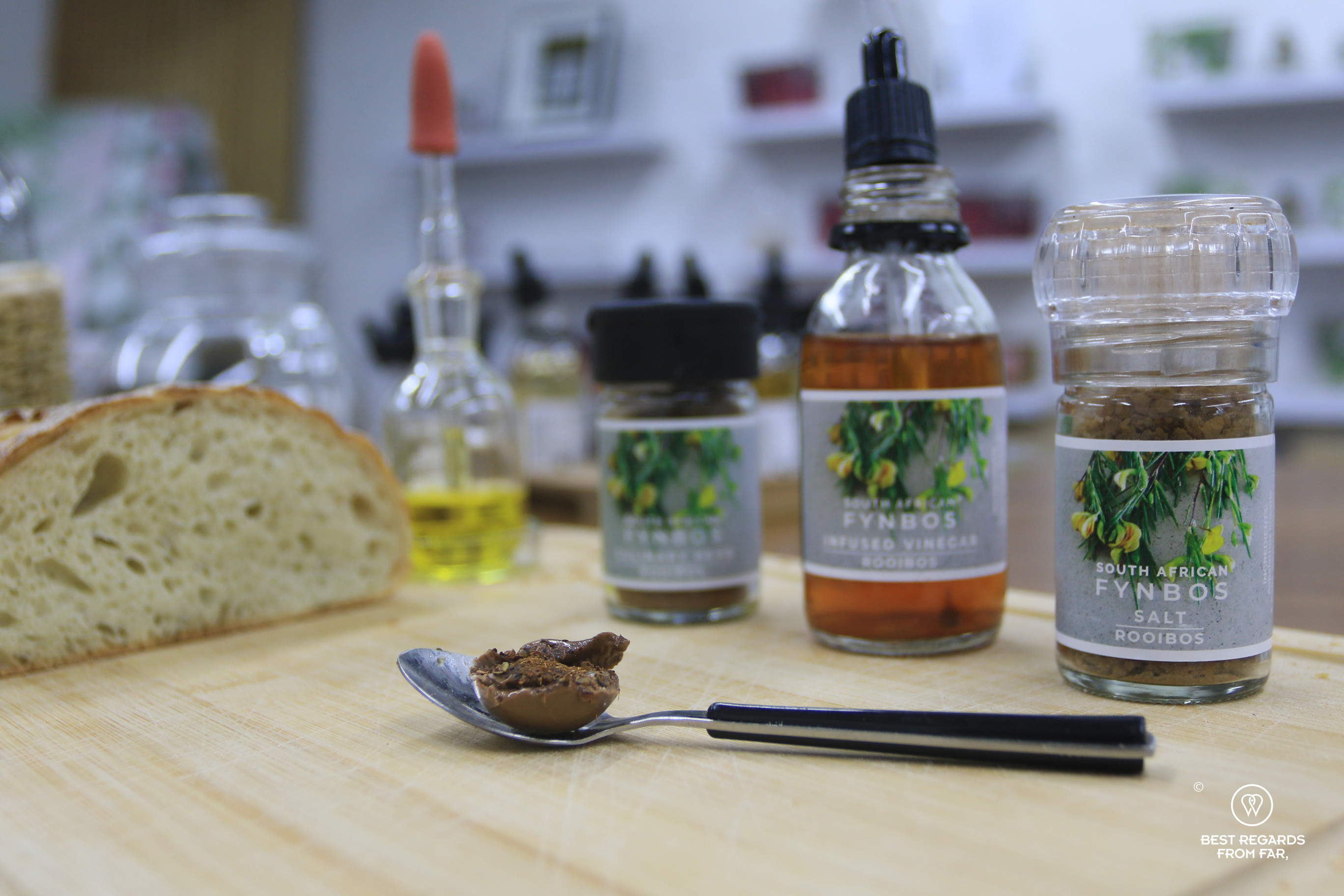
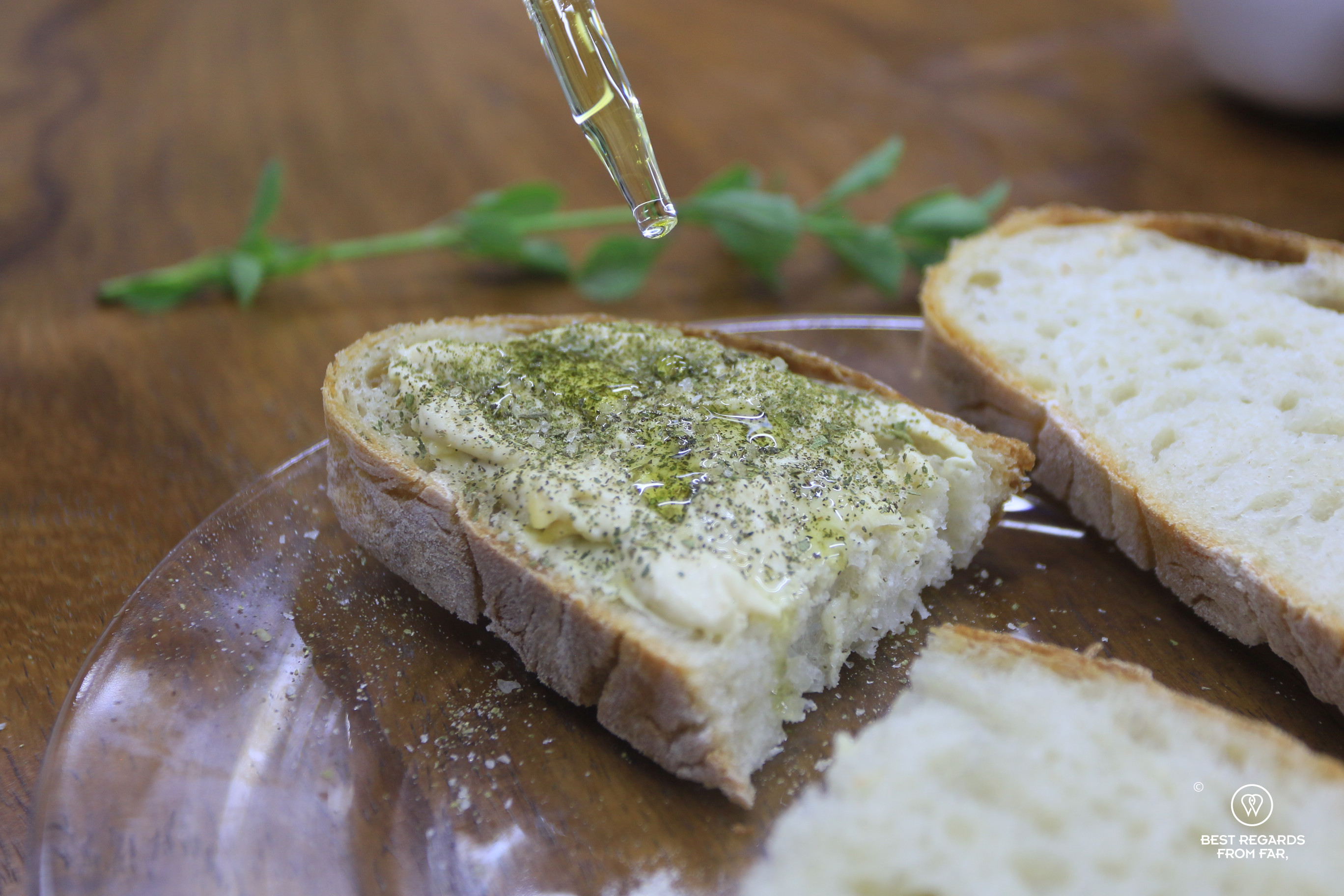
The last step in this fynbos journey is to taste its dried versions as a natural food enhancer mixed with salt, pepper or in its pure form. Lunch with Giselle allows us to experiment and discuss how adding the various types of fynbos to biltong, bread with butter, cream cheese, humus, olives and even chocolate, alters the flavour pattern. Giselle offers us a wealth of information about which fynbos to add to what type of home-cooked dish and greatly inspires us to use the unique flavours from the greatest garden on Earth at home. Weirdly enough, this wealth of healthy and local tastes has hardly made it to the kitchens of the top chefs in Cape Town. Only a few such as the excellent South African Ryan Cole, chef at the fine dining establishments Salsify and Coy, bring the beautiful fynbos under the attention and palate of their diners.

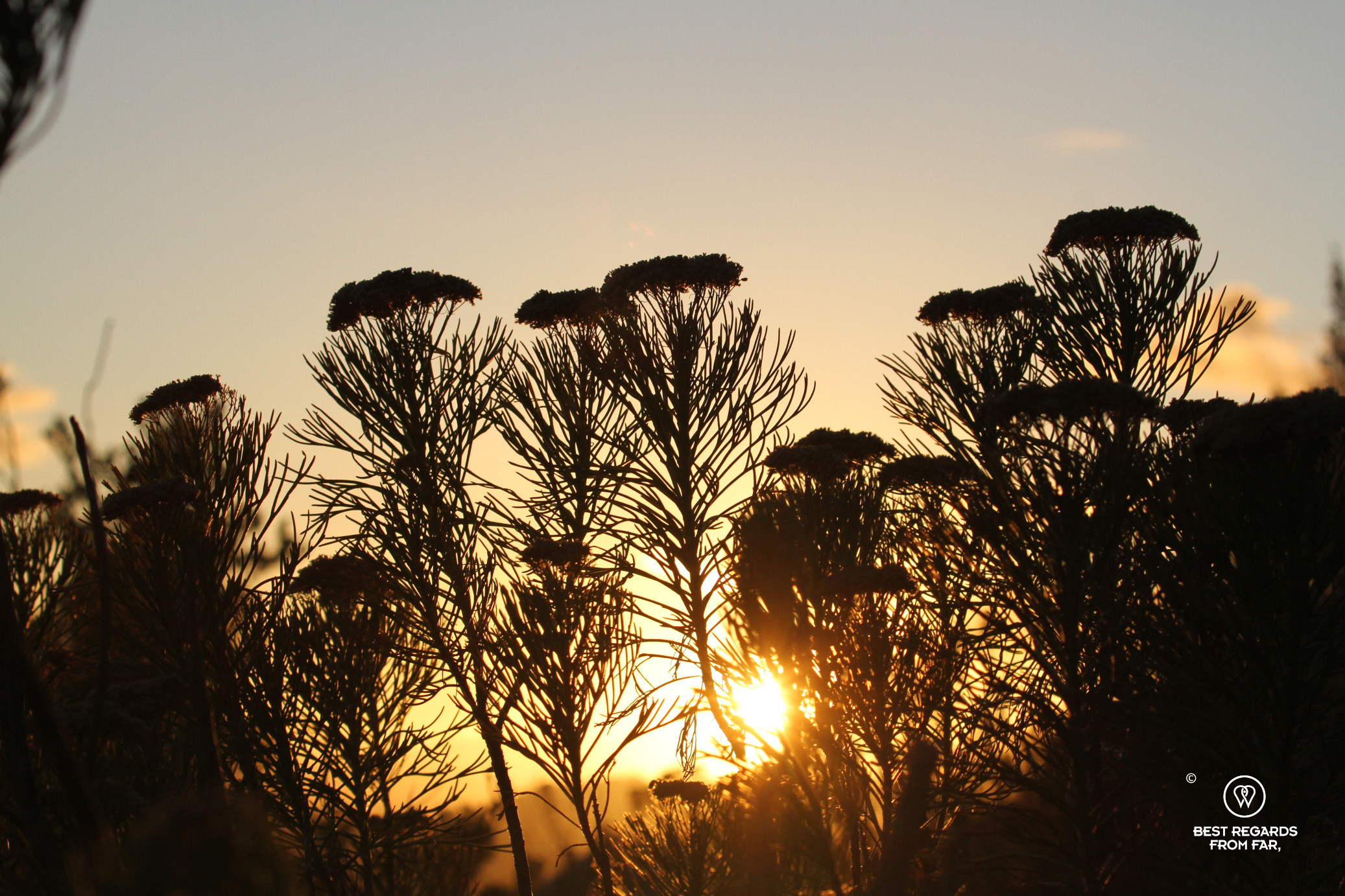
As the day closes and grateful for the gift of nature, one phrase echoes: “If you have found the place where you could die, then you have found the place where you can live.” Table Mountain richly covered in more than 2,000 fynbos species, iconically rises above the Mother City in the distance as we drive back to Cape Town. Bathed in soft orange hues of the setting sun, I begin to understand what it means.
Travel tips:
- Giselle Courtney offers this exclusive African Fynbos Experience in Wellington, just a short drive from Cape Town. Booking ahead is essential!
- Check out our interactive map for more in the area (black pins lead to an article):
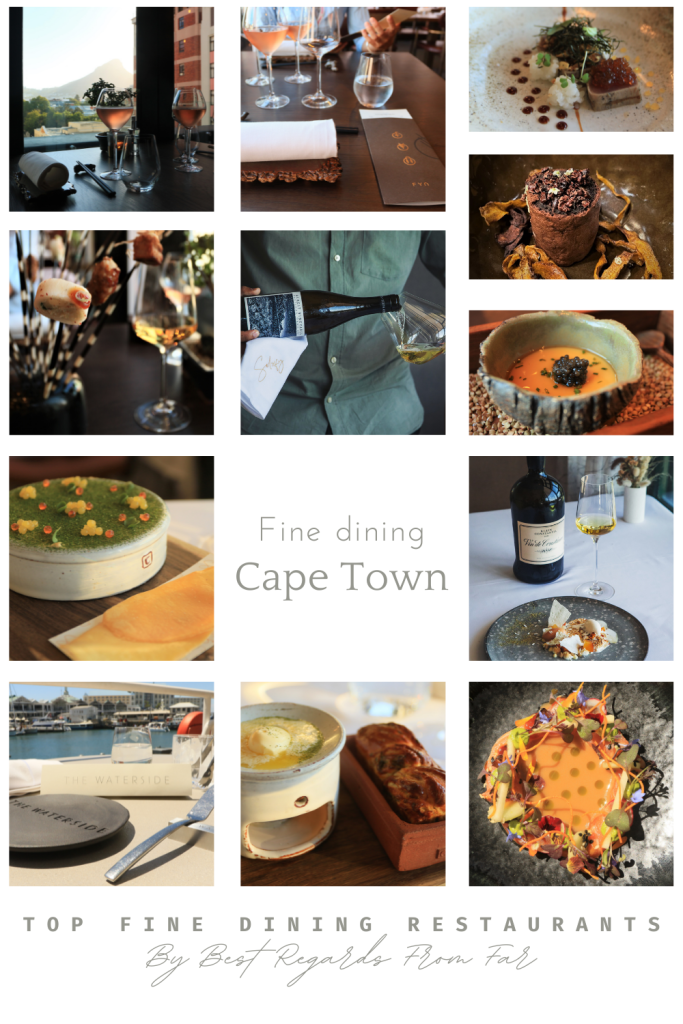
For more in Cape Town, click on these images:



 Best regards from far,