Text: Claire Lessiau
Photographs: Claire Lessiau & Marcella van Alphen
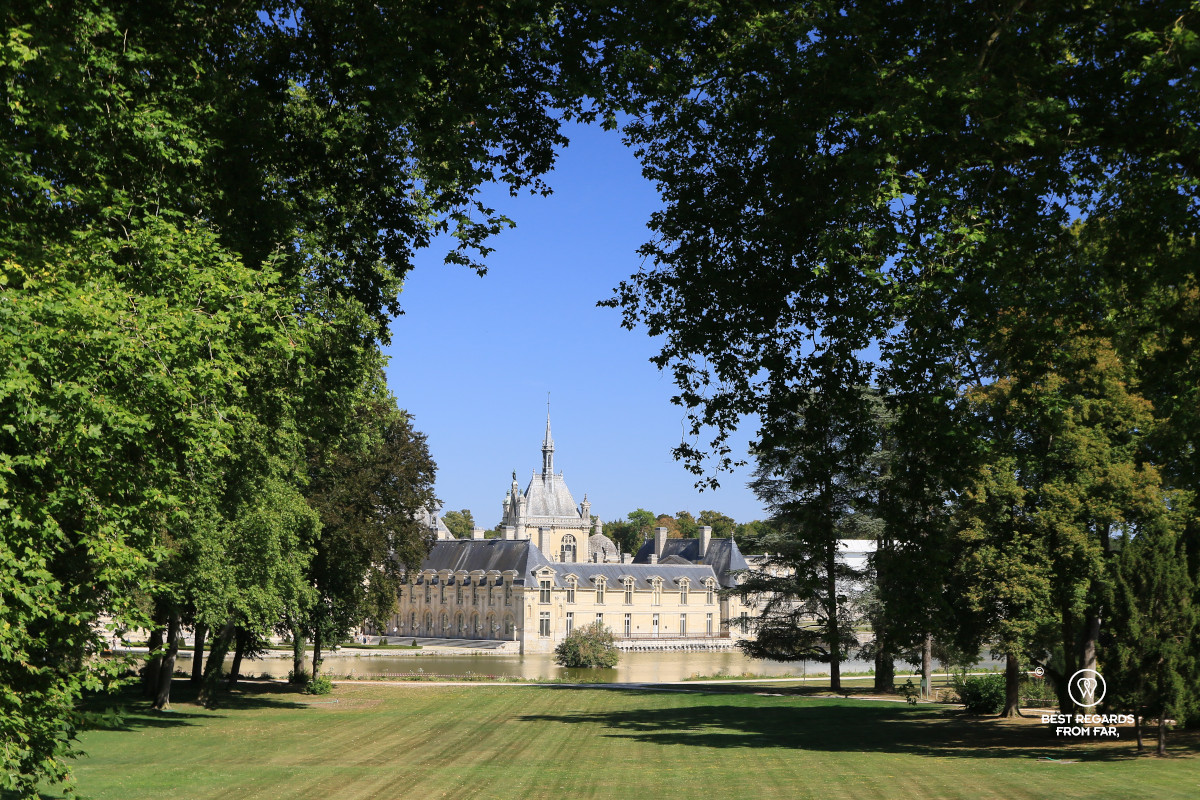
Far from the crowds of Versailles or the French gardens of the castle of Vaux-le-Vicomte, Chantilly is a symbol of French refinement, from gastronomy to art, from equestrian mastery to architecture, from the finest library in the world to delicate gardens.
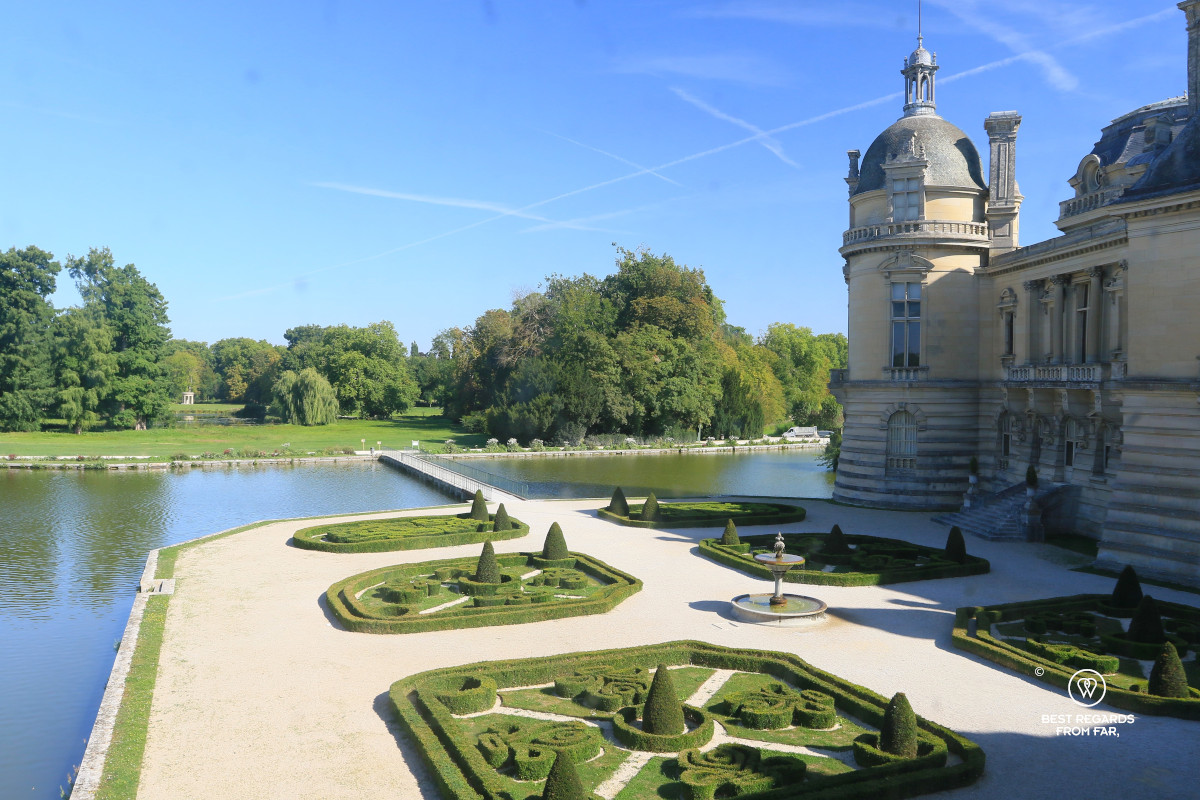
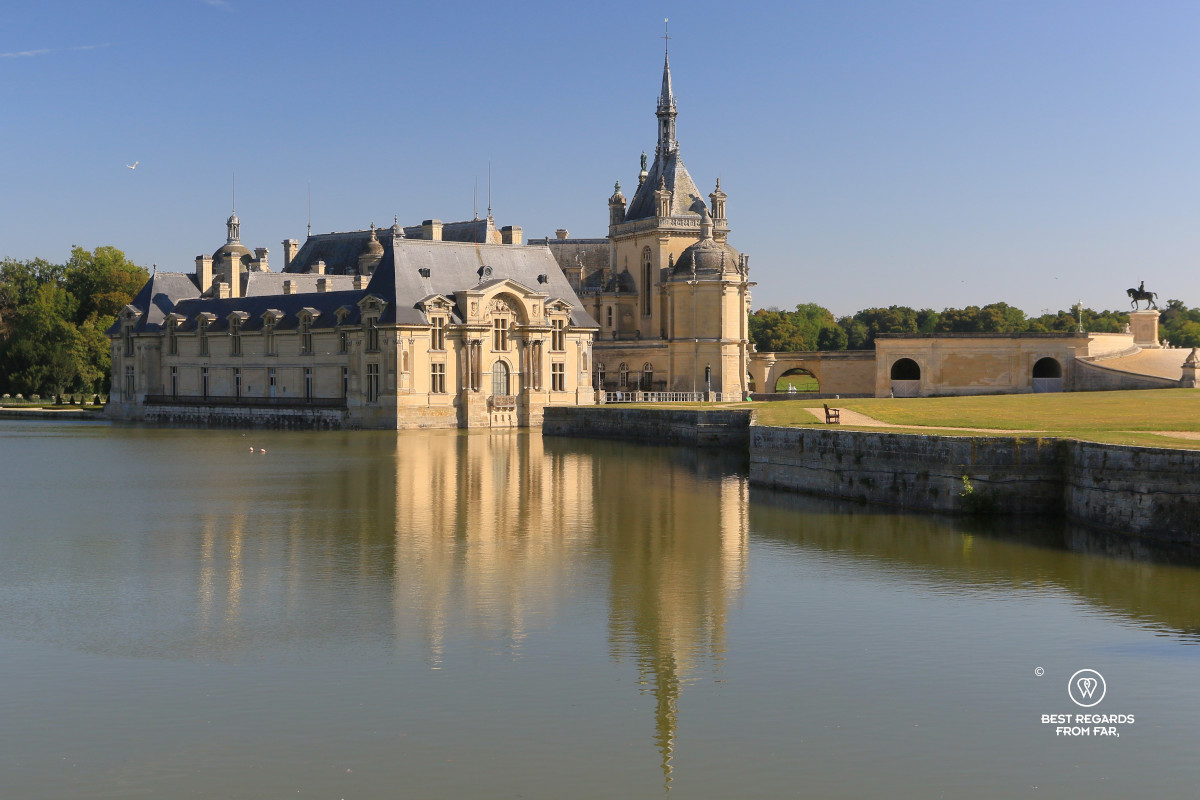
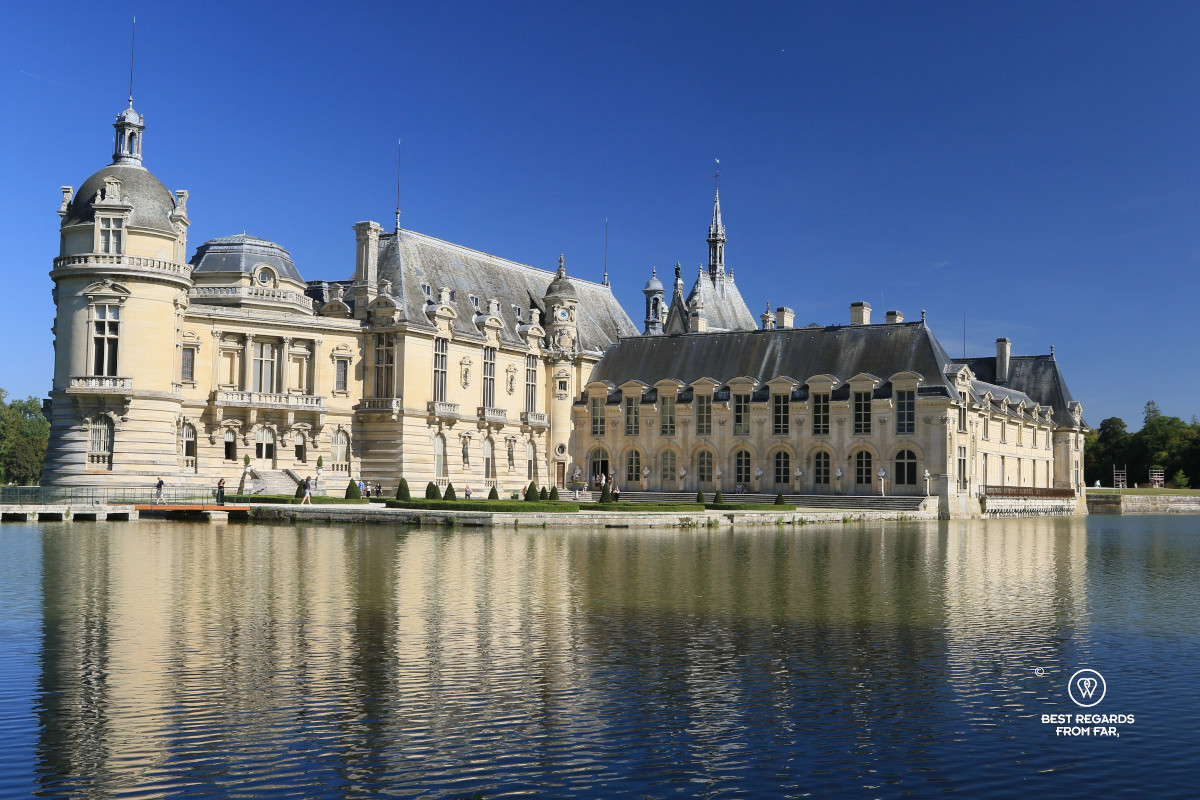
The patchwork of fields and forests makes it hard to believe that the French capital lies less than 40 kilometres (25 miles) south as he crow flies. Early in the morning, the graceful architecture of the castle of Chantilly is reflected in the still waters surrounding it. Riders trot by lifting thin dust from the bridle path and their elegant silhouettes fade in the distance. The iron gate of the castle opens…
Like it? Pin it for later!
1. The 3 Rules: What Makes a True Crème Chantilly [Not a Regular Whipped Cream]
For French people, Chantilly refers to the original whipped cream even more than to the castle that is intrinsically linked to the namesake cream.
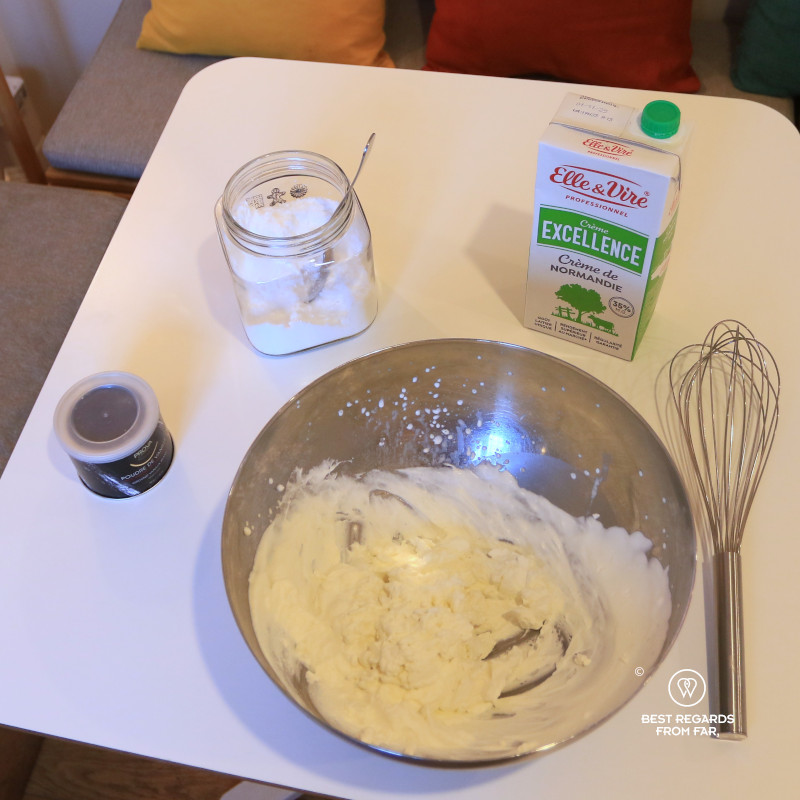
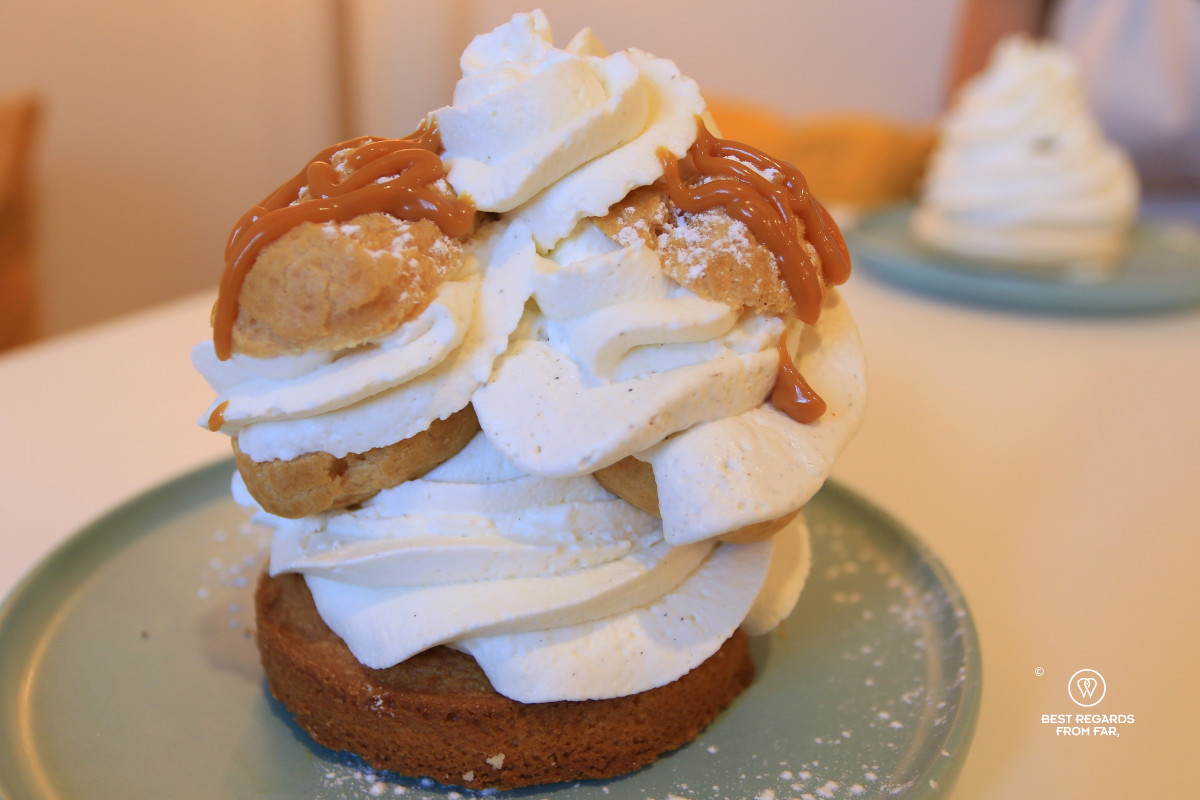
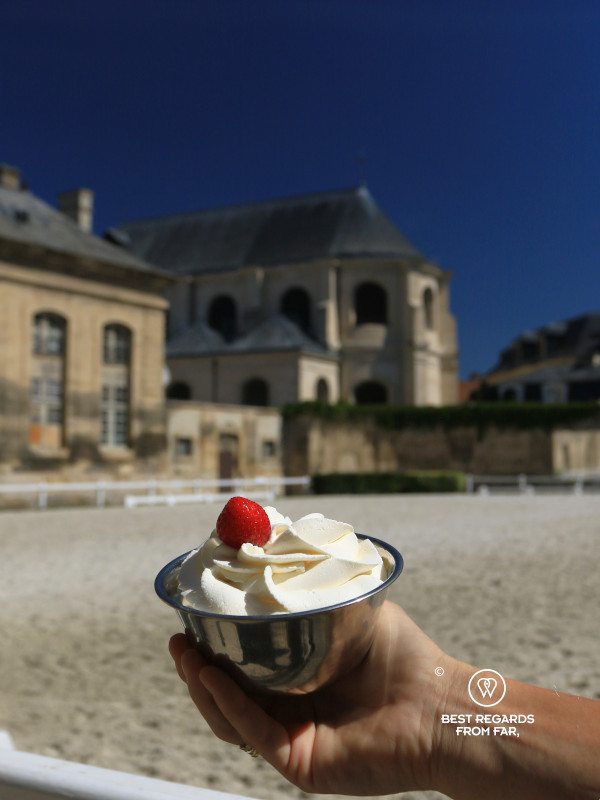
To call a whipped cream, a Chantilly cream, three rules must be respected. The liquid crème fraîche must contain at least 30 percent fat — ideally closer to 35 — otherwise it cannot hold. More fat content is tougher to whip and harder to digest. Sugar may not exceed 15 percent— icing sugar is lighter and also contains a small percentage of starch, helping with structure. Only natural aroma is permitted, such as vanilla, and preferably in powder form, and even then with discretion.
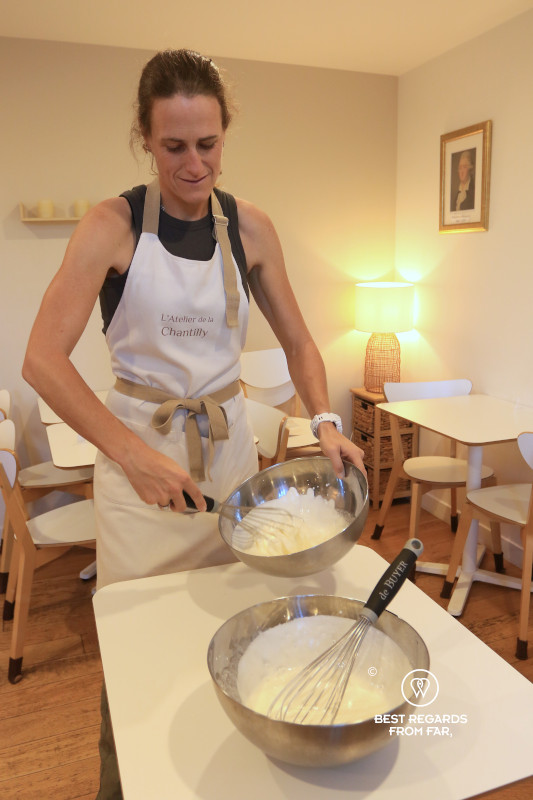
None of the knights of the Confrérie des Chevaliers Fouetteurs de Crème Chantilly (“The Brotherhood of the Whipping Knights of Chantilly Cream”) will negotiate on any of these rules. Defending traditions and culinary heritage while fighting industrial products, chemical additives, and aerosol cans is the core of their mission. Operating form the royal stables of the castle of Chantilly the knight order has been raising an army of squires we are now part of.
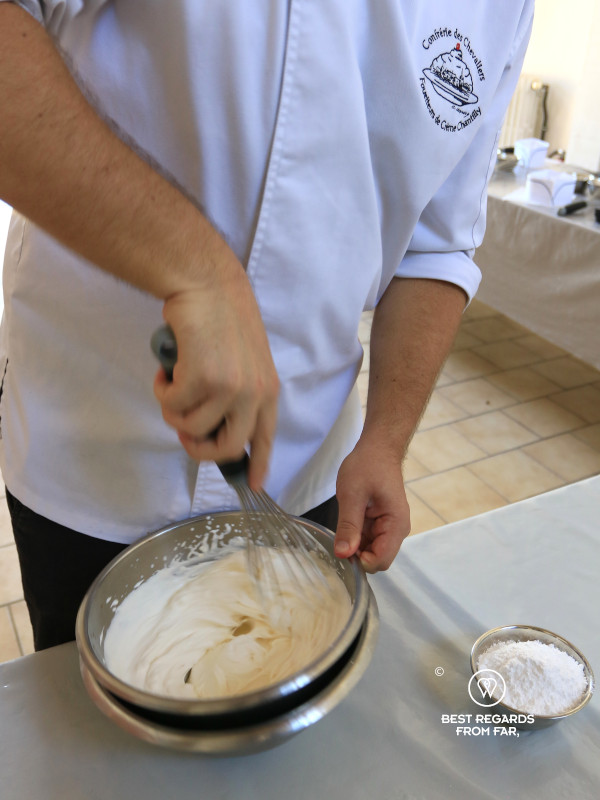
Bertrand Alaime, owner of L’Atelier de la Chantilly, and a passionate and dedicated member of the knight order has not only his ammunition set on the table, but also his weapons: a whisk chosen with care, its wires thick enough to displace enough volume with air for a light whipped cream; a stainless steel bowl chilled with ice cubes so the fat may hold, and his apron armour tightened. As a patient teacher, Bertrand begins with slow, controlled strokes in one direction only to introduce air. Then, he whips faster both ways to create traces in the cream before finally drawing very fast circles for the last movement after adding the sugar and flavouring. Timing is strict. Method is key.
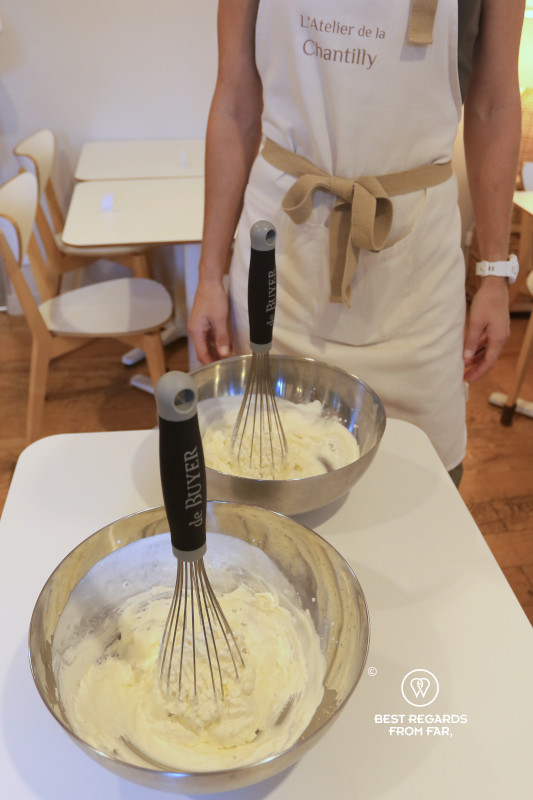

Done properly, the entire process takes a few minutes. The current record stands at one minute and fifty-three seconds.
2. The Myth of Vatel—Whipped Cream & Tragedy
Chantilly is cloaked in myths. One of them is the myth of Vatel and the Chantilly cream. François Vatel (1631-1671) was the French kingdom’s most brilliant maître d’hôtel. The splendour of his parties triggered the jealousy of Louis XIV, the Sun King and builder of the Palace of Versailles.
Forced into 10 years of exile to avoid prison, Vatel came back to France and worked as the general steward of the Prince of Condé, owner of the domain of Chantilly and cousin of the king—not wanted at the court of Versailles, the Condé’s were exiled in Chantilly.
In April 1671, Vatel was tasked by the prince to organize the most lavish festivities, entertaining 2,000 members of the French court during three days to win back the favours of his all-powerful cousin. Vatel is often credited with inventing whipped cream in a moment of panic, stretching dwindling supplies to satisfy the court of Louis XIV.
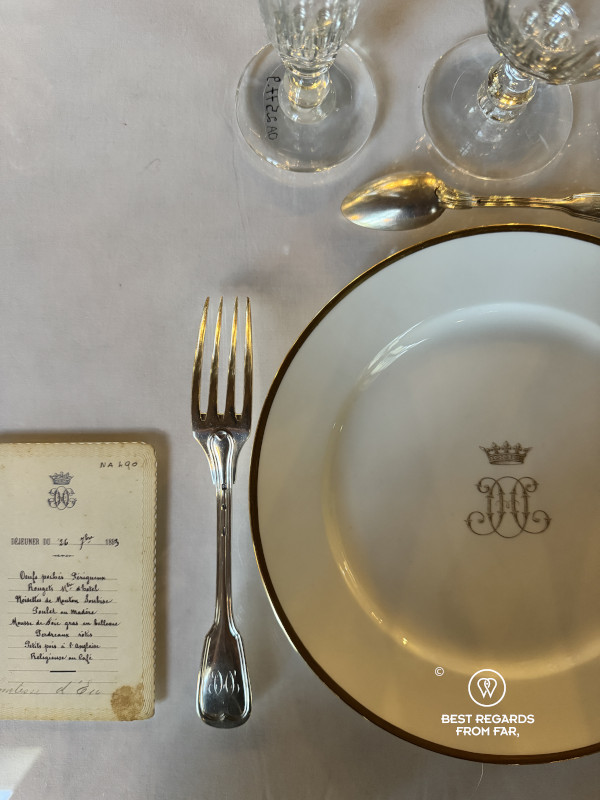
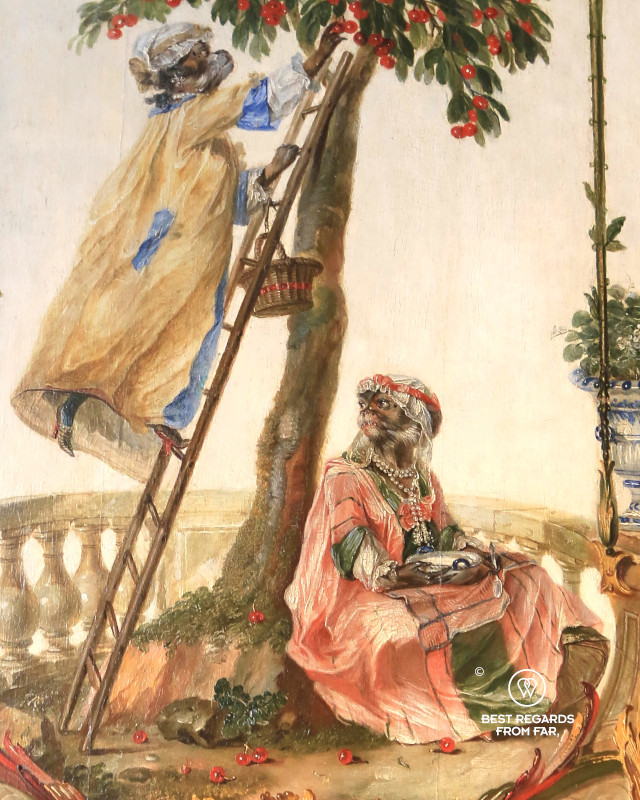
One night, desserts were running out. Vatel went to the kitchens and started whipping cream. Noticing the increased volume, he ordered his team to whip 20 litres of cream to impress and satiate the noble guests… Except that it is only a legend, and the reality is tragic. When fireworks fell into the water on Thursday, Vatel assumed the fish would not arrive on Friday. Convinced the event was ruined, he ran himself through with his sword. The fish arrived on time. The festivities were a resounding success. And the legend of Vatel survived him as the embodiment of French refined hospitality.
3. Before Chantilly Was Chantilly: The Elusive Origins of Whipped Cream
In reality, whipped cream existed long before Vatel. Rabelais mentions it in Pantagruel as early as 1532, but the origin of the Chantilly cream recipe is not quite known. The castle of Chantilly is often central to the whipped cream though.
If whipped cream was not invented in Chantilly, it was certainly adopted at the castle. In 1722, Francesco Procopio, a Sicilian chef established in Paris, served a whipped and iced cream at celebrations marking the return of Louis XV from his coronation. By 1784, sugar — newly abundant thanks to transatlantic trade — had entered the recipe. During one of the many parties that took place at the castle of Chantilly for the princes and nobles of Europe, the Baroness d’Oberkirch wrote of eating a delicious sweetened cream at Chantilly. By then, the cream had a name.
4. The Castle of Exile
Chantilly was the seat of the Condé family, cousins of the kings of France: too close to power to be safe for the royalty, distant enough in Chantilly to not be a threat.
Exiled from court, they built here with purpose. The gardens were designed by Le Nôtre, the same hand behind Versailles. Vatel was running the show, the same hand behind Vaux-le-Vicomte. Writers and thinkers — Molière, La Bruyère, Madame de Sévigné — attended the lavish parties. It was a place meant to rival the court. It inspired the queen: the hamlet of the castle of Chantilly inspired Marie Antoinette for the Trianon in Versailles.
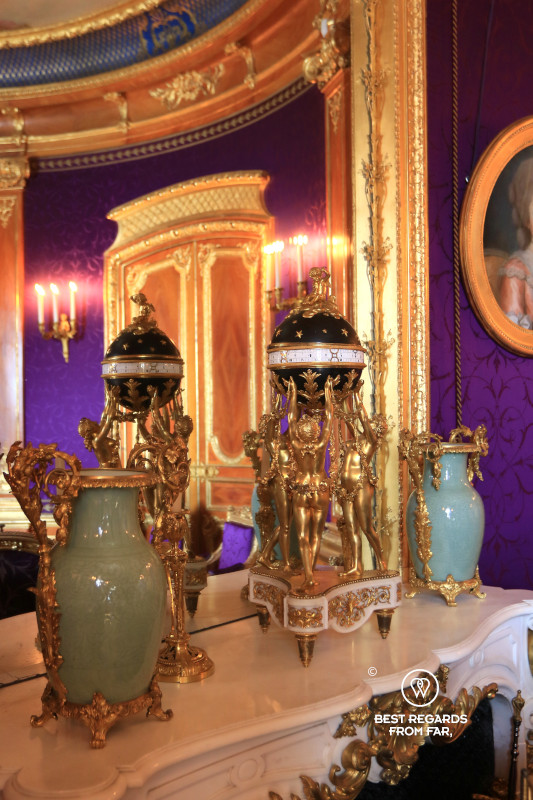
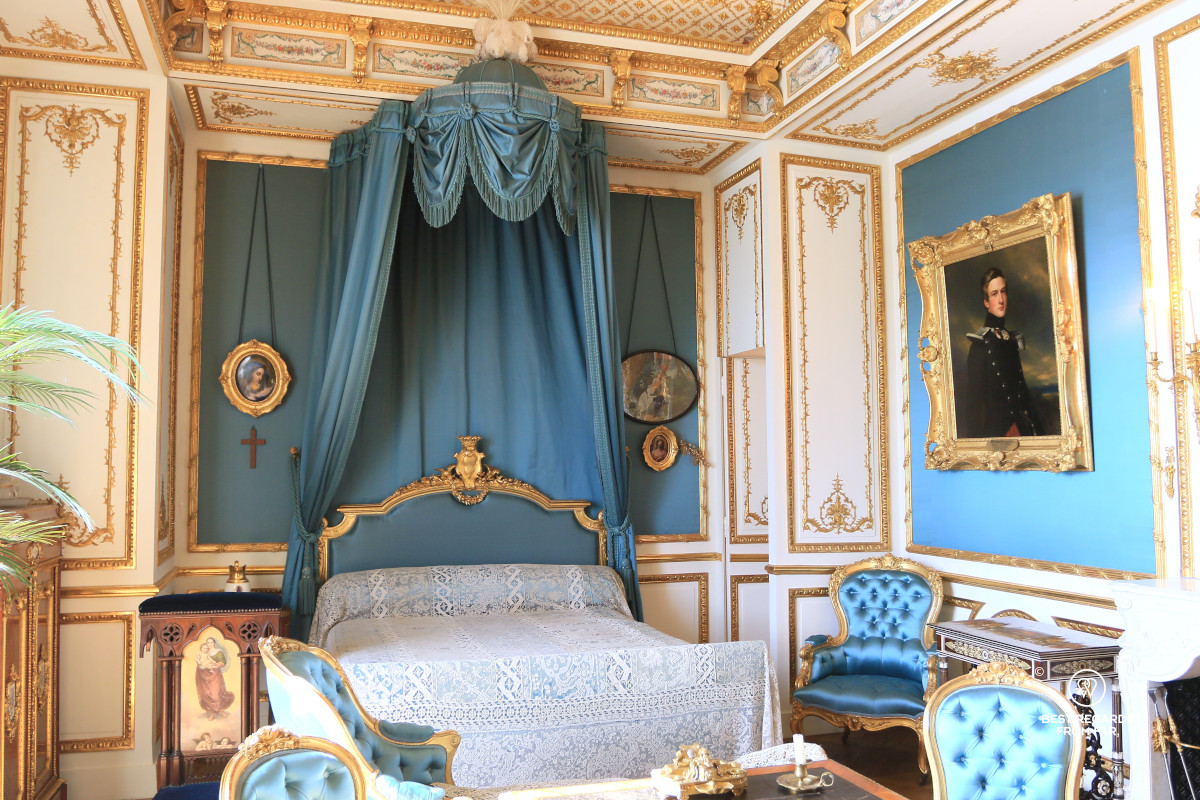
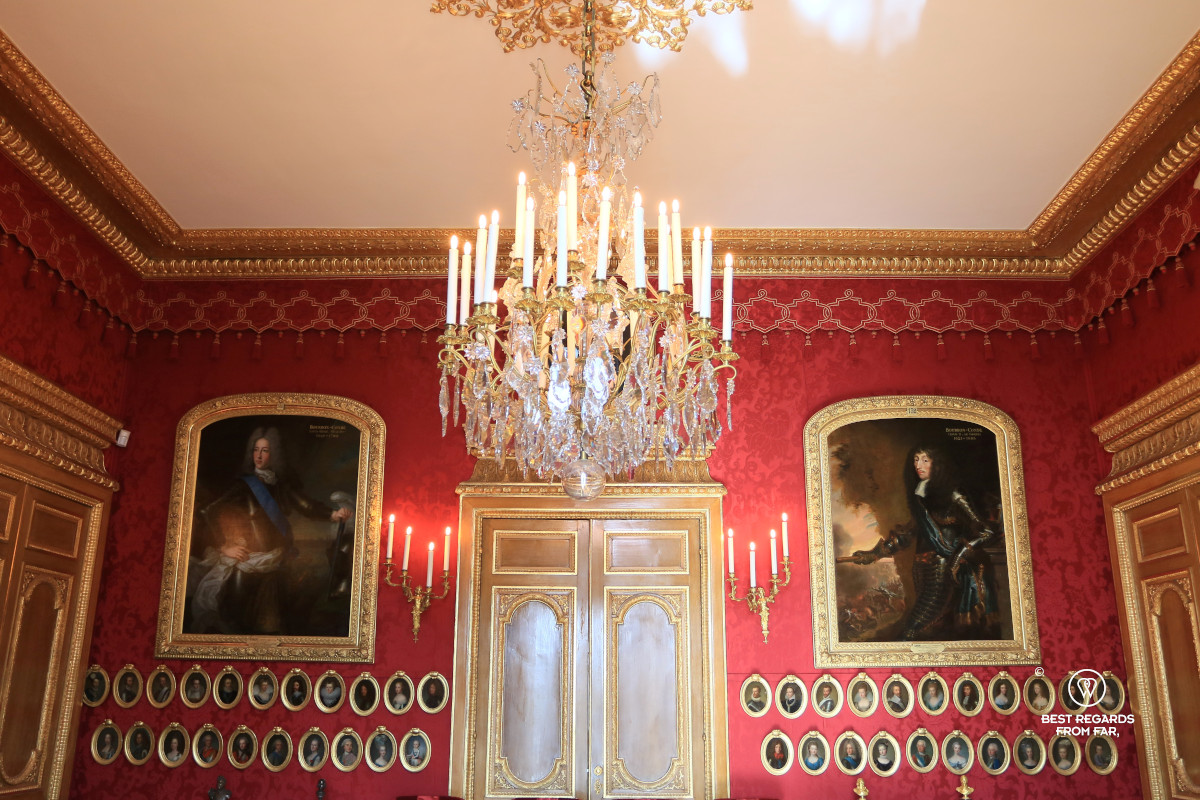
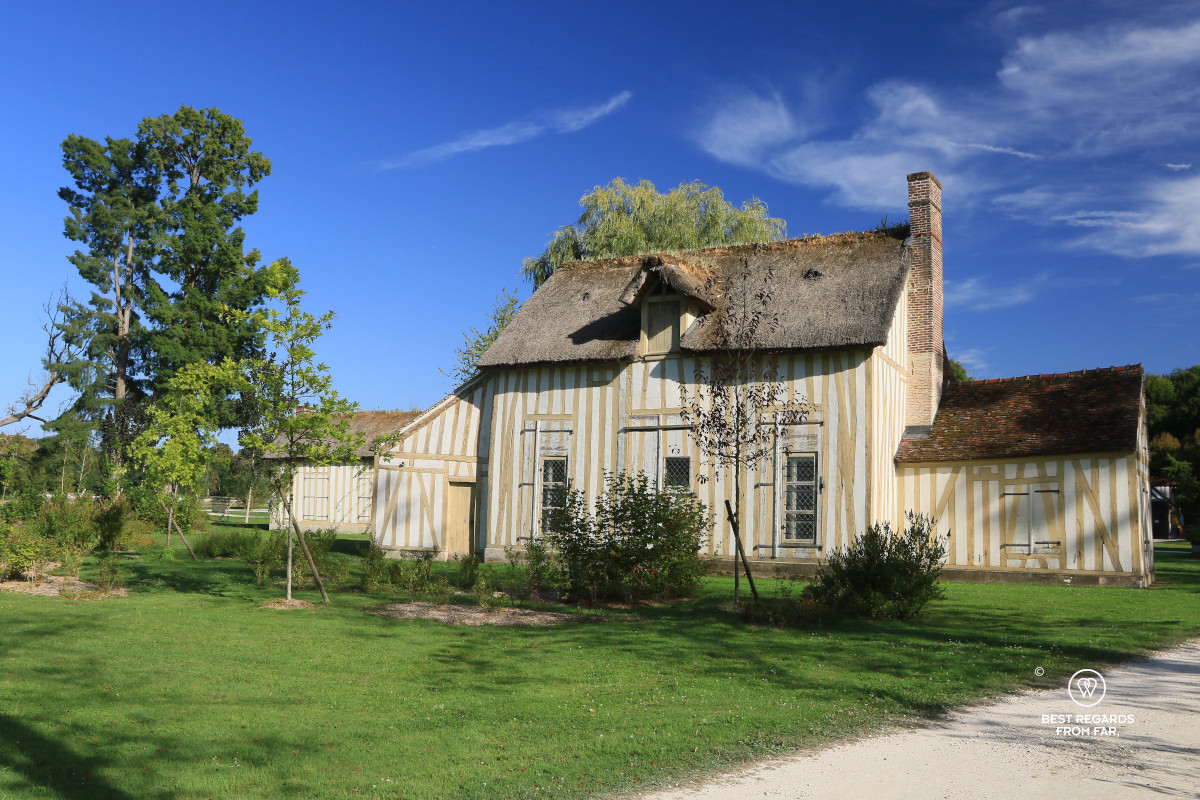
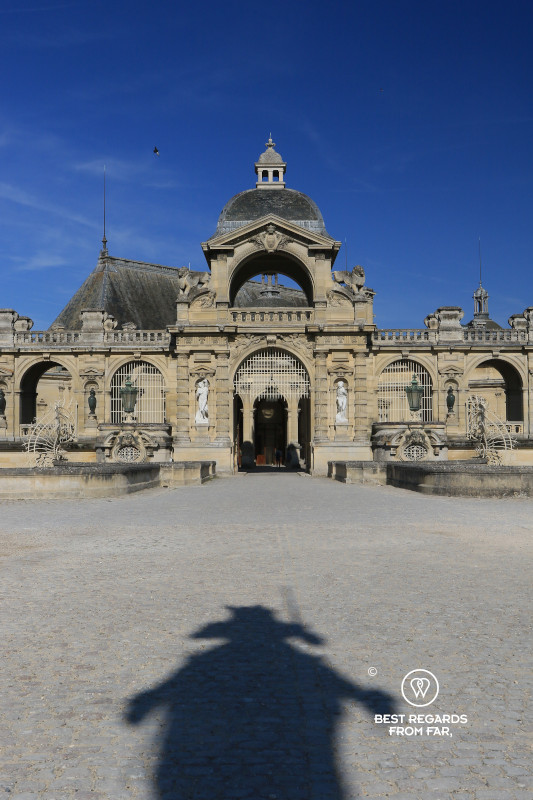
The grand château was rebuilt in the 19th century by Henri d’Orléans, Duke of Aumale, who inherited the domain of Chantilly from his uncle the last Duke of Condé. His initials HO still appear throughout the rooms. The private apartments of the Aumale’s are a tribute to the duke’s wife, the duchess who died in exile at 57. The violet room, the colour of mourning shows the sorrows of a man who spent 23 years in exile, lost his wife, and both his sons who died at 18 and 21.
5. The Duke of Aumale: A Collector’s Legacy
With no heir, the Duke of Aumale donated the entire estate to the Institut de France.
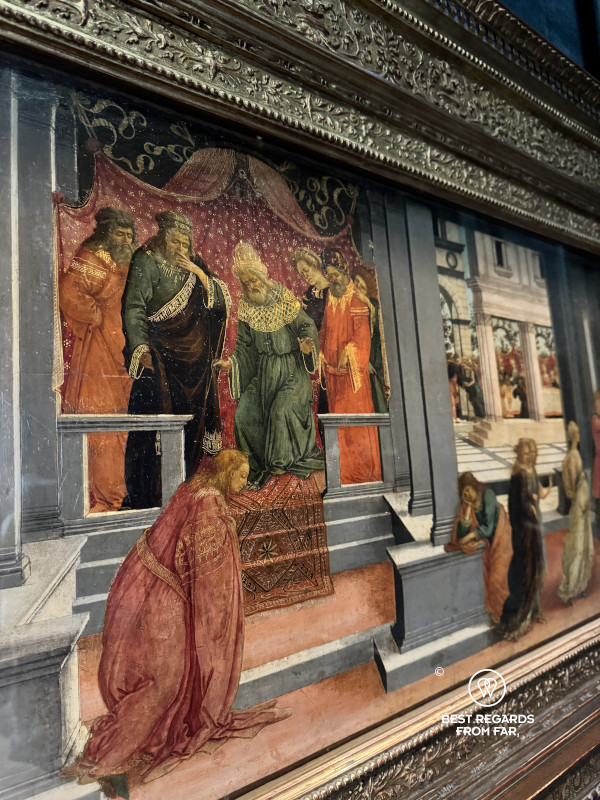
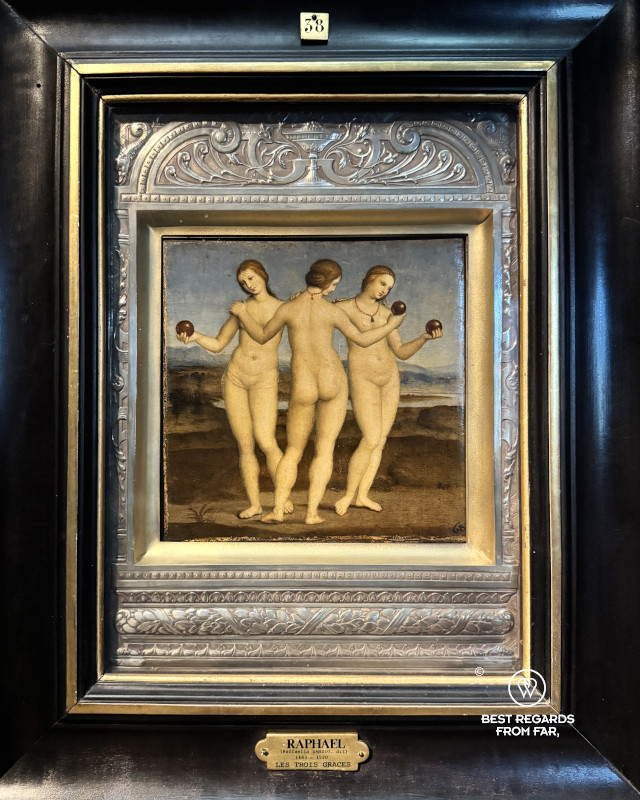
The collections were left exactly as they stood at the moment of his death. Paintings remain hung frame to frame, lit from above, in the 19th-century manner.
The result is France’s second most important classical painting collection after the Louvre. Raphael, Poussin, Lippi, Ingres, Watteau, Delacroix… are all here, intimately.
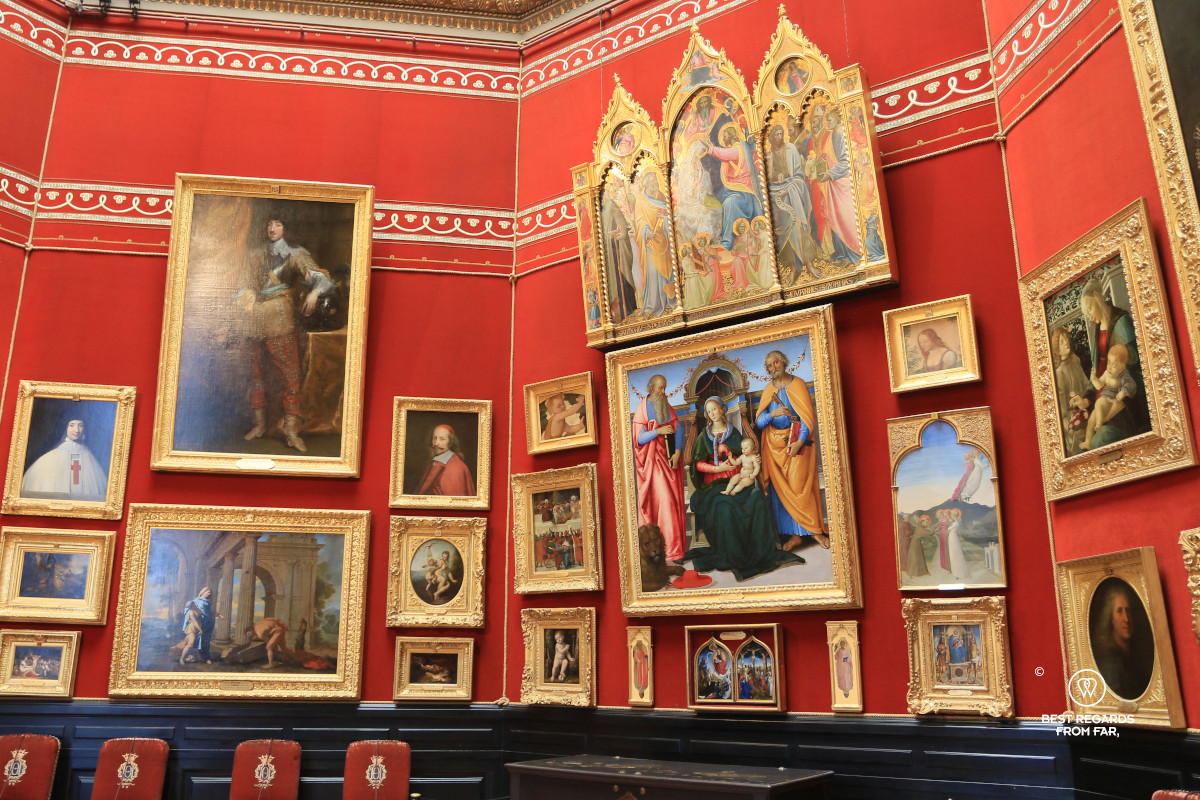
6. The Très Riches Heures: The Most Beautiful Book in the World
The Duke of Aumale was not only a tasteful painting collector, he was also one of the greatest bibliophiles of his time. The castle of Chantilly is the jewel case for the rare book collection of 19,000 volumes.
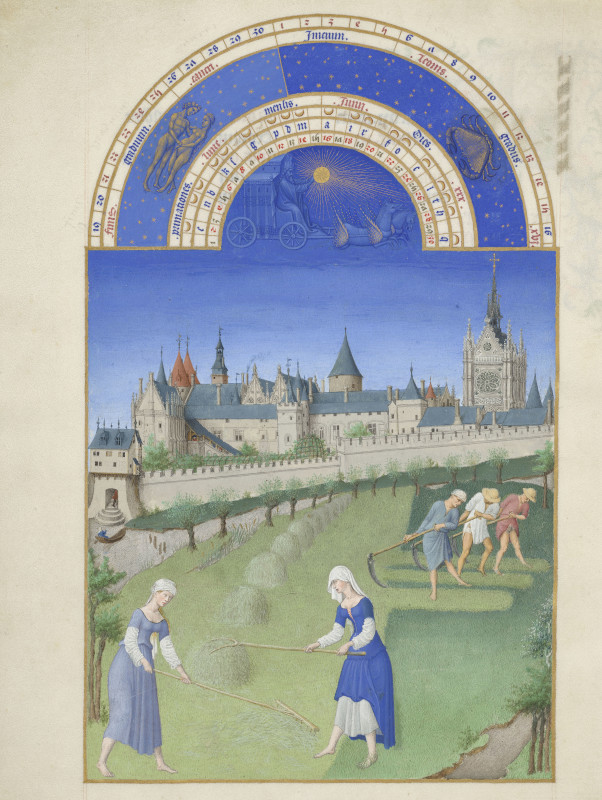
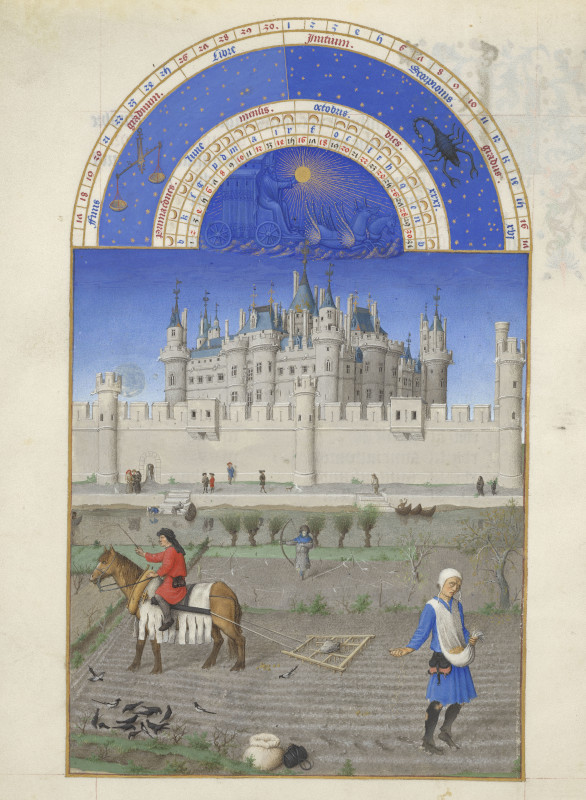
Of all these precious medieval books, Chantilly guards one above all: The Très Riches Heures du Duc de Berry. This Book of Hours was commissioned around 1411 by Jean I, Duke of Berry (1340-1416) — son, brother and uncle of French kings — and executed by the Dutch Limbourg brothers alongside the finest scribes and illuminators of their time. Like all books of hours it was to contain religious texts, such as prayers to the Virgin and psalms of penitence, as well as a calendar and devotions for every day of the week. Each month was to be illustrated with signs of the zodiac and charts of the moon’s phases.
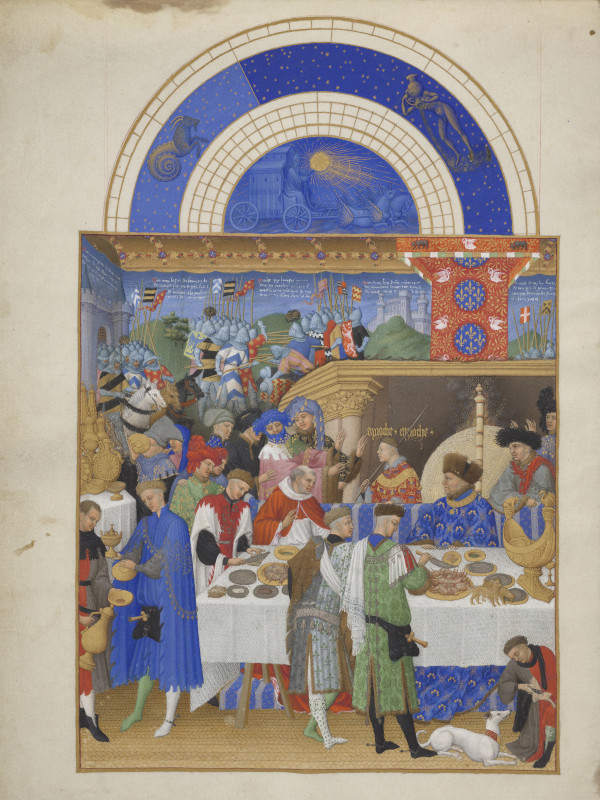
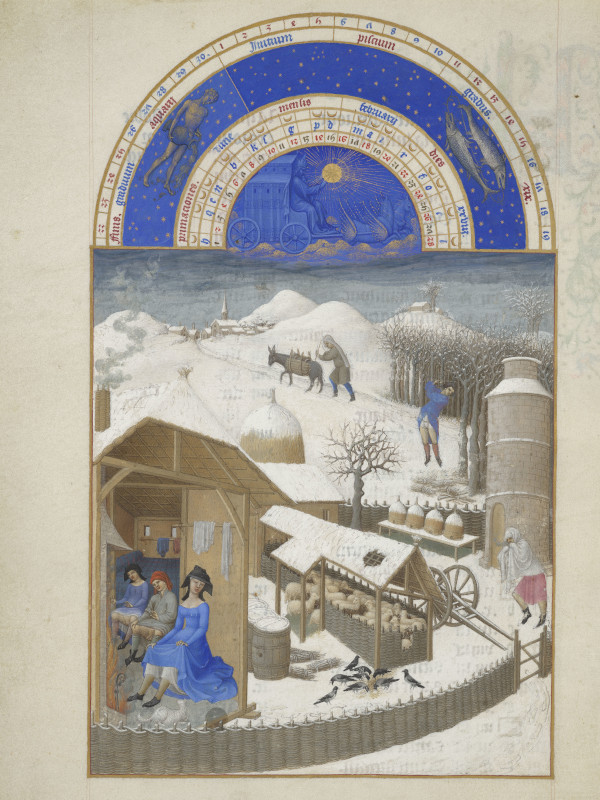
Patron and artists died in 1416, leaving the manuscript unfinished. In total, 27 painters, illuminators, and copyists continued the work that spanned over 75 years to produce the Mona Lisa of manuscripts, one of the most sumptuous books to have come down to us from the Middle Ages. Flemish, French, Italian, Eastern and classical influences blend in the richly illustrated text with a luminous colour palette that has left an indelible mark on the history of arts, inspiring countless masterpieces.
This fragile and priceless manuscript describes a Middle Age with the fairy tale castles of the Duke of Berry, idealized field works, and extravagant royal parties. It continues to shape a romanticized and idealized vision of the Middle Ages in the popular imagination.
7. A Once-in-a-Lifetime Exhibition
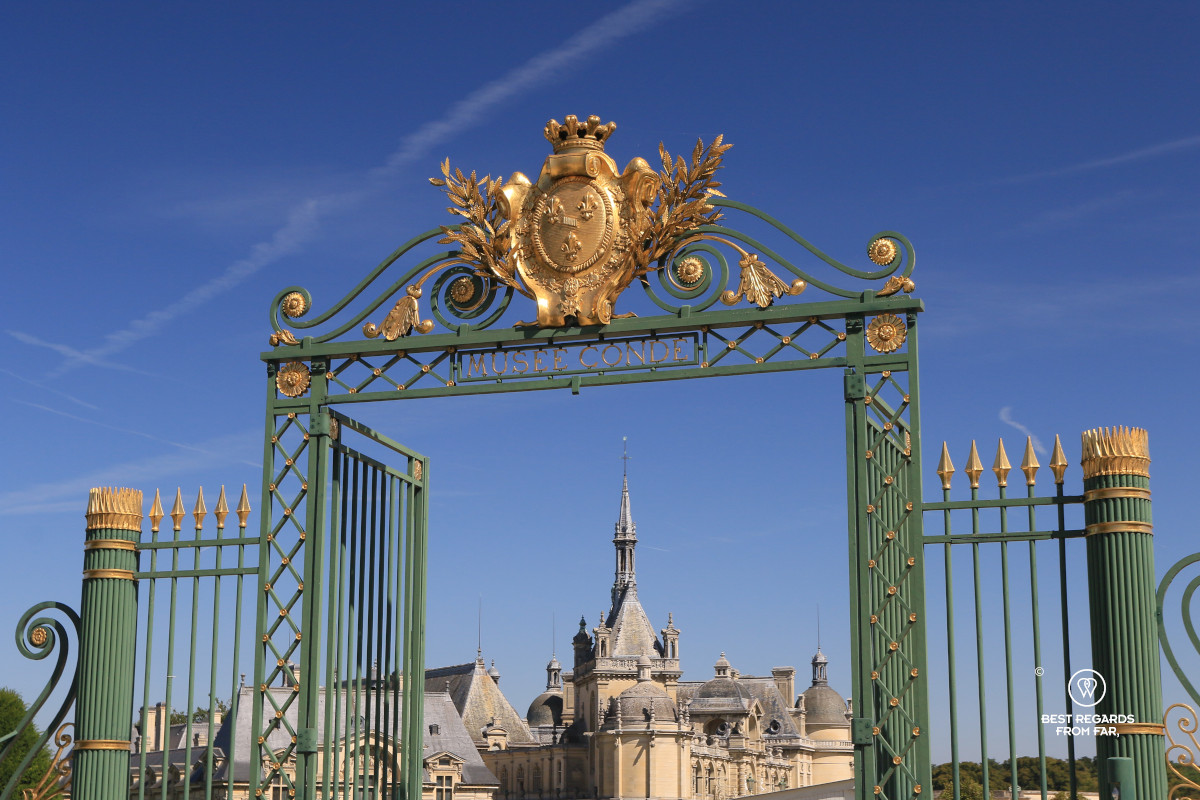
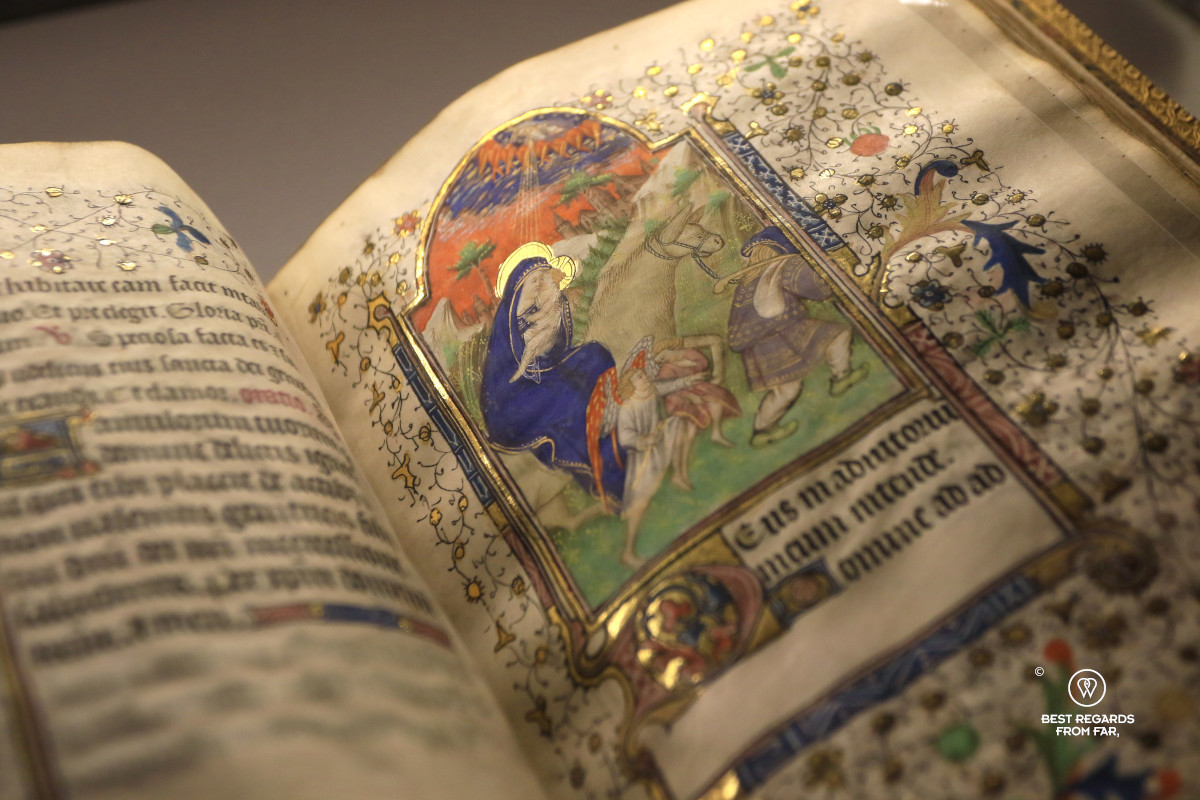
The Très Riches Heures du Duc de Berry cannot be exhibited outside the Château de Chantilly, where it is conserved in a secure environment away from public view. It is too fragile, too valuable.
Following an extensive restoration led by the French Museums Research and Restoration Centre (C2RMF) at the Louvre, a once in a lifetime exhibition at the castle presented this extraordinary book and its 131 exquisite paintings in 2025. Cutting-edge analysis and technology permitted not only the exhibition, but also the precise digitalisation of one of world’s most precious books, more than 500 years after its completion.
8. The Stables: Horses, Architecture and Prestige
The stables of Chantilly are among the largest in Europe. Designed by Jean Aubert, who trained under Jules Hardouin-Mansart (1646-1708), the architect of the large and small stables of Versailles, they are as much part of the identity of Chantilly as the castle itself.
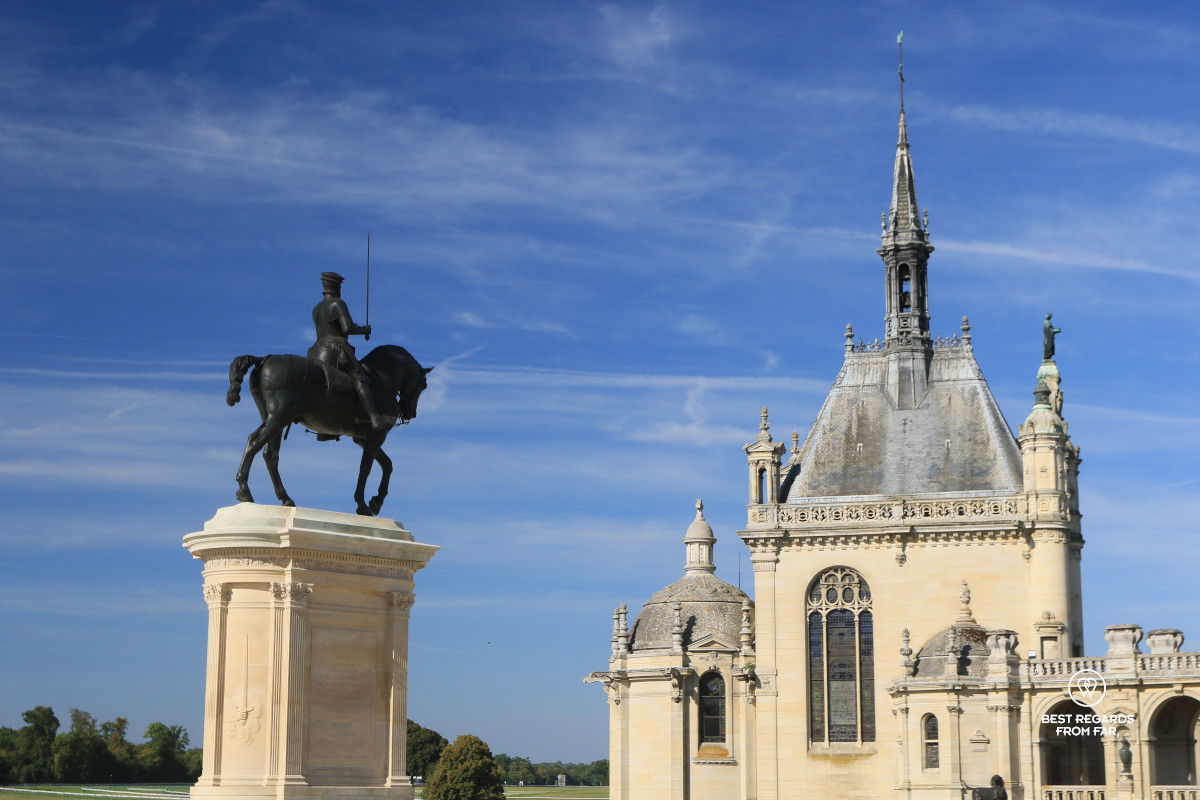
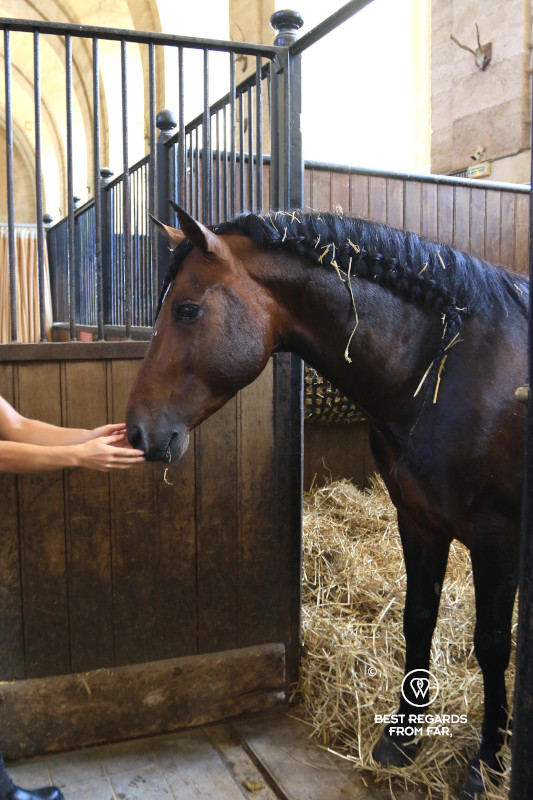
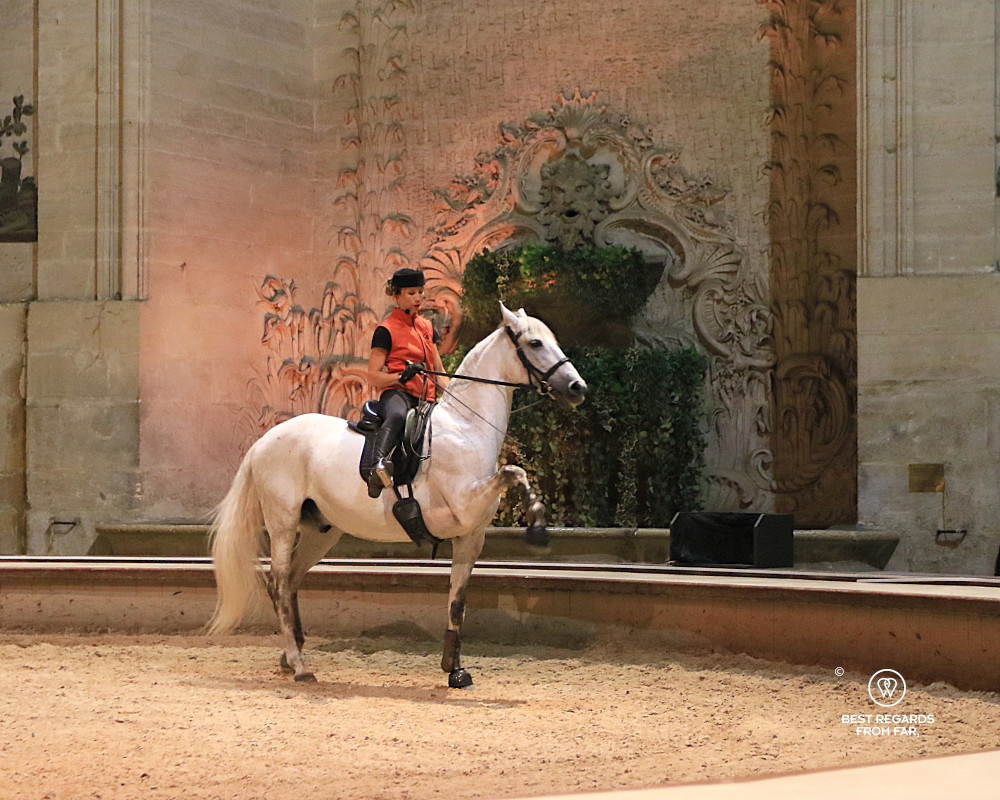
Beyond their remarkable architecture, it is a place where equestrian tradition, science, and aesthetics merge. Chantilly’s estate has been a benchmark for quality in European equestrianism where horses were carefully selected and cross-bred to meet specific goals — whether for racing, work, or ceremonial use. To this day, Chantilly reflects centuries of equestrian innovation and training methods, continuing its equestrian excellence and showcasing it in their shows and through extensive horse museum.
***
Whether it is to whip your own cream and indulge, watch a horse show, admire the art in one of France’s most precious museums, stroll the gardens, explore the castle, immerse yourself in one of the exquisite exhibitions or all of the above, Chantilly is a gem for the ones in the know, away from the main touristic path. A place where history lives on, and where transmission and tradition remain paramount. In Chantilly, true luxury lies not in excess, but in care and elegance.
Travel tips:
- While the exhibition of the Très Riches Heures du Duc de Berry is now over, its digital version can be admired following this link.
- Some of the rare medieval books of the collection of the castle of Chantilly are on display at the castle that also hosts the Musée Condé and its exceptional paintings. Make sure to check the temporary exhibitions too as they never disappoint. Refer to the website of the Castle of Chantilly for the schedule of the excellent equestrian shows, and to book a tour of the private apartments of the Duke of Aumale.
- To whip your own Chantilly cream, refer to L’Atelier de la Chantilly that doubles as a pastry shop highlighting Chantilly cream of course, or the Confrérie des Chevaliers Fouetteurs de Crème Chantilly for a workshop in the Great Stable of the castle.
- Chantilly is a real gem and a full day is an absolute minimum to discover it.
- Check out this interactive map for the specific details to help you plan your trip and more articles and photos (zoom out) about the area!
For more in Paris, click on these images:




 Best regards from far,