Text: Marcella van Alphen
Photographs: Claire Lessiau & Marcella van Alphen
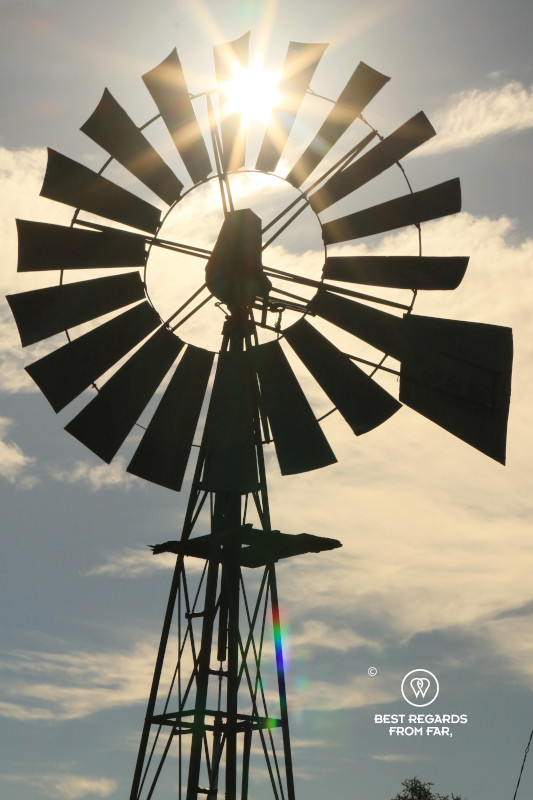
It has been an hour since we last saw a car as we make our way across the Karoo in South Africa’s Northern Cape. Here and there, a signpost hints at a sheep farm. As we cross a dry riverbed under the scorching African sun, I notice a distant thunderstorm brewing. The odd metal cranky windmill signals human presence, yet the landscape feels otherworldly. Clouds gather, hiding the sun before breaking open, filling the air with the earthy scent of rain—a welcome reprieve in this semi-arid region.
Pin it for later!
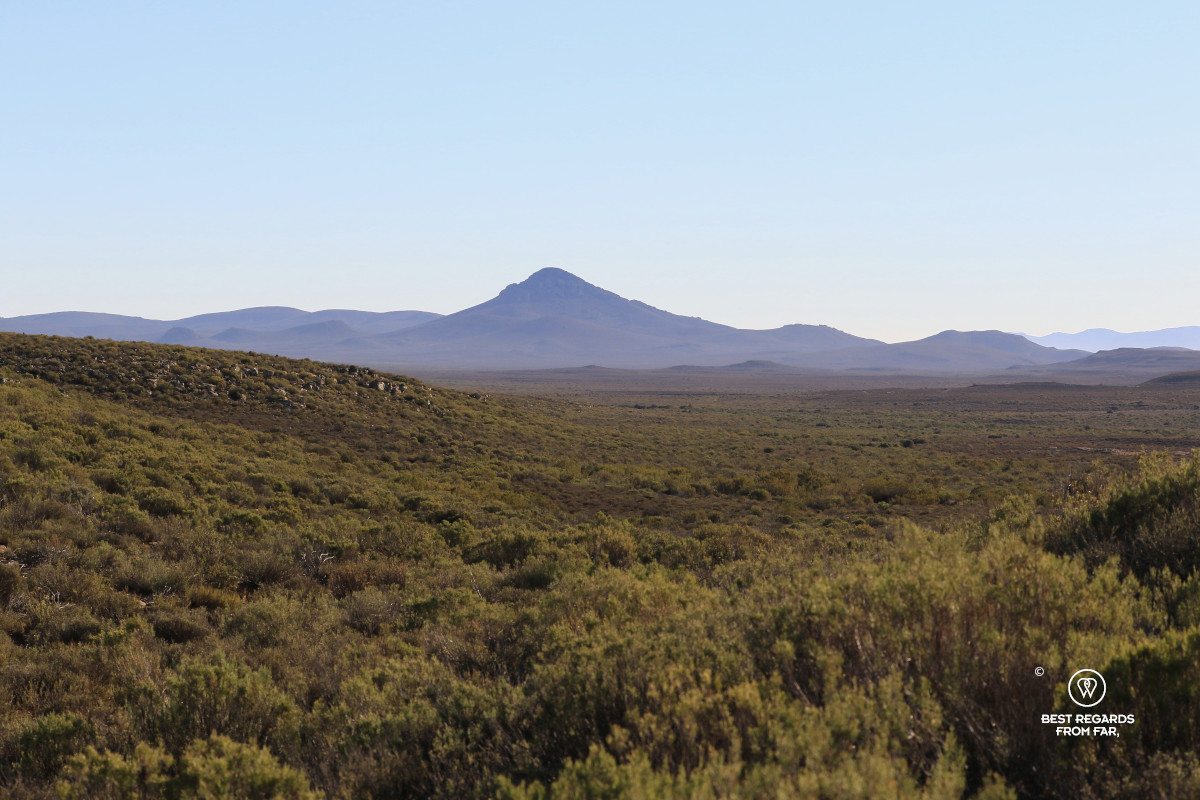
The Karoo lives up to its nickname, the land of vast skies. Its wide-open landscapes, sparse vegetation, and towering skies stretch endlessly toward the horizon. Life here has adapted to intense summers and brutally cold winters, with some peaks, such as the extinct Sanpeterskop Volcano, capped with snow.
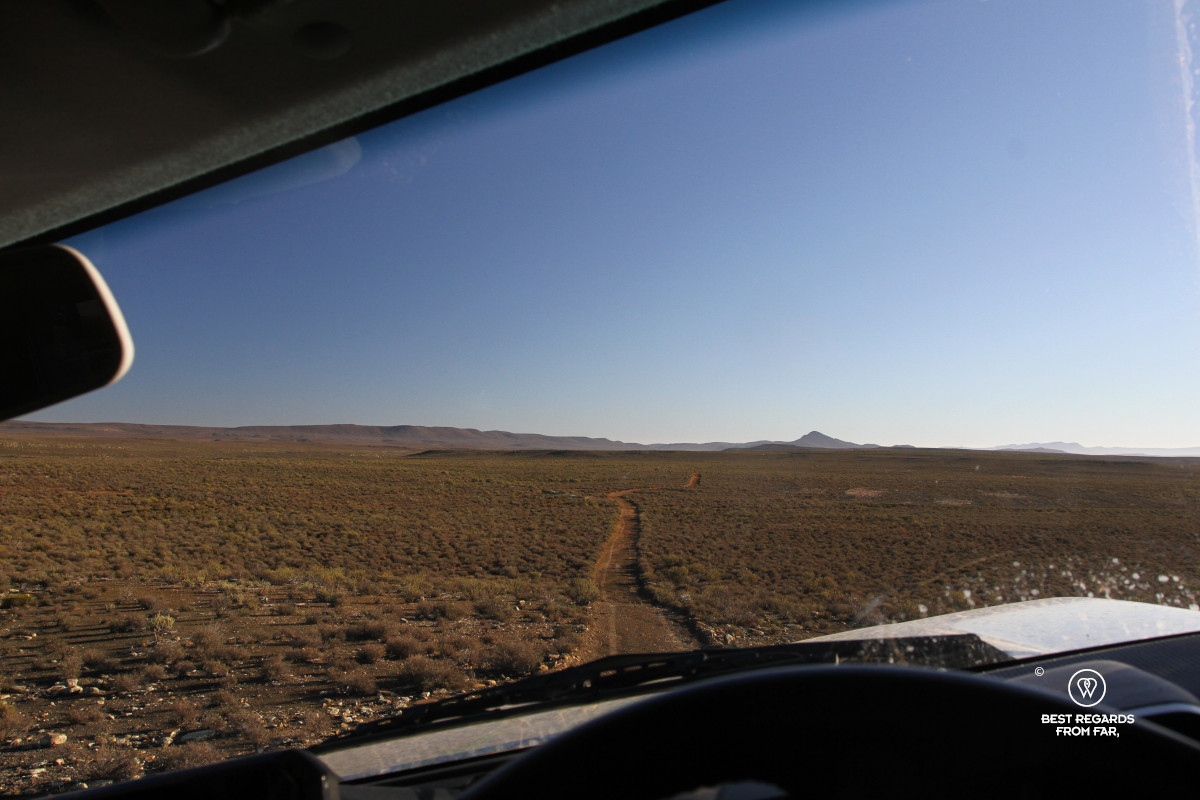
A large gate guards the gravel road. I press the intercom and announce ourselves. A friendly voice instructs us to follow the gravel track for another 12 kilometres (7.5 miles) to the secluded, eco-hideaway of the Rogge Cloof Private Nature Reserve, and the gate slowly opens. What we are about to discover far exceeds our expectations.
Sunrise Game Drive
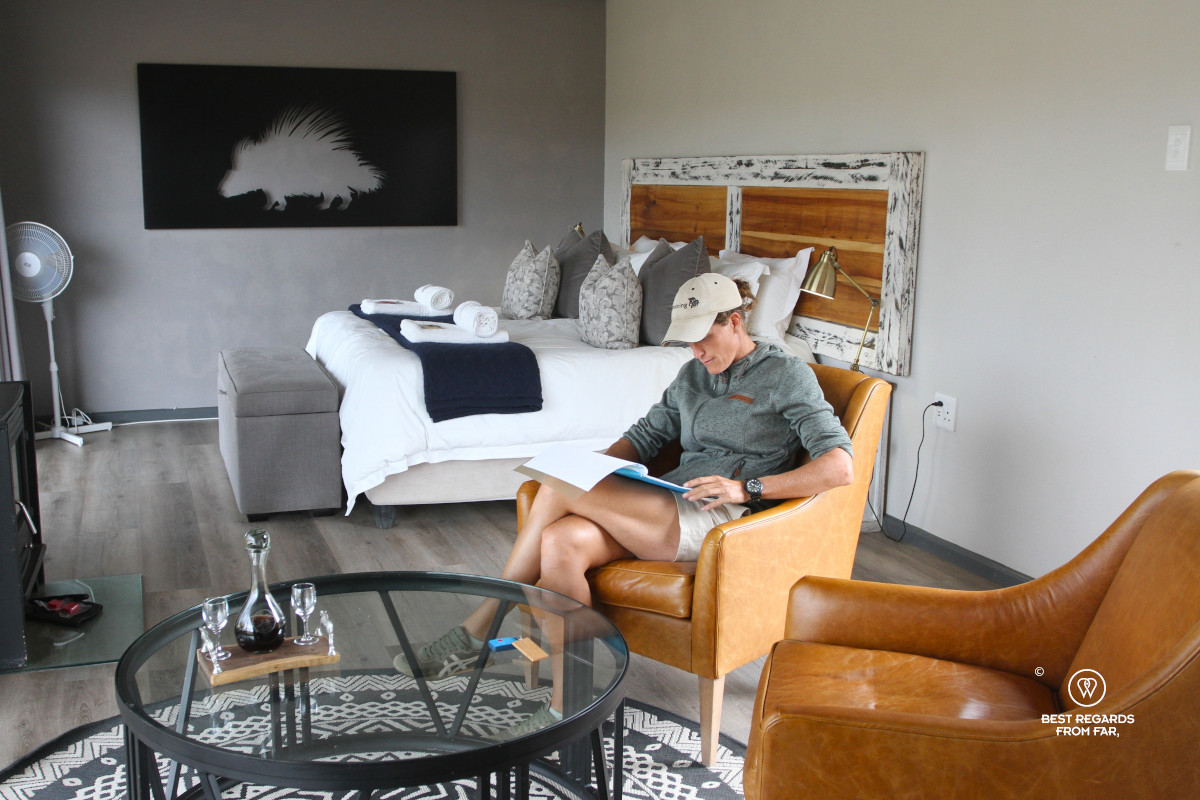
After a night in one of the exclusive comfortable solar-powered cottages that have been designed following sustainable building techniques, we wake up with the lark for a sunrise game drive.
Before sunrise, we head out in the Land Rover and observe the colour change in the sky announcing the break of day. Despite the low vegetation, it is not easy to spot wildlife as animals are well-camouflaged.
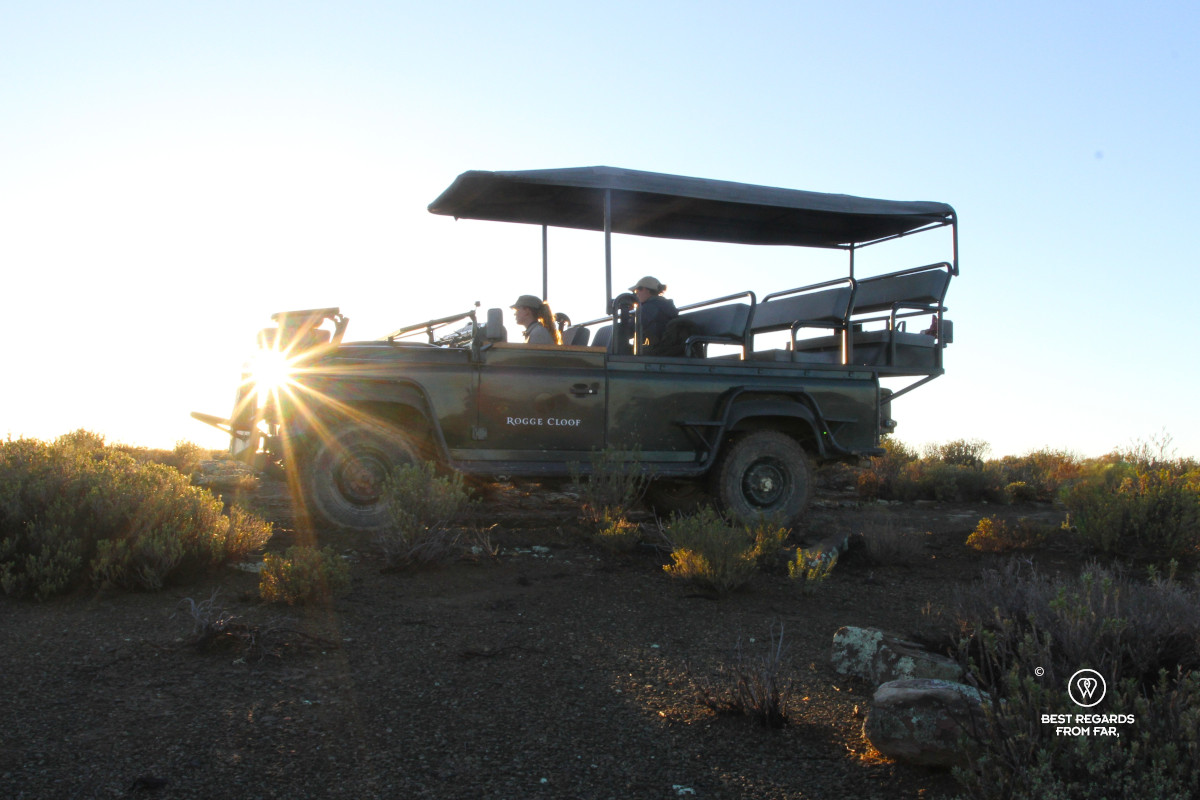
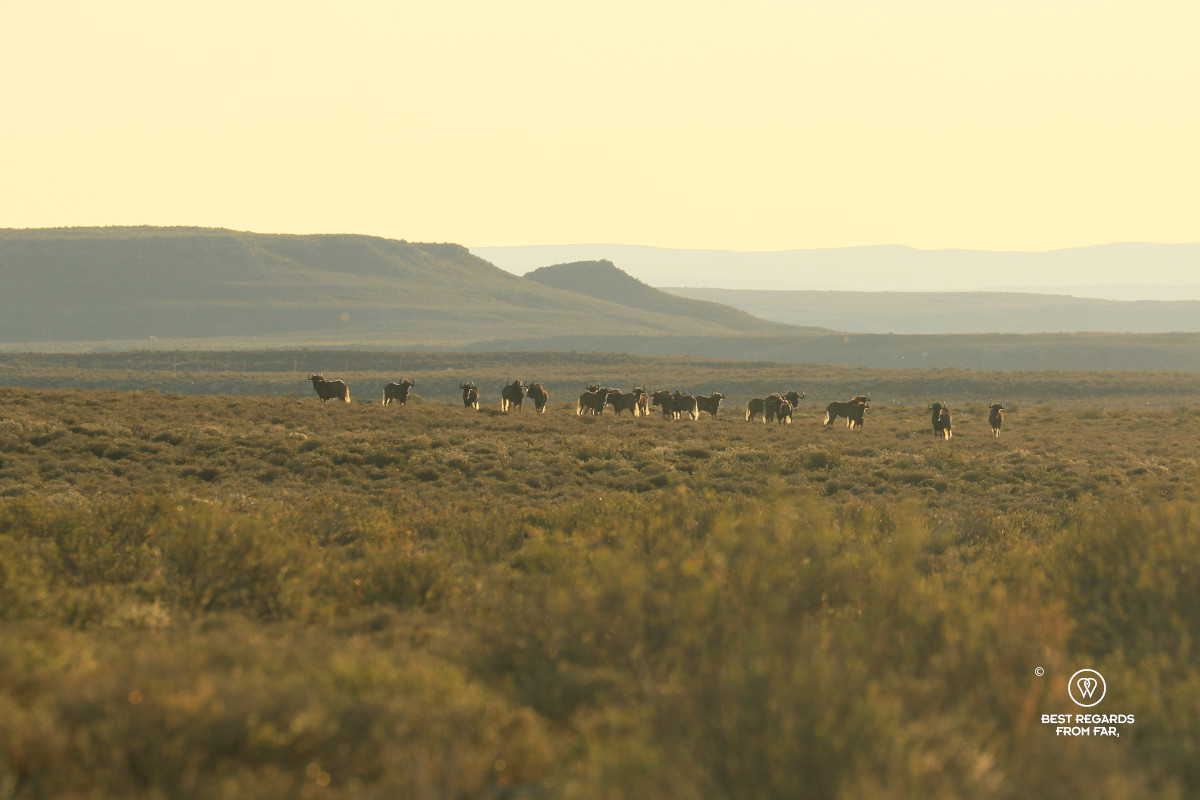
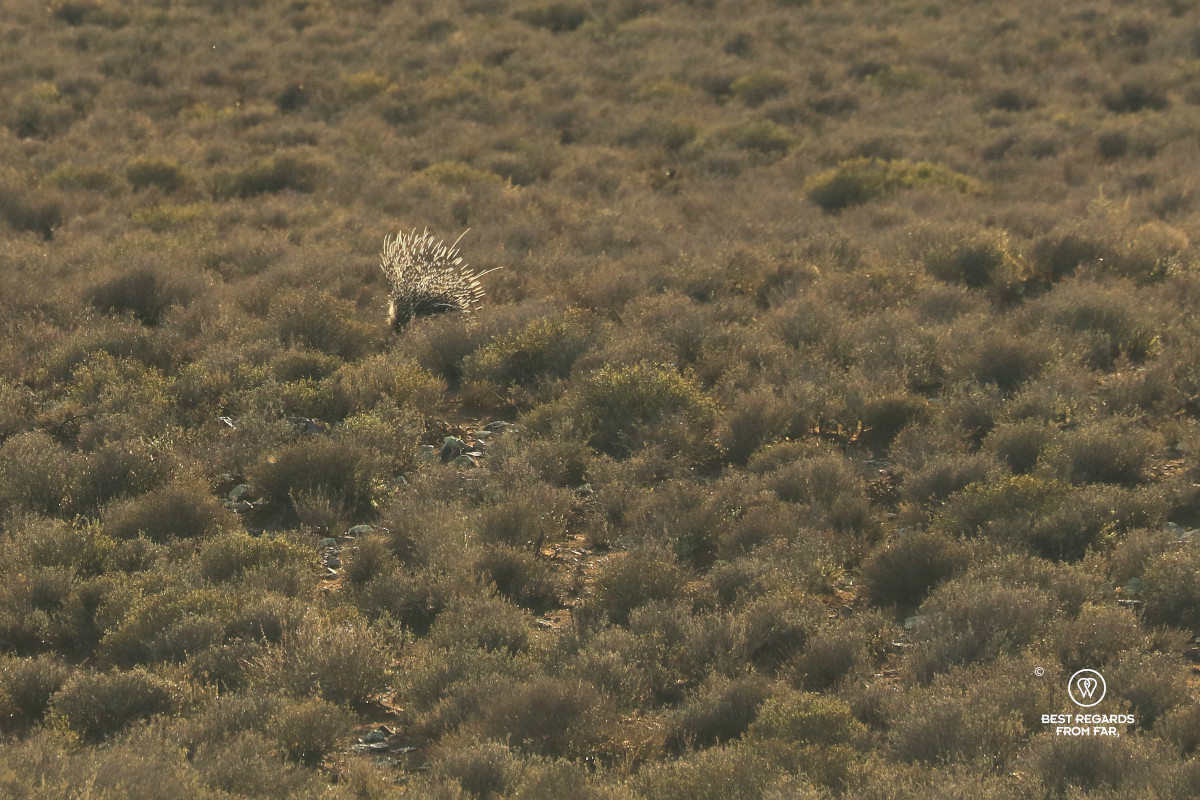
Reaching a ridge line that provides wide panoramic views on the plateau, we see a large herd of black wildebeest. More robust than their blue counterparts frequently seen in the north of the country (the typical safari region encompassing Kruger NP), they have grouped together in one large herd. Their white tails flicker in the early morning light as they run in zigzag patterns across the veld kicking up dust, a habit to confuse potential predators. Nearby, a porcupine forages and digs for whatever it can find from insects to roots, betrayed by its upright quails glimmering in the sunlight.
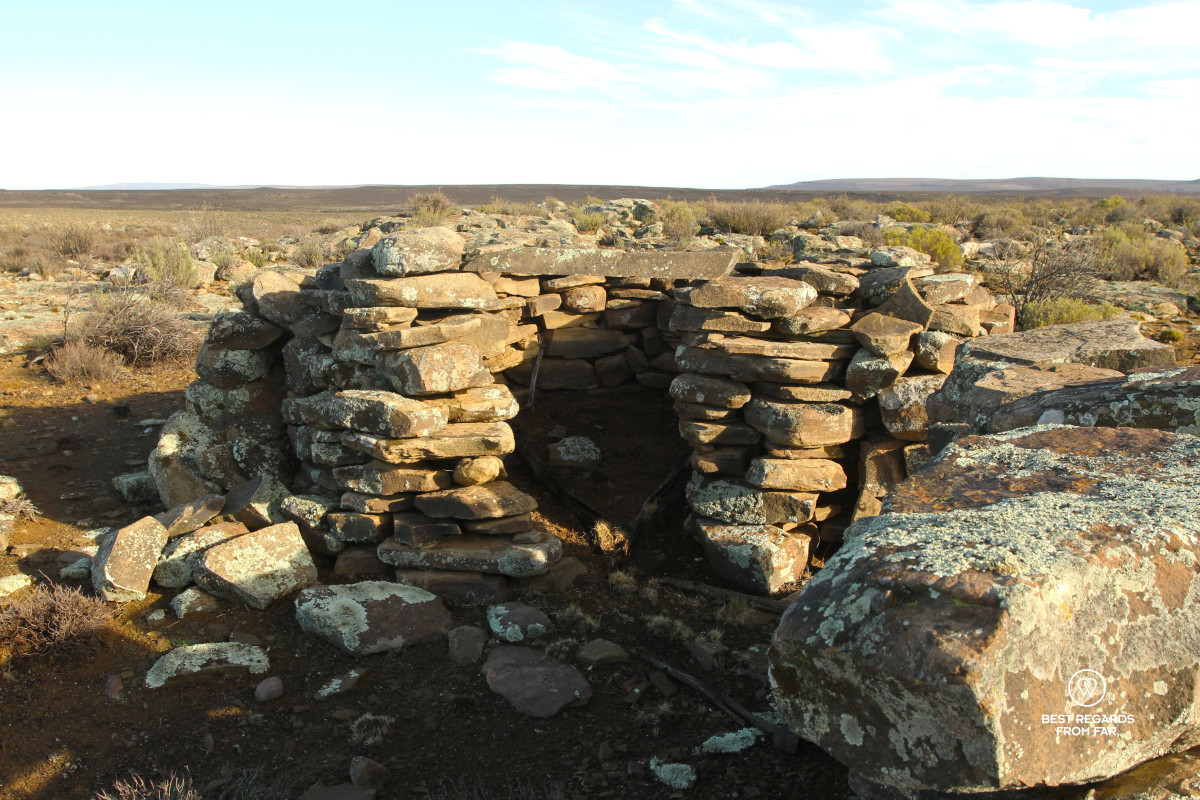
We continue our drive and learn about the atrocious Anglo-Boer War as we pass by the ruins of an English fort. Some battles were fought on this very soil that remains mostly Afrikaans to this day, and still live on in many family stories.
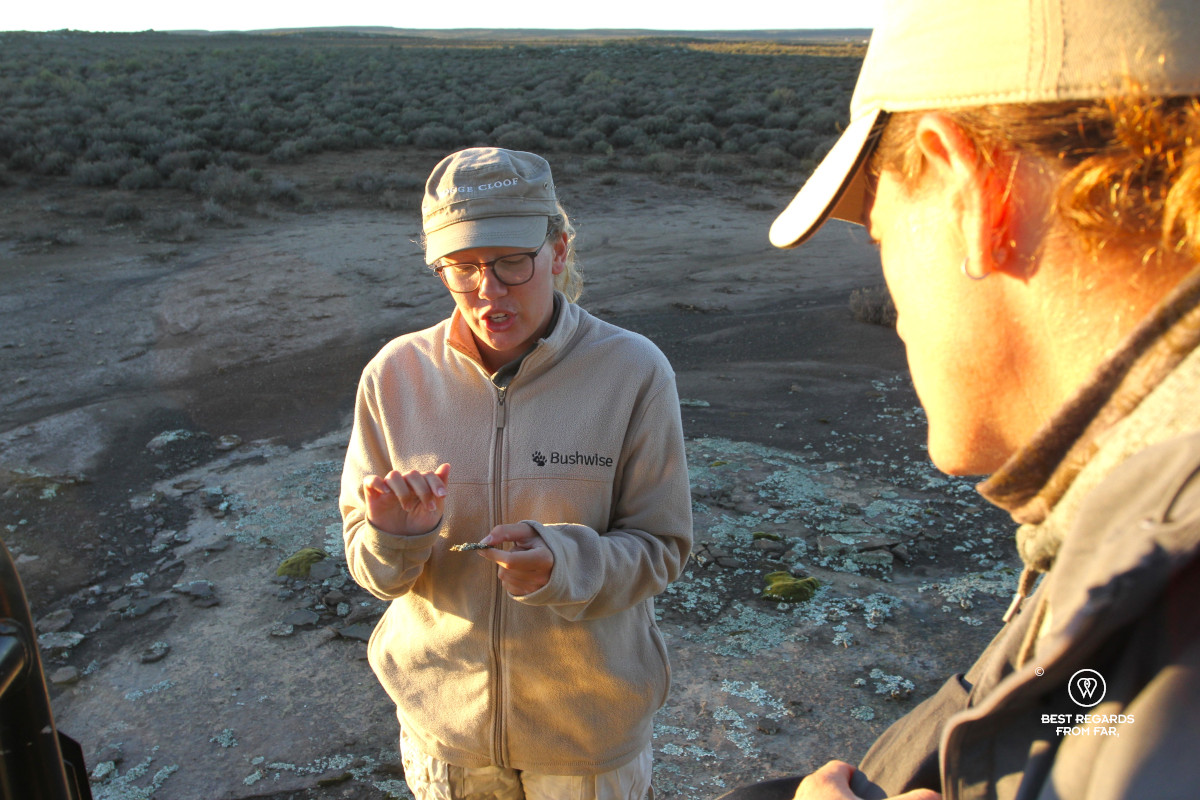
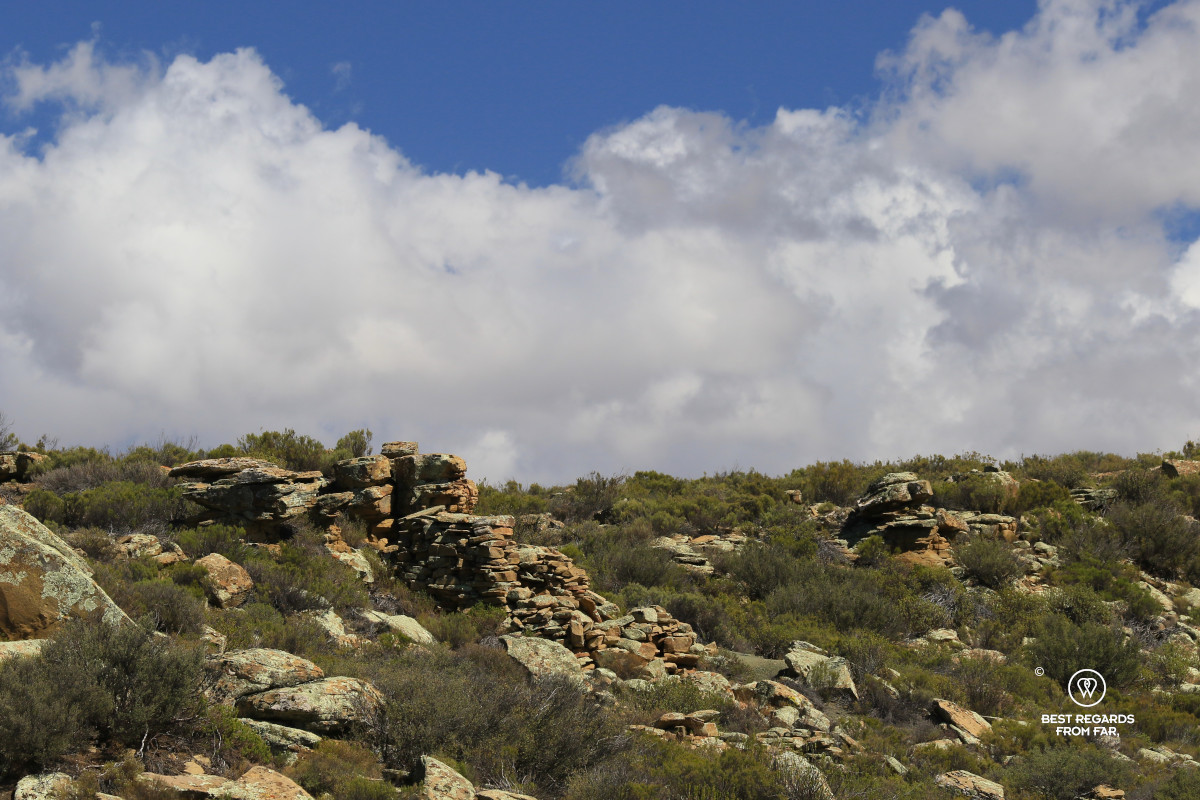
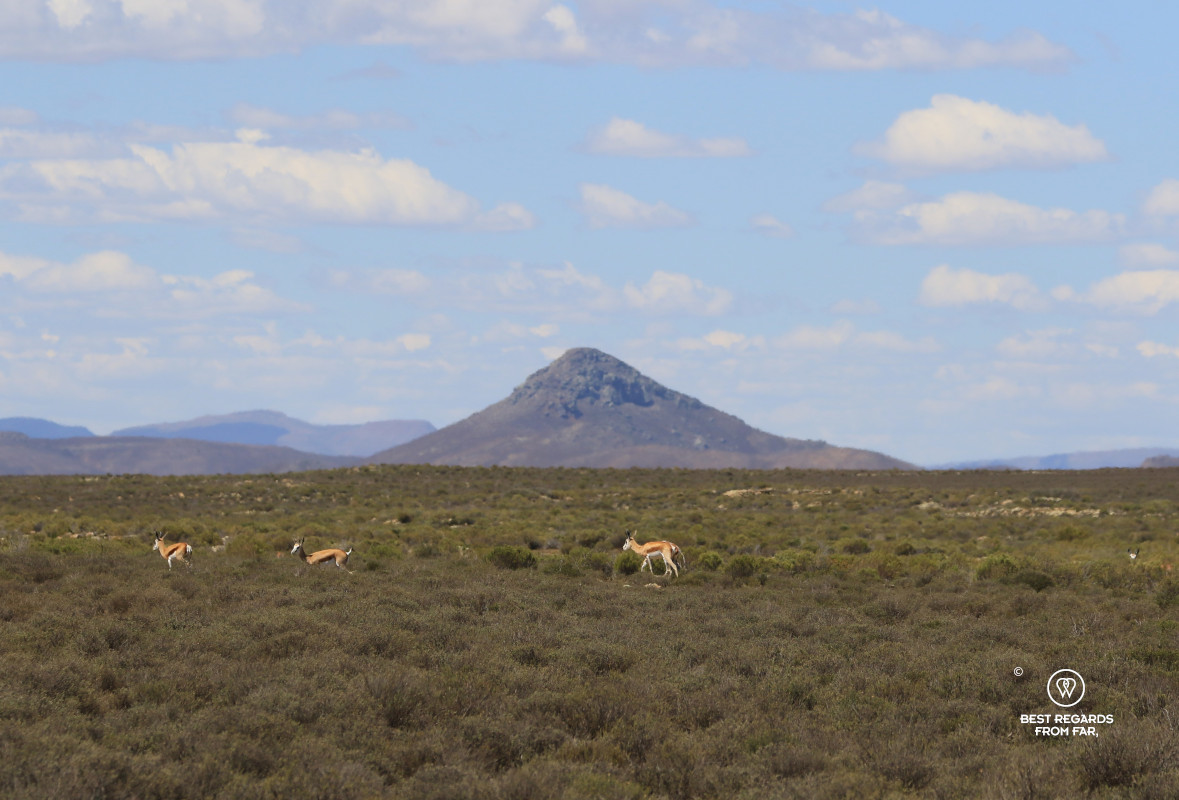
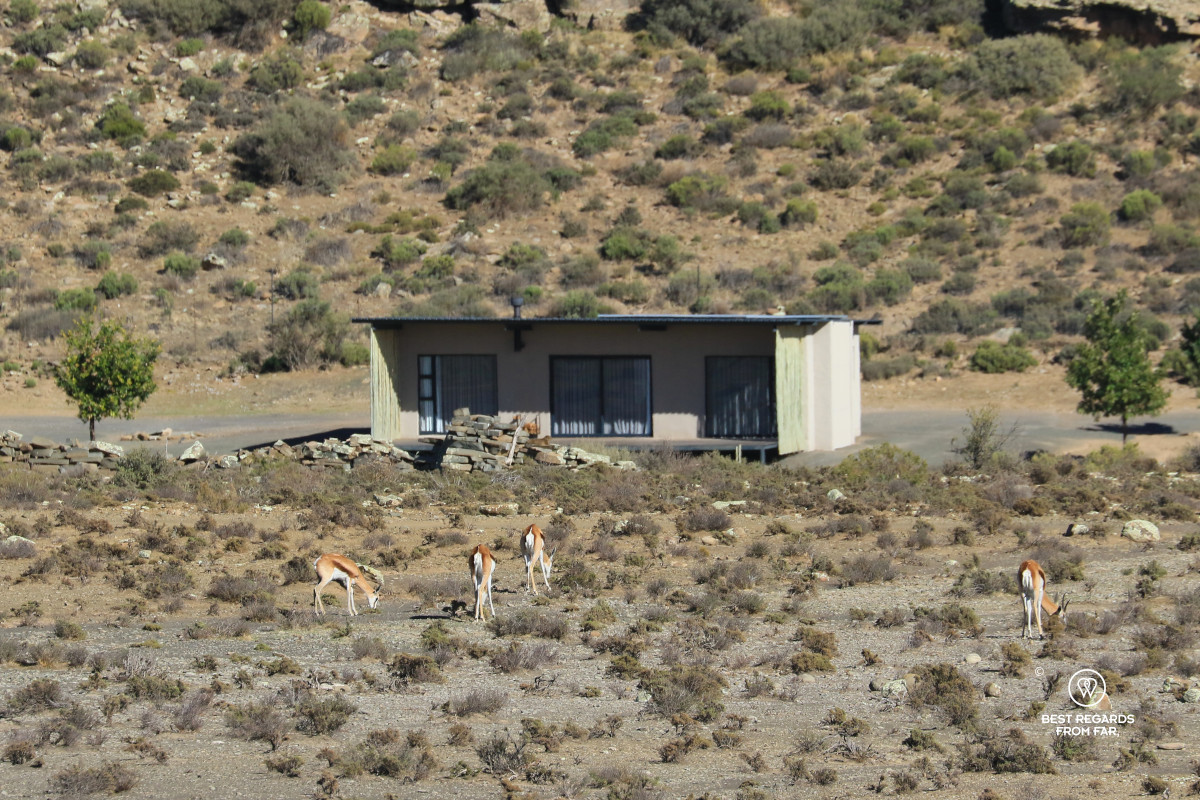
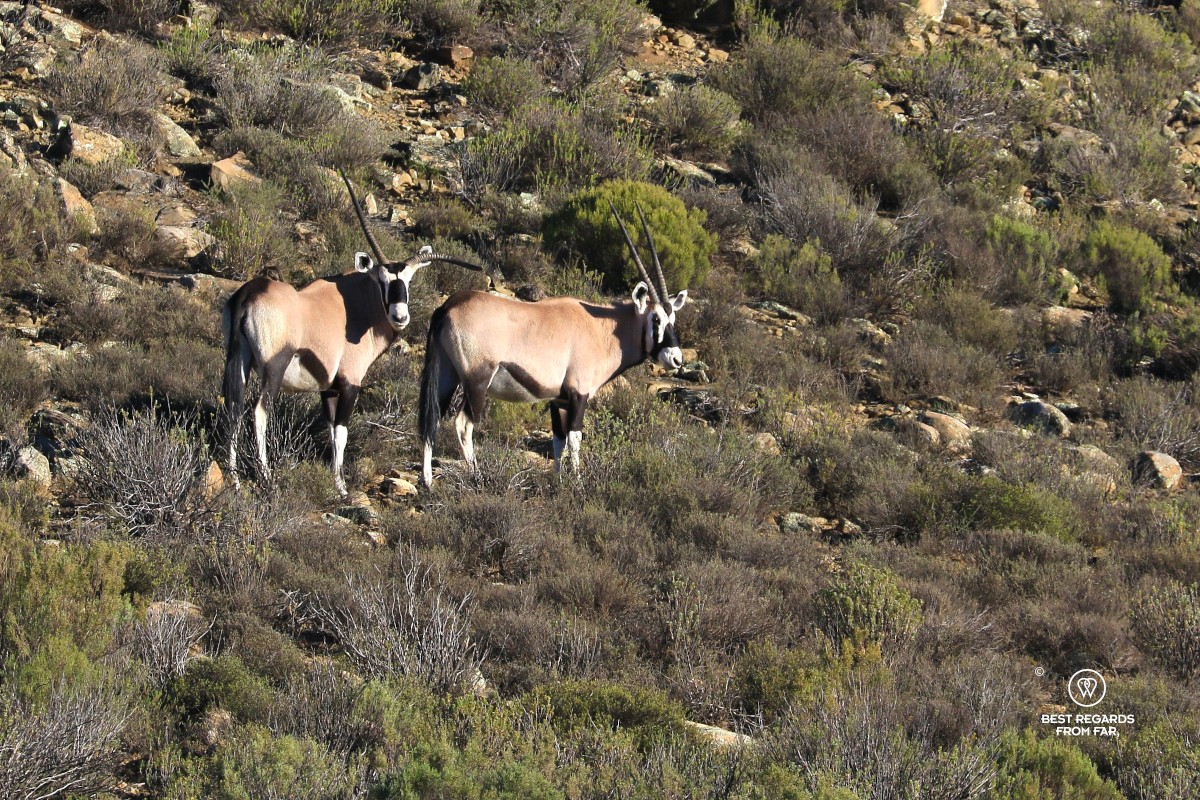
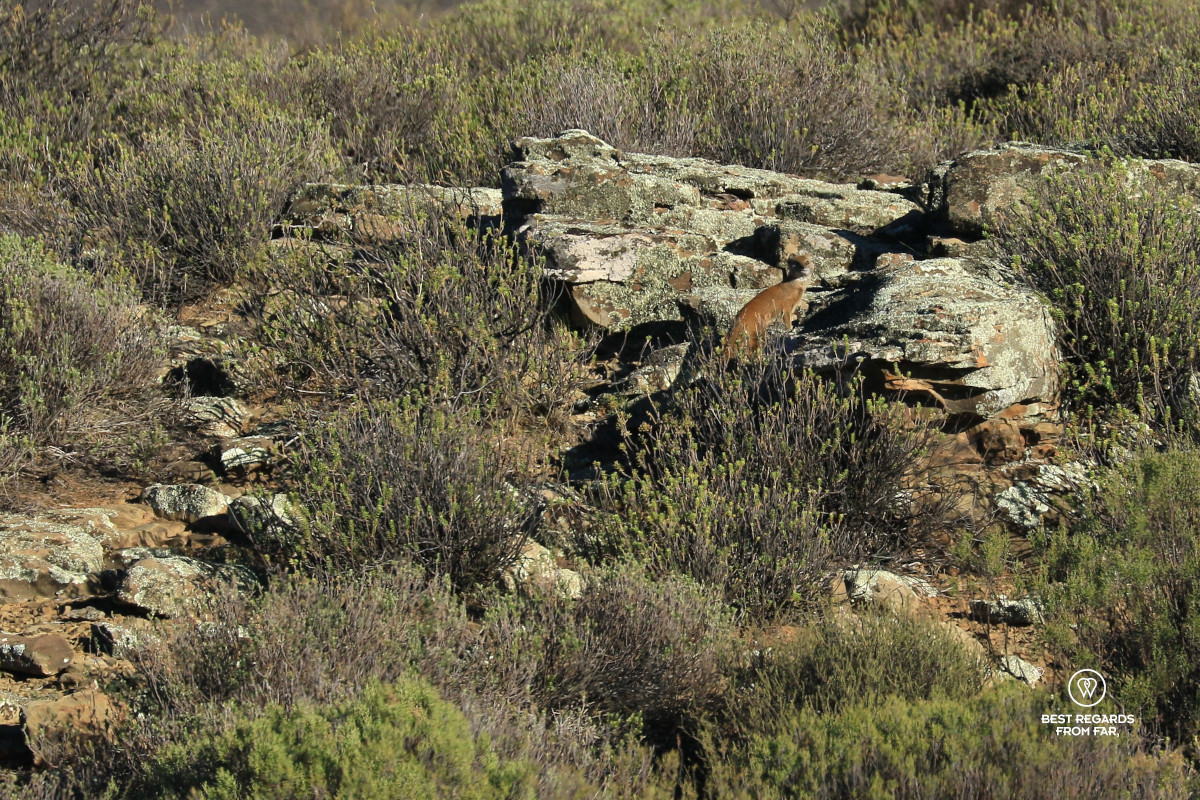
Then, our guide explains about mosses and lichens that are omnipresent here, and an indicator for good air quality. Occasionally, springboks feed on them for supplement minerals. We marvel at the jumps that some of the springboks perform with high agility, and observe some majestic gemsbok with their long pointy horns.
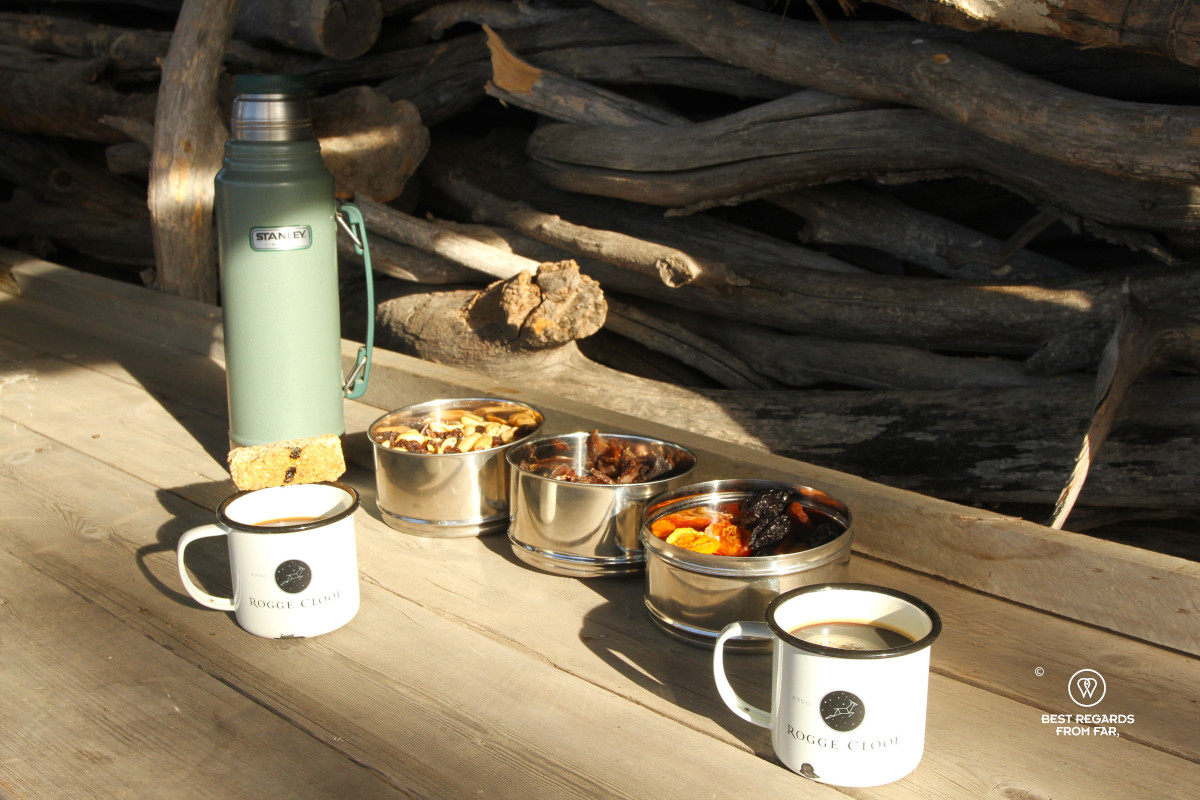
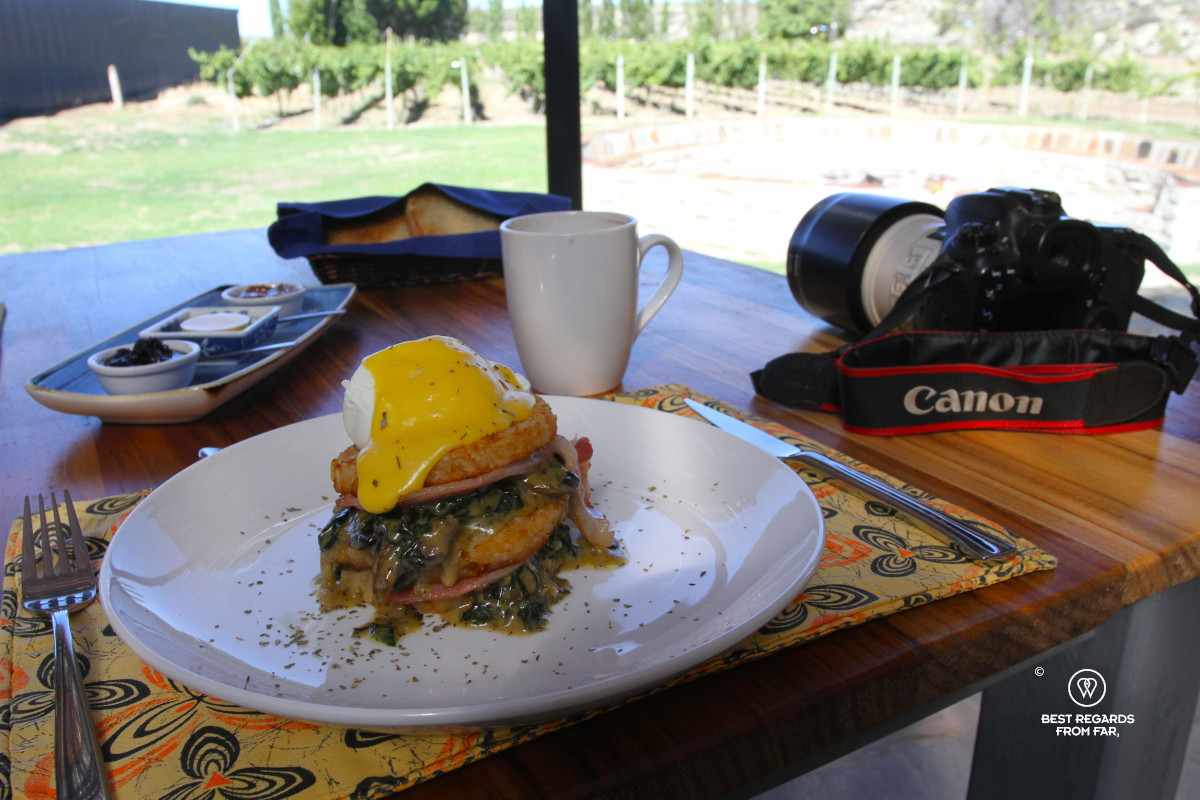
A welcoming coffee break allows us to stretch our legs. Home-baked rusks, biltong, and dried fruits accompany the warm drink and crisp morning air. Happy with the wildlife we have encountered so far, we return to the lodge for a hearty breakfast before continuing our adventure.
Wine Tasting
From the cosy breakfast room we notice the vineyards, unexpected in this arid landscape. The owners’ passion for wine is evident. In 2018, they planted one hectare of Pinot Noir and Chardonnay on their soil, naturally enriched by the nearby Sanpeterskop Volcano, which erupted 70 million years ago. The volcanic minerals lend an unusual and enjoyable flavour profile to the wines.
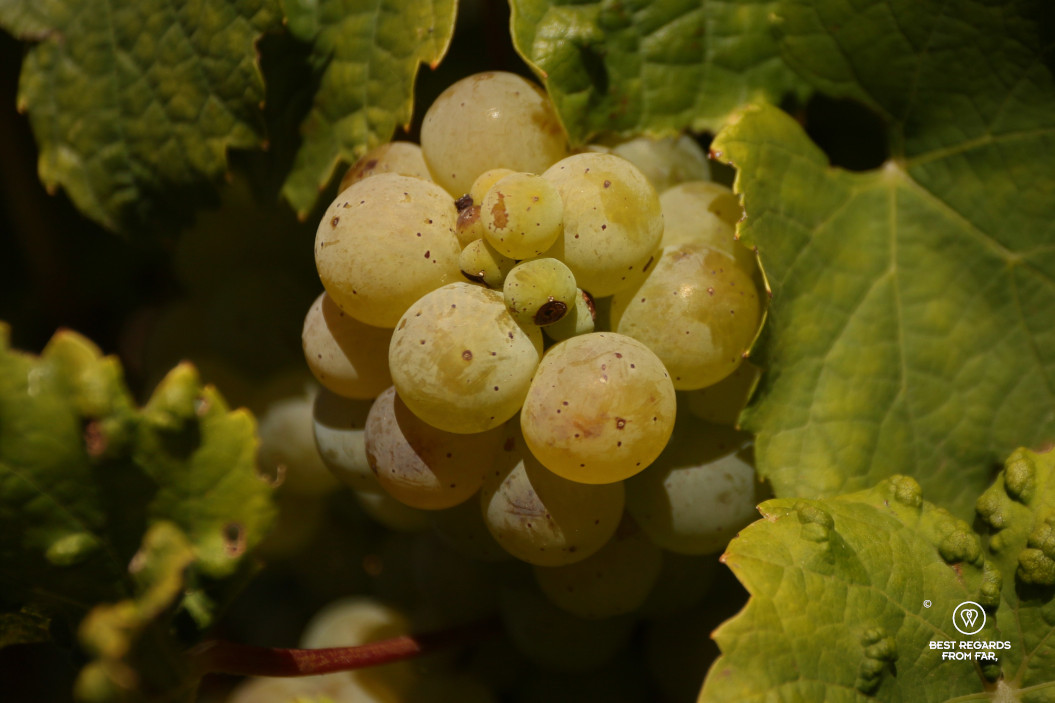
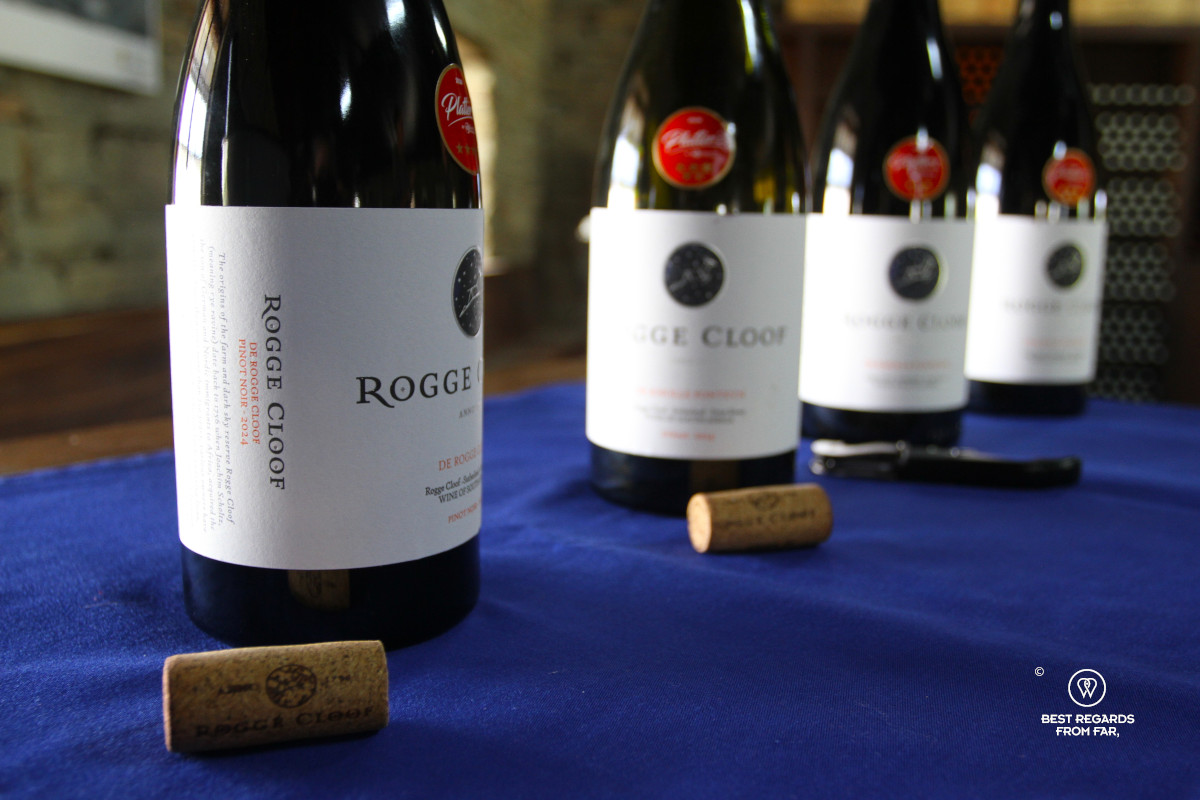
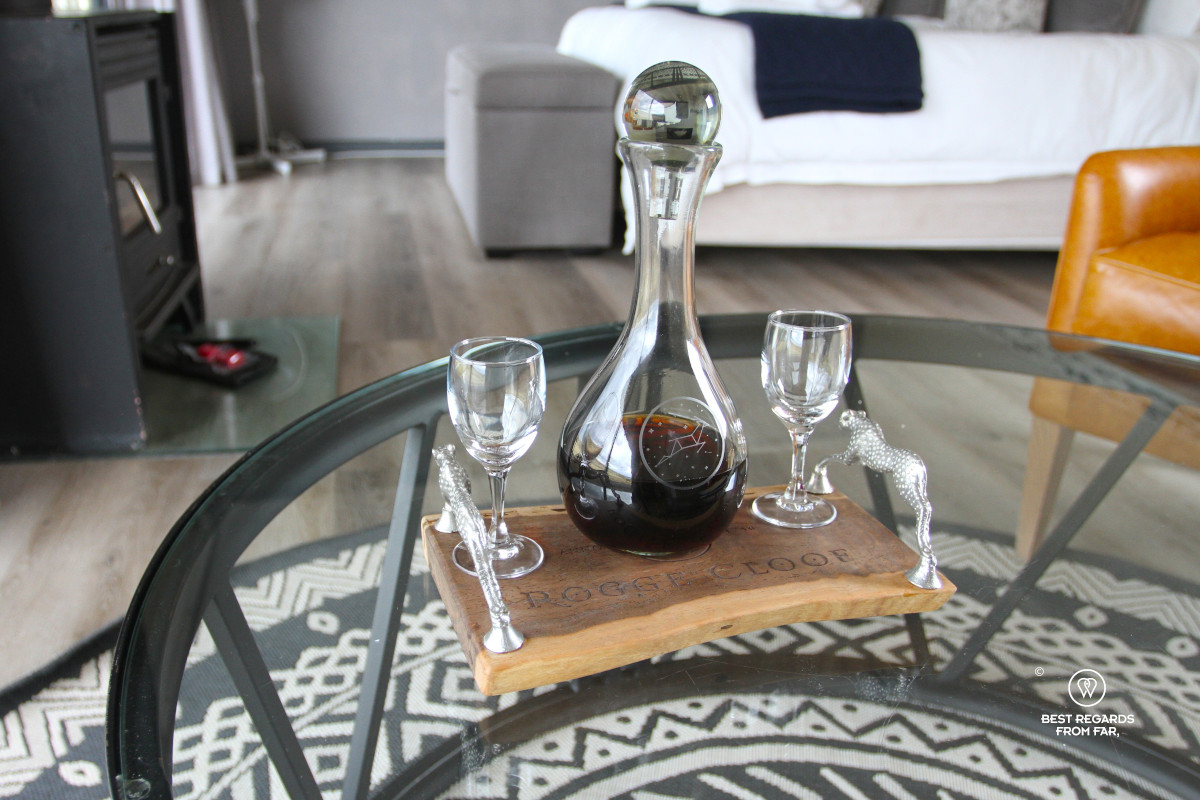
Our guide sets out the glasses in the large cellar. The 2023 Chardonnay, aged nine months in oak barrels, is already smooth, bright, and lively on the palate. The 2024 Pinot Noir, matured for 14 months in French oak is mineral and fruity. The wine is notably darker in colour compared to other Pinot Noirs due to the soil composition. A 2024 full-bodied Syrah made for Rogge Cloof with the grapes from the nearby Kanonfonteyn conveys dark berry notes and spices, ideal to pair with a Karoo lamb, a local’s favourite for good reasons.
Star Gazing
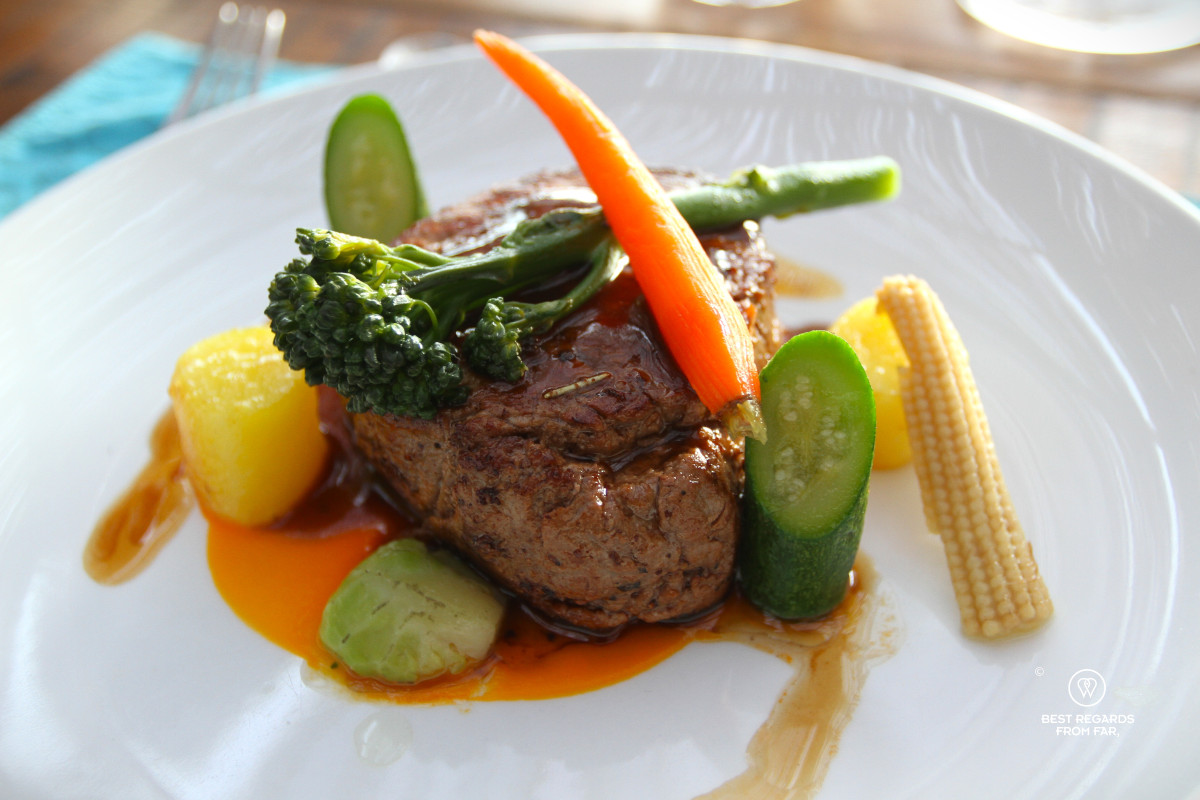
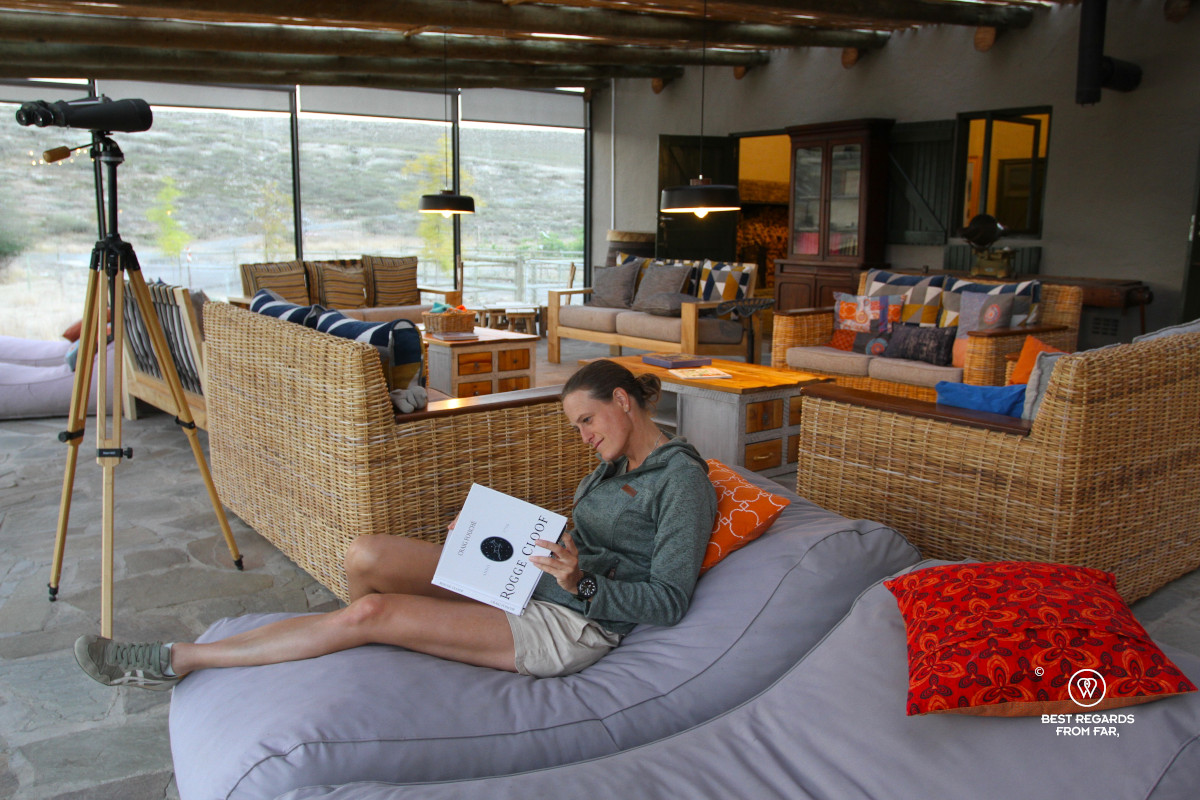
Stargazing in the Karoo is an unforgettable experience, and with Rogge Cloof located only a stone’s throw away from one of world’s most powerful radio-telescopes, we savour our dinner full of hopes for a clear sky.
Our guide positions the telescope towards Jupiter, a steady non-flickering light in the African summer night sky. A peep through the lens reveals its storms and subtle colour variations. We then observe Betelgeuse, a dying red giant and part of Orion, and a blue giant young full of energy and a bright light. The jewel box cluster leaves us speechless with all its different hues. While our astronomer guide repositions the telescope by entering coordinates digitally, we make wishes for every shooting star we see. The Milky Way arches above us in all its splendour and has never felt that close.
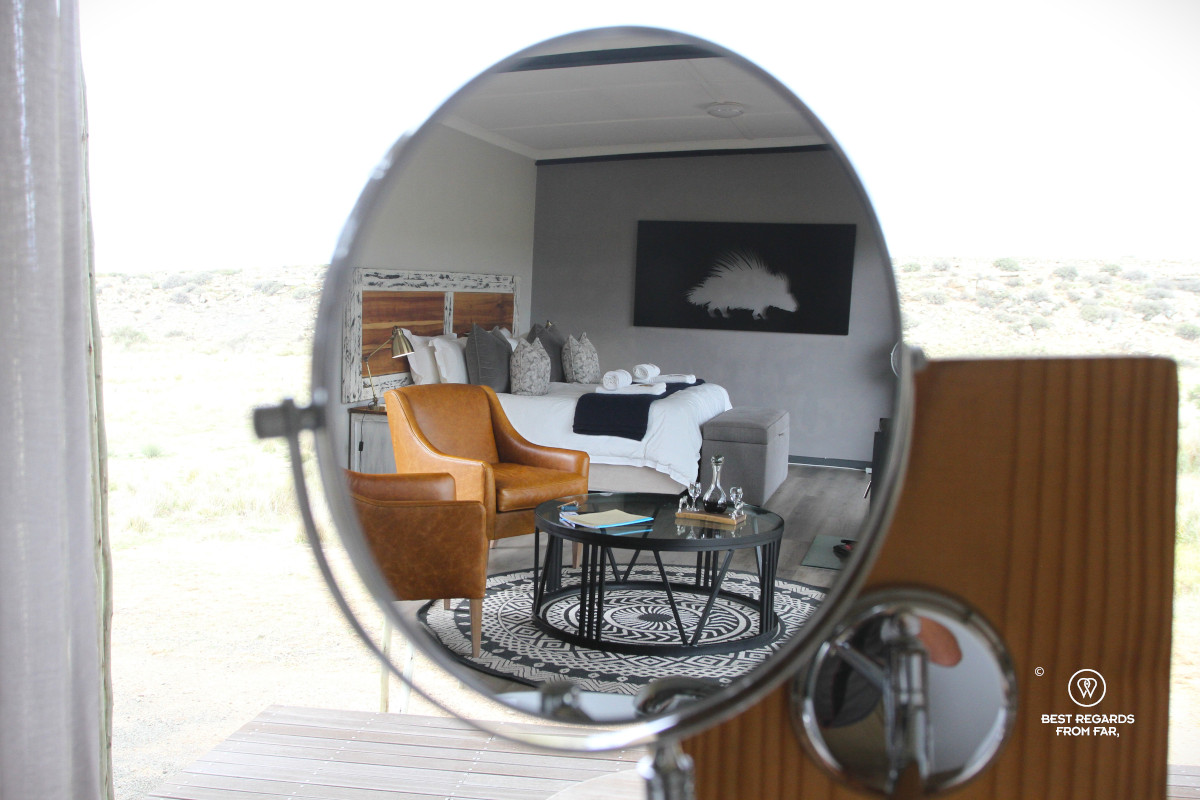
Back in our cottage with the fireplace crackling, the starry show continues through the large windows leaves us in awe.
Cheetah Tracking: Successful Re-Wilding
The highlight during this getaway is about to unfold as we are tracking Rosalind, a female cheetah. Our guide takes her smartphone out of her pocket and pulls up a digital map of the reserve. A blue dot indicates her last position. Every couple of hours, a signal is sent, and this one dates back to about 20 minutes ago. We study the map as our field guide defines the most efficient route, and off we go accompanied by an assistant for safety reasons. The blue dot gives a rough indication of the area as the cheetah may be on the move, and we will not get another signal by the time we approach the area.
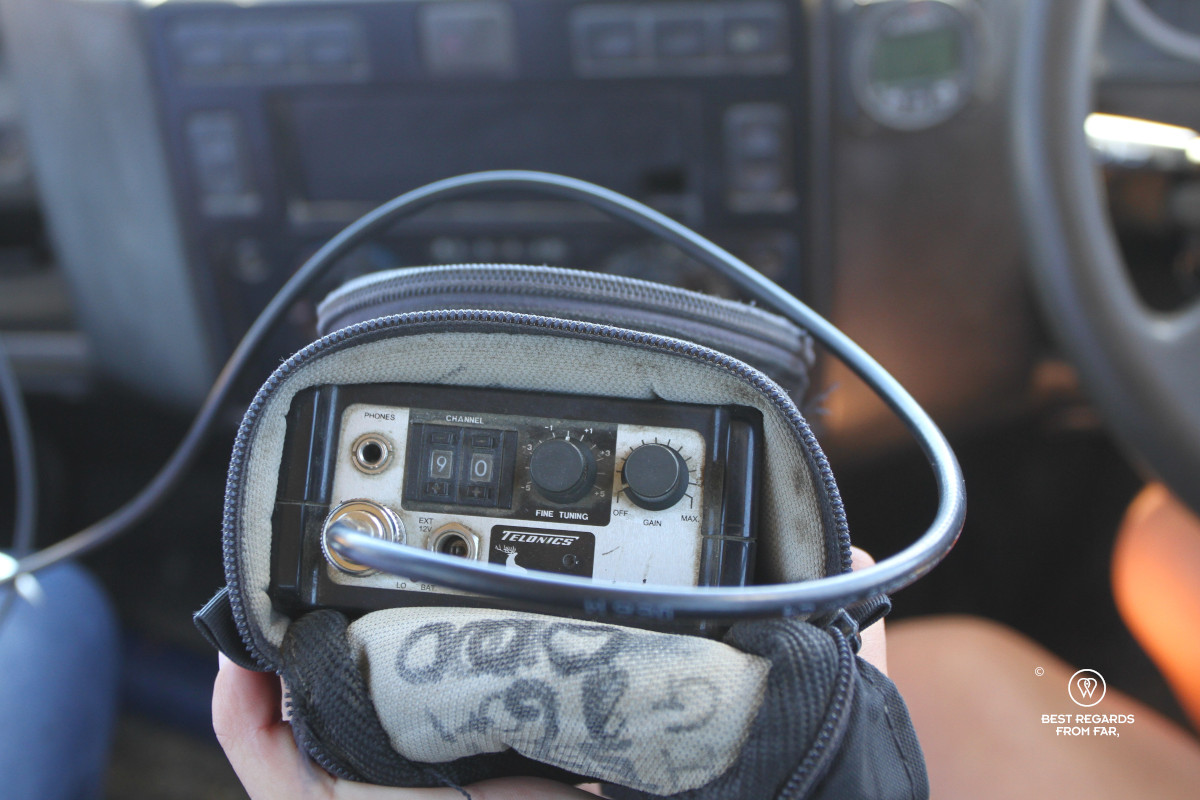
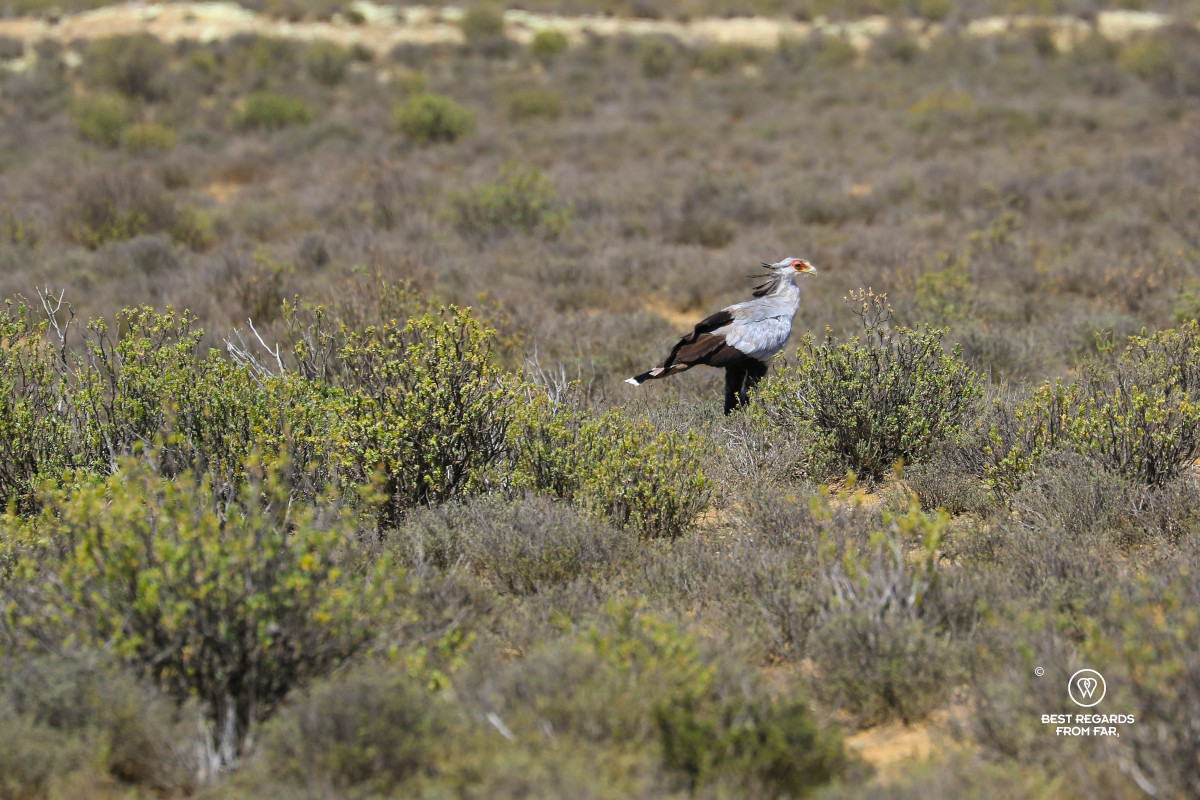
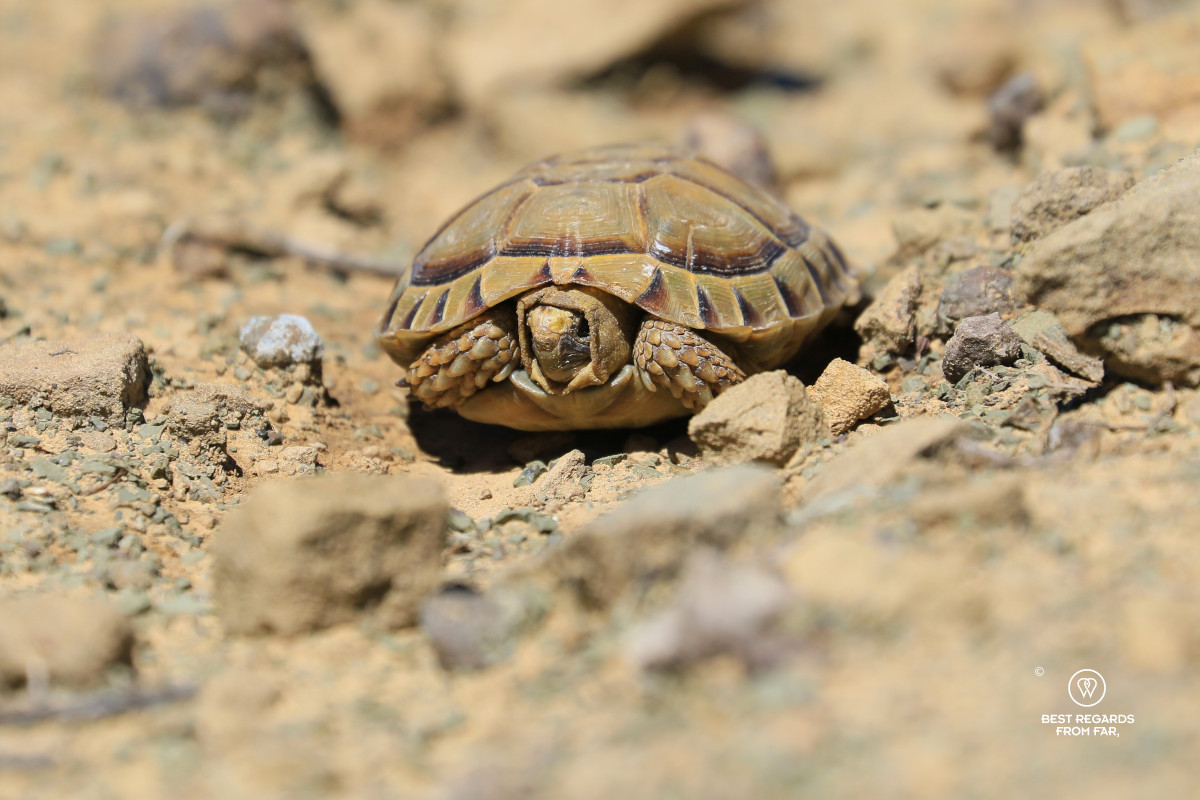
Our guide stirs the Land Rover over the bumpy tracks pausing only to carefully move a small tortoise out of the way or to observe a secretary bird. About an hour later, when the terrain becomes too difficult, we continue on foot. Equipped with an antenna to pick up the signal that is sent from Rosalind’s solar-powered collar, we slowly walk into the direction the repeated beep indicate.
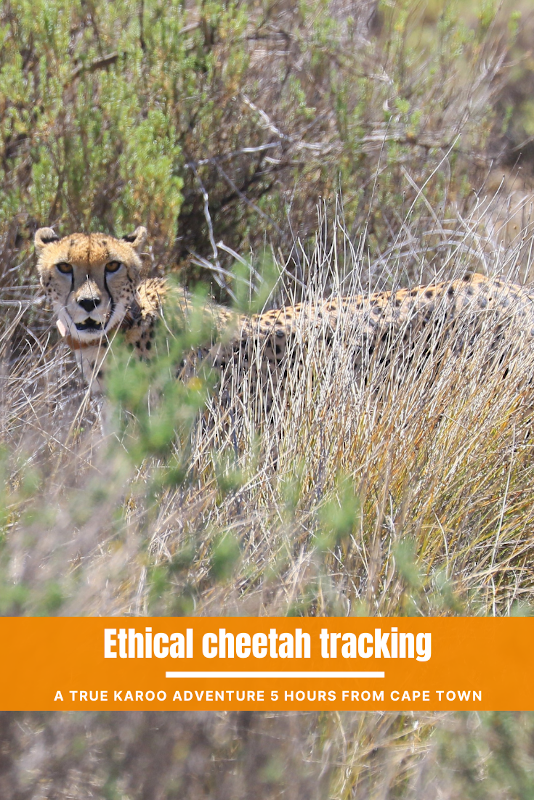
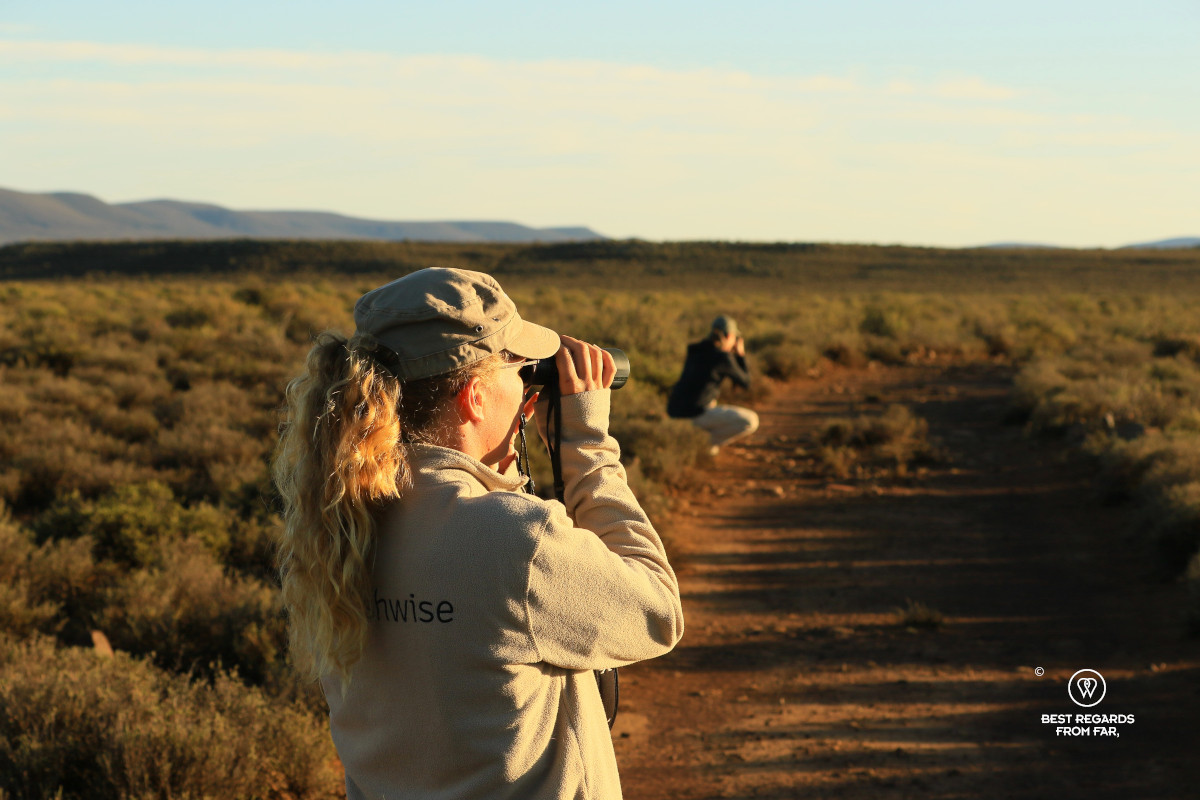
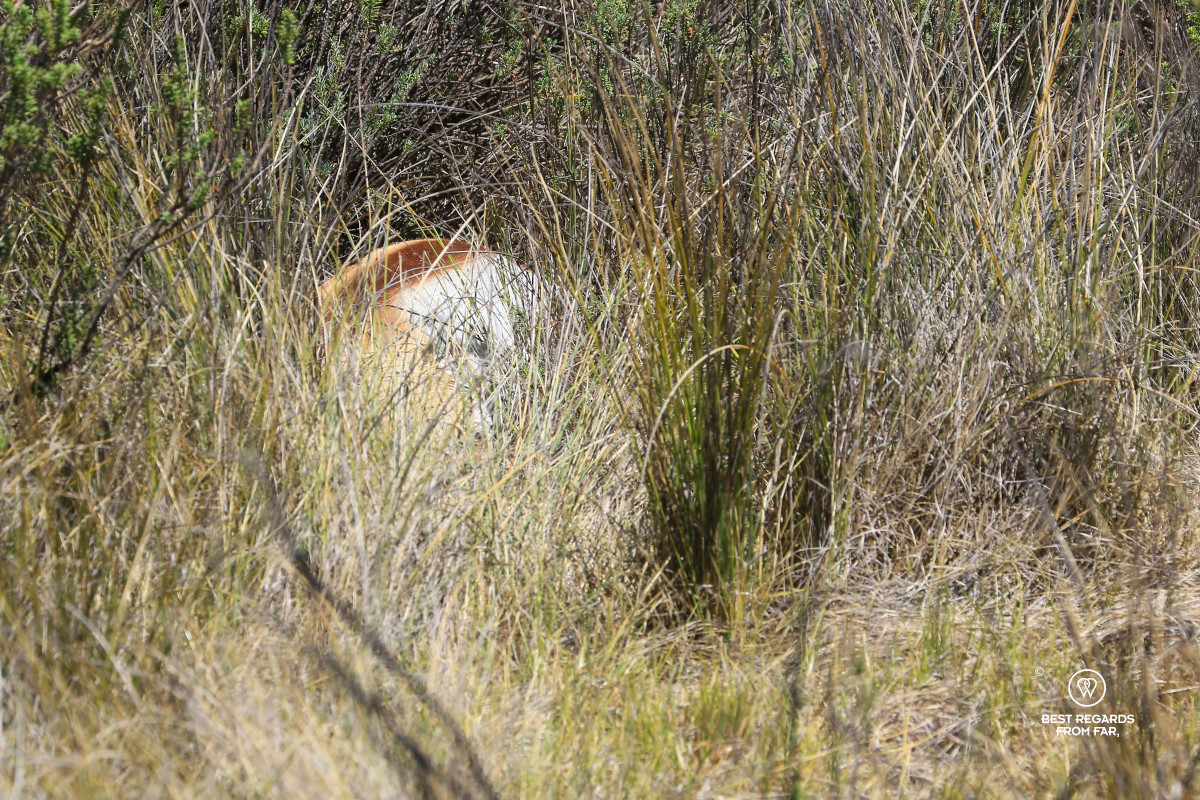
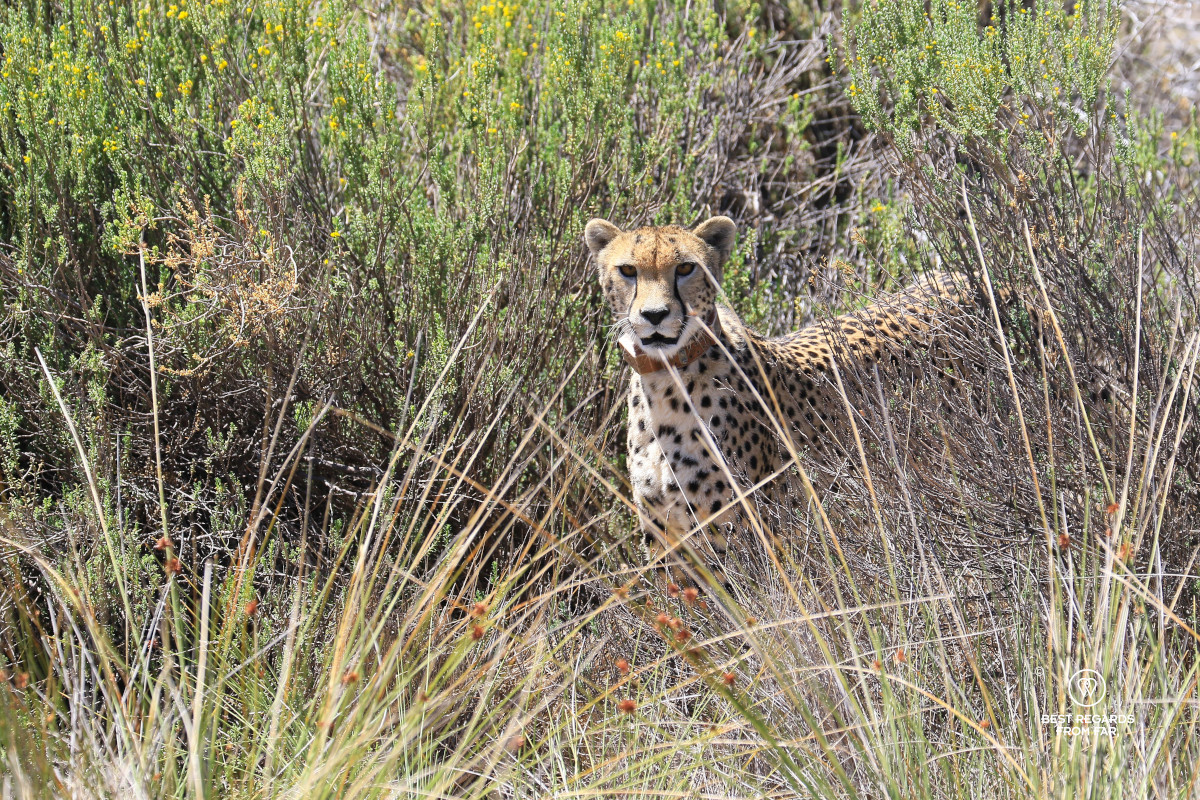
Walking slowly in a single line, we scan for tracks and signs, with no luck. The antenna returns a louder sound. We are within 30 meters (100 feet) of the fastest land animal on Earth. Yet, nothing in sight but some bushes. We circle some more… Our guide starts looking a bit defeated, and she is looking at her assistant. It seems that we will take another pass at it and call it a day. Suddenly, as she is scanning the bushes with the binoculars, Claire whispers a faint but intense “I see her.” She describes the location, and points at it. Yet, we do not manage to locate the cheetah. Persevering a bit, a faint brown shape detaches itself from the bushes. It is an ear, and from there, I make up an eye, and the face of this majestic mammal that is so well camouflaged. Rosalind observes us calmly from where she is hiding.
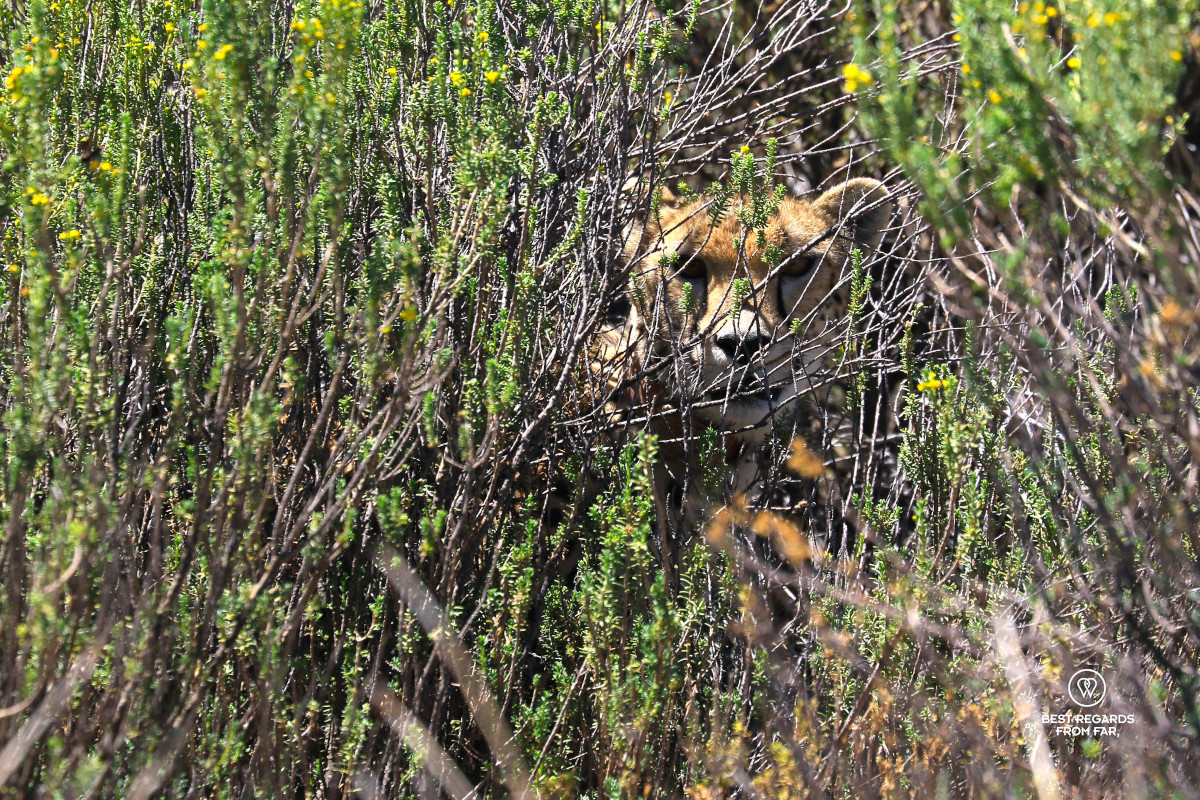
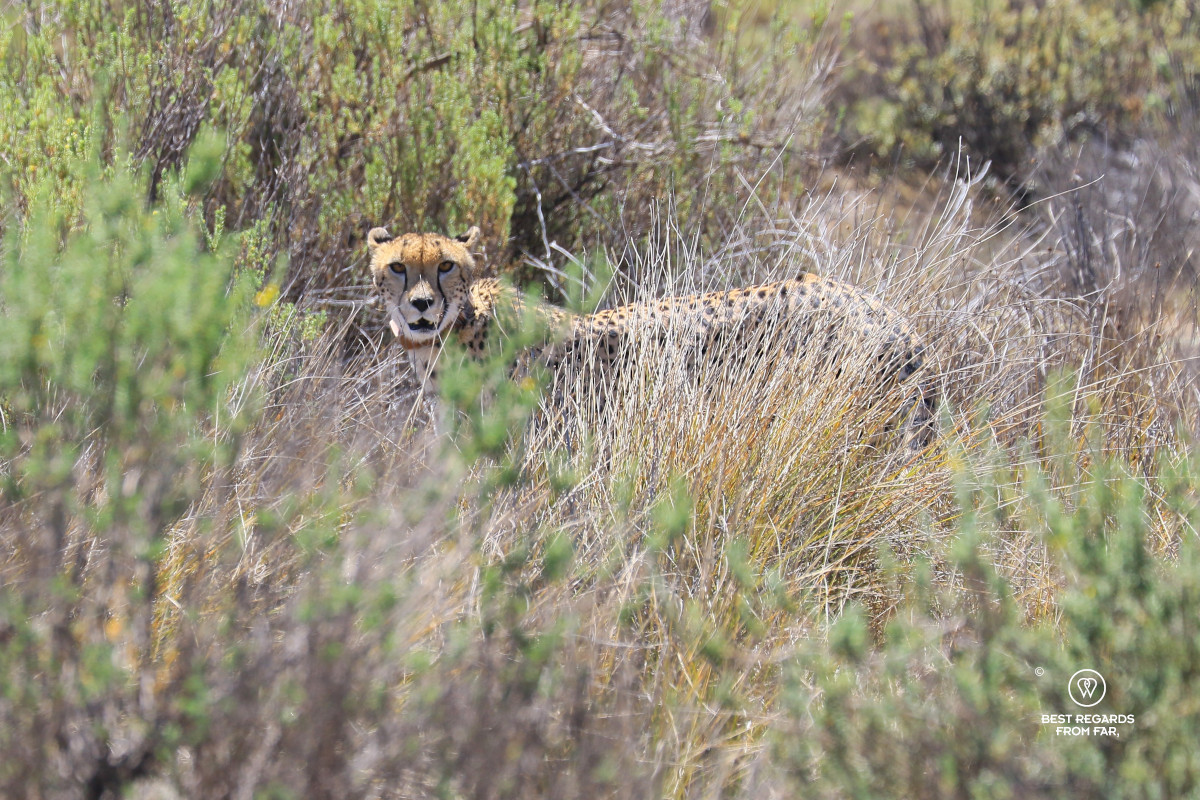
Our guide explains Rosalind’s story: hand-fed as a cub in captivity, she was later re-wilded, learning to hunt independently. Today, she roams the 20,000-hectare (49,400-acre) reserve in full autonomy.
Slowly but surely, the furry face of the cheetah sticks out more as she decides to check us out. The large cat yawns, and gently steps into our direction, revealing her athletic body designed for pure speed. She gives us enough time to admire her before she disappears for a few seconds, comes back, stares at us one more time, and then retracts, and completely vanishes into the same bush as where we first saw her. We feel very lucky she decided to show herself to us.
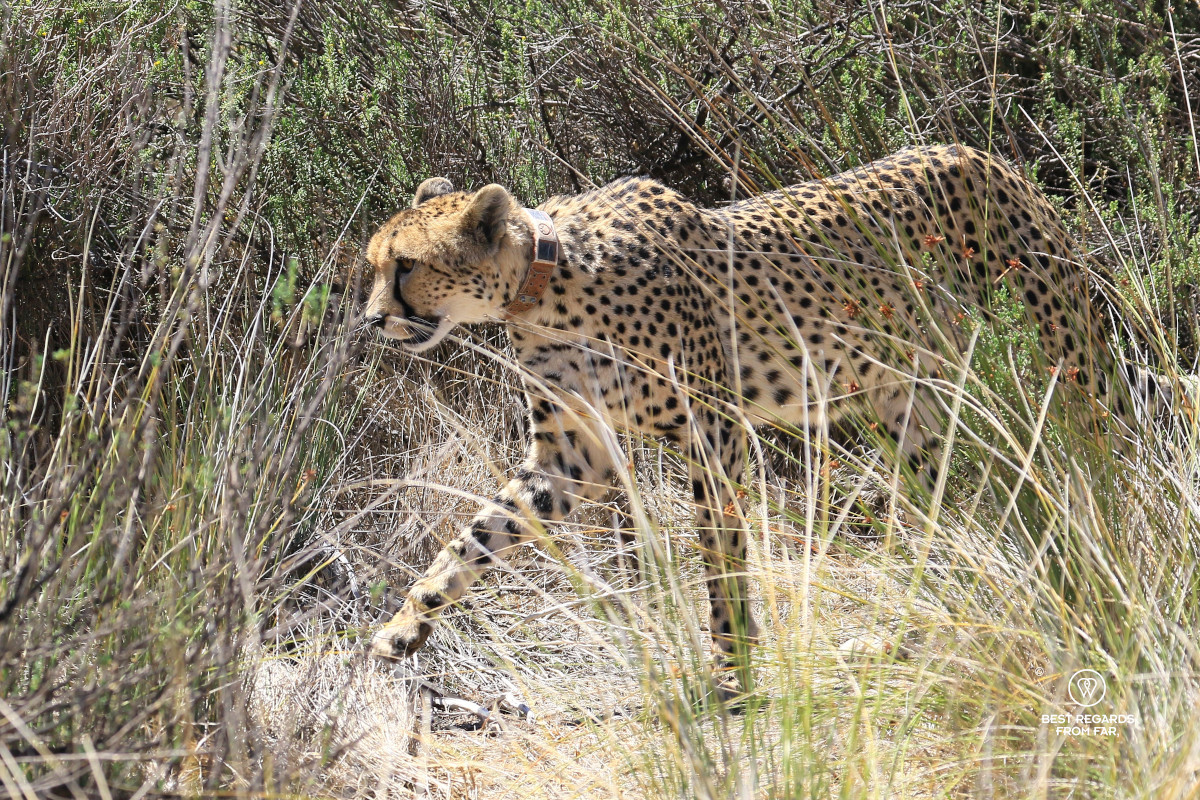
As we circle around to head back to the 4×4, we stumble upon a fresh kill. “Let’s back off slowly,” our guide whispers. Right next to us lies the carcass of a springbok, still fully intact. I stare at the ground and notice the fresh drag marks, a few hairs, and a few drops of fresh blood. We slowly step back and now understand the cheetah’s behaviour, checking whether her prey was safe with us.
We slowly leave, and let her rest a bit more from the energy-consuming hunt so that she can peacefully savour her well-deserved meal, the best sign of the successful re-wilding of a vulnerable species. Yet, maybe the Rogge Cloof Reserve’s conservation efforts will be even more rewarded shortly as two male cheetah also roam the land…
Travel tips:
- Rogge Cloof offers stays for those seeking solitude. Make sure to book ahead through their website and book your activities, including cheetah tracking.
- Day visitors can book a wine tasting or lunch in advance.
- Stargazing is best when the moon is small and even better in winter.
- Check out our interactive map for more in the area (black pins lead to an article):

