Text & Photographs: Marcella van Alphen & Claire Lessiau
Hop into our compact, fully geared up 4×4 Jimny for an overlanding adventure test run in the remoteness of the arid Karoo wilderness, only a short drive away from Cape Town yet worlds apart…
Leaving the Vineyards Behind: Scenic Mountain Passes Into the Karoo [Day 1]
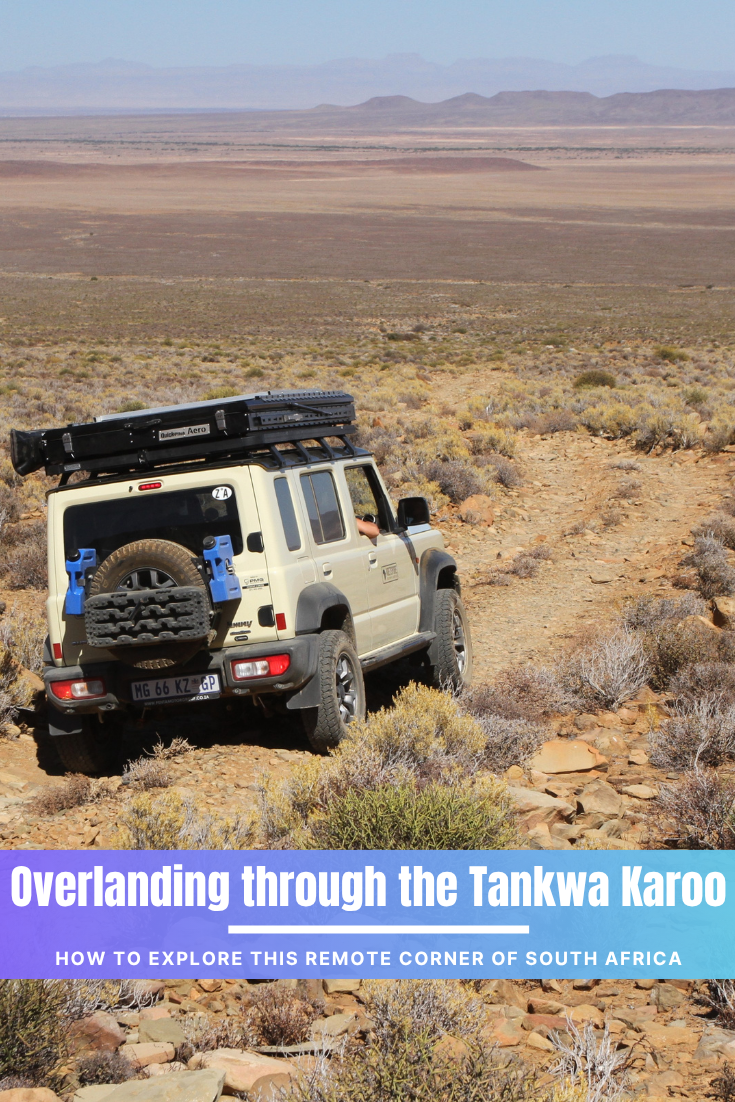
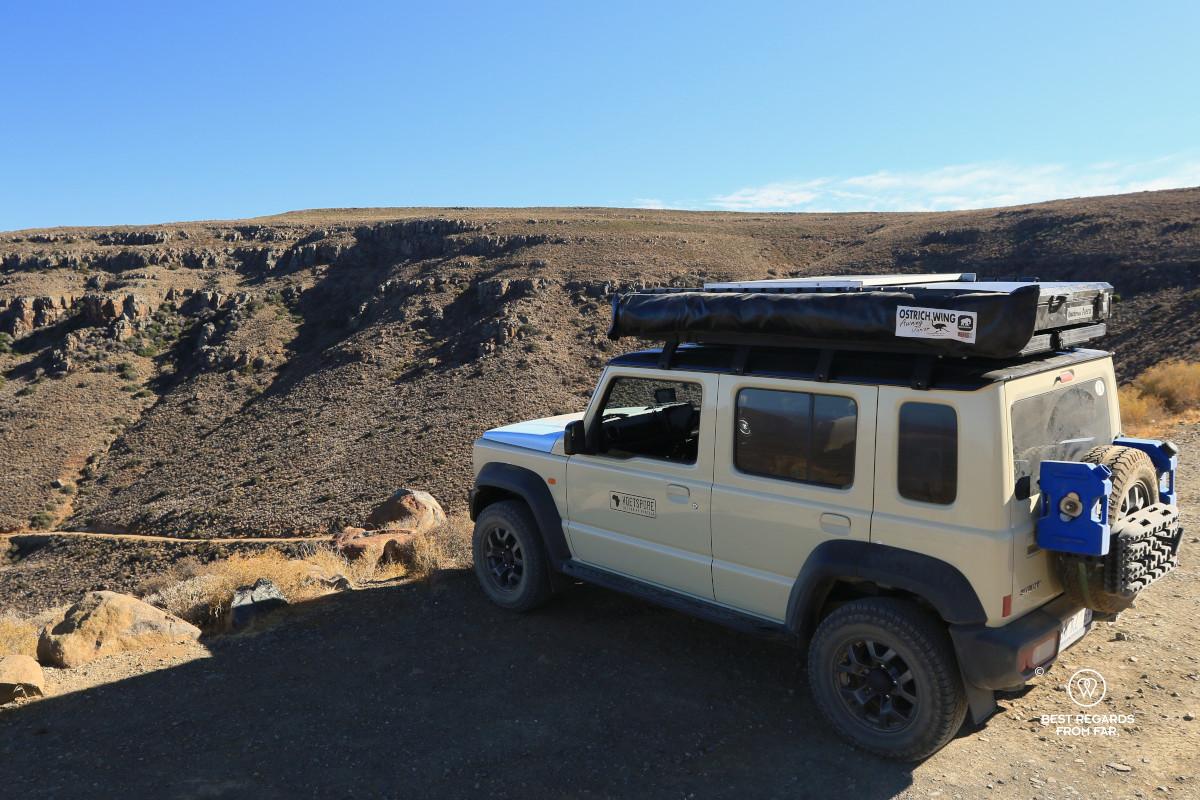
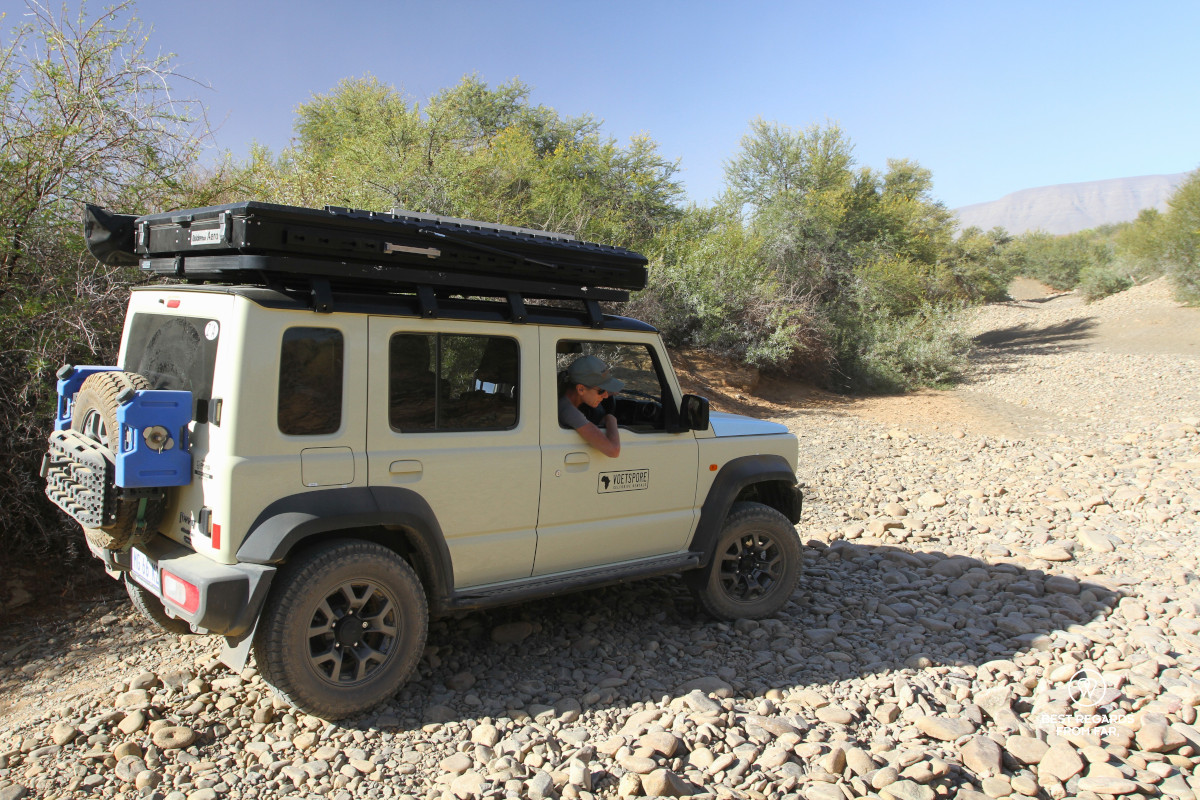
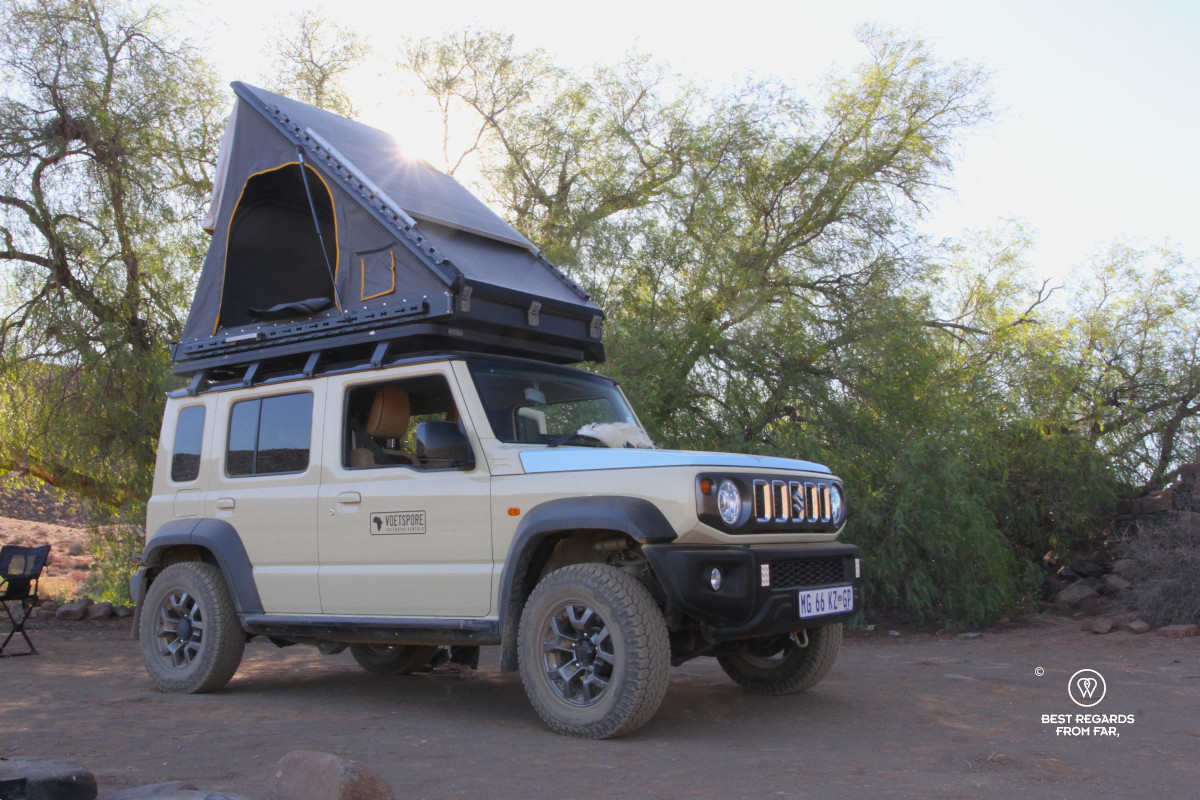
The iconic Table Mountain gets smaller until it vanishes from the rear-view mirror of the sand-coloured Suzuki Jimny that I am confidently steering along the highway. The fully equipped car, crowned by a rooftop tent, is loaded with supplies, a well-stocked fridge, and an extra 10 litres of water safely secured to the back of the 4×4 on the side of its spare wheel. We have just topped off the 80-litre fuel tank as we are heading north east for a proper off-grid 4×4 overlanding journey across the remote Karoo. Only a five-to-six-hour drive from Cape Town, it is the ideal region to test our skills during our first African overlanding adventure…
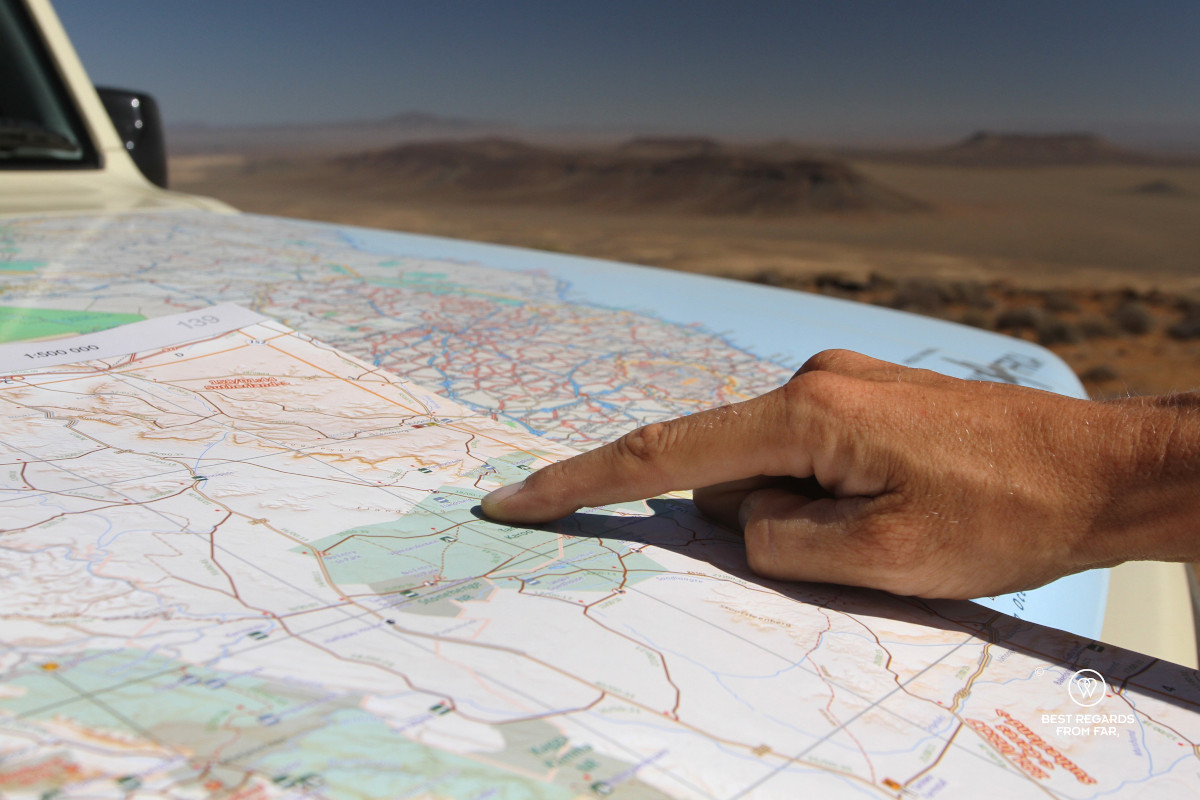
Having carefully prepared our route to favour the most scenic mountain passes and less travelled tracks, we soon leave the highway. The air blowing into my open window is already warm and carries a faint sulphur scent when we pass the vineyards outside Paarl, bathed in the morning light. Green mountains surround us, a landscape we know will soon disappear.
The engine roars as we begin climbing the freshly tarred Bainskloof Pass (593m or 1,946ft) over the World Heritage Site of the Limiet Mountains to Ceres. The Jimny climbs easily, just a warm-up for what lies ahead. The views along this pass, which in itself is a historical monument, are spectacular, and some baboons by the side of the road surely have front-row seats to enjoy them.
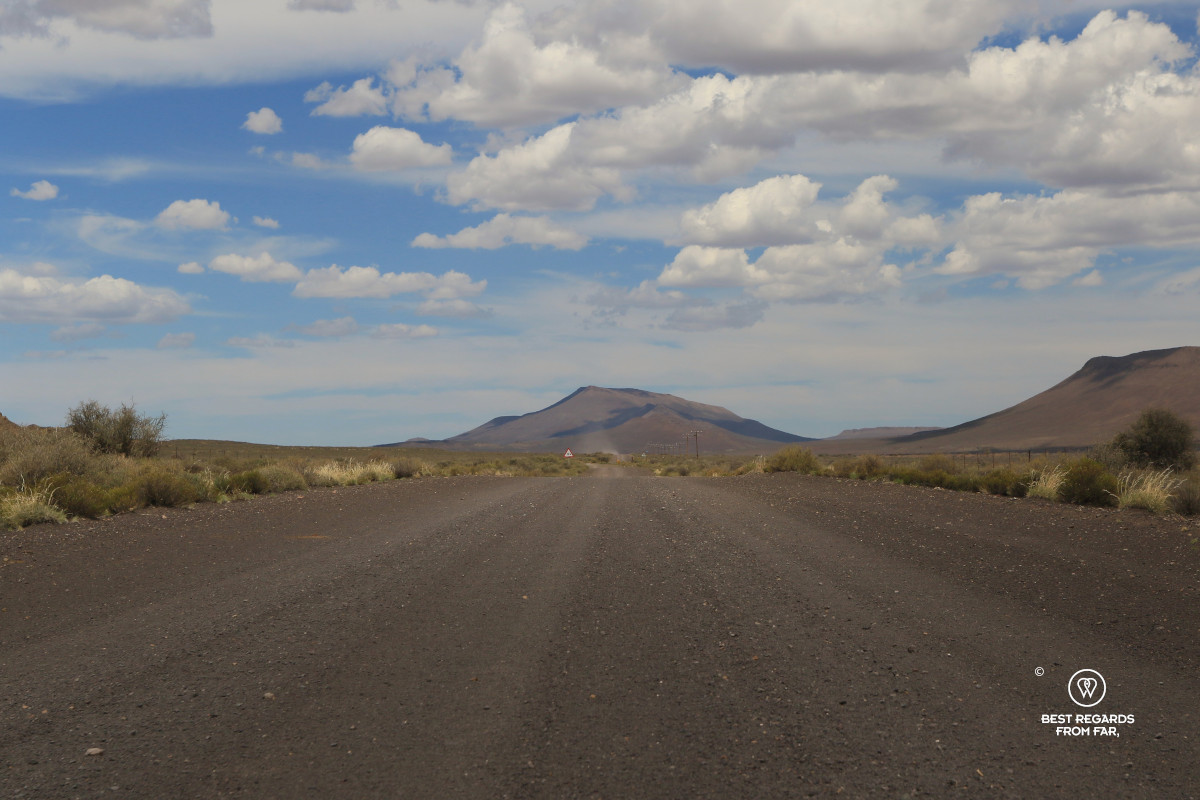
A couple more tarred passes further – Michell’s Pass (484m or 1,588ft) just south of Ceres and Gydo Pass between Ceres and Citrusdal – the all-terrain tyres hit the gravel while a vast semi-arid landscape opens before our eyes.
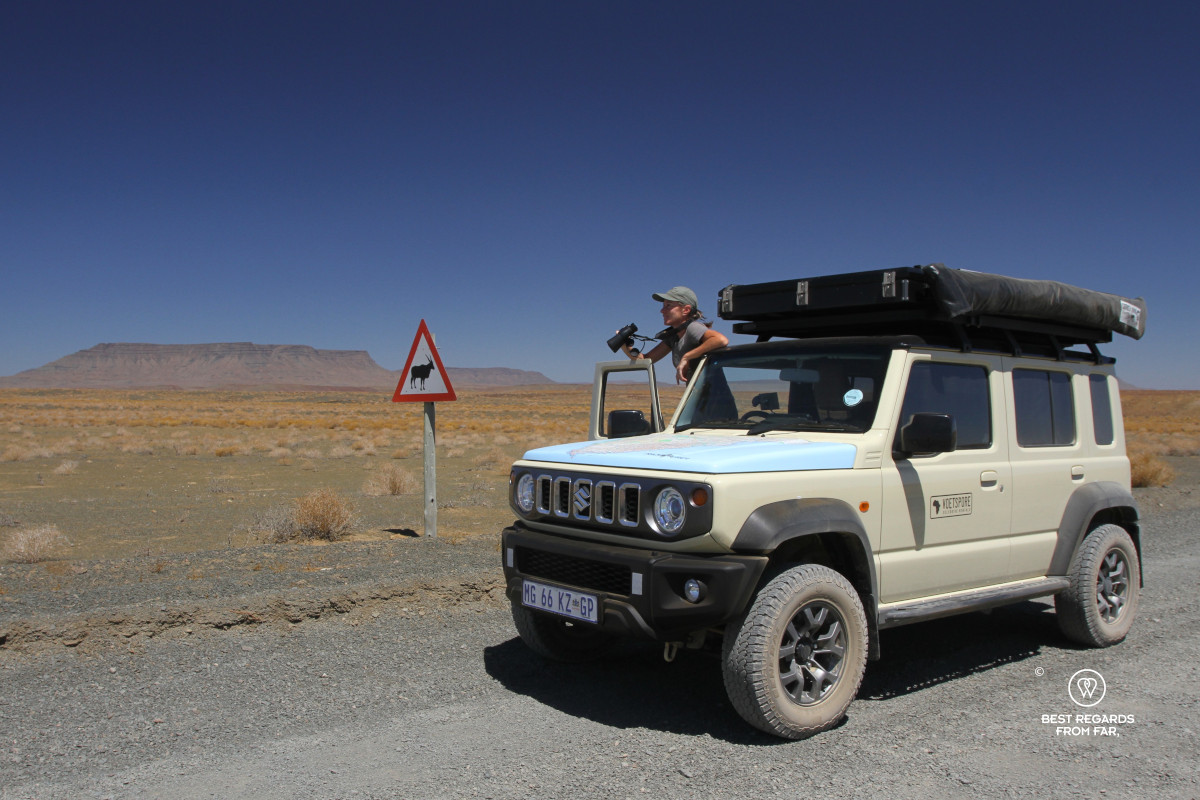
Despite the change in altitude as the Jimny climbs up the Klein Cederberg Pass, the temperature goes up. The valley, with its orchards and dams, towered over by mountain peaks in the background, is vast. The steepness of the Katbakkies Pass (1198m or 3,930ft) betrays its origin as an old sheep-trekking route over the mountain. A bit of recently added tar makes it passable, yet taxing for regular cars despite its 25 per cent gradient nearing its upper section!
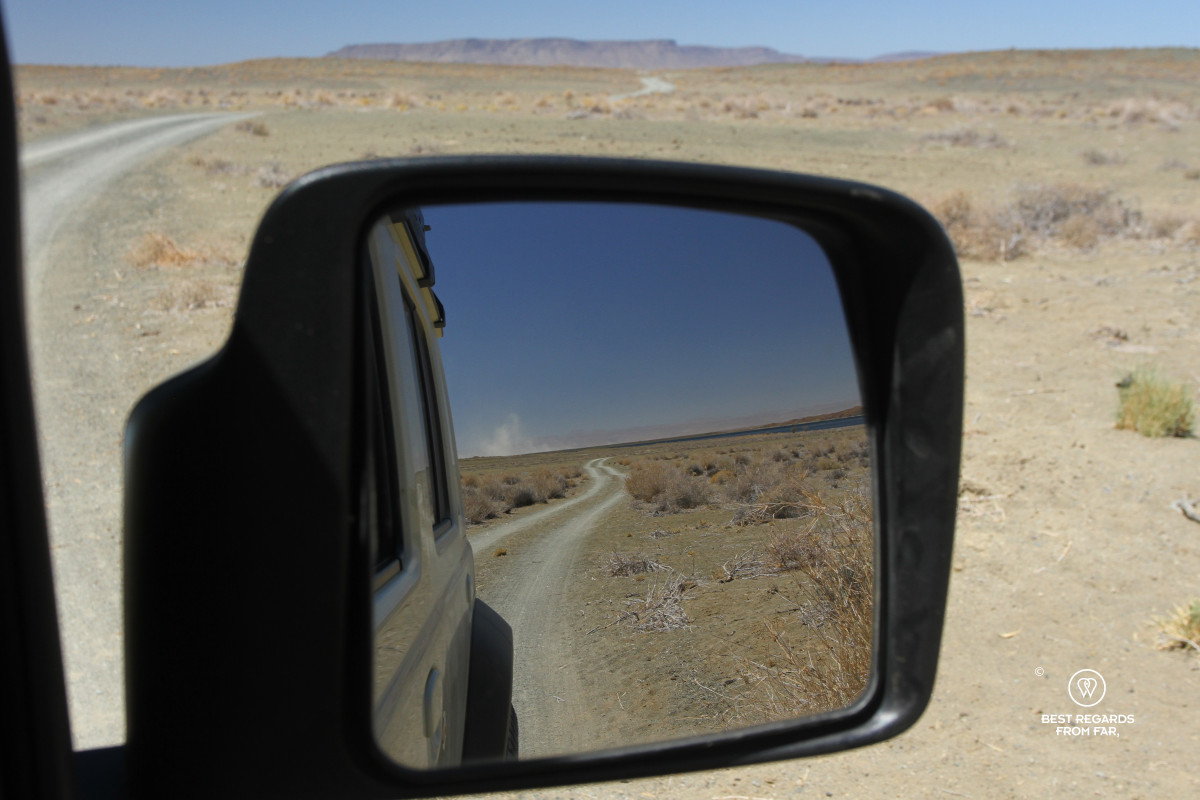
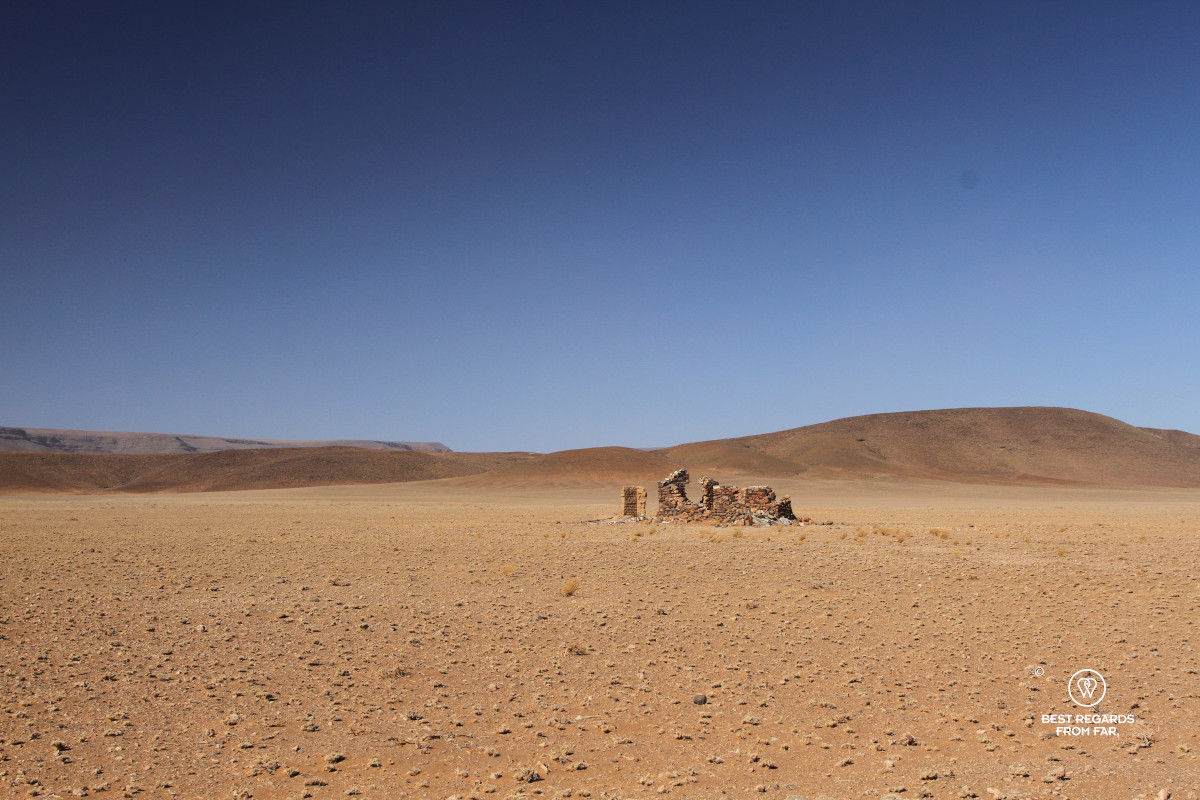
Descending the pass, I switch to low gear to spare the brakes. The engine protests slightly, asking the brakes to cooperate along the steepest sections. An eagle flies overhead, contrasting with the deep blue sky. As far as I can see, a barren landscape stretches out. The thermometer climbs above 34 degrees Celsius (93°F). Originally carved out by the local Khoi people as a cattle path, we try to picture the wagons of the Boer farming pioneers along the Peerboomskloof Pass as they progressed through the open, rugged expanse of the Karoo.
Our cell phones have long lost signal. Since leaving the tar road, we have not passed a single car, and the emptiness becomes palpable. It will just be the three of us: two adventurous women and one capable compact 4×4. Out here in one of the most remote corners of South Africa, we will need to function like a well-oiled machine. The famous Karoo is harsh, vast, and unforgiving… And we are driving straight into its heart.
Camp at the Edge of the Tankwa: First Night Under the Stars
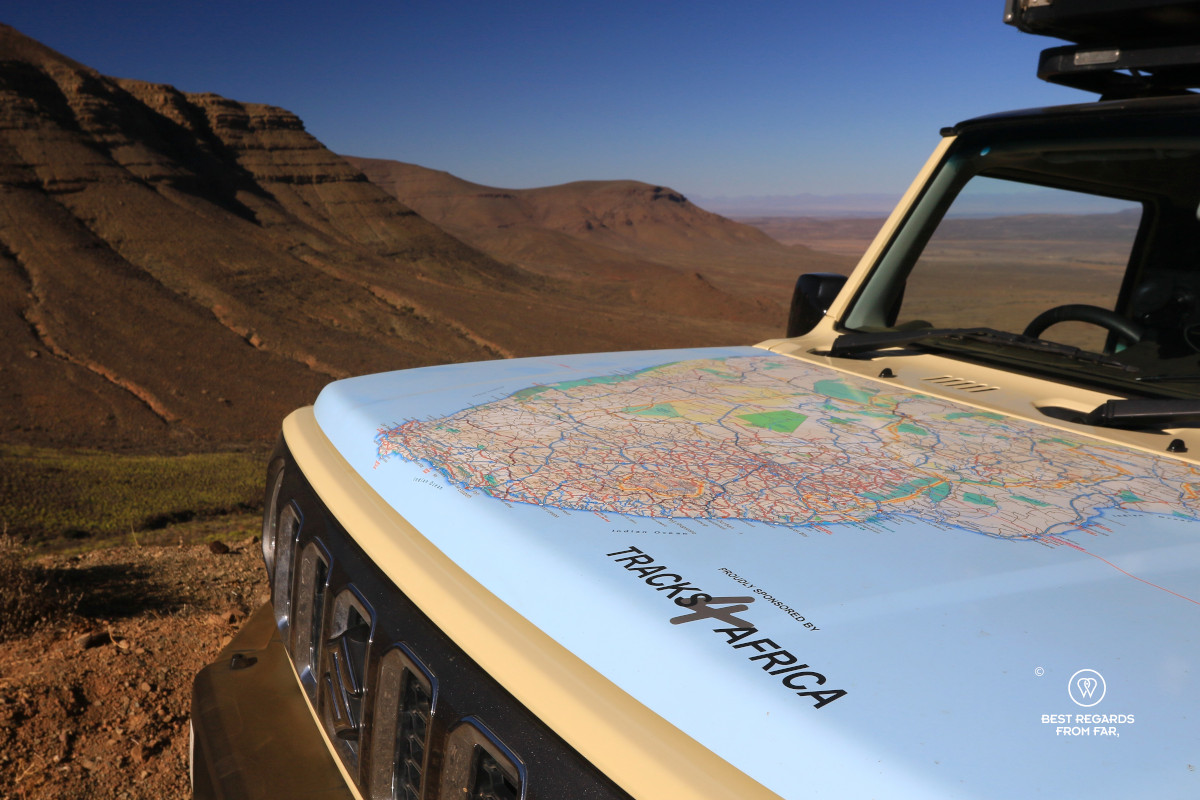
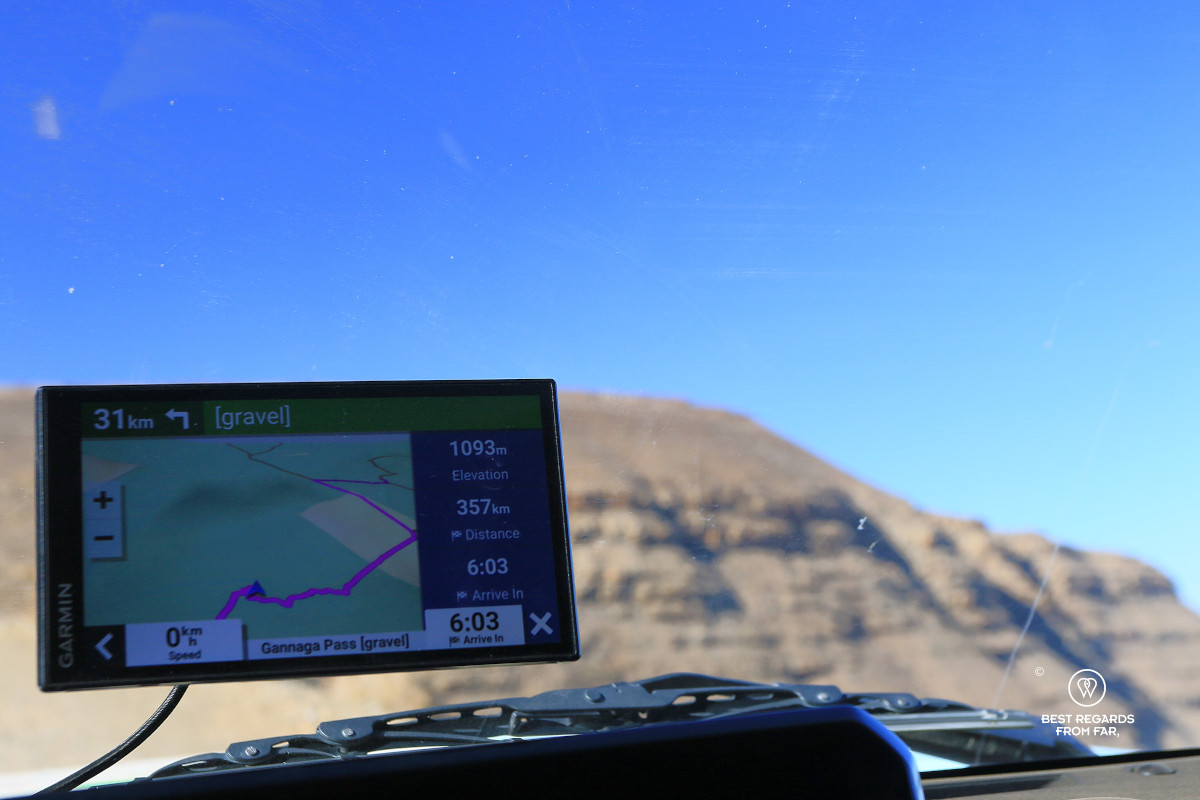
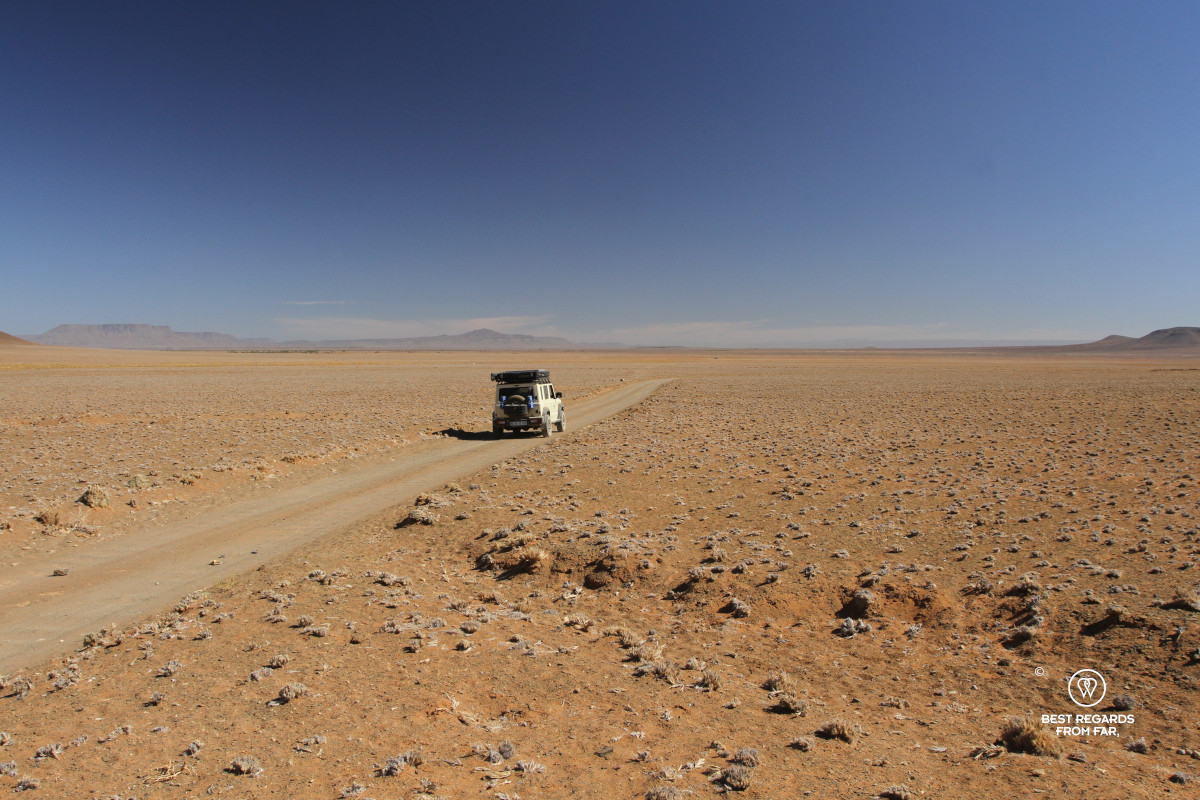
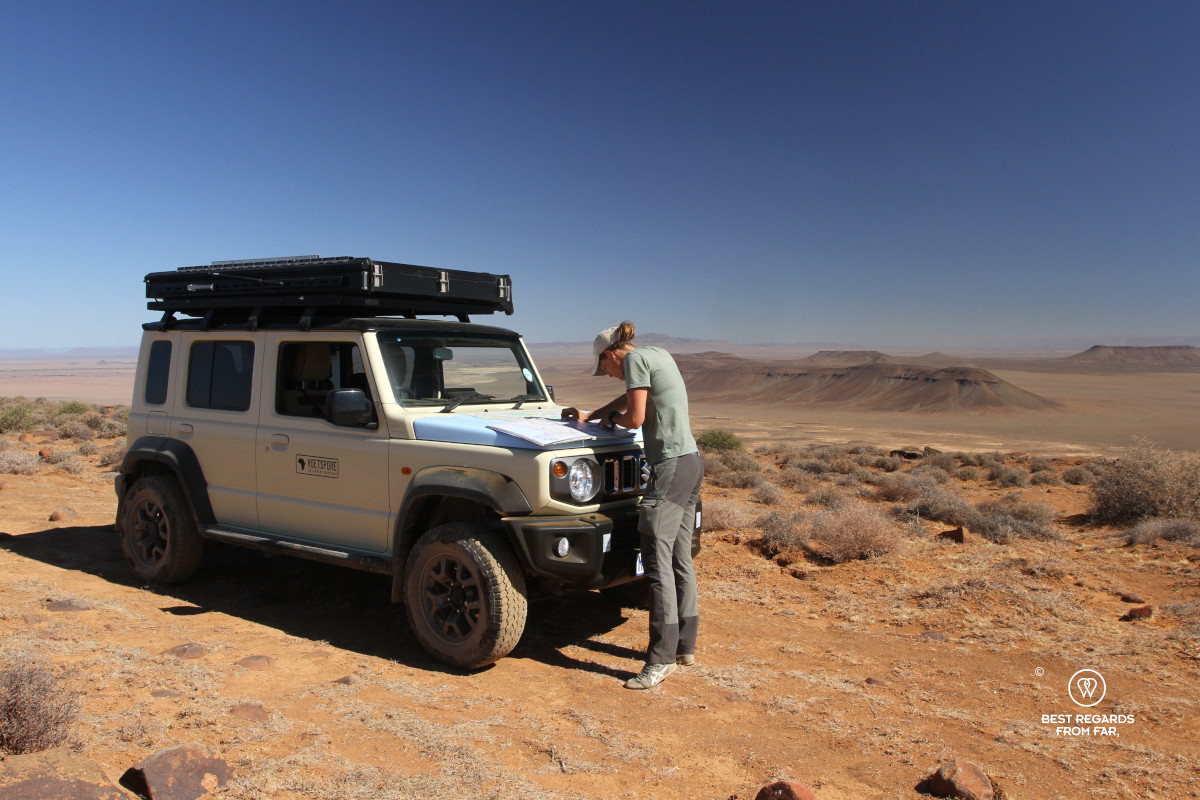
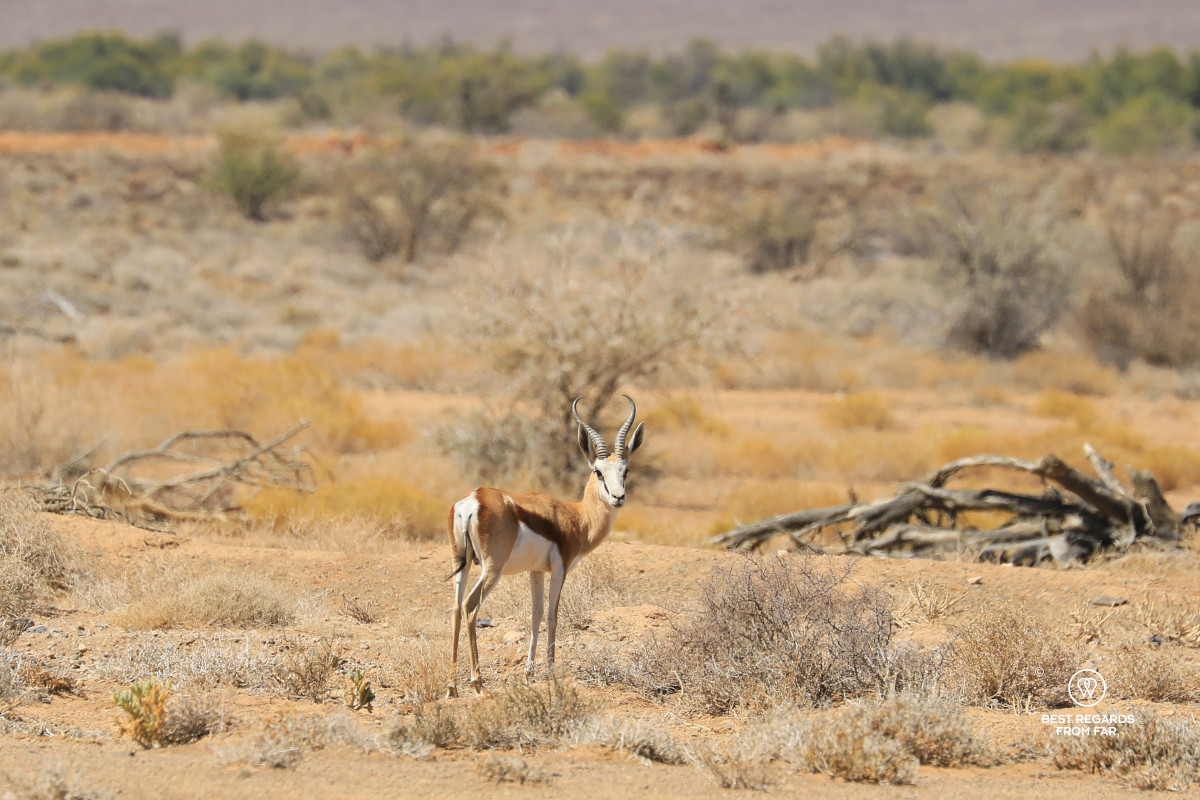
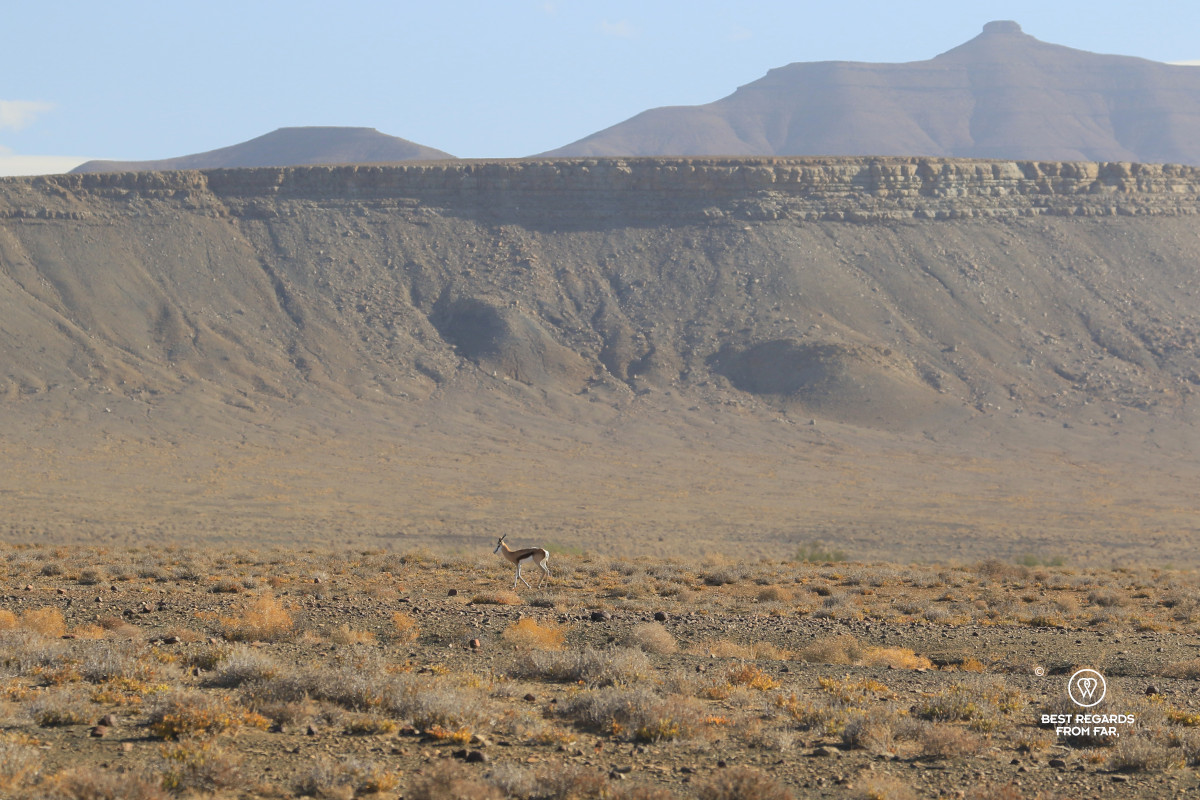
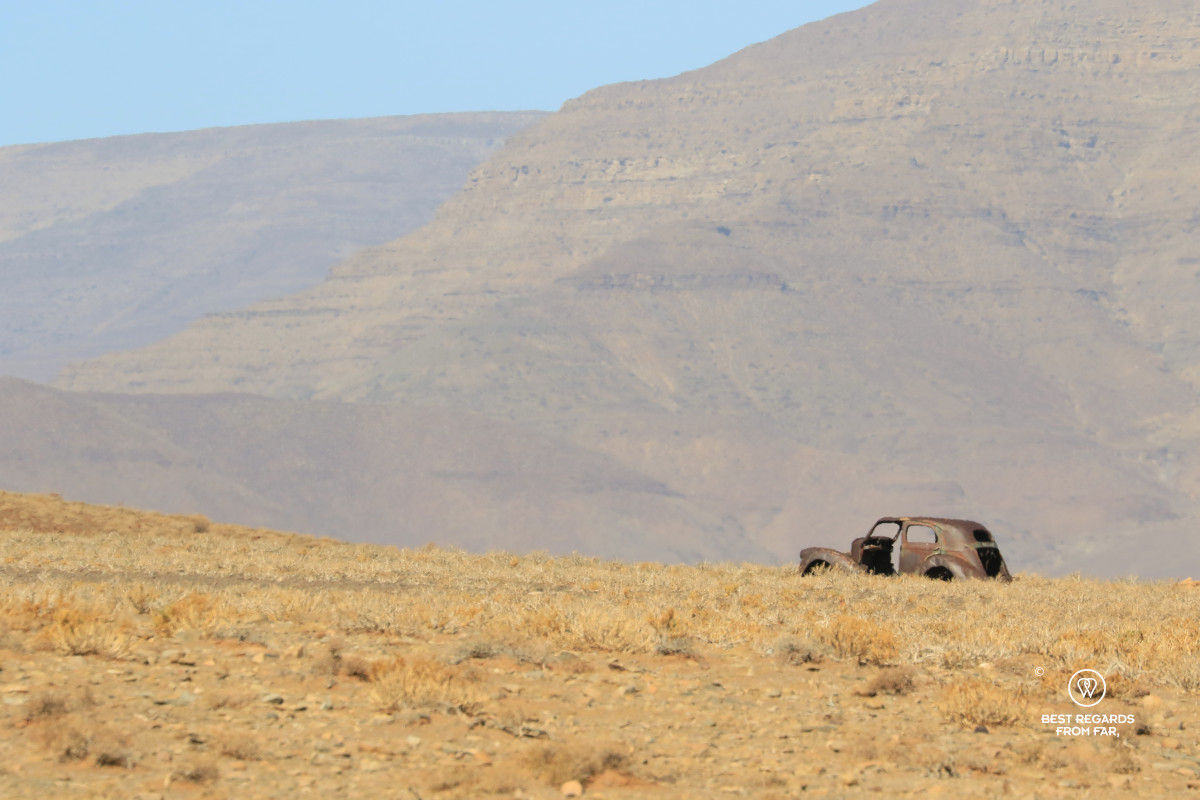
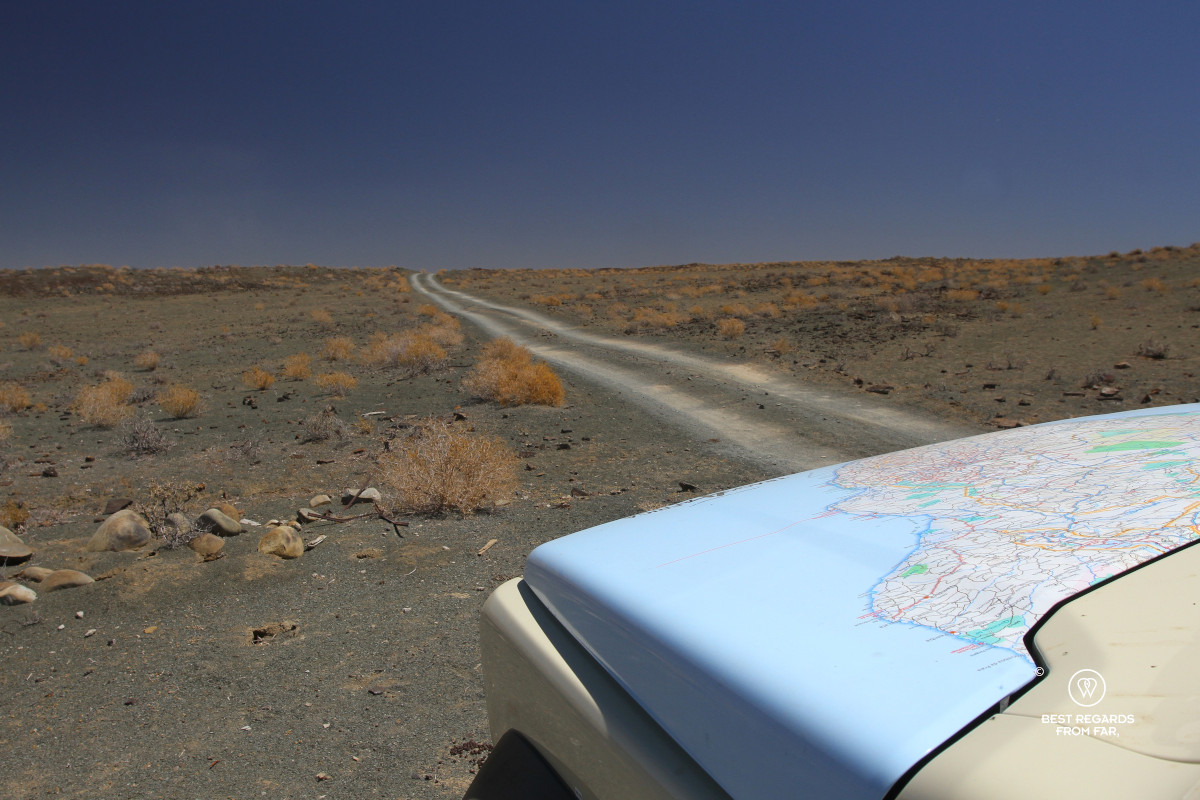
Tankwa Lifestyle Farm sits just outside the Tankwa Karoo National Park, a good introduction to what lies ahead. An abandoned rusted old timer – that must have been brand new when it got stranded – reminds us how remote this place is. Springboks run in the distance as we continue the drive on the gravel road. We open and close a series of farm gates before following a narrow track along which the GPS, loaded with the Tracks4Africa map, guides us.
The sun is already low and the wind howls across the vast plains as I park the Jimny with its bonnet into the wind to avoid any unwanted rocking of the vehicle at night.
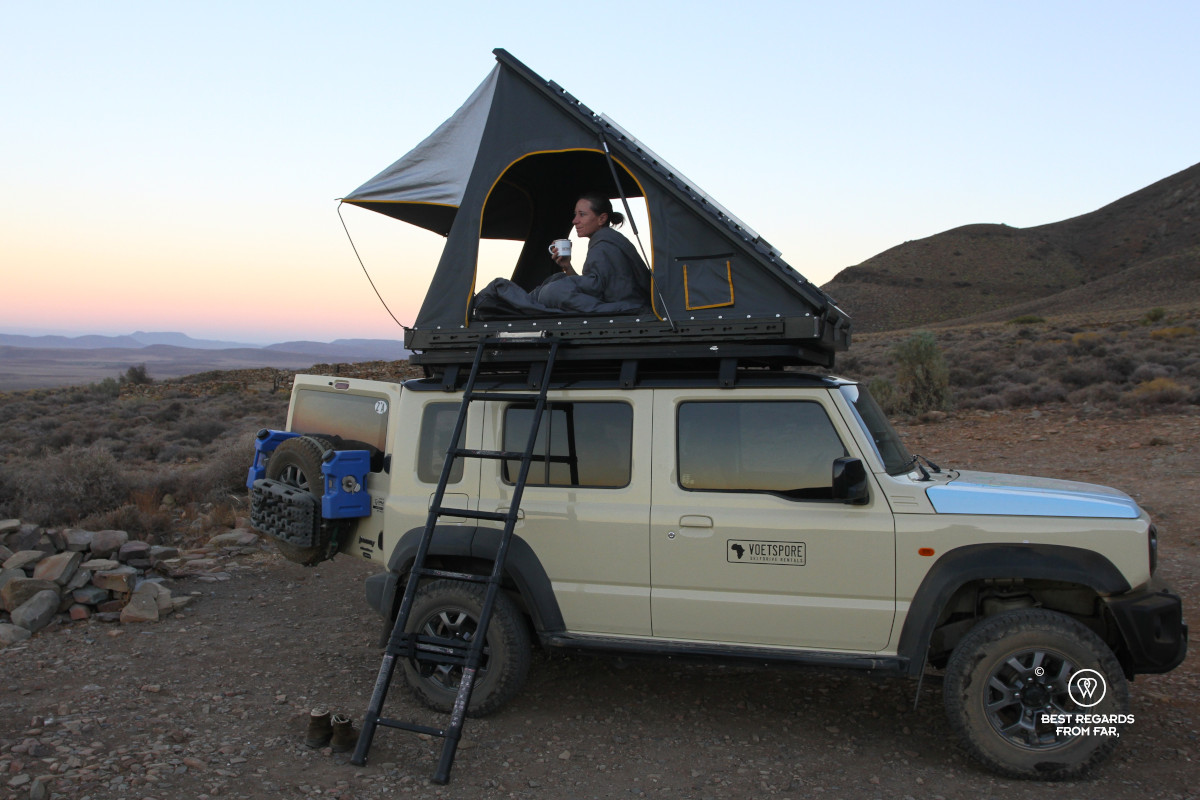
We unclip the two latches of the rooftop tent. With a gentle push, the tent lifts by itself, assisted by two gas struts. We unfold the ladder and climb up on the side: the mattress is in place and we just reposition the pillows and unfold the duvet. Within a couple of minutes, the comfortable bedroom is ready.
I check the level of the additional battery that charges on the alternator while driving and on the solar panels that are fastened onto the rooftop tent while stationary: 100 per cent. The fridge will run throughout the night without a problem, and we can recharge our camera batteries and phones.
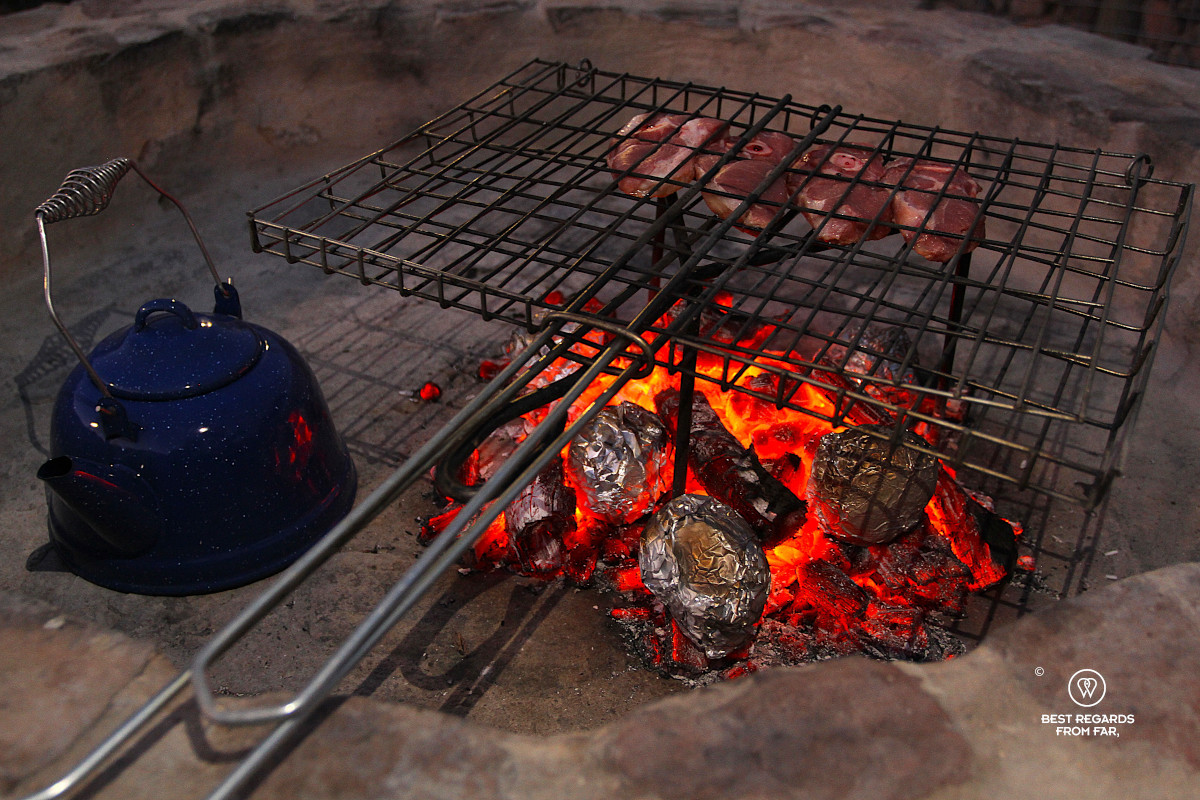
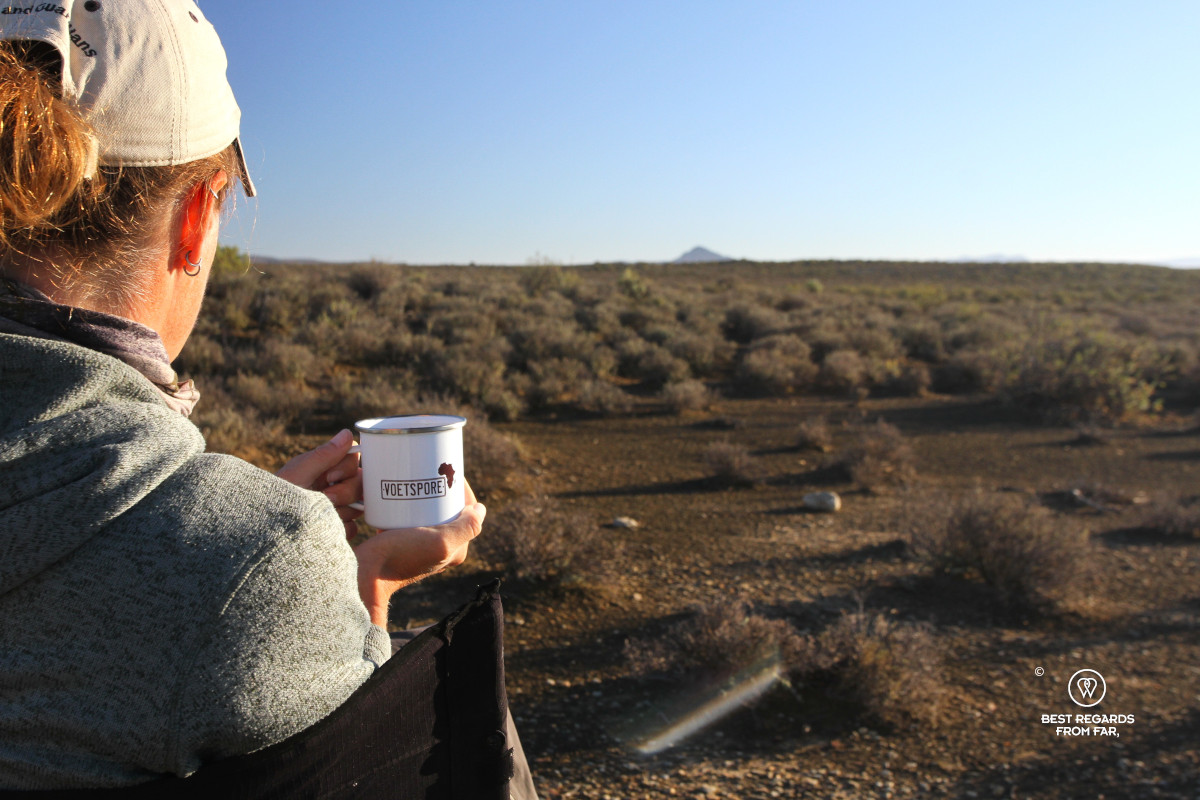
As the wind is not dying down, we retreat to the boma made of stones and start a fire: Karoo lamb on the braai, potatoes buried in the coals, and rooibos tea warming our hands as the temperature drops sharply after dark.
Into the Succulent Karoo: Biodiversity in the Arid Heart [Day 2]
After a good night’s sleep, we simply fold the duvet, tuck the canvas in, and gently pull the strap until the lid closes.
Building up the adventure step by step, we enjoy the comfort of running water for this first night out, knowing it is the last running water for the next three days.
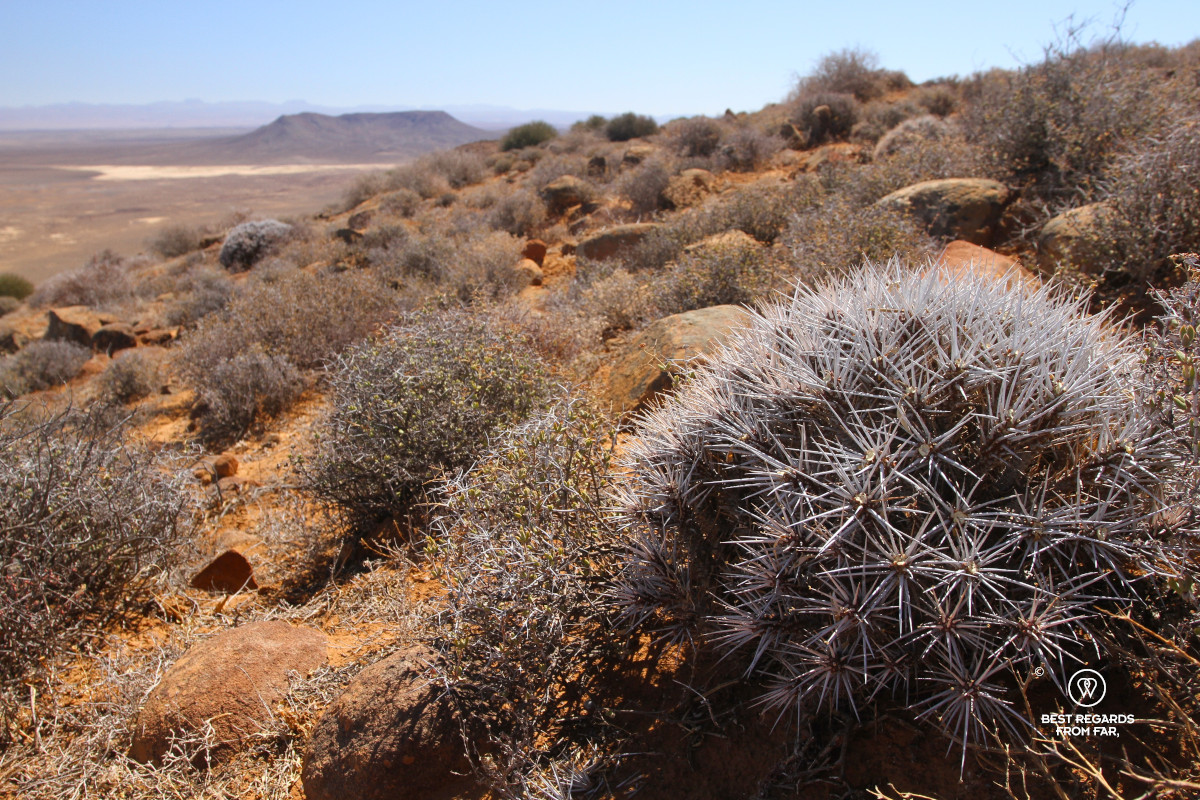
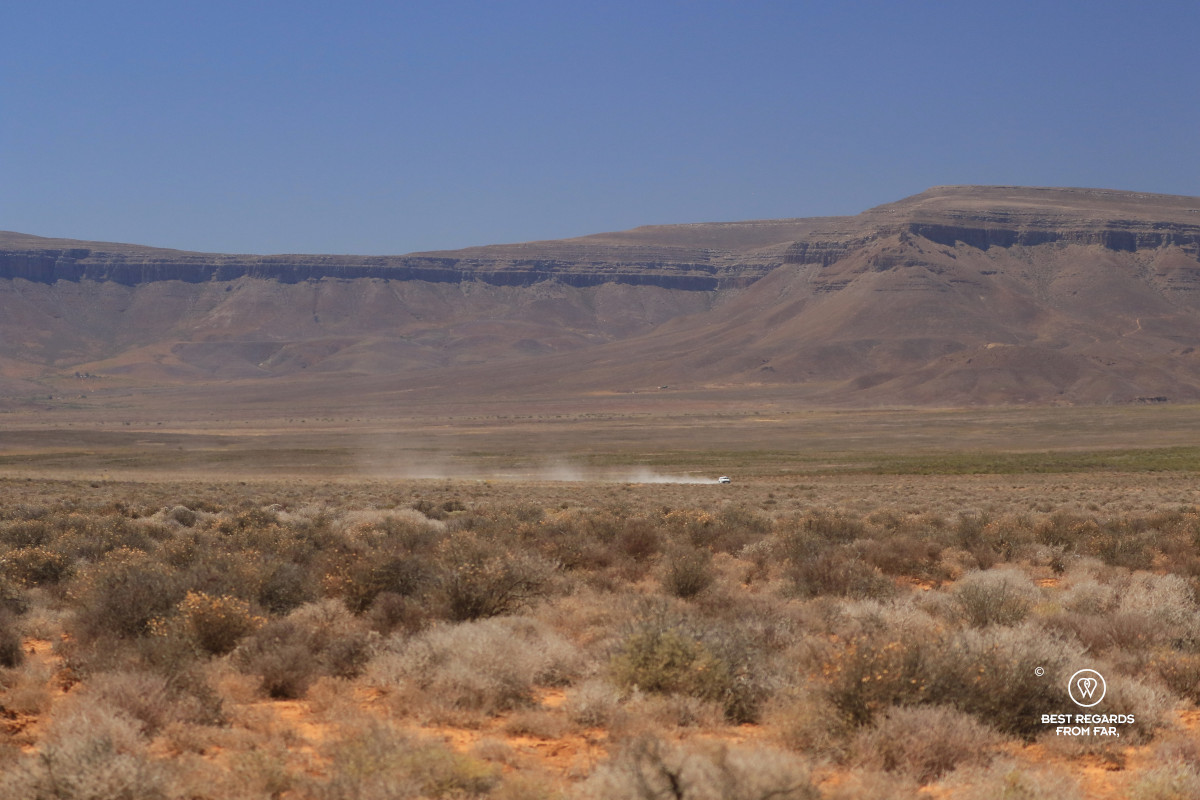
After a drip coffee and a bite, we venture further into the Succulent Karoo biome, one of the world’s only arid biodiversity hotspots. At a first glance it looks almost empty. The vegetation barely reaches knee height. Yet, nearly a third of the plant species here are endemic, many of them uniquely adapted to survive drought, heat, and nutrient-poor soil.
Gateway to the Tankwa Karoo: A Park of Vast Horizons
Established in 1986 and gradually expanded over decades to nearly 146,000 hectares (360,774 acres), the Tankwa Karoo National Park protects an extraordinary mosaic of landscapes. In the west lies a near desert, while an open shrubby plain is found in the central basin. The Roggeveld Mountains form a boundary in the east, crossed by the magnificent Gannaga Pass.
The Tankwa River, currently dry even after heavy recent rains, gives the park its name. Interpretations vary: “thirst land”, “turbid water”, “place of the San”. Humans have moved through this region for at least 10,000 years. San hunter-gatherers were the first, followed by Khoi cattle herders. Later, Boer farmers drove their sheep through these lands in search of seasonal pastures. Overgrazing damaged the fragile veld. Still surrounded by sheep farms, the ones encompassed within the park have gradually rewilded.
Unlike many other South African national parks, Tankwa Karoo is unfenced and wildlife truly roams freely. A water-damaged gravel road leads us to the Roodewerf Office. The post office and school, where two teachers used to live to support the local community, have been turned into the park’s administration. We announce ourselves and pay for our pre-booked camping sites and conservation fee that grants access to the permit-holder-only tracks of the park.
Oudebaaskraal Dam: Life in a Deserted Land
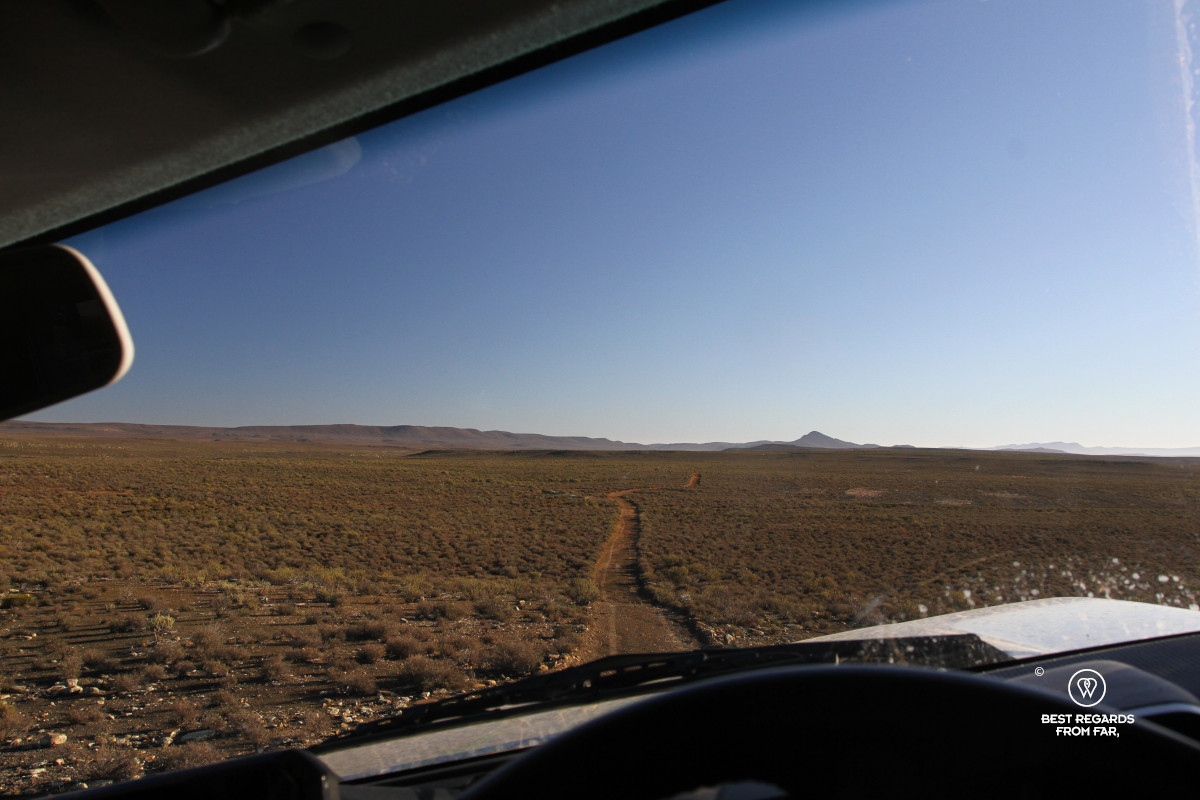
Leaving the main badly corrugated gravel road, the high clearance of the Jimny that has been comfortable so far, becomes a necessity. We cross a dry and steep riverbed and continue to manoeuvre the 4×4 effortlessly along it on a sandy and rocky track to the Oudebaaskraal Dam.
Constructed to store rainwater for livestock when this land was still farmed, it used to be one of the largest privately owned dams in South Africa. Today the cattle are gone, and the man-made lake has become an ecological hotspot, attracting all sorts of wildlife.
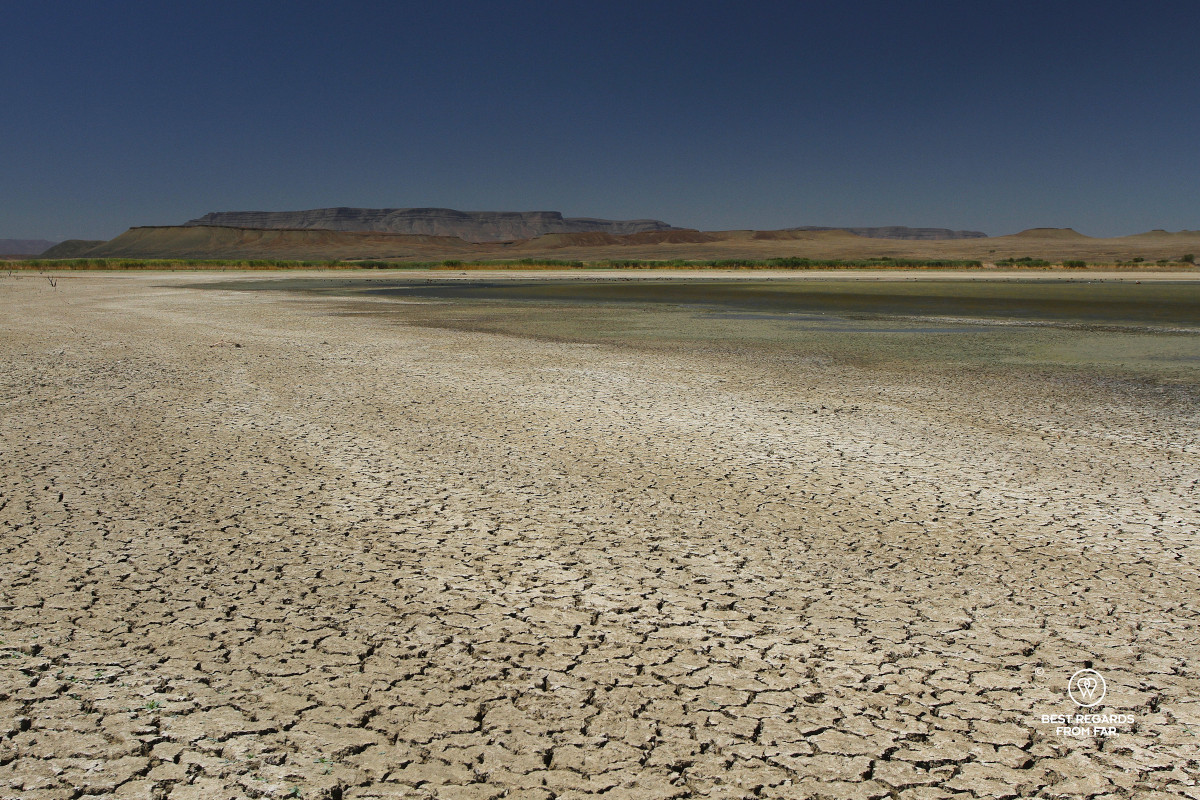
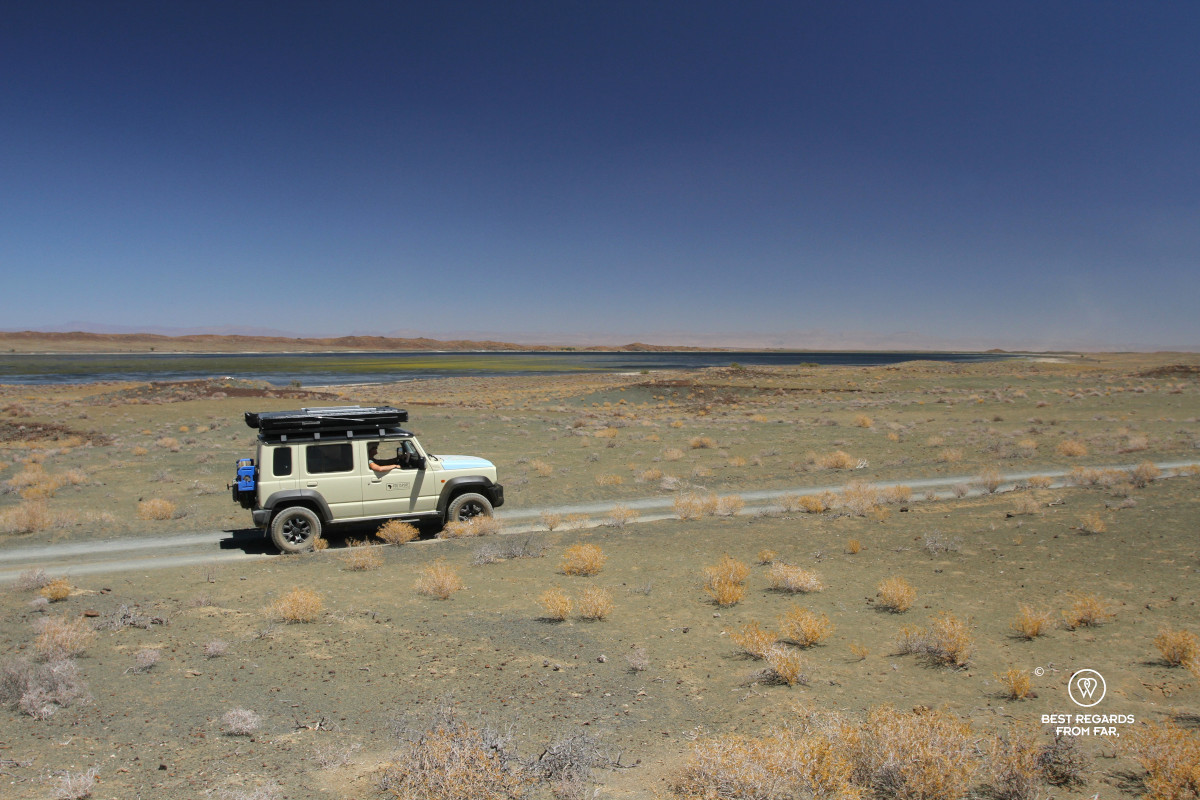
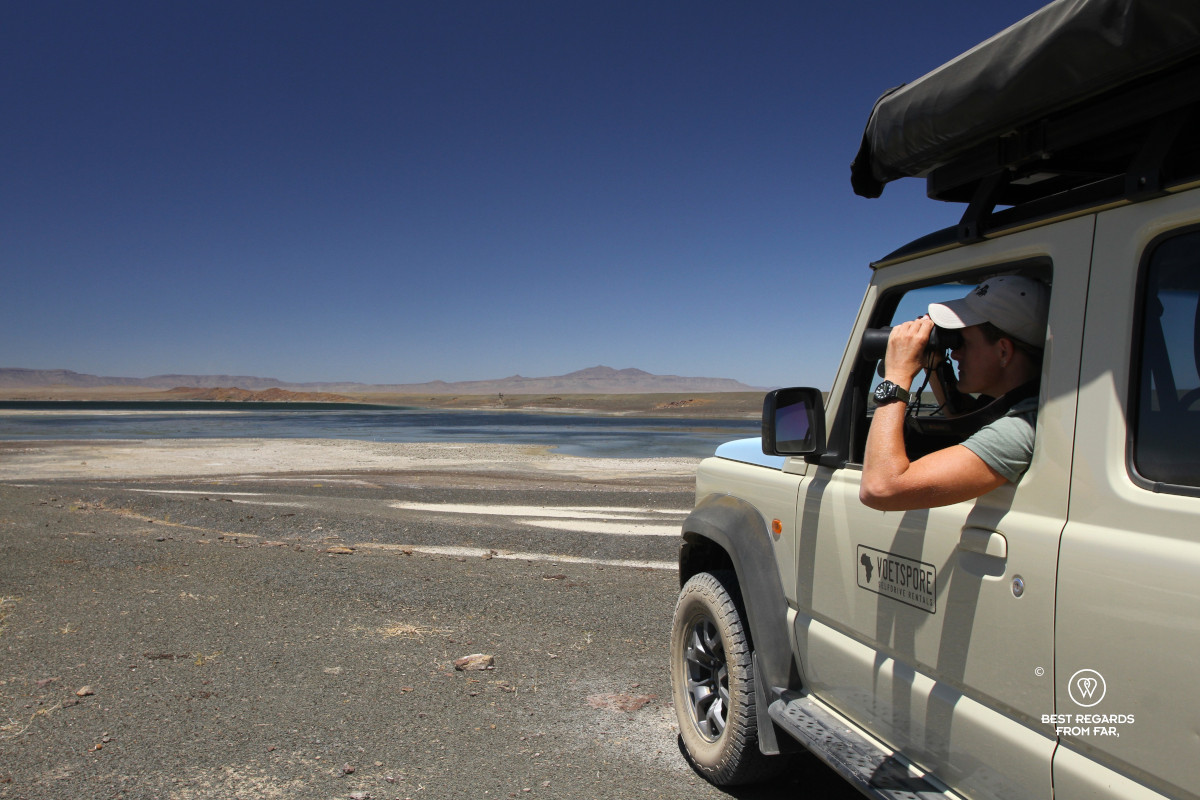
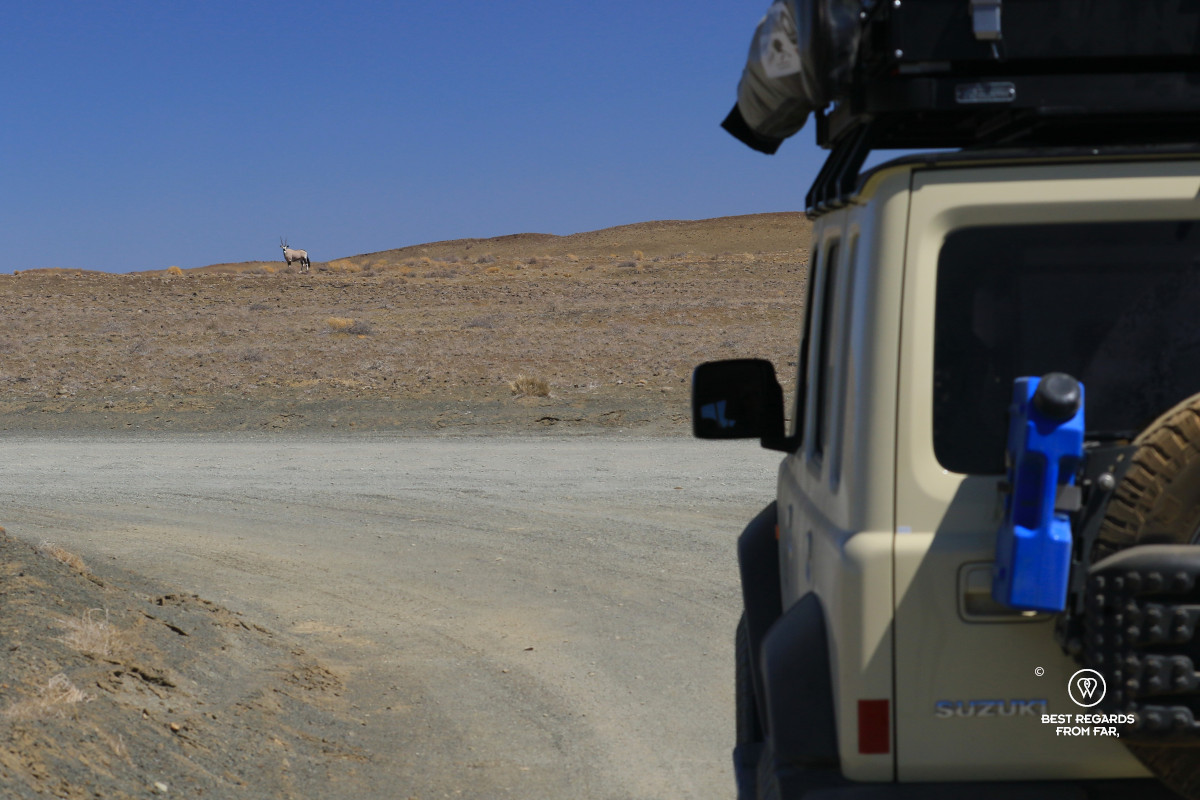
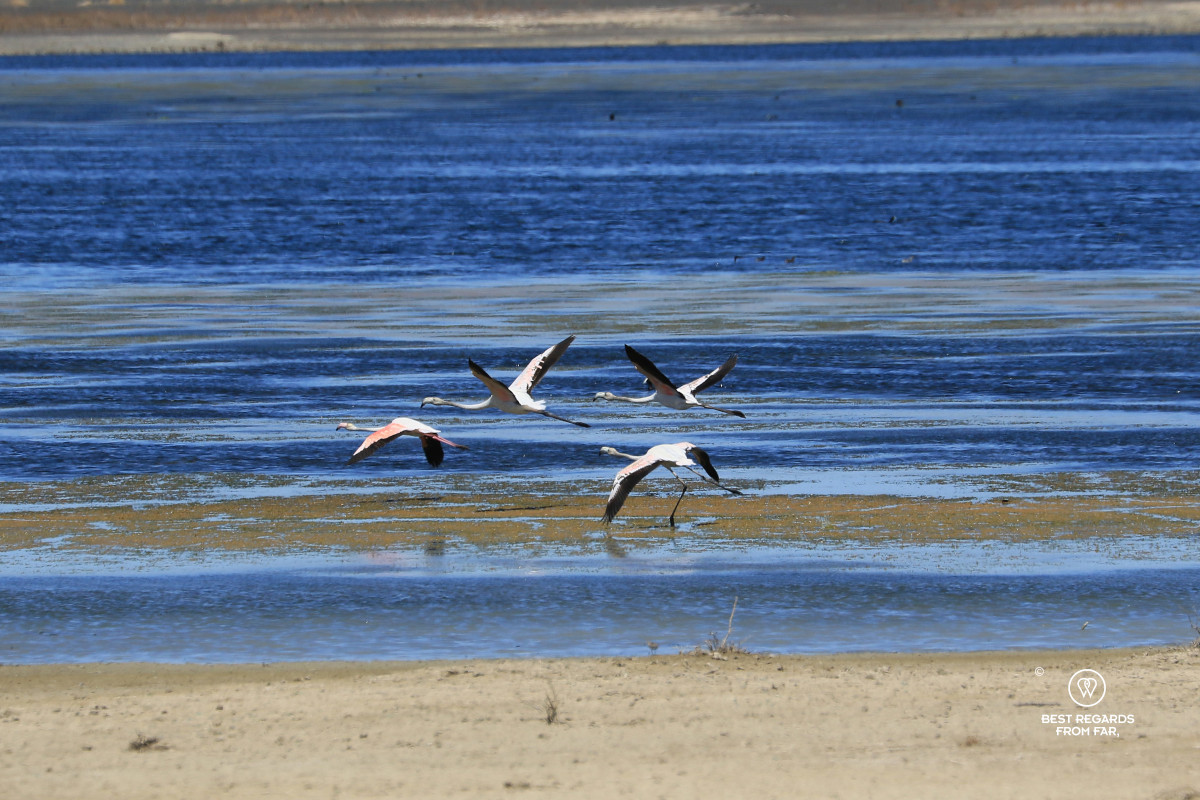
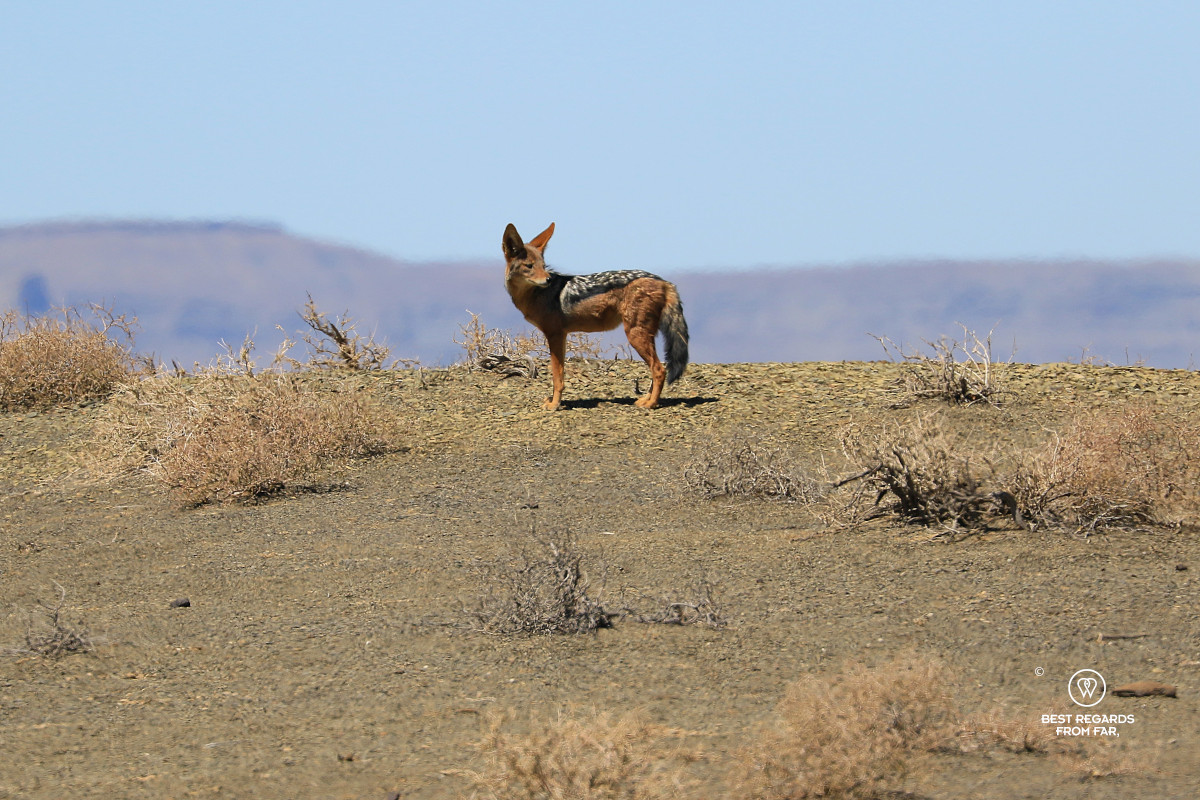
Like an oasis in the distance blurred by a simmering heat, the blue water contrasts with the dusty brown landscape. The large body of water contains too much sulphur for human consumption, yet animals have adapted. We cross herds of ostriches and oryx before we park and walk to the edge of the lake. A flamboyance of flamingos feeds on algae, some more pink than others. Other water birds pace along the shoreline. Black-backed jackals attempt to creep closer to the birds. Tracks of various antelopes crisscross the dry soil.
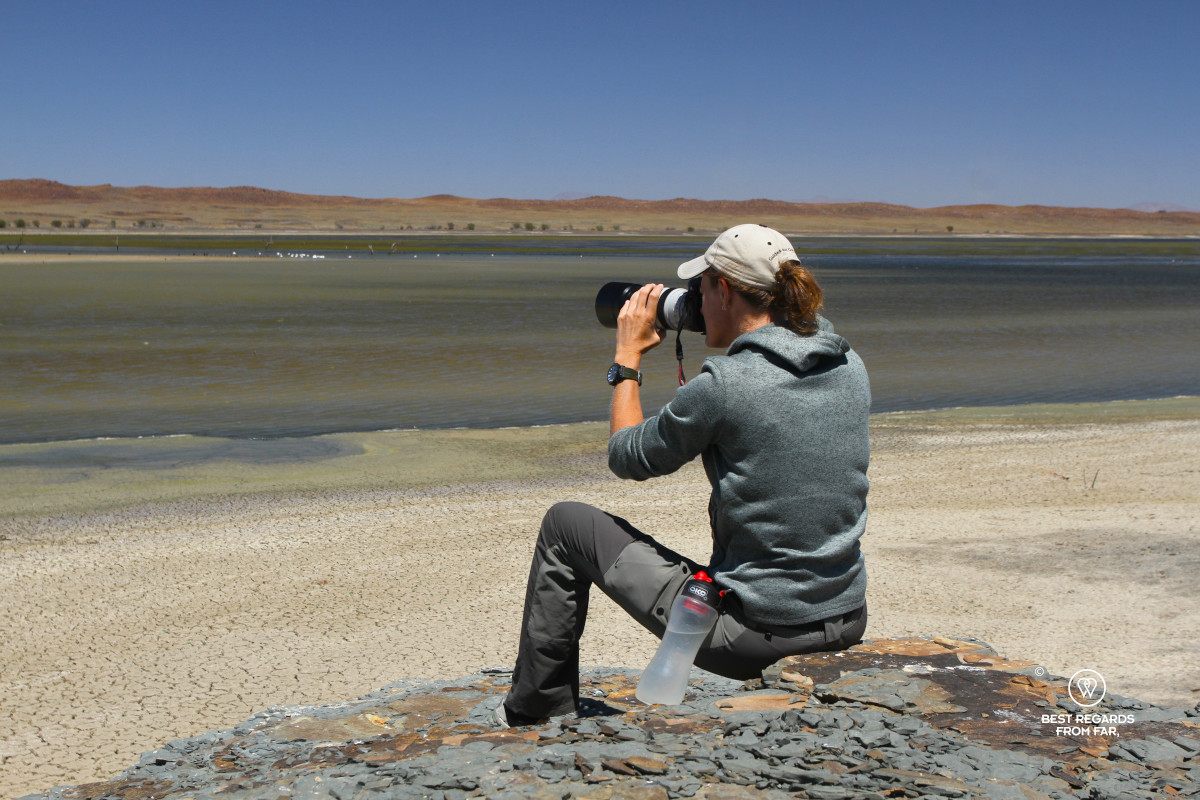
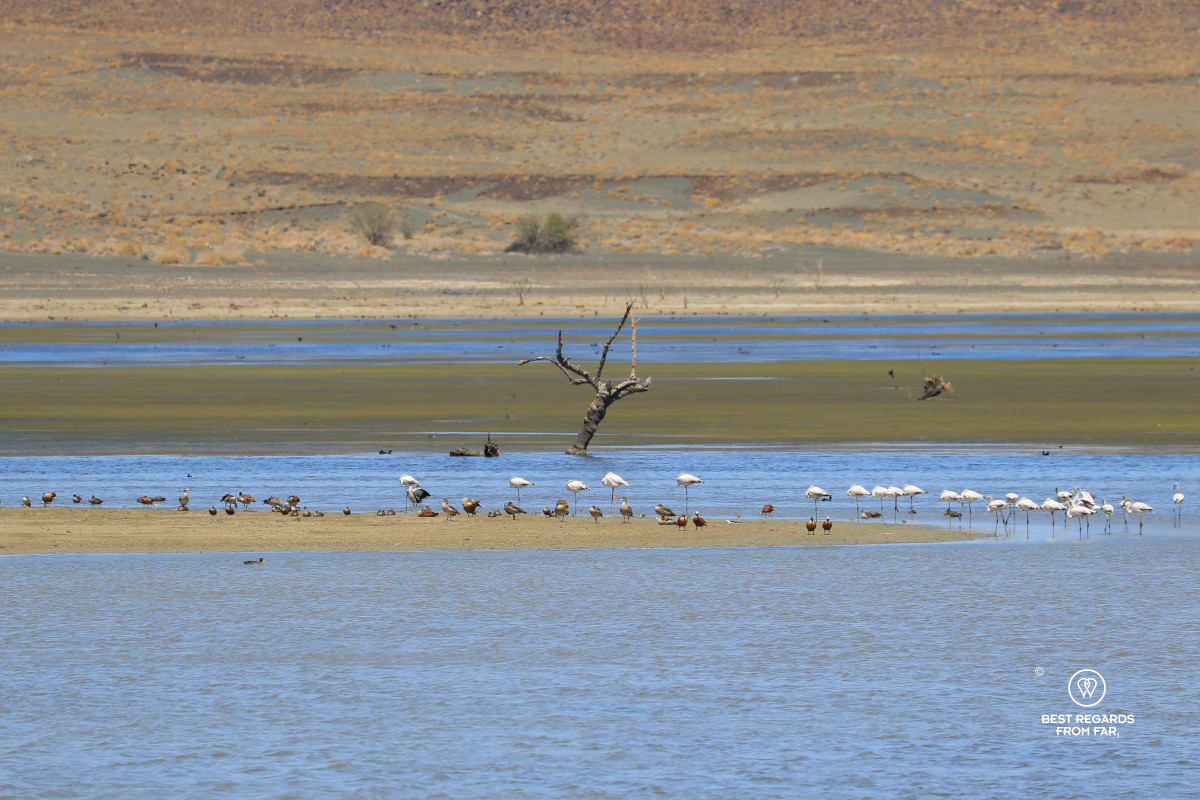
The clock ticks fast as distances are vast and take time to cover. So far we still have not seen a single other car today as we drive along the bumpy track towards the gravel road. We still need to drive the most challenging part of the day. There are a few cottages and small camp sites in the park, but we have booked a private designated wild camp instead: no signal, no electricity, no water, and no facilities.
Steenkampshoek Wilderness Camp: Sublime View over the Tankwa
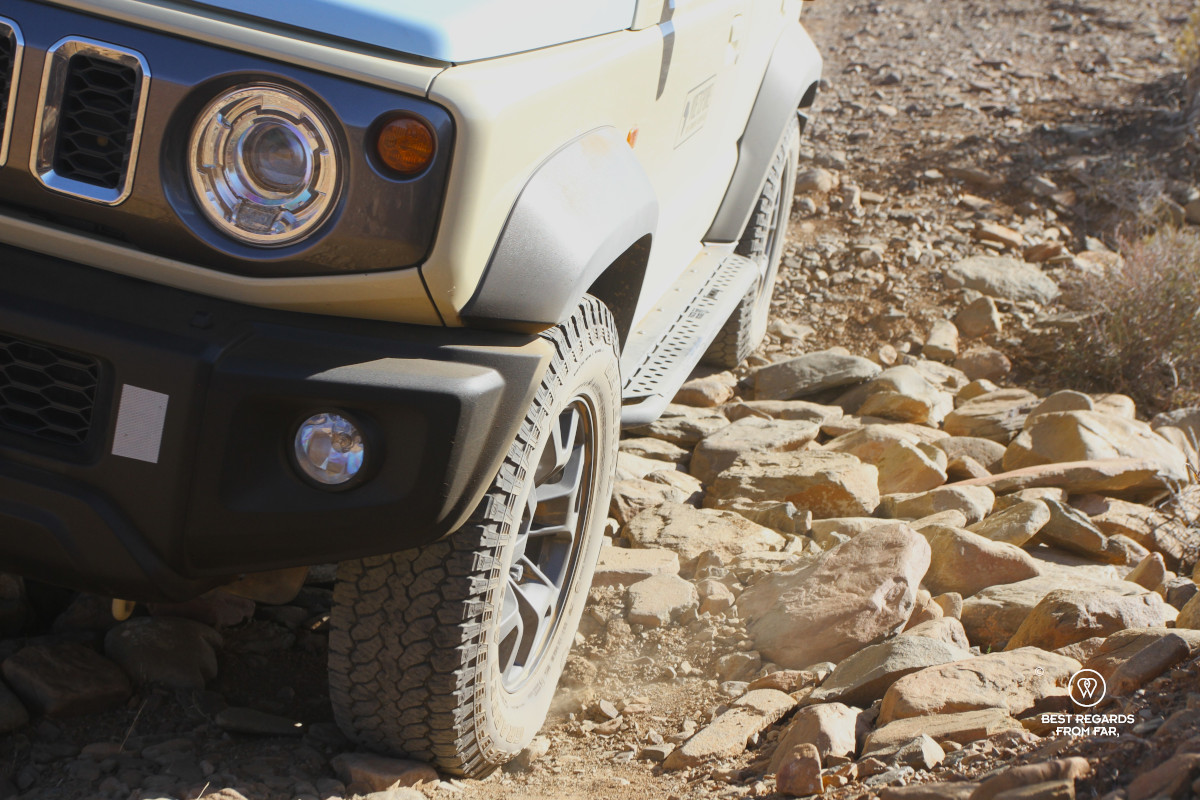
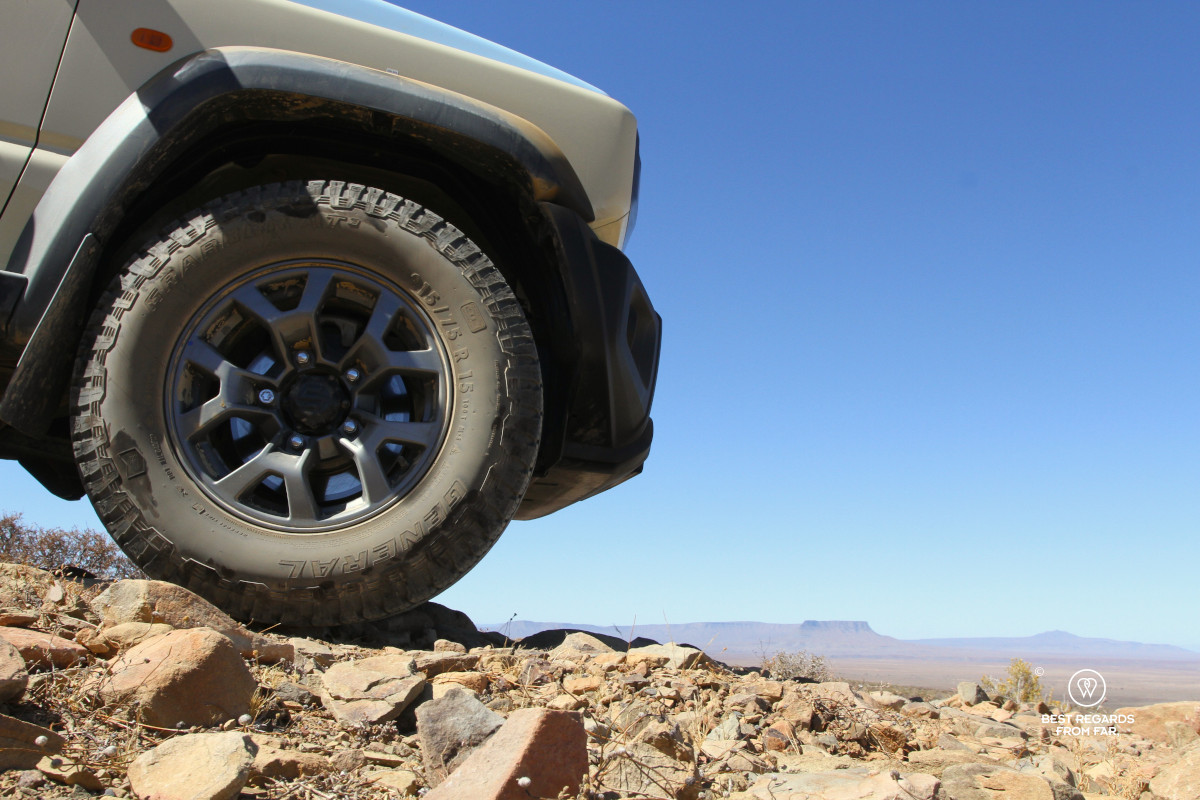
To reach the Steenkampshoek campsite, a 4×4 is required. Along the short but challenging 12-kilometre track (7.5 miles), we put the off-road capabilities of the Jimny and its tyres to the test, as well as our driving skills. Our 4×4 training comes in handy, and we make sure to choose the right line for proper wheel placement, avoiding sharp stones and potential punctures. A slow approach, unwavering focus, and teamwork lead us to the final destination on our GPS, almost an hour later.
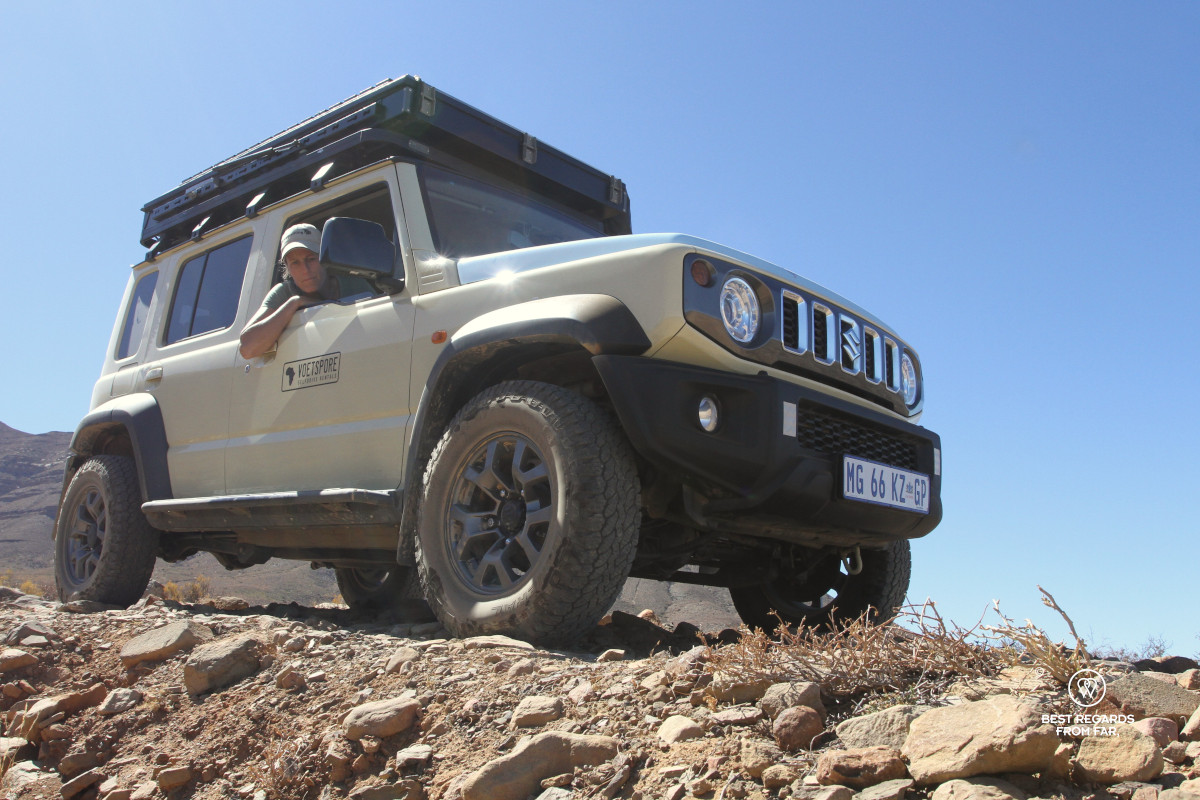
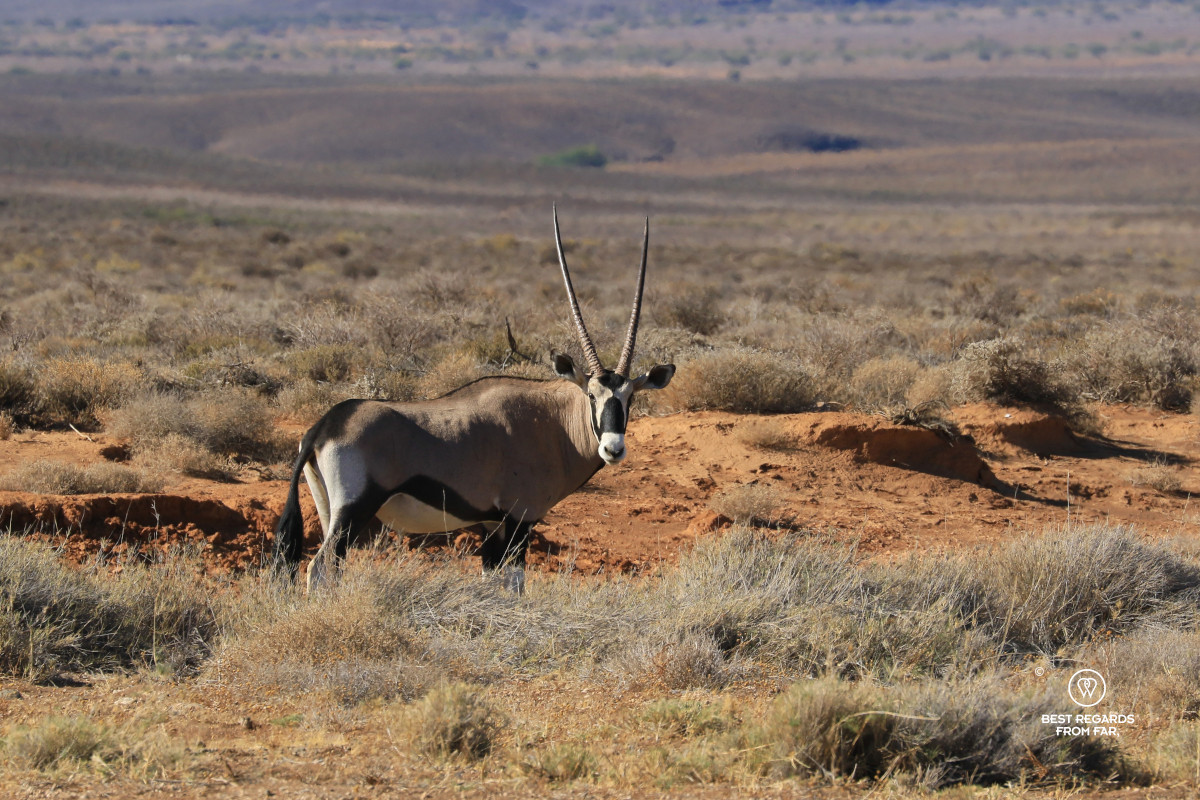
When we reach our destination, a magnificent oryx rises from where it has been resting and slowly walks away, leaving the site to ourselves.
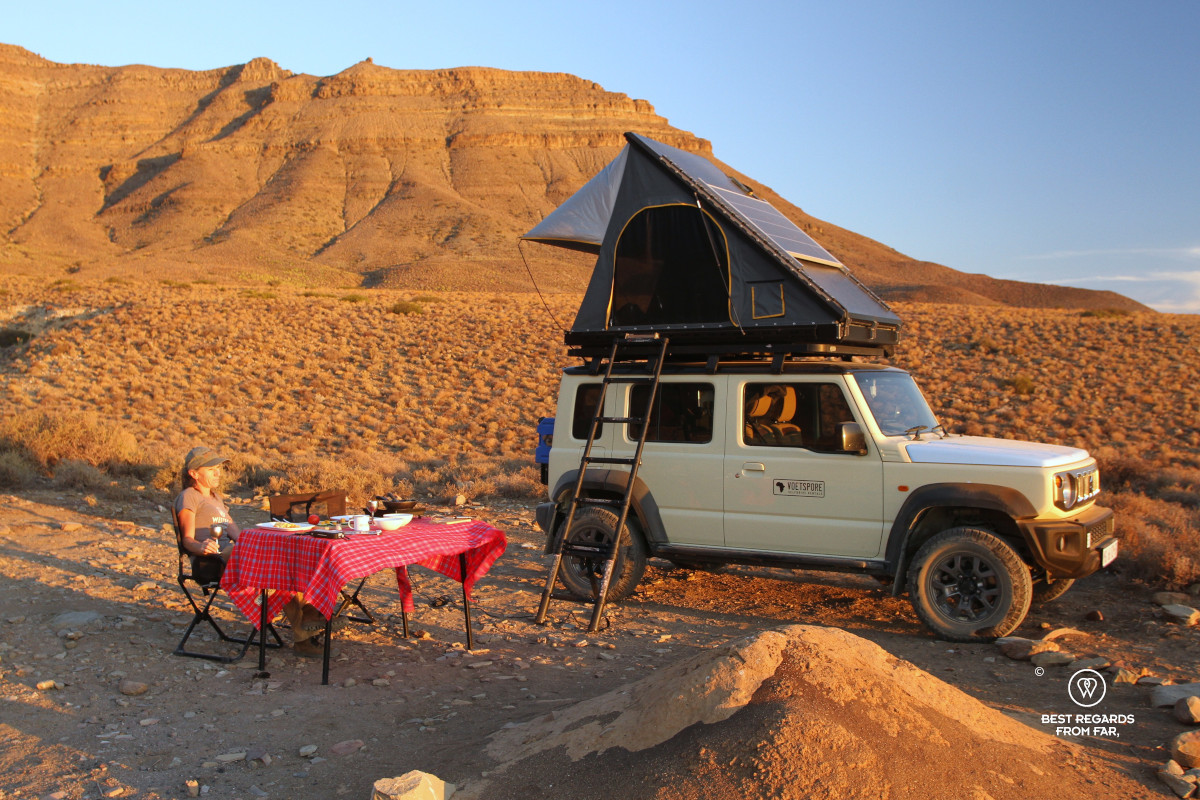
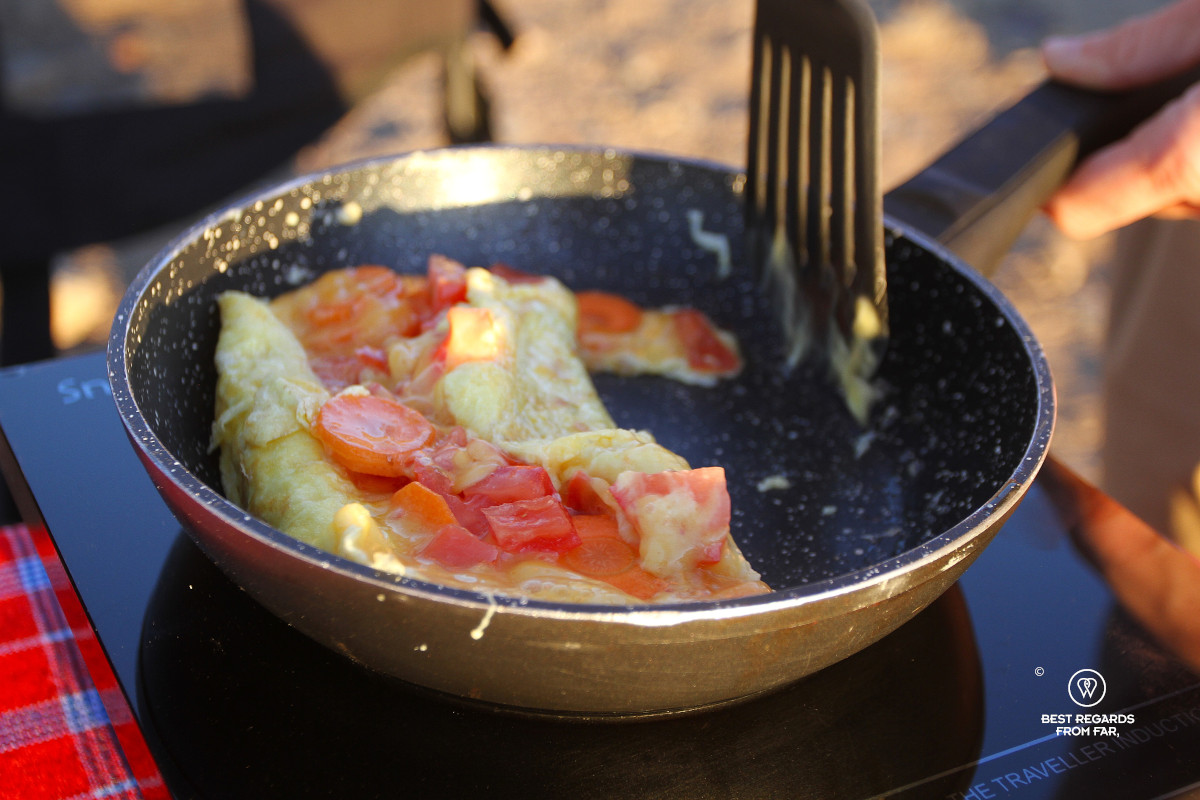
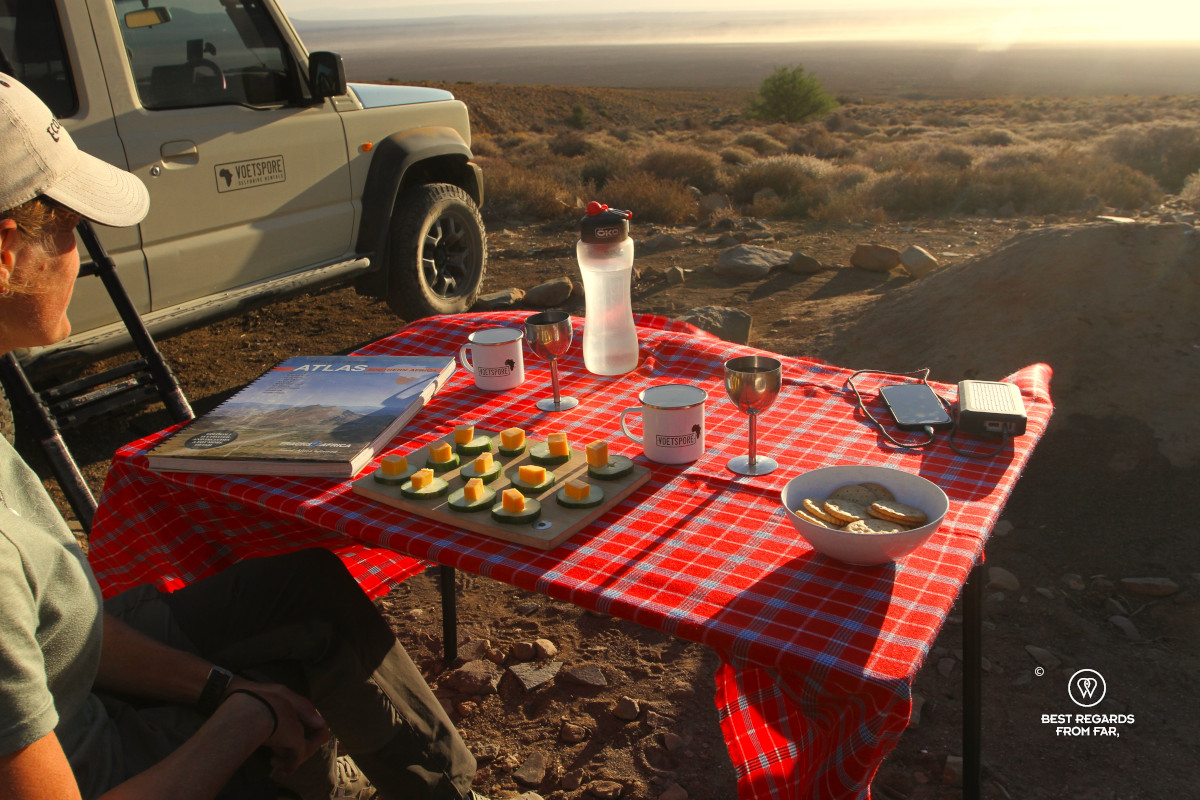
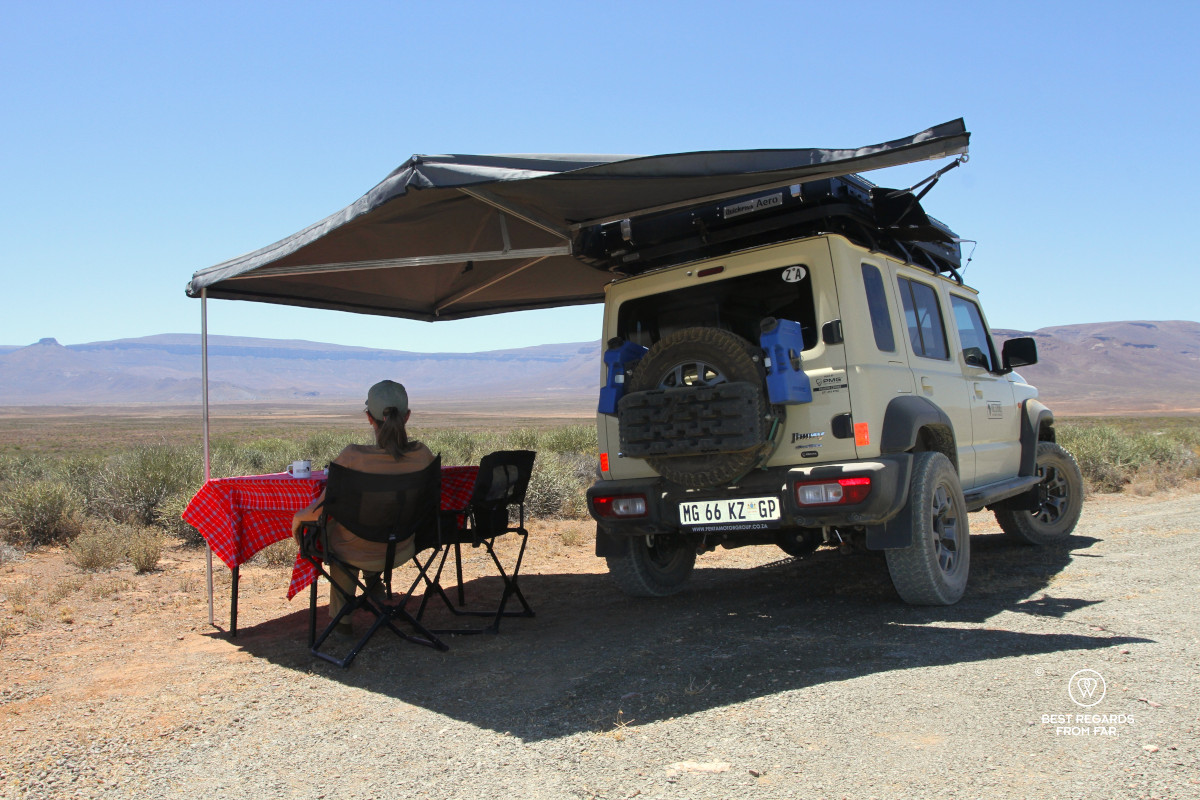
The rooftop tent is up in seconds again. Organised storage crates hold more cooking gear than my own kitchen. While bites and cold drinks are taken from the fridge, we plug in an induction stove to sizzle a hearty omelette in a pan.
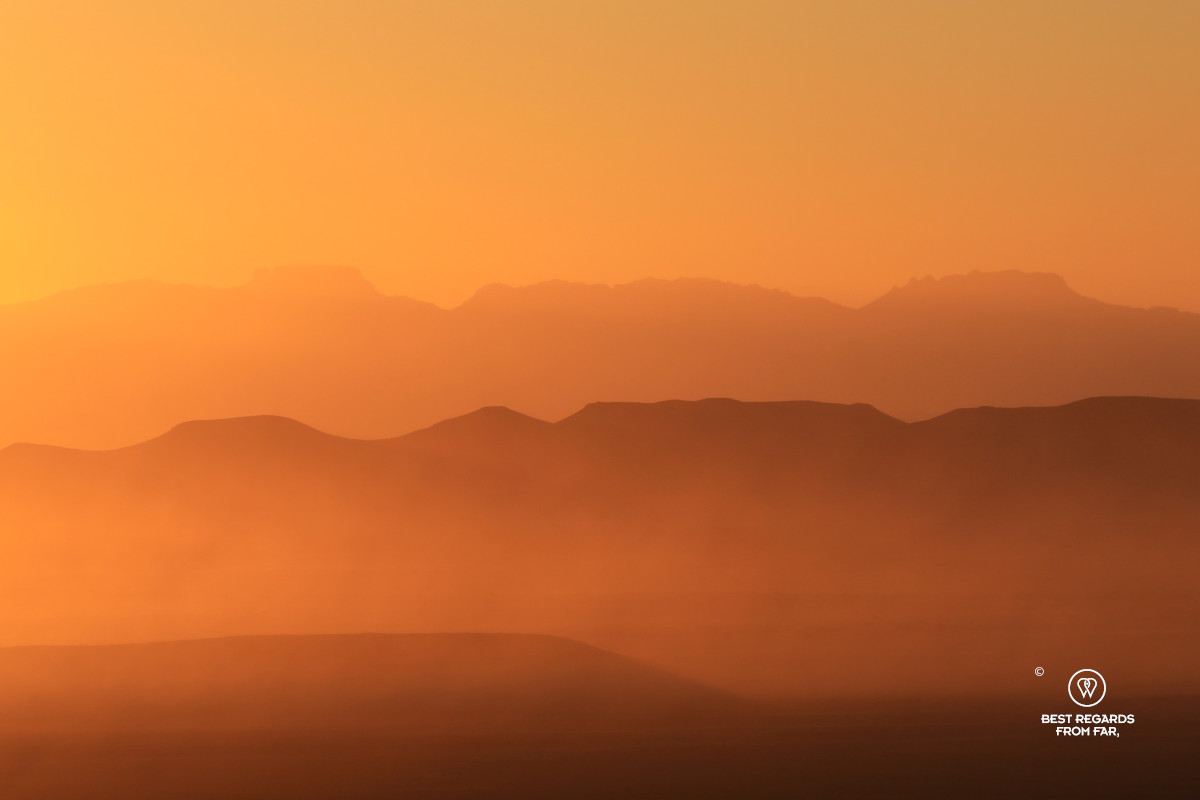
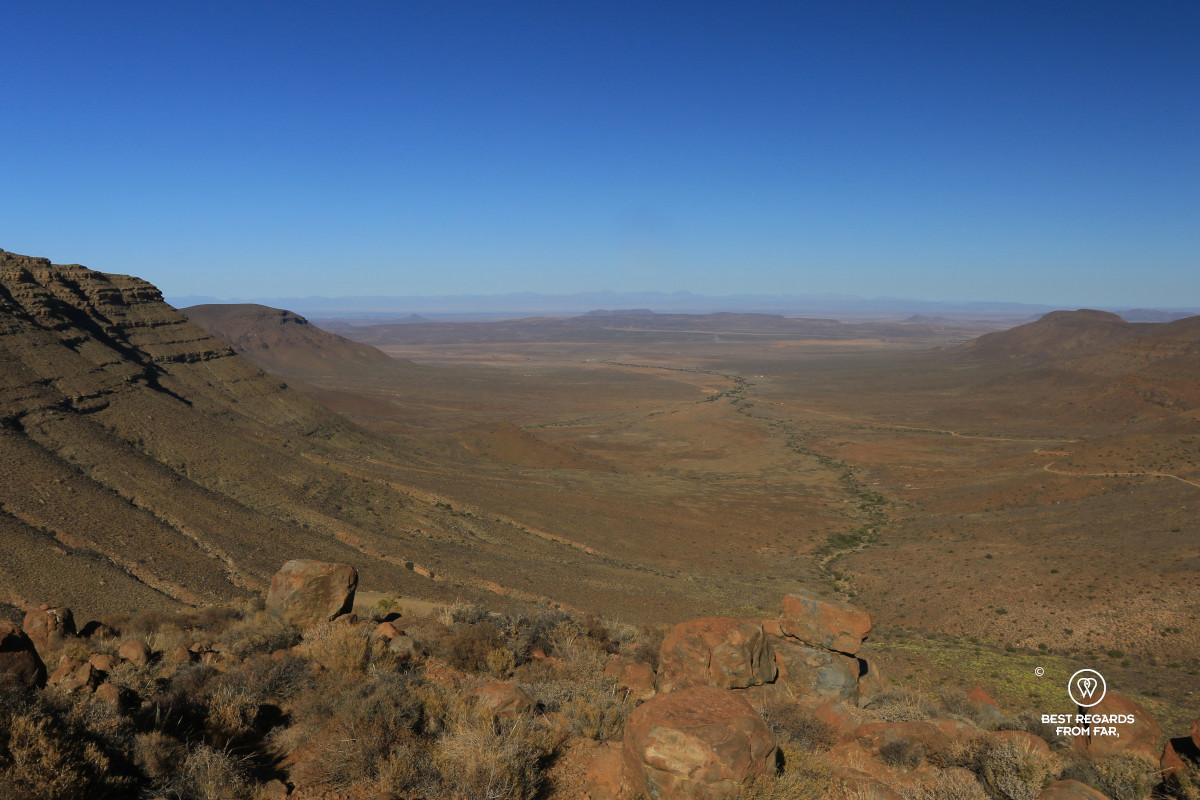
We enjoy an unforgettable sundowner as the Sun sets on the Tankwa Basin that sprawls beneath our feet. Layers of mountains in the background take different hues of orange. In the distance, the jackals howl as night falls. Crux rises in the south. Orion shines bright. The Milky Way brightens up these exceptionally dark skies, offering us a comforting sense of familiarity.
Wildlife & Moonlike Landscapes of the Tankwa Karoo [Day 3]
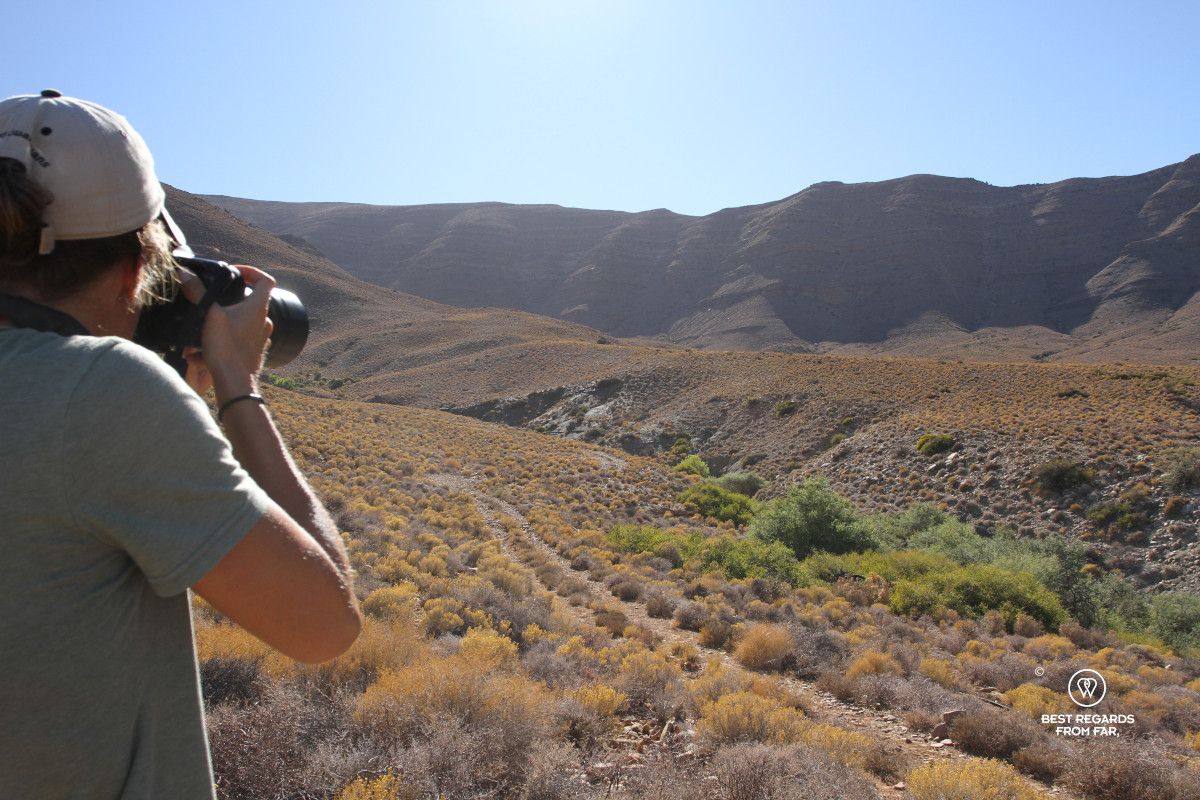
At dawn the sky turns pink. A bright yellow oriole hunts insects near camp while I warm up water to prepare coffee. We sip it while watching the sun rise from the comfort of the tent, which gives us a panoramic view from the rooftop of the Jimny. Once it is out, we descend the ladder and go for a walk to take a closer look at the tubular vegetation that is only found on this slope of the mountain.
The alarm call of a lonely baboon reveals its presence. Like us, he is studying the vegetation, but with a different interest, as he is foraging.
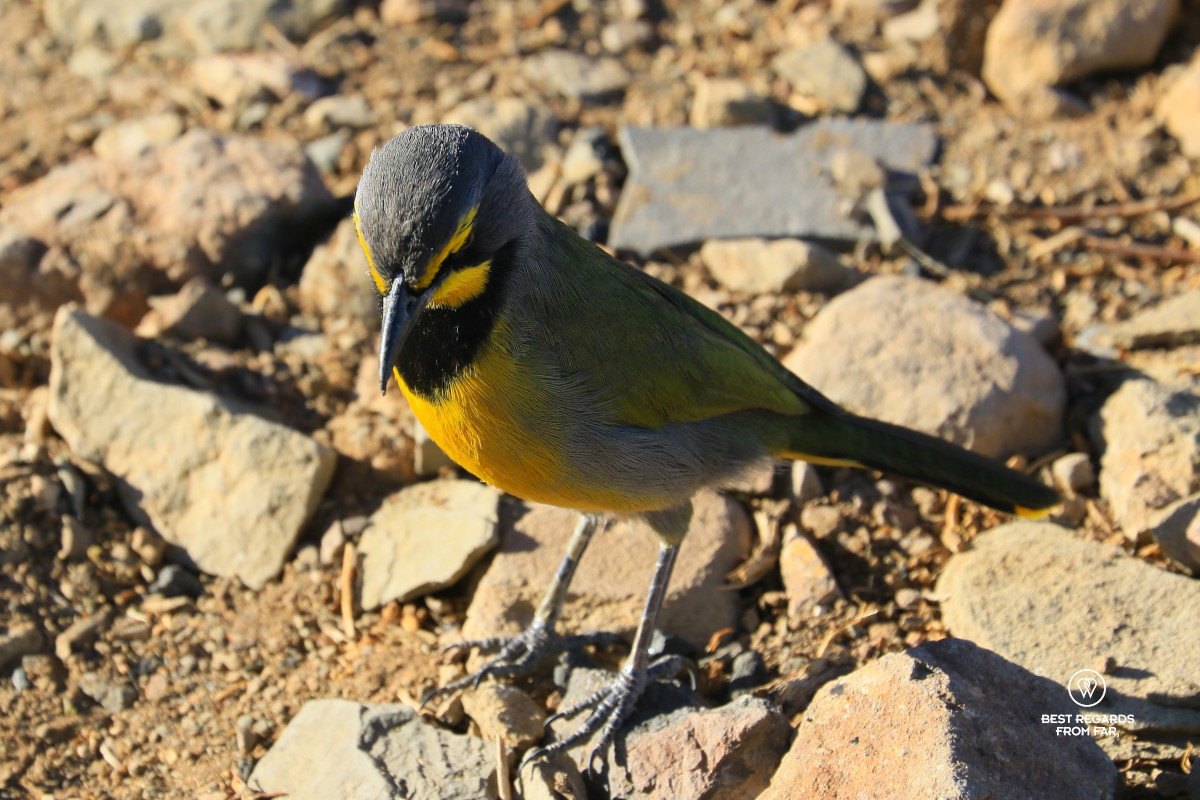
Tankwa is not a Big Five reserve like the Kruger National Park or Hluhluwe iMfolozi Park where most first-time safari-goers are drawn: its wildlife sightings feel more intimate, and patience is rewarded.
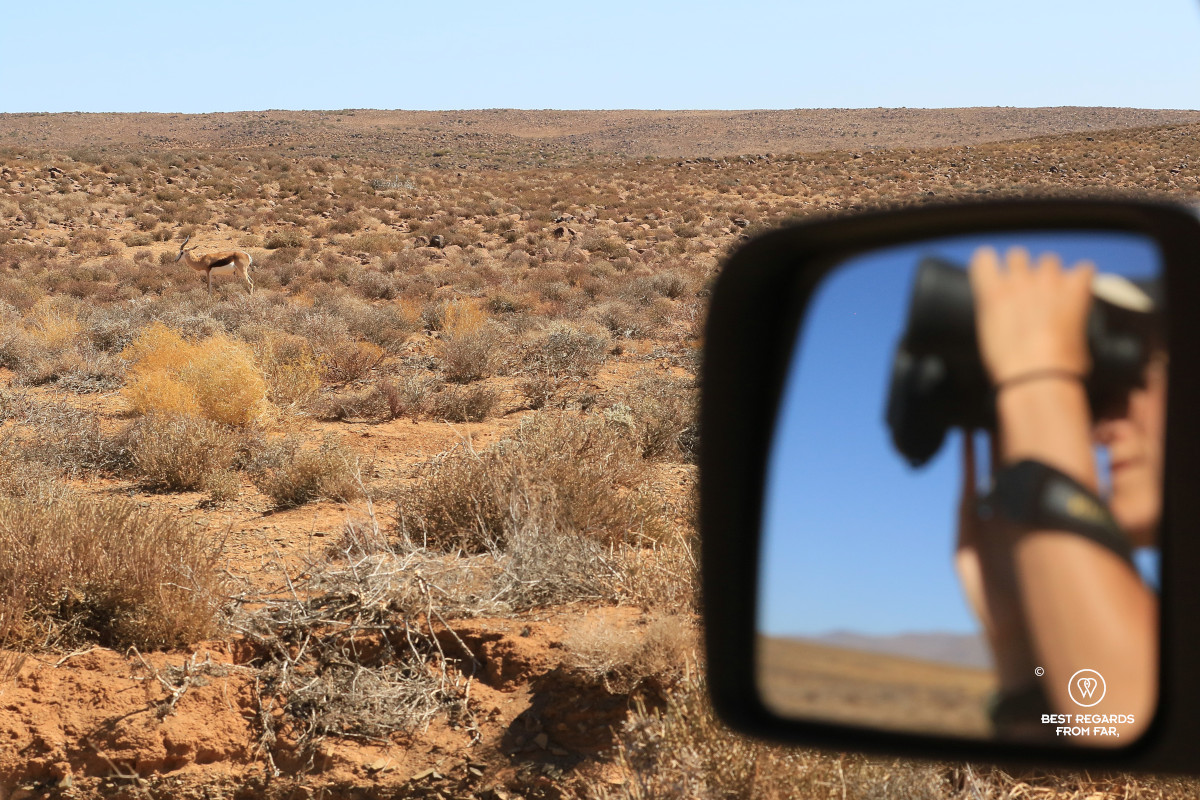
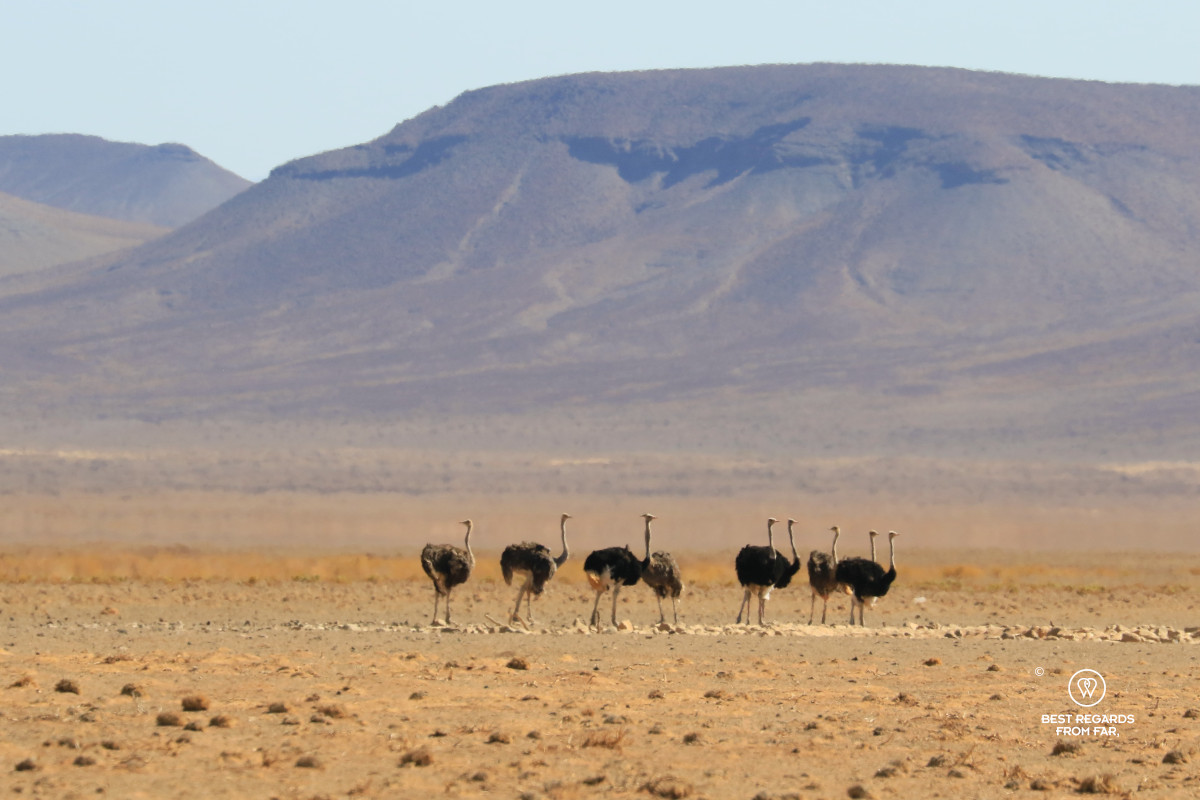
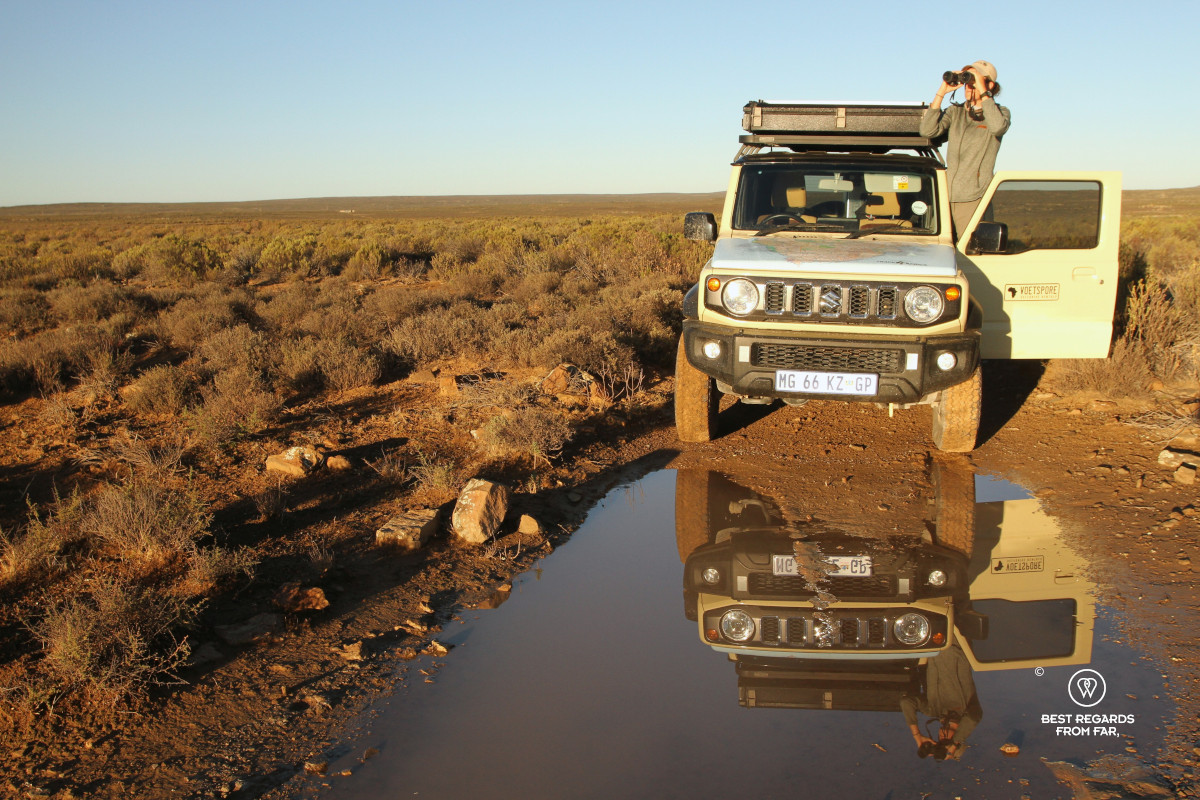
We are not the only ones moving through the day. From our car, we observe herds of oryxes moving across the plains, spaced widely apart. Herds of elusive eland break the horizon in the distance. Red hartebeest lift their heads and move away as we approach the Abrahamsknie waterhole. Springboks are omnipresent, often crossing the road in small herds, showing off their elegant jumps. Ostriches are abundant too and fun to observe as they move in small family groups, disappearing in the heat simmer that blurs the horizon.
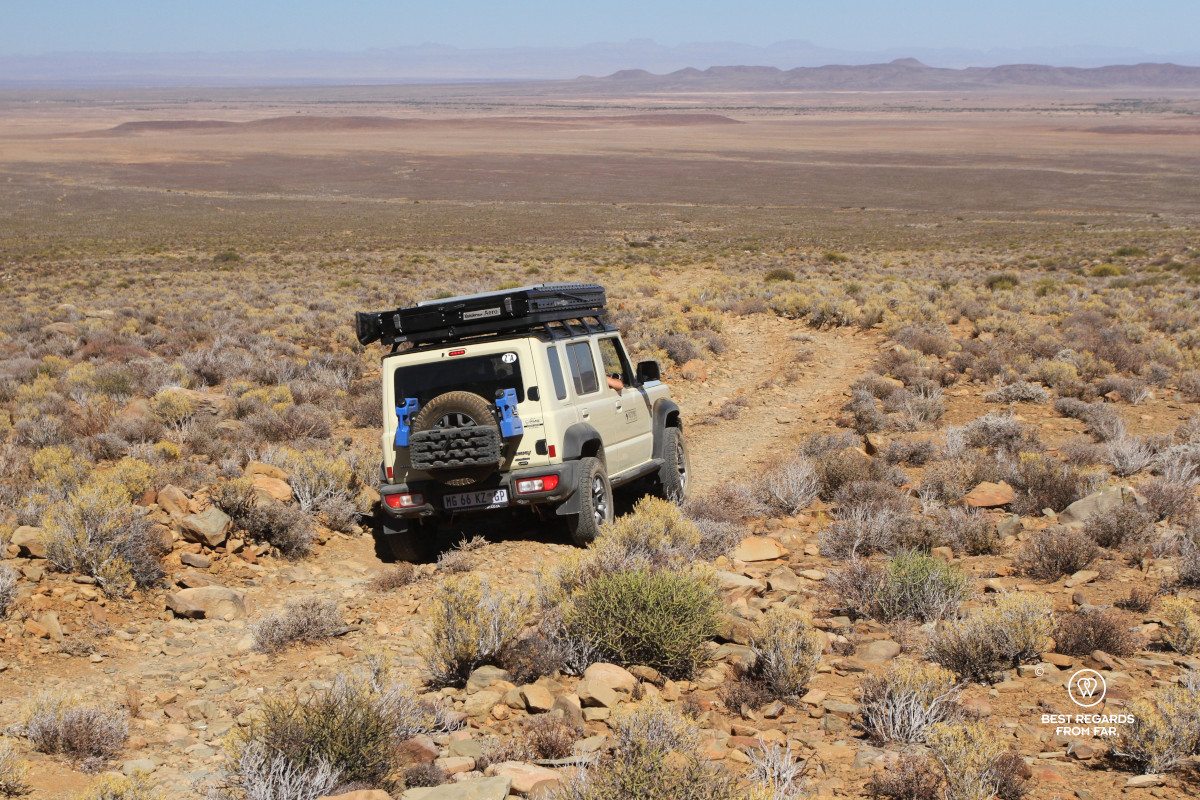
A bit further, in front of us, a steep rocky track appears… I hold my breath…
Conquering Elandsberg: 4×4 Challenges in the Wild
The sun-bleached sign indicates the Elandsberg 4×4 track. The ascent is rocky and technical, and I hesitate about whether it is smart to continue as turning around is hardly an option. My palms start sweating a bit as Claire gets out of the car to remove a few stones and give me clear instructions as to where to place the wheels. “If you can walk it, you can drive it,” the instructor’s voice still lingers in my head from the off-road training. I engage the 4×4 mode in low range and methodically drive the Jimny up, bit by bit, as it rocks from left to right, swallowing large stones below its undercarriage. Once the first apprehension is gone, pleasure takes over, and the ride is exhilarating.
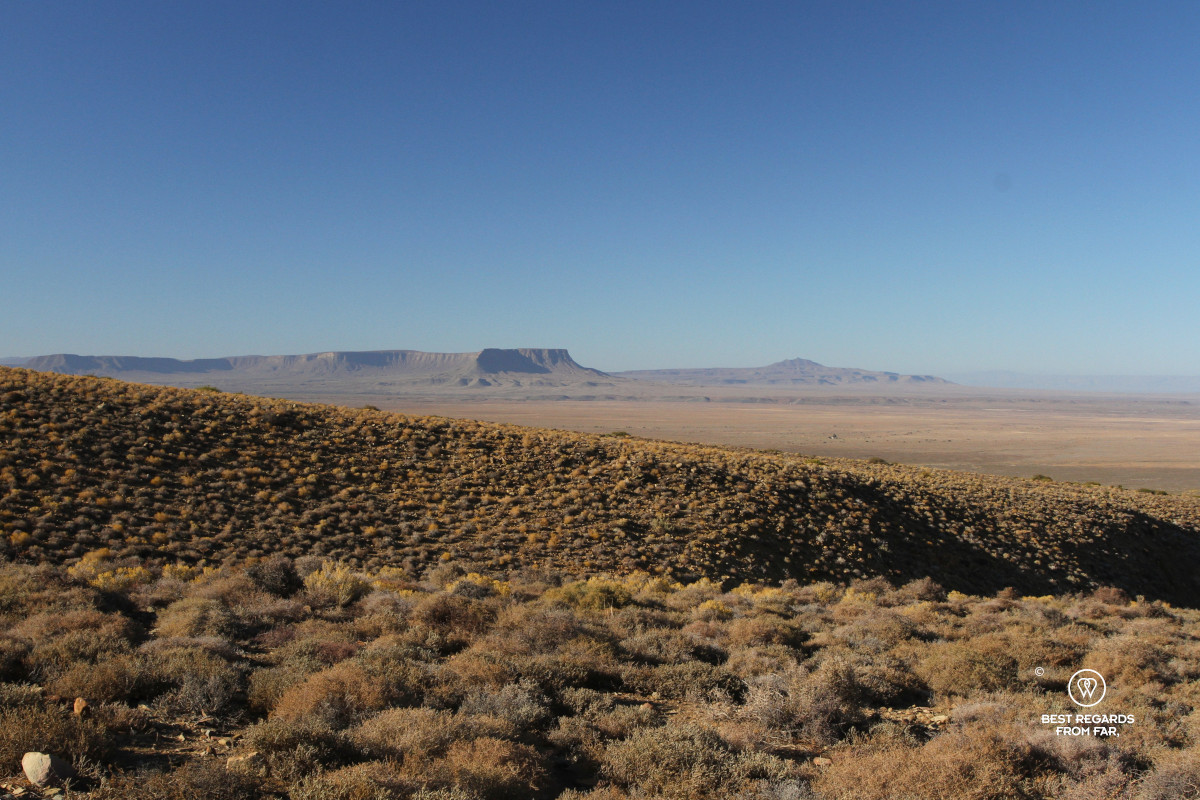
The Elandsberg is one of these few places where the journey is as remarkable as the destination. Past the serious off-roading, at the top, a moonlike view opens up on the vastness of the Tankwa. It stretches endlessly, untouched by roads, fences, or buildings. Characteristic koppies (small rocky hills) rise up from the surreal landscape. The immensity and absolute quietness are striking, and our senses heighten as we contemplate the vistas.
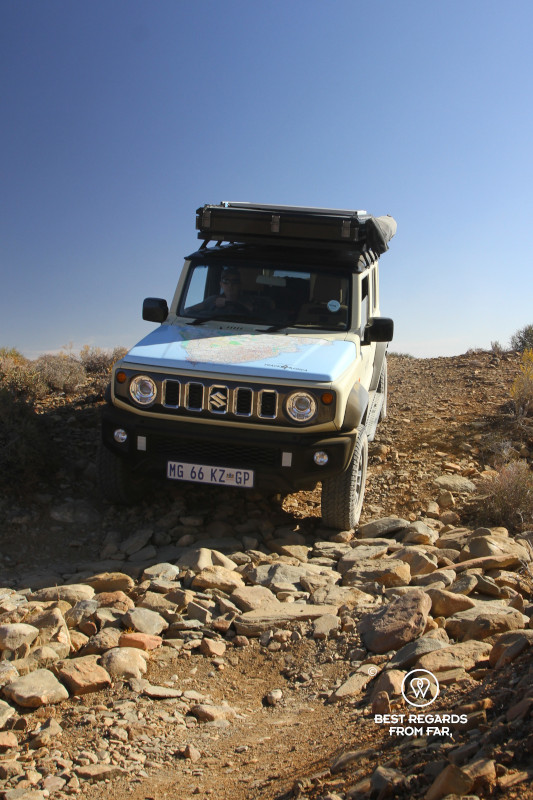
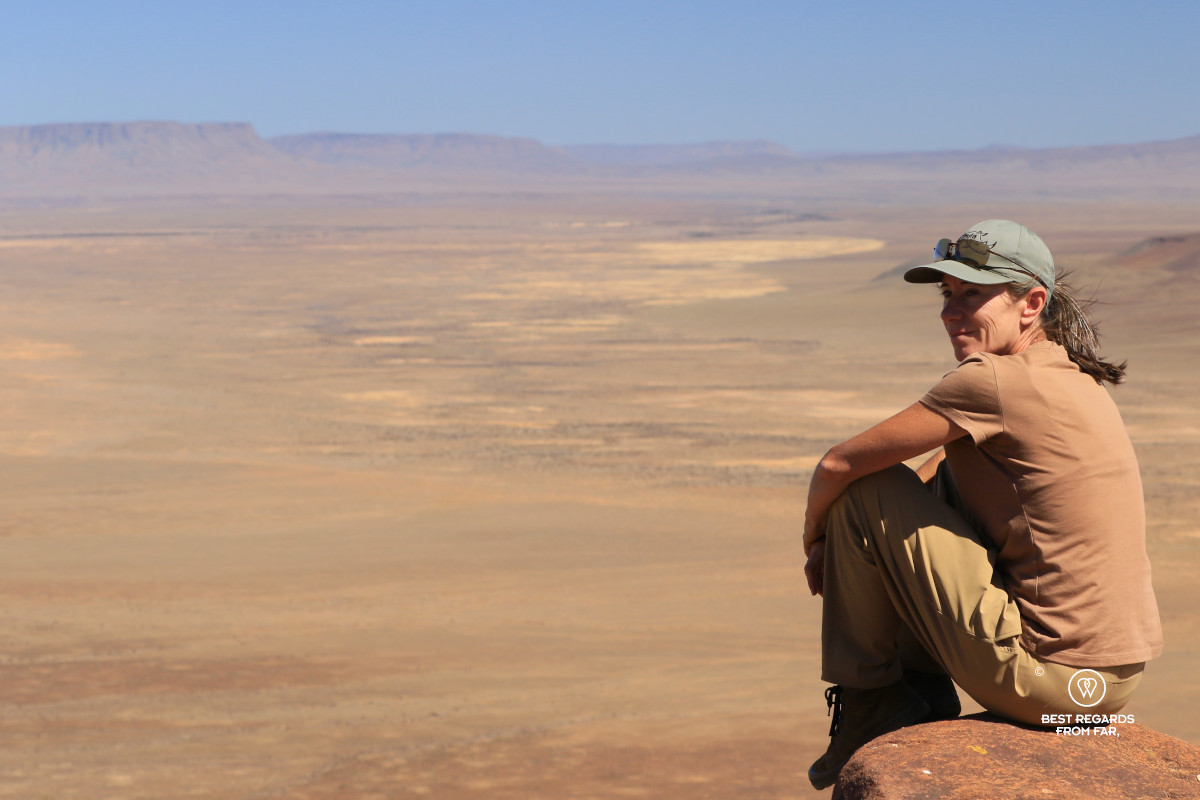
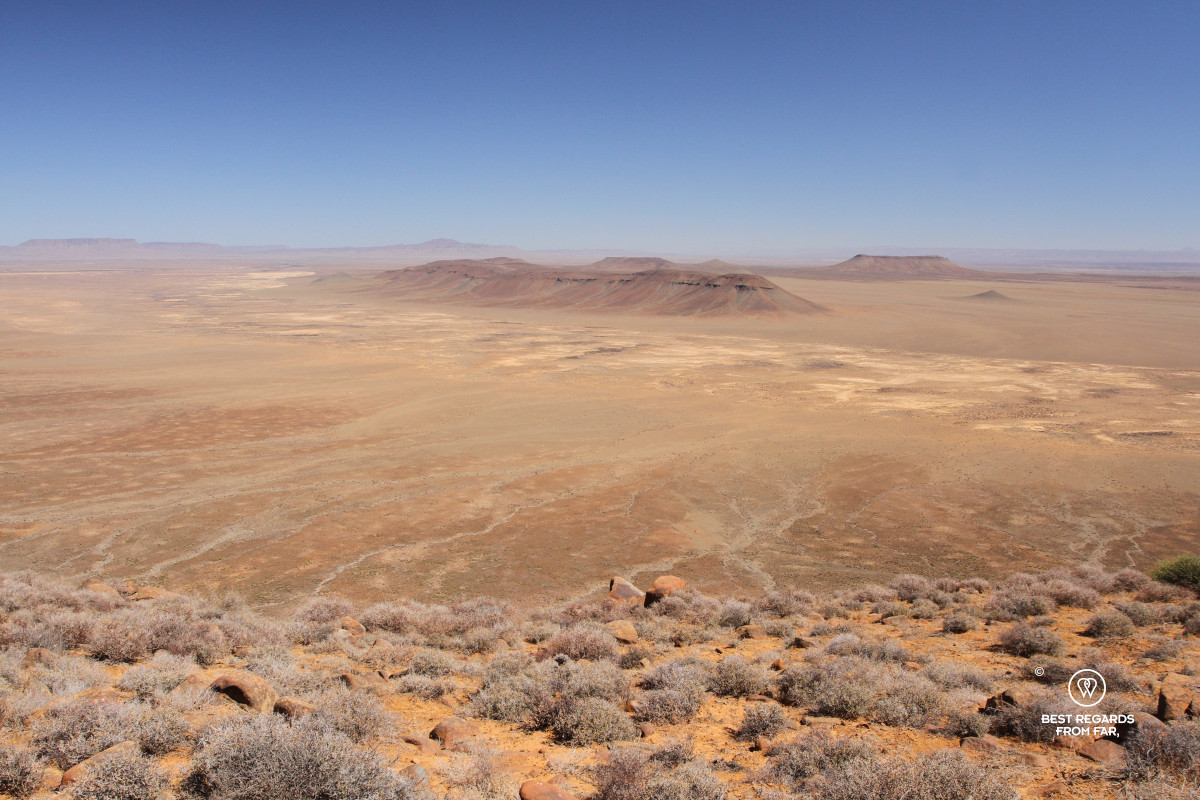
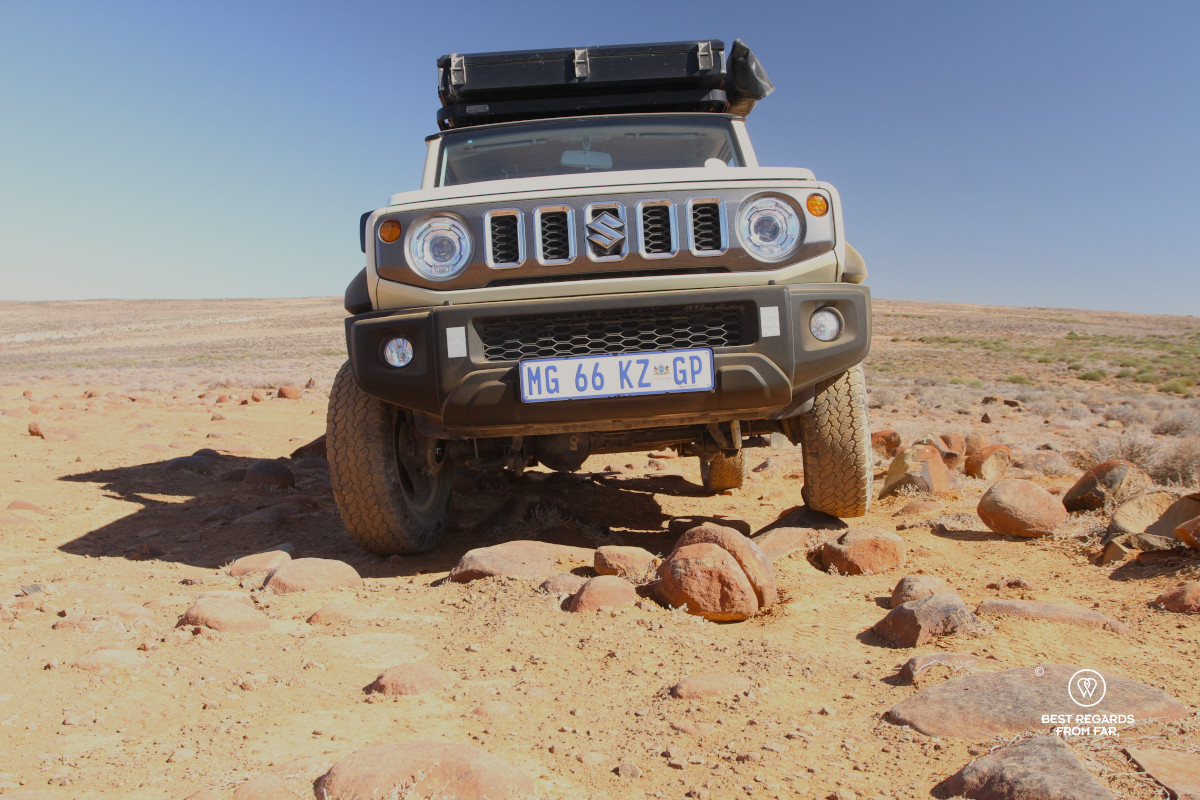
While we simply backtrack, the bumpy track down offers different challenges. Stone by stone, we navigate the Jimny back to the gravel road under the approving eyes of a solitary oryx, not half-proud of conquering this demanding 4×4 track successfully.
The Old Schaapswagterspost Camp: A Night Under the Pepper Tree
The late afternoon light turns the horizon golden when we approach the Schaapswagterspost in yet another corner of the park. The darker soil supports a different type of vegetation, and the variety of the Tankwa keeps surprising us. As we are about to park our 4×4, we notice that our camp is occupied. Just like last night, an elegant oryx antelope rests, this time in the unusual and welcoming shade of an ancient, massive pepper tree. As we get closer, it slowly gets up and moves over the hill.
Hanging a black Scrubba water bag in the tree, it warms up quickly for a gentle shower. Once more the tent goes up. By now it is routine. We slide out the table and set it with a nice aperitif. We cheer with a cocktail to yet another amazing day “To another shit day in Africa!” as a dear friend of mine used to say.
The fire we have started crackles. To pay tribute to the Afrikaners who have named most of the places around here and inhabited these hostile lands, we braai a boerewors – a traditional spiced sausage – that our fridge has kept cool, with a side salad of fresh vegetables and warm potatoes from the ashes.
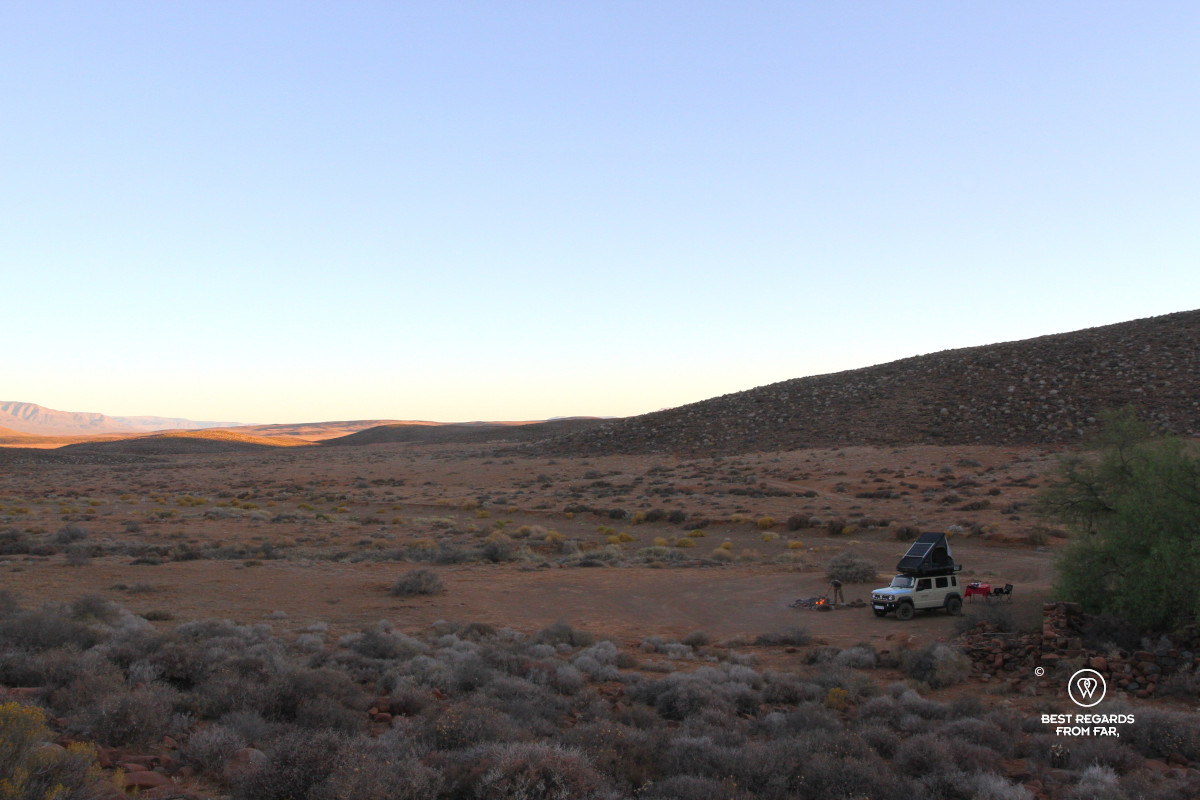
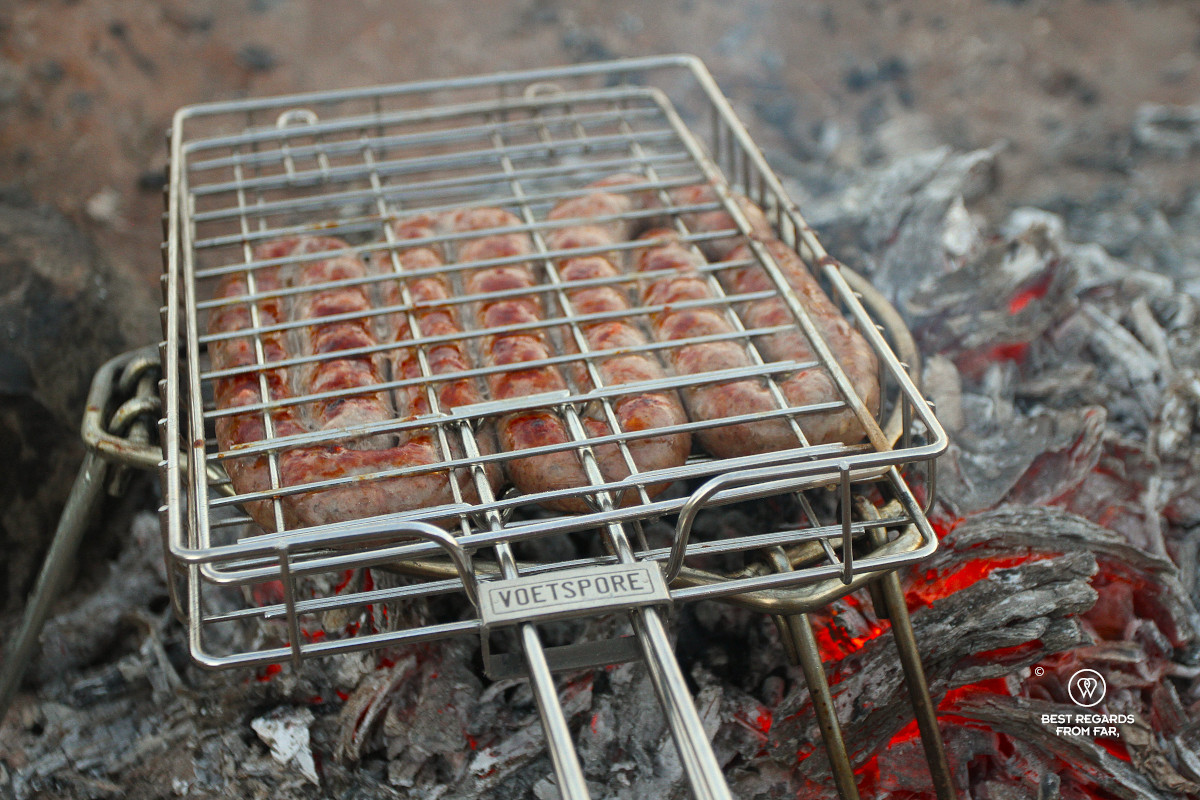
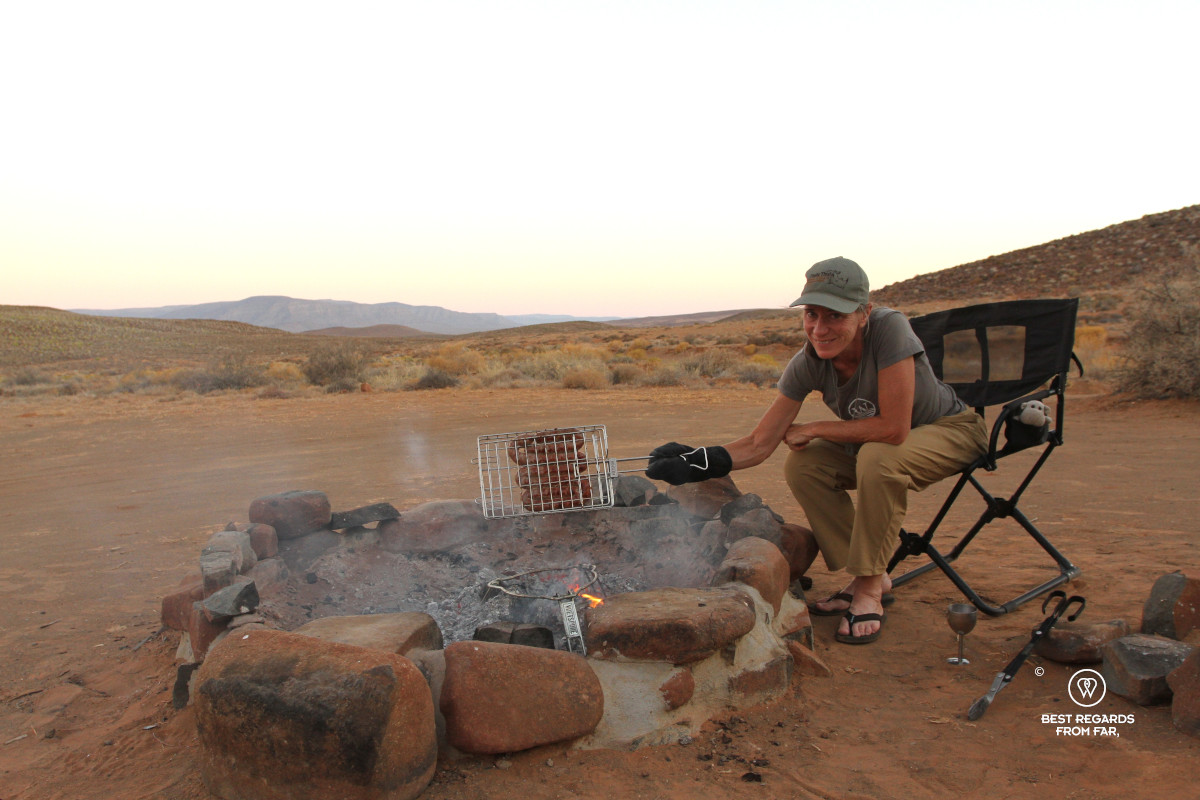
The fire dims, and the air temperature feels pleasant. Our eyes adjust to the darkness. The absence of any signal that might have made us feel slightly anxious a few days ago now feels like a welcoming digital detox. Without any light pollution, the Milky Way appears right above us. The absence of mosquitoes and the warm temperature make it wonderful to sleep with our tent open and marvel at the night sky, making a wish for every shooting star that silently arcs overhead. We fall asleep to the sound of the jackals’ calls in the distance, along with the rustling of the leaves of the pepper tree in the gentle breeze.
Onward Through the Karoo
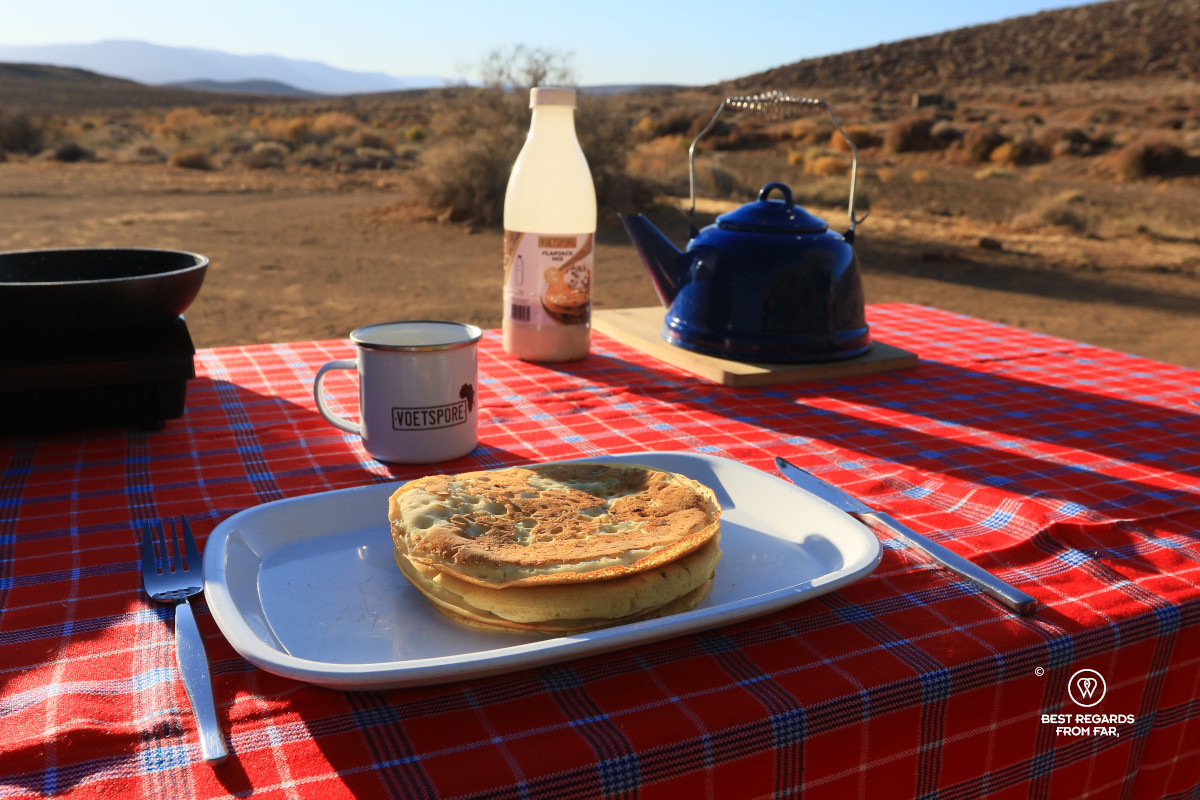
In the early morning, we filter some of our extra water to cook some flapjacks and enjoy some freshly brewed coffee. In the sand, we study the fresh tracks of the jackals, probably scavenging at night for a potential leftover of the braai – with no luck.
From the heart of the Karoo, we continue over the Gannaberg Pass and eventually to the Karoo National Park, via the dramatic Oudekloof Pass, which winds partly through a narrow canyon for which the 4×4 is a necessity. But this is another adventure in itself…
For more inspiration, click on these images:


Travel tips:
- For a reliable and perfectly equipped 4×4 rental, refer to Voetspore Self Drive Rentals, a well-established rental company that can arrange a car for its customers all over Southern Africa.
- The Voetspore vehicles are equipped with a 24-hour tracking device with and emergency button: despite the lack of signal, in case of emergency, a team can be notified through satellite and help will be deployed.
- To book your wild camping spots in the Tankwa Karoo NP, book through the SANParks website. The Steenkampshoek and Schaapswagterspost are the most remote camps.
- To spend the night by the Tankwa, with the comfort of a shower, boma, and hot tub, book your spot at the Tankwa Lifestyle Farm.
- To prepare any overlanding adventures in South Africa (and beyond), use Tracks4Africa.
- Check out our interactive map for more in the area (black pins lead to an article):


Great article! You absolutely sold the Jimny! I often do not have those meals in my own home:)
Warm regards,
Heather
You’re too kind!! But it’s true we were very impressed with the cooking part of things :-))
Thanks for your read & comment!