Text & Photographs: Claire Lessiau & Marcella van Alphen
Beyond the postcard-perfect Quebec City with its stone façades, church spires, and iconic castle looming above the St. Lawrence River lie stories of invasion attempts, mistaken gold rushes, and a city that refused—repeatedly—to become American.
Like it? Pin it for later!
I. “Pretty Facades, Dirty Secrets: Old Quebec’s Untold Stories”
The Prettiest Street in Old Quebec Was Once Its Poorest [Petit Champlain]
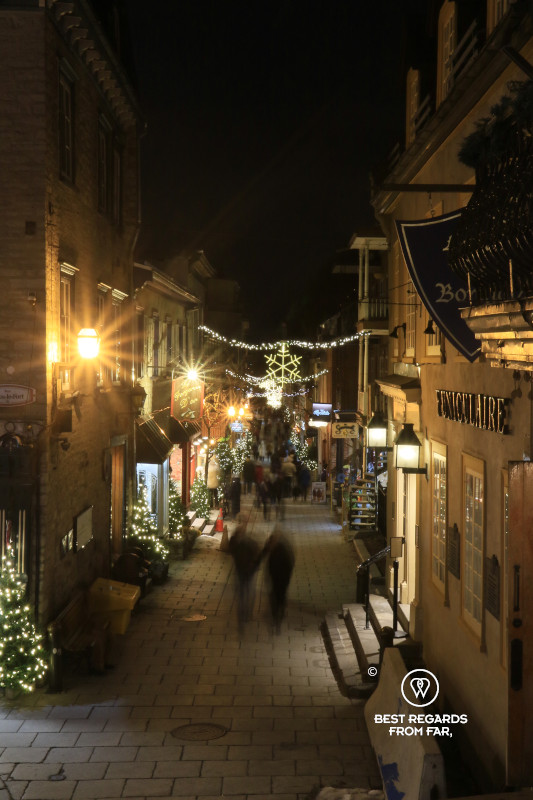
Today, Rue du Petit Champlain is one of the most photographed streets in Canada. In winter, Christmassy lights give it a festive feel; in summer, cafés spill into the cobblestones street.
For centuries though, this narrow street sat at the industrial heart of Quebec City, directly below the cliffs of the Upper Town. When the Saint Lawrence froze for months each year, sailors were trapped here with little money, little work, and nowhere to go. Warehouses, brothels, and brutal living conditions defined the area, making it the poorest street in the city. Meanwhile, just steps away, Place Royale—where Quebec City was founded—absorbed public investment and prestige.
Petit Champlain’s transformation is one of Quebec’s great urban success stories. In the 1970s, local entrepreneurs formed a cooperative to revive the neighborhood. Rather than selling to chains, they curated it carefully, prioritizing local craftsmanship and food specialties, a welcome rarity in touristic places.
Brick Buildings Born from Ballast [Rue Saint-Paul]
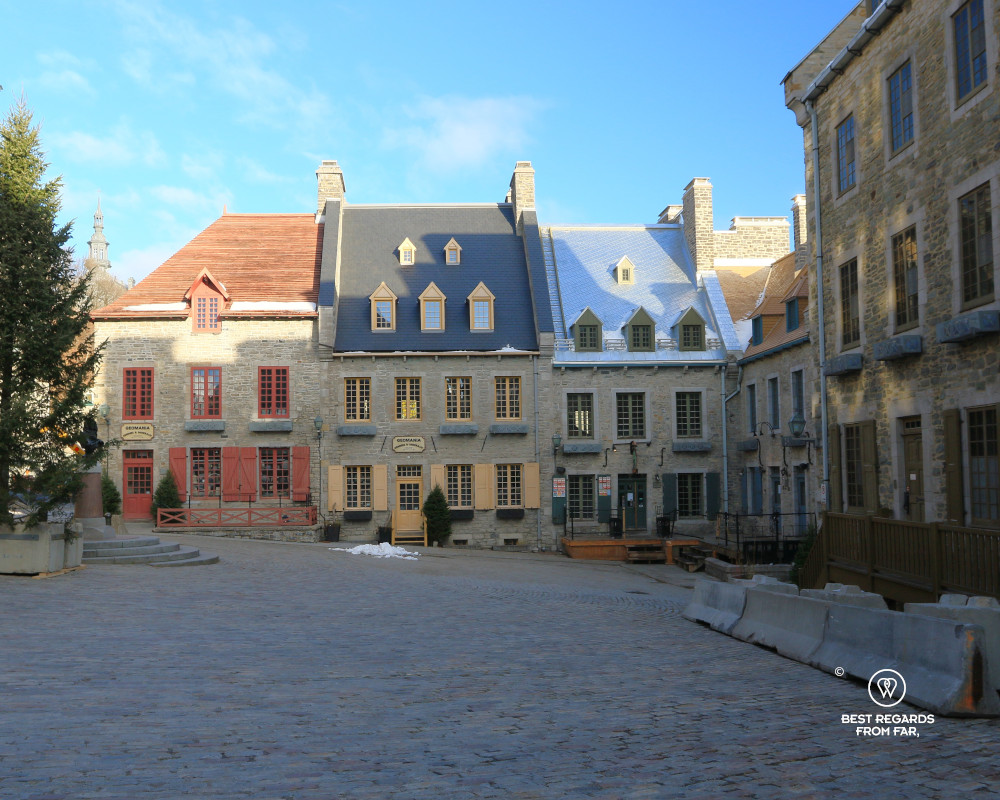
Walking along Rue Saint-Paul today in the Lower Town, we enjoy the style of its brick façades housing antique shops and cafés. This street is on reclaimed land and once sat at water level, and these bricks were never meant to be walls.
In the mid-19th century, ships arriving from the United Kingdom carried bricks as ballast to stabilize their crossings. Once the cargo—whisky, furniture, and manufactured goods—was unloaded, the bricks were up-cycled to build warehouses along the harbor, giving its character to the street today and contrasting with the French style around Place Royale.
II. The City Everyone Wanted (and Failed) to Take
The Plains of Abraham, Minus the Prophet
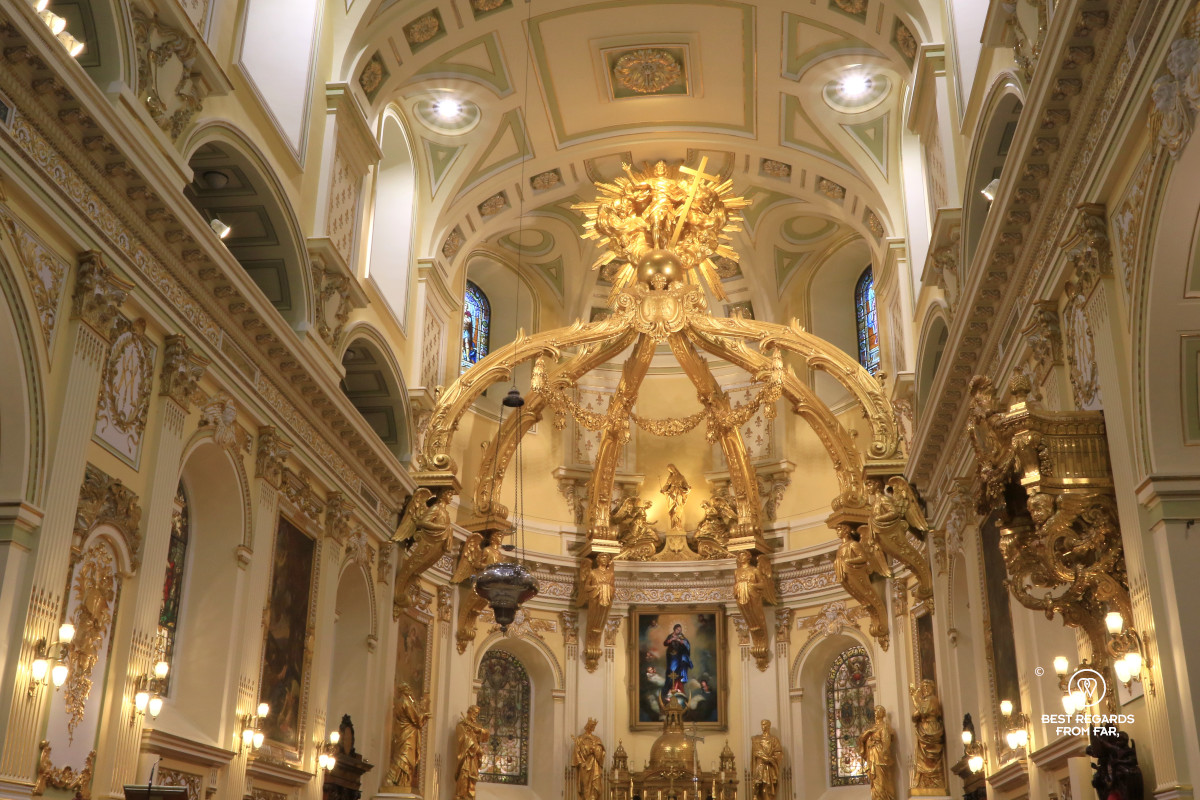
Quebec City was called the new Vatican of the world and remains a very Roman Catholic land. In a country where religion has had a big impact—for the better and for the worse—the Plains of Abraham may evoke the prophet. Not at all! They were named after Abraham Martin, the farmer who owned the land.
On September 13, 1759, British and French forces clashed here in a battle that lasted just 17 minutes but changed the fate of North America.
After weeks of bombing and destruction during the summer of 1759, followed by pillaging and razing the countryside around Quebec City, British troops stationed opposite the Saint Lawrence boldly climbed the cliff under cover of night to surprise the French.
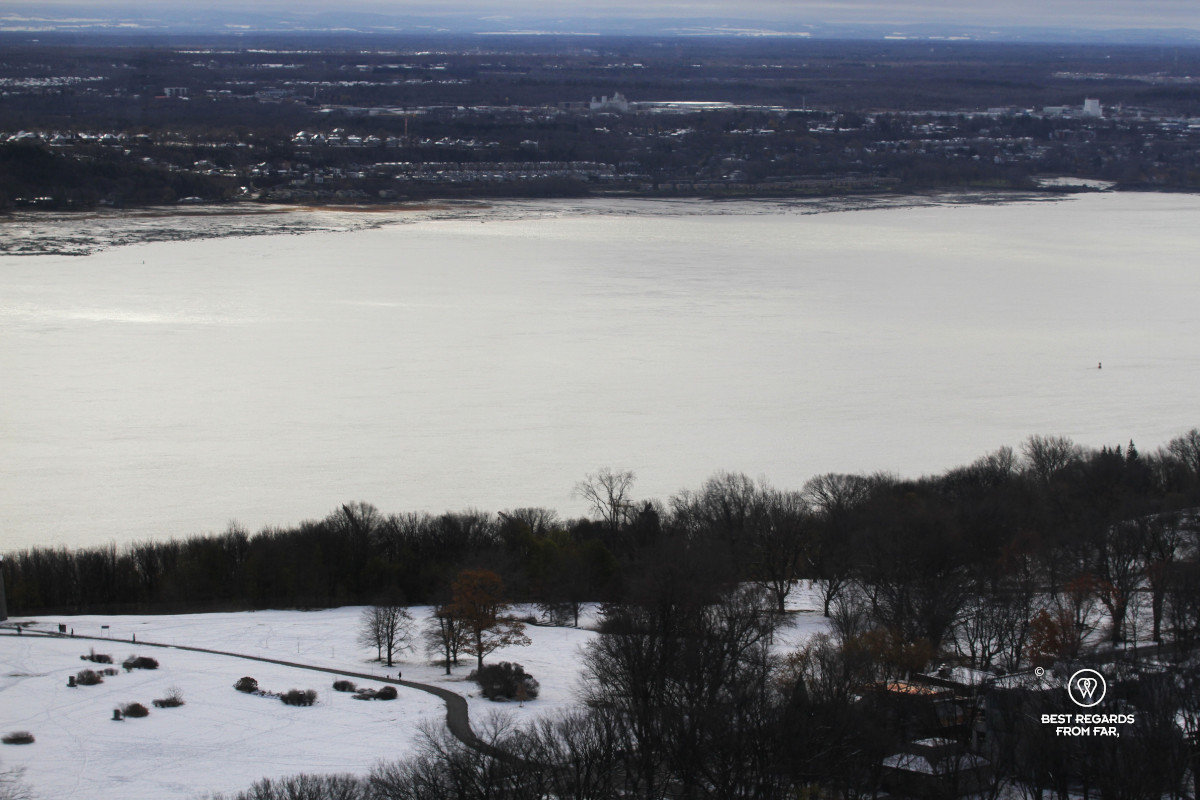
With twice as many canons and ships, and fifty percent more men, the British won the Battle of the Plains of Abraham over the French troops aided by natives. Both generals—the French Montcalm and British Wolfe—were lethally wounded. Wolfe’s body was shipped back to England in a rum barrel.
Though the French briefly retook Quebec the following year, the decision had already be taken in Europe and the Treaty of Paris in 1763 sealed British control.
The United States Tried to Invade Quebec. Twice. Already…
And Failed. Both Times…
After the British defeated the French at the Battle of the Plains of Abraham, New France was ceded to Britain. Military leaders worried France might try to reclaim it. Instead, the real threat came from the South.
Fresh off early victories against the British, American revolutionaries were convinced French-speaking Canadians would happily join their uprising. In the winter of 1775–76, they marched north in two columns.
One, led by Richard Montgomery, captured Montreal with little resistance. Another, commanded by Benedict Arnold, staggered through the Maine wilderness, losing men to cold, hunger, and disease before even reaching the Saint Lawrence.
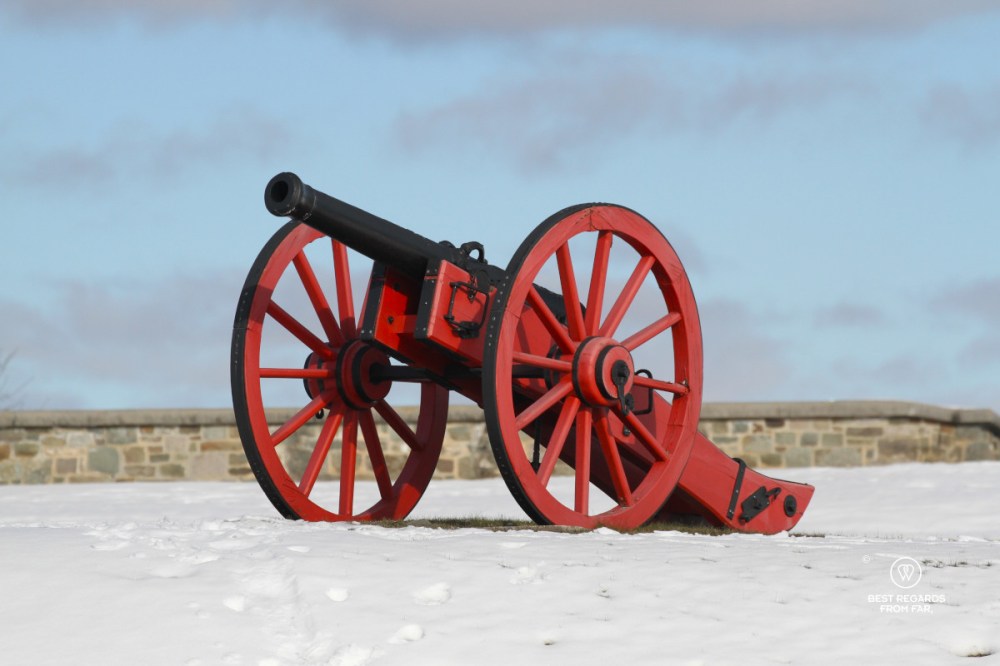
When the Americans finally arrived in Quebec City in the dead of winter, they were exhausted, under-supplied, and facing a city that understood its own importance. Quebec was the gateway to Canada. If it fell, the colony would follow.
The assault failed. A miserable winter siege followed. When British reinforcements arrived by ship in spring 1776, the Americans retreated south, abandoning their dream of a fourteenth colony.
A second attempt during the War of 1812 confirmed what history had already hinted at: Canada would not become American…
The Only Walled City in North America [Citadel]
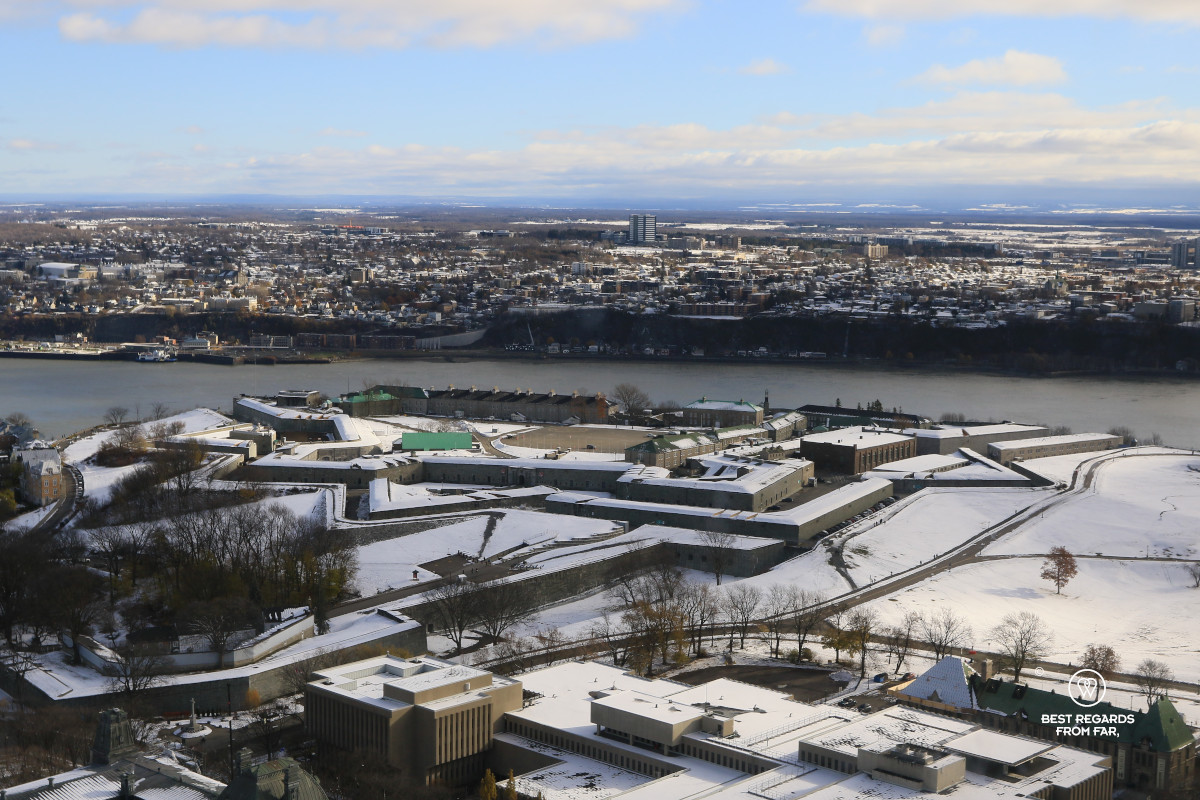
On top of its strategic location on the Saint Lawrence River that made Charles Dickens dub Quebec City the “Gibraltar of North America”, the UNESCO World Heritage Site is also surrounded by walls that are over 400 years old.
As soon as they arrived in Quebec in 1608, the French recognized the defensive potential of Cape Diamond and built defensive works enclosing the city on the west side but funding were lacking to build any proper fortress. Later, the star-shaped citadel, designed in the Vauban style, was constructed to be self-sufficient: barracks, hospitals, cisterns, powder magazines, all invisible from outside. It was never attacked. The winter defended Canada!
Today, it remains active, home to the Royal 22ème Régiment, Canada’s only French-speaking regiment.
III. Fool’s Gold & Foolish Mistakes That Stuck
How Canada Got its Name—by Mistake
Before Quebec City existed, the site was known as Stadacona—an Iroquoian village visited seasonally for its rich game and fish. When the French explorer Jacques Cartier (1491-1557) arrived in the 16th century, he heard the Iroquoi refer to it as kanata, meaning “village.” Mistaking it for the name of the entire region, he wrote “Canada” in his journal. The name stuck.
Champlain Was Famous—but Not First
The word Kebec, from Algonquin, means “narrow passage,” describing the constriction of the Saint Lawrence River at Quebec City. Cartier immediately recognized the site’s strategic value and attempted to establish France’s first American colony nearby in the 1540s under Jean-François de la Rocque de Roberval, an envoy of the French king.
The French thought they had found the way to Asia, but not!
The settlers believed they had found gold and diamonds in the cliffs, but again, not! Quartz and fool’s gold it were.
With the war in Europe between Spaniards, French and English, all the men headed back and the colony in Red Cape (20 minutes west of today’s Quebec) burnt down.
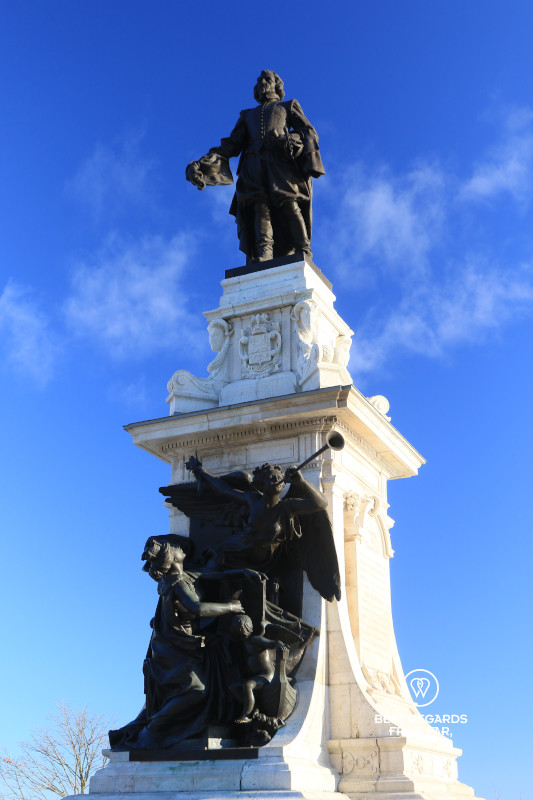
It was Samuel de Champlain (1570-1635) who succeeded accompanied by 70 men from western France (Saint Malo, Brittany, Charente Maritime…). On July 3, 1608, he established a permanent trading post at Place Royale. Built with limestone similar to that of western France, the area still resembles Brittany today, making Quebec the oldest city in Canada.
IV. The Colony’s Secret Weapon: Women & Ale
The Girls Who Saved New France [Les Filles du Roi]
Between 1663 and 1673, more than 770 young women arrived in Quebec City, sent by the French crown with dowries and a clear mission: marry, settle, and populate the colony.
At the time, there were roughly 700 men and only 65 eligible women already in New France. The math was compelling. The result was explosive: within a decade, the population tripled from 3,000 to 10,000 inhabitants. Many French-Canadian families today trace their ancestry to these women, known as les Filles du Roi—the King’s Daughters—who transformed a struggling outpost into a society.

Quebec’s Who’s Who Painted on a Wall
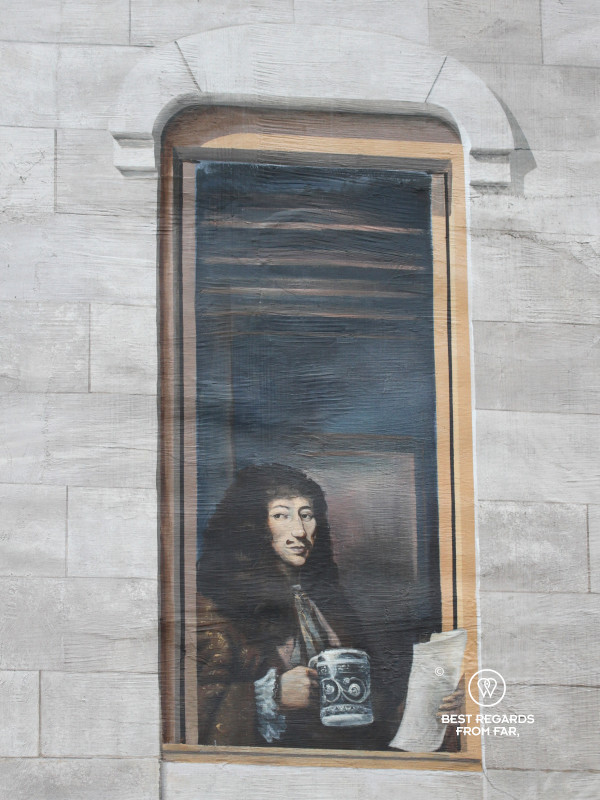
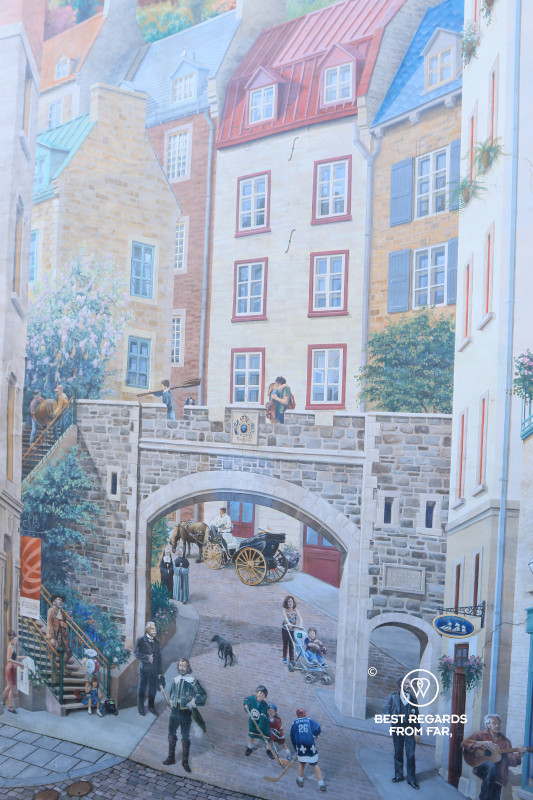
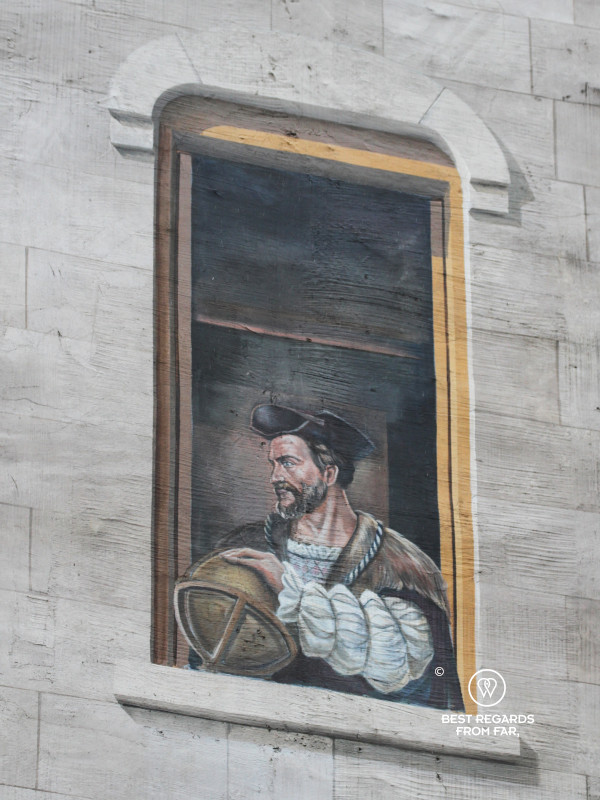
Looking closely at Old Quebec’s most famous mural just off Place Royale, the city’s founding characters take a prominent place amongst contemporaries playing lacrosse and hockey, paying tribute to the native sports.
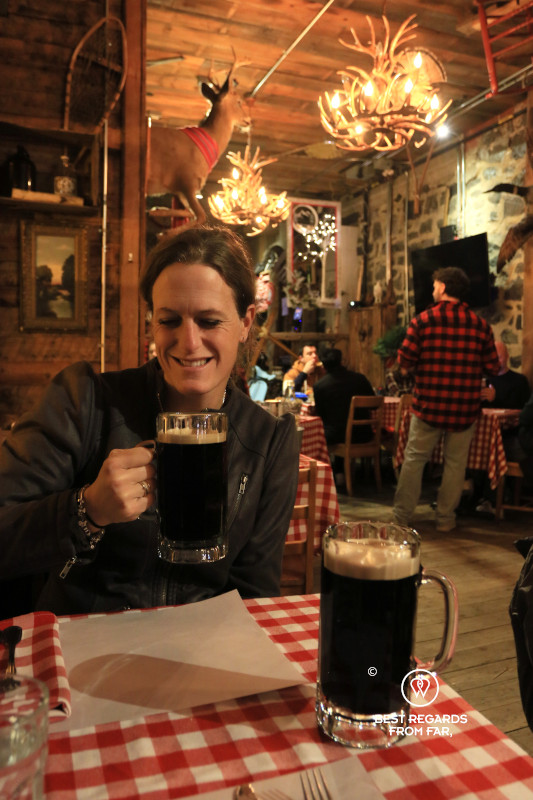
Jacques Cartier appears with a globe. Samuel de Champlain stands below, dressed in green—a nod to his Huguenot origins in Charente-Maritime. Jean Talon (1626-1694), the colony’s intendant, raises a pint from his window. He set up the first commercial brewery in Canada at the foot of the cliff of Quebec in 1688 at La Brasserie du Roi, established at a time when grain was plentiful and drinking water was unsafe.
V. Indigenous Roots You Can Still See
A 20,000-Year Human Story [Musée de la Civilisation]
Human presence in Quebec stretches back to the last Ice Age, when caribou crossed the frozen Bering Strait 20,000 years ago. Today, 11 First Nations in Quebec belong to three major linguistic families: Inuit, Algonquin, and Iroquoian.
About a thousand years ago, long before settlers arrived the first encounter with Vikings took place. Later, Basque, Breton, Norman, and Portuguese fishers came for cod and whales. Expert fishers, the Basques were among the first to forge lasting relationships with the First Nations, with whom they traded food and manufactured goods in exchange for fur that later became a critical commodity for New France.
Where to See Inuit Art in Quebec City
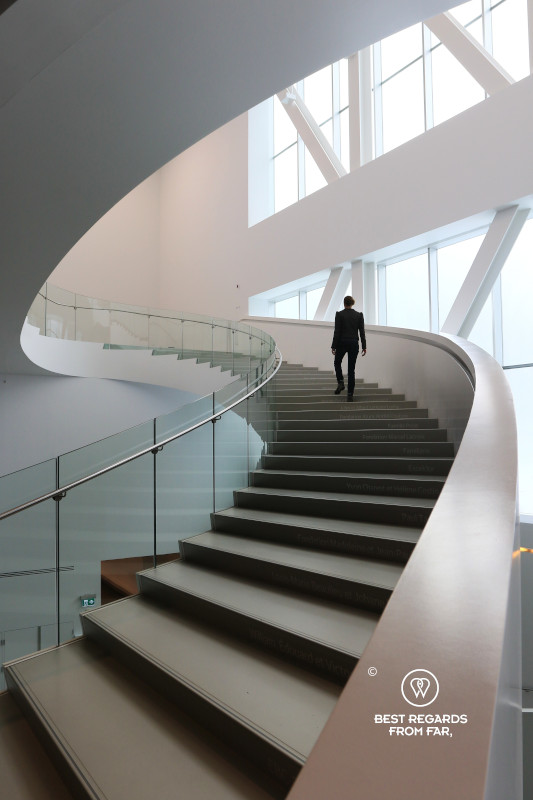
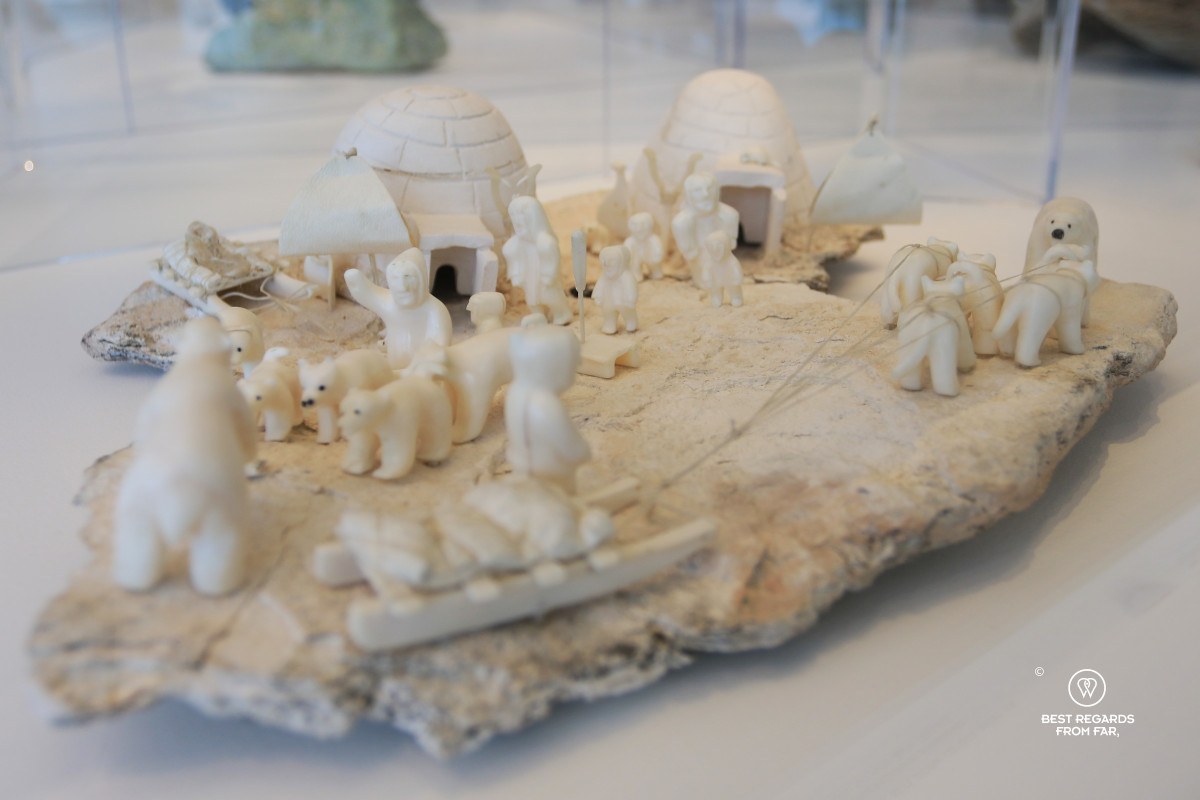
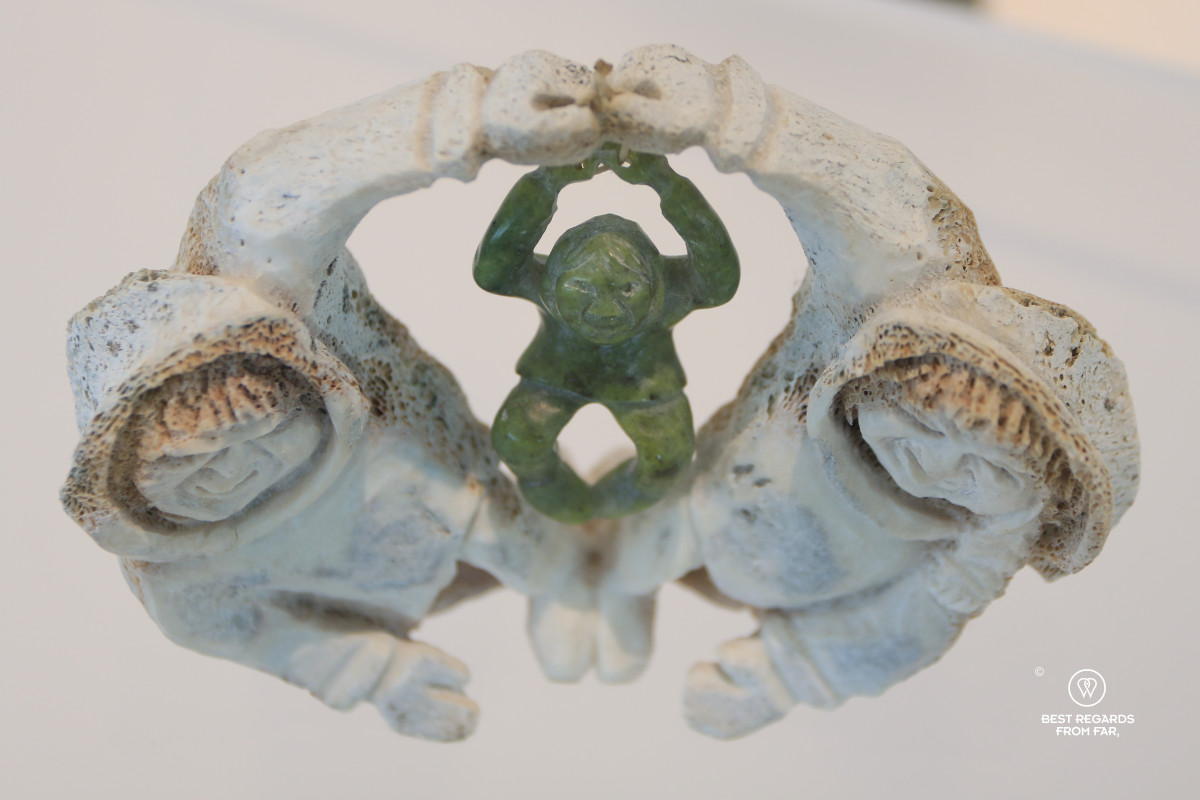
The Musée National des Beaux-Arts du Québec houses one of the city’s most compelling collections: contemporary Inuit art.
Before contact with outsiders, the Inuit maintained their knowledge, histories and spiritual customs for millennia, yet beginning in the 20th century, massive changes came to the Arctic in just a few decades, including the establishment of Christian missions, the transition into settlements, the devastating influx of foreign disease, and the introduction of the residential school system. Poverty, suicide, and substance abuse followed. The nomadic Inuits were forced by the Canadian government to adopt a sedentary lifestyle.
As a compensation, some art cooperatives were set up to support them in passing down their traditions and making a living from their creations. Using whale vertebrae or ivory from walrus or narwhal tusks, contemporary Inuit artists create art pieces that honor the Inuit way of living, their ability to responsibly harvest Arctic plants and wildlife, and sharing the results of that hunting and gathering with others within the community. This contemporary Inuit art reflects a deep connection to and respect for all life in the Arctic.
VI. “Quebec’s Moment of Global Fame”
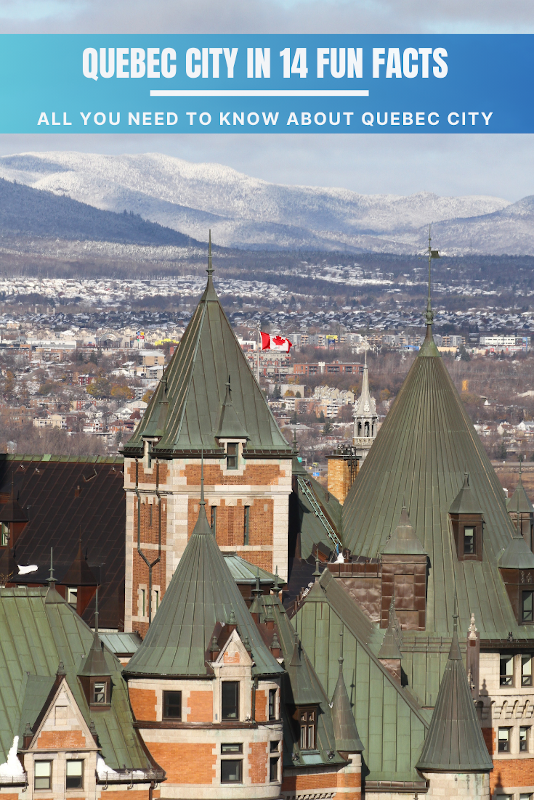
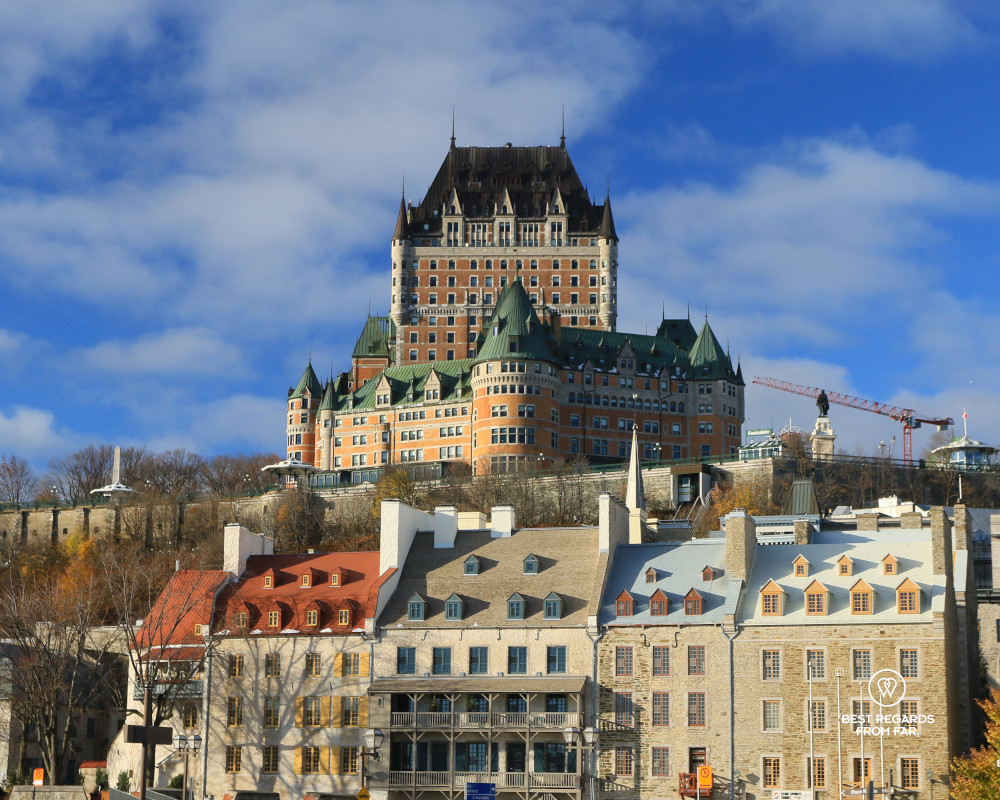
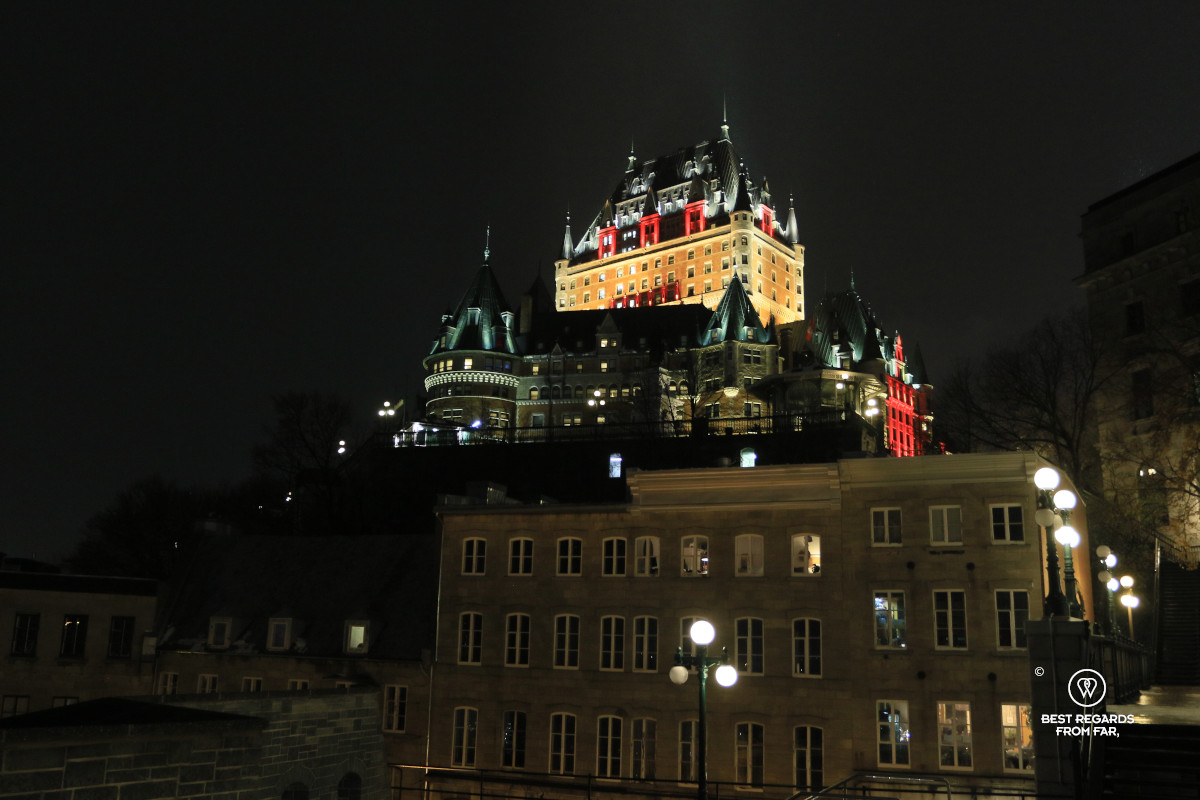
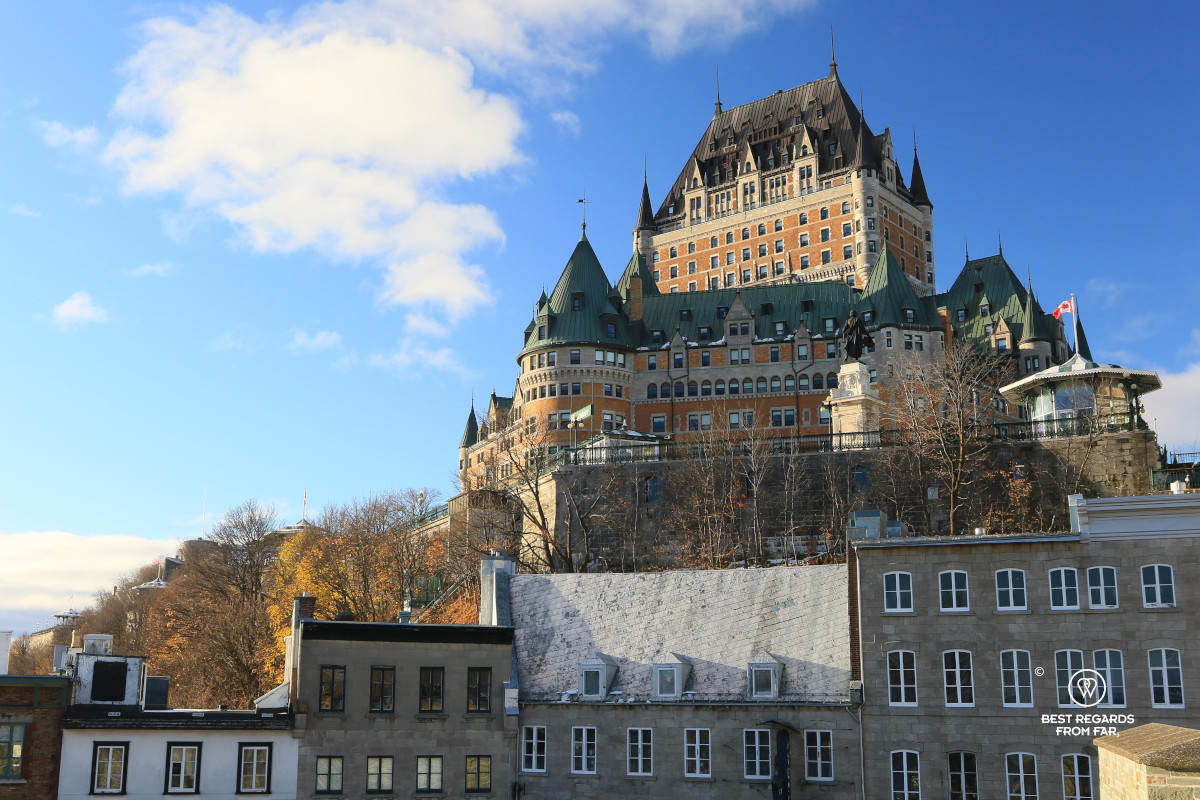
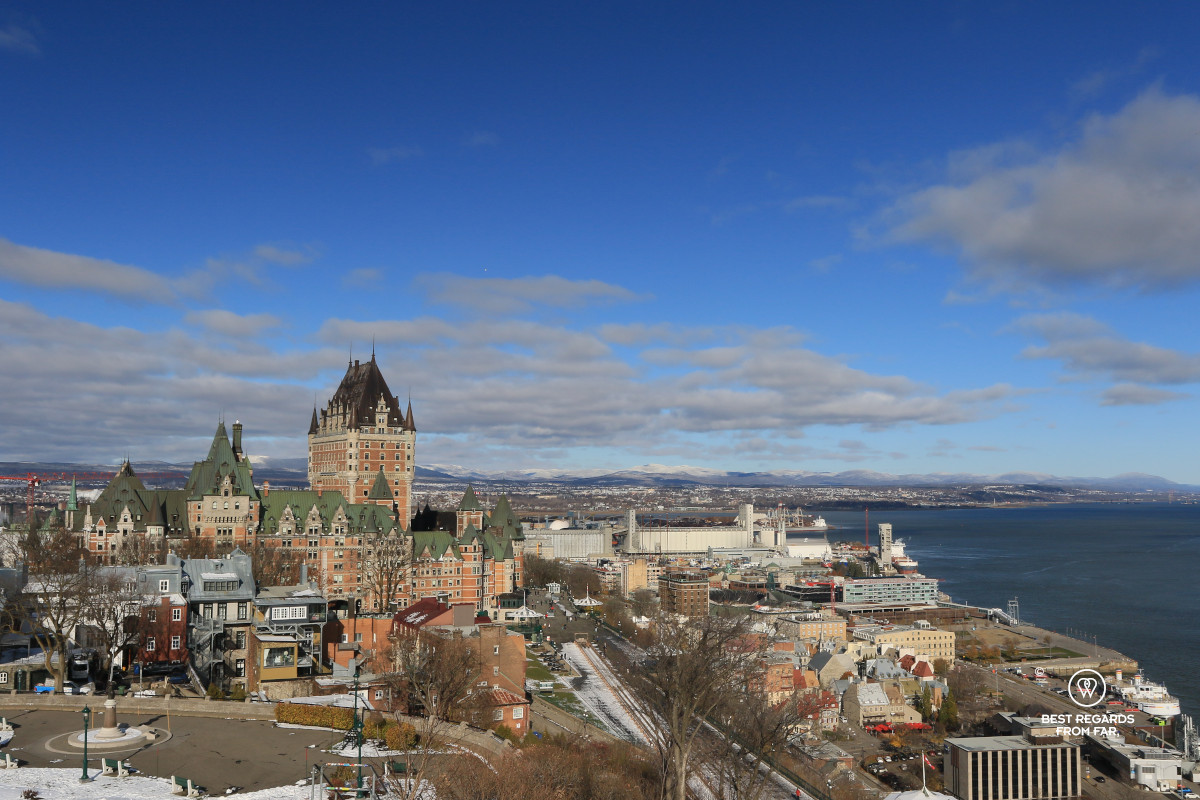
The Château Frontenac: A Hotel Built to Impress
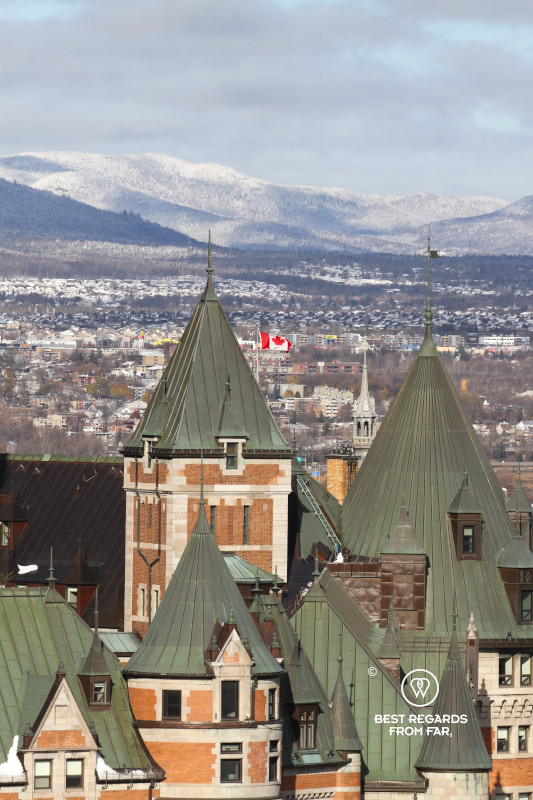
Completed in 1893 by the Canadian Pacific Railway, the Château Frontenac was designed to make rail travel glamorous, and to anchor Quebec City firmly in the imagination.
Its guest list has included Winston Churchill and Franklin D. Roosevelt. Its silhouette marks the skyline of Old Quebec.
Quebec City & the Birth of Global Food Security [FAO]
In 1945, just weeks after the World War II ended, Quebec City hosted a milestone international conference that helped give birth to the Food and Agriculture Organization of the United Nations (FAO).
The choice of Quebec City was symbolic: a safe North American stronghold during wartime, bilingual and outward-looking, bridging Europe and the Americas.
It was in Quebec City that nations agreed food was not merely a commodity, but a foundation of peace so that it would no longer fuel conflict and instability, and the FAO was born. Its mission is to improve food security worldwide by supporting sustainable agriculture, fisheries, forestry, and rural development, while helping countries respond to food crises and climate shocks.
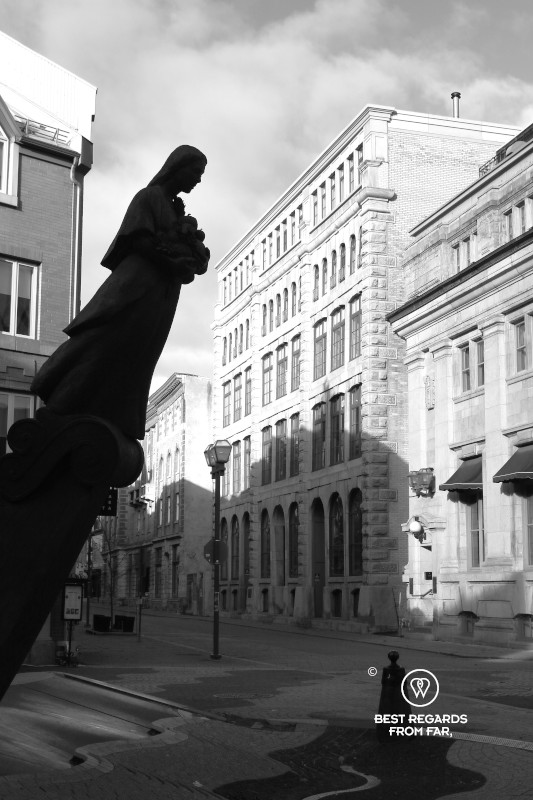
And the Center of Influence Drifted West
In the 19th century, Quebec City was one of the most important wooden shipbuilding centers in the world. Massive ocean-going vessels were constructed here using Canadian timber and exported globally before iron and steam replaced wood and sail. Napoleon’s blockade of the trade between the Britain and Scandinavia prompted the British to turn to Canada for their lumber. In the 1850s, Quebec developed fast thanks to timber, fur, and immigration—especially during the Irish famine of the 1840s, when more Irish arrived here than anywhere else in the world. During that period, Quebec City served as the capital of Canada on multiple occasions.
Following World War II, improvements to the navigability of the Saint Lawrence, its deep port in Montreal, and better connection by land to the rest of Canada and the U.S.A. made Montreal a natural hub for international trade. The businesses, banks, and the stock market followed.
In the late 1950s, locks allowed to reach the Great Lakes for an easier trade with the USA. Once more, businesses, banks, and the stock market followed. Power drifted west to Toronto. Political instability, fires, and linguistic tensions eventually pushed lawmakers to choose a more neutral location—Ottawa—halfway between English and French Canada to become the permanent capital.
Yet, the charm of Quebec City remains and its vibrant past echoes in its historical Old Quebec…
Travel tips:
- To plan your trip to Quebec City, and select the tours the most aligned to your liking, refer to Visit Québec City. From interesting and entertaining tours of Quebec City with official guides that are passionate about history and their city with HQ Services Touristiques walking tour, to ghost tours.
- If you feel more playful, an outdoor escape game can be fun!
- The Musée de la Civilisation and the Musée national des beaux-arts du Québec are must-visits!
- Check out our interactive map for more in the area (black pins lead to an article):
For more in & around Quebec City, click on these images: