Text: Marcella van Alphen & Claire Lessiau
Photographs: Claire Lessiau
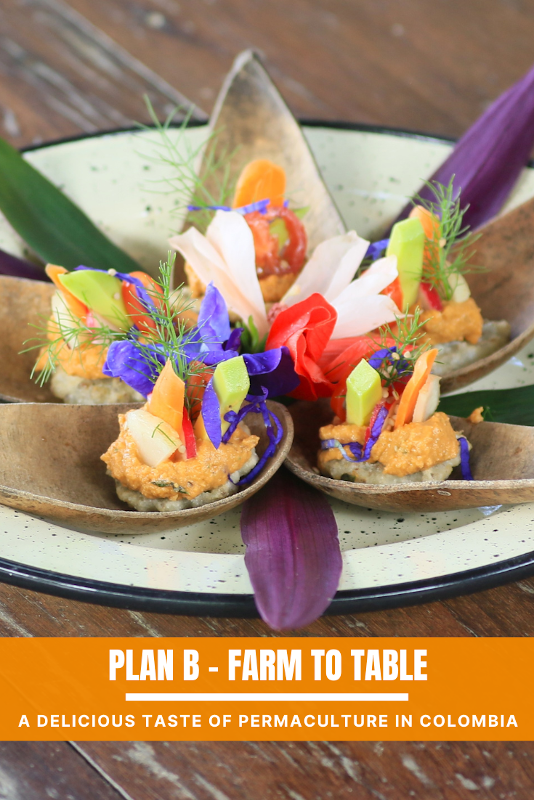
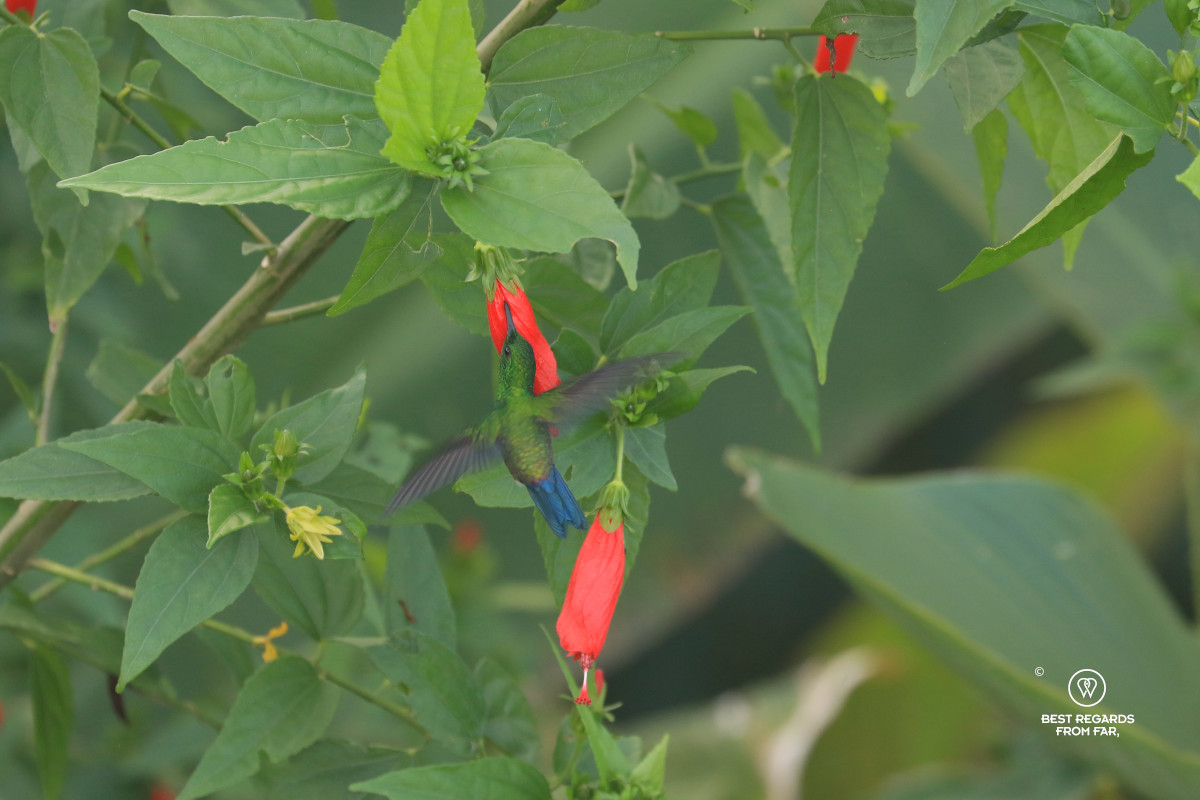
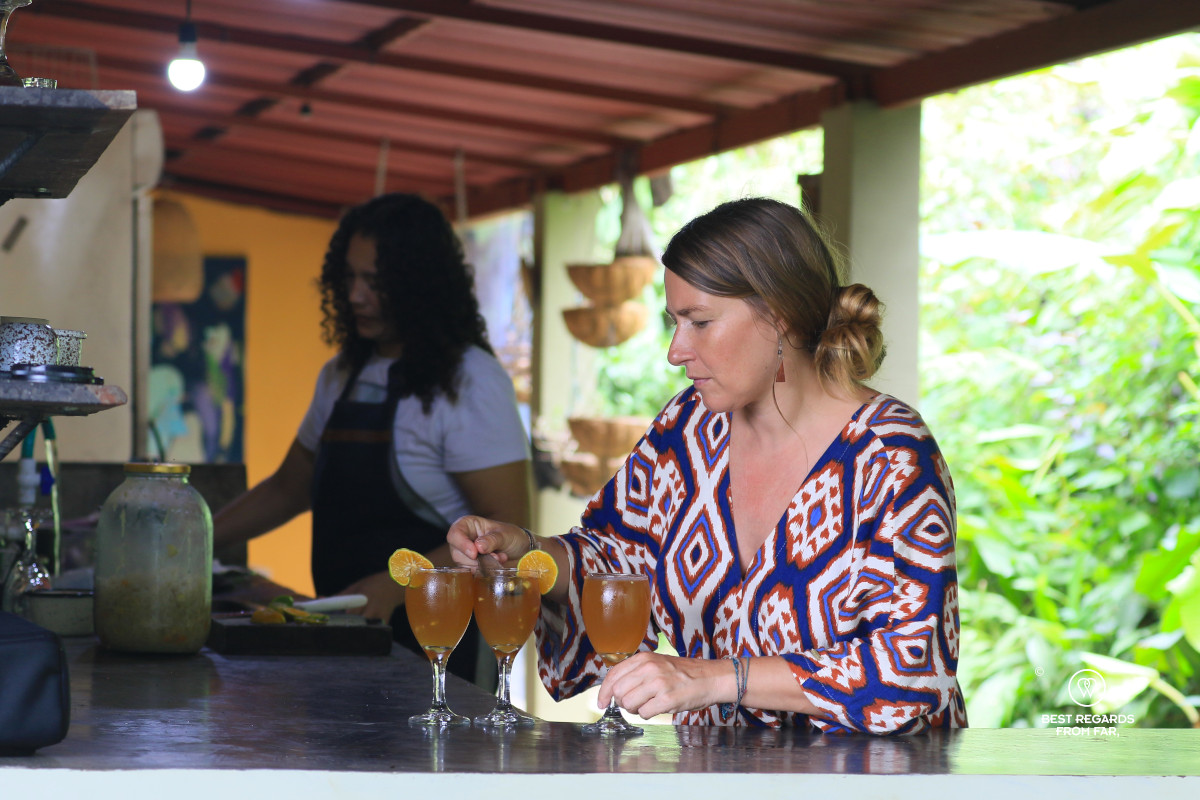
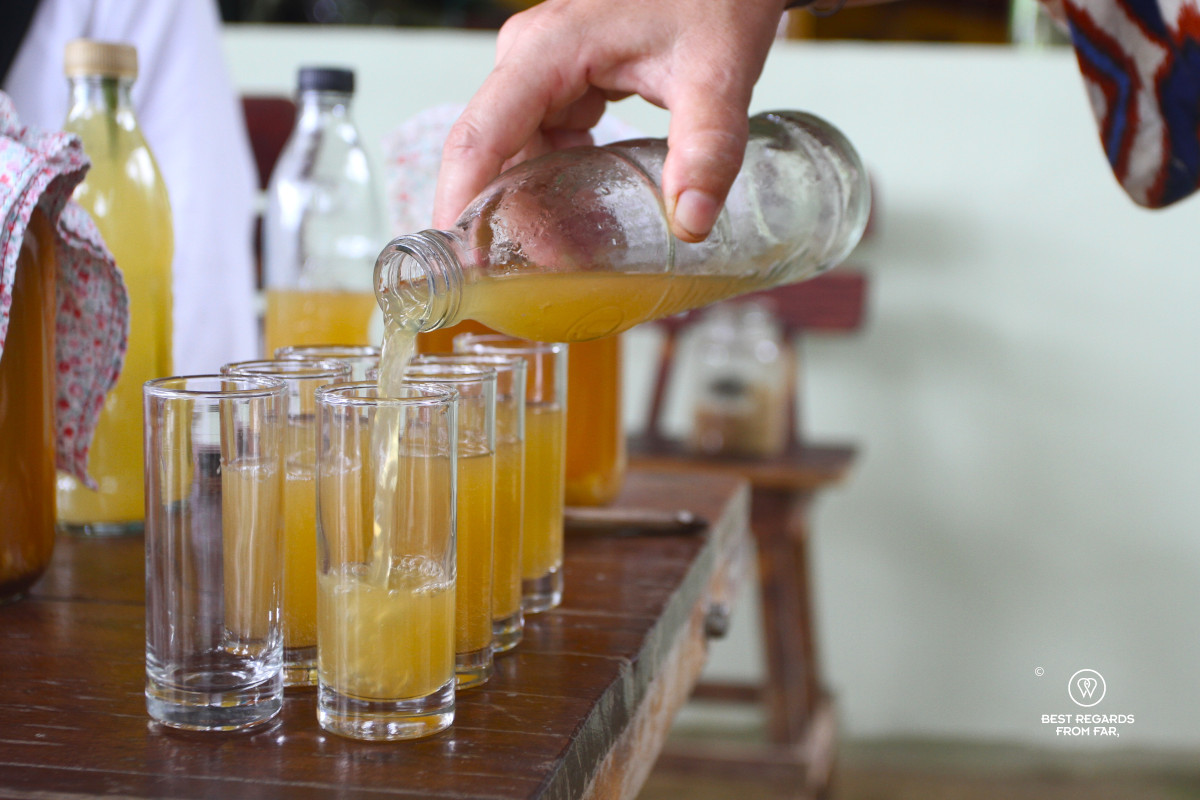
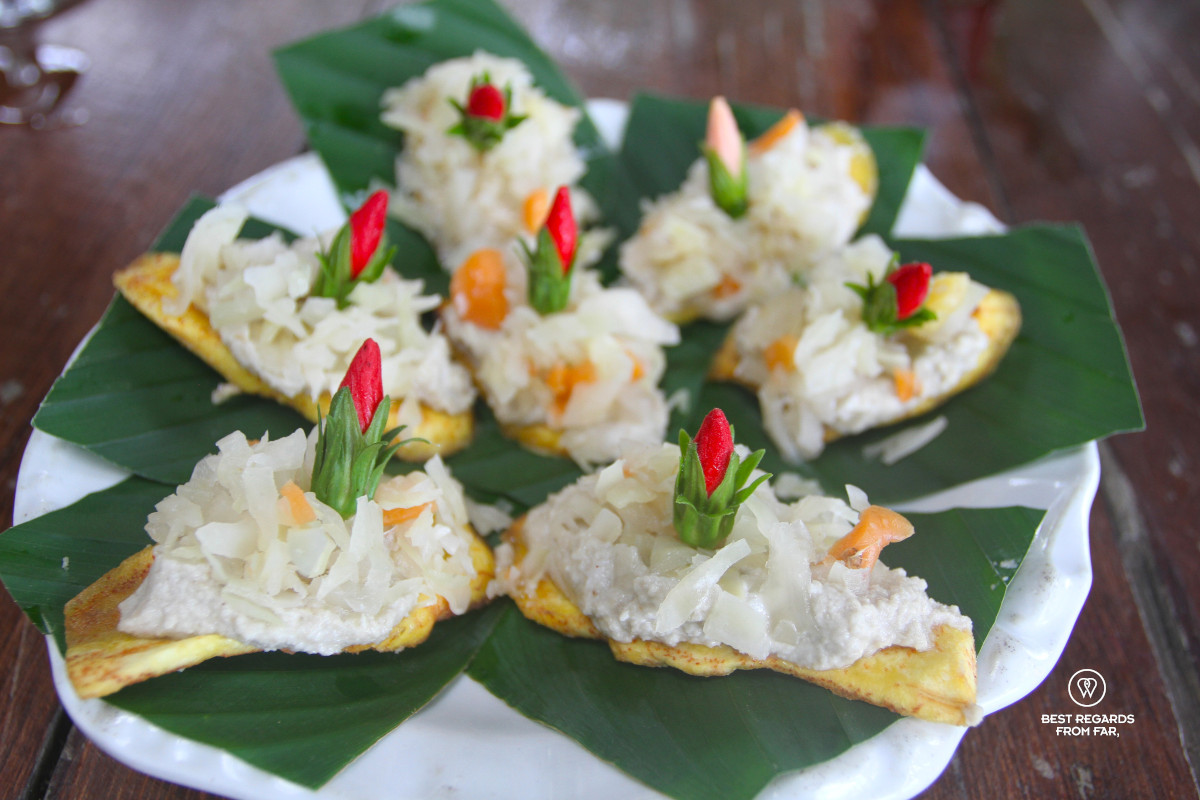
A hummingbird hovers around a lipstick-red flower while colorful butterflies flutter between beds of herbs, vegetables, and majestic trees. The air smells of mint, damp soil, and ripe mango. In our glasses, a chilled juice blends tropical fruits with ginger and freshly picked mint. On the table, crisp rice-and-chia arepitas are topped with pigeon-pea and sun-dried tomato hummus, highlighted by edible flowers harvested seconds ago.
Pin it or bookmark it for later!
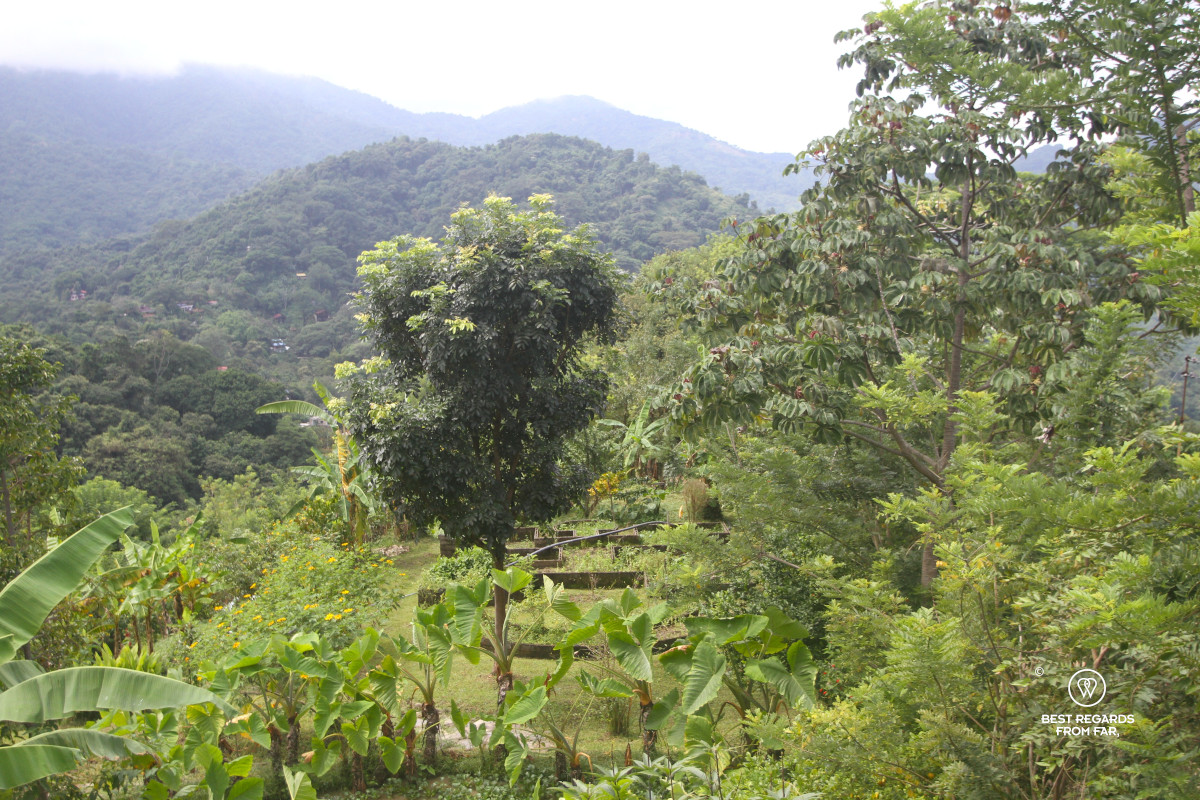
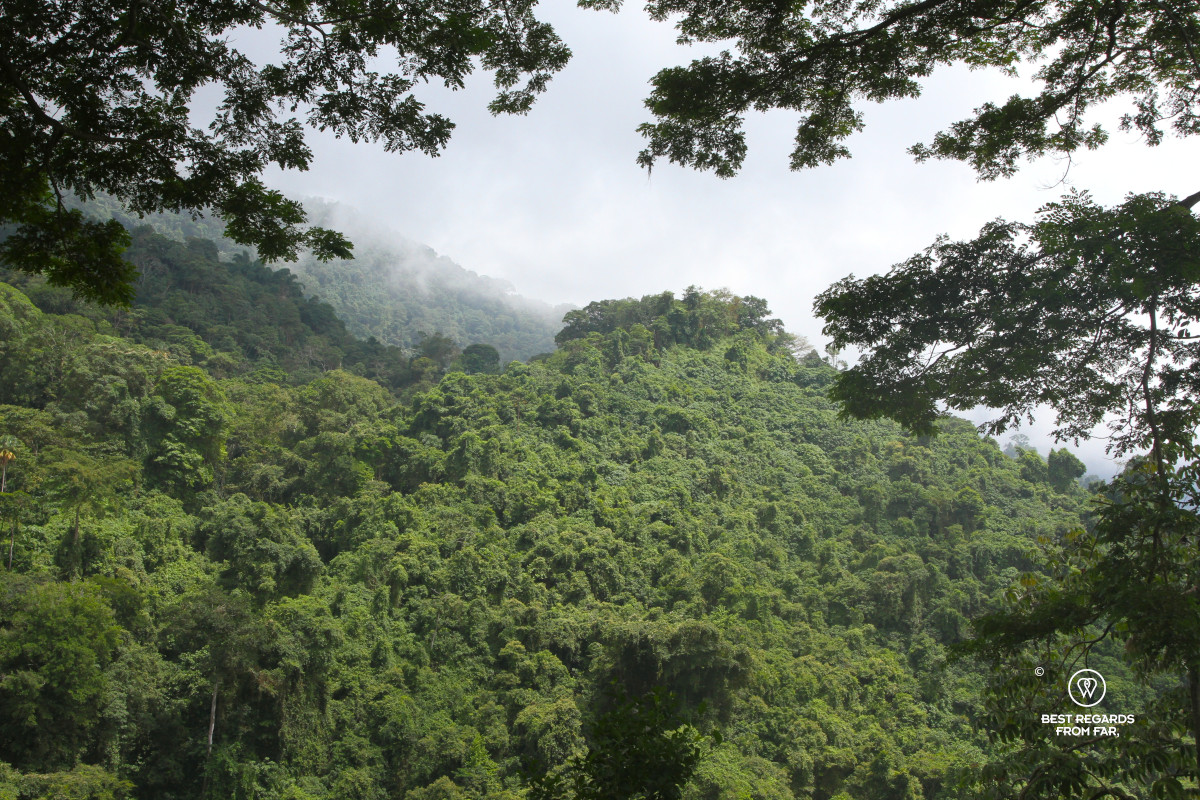
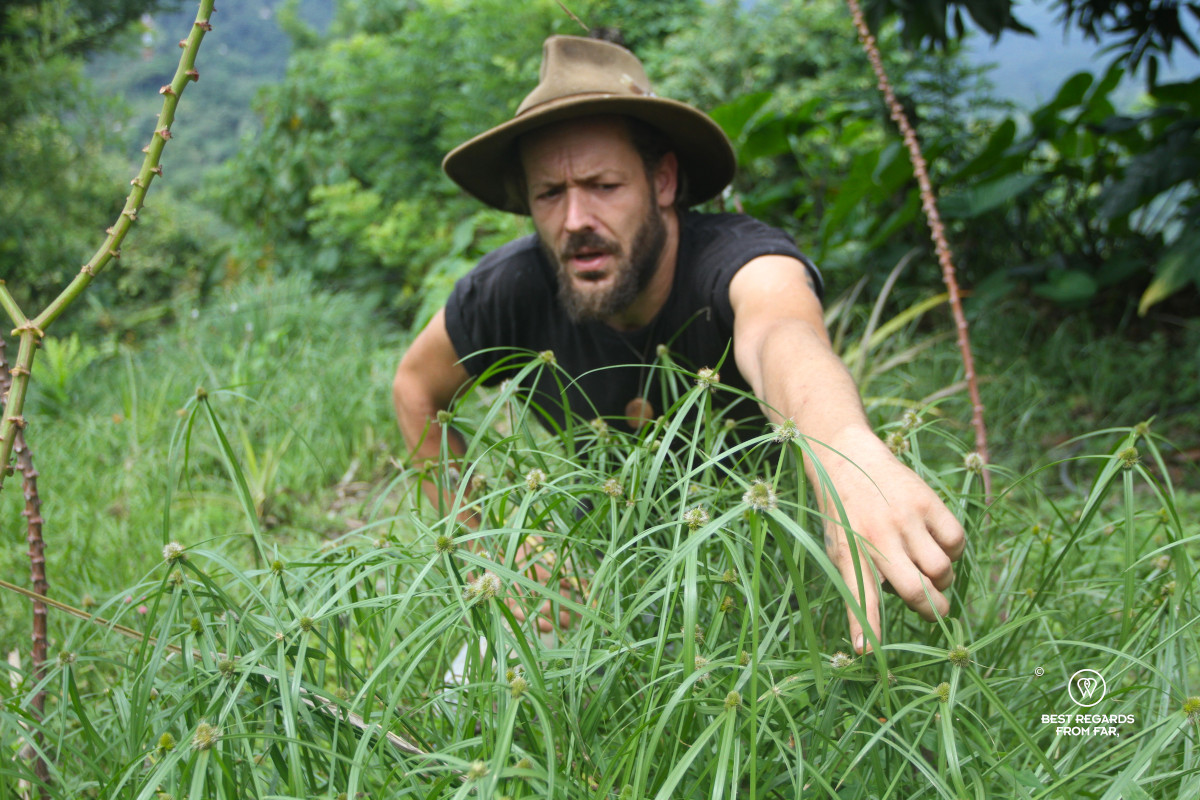
Rising abruptly behind Colombia’s Caribbean Coast, the Sierra Nevada de Santa Marta, with its highest summits at 5,775 meters (18,947 feet) is world’s highest coastal mountain range. The biodiverse landscape provides a dramatic setting. Yet, it took five and ten years for the gardens from which the ingredients we are tasting have been harvested from to thrive. About a decade ago, this mountainside was a depleted cattle pasture. Invasive grass had taken over, growing up to three meters (9 feet), birds had left for the most part, and the soil was badly eroded. Hailing from the Netherlands, Pim fell in love with these foothills of the Sierra Nevada de Santa Marta and wanted to restore the land. But first, he had to remove the grass by hand, not once, but three times. When farming works with nature however rather than against it, the unthinkable can happen…
A Successful Experiment in Permaculture
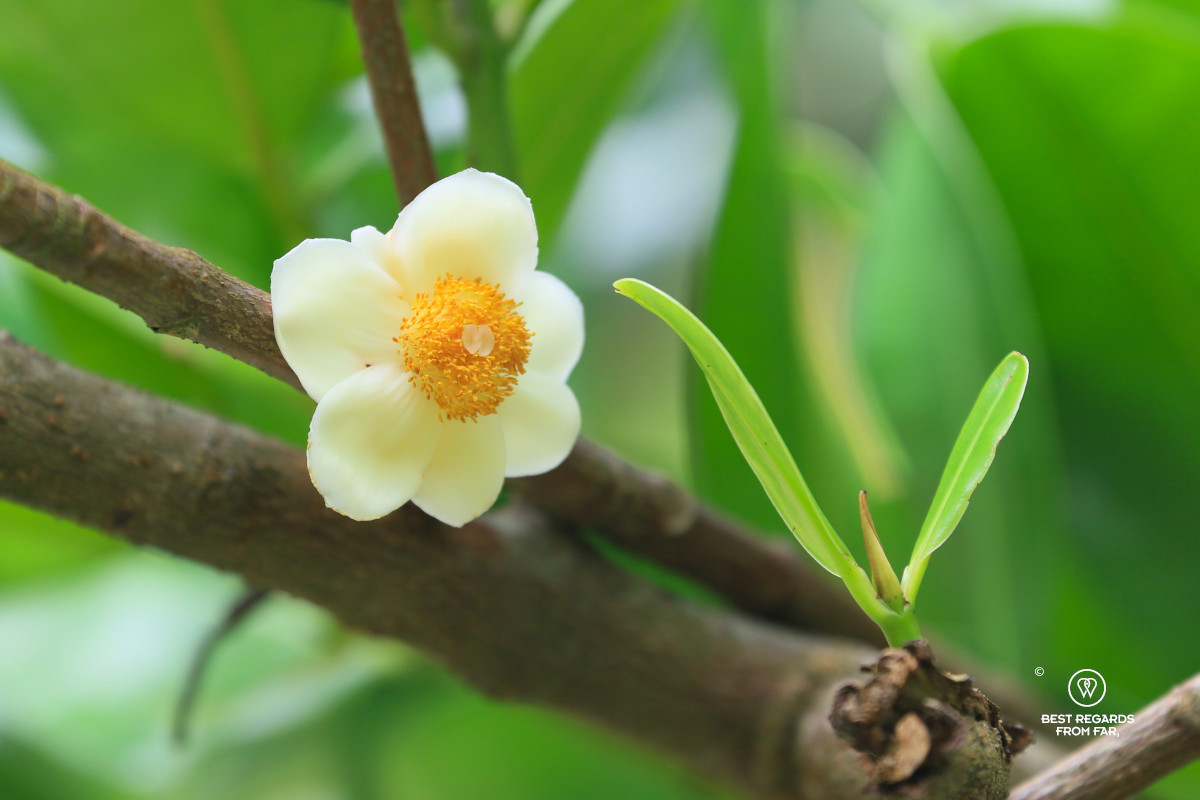
“I position myself as submissive to nature,” Pim explains as he leads us through the garden. Rather than deciding what the land should produce and forcing it into neat rows, he observes each plant, insect, and animal, trying to understand how they can fit together at best. What has become the Plan B farm-to-table experience is in fact a much larger experiment in reforestation, food production, and permaculture.
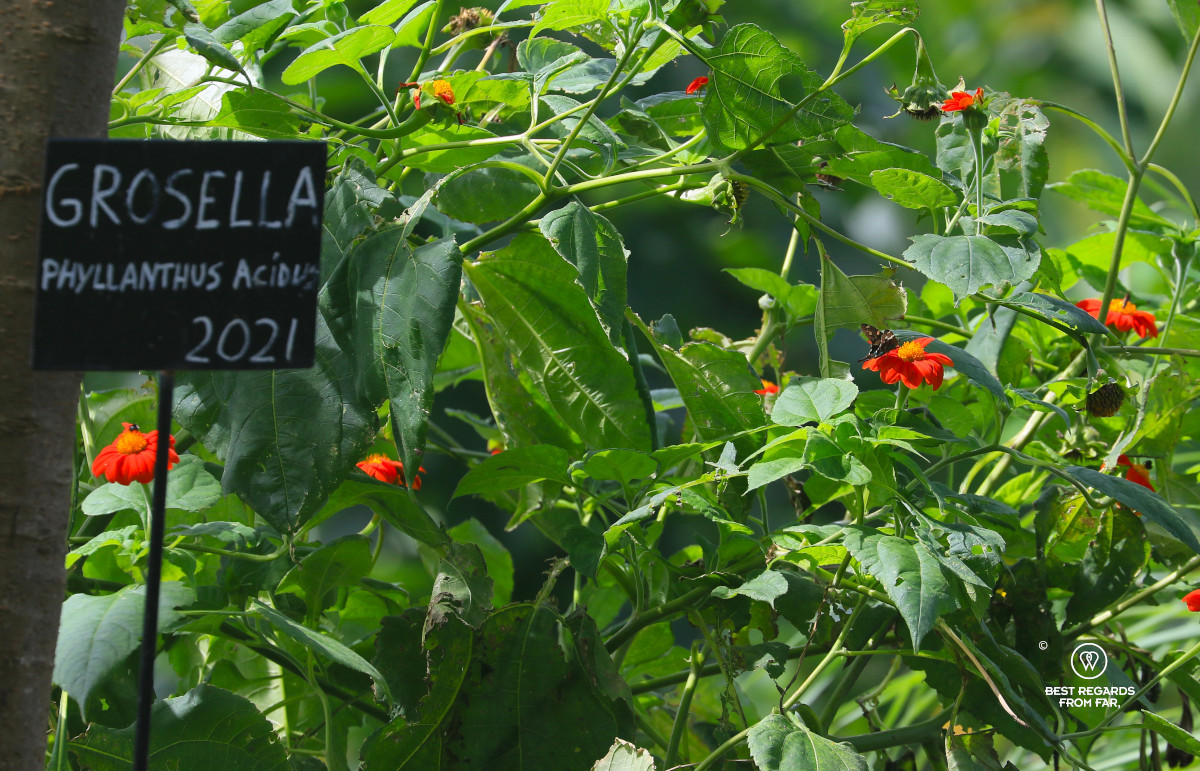
As we roam the bucolic garden, sweet peppers grow alongside Thai basil, tomatoes, turmeric, ginger, corn, tobacco, yucca, and edible flowers. Frequently harvested, vegetables are planted close to the kitchen, where they can be watered and tended easily. Fruit trees and seasonal crops that require less attention grow farther away.
Planting Shade before Planting Cacao
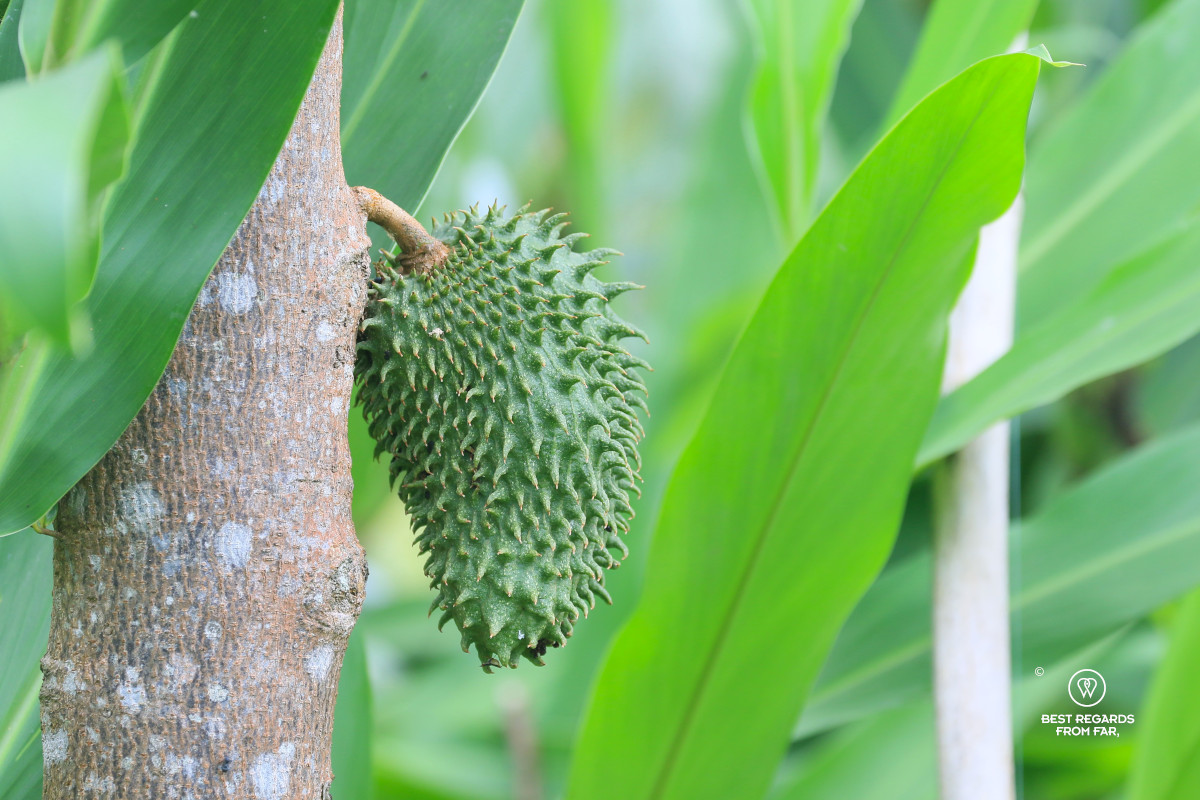
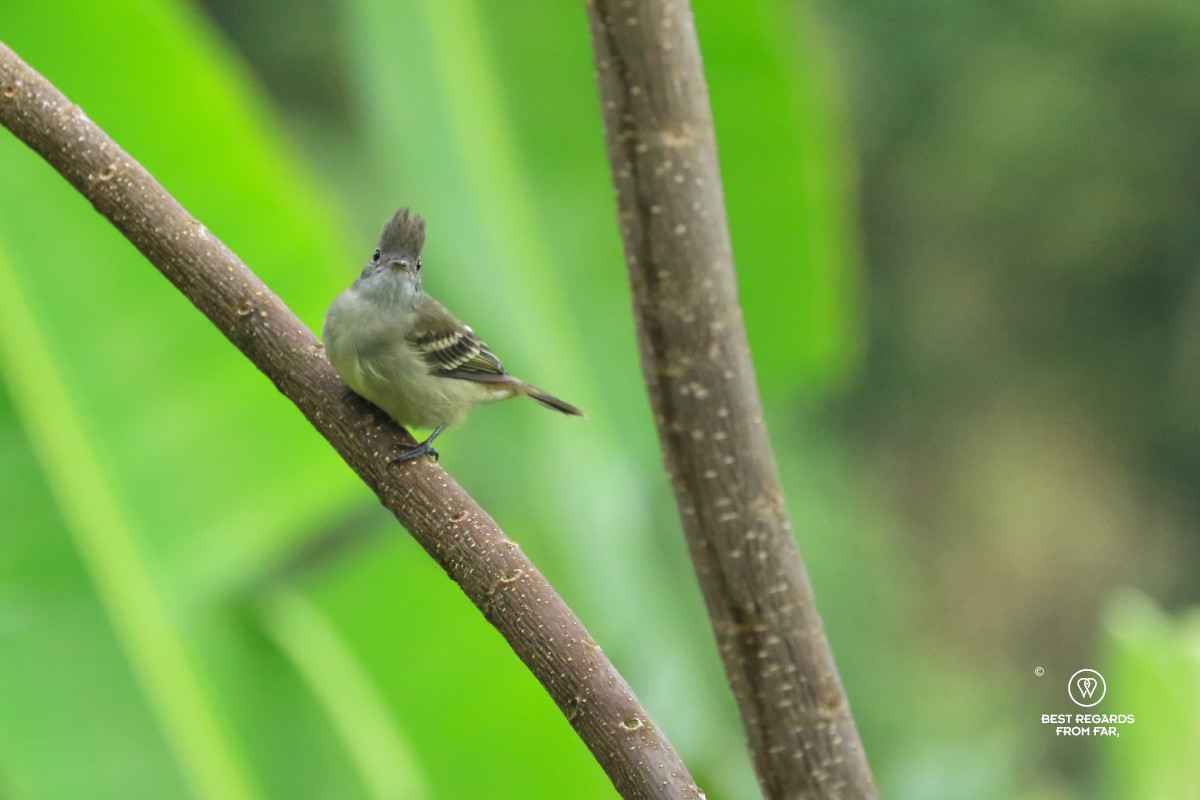
The biggest challenge on an eroded land is to create shade as quickly as possible. Pim began by planting thousands of banana plants of several varieties. Bananas grow fast, protect the soil and create the cooler, more humid conditions needed by young cacao trees. As the cacao developed, squirrels arrived to feed on its fruit. Instead of treating them as competition, Pim planted more tall fruit trees, hoping to attract raptors that would take care of the hungry rodents, and gradually restore a natural balance between predators and prey.
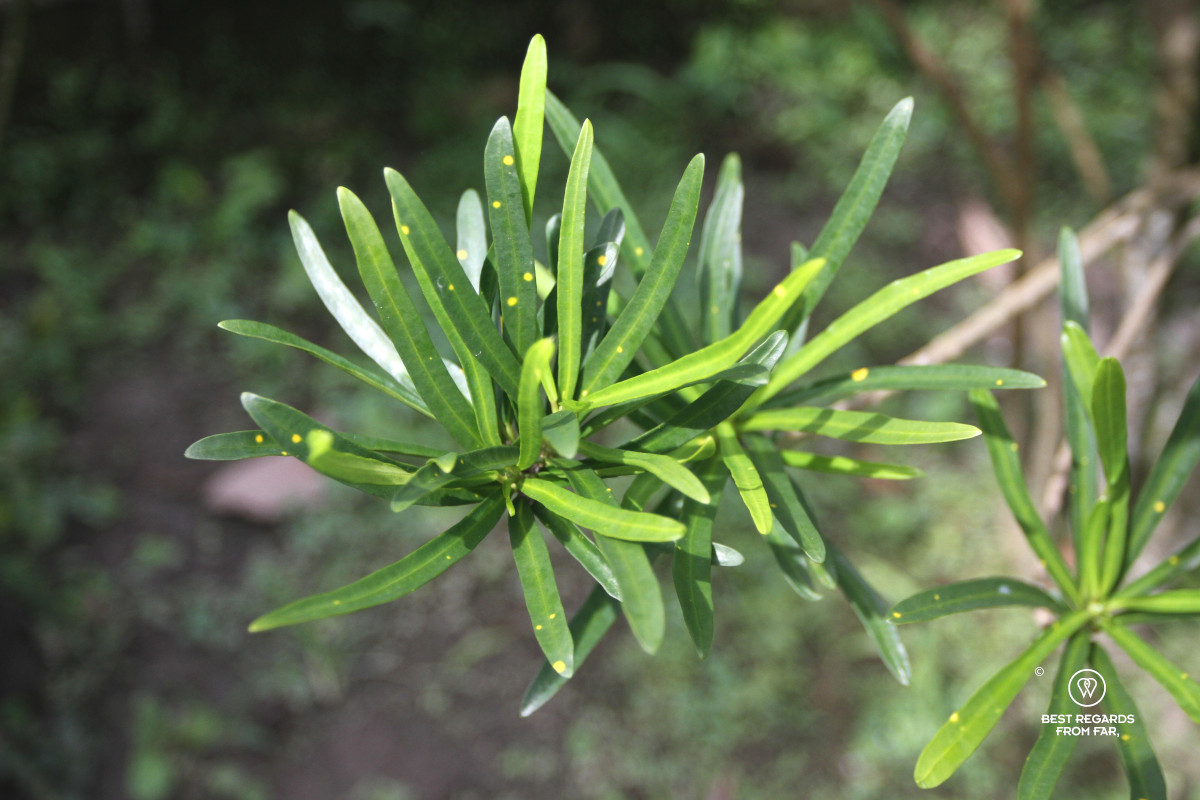
Other experiments are carried out on a smaller scale. Tobacco is planted near crops frequently attacked by ants. Croton plants have been added to vegetable beds after Pim observed that their tiny yellow markings appeared to discourage butterflies from laying eggs, reducing the number of caterpillars feeding on the vegetables.
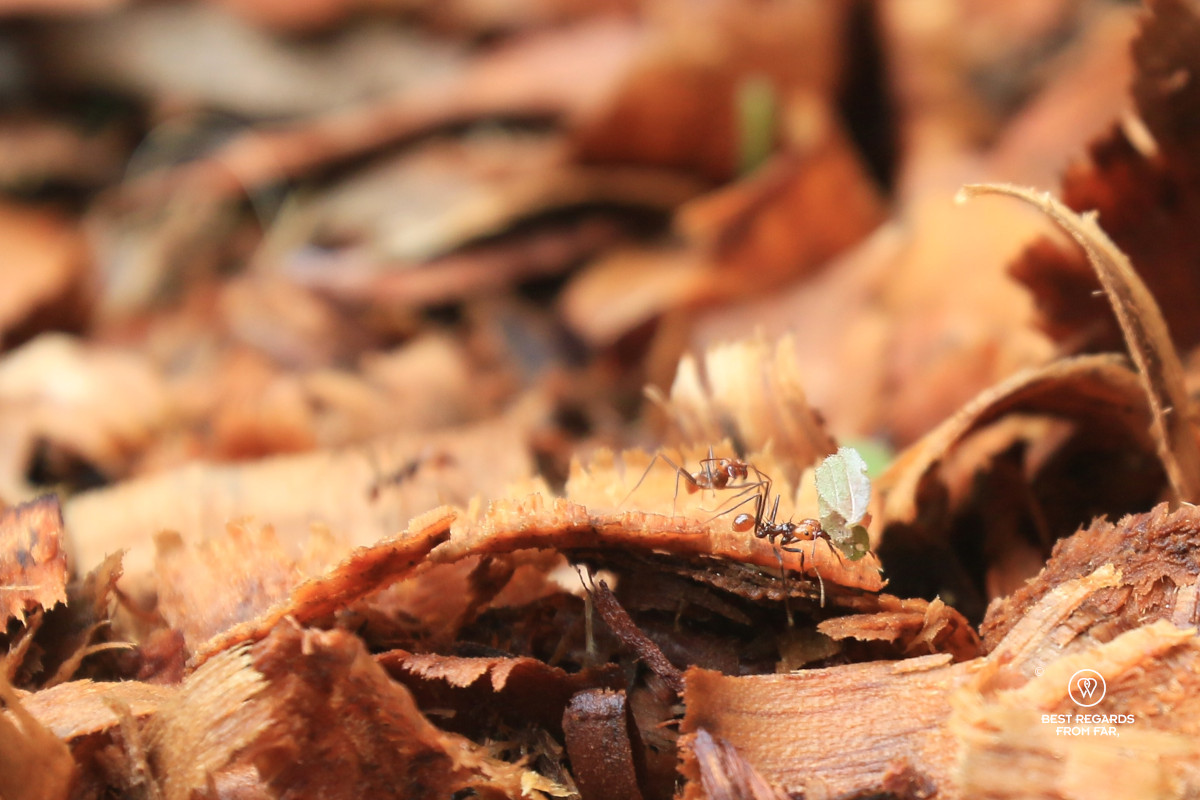
Even citrus fruits that fall to the ground have a purpose. Pim cultivates fungi from decomposing fruits and places it close to leafcutter-ant nests. The ants carry this fungus underground which competes with their own that their colony depends on. This forces the ants to relocate without using pesticides nor killing them.
Farming and permaculture are a trial-and-error process, and not every experiment is a success. Plan B is constantly adapted to what works best for the land, the animals, and the people.
Holding on to Water
Water is one of the greatest challenges on the mountainside. From roughly December until Easter, rain can be scarce, while September, October and November may bring several hours of rainfall almost daily.
Several ponds have therefore been dug to retain water. When one new pond continued to leak, Pim rejected the idea of lining it with plastic. Instead, he introduced tilapia and fed them protein-rich aquatic plants. Over time, the organic matter produced by the fish began forming a natural layer across the bottom of the pond.
The principle remains the same: before adding an artificial solution, looking at nature always comes first.
Learning from Stingless Bees
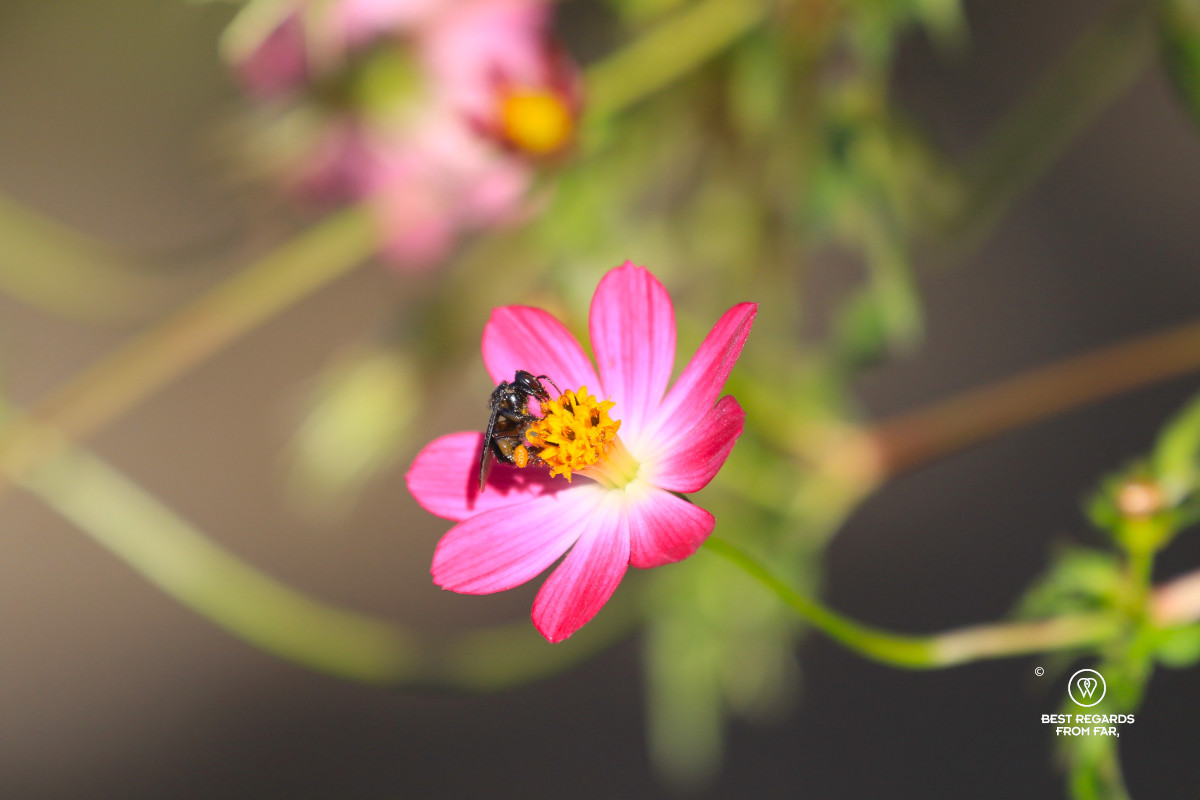
Early in the morning, flowering grasses attract some of Plan B’s smallest inhabitants: native stingless bees. The tiny insects move among the flowers early before the nectar dries in the tropical heat.
Their wooden hives have narrow entrances that can be sealed and protected with propolis. Unlike the familiar honeybees introduced from Europe, these tropical bees do not store honey in uniform combs. Inside the hive, it is kept in small irregular pots.
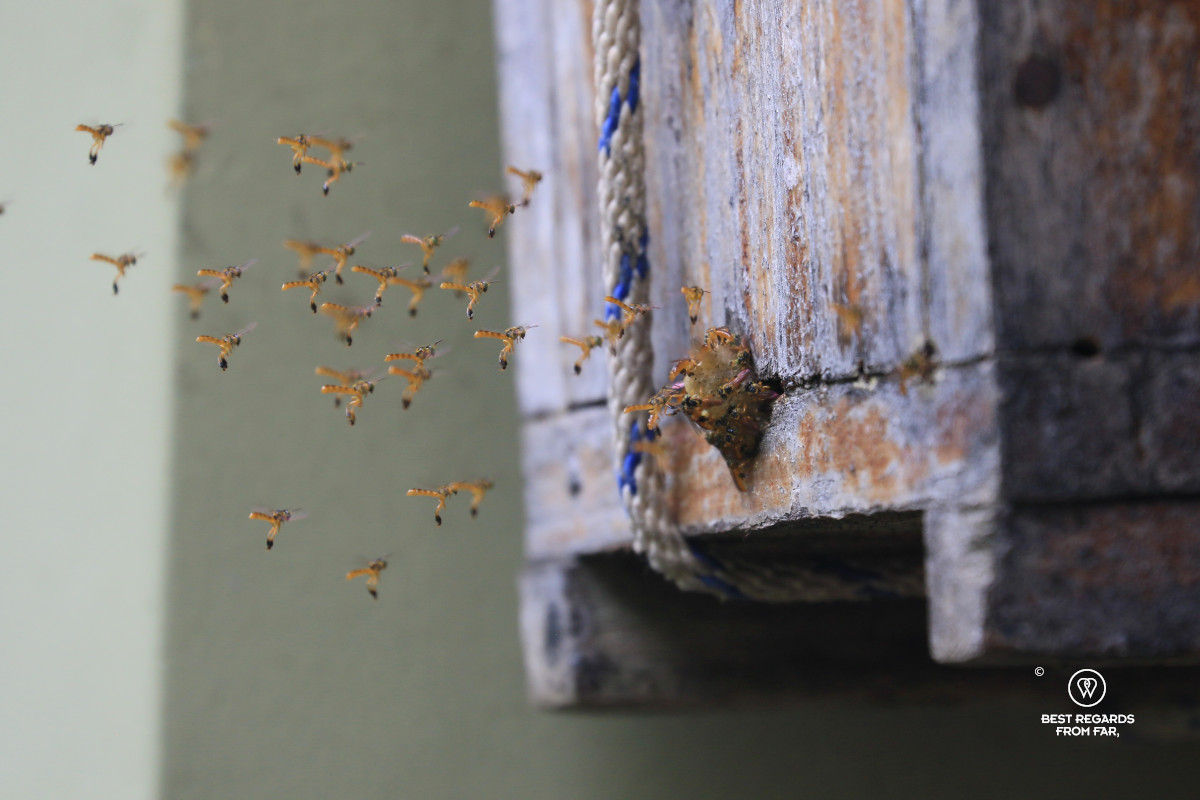
When Pim opens one, we notice the different colors of pollen carried home by the bees, evidence of the variety of plants they visit. He harvests only a very small quantity of honey each year, carefully monitoring how much the colony can spare. His approach to beekeeping mirrors his attitude toward the entire farm: the bees are not production units, and their survival takes priority over the amount of honey they produce.
When we stroll from one garden to the next, biodiversity is not only a buzz word. Butterflies move between vegetable beds, hummingbirds feed on flowers, birds call from surrounding trees and insects are everywhere.
Farming on Ancient Land
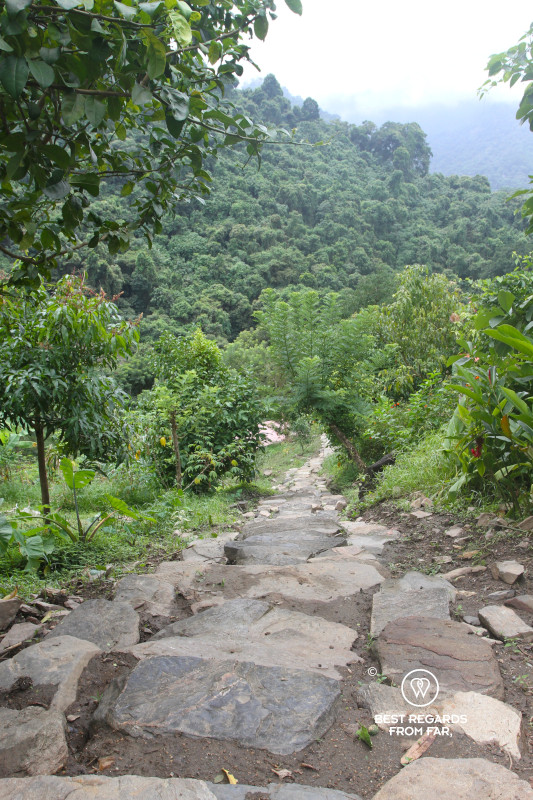
There is hardly anything new in what Pim preaches. The indigenous people of Colombia have lived in harmony with nature for centuries. Their presence in these mountains has been attested by stonework, steps, tools, and pottery fragments. As the land is attended to, the earth seems to gift its caretakers with archeological treasures…
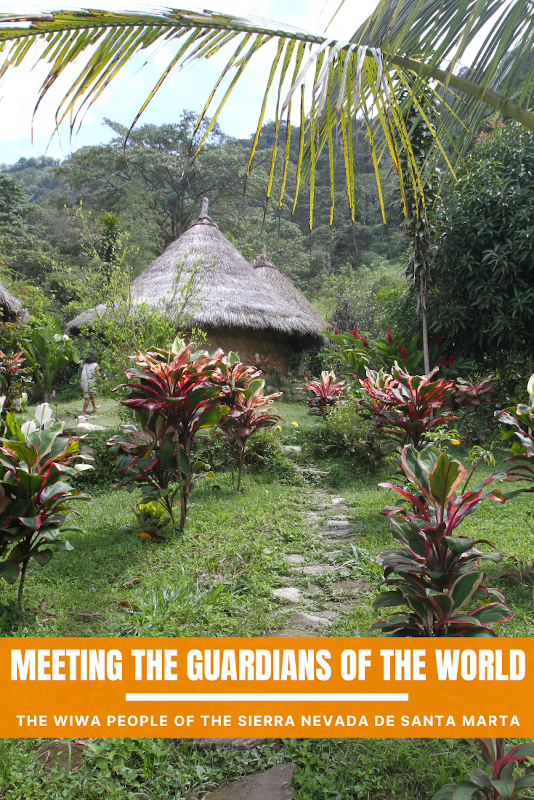
Naturally, a Wiwa community has settled close to Plan B, on the land owned by Mundo Nuevo. They share their knowledge of the Sierra and its resources while collaboration supports schooling, childcare and employment. Once more, a symbiotic relationship has emerged.
From Farm to Table
After roaming the land, we sit down for a vegetarian multi-course lunch crafted by Annie. The inventive meal translates the permaculture philosophy into a wealth of flavors, colors, and textures.
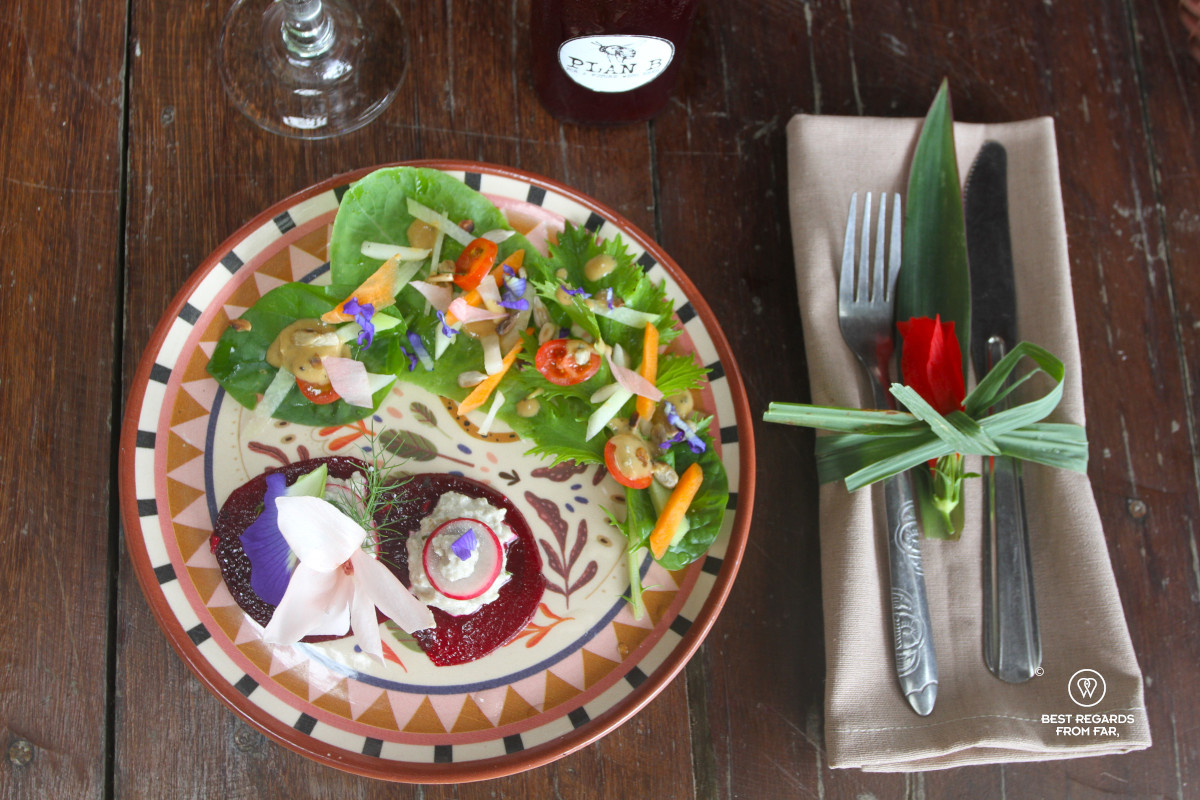
A salad of mizuna, lettuce, and Malabar spinach is mixed with cherry tomatoes, cidra, carrots, and avocado. Butterfly-pea and lipstick flowers add color, while roasted sunflower seeds provide crunchiness. A mango and passion fruit vinaigrette made with holy basil and cold-pressed avocado oil dresses the starter deliciously. Beside it, a smoked beet is filled with a fermented sunflower-and-coconut cream cheese and finished with the small pearls of a water-kefir culture. A ruby-red infusion of hibiscus and trinitaria flowers with hints of cinnamon and ginger accompanies the dish.
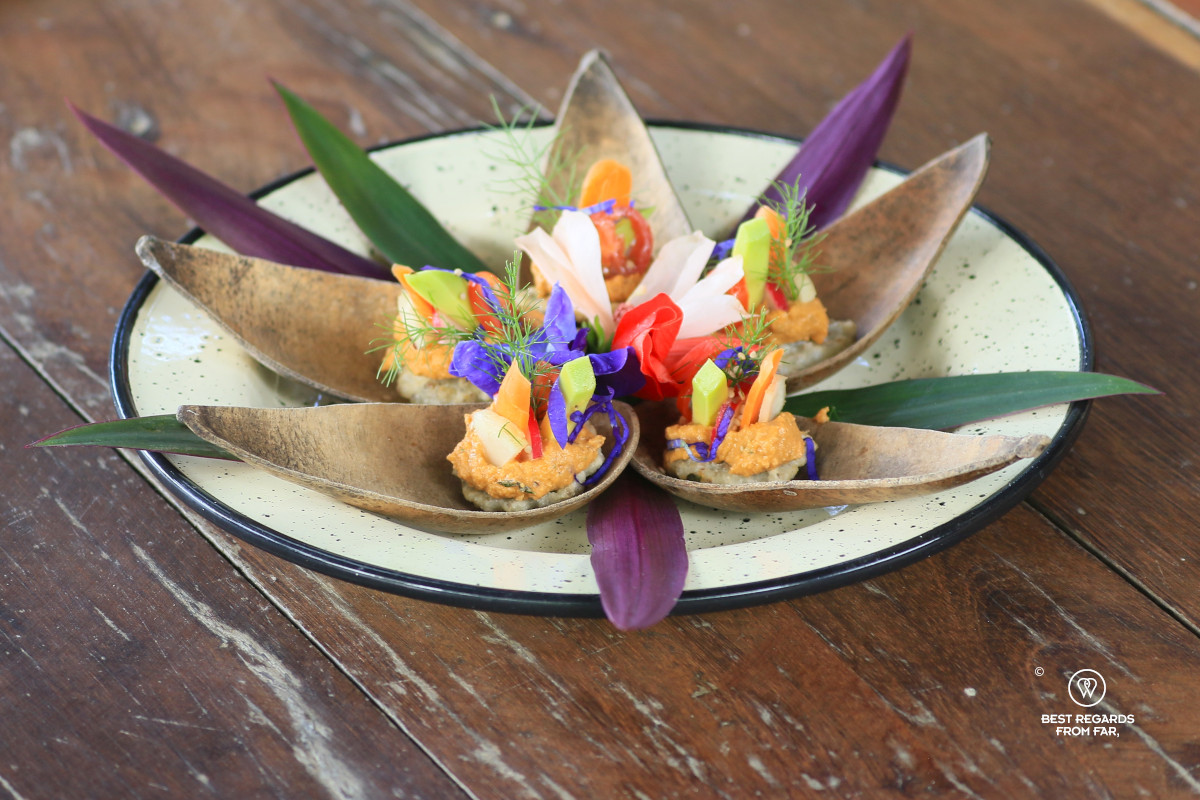
Fermentation is central to Annie’s cooking. Beyond its health benefits, it allows vegetables to be preserved through the seasons while creating flavors that are sour, sharp, and complex such as in the kimchi gyoza.
Raw, smoked, fermented, infused, or transformed, the ingredients growing at Plan B reappear on our plates, and the feast continues.
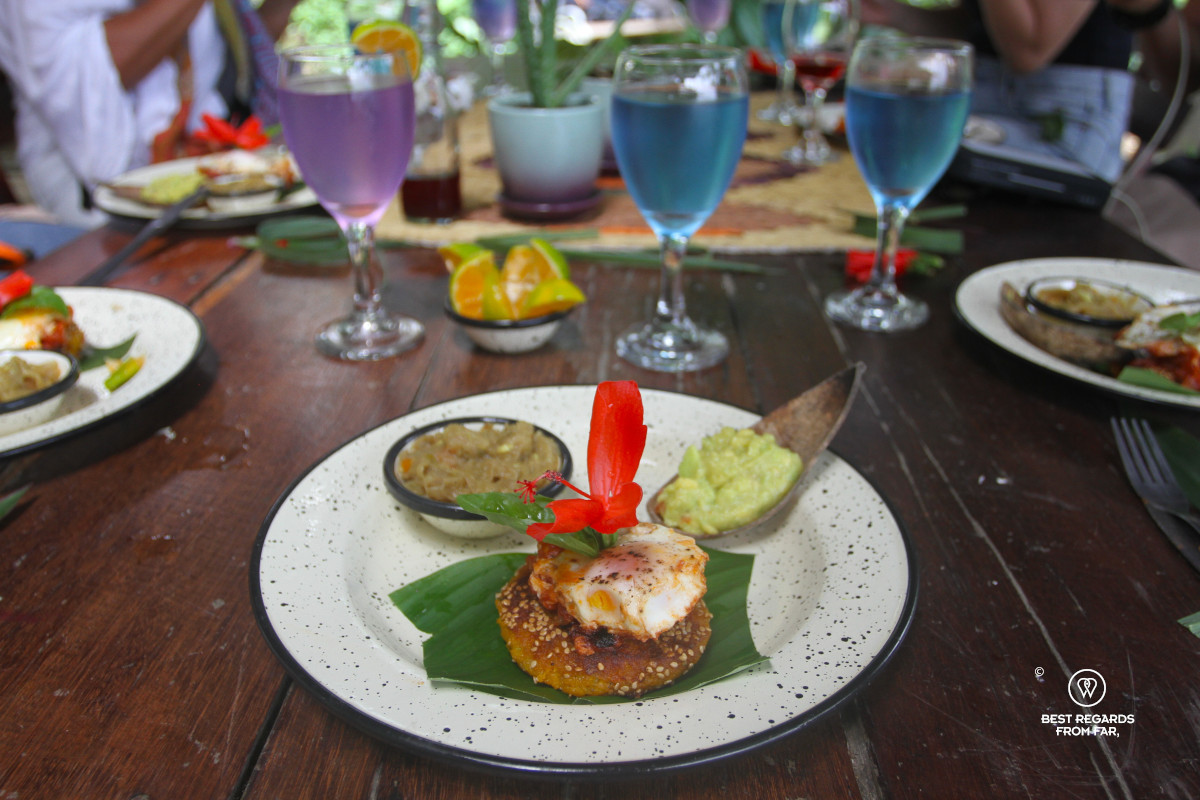
The main course is Plan B’s interpretation of shakshuka: smoked eggplant, sun-ripened tomatoes and moringa leaves served over a pumpkin-and-spinach patty with a sesame crust, crowned with eggs from the farm’s free-range chickens. A jackfruit and sweet-pepper stew slowly cooked in coconut milk and a fresh guacamole complete the plate.
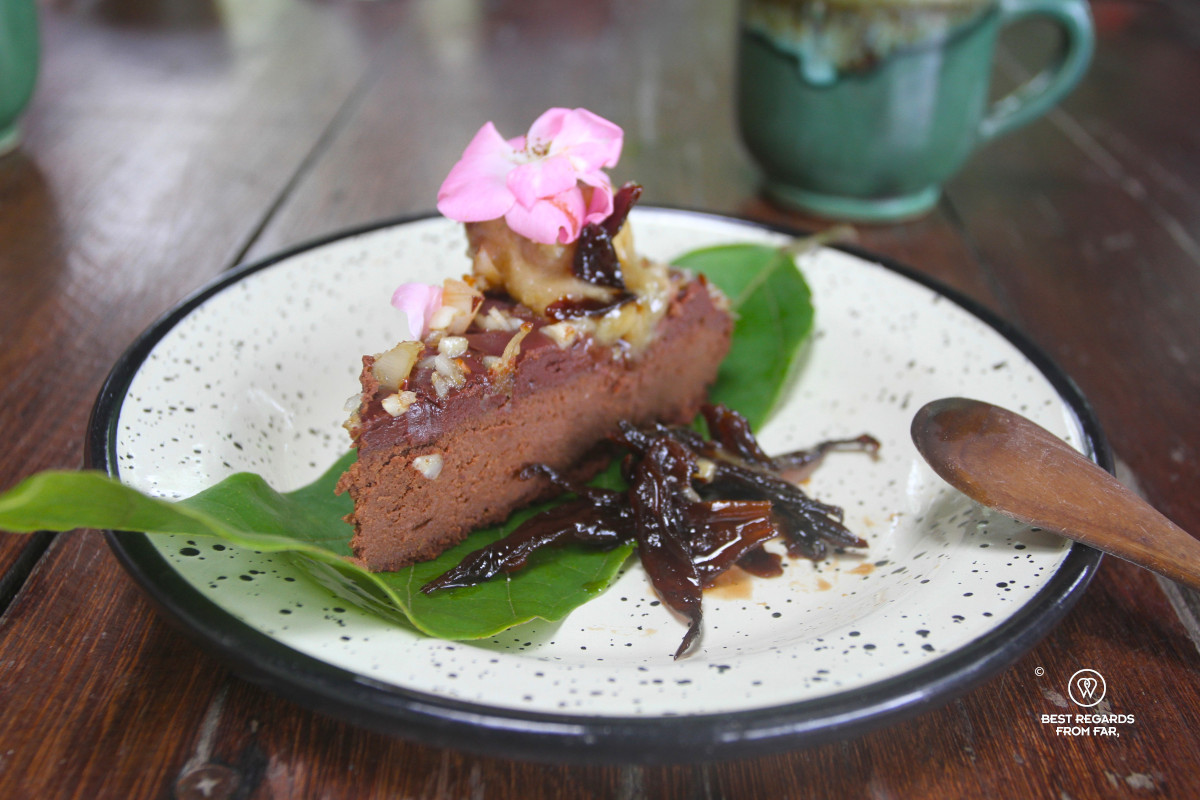
Dessert combines sweet potato and raw cacao in a dense chocolate cake, served with jackfruit, banana and coconut ice cream, and decorated with caramelized hibiscus flowers, honey and rose petals to end on a decadent high.
***
By the time Annie pours the farm-grown coffee, farm-to-table is no longer an idealistic concept. Her gastronomic lunch is the best way to touch and taste the permaculture philosophy, which actually boils down to a deep respect for nature.
Plan B is not a finished blueprint but a constant adaption to the environment and needs of the people. What is easy to reproduce anywhere is the constant observation of nature and the willingness to work with it in a sustainable way rather than impose upon it.
Travel Tips:
- Plan B’s farm-to-table experience is closely connected to Mundo Nuevo above Minca. You can book your 4-hour workshop through the activity page of Mundo Nuevo.
- Mundo Nuevo is without a doubt the best place to stay and within walking distance of plan B.
- Check out this interactive map for the specific details to help you plan your trip and more articles (zoom out) about the area!
For more in Colombia, click on these images: