Article updated on September 4, 2026
Text: Marcella van Alphen
Photographs: Claire Lessiau & Marcella van Alphen
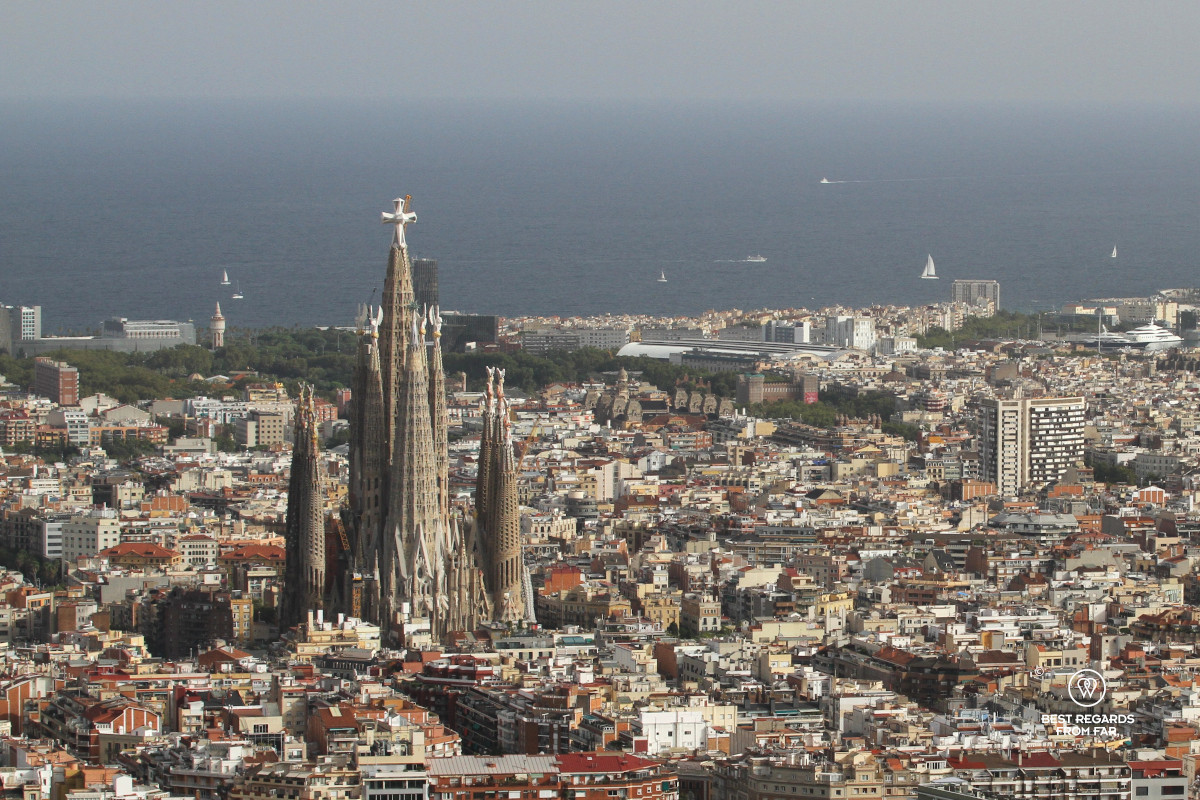
Standing on the bunker del Carmel overlooking the city of Barcelona bathed by the sunset light, La Sagrada Família boldly rises above the buildings. I have always had mixed feelings passing by the grey façades of the most visited landmark of the capital of Catalonia invaded by hordes of tourists. It is only by entering this basilica that I went from a dubious passer-by to being an admirer of Gaudí’s technical genius and refined symbolism.
Pin it for later!
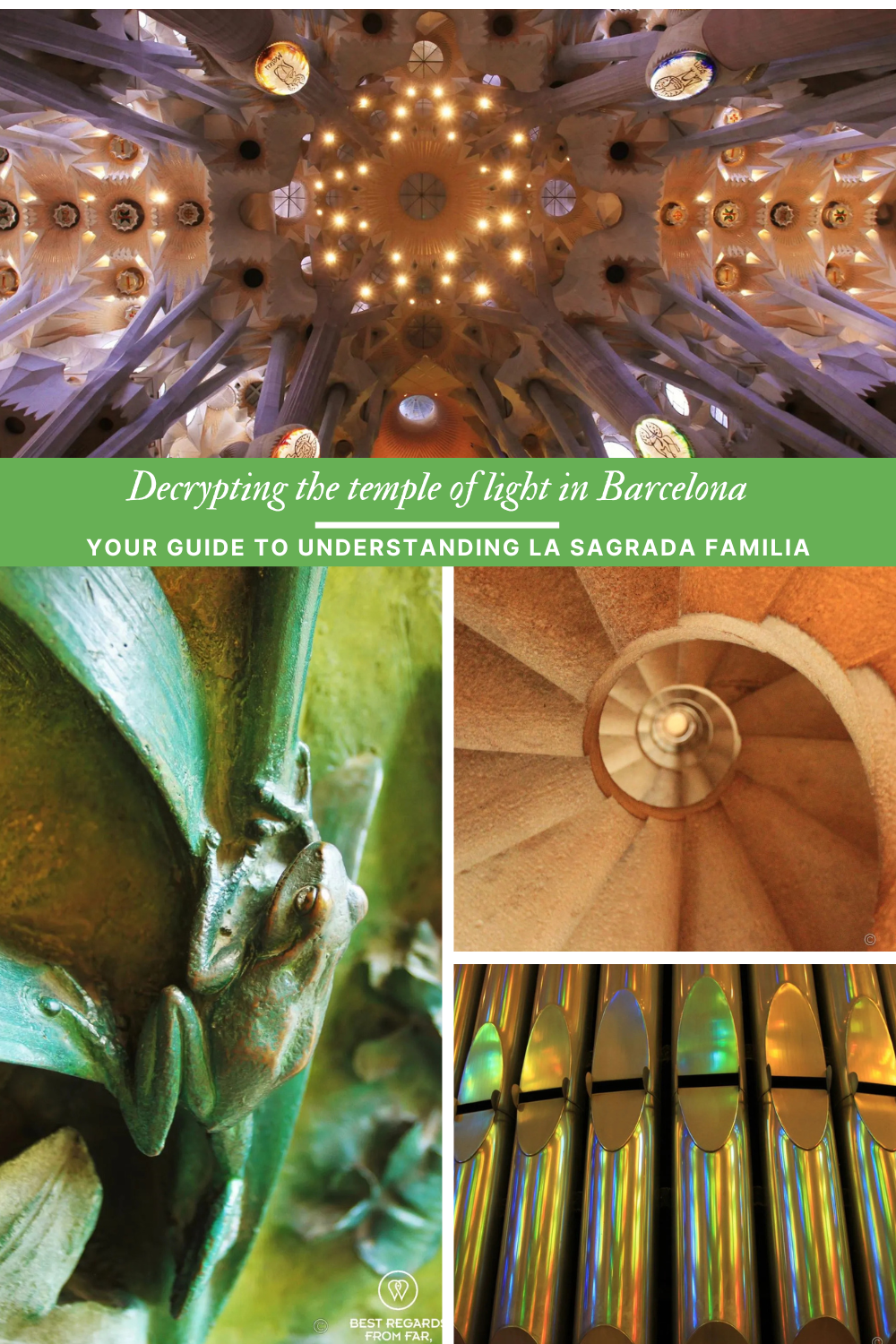
“The work of man should never rise above the work of God” said world’s most famous modernist architect who got appointed for one of Europe’s largest contemporary projects. The still-under-construction Sagrada Família by Gaudí reaches for the sky in the heart of El Eixample district and attracts thousands of people each day. The Catalan architect Gaudí, also famous for the modernist buildings of Casa Batlló, Casa Mila, Palau Güell… was only 31 when he became in charge of the whole project of La Sagrada Família in 1883. He was replacing a previous architect with a very classic plan who had completed the crypt and foundations but who kept disagreeing with the initiator of the project, Josep Maria Bocabella. A conservative Catholic, he wanted to build an expiatory church to alleviate the sins of humanity as he was upset with how fast society was decaying.
Gaudí who dedicated his life to architecture, kept working on his masterpiece until his sudden tragic death in 1926, run over by a tram as he was leaving La Sagrada Família. His neglected appearance made passers-by believe he was a tramp and instead of being taken to the nearby modern Sant Pau hospital, another temple to Modernisme, he was eventually taken to Santa Creu, a charitable hospital for the poor where he passed three days later. Aimed to be completed in 2026 as a tribute to its most passionate architect, La Sagrada Família is a temple of light, nature, and faith.
Full of details and symbolism one can spend hours discovering the basilica, and here are a few pointers to decrypt it…
Three straight façades describe the most important stages in the life of Christ: birth, death, and entering the eternal life.
The Nativity Façade
The Nativity façade welcomes visitors, and is the only one that Gaudí saw almost completed before his death. Three portals symbolize Joseph, Mary, and Jesus in the center, depicted in a very realistic way. Gaudí decided to use molds of animals and real people –friends, workers, or passers-by– that he would then scale up to get this result.


They are decorated with an uncountable amount of floral and faunal elements conveying a profusion of life. Lively statues of angels and scenes of daily life of young Jesus are dominated by the tree of life with its white doves of salvation. The massive bronze doors full of leaves, flowers, insects, and animals convey the joy and optimism of this Nativity façade that invites us to get inside.
The Temple of Light & Nature
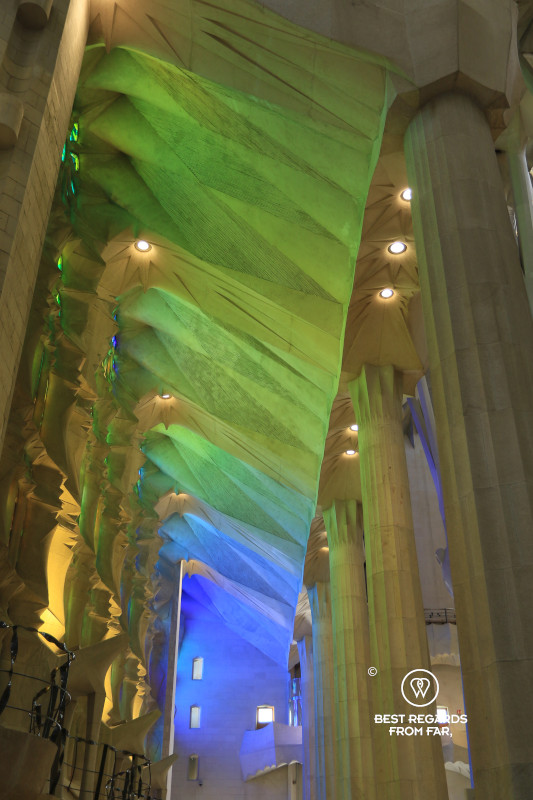
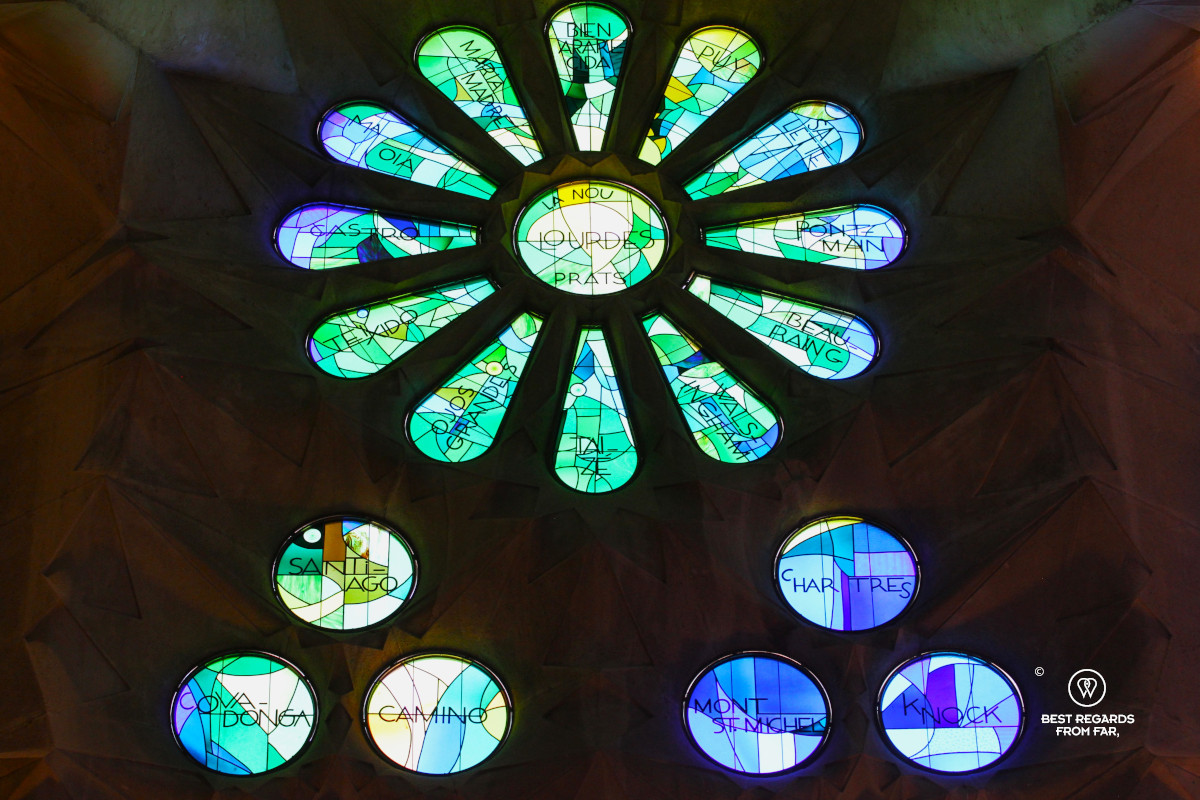
Stepping inside La Sagrada Família provides an unexpected feeling. Behind the grey façades a forest of tall columns branching out at the top to hold the ceiling is bathed by a beautiful natural light changing by the hour to symbolize the rhythm of nature. “The sun is the finest painter,” as Gaudí liked to put it, from the cooler blue tones of the stained-glass windows that refracts the light at sunrise on the nativity facade side, to the warm tones of sunset on the side of the passion facade.
Lightness exudes. Gaudí managed to avoid the use of counterforts, and the four central and tallest columns rise majestically 75 meters (246 feet) above ground. They are decorated with the colorful glass-stained symbols of the four evangelists: the eagle for John, the angel for Matthew, the lion for Marc, and the winged ox for Luke. A golden triangle above symbolizes God.
The central nave is dominated by the balcony for the choir where 700 people sang together when Pope Benedict XVI blessed the basilica in 2010. On June 10, 2026, the hundredth anniversary of Antoni Gaudí’s death, Pope Leo XIV blessed the newly completed tower of Jesus Chris and celebrated a Solemn Mass at the Basilica of the Sagrada Família, just above the tomb of Gaudí, who is buried in the crypt of the basilica.




The Towers
La Sagrada Família will feature 18 towers in total once finished.
The tallest tower symbolizes Jesus and its 172.5 meters (565 feet) are just half a meter (1.6 feet) shy of the Montjuïc Hill, and still make the basilica the tallest church in the world. In 2026, to commemorate the 100th anniversary of the death of Gaudí, the Tower of Jesus Christ was topped off by a gigantic 4-armed cross and inaugurated by Pope Leo XIV.
The four surrounding towers represent the evangelists. The slightly lower 138-meter (453 feet) high tower of Mary rises above the lowest 12 towers standing for the apostles.


Ascending the towers gives an insider’s look into the final building stages. Workers are extremely focused at more than 100 meters (328 feet) above the ground. Different stones and materials are used for the columns based on the weight they need to carry. Even all the way up the amount of details can make one’s head spin, and even more so can the spiral staircases going down!
The Passion Façade
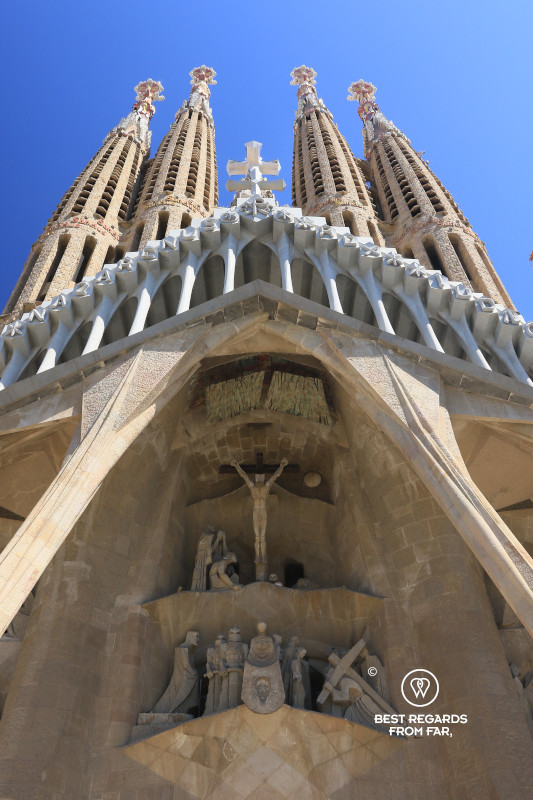
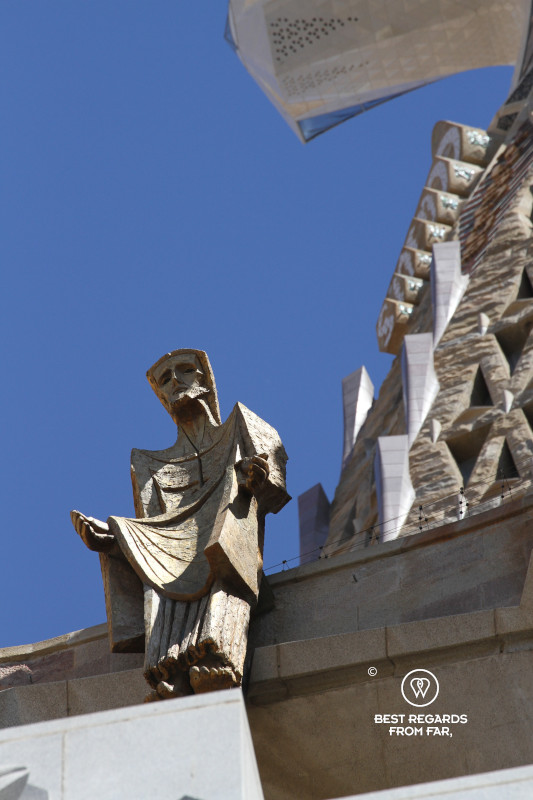
Exiting the basilica via the bronze doors on the side of the Passion façade allows one to read the Lord’s Prayer in Catalan and 15 other languages, welcoming everyone in this temple of God. The cheerfulness of the Nativity façade contrasts greatly with the suffering of Jesus on the way of the cross. Straight stone pillars remind the ribs of a skeleton, angular sculptures convey the brutal pains Jesus had to suffer through while harsh shadows are casted on the façade by the setting sun, symbolizing the death of Christ.
Knowing that he would die before completing the project, Gaudí had drafted the façade, and trained his disciples, who paid their tributes to the master by echoing his work on La Pedrera, his last completed building. In 1986, the renowned Catalan artist Josep Maria Subirachs was chosen to design the harsh and bone-like façade as Gaudí wanted it. The most obvious recall of La Pedrera is the Roman soldiers resembling the chimneys overlooking the Passeig de Gràcia.


The Glory Façade
As of today the Glory façade is still under construction. It is supposed to be the main façade representing the road to God through Death, the Final Judgment, and eventually Glory. The façade will be covered in demons, idols, and false gods representing Hell. A representation of the seven original sins will decorate seven large columns at their bases resonating with the seven heavenly virtues at their tops.
***
The towers of La Sagrada Família rise proudly above the city, recognizable from every corner of Barcelona. Reflecting back on Gaudí’s words while having a bird’s eye view of the city, it seems that the work of man has not risen above the work of God yet. Barcelona is still surrounded by higher hills, but it might not be for much longer as the booming capital of Catalonia keeps expanding and is struggling in keeping its balance, more specifically in the tourism sector.
Travel tips:
- You must book your tickets online before your visit.
- Gaudí is buried in the crypt: look for the organ and you can peep into the crypt that is otherwise only accessible during mass.
- Check out this interactive map for the specific details to help you plan your trip and more articles (zoom out) about the area!
For more in Barcelona and Spain, click on these images:




Sagradia Familia is breathtaking. I have been fortunate to visit many large cathedrals but this one was different. I walked through the doors and as your pictures depict beautifully, was bathed in a rainbow of colors. I cried it was so beautiful! Thank you for taking me back❤️😀
Sweet Heather! Yes, the light is simply amazing!
Barcelona and specially all about Gaudí is on my bucket list, but my favorite I’m sure is going to be La Sagrada Familia.
I hope to visit on my next trip to Europe, love your post!
Thanks a lot for read and enthusiastic comment. Oh yes, La Sagrada Familia is so surprising and grand from the inside. Maybe you also want to take a look at what we wrote about Casa Batlló (type Barcelona in the search field) – really, really nice!!