Text: Claire Lessiau
Photographs: Claire Lessiau & Marcella van Alphen
Guernica, immortalized by Picasso after German and Italian air forces devastated the Basque town in 1937 to prepare for World War II, has become the symbol of the Spanish Civil War. Yet Spain itself served as a testing ground for the fascist regimes, whose aircraft operated from bases including those on the island of Mallorca. Only a 45-minute flight away, Barcelona, the capital of Catalonia and a stronghold of the Republican army opposing the Spanish dictator Franco, was repeatedly bombed for two and a half years. Throughout the Spanish Civil War, from July 1936 to April 1939, civilians behind the lines had to organize and protect themselves.
Pin it for later!
Beneath Barcelona: How the City Dug for Survival [Refugi 307]
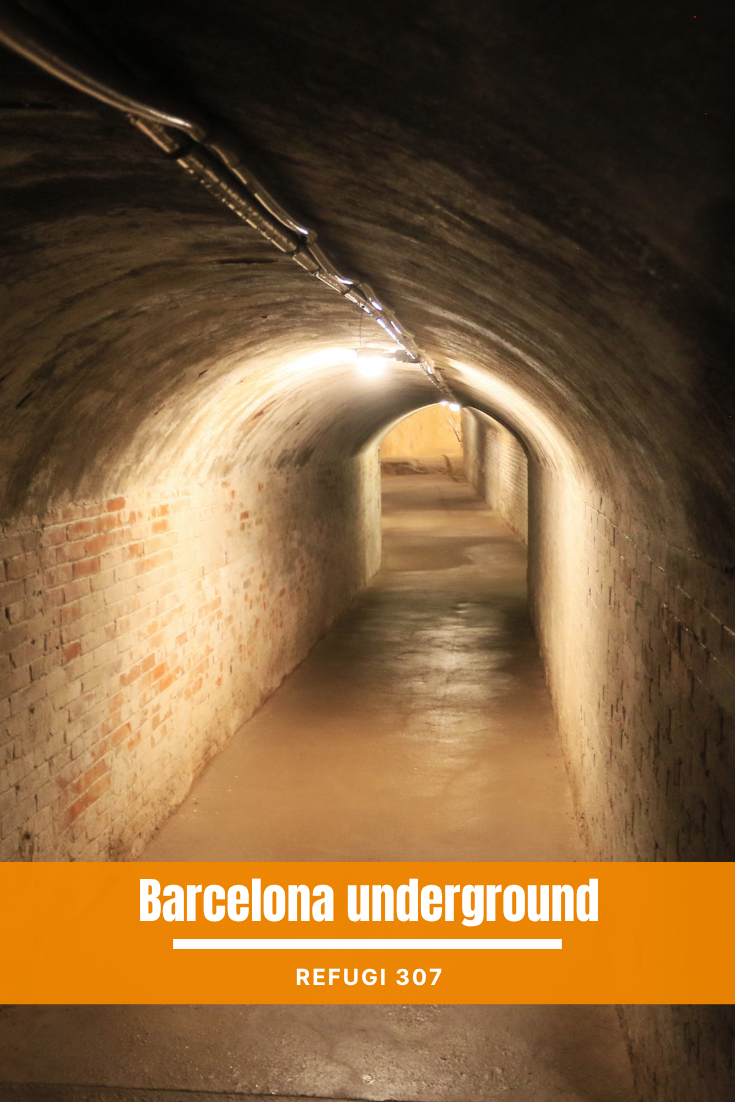
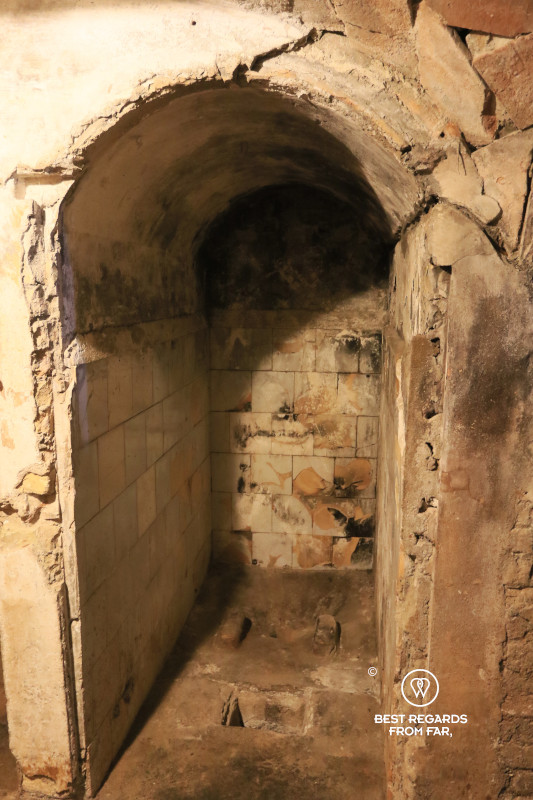
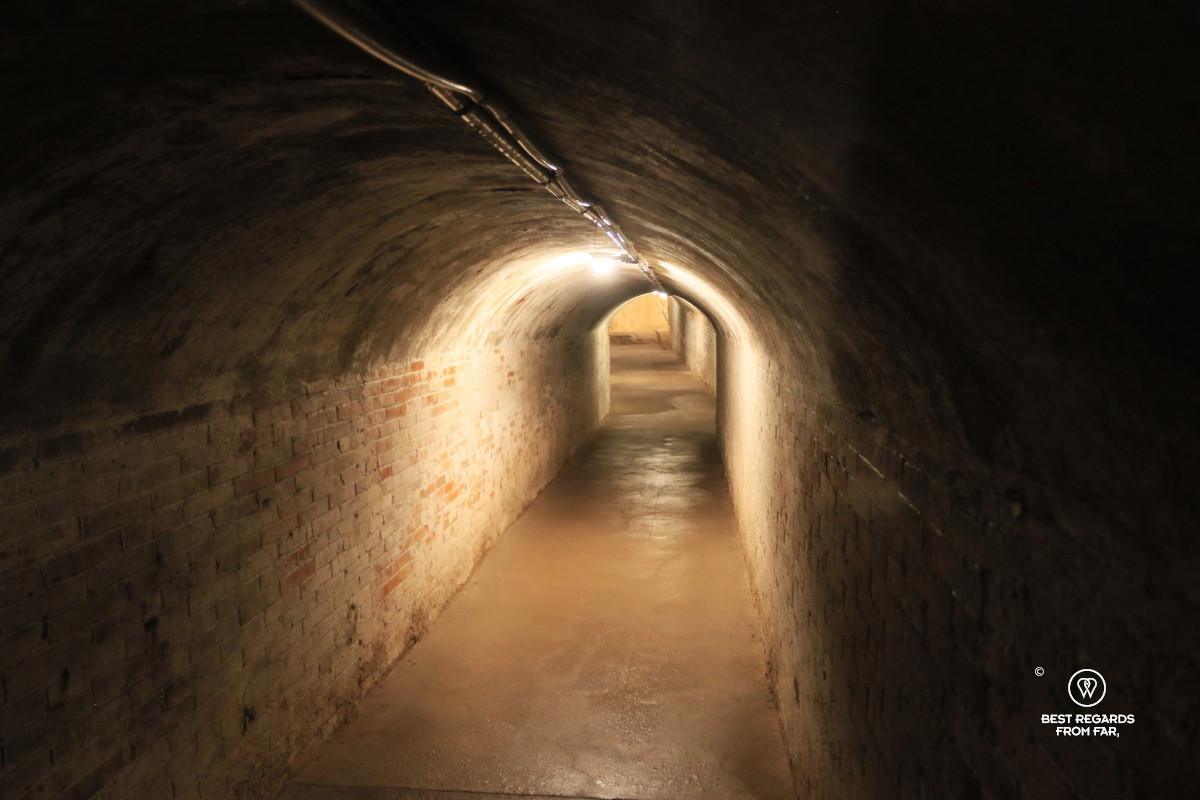
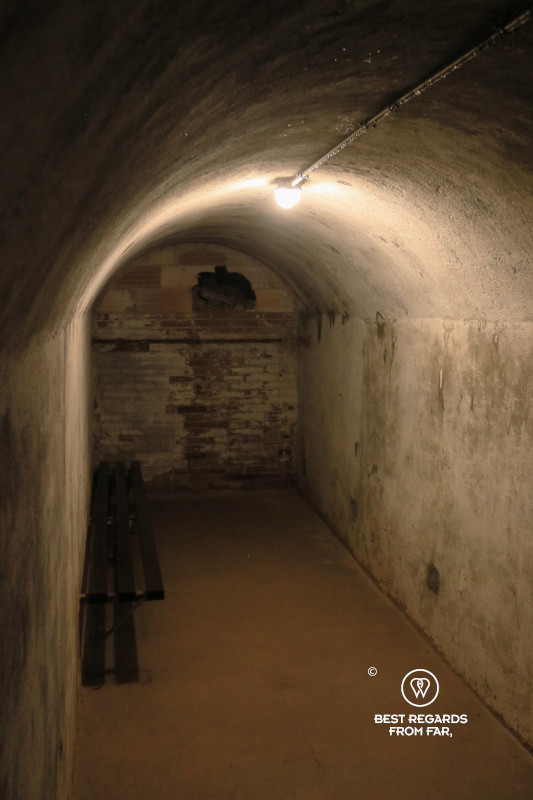
The thrum of a helicopter circling Montjuïc is muffled as we walk deep into the vaulted tunnels of Refugi 307. Here, inside the hill, it is impossible not to think of the aircraft that once approached the city carrying bombs and the terror the inhabitants must have felt during an air raid. We have just passed the second sharp bend and entered the safest area of the underground shelter: its zigzagging passageways helped absorb the force of a nearby explosion and prevented the resulting spray of deadly debris from traveling straight inside.
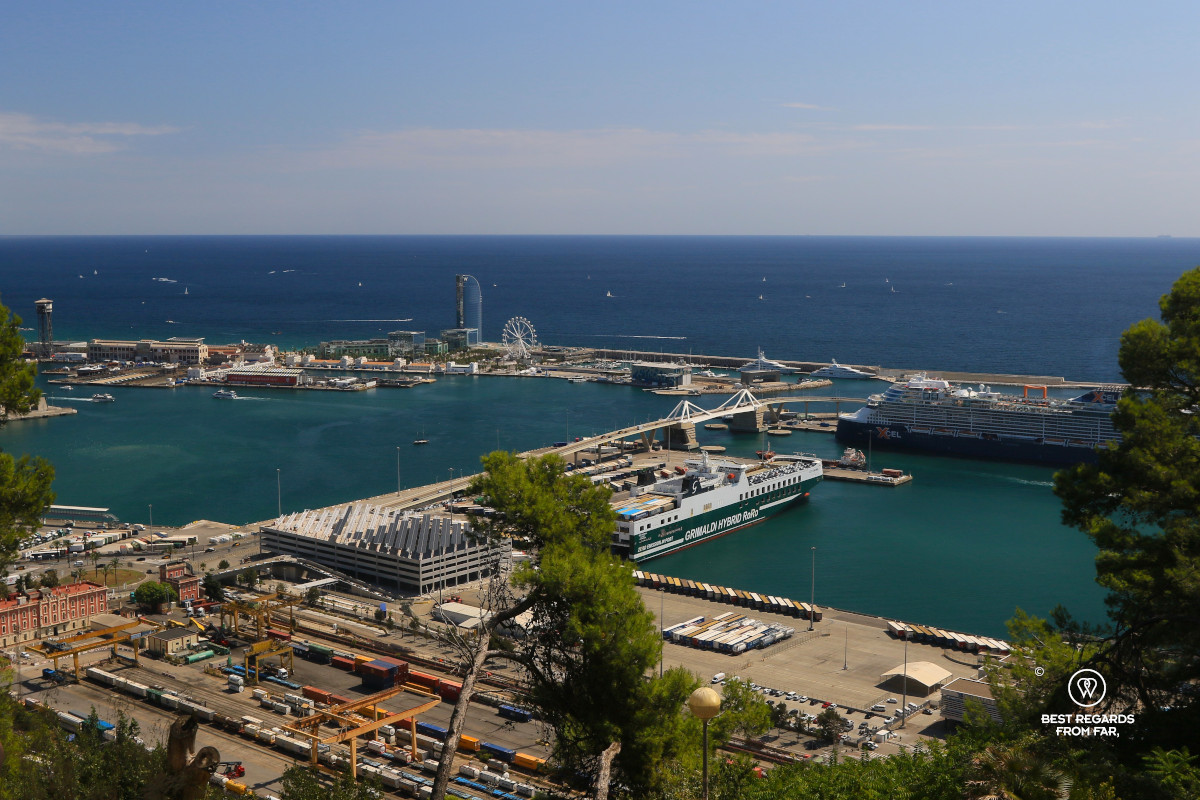
At the beginning of the Spanish Civil War (1936–1939), Barcelona was Spain’s main economic and industrial center. It also became the seat of the Republican government in November 1937, following the government’s relocation to the city. For years, Barcelona endured aerial bombardments by the Italian Aviazione Legionaria, Germany’s Condor Legion, and Francoist Spanish air forces, until Franco’s troops occupied the city on January 26, 1939.
For the first time in Europe, aerial bombing on this scale deliberately extended beyond specific military targets to the home front, terrorizing and killing civilians in an effort to break the morale of soldiers on the front. The notion of total war was born, and this form of warfare would ravage Europe and much of Asia in the early 1940s. After 1939, armed conflicts killed more civilians than soldiers.
At the foot of Montjuïc, where Refugi 307 is located, the working-class district of Poble-sec lies near the harbor and several strategic targets, including factories, a power station, and a military installation on the hill. Poble-sec was among the neighborhoods hardest hit during the Civil War and eventually contained dozens of shelters. Refugi 307 was one of Barcelona’s largest air-raid shelters. It could accommodate about 2,000 people, roughly half the population of the area at the time. While men were on the frontline, shelters were built by civilians: women, children, and older residents. They dug shelters by hand with whatever tools they could find, converted cellars and the subway system into refuges, and supplied the materials themselves. Women worked in munitions factories, so “the shelters were mostly built by children aged 6 to 13,” our guide explains. In all, Barcelona’s residents built more than 1,300 shelters across Barcelona in just two and a half years. Most accommodated only a few dozen people. Some were private.
Another tunnel branches off to our left. At eye level, traces of rules written on white plaster inside the shelter are barely legible: enter calmly and move toward the center so others can come in; do not discuss politics, religion, or the war; do not talk about soccer. At the time, rivalry ran deep between lef-wing Barça, whose president was killed by Francoist soldiers, and the conservative Espanyol. The people hurrying through these corridors had little warning and no way of knowing how long they would remain underground.
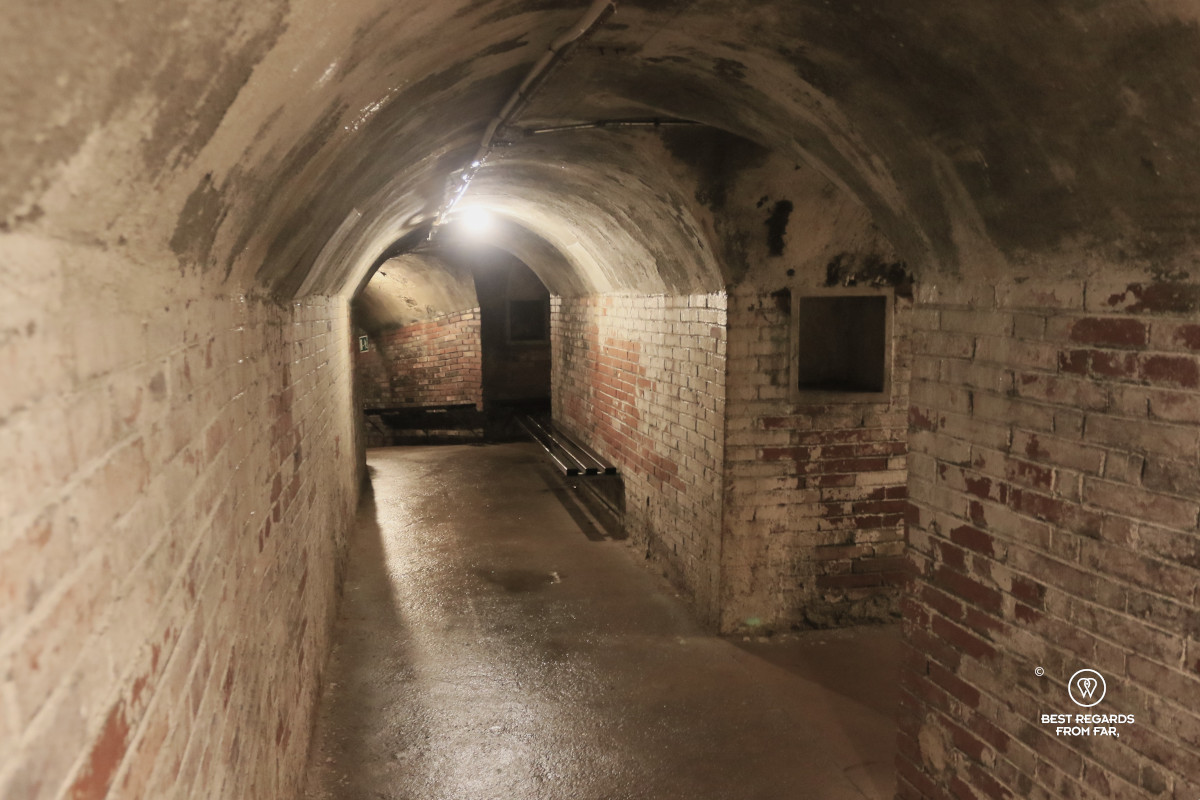
Because Spain had not participated in World War I, Barcelona had no air-raid sirens. At first, church bells alerted residents. The city later developed a broader network of sirens, radio warnings, and observation posts. With bombers approaching from the sea, residents sometimes had only minutes to reach cover.
The numbers vary. Franco’s dictatorship, which lasted until his death in 1975, suppressed evidence and obscured the historical record. Many sources agree that Barcelona endured about 400 alerts and 200 air raids. The emerging technique of carpet bombing, used by Japan in China just a few months earlier, was tested extensively over the Catalan capital. Some bombings lasted only 20 minutes and occurred three or four times a day, while the longest continued in successive waves for two and a half days. Most bombardments lasted one to two hours. The attacks killed an estimated 3,000 people and injured more than 7,000. Casualty figures are only approximate, and the true death toll is most likely significantly higher.
We have reached the central section of Refugi 307. There is a sickbay with a rudimentary ventilation system and a first-aid post. During the Civil War, the defense effort gradually became more organized. Civil engineer Ramón Perera (1907—1984), working with Catalonia’s Passive Defense Board, studied bomb damage and helped establish construction standards. While Gaudí is Catalonia’s most celebrated architect, Perera’s lesser-known legacy lies in the shelters that helped save thousands of lives. He led the technical effort to inspect and standardize Catalonia’s air-raid-shelter network, continually improving its design and construction.
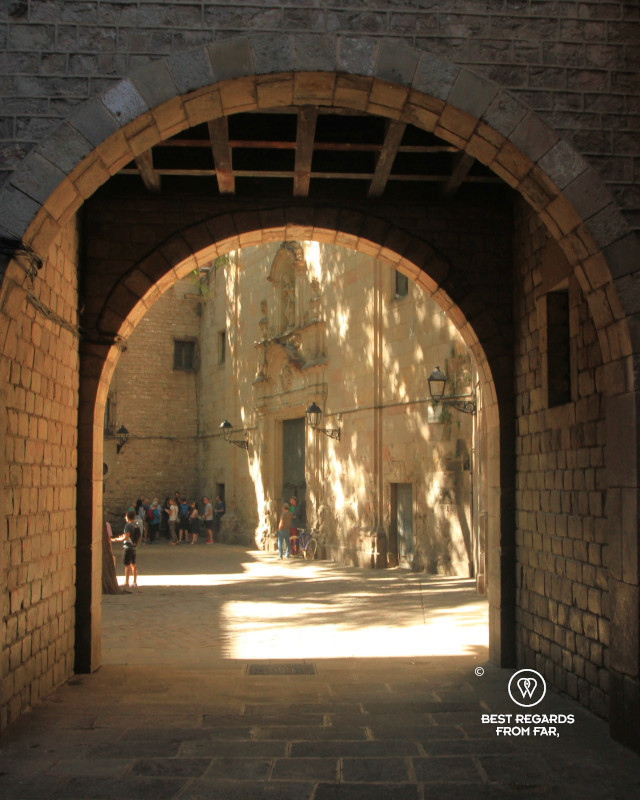
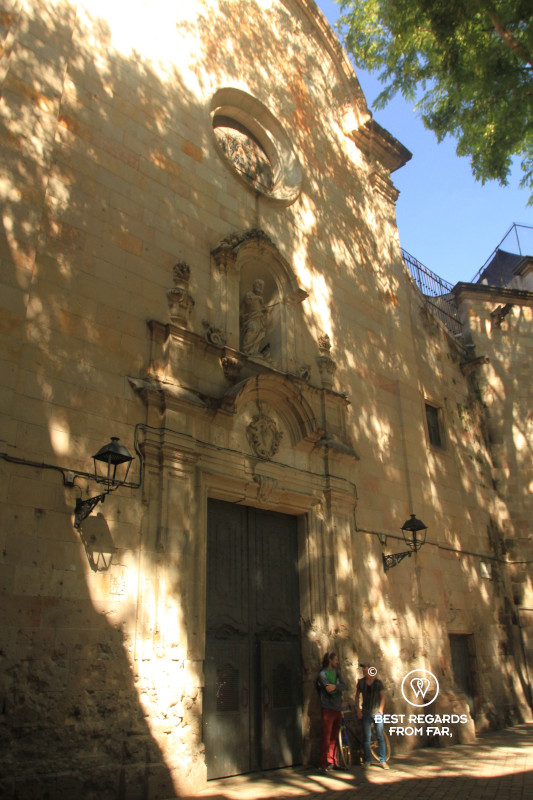
Walking through the galleries today, it is easy to concentrate on their ingenious construction. The harder task is imagining them full: bodies pressed along the walls, children trying to remain quiet, families wondering whether their homes would still exist when the doors reopened. These shelters saved thousands of lives, but the city above them remained deadly. On January 30, 1938, bombs struck Plaça de Sant Felip Neri, where a convent was being used to house children displaced by the war. A second attack followed while people were searching the ruins. 42 people died, most of them children. Today, the serene Baroque square still bears deep, irregular shrapnel scars across the church façade.
The Guns Above Barcelona [Turó de la Rovira, Bunkers del Carmel]
Meanwhile, active defenses took shape on the hills. A dual system protected Barcelona and its inhabitants: Passive Defense protected civilians while Active Defense was responsible for repelling attacks. Despite limited resources and experience, the combined effort produced one of the most effective anti-aircraft defense systems in Europe, one that the British used as a model during the Nazi bombings of the United Kingdom.
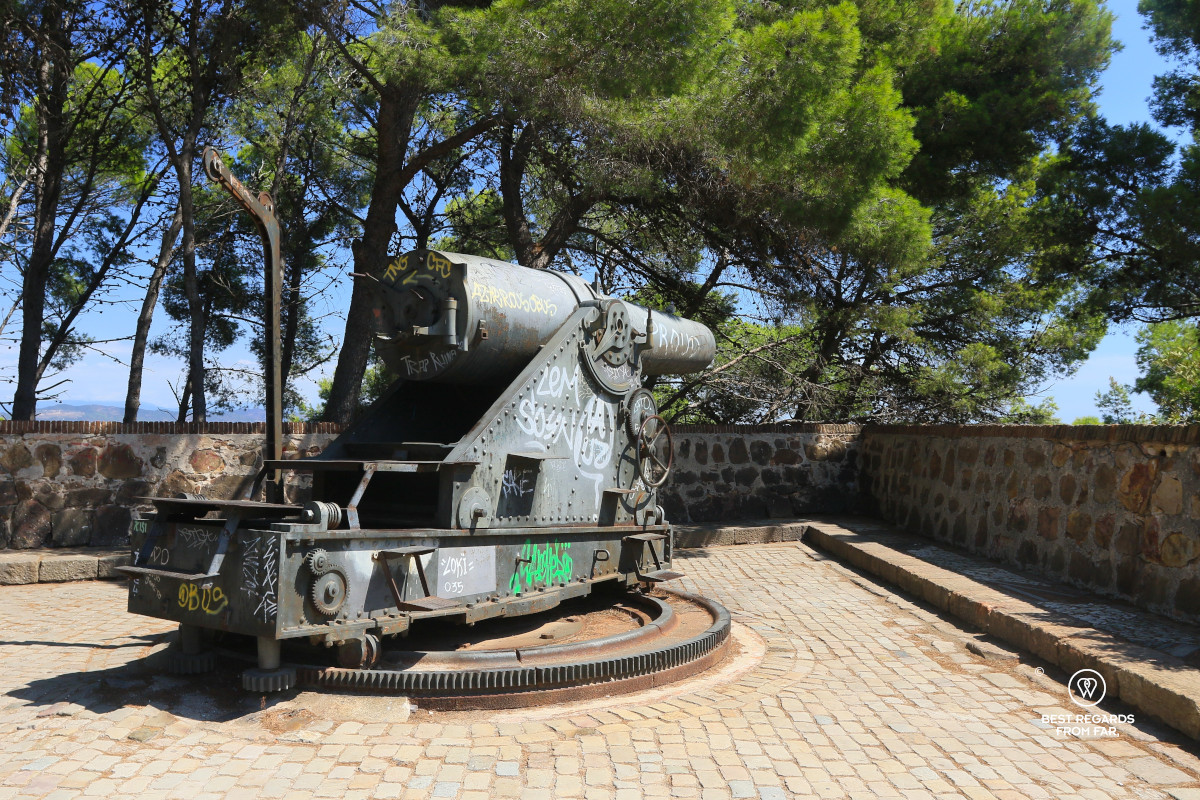
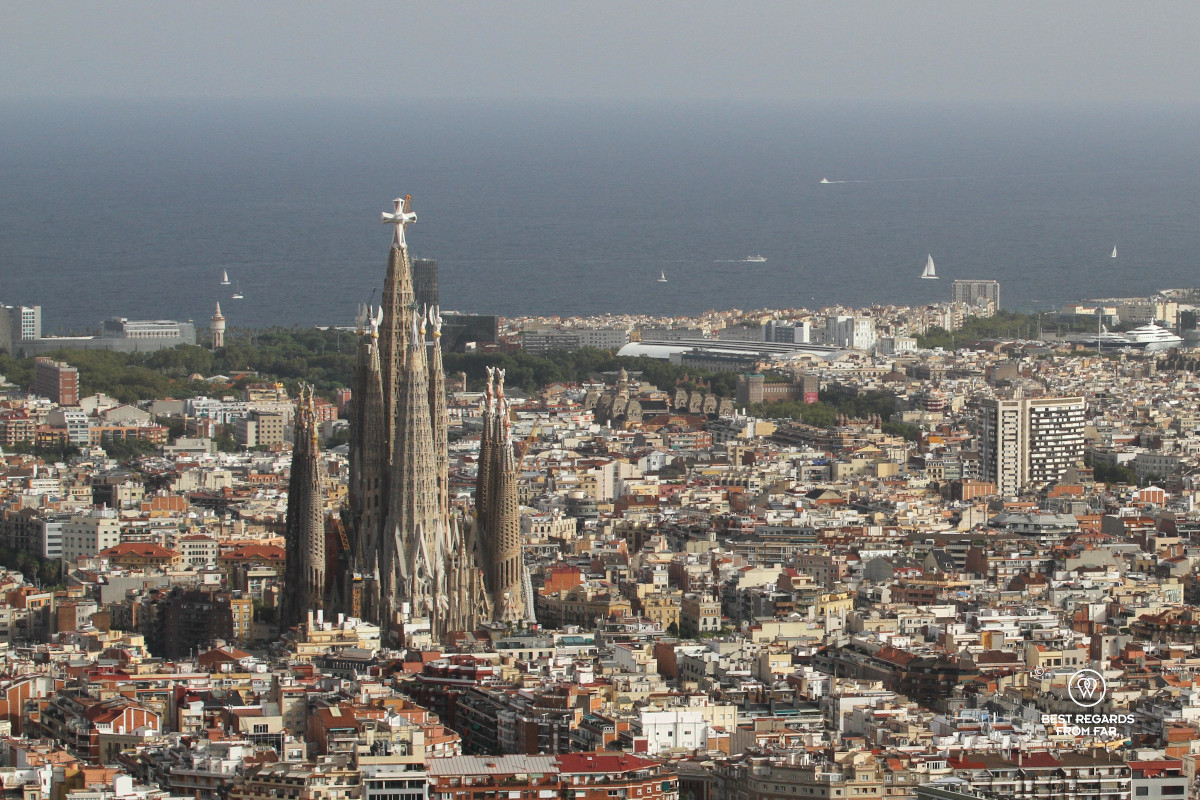
Today, from the viewpoint at Turó de la Rovira, we look toward the Sagrada Família as its Tower of Jesus rises above the city. Around us, a young crowd waits for sunset, while street vendors turn a decent profit selling cold beers.
In 1937, during the Civil War, an anti-aircraft battery was installed here, at the site popularly known as the Bunkers del Carmel, in an attempt to protect Barcelona from fascist air raids.
From this position, 262 meters (860 feet) above the city, Republican forces could monitor the coastline and incoming aircraft. The installation became operational in March 1938 with four British-made 105-millimeter Vickers guns, along with a command post, ammunition stores, and crew quarters. Together with batteries on Montjuïc and in Poblenou, it formed part of a defensive triangle designed to disrupt enemy air raids.
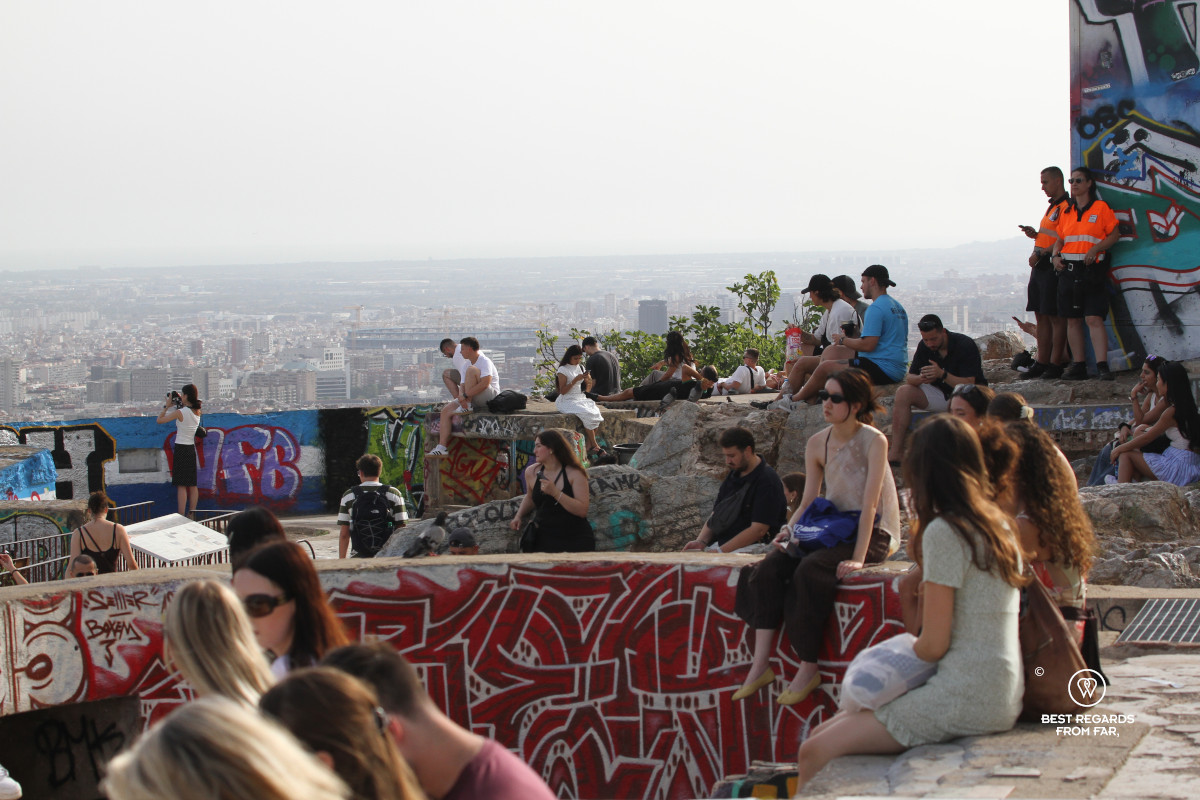
After Franco’s victory, families built makeshift homes around the abandoned gun emplacements as postwar poverty and migration created an acute housing shortage. The settlement became known as Els Canons, eventually growing to about 110 dwellings housing some 600 people.
Digging into a Censored Past
After the Spanish Civil War, many shelters were closed, filled in, demolished, or simply forgotten. Under Franco’s dictatorship, public discussion of Republican resistance and Francoist violence was suppressed. Refugi 307 survived in part because its tunnels also served as storage and improvised housing. A fireplace built by a family who lived there for a decade in the 1960s remains inside.
In preparation for the 1992 Olympic Games, the Spanish authorities considered destroying Refugi 307 to avoid reopening old wounds. Neighborhood residents fought the decision, campaigning to preserve it as a tribute to those who built the shelter and took refuge within it. Thanks to their efforts, the Poble-sec community not only saved the shelter but also helped open it to the public, honoring the memory of Barcelona residents who stood up against fascism. With far-right parties now on the rise in Europe, the responsibility to remember seems more essential than ever.
***
Barcelona’s surviving active and passive defenses reveal how ordinary people confronted a new and terrifying form of warfare, how they organized themselves to survive, and how this divisive past remains largely unknown to visitors today. Franco’s propaganda proved highly effective, promoting his conservative values while silencing opposition. To this day, this history remains obscured.
Barcelona’s Civil War history is as muffled as the helicopter’s thrum inside Refugi 307. There is no single grand memorial to it. It survives in underground galleries, scars on a church façade, and the remains of former gun platforms at today’s crowded viewpoints. In a city strained by overtourism, this history remains invisible to most.
Travel tips:
- Make sure to book your tour to visit Refugi 307.
- If you go to Bunkers del Carmel which is great for sunset, make sure to visit the small Turó de la Rovira museum.
- Check out this interactive map for the specific details to help you plan your trip and more articles and photos (zoom out) about the area!
For more in Barcelona, click on these images: