Text & Photographs: Claire Lessiau & Marcella van Alphen
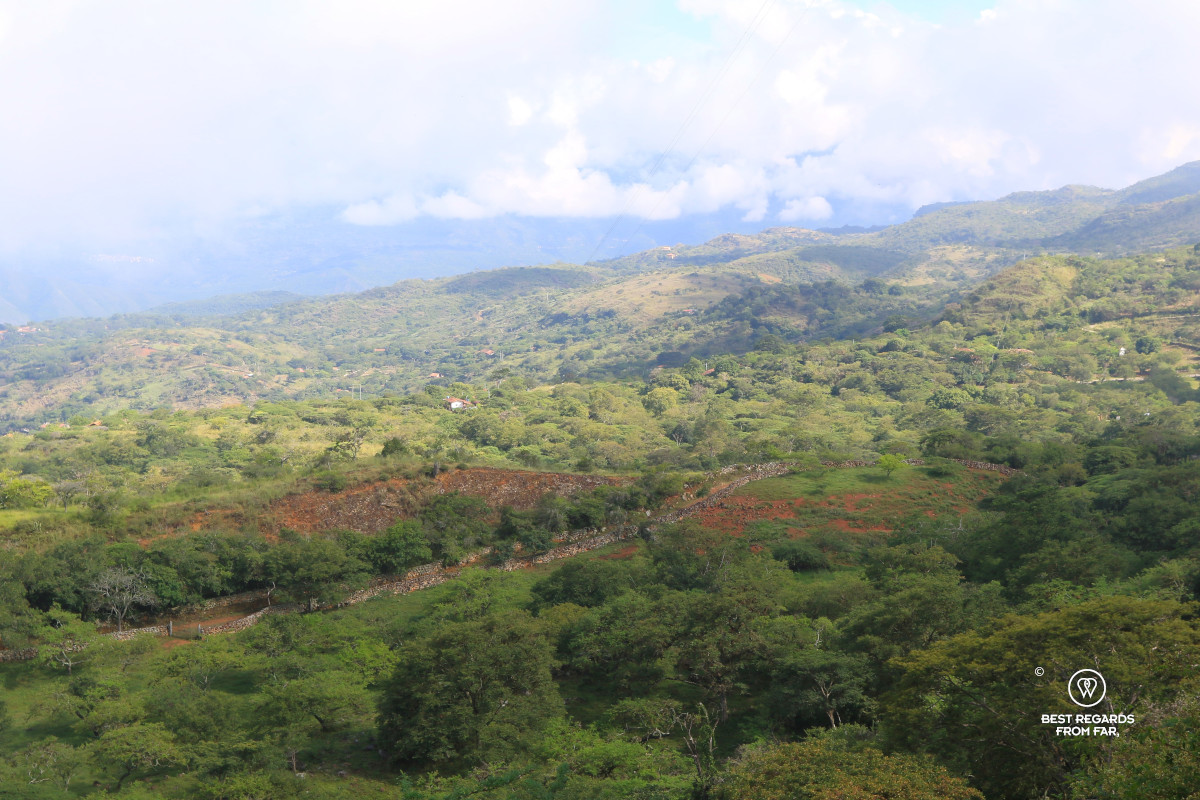
Driving through Colombia’s Santander department is an exercise in attention. The roads demand focus. They are narrow, deformed, and the asphalt reshaped by the land itself as Colombia sits at the triple interaction zone of three major tectonic plates. The scenery distracts. Every bend reveals another version of the Eastern Andes: grassy slopes where cows roam free and are strangely towered by palm trees, sudden valleys, dense tropical forests, and lush vegetation with all sorts of bright flowers.
The altimeter consistently points at more than 2,000 meters (6,562ft), and the mix of vegetation, cattle and palm trees at this altitude looks very awkward to travelers from temperate countries. Coffee and cacao plantations dot the landscape between peaceful villages lined with houses with well-maintained blooming gardens. Cyclists climb patiently in tight formation. Mules, laden with sugar cane, sometimes oddly tethered to scooters, occupy parts of the road. Cowboys guide cattle from their horse’s backs.
Pin it for later!
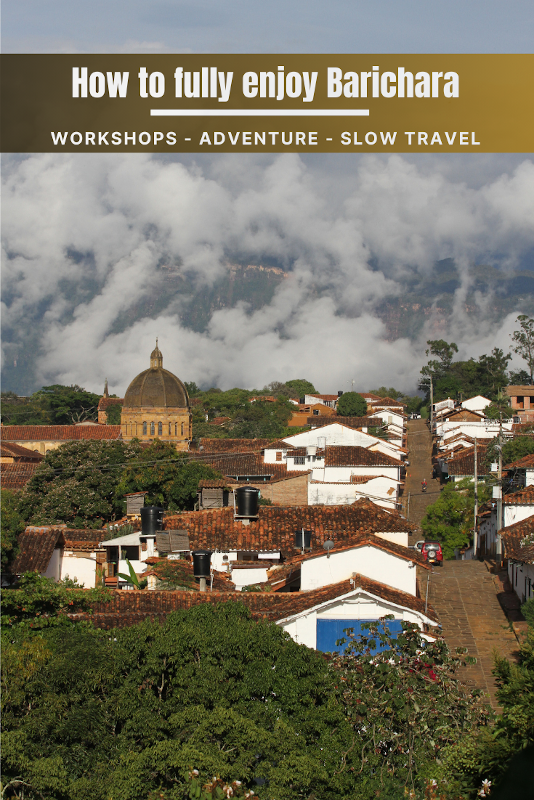
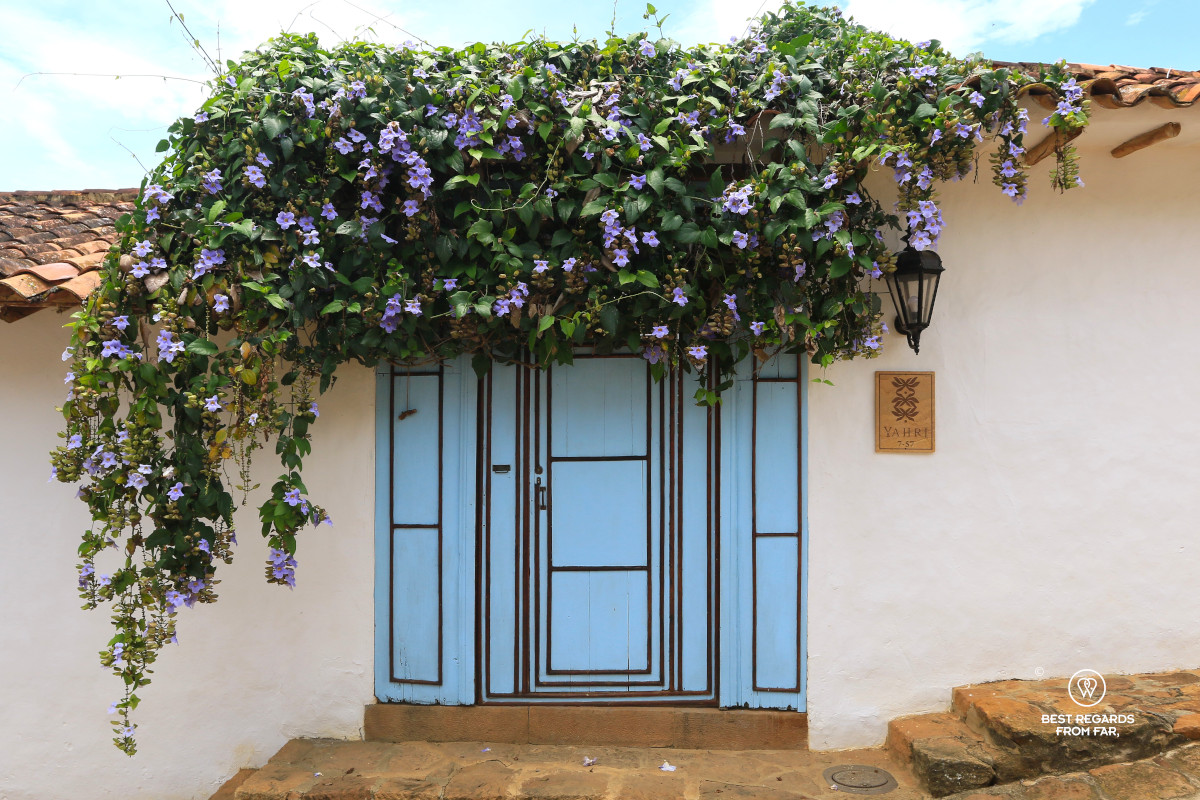
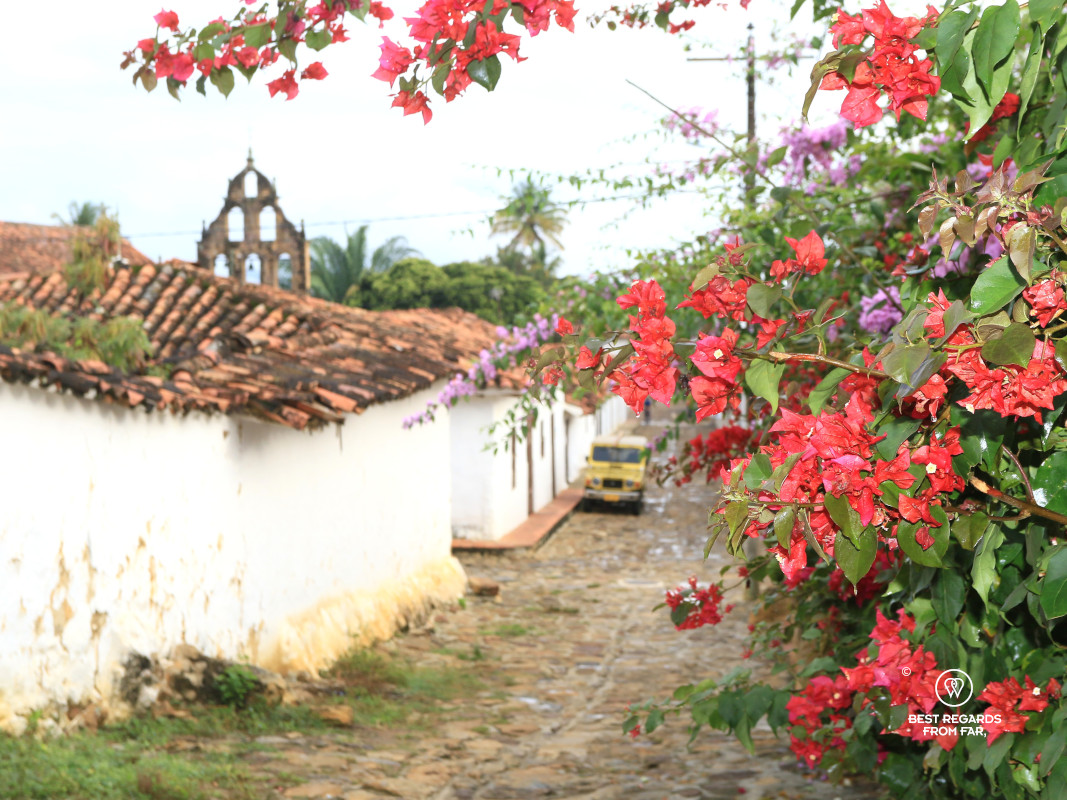
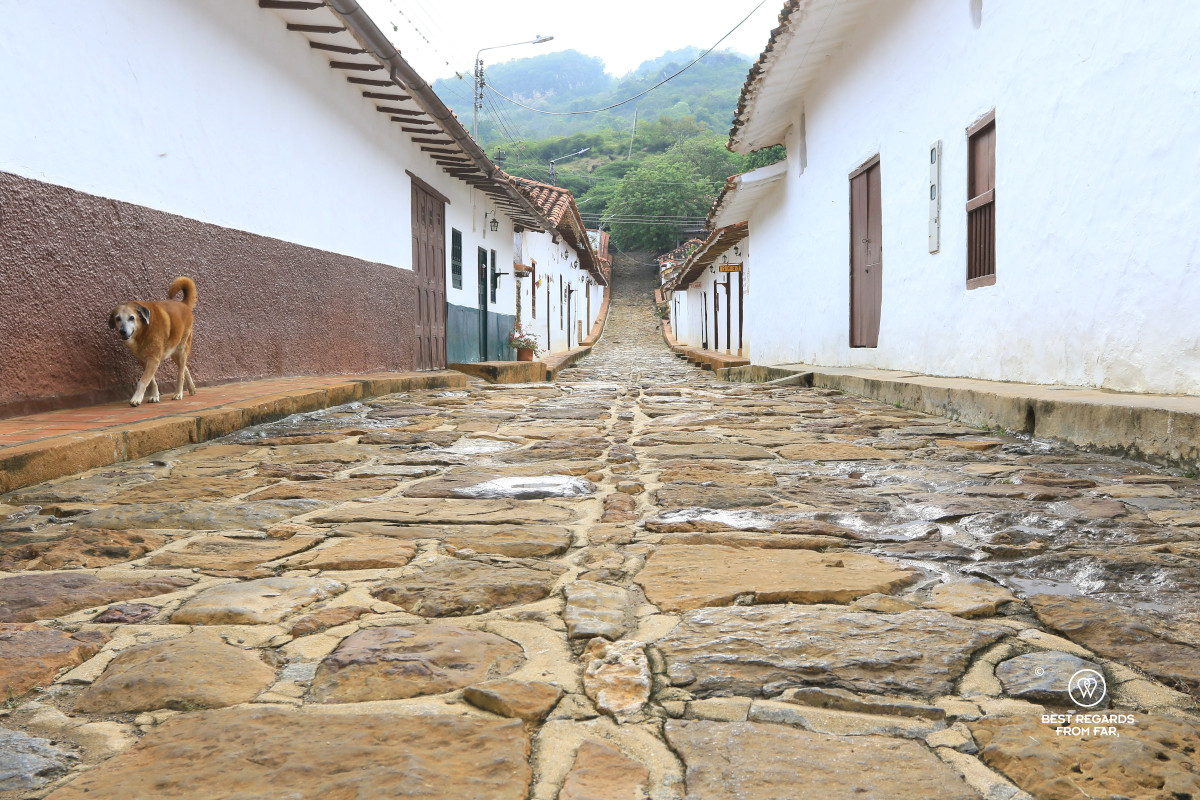
The road from Villa de Leyva gets curvier as we make progress andwinds down seriously to cross the Rio Fonce that waters San Gil, the outdoor capital of Colombia, before gaining slightly more altitude to reach the 1,340 meters (4,396ft) of the village of Barichara, our destination. On the height of Barichara, along a cobblestoned street that puts the suspensions of our car to the test, the pastel blue door of the whitewashed Casa Yahri is framed by a coordinated blooming clockvine.
Casa Yahri: “A Place of Rest” Built According to Ancient Methods
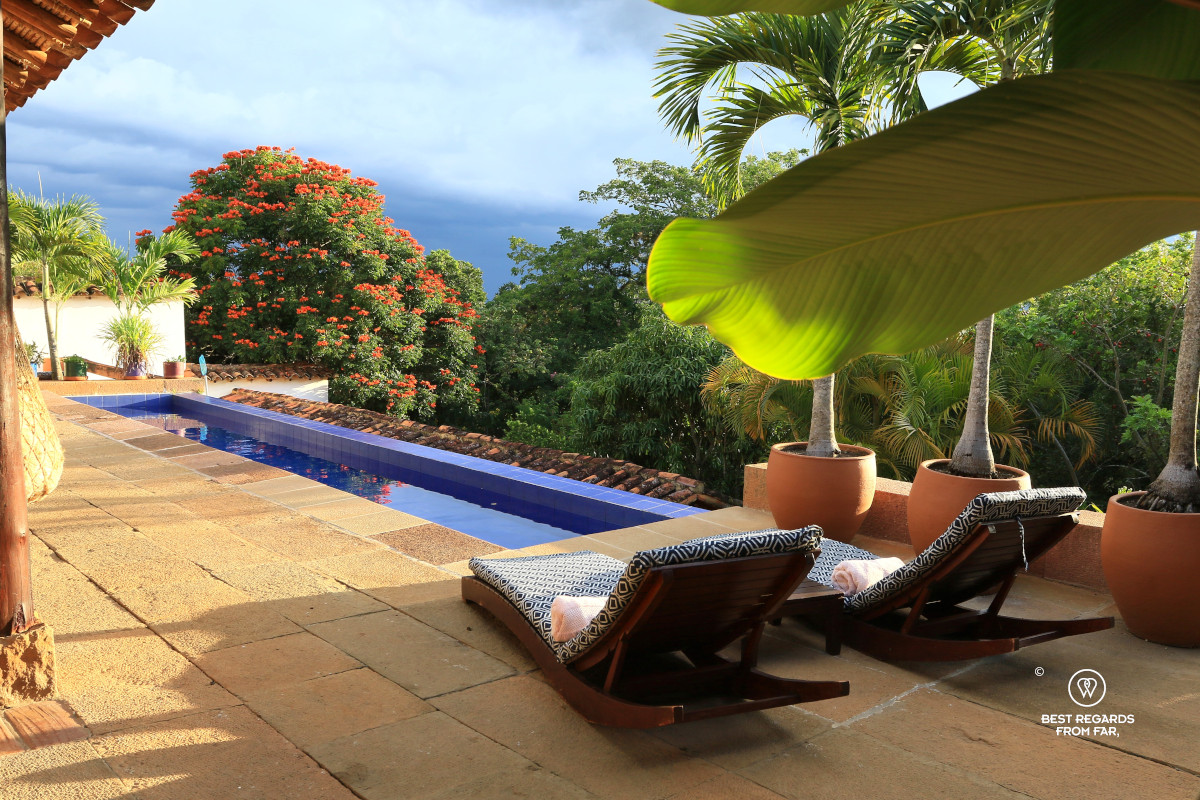
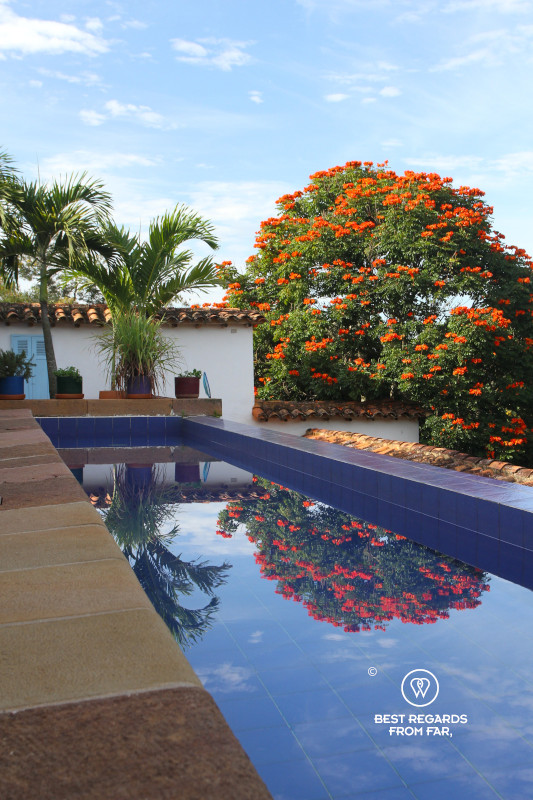
In the Chibcha language of the Guane, the ancient culture that flourished in the region until the Spanish Conquistadors took over the land, barichara means “place of rest.” Casa Yahri takes that meaning very seriously. Set on the higher edge of the village, the house overlooks a forested slope that falls away toward the distant Andean Yariguíes Mountains. From almost every angle of the exclusive four standalone suites, the view opens on the lush vegetation filled with birdlife and iguanas. The architecture follows the land in harmony, unfolding across different levels, each offering a distinct perspective on the stunning scenery.
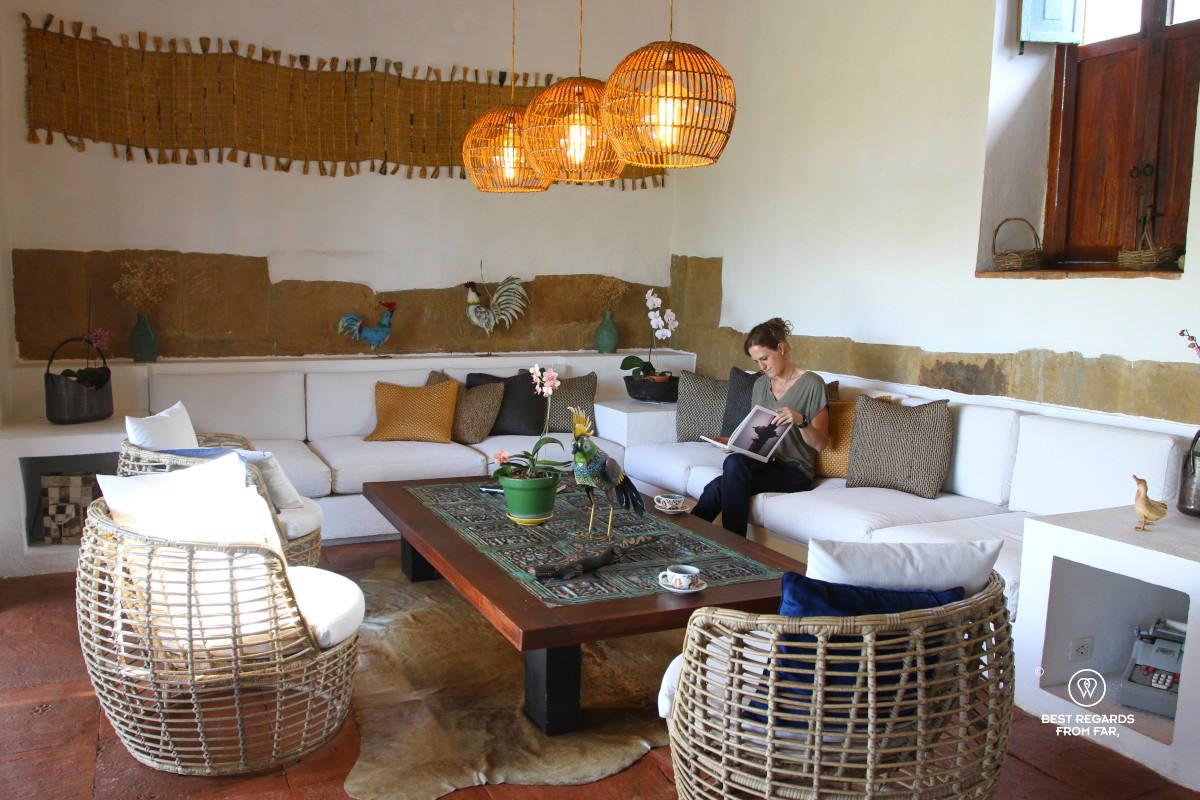
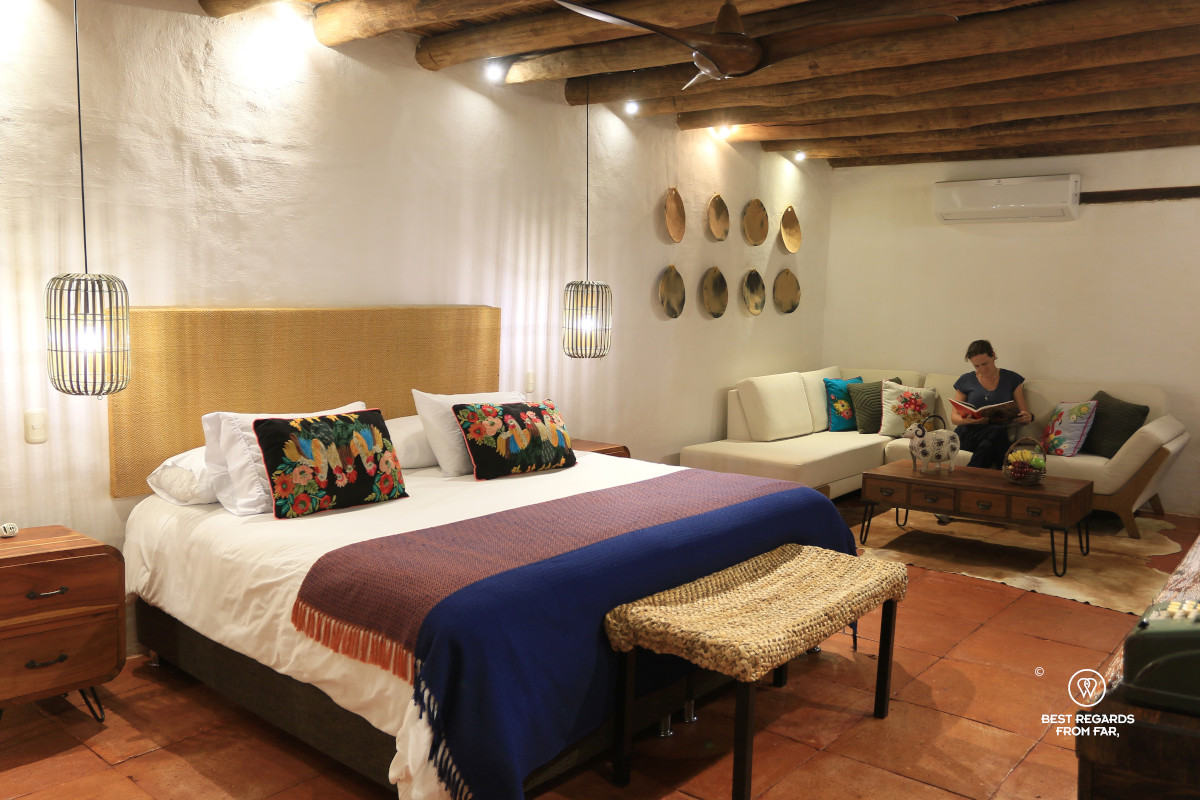
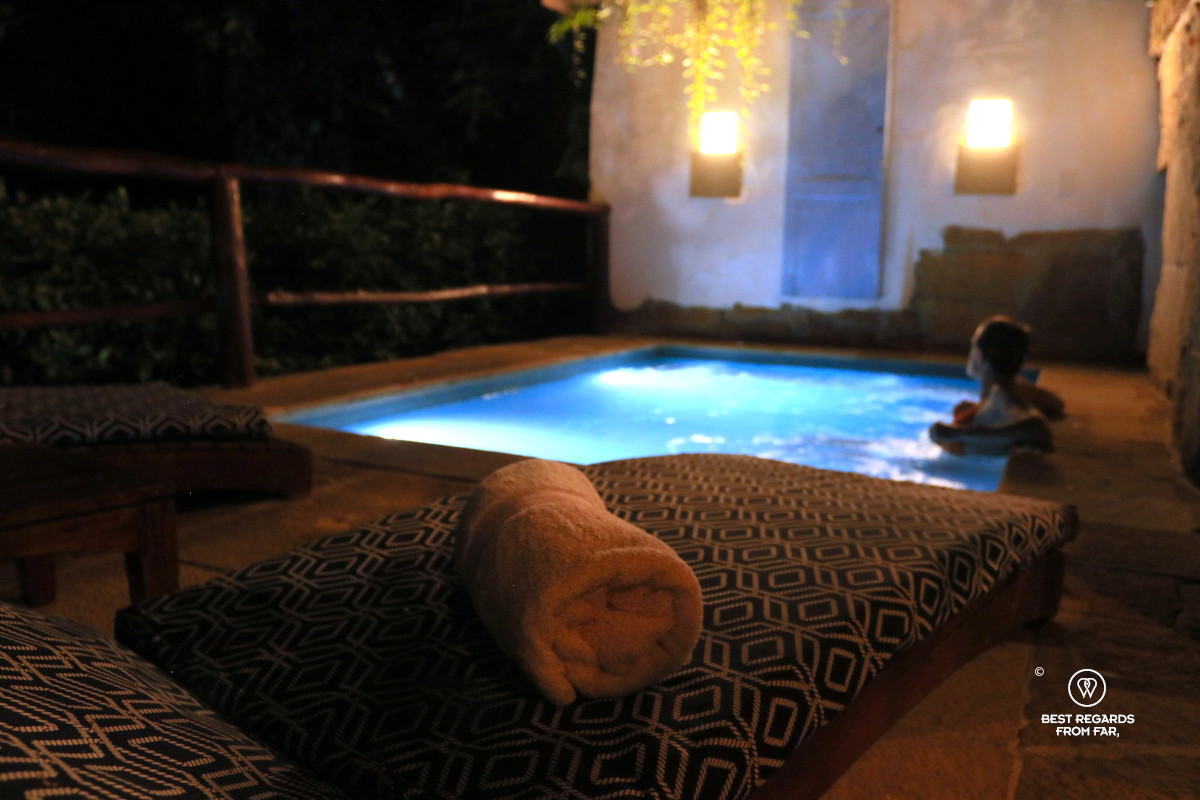
Casa Yahri is not an ancient construction, but one of the best examples of traditional local building techniques: tapia pisada (rammed earth) and bahareque, an indigenous construction method where earth is woven between bamboo and wooden frames. These techniques are not just nostalgia; they are practical, resilient, and remarkably well-suited to the climate and seismic activity of the region.
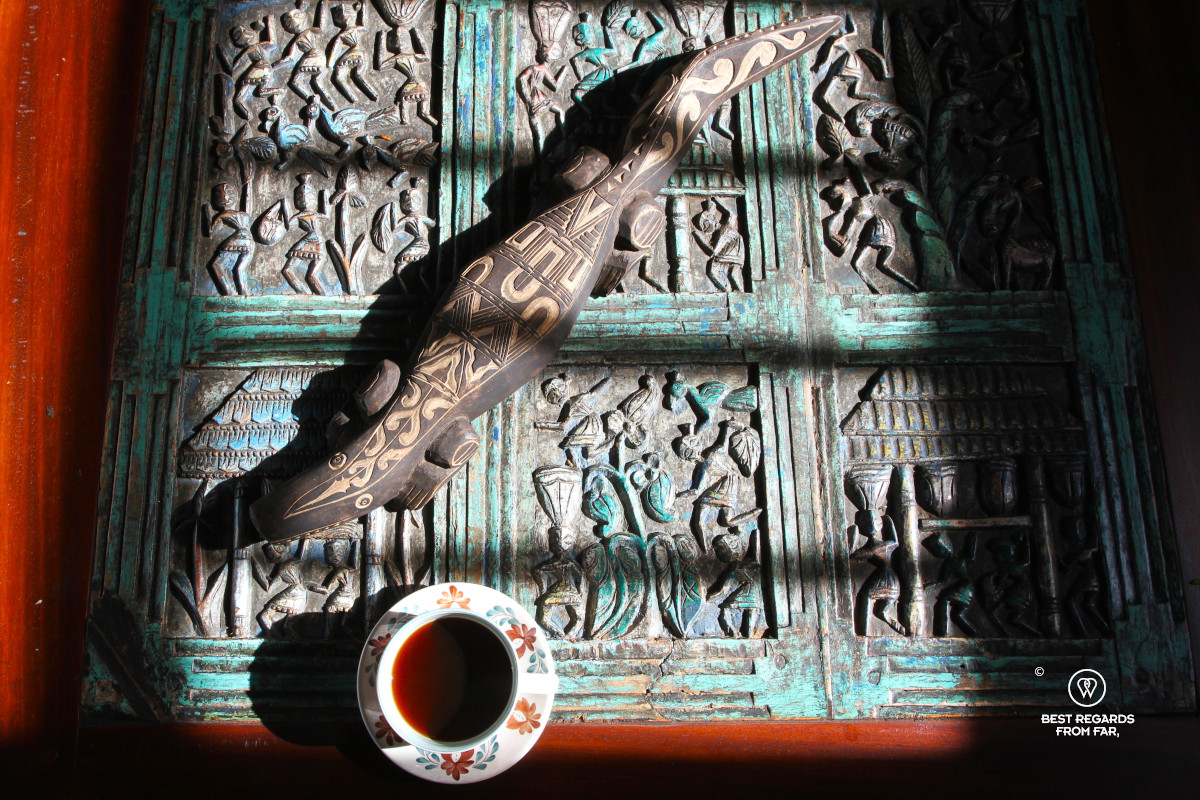
As we make ourselves comfortable and unpack our suitcases in our Chicamocha Suite–named after the raging river and Colombia’s most majestic canyon best explored by raft—while the private outdoor Jacuzzi is warming up, the sunset light casts a slow moving pattern across the thick earth walls decorated with arts and crafts sourced from local artists and artisans.
***
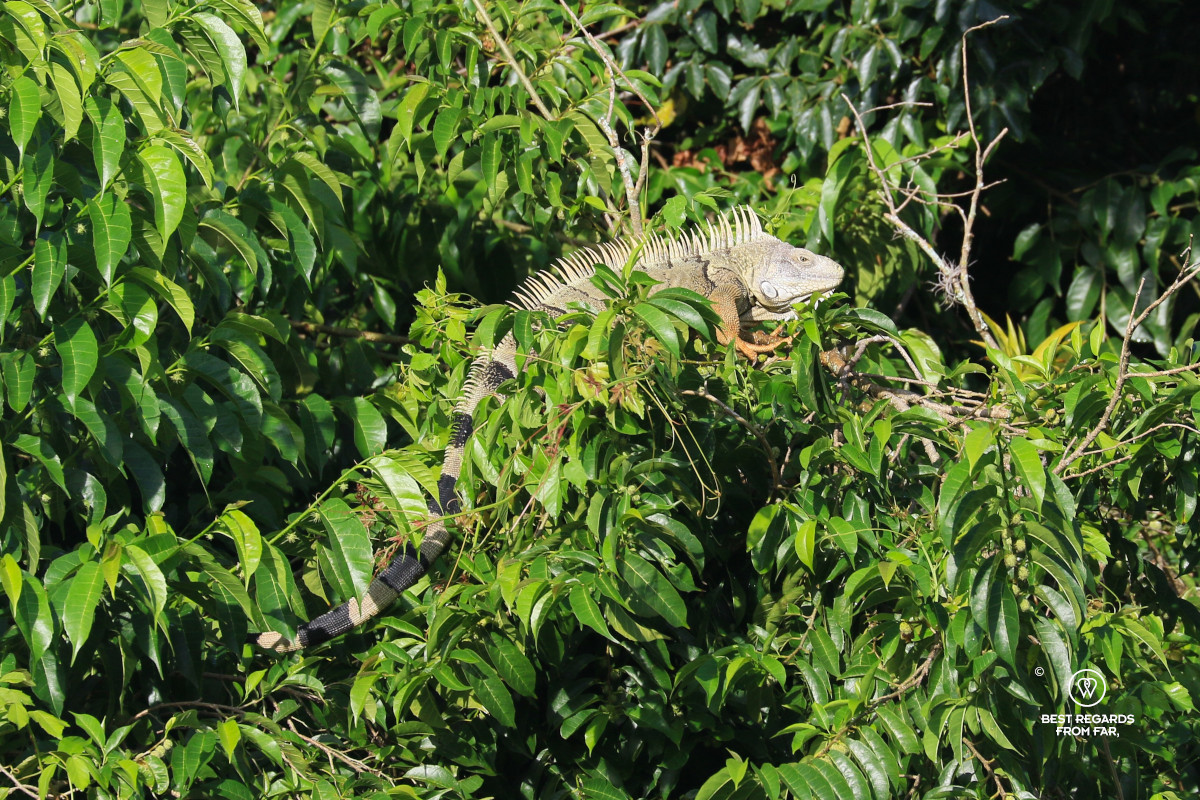
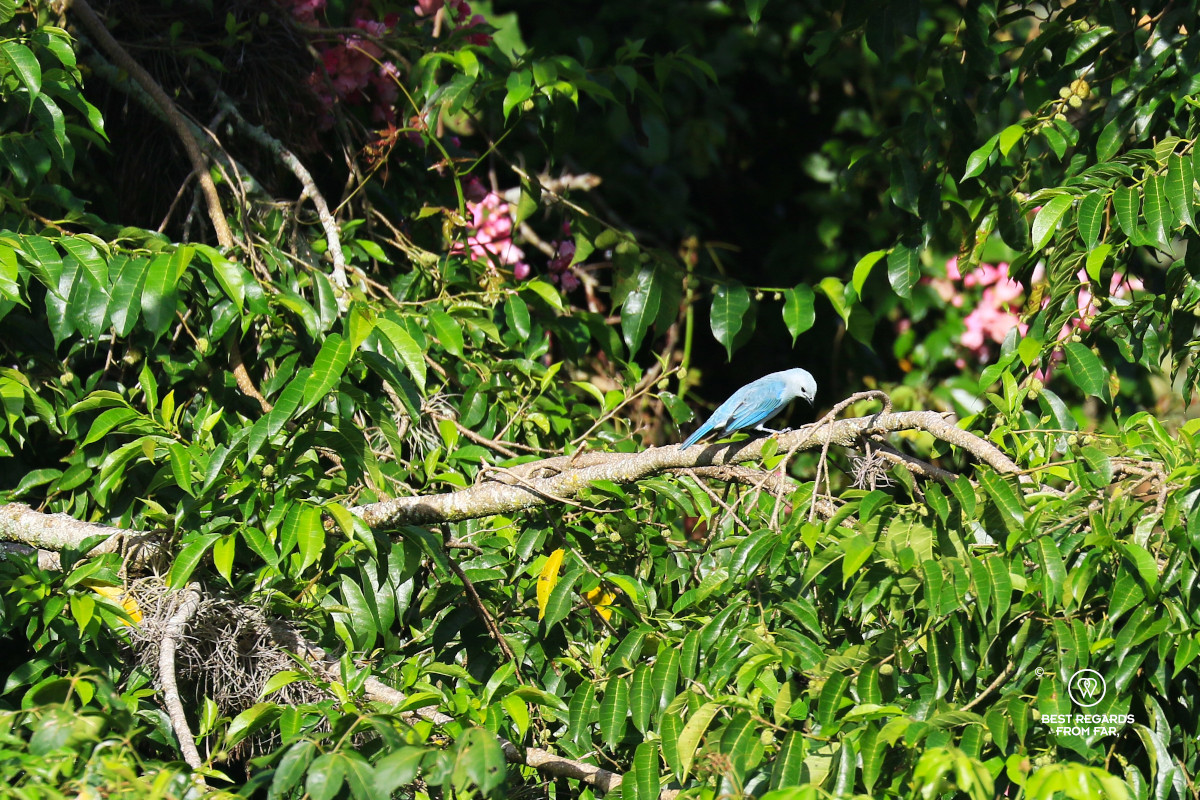
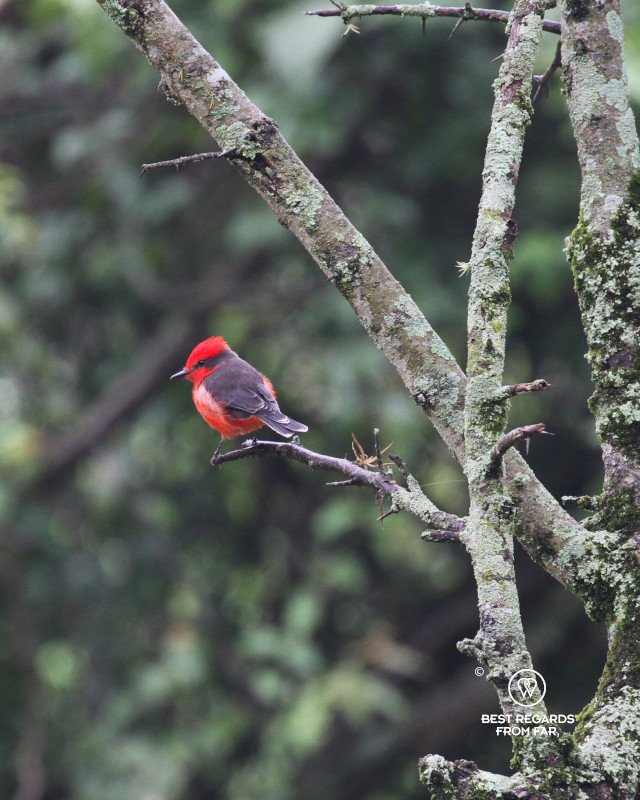
We wake with the soft, angled sunlight of the Andes filtering through the wooden screens of our suite. Birds announce the morning, and the sounds gets amplified when I open the shutters to our terrace to have a better look at them. When I step outside, a Colombian coffee in my hand, the canopy seems very much alive with colorful exotic birds and large iguanas clinging onto the highest branches to catch the first rays of sun to warm up their cold-blooded bodies. Below us, a coati moves slowly through the leaves, seemingly tired after a night of foraging and ready for bed.
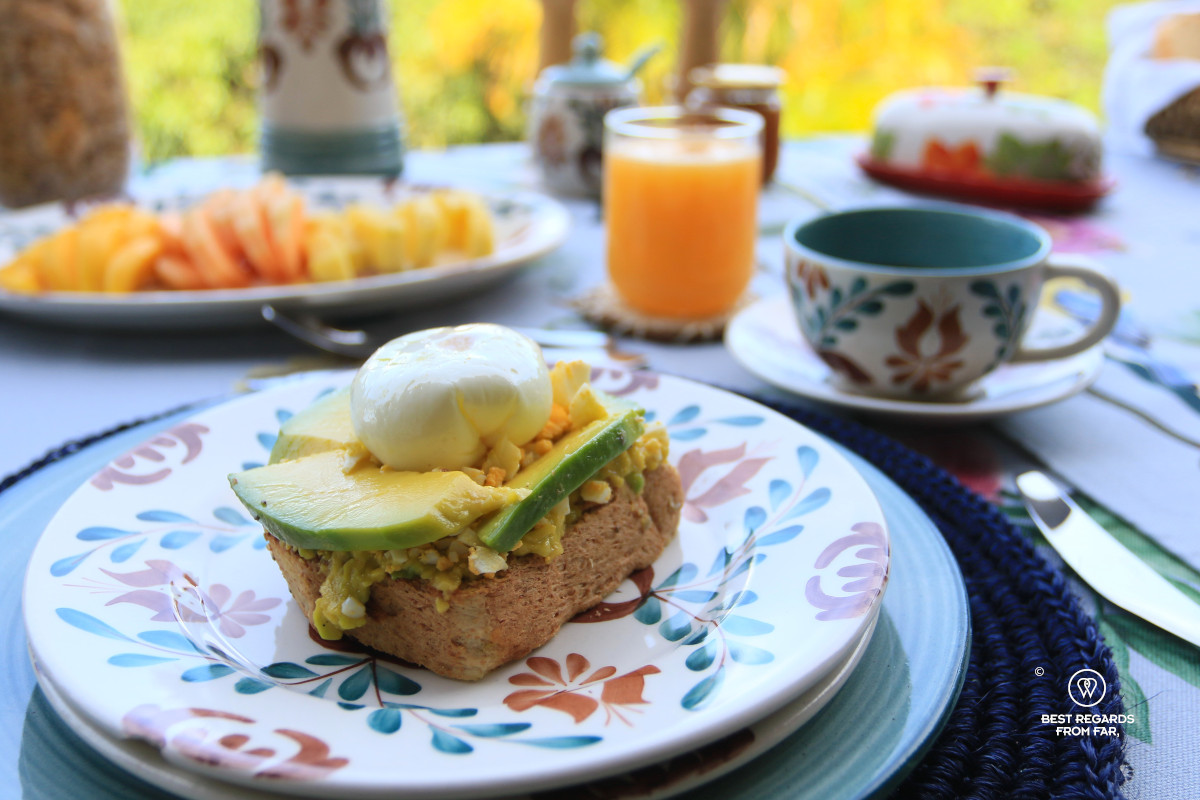
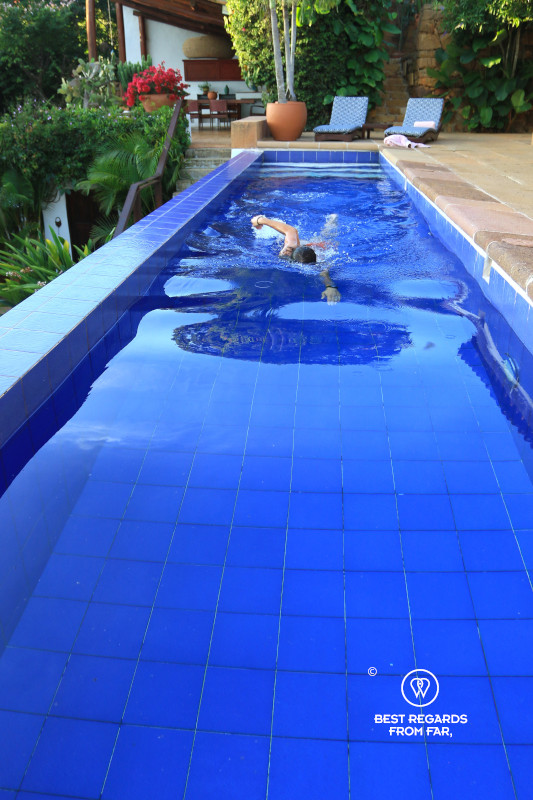
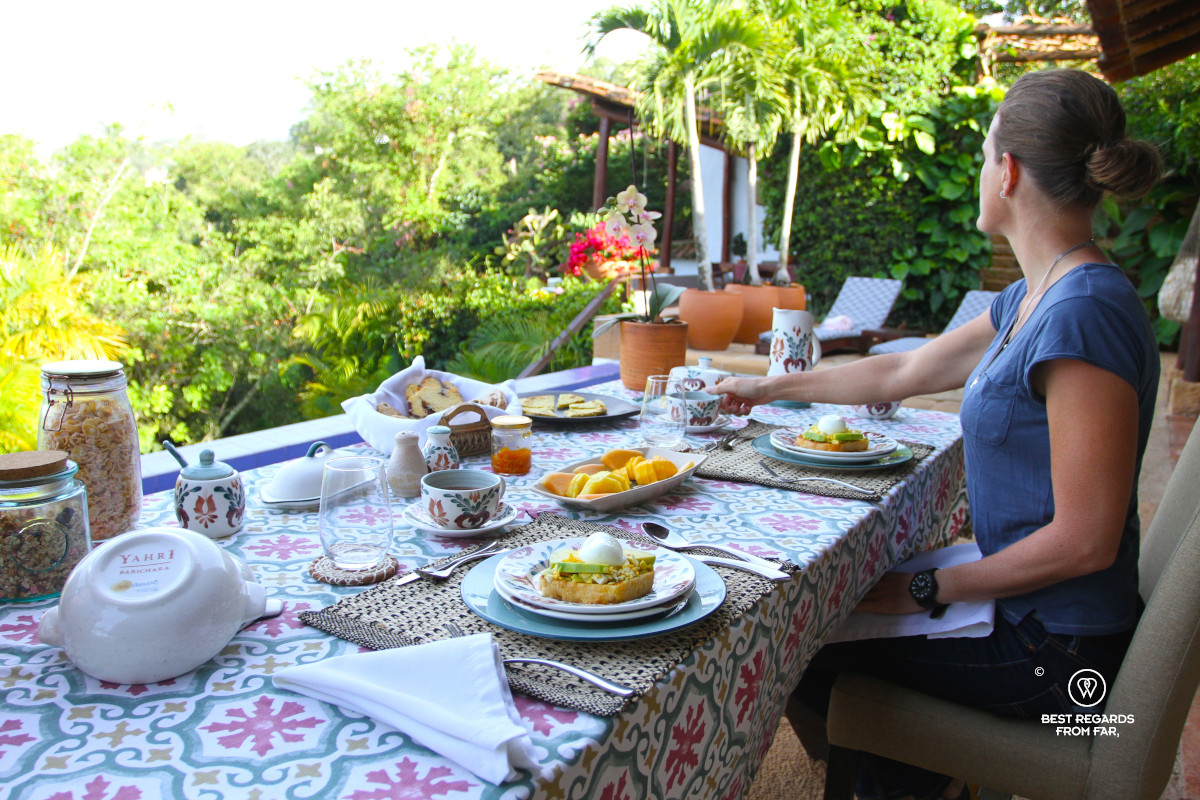
One level up, three women have been busy in the stylish open professional kitchen, and an inviting breakfast table overlooks the canopy and the swimming pool. Fresh juices, flavorful organic coffee and thick hot chocolate from Colombia’s coffee region are arranged next to a bread basket with homemade treats such as still warm corn-based Santander arepas, and a delectable chocolate loaf. Avocado on toast with eggs, pancakes, and other delicious breakfast fares are brought to order while we discuss our plans to explore Barichara with our personal concierge.
***
Founded in 1705, Barichara has earned the title of Colombia’s most beautiful village. The description is accurate, but limited as there is more depth behind its photogenic colonial streets. Barichara’s soul resides not only in its architecture, but in its people and traditions that travelers can approach through interesting workshops.
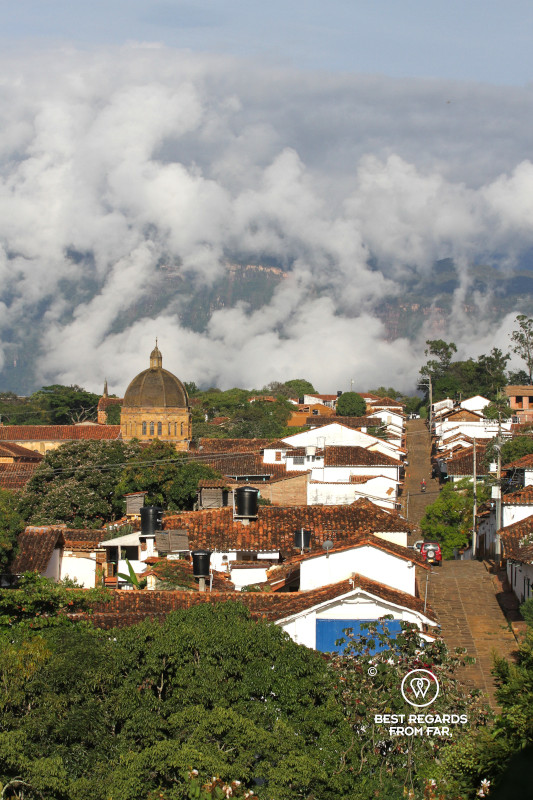
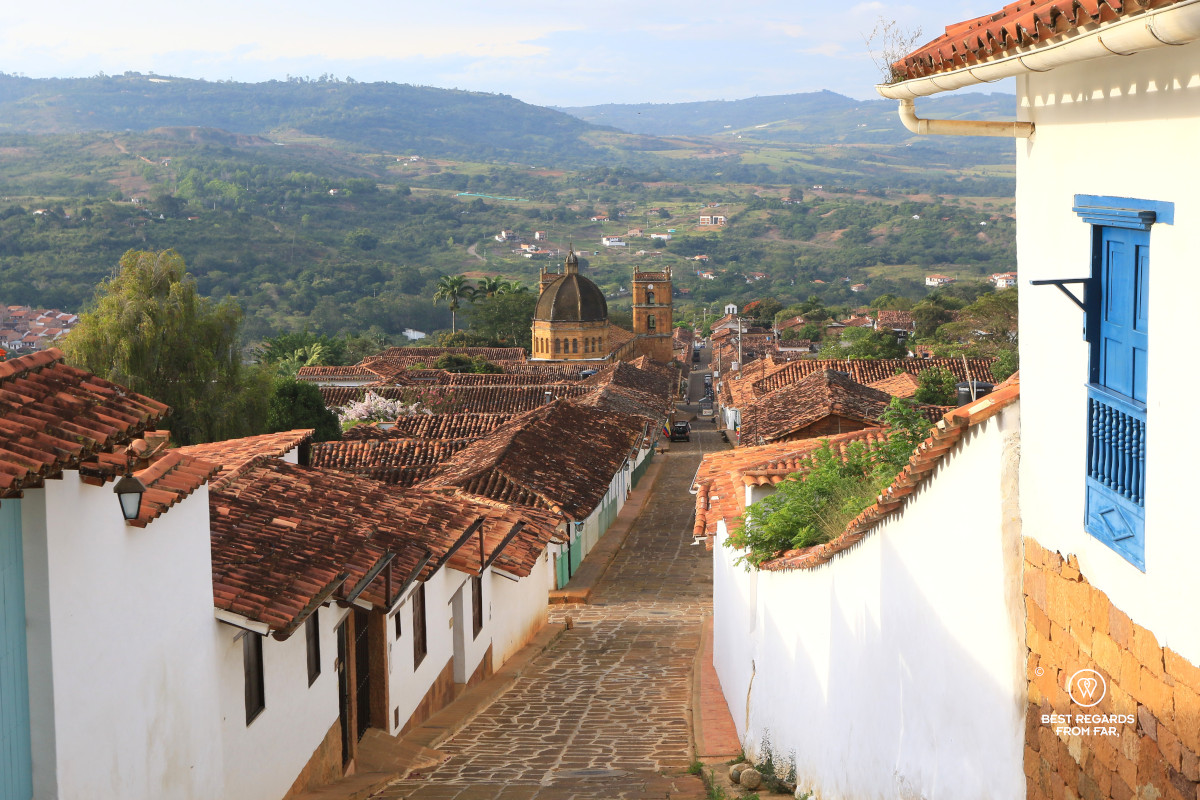
Further away from Bogota than Villa de Leyva–also a historical town and its contender for cuteness that gets flooded with visitors during weekends—Barichara and its surrounding are home to about 12,000 inhabitants and has kept its authenticity. Foreigners and the ones who settled from the Colombian capital have preserved the local style of whitewashed houses, uneven terracotta-tiled roofs, and brightly painted wooden doors. It only takes pushing some of these doors to discover some of the traditional crafts…
Sustainable, Beautiful & Traditional Constructions of Barichara Explained [Earth Workshop]
A civil engineer, Santiago Rivero’s formal education focused on modern building techniques. It is the interest of visiting researchers from Europe in rammed earth constructions that prompted him to turn to the traditional tapia pisada.
Barichara where this knowledge is still alive is one of the best places in Colombia to not only demonstrate but also feel the sustainable, earthquake-resistant, climate-comfortable houses. Santiago shows us how layers of moist soil and sand are compressed by hand layer after layer into a wooden formwork to create a wall. This is a contrast with many other places in South America (and elsewhere) where adobe bricks are used: a mix of a wetter clay-rich mixture of earth, water, and straw that are then sun-dried. Also sustainable, economic, and providing a good thermal insulation, it is mostly the climate that dictates the technique to be used as Santiago explains.
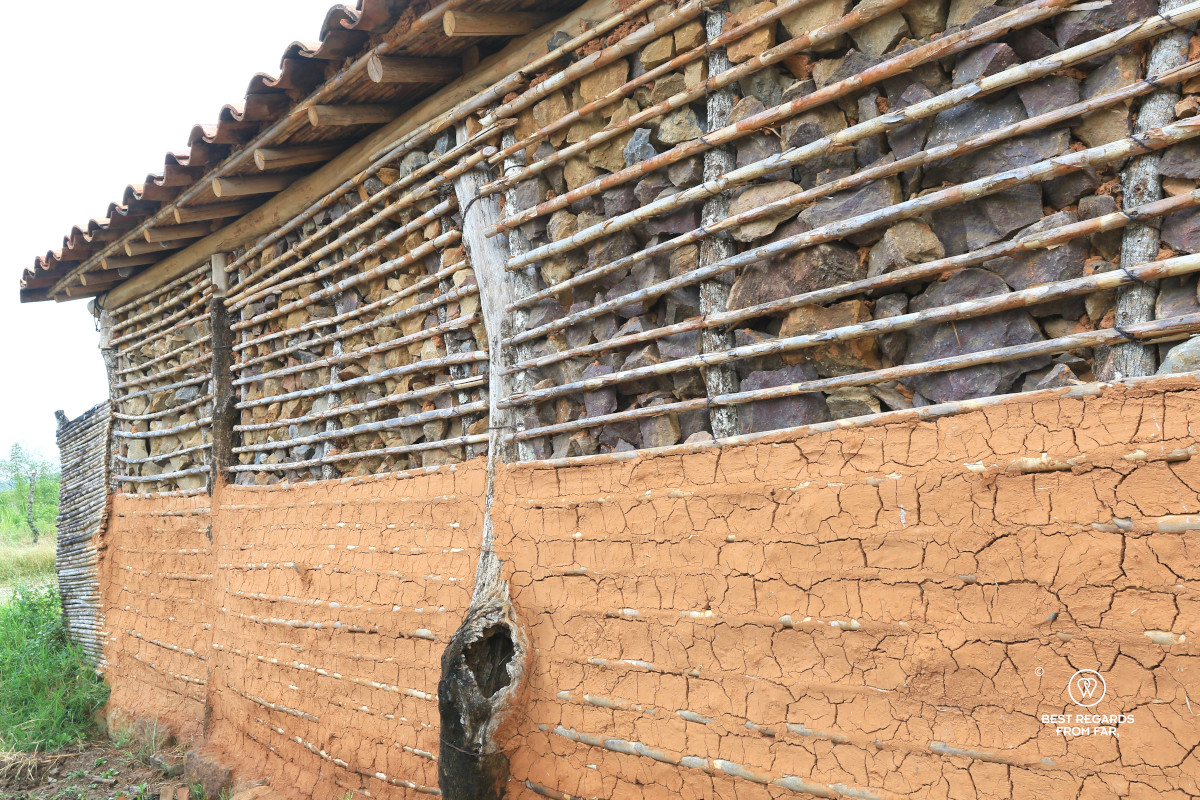
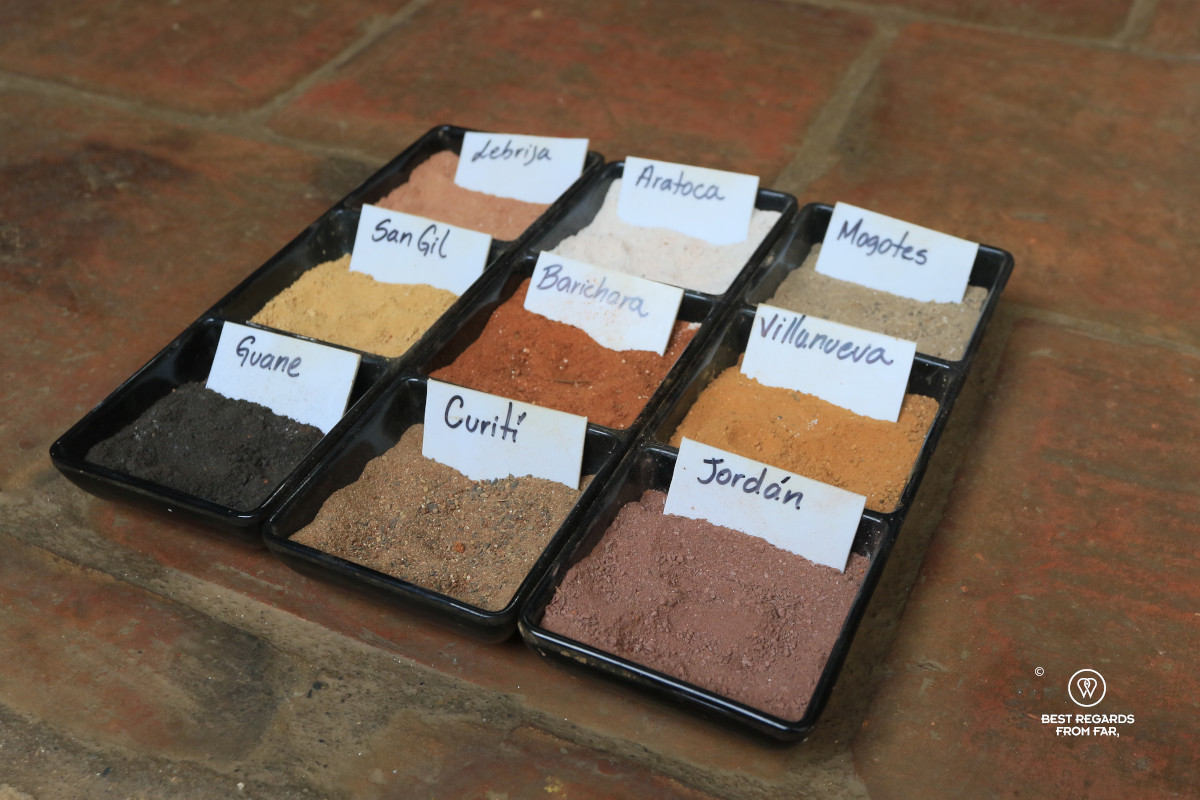
During his “Earth Workshop” at Casa taller de la Tierra, visitors can apply the technique in a small-scale version, or also use the different colors of sand to express their artistic side in painting.
From the guadua bamboo traditional constructions in the coffee region of Colombia to the various earthen ancient techniques we are learning about in Barichara, it is reassuring to see the dedication of passionate entrepreneurs such as Santiago in raising the awareness about sustainable building methods. Beyond solving the waste issue created by concrete structures, the thermal comfort also limits or eliminates the need for power-hungry A/C units preserving the environment while embellishing it.
From Fique Plant to High-End Fabrics [Weaving Workshop]
At Sua-Ty Textil, just a few blocks away from Casa Yahri, Marcela Carrasco has been working to preserve local weaving traditions for over three decades. A teacher, she arrived in Barichara 32 years ago, fell in love with the town, and never left.
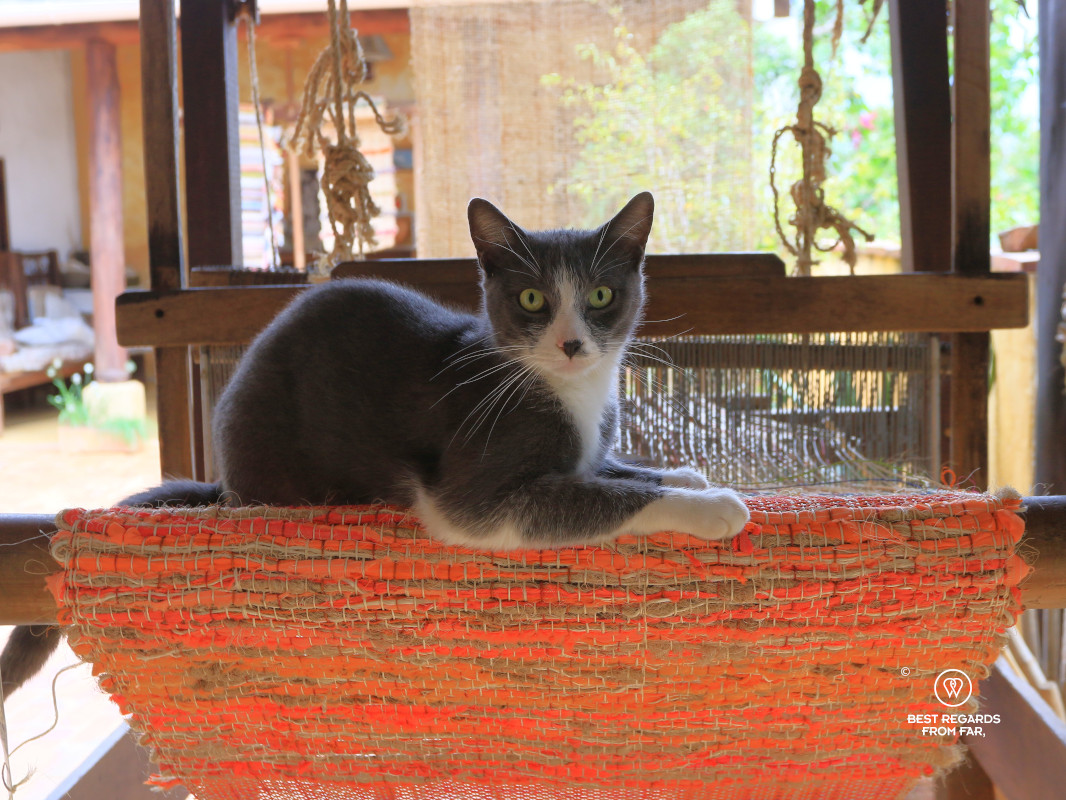
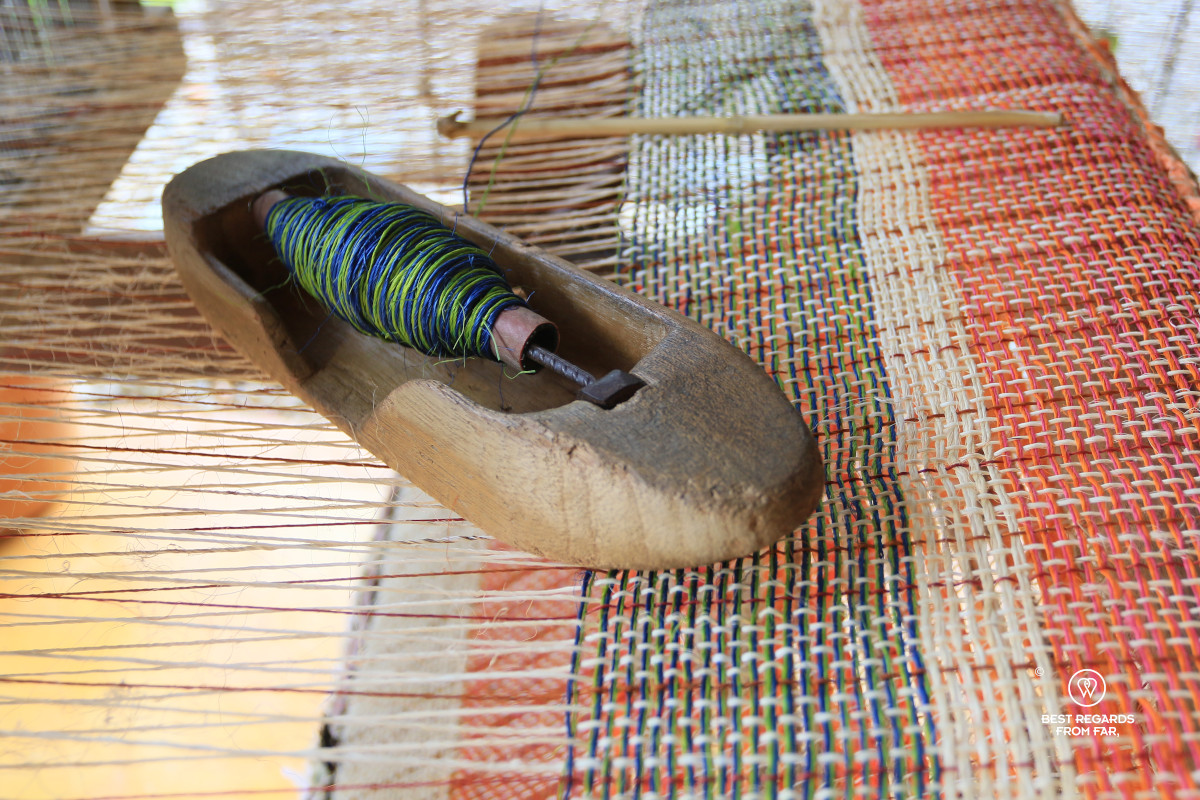
Marcela has extensively researched the local traditional weaving techniques which have been passed on for generations but are now disappearing quickly as many are seduced by fast fashion. The Guane people were known for weaving with natural fibers such as fique and locally grown cotton. “The whole weaving process was an activity that involved the entire family,” Marcela explains. Traditionally, spinning was done by women, weaving by men, and the activities structured daily life that was built around it.
Marcela not only honors the ancient Guane roots also using natural dyes, but innovates as well with different materials. She experiments with recycled plastics and even newspaper, creating textiles that feel both ancestral and contemporary. Each piece is like a work of art, and each workshop offers visitors a glimpse into these complex methods we take for granted.
From Plant to Page [Paper-Making Workshop]
On one of Barichara’s street corners, we find the Foundation San Lorenzo de Barichara where about a dozen women produce high-quality handmade paper using natural fibers such as fique and other plants (pineapple, banana, mulberry tree, sour fig…) each tainting the paper in a different hue.
The process is meticulous: fibers are soaked in water and lime, then cooked, washed, broken down into pulp by pounding them with a wooden stick, scooped up with a wooden sieve, gently put on a piece of cotton, pressed, dried, and pressed again — sometimes under 30 tons of pressure.
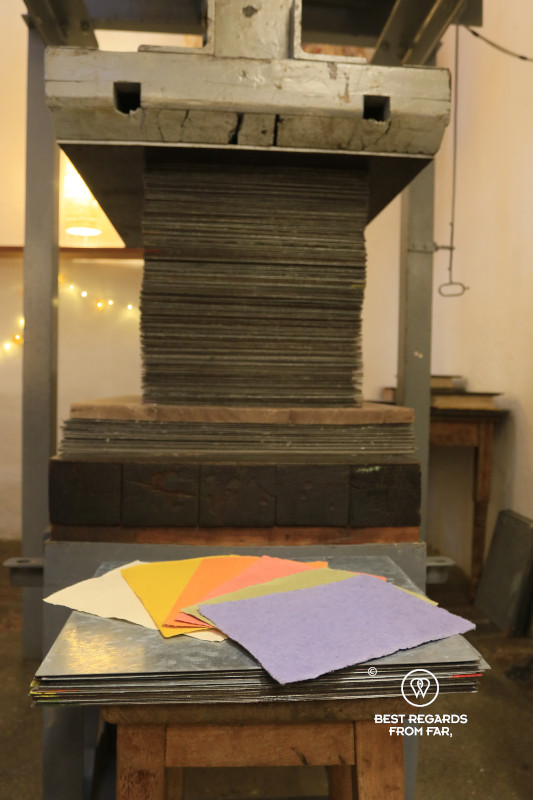
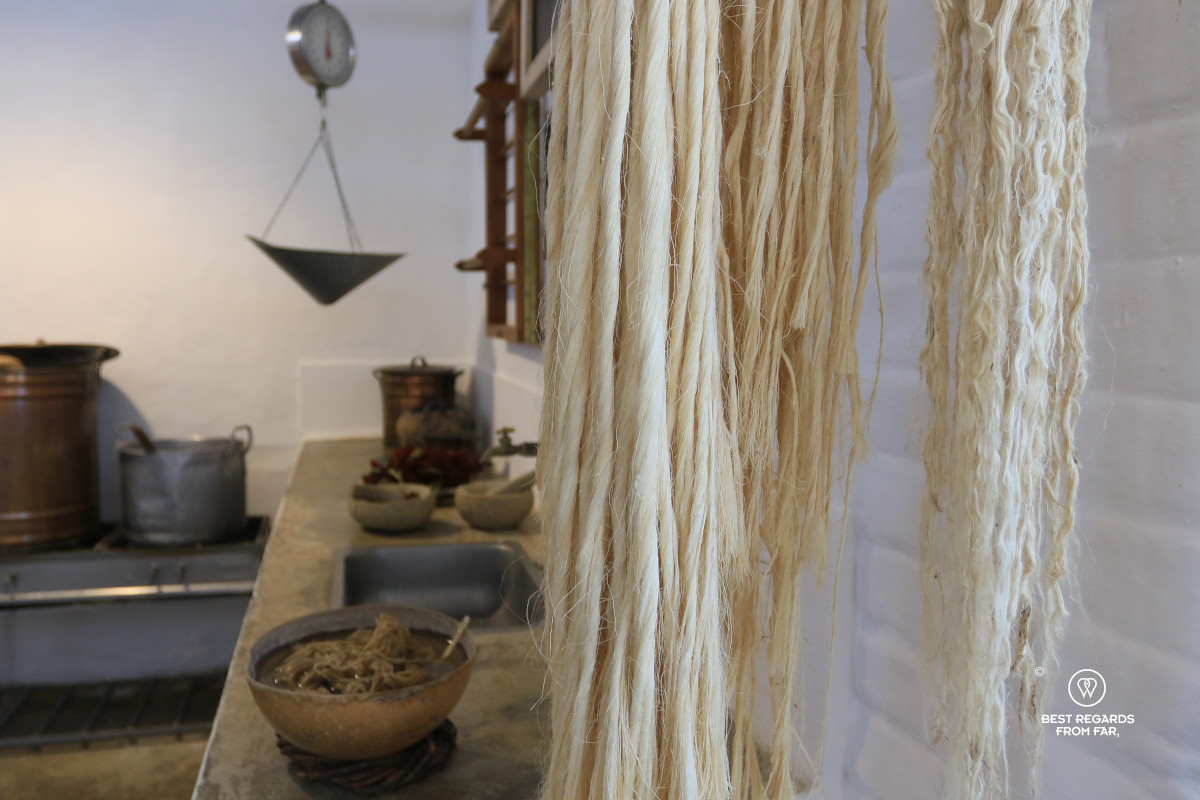
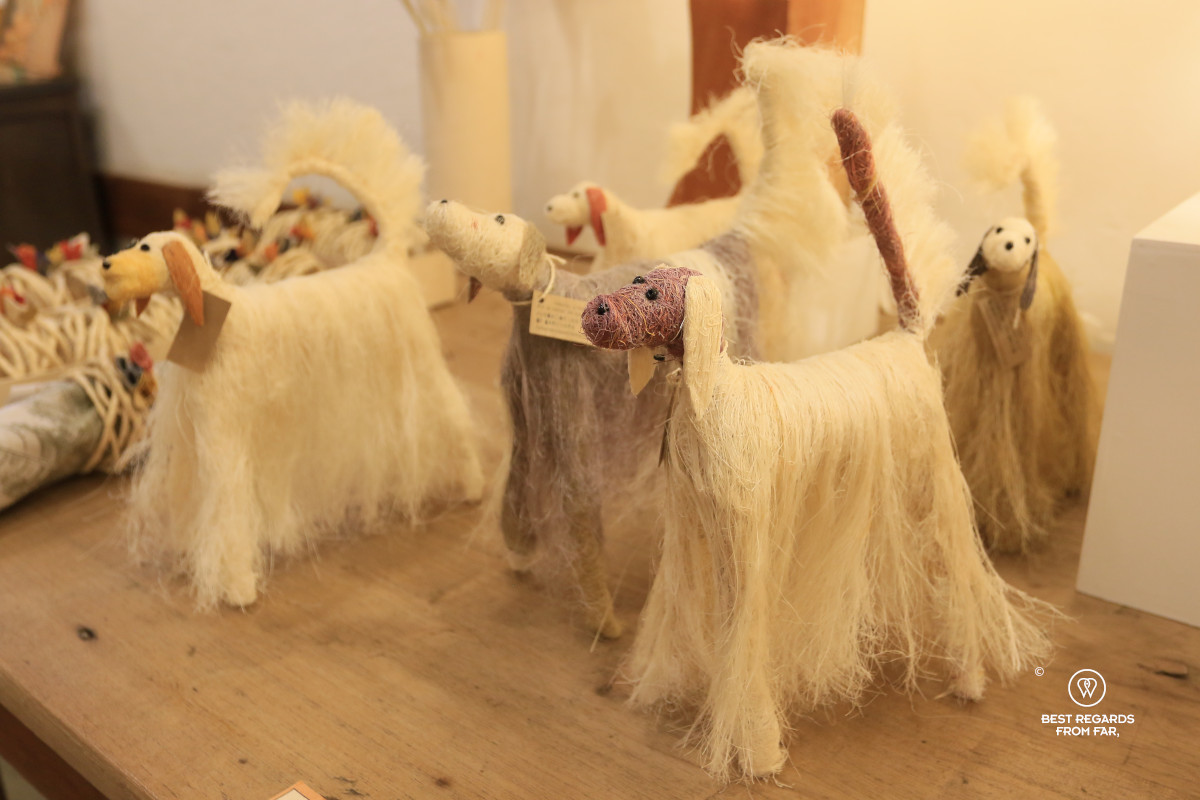
Some papers are dyed with natural colors such as onion to obtain yellow, cabbage for a blue tint or almonds to get light green. Some are pressed and bundled as journals, notepads or used to create paper animals from them. Even curtains and lamps, such as the ones adorning our suite at Casa Yahri, are crafted with this traditional and beautiful paper, sometimes decorated with natural motifs or leaves.
Cocktails & Cigars in the Tobacco Land of Colombia
Santander’s microclimate, soil composition, humidity, and altitude are ideal for tobacco growing, and make it a top producer known for premium cigars. Colombia has long exported tobacco leaves to countries like Nicaragua and the Dominican Republic, but only recently has it begun producing its very own premium cigars.
Following the sweet scent of fresh tobacco leaves, we enter the small facility of Bribon Cigars. It is here that Colombia’s premium cigars are handcrafted and can be indulged at the trendy cocktail bar. The small factory employs exclusively women as “they are more detail-oriented,” explains co-owner Francis Gillis, “and it is also providing job opportunities for more emancipation in a macho culture”.
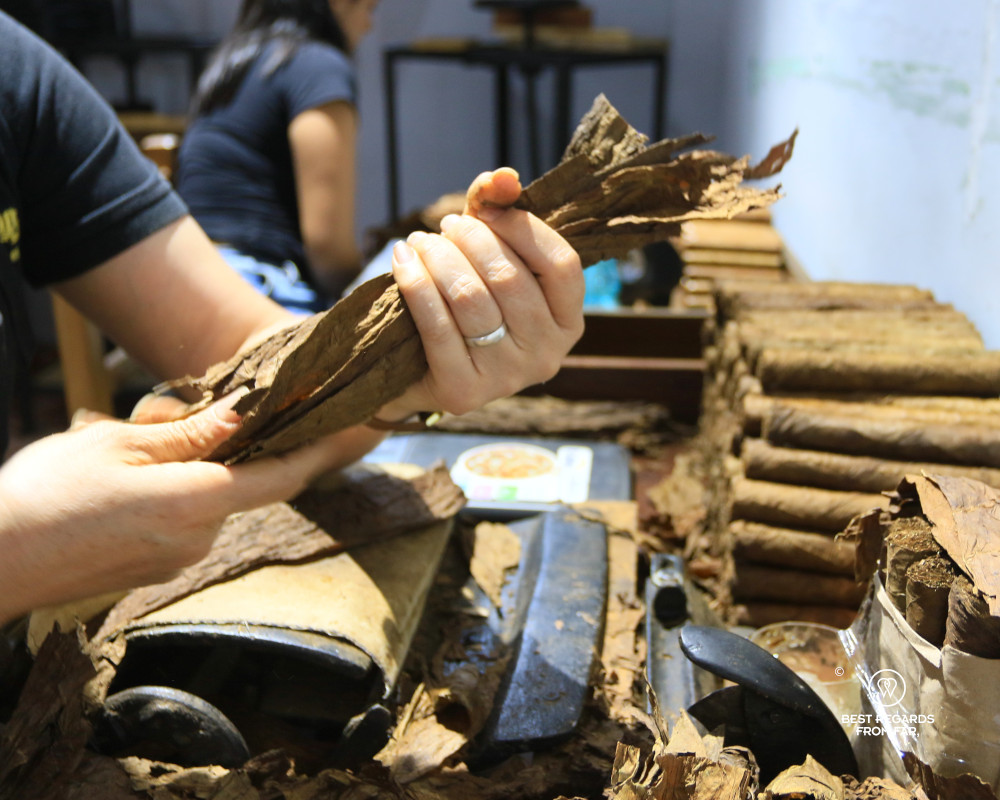
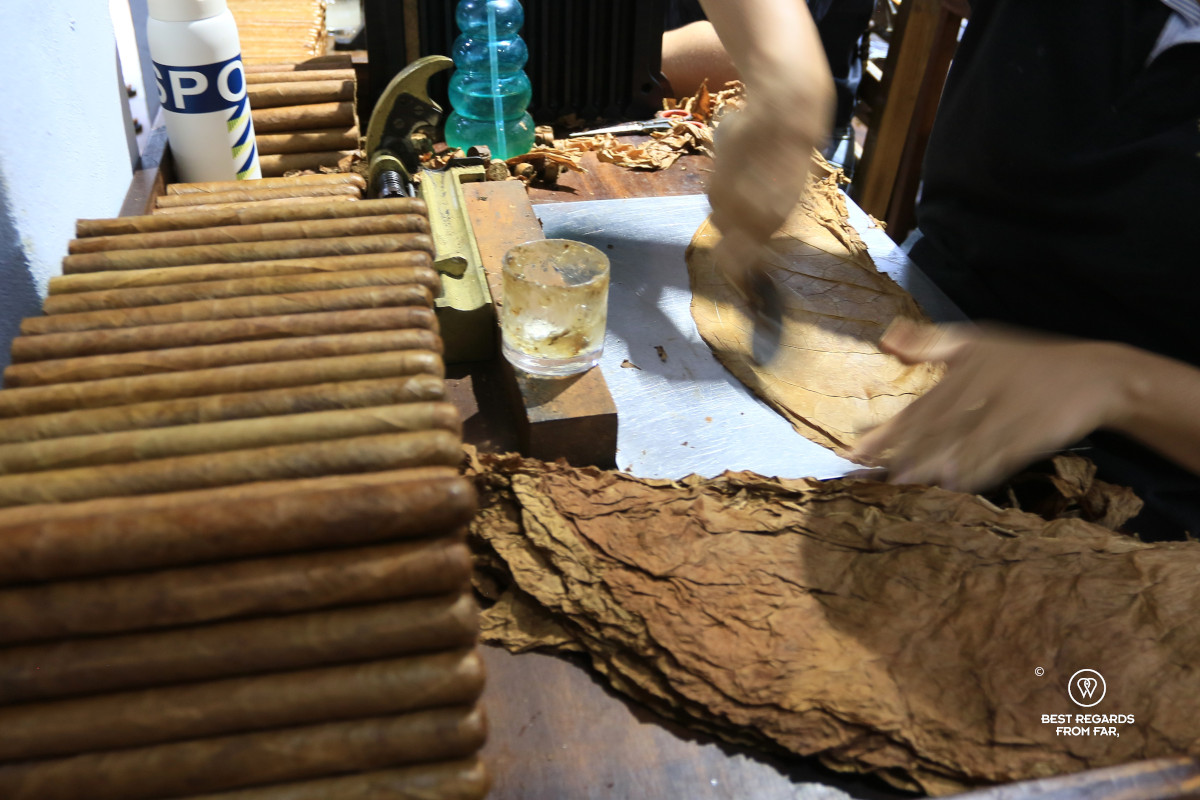
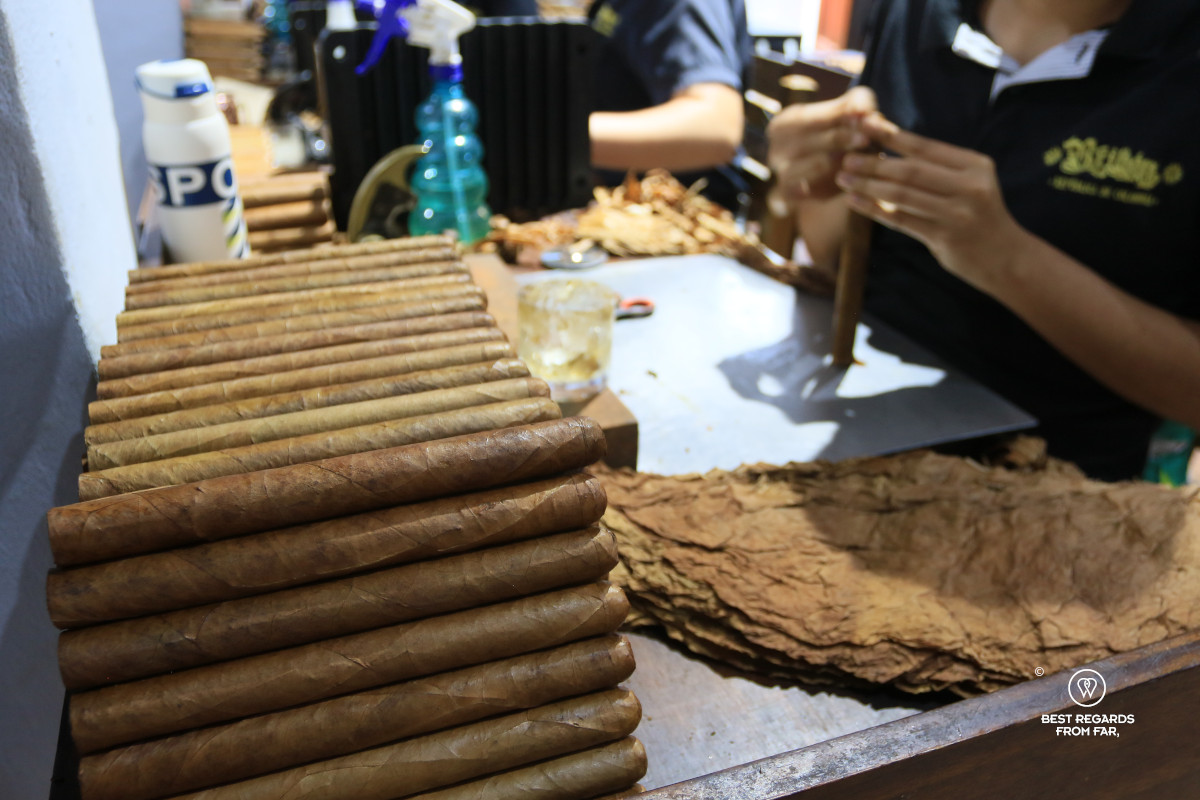
Each is trained by a master roller who herself learned from Cuban experts over 20 years ago. Each woman can hand roll up to 300 high-quality cigars a day. Yet, even with the best technique, fermentation is where the magic happens. Leaves are stacked, weighted, and monitored daily for temperature and humidity over six to twelve months before being used. Aging follows once the cigars are rolled, and Barichara’s climate allows them to rest for at least a couple of months to over a year to develop more complex flavor profiles.
Francis details the Bribon Cigar project that goes way beyond selling tobacco. In the heartland of Colombia’s tobacco growing region, international majors such as British American Tobacco (BAT) and Philip Morris International have been controlling the vast majority of the market. Francis wants the game to change, and his mission is to emphasize economic inclusion and environmental responsibility, incentivizing farmers to restore their soil and transition to organic practices in order to craft fully organic Colombian cigars.
At night, the workshop is closed, and Barichara’s first cocktail bar run by Alexandro Miguel a.k.a. Magic Mike, Bribon’s in-house mixologist, is the place to be. In the cozy courtyard, Francis has prepared a cigar tasting for us. He shows us how to assess the cigar’s quality by touch, by inhaling its aromas, and has us choose our cuts. Flavors evolve, spicy vanilla at first, then woody and nutty toward the finish. Coffee from El Ruina, rum from Barranquilla, Colombian chocolate, and even the local fried fat-bottomed ants, a traditional delicacy in Colombia’s Santander region serve as pairing.
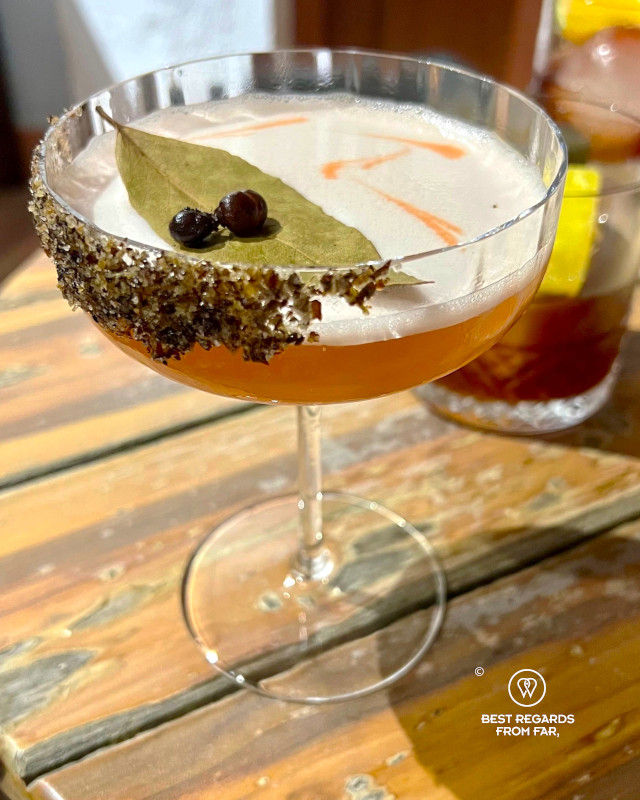
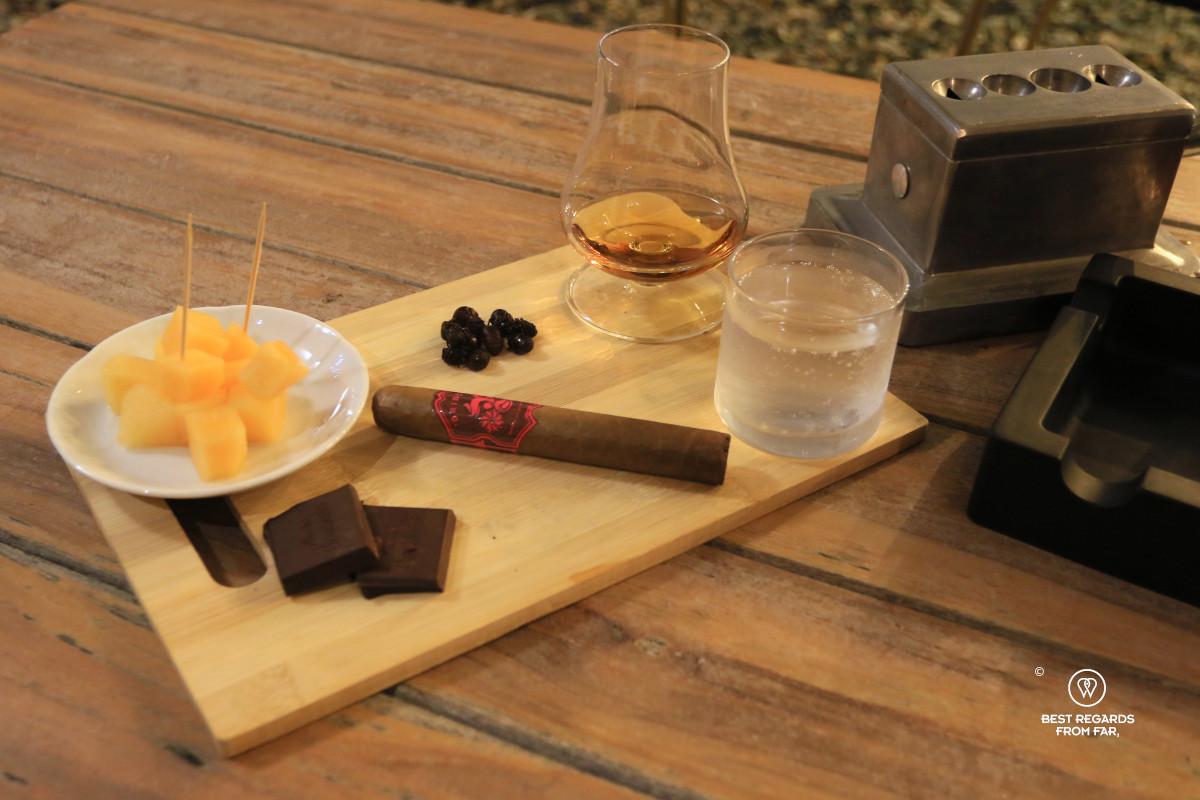
As evening settles and the smoke of our cigars vanishes, Barichara gets quiet. No hordes of tourists, no blasting music, no nuisance. We stroll back to Casa Yahri to the sound of crickets while the cobblestones hold the day’s warmth. Lights glow behind wooden shutters, voices are dim, the streets peaceful.
The Camino Real: Step by Step
One of Barichara’s most emblematic experiences begins in the heart of the village: the Camino Real, or Royal Path and makes for a perfect morning activity after yet another concert of bird songs followed by a festive breakfast.
Originally built by the Guane people as a trade route, the path was later maintained by Spanish colonizers. In the mid-19th century, it was restored and expanded by Geo von Lengerke, a German engineer with a complicated past. Having fled Germany after killing a man in a duel over a woman, he settled in Colombia and became instrumental in the region’s economic development.
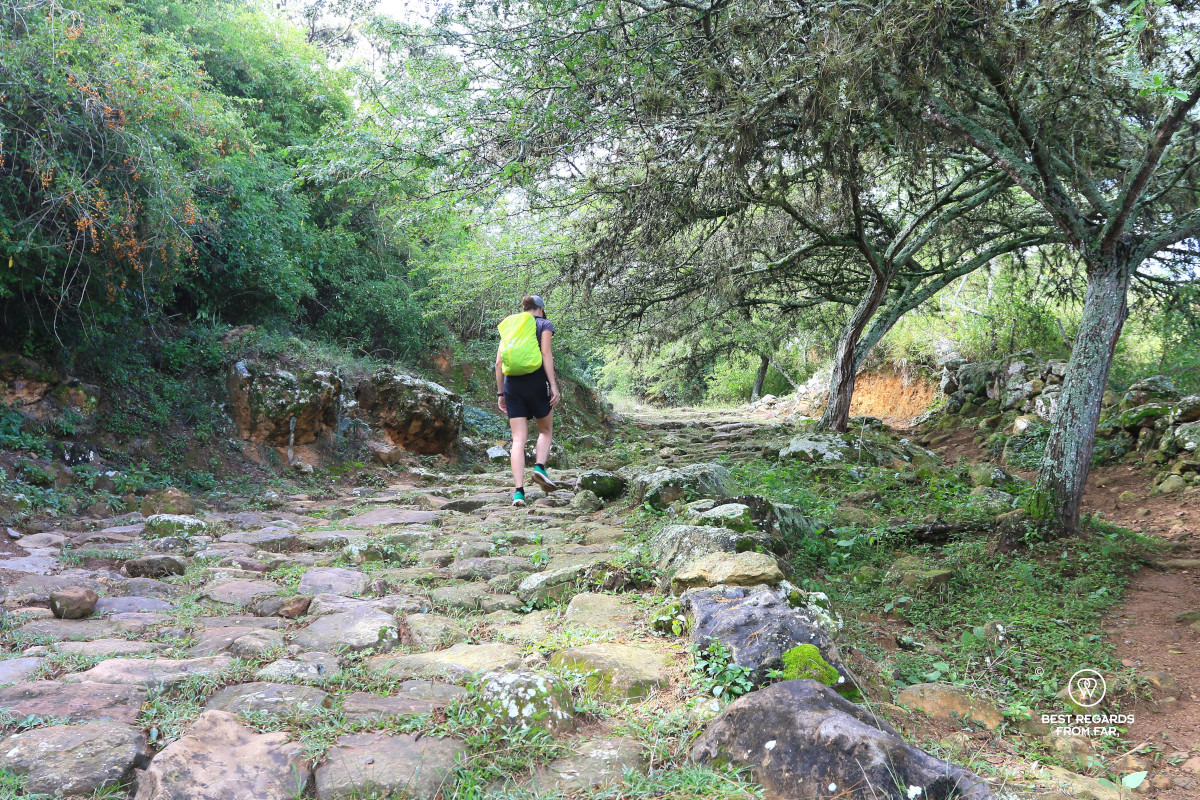
Von Lengerke rebuilt the Camino Real stone by stone, reinforcing bridges and lengthening the network to link the highlands with the Magdalena River and, by extension, the Caribbean coast over 800 to 1,200 kilometers (500 to 750 miles) of trails. Mules carried quinine, tobacco, cotton, and gold outward, while European goods traveled inland.
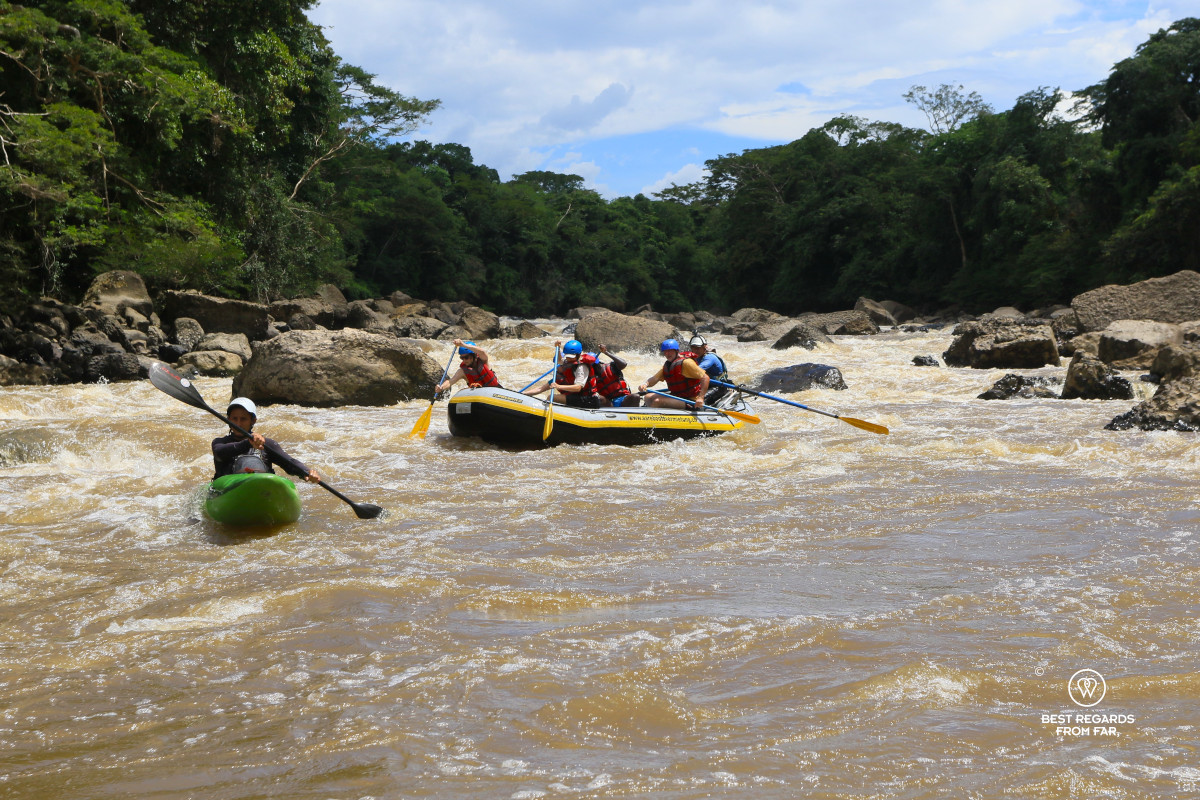
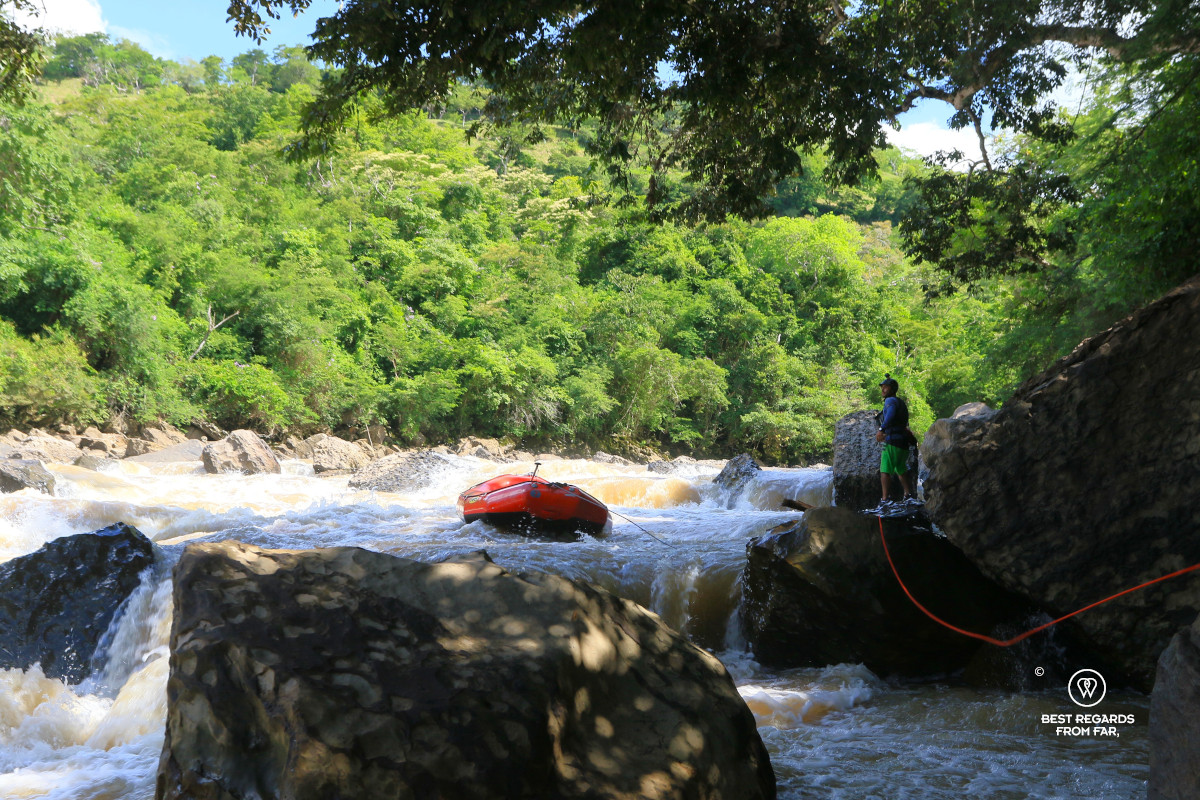
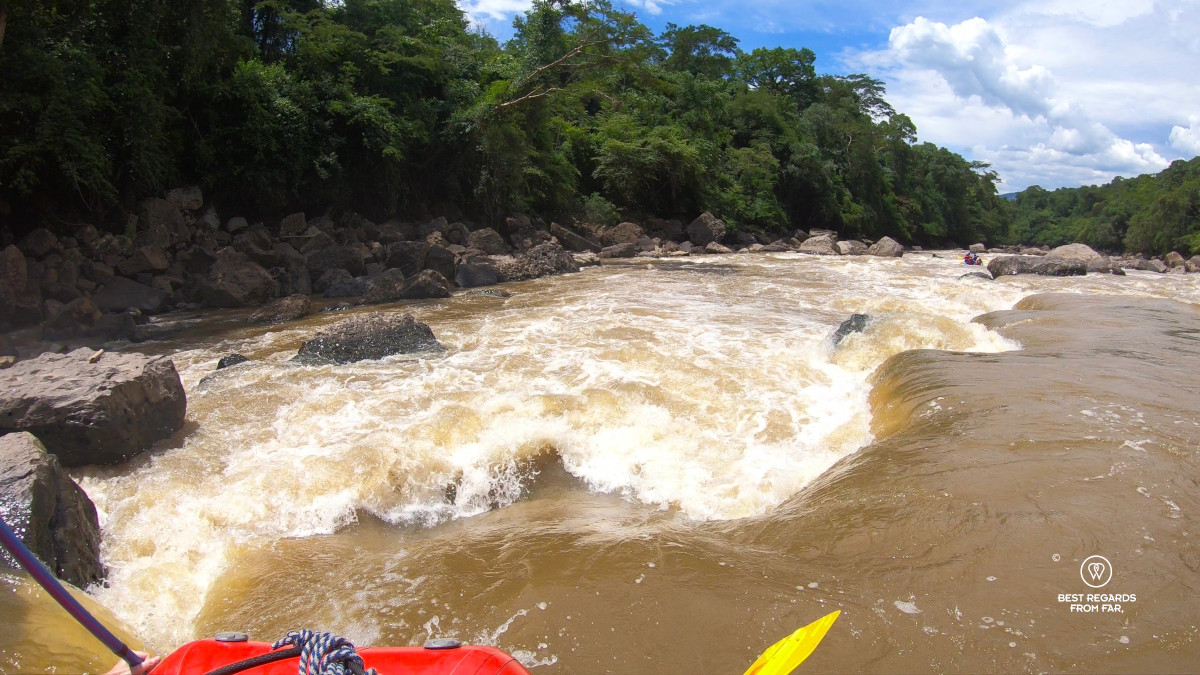
Today, the most famous section runs from Barichara to the small hamlet of Guane. The trail is easy to follow with its path descending through dry forest with expansive views over the Suárez River canyon—with its class IV to class V rapids in this section that are exhilarating to ride but not for the faint of heart. It is both a physical and historical journey and even if many take a tuktuk back once in Guane, walking the trail back to Casa Yahri, invites reflection, a different perspective, and makes the afternoon dip in the pool even more deserved.
***
Barichara simply asks of you to slow down to enjoy it fully. Whatever time you were planning on spending there, double it! Walk its streets, enter the workshops, discover its stunning nature whether hiking, rafting, or horseback riding.
Casa Yahri perfectly embodies this philosophy. It is a house that belongs to this place, built from the earth, open to the forest, and generous in its hospitality. The authenticity of this “place of rest” offers the greatest luxury of all: reconnection.
Travel tips:
- To stay in Casa Yahri make sure to book in advance as the number of rooms are few.
- If you want to engage in any of the above workshops, ask the concierge of Casa Yahri.
- To raft the Rio Suarez, reach out to Colombia Rafting Expediciones based out of San Gil. Other options such as the Chicamocha Canyon are possible too.
- Check out this interactive map for the specific details to help you plan your trip and more articles (zoom out) about the area!
For more in Colombia, click on these images:
 Best regards from far,