Text: Marcella van Alphen
Photographs: Marcella van Alphen & Claire Lessiau
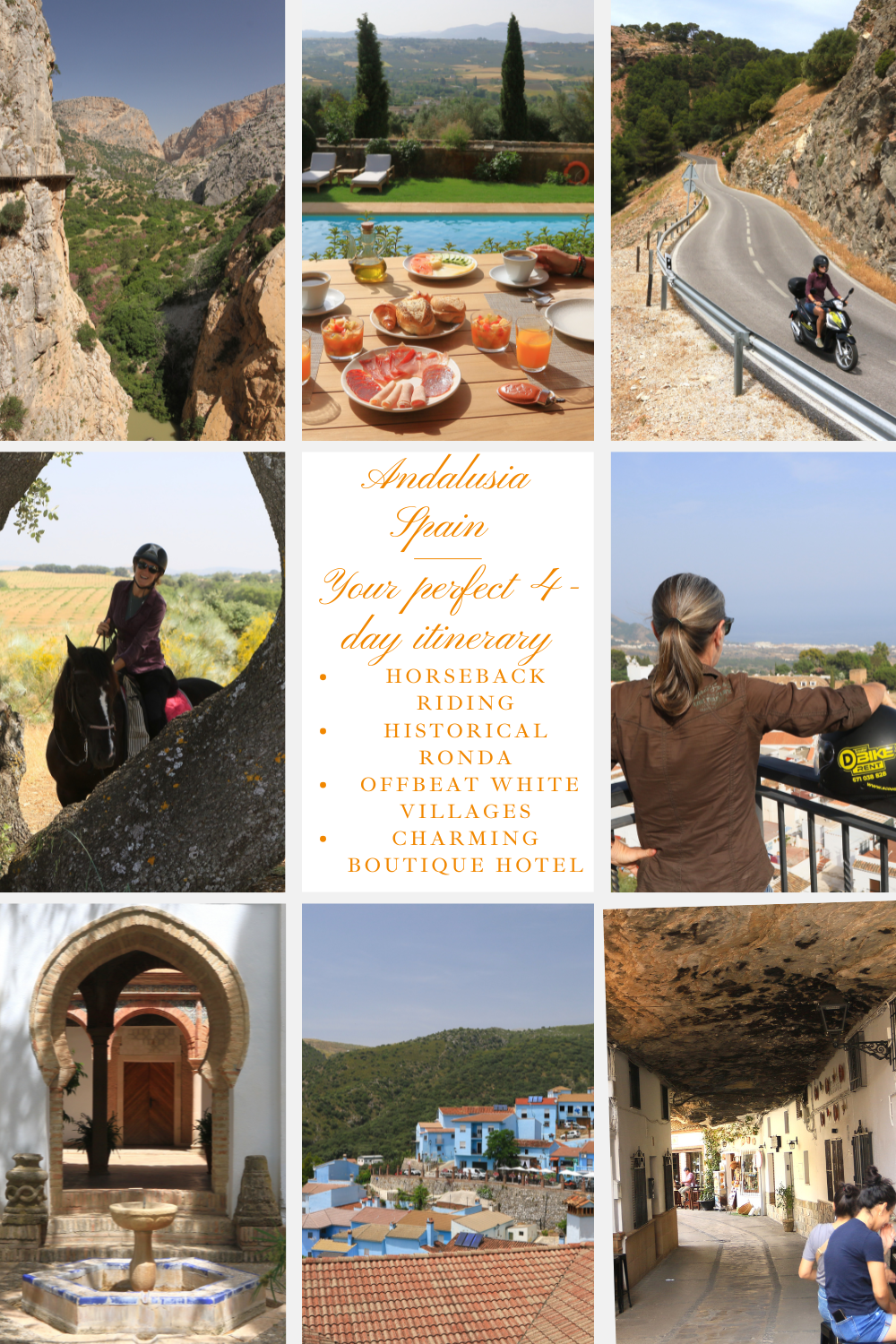
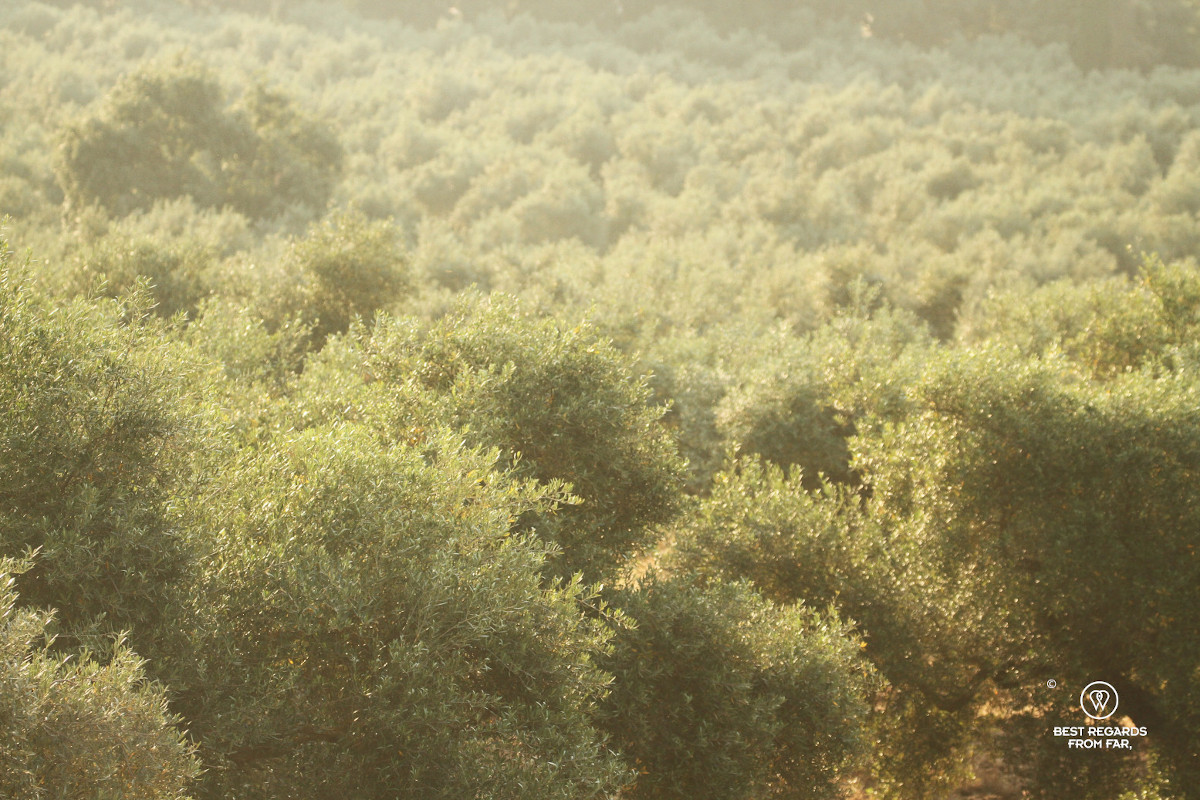
Tuscany? Not quite. Though the sunbaked rolling hills, extensive olive groves, and graceful cypresses may fool you, we are in Andalusia, and exploring the southern part of Spain by scooter turns out to be the perfect way to inhale the aroma of perfumed orange blossoms along winding roads, feel the warm breeze on our skin, and have a blast maneuvering our two-wheelers along its gorgeous scenery.
Over four days, we delve into the region’s soul: hiking what was once the world’s most dangerous trail, galloping through olive groves on horseback, soaking up the sun by a hilltop pool, indulging in its gastronomy, and uncovering more of Andalusia’s rich and complex history in its most dramatic city, Ronda. With each curve in the road, the scenery transforms, offering a wealth of natural and cultural experiences that makes this journey through inland Andalusia a rewarding and diverse adventure.
Hop on for the perfect itinerary!
Pin it for later!
Day 1: Malaga → Caminito del Rey → Setenil de las Bodegas → Hotel Fuente de la Higuera
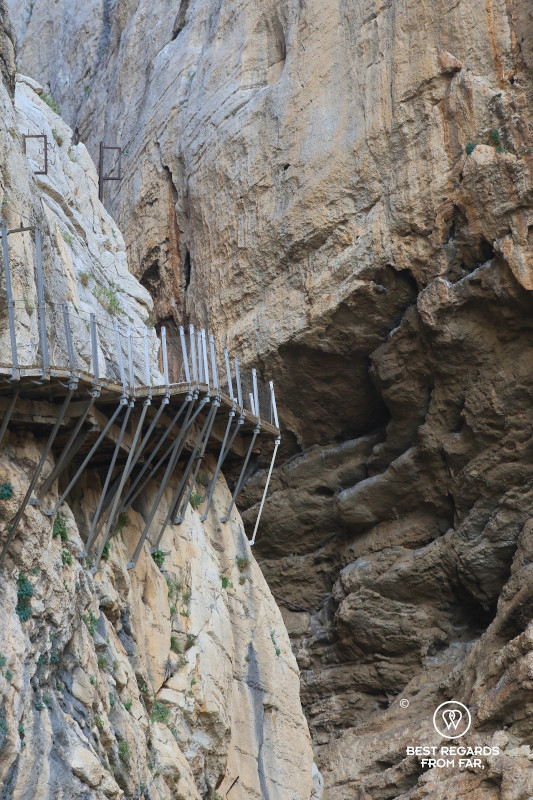
We depart from Malaga while the city is still sleeping and soon find ourselves breezing through groves of citrus and olive trees under a setting moon and rising sun. The fresh air is perfumed with blossoms and nectar. We operate our scooters along mountain roads and the sweet scent gives way to the aromas of rosemary and thyme which cover the slopes of the sun-bathed mountains closer to our first stop. Our destination for this morning is the dramatic Caminito del Rey, a boardwalk hugging limestone cliffs over the Gaitanes Gorge, rising more than 100 meters above the Guadalhorce River.


Caminito del Rey: More Than Just a Bucket-List Hike
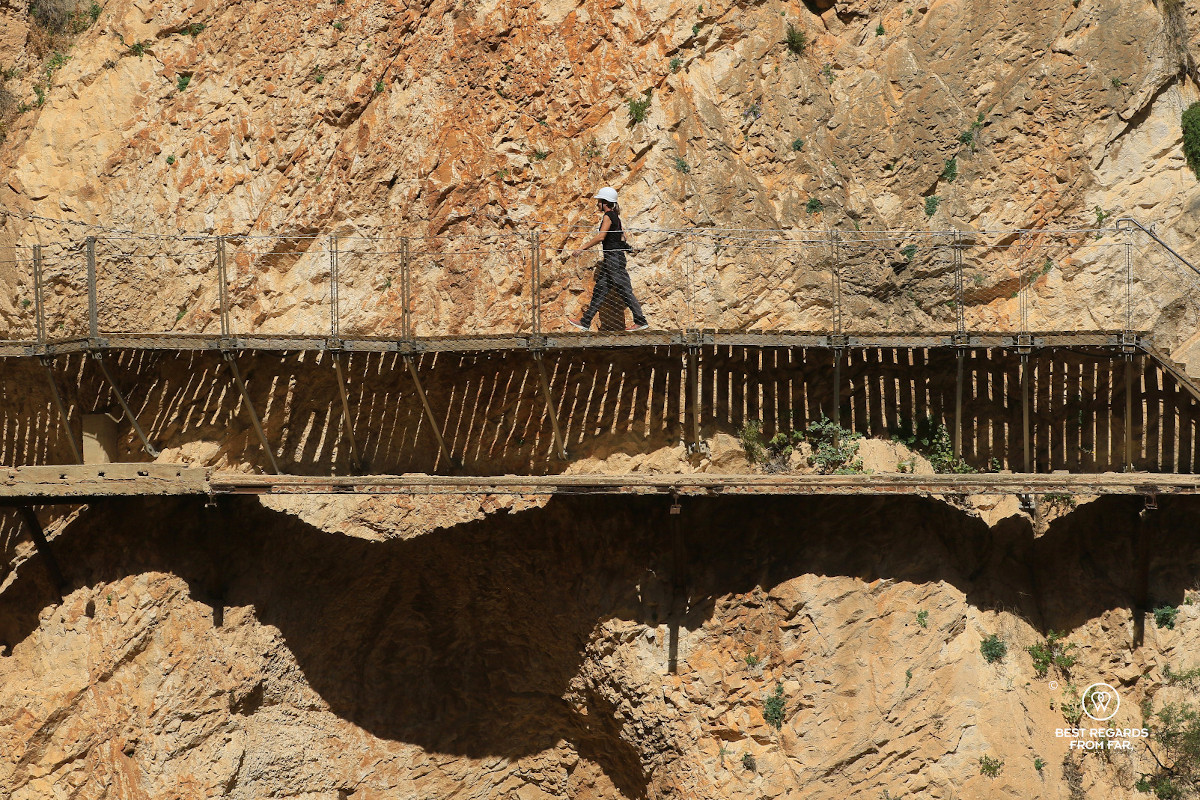
We swap our motorbike helmets for safety helmets that are mandatory to wear during the exciting walk along the Caminito del Rey, once known as the most dangerous path in the world. Suspended high above the Gaitanes Gorge, this “trail” was originally built in the early 1900s to provide access for workers maintaining a hydroelectric canal carved into the sheer limestone cliffs. As we enter the shady part of the narrow canyon, cooler air embraces us and the roar of the powerful Guadalhorce River echoes off the steep rock walls in which a wide variety of birds nest. The once-decaying walkway is now a very secured and broad boardwalk with sturdy railings, and even glass platforms. Along the way, our guide points out to spirals of ancient ammonites and layers of stromatolites, proof of marine life that once thrived here millions of years ago. The more we start looking for them, the more we see amongst the impressive geological features. When the canyon gets wider, we feel the sun on our skin again. The sound of the water is making place for that of birds and frogs chirping as we hike in the gorge between the two narrow sections of the canyon. Looking up, griffon vultures circle the air on the thermals. Read our full story including travel tips about the Caminito del Rey!


Setenil de las Bodegas: A Village Carved into the Rocks
After this scenic hike, we swap helmets again and continue our journey to the picturesque village of Setenil de las Bodegas, famous for its troglodyte houses. The white city looms in the distance and with ease we overtake traffic, we steer our scooters through the steep narrow alleys leading to the city center, and easily park close to the heart of the charming town.
Its narrow streets and terraces shaded by large limestone slabs are ideal to escape the midday heat. Restaurants, bars, and houses are literally carved into the rocks where their interiors remain cool. Tapas are served at every table and the tinto de verano, a local favorite of red wine mixed with soda and ice cubes flows abundantly.

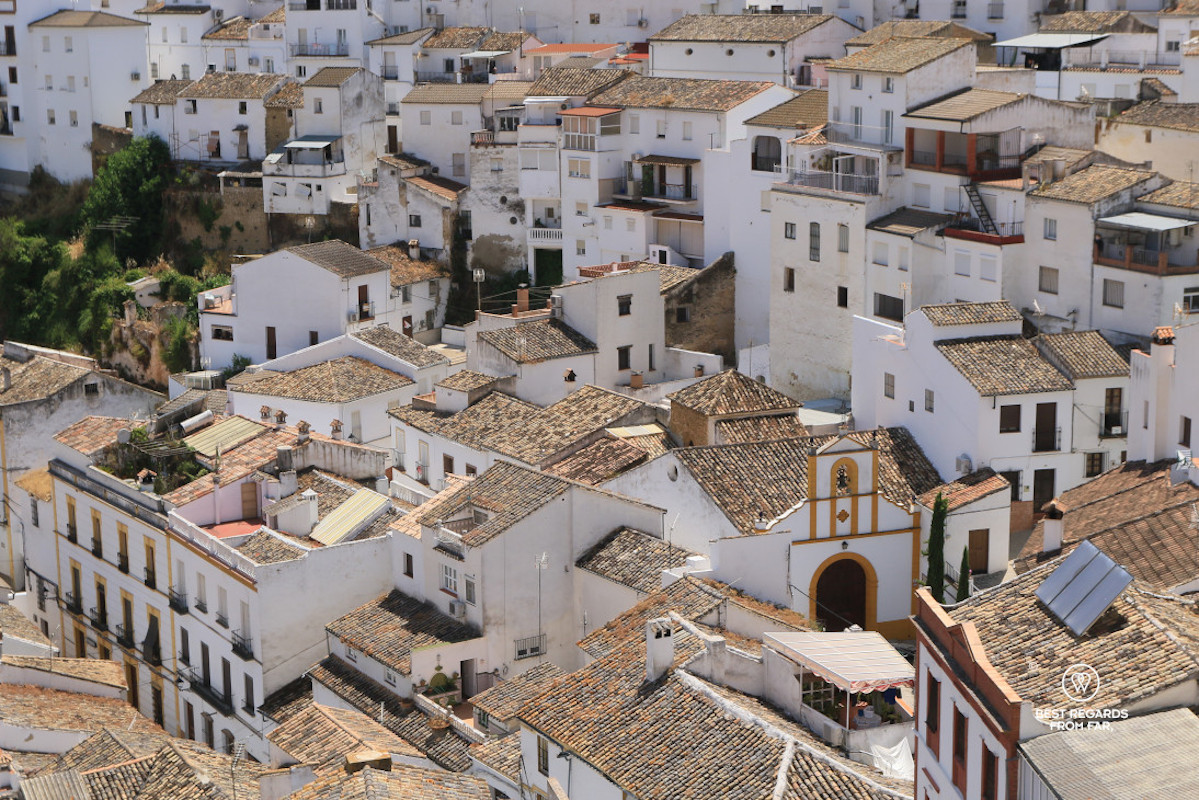
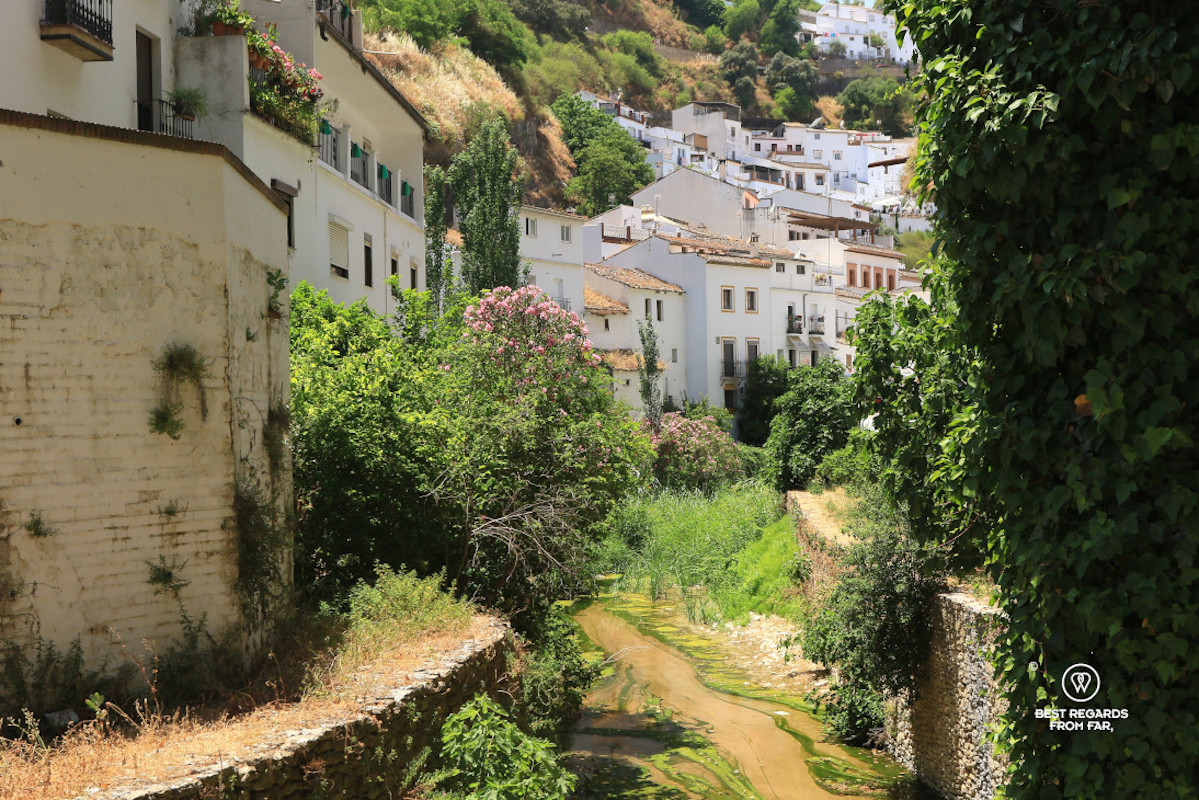

We climb up to the ruins of the medieval castle tower, Torre del Homenaje which provides an expansive view on Setenil de las Bodegas that has resisted seven sieges during the Reconquista before finally falling in 1484. The name of the once Moorish stronghold “Setenil” likely comes from the Latin septem nihil, meaning “seven times nothing,” referring to the seven attempts by Christian forces to conquer the town.
A random walk through the maze of narrow streets, a typical example of Moorish-Andalusian town planning that prioritized defense, leads to nice vistas and romantic corners.
Hotel Fuente de la Higuera: A True Home Away From Home
By late afternoon we enter the long cypress-lined driveway of Hotel Fuente de la Higuera, our base for the next 3 days. Just a stone’s throw away from Ronda, the upscale boutique hotel that once used to be an old millhouse, is nestled amid olive groves and overlooks the peaceful and hilly countryside. A dip in the pool feels heavenly, before we dress up in our spacious, tastefully decorated room that opens onto the rose garden.
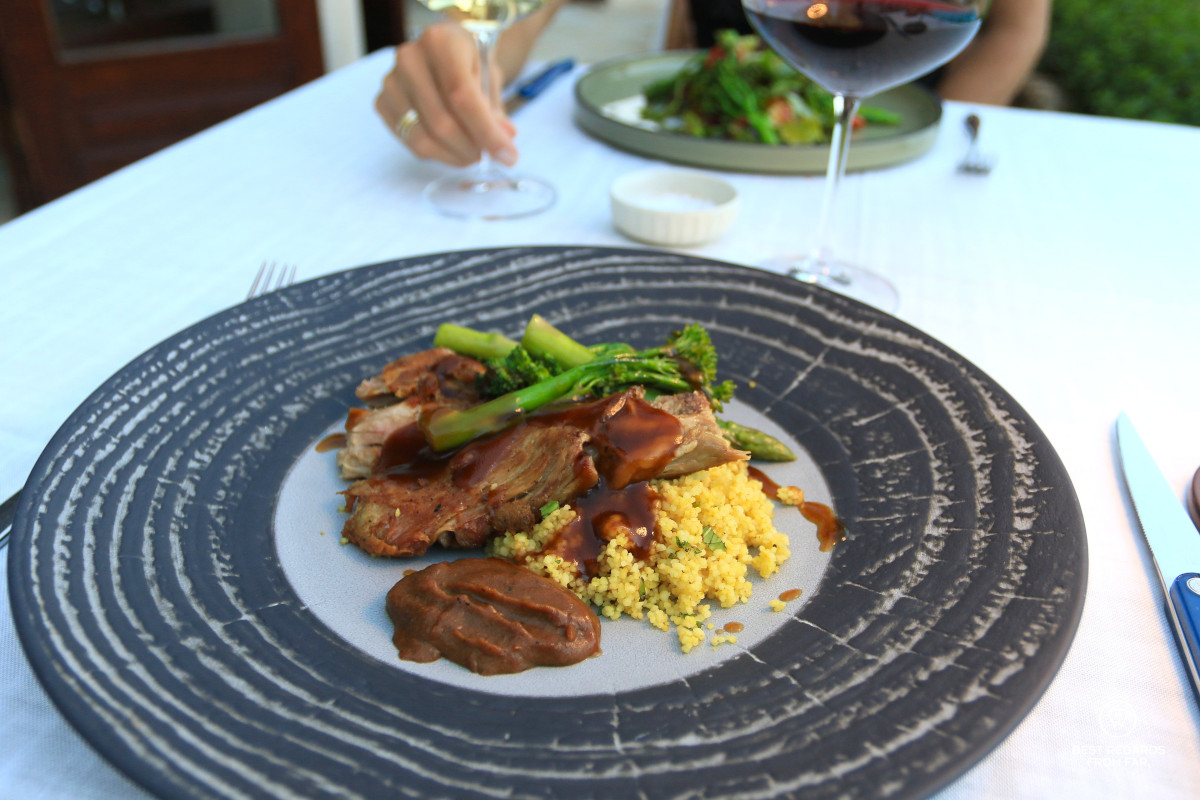
Dinner is a feast of regional produce including some from the hotel’s organic gardens and the organic olive oil from the farm best tasted on the homemade bread. The views on the Tuscany of Andalusia under an orange sky at sunset are stupendous. The smooth salmorejo (traditional Andalusian cold cream of tomatoes) is simply delicious as well as the refreshing green salad with apples in different textures seasoned by crusty ham, vinaigrette and almonds. The lamb shoulder hints at Andalusia’s Moorish heritage as it is served with a mint couscous, dates purée and ras-al-hanout. The vegetarian main of sweet roasted leek puff pastry with parmesan cream and sun-dried tomatoes proves an equally excellent choice. We conclude the feast with a cheese platter accompanied by a red wine from a local bodega and take in the fragrance of the omnipresent jasmine flowers.


Day 2: Horseback Riding through Olive Groves → Escaping the Heat of the Day → Evening in Ronda
Horseback Riding through Olive Groves


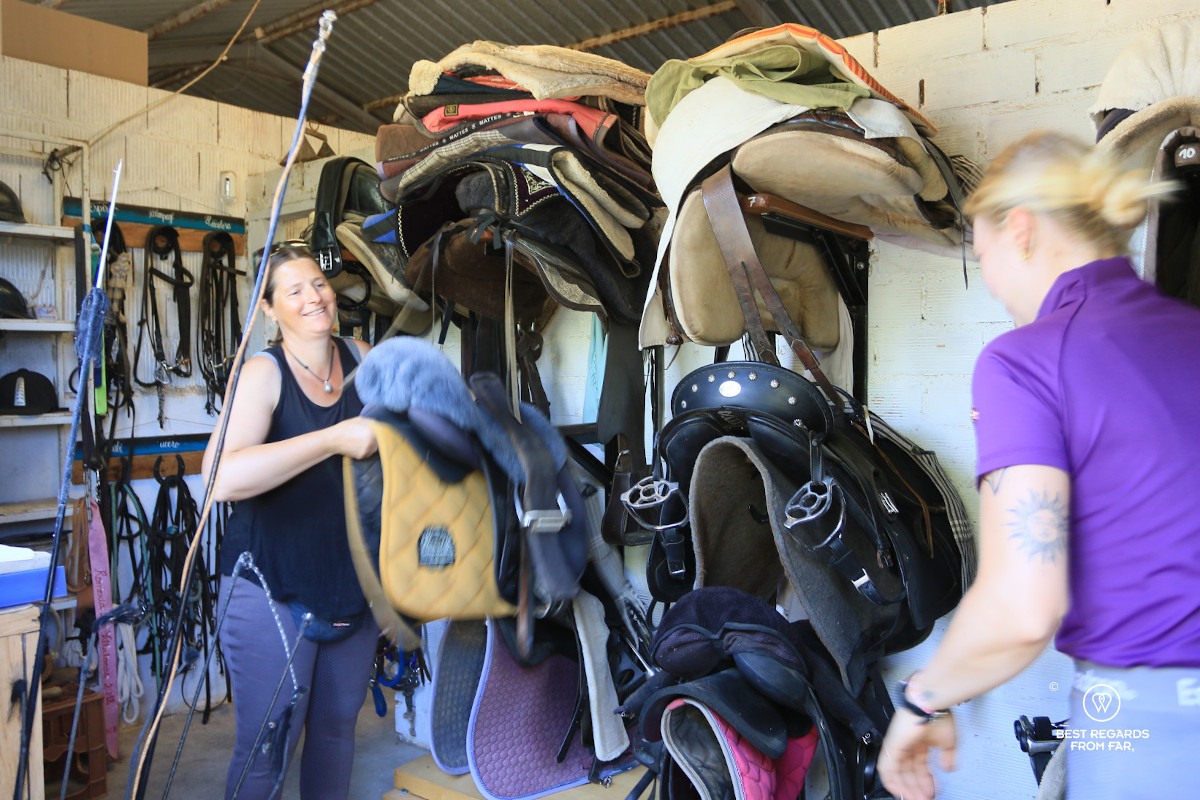
We are kicking off the second day with an incredible breakfast on the terrace of the Hotel Fuente de la Higuera and head out to the nearby ranch of Caballos y Vino that is tucked away along the slopes of the Sierra de Grazalema, where we meet its passionate owner, Sandra Jochim. Sandra matches each guest with an equine personality, quiet mares for gentle souls, or playful geldings for the more adventurous. I am paired the friendly Spanish-Arabian mare Bandolera while Claire is matched with the faster gelding El Prinicipito. Yet, before hopping on, we follow Sandra into the field where a dozen horses roams freely and enjoy the shade of some holm oaks.
Grooming our horses under the attentive eye of Sandra allows us to feel each animal’s unique temperament. Soon we canter along the dirt track and into the valley and enjoy nothing but the sound of hooves striking the dry ground and the peaceful scenery. The terrain varies: first we venture out through olive groves while Sandra keeps an eye on us and gives us tips along the way to improve our skills. When comfortable enough we start a gallop, thoroughly enjoying feeling the power of these beautiful strong horses we ride. Then a narrower uphill through cork oak groves leads us to a ridge line offering expansive views over the valley.
After a few hours of fun, we relieve our horses of their saddles and lead them back to their friends where we reward them with some carrots.


Pool Overlooking the Valley
By midday we adapt to the heat. We return to the hotel to take a refreshing break by the pool, surrounded by lavender hedges, bougainvillea, and towering cypresses. Such a welcome respite during this hot summer day!

Evening Charms of Ronda
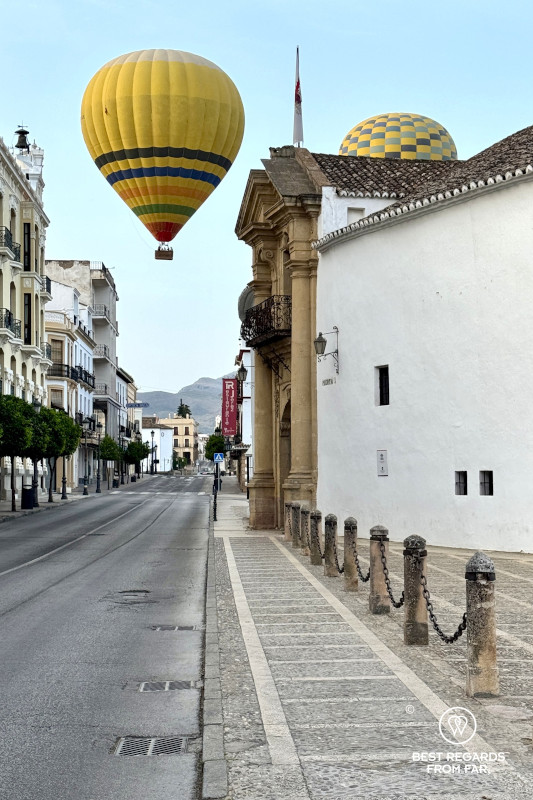
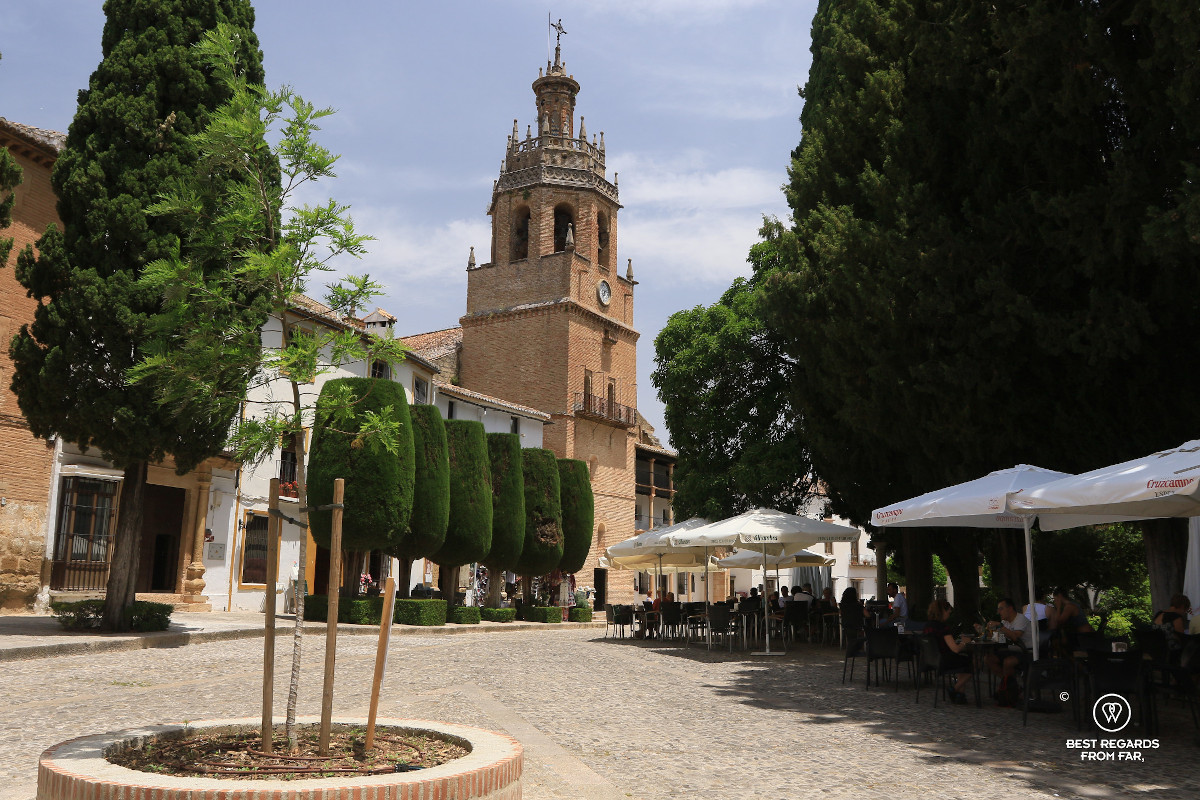
We enter the city of Ronda after a ten-minute drive from our hotel and park our scooters next to the iconic Puente Nuevo. It is starting to get quieter in the streets now that the masses of day tourists have left and the temperature is just perfect for an evening stroll through town, soaking up its atmosphere, picturesque squares and vistas.

Day 3: Historic Ronda → The White & the Blue Village → Return to Fuente de la Higuera
We depart at first light towards Ronda for a lovely pre-breakfast trail run through town and the valley right below. Tourists are not in town yet, the light is beautiful and the trails very quiet. A magic moment!
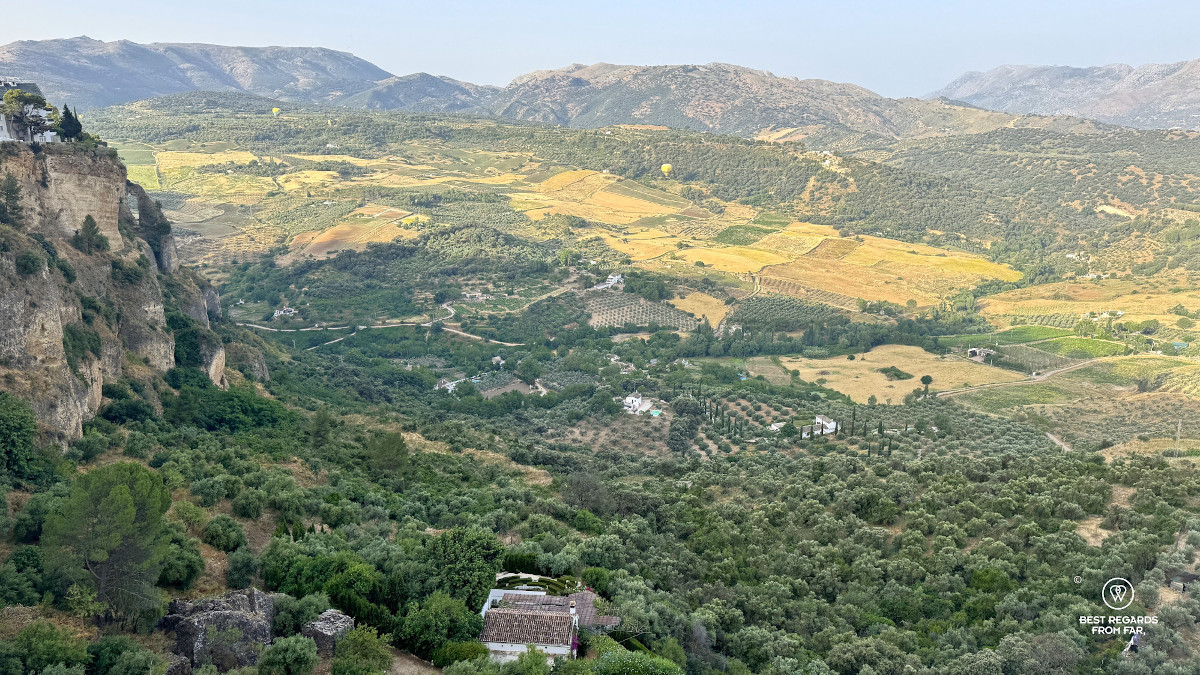
Later, we take a longer look at the New Bridge that was built between 1759 and 1793 and spans a 120‑meter crevasse with a dramatic central arch. Originally built to connect Old and New Ronda, the bridge’s lower interior housed jails and mechanical workings. The Desfiladero del Tajo that lines the cliff with views on the waterfalls of the Guadalevin River offers the best views.



The 14th-century Mondragón Palace, with its glazed-tile courtyards and Moorish garden houses Andalusian ceramics, silk robes, and illuminated manuscripts that chart the city’s rule by Romans, Visigoths, Moors, and Castilians as well as an in-depth overview on the development of Ronda since the hunter and gatherer times. No wonder that Ronda inspired personalities like Orson Welles and Ernest Hemingway.
Ronda is also a landmark of bullfighting history, celebrated in the 18th-century bullring Casa de Toros.
Read our full story including Ronda’s bullfighting links and more interesting facts!
We leave the town after our morning exploration as crowds flock in.
The White & the Blue Mountain Villages
We venture into the nearby mountains where we seem to be the only ones on the road. We ride into Alpandeire, a picturesque white village still governed by communal olive harvesting. The village church frames the distant Sierra de Grazalema peaks.
For lunch, we continue to Júzcar, known as the “blue village” that immediately makes us think of the Moroccan Chefchaouen. Originally white, it was painted vivid cobalt blue in 2011 to host a Smurf movie premiere and never changed back. Today the town is a patchwork of cafés, painted murals, and flower-adorned windows. Local entrepreneurs lean into the surreal charm, offering blueberry tarts, local crafts, and whimsical Smurf souvenirs.
The ride back tracks through rolling terrain of cork oaks and olive groves. We return to Fuente de la Higuera by early evening and once more enjoy the changing colors of the sky at sunset.


Day 4: Ronda’s Moorish Baths → Sierra de las Nieves → Mijas → Malaga
Before leaving Ronda behind, we stop by the best-preserved Arab Baths of the Iberian Peninsula. Pools of cold water led to warmer rooms, and pierced stone arches filter the natural light shaped in stars.
From Ronda, we climb through the white villages of El Burgo, Yunquera, and Alozaina, all strongly attached to the steep slopes. The road reaches the Sierra de las Nieves Natural Park, a UNESCO Biosphere Reserve and we take in its Spanish firs and circular karst formations as well as the unexpected vistas on this more hostile environment.
Descending toward Mijas, we ride steep, winding switchbacks through forested slopes before arriving to panoramic terraces overlooking the Mediterranean. Mijas is a jewel of white houses, bougainvillea draping balconies, and donkey-taxis parked in the square for the many day tourists from Malaga.
The final stretch is a coast-hugging road back to Malaga. The light softens along the Mediterranean Sea and waves shimmer while the city skyline appears with its historic towers. Scents of fried calamari announce a delicious seafood feast after this inland exploration we have thoroughly enjoyed.


***
From the roaring waters underneath the Caminito del Rey to the rhythmic clicking of horse hooves across olive groves, from the historic Ronda to the tranquility of scenic mountain roads, passing by the white-washed Andalusian villages, each day along this scooter loop reveals a gem waiting to be discovered!
Travel tips:
- Scooters offer the convenience of parking easily in these touristic sites. Reach out to D Bike Rent for reliable scooters and impeccable service including drop off and pick up. Car rentals are also offered.
- Make sure to book your tickets well-ahead of thime for the Caminito del Rey!
- For a fantastic horseback riding outing, make sure to reach out to Caballos y Vino.
- To stay at the upscale boutique hotel of Hotel Fuente de la Higuera, make sure to book ahead of time!
- To make the best or Ronda, obtain a visitor’s pass from the tourism office to access most sites.
- Check out this interactive map for the specific details to help you plan your trip and more articles (zoom out) about the area!
For more in Spain, click on these images:


 Best regards from far,