Text: Marcella van Alphen
Photographs: Claire Lessiau & Marcella van Alphen
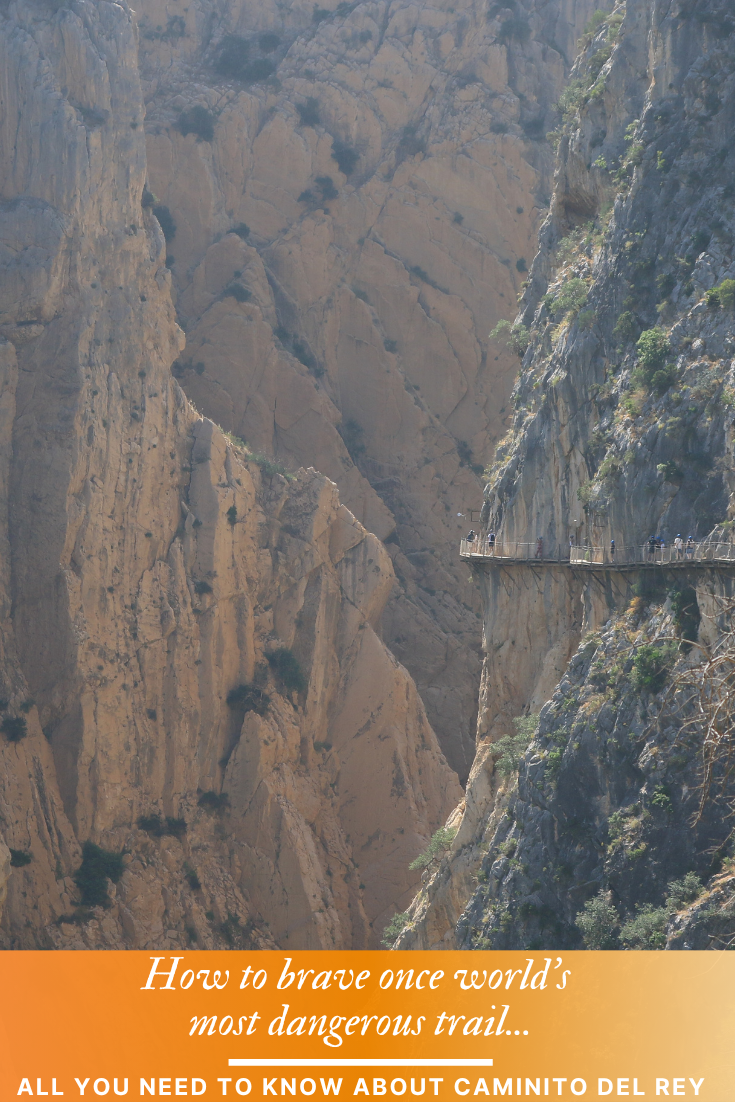
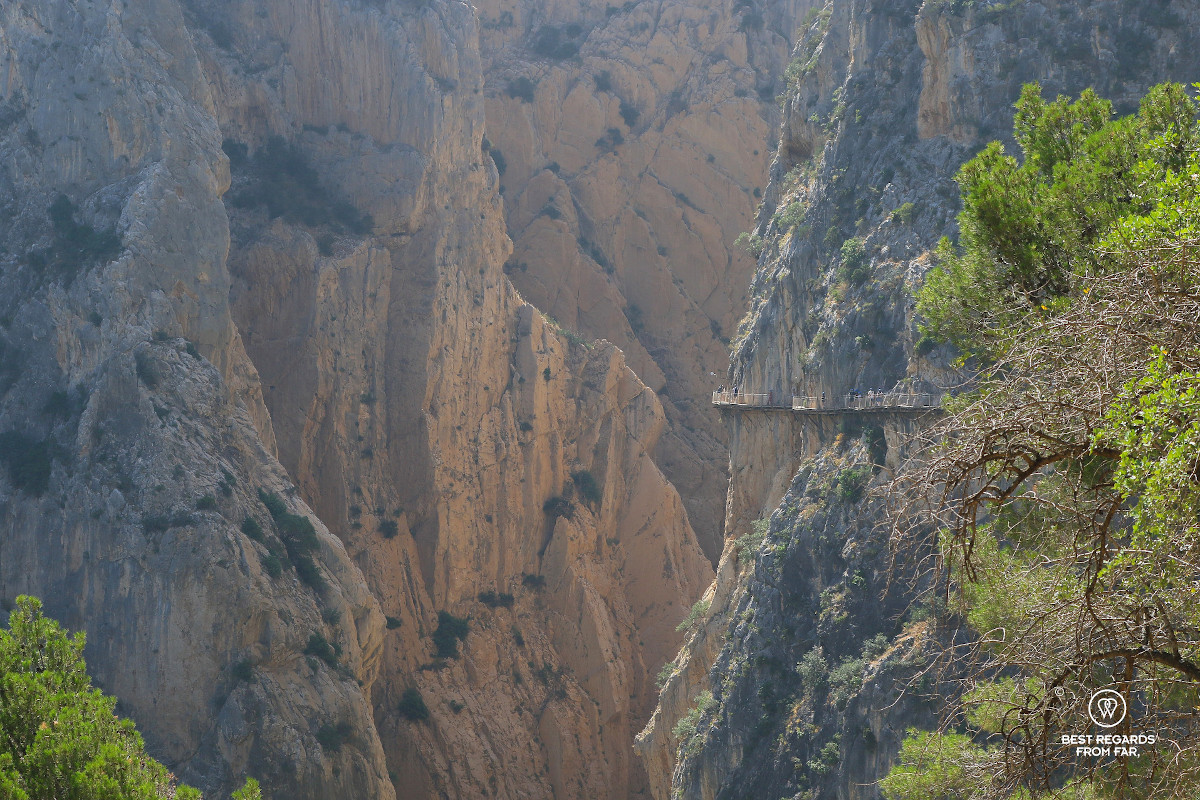
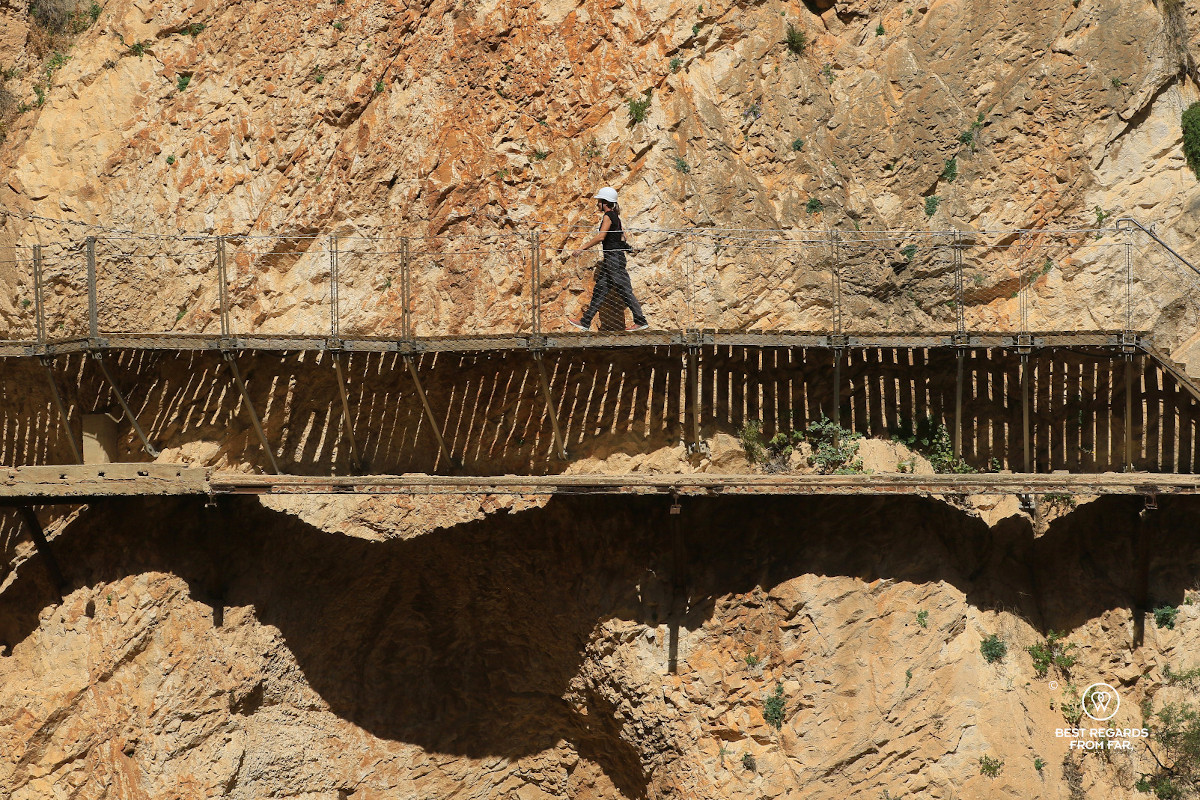
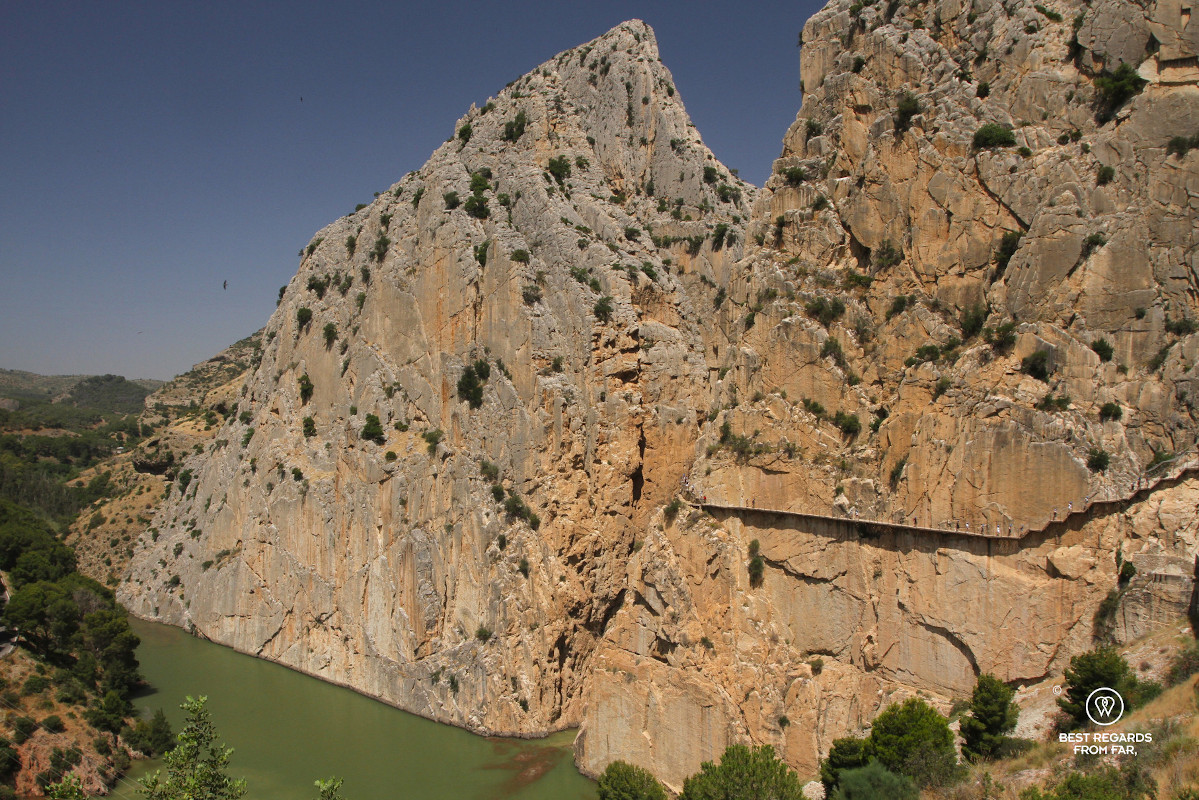
I step onto the boardwalk, the morning sun warming my skin as I begin my hike through the Gaitanes Gorge. We are in Andalusia, just north of Malaga, which we left this morning by scooter, passing by citrus groves, olive-studded hills, and white villages attached to the slopes of the sierras. The legendary Caminito del Rey is the first stop along the way of a multi-day loop. Suspended over 100 meters (330 feet) above the Guadalhorce River, the dramatic trail combines daring engineering with geological curiosities and prolific birdlife. What until recently was known as world’s most dangerous walkway underwent a complete makeover to turn it into one of Andalusia’s most visited outdoor attraction.
Pin it for later!
From Hydropower Necessity to Iconic Nature Trail
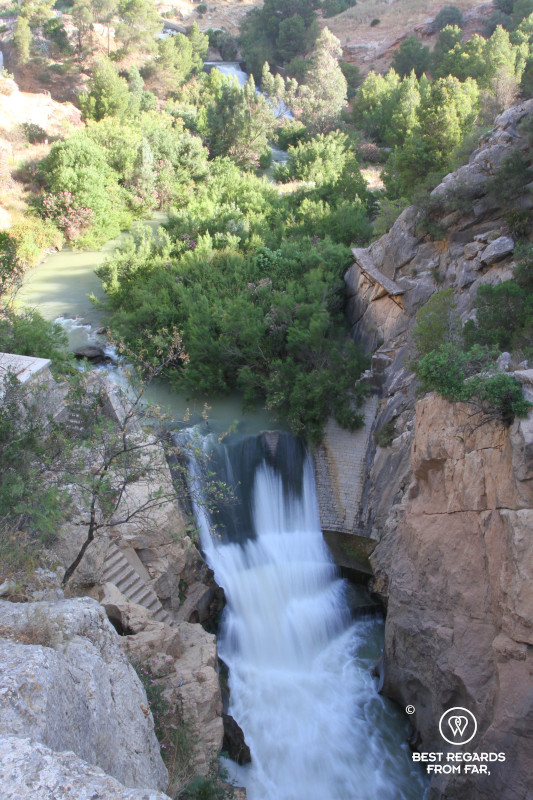
At the dawn of the 20th century, the industrial revolution was well under way in Spain, and Andalusia, and more specifically Malaga needed electricity—and quickly! From 1901 to 1905, an ambitious engineering project carved a water canal along the vertical limestone cliffs of the Gaitanes Canyon to connect two reservoirs—Salto del Gaitanejo and El Chorro—for hydroelectric power. The engineer Rafael Benjumea y Burín was the mastermind behind this ambitious project. At the time when the innovative genius Gaudi was reshaping Barcelona honoring nature, Benjumea y Burín also aimed to not only tame the torrential river but to also respect its surroundings—minimal invasiveness, harmony with the landscape, and dignity for the 600 men working along the rock face.
The challenge? In order to get the most power from the turbines down at the El Chorro Falls, the minimum altitude loss was allowed, and these men carved a four-kilometer-long canal along the gorge with only a 1.5 percent slope. By 1905, the canal was operational, and Malaga’s electrification had begun.


How a Simple Service Path Got its Patents of Nobility
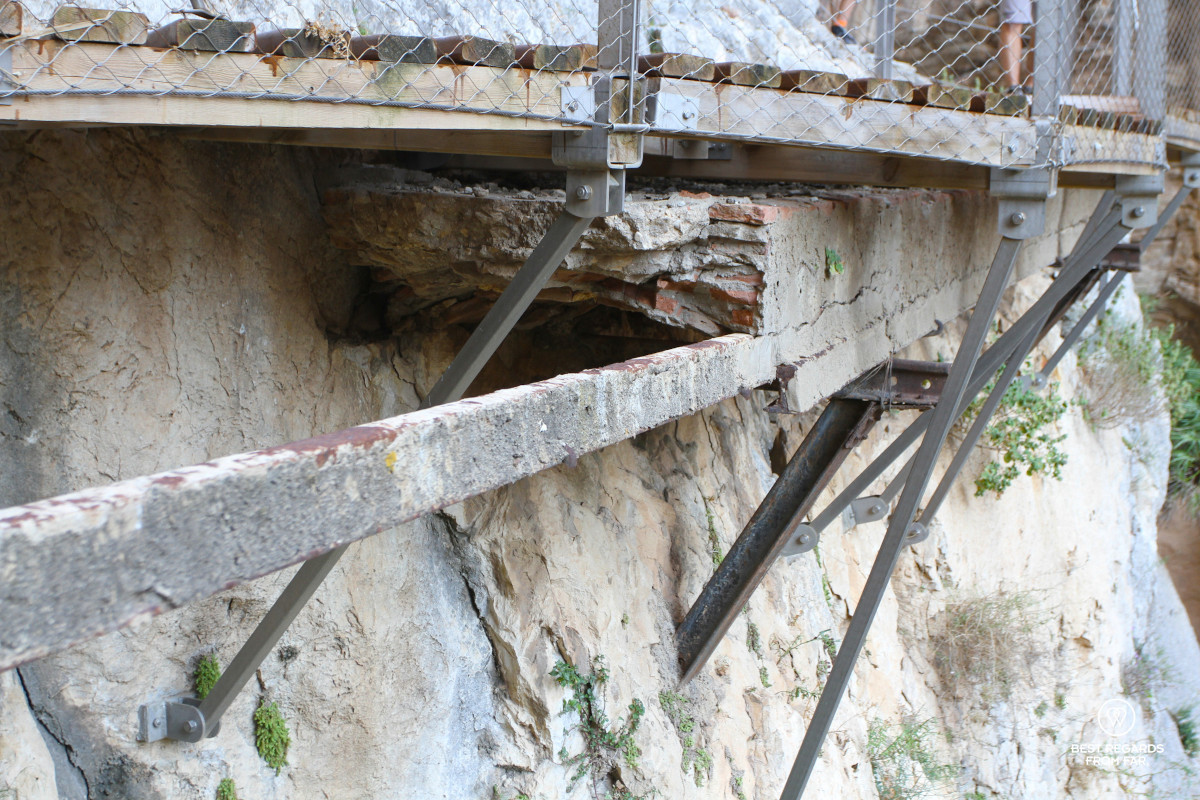
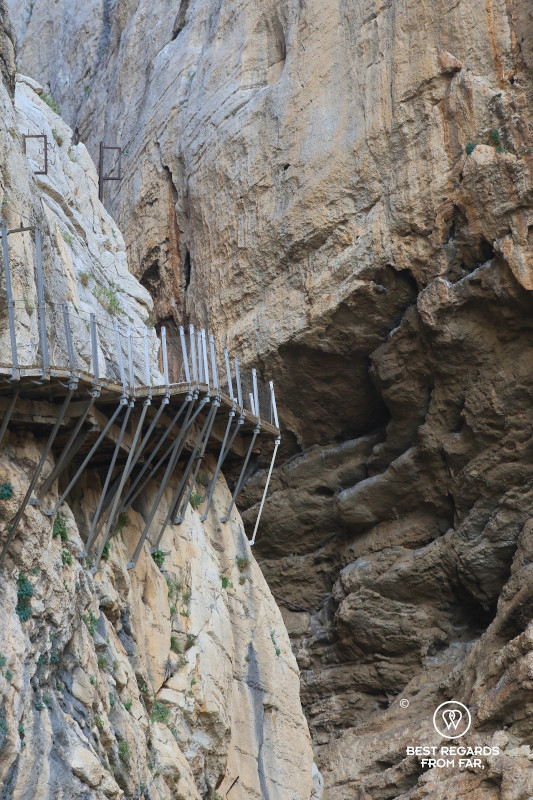
To service the canal, men had to gain access to all of its sections. This was a tricky balancing exercise: wooden planks were shuffled between basic staples fastened into the vertical cliff. This dangerous undertaking and slow process got upgraded to a narrow concrete walkway that was bolted into the cliffs.



Villagers, and mostly schoolchildren used the spectacular and dangerous route daily, cutting travel time to El Chorro by five hours! The remains of rusty bolts and narrow cement slabs give an insight into the daily equilibristic exercise that maybe surprisingly never led to any casualties.
In 1921, King Alfonso XIII famously braved the treacherous trail. Beyond the sheer difficulty, that specific day, the king braved a storm with 90 kilometers per hour (56 mph) winds! This quickly became the talk of town and far beyond. People searching for this path would ask the locals; “Where is the path that the King walked?” And so it got its name: El Caminito del Rey, The King’s Little Walkway.


Daredevils’ Playground to Tourism Gem
Decades went by. The canal was dry, the industry moved on, and the walkway began to crumble. By the 1980s, it had become a magnet for thrill-seekers. Bolts rusted, slabs fell, and only climbers with nerves of steel dared to cross its shattered beams, not always successfully though, leading to a definite closure.
The Caminito del Rey was completely renovated with a 9-million-euro ($10.5 million) envelope between 2011 and 2015. A new wide wooden boardwalk was anchored into the cliffs, hovering above the original path. Today, glass viewing platforms, dramatic suspension bridges, and sheer vertical drops keep the adrenaline of most visitors pumping. The comfort and safety of the current path makes it hard to imagine what it had been like for years, and keeping an eye on the remains of the old sections of the path gives a glimpse into the life-threatening endeavor it used to be.

Geological Time Travel Through the Gorge
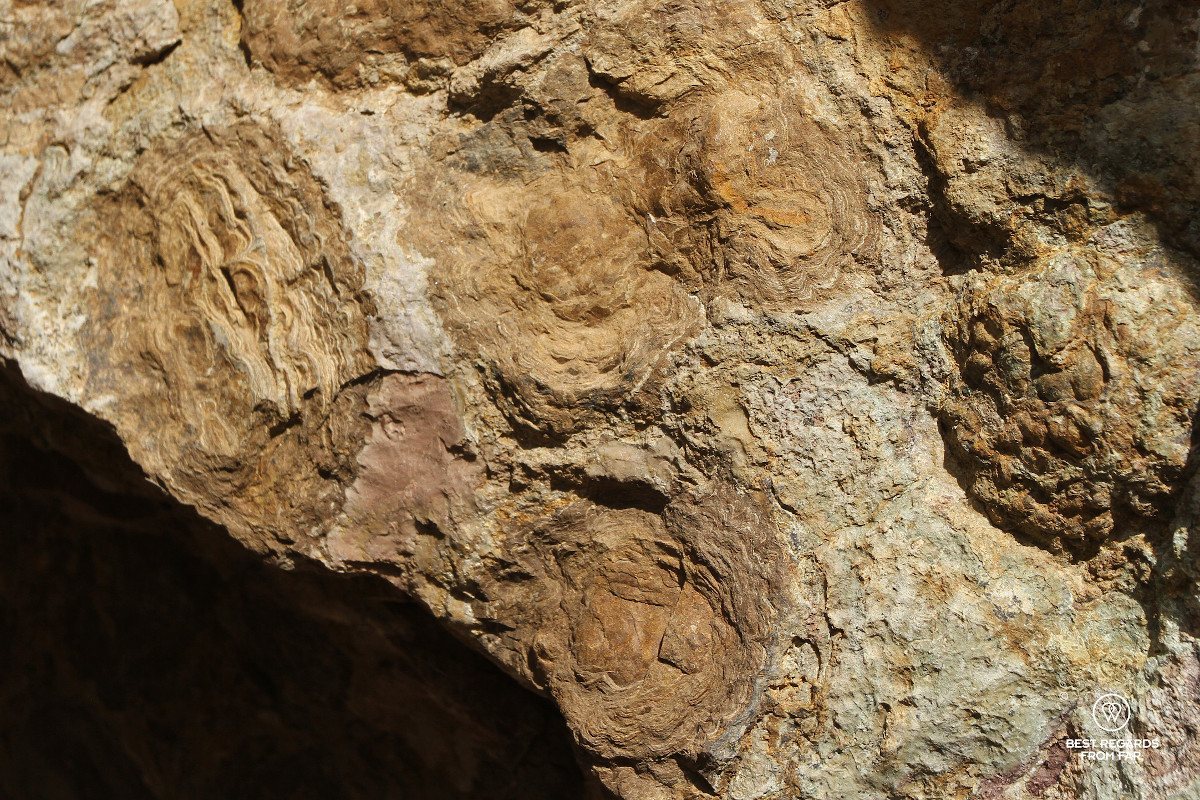
The incredible views make it very easy to overlook the impressive rock formations that include world’s oldest fossils, stromatolites. Thankfully, the specialized guides provide more than historical story-telling, and point out to the perfect geometries impressed in stone—the fossilized spirals of the ammonites from ancient sea life.
Stromatolite fossils, the oldest known fossils on Earth that formed microbial life over 400 million years ago and represent the very beginning of all life on our planet are also present and decorate the stunning cliffs through the canyon. The timescale is hard to grasp!

A Birder’s Paradise
While not a strenuous hike at all, taking a break now and then and looking up to the sky can be rewarded with the sight of griffon vultures, catching the thermal winds that rise from the canyon floor. Not only are the cliffs home to these endangered scavengers, also Golden eagles, Bonelli’s eagles, Peregrine falcons, Egyptian vultures and Eurasian eagle-owls nest here.
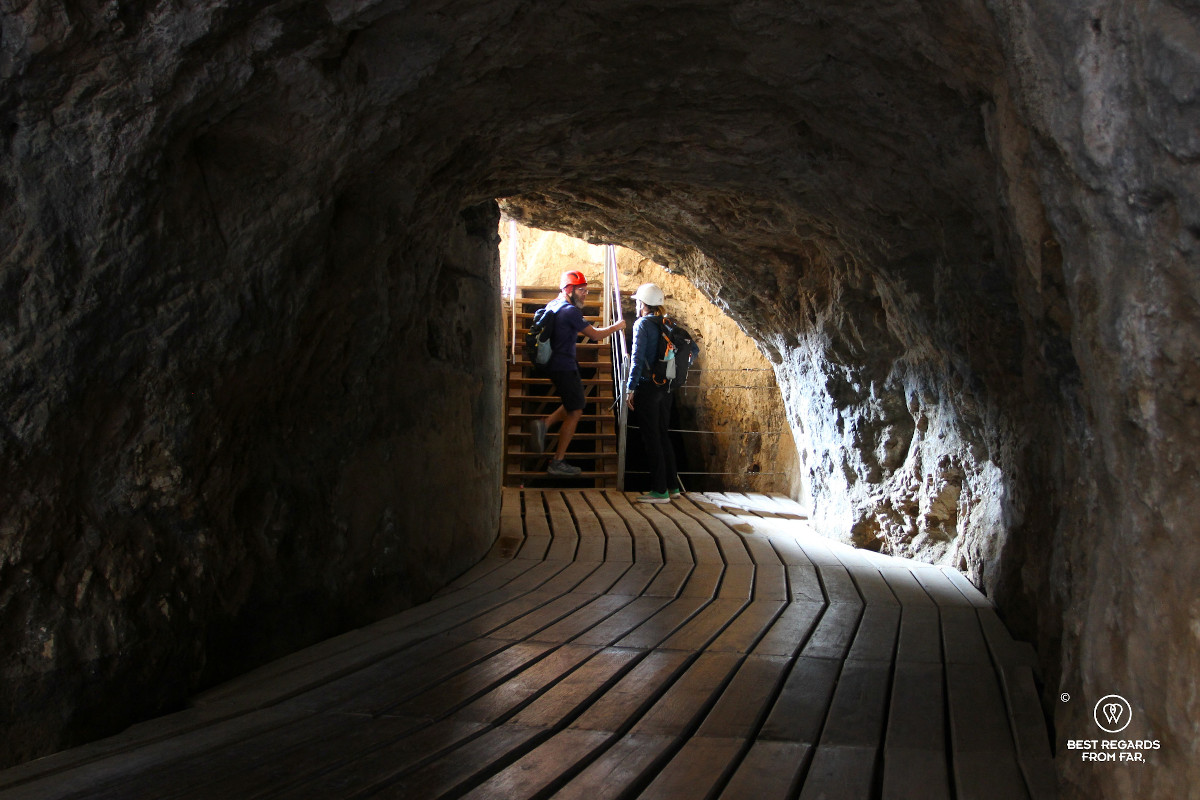
While exiting the first part of the canyon, the well-engineered boardwalk makes way for a winding gravel path amongst holm oaks, tamarind trees and shrubs. The roaring sound of the water makes space for silence which gets filled with bird and frog chirpings. The nature is prolific around the Caminito del Rey that is part of the Desfiladero de los Gaitenes Natural Park!

***
While crossing the dam of one of the reservoirs back on our scooters, we stop to look back at what looks like impenetrable mountains. It is hard to imagine how men could build such a structure that today gave us access to a precious nature, a canyon that had remained inaccessible for millennia. Walking the Caminito del Rey has proven to be definitely more than a cliff side walk.

Travel tips:
- Access is limited to 1,100 visitors per day. Timed entries sell out weeks ahead, so make sure to book your access to the Caminito del Rey well in advance!
- The trail goes in one direction only with a shuttle bus linking back to the parking lots.
- Prefer a guided walk to learn more about the history and see fossils and birdlife you would not otherwise.
- To get around Andalusia and park near attractions easily, consider a scooter, and reach out to the reliable DBike Rent that provides an excellent service including drop off and pick up.
- Check out this interactive map for the specific details to help you plan your trip and more articles (zoom out) about the area!
For more in Spain, click on these images:


 Best regards from far,
Wow, that is one heck of a trail! Thank you for sharing!
You would have nailed it easily!!! Thanks!
A wonderful looking walk with lots of history and the chance to spot some beautiful birds. Saving for future travel plans, this is right up my street!
Thanks Helen! We are very aligned then 🙂
Hope you get to visit soon!