Text: Claire Lessiau
Photographs: Claire Lessiau & Marcella van Alphen
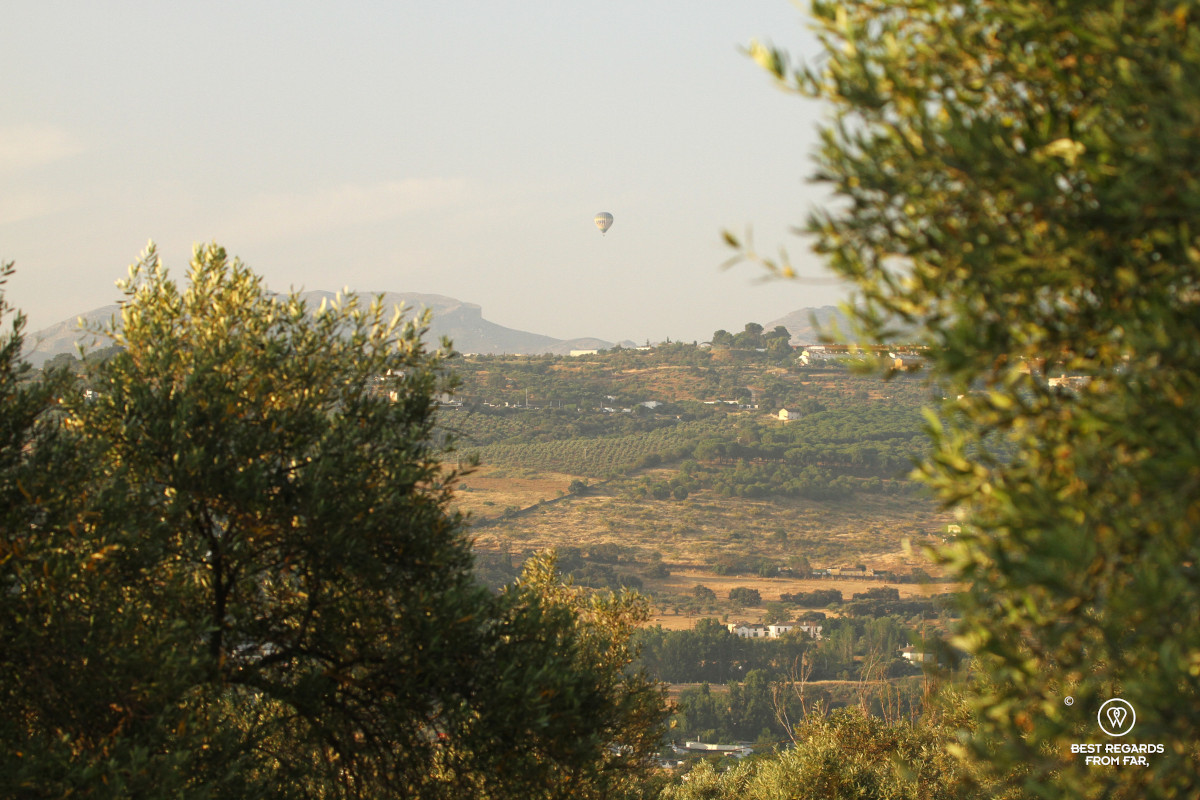
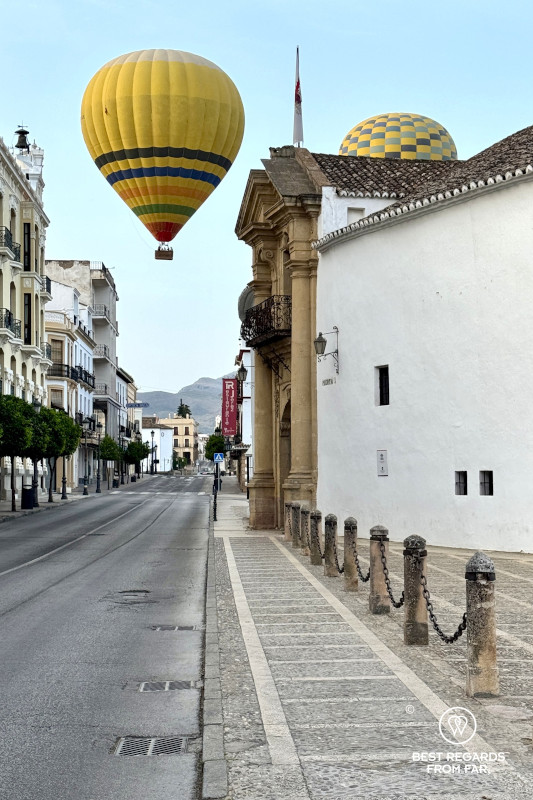
While many visitors spend only a few hours in Ronda, take your time to soak up the atmosphere of this charming Andalusian town perched high above a plunging gorge, one of the most dramatic of Spain, and to explore its surroundings horseback riding between olive groves and vineyards, staying at a lovely boutique countryside hotel overlooking the hills of the Spanish Tuscany, and exploring surrounding white washed villages.
Pin it for later!

1. One of Spain’s Most Dramatic Town, Carved by Time
As the Guadalevín River flows from Sierra de las Nieves to the Mediterranean Sea, it carves a beautiful canyon through sedimentary rocks—some as old as 250 million years. Millions of years of erosion have led the “deep river” (by its Arabic etymology) to carve the beautiful Tajo Gorge, a vertical and narrow canyon that divides the city of Ronda into two parts.
The city appears to cling precariously to the cliffs, with historic buildings perched dramatically over the edge. While the vertical canyon is no more than 500-meter long, it is as deep as 80 meters at times and it is simply spectacular! The sight is particularly magical at sunrise, when Ronda is still blissfully quiet, just before day-trippers arrive.
Below the Puente Nuevo—the emblematic “New Bridge”—the river cascades into waterfalls and emerald pools, eventually flowing into a peaceful valley planted with fruit trees and with mountains as a backdrop. Along its path, about a dozen flour mills have been counted, powered by the Arab irrigation channels carved into the rock of the cliffs. Hydraulic devices such as siphons, slides, valves, spillways, ravines and tunnels completed the fascinating structure.

2. The Birthplace of Modern Bullfighting
Bullfighting may be one of Spain’s most controversial traditions, and Ronda’s role in its evolution is undeniable. In 1572, King Philip II established the Royal Riding School of Ronda (Real Maestranza de Caballería de Ronda) to train cavalry officers. Bullfighting on horseback that had been a tradition since medieval times was part of the training, but in the late 18th century, Ronda-native Pedro Romero (1754-1839) revolutionized the practice by confronting bulls on foot, transforming it into a refined and choreographed art form, and democratizing it at the same time.
Romero famously fought over 5,558 bulls in his 28-year-long career, without any major injuries, and is revered as the father of modern tauromachy. The legendary matador triggered the golden age of the corrida, and the bullring of Ronda got erected in 1785 and remains one of the most iconic of Spain.
Illustrious spectators such as Orson Wells and Ernest Hemingway were captivated by bullfights in Ronda. The writer loved Ronda and featured it in his novel “For Whom the Bell Tolls” while the filmmaker was so enchanted by Ronda that his ashes are buried on a property near the town. The aesthetic of the bullring attracted Madonna in town to shoot the music video for “Take a Bow”.
3. The Best-Preserved Arab Baths in the Iberian Peninsula
Tucked into the former Moorish quarter, down near the river outside of the city of the time, Ronda’s 13th-century Arab Baths (Baños Árabes) are the best-preserved Islamic thermal complex in Spain and Portugal. Modeled on Roman baths with their pools (and not Turkish baths with hot stones and steam rooms), the layout includes cold, warm, and hot rooms, along with a reception area and boiler room.
The warm room is a highlight—its horseshoe arches and star-shaped ceiling openings to let the natural light through softly create a serene, otherworldly ambiance. More than a hygienic or leisurely activity, the baths were of high social importance and men or women met, chatted and rested for hours.
Ingeniously engineered, the baths used a donkey-powered waterwheel (noria) to elevate water, which then flowed via a sophisticated system of aqueducts and pipes. This refined legacy of Moorish engineering and culture was brought to an end by the Catholic Inquisition, which deemed the gender-separated communal nude bathing practices inappropriate.

4. The New Bridge First Collapsed
Ronda’s iconic bridge, the Puente Nuevo (“New Bridge”), may look timeless, but it was actually completed in 1793 after 42 years of painstaking work. It replaced an earlier one-arched bridge built in 1735 that tragically collapsed just six years later, killing 50 people.
Designed by architect José Martín de Aldehuela, the Puente Nuevo rises 98 meters above the gorge (making it world’s tallest between its completion in 1793 and 1839), constructed from stone quarried directly from the canyon below. Today it links Ronda’s old Moorish quarter with its modern neighborhood, offering jaw-dropping views and remaining the symbol of Ronda.

5. One of the Oldest Continuously Inhabited Areas in Spain
Ronda’s origins trace back thousands of years, far beyond its Moorish architecture and is one of the oldest continuously inhabited areas in Spain, with human presence dating back to the Neolithic period. Archaeological discoveries in nearby limestone caves, such as the Cueva de la Pileta, reveal cave paintings, tools, and skeletal remains that suggest human activity here as early as 25,000 BCE.
By the Bronze Age, the region saw the development of fortified hilltop settlements. The ancient Iberians, followed by Phoenician traders, settled in the area, laying the groundwork for early urban life with their metallurgy, agriculture, and religious practices.
Under Roman rule, the area flourished. The Romans established the city of Acinipo just 20 kilometers from modern Ronda. Meanwhile, a smaller Roman outpost gradually evolved into present-day Ronda, strategically perched on the cliffs for defense and trade.
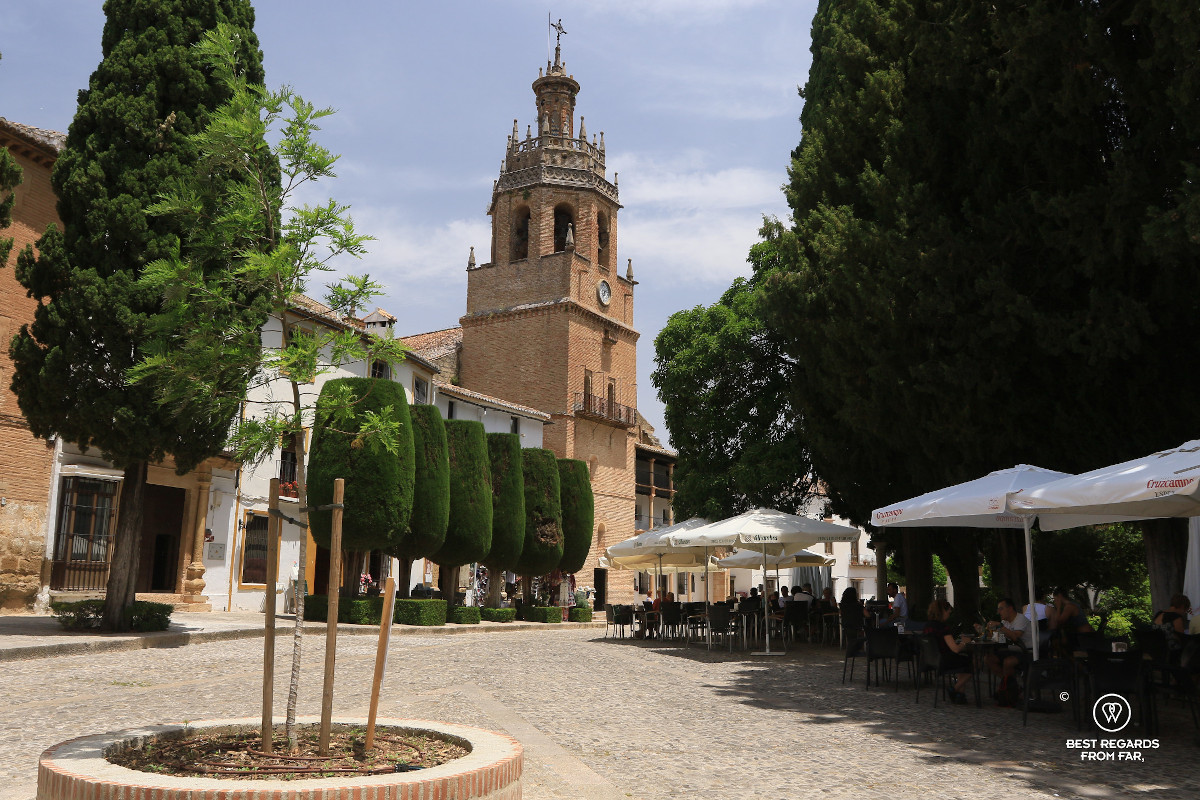


Later, during the Islamic period, Ronda became an important town in the Emirate and later Caliphate of Córdoba, eventually serving as a regional capital during the Nasrid era. The city was divided into two main districts: El Viejo (the old town), including the artisanal quarter near the Arab baths, and El Nuevo, the more affluent area on higher ground. Street names still echo the trades practiced here centuries ago—tanners, weavers, and potters all played vital roles in the community.
6. An Underrated Wine Region
While often overshadowed by more famous Spanish wine regions, Ronda is quietly gaining a reputation for its boutique wineries and elegant red wines. Over 20 boutique wineries craft excellent tintos, thanks to the region’s altitude and climate. These pair perfectly with local specialties like rabo de toro (oxtail stew) or chorizo al vino (chorizo in red wine).

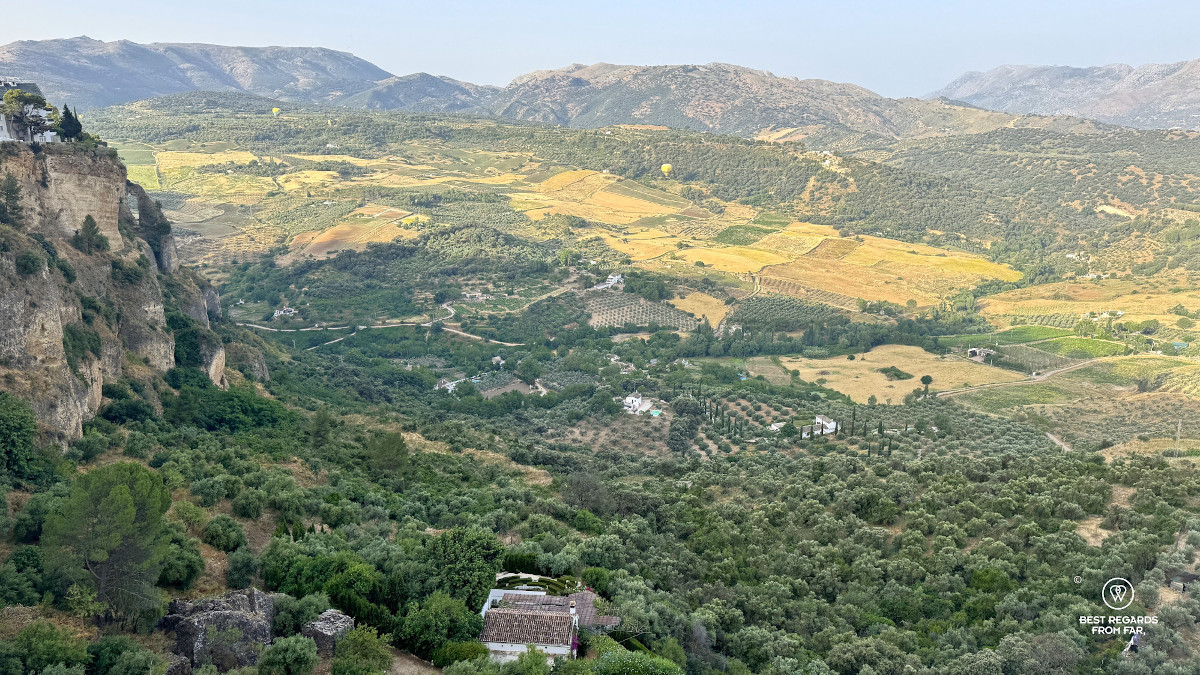
A wonderful way to savor Ronda’s culinary and wine offerings is at La Fuente de la Higuera, a luxurious boutique hotel nestled in olive groves just outside the town. Here, the chef prepares slow-food-inspired dishes using produce from the estate’s garden—like chilled salmorejo (the traditional Andalusian cold cream of tomatoes), Moorish-inspired lamb shoulder, or leek puff pastry—all accompanied by the estate’s own extra virgin olive oil enjoyed on the homemade delicious bread with a pinch of salt and a glass of local red, with views stretching across the so-called “Andalusian Tuscany.”


Travel tips:
- To enjoy Ronda to the fullest, make sure to spend at least a night onsite, or even better two! Enjoy the city without the crowds makes all the difference.
- Indulge and stay at La Fuente de la Higuera, less than 10 minutes away from Ronda and in a rural lovely luxury.


- To get around, scooters are ideal as parking is quite tricky in Ronda and the roads quiet and well maintained.
- The tourism board of Ronda offers a visitor pass that includes entry to highlights like the Palacio de Mondragón and panoramic trails along the Tajo.
- This article is also featured on GPSmyCity. To download this article for offline reading or create a self-guided walking tour to visit the attractions highlighted in this article, go to Walking Tours and Articles in Ronda.
- Check out this interactive map for the specific details to help you plan your trip and more articles (zoom out) about the area!
For more in Spain, click on these images:


 Best regards from far,