Text & photographs: Claire Lessiau
Spend an evening in Seville to the rhythm of flamenco and clinking glasses, and discover that its culture is not something you visit—it is something you taste, hear, and feel deep in your heart.
Pin it for later!

***
Across the Guadalquivir River from the historic heart of Seville lays La Triana, a neighborhood that has lived to the rhythms of flamenco since the 18th century. This once working-class district—where gypsies and Moorish settled just a bridge away from the wealth of the capital of Andalusia—remains the soul of southern Spain’s most passionate art form. Experience it yourself in the cradle of flamenco!


Tapas Before the Show
In Spain, savoring tapas with a drink is practically a national sport. And in Triana, tasting the local flavors is the best way to start your cultural immersion.
Start your evening at Café Ceuta, a local’s favorite spot near the lively Triana Market. The walls tiled in classic ceramic tiles and atmospheric bar invites you to indulge in local specialties. Begin with mojama, often referred to as “Iberian ham of the sea”—a delicacy of salt-cured tuna, a preserving technique dating back to Phoenician times. Savory, it is perfectly paired with a glass of Manzanilla, a dry sherry from Sanlúcar de Barrameda that echoes the sea breeze and the Andalusian sunshine of the coastal town.
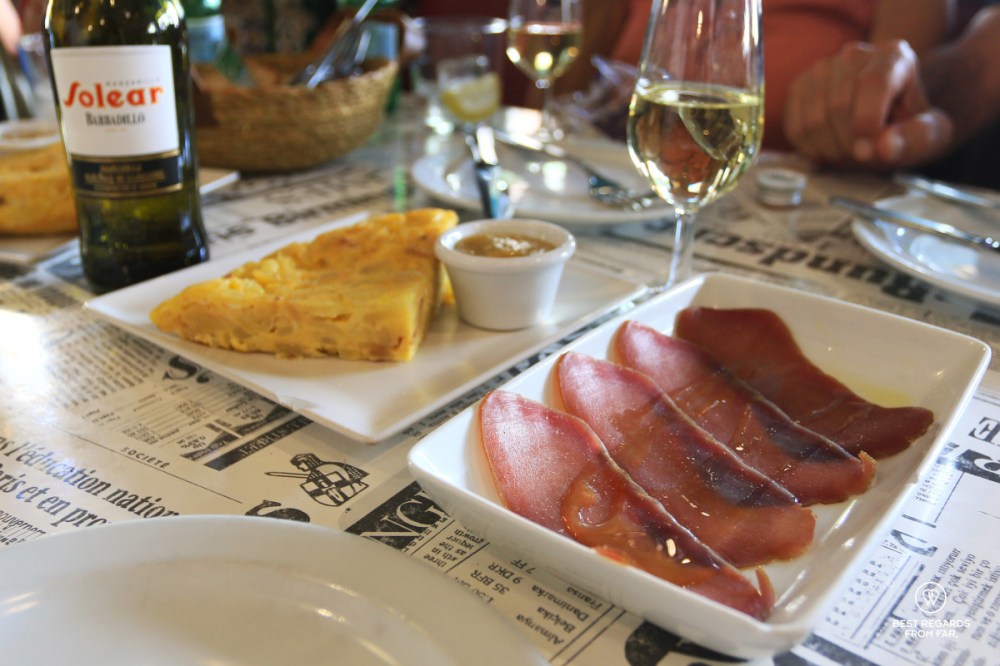
Next, try Seville’s creative twist on the classic tortilla de patatas. While Spain is torn on one of its most important debates—whether onions enter in the composition of tortilla or not—in Seville, there is no doubt about the local twist: the tortilla is served with a whisky sauce, a pure blend of onions, garlic, and whiskey. The slight sourness of the sauce mirrors the delicate tanginess of the Manzanilla, making it an excellent combination.
A Flamenco Show in La Triana
A short stroll away taking in the bohemian atmosphere of the neighborhood, the intimate Teatro Flamenco Triana is where to enjoy top-quality flamenco shows in La Triana.
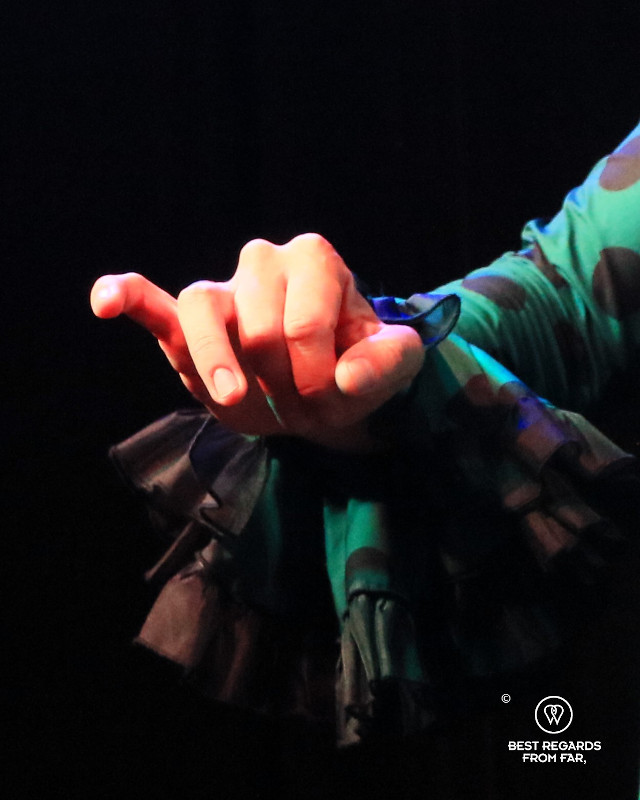
On stage, the raw emotional power of authentic flamenco exudes with the talent of international and local artists. The dexterity of Dutch guitarist Tino Van Der Sman, the haunting vocals of Vicente Gelo and Roberto Montano, and the chemistry, the intensity of the glances, the synchronized choreography of the dance duets of Seville natives Gloria del Rosario and Pablo Egea are all captivating. In such a harmony of percussions, it is hard to identify where the beat comes from: the strumming of the guitar, the clapping, or the finger snapping, the footwork or clapping of the dancers—whether hands against each other, or Pablo hitting his firm quadriceps with his flat open hands.

Tapas, Continued!
After the show, another round of tapas is in order! Wander a few blocks to Bodeguita Barbiana Triana, another favorite with a markedly different vibe. Here, the crowd is mostly Sevillanos, sipping vermouth, vino de naranja (orange wine) kept in small barrels and often homemade, and nibbling on old-school tapas.
Orange wine, an Andalusian specialty, is made by macerating bitter Seville oranges in aged white wine or sherry. The fortified wine is deep amber in hue, with vibrant citrus notes highlighted by subtle spices and a touch of bitterness. Paring it is another story, but its sweet and aromatic flavors make up for it, and its addictive nature prompt to accompany it by a few bites.


Try it with aliño de patatas con melva—a dish of cold potato salad dressed with olive oil, vinegar, finely chopped onions and parsley and topped with tuna—or go for heartier fare like costillitas, tender pork ribs marinated in a blend of soft spices and slow-cooked on the bone to melt in the mouth. Croquetas de pringá, crispy croquettes filled with a creamy blend of pork, beef, and black pudding traditionally pulled from the rich puchero stew which recipe is different in every bodega and every home is another traditional choice to not miss.
Across the Guadalquivir: Seville’s Historic Heart
Back across the Guadalquivir, lays Seville’s historic district. Leaving the bank of the river, streets narrow dramatically, forcing pedestrians to flatten against walls as cars try to squeeze past. Getting lost here is part of the charm.
The maze of alleys seems to inevitably open up to the majestic Cathedral of Seville, a Gothic giant built atop a former mosque in the 15th century. It was envisioned to be so enormous that people would think they had lost their mind when looking at it. While still overwhelming today—it remains the largest Gothic cathedral in the world and the third largest of any Christian church—it is hard to imagine what its sheer scale must have felt like to the passersby back then!


Seville’s golden age peaked in the 16th century, when it became the gateway to the New World. Home to numerous colonies of foreign merchants, who gave the city a cosmopolitan vibe, it was then the wealthiest city in Spain and one of the wealthiest and most populous cities in Europe. Evidence of its imperial past can be seen in the General Archive of the Indies, a UNESCO World Heritage Site. Housed in the elegant Casa Lonja, between the Cathedral and the Alcázar, it contains over 43,000 documents related to the Spanish colonies in America and Asia, stored on 9 kilometers of shelves!
All this splendor feels very far from the now gentrified streets of La Triana (it is actually for the 1929 Seville World Exhibit that the gypsies were forcefully displaced to clean up the area). Yet, the dance of the gitanos has made it to many venues in the old town and has become a must-see show for anyone visiting Seville.
And More Flamenco Heartbeat in the Historic Center
Just a stone’s throw away from the cathedral head to La Milonga Tablao Flamenco, a small venue with a big heart, for another taste of flamenco.
Founded by two South American women, this tablao is known for its strong feminist voice and its all-female Friday performances, a rarity in a male-dominated art form.

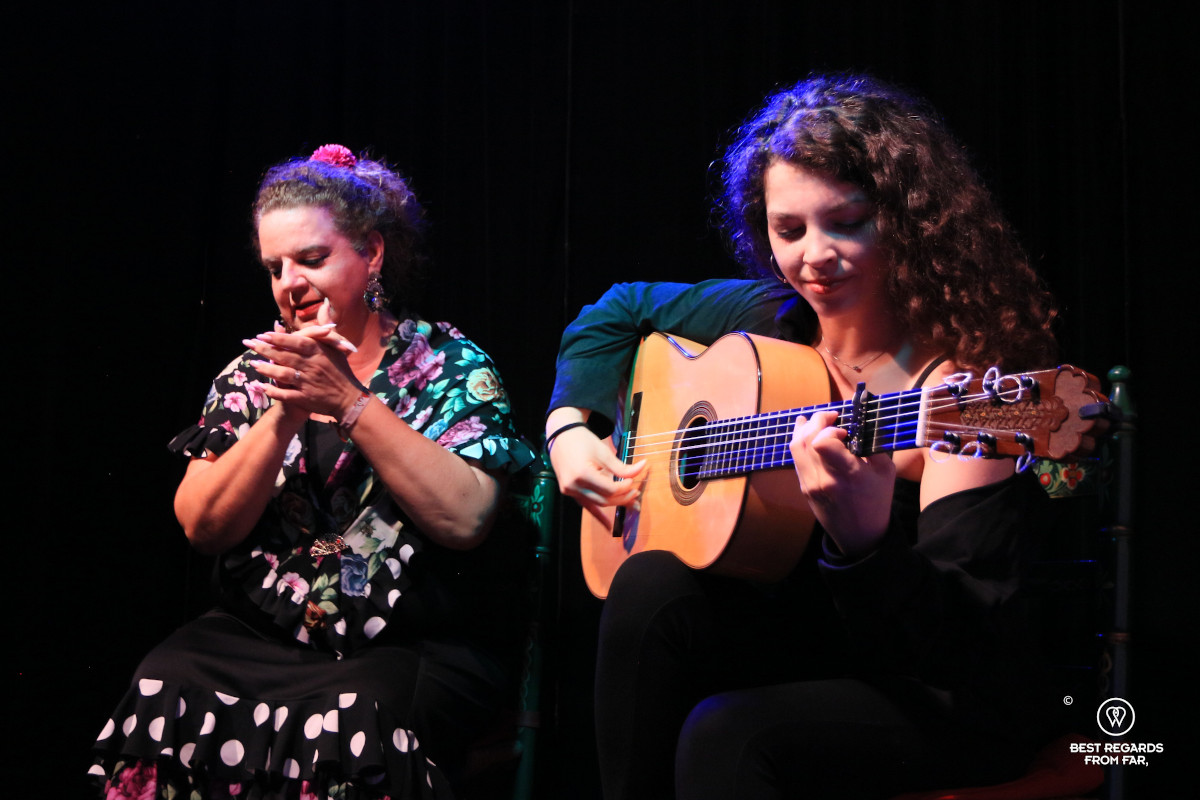
Seated in the front row, you are drawn into a very intimate experience. Guitarist Silvia Brenner dazzles with a remarkable blend of precision and emotion. She is running her fingers along these six chords with such agility and speed that it is impossible to follow, pinching a few chords at the same time for a remarkable sound. The expressive vocals lay a foundation for dancer Adele Brugidou, who channels passion and intensity through every movement—her hands shaping stories, her footwork setting the tempo, both not only expressing a variety of emotions and symbols but also communicating with the musicians for a performance in which it is hard to believe there is room for improvisation.
A Brief History of Flamenco
Flamenco’s roots are as complex as its rhythms. The Romani people—often called “Gypsies,” in reference to Egypt where Spaniards thought they came from though their origins trace back to India—arrived in Spain centuries ago. Most of them settled in Andalusia, and their folklore evolved mixed with other Moorish, Jewish and Spanish influences. Their marginalization shaped flamenco’s expressive intensity.
In the 18th century, many gitanos settled in La Triana, living in shared courtyards known as corralones. The sounds of Gypsy traditions mingled, and with word-of-mouth by the mid-19th century, flamenco had professionalized in Seville’s cafés boosted by the bourgeois Romanticism of the time. The rest is history, still unfolding nightly in the streets of the Andalusian capital…
***
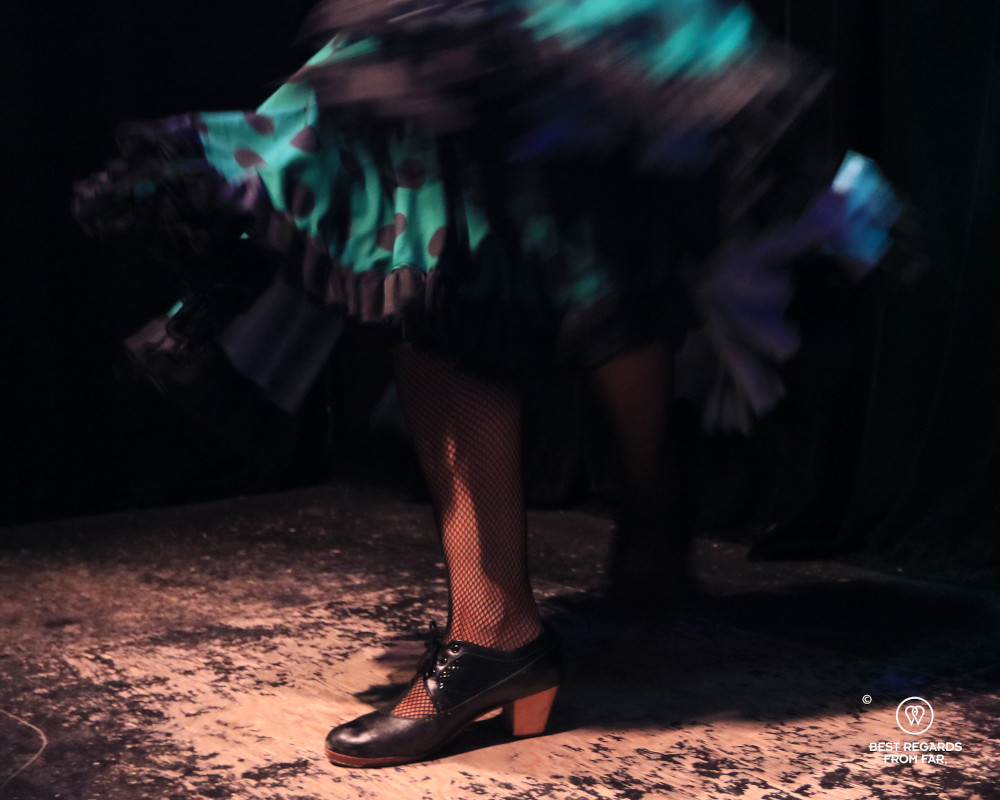
As the night winds down, and the echo of heel taps fades into the warm Andalusian air, one thing becomes clear: in Seville, the rhythm of flamenco beats with the clinking of glasses and the fast pace of conversations. It has left the courtyards and corralones, and resonates in many venues across town where the centuries-old traditions remain vibrantly alive.
Travel tips:
- To live this experience with a guide, book a “tapas & flamenco tour” with Spain Food Sherpas.
- The programming of flamenco shows changes nightly. The artists tend to perform in various venues across town different nights of the week.
- This article is also featured on GPSmyCity. To download this article for offline reading or create a self-guided walking tour to visit the attractions highlighted in this article, go to Walking Tours and Articles in Seville.
- Check out this interactive map for the specific details to help you plan your trip and more articles (zoom out) about the area!
For more in Spain, click on these images:


 Best regards from far,
We went to the same place