Article updated on July 31, 2025
Text & photos: Marcella van Alphen & Claire Lessiau
From Hokkaido to Okinawa, festivals are very important in Japan. In a very fast-paced and ultra-modern country, they are an integrant part of keeping ancient traditions alive and passing them on to younger generations. If they take place throughout the year, the best moment to witness most of them is the summer. Be warned: some are so popular that they make travelling and staying in the hosting cities difficult.
Pin it for later!

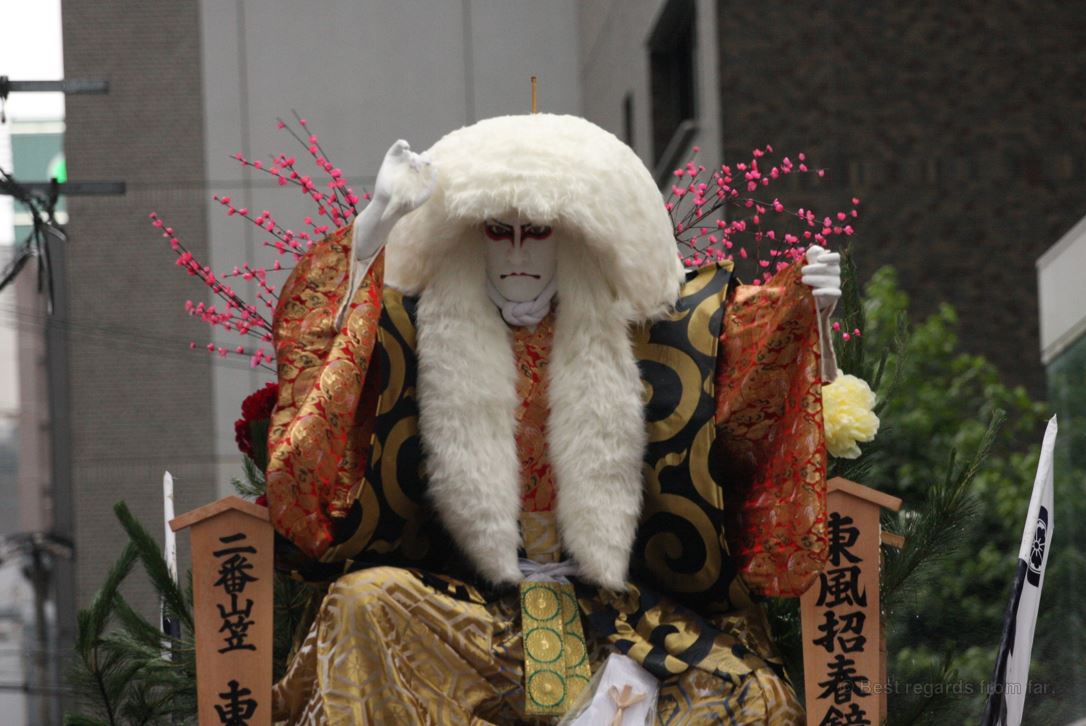
The Hakata Gion Yamakasa festival is renowned to be one of the most impressive ones of Japan. The festival dates back to the 13th century and was started to exorcize the plague. Giant floats or kakiyama measuring up to 10 meters and weighing about 2 tons were built by local puppet makers and decorated with symbols of myths and historical characters. Teams of hundreds of men dragged the floats through the city along a 5-kilometer trail in a crazy race.
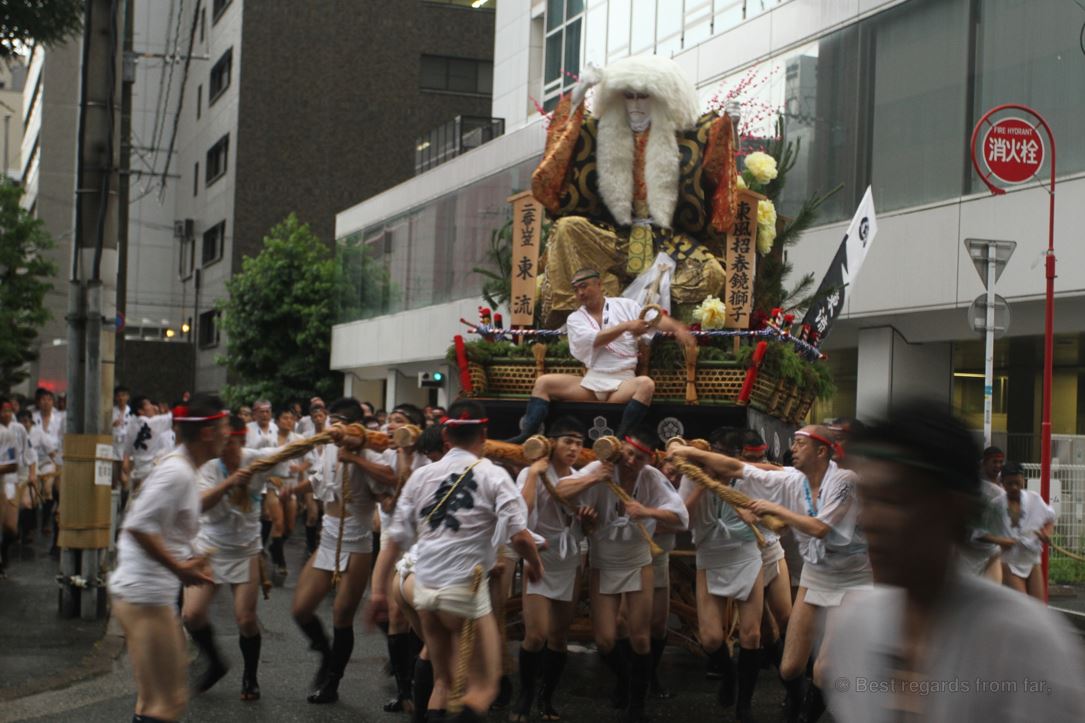
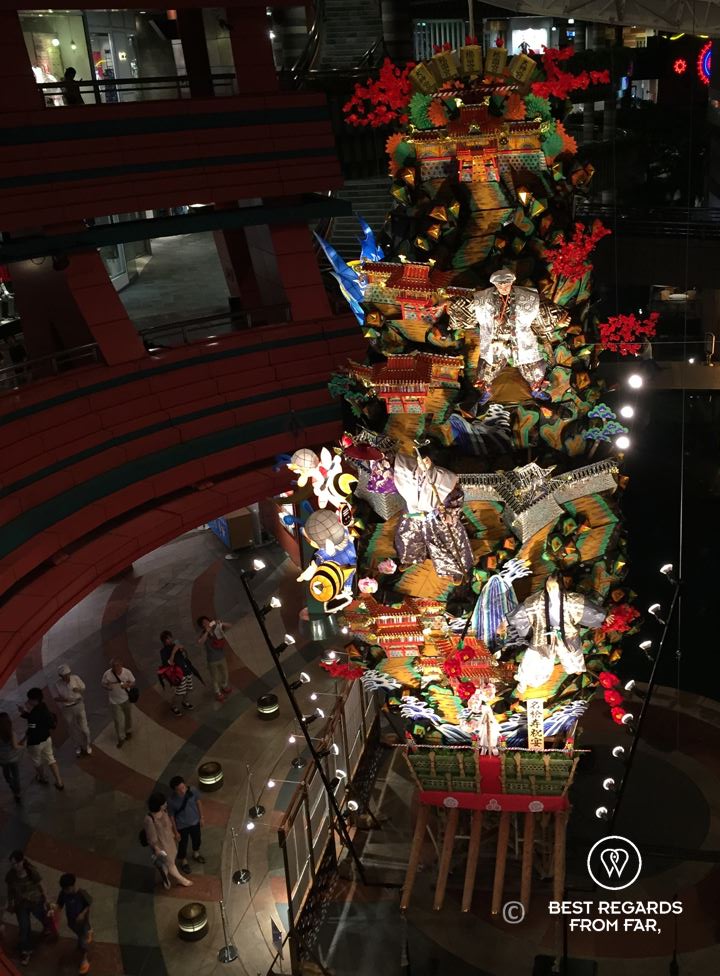
The race had to take another turn with the installation of the first hanging power cables, as it was out of a question to let the tradition down! The dimensions of the floats were adapted to the new constraints: today, 5-meter-high-1-ton-heavy floats are displayed throughout the city until the early hours of July, 15, when 7 teams drag them to Kushida Shrine. Such a challenge requires intense training.

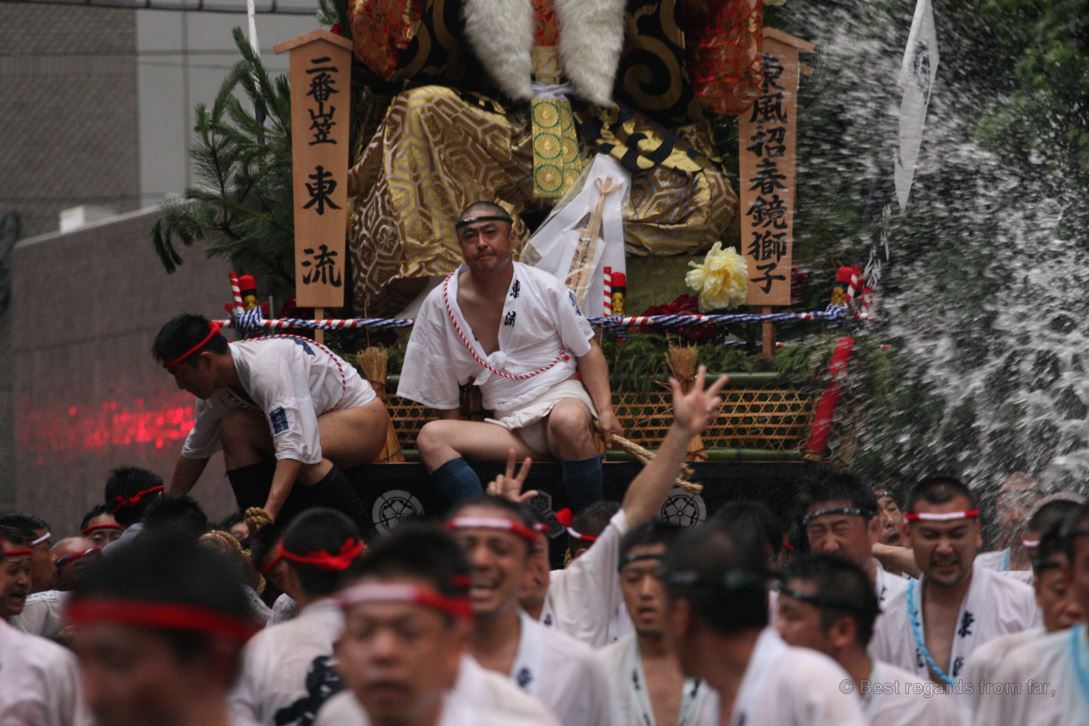
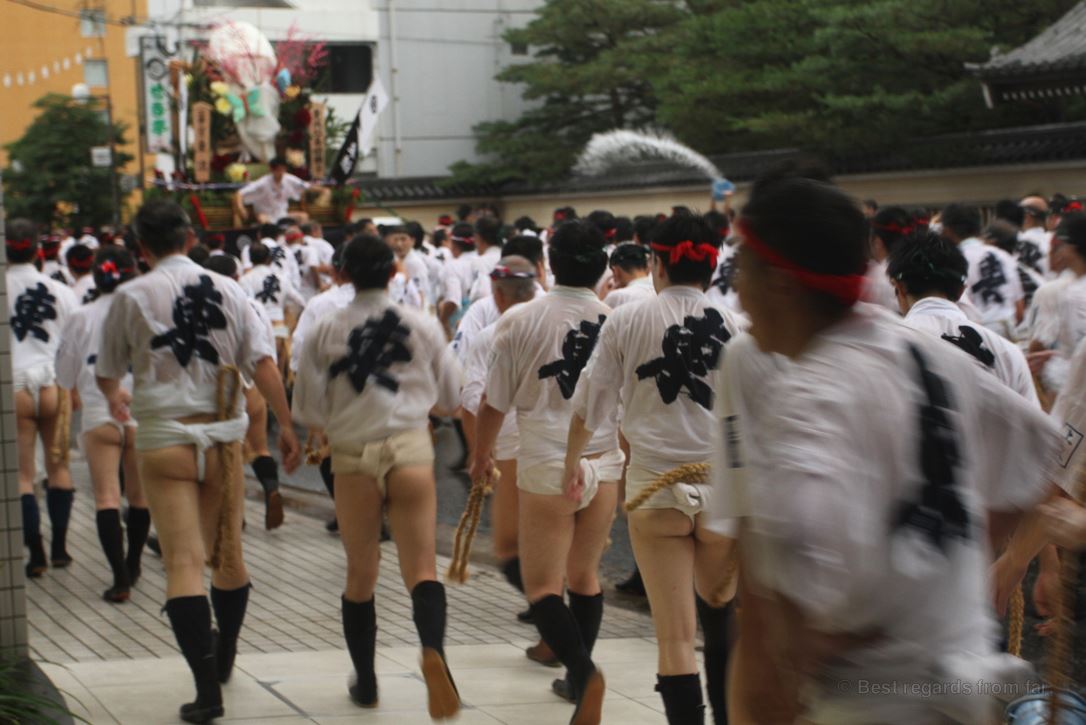
Two weeks before the race, every team goes for these trainings. Passing a street corner, a grand-father, with his son and his young grand-sons wear an unusual outfit in the distance pointing us to the training grounds. Their uniform consists of a white kimono shirt with a Japanese sign on its back, a loincloth letting their buttocks visible which holds a strong rope, bare legs with high black split-toe socks, and a blue headband. Like all the other men from their neighbourhood taking part in the race, their team can be easily identified. A street corner further, about 500 men all dressed in the same fashion are running into our direction pulling one of these floats! Spectators along the sidewalks throw buckets of water on the participants to cool them down, and on the asphalt to reduce the drag of the enormous float. Racers of all ages are repeatedly shouting “oisa, oisa!” in one voice and to the rhythm of the beating drum to keep up the pace. In a wink of an eye, the whole team disappears around the next street corner!
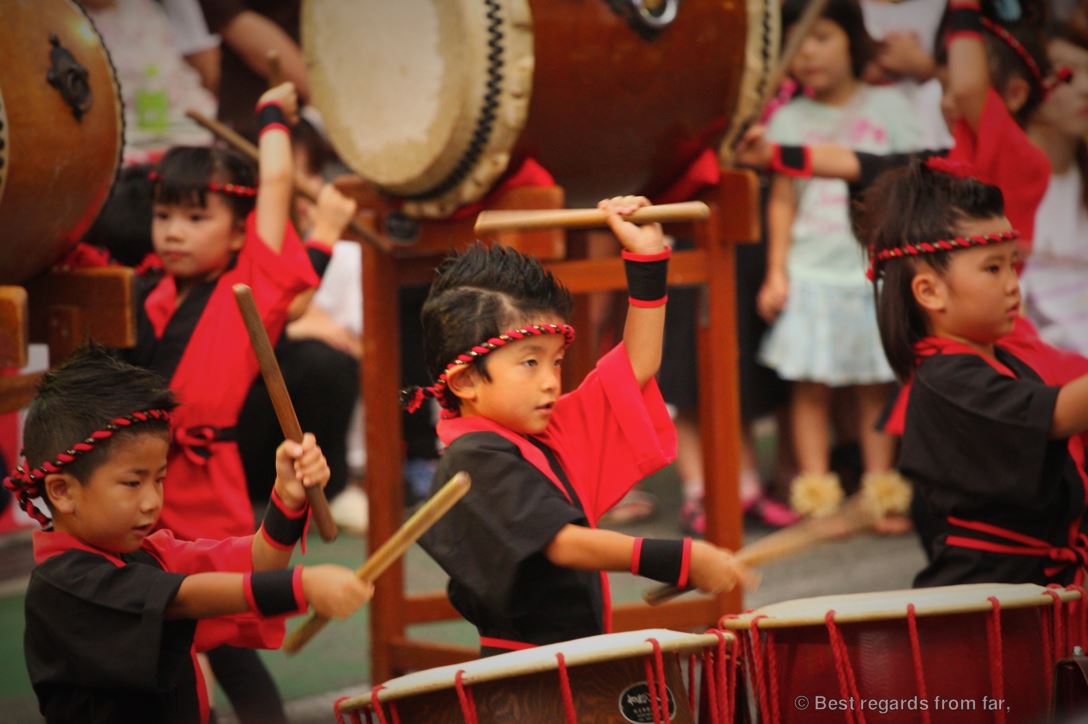
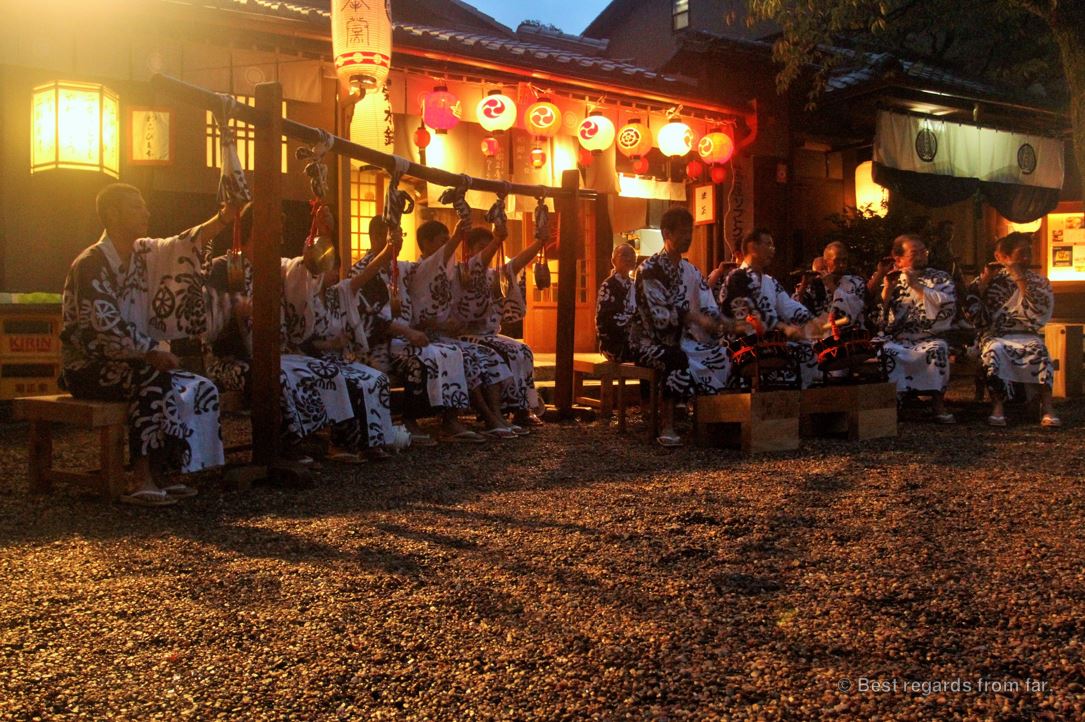
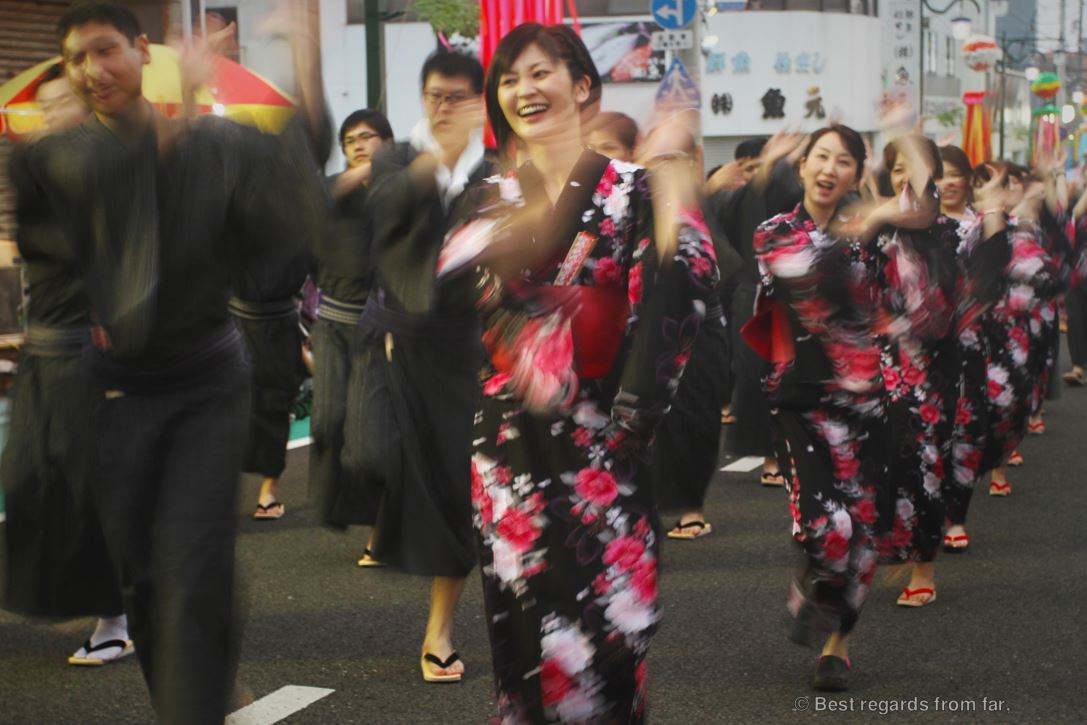
In other cities, other types of festivals take place during the summer months: processions of women in beautiful kimonos, and kids playing the traditional drums on Shikoku Island, or experienced musicians giving concerts by shrines or temples in Kyoto. Whether you are traveling specifically to attend a festival or happen to come across one, let yourself be surprised and enjoy!
Like it? Pin it!
Travel tips:
- This article focuses on the Hakata Gion Yamakasa festival that has been declared an intangible cultural world heritage by UNESCO. For a complete list of festivals in Japan for 2020 and 2021, a festival description, location and hours please refer to this extensive Japan Festival Calendar.
- Check out this interactive map (quick tutorial) for the specific details to help you plan your trip and more articles and photos (zoom out) about the area!
For everything about Japan, click here!
Or click on the images below for a selection in Kyushu:



Or click the images below for a selection:






 Best regards from far,
I lived in Hakata with my hubby long time ago. When I saw the Yamagasa for the first time, I thought it was extremely wild and masculine. Guys got drunk and the smell of them are horrible like mix of sake and their sweat, lol. I enjoyed reading your blog entry!