Updated January 4, 2024
Text & photos: Claire Lessiau & Marcella van Alphen
Embarking on a Stockholm journey is incomplete without a visit to the Vasa Museum (Vasamuseet): intriguingly, this vessel, considered the worst ever built, magnetizes over a million visitors annually and has become the pride of Stockholm!
***
Commissioned in 1625 by the audacious lion of the North, King Gustavus Adolfus II, the Vasa aims to dazzle Catholic adversaries and amplify Sweden’s Protestant prominence. The monarch’s ambitious vision, fueled by arrogance, seeks to craft the most colossal and awe-inspiring ship of its time.
At the turn of the 17th century, Sweden, lacking skilled workers, recruits Dutch shipwright Henrik Hybertsson to construct two small and two massive warships, including the monumental 69-meter-long Vasa. Navigating through three decades in Sweden, Master Henrik does not lack extensive ship-building experience. The naval venture burgeons into the largest Swedish company, with 400 workers under Master Henrik and his Swedish wife Margareta, collaborating with premier Dutch naval carpenters. But the Vasa is a special contract…
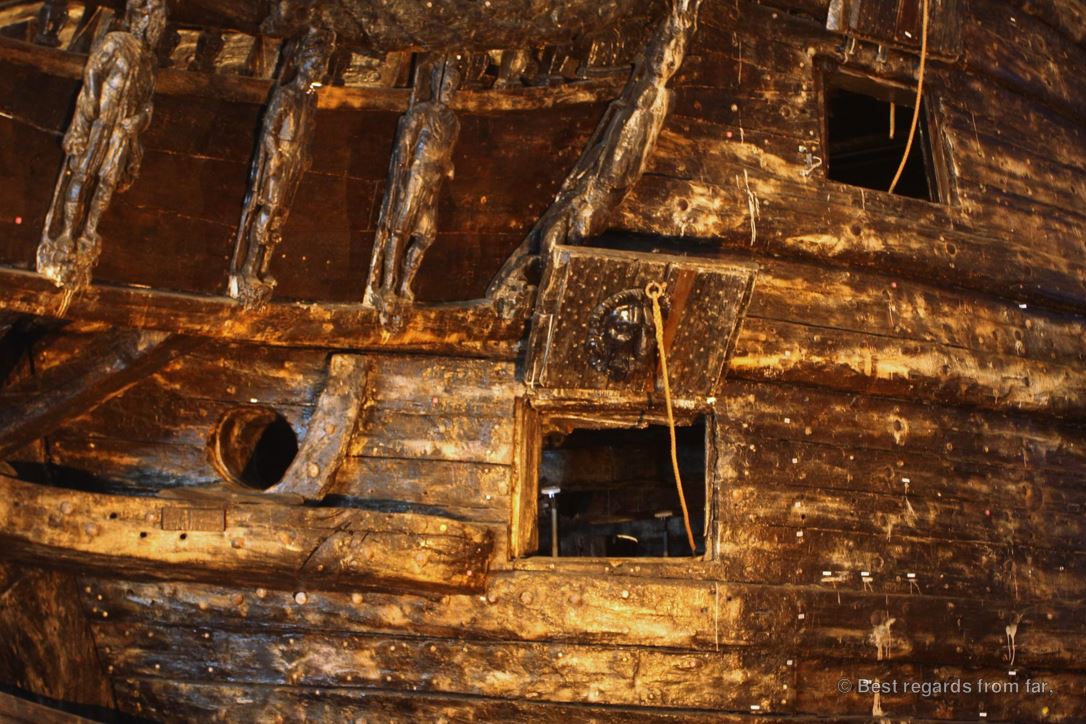
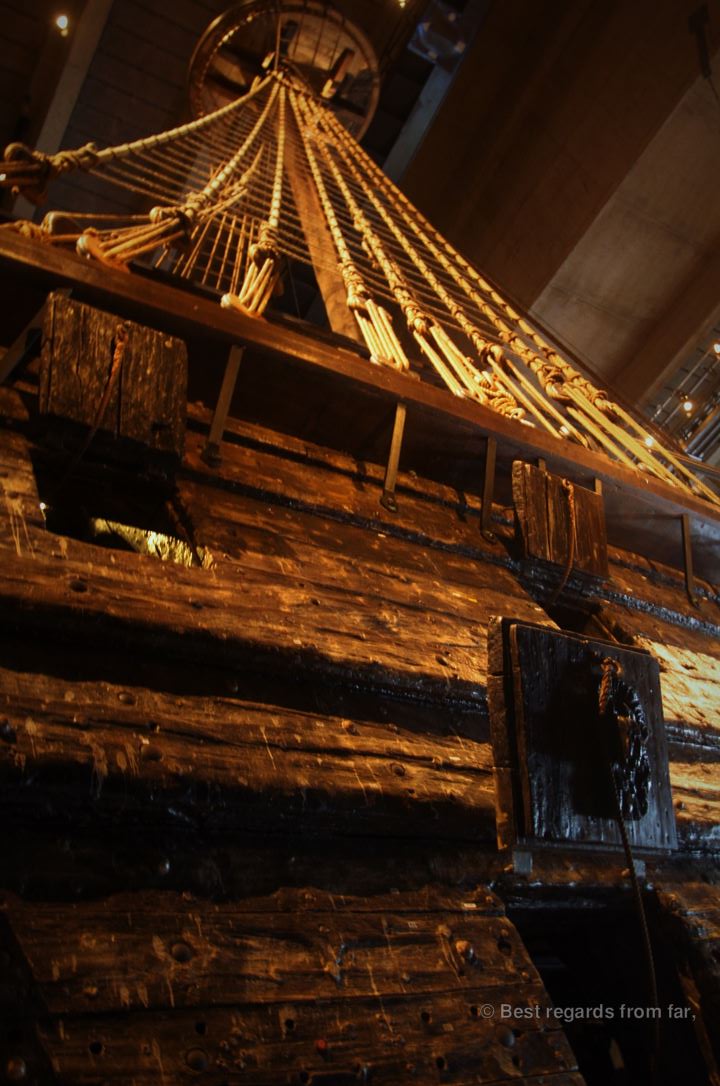

With the Vasa, Master Henrik starts working on the biggest ship he has ever conceived. However, succumbing to age, he passes away in 1627 at 65, leaving Margareta to grapple with mounting challenges. In charge of accounting and purchasing, she has to expand her skills and face many difficulties. Sweden is a small country and its wealth depends on its main resources: wood and copper. As the price of copper plummets in Amsterdam, delayed payments from the Swedish crown, plunges the Hybertsson family into a precarious situation. Wealthy thanks to their copper mines and lands, Margareta cannot face buying 1,000 oak trees, more than 1,000 square meters of French sails, and paying the wages of her workers. Some shipbuilders leave and some go on strike: the ship is late. The king is impatient.
After almost three years, the completed Vasa emerges as a colossal warship, geared up with 64 1.5-ton bronze cannons, fit for 150 sailors and 300 soldiers, adorned with hundreds of wooden sculptures by some of the most talented German sculptors, and richly painted in bright red and gold. The vessel sets sail in 1628 to fight the 30-Year War against Polish and German navies in the Baltic Sea. Yet, on its Inauguration Day, August 10th, 1628, the unbelievable happens under the eyes of most of Stockholm’s inhabitants: at about 6 p.m. that evening, while the Vasa slowly sails across the harbor, she sinks within 20 minutes and less than 1,500 meters from her starting point! 40 sailors are swallowed by the cold waters of the Baltic Sea.
***
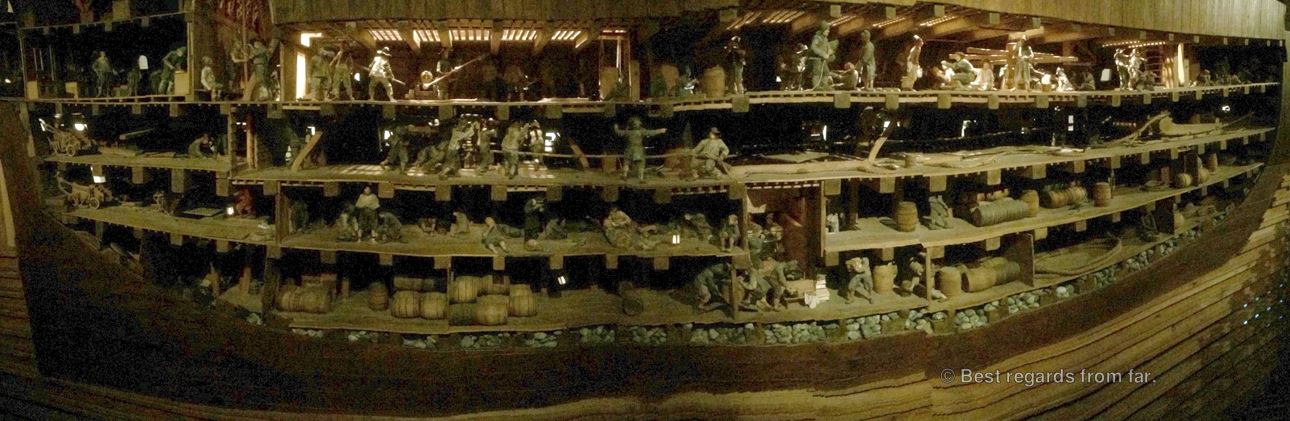
The ill-fated voyage, attributed to an insufficient ballast weight in the bilge (the 120 tons of stones that were piled up in the too narrow bilge were not enough to compensate for the height of the ship and the weight of her masts and canons: another 100 tons would have been necessary to make her stable), led to the ship’s resting place in Stockholm’s harbor for over 300 years. During the trial, officers and architects defended their choices and actions: no one could be found guilty, as everyone was responsible for only a specific task. Still today, the Vasa syndrome describes how a mission can fail if no one takes responsibility for the overall task.
***
Salvage efforts commenced only in 1956, followed by a colossal task of conservation. Today, the Vasa stands majestically in the Vasa Museum, built specifically around her.
The Swedes, in an ironic twist, transformed a monumental failure into the country’s most-visited museum, and a source of national pride!
For more Nordic inspiration, click on these images:








Travel tips:
- The Vasa museum is one of Sweden’s most visited museums, so go early to enjoy!
- This article is now featured on https://www.gpsmycity.com. To download this article for offline reading or travel directions to the attractions highlighted in this article, got to Walking Tours and Articles in (Stockholm) on GPSmyCity.
- Check out this interactive map (quick tutorial) for the specific details to help you plan your trip and more articles and photos (zoom out) about the area!
 Best regards from far,
Leuk om te lezen, en dus een aanrader om het museum te bezoeken.