Text: Marcella van Alphen
Photographs: Claire Lessiau & Marcella van Alphen
Nestled between the dramatic Swartberg Mountains to the north and the lush Outeniqua range to the south, Oudtshoorn is full of surprises. This Little Karoo gem may be known as the ostrich capital of the world, but it is far more than feathers and farms. From crawling through Africa’s largest cave and spotting meerkats at sunrise to driving one of South Africa’s most scenic mountain passes and indulging in luxurious country stays, Oudtshoorn is a place of contrasts—arid yet fertile, laid-back yet exhilarating, remote yet easily accessible. Whether you are an adventurer, wildlife lover, or cultural explorer, Oudtshoorn invites you to take it slow, look closer, and dig deeper.
Pin it for later!

1. Squeeze, Slide, Marvel: Beyond the Main Chambers of the Cango Caves
The Cango Caves are absolutely dramatic, the main chambers, breath-taking… but wait until you get past where most visitors make a U-turn, and descend into the limestone maze during the Cango Caves Adventure Tour that explores deeper into one of world’s largest cave systems.
As we step into the Cango Caves, tucked into the Swartberg foothills outside Oudtshoorn, the air is cool and heavy with moisture. The cave stretches 1.2 kilometres (0.7 miles) into the mountain. We traverse its first chamber that stuns us—an enormous hall nearly the length of a rugby field, formed entirely of flowstone. Here, rainwater once seeped through cracks in the mountain’s ceiling, depositing calcium carbonate. As the water evaporated, the calcium crystallized into giant folds, dripping curtains, and mighty pillars that gleam under the cave lights. Some of these formations are astonishingly old such as the 800,000 years old Organ Pipes, rising dramatically from the walls like a prehistoric church organ.

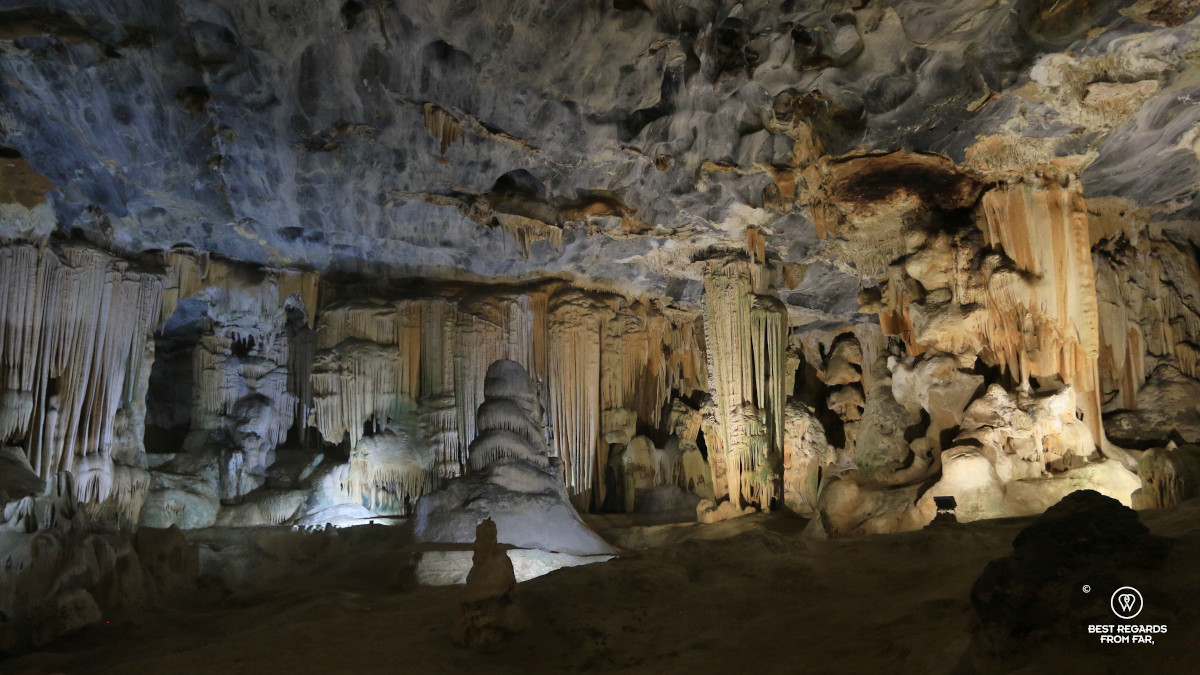
Our lively and knowledgeable guide Lisa points out stalactites—icicle-like growths that hang from the ceiling—and their earthbound counterparts, stalagmites. Where one meets the other, they form natural columns. The most elegant? The rather young Cleopatra’s Needle stalagmite—that is per cave standards with only 150,000 years of age. The aptly named Leaning Tower of Pisa extends toward a neighbouring column still in the making. The most ancient and majestic of all is the Weeping Willow, 1.5 million years old—so immense it is affectionately dubbed “the mother formation.”
But geology is only part of the story here. Lisa tells us about the cave’s early human connections. The San people once used only the entrance chamber. No artefacts have been found deeper inside—early inhabitants believed the inner caverns were home to ancestral spirits. Panels with rock art were removed long ago and now reside in museums, and the once-vivid paintings have faded, but the spiritual echoes remain.
The Cango Caves were rediscovered in 1780 by a local farmer, who lowered himself into the darkness with a rope and a single oil lamp. There were no stairs, no walkways—only raw rock and unknown voids—and barely any light. Today, we descend more comfortably down Jacob’s ladder: 117 steps spiralling into the cave’s deeper, less forgiving passages.
This is where the real adventure begins. I brace myself. Lumbago Alley forces me to crouch. The Tunnel of Love presses in on both sides, stone hugging my shoulders, heart pounding, and breath tight. Then comes the Devil’s Chimney: a narrow vertical shaft just 50-to-60-centimetre-wide (20 to 24 inches). I breathe deep, twist, and climb. The final test? The infamous Postbox—a mere 27-centimetre-high (10.6 inches) passage in which I am about to be mailed! I slide in on my belly, laughing nervously, scraping through with just enough space to exhale.
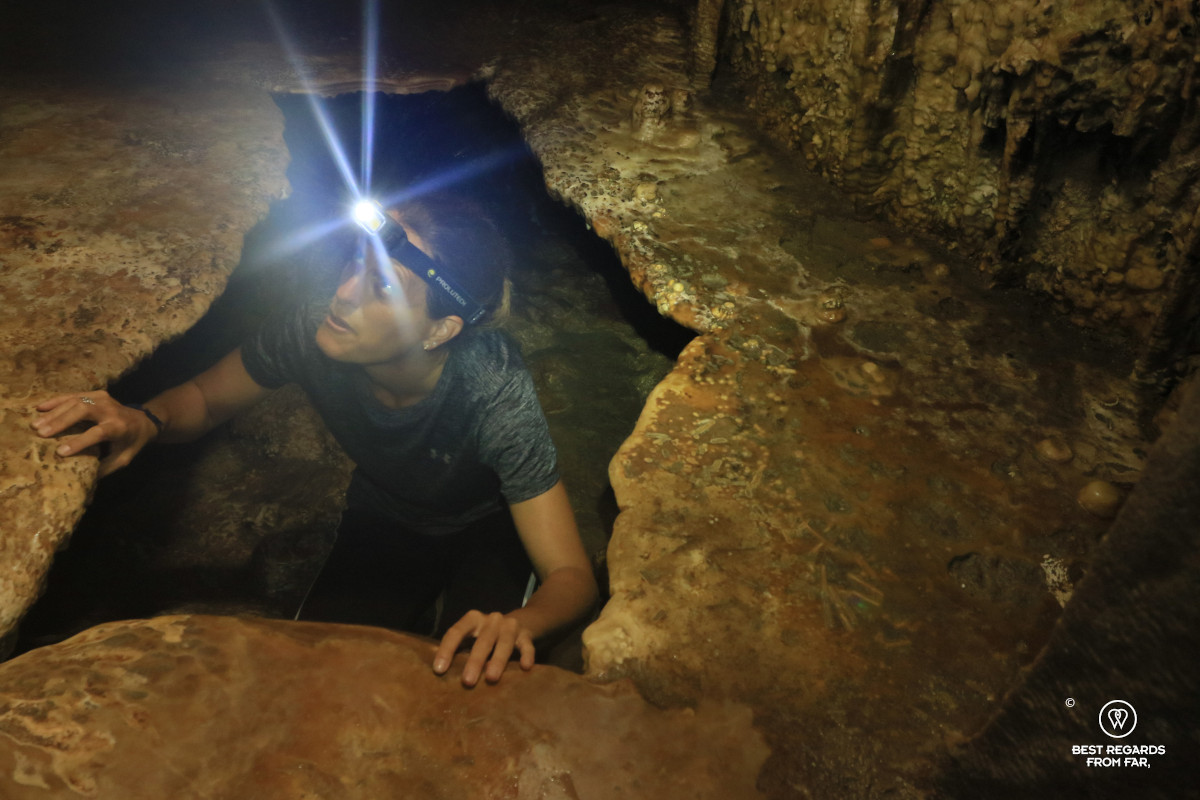

Every meter deeper into the cave reveals more crystalline beauty. Water once carved tunnels, creating contorted paths like the Coffin, a hollowed void we crawl through, formed by millennia of erosion. Lisa keeps the mood light with jokes and stories, and my apprehension deep underground makes place for fascination for this underground world.
Travel tips:
- Choose between the Standard Tour (easy, scenic) and the Adventure Tour (tight squeezes and crawling required). Tours at the Cango Caves run daily, but book in advance, especially for the Adventure Tour.
2. At Eye Level with the Shy Five: A Meerkat Morning in the Karoo
The sky is orange, and the sun has not yet climbed above the jagged horizon of the Little Karoo when we arrive at an arid and flat stretch of land outside Oudtshoorn. The instructions are clear: no sudden movements, stay seated, and wait. We are here for one of South Africa’s most elusive wild encounters—the meerkats; or suricates by their proper English name (Suricata suricatta).
Spotting wild meerkats is far from guaranteed. These small, social creatures are notoriously shy, so shy in fact that they are part of the so-called Shy Five—that includes the bat-eared fox, aardvark, aardwolf, and porcupine. Catching a glimpse of even one of them in the wild is a rare privilege.


This morning, we have greatly upped our chances by joining Five Shy Meerkats. A private endeavour, Five Shy Meerkats has gathered probably the most data on the behaviour of meerkats in the wild to the point that they have been collaborating with various universities and documentary makers. We follow our guide JD Glinister’s instructions to the letter. JD is not only a guide, he is also the owner of Five Shy Meerkats and an absolute passionate nature guide. He explains how this gang of meerkats has become habituated to humans. Ethics are key to Five Shy Meerkat, and there is absolutely no feeding, nor baiting going on, just quiet observation.
Our group settles into camping chairs set up at a safe distance from the main burrow and with the sun in our backs. The burrow system is ancient—over 400 years old—with nearly a hundred entrances. It is home to a family of suricates whose members fluctuate between three and 22 individuals. They choose from about 20 burrow systems which one they feel like occupying for the night.
Meerkats are not cats, despite their name. They are a small species of mongoose with surprisingly catlike behaviours. In German, they are known as “earth men”; in Dutch, as stokstaartjes (“little stick tails”), referring to their habit of perching upright on their hind legs, tails planted firmly in the sand when silently surveying the landscape.
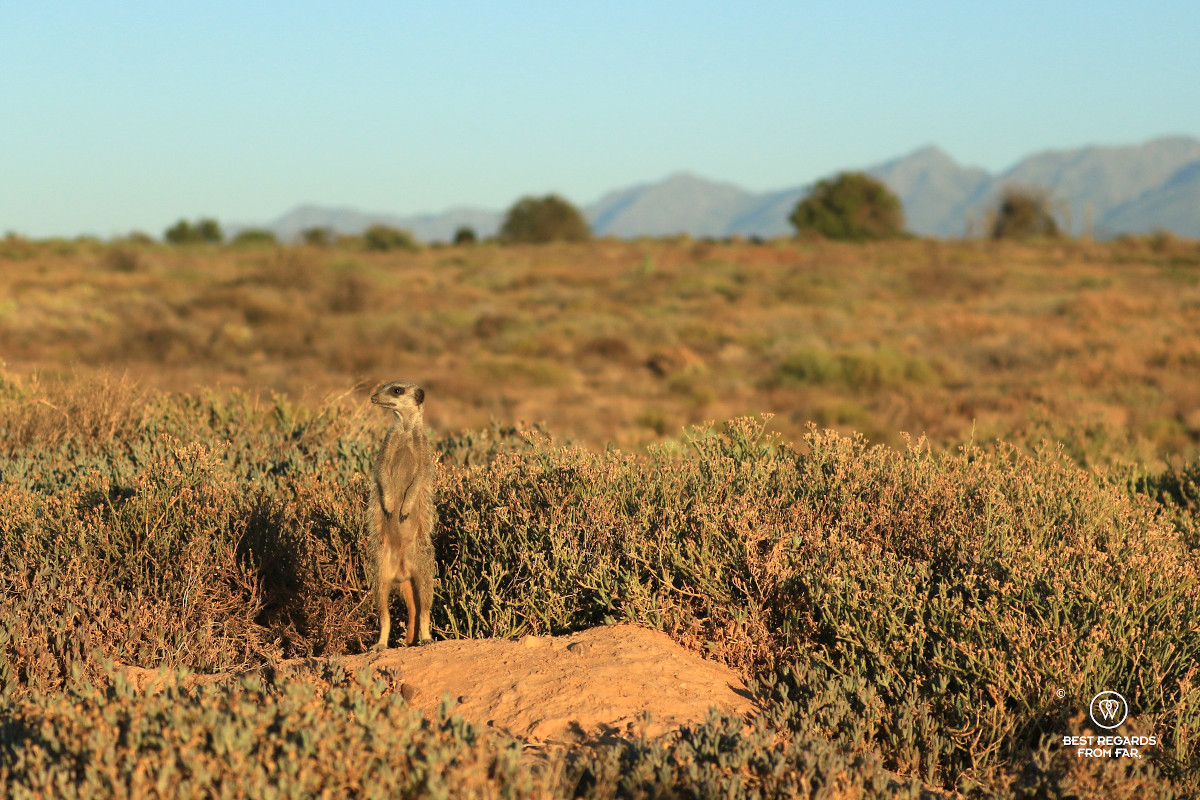

Native to southern Africa’s dry heartlands—South Africa, Namibia, Botswana, and parts of Angola and Zambia—meerkats thrive here in the Klein Karoo, in the rain shadow of the Swartberg Mountains where annual rainfall barely reaches 230 millimetres (9 inches). That is precisely how they like it—burrowers do not do well in soggy soil, and meerkats despise the rain so much that they rather stay in their burrow and be hungry than hunt in the rain! On scorching summer days, temperatures can soar past 50 Celsius (122°F), but they endure it with remarkable adaptability: dark thin belly fur helps absorb the morning sun, while lying flat on cool earth provides relief during the heat of the day.
As the sun rays reach the burrow, a head slowly appears. The meerkat steps fully into the open, striking the classic upright pose, scanning for danger. Hawks, jackals, snakes—the list of threats is long. Their eyesight is excellent and their sense of smell even better, but they are twitchy, nervous animals. One sudden move from us, and it will instantly retract to its burrow.
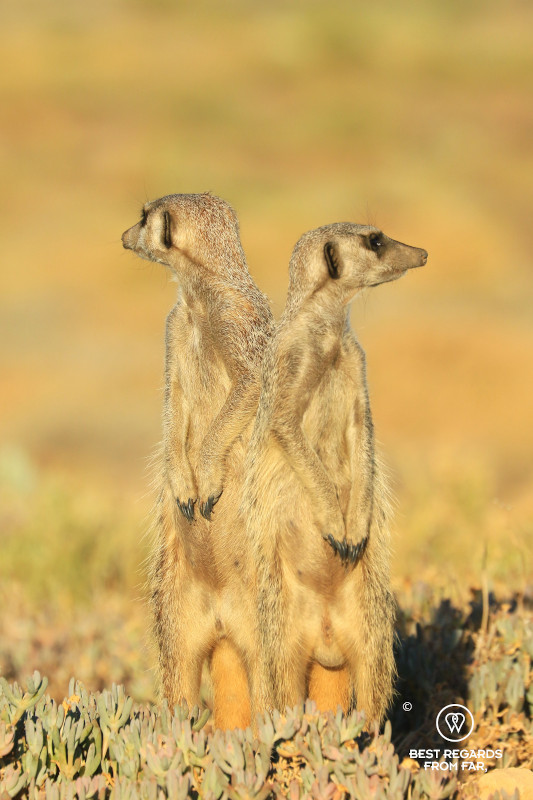

The sentry’s watchfulness allows the rest of the family to emerge slowly. One by one, they appear, warming themselves in the sun’s first rays. They groom, stretch, yawn. Meerkat society is a hierarchical matriarchy: a dominant female rules the clan, scent-marking each member with a special anal gland secretion that serves as identification. Those who do not bear her scent may be cast out—or worse.
Wild meerkats are notoriously difficult to study and not much is known about them as on average, they bolt if humans come within 250 meters (820ft). The team at Five Shy Meerkats took over a year and a half to earn the trust of this family—approaching slowly each day, talking softly, inching closer. Today, the meerkats ignore us entirely—exactly as they should!
As we observe their grooming and learn about them, they head off in search of their protein-rich breakfast of mostly insects. The family can travel up to 15 kilometres (9 miles) a day in search of food, and off they go, one by one, yet keeping an eye on each other. The meerkats disappear very fast behind the shrubs, and while we know which way they went, we have the hardest time spotting them as they are so well camouflaged, realizing how precious this quiet moment with the family waking up has just been.


Travel tips:
- If you want to see meerkats in the wild, make sure to book your tour with Five Shy Meerkats for an ethical safari experience.
- Enquire about the Five Shy Meerkats night safaris as most animals in this arid climate are nocturnal. With a professional nature guide and night vision goggles connected to a tablet, you may be in luck and spot some more of the elusive Shy 5!


3. Visit an Ostrich Farm in the Ostriches Capital of the World
Oudtshoorn’s story begins long before the arrival of the first settlers in the 1750s, with the Khoisan people who lived off the land, using ostrich eggs for jewellery and practical storage containers. With European settlement came farming—wheat, barley, fruits, tobacco, and livestock—made possible thanks to the nearby colonial outposts of Mossel Bay and George.
But it was not crops that put Oudtshoorn on the map. It was feathers! In the mid-1800s, ostrich feathers were extremely fashionable among Europe’s elite, reaching prices comparable to diamonds by weight. Two major feather booms followed, transforming this modest Karoo settlement into a bustling town of immigrants, merchants, and “feather barons.” A wave of Lithuanian Jews arrived between 1865 and 1870, giving Oudtshoorn its nickname “the Jerusalem of Africa.” They built synagogues (still standing today) and South Africa’s first Hebrew school.

By 1891, Oudtshoorn’s population had tripled. Feather fortunes financed lavish mansions, known as “feather palaces,” many of which still line the town’s streets. In 1913, ostrich feathers were South Africa’s fourth-largest export, surpassed only by gold, diamonds, and wool. That same year, the most expensive cargo insured aboard the Titanic was not jewellery or art—but ostrich feathers, valued at nearly $2.5 million in today’s money! But as fast as the Titanic sank, the feather empire collapsed. The First World War, coupled with overproduction and the arrival of open-topped cars (which made fancy feather hats impractical), burst the bubble. By 1918, over 300,000 domesticated ostriches roamed the Karoo. Twelve years later, just 32,000 remained. The Jewish community—once a vibrant backbone of the town—disappeared but Oudtshoorn did not. First came leather; then meat. Ostrich products expanded, and remain a critical economic pillar today in the largest town in the Little Karoo, with around 60,000 inhabitants.


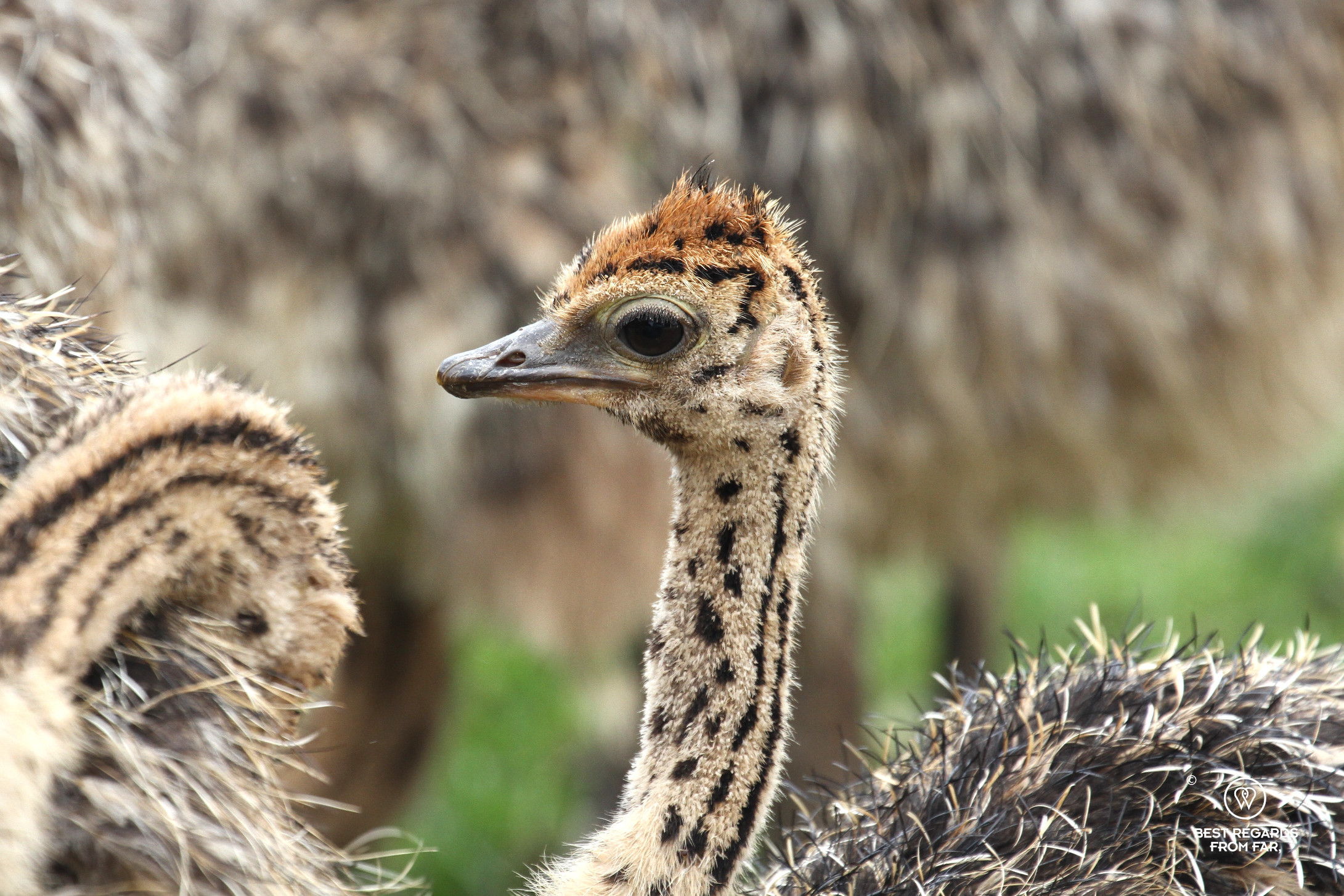
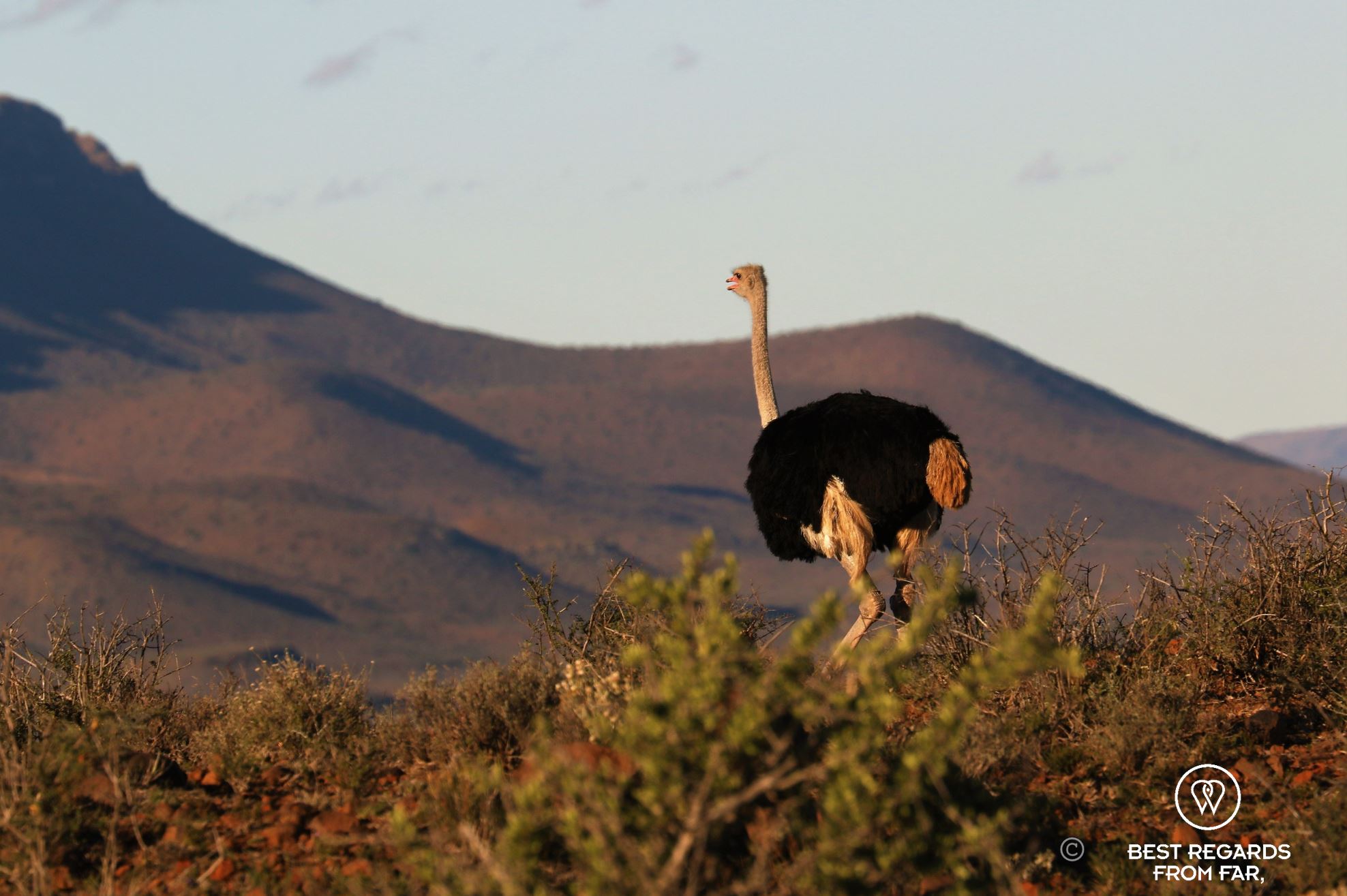
At the Safari Ostrich Farm, we meet the animals behind the empire. Up close, ostriches are a curious blend of comic and prehistoric—towering, twitchy, and surprisingly elegant. The statistics are surprising: they clock speeds of up to 70 kilometres per hour (44 miles per hour); their eyes each outweigh their brain (60g (2.1oz) versus 40g (1.4oz)), which explains their famously short memory; and beware of the red-legged ostriches (males ready to mate who can become very aggressive and slice one open with their sharp toes!).
While ostriches can live up to 50 years in captivity, they are typically slaughtered at 14 months of age, once they reach 90 kilograms (198 pounds). The Safari Ostrich Farm, that was the first in the area to ban ostrich riding, demonstrates the various cuts of ostrich meat—moon steak, fan fillet, tenderloin—and the transformation of every part of the bird into usable product. It is an impressive display of sustainable farming, and a respectful nod to the animal that built an industry and that still thrives thanks to leanness of its meat and its sought-after leather.

Travel tips:
- To learn more about Ostriches visit Safari Ostrich Farm, the most ethical farm in the area that focuses on education and sustainability.
- To see ostriches in the wild, De Hoop Nature Reserve (a 3-hour drive from Oudtshoorn) is a very good bet, as well as the Karoo NP, the West Coast NP and Cape Point NP.
4. The Swartberg Pass: A Dramatic Gateway Between 2 Karoo Worlds
South Africa is not only famous for the Chapman’s Peak Drive, world’s most beautiful road, but also offers a wide variety of well-engineered exhilarating and dramatic mountain passes.
Rising majestically across the Western Cape, the Swartberg Mountains form one of South Africa’s most striking natural barriers separating the semi-arid Little Karoo with its small farming towns and unique flora from the semi-desert area of the Great Karoo known for its untamed open spaces and rugged terrain. This 27-kilometre-long (16.7 miles) gravel road, built by master road engineer Thomas Bain in the 1880s, snakes over the Swartberg Mountains with dramatic switchbacks, sheer drops, and expansive views.


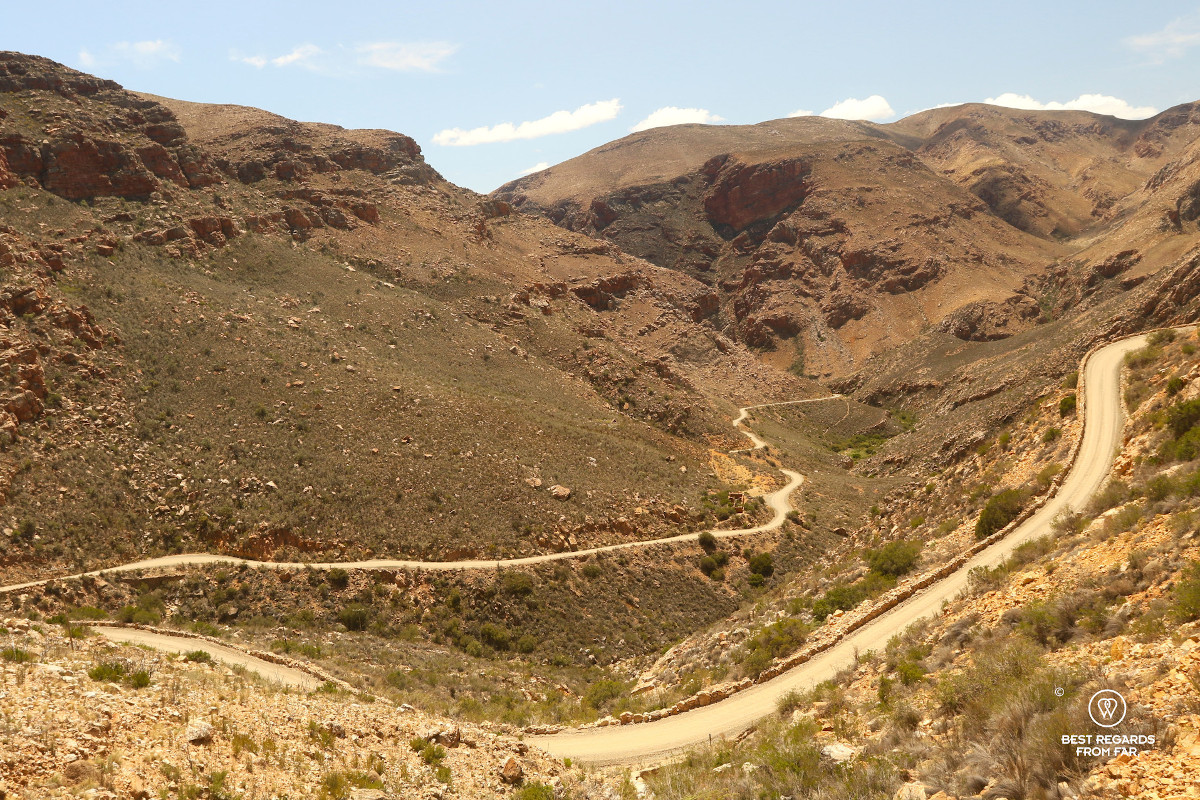

As we climb to nearly 1,600 metres (5,250ft) above sea level, the air cools slightly, the landscape shifts, and layers of exposed quartzite and sandstone—some over 500 million years old—form a backdrop of its twisted rock formations. The geology alone tells a story of unimaginable temperatures, pressures, and time, but the biodiversity is equally striking. Families of klipspringers leap effortlessly between boulders, dassies bask in the sun, and flashes of colour from the hardy fynbos plants cling to the rocky slopes.
On the other side, the Great Karoo and the Karoo National Park with its wealth of wildlife including lions and leopards, await… Another adventure in its own right!
Travel tips:
- Even if steep at certain sections, a 4×4 is not required to conquer this stunning pass. Still, check on the latest condition of the pass before venturing.
5. Enjoy a Luxury Country Stay
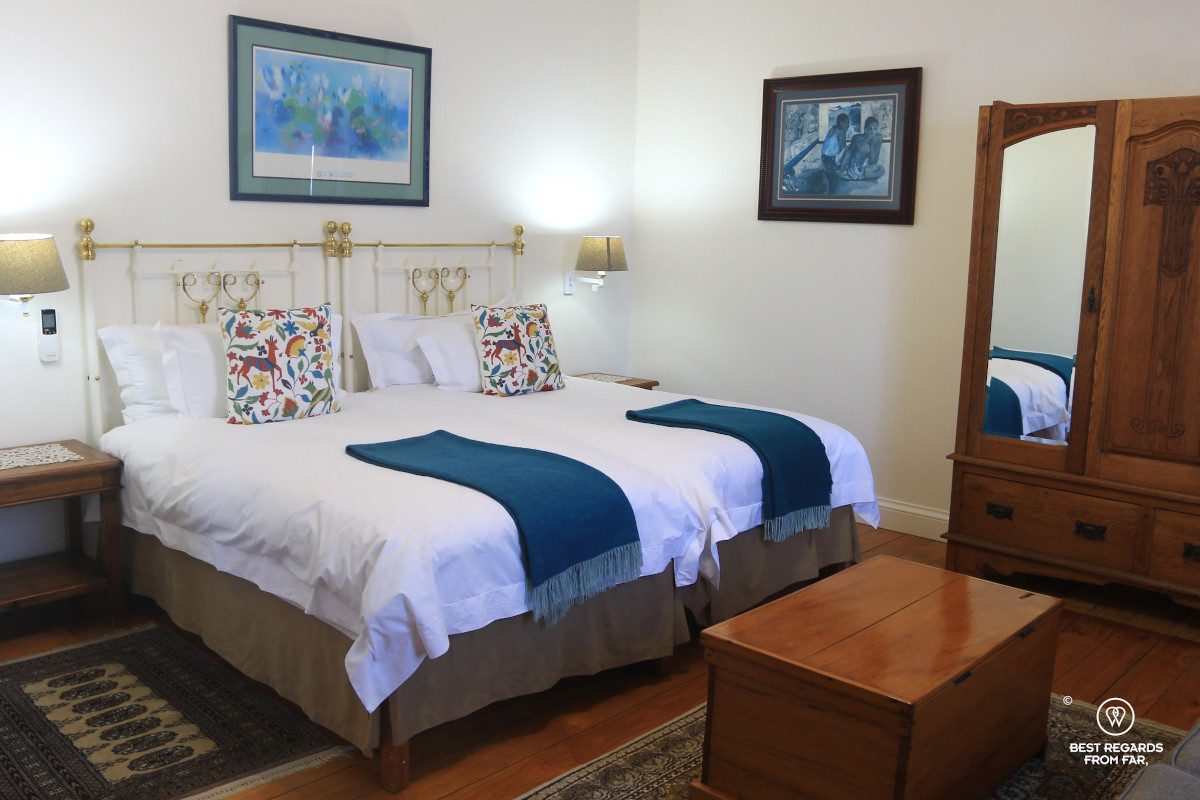
Conveniently located between Oudtshoorn and the Cango Caves, the 5-star boutique Altes Landhaus Country Lodge offers a true home away from home in a peaceful setting.
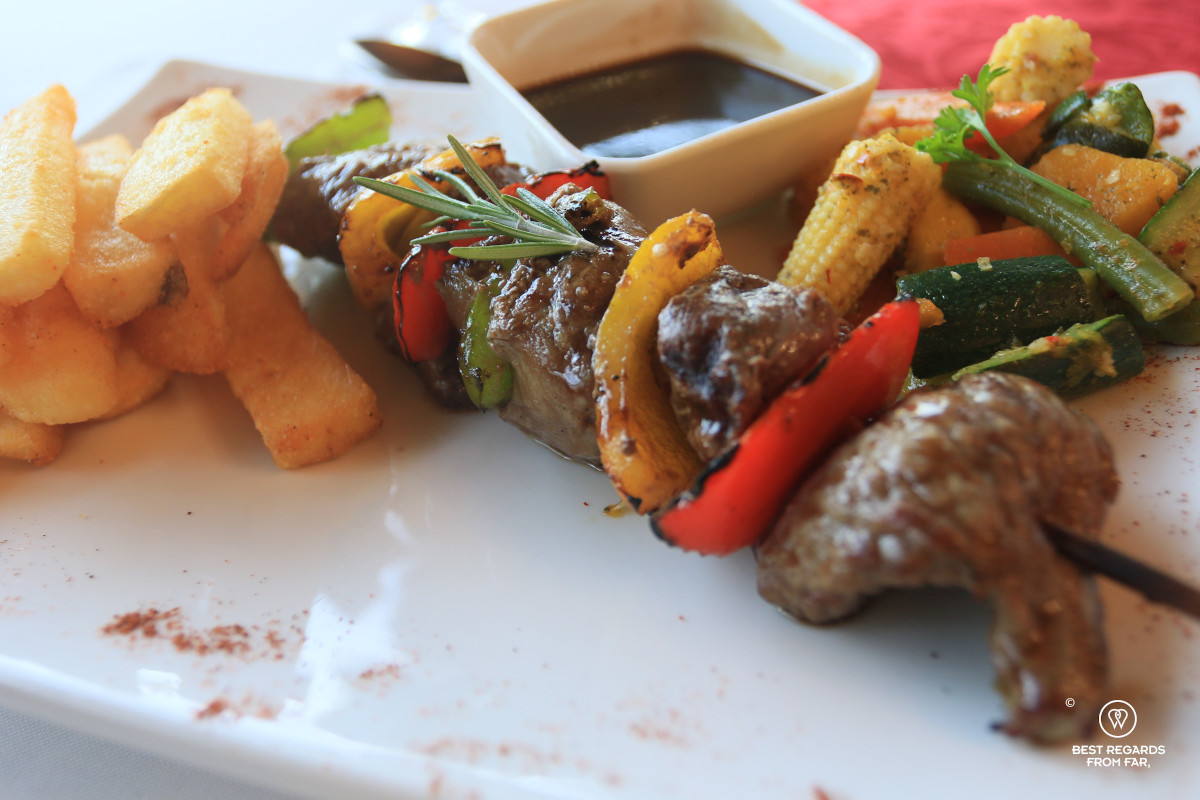
The Cape Dutch style homestead originally served as a refectory for the local church. Its historic splendour comes alive through its antique furnishings and the tasteful Victorian décor of its large suites. Great attention paid to hospitality offers guests a slice of luxurious country living. Local specialties such as Karoo lamb and ostrich from carpaccio to steaks can be enjoyed on the veranda overlooking the stunning garden. During the heat of the day, the pool is ideal to cool down and spot a wide variety of birds that are attracted to this flowered oasis in the otherwise arid landscape.



Travel tips:
- Make sure to book your stay at Altes Landhaus Country Lodge ahead of time as this gems gets booked up fast.
- Check out our interactive map for more in the area (black pins lead to an article):
For more in & around Cape Town, click on these images:


 Best regards from far,
I remember the ostrich farm😃 And eating ostrich burgers 🥺