Text: Marcella van Alphen & Claire Lessiau
Photographs: Claire Lessiau
Bolivia, famous for the largest salt flat in the world, its demanding treks amongst the snowcapped peaks of the Andes, Lake Titicaca, the charming town of Sucre, and world’s highest capital La Paz, is not necessarily renowned for its gastronomy… Yet, with still mainly organic ingredients cultivated by small scale farmers from the low Amazon basin to the high Andes, the wide variety of microclimates offers Bolivian chefs the perfect opportunity to present their unique flavors to the world. Whether prepared innovatively or traditionally, all are crafted with the utmost pride and reflect the different cultural heritages of the country in the following top 5 restaurants that you must try in La Paz.
Pin it for later!
La Rufina [traditional Bolivian with a twist]
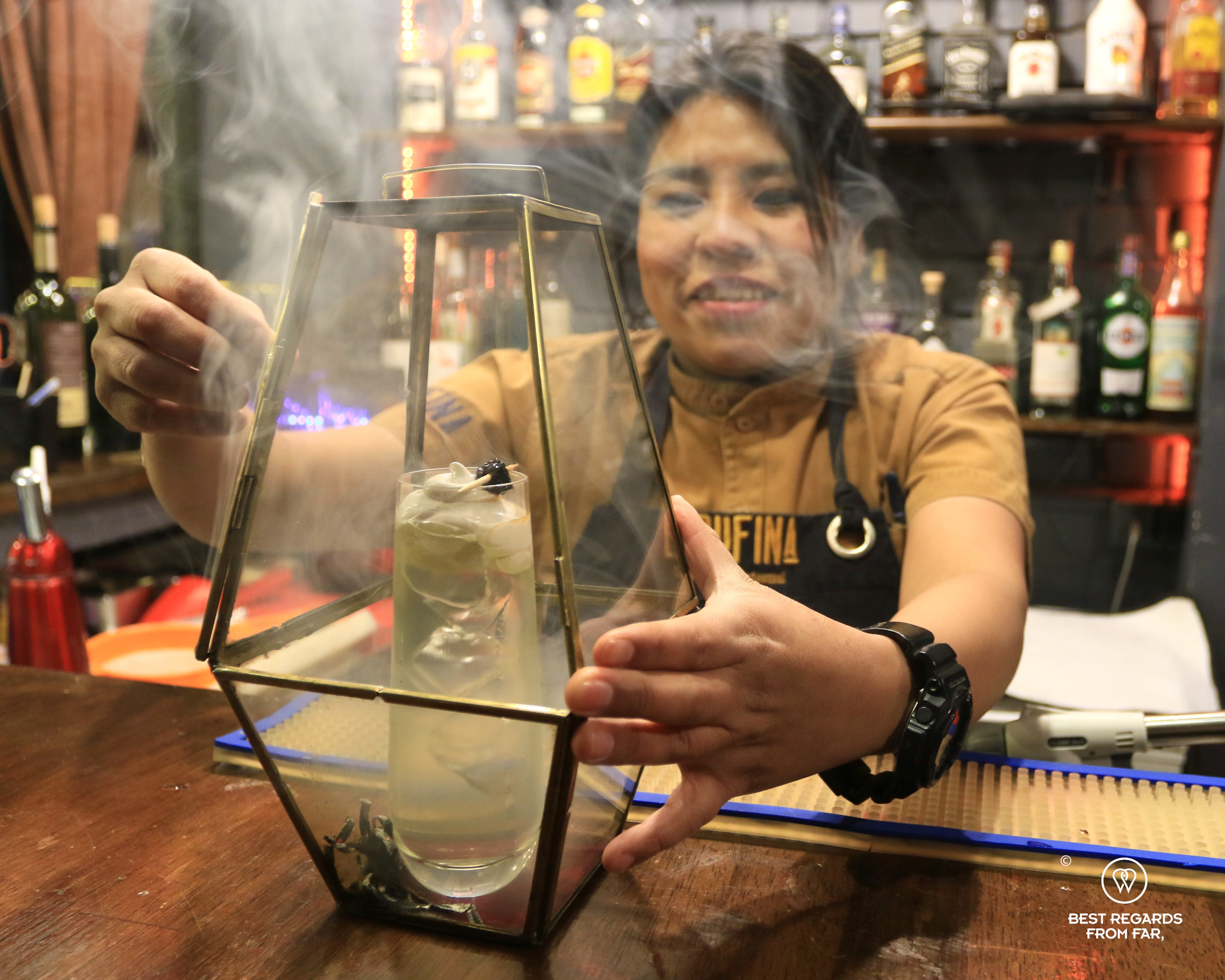
Set in the trendy Sopocachi district, La Rufina is all about traditional Bolivian fares with an innovative twist. Manager Angie – previously trained at Bolivia’s best restaurant Gustu –introduces the menu and their extensive list of original cocktails with passion. Every dish and drink has a story to tell, well anchored in the Bolivian traditions.
La Paz Day for instance takes place every year on July 16 to commemorate the foundation of La Paz. In the middle of the Bolivian winter, with streets filled with people celebrating and food stalls smoking the atmosphere, the warm sucumbé is one of the most popular drinks. La Rufina pays tribute to this tradition by enriching the spiced cocktail: instead of a simple mixed drink, the singani (a spirit distilled from Muscat grapes) is infused with milk, cloves, cinnamon, and also anise, and served with smoking orange peels to recall the atmosphere of La Paz Day. Other drinks present Amazonian notes: the low lands are really not so far from La Paz!
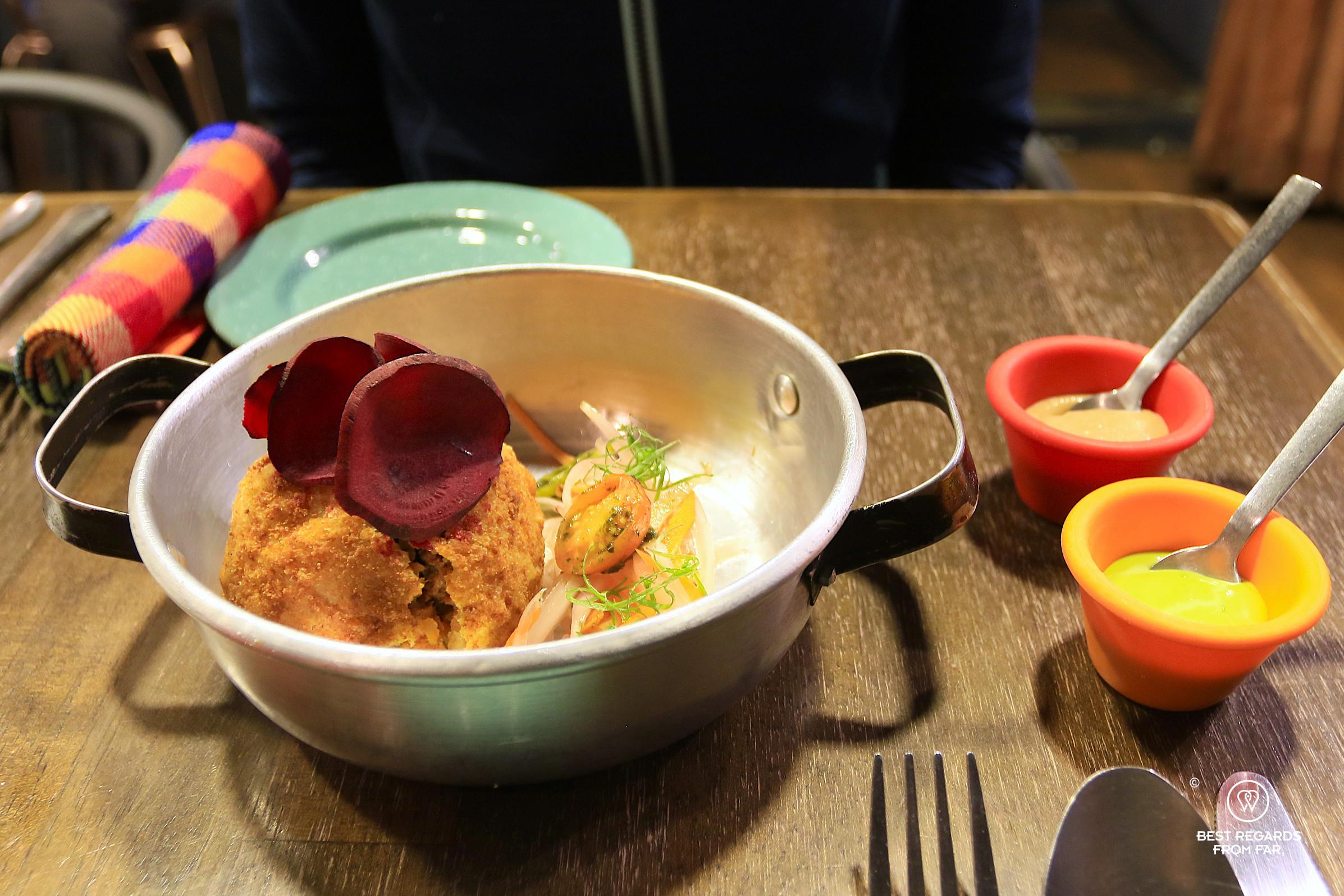



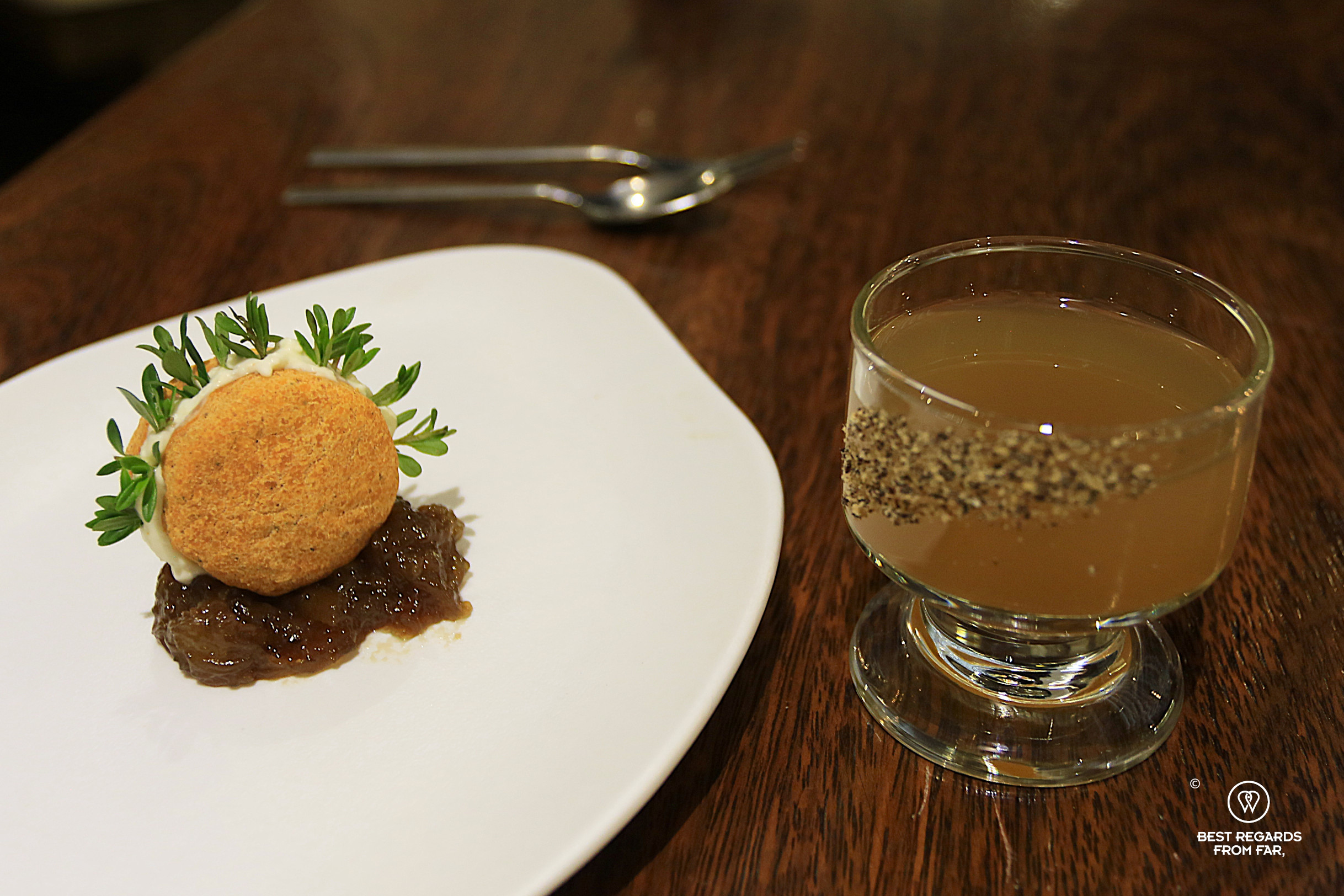
Anywhere in Bolivia, street food takes the main stage for locals. Rellenos (referring to anything stuffed) – here a fried ball of mashed potato filled with a rich beef stew – and the national’s favorite anticucho exemplify the food stalls. The latter, succulent grilled slices of beef heart served with a rich peanut sauce and a salsa de aji with seven different types of chilies is known to be the perfect hang-over remedy.
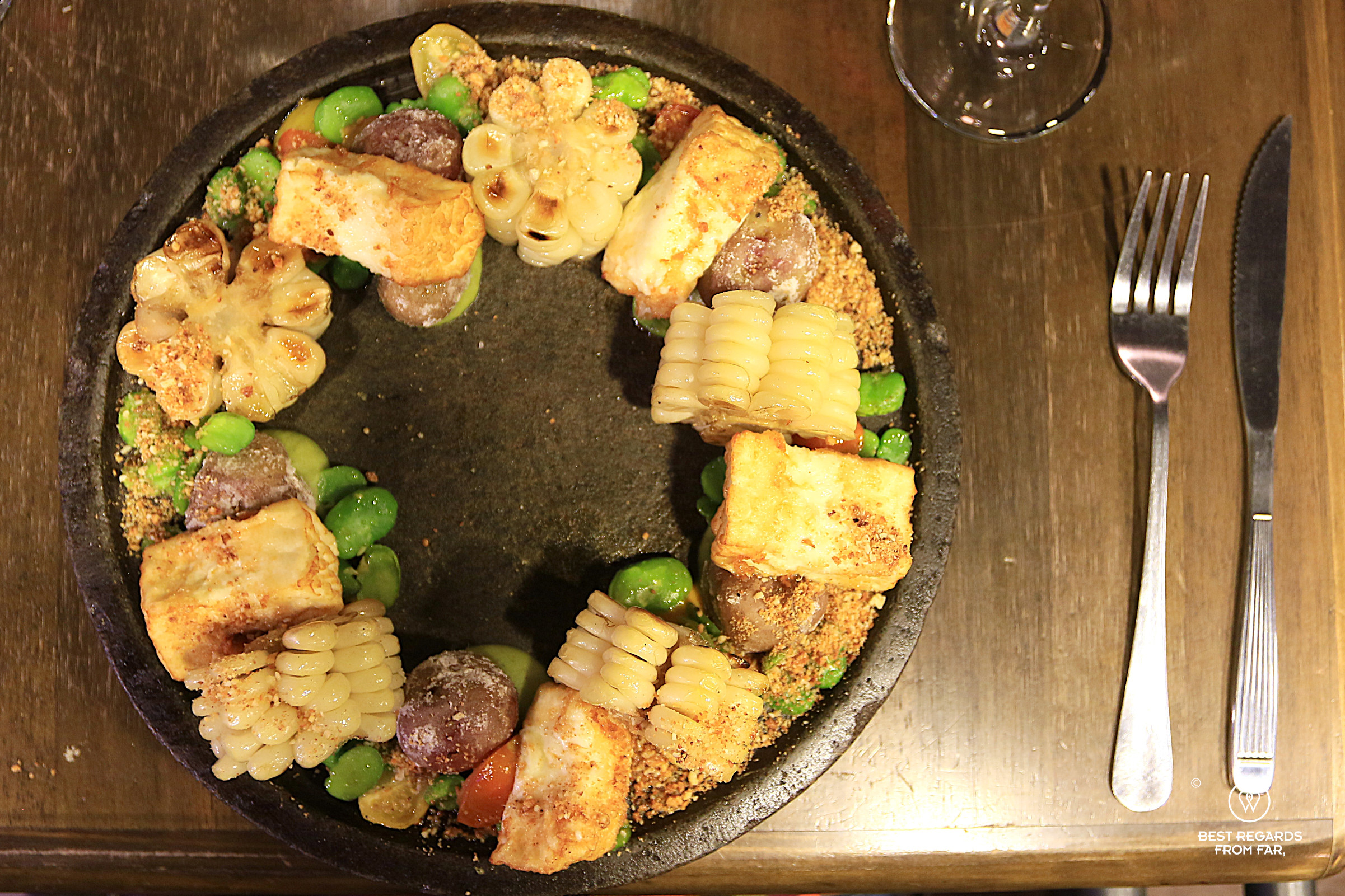
In pure respect of local traditions, mains come in huge portions, such as the mondongo, a popular dish from Chuquisaca. The slow-cooked and then fried pork belly with its mash of chuño (freeze-dried potato which history goes back centuries) and dehydrated choclo (a starchy local corn) swims in a mild sauce of red peppers. The plato paceño is another reference to the highest capital in the world. During the besieging of La Paz by indigenous people to fight the colonial policies in 1781, their leader Túpac Katari asked all women to bring food for his troops. Soon, potatoes, beans, corn, and cheese piled up. These take the main stage of the dish at La Rufina and the kick comes from the fresh cow cheese that is fried and accompanied by crispy fava beans to add some texture, and served along colorful chilies and sweet carrot emulsion.
The desserts also honor daily Bolivian life from the brightly-colored gelatin sweet sold by street vendors on every Plaza de Armas in the country to a wink to the construction workers’ popular cheap and hearty mid-morning snack, here reinterpreted as the homemade Chantilly jelly dessert and the helado del albañil, a banana ice-cream covered with bread crumble and a syrup of Coca Cola! After all, would Coca Cola even exist without Bolivia’s centennial cash crop?

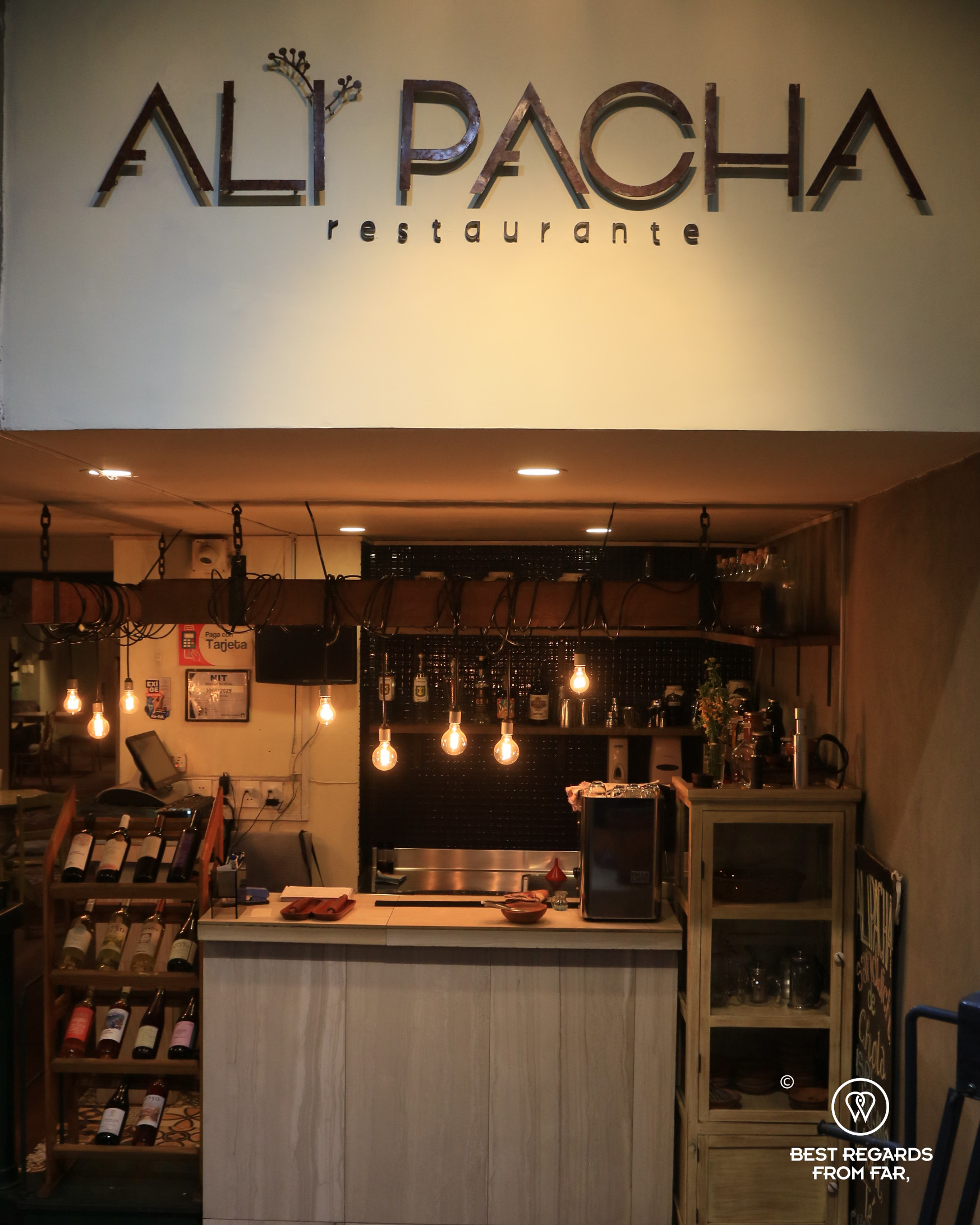
Ali Pacha [a vegan fine-dining experience for everyone]
The heart of bustling La Paz hosts a serene “plant universe” as Ali Pacha translates in Aymara, the language of the region’s main indigenous group. Bolivia’s first fine-dining vegan restaurant highlights exclusively Bolivian products. Better, they come from as close as it gets to the warm and earthy underground establishment with most of the greens being provided by an organization of single mothers from the harsh city of El Alto that towers La Paz.
Chef Veronica Yujra is also a young mother and a vegan herself, and she has been experimenting for years, having an extensive training at some of the best restaurants in town such as Proyecto Nativa. Adding unbendable ethics to her culinary talents, her approach is rooted in sustainability and a deep respect for the environment and its people for an eco-conscious menu.
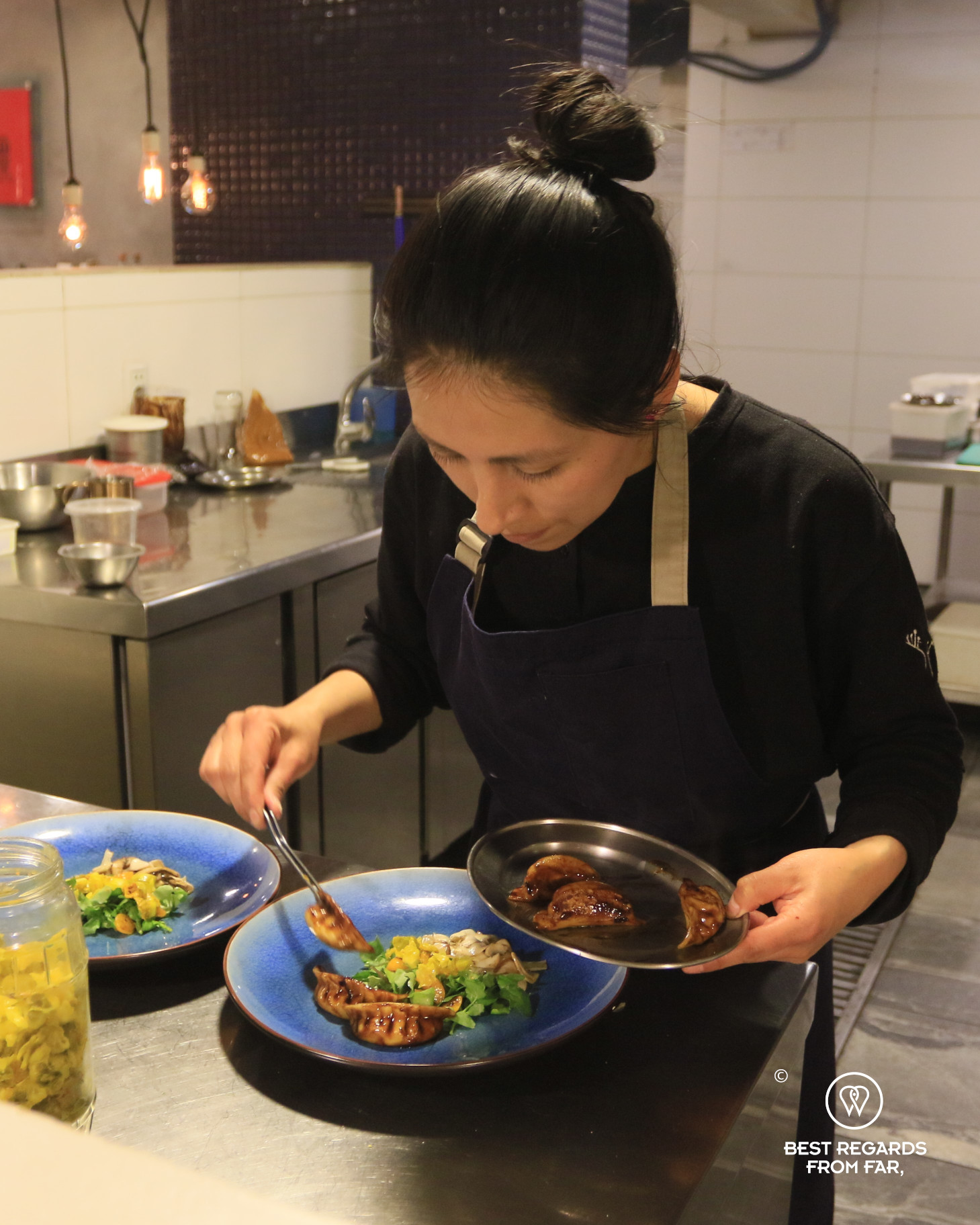
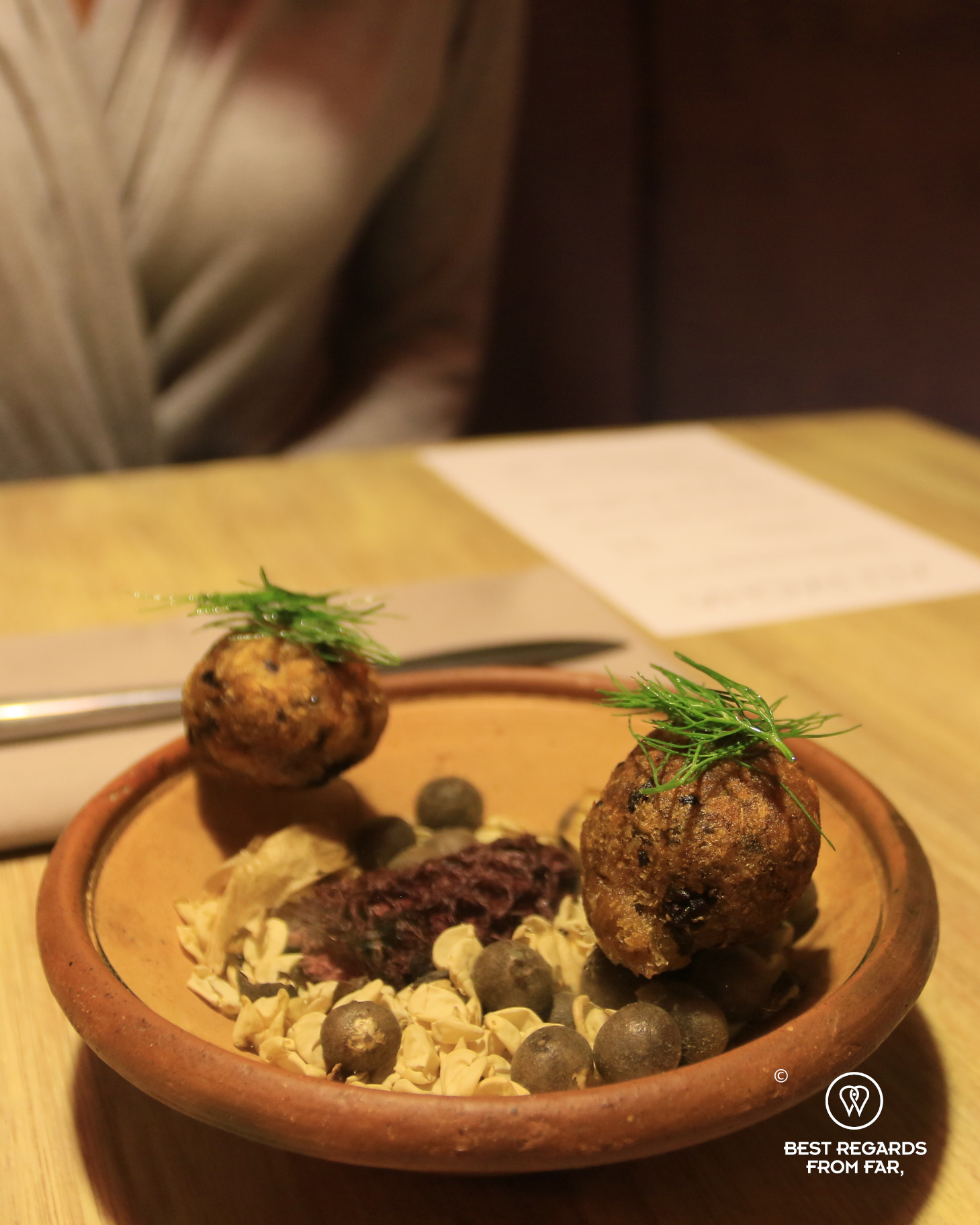
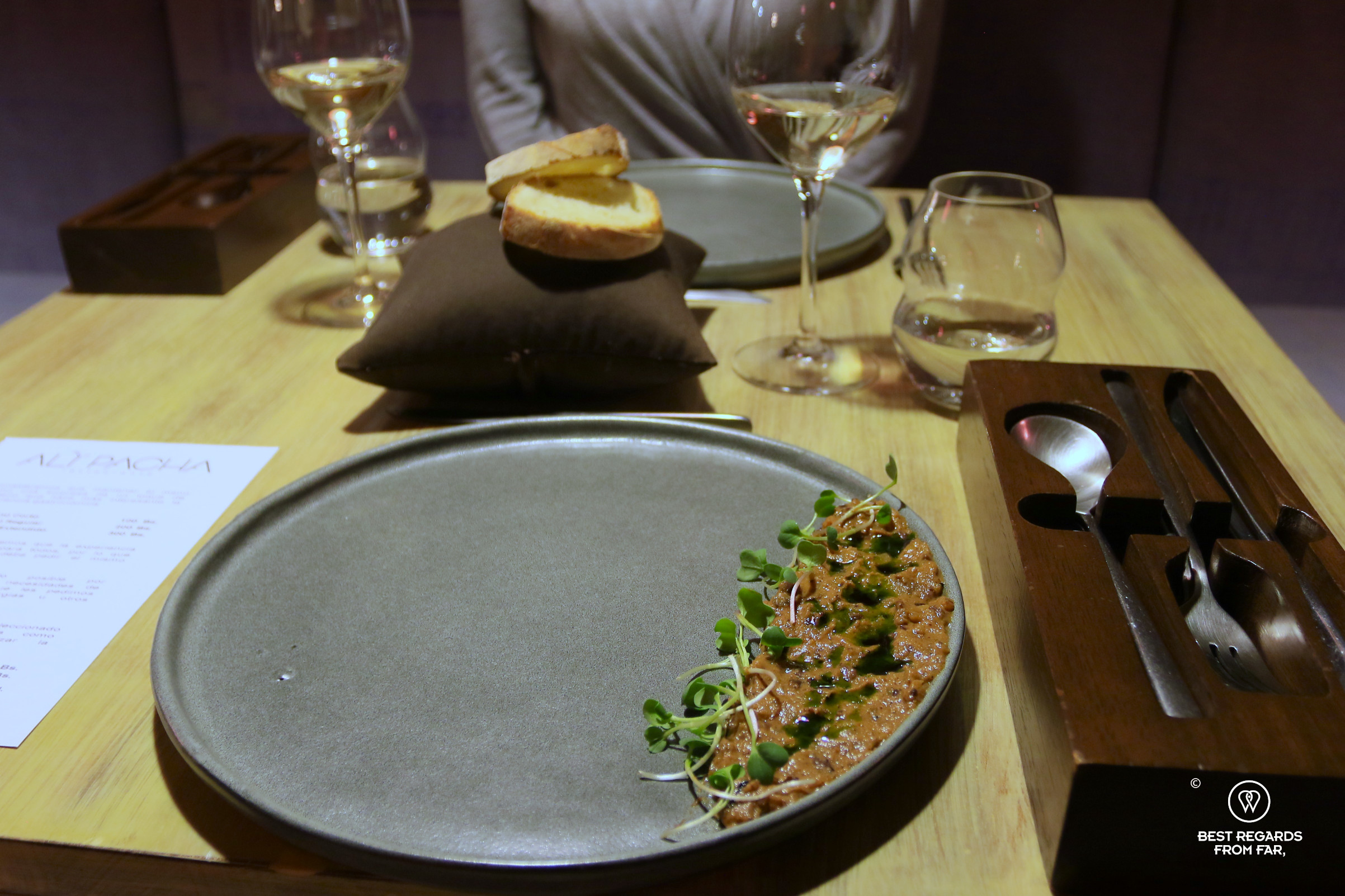
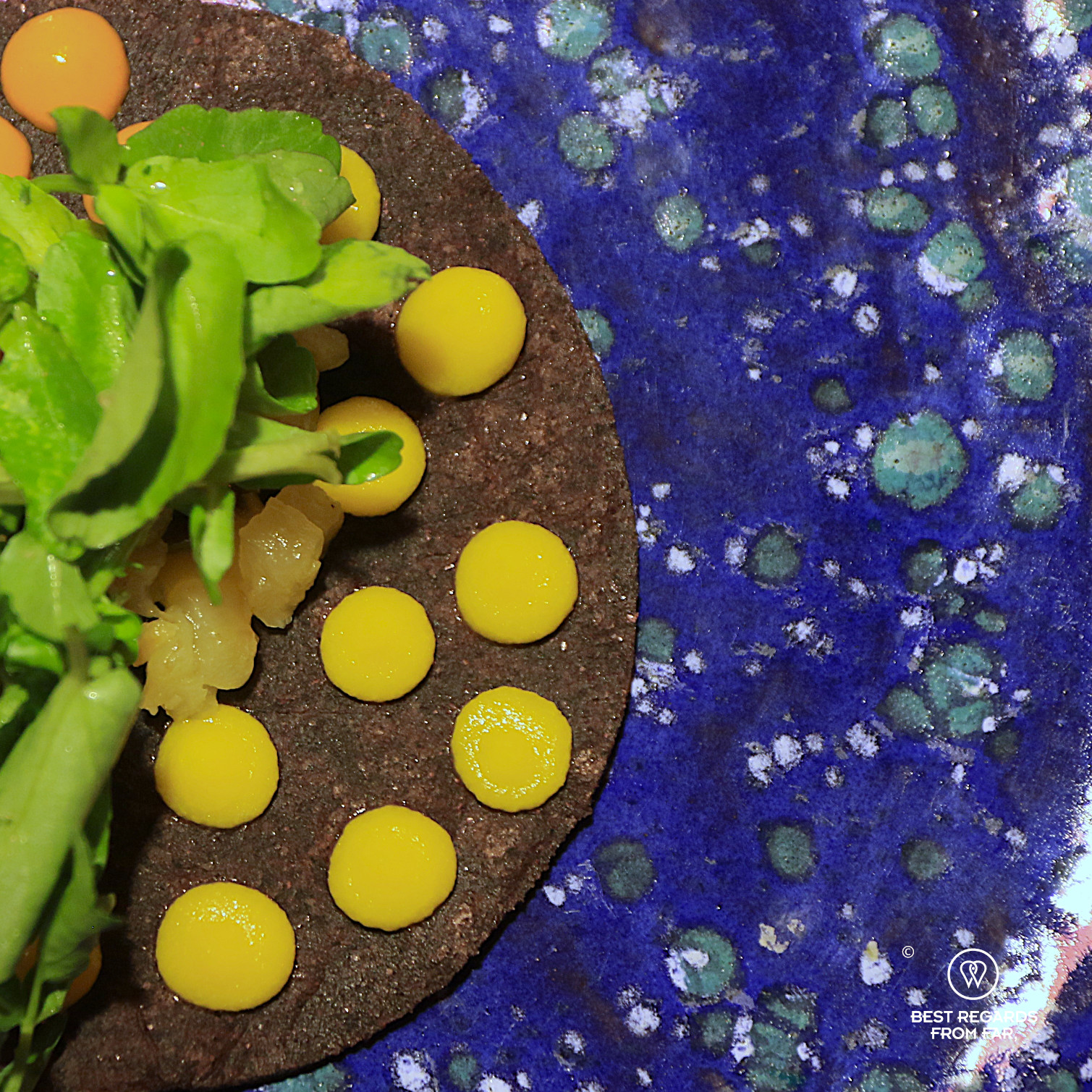
In her daily surprise tasting menu, Chef Veronica’s impeccable technique leads to original textures and flavors that are highlighted by a wine pairing introduced with passion and deep knowledge by the sommelier Shamara Flores in this all women team.
The hint of acidity of high-altitude Bolivian wines from Chuquisaca (around Sucre) and Tarija (bordering Argentina), and the fruitiness of the ones from Samaipata (close to Santa Cruz) in the Bolivian low lands, or from the Valley of Cinti accompany Chef Veronica’s original dishes.
The tropical notes on the nose and mineral taste of a Samaipata white wine of Pedro Giménez grapes pair perfectly with a tartar of carrots and black olives, enjoyed on a warm and crusty sourdough bread made from an 8-year-old starter dough.
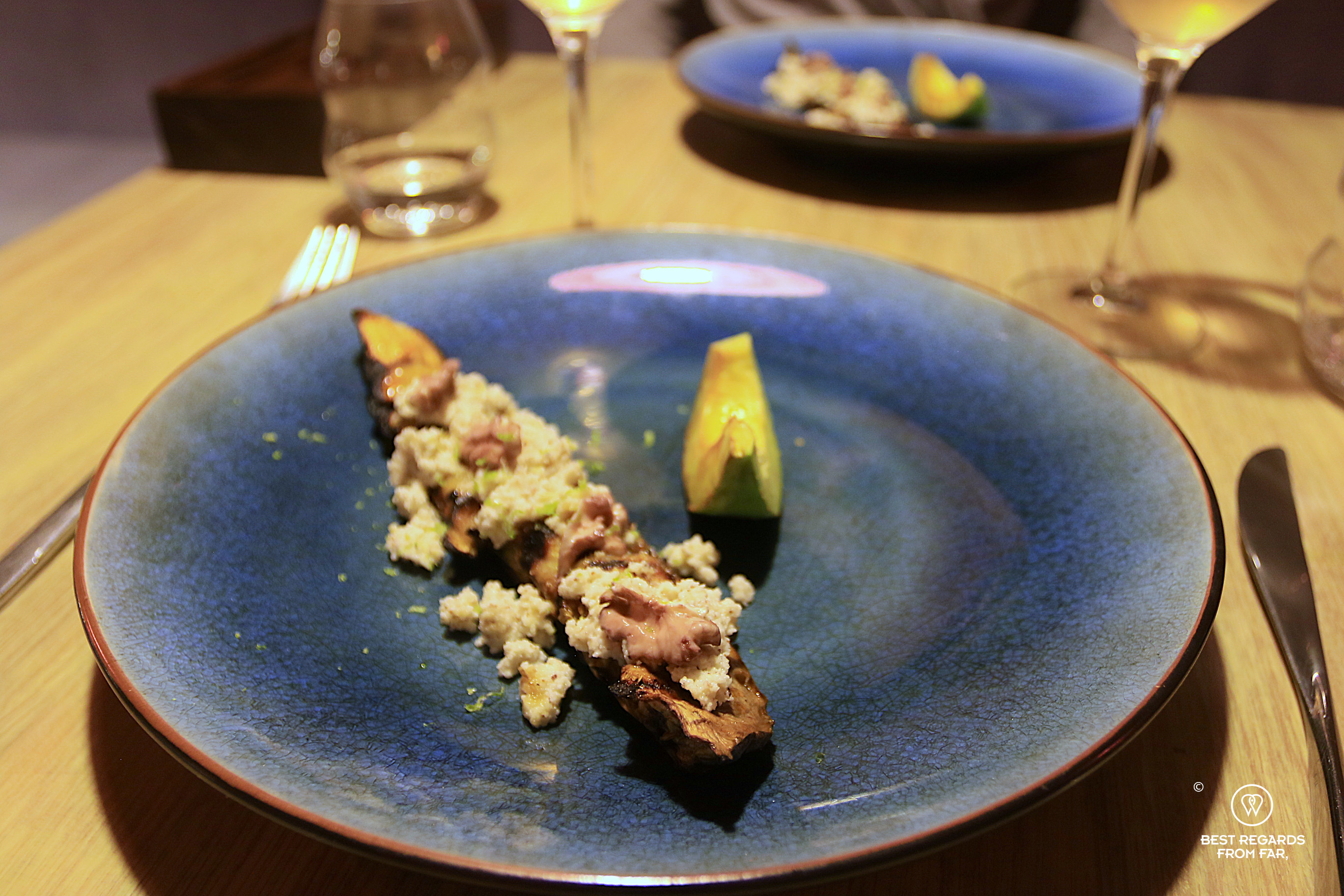
The hearty and grilled eggplant with medicinal flowers from the high Andes is served with avocado, lime zest, and walnuts. It is brilliantly paired with the unfiltered organic Jardin Oculto rosé from Tarija.
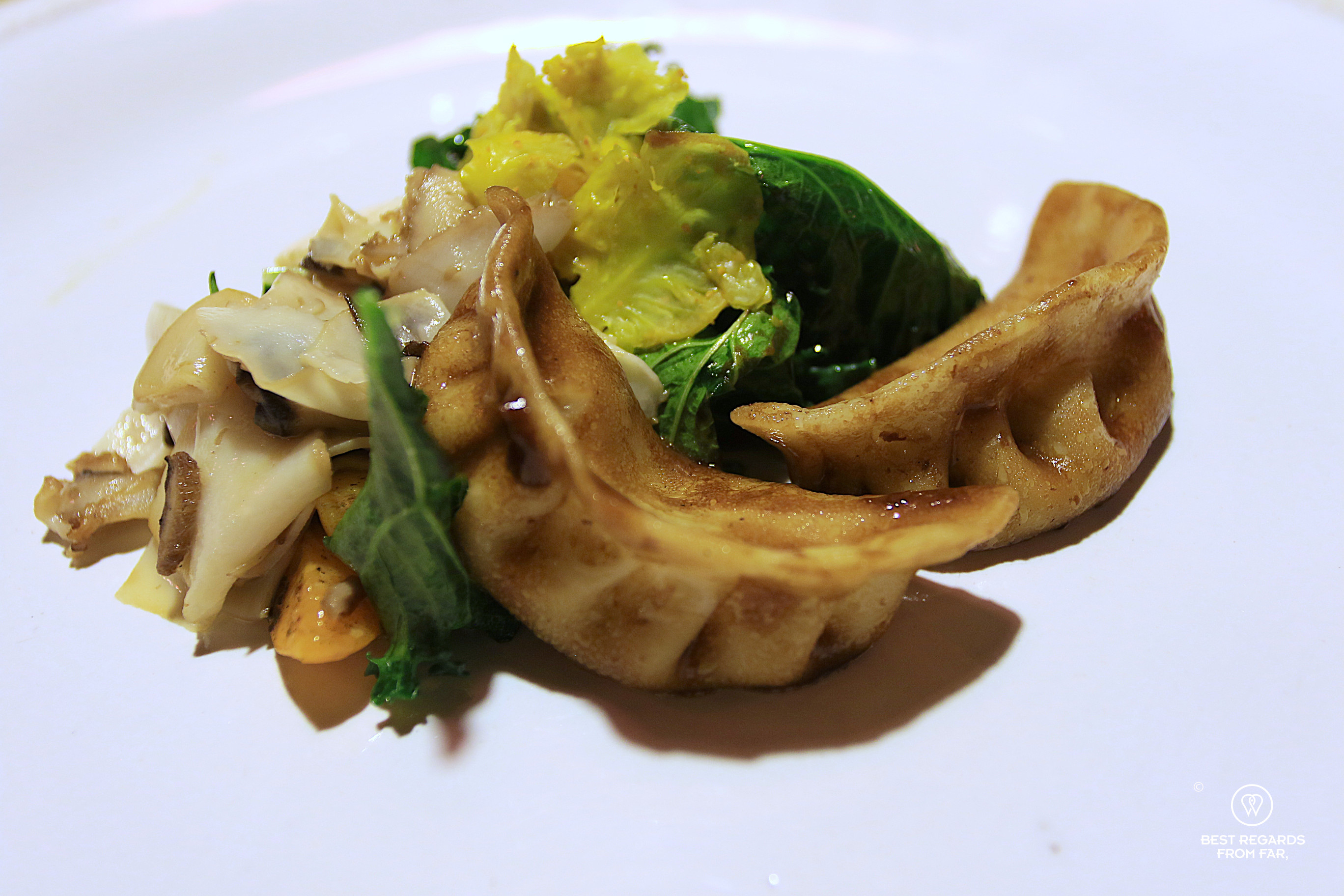
If the menu changes with the seasons, one of the highlights that comes back with a different filling is a gluten-free gyoza of quinoa and rice flour that is today filled with a cream of asparagus and cauliflower. Served on a side of mushrooms, kale, and kumquat for a hint of acidity, the Bolivian ingredients alone proudly convey the Asian influences of this mouthwatering dish.
Small bites, colorful and textured dishes, and of course desserts complete this vegan experience that will delight any foodie. For the latter, the locally-grown cacao and coffee beans tend to be well represented to conclude Chef Veronica’s tribute to the incredible Bolivian biodiversity.
Proyecto Nativa [sustainable, local & innovative]
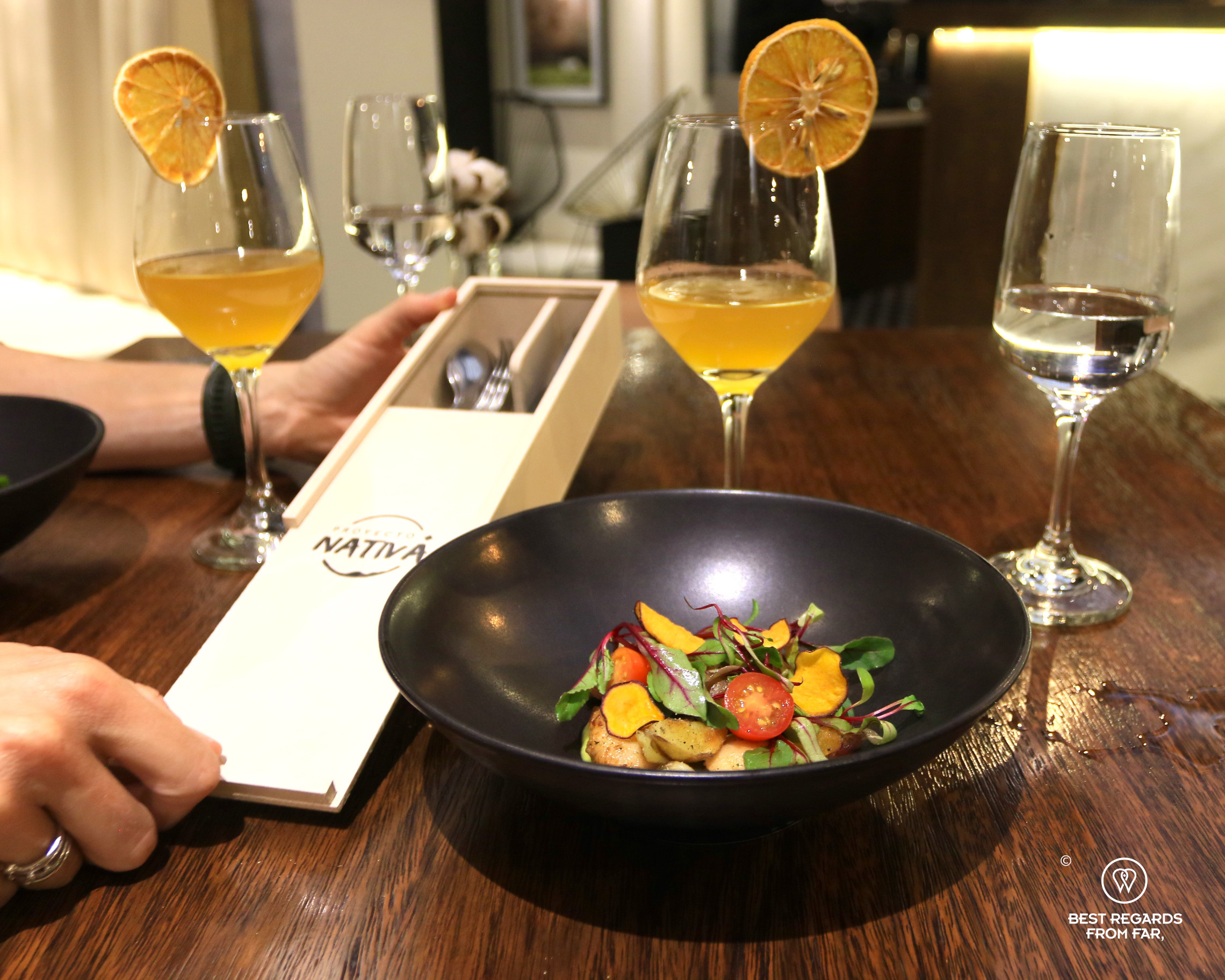
The 5-star Atix hotel sets the perfect sophisticated stage for the gastronomic experience that Proyecto Nativa offers: a sustainable celebration of the varied ingredients of Bolivia through innovative cooking techniques. The success is such that a Proyecto Nativa has opened in Sucre, the former capital of Bolivia, and its cutest city.
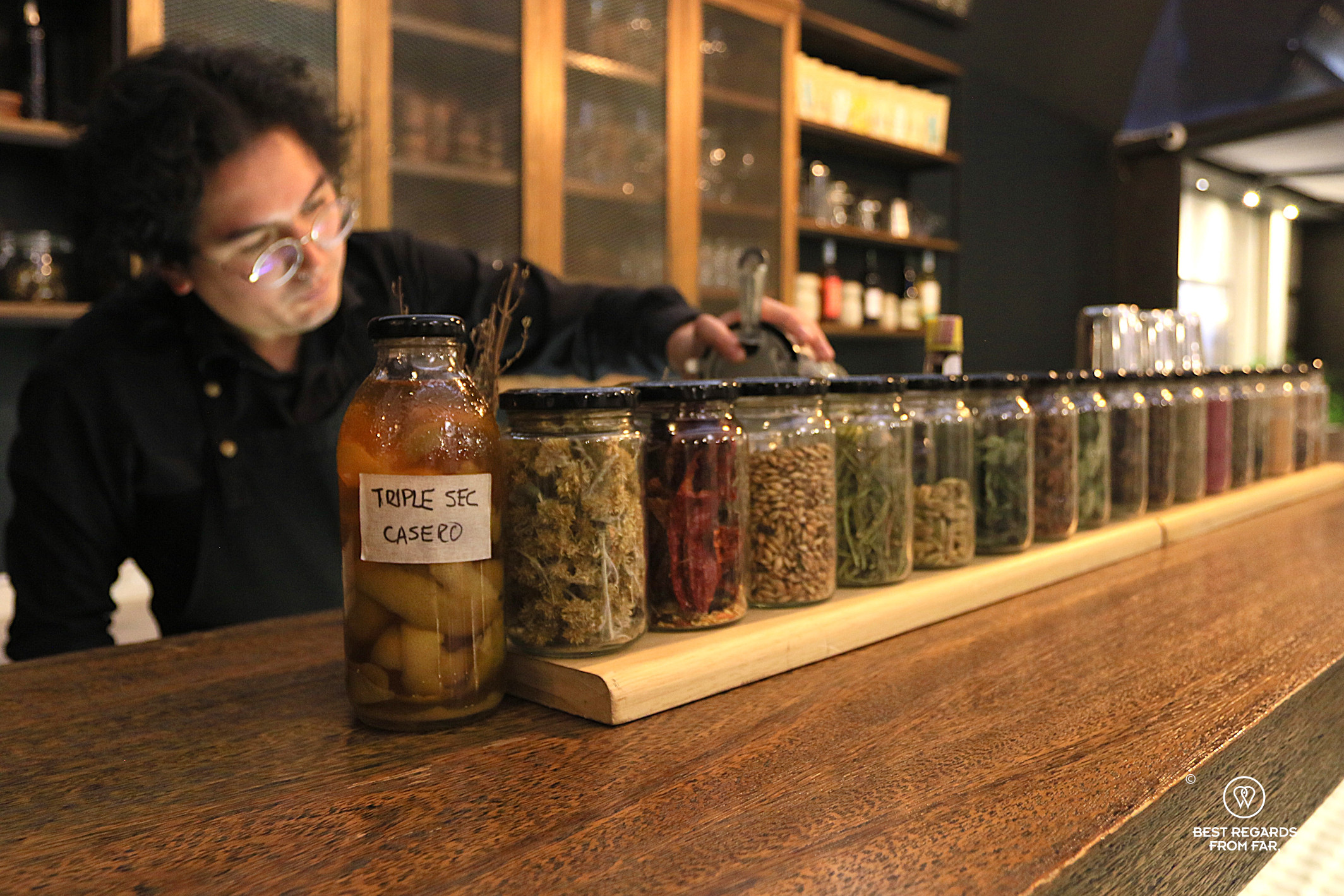
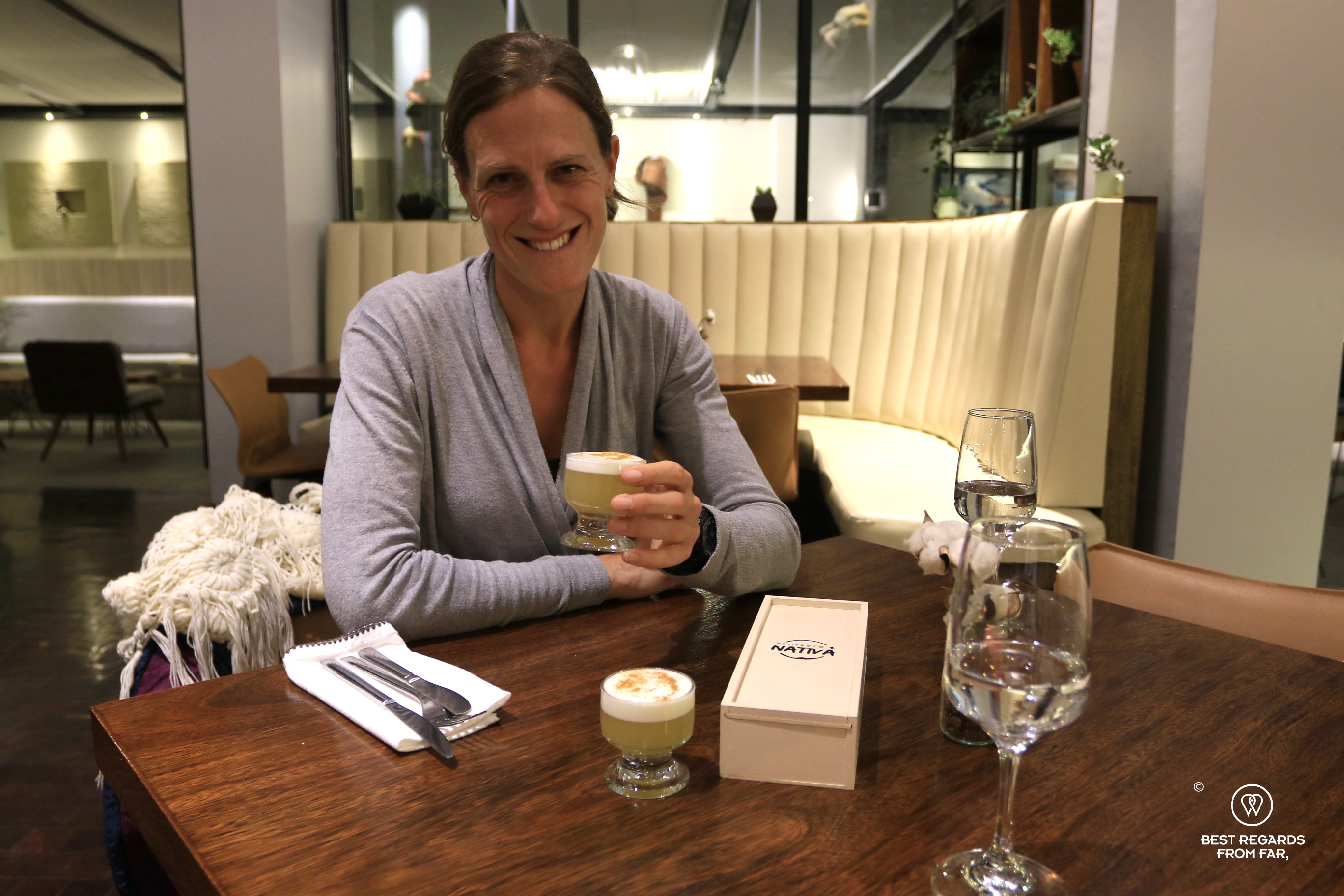
To echo Peru’s national drink, the Pisco sour, mixologist Andres Beltran brings a Singani sour infused with lemongrass to kick start this tasting menu – rightfully pointing out the superiority of Singani over Pisco as the Bolivian spirit is exclusively distilled from higher quality Muscat grapes. A gluten-free kaniwa bread is served to whet the appetite. The nutritious superfood grain from Bolivia’s Altiplano is similar to quinoa, but slightly smaller.
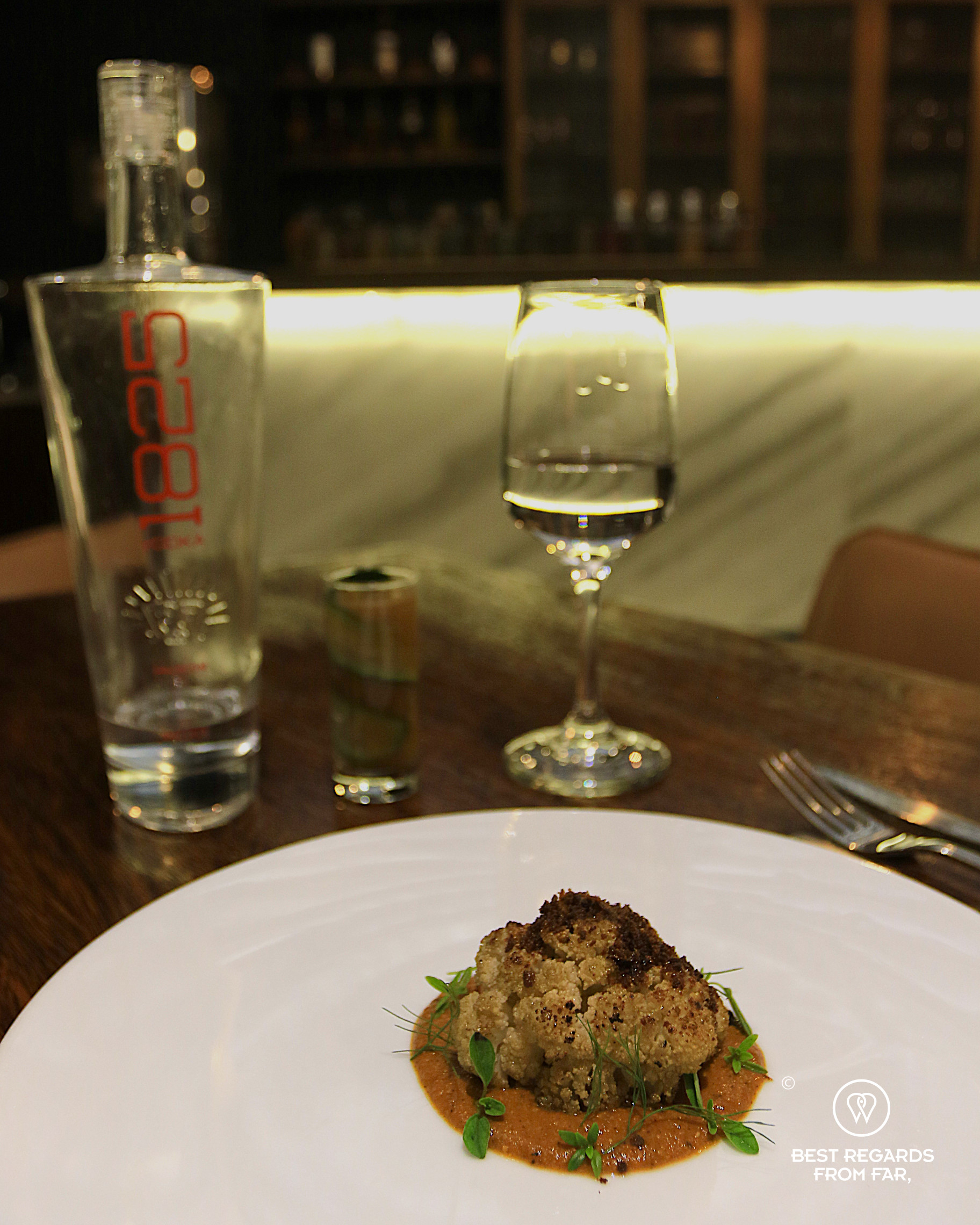
Braised cauliflower served on a mole of red aji follows. Deep fried pork crumbs top it off to add some crunchiness and a meaty flavor. Unexpectedly, the perfectly balanced starter is served with a vodka-based cocktail. Of course a fully Bolivian vodka is used: Bolivian wheat grown in the Amazon and distilled at 4,000 meters with Andean water. Our mixologist has infused it with coriander, cucumber, and tamarind to not only pair it but also to enhance the flavors of the cauliflower dish.
The travel through Bolivia continues with a grilled paiche fish from the Amazon mixed with a tiger’s milk based on avocado and choclo. Fried potatoes with crisps of sweet potatoes add some texture to the dish while the spring salad colors it.
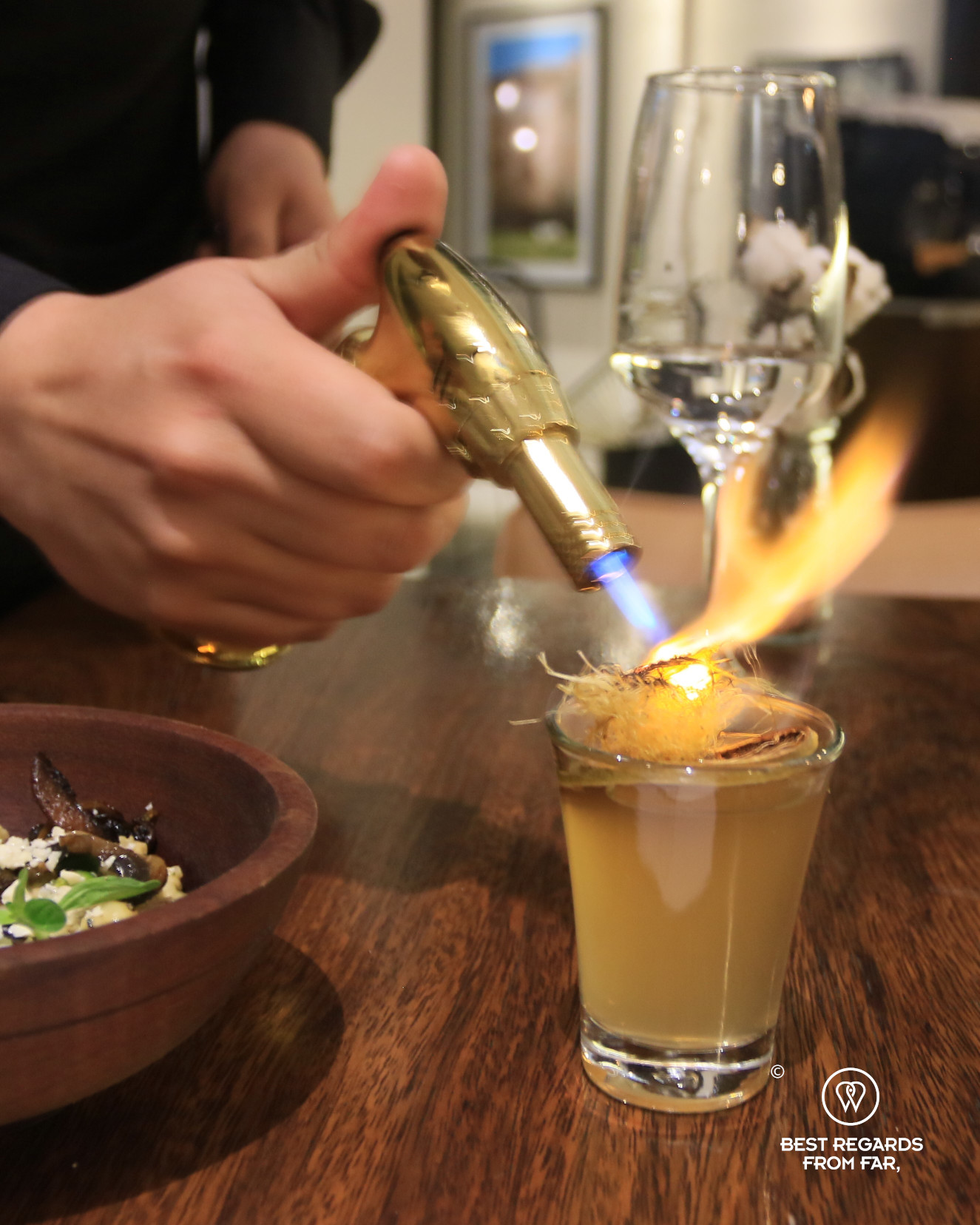
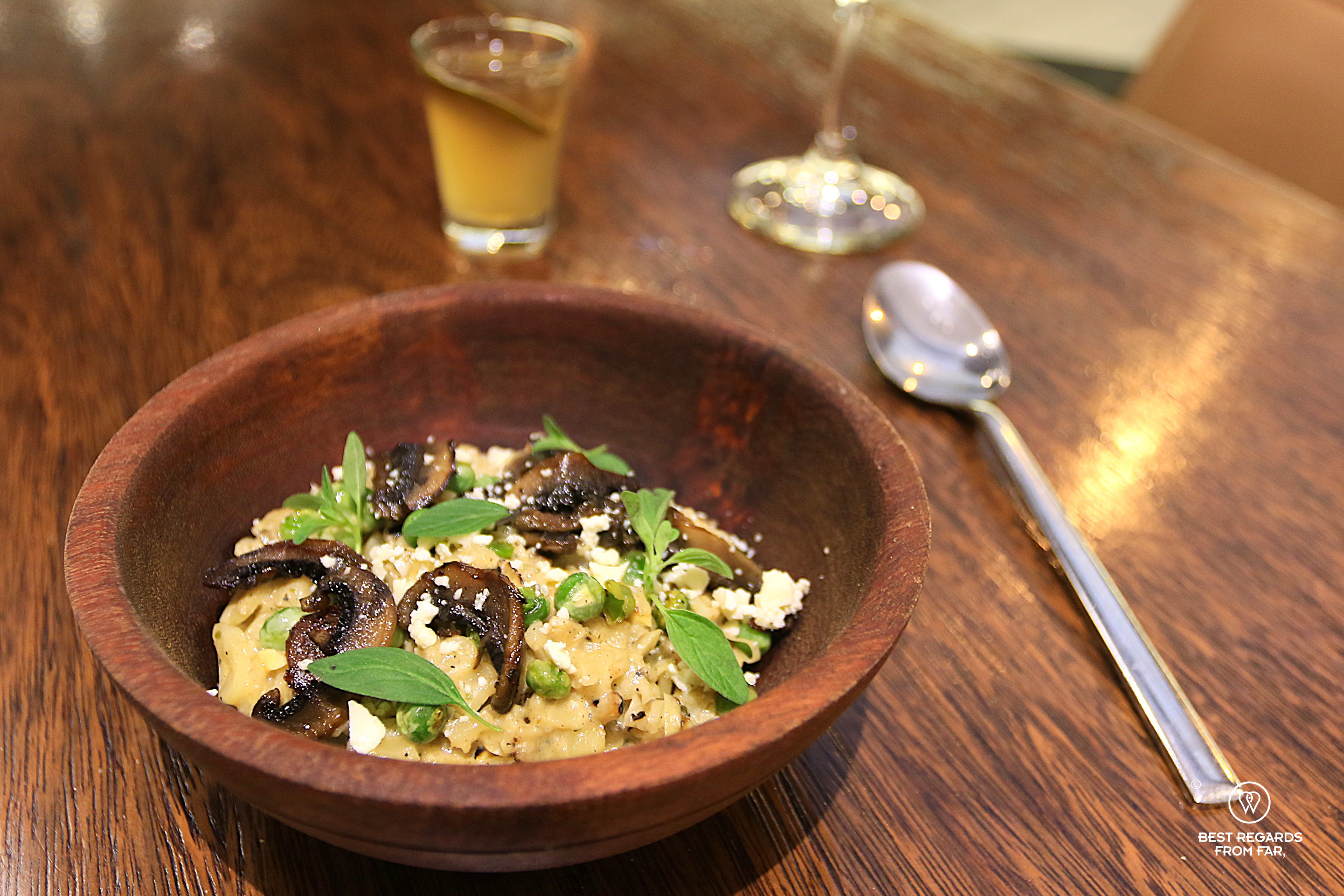
Interestingly, in the fully Bolivian risotto the Italian risotto rice has been swapped for choclo corn, the cheeses come from San Xavier in the tropical low lands of the country, and local forest mushrooms, green peas, and oregano complete the creamy comfort dish. The chili-based drink with smoked choclo hair that accompanies the perfectly texture risotto makes it all ideal on a cold winter day in world’s highest capital.
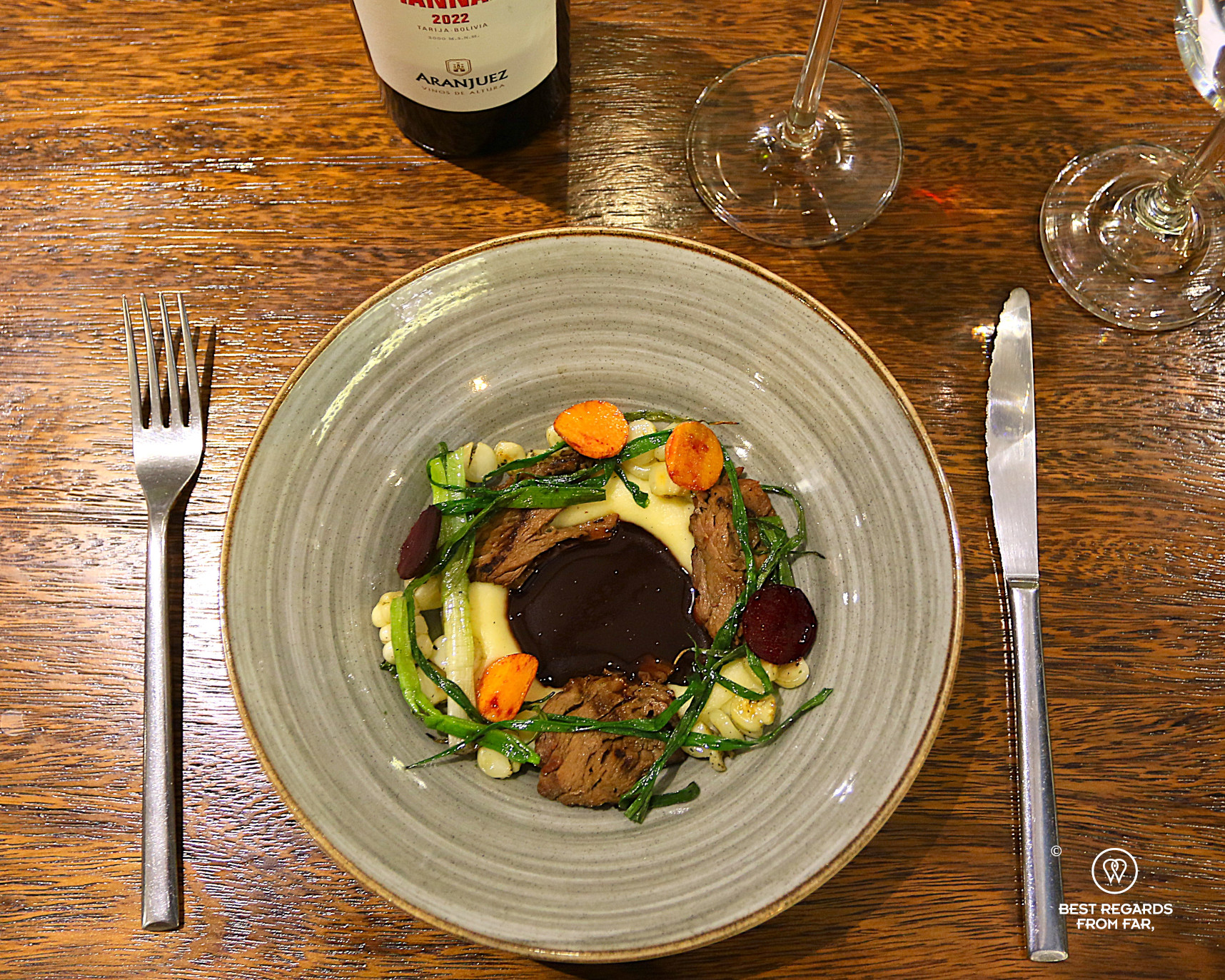
Not only cocktails, but also carefully-selected wines compose the pairing, as Andres pours an award-winning Aranjuez Tannat from the Tarija region of Bolivia. Bolivian wines are on the rise and the ones from the Taraji area are particularly notable for their unique flavor profiles and hint of acidity due to the microclimate and the high-altitude of the vineyards located between 1,600 (5,250ft) and 2,600 meters (8,530ft). Argentina with its world-renowned wines is just across the border, and for Bolivian vineyards, the sky is the limit. The red Tannat pairs handsomely with the marinated tender beef in wine sauce.
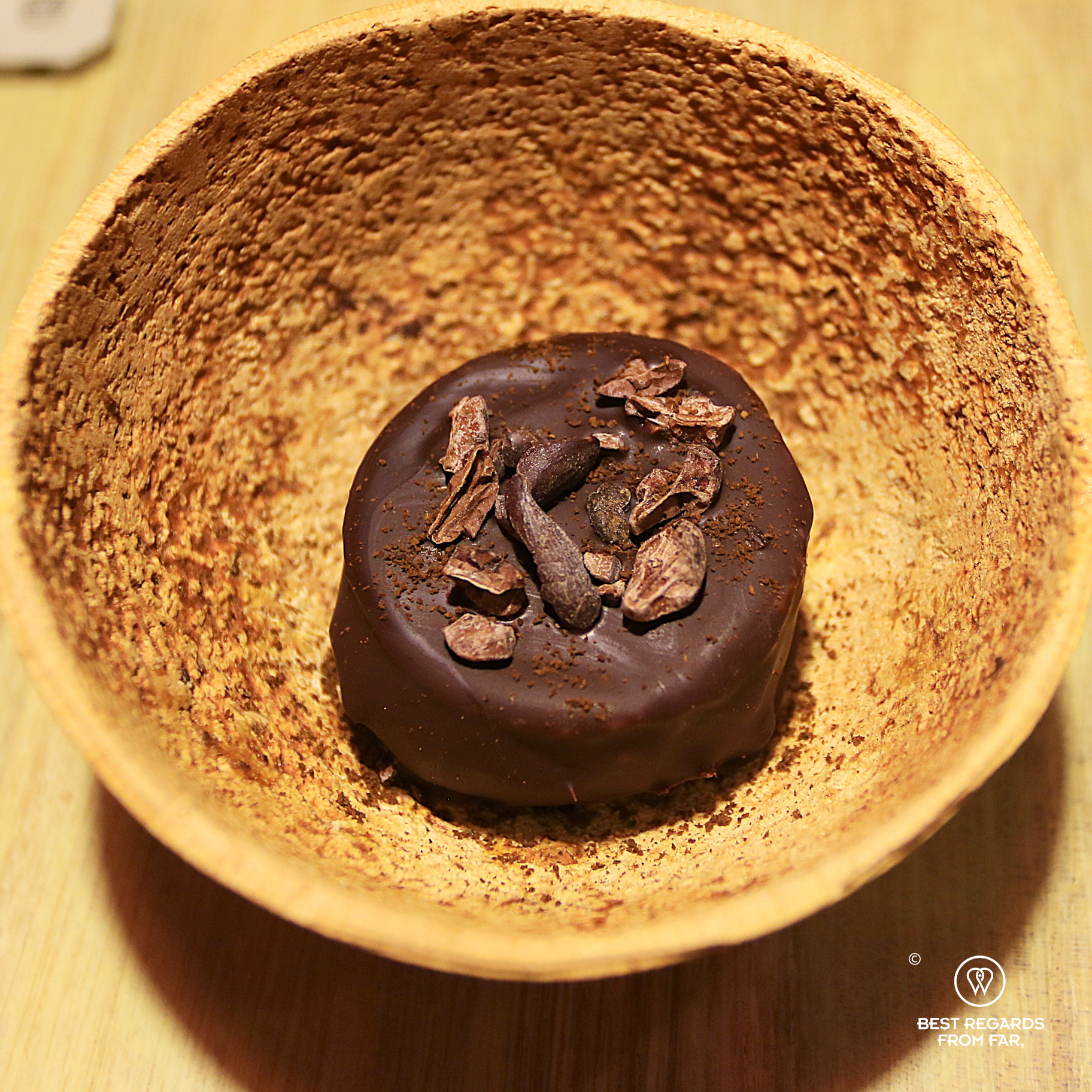
To conclude the gastronomic journey through Bolivia at Proyecto Nativa, a cajote dessert disguised as a macaron is presented. Instead of its expected sweet taste, the creative dessert exudes flavors of pumpkin, cream cheese, and chilies. Paired with a passionfruit and coriander-infused rum, the warmth and passion of the Proyecto Nativa team lingers in the chest, capturing the essence of place.
Gustu [simply the best fine-dining restaurant of Bolivia]
Gustu means “flavor” in Quechua, and if the first gourmet restaurant of Bolivia is a must for any foodie visiting La Paz, enjoying the amazing beautifully plated dishes is the very last step of a greater work that has been carried out behind the scenes: giving pride back to the whole food chain in Bolivia.
As Sumaya Prado, the general manager of Gustu explains, the restaurant is first and foremost a social enterprise highlighting exclusively Bolivian products supplied directly by small producers from indigenous rural communities while giving a platform to local talents in a responsible and socially-committed way.
Geographically close, yet far from the sophisticated and earthy atmosphere of Gustu in the residential Zona Sur of La Paz, the degustation journey throughout Bolivia from its lowland tropical jungles to its highest peaks via its wealth of microclimates starts with local communities. The whole kitchen team of Gustu goes deep to find new ingredients and revive some that were about to be forgotten, to learn from locals with ancestral traditions, and ultimately to give back a sense of pride to growers and farmers. This is also Gustu’s contribution to a healthier environment where unfortunately coca fields tend to take over as the cash crop guarantees a revenue.

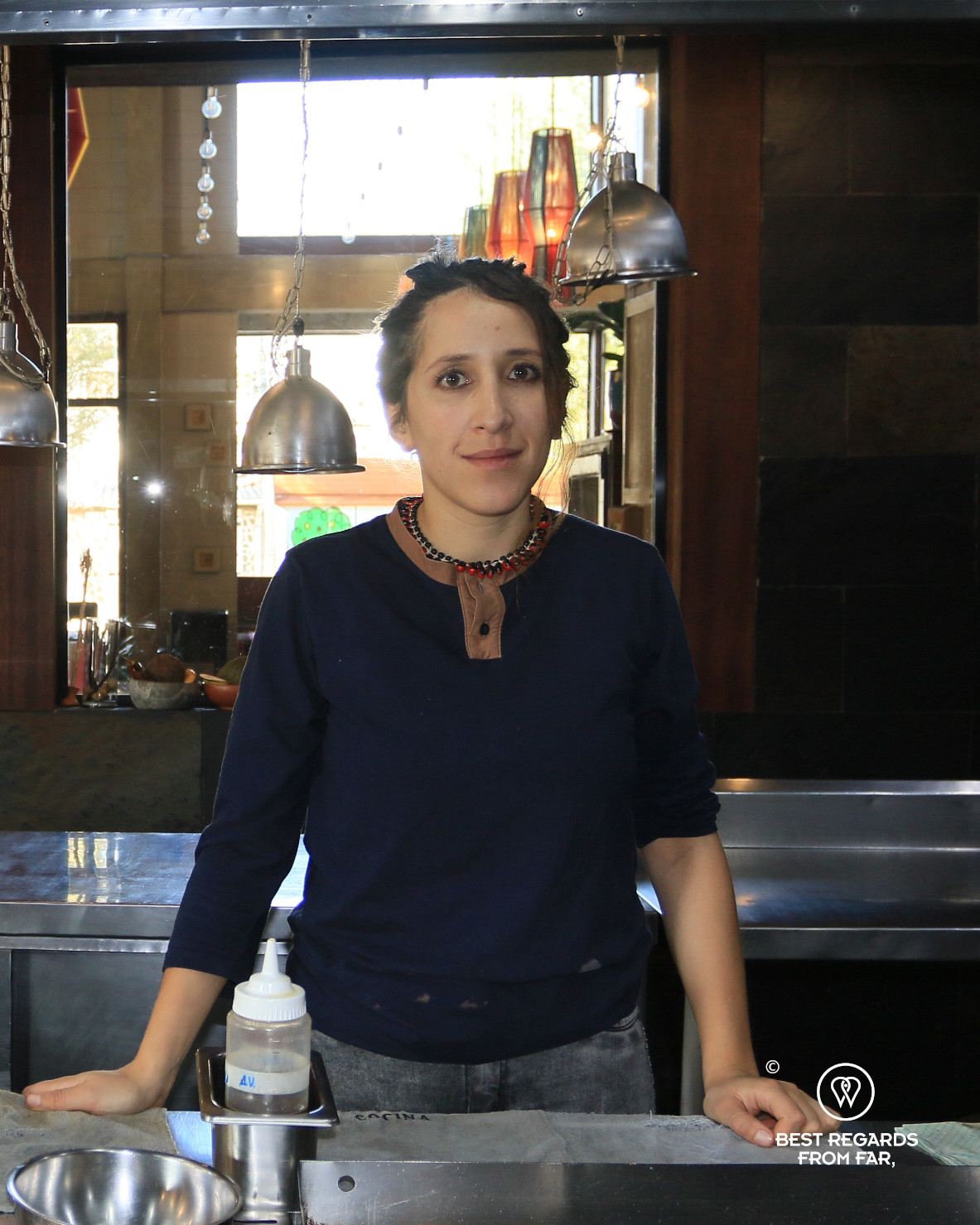

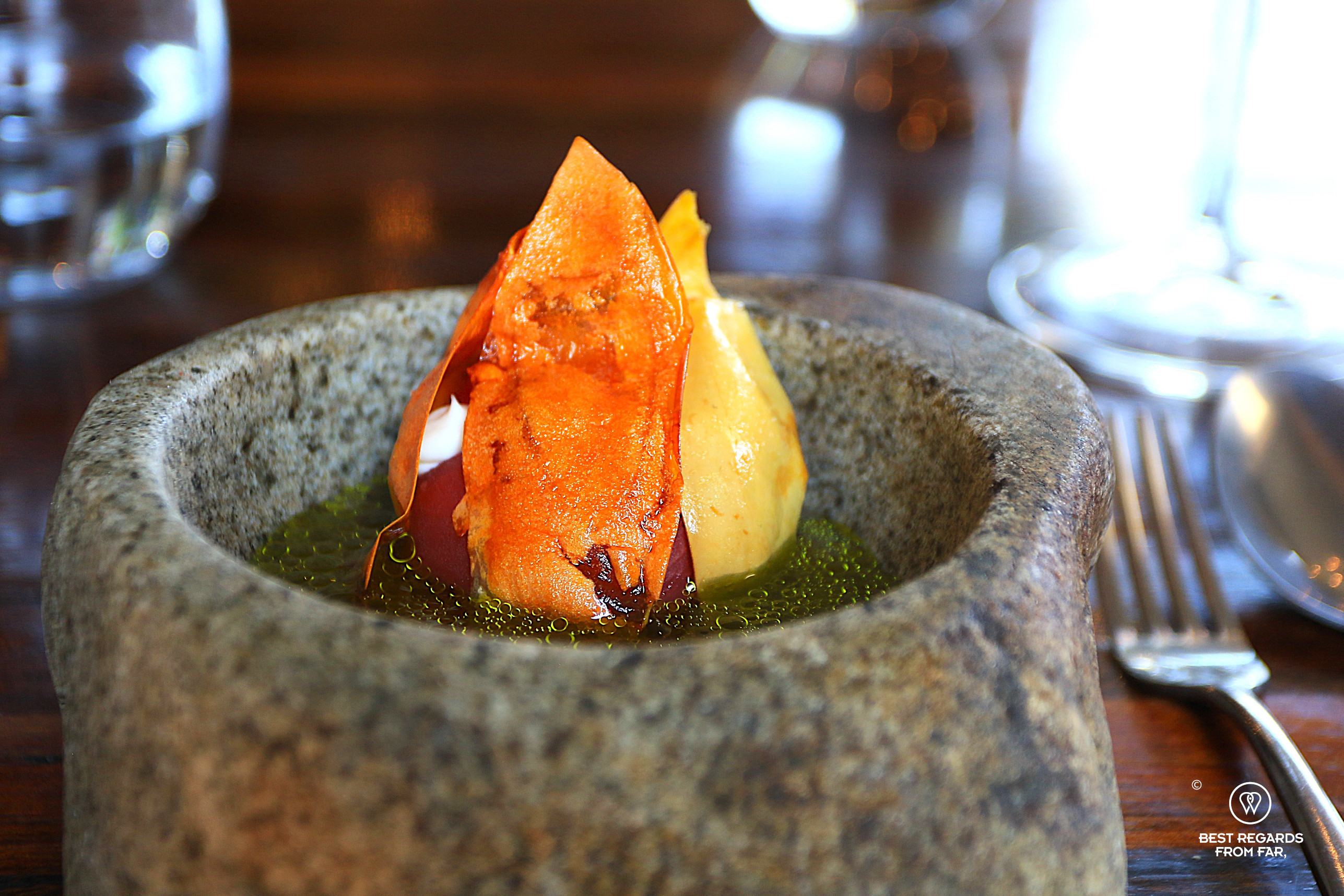
For patrons, a unique gastronomic experience at the highest level awaits thanks to the innovative and avant-garde techniques used by young Chef Marsia Taha, best female chef of South America, and her deep passion for foraging for unique ingredients.
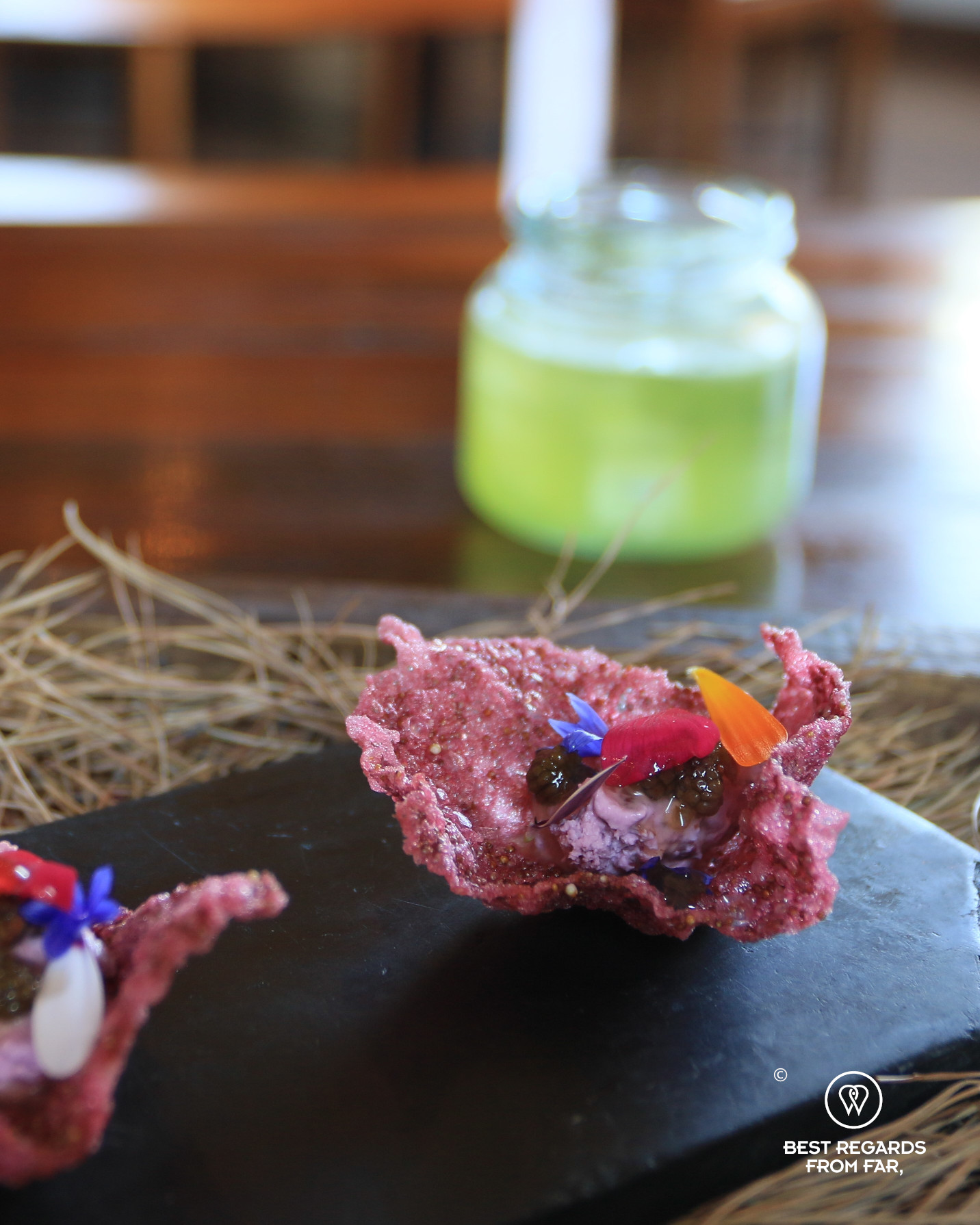
The culinary voyage is paired with cocktails and wines and kicks off with a refreshing cocktail of vodka infused with lemon and cucumber, topped with smoked rosemary. It pairs with a purple isaño potato chip enhanced with a few drops of honey, wild blueberry, and flower petals as well as with the second course of palm heart toasted with brown butter and balsamic vinegar derived from banana which is served in a warm granite stone.
A white Cochabamba Muscat with its notes of apricot and peach pairs perfectly with the farmed alligator tail swimming in a dressing of mango, banana oil, and cubes of green papaya. A few drops of homemade garum of trout are added to enhance the flavors.
Unexpected options such as a smoked watermelon pastrami meat in avocado oil is served with a refreshing frozen sauce on top and paired with a sparkling and aromatic Altosama rose.
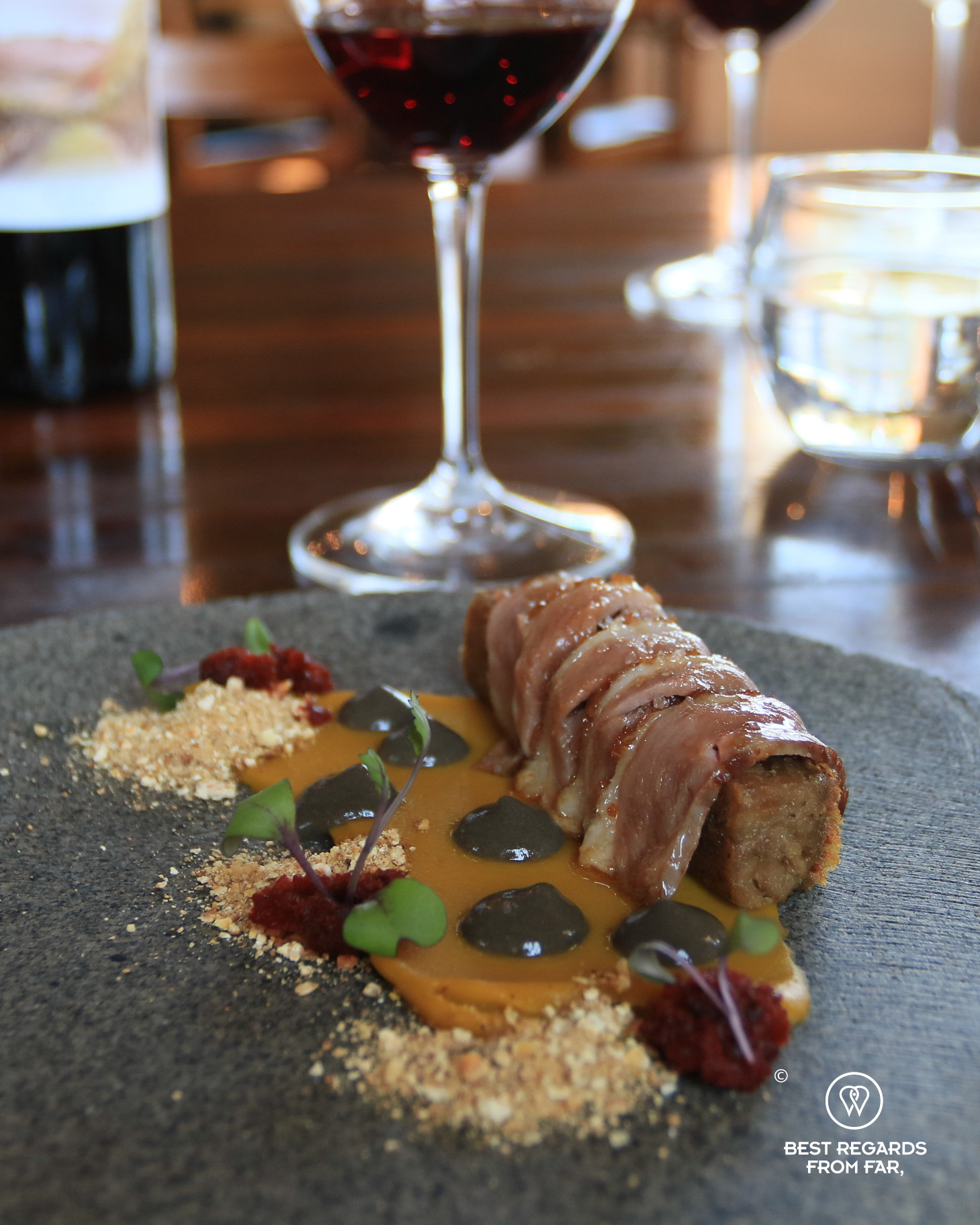
An array of remarkably mastered cooking techniques are displayed in a dish of fermented tomato with palci beans and mashed and fried tomato in a reconstructed salsa sauce for a sweet pleasure of textures. From the Amazon area, the tender river fish paiche served with a reduction of orange juice, yucca, and chili is topped off with baby spinach leaves. A delightfully cooked duck is served with a lucuma fruit from the Amazon, fermented corn, and a local fungi that grows on the corn. A beautiful Syrah, the 1750 Samaipata works brilliantly with the unique dish.
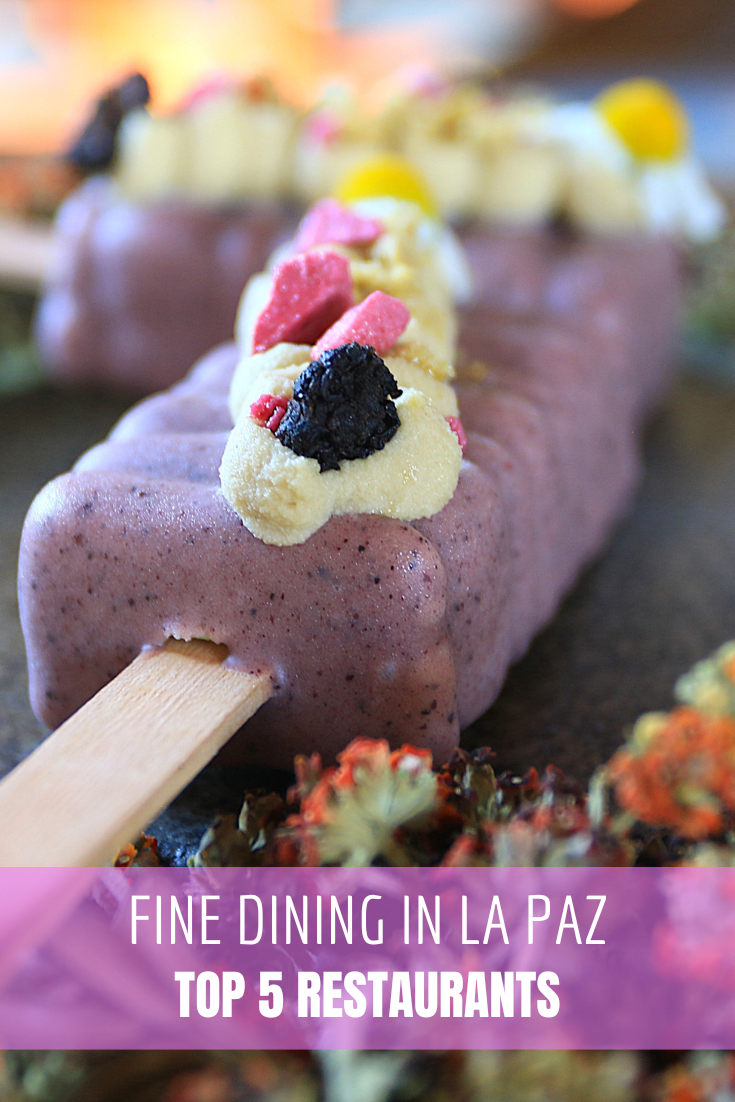
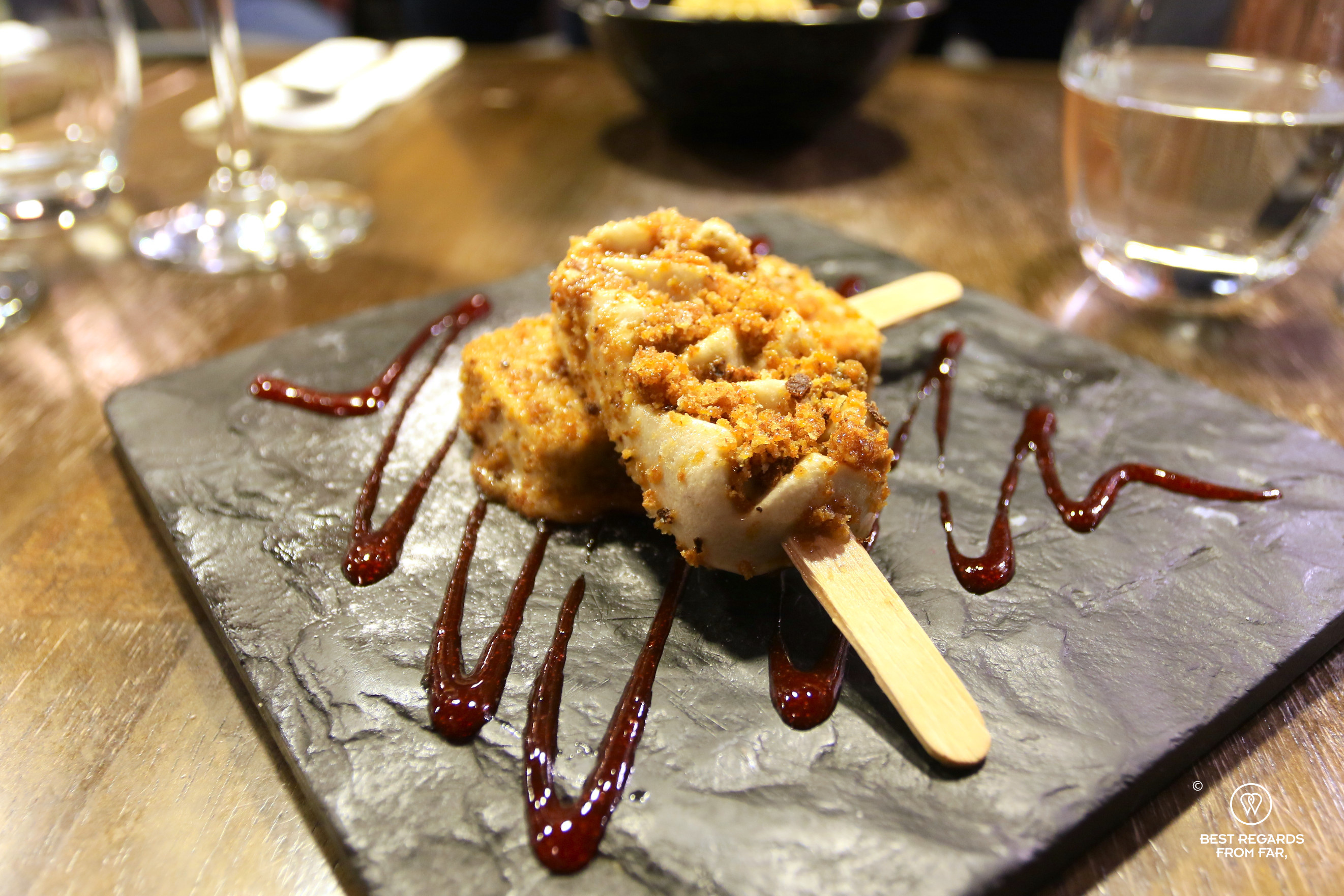
The gastronomic journey takes a sweet turn with a flan of calabash, sorbet of tumbo (an endemic fruit of the passionfruit family), and a spicy meringue. After tasting a high-end singani, a Popsicle of white chocolate with hibiscus and cream of flowers that grow on the Altiplano above 3,000 meters concludes the incredible culinary journey.
Sumaya Prado may not be quite right. Food is not the last piece of the Gustu initiative. More than a stepping stone, it serves as a springboard for the talents who work within its walls. In the competitive culinary world, it is more of a family vibe that is picked up in the open kitchen, and the former chefs of Gustu keep working at making the pride of the Bolivian gastronomy and emulating others, often in their own restaurants. Gustu simply keeps giving.
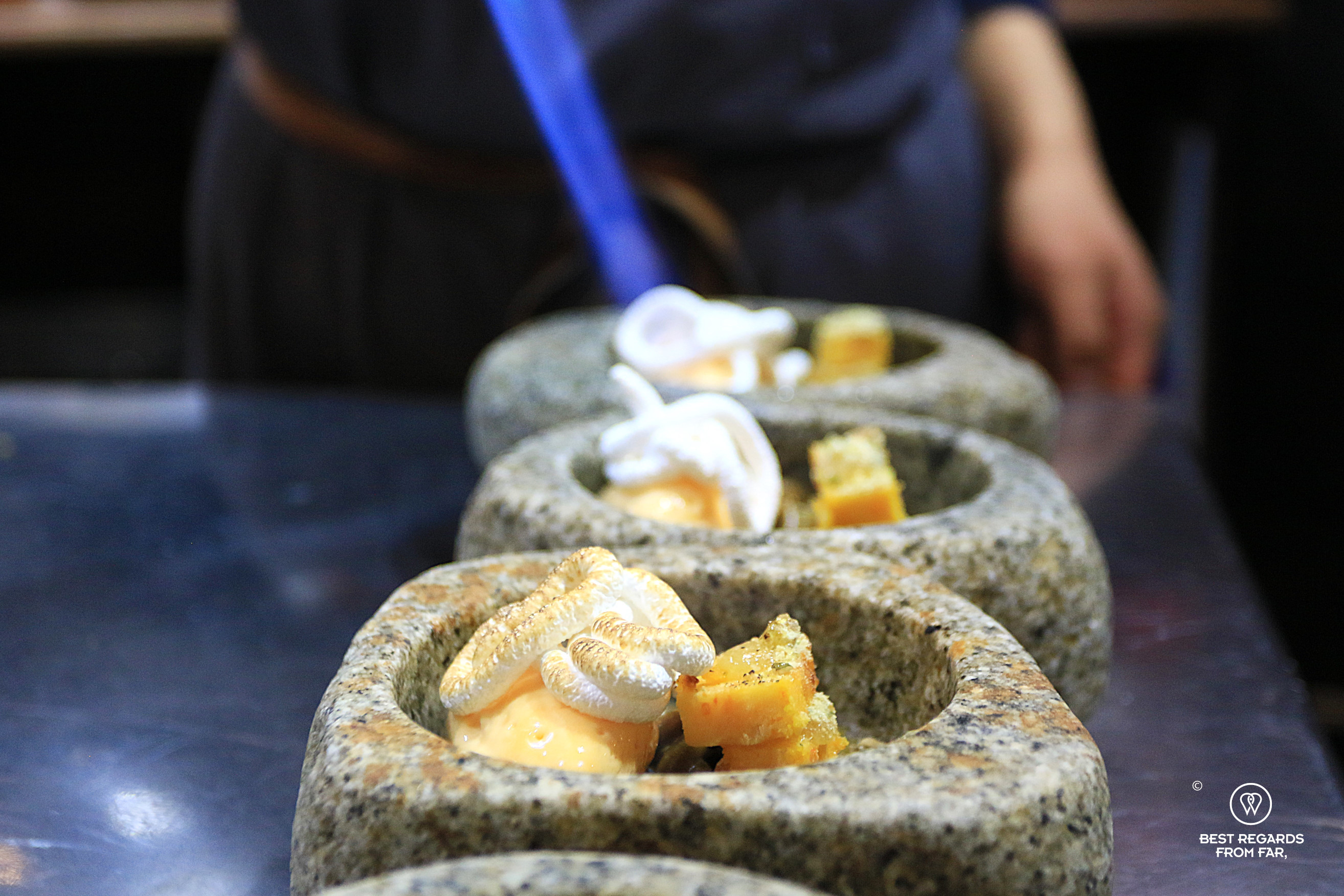


Ancestral [for all Bolivian delights on a wood-fired grill]
Former head Chef of Gustu Mauricio Lopez and Chef Sebastian Gimenez also highlight all types of Bolivian ingredients while mastering wood-firing cooking techniques in the warmly decorated underground dining room of Ancestral in Zona Sur of La Paz. Their 9-course tasting menu is a true treat, all the more when it is paired with their drink selection.
The evening starts with the Singani-based tumbo (of the passionfruit family) cocktail along with some amuse-bouche of mashed açaí a red berry from the Amazon rainforest, and a slice of anticucho, cured beef heart on a small fried red potato, setting the bar high for the rest of the evening.
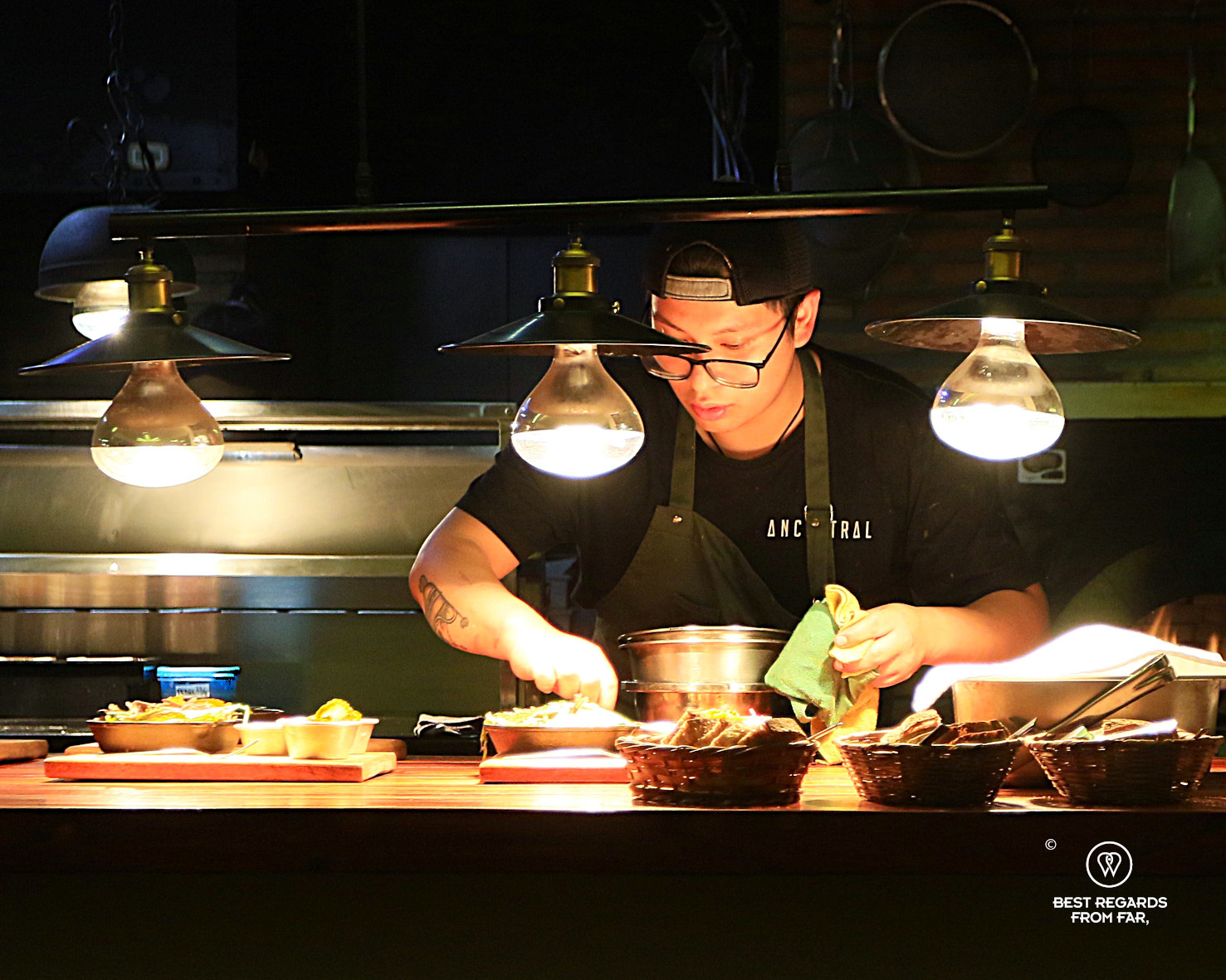

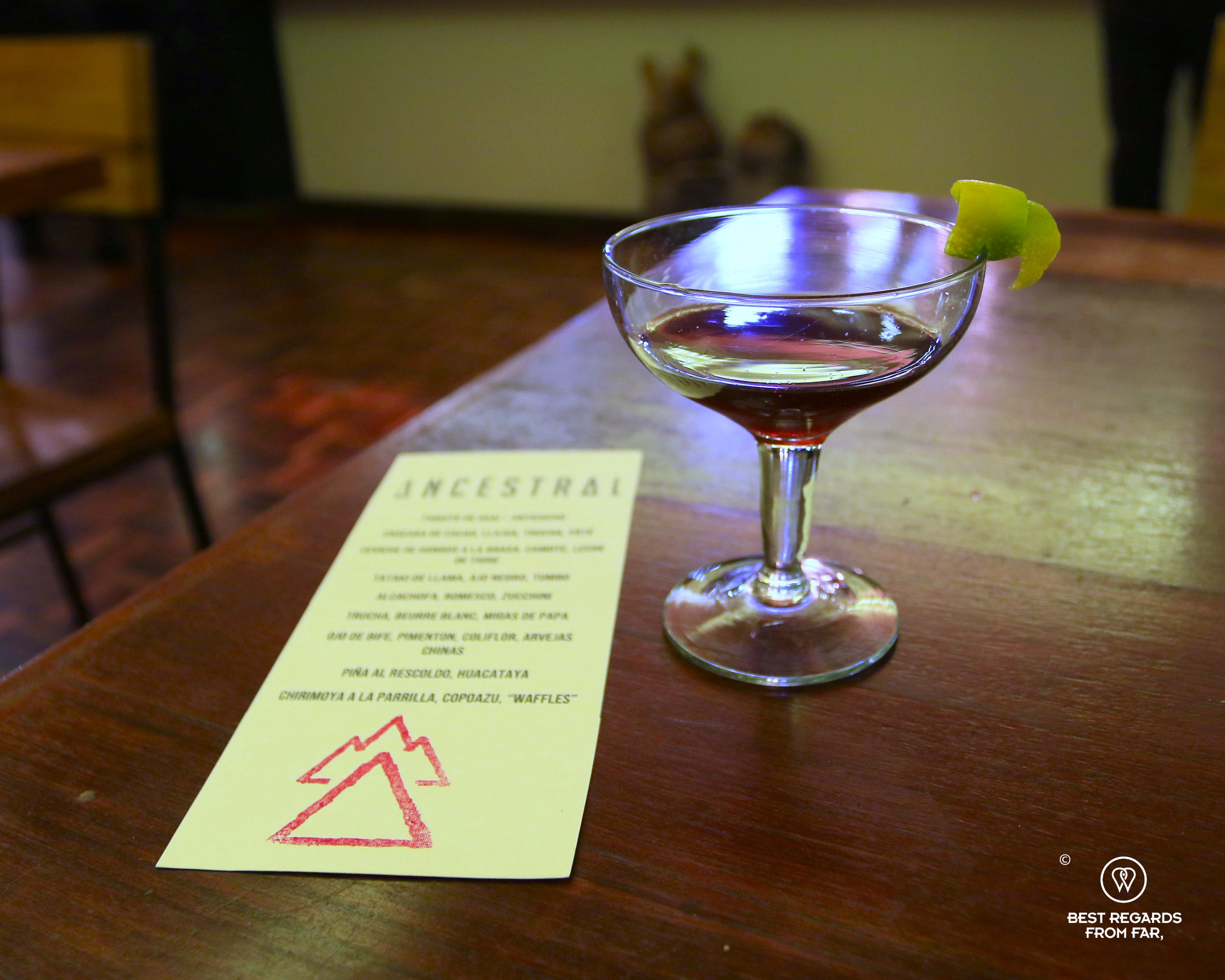
A sourdough bread unexpectedly made of the skin found in the cacao pods comes with three spreads: a dip of traditional salsa sauce (llajua) made with tomato and grilled chili, a hearty liver pâté, and lighter trout spread, showcasing a real juggle with all types of ingredients in a baffling originality.
A Magnus Sauvignon Blanc from the Tarija Valley is poured in our glasses by the sommelier. The Reserva Limitada 2022 comes from the third-generation of the female-run winery. The sommelier’s passion for working with small vineyards and excellent products transpires. Green in flavors the white wine pairs smoothly with a roasted oyster mushroom ceviche served with sweet potato chips for crispiness.
The center of the slightly seared lama tataki is still raw to diffuse the sweetness of the meat that comes with a delicious sauce of tumbo and a black garlic leaf. This dish is paired with the high-altitude wine Don Christian 2020, a Vischoqueña from the oldest wine region of Bolivia, Sucre, to honor Christian Villamor, former chef of Gustu who crafted experimental wines and who sadly passed away.
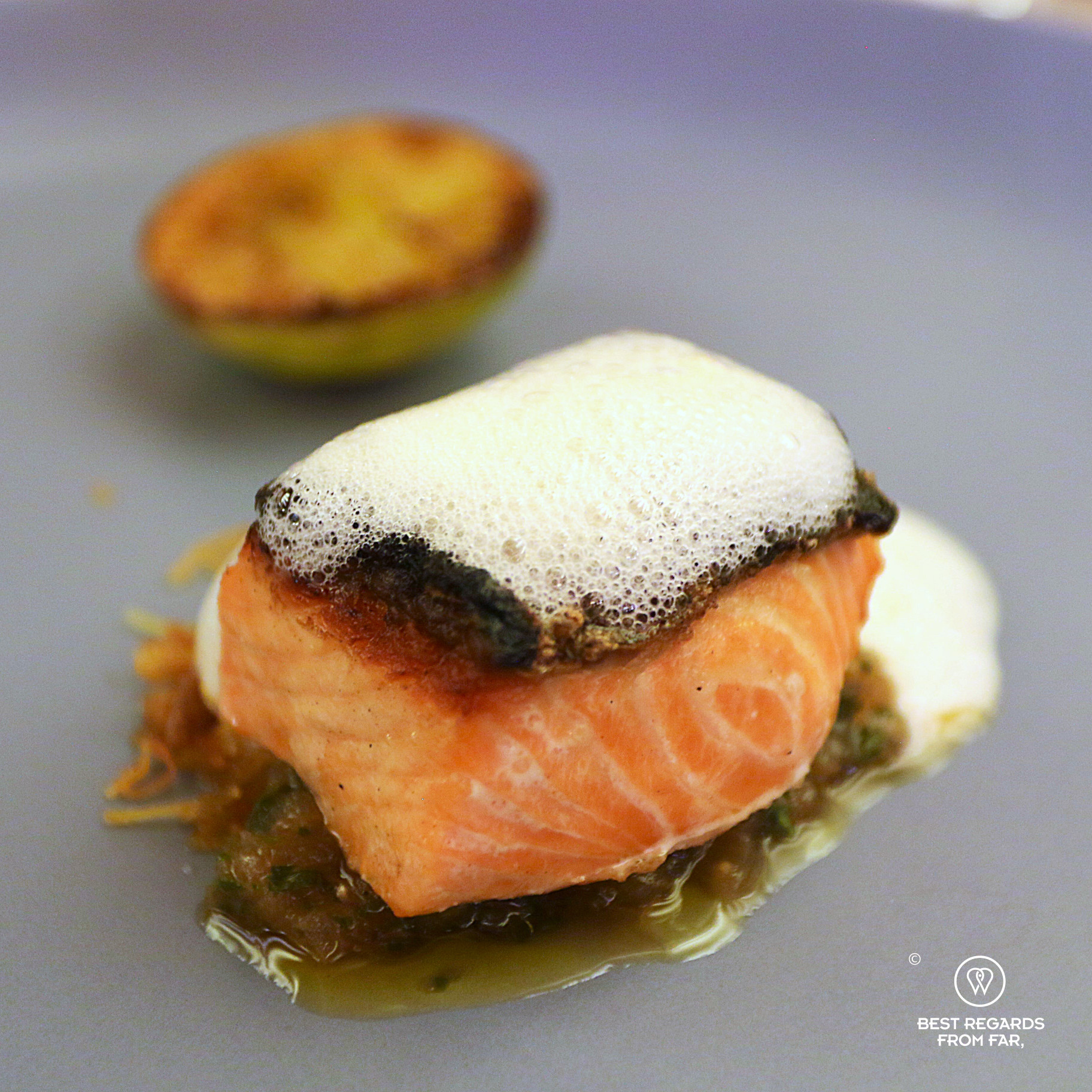
Ancestral is not all about meat only as many think. Far from it in fact. It is all about the wood-fired grill and oven. As a perfect reminder, the signature dish is in fact vegan: an artichoke heart with a romesco sauce made of red chilies from Sucre and zucchini topped off by a pickled lisa potato and chopped nuts. And a trout from Lake Titicaca grilled to perfection is yet another example.
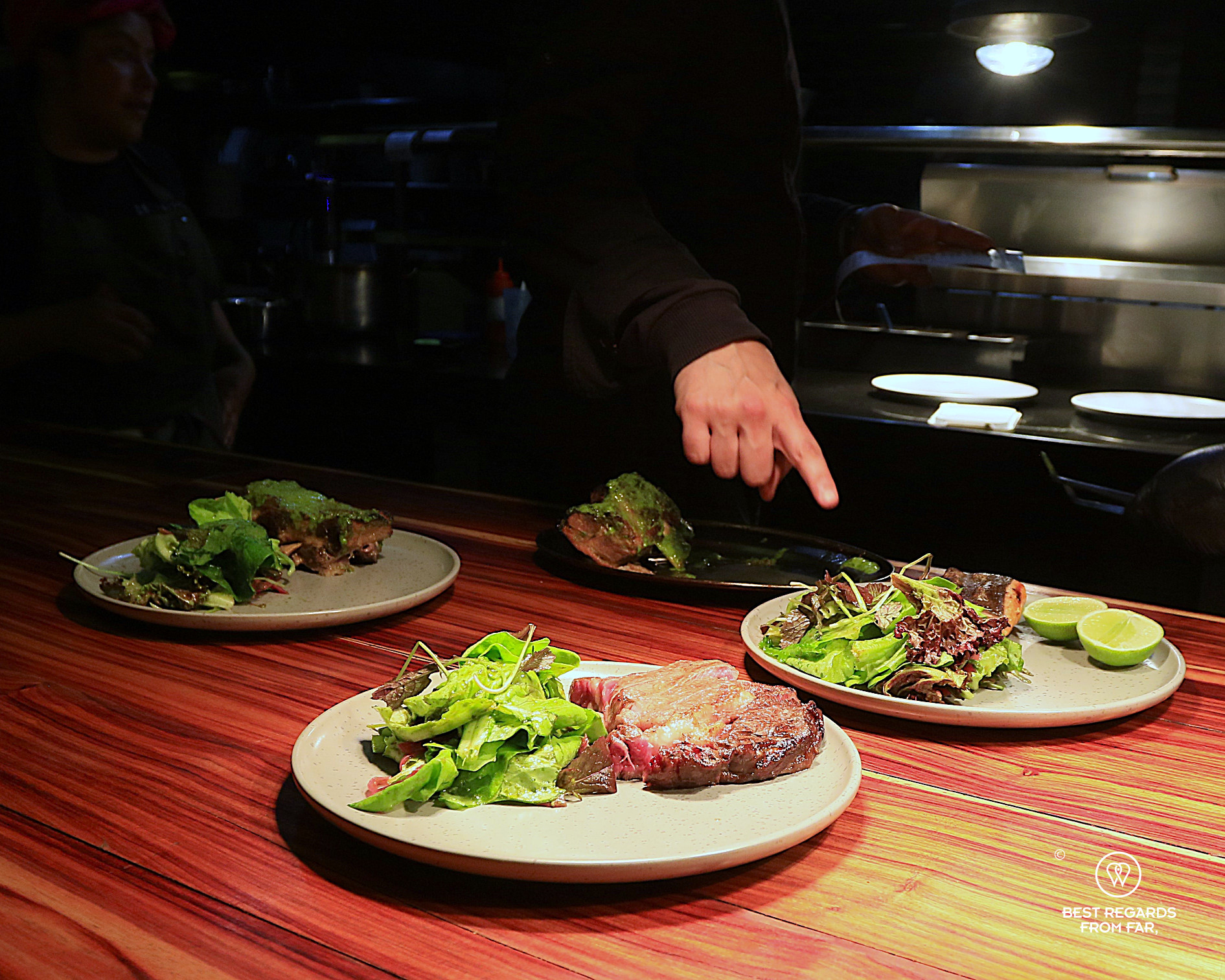
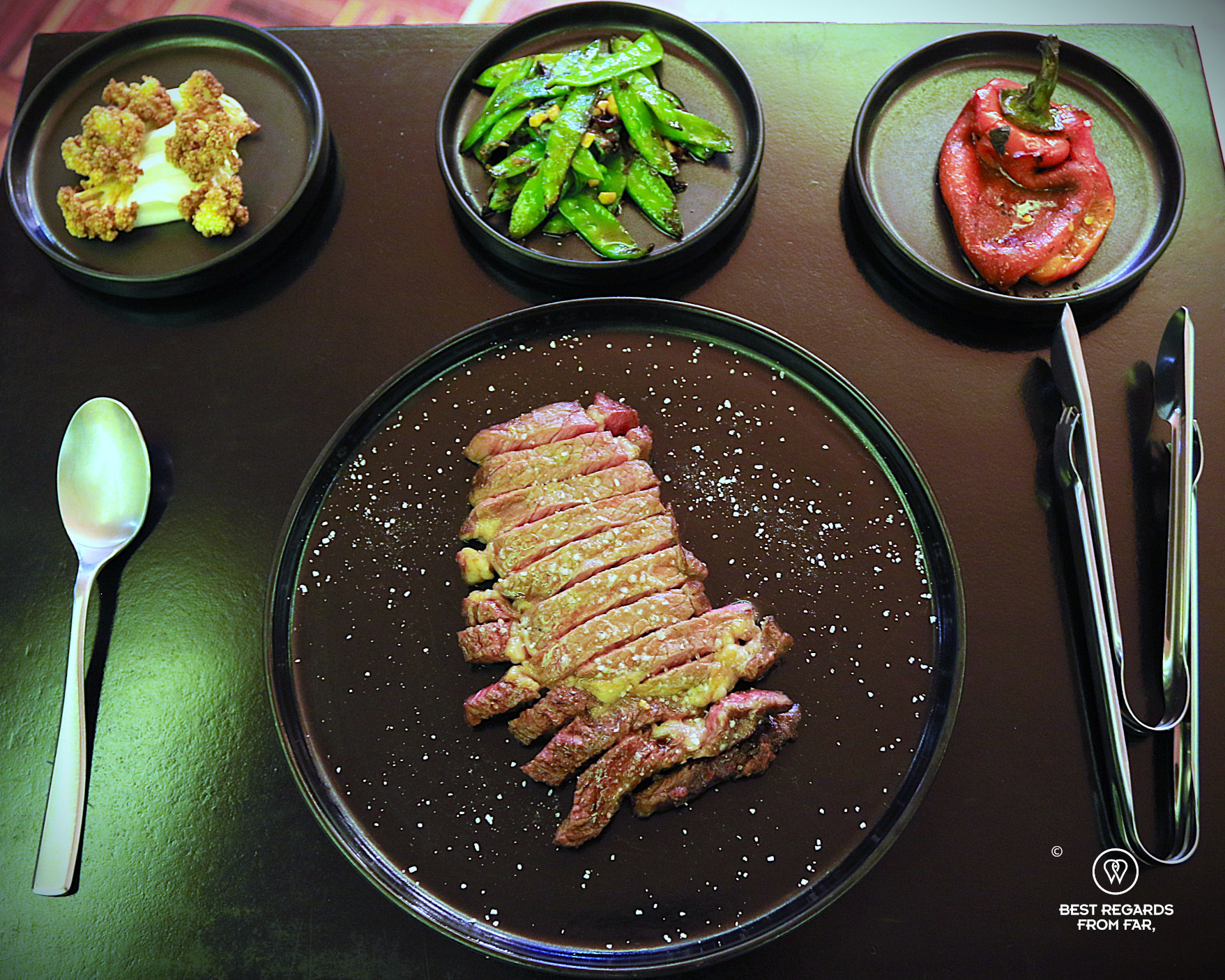
No, Ancestral is not all about meat, but they do know their cuts and how to cook them! The juicy prangus rib-eye may steal the show this evening. A cross between Brahman and Angus cattle, the high-quality beef is sought after for its rich flavor and tenderness. Served on a side-table with grilled paprika, cauliflower, and snow peas and paired with a red Sangiovese 2019 wine from Magnus, it is as perfect as it can get.
The wood-fired oven is kept warm all the way until the conclusion of this amazing tasting menu to prepare a sweet ash-roasted pineapple accompanied with one of the many rums of choice while the grilled castor apple with toffee sauce concludes the evening in style with Bolivian bubbles.
Travel tips:
- All these restaurants must be booked well ahead of time.
- The Sopocachi district is the ideal place to stay to discover La Paz and its amazing food scene. Not only is the district enjoyable, but from there, the gondolas take you everywhere in town and are by far the best way of getting around, avoiding traffic and enjoying amazing views, especially when riding them to Zona Sur where many of these restaurants are located.
- Casa Fusión Hotel Boutique is a locally-owned boutique hotel with a homey feel and interesting art exhibits. One of the best bakeries in town is also located on the premises!




- This article is now featured on https://www.gpsmycity.com. To download this article for offline reading or travel directions to the attractions highlighted in this article, go to Walking Tours and Articles in (La Paz) on GPSmyCity.
- Check out our interactive map for more in the area (black pins lead to an article):
For more in Bolivia:




 Best regards from far,