Text & photographs: Marcella van Alphen & Claire Lessiau
With 60% of Peru’s national territory being covered by the fast-disappearing Amazon rainforest, no trip to the land of the Incas is complete without venturing in this hotspot of biodiversity. A short flight from Cusco or Lima, Puerto Maldonado is the perfect base to explore the Manu and Bahuaja-Sonene National Parks and the Tambopata National Reserve with the rainforest teeming with wildlife, oxbow lakes, and clay licks covered in countless colorful parrots and macaws.
Pin this article for later!

Tree canopy
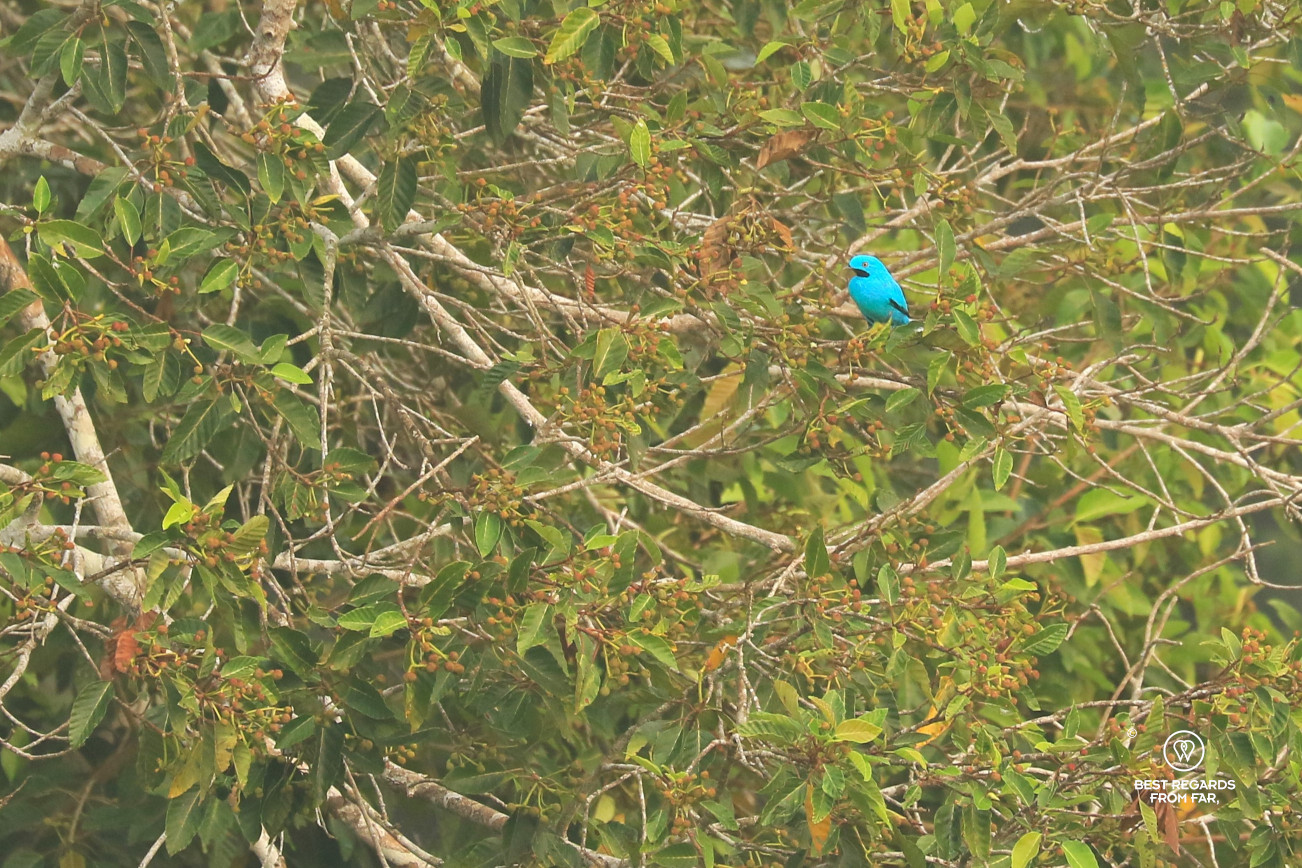
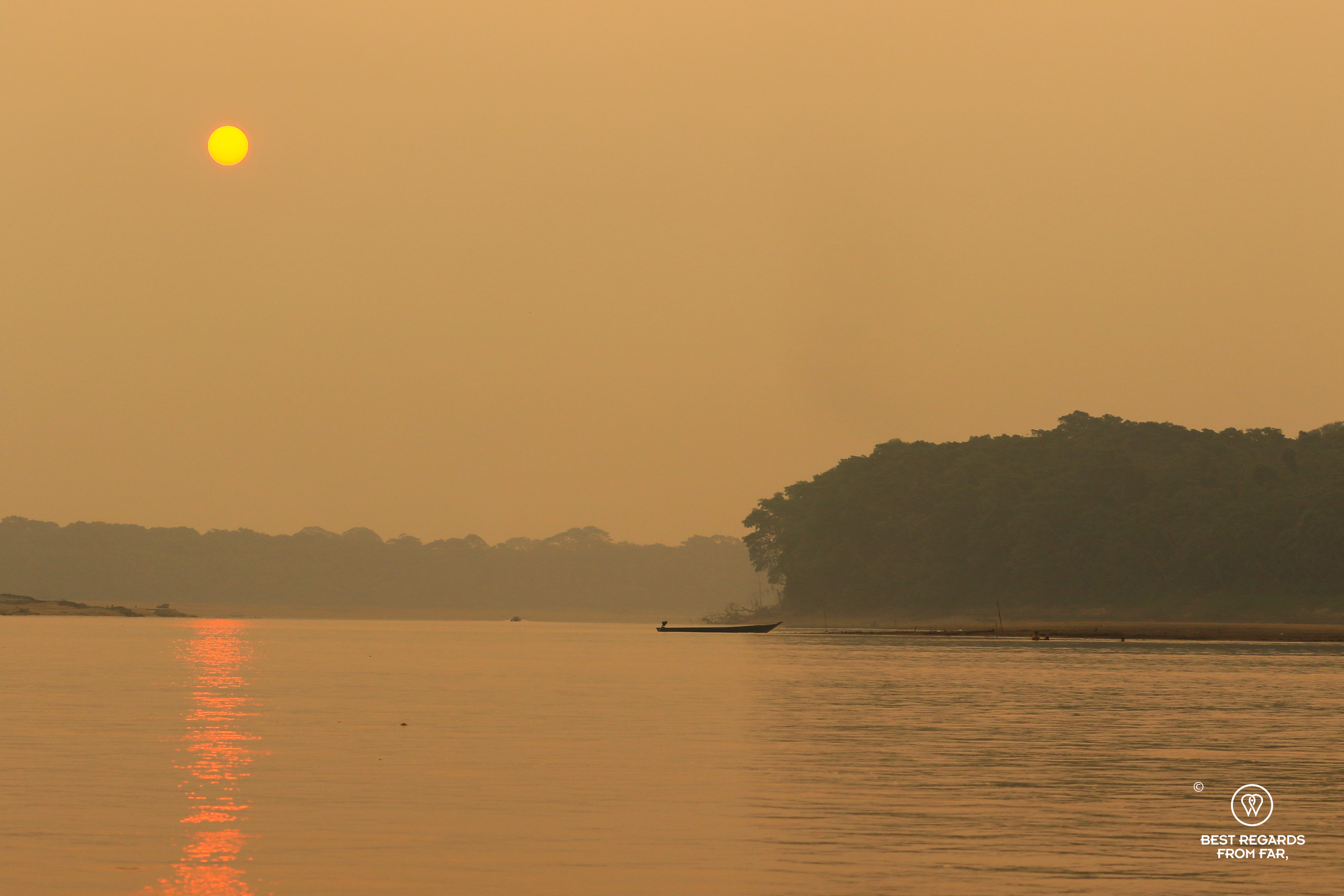
Forty meters (120 ft) above the ground amongst the canopy of the Amazon rainforest, colorful plumages come to life through the monocular of our professional guide, a passionate birdwatcher and photographer. Epiphytes decorate the branches. The sun is rising slowly above the tall and straight trees competing for light. The smoke of the forest fires filters the sunlight giving the star an even more orange hue. Slash and burn farming is well and alive in this world’s hotspot of biodiversity, and the Puerto Maldonado area, close to the border with Bolivia and Brazil is first row. Yet the tree tops during the early morning are a birders’ paradise: a russet-backed oropendola with its yellow tails and beaks, a bright blue plum-throated cotinga, a gilded barbet making owl-like sounds, tanagers of all colors, honeycreepers, blue-headed parrots flocking together and landing high up in a tree in a cacophony, and yellow-crowned parrots… Great pollinators and seed dispersers, about 375 bird species live around this canopy walk, and play an essential role in the rainforest.



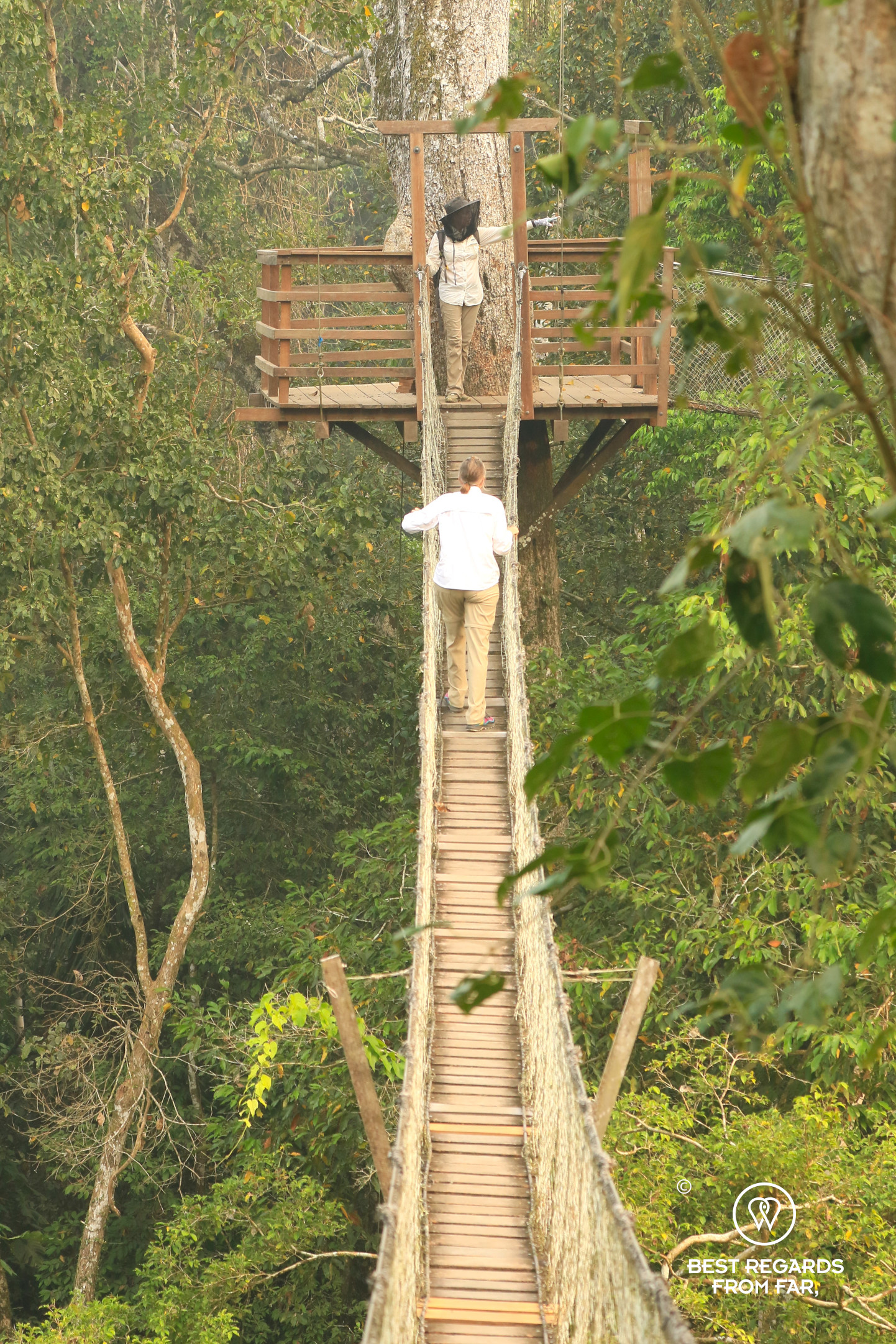
Above the Inkaterra Ecological Reserve, the very first ecotourism initiative in Peru, a network of suspension paths connects observation platforms together. Beyond the incredible birdlife, butterflies, reptiles, insects, and a few mammals show themselves. Rather light (no more than 12kg (26lb)) in order to be supported by the branches of the canopy, they occupy the tree tops, safe from many predators. Red howler monkeys with their long tails evolve along the branch of a majestic tree, and a well-camouflaged three-toed sloth hides up in a tall palm tree.
As our boat heads back to our lodge, some other brown-throated three-toed sloths slowly move in the canopy searching for fruits along the high branches of the Cecropia trees that occupy the banks of the Madre de Dios River along which a capybara family, world largest rodent, roams.


Ecolodge & real sustainable farming
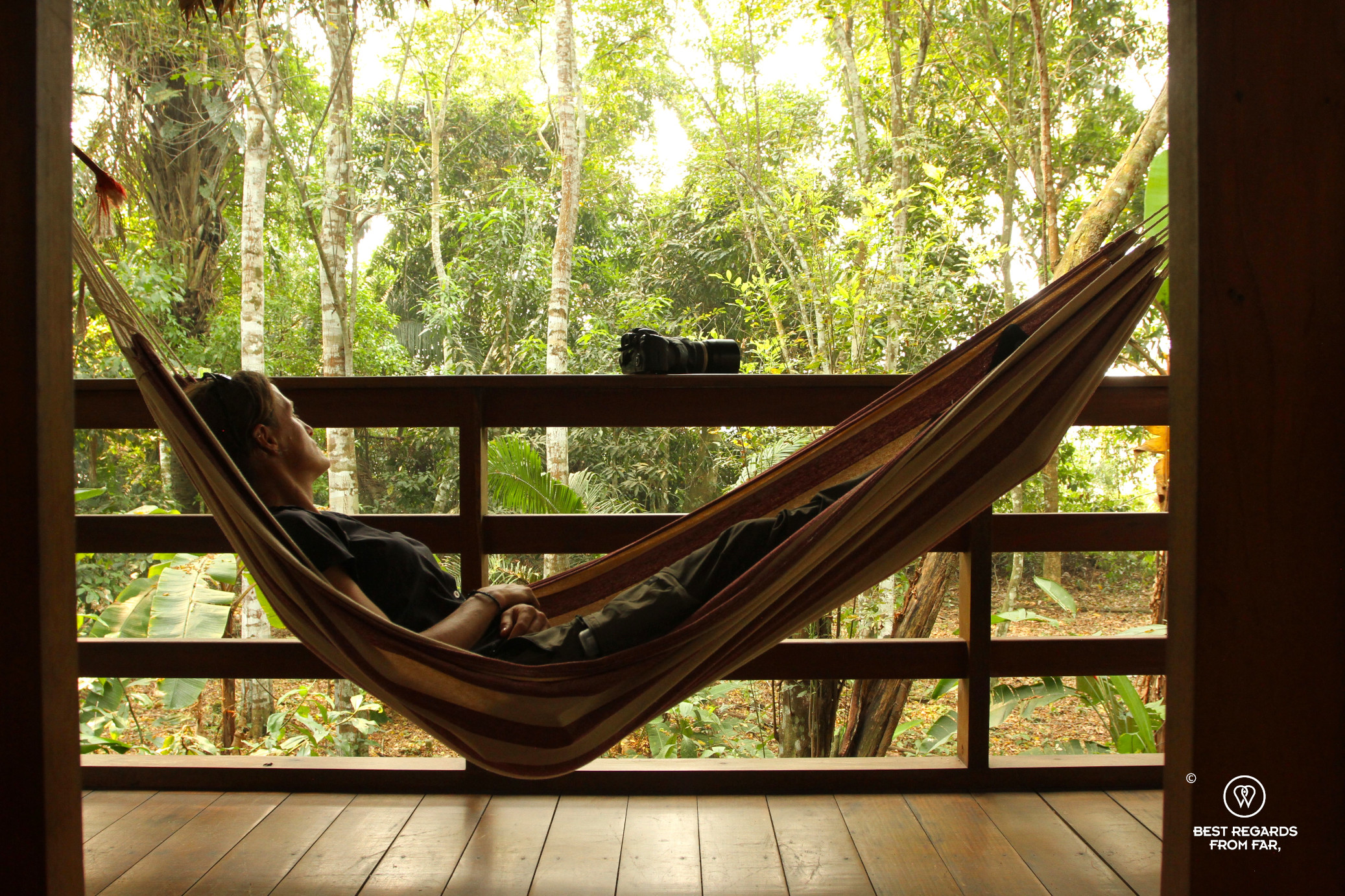
Soon, the dock to the Hacienda Herrera Tambopata appears along the wide and brown waterway. If the smell of the forest fires cannot be ignored, thankfully some initiatives aim at protecting the rainforest while providing jobs to local communities. Here, more than two thirds of the 88 acres of the ecolodge are dedicated to conservation. The rest of the locally-owned land is operated as an organic farm: Brazil nuts (a local cash-crop), avocados, cacao, citrus, pineapples, and bananas amongst others are grown under the stamp of the CECCOT NGO that aims at conserving biodiversity through research and education, also advocating for sustainable lifestyles in the southeastern Peruvian Amazon.
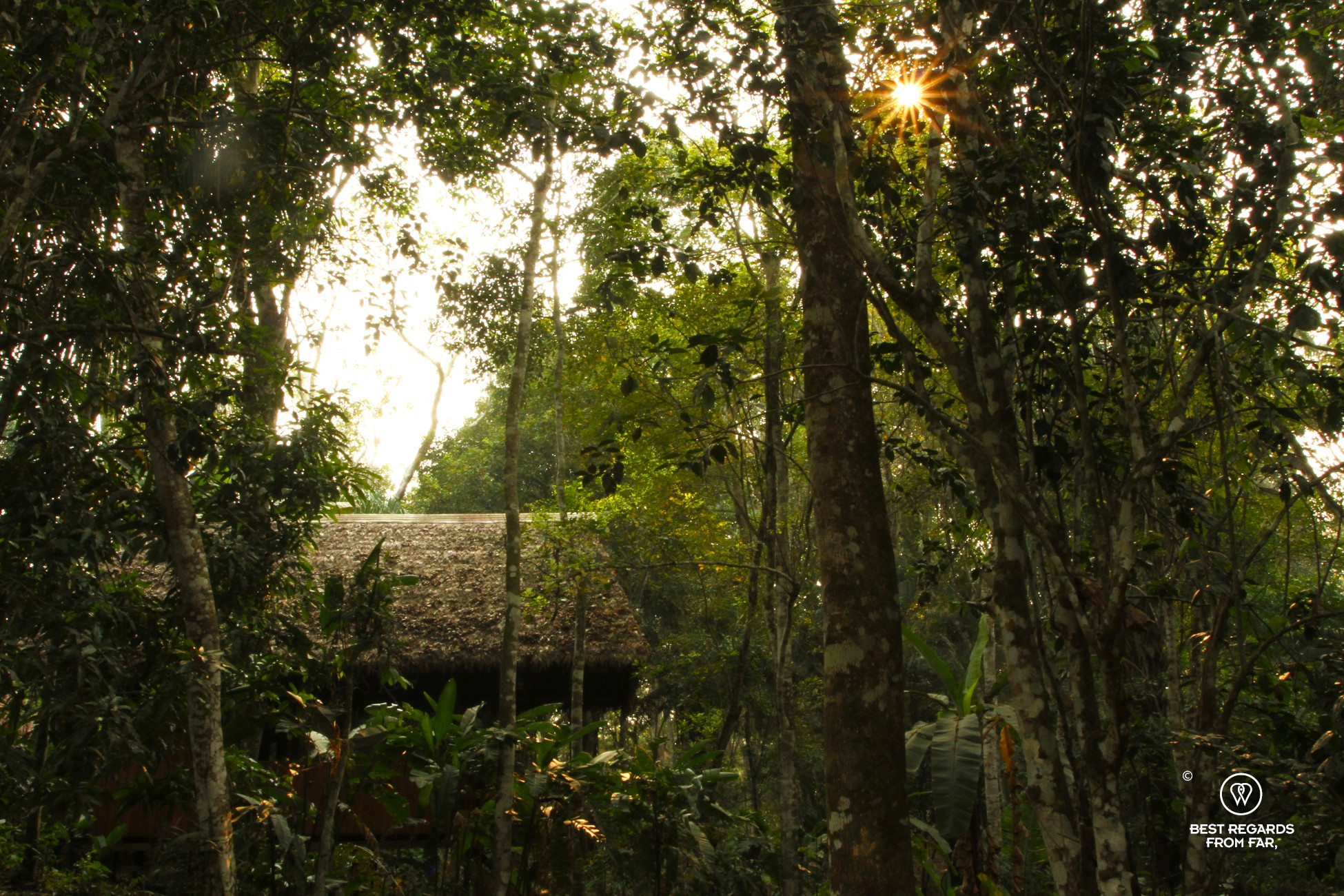

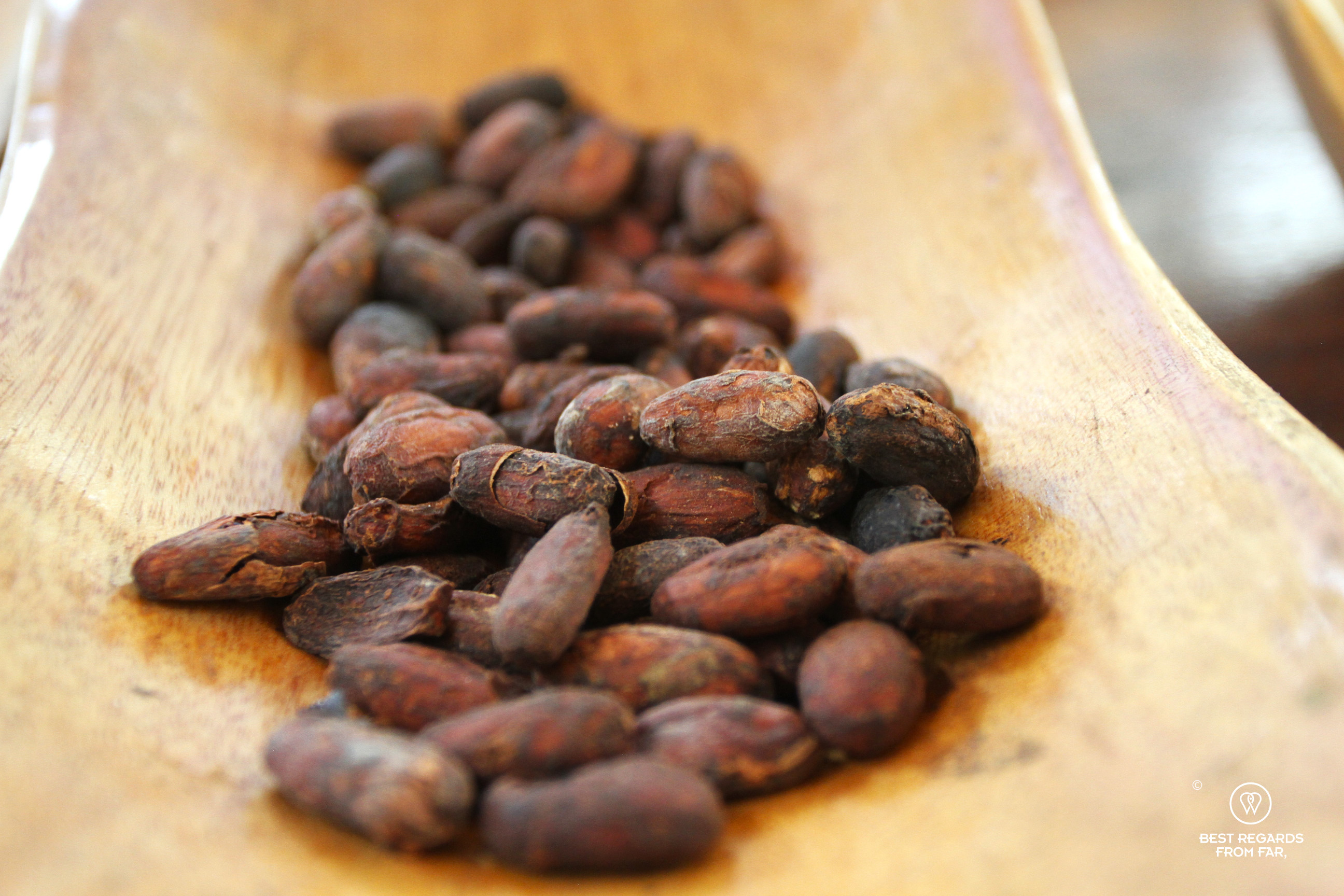


The farm products are the main ingredients of the homemade food served daily: paiche Amazonian fish steamed in banana leaf, chicken served with a Brazil nut sauce, salads, and delicious fresh fruits, or dehydrated small bananas for breakfast along with a locally-grown coffee.
Thanks to the sustainable values of the ecolodge, there is no need to go far to observe wildlife. Laury, who grew up in the forest and who is passionate about wildlife proudly shows us the photographs snapped by the camera traps that are strategically positioned in various corners of the land of Hacienda Herrera. When she is not attending to guests with the utmost attention to details, she studies cats, such as jaguars, the largest cat in America (and the third largest in the world after lions and tigers), pumas or the elegant ocelots that roam the property. Anteaters, armadillos, agoutis (the only animal that can crack Brazil nuts and that helps plant them by forgetting where they were hidden!), and peccary wild pigs are also part of the animals captured by the camera traps regularly.
Lake Sandoval


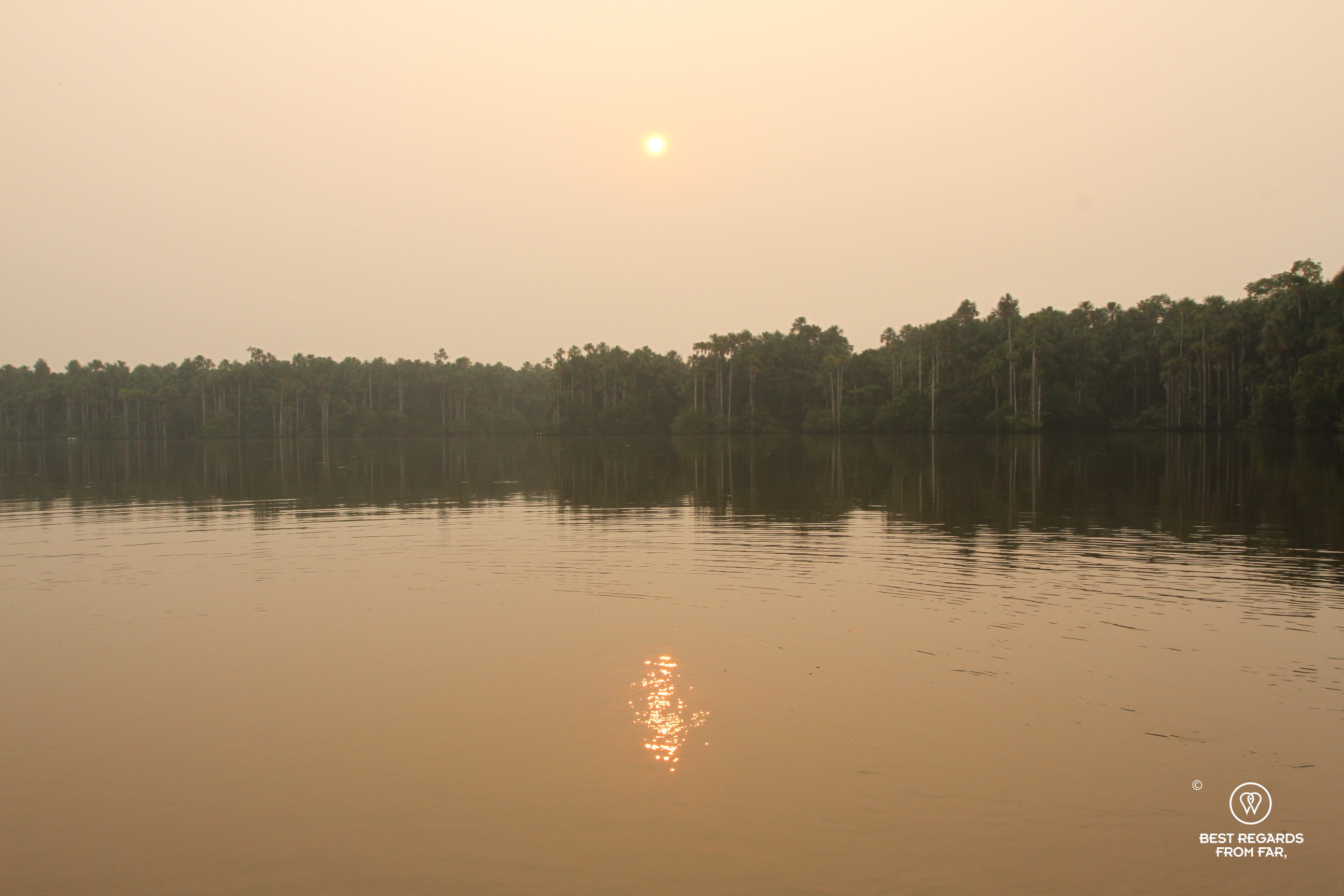
The property is a haven for wildlife and forms a perfect buffer zone between the growing city of Puerto Maldonado and the Tambopata Nature Reserve that lies just a short boat ride upstream, with its whimsical Lake Sandoval. An oxbow lake, it started being formed millions of years ago by a meander of the river that got cut off. Today, the calm lake is teeming with wildlife, better observed from a row boat: the rare and endangered giant otters, black caimans, anacondas, capuchin monkeys, and birdlife surrounded by aguaje palms… In a few million years, this peaceful lake will turn into a swamp before disappearing.


Parrot clay lick
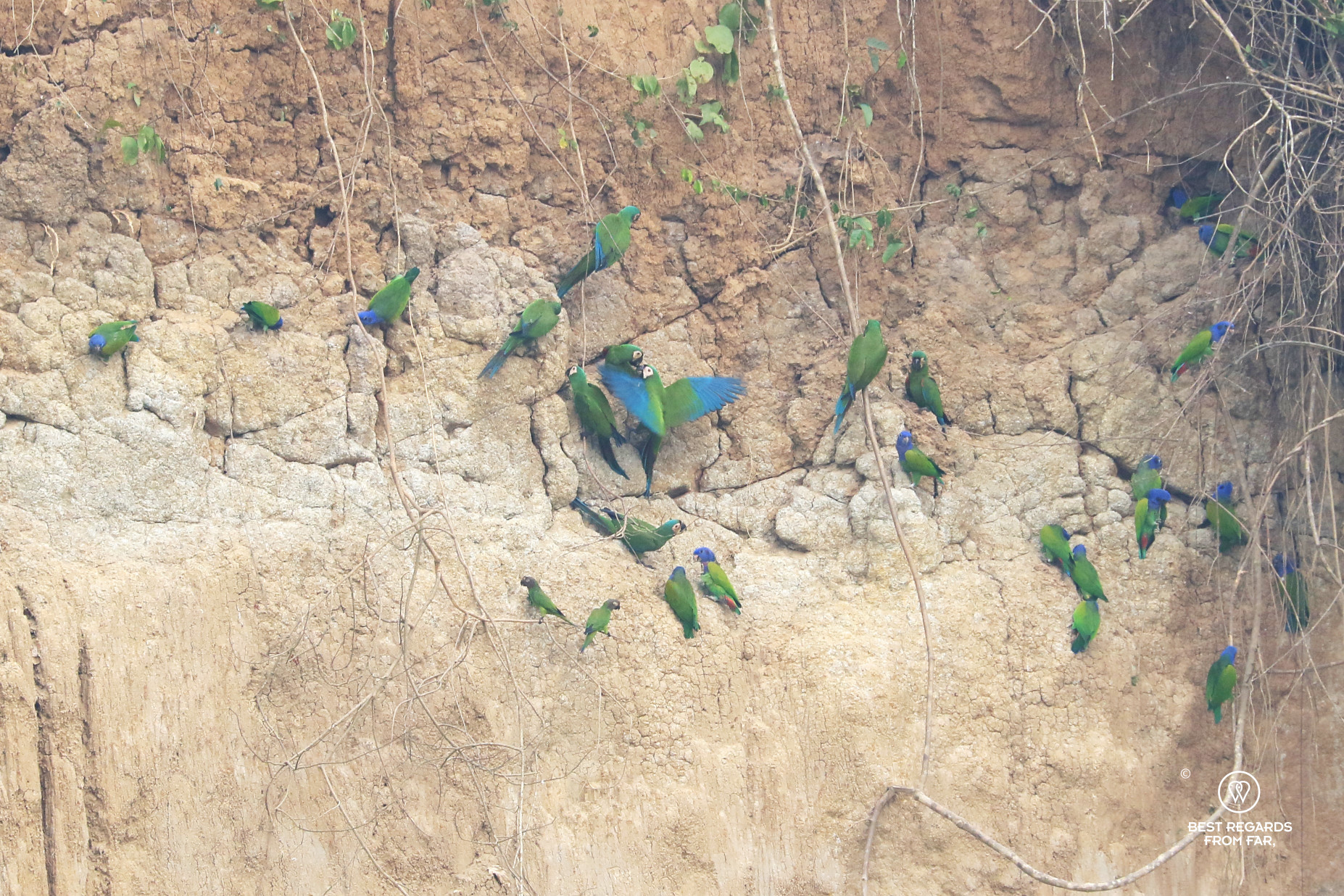
Downstream along the same river, the Cachuela clay lick is a parrots’ favorite. Sometimes flying for as much as 30 kilometers (18 miles), a wide variety of parrot and macaw species gather in the early morning to complement their diet with the salt content of the clay cliff along the river. The sound level increases bits by bits as colorful birds fly in and land in the tree canopy gathering and scanning for threats before feeding on the sodium all at once.

Puerto Maldonado & today’s Amazonian reality
After a couple of days in the Amazon forest, the boat takes us back to Puerto Maldonado. The city is quite recent, the area having been explored only at the end of the 18th century during the rubber boom. Puerto Maldonado was founded strategically at the confluence of the Tambopata and Madre de Dios Rivers, ultimately connecting to the 6,800-kilometer long (4225 miles) Amazon River, hence to the Atlantic Ocean, easing exports. The rubber wealth has been long gone, being supplanted by Southeast Asia rubber plantations. Today the close to 100,000 inhabitants of Puerto Maldonado live mostly from exploiting the forest on a large scale generally by logging and small-scale gold mining (about a third being illegal and resulting in mercury contamination of the water) while oil drilling and slash-and-burn farming are also very common. After all, government initiatives (and this may be even more valid for surrounding countries) encourage locals to turn the forest in a productive area.


***
If more than 20 percent of the oxygen of the planet is produced here in the Amazon, it is heartbreaking to have to breathe through the continuous forest fires, witnessing the fast disappearance of the “lungs of the planet”. An estimated 25 percent of the Amazon has already been destroyed while other rainforests are also being cut down. Local average temperatures increase and rainfalls decrease, favoring forest fires in this vicious circle. If NGOs keep alerting on this issue, it seems far from many of us. Nevertheless, it does affect us all, slowly decreasing the lung capacity of our planet.
If only too few local initiatives act sustainably like Hacienda Herrera, the bulk of the local population exploit the rainforest to make a living. Yet, the responsibility is at the global scale. Our insatiable demand worldwide for oil, minerals, cheap palm oil, affordable soy and biofuels, or fashionable tropical woods for furniture is directly fueling these forest fires and shrinking the size of the rainforests all over the globe.
Notes:
- The Amazon rainforest represents more than 50% of the total rainforest left in the planet, followed by the Congo Basin & the Indonesian/Malaysian Archipelago (LINK).
- The 5,500,000 km² (53,820,000 ft²) of the Amazon rainforest presents a huge biodiversity (15% of the world’s species of fauna & flora) with biomes ranging from natural savanna to swamps, and an estimated:
- 16,000 species of trees totaling close to 400 billion trees,
- 40,000 species of plants,
- 30 million species of insects,
- 3,000 species of fish making it the greatest biodiversity of fresh water fish,
- 1,300 species of birds,
- 500 species of mammals.
- As a reference, on 22/8/22: 3,358 forest fires were recorded at the same time in Brazilian Amazon…
Travel tips:
- It is through well-managed eco-tourism initiatives that local communities can leverage the rainforest by preserving it. The family-run Hacienda Herrera does an excellent job at not only running its land in a sustainable way but also providing an authentic experience of the Amazon forest to travelers. Get to know the rainforest!
- The wet season occurs from October to April with difficult road travel.
- Check out this interactive map (quick tutorial) for the specific details to help you plan your trip and more articles (zoom out) about the area!
For more in Peru, click on these images:




 Best regards from far,
April, we are famous!!! Gre
Of course you are, what’s new? I think your message was cut off. Thanks for being a lovely model and hoping this brought back some nice memories.