Text: Marcella van Alphen & Claire Lessiau
Photographs : Claire Lessiau
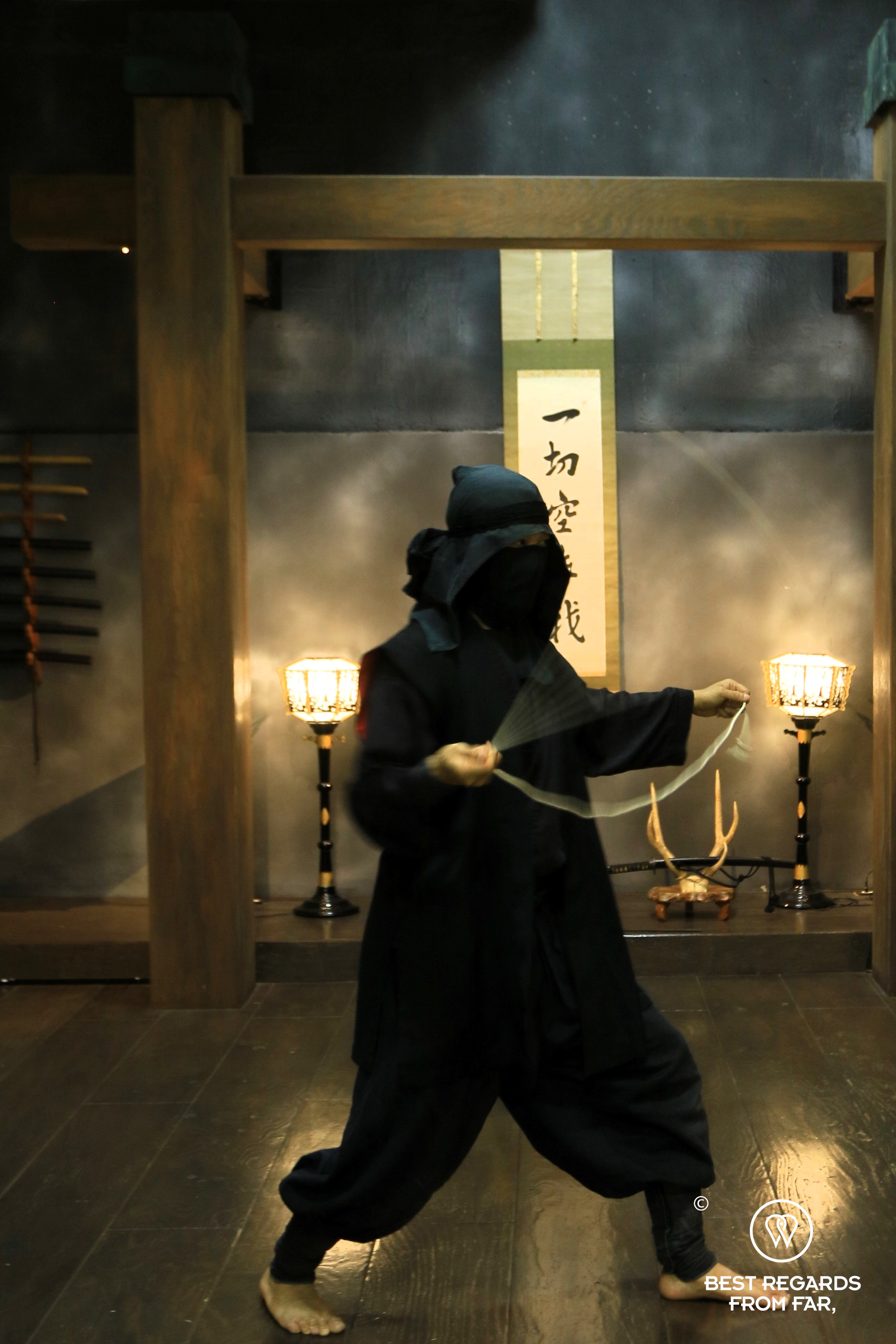
He moves like a silent symphony, a precise dance that combines quietness with intense focus. His steps are soundless, his limbs an extension of his mind. His every move carries deep intention, stealth, and strategy. Yet, it is not just about physical prowess; there is an aura of spirituality in the air, a connection to an age-old philosophy of survival, meditation, and mastery. Observing our ninja master, we are drawn into a world in which the art of survival of the one and only lasting ninja clan unveils its secrets, here in the dojo of the legendary Musashi ninja and samurai clan in the heart of Tokyo!
Pin it for later!
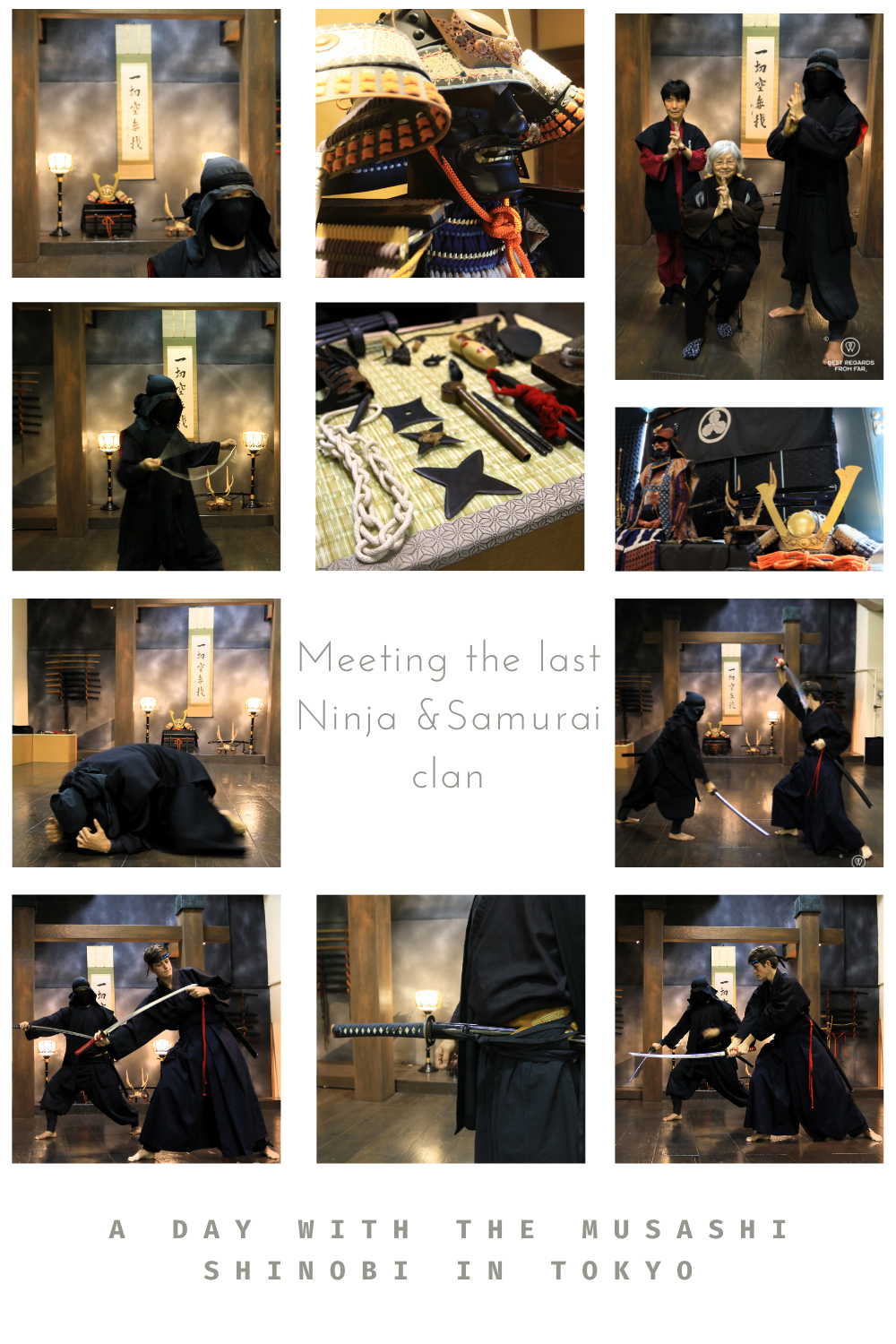
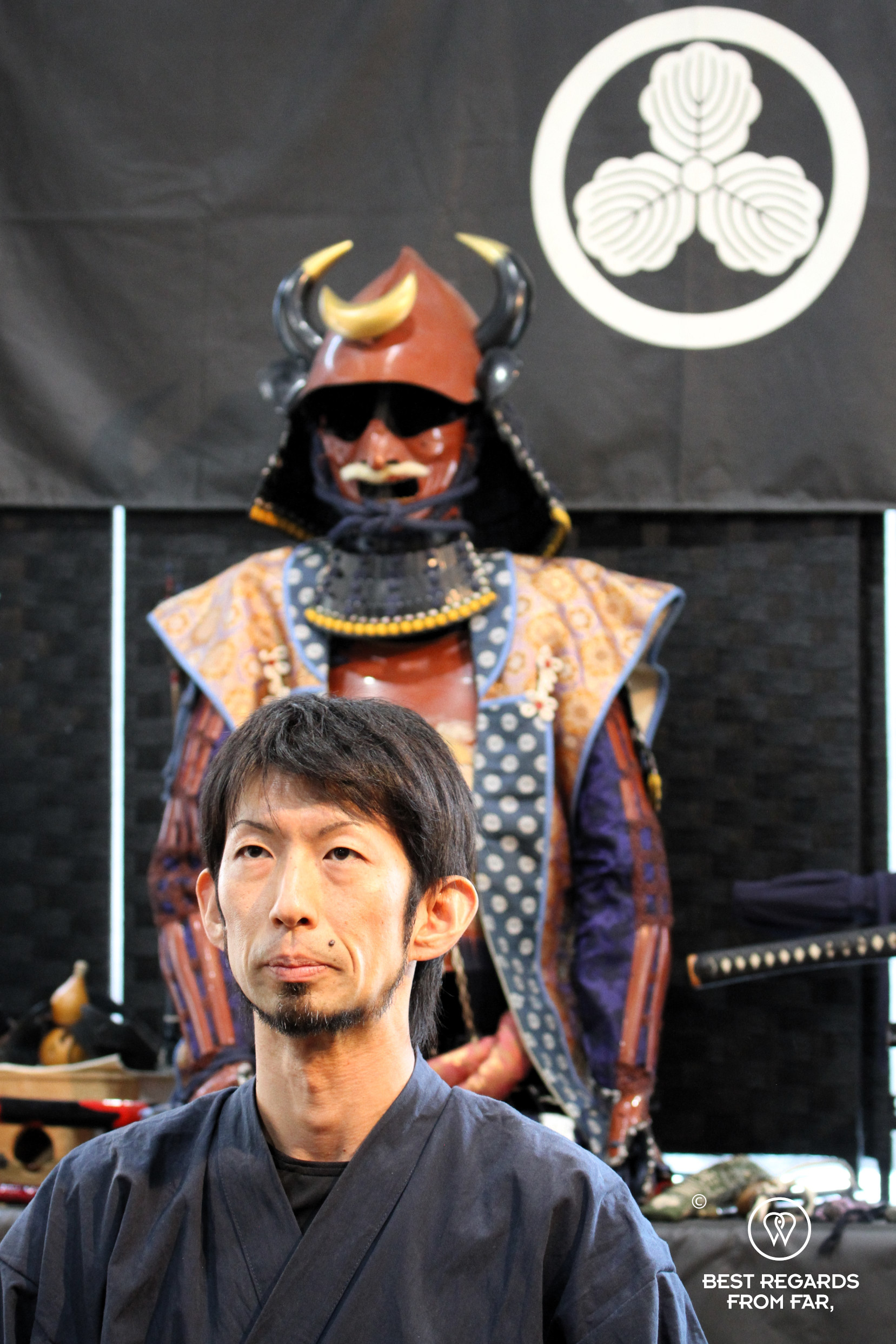
From the moment we enter the training facility, the air whispers stories of ancient craftsmanship and secrecy, and we silently witness the moves of master ninja Sagami whose face remains mysteriously hidden behind his head ware. Extremely talented, Sagami entered the Musashi clan based on merit, as Suzak, the 19th generation head of the clan reveals.
Clan loyalty: samurai versus shinobi and ninjas
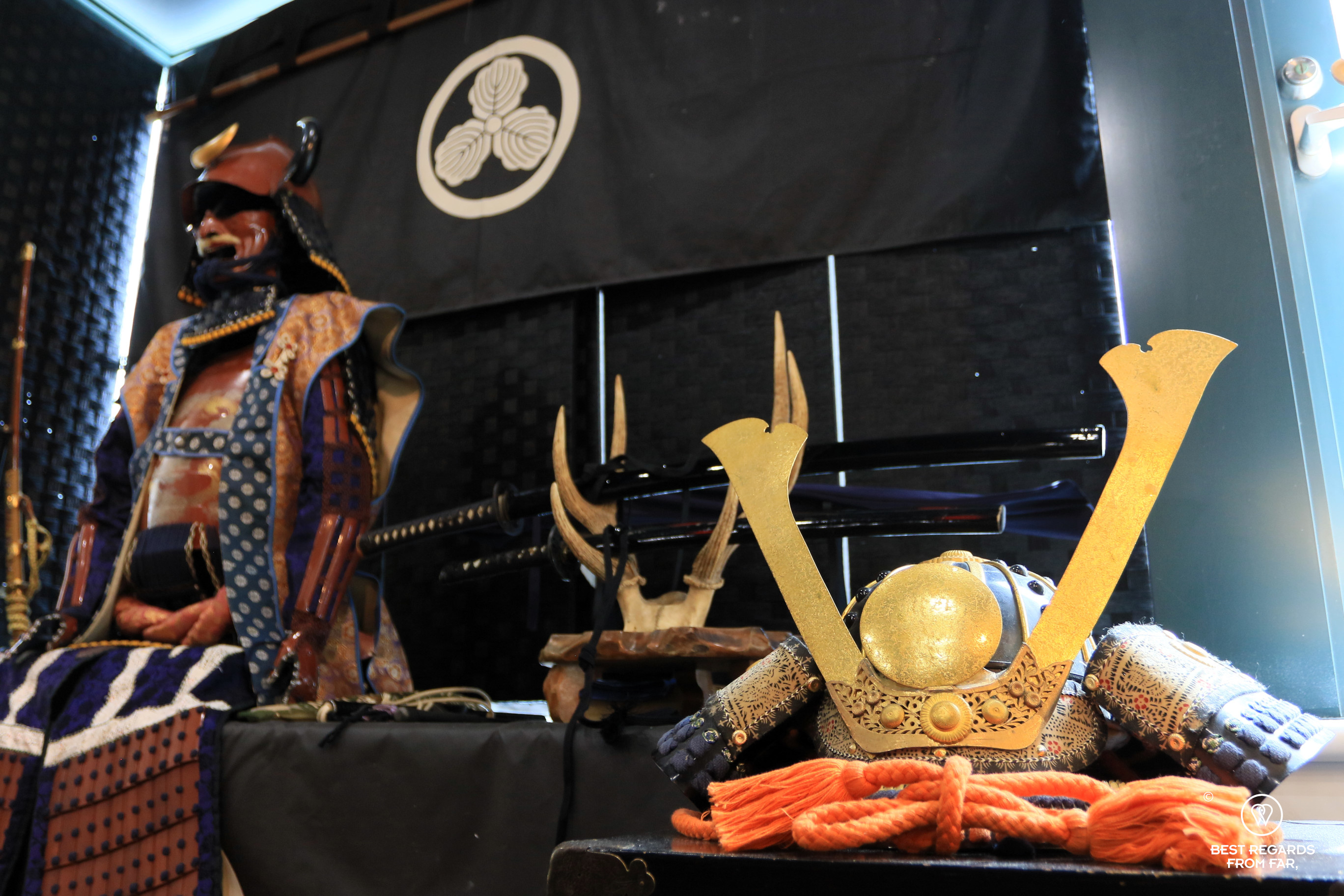
The Shinobi Samurai Musashi clan is quite peculiar. A ninja clan, its members risked their lives to escort Tokugawa Ieyasu out of the Iga region in 1582. Without the Musashi ninjas, the one who later unified Japan and founded the peaceful Tokugawa Shogunate would have never made it alive, constantly betrayed by rival samurais during a century marked by relentless civil wars. As a consequence, the Musashi ninja clan was rewarded the samurai status by the strongest man of Japan, the Shogun Tokugawa Ieyasu, and worked for the elite for centuries.
In essence, samurai were the military elite, serving and protecting their warlords or daimyos. Highly trained, they were masters of the swords, and ruled over the provinces of Japan, often fighting each other for more land and power. Loyal to their warlord to death, seppuku (or hara-kiri) became expected of them when the latter died. On the other hand, the ninjas (or shinobi) were secret agents specialized in irregular warfare, espionage, and sabotage. True masters in disguise and stealth, their main objective was intelligence gathering: carrying out secret missions, infiltrating enemies, and operating in full secrecy. They were often hired by the daimyos and were loyal to their ninja clan.
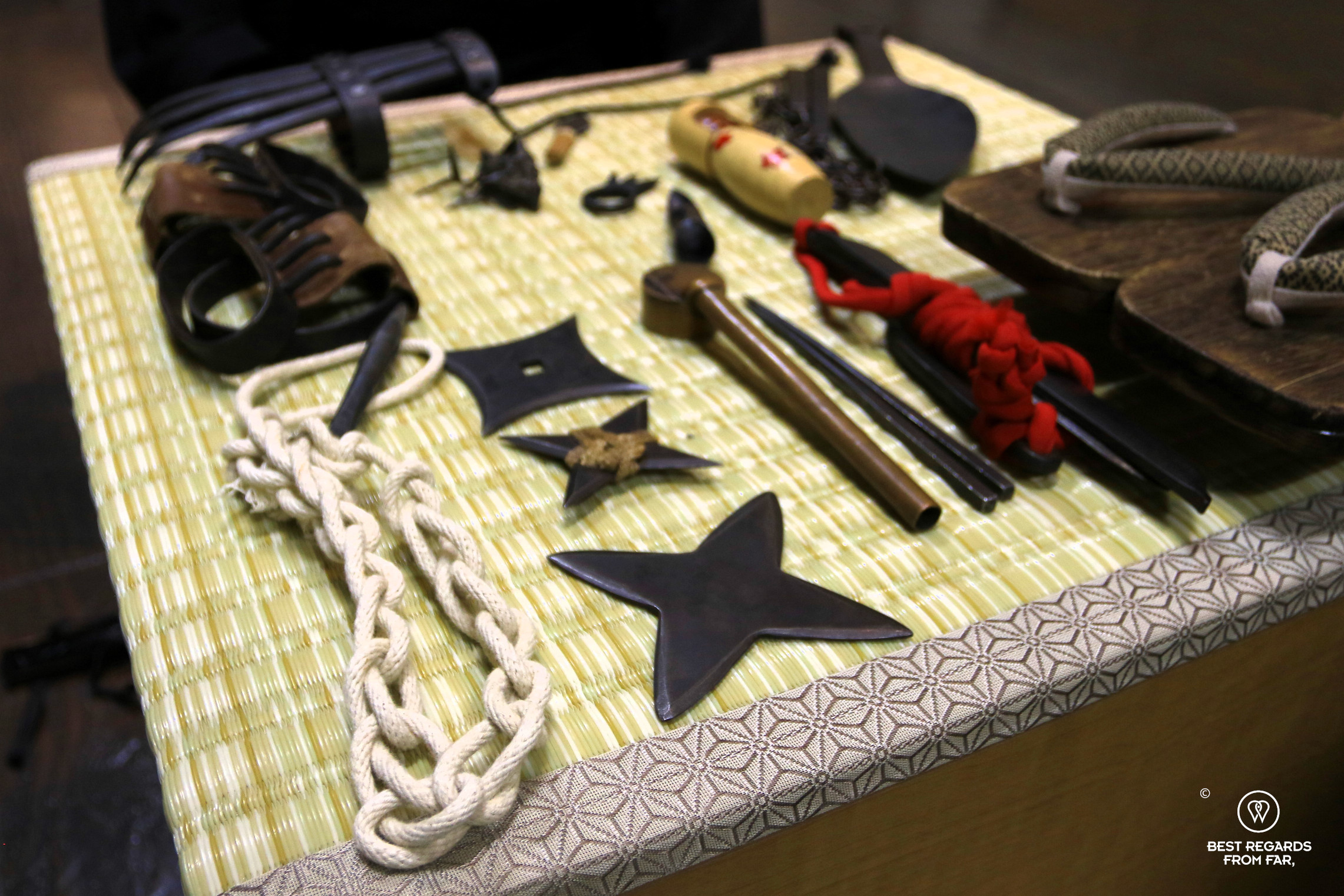
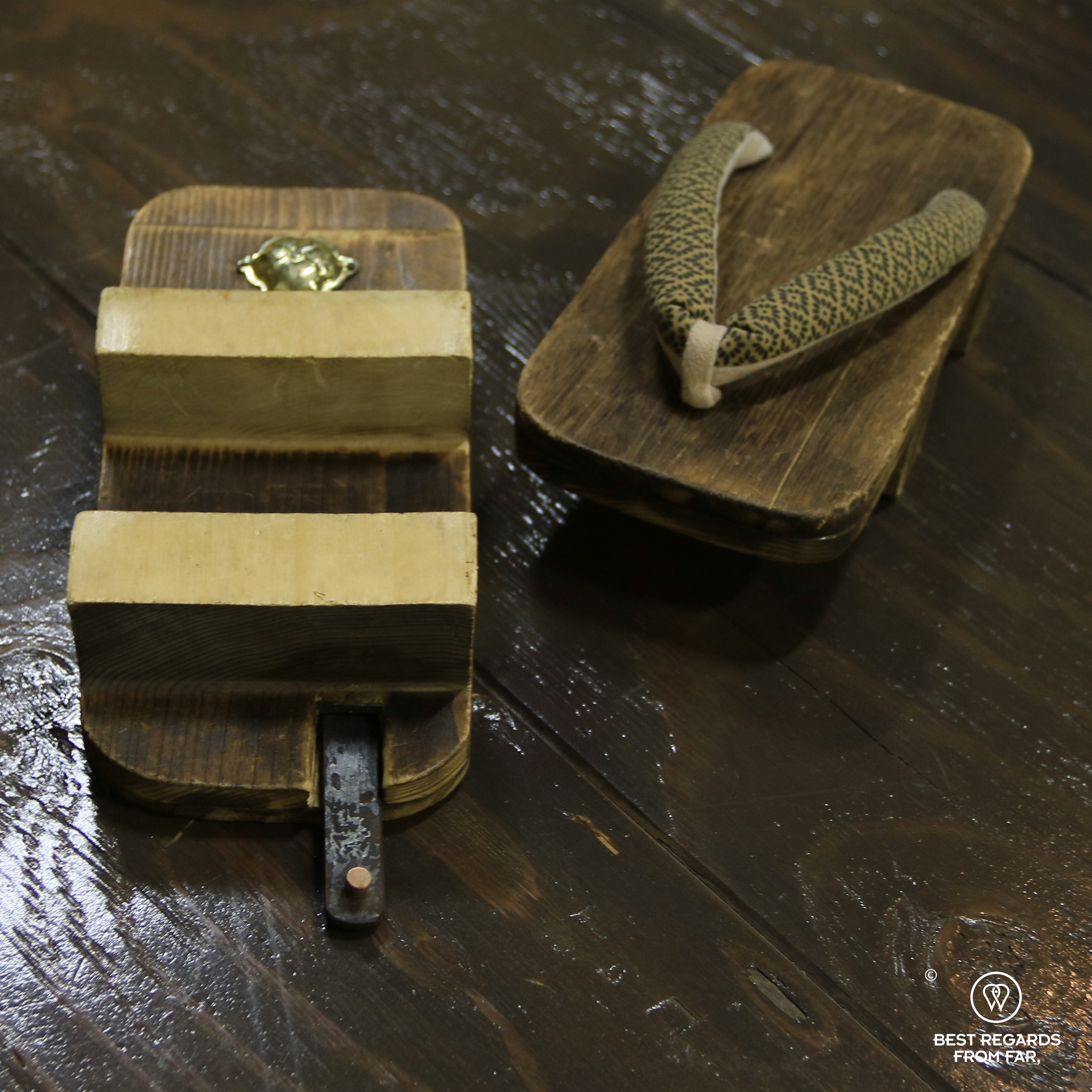
Operating in the shadows, carrying a sword was clearly unpractical, and the weapons of the shinobi were very different. Suzak unravels unfamiliar artefacts on a wooden table: chopsticks, a doll, a wooden tabi (or traditional Japanese flip flop), a metal claw… All handcrafted by the ninja clan itself, each turns into a lethal weapon when handled by Master Sagami: sharp and deadly chopsticks, a fatal needle hidden in the doll, a knife ingeniously concealed in the sole of the tabi, a firestone… Other devices allowed transferring information such as magic ink, or infiltrate places thanks to ropes. “Contrary to popular belief the true essence of ninjas lies in defence, not in attack. It is all about gathering information, spying upon the enemy, and making it out alive” explains Suzak in a calm and low voice, in perfect English.
Experiencing being a ninja
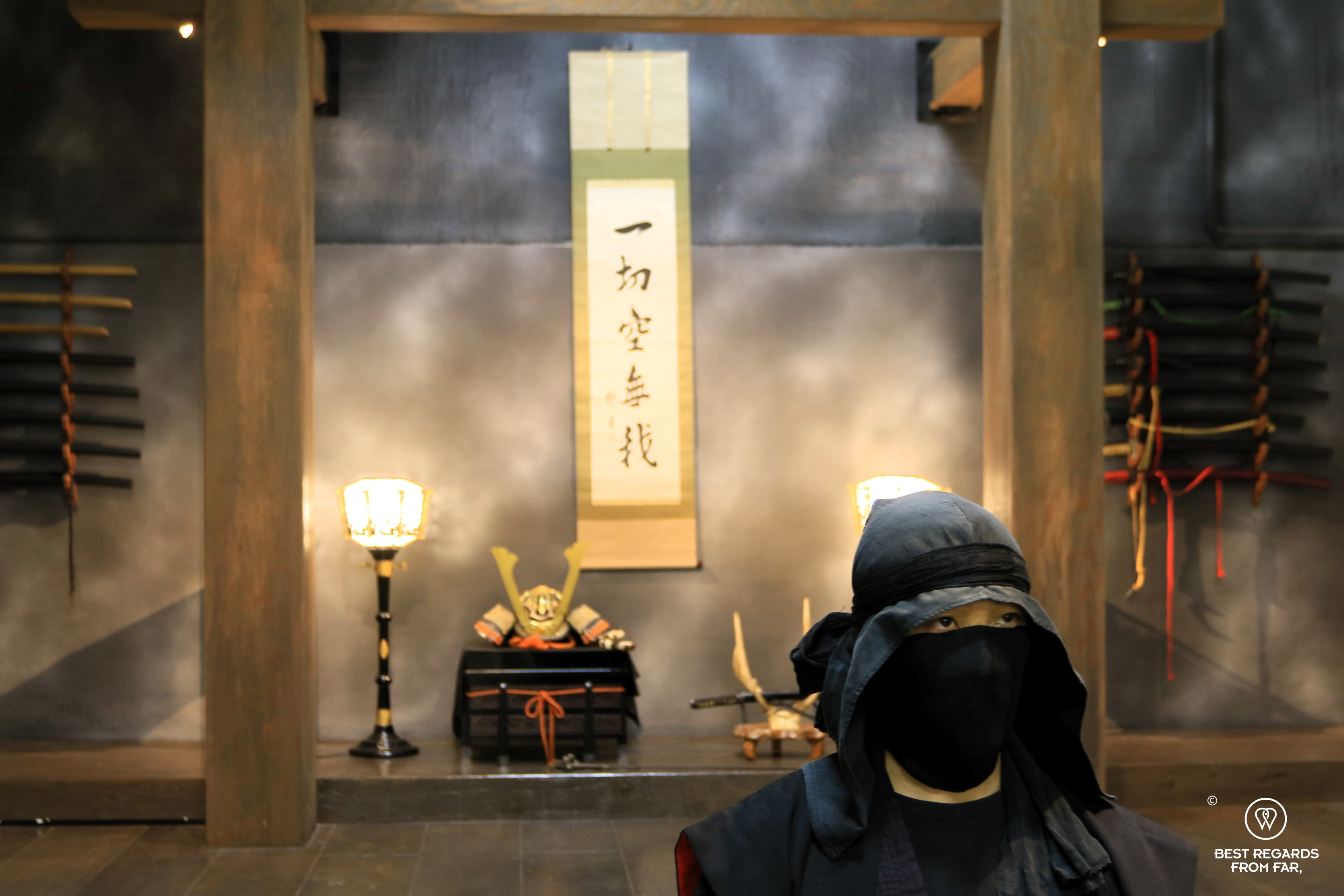
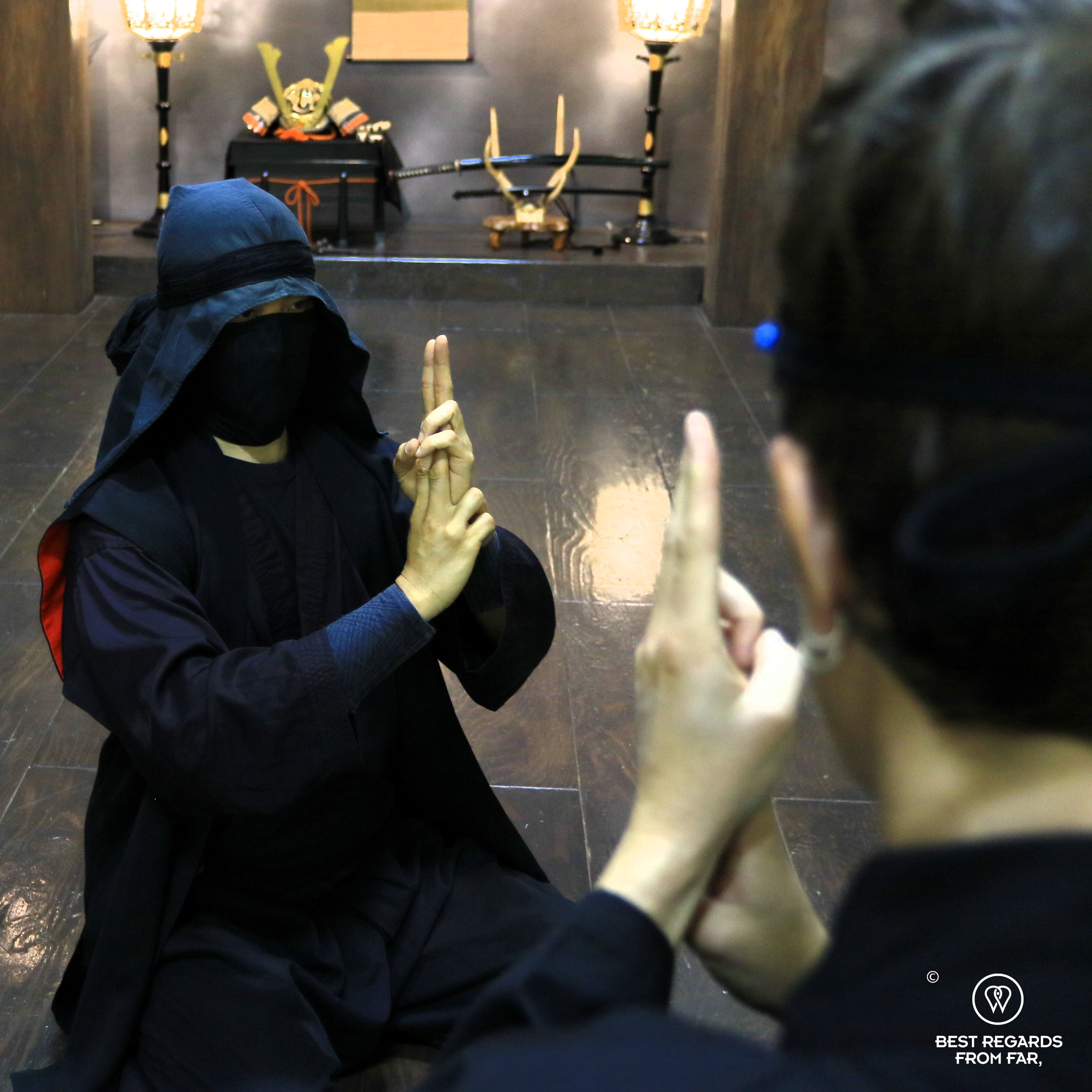
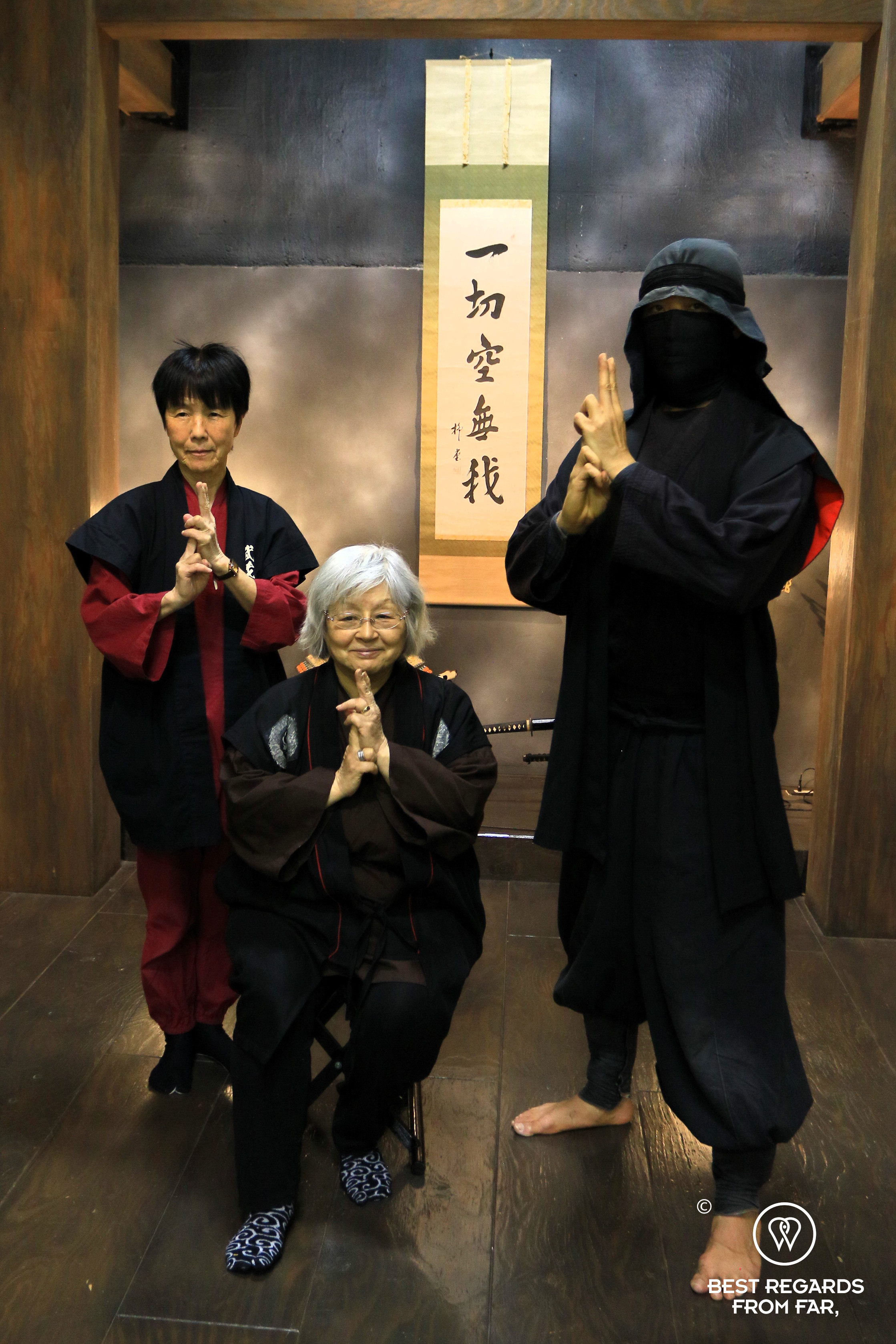
As we wear a loose and dark ninja outfit to move with ease, Master Sagami crowns us with a ninja headband: it conceals a sliver of metal, a safeguard against lethal cuts in battle, very simply summing up the ninja’s resourcefulness and survival skills, etched into the very fabric of their being.
If we are going to pretend being a ninja for a couple of hours, we realize with humility that it is way more than a training: being a ninja is a way of living. It is full dedication, from the diet that ensures very light weight and excludes some pungent ingredients (garlic, shive, onions…) to remain undetected, to daily meditation, from observing nature to mimic the stealthiest movements (climbing like a monkey, crawling like a turtle…) to mastering the craftmanship to make one’s own weapons, not even mentioning the constant physical and weapon training.
The latter that may be the easiest turns out to be a humongous task as we are hopelessly aiming at a wooden target with a shiriken (the ninja’s emblematic star-shaped weapon). Specific to every ninja clan, these weapons, designed to be thrown at the enemy in self-defence were often the ninja’s last resource while fleeing. Throwing a shiriken whether at a fixed target or a moving opponent armed with a sword, involving shoulder rolls and other avoidance techniques, takes focus and full attention.
Meditation is key
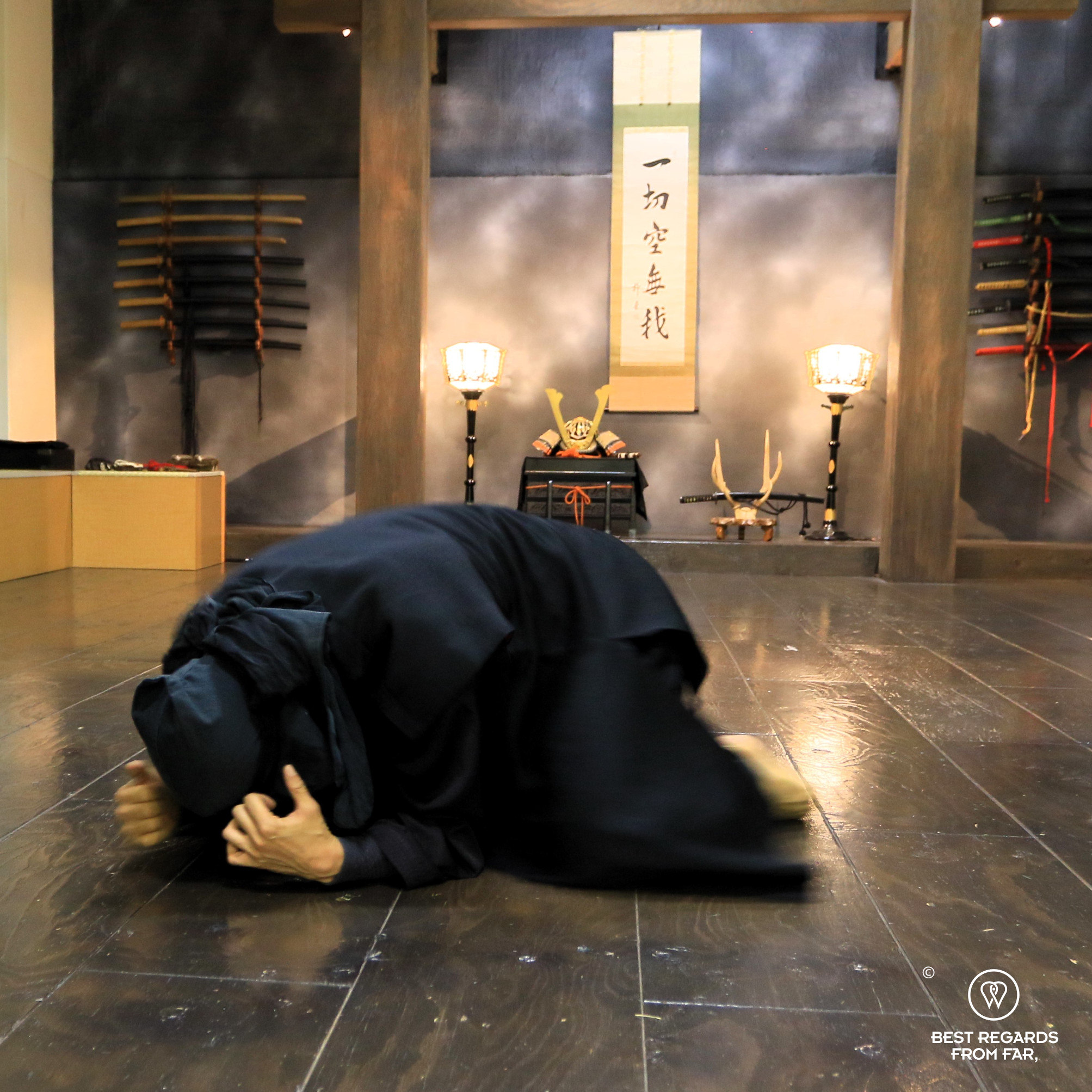
Dear to the Japanese culture, and the epicentre of Buddhism, staying in the now is paramount to success. “Fear, frustration or anger could all negatively impact a ninja’s effectiveness. Meditation helps us control our minds to make rational decisions in difficult and stressful situations, while being extremely aware of our surroundings,” Suzak translates Sagami’s words. And I realize how difficult it is to clear my mind after a bad shiriken throw, trying to not show any feelings.
Katana sword training
The importance of meditation is one of the common denominators with the samurai.
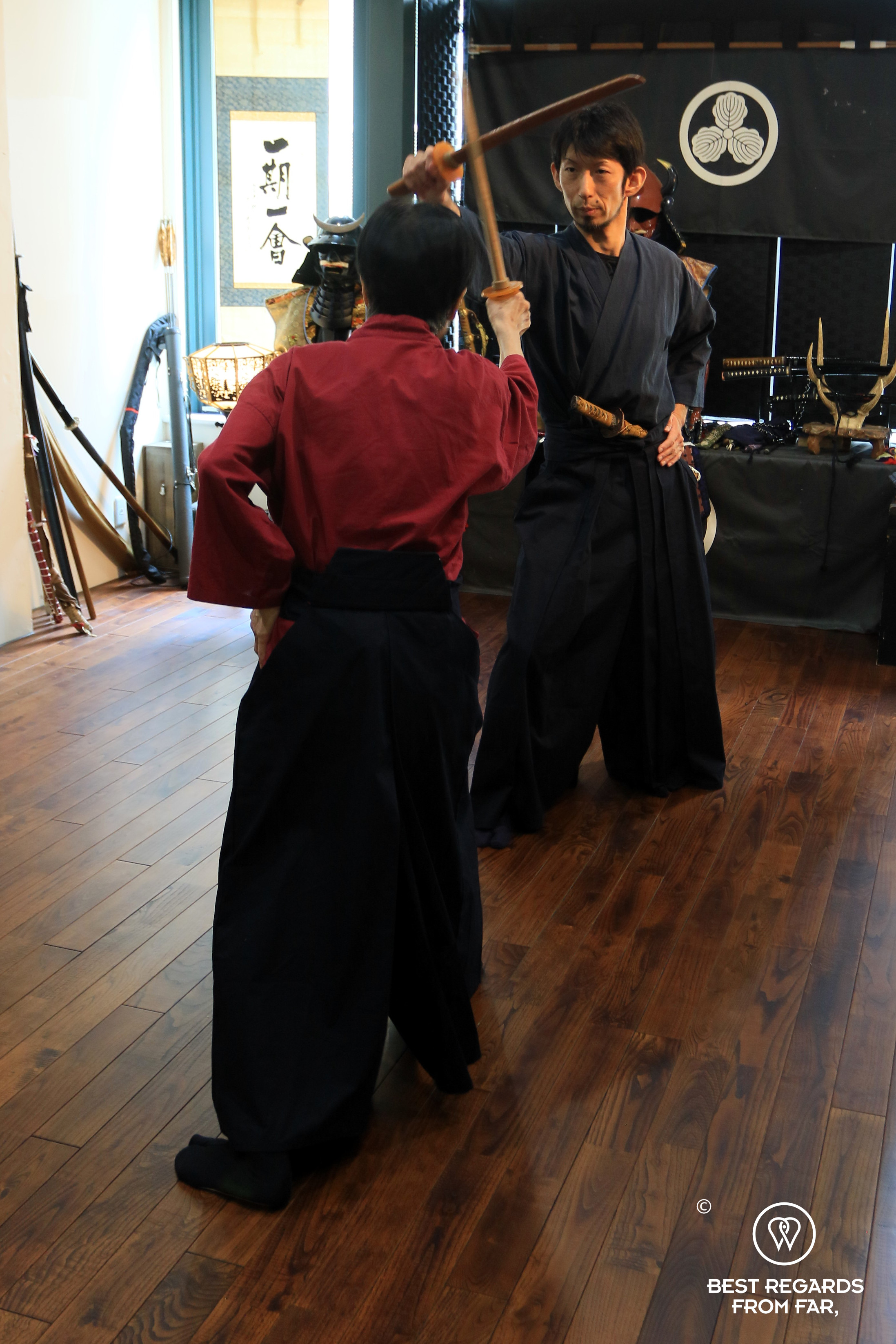
As the only ninja clan that is also a samurai clan, we swap our ninja outfits for a dark hakama, an ample trousers hiding the movement of the legs.
Master Sagami approaches with a real-life katana sword that he gives me with both hands and respect. Handling the revered sword, wearing it on the left side as a true samurai, and drawing it fast are skills we practice, putting the utmost intention in each movement, and moving the shiny blade with purpose. More than a beautifully handcrafted weapon, this century-old sword transcends time, transmitting a legacy of power and secrets that has shaped Japan.
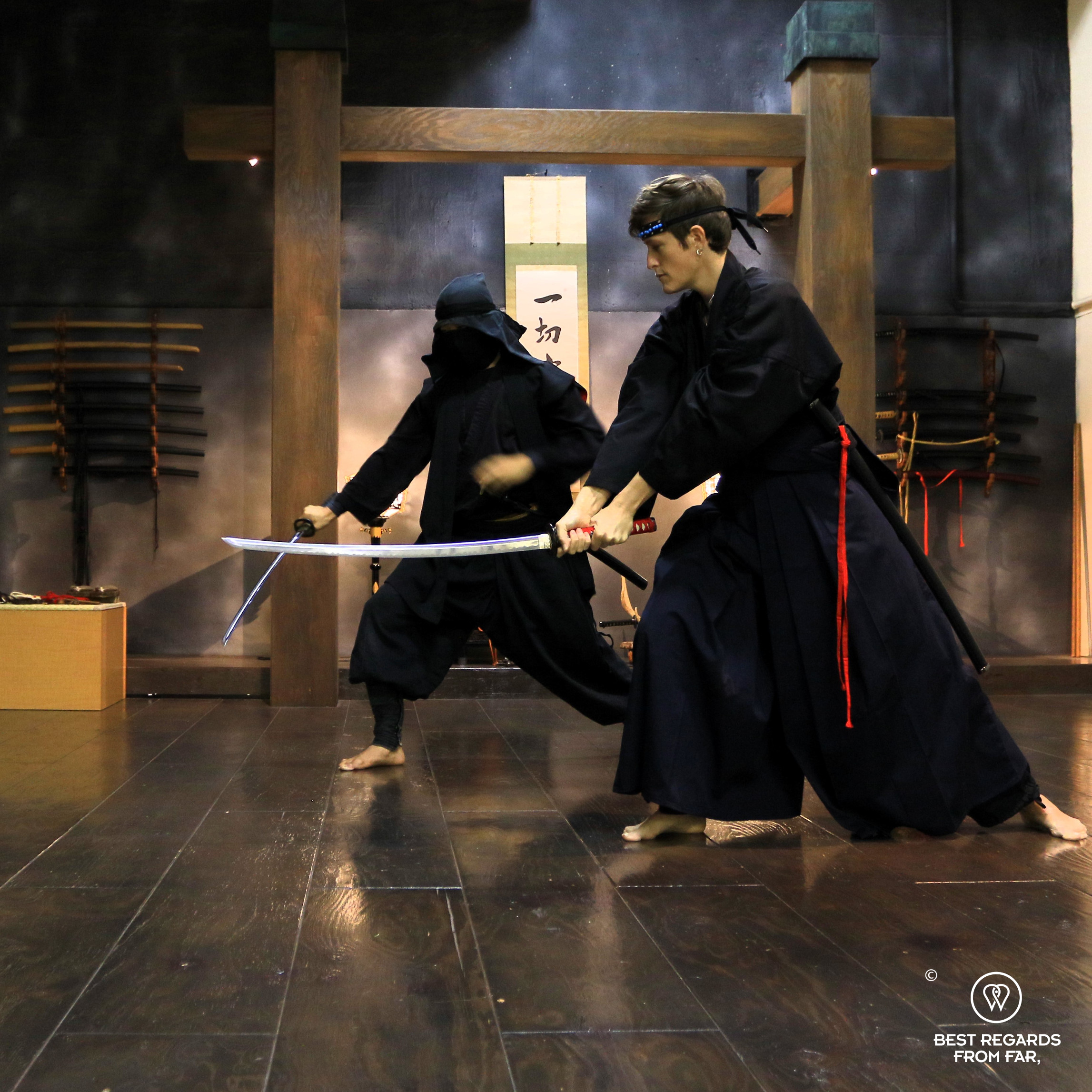
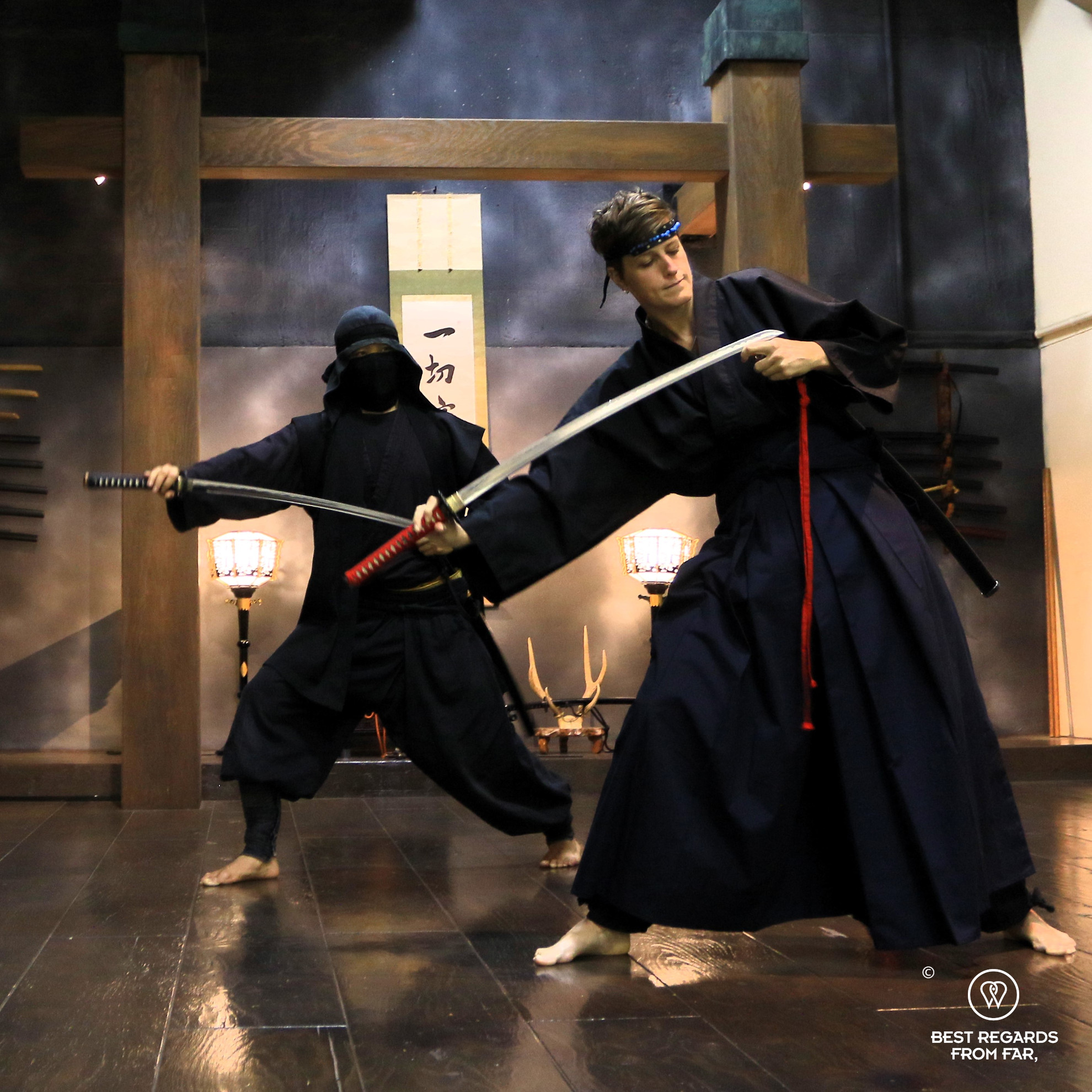
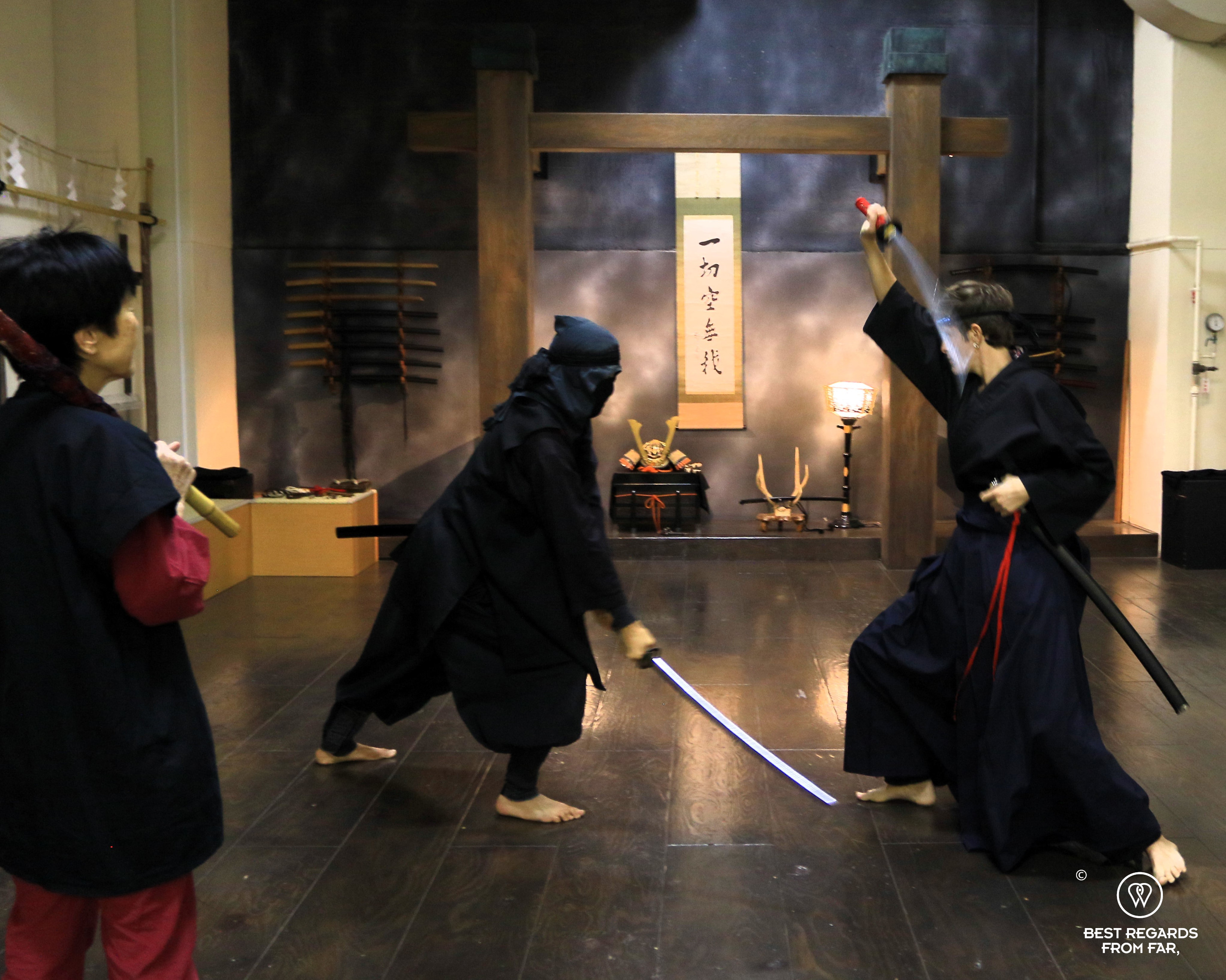
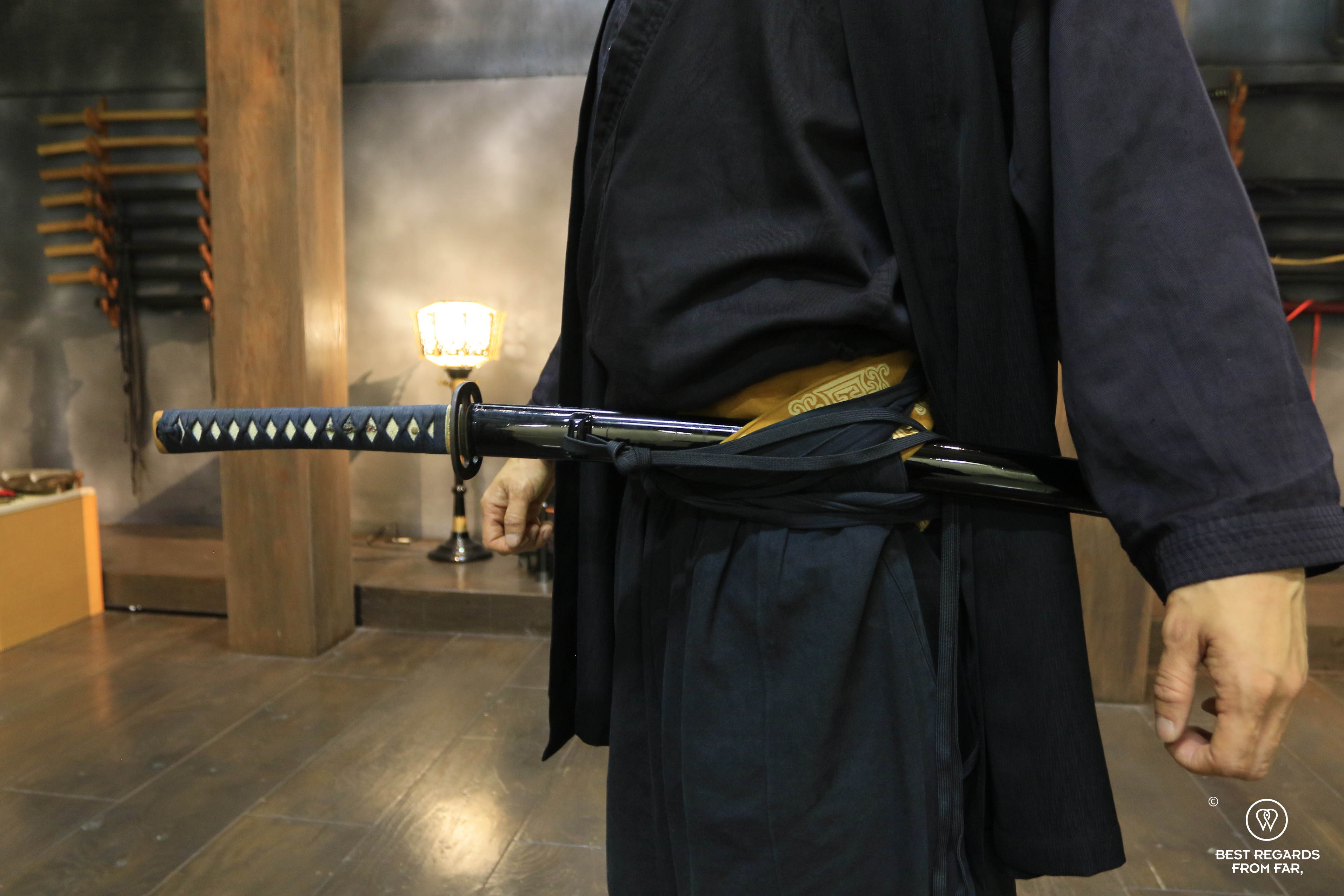

If the secrecy seems farfetched in a Tokyo dojo where interpreters help participants understand the wise words of ninja and samurai masters, this is the modern way of fighting for survival in a world where samurai and ninja have been obliterated from society after centuries of loyal services. “Today we have stepped out of the shadows to share the secrets of our ancestors and to conserve their philosophy and way of life,” Suzak concludes.
Travel tips:
- To learn from the legendary Musashi Shinobi clan during an engaging workshop in the heart of Tokyo, please check out their website to book your activity of choice.
- Check out this interactive map for the specific details to help you plan your trip and more articles (zoom out) about the area!
 Best regards from far,