Article updated on August 5, 2025
Text: Claire Lessiau
Photographs: Claire Lessiau & Marcella van Alphen
Ironically, the largest flower in the world is hard to spot! Hidden in the rainforests of Southeast Asia, the Rafflesia blooms in the Philippines, the Malaysian Peninsula and Borneo or in the Khao Sok National Park in Southern Thailand. Only the lucky hiker might stumble across one while exploring the trails of the park that weave between natural pools and waterfalls.
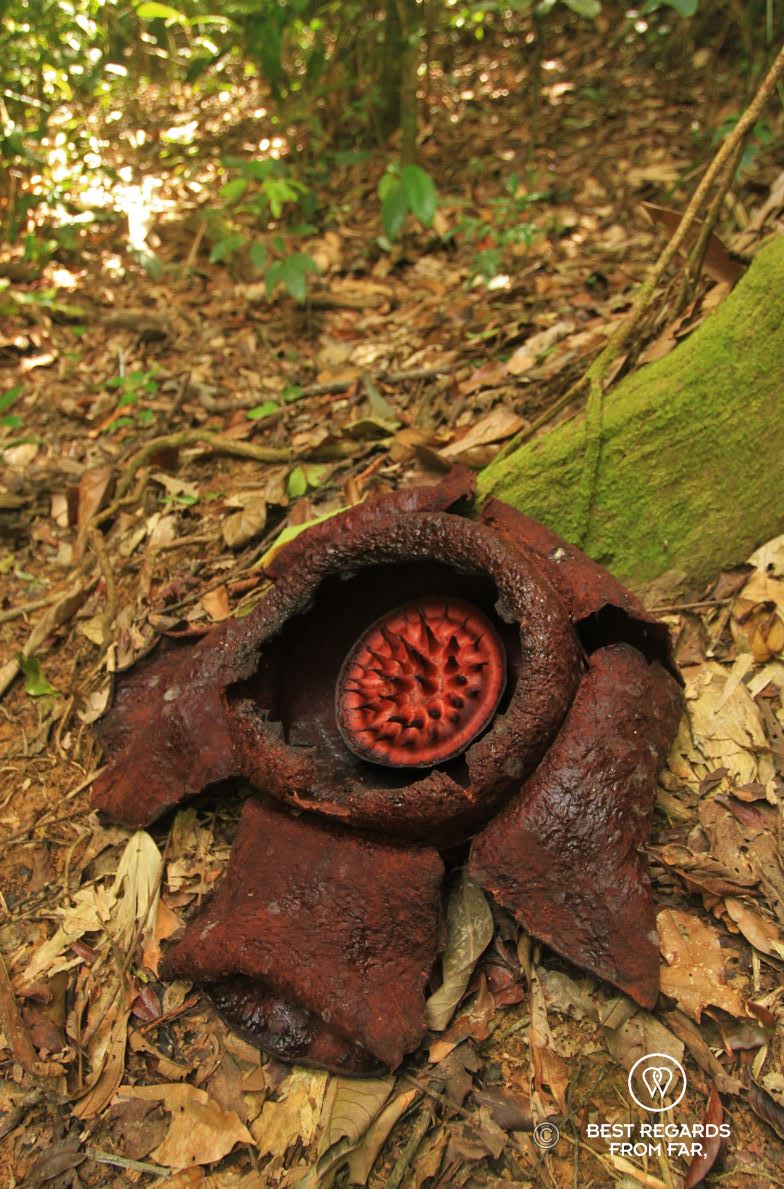

As we begin the steep ascent through Khao Sok’s lush jungle, we remind ourselves of what we know about this mysterious plant to improve our odds of spotting one. Named after Sir Thomas Stamford Raffles, the founder of Singapore, the Rafflesia was first documented by British botanist Dr Joseph Arnold in 1818.
First of all, we focus on the ground: the Rafflesia is a parasite that draws nutrients from a host vine through a specialised organ buried deep inside the plant. Only the flower itself—and its five fleshy and leathery petals—emerges from the forest floor as it grows on the ground. Enormous in scale, it can reach a diameter of one metre (3ft) and weigh up to 10 kilograms (22lb).
Yet it is astonishingly easy to miss! It has no leaves, no roots, no stem, and no chlorophyll. Its earthy brownish-orange tones blend almost perfectly with the leaf-littered ground.
And then there’s the smell. The Rafflesia emits the pungent stench of rotting flesh—an irresistible lure for the carrion flies that pollinate it. Fortunately (or not), the scent isn’t strong enough to follow on the trail.
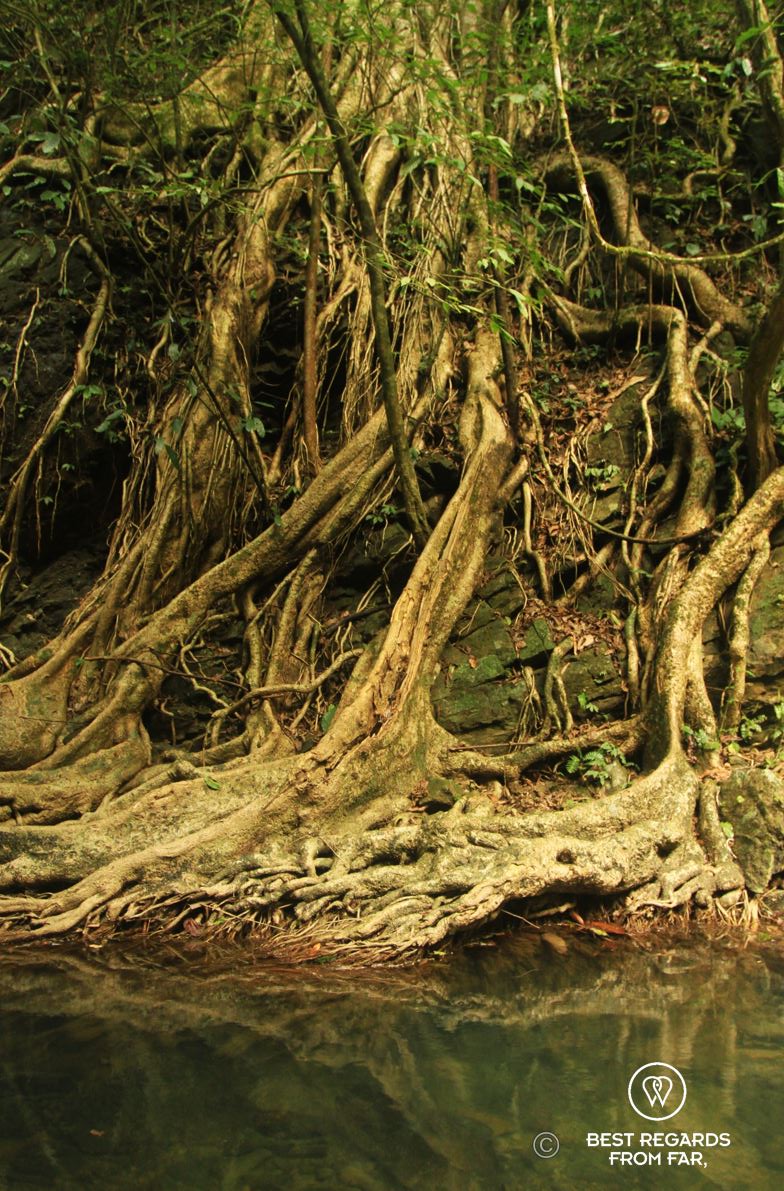

After an hour of hiking and exploring narrow side paths, we finally spot one: a flower at the end of its brief bloom. It is a rare sight—Rafflesia lives most of its life as an invisible filament inside a vine and flowers just once every few years, for a mere five to seven days. Just metres away, we find a tightly closed 35-centimetre bud—soon to become the next miraculous bloom.
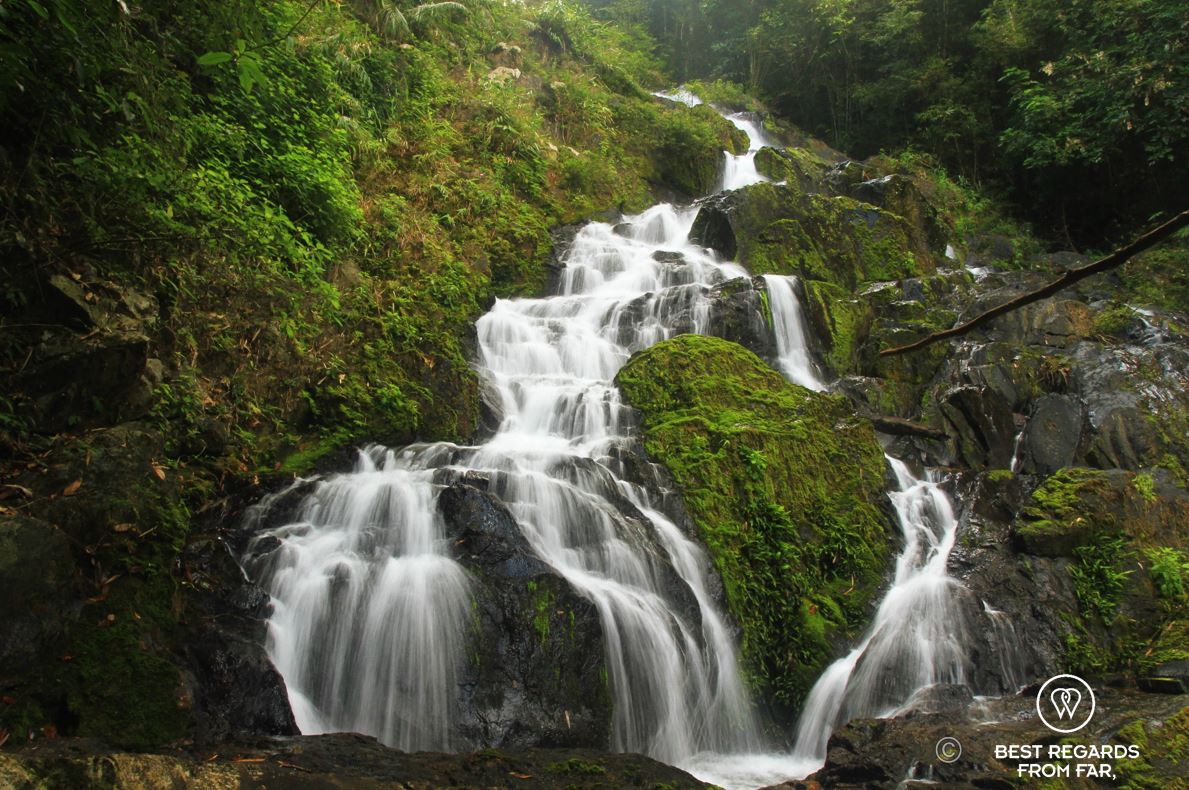
Climbing higher, we reach the trail’s summit before abseiling down a 30-metre (100ft) waterfall into a perfect, secluded pool. We cool our sweat-drenched bodies and wade downstream, savouring the stillness of this remote corner of Khao Sok National Park. Along the way, we spot long-tailed macaques and elusive spectacled langurs, pausing often to dip into more waterfalls and pools.
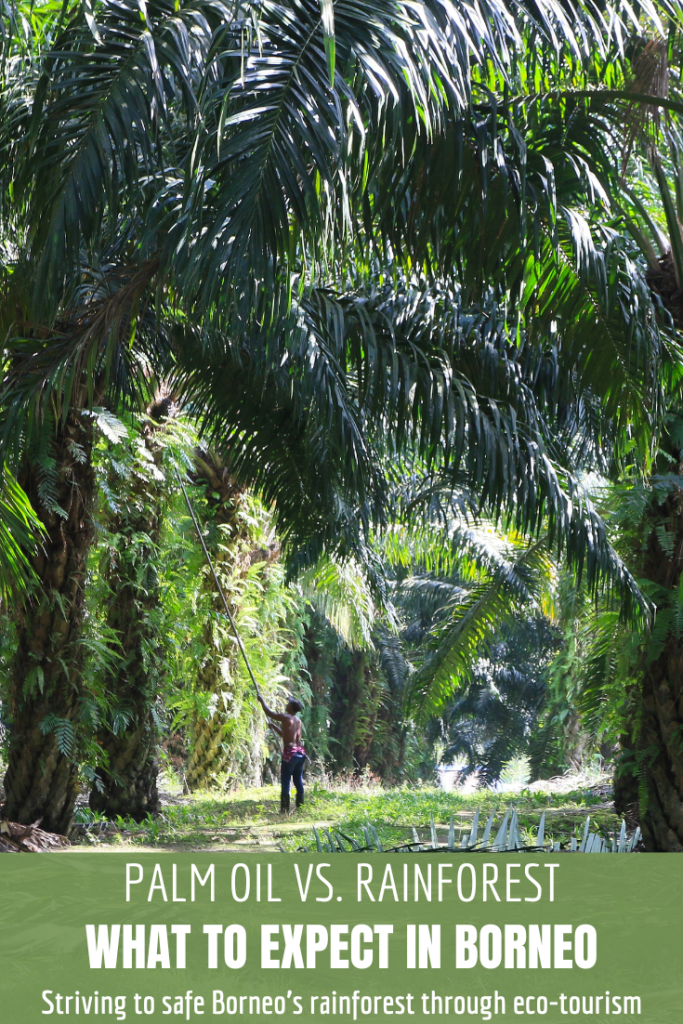
Sadly, the Rafflesia, like much of the tropical rainforest, is under threat. Logging and the spread of oil palm plantations are shrinking the footprint of the tropical rainforests of the world, the very habitats that sustain it. Finding one today feels like a privilege—and a quiet reminder of what stands to be lost.
Travel tips:
- Check out this interactive map for the specific details to help you plan your trip and more articles and photos (zoom out) about the area!
More about the area:



 Best regards from far,
Hi. I have heard about this flower and its smell before but not seen it. Pretty in an unusual sort of way…and very much worth saving, assuming the logging can be stopped…as wth all threatened species, why shouldn’t it have a place on this earth just because it isn’t apparently (yet) useful to us? Our planet is beautiful, and none of the reasons why are because of us.
Hi Graham, thanks for sharing your thoughts. You do have a very valid point. And as we seem to find more and more use to plants, it is a shame to let some extinct as they may prove useful for us or just for the sake of biodiversity.