Article updated on December 28, 2024
Text & photographs: Claire Lessiau & Marcella van Alphen
Battambang, Cambodia’s second-largest city with a thriving agriculture, is an authentic destination that is ideal to dig into the traditional crafts of the country. Join us as we take you through a series of seven short articles, each uncovering the secrets of one of these crafts.
In the final article of our traditional crafts of Cambodia series, we delve into one of Asia’s most popular alcoholic beverages: rice wine. As the name suggests, rice wine is made from Asia’s staple grain, rice. But in Battambang, where the craft is especially honed, the process of creating rice wine involves a special blend of local ingredients that give it a distinct flavor.
One of the key elements in Battambang’s rice wine is the homemade yeast used in its production. This yeast is more than just a simple starter; it is a carefully crafted mixture of spices and herbs, including pepper, cardamom, coriander seeds, garlic, galangal, ginger, and star anise. These ingredients are added to the yeast to infuse the wine with an aromatic flavor. A small amount of rice wine is mixed into the yeast before it is left to dry in the sun, a step that ensures the fermentation process is both efficient and flavorful.
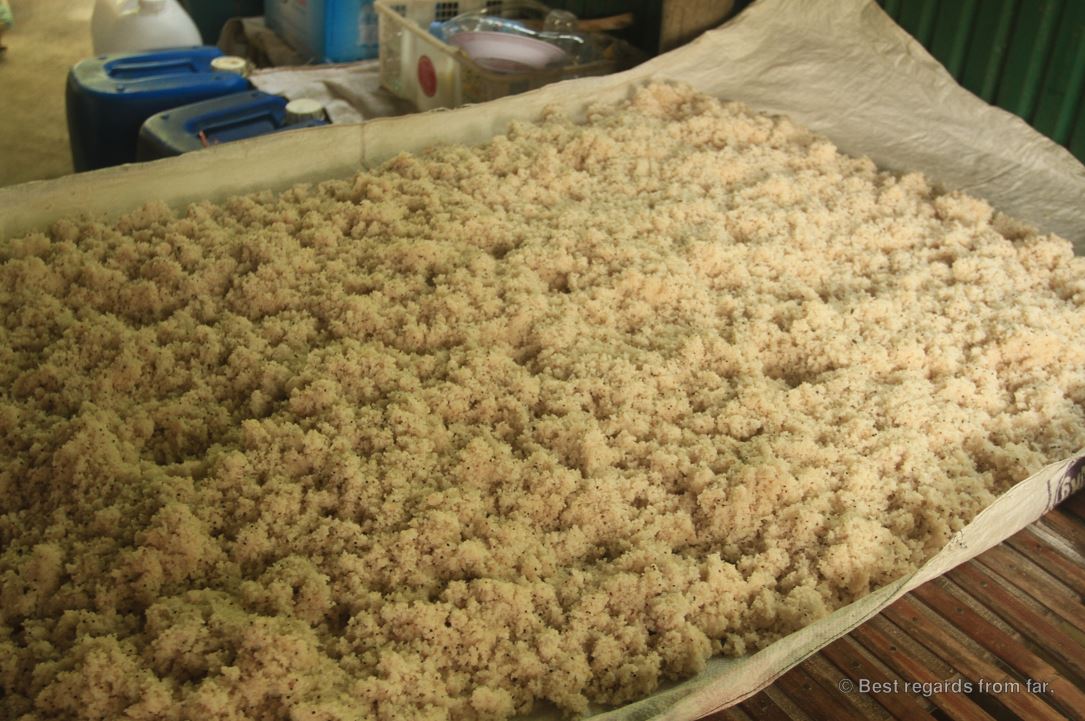
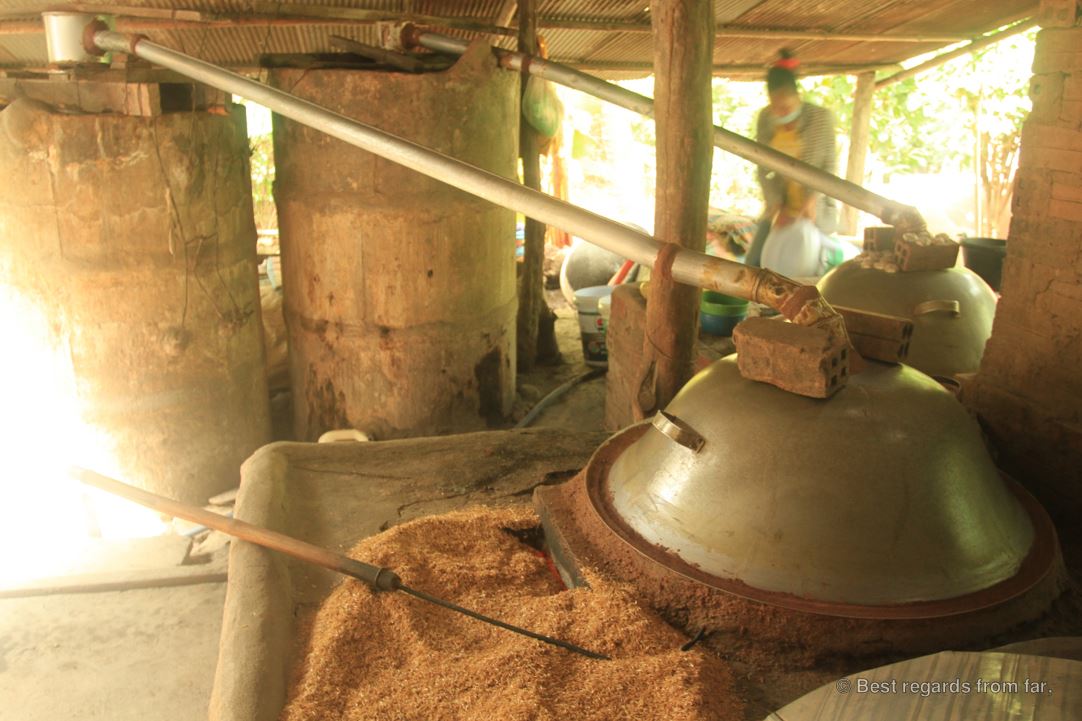
To speed up the fermentation of the rice, the dried yeast is crushed and evenly spread over the ground rice grains. This process allows the rice to ferment in just one day. The fermentation process is followed by a traditional distillation method, using a fire fueled by rice husks from the ground rice itself. The wine is distilled in large kettles, where the first distillation produces a high-proof liquor containing roughly 60 percent alcohol. The second distillation, however, is where the wine reaches its target alcohol content of 18 to 25 percent.
Each rice wine producer in Battambang has their own unique method, and as a result, every batch of rice wine has its own distinctive characteristics. This variation is what makes each bottle of locally produced rice wine special. However, be cautious when purchasing homemade rice wine, as some batches contain harmful levels of methanol or added chemicals to enhance the flavor.
Travel tips:
- To make the most of your visit, we strongly recommend you to take a local guide as most craft-people do not speak English and are actually working hard to make a living, so they should not be disturbed. The local guide knows the usage and will tip appropriately.
- Check out this interactive map for the specific details to help you plan your trip and more articles and photos (zoom out) about the area!
For more inspiration about Cambodia, click on these pins:





 Best regards from far,
Oh yes, we have to be careful with illegal moonshine!
And rice wine, its more like rice liqour!
Indeed, sometime even more like rice whiskey. You are never too sure of the alcohol conent 😉
Definitely. Mel had this German colleague who thought it was just “wine” and went on a toasting spree with the Chinese (in China). Mel and another had to carry this 90+kg colleague back to the hotel…