Text: Claire Lessiau
Photographs: Claire Lessiau & Marcella van Alphen
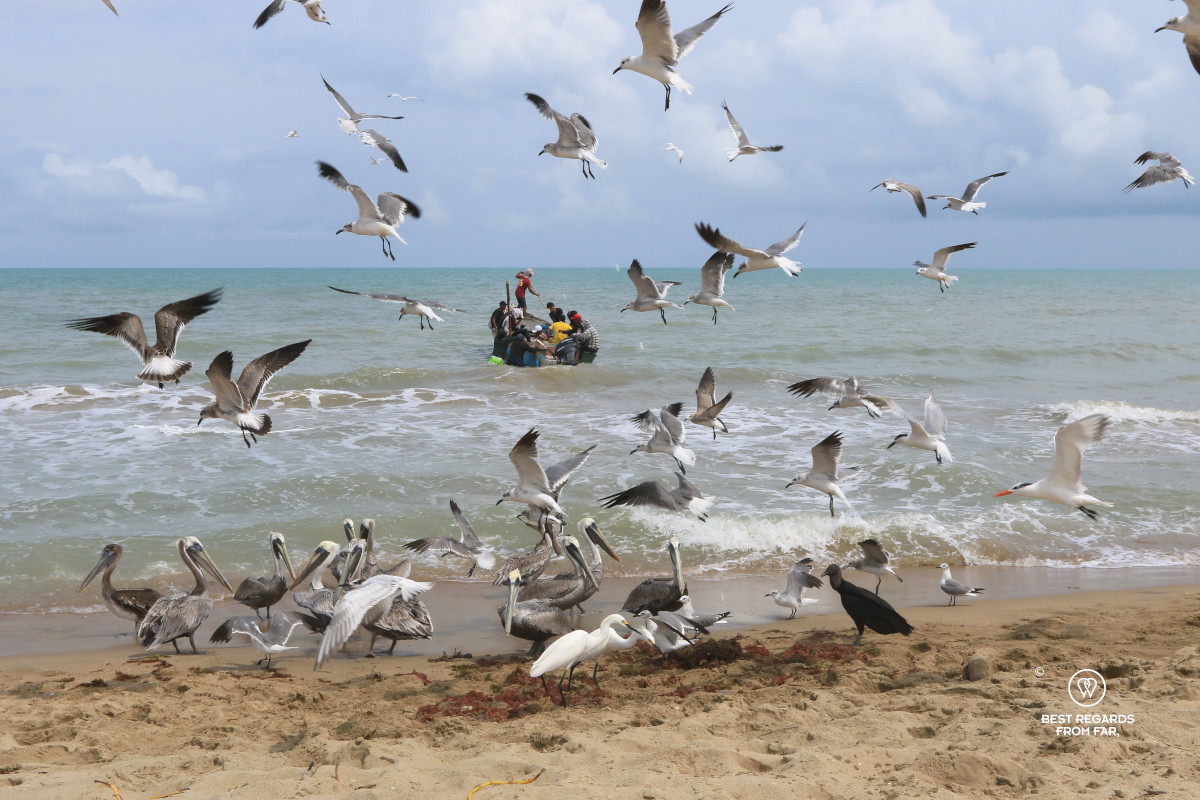
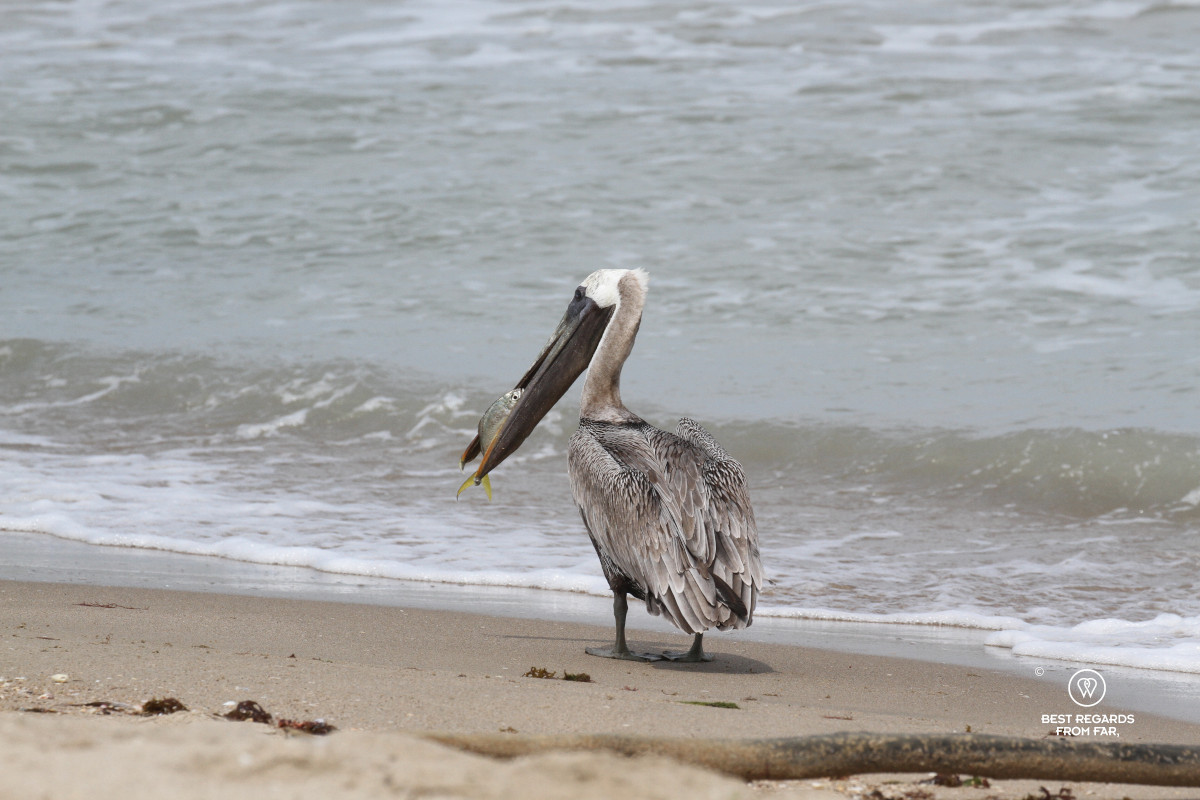
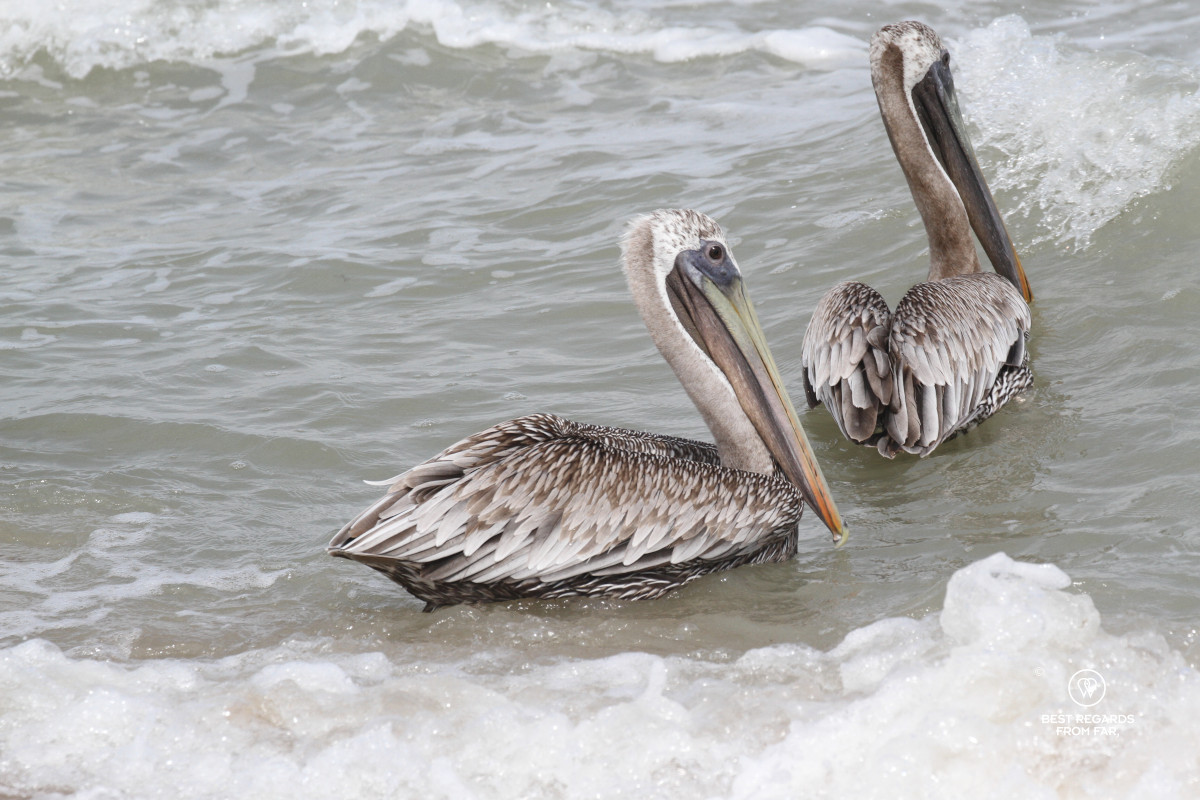
The flamingos and spoonbills do not seem to care. The pelicans though are already well positioned, floating on the Caribbean Sea. Birds start flying over. Seagulls squawk overhead. On the shore, a dozen strong fishermen are pulling hard on a rope. It has been an hour or so of efforts. The net starts showing. The men are a bit disappointed as the catch could have been better. The snowy egrets seem quite satisfied though, trying to get some of the fish and cutting the pelicans in line, not expecting the frigate to steal the catch from the sky!
Like it? Pin it!
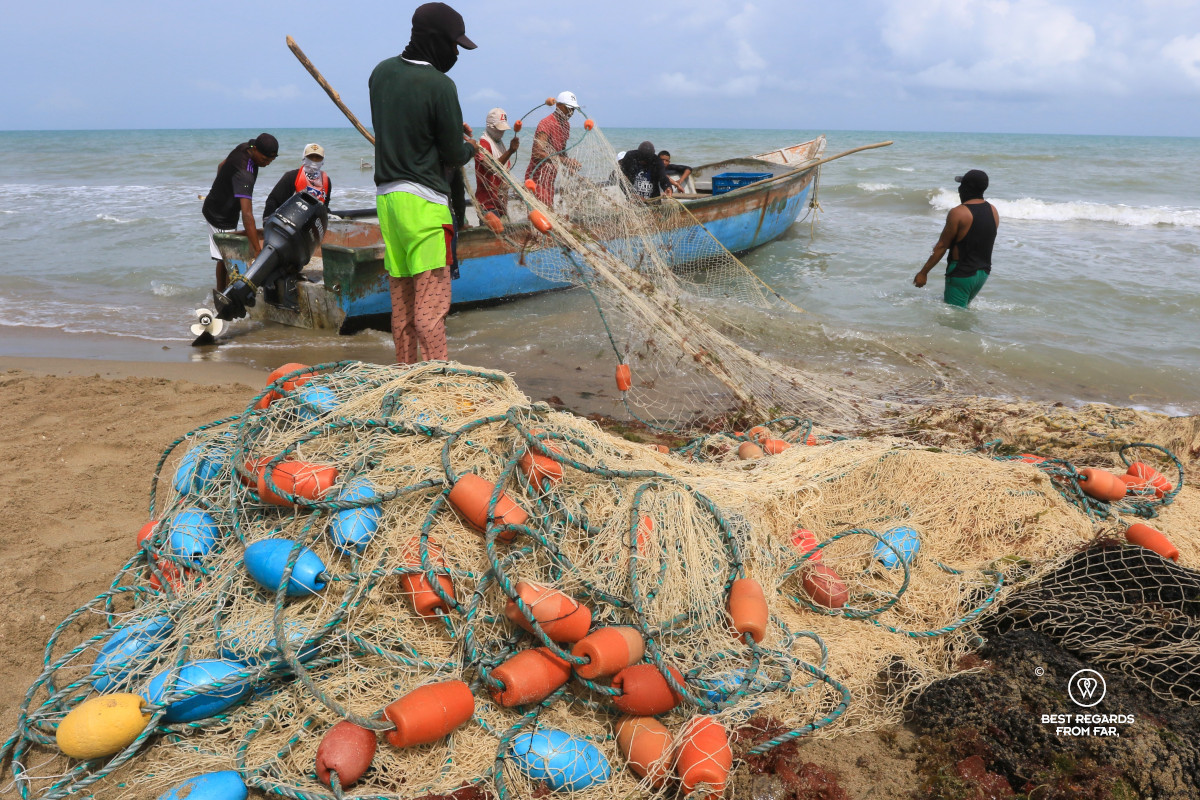
So far, no big fishing vessels sail these coastal waters and artisanal fishing remains one of the main livelihoods in Dibulla, the nearest village along the Colombian Caribbean coast. I leave the airy wooden deck where I was enjoying my breakfast to approach the scene, my cup of Colombian coffee in hand. Seated on the sand, the owner of the boat observes his crew quietly. Usually the catch is a better after the rain that he is hoping for, already looking towards the snowy peaks of the Sierra Nevada de Santa Marta, and thinking about tomorrow. They fish together every day, and on a good day, he explains, sometimes they put the net in two or three times. Last week, they managed to pull 200 kilograms (440lb) of fish! Many species are local, and there is more than one recipe per fish…
Delicious Fresh Seafood
…If there is one who knows many of these recipes and who knows how to work her seafood, it is Chef Juliana! After working in different cevicheria and restaurants along the Caribbean coast, she has been crafting the menus of the Awatawaa Ecolodge. Her generosity and passion come across in every dish. The philosophy at Awatawaa is to not go by a fixed menu, but instead to listen to the guests’ food restrictions of course, but also preferences, and work with local and seasonal products.
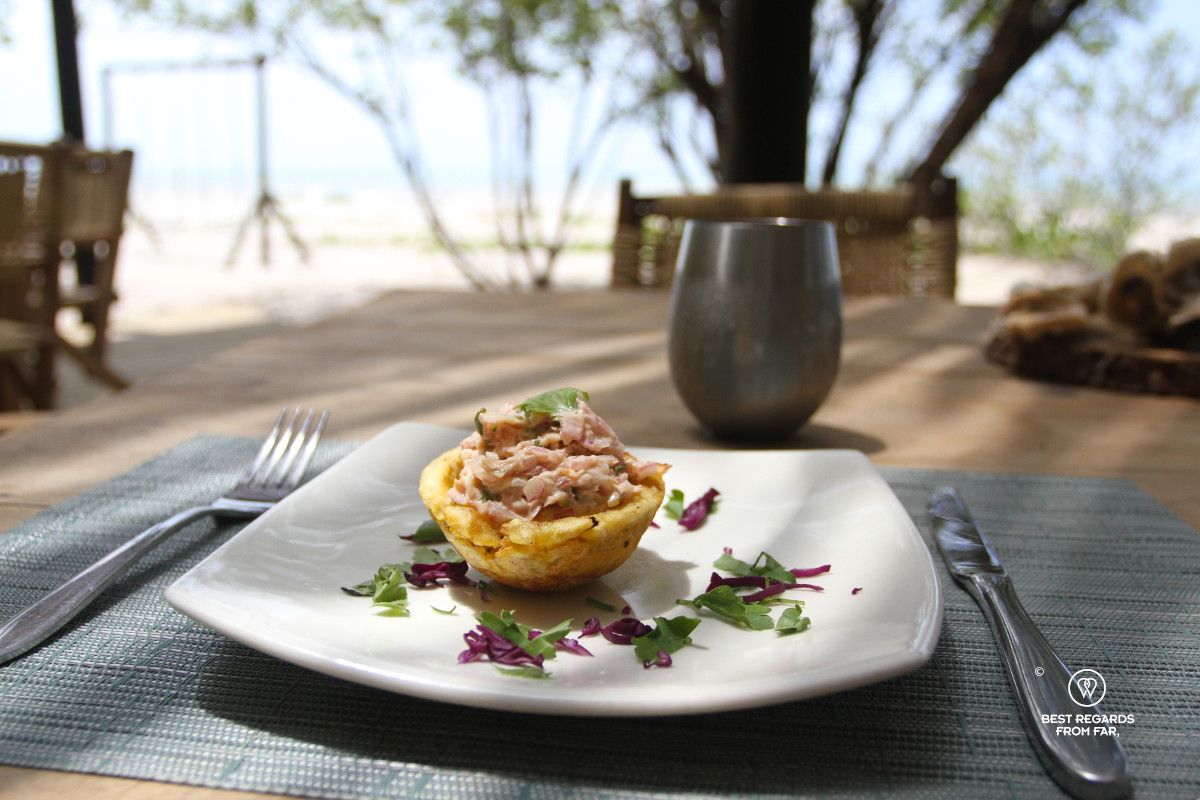
Seated next to me, she has observed the whole scene and is pointing to the fish she wants for today. It does not get any fresher than this! Later for lunch we will be served some of the Sierra fish, a local’s favorite with its delicate flavor and firm white flesh and a fried robalo fish with some patacones —fried, flattened plantains resembling a small pancake— on the side.
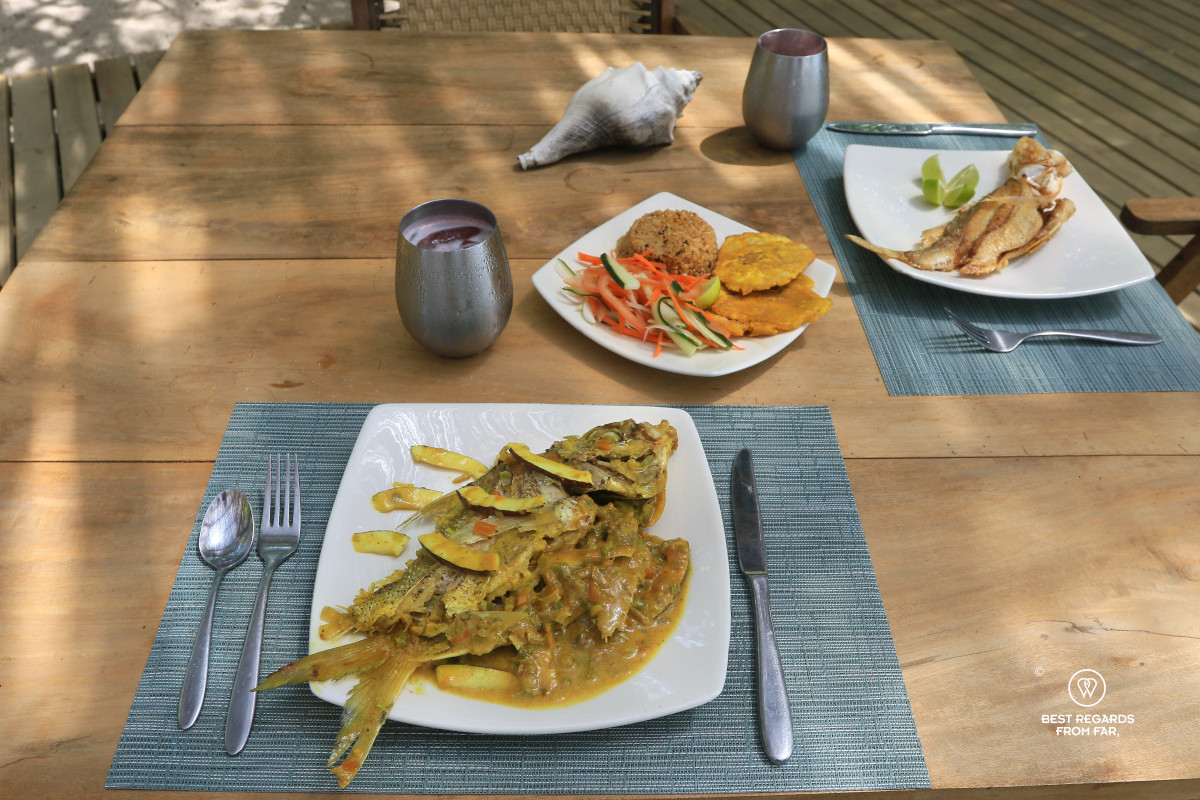
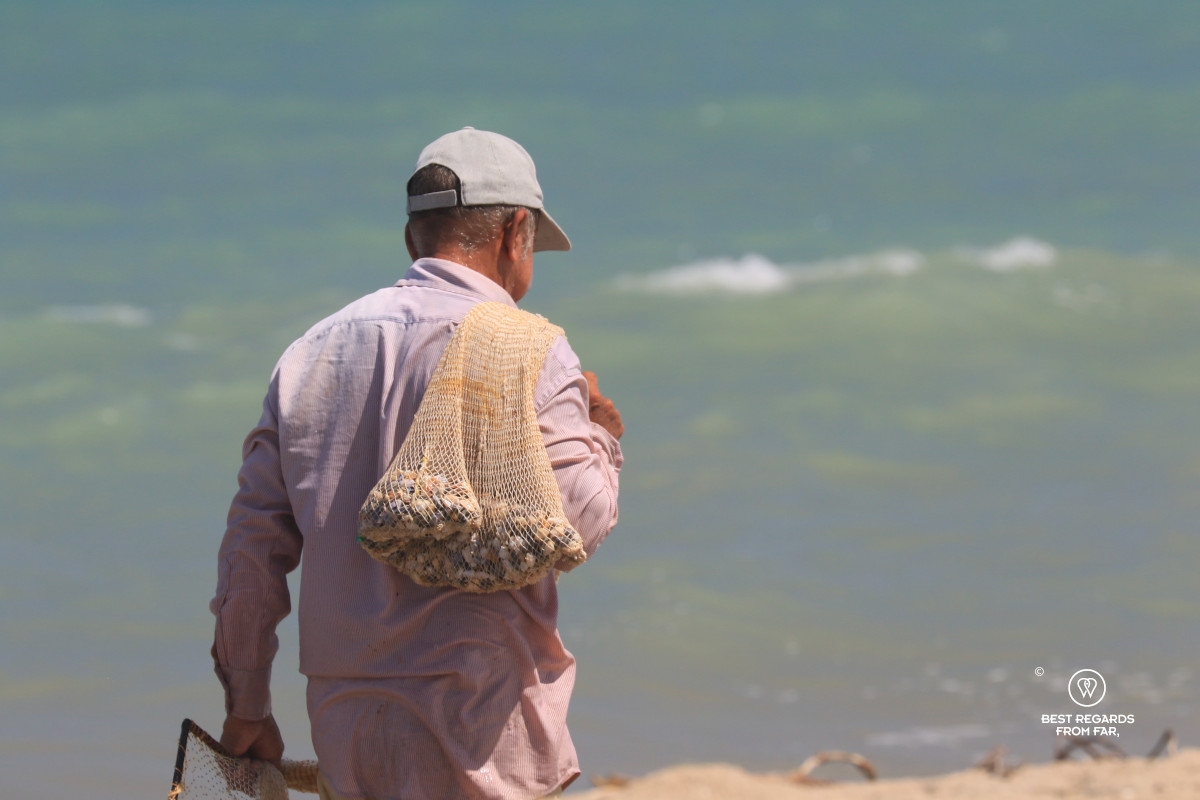
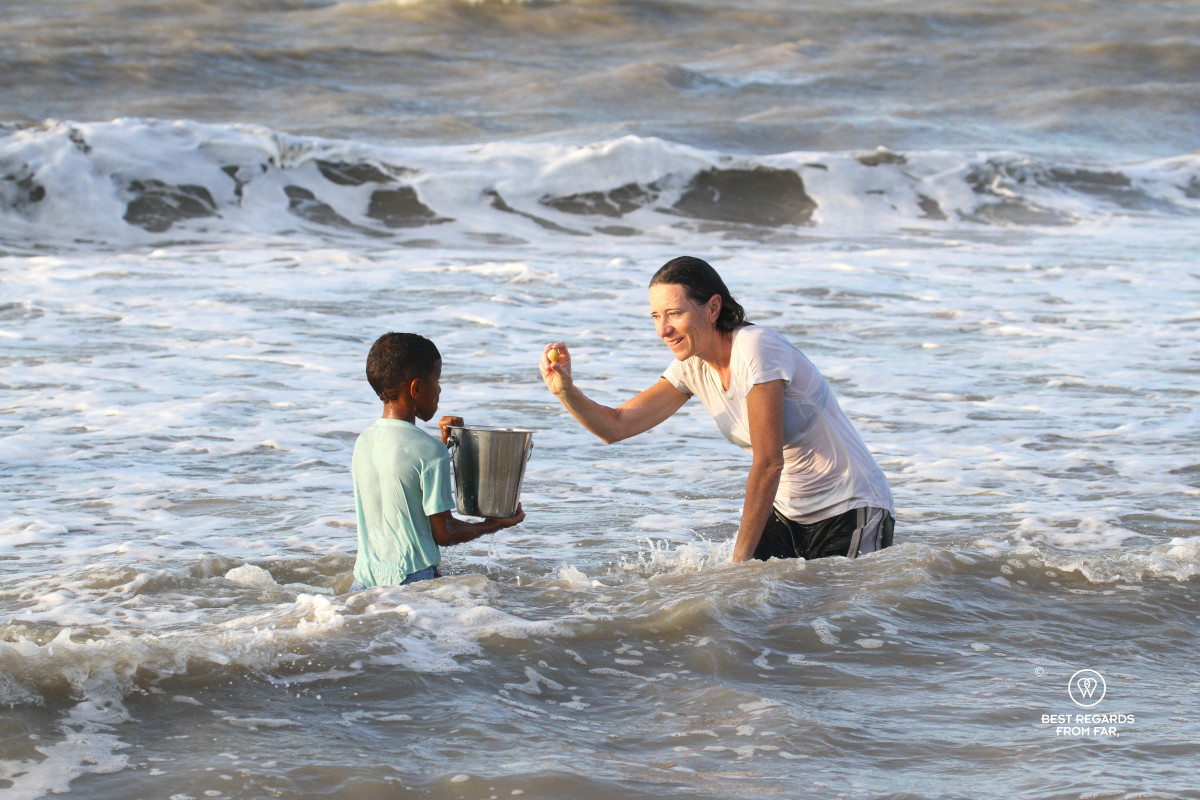
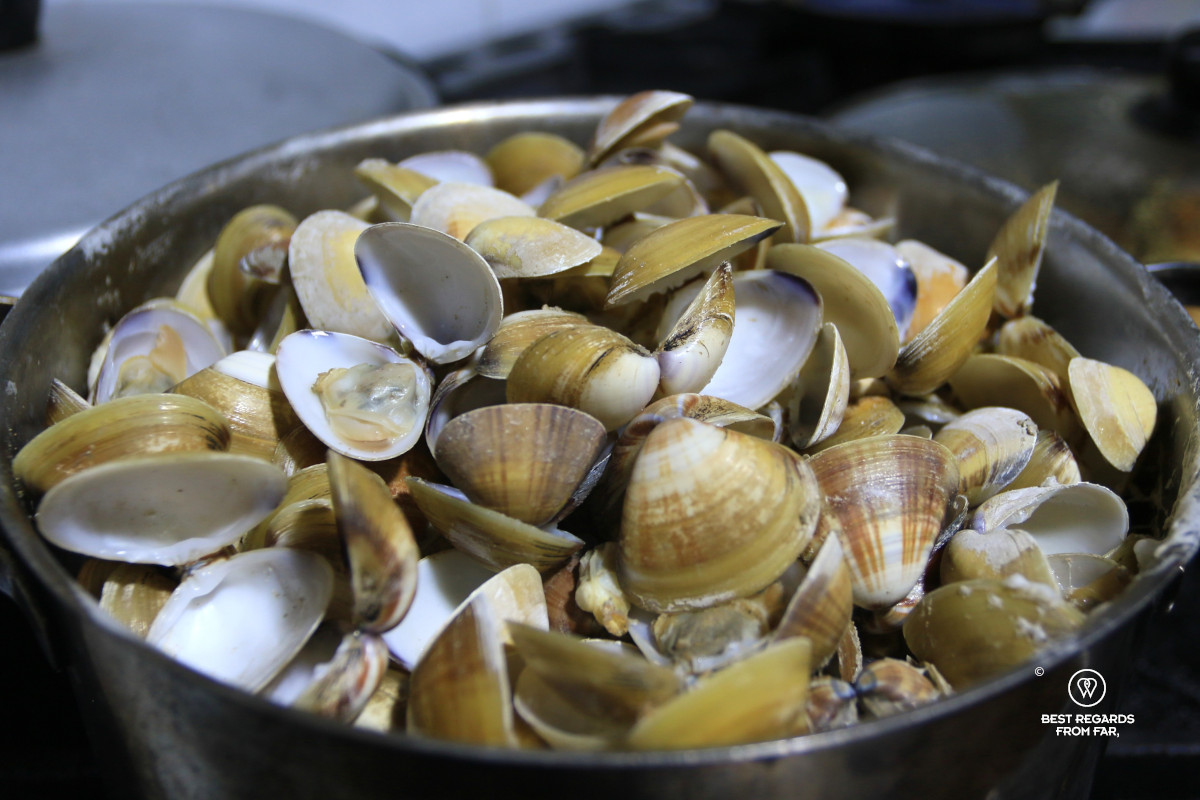
Yesterday, the fish soup with plantains was a delicious starter before a generous portion of sea bass and coconut rice with a colorful and healthy side salad. Yet maybe my favorite dish so far has been the clam ceviche we fished ourselves. With Deimer who works at the lodge and lives in Dibulla, we started walking along the beach before sunset. After a little while we joined him and his son in the warm water of the Caribbean Sea executing a weird-looking dance. He taught us how to search for clams dug in the sand with our feet. Like weird-looking chicks, we repeated the dance, felt the clams, and got down in the ocean to grab them and put them in a bucket while the sun was setting. Most locals fish for clams regularly to add proteins to their diet and enjoy them in different ways, often as mixed rice, pasta, or on an arepa —a flat corn bread.
Exploring the Mangrove & Bird Watching
From the Water
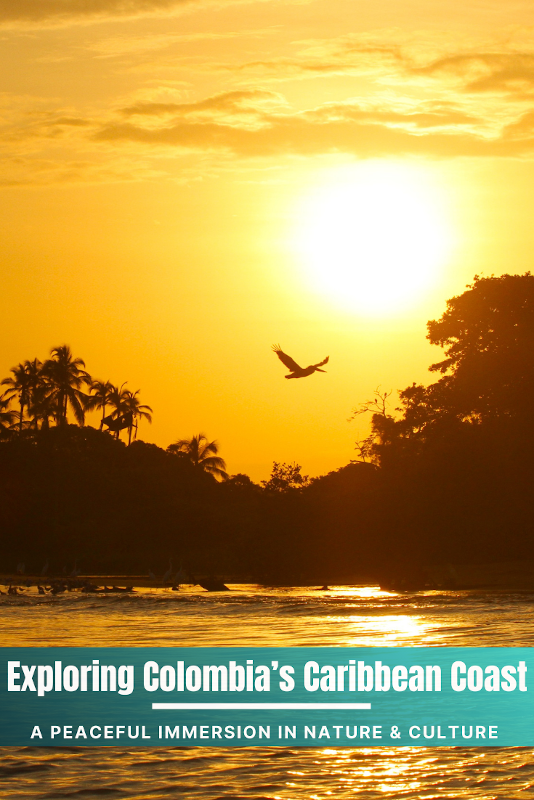
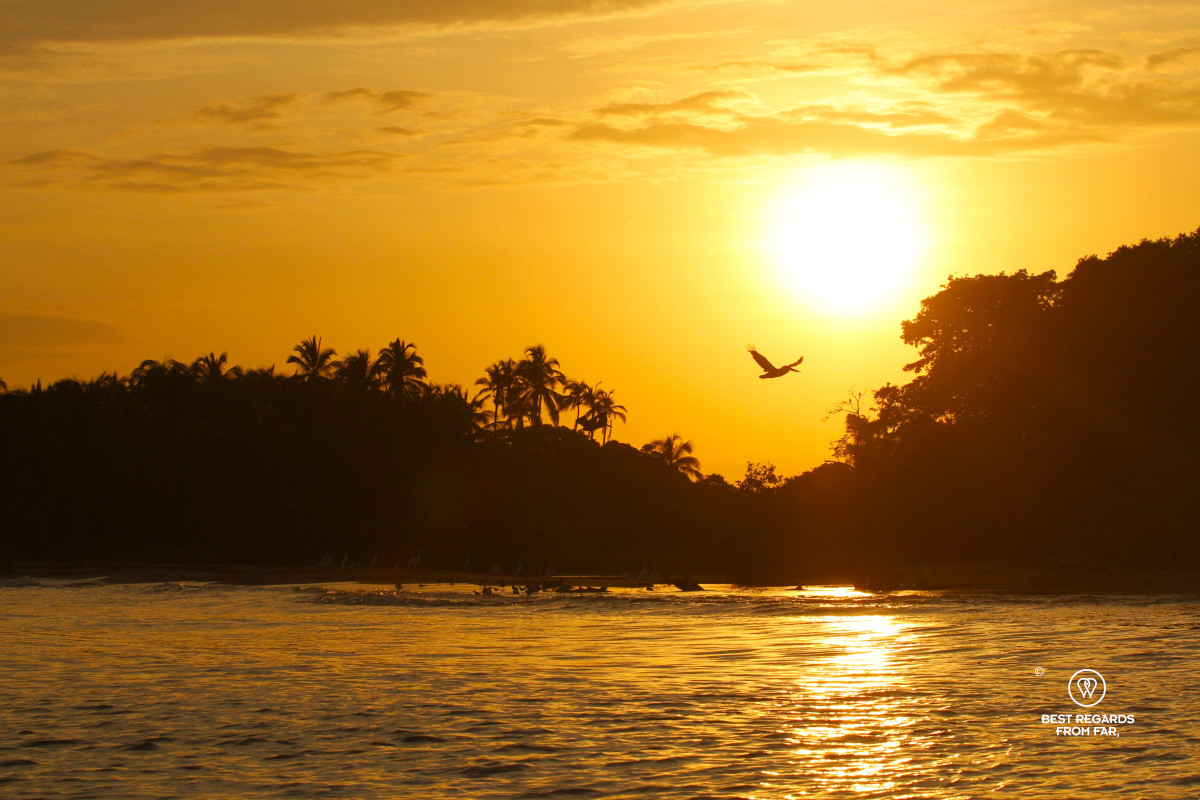
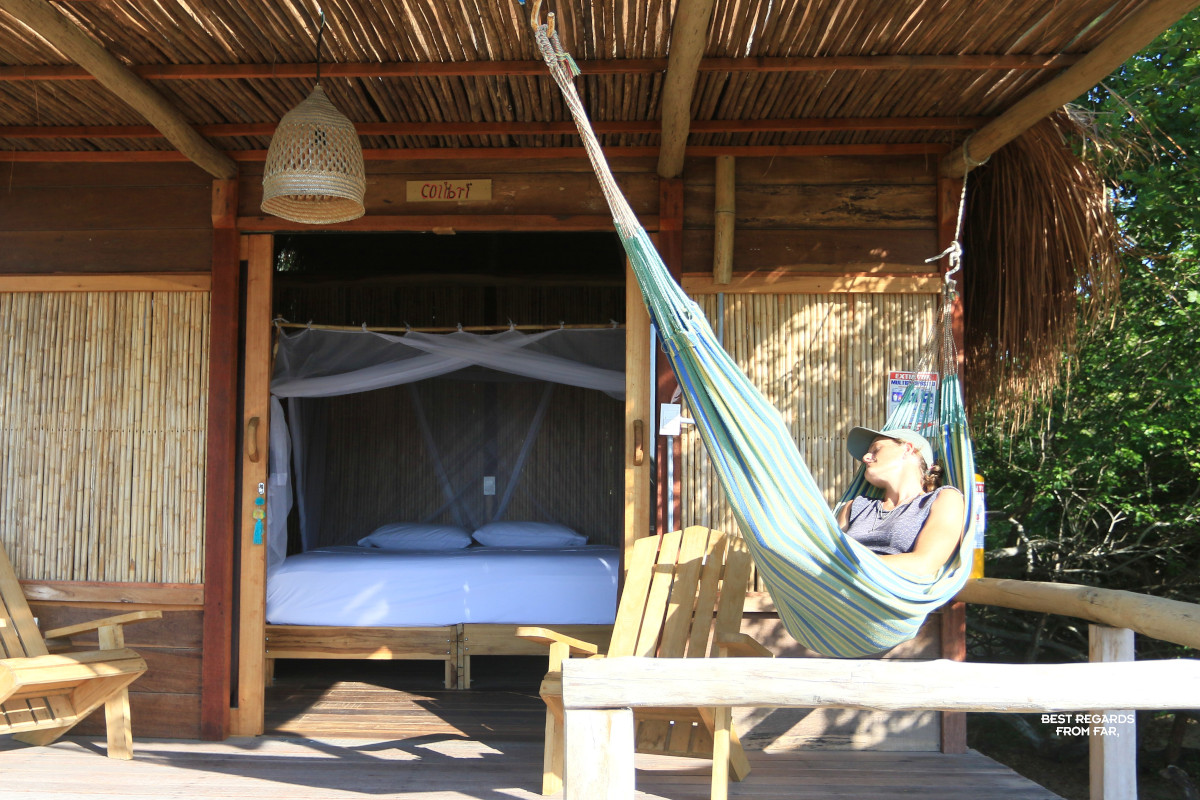
After a good night sleep to the sound of the waves in my wooden cabana on the beach, the fisherman’s boat passes by once more at sunrise. This time, the crew is smaller, and the captain lands it on the beach to allow us to embark. The Caribbean Sea is very flat at this early hour. The orange hue of the sky slowly turns a bit more yellow as the sun rises, and pelicans fly in front of its disk above a skyline of palm trees.
The expert eye of our captain catches the river mouth that has been closing more and more as the climate has been changing. Lower water levels do not always allow him to navigate up river. We are lucky today, and getting off to push the heavy wooden boat pays off as we manage to pass the shallow waters of the river mouth.
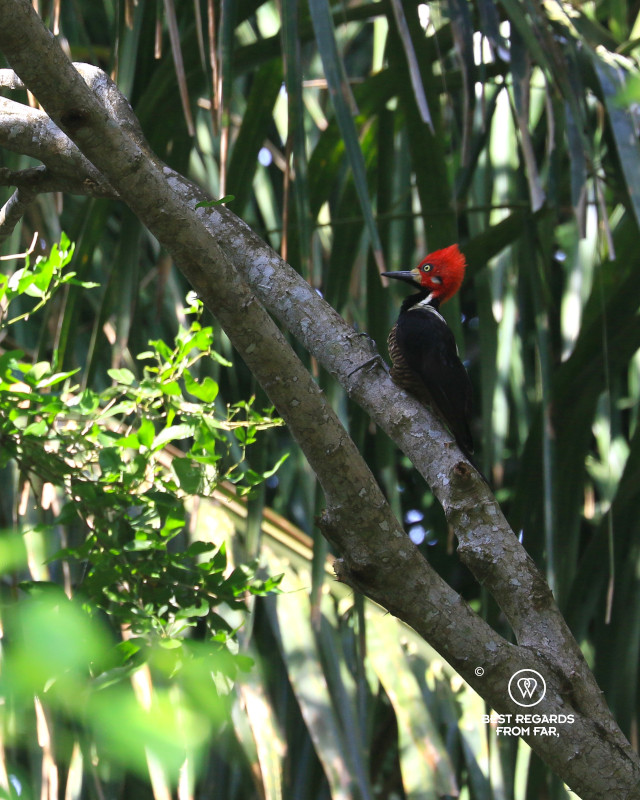
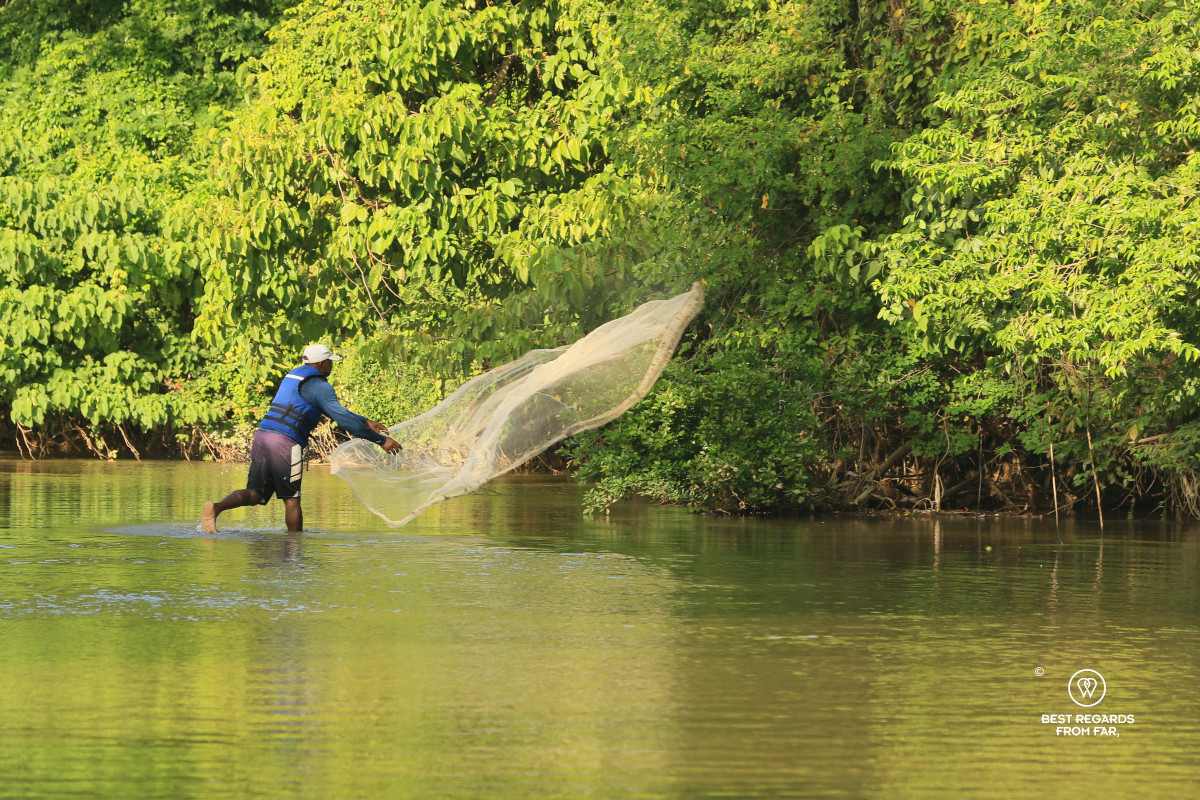
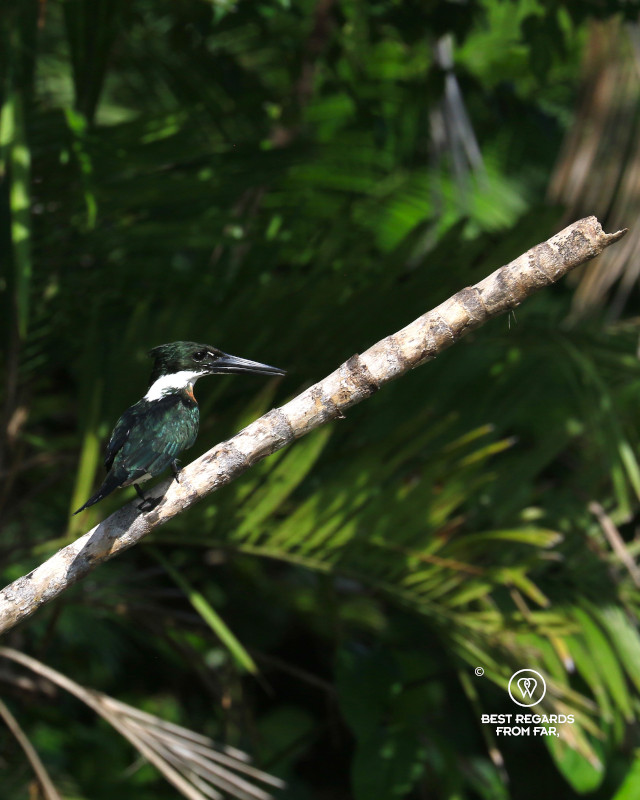
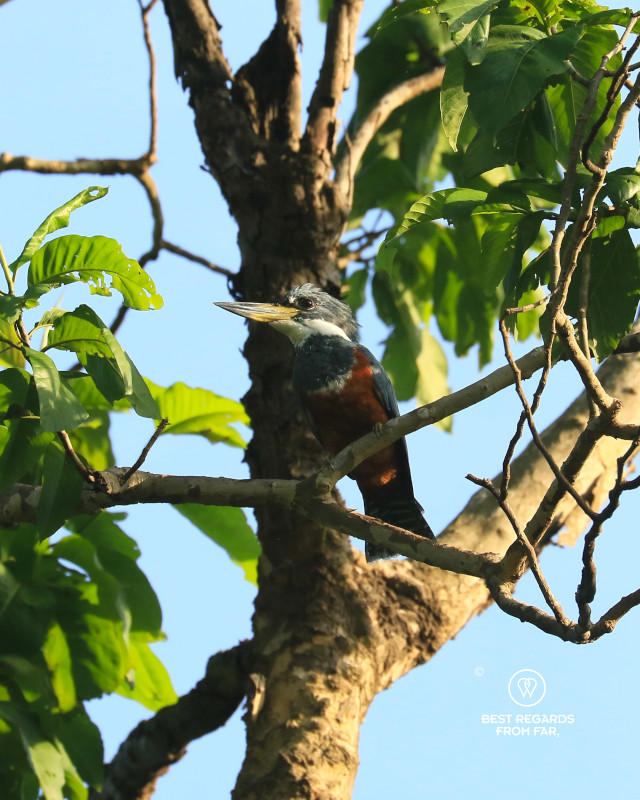
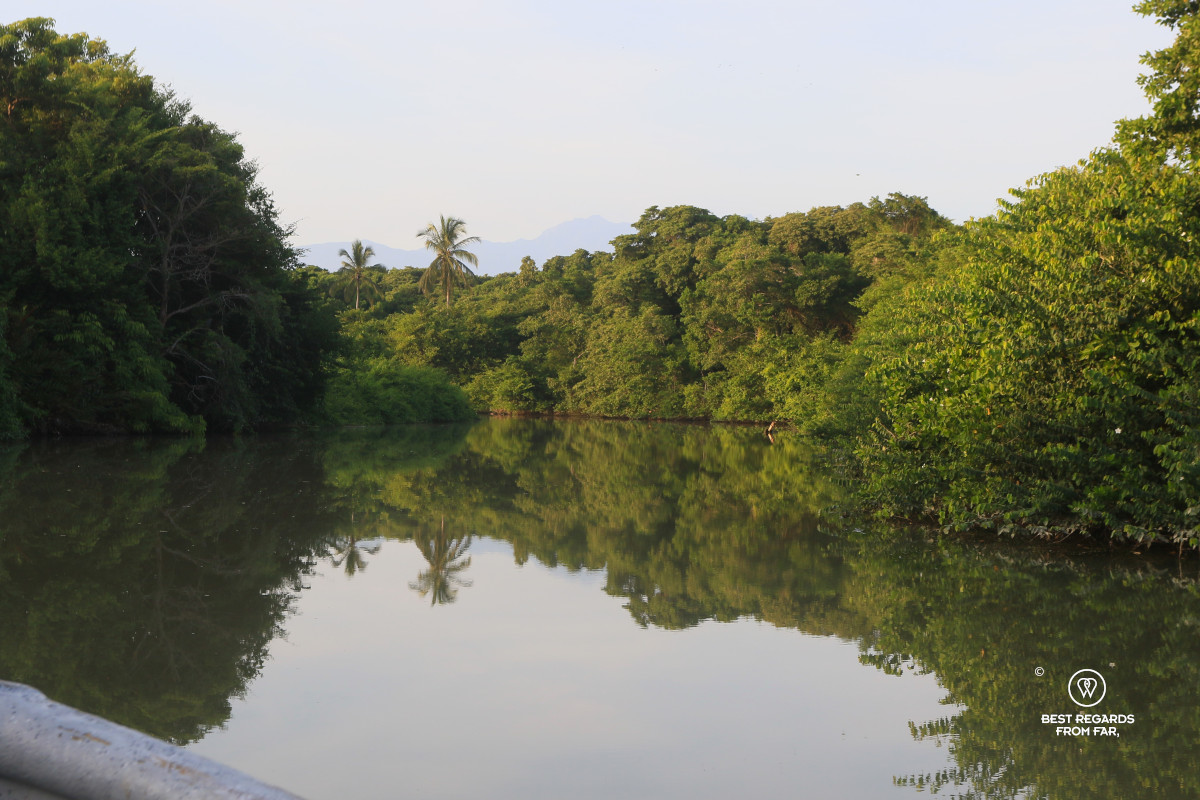
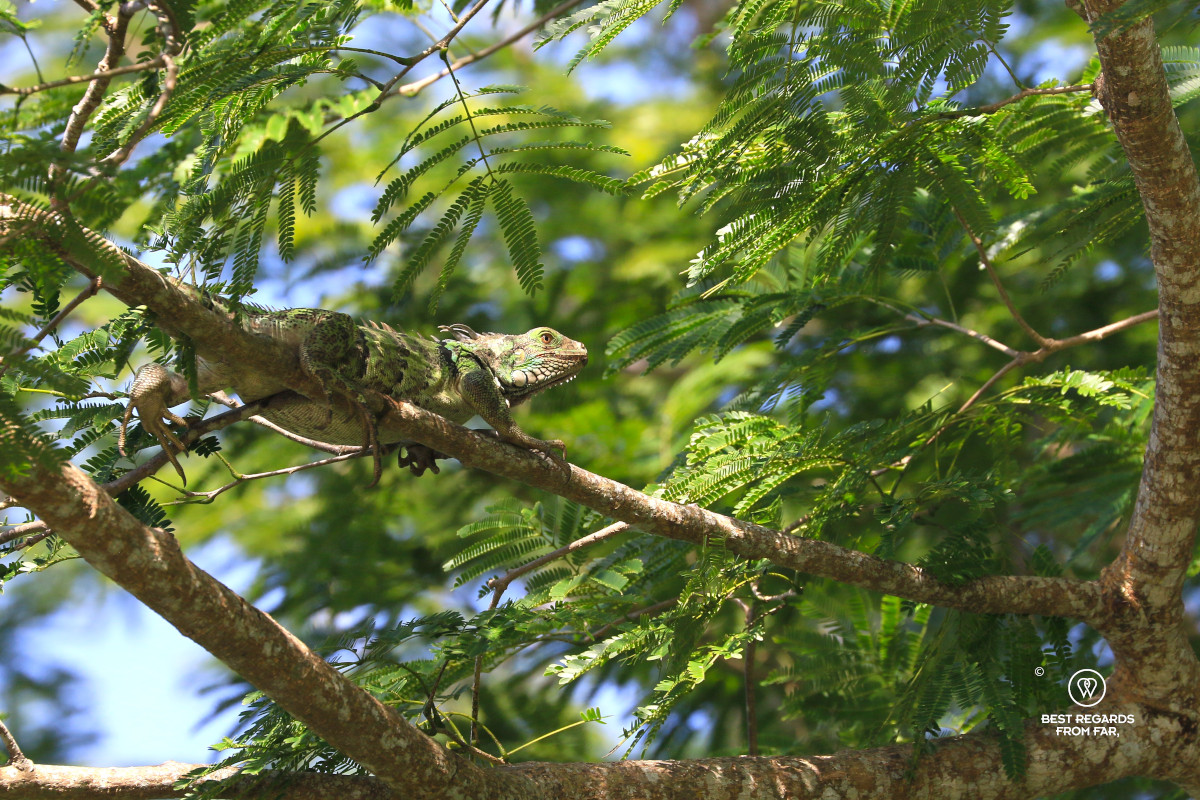
A different world opens up as we boat upstream. We leave the seabirds behind, and the calm fresh water is another paradise for bird watchers. Kingfishers of all kinds fly from branch to branch in front of the bow. The Yellow-crowned night heron has a different strategy as it sits motionless probably thinking we did not notice it. The Pied water-tyrant on the other hand seems to want to show us its best profile as it paces up and down the reeds, pausing for its portrait to be taken. Rufous-vented chachalacas clumsily try to hide higher up in the trees while the Groove-billed anis flock together as a family, and the Orange-chinned parakeets squawk loudly over the river with the snowy peaks of the Sierra Nevada de Santa Marta in the background.
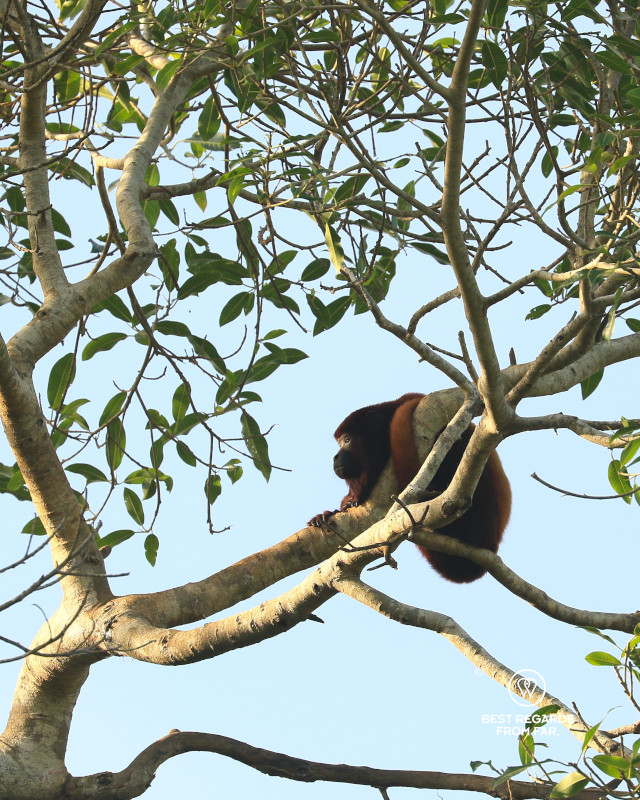
We duck under trees as the stream becomes shallower. Soon, we will have to return. The captain switches off his engine to let us appreciate the sounds of the jungle before turning around. An unmistakable roar resonates. We get off the boat and wade a bit further upstream. A reddish mass in a tall tree catches our gaze: the howler monkey is waking up… and reminds us to not forget the land animals.

From the Land
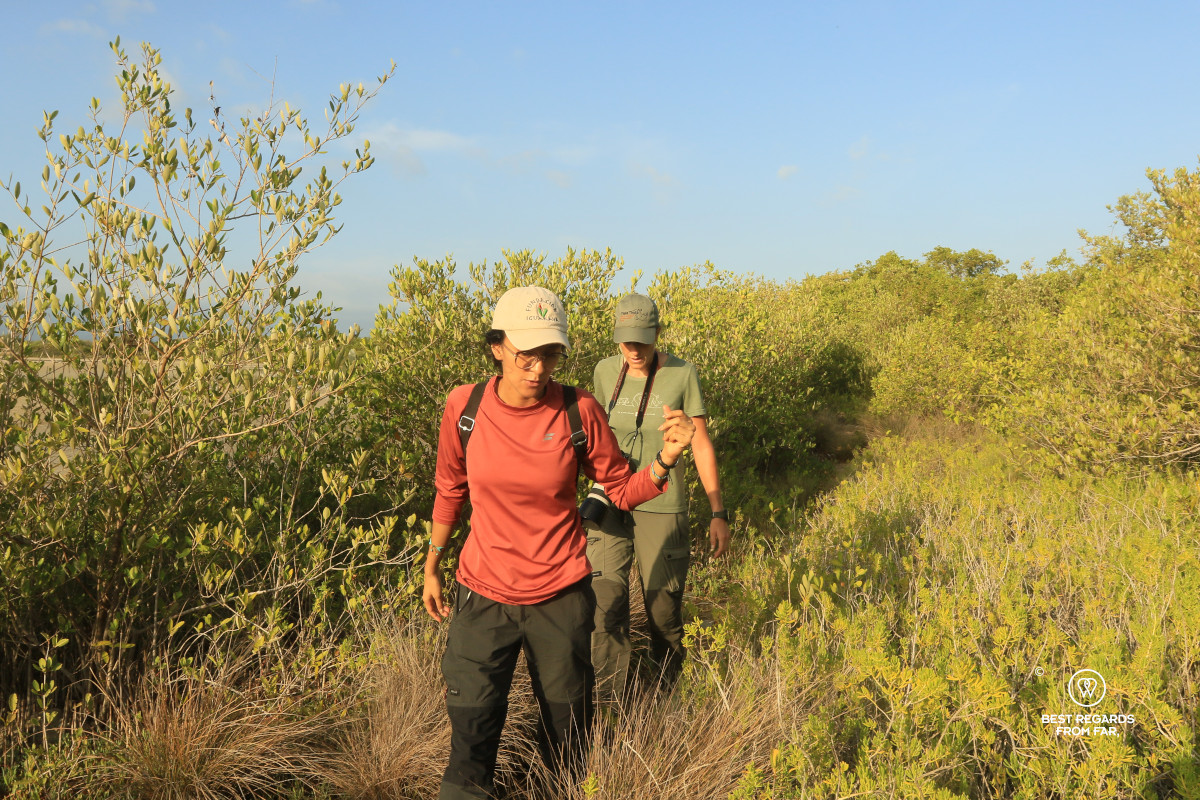
If she were an element of nature, Estefanía Ribera, guide for the community-based Iguarajia Foundation focused on conservation and sustainable tourism, would like to be fire. When under control, it warms us up and allows us to cook, but when out of control, it is destructive. “Just like tourism”, she concludes as we start our ecological walk between seashore and lagoon in front of the Awatawaa Ecolodge that precisely knows how to maintain the fire.
In a rather short 4-kilometer (2.5 miles) walk, we are about to explore three very specific ecosystems with our indigenous Wayuu guide who clears the way with its machete when necessary, and shares his knowledge about the local flora and fauna.
On our way to explore the mangrove and tropical dry forest, we cross the dry marshland next to the lodge that is a bird haven. Shortly after, the mangrove appears. By the edge of the marshland, spoors of deer, foxes, and wild cats mark the dry soil revealing the presence of more mammals than we thought.
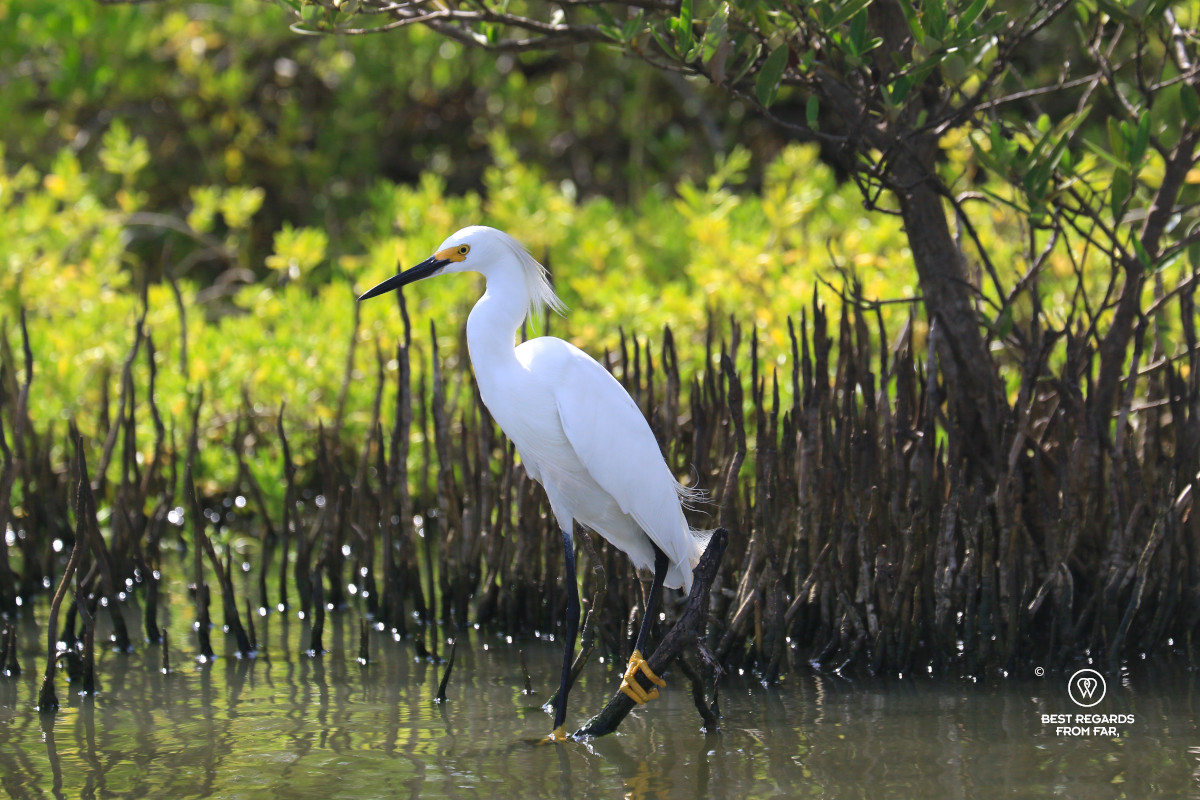
Estefanía points out to the first of four different types of mangroves we are learning about this morning. Whichever type, the mangrove that survives in brackish waters needs to expel the salt. It does so through its leaves and roots. Pneumatophores are specialized aerial roots growing upwards from the roots of mangroves and sticking out from the soil to absorb oxygen from the air, a sort of snorkel for the tree when the rest of the root system is submerged. The fascinating adaption goes further as each type of mangrove has its way of reproducing, based on its environment. Some have seeds that are already germinated in the fruit before falling from the tree and that can float up to a month before reaching the bank, ensuring immediate encroachment —and protecting the land from coastal erosion.
The dry forest we walk through also adapts incredibly to the rains. With only one or two periods of rain a year, as soon as there is a bit of water, its flowers bloom to ensure reproduction while the trees drop their leaves to conserve energy when it is dry, looking dead to the neophyte.
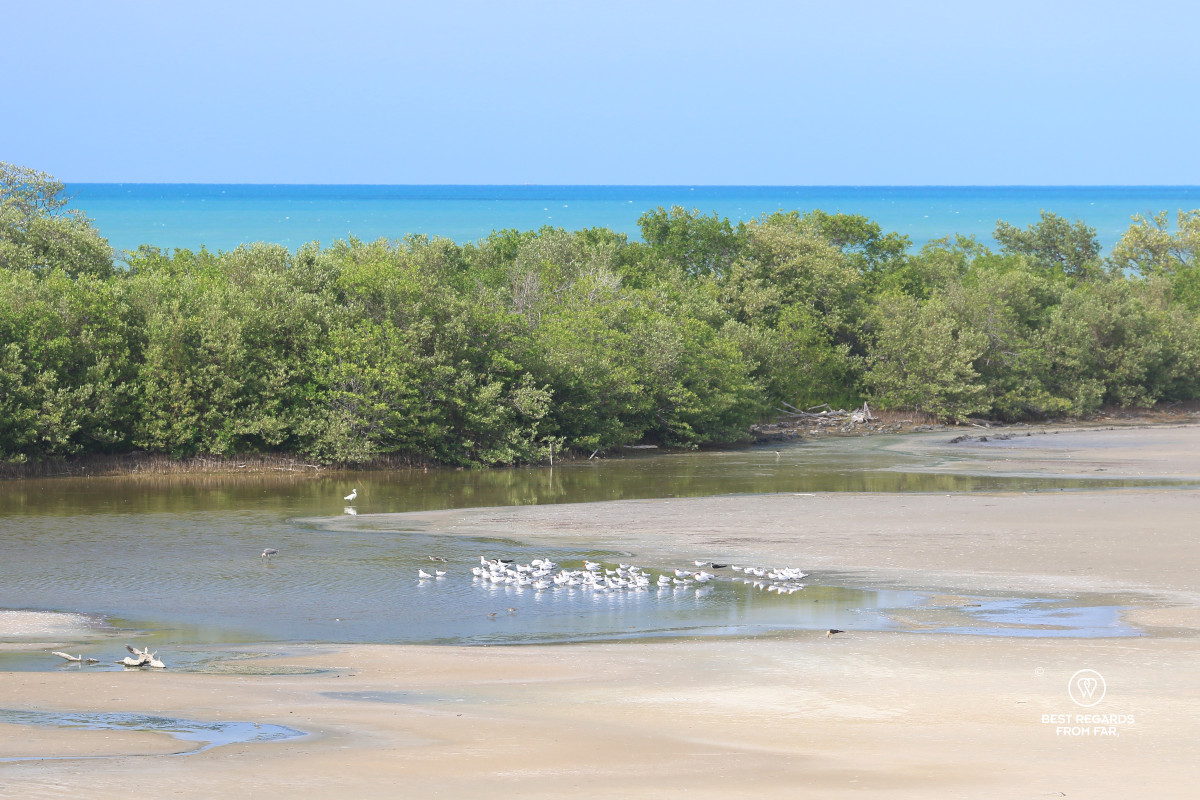
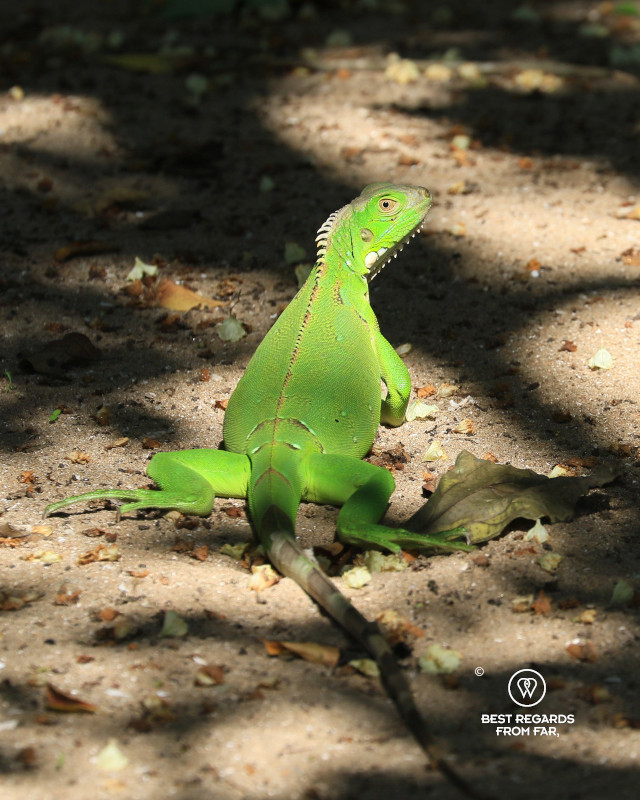
As we are about to loop back to the lodge via the shore line, we reach the black and red mangroves with their characteristic high roots. A stream lowers the salinity of this patch of water. The vegetation is dense. A sound echoes. Our Wayuu guide freezes. The caiman is not far… Given the deep roar, it probably is a female with eggs or a territorial warning. We take it in, and safely move away towards the coast…
Los Flamencos [Flamingos, Caribbean Lagoons & Wayuu Culture]
Leaving the tropical dry forest around the Awatawaa Ecolodge to visit the Santuario de Fauna y Flora Los Flamencos, the landscape changes drastically and gets very dry.
After driving east for about an hour, we embark Aristides’ fiberglass boat in the shape of the traditional cayuco, carved from one tree trunk. In the shallow lagoon, the fisherman stirs and propels his canoe like a gondolier in Venice. Today, he is not looking for fish and prawns to sustain his family but for water birds to have us discover the special ecosystem of this lagoon.
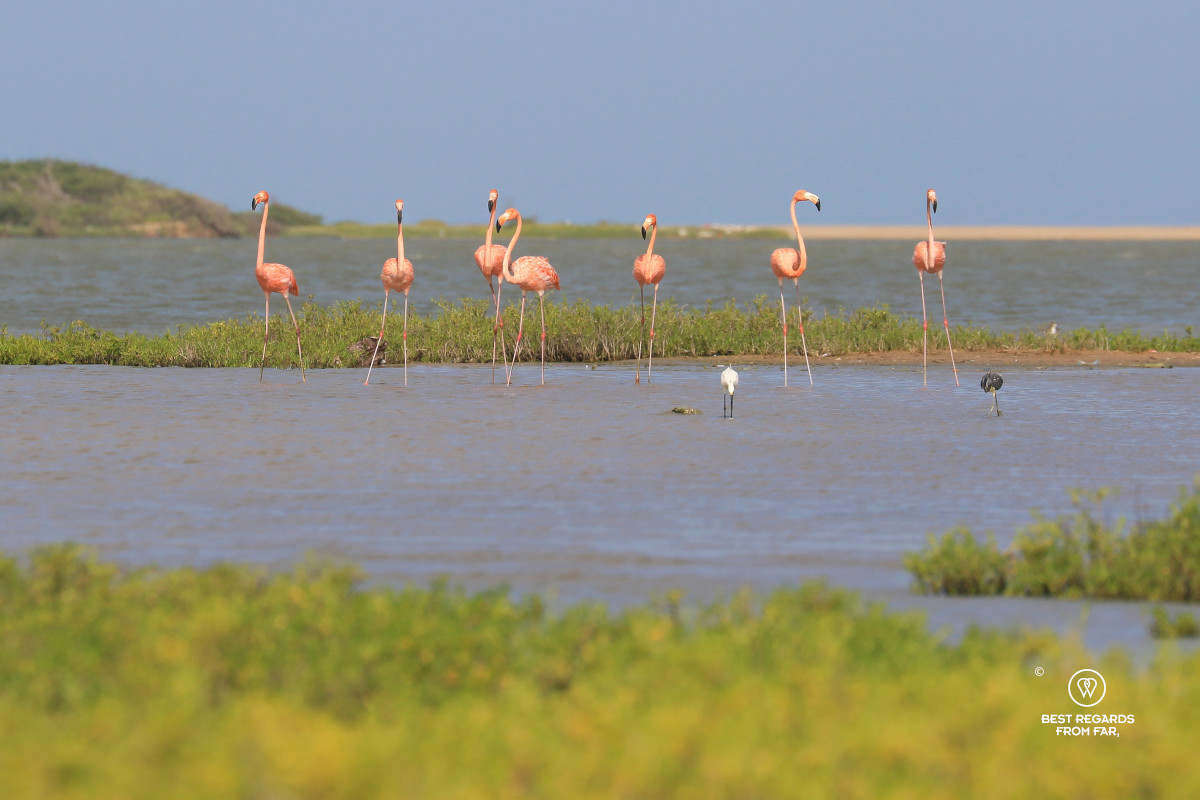
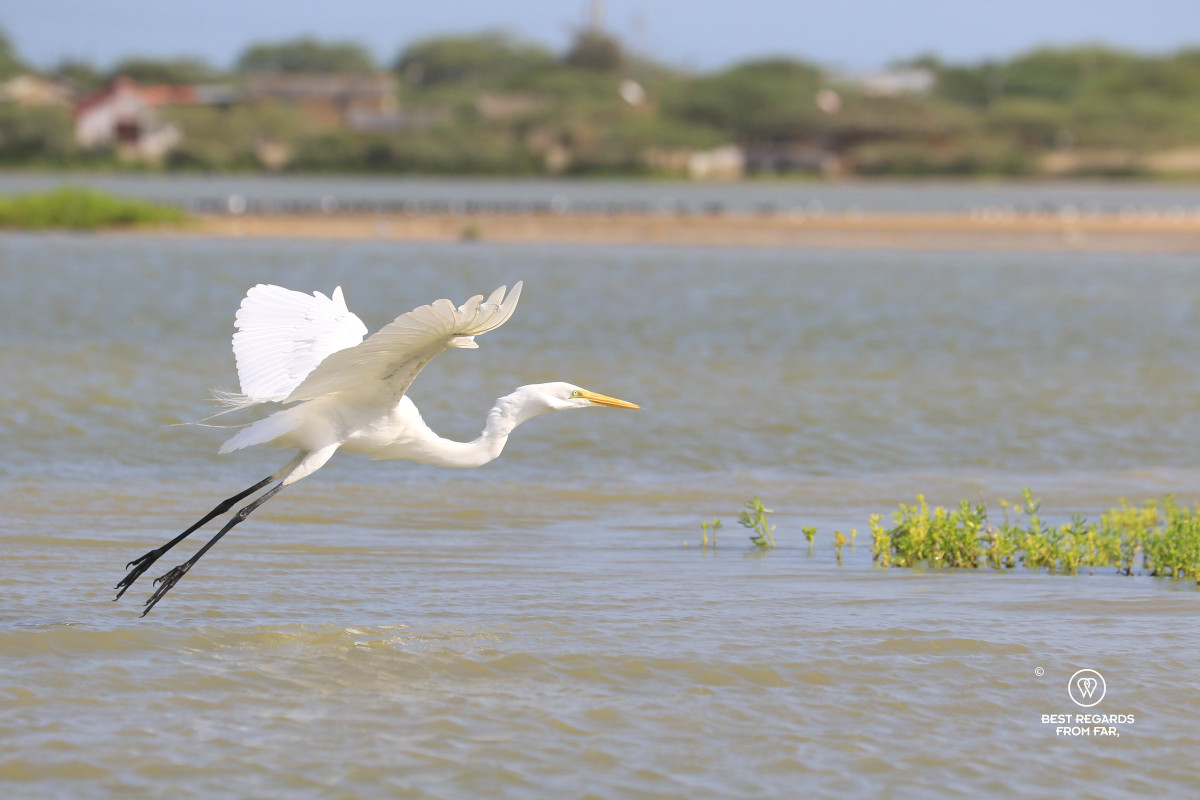
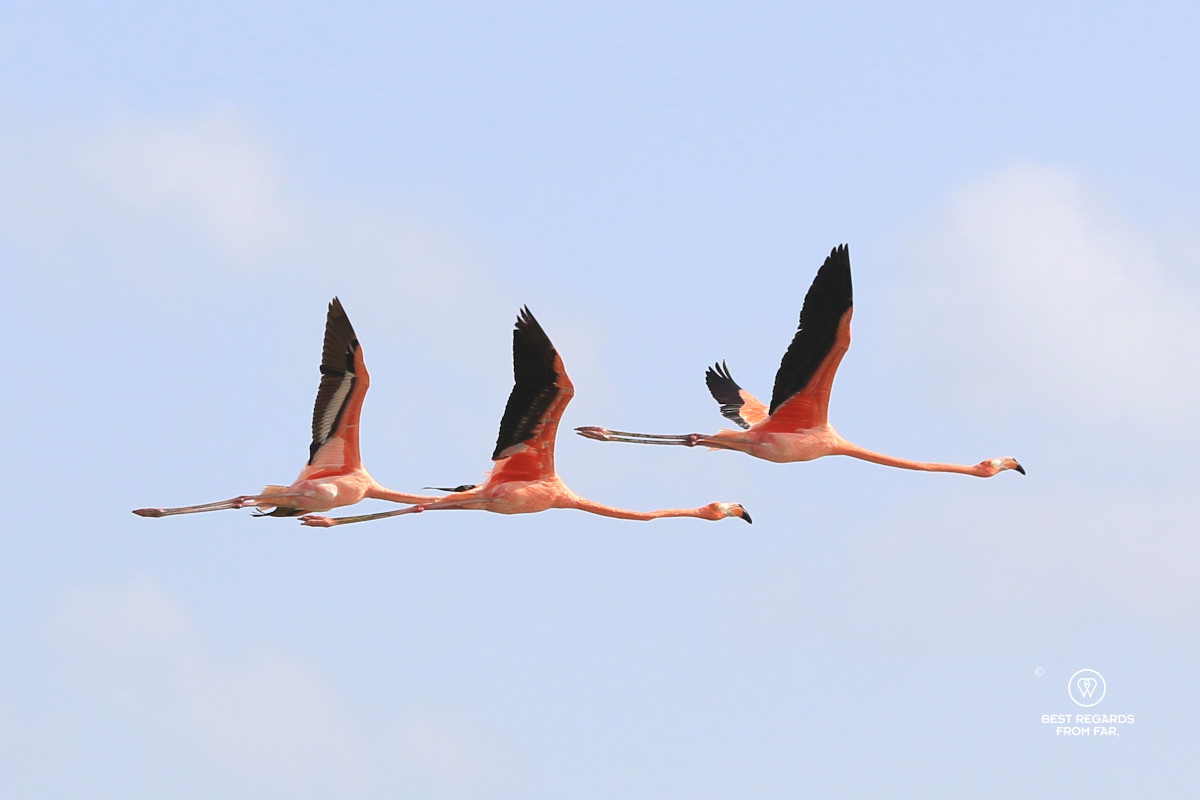
Soon, we near a flock of pink American flamingos. They migrate to follow the food, and the water level: as filter feeders they like the water shallow enough to take in their food easily —shrimp, small worms, and micro algae they simply swallow— but not too shallow either! Probably because the male eats more, he is bigger —about 8 kg (17.6lb)— and more pink than the female while the young remain whitish grey during their first four years.
Soon, during October-November, they will be leaving to breed. As they do so on the ground, laying only one egg a year, and also being monogamous, they are very vulnerable, and select only the quietest areas. Despite being small, the seven fishing communities living in rancherias around the lagoon cause too many disruptions.
Taking advantage of the wind, Aristides sets up an up-cycled piece of green plastics tied to a pole that is wedged into a hole in his canoe. His paddle helps him stir as we silently sail across the lagoon to reach a noisy patch of mangrove: the Neotropic cormorants are nesting. Without any engines in the nature reserve, the seabird safari is a real treat.
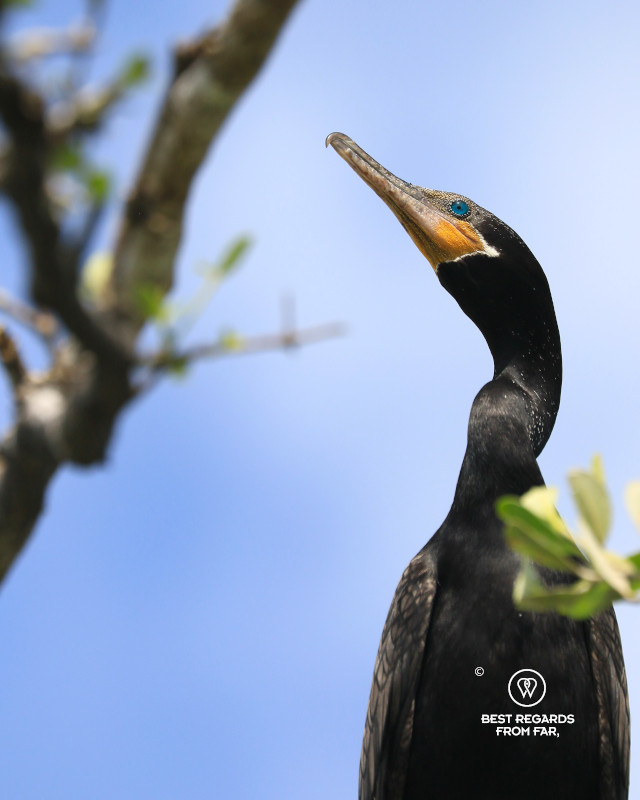
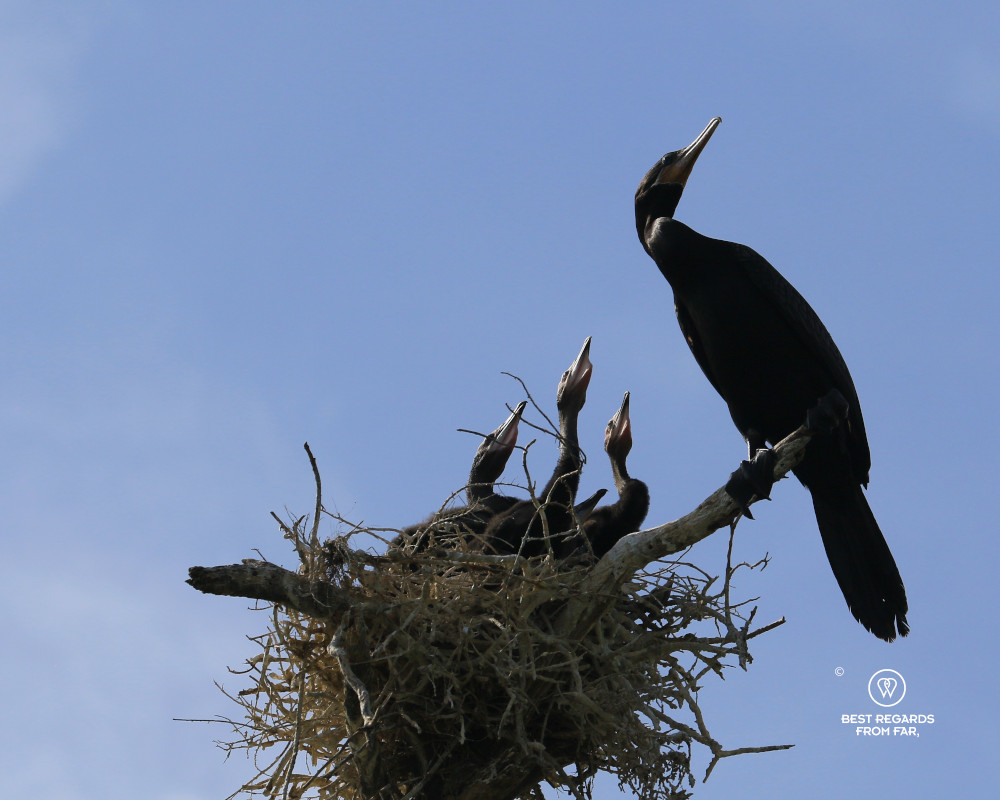
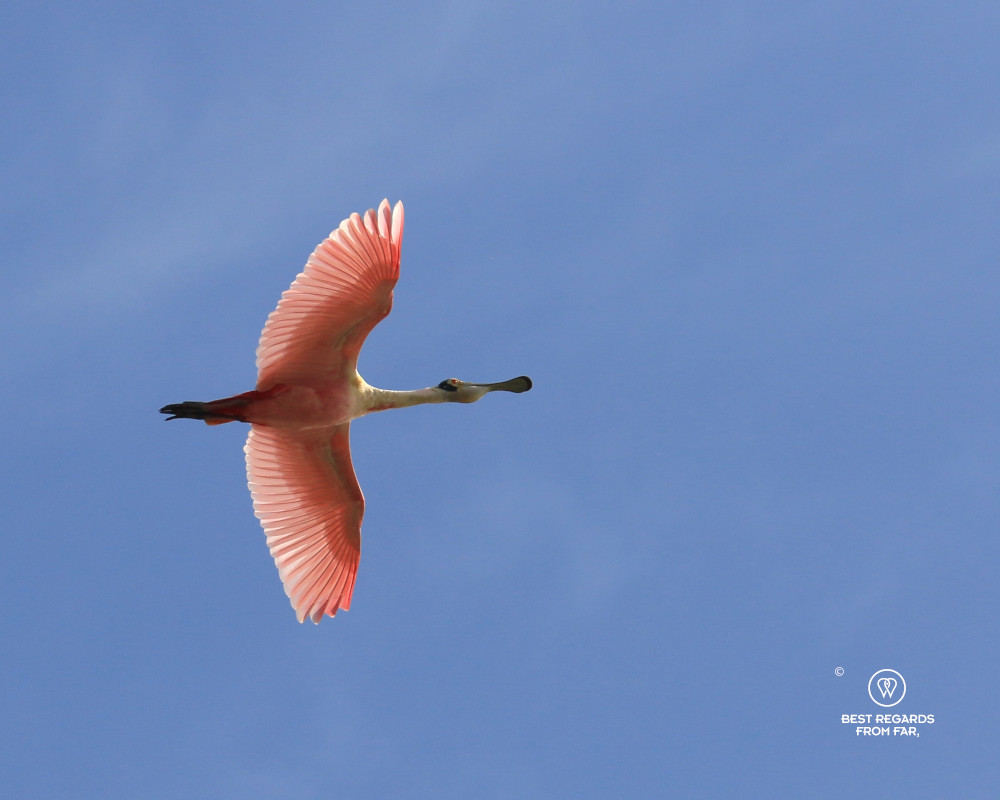
The wind dies down in the mangrove and Aristides swaps his row for his long stick to maneuver through the narrow channels. In a few weeks the cormorants will be gone and the red ibis and spoonbills will take over their nests, tainting the tree tops pink.
The Cultural Patchwork of the People of the Sierra
With no less than five communities living in this remote region of Colombia, the Punta de los Remedios where the Awatawaa Ecolodge is located is an ideal base to learn more about these different cultures: the Kogis, Arhuacos, Wiwas, and Kankuamos (who are considered culturally extinct) are The Four People of the Sierra while the Wayuus, the largest indigenous group of Colombia, tend to live in the more arid area of La Guajira along the Caribbean coast.
A Wayuu Rancheria
La Guajira is Colombia’s most arid department. Around the village of Camarones by the lagoon where we have just observed flamingos, it feels like we are in Africa: the wind blows the sand off the dry ground and fences are made of cacti.
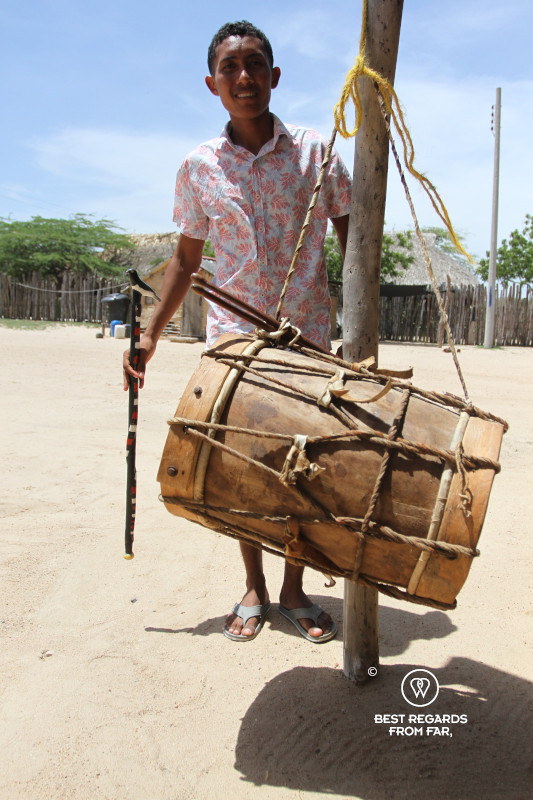
We pass a gate and the young Jose welcomes us to the rancheria, proudly bearing a stick which handle ends as a sculpted bird. This is his grandfather’s stick, the leader of the rancheria, and Jose being one of his most educated grandchildren, is in charge of introducing us to the Wayuu culture.
Here, the Wayuu live as family clans in rancherias. The sanctuary has also given its name to this rancheria: Tokoko or “flamingo” in the native language.
Their main activity is fishing and prawning in the lagoon. During the dry season, they catch all the fish that will die in the dried-up lagoon, and dry them to make cachira. The naturally salty protein-rich seafood is added to white rice, the local staple food. While men are on the lagoon, women sell their catch and create traditional crafts.
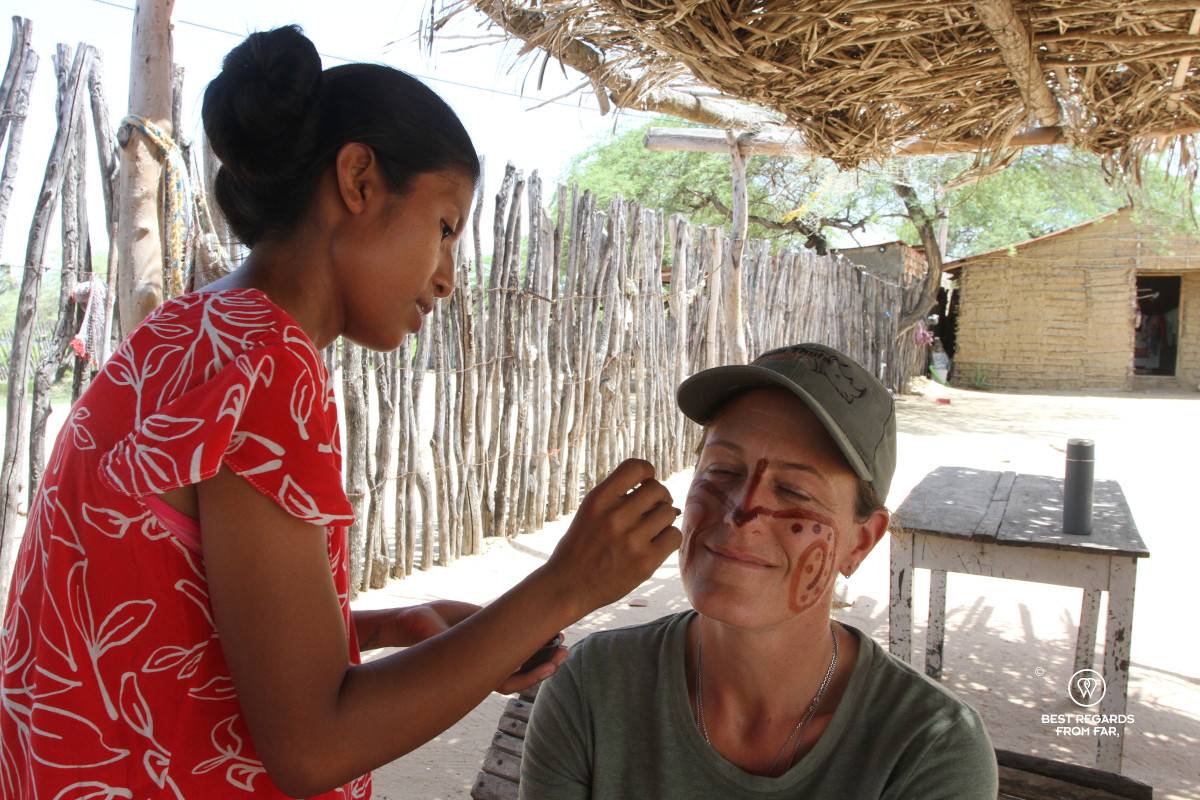
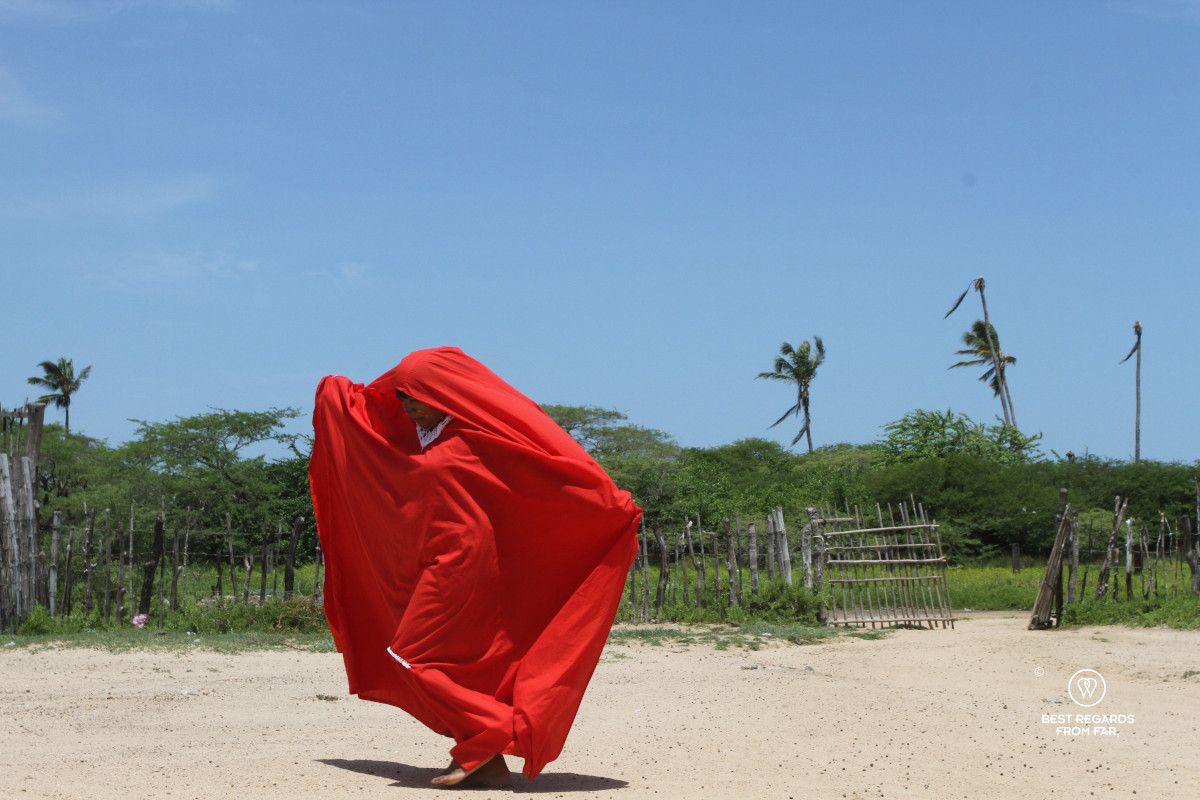
Becoming a woman follows a distinct path in Wayuu culture. Girls grow up normally until their first menstruation, which marks the beginning of a period of seclusion. Their hair is cut, and they remain inside the family home, where they are taught cooking, crafts, and the customs and values of Wayuu society. During this time, only women are allowed to see the young girl.
Traditionally, this rite of passage could last several years. Today, as the Wayuu try to adapt to modern life, the period of seclusion is often shortened to a few months.
About a week before her return to community life, the girl learns the yonna dance, inspired by the movements of birds in flight. Dressed in red and adorned with makeup representing the beauty of nature, she is presented to the community. At this stage, she may be noticed by a potential suitor. If so, a palabrero, a respected mediator chosen for his patience and ability to listen, intervenes to negotiate the bride price…
A Wiwa Community
Back in the mountains, only a few kilometers from the coastline, Ramiro Calbo welcomes us with a broad smile. His long dark hair falls onto his tunic. All dressed in white as a symbol of peace, he carries his poporo –a small hollowed pumpkin used to hold crushed seashells to stimulate the active ingredients of the chewed coca leaves. Ramiro is a Wiwa, a direct descendant of the Tairona people (200 BCE-1600CE), the great civilization whose impressive skills in architecture and gold work attracted the unwanted attention of Spanish conquistadors in the 16th century.
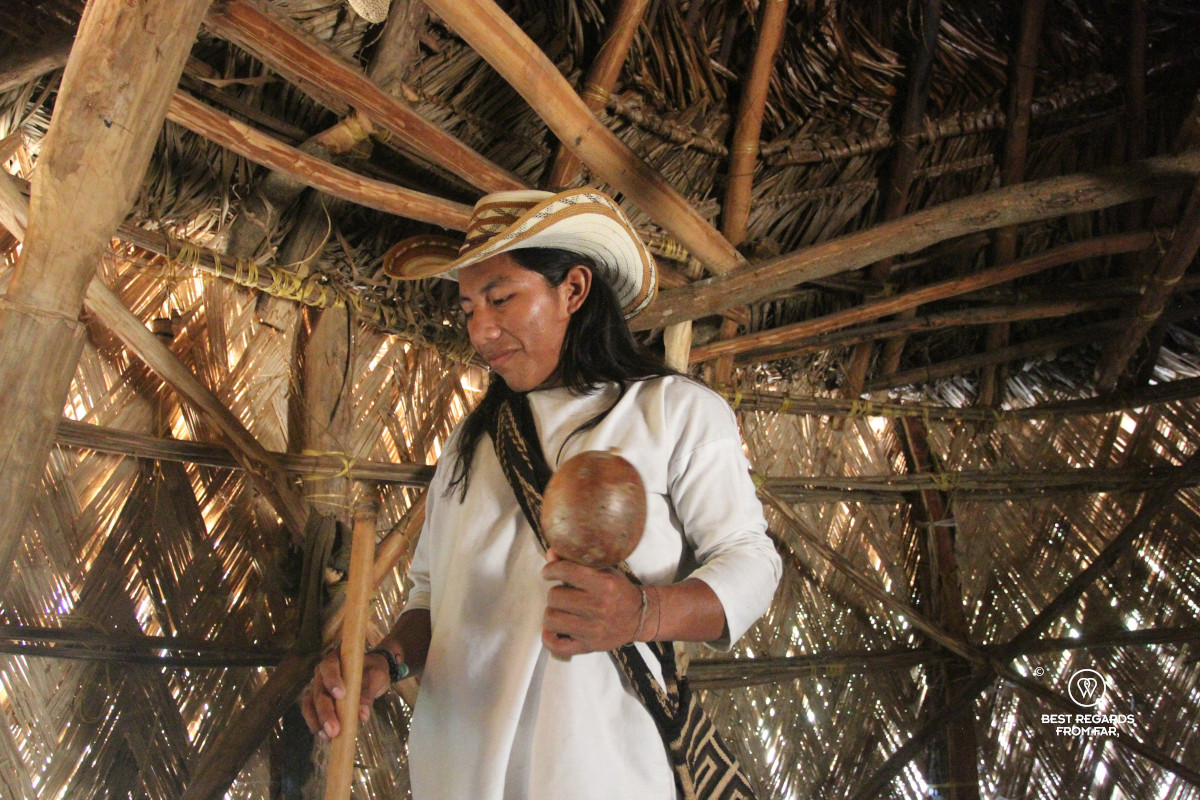
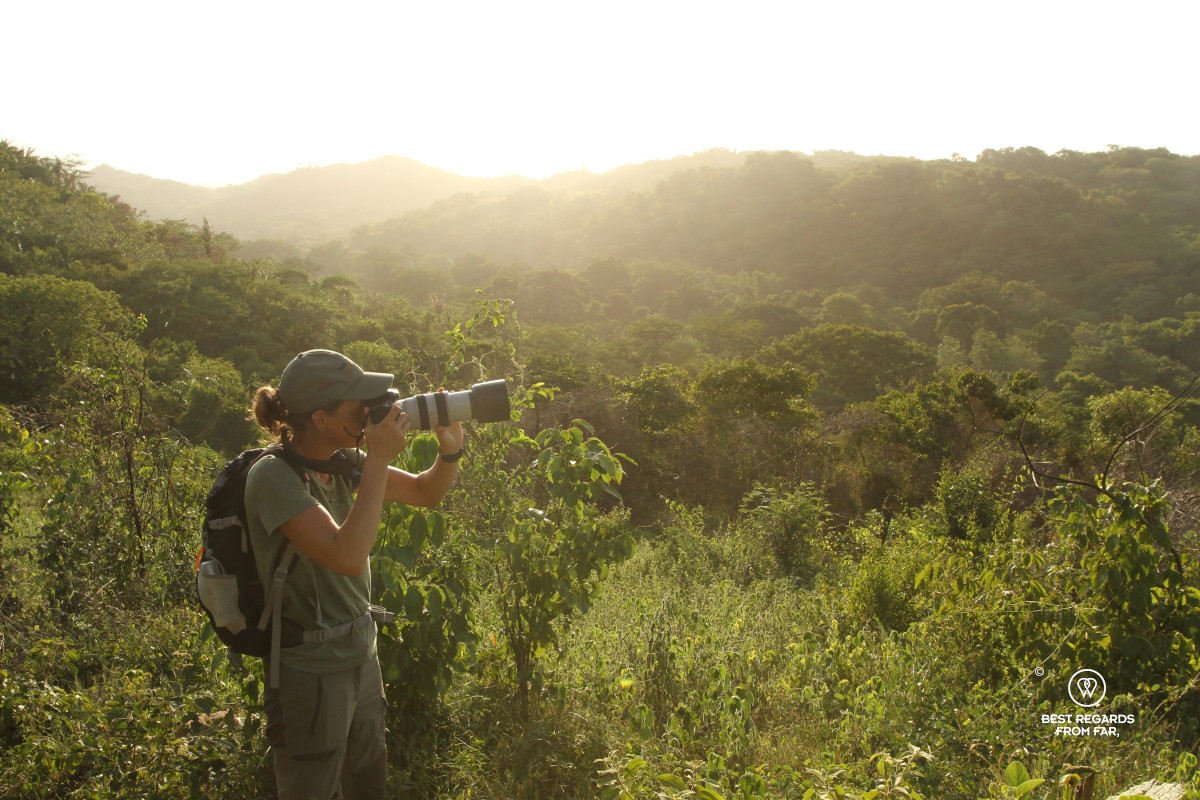
As we follow Ramiro through his community, animals roam freely —roosters and chicks, turkeys, dogs, pigs, goats, and donkeys. Along the trails, small plots of yucca, plantain, beans, a few coca plants, and fruit trees flourish. The Wiwa people resist modern life, choosing instead to live as their ancestors did: in harmony with the land and maintaining a spiritual connection with it. With a population of around 19,000, they are the smallest ethnic group currently living in the Sierra Nevada de Santa Marta.
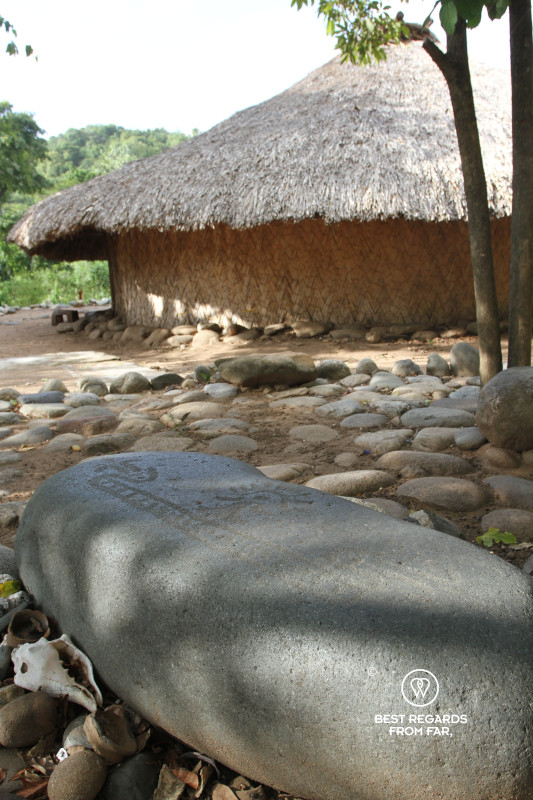
As we arrive at a striking black carved stone, Ramiro explains the role of the Mamos, the spiritual leaders at the heart of the Wiwa community. Charged with maintaining balance, they guide meetings to discuss important tribal matters and, most crucially, perform meditations, songs, and rituals to uphold the natural and spiritual order of the world. Stepping into the dark hut in which these gatherings take place, the solemnity of the space is palpable. The path to becoming a Mamo begins at a young age, and stretches over many years, demanding patience and dedication.
As we hike toward a viewpoint, Ramiro pauses at a special spot. A few years ago, an ancient stone carved by his ancestors was uncovered beneath the thick vegetation. The Mamos had envisioned it. Such archaeological finds are essential for indigenous communities as the Colombian government works to return ancestral lands, either by confiscating the land after illegal activities like narco-trafficking or by compensating landowners fairly once proof of ancestral occupancy is established.
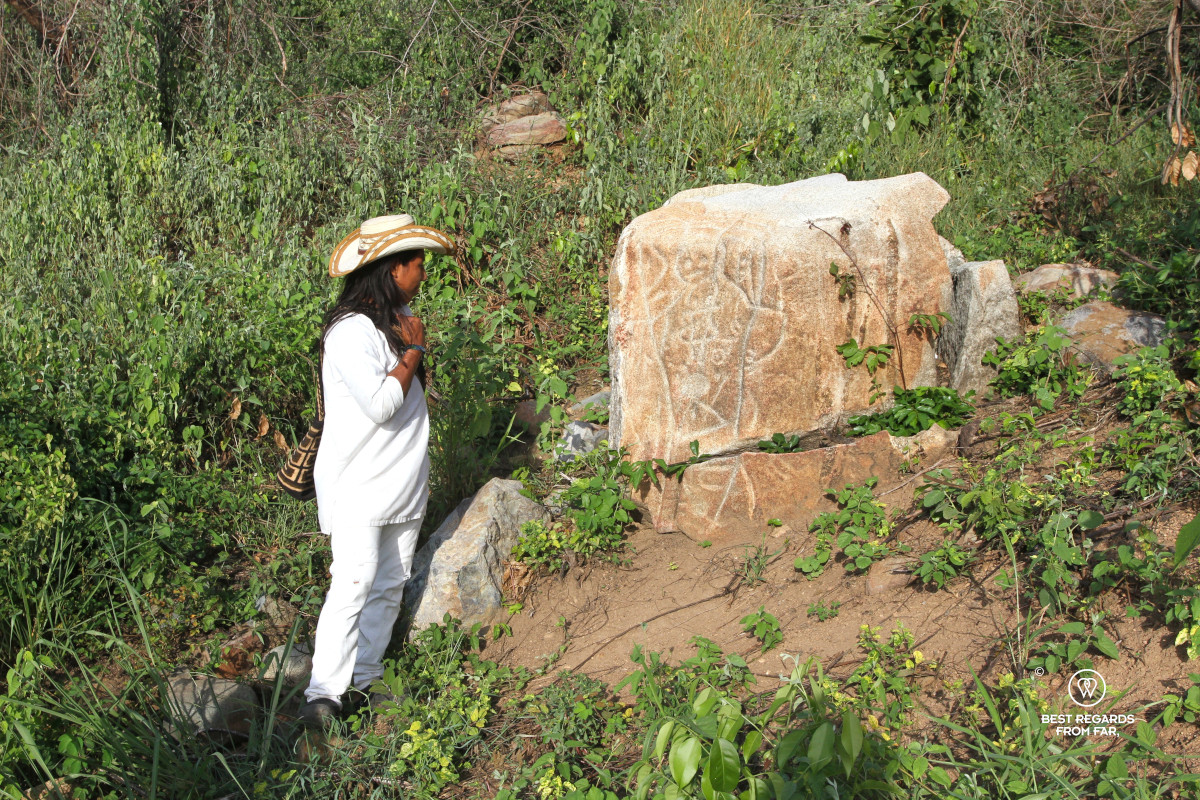
Today, about 400 Wiwa live on the 650 hectares (1,608 acres) that Ramiro’s father fought to reclaim. At just 22, Ramiro is proud to share his culture with visitors. There is a quiet wisdom in the young man, who already speaks four languages —including three indigenous tongues— and is learning English to become a stronger advocate for the Wiwa.
A Drumming Workshop Exploring the Afro Heritage
“A kid who plays an instrument doesn’t touch a weapon,” states Elias Rafael Amaya Rangel the director of La Ramada, from behind his drum. This cultural foundation has been teaching kids in Dibulla —once a corridor for drug trafficking— how to play music and dance. Today, 80 children aged 7 to 16 gather around drums weekly, while a drumming workshop helps raise funds to sustain the program.
The members facing us, ranging from 9 to 47, have all been touched by the drums: a beat from childhood, a celebration of festive moments and soccer games, a pride of their Afro roots, culture, and soul.
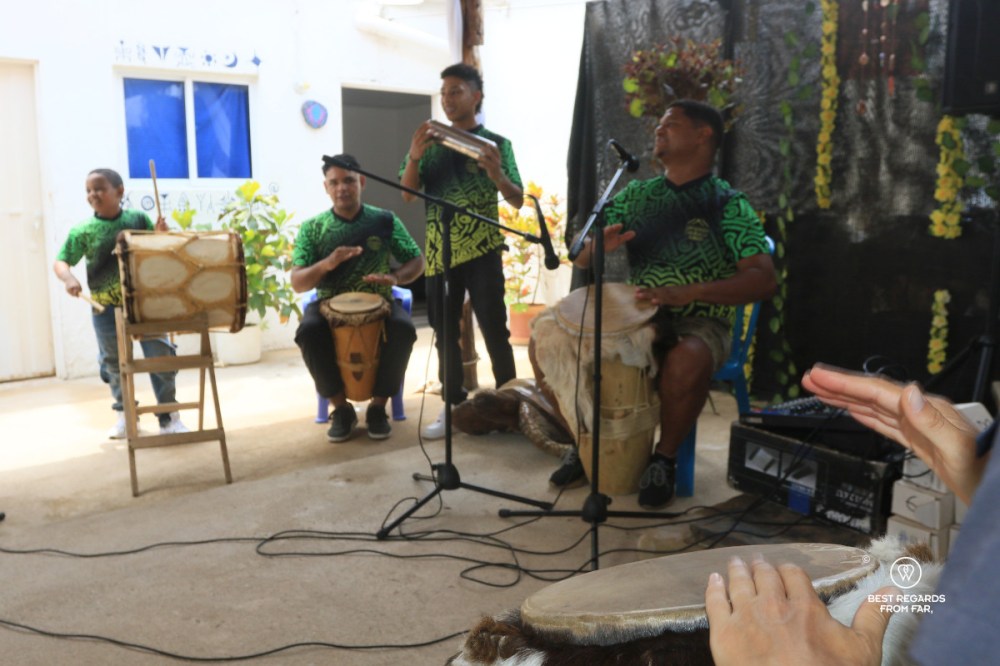
The drums also echo a darker history. When the Spaniards arrived in the 16th century, the coast between Cabo de la Vela and Palomino became a hub for the slave trade —and for the extraction of gold, silver, etc. One day, the enslaved Africans resisted, fleeing to the mountains: they became the maroons. By the 16th century, they formed settlements called palenques, and instruments became a vital means of communication: the alegre (joyful drum) carried celebration and ritual, while the llamador signaled moments of grief or danger. The tambora —today played passionately by the talented 9-year-old Nixon, who is smaller than his drum— was warning of the arrival of the Spaniards, signaling to flee to the mountains.
Beyond history, the drums create a shared, joyful moment. Striking the instruments —crafted traditionally from local woods and animal skins— is easy under the guidance of passionate teachers. Hitting the center with a flat hand or the edge with fingers or half a hand, we quickly learn the Caribbean rhythms. Before long, the cumbia, chalupa, and chande —three of more than a dozen folkloric rhythms— flow naturally, and despite the age differences, every face lights up with a smile as the music takes shape.
Beach Time
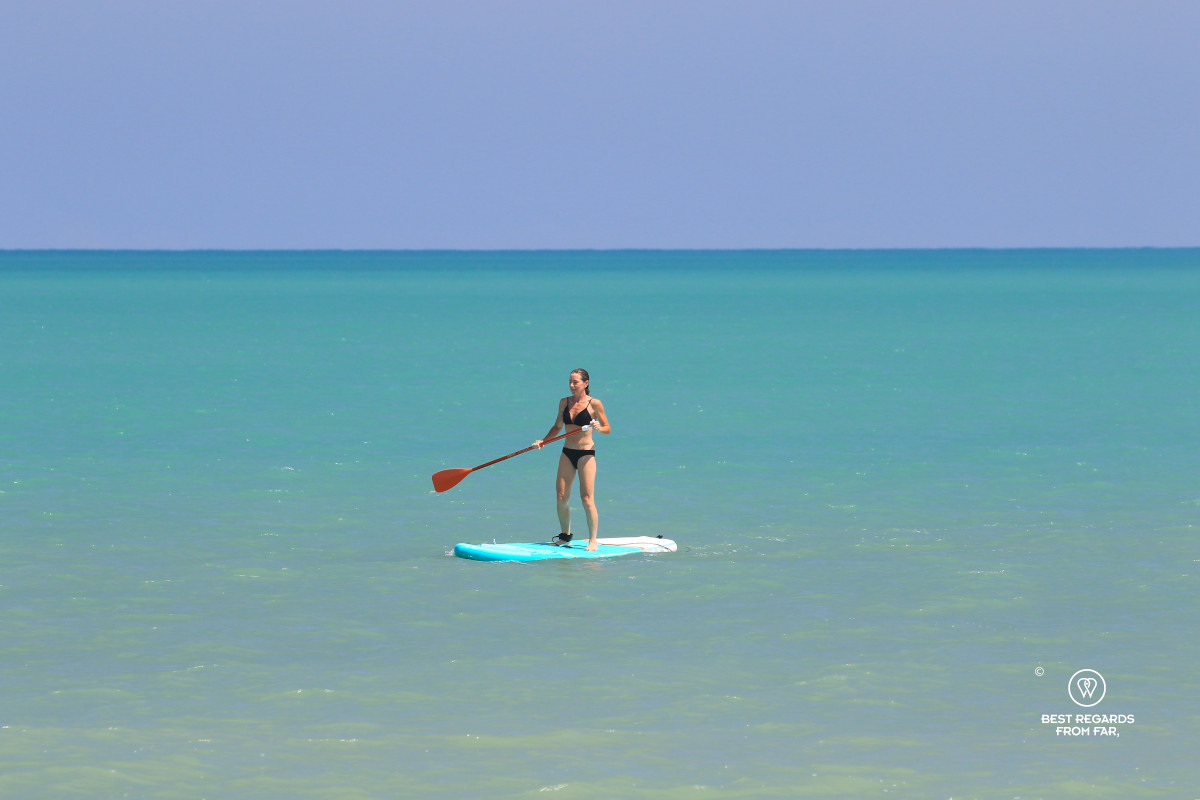
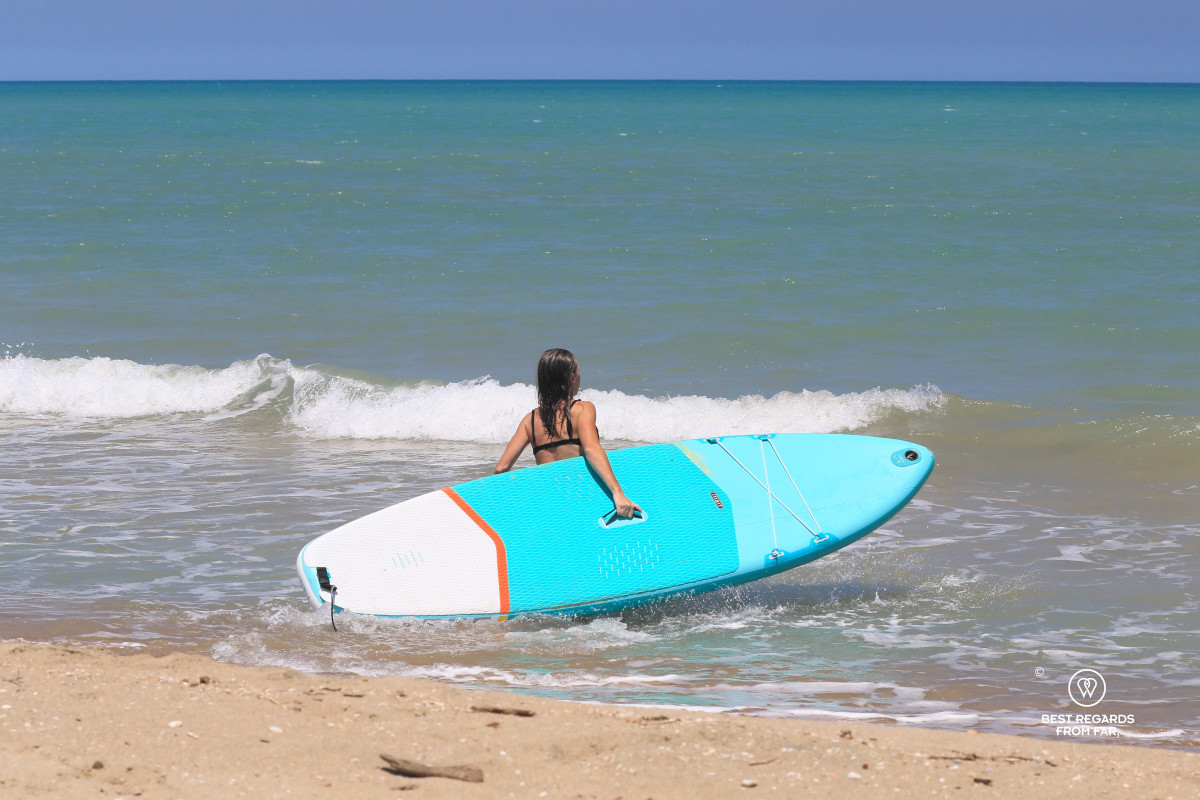
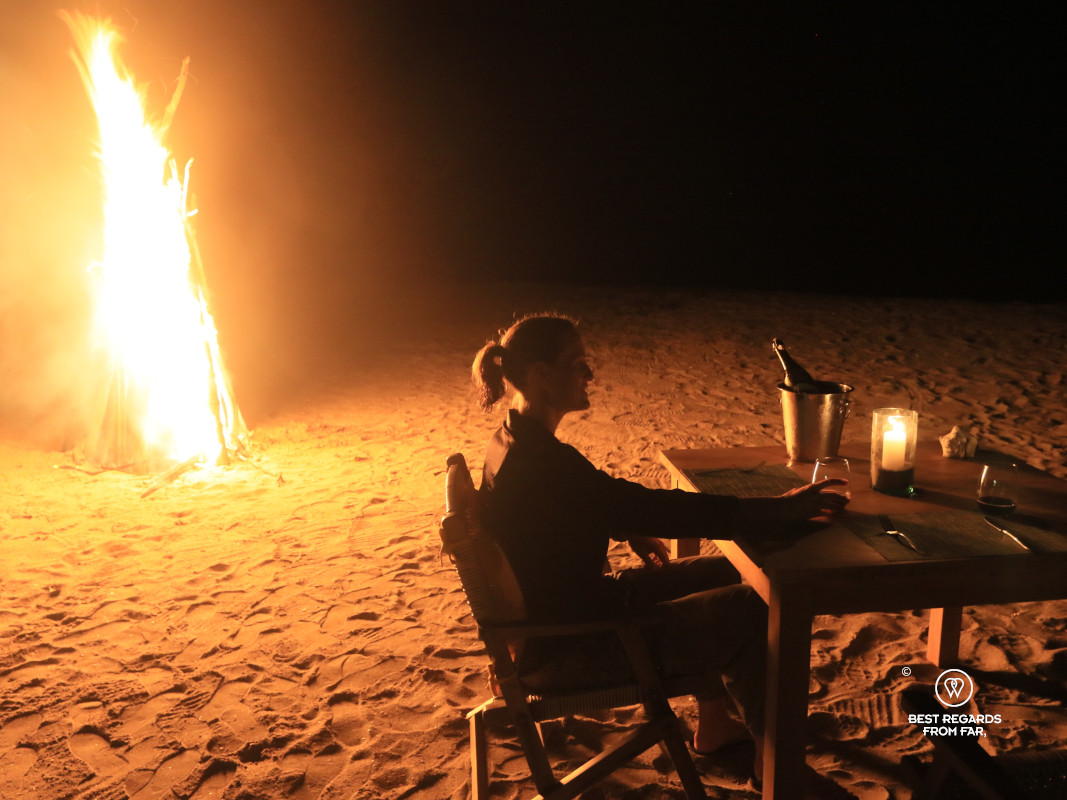
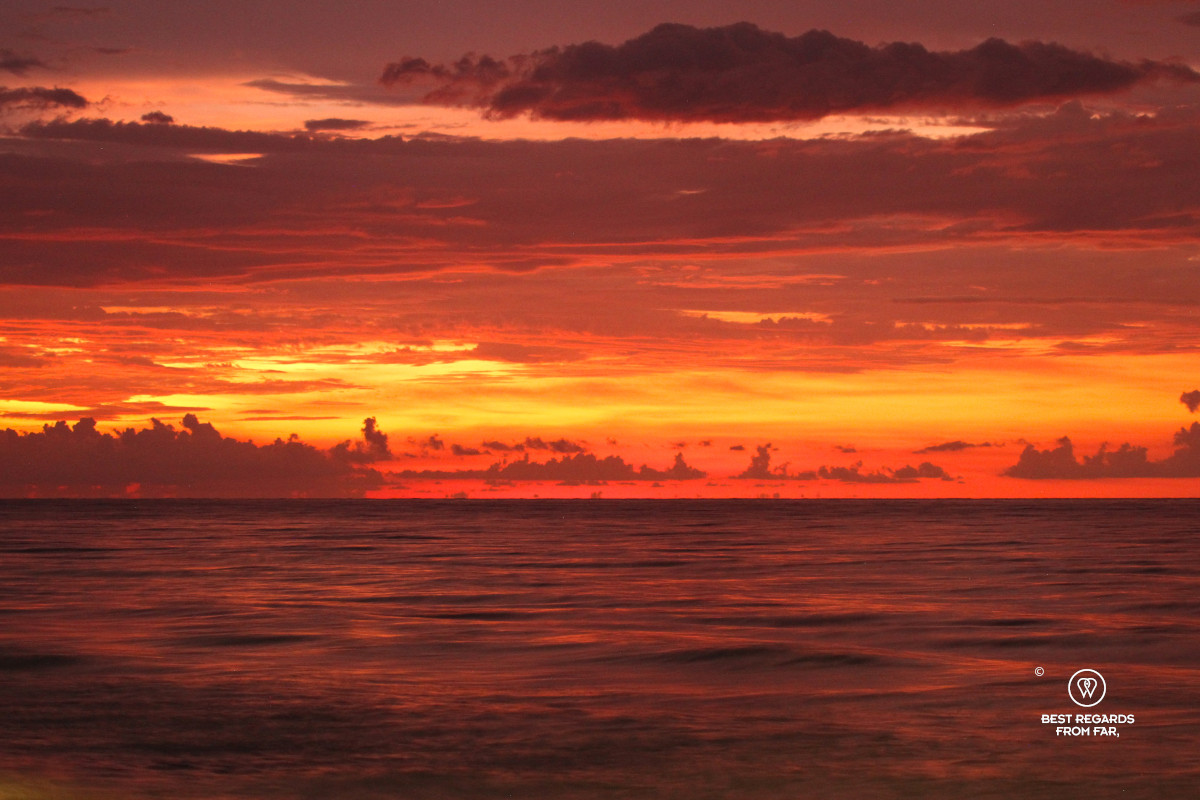
While all beaches are public in Colombia, the beach in front of Awatawaa Ecolodge is so remote that it feels private. Only a few fishermen land once in a while to pull a net. The rest of the time, the stretch of beach is untouched and the ideal location to truly unwind. After a SUP outing and an engaging game of beach volleyball, we take in the last sunset while sipping a cocktail before a bonfire-lit dinner on the beach under the stars orchestrated by Chef Juliana…
***
While the “7 shades of blue” of the waters of the Caribbean Sea lured us along Colombia’s coast, it was the immersive experience of culture and nature that made us stay. With Cartagena and Palomino already surrendered to frantic tourism, the secluded Punta de los Remedios feels like a heaven where life moves to the rhythm of the rolling waves and the beat of all of its people.
Travel tips:
- The Awatawaa Ecolodge manages to do it all right, from a beautiful secluded location by the beach and lagoon, to a sustainable way of running taking into account not only the environment (treating their own water, banning plastics…) but also local communities!
- Check out this interactive map for the specific details to help you plan your trip and more articles (zoom out) about the area!
For more in Colombia, click on these images:
 Best regards from far,
Excellent artic
Thanks Heather! Unfortunately WordPress is full of bugs and we can’t read your full comment. We have been telling them but nothing seems to improve on their side sadly…