Text: Marcella van Alphen
Photographs: Claire Lessiau
“There were only a few narrow cobblestoned streets,” Willie Colmenares remembers, smiling at the thought of the Salento he first encountered in 1987. “Cowboys rode through town. The houses were white and green. Everyone knew each other. There were no tourists at all.”
Pint it for later!
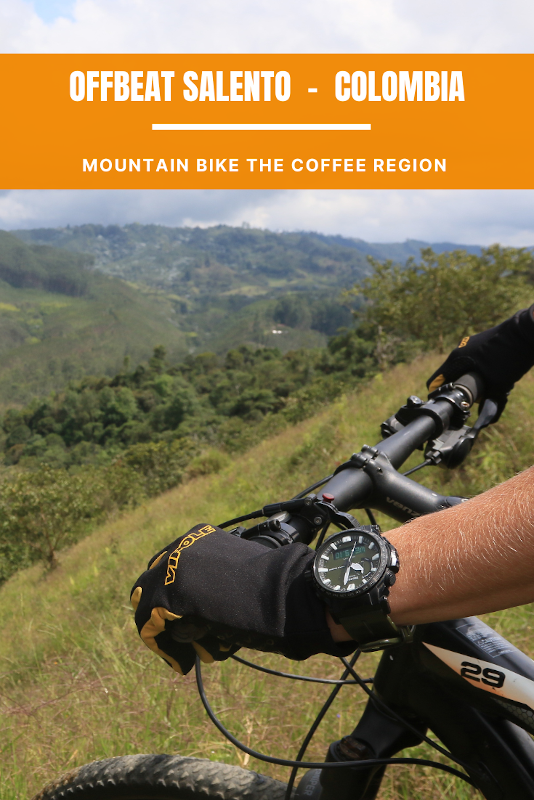
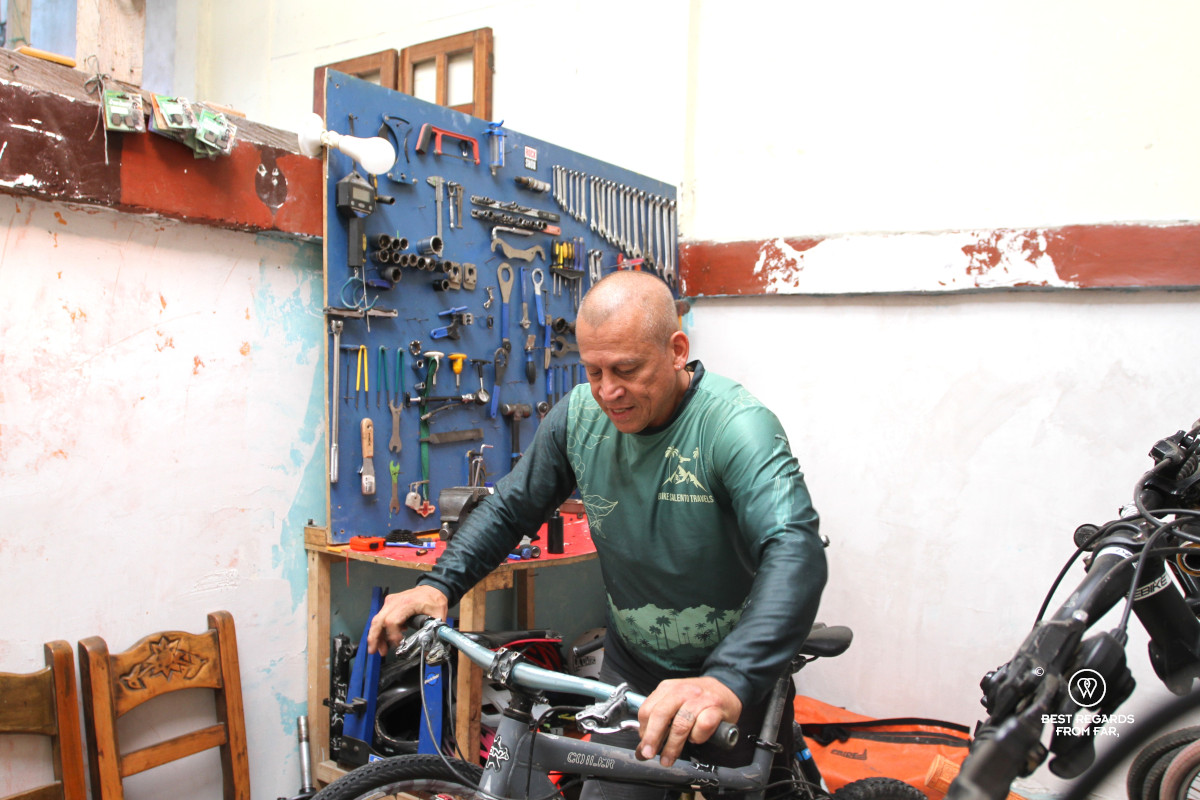
Willie, a Barranquilla-born engineer who once built race cars in Bogotá, came here to Colombia’s coffee region looking for a quiet place to start over. What he found was a village at the edge of the Cocora Valley, long before its giant wax palm trees lured visitors from across the world. Nearly four decades later, he is the man who introduced mountain biking to Colombia — and the keeper of a network of trails that reveal a very different Salento from the one most tourists see.
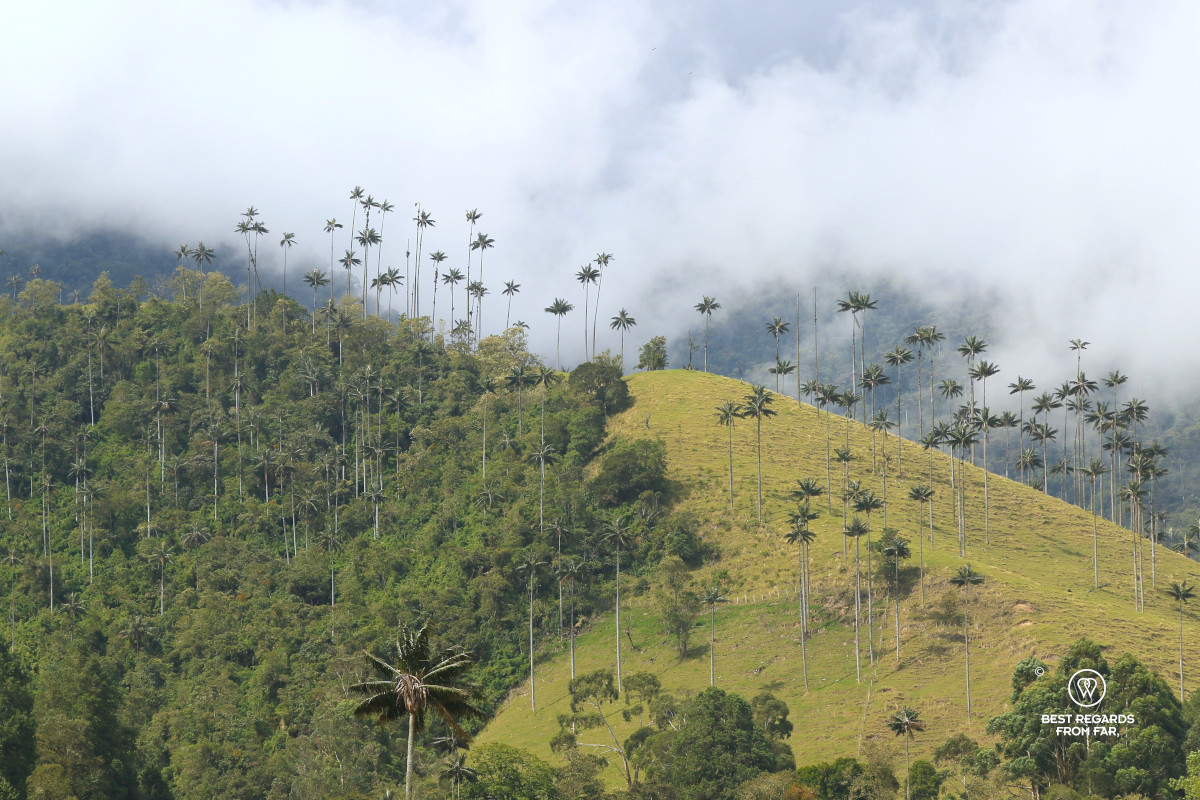
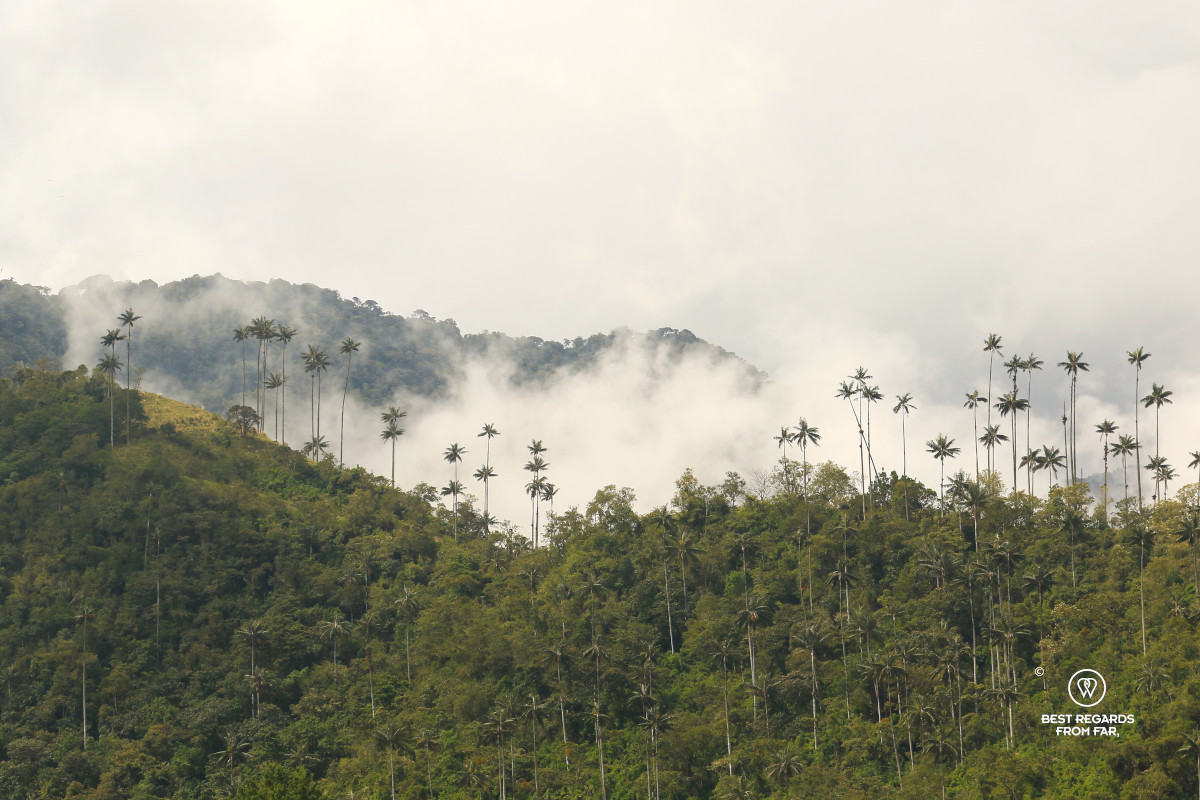
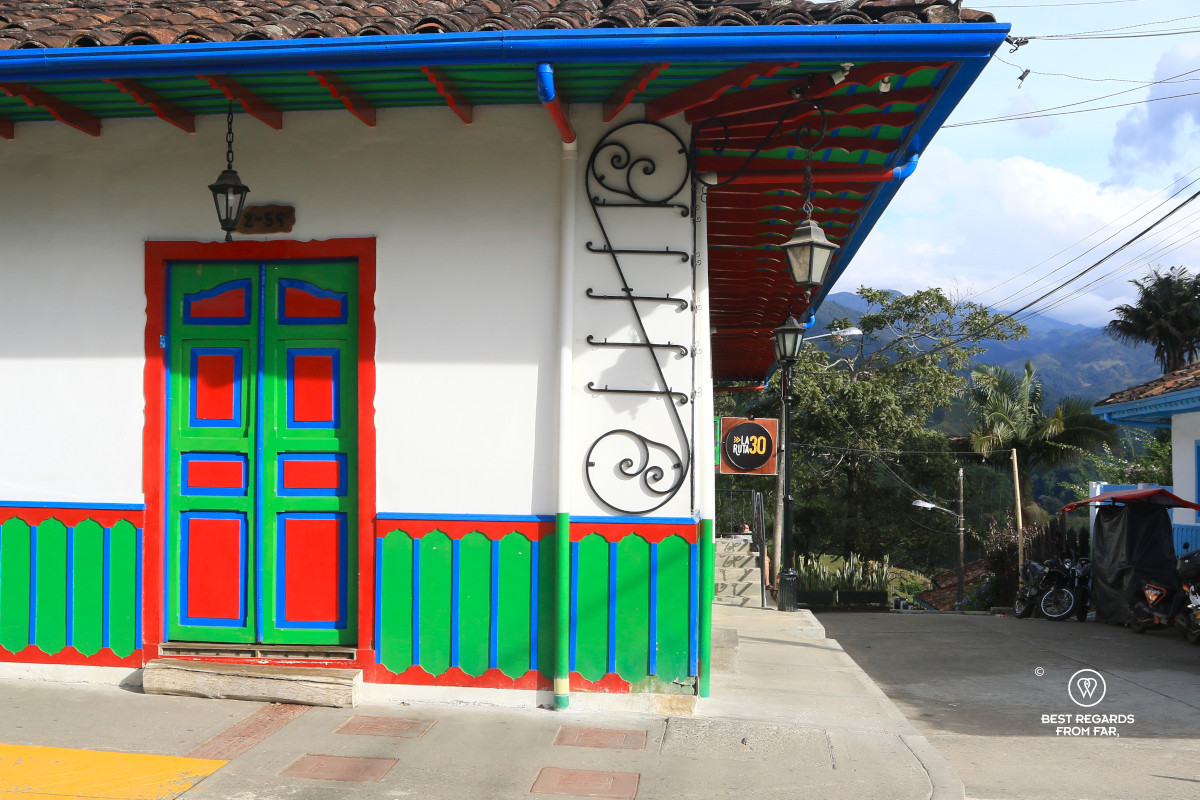
Today, Salento is on the itinerary of most travelers. The village has gentrified and brightly painted balconies and gates add colors to the white-washed façades of the traditional houses. In the early morning, its streets are still quiet as we follow Willie on our mountain bikes. A passionate rider and thoughtful guide, he has meticulously connected century-old trading paths to dirt roads, single tracks, and local thruways, creating a unique itinerary through six settlements—each with its own story. Willie’s joy lies in sharing this more authentic Salento with visitors, connecting them with the local people he has befriended over the years. But beyond community, he encourages a deeper connection to nature, beginning our ride with a short meditation. When we open our eyes, we find ourselves beside the famous wax palms in the heart of Salento, which I had not even noticed before! Willie has set the stage for a mindful sensory experience immersed in the heart of the Colombian coffee culture.
The Quindío Wax Palm (Ceroxylon quindiuense), native to the High-Andean rainforest of Colombia is its national tree. Many take Jeep Willys to the Cocora Valley that has become a theme-park with tacky installations where most of the wax palms are slowly dying. Indeed, the very particular palm tree needs the darkness of the forest for about 15 years to get enough humidity in the soil while it grows slowly and strengthens its roots. Then it starts to shoot up for the sun and grows to reach 40 meters (131 ft) or sometimes exceptionally even up to 60 meters (197 ft)! World’s tallest palm with its characteristic slender trunk normally towers above the cloud forest, as we notice with Willie on his secret trails winding through the jungle. Yet, in the Cocora Valley, deforestation has led to the trees sticking out of the grass, a photogenic landscape, but not a natural one and most of the remaining trees are in fact more than 140 years old with no possibility to reproduce. Protected, the wax palm trees have been replanted in the area around Salento as their numbers were decreasing. The fact that their roots are only three meters deep and not wide teach a subtle lesson: we need little space to grow strong and resilient.
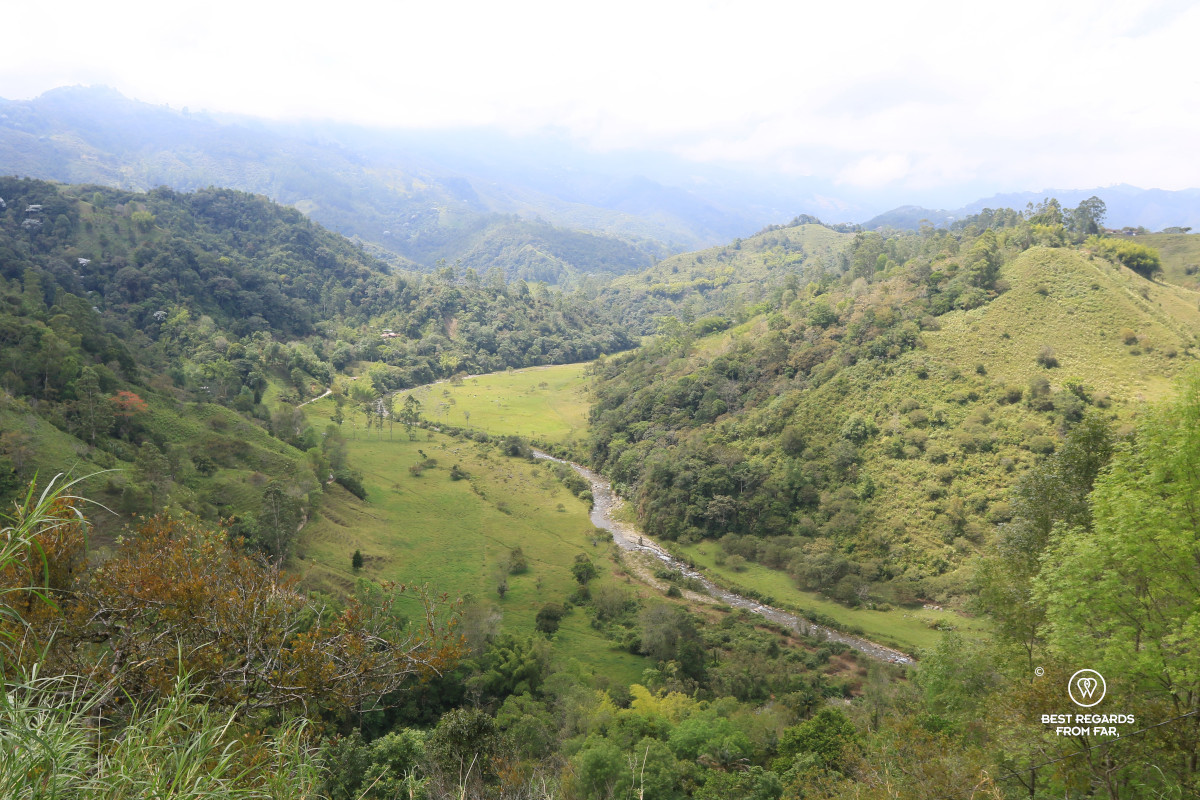
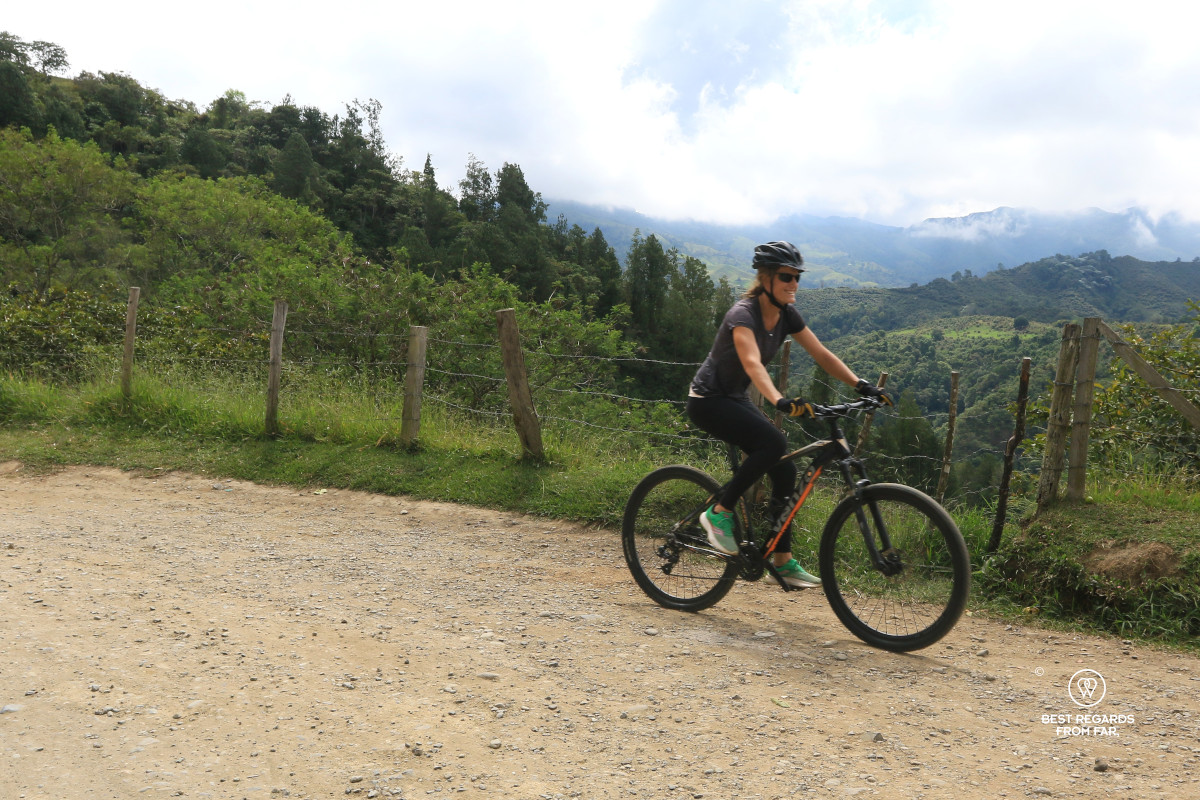
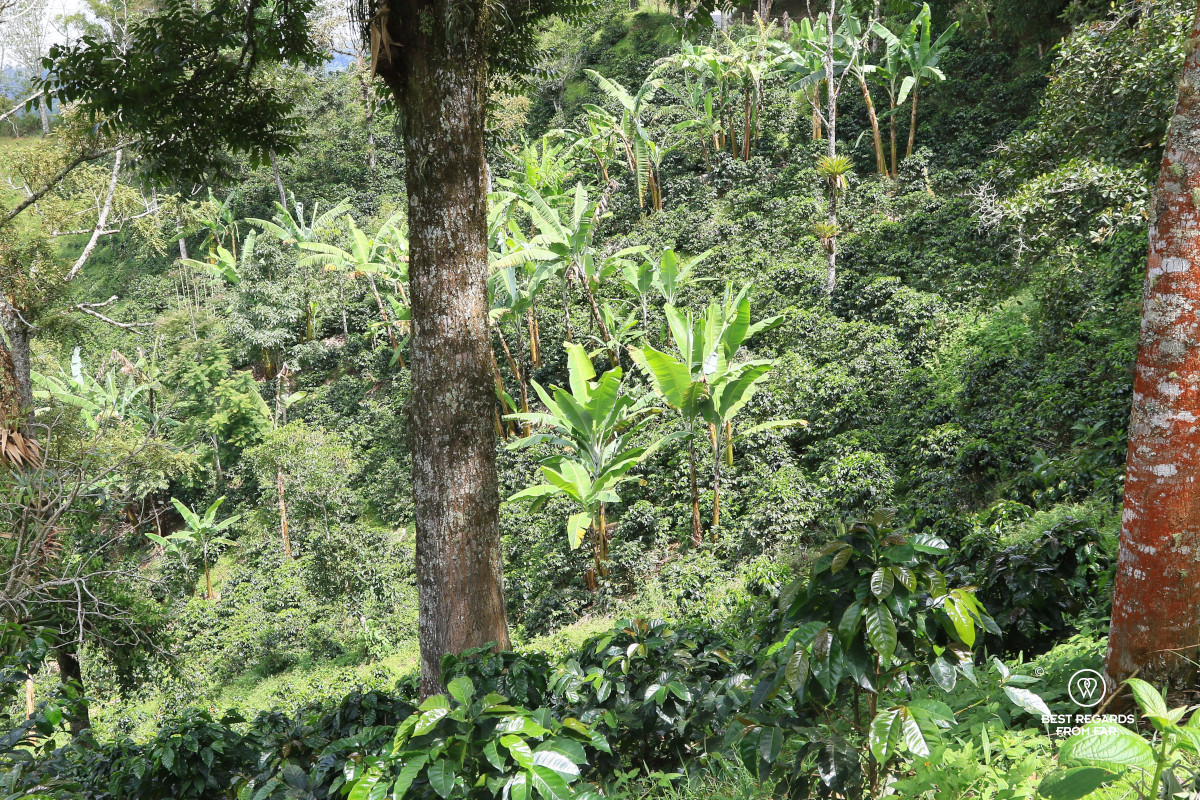
Manoeuvring our mountain bikes following the pro instructions of Willie, we soon take a break at a local family-run coffee farm. Beyond sipping a delicious coffee with hints of jasmine, cocoa and plantain, flavors absorbed naturally from the estate’s diverse crops, Willie invites us to get into the plantation to bring him five perfectly ripened beans. I focus on any sign of red amongst the dense dark leaves of Arabica shrubs planted along the steep slopes. The terrain is such that making progress is difficult, branches brush my face, and I get disoriented. With all the coffee harvested by hand, I understand better the challenges of coffee pickers and the price tag of specialty coffee. Quality demands efforts and hard work.
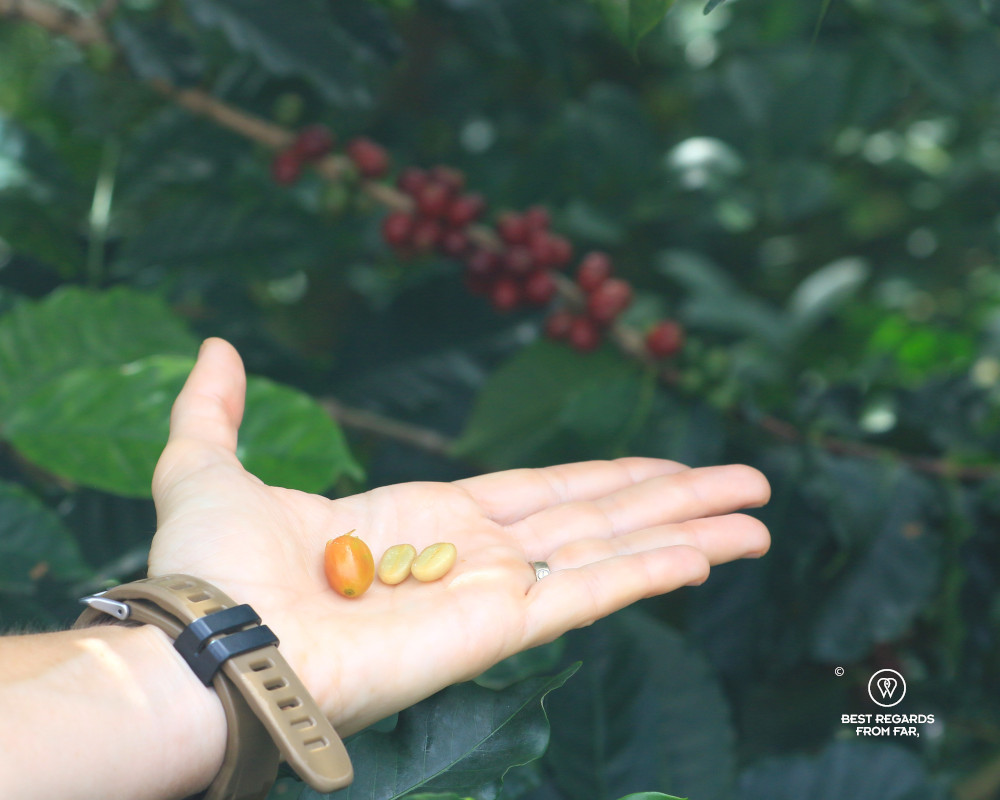

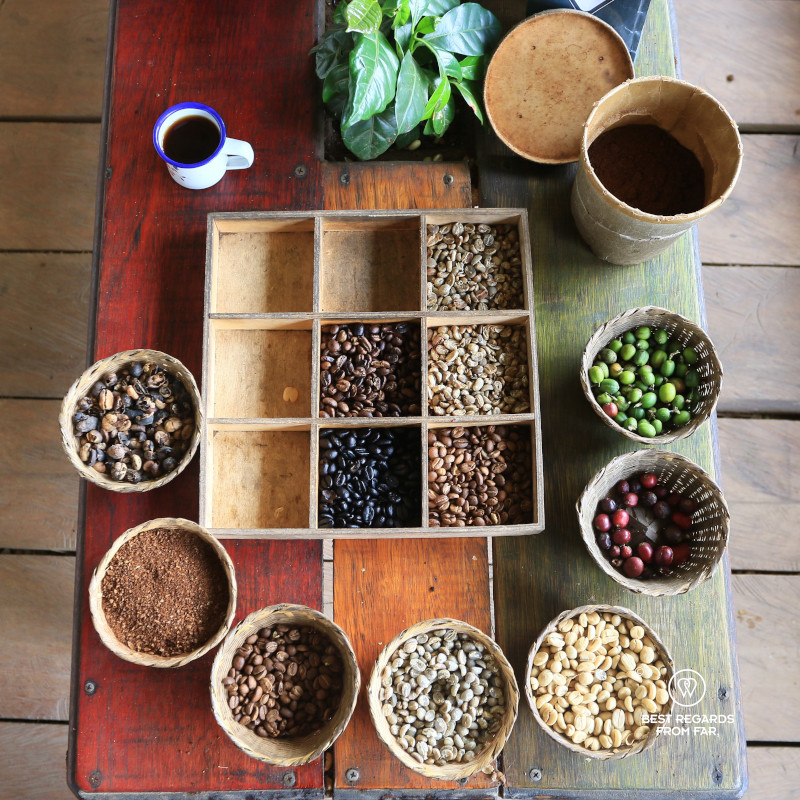
Yet for specialty coffee, growing and picking is only the start of the process. José Gregorio, the enthusiastic owner of Coffee Luger, explains the meticulous process of fermenting and roasting the beans. His secret to the exceptional flavor of his red honey coffee? Unlike conventional beans, which are washed and sun-dried, these beans are soaked and fermented in water for twenty days, then dried with their skin intact for another twenty days. The result is a fruit-forward, complex coffee, with delicate notes of sweet melon—undoubtedly one of the finest I have ever tasted.
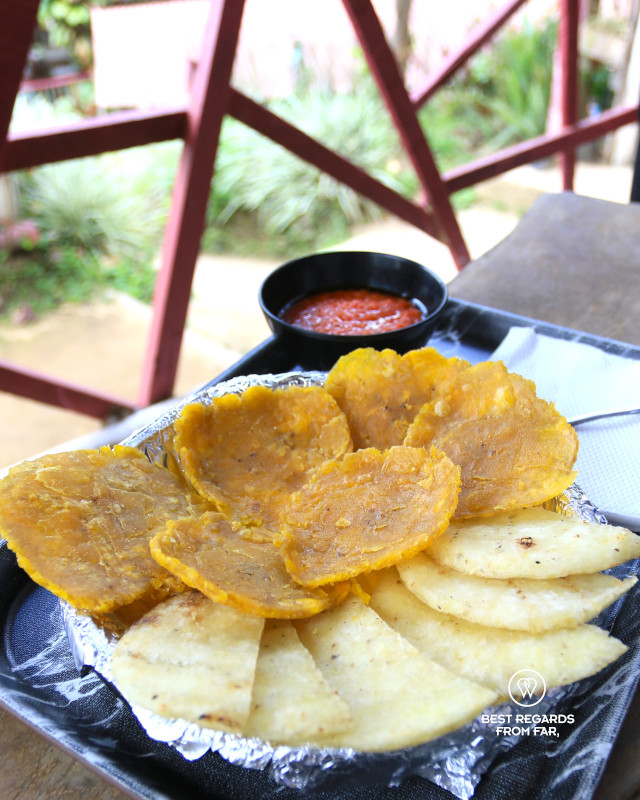
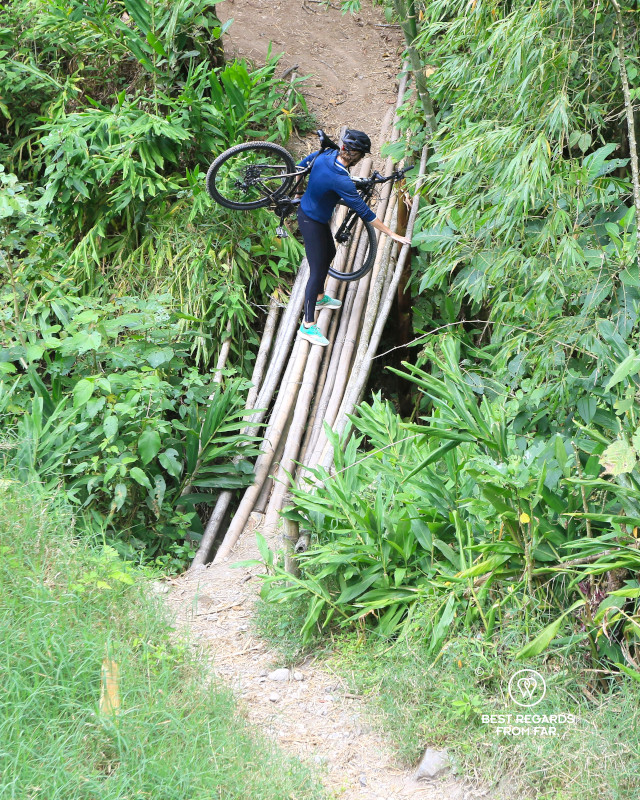
A quick snack of patacones pisados —flattened, fried plantains— with homemade spicy tomato sauce, restores our energy for the next ascent. The ride unfolds with panoramic viewpoints overlooking lush hills dotted with small-scale farms, vibrant flowers, and darting colorful birds of all sizes. Along the river, we spot rare Andean ducks before crossing narrow bamboo bridges that demand focus and balance.
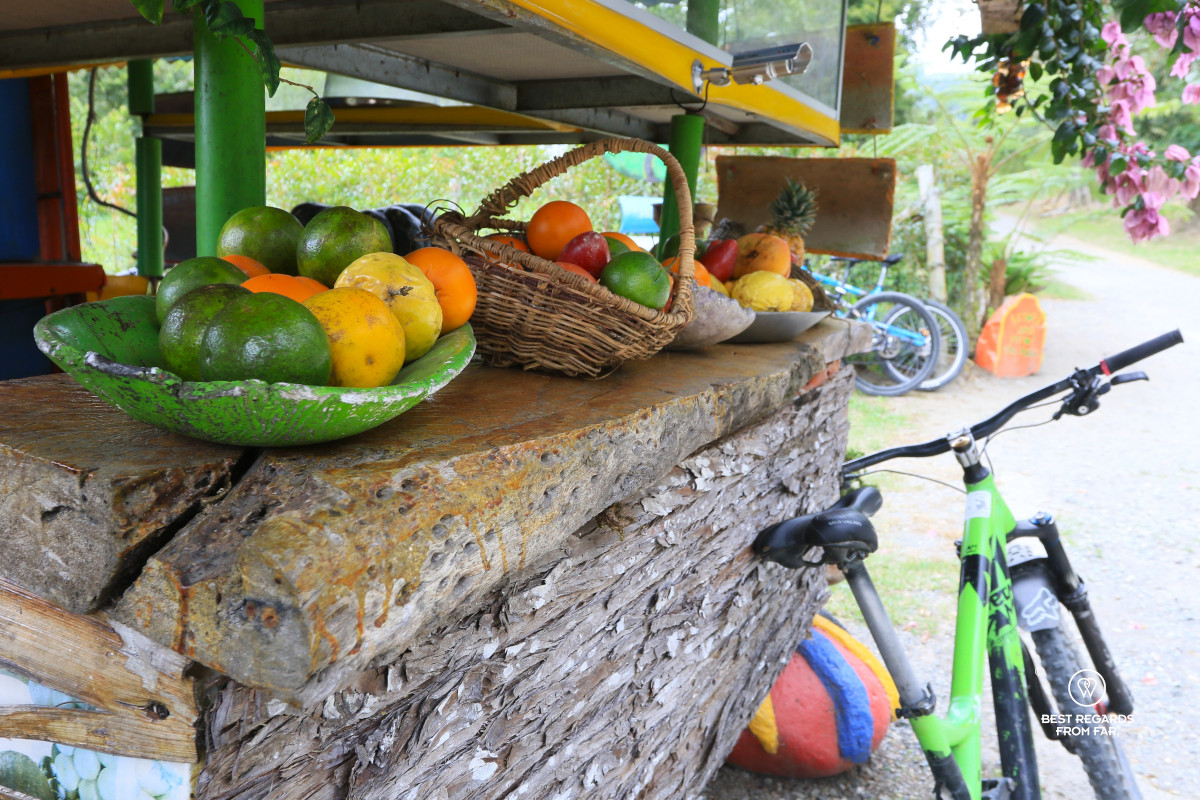
In the next village, at a flower-adorned wooden juice bar, Andres offers us a surprise concoction of lulo and sweet tomato, rich in vitamins and a perfect sugar boost.

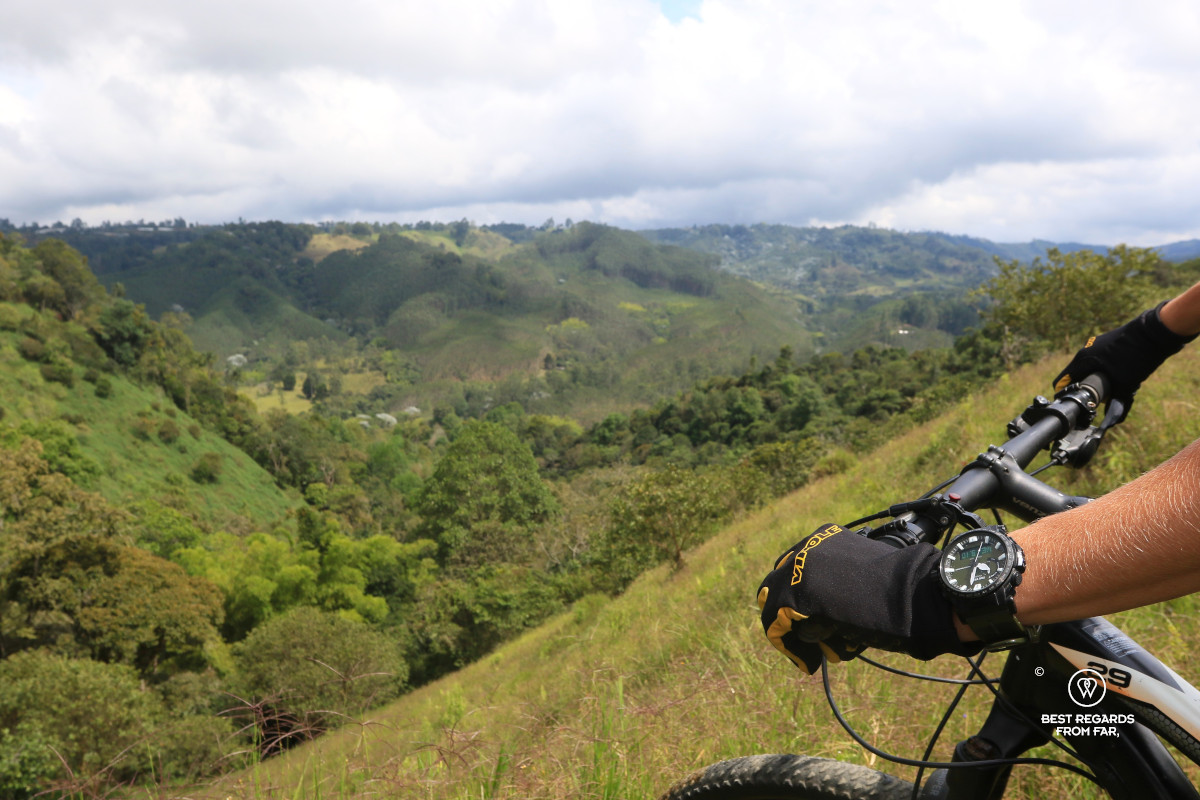
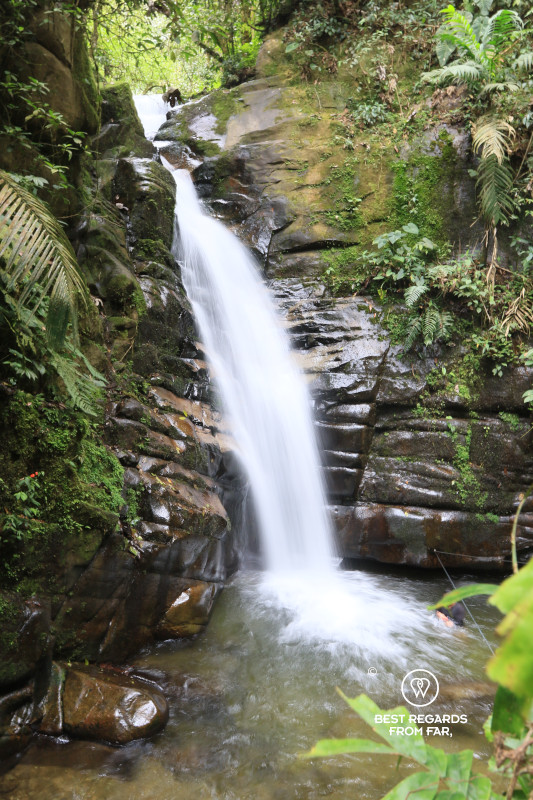
The itinerary that Willie has designed leads us to one of the regions highlights but it takes some efforts to get there. Slowly but steadily, we make it up to the Santa Rita Waterfall: a hidden waterfall plunging into an inviting pool in a lush jungle setting and reachable over a few wooden suspension bridges that are fun to cross on foot. The way down along the single track is more technical and quite engaging. Sitting at the rear of our saddle, index fingers loosely on the breaks, our elbows open for more stability and feet at an equal middle position, we enjoy the exhilarating ride.
Returning to Salento, the final climb is steep, but the promise of a hearty traditional lunch awaits at La Posada de Rubí. Named after the owner’s flamboyant grandmother, each meal is prepared with fresh and high-quality ingredients, reflecting Salento’s flavors and the energy of its people.

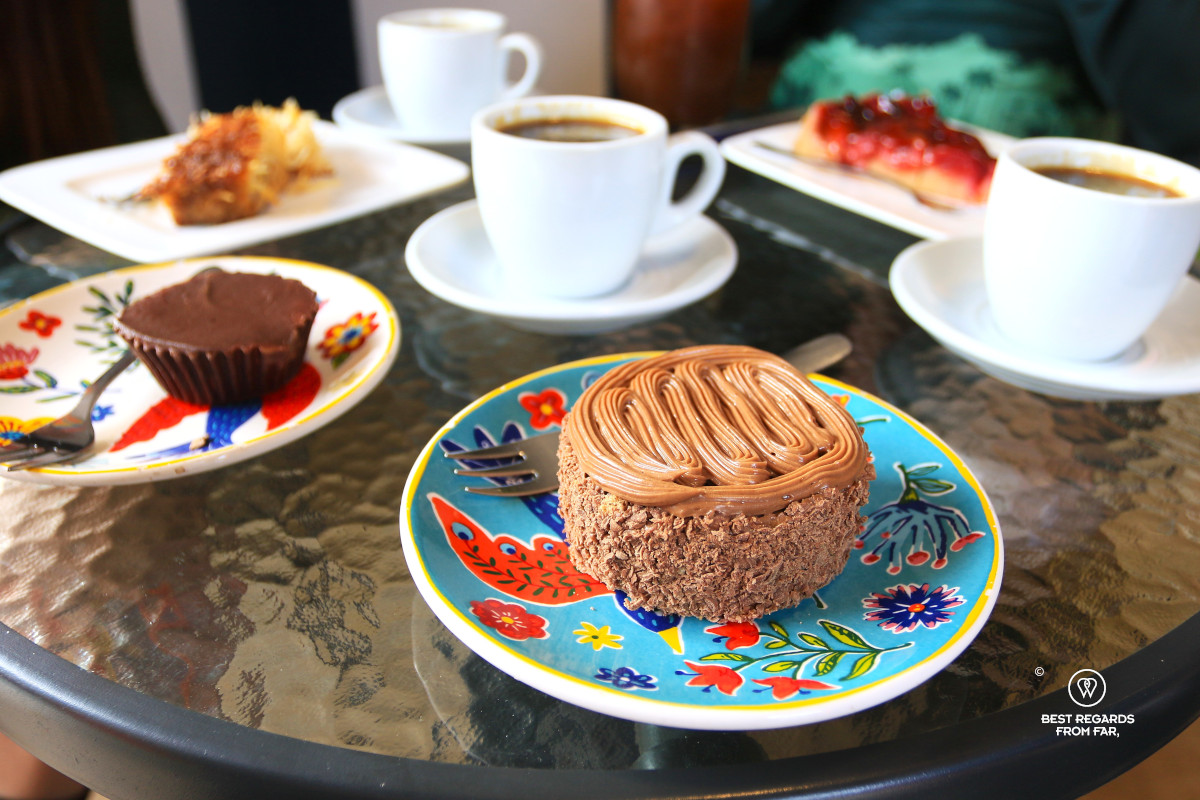
While enjoying a satisfying menu of the day, we reflect back on today’s outing. Far from the typical touristic experience of Salento, Willie’s stories and passion to connect visitors with the real people living in and around the increasingly popular town makes the whole difference. The charm of Salento is found out of town on the off-the-beaten path single tracks and in the heart of its people.
Travel tips:
- To explore Salento and its surroundings in an ethical, original, and sporty way, please refer to Bike Salento Travels. Your money will contribute to giving back to entrepreneurs and local business owners.
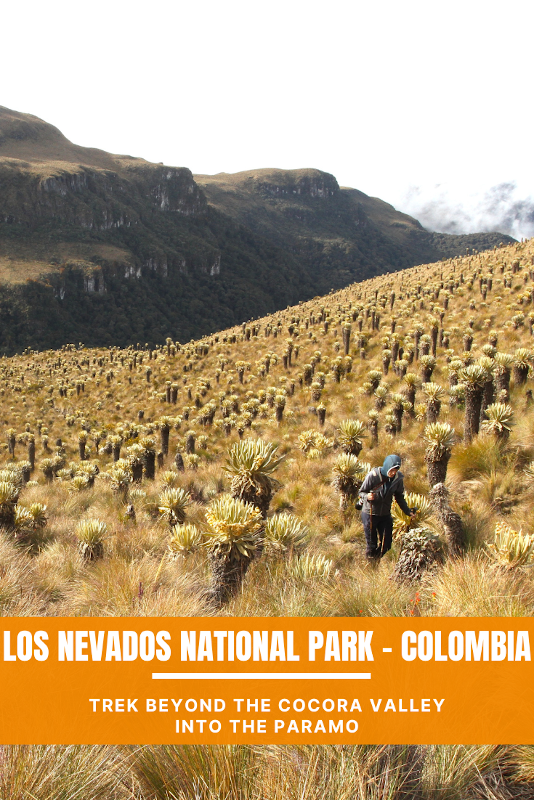
- Note that the Cocora Valley is not part of this tour. Refer to this article to explore beyond the Cocora Valley and into the stunning and varied Los Nevados National Park.
- Check out this interactive map for the specific details to help you plan your trip and more articles (zoom out) about the area!
For more in Colombia, click on these images:
 Best regards from far,
Beautiful scenery and th
Thanks for reading our article and commenting on it: unfortunately it’s cut (seems to be a bug that is being worked on) and we can only read “Beautiful scenery and th”. Sorry, this is frustrating!