Text & Photographs: Claire Lessiau & Marcella van Alphen
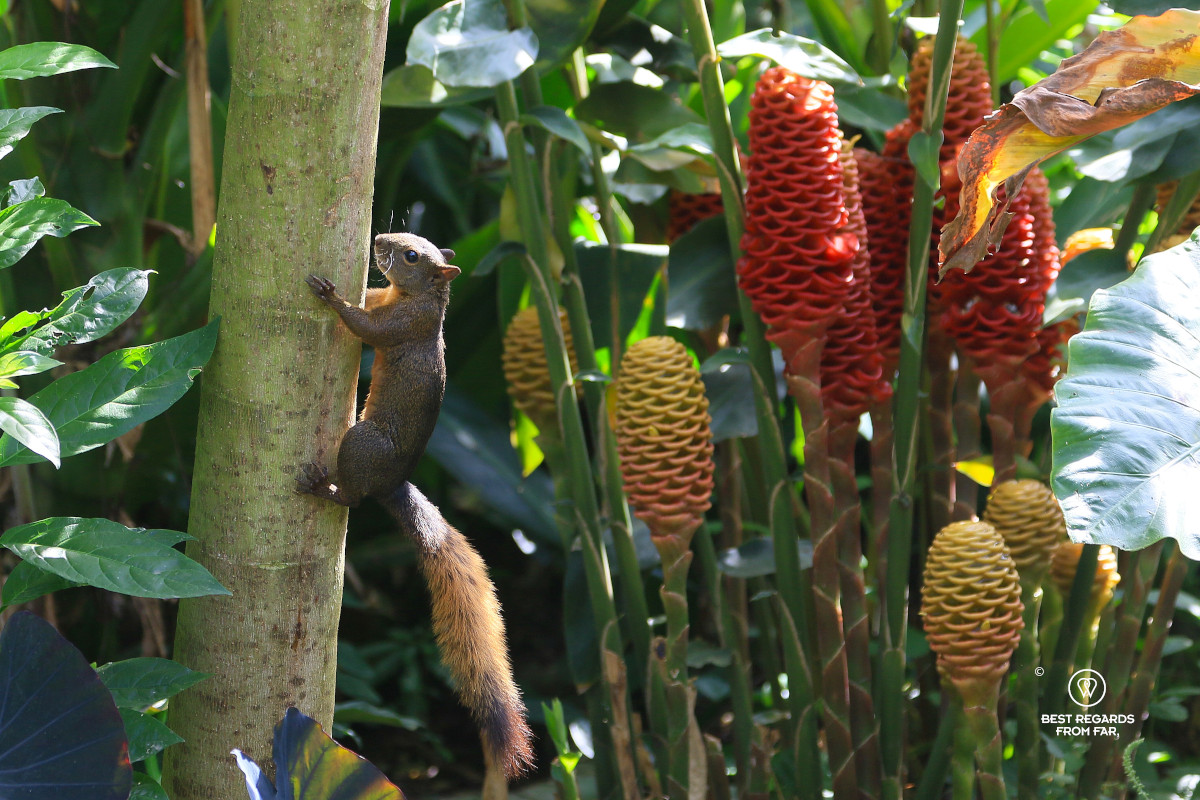
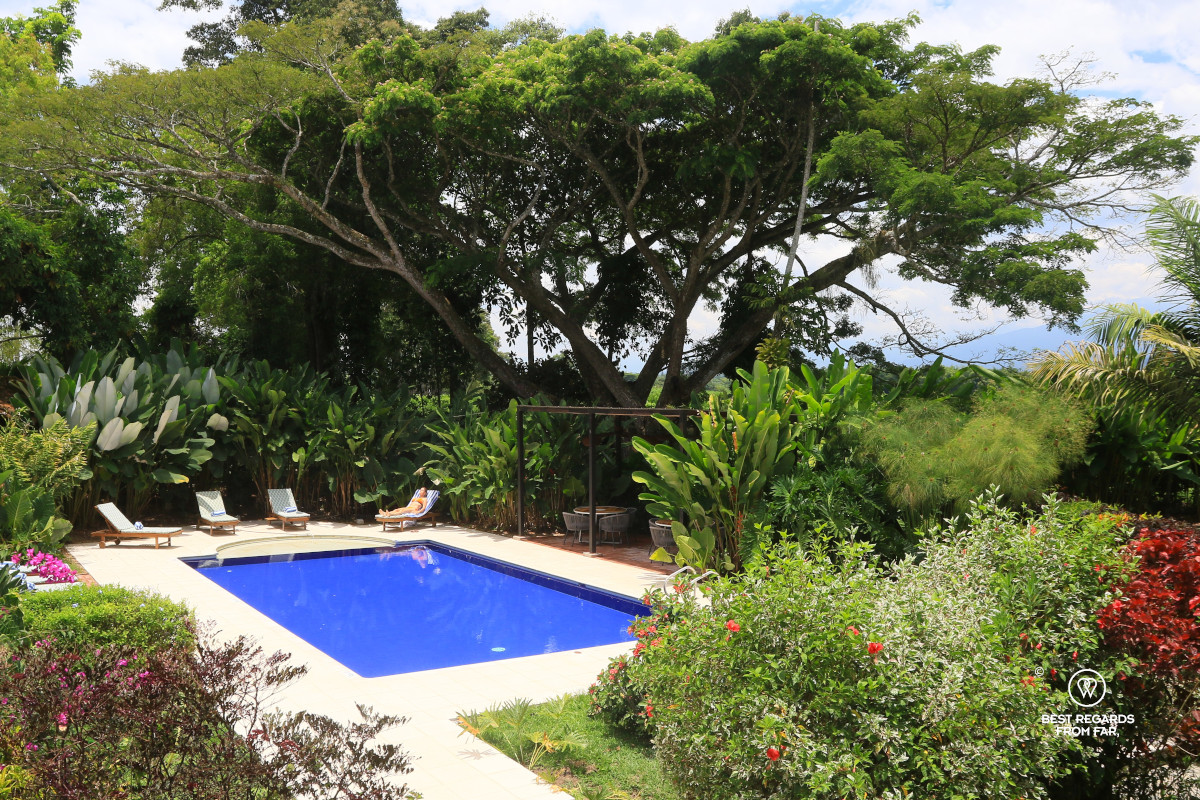
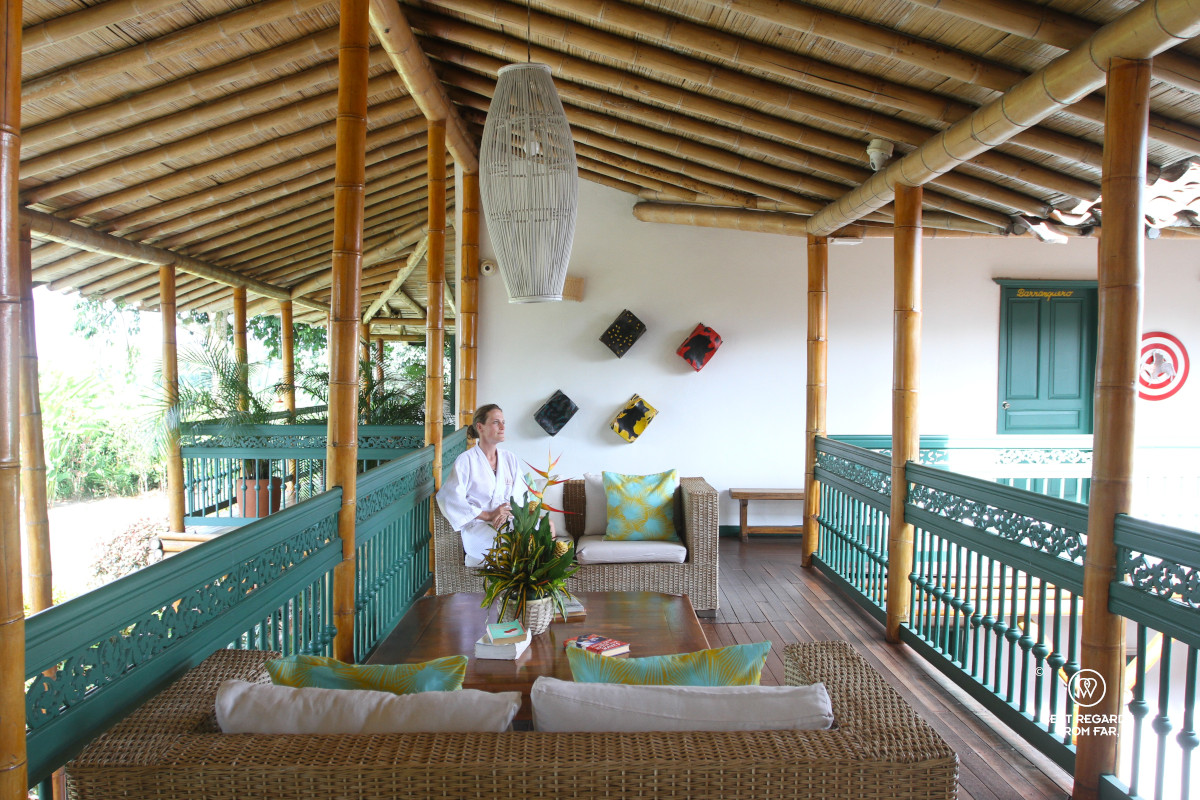
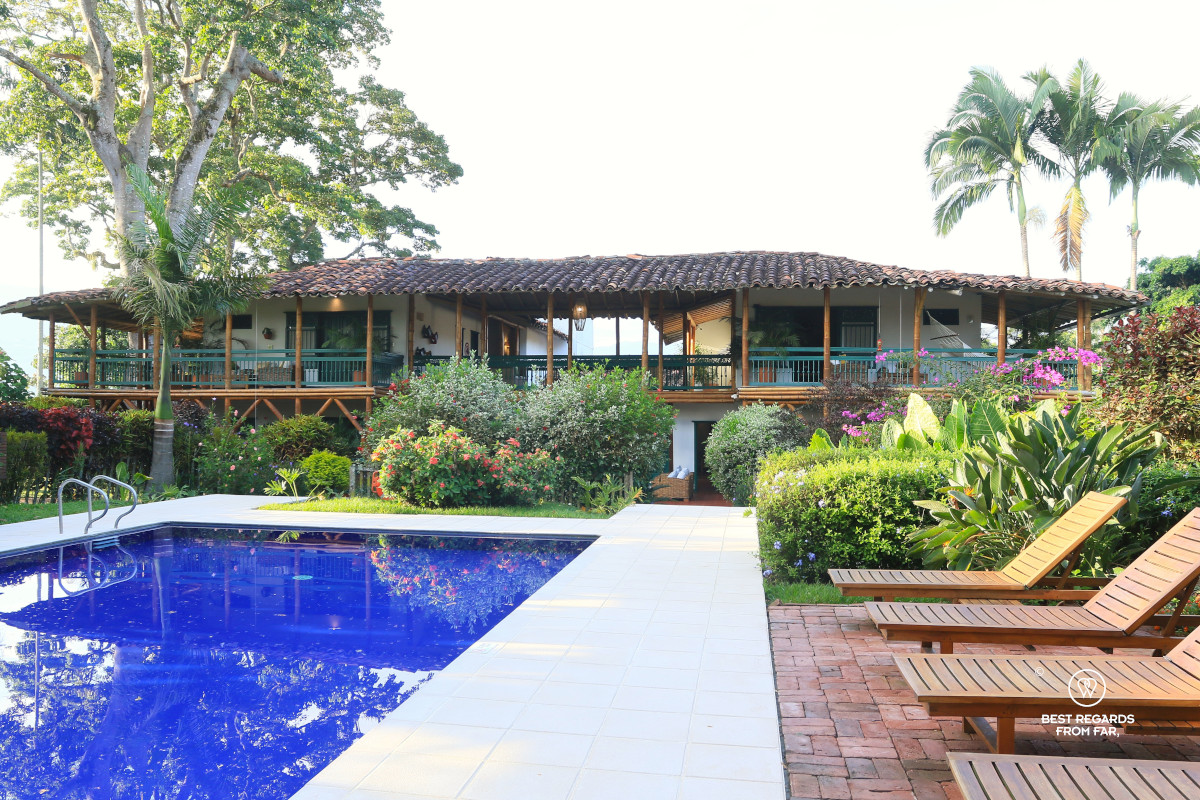
After a restoring night, I leave the comfortable king-size bed to slowly wake up from the hammock on my private terrace. The early morning show that nature has been putting out every day since I arrived at the Hacienda Bambusa is one I do not want to miss. Slightly before sunrise, animals wake up and I have the best seat to attend this wonderful concert. The deep and primal roar of the territorial call of howler monkeys in the distance, and the squawking of parrots as they fly over punctuate the music sheet of the uncountable birds chirping. A squirrel hops to the beat from branch to branch in the majestic Rain Tree(Samanea saman) that shades the pool during the heat of the day.
Pin it for later!

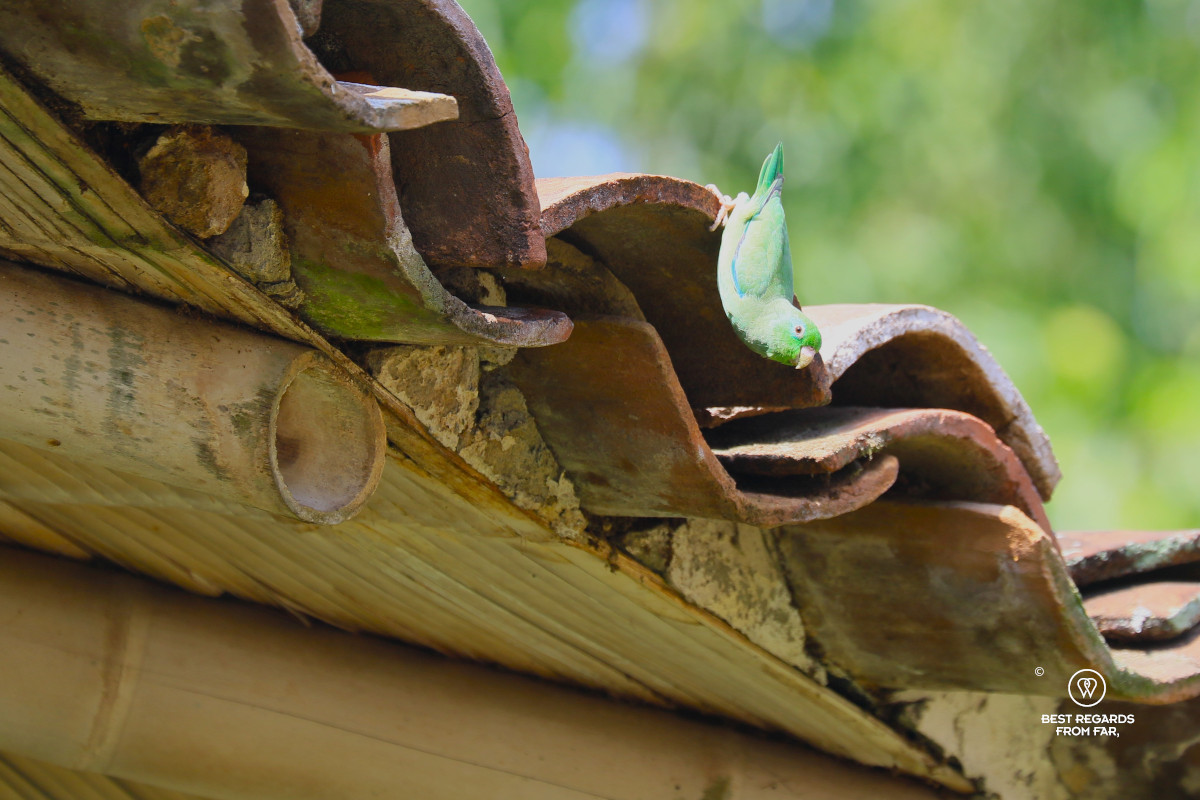
As the sun filters through the canopy, it catches the vivid blooms of the garden below. A pair of doves lands quietly, careful not to reveal their nest: two chicks still cannot fly yet and call for food from their hiding place above our door. Soon they will spread their wings and until then, their parents keep coming in and out to feed them. Then comes the unmistakable hum: a hummingbird hovers near the feeder strategically hung for the best views. With feathers flashing emerald, sapphire, or copper, it is a constant ballet with a diverse cast that plays out in front of my eyes. From the rooftop just above me, the gentle chatter of Spectacled Parrotlets draws my attention upwards. They dart in and out of their nest between the terracotta tiles and bamboo beams of the Hacienda Bambusa, hanging upside down before vanishing in a blur of green and blue.


The Green Heart of the Bambusa: Guadua Bamboo for a Blockbuster Hacienda
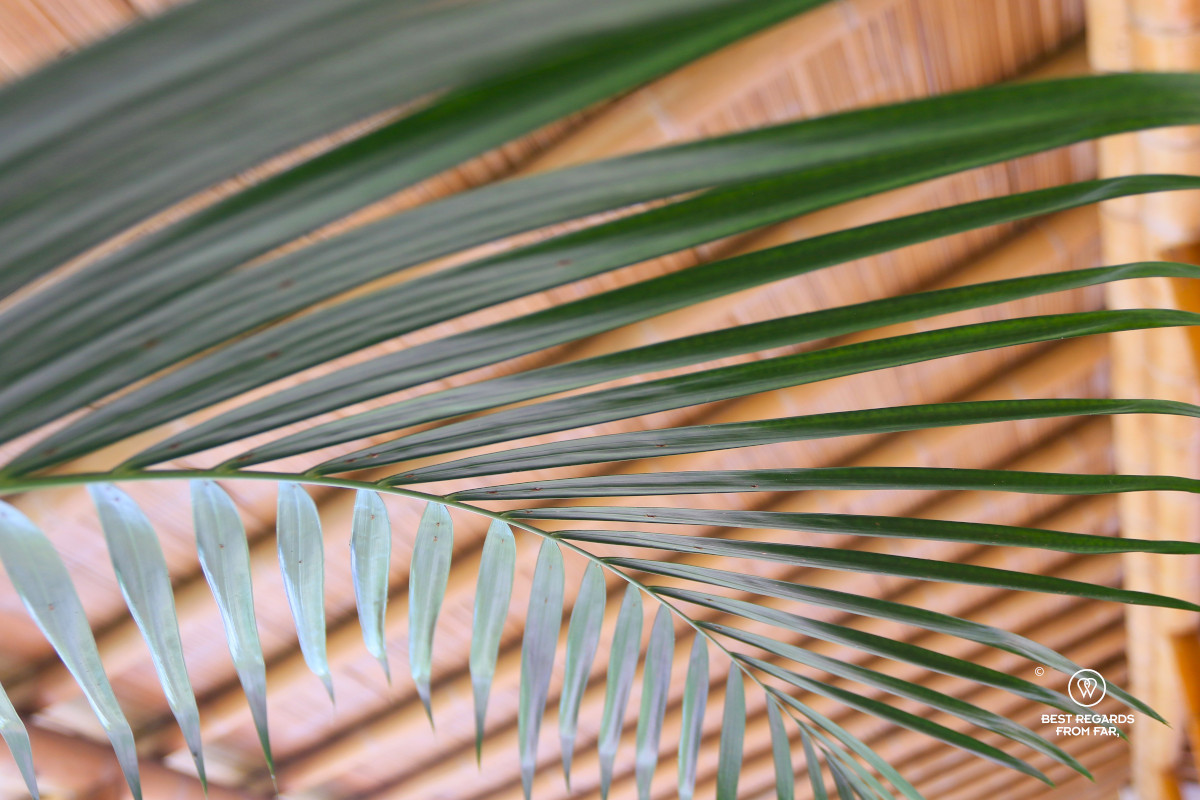
Built in the traditional architecture style of Colombia’s Coffee Region, the Hacienda Bambusa combines bamboo and clay. It is not any type of bamboo that is used but the guadua, a native to Latin America species nicknamed “vegetal steel” in Colombia. Very robust and light at the same time, the guadua bamboo grows fast and can reach 20 to 30 meters (66 to 100ft) in height and 10 to 20 centimeters (4 to 8in) in diameter, making it an ideal sustainable building material.
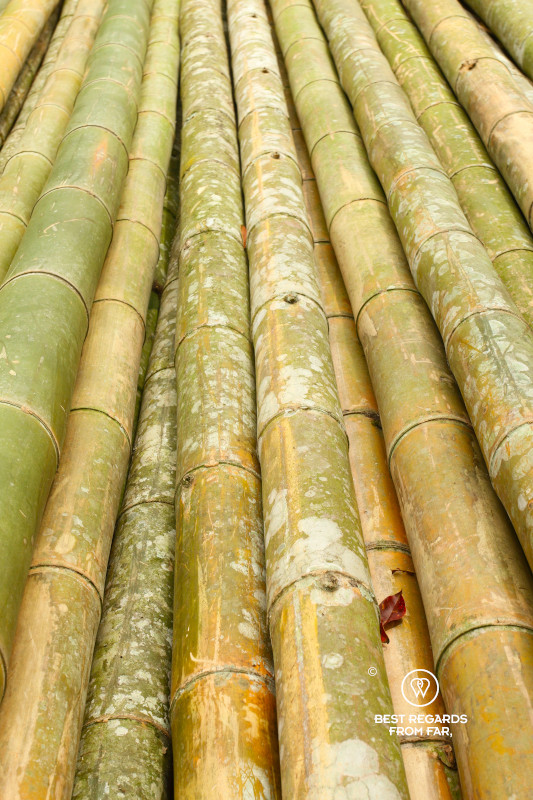

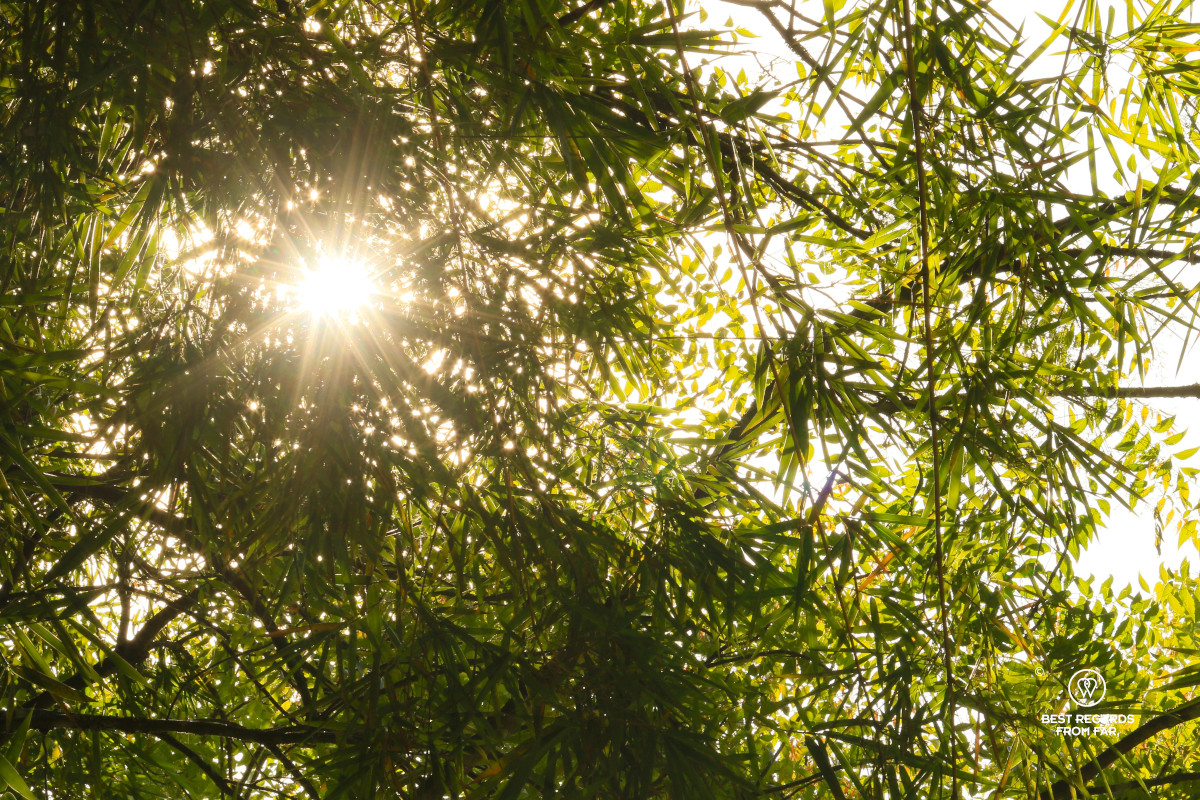
While biking the farmland, thickets of guadua emerge by the streams. Towering above us with wild bird of paradise flowers at their feet, they separate the plantations of the hacienda. Their tender green leaves contrast with the brown culm sheath —the paper-like sleeve that wraps the shoots— that is not only prickly but also leaves tiny needles in one’s hand when touched. As water flow regulator, this super grass helps prevent flooding and soil erosion thanks to their underground roots and rhizomes that also trap vast amounts of carbon dioxide.
Emerging from an oasis of greenery in the middle of the plantations of avocado, lemon, mandarin trees, and yuccas, the Hacienda Bambusa could have been imagined in the Studio Ghibli. In fact, the Disney creative team of the motion picture Encanto stayed at the boutique hotel during their research trip throughout Colombia, drawing inspiration from its colorful garden and organic bamboo architecture. Guests who have seen the movie may recognize hints of Hacienda Bambusa in its magical Colombian home.


From Bean to Bar: A Cacao Workshop Underneath a 350-Year-Old Tree
A short walk or bike ride from the hacienda, beneath the shade of a magnificent 350-year-old tree draped in bromeliads, I meet Aida and Eloisa, two passionate cacao growers. On their six-hectare plantation, they produce about 1.5 tons of cacao each year and share their craft through interactive workshops led by a knowledgeable and multilingual guide.
Before getting hands on, the Latin American origins of chocolate are explained. Ironically, while the other star of Colombia, coffee, is originally from Africa but today’s largest producers are in Latin America, it is the exact opposite for cacao: today’s largest growers of the Latin American tree are in Africa (Ghana and Ivory Coast mainly while world’s best is from neighboring Ecuador). Cacao remains an essential in the Colombian diet and chocolate is eaten every day—often paired with cheese at breakfast.
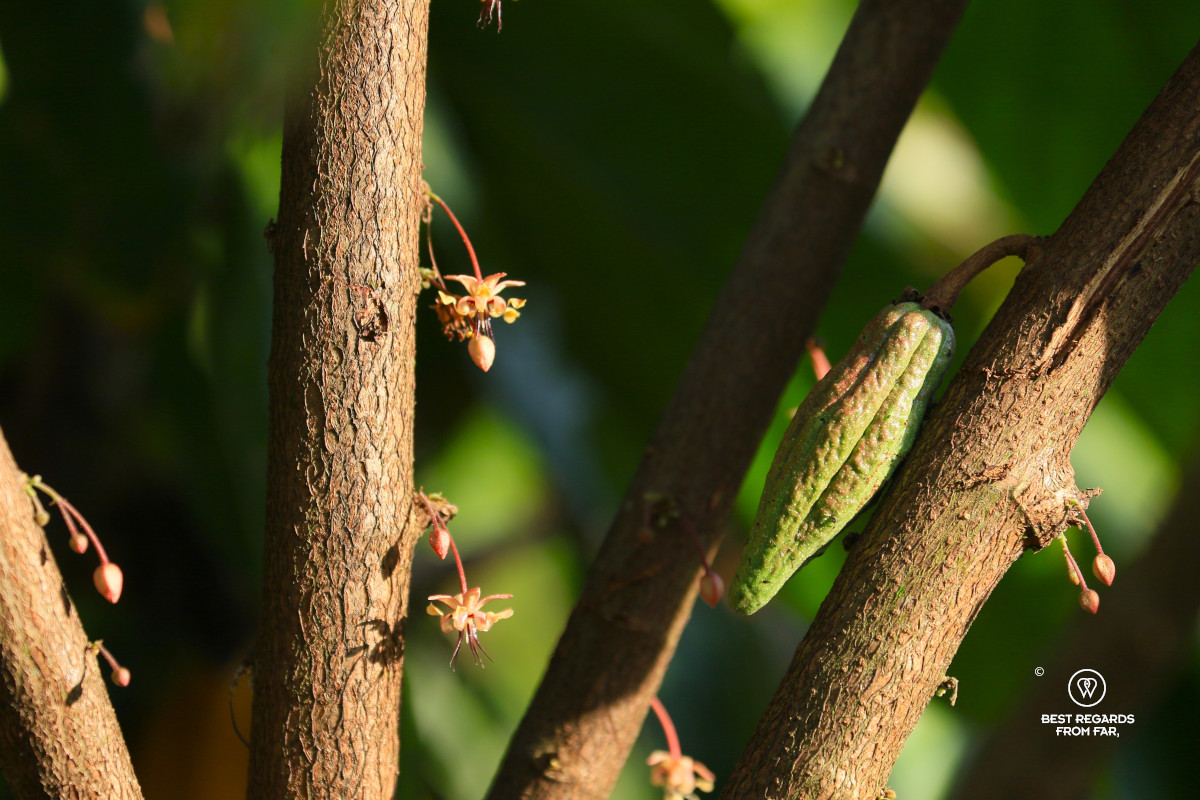
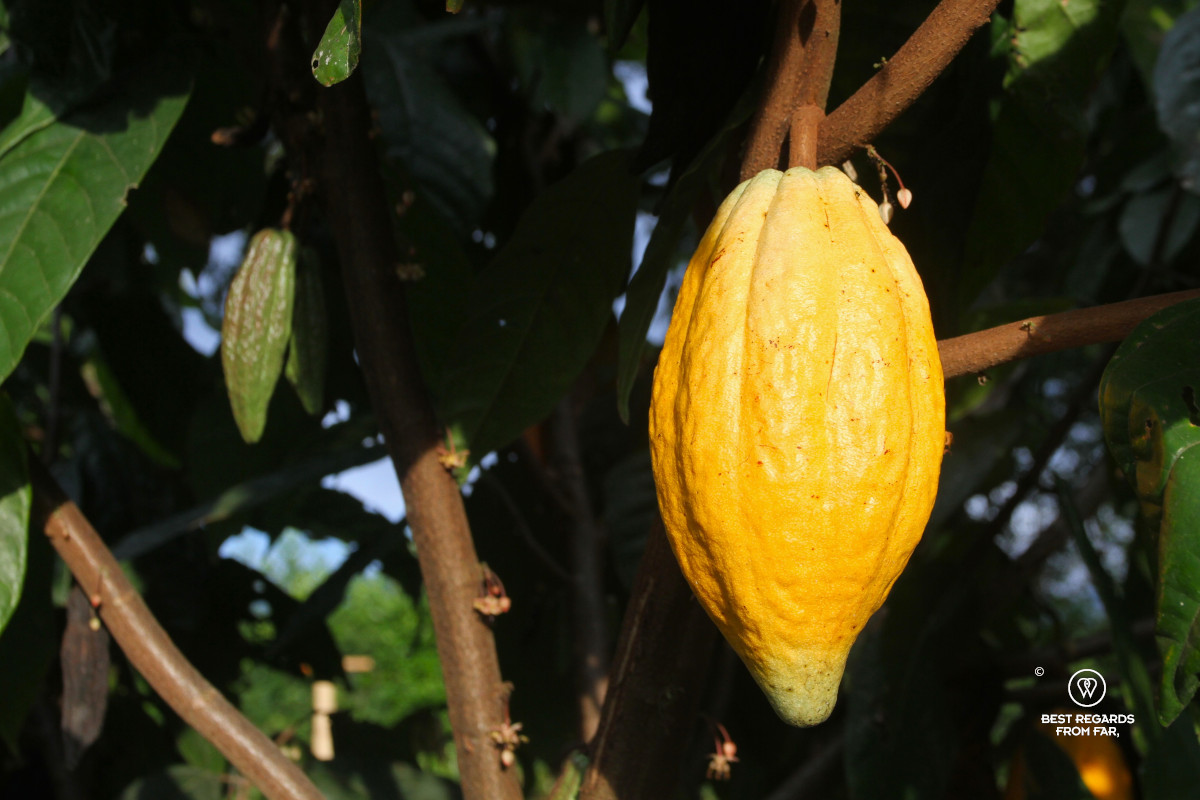

The process from bean to cup, or to bar is fairly straight forward. Cacao beans are fermented for 6 days, dried for about 4, then roasted with their husks intact before being de-husked—unlike coffee that is first de-husked and later roasted. While the shale gets hot, the oils inside the cacao bean expand, cracking the husk open. De-husking is more complex as the shale does not come off easily. In the countryside, it is still processed by hand as I am learning the trick myself while I roll the warm bean smoothly between the palms of my hands. Then, I snap it open between my index and thumb, and manage eventually to separate the husk from the dark brown roasted bean, preferably without breaking it.
After running the de-husked cacao beans through the grinder, I taste them: they are very bitter and greasy as they still contains a large amount of fat: 55 percent of cacao butter. To remove the fat, I follow my guide’s lead and wrap the ground cacao in a cloth and twist hard. Pure cacao fat seeps through. It is used in indigenous communities as a bug repellent and skin balm, and I follow the custom and put some on my skin. It smells delicious! Yet as it contains caffeine it tastes bitter. Actually, the very reason for caffeine in some plants is to repel bugs (while in others its addictive properties attract specific pollinators).
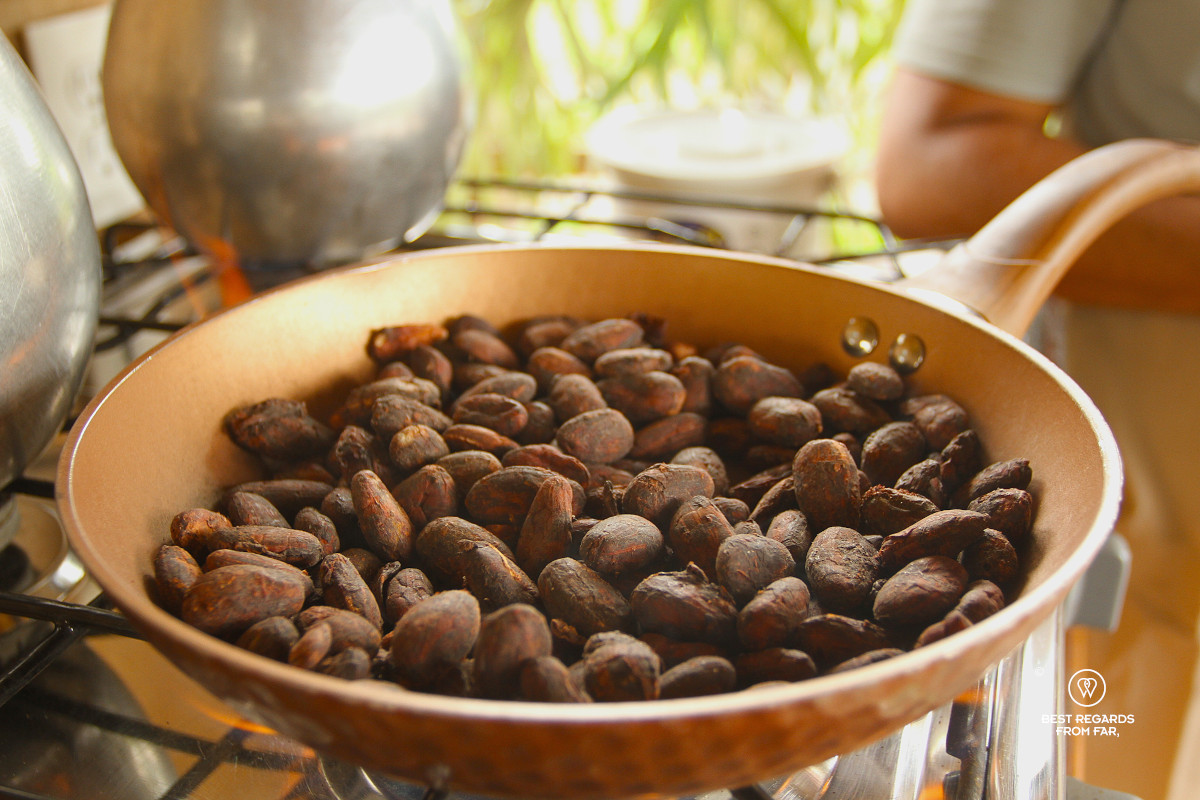
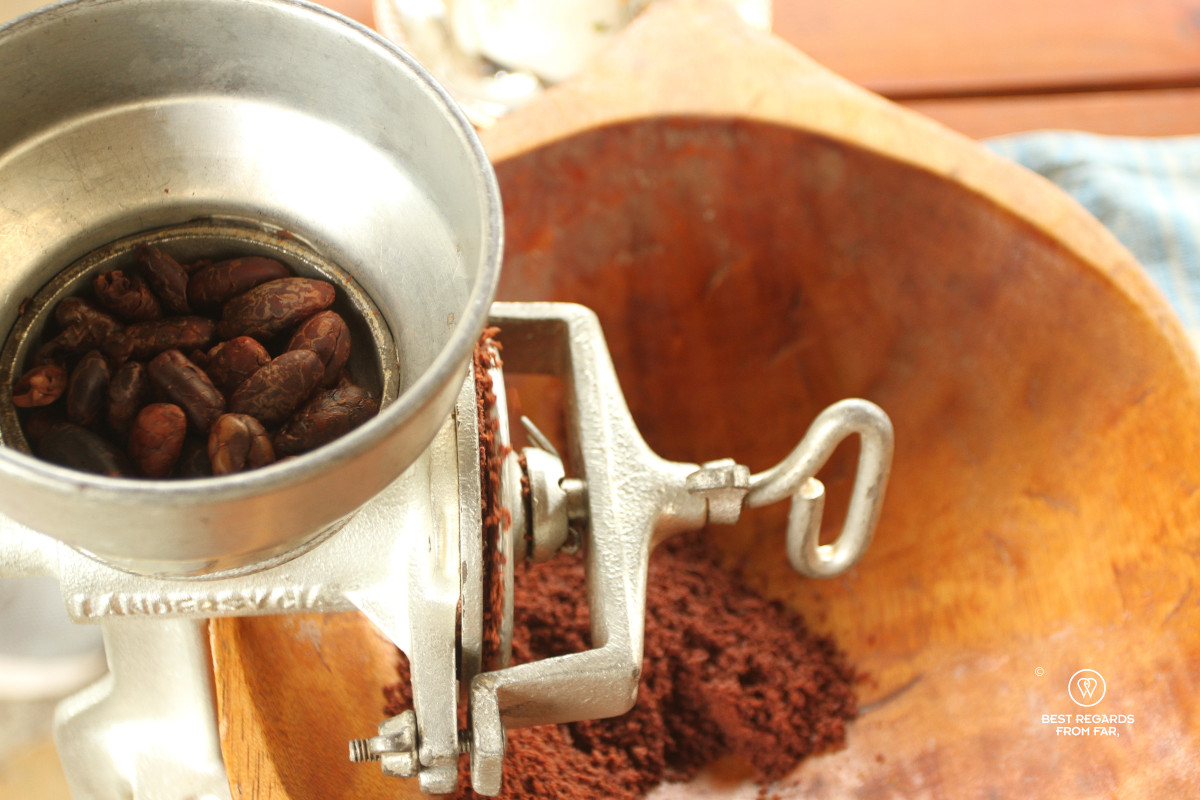

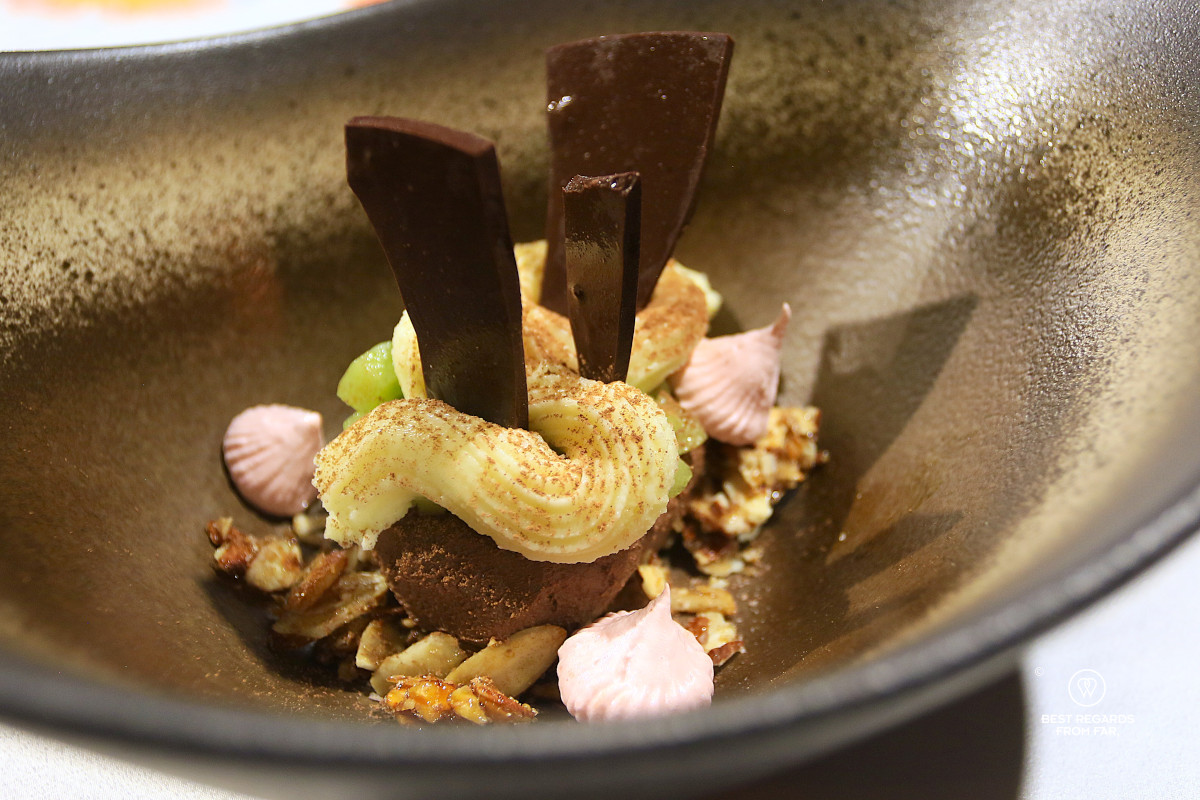
Obviously, driven by the vast demand in the West in the 19th century, the process has been mechanized by the Dutch van Houten who invented a hydraulic cacao press to extract the fat.
Once the fat is out, I mix the leaner cacao with warm milk and a pinch of panela—cooked and crystalized sugar cane juice—to sweeten it, plus a hint of cinnamon for a spicy taste.
When it comes to the chocolate bars, some fat has to be added back in. The proper way of course is to directly reintroduce the cacao butter. Unfortunately, in many readily available chocolate bars, the cacao butter is nowhere to be found as it is instead sold to the beauty industry and replaced it by cheaper palm oil… The USA, France, Belgium, and Switzerland have insisted historically on using only cacao-derived fats in their chocolates while other countries like the UK and most European countries are more permissive. Checking the ingredients before buying any chocolate is essential.
From Farm to Table: A Tasty Experience to the Sound of Nature
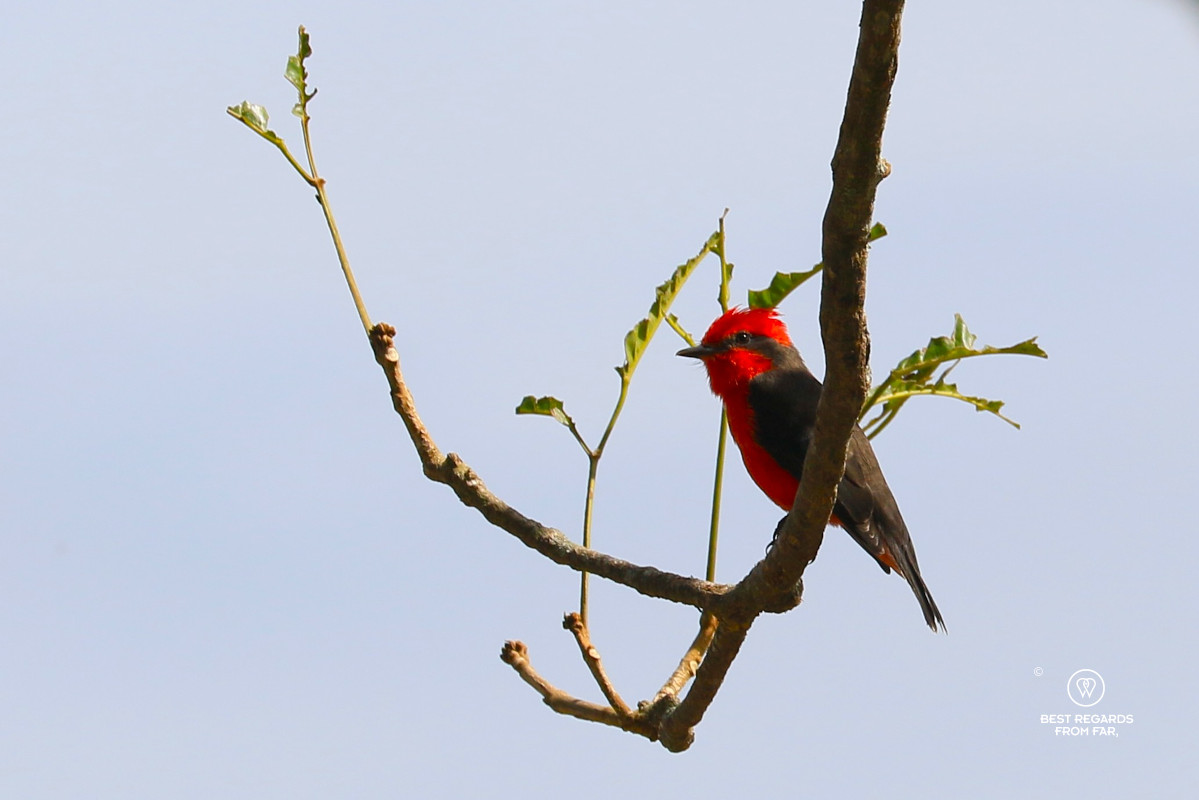
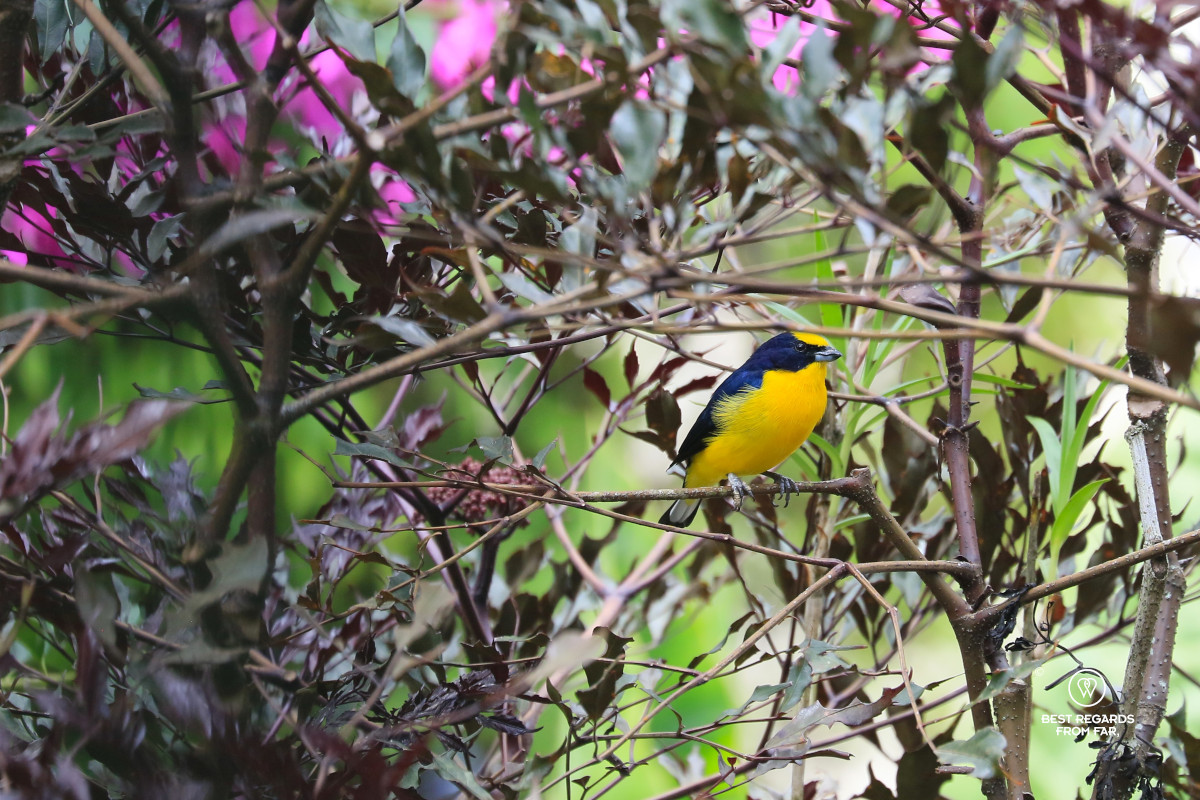
After this workshop, next morning’s breakfast is a dilemma! Will it be the delicious coffee from the neighboring farm with its fruity taste and hint of acidity—after all, I am in the coffee region—or the irresistible thick and foamy hot chocolate from even closer? It is a good thing that I do not need to choose and actually enjoy both while the ballet of birds continues on the grounds of the Bambusa. With 46 recorded bird species on its 76-hectare (188-acre) property, there is always a flash of color in the air and birdsongs echoing. A blue tanager darts by or a hummingbird hovers from flower to flower, and saffron finches pick up grass to build their nests. Seated at the colorful breakfast table covered in tropical fruits, most of them from the hacienda’s own garden (lulo, pineapple, papaya, guava, banana, pitaya, the delicious local dragon fruit…), I overlook the Colombian Andes: a splendid view!


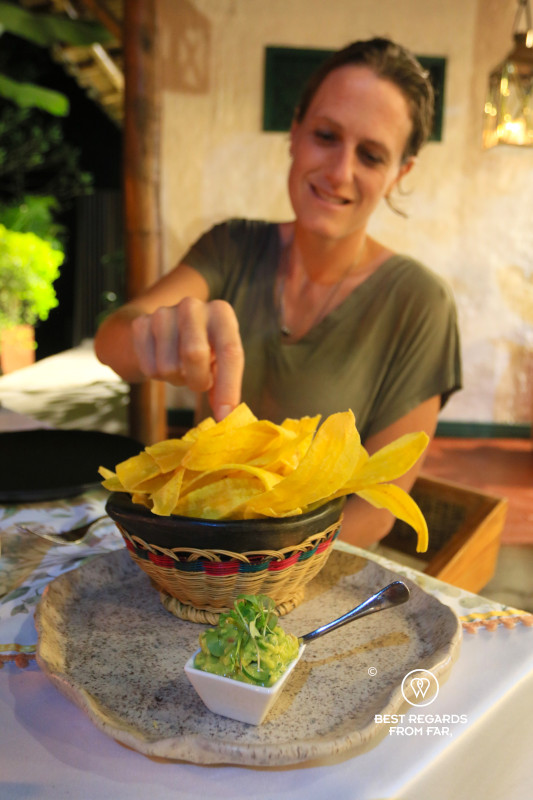
Dinner, on the other hand, is always a surprise. Each evening, the staff chooses a new setting —by the pool, under the stars, or in the garden— but the freshness of the ingredients is a constant. The herbs and most of the vegetables come straight from the hacienda’s organic garden. The guacamole accompanying the yummy yucca fries is made with the freshest avocados, and every dish contains some local plants from the delicious coriander oil in which the salmon ceviche with coconut rice bathes to the perfectly balanced fish tiradito decorated with flower petals. Meat dishes and local fares such as corn wraps reminders of tamales are not in rest.


***
At the Hacienda Bambusa, luxury does not come from opulence but from harmony—the simple rhythm of nature and the timeless beauty of the Eje Cafetero, Colombia’s Coffee Region. As bird songs fade and crickets take the main stage, night falls and the first stars appear above the terracotta roof of the whimsical bamboo house. It is easy to understand why the dreamers of Disney got inspired by this place: it is, in itself, a storybook come alive. And long after departure, the memory of Bambusa lingers—like the taste of a warm and soothing chocolate on the palate.
Travel tips:
- Stay at the exquisite Hacienda Bambusa in the Coffee Region for an unforgettable and relaxed time. Note that the hacienda is fairly remote and a 4×4 is recommended to reach it (transport can be arranged by the staff).
- Many activities can be enjoyed from the Hacienda Bambusa: the chocolate workshop of course, but also trips to Salento to explore the iconic Cocora Valley and its wax palms, or coffee plantation tours.
- Check out this interactive map for the specific details to help you plan your trip and more articles (zoom out) about the area!
 Best regards from far,