Text: Marcella van Alphen
Photographs: Claire Lessiau & Marcella van Alphen
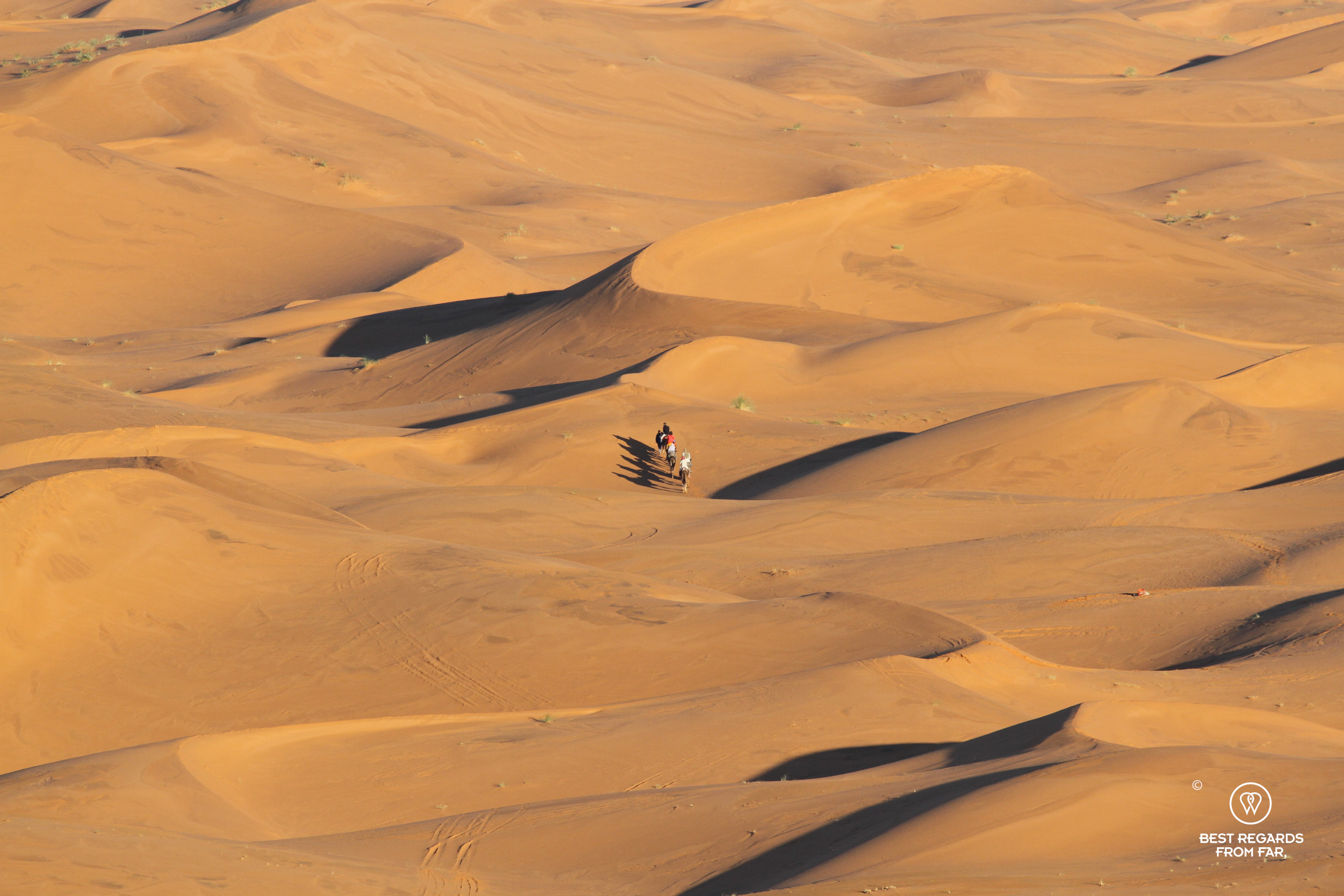
The warm sand feels soft beneath my feet when I slowly gain altitude making it up one of the highest dunes of Erg Chebbi in the far western edge of the Sahara Desert by the small town of Merzouga. Towering well over 150 meters (500ft) above the smaller surrounding dunes, the view from its top resembles an endless sea of orange waves. As the sun slowly goes down, the colors of the dunes shaped by the wind get warmer and more intense. Their shadows expand and intertwine in a slow dance. Within minutes, they engulf the 2-person dome tent that seems very small in the vastness of the Sahara and that has been set up for us by our Berber guides to spend the night far away from the touristic camps for an authentic desert experience.
Pin it for later!
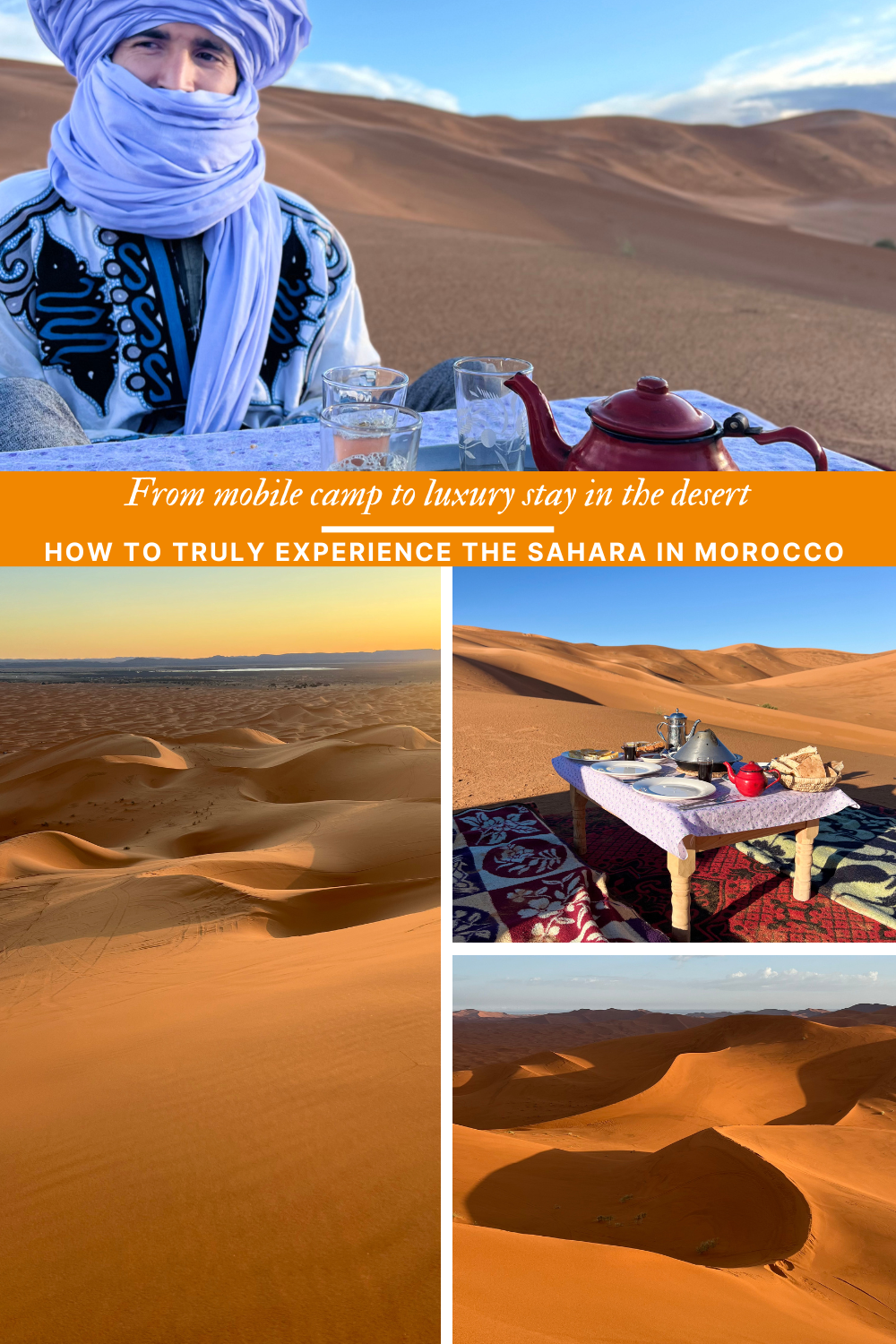
Mobile camp—private, authentic & memorable!
A couple of hours ago, our guide and owner of African Luxury Camp Hassan Ait Haddou dropped us off in the middle of Erg Chebbi after navigating his 4×4 over some seriously high dunes for about 45 minutes out of Merzouga. From a nomadic family that settled in Merzouga before his birth, Hassan still knows very well where to camp, and he stopped us with our two desert Berber guides by a handful of trees betraying the presence of water.


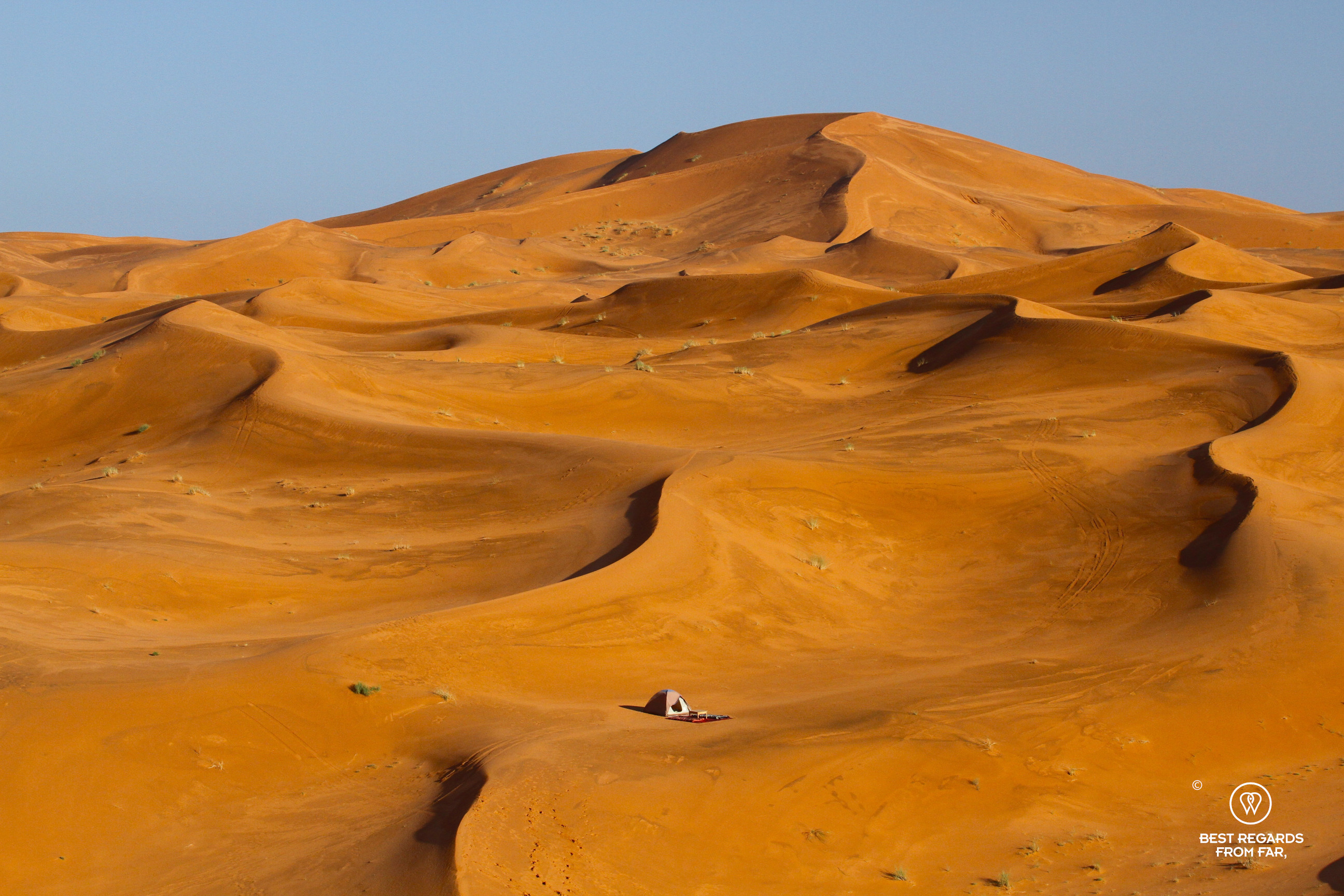
While our guides were pitching our camp and preparing a traditional tagine dinner, we fully enjoyed the quietness of the Sahara in this remote location.
In such a harsh environment, the Berber hospitality takes all its meaning. As evening falls, we are served a delicious three-course meal made with fresh ingredients under a full moon to the screaming silence of the desert…
At the break of dawn, as qualified trackers we read last night’s stories in the sand. A desert fox passed by following a mouse it did not catch! Desert lizards took shelter in small holes underneath plants. Dung beetles seem to rule the area crisscrossing vast sections of the dune. While crows met atop the dune at sunrise messing up the sharp ridge line of the mountain of sand.


The sand is cool under our feet and we welcome the first rays of sun that quickly warms up our skin while we enjoy a Berber omelet, freshly brewed coffee and tea, and bread with jams and honey by our tent.
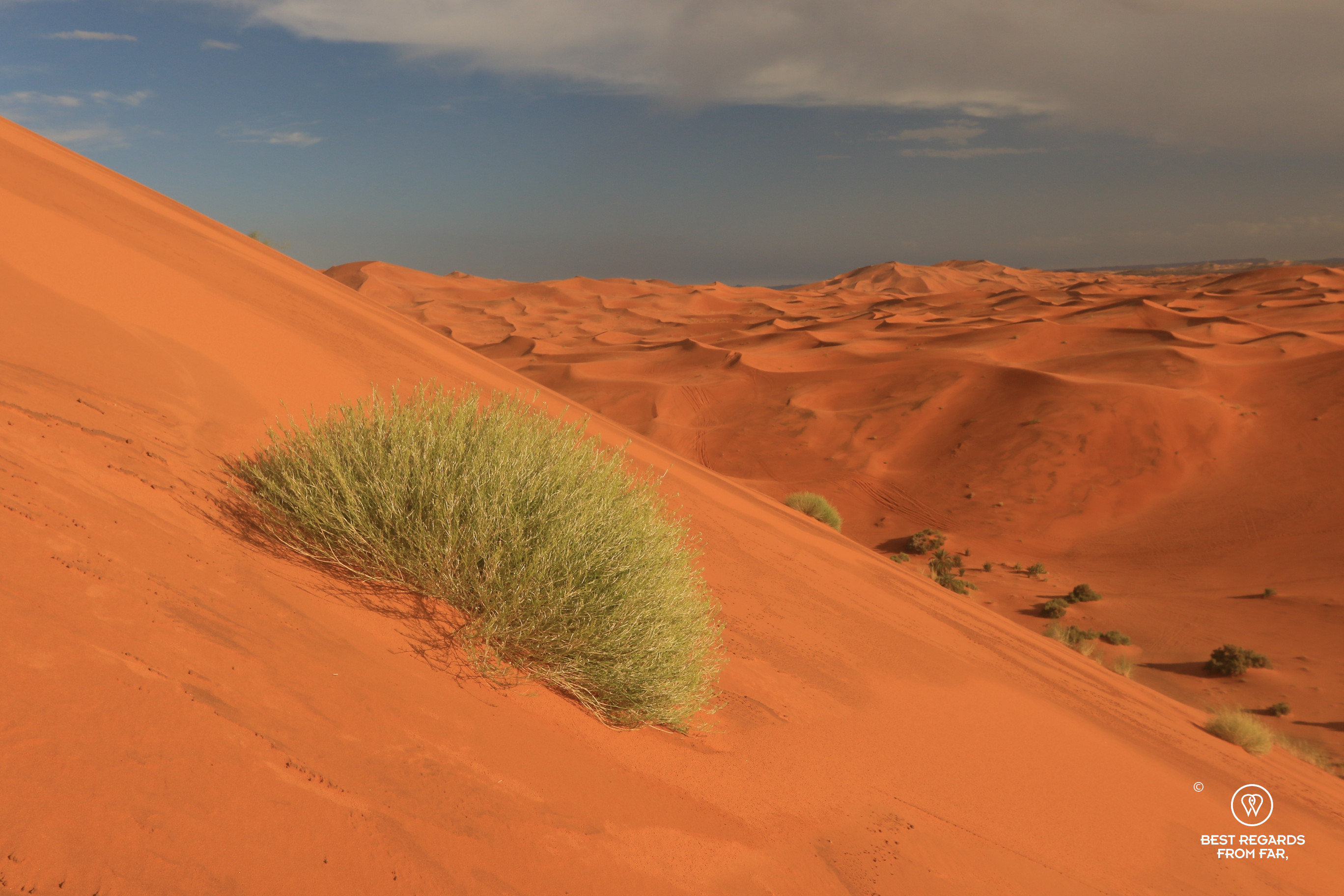
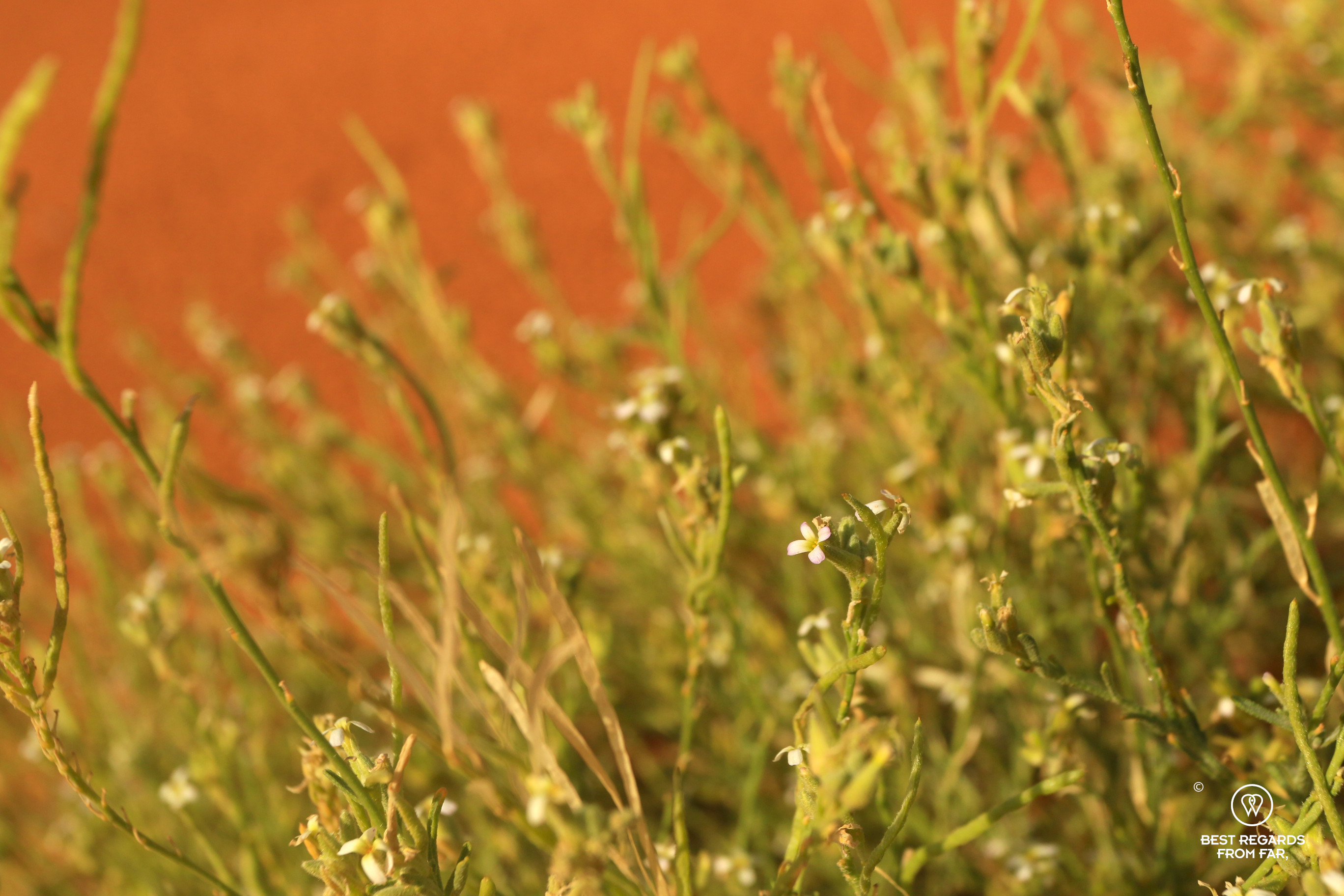
While we await our 4×4, we explore the desert further and focus on plants. Some specific plants indicate the presence of surface water while others with their deep roots can be misleading. The fox too is in the know. It has been digging here, finding water only half a meter or so below the surface of the sand!



African luxury camps
From atop our dune, Hassan’s Toyota Prado 4×4 looks like a small dung beetle conquering dune after dune in the distance.
After he has picked us up, we are enjoying our exhilarating 4×4 ride to his luxury camp for a warm shower and a couple more nights in the desert. Hassan explains about the nomadic lifestyle he is passionate about, and that part of his family is still living to this day. “On my mother’s side, my family owns properties in town and lots of dromedaries making them quite wealthy. They still prefer the nomadic life deep in the desert,” Hassan explains prompting us to learn more about it during a tour he runs.


Today, he makes a living with his luxury camps pushed by travel agencies and chosen by many tourists. Hassan opened the first luxury camp in the Merzouga dunes with his brother and shortly after set up his own African Luxury Camp, and recently created Fabulous Luxury Camps as well. His idea to bring tourists to the desert to experience it for themselves proved so successful that many followed his example and hundreds of similar-style camps are lined along the edge of the 28-kilometer-(17-mile)-long and 7-kilometer-(4-mile)-wide sand desert of Erg Chebbi.
While the comfort of his camps in which every tent is equipped with a heating system, a hot shower with good water pressure, excellent water evacuation, electricity, and flushing toilets, is indisputable, to us and to Hassan, the real magic resides beyond the dunes dotted by tourists, in the vastness of the Sahara where peace and harmony can be found far from the quad bikes following each other during timed outings and far from the Berber drums echoing in the night around the campfire.


Berber Nomads of the Sahara
Hassan is right. In the land of the desert Berber nomads it would be a shame to not learn more about the people who call the Sahara their home.
Our guide Abdullah skillfully navigates his off-road vehicle over the dunes for which excellent 4×4 driving skills in the sand are a must. He describes how his parents grew up in the desert living a nomadic life with their dromedaries and goats, finding water, food for the animals, and medicinal plants along the way. Soon the whimsical dunes make way for a dark and rocky land called the hamada that covers about 80 percent of the Moroccan Sahara. Once the bottom of an ocean, the rocky land can expose fossils in some places, and is mostly barren, with a few higher plateaus closer to the uncrossable Algerian border—the political situation that opposes Morocco to Algeria over the Western Sahara has led to absurd border rules.


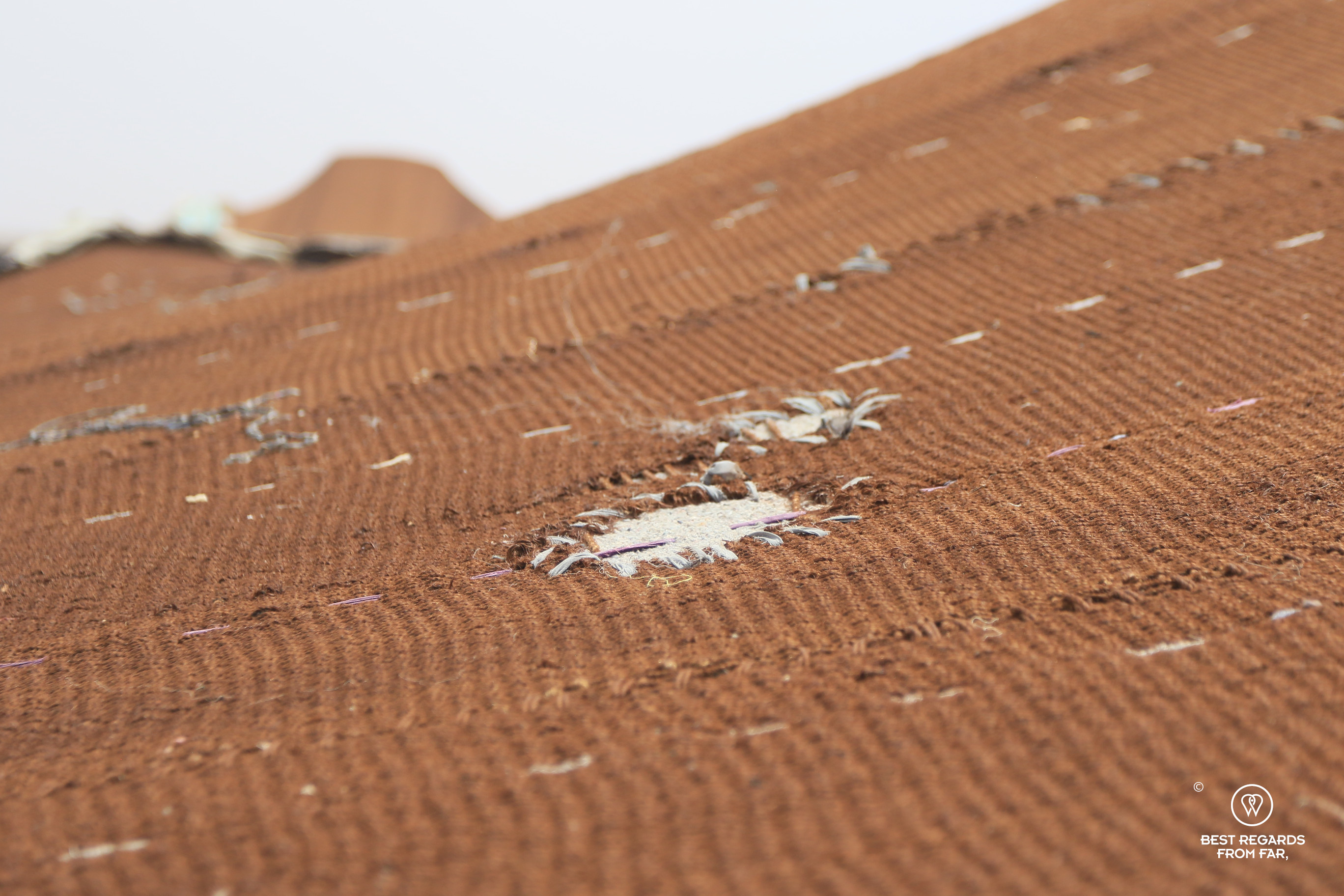

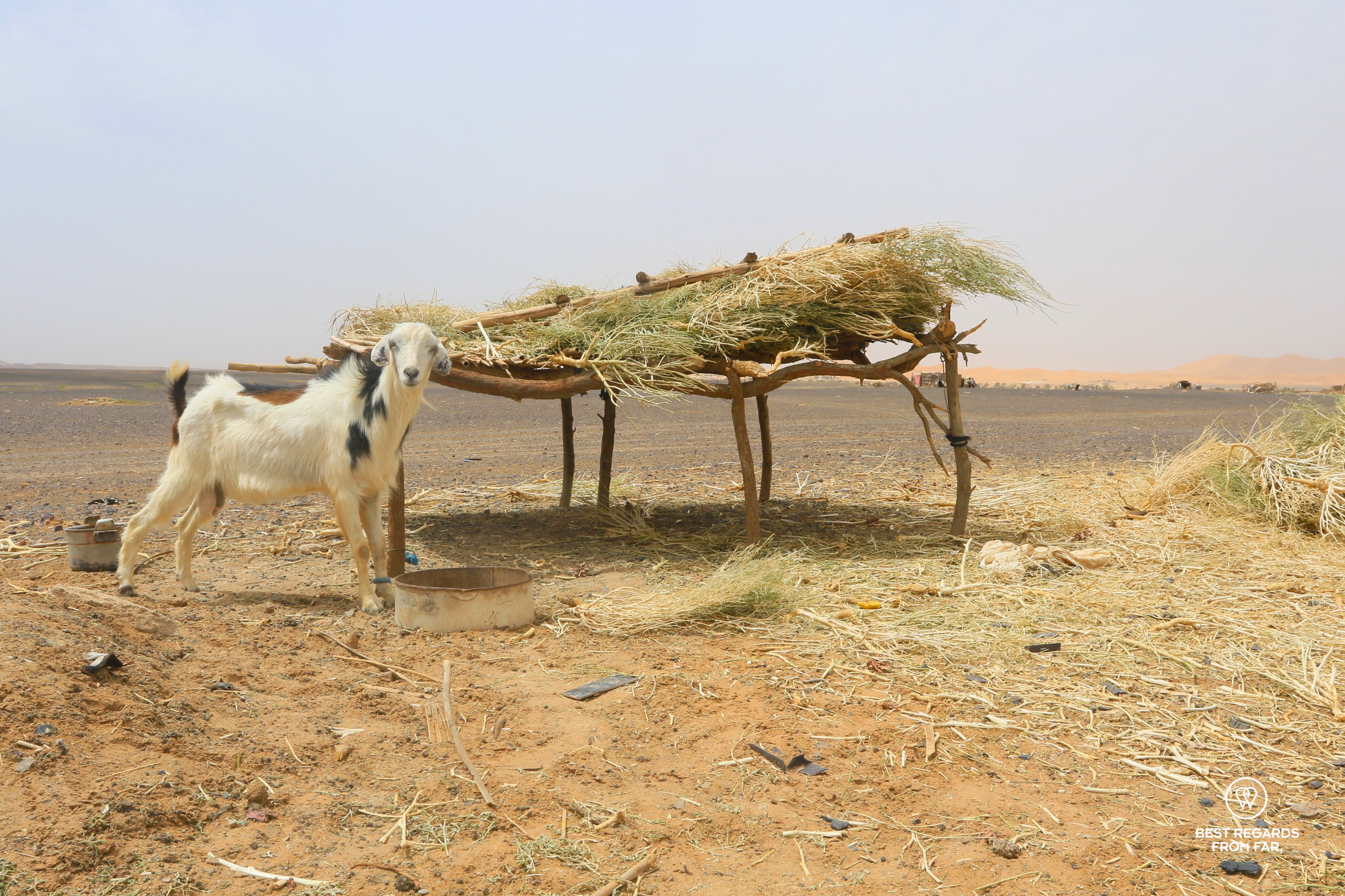
In the distance, a camp of Berber tents dot the area. As we park by them, they appear to be made of sheep and goat yarn with some patches of woven camel hairs for water repellency and thermal insulation. A family unit disposes of a group of tents, one for cooking, one for guests, and one to sleep. Absolutely essential in the desert, a tripod made of sticks supports dried goat skin containers for water or goat milk. A bit further, a goat feeds on some seemingly dead branches and rabbits are kept in an underground enclosure providing protein-rich food to the family when needed.
With the drought that has hit this area of Morocco since 2018, several families have flocked together to the edge of the town of Merzouga to make life a bit easier. Finding food for their cattle had become nearly impossible forcing them into a more settled life, having to make money to purchase food in the settlements bordering the desert. “Most likely, within a few months, they will settle here creating a village and abandon the nomadic lifestyle,” Abdullah explains. Ancient knowledge about survival in the desert such as where to find water, how to build and maintain the Berber tents, how to navigate under the stars, and how to make use of different plants for medicinal purposes might all disappear within the next generation.
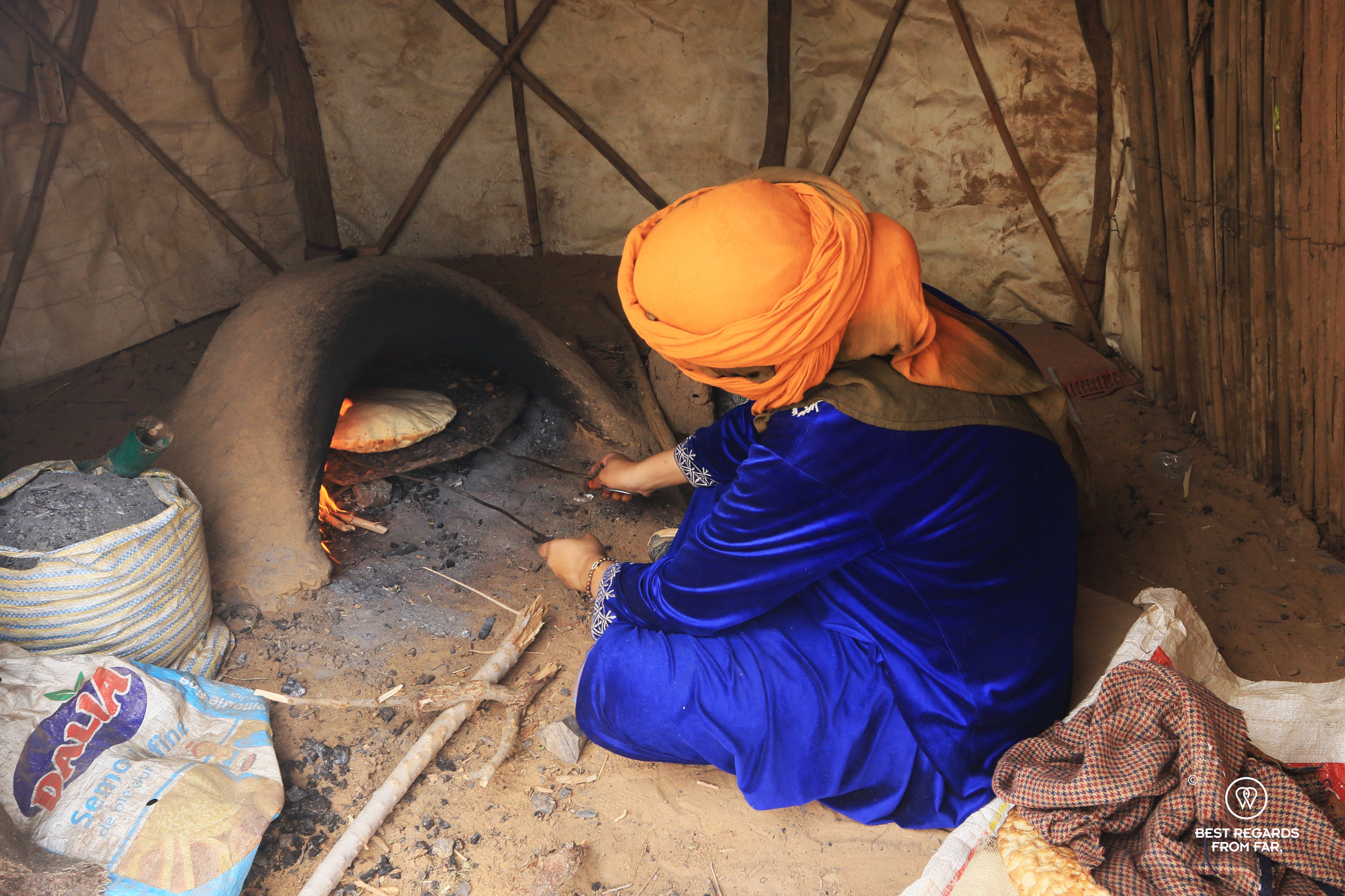
A young woman baking flat bread in a tent in a handmade wood fired oven. Here name is Mouna and she invites us for tea. Abdullah translates for us when she explains about her daily chores of taking care of the kids, weaving, cleaning the tents, and cooking. Tasks are clearly divided between women and men, the latter taking care of the animals. Mouna too is considering to leave her nomadic life behind to give her children a better future. “Inshallah”, she whispers while covering her face in her turban for the incoming sand storm.


Travel tips:
- Allow yourself some time to truly experience the desert with a stay at Africa Luxury Camps as well as a mobile camp. They can customize your trip from one night to several days out deeper into the desert. Booking is absolutely essential!
- While water has been channeled for centuries without active pumping from the water table using gravity and vertical shafts cleverly and making the most of the humidity variations throughout the day, please bear in mind you are visiting a water-scarce area.
- Check out our interactive map for more in the area (black pins lead to an article):
For more in Morocco, click on these images!


 Best regards from far,
Awesome article! I loved the “Screaming silence of the Sahara! “Sleeping