Text: Claire Lessiau
Photographs: Claire Lessiau & Marcella van Alphen
The Loire River, meandering over 1,000 kilometres, stands as France’s longest and Europe’s wildest river. Blessed with a mild climate and fertile grounds, ideal to trade and farm, the wealthy Loire Valley has become home to over 300 castles, including some of world’s most renowned. If each castle holds a unique charm, some châteaux between Blois and Angers, and more specifically around Amboise, the cradle of the French Renaissance (the sweeping intellectual, artistic and humanist movement that began in Italy and Flanders) truly stand out:
Pin it for later!

- Chenonceau, the most beautiful castle of France with its unique gallery over the water.
- Villandry, stunning kitchen gardens! And the best salads you’ll ever taste!
- Azay-le-Rideau, a jewel reflecting in the water & a historically perfectly furnished castle.
- Chaumont-sur-Loire, cannot be skipped by landscaping aficionados.
- Château du Clos Lucé, Da Vinci’s last residence hosting 3D mock-ups.
- Château Royal d’Amboise, Da Vinci’s resting place & a majestic royal castle.
- Château du Rivau, for a royal stay!
Chenonceau, the ladies’ castle [& the most visited private castle of France]
Why go: probably the most beautiful castle in France with its unique gallery over the water.
The special location on the Cher River and the unique visions that a few prominent ladies had over the centuries have given its fairy-tale appearance and unmatched elegance to the castle of Chenonceau – the poster child for the Loire Valley Castles.



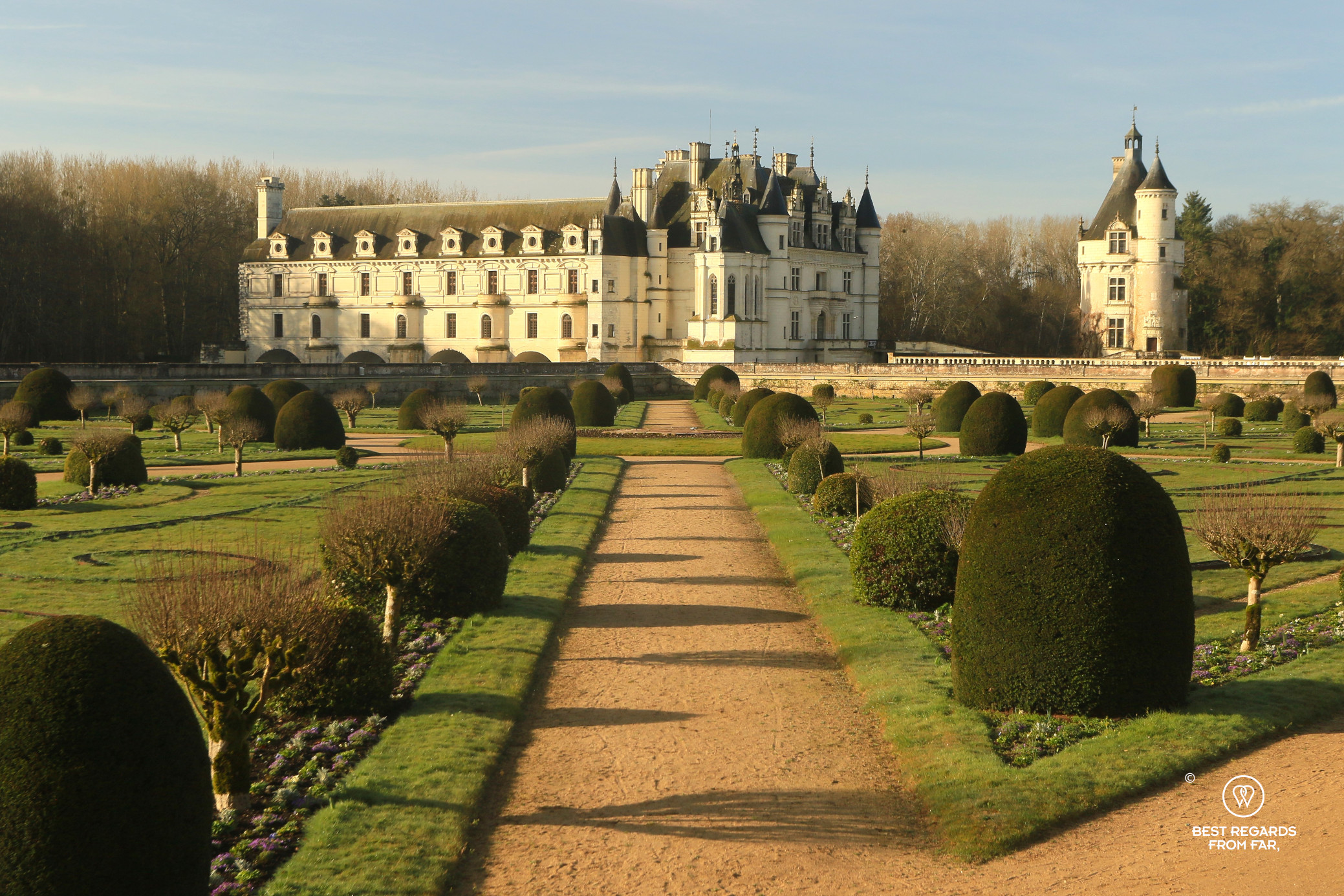
Only one medieval tower remains from the fortified castle and mill that controlled the profitable trade of wood, salt and wine along the water. Restored in a Renaissance style by Catherine Briçonnet (1494-1526), the wife of Thomas Bohier – a controller general of finances of the King Francis I – Chenonceau was inspired by Venetian palaces in fashion then.
The titanic works triggered an investigation by the crown. The castle was confiscated by the king, for the greatest pleasure of the beautiful Diane de Poitiers (1499-1566), the mistress of the king to be, Henry II – Francis I’s son. Not only the most beautiful woman of the kingdom but also a very smart businesswoman, she convinced her lover to offer her the castle of Chenonceau: Diane built a bridge over the Cher River to access more hunting grounds, setting the foundations for Chenonceau as we know it today. She also tripled the revenues of the estate by planting mulberry trees to produce sought-after silk. However, her fortune stopped brutally with the accidental death of her royal lover in a tournament: Henry II’s widow, Queen Catherine de’ Medici (1519-1589) managed to recover all the gifts Henry II had offered to Diane for the crown: jewellery, dresses, and of course Chenonceau (in exchange for the castle of Chaumont sur Loire).

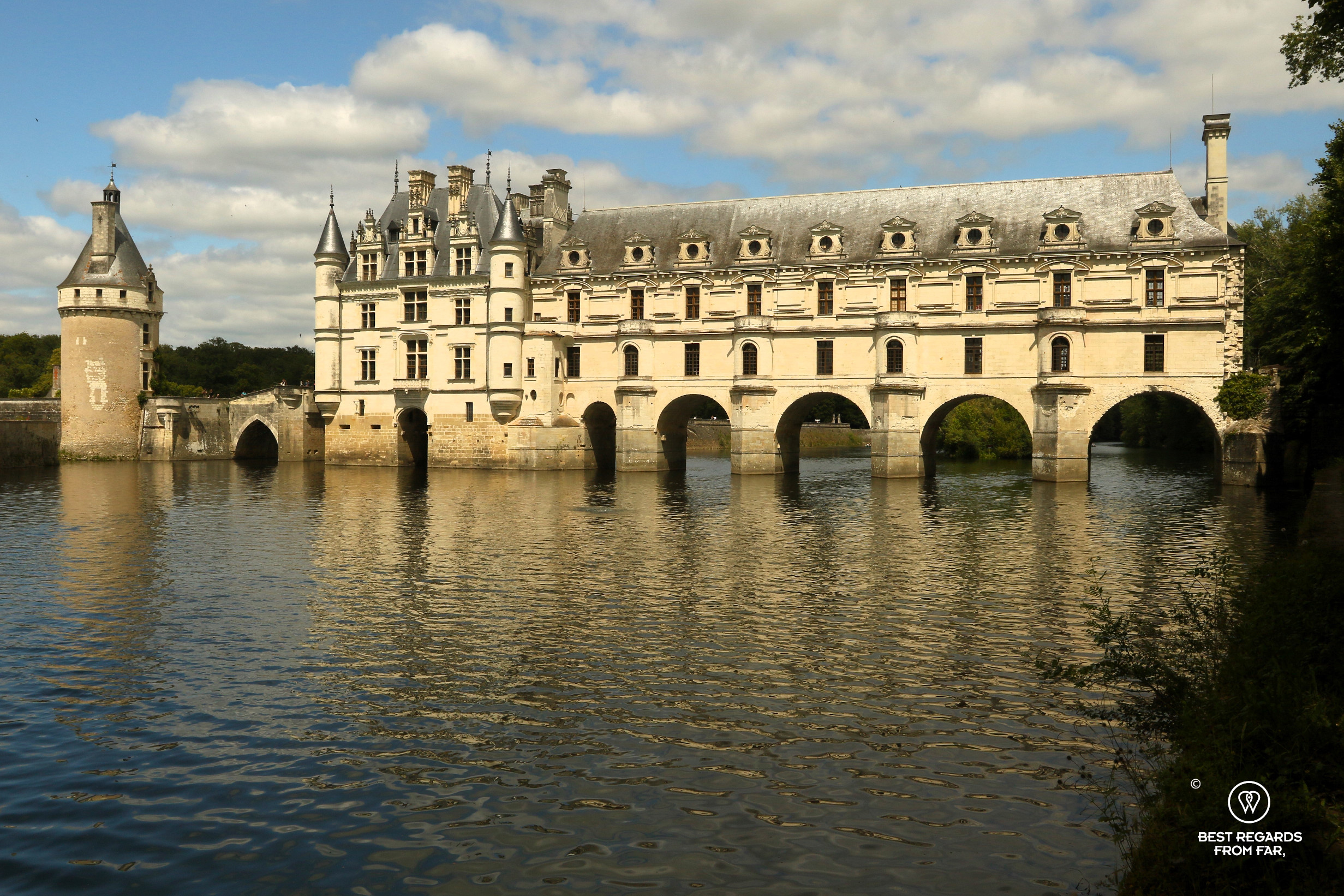
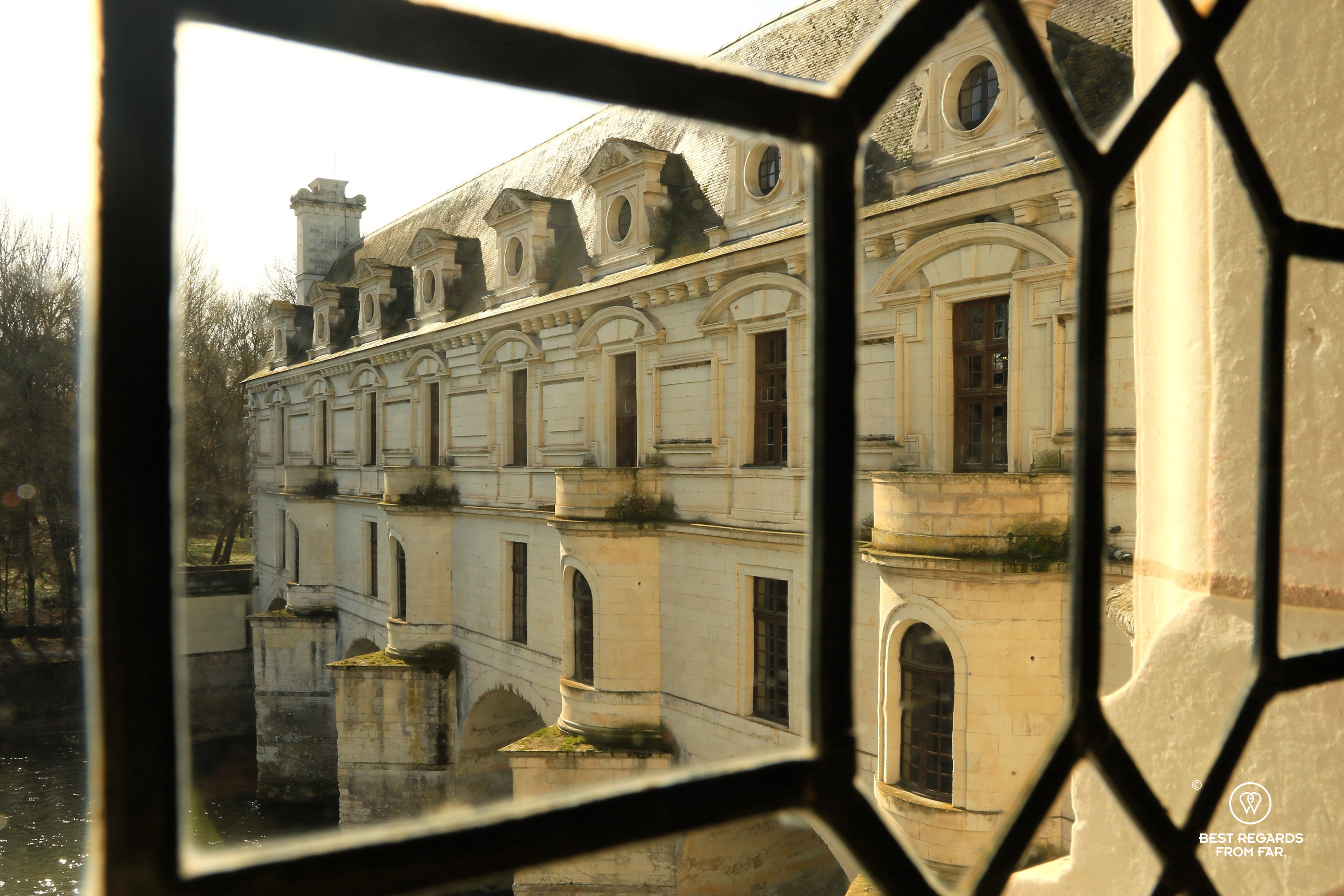
In 1559, at the start of the religious wars between Protestants and Catholics, Catherine fled the nearby royal castle of Amboise where rotting corpses of rebelling Protestants were hung in retaliation. She settled in Chenonceau from where she governed France and had the galleries built on Diane’s bridge to host her royal court, giving Chenonceau its unmistakable look. Many glorious parties were held in the tufa and slate gallery ballroom over the water, with naval battles played on the Cher River, fireworks, and the ball of the naked breasts in an attempt to boost the reputation of Catherine’s effeminate son, the King Henry III.
If the royal presence in Chenonceau ended with the death of Louise de Lorraine, the widow of Henry III who mourned in her dark room in the castle for 11 years, its prestige grew with literary and philosophical evenings with Diderot, Rousseau or Voltaire during the Age of Enlightenment, and thanks to rich industrialists from the 19th century who have been restoring and maintaining its splendour.
Insider’s tips:
- The floral arrangements of Chenonceau are world-class and orchestrated by a Meilleur Ouvrier de France (best artisans of France).
- Beyond the stunning architecture, Chenonceau is a museum in itself housing an admirable collection of tapestries and artworks by Van Dyck, Rubens, Poussin, Caravaggio, …
- For all the details, check out the official website.
Château de Villandry
Why go: stunning kitchen gardens! And the best salads you’ll ever taste!
The last of the large castles built on the banks of the Loire River during the Renaissance in 1536, the sober Villandry was Jean le Breton’s estate, a finance minister of the King Francis I of France.


The castle changed hands several times before Joachim Carvallo and his American wife Ann Coleman acquired it in 1906 to host their art collection. Falling in love with it, they renovated the castle in a Renaissance style and rebuilt its kitchen gardens that had been long gone. Joachim restored them, and today 6 different gardens can be strolled, laid on various terraces on the castle lands that has remained in the Carvallo family. The decorative vegetable garden with its 9 planted squares is a wonder.
In 2009, pesticides, synthetic insecticides, and fertilizers were banned from the gardens of Villandry that became organic. Head gardener Laurent Portuguez has rethought the way the gardens were managed and today, more than 90 species of birds can be spotted onsite, making it a hotspot of biodiversity. Pesticides were replaced by parasitic or predatory auxiliaries that have become residents of the gardens, and with the ban of insecticides, insects have been back fighting pests. When it comes to weeding, there is no magic, and the team of 10 gardeners has to be extremely dedicated and patient!


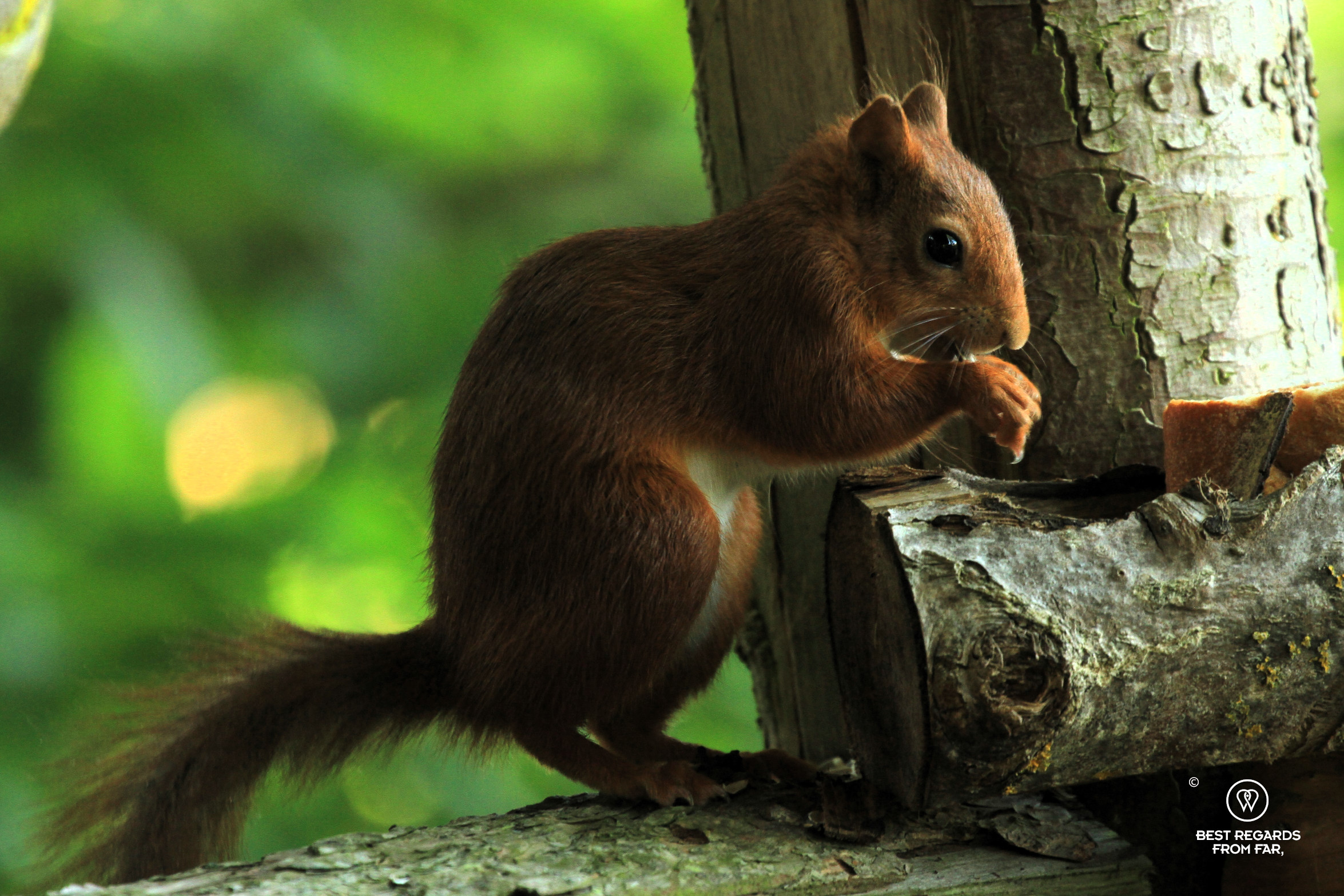
With 115,000 flowers and vegetables following a spring and a fall planting scheme, Villandry is not only one of the most beautiful estates along the Loire River but one that gives hope and that contributes to finding solutions towards a more sustainable and organic future.
Insider’s tips:
- The vegetables are shared amongst the staff, and leftovers are kindly given to visitors: make sure to taste them as they are so delicious: maybe you get lucky and get to enjoy one of the 24,000 salads in the spring!
- For all the details, check out the official website.
Azay-le-Rideau, the perfect reflection [& interiors]
Why go: a jewel reflecting in the water & a historically perfectly furnished castle.
The reflection in the water of the elegant and compact castle of Azay-le-Rideau is an unforgettable sight. If the body of water was added only in the 19th century, the castle was built on a natural island on the Indre River in 1518 during the reign of the French King Francis I. Like many other Renaissance castles in the Loire Valley, a medieval fortress once stood there, and Gilles Berthelot, a tax collector for the crown acquired it to build a modern residence.
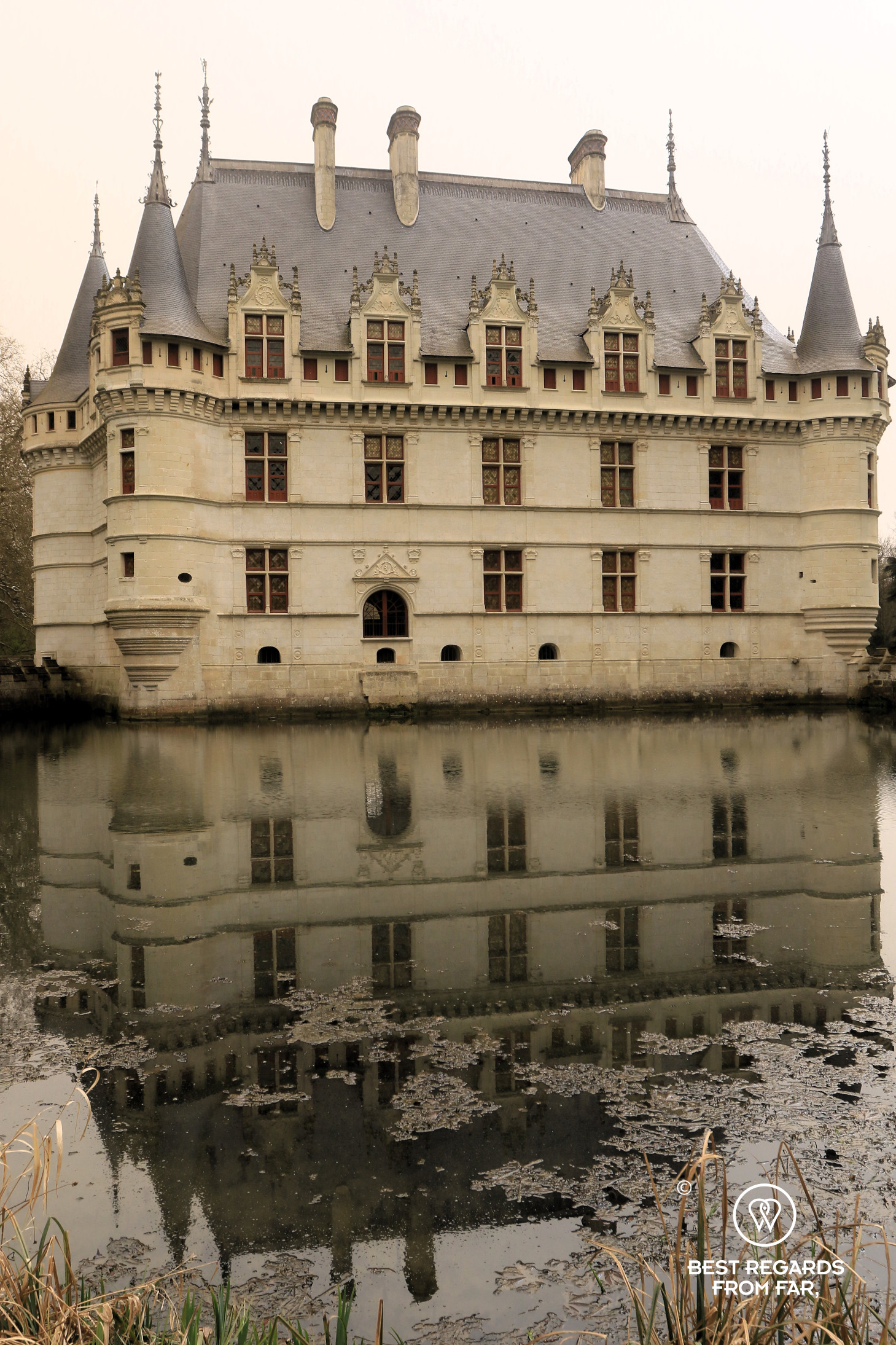


The straight beautiful staircase leading to the first floor must have greatly impressed the Renaissance visitor, as one of the first staircases of this kind in France, a prowess of engineering imported from Italy breaking from the traditional spiral ones hidden in towers. Above, the carved coffered ceilings representing the kings and queens of France are also impressive, and the handrail carved in stone, unique.
In the attic, centennial oak trees from the nearby royal forest of Chinon were assembled in 1518 by skilled carpenters into a stunning upside-down hull. They were so skilled that during the major 8-million-euro (USD 10 millions) renovations that ended in 2017 (i.e. half a millennium later!), only five percent of the wood had to be replaced!
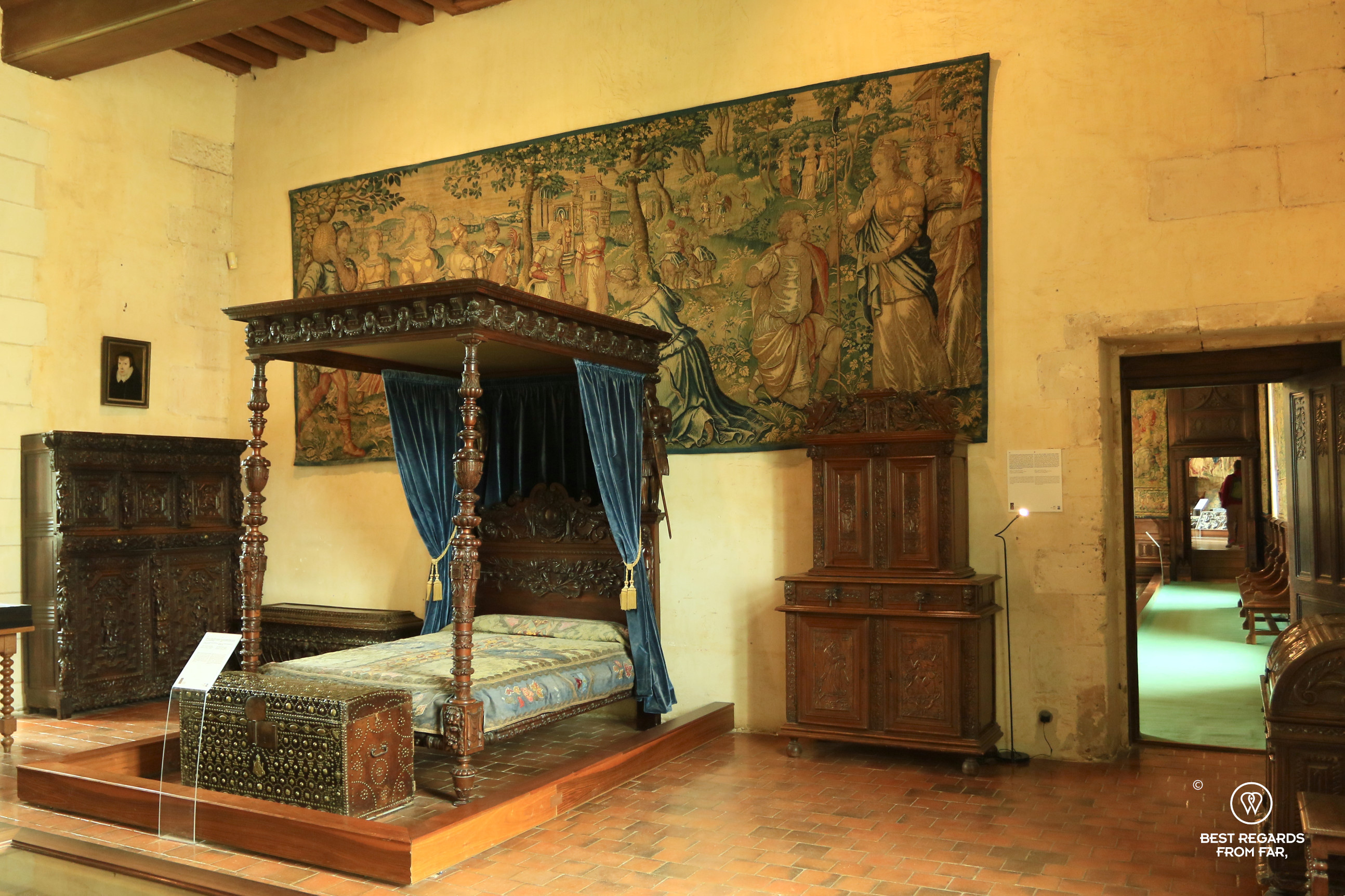
In the state-owned castle, in-depth historic and scientific research has been undertaken to restore the castle and its furniture to its actual historical state. On the first floor, the smell of drying reeds welcomes visitors: the walls are covered in rush mats or woven reeds that were used to trap the humidity, just like 16th century tapestries that are hung in the next room. The beds covered in silk velvet are also typical of the Renaissance while further, the antechamber and King’s Chamber showcases 17th century fashion. The ground floor has been furnished in a 19th century style characteristic of the de Biencourt family who purchased, restored and enhanced Azay-le-Rideau then. The team of the Mobilier National (national furniture) researched archives and photos to track the tableware of the family, and even to manufacture curtains precisely as they were to showcase the castle as it was in the luxurious 19th century lifestyle, from the salon to the billiard room.


Azay-le-Rideau is far more than a beautiful reflection in the water, visiting its rooms is an authentic time-travel through the grand epochs of this beautiful Renaissance castle.
Insider’s tip:
- Azay-le-Rideau takes part in “Christmas in the land of the castles” (Noël au pays des châteaux), a fairy-tale festival held every December with other 6 participating castles in the region.
- For all the details, check out the official website.
- Only a few kilometres from Azay-le-Rideau, the Castle of Ussé can be a nice stop for Disney fans: beyond the great men of the Sun King Louis XIV such as Mansart and his majestic architecture of the grand staircase, Le Nôtre and his French garden with citruses, Vauban and his terraces, Charles Perrault also stayed at Ussé many times and got there his romantic inspiration for The Sleeping Beauty.

Chaumont-sur-Loire, contemporary art & international garden festival
Why go: cannot be skipped by landscaping aficionados.
Walking through the beautifully landscaped English-style grounds, the castle of Chaumont-sur-Loire appears majestically with the Loire River in the background. It is hard to believe that it all started as a simple fortress built to defend local interests at the turn of the previous millennium.


Over centuries, Chaumont seduced many different owners who all enhanced it to its present-day grandeur:
- the prestigious House of Amboise and more specifically Charles II of Amboise (1473-1511) – an eminent French admiral and a great patron of the arts, who happened to be the first Frenchman to commission Leonardo Da Vinci – who rebuilt Chaumont in a Renaissance style,
- Queen Catherine de’ Medici (1519-1589) – mother of three kings and two queens, patron of the arts and renowned for her taste and elegance – who acquired the castle in 1550 as a hunting lodge located between the royal castles of Blois and Amboise,
- Diane de Poitiers (1499-1566) – the mistress of Catherine de’ Medici’s husband King Henry II of France (1519-1559) – who was forced by Queen Catherine to exchange the castle of Chenonceau offered to Diane by the king for Chaumont, and who gave it most of its present’s day appearance,
- Jacques-Donatien Le Ray (1726-1803) – hardly known, he was paramount to supporting the American insurgents during the Revolutionary War and acted as an intermediary between King Louis XVI and American representatives such as Benjamin Franklin who stayed in Chaumont – who opened up the view on the Loire River,
- Marie Say (1857-1943) – the heir of the Say sugar empire who married Prince de Broglie and hosted the grandest receptions in Chaumont with kings, musicians, artists, and scientists – who initiated the landscaped grounds and modernized Chaumont also endowing it with the most luxurious stables of the time with one of the finest saddleries in France fitted with Hermès equipment.
If Chaumont had become one of the most profitable castles in the Loire Valley during the Renaissance with all goods floating down the Loire River being taxed and its vast agricultural lands, today the state-owned castle is one of the most active castles in the Loire Valley with contemporary art exhibitions and a yearly international garden festival, a laboratory for new garden trends.
Insider’s tips:
- Make sure to visit during the garden festival between April and October.
- For all the details, check out the official website.
Château du Clos Lucé, Da Vinci’s last residence
Why go: Da Vinci’s residence & his 3D mock-ups.
After being invited to join him in Amboise by King Francis I of France, the prodigy Leonardo Da Vinci who marvelled the court of the Medici in Florence crossed the Alps on a donkey with three masterpieces that are some of the highlights of Le Louvre Museum: the Mona Lisa (that Francis I had just acquired), Saint John the Baptist, and the Virgin and Child with Saint Anne.
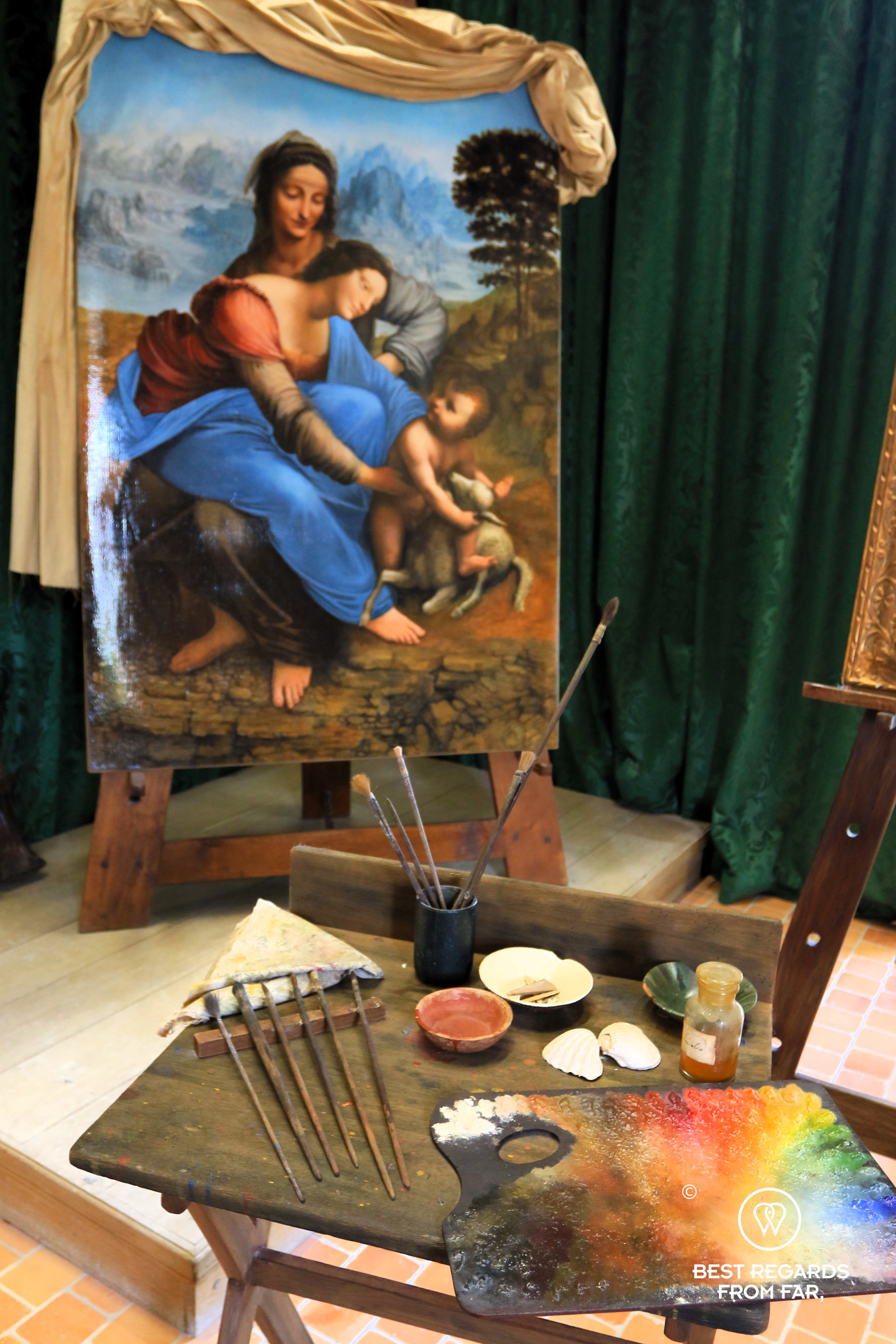
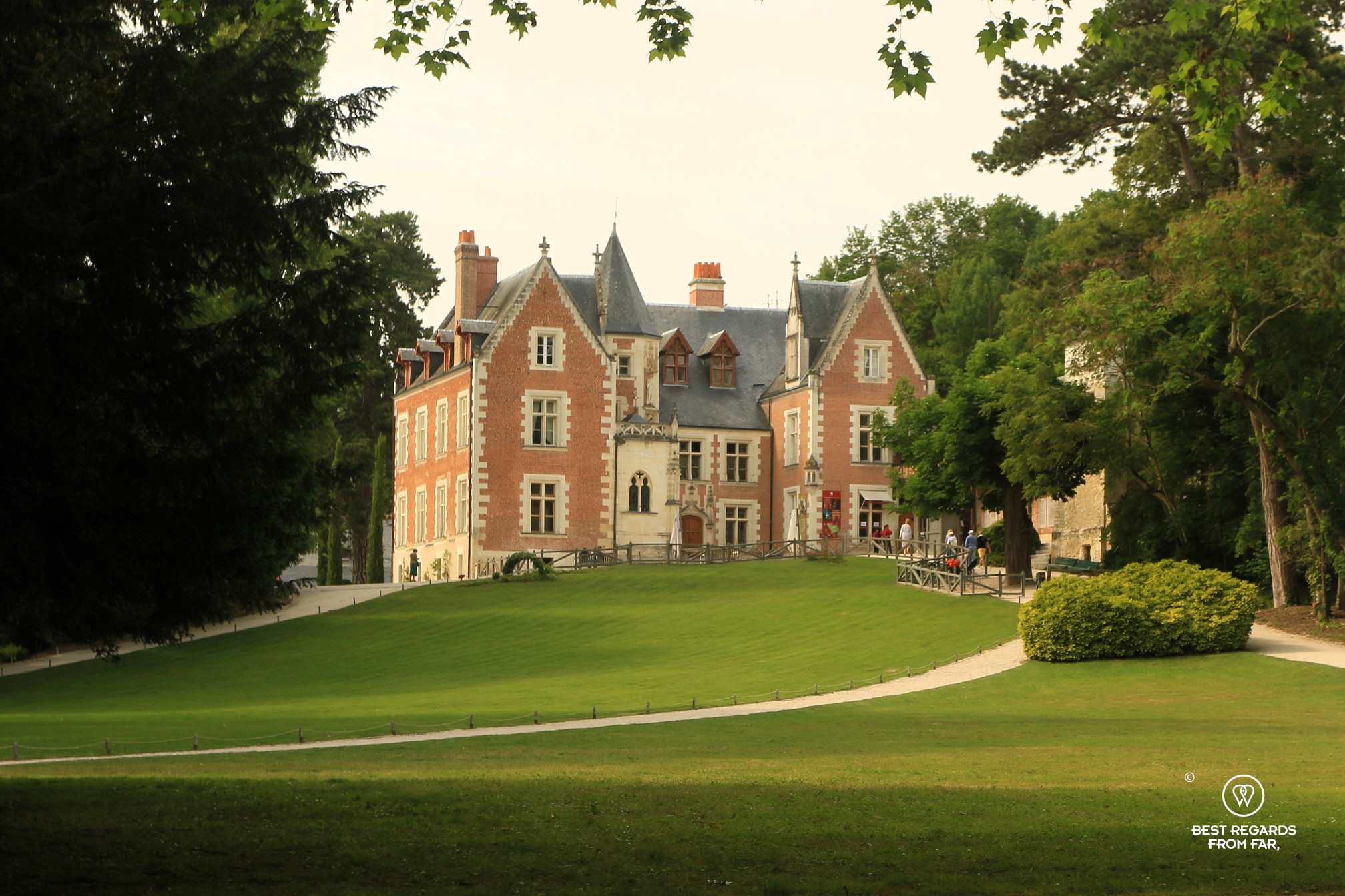
Once in Amboise, in 1516, Da Vinci settled in the 15th century castle of the Clos Lucé from where he served the king in many ways, from being his first painter to engineering cities and machines (many of which that were reproduced in three dimensions and are now dotting the beautiful park of the Clos Lucé castle) and orchestrating royal parties with their lot of innovations and special effects.


The genius passed away only three years after moving to Amboise, and is buried in a chapel on the ground of the Royal Castle of Amboise where King Francis I used to stay.
Insider’s tips:
- Checking out Da Vinci’s inventions in the park is a must!
- For all the details, check out the official website.
Château Royal d’Amboise
Why go: Da Vinci’s resting place & a majestic royal castle.
Approaching Amboise, the royal caste thrones majestically on the banks of the Loire River. In the heart of the lovely city, this strategic site on the Loire River had been hosting a castle since the 11th century. King Charles VIII – the last king of the Middle Ages – turned it into a palace with a gothic flamboyant style, towers, a chapel, a garden on the terrace above the Loire River.
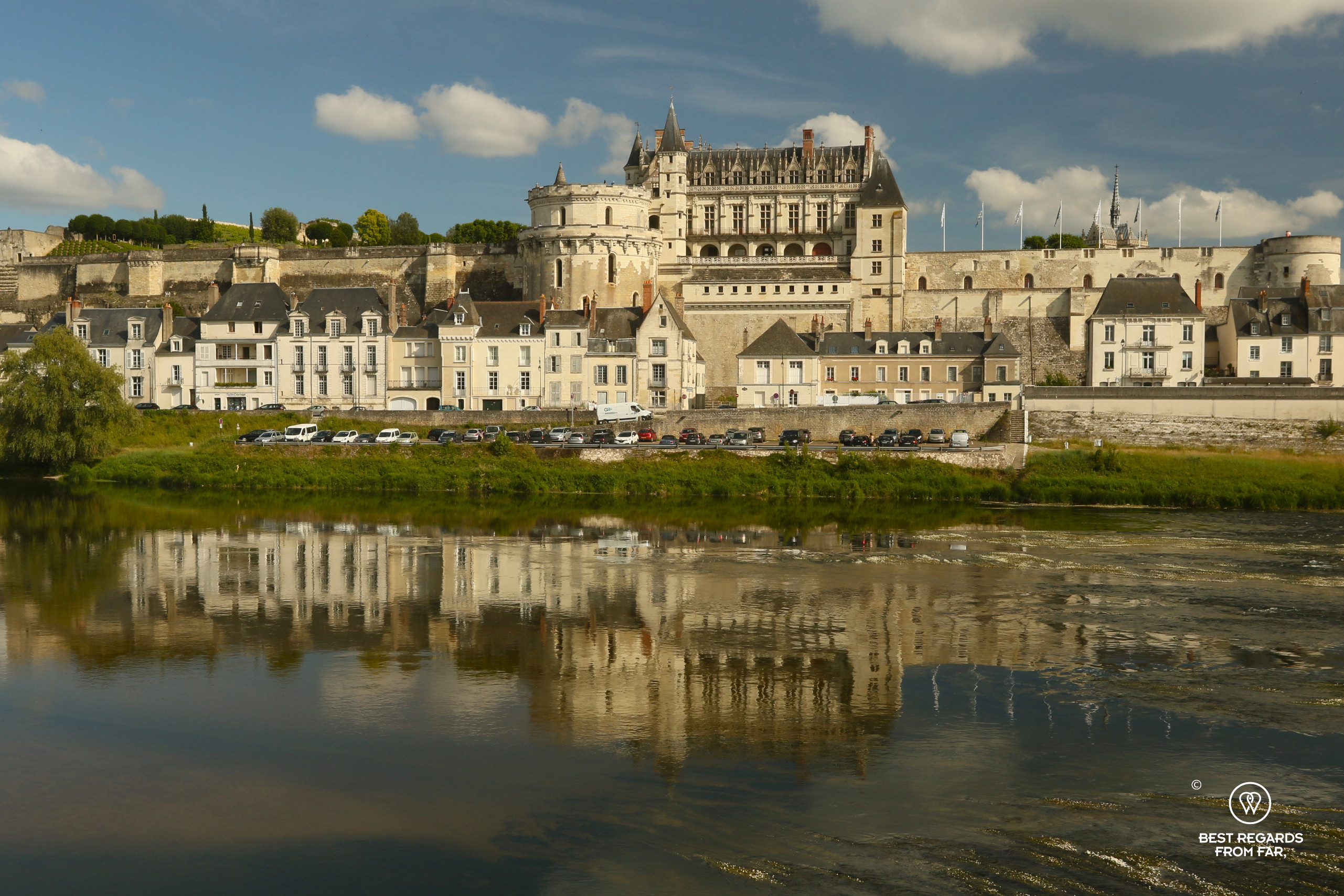

Francis I (1494-1547) is the French king who spent the most time in Amboise. He was a great patron of the arts and attracted many Italian artists to boost the French Renaissance such as Leonardo Da Vinci who was offered the castle of the Clos Lucé, a stone’s throw from the royal castle of Amboise. The latter remains Da Vinci’s resting place, according to the master’s last wishes.
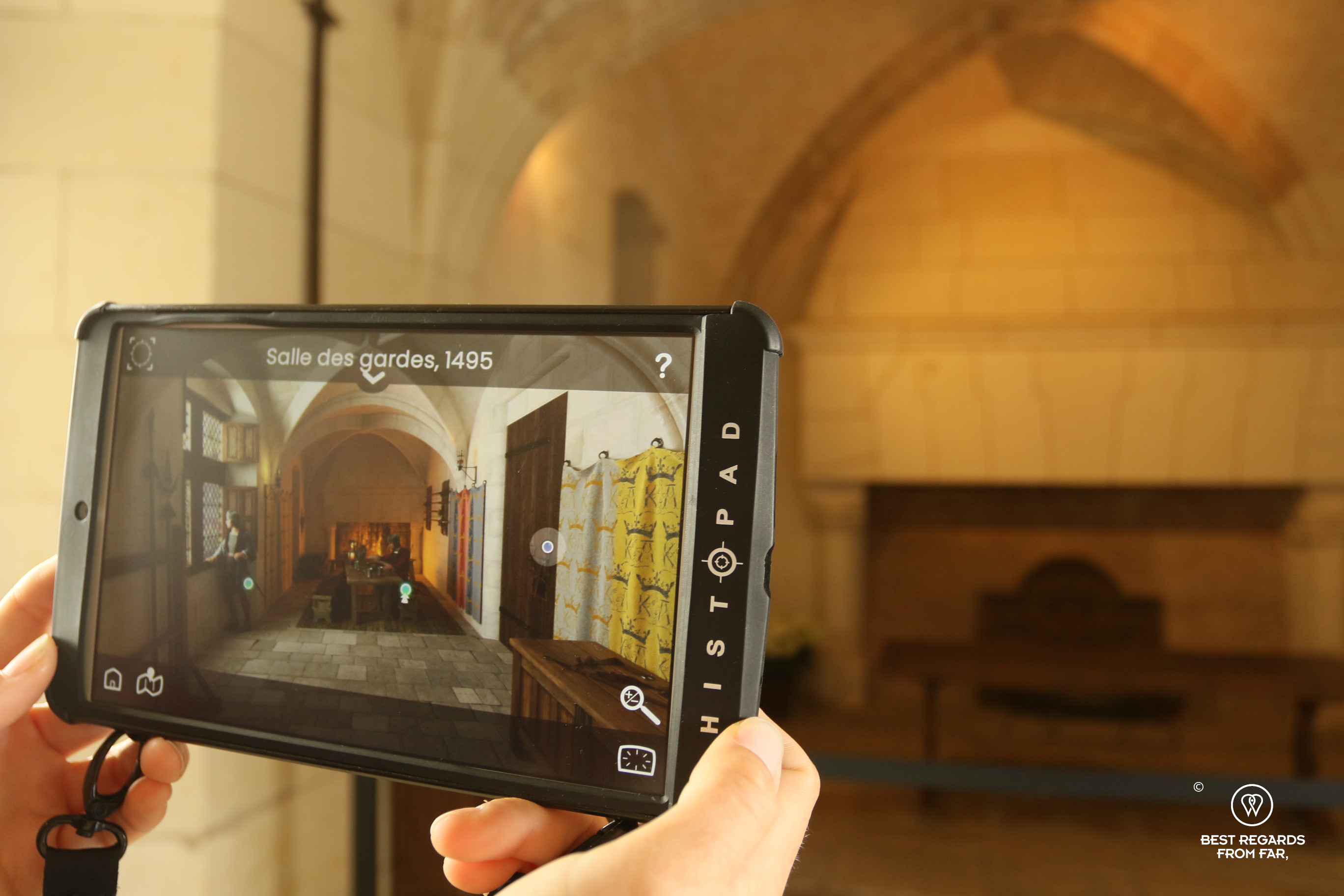


Insider’s tips:
- The Histopad gives a lively reconstruction of the Renaissance castle in augmented reality when it was inhabited by the French kings: a visual way to learn about history!
- For all the details, check out the official website.
Château du Rivau
Why go: more than simply visiting, experience staying in a castle & stroll its incredible rose garden.
Initially a fortified house to protect the border between the neighbouring regions of Touraine, Anjou and Poitou – a powder house during the Hundred Year’s War between the French and the English – the Rivau was turned into a castle in 1438 by Pierre de Beauvau, counsellor of the King Charles VII of France. His important position called for a more elegant estate and even if built in the 15th century, the architecture of the château du Rivau is characteristic of the 1300s with its donjon, turrets, machicolation, dry moat and drawbridge. It stands out in the Loire Valley where most medieval fortresses were upgraded to Renaissance-style castles. At Rivau, only a few ornaments around some windows, the verticality of the architecture, the opening on the gardens and frescoes inside are reminiscent of the Renaissance period.
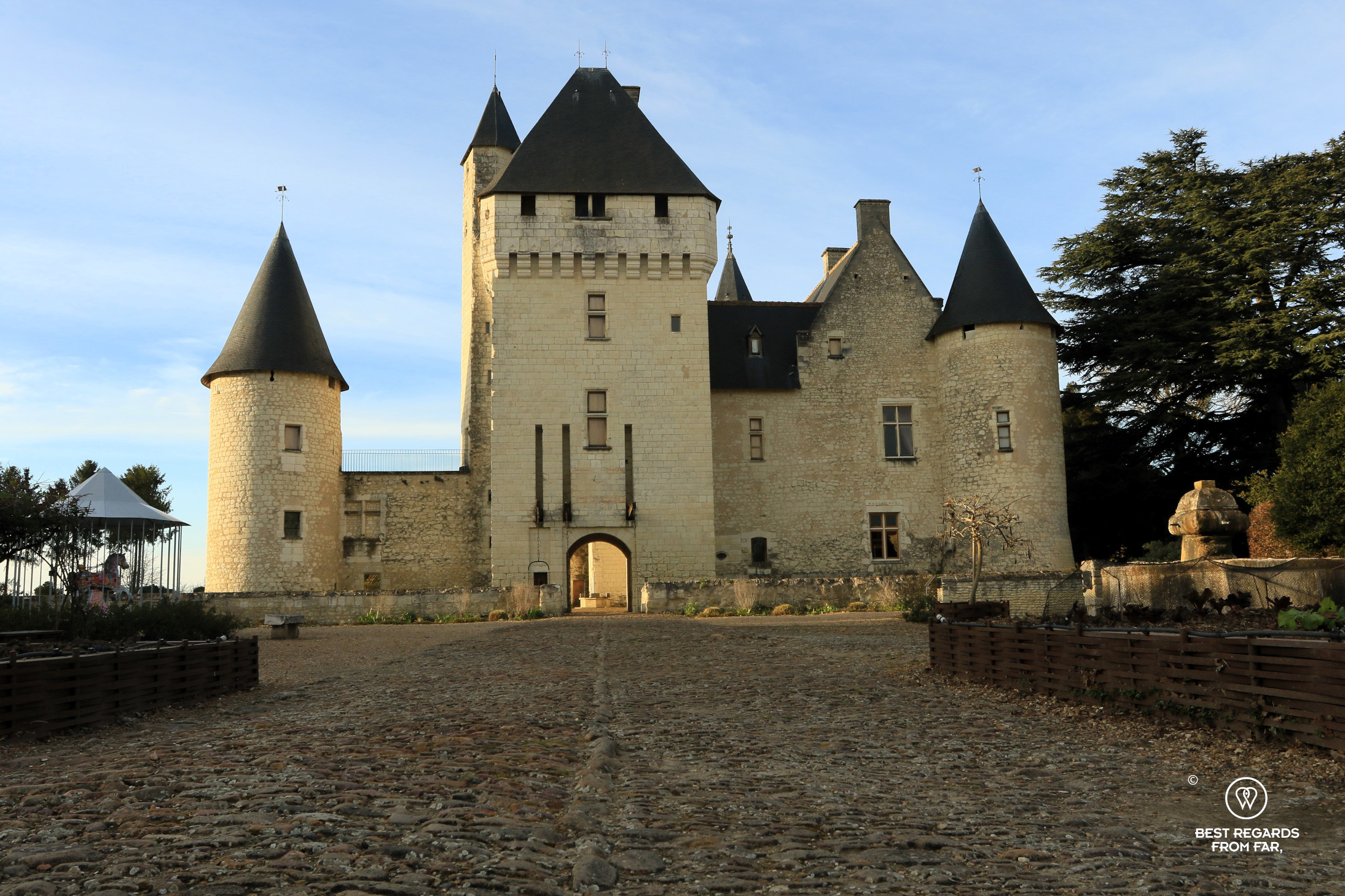
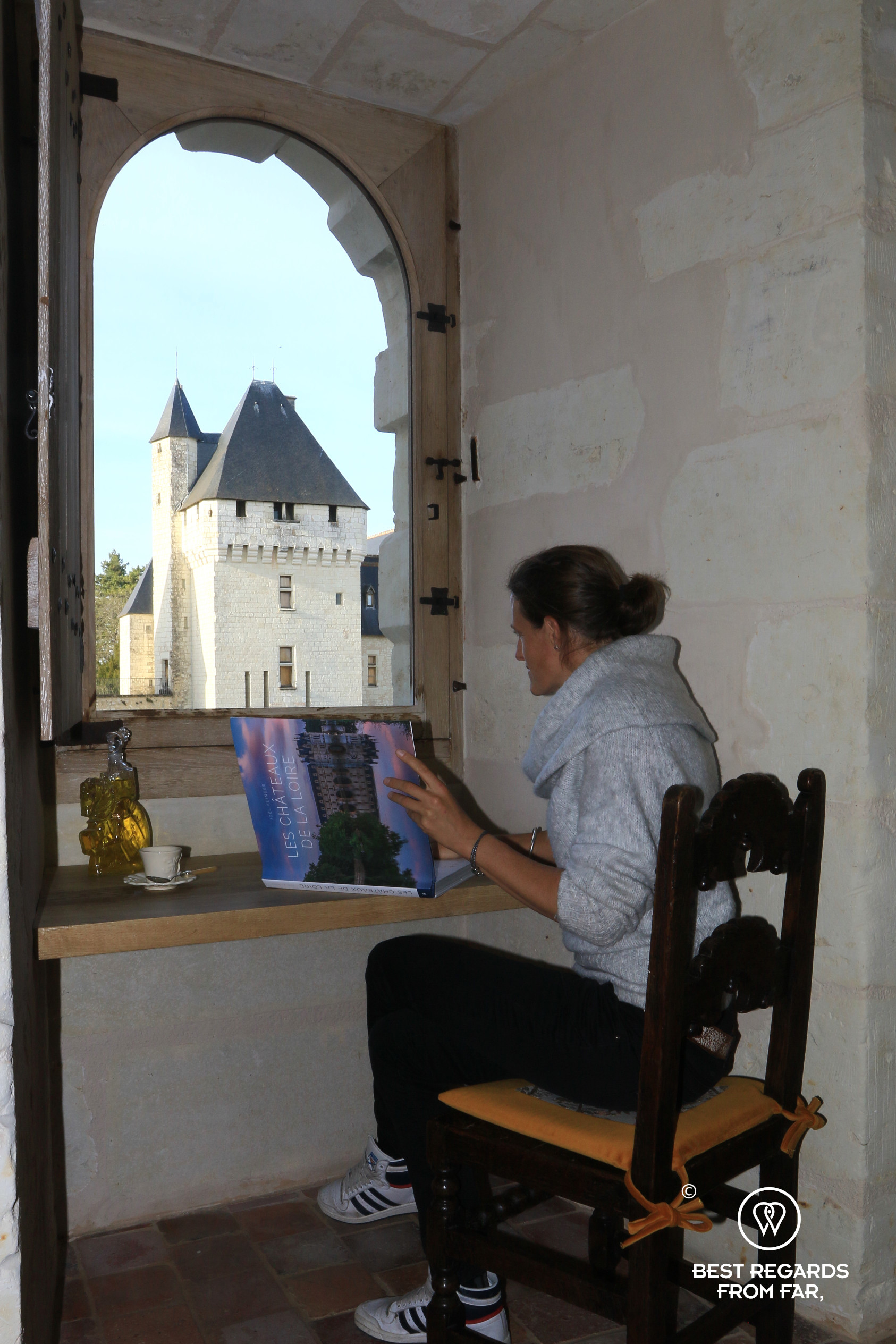
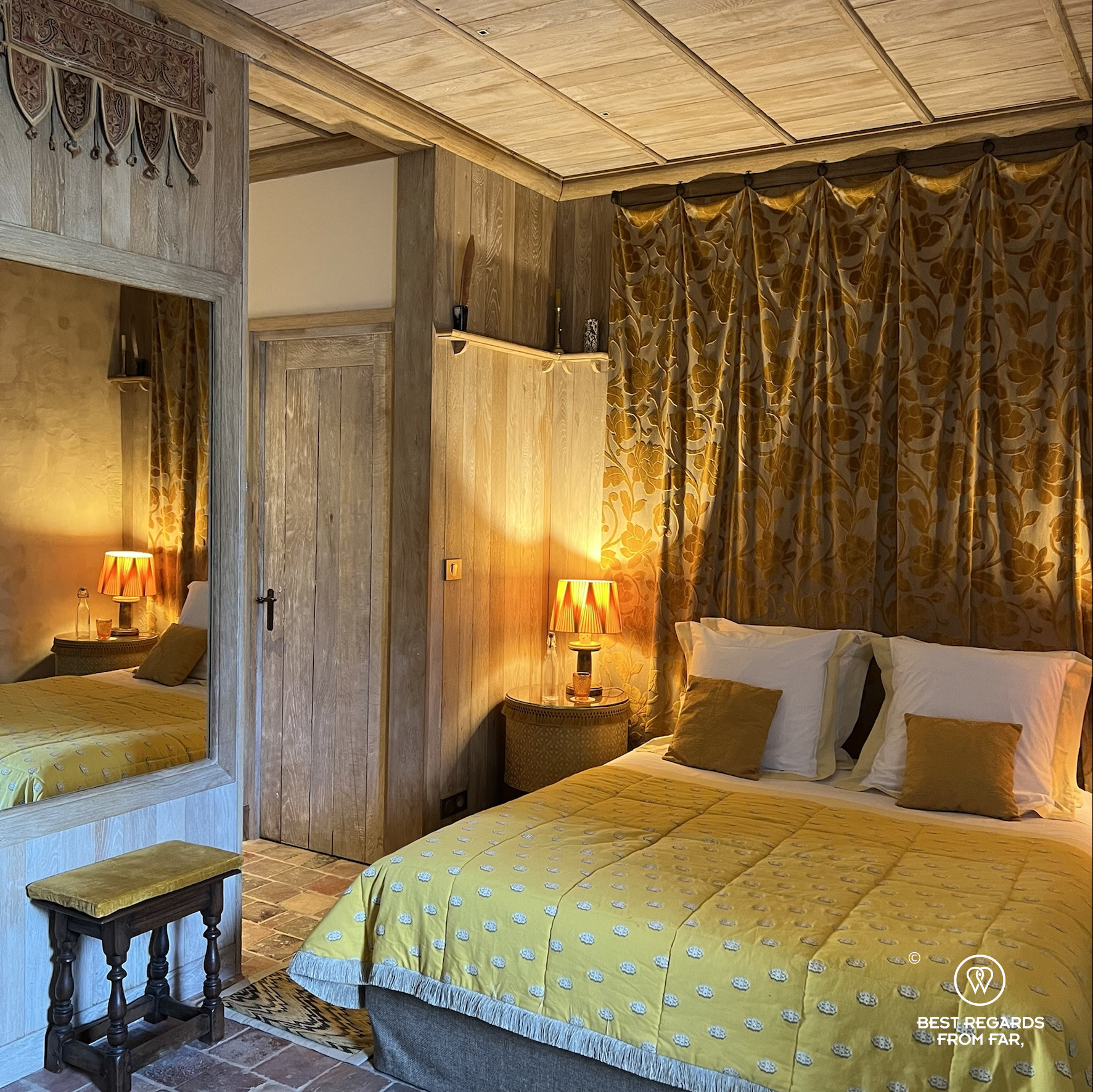
The Beauvau family, esquires of the kings Francis I and Henry II, kept the castle for 250 years, breeding royal stallions and war horses in the 16th century stables – which have been turned into a medieval-themed 4-star hotel. They also extracted good revenue from its lands, and more specifically from the black truffles that visitors can still look for and enjoy in January and February every year.
In 1997, the Laigneau’s embarked on an incredible family adventure, renovating the Rivau castle as a fairy-tale castle and creating amazing gardens becoming fast a “remarkable garden of France”. The organic vegetable garden is a conservatory of forgotten veggies while the rose garden is one for perfumed roses with no less than 475 varieties of roses and 1,600 rose trees – some varieties dating back to the Middle Ages such as the Gallic rose. The rose-based soaps, jams and teas provided to castle guests are divine!

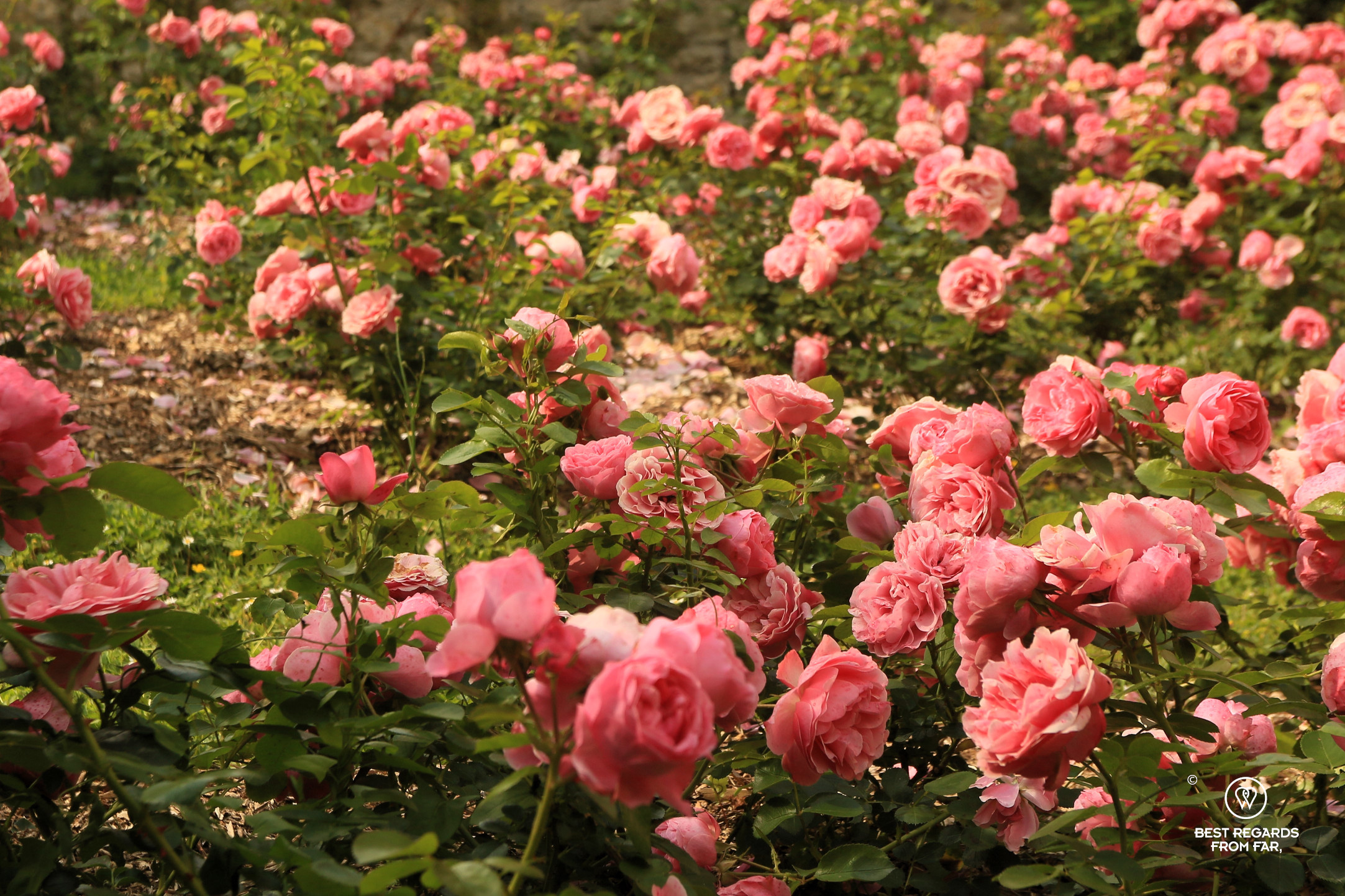

Insider’s tip:
- To enjoy the roses in full bloom, stay at the castle the first two weeks of June.
- Staying at the Rivau castle, guests are hosted in the renovated stables.
- For all the details, check out the official website.
Travel tips:
- Staying in Amboise is ideal to explore the Loire Valley castles.
- Check out this interactive map for the specific details to help you plan your trip and more articles and photos (zoom out) about the area (short tutorial)!
For other incredible historical sites to visit in France, click below:


 Best regards from far,