Text: Claire Lessiau
Photographs: Marcella van Alphen
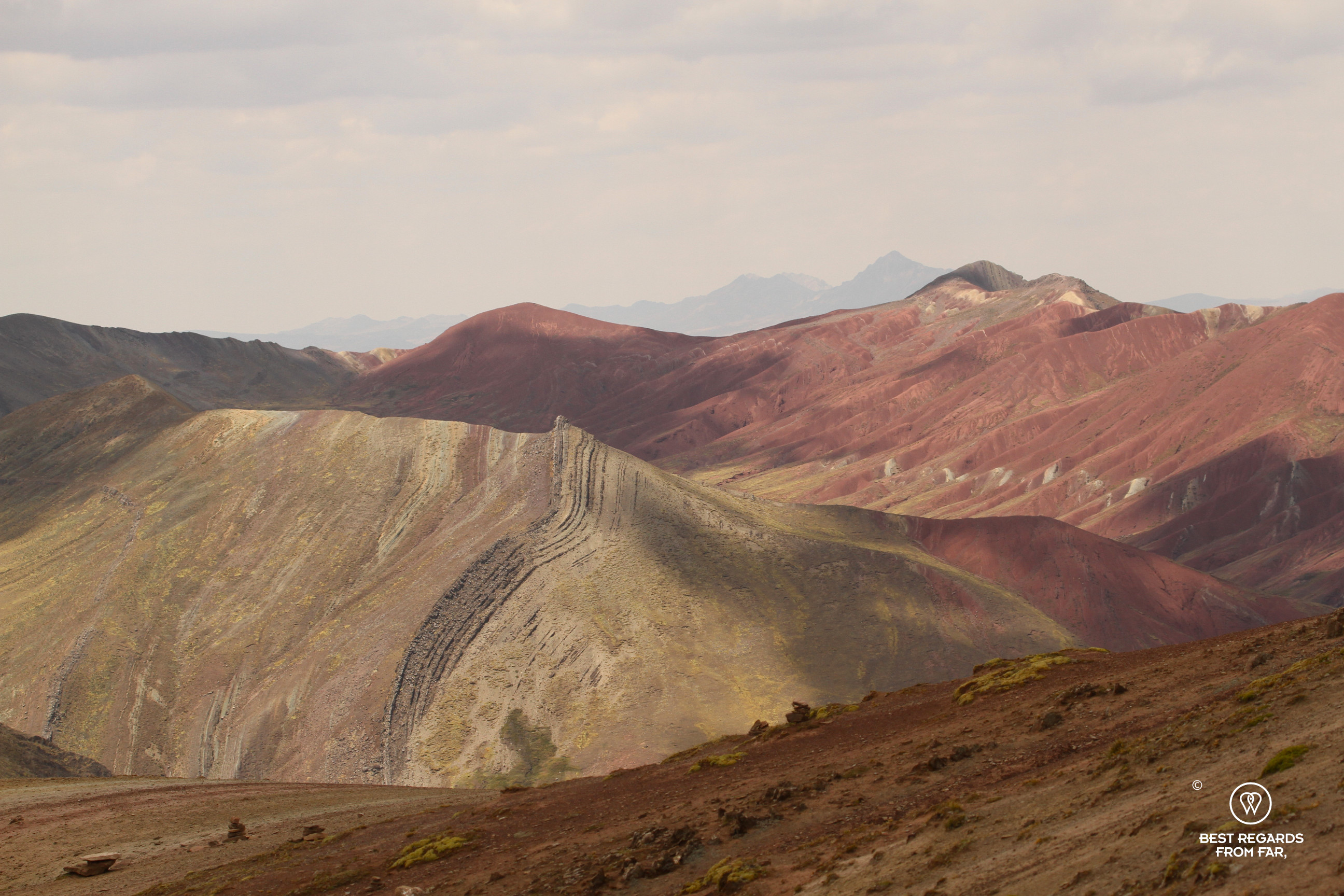
Nestled in the heart of the Andes, just 80 kilometers southeast of Cusco (meaning a good 4-hour drive on winding Peruvian roads and tracks!), lies a magnificent geological masterpiece: Palcoyo’s Rainbow Mountain. While Vinicunca, also referred to as the “Rainbow Mountain” or the “Mountain of 7 Colors” steals the spotlight with over-saturated posters and flyers welcoming tourists in almost every tour agency in Cusco, Palcoyo offers a unique and less crowded site, far from the excesses of mass tourism that have been ruining the experience as its famous counterpart.
Pin it for later!
Geological Marvels:
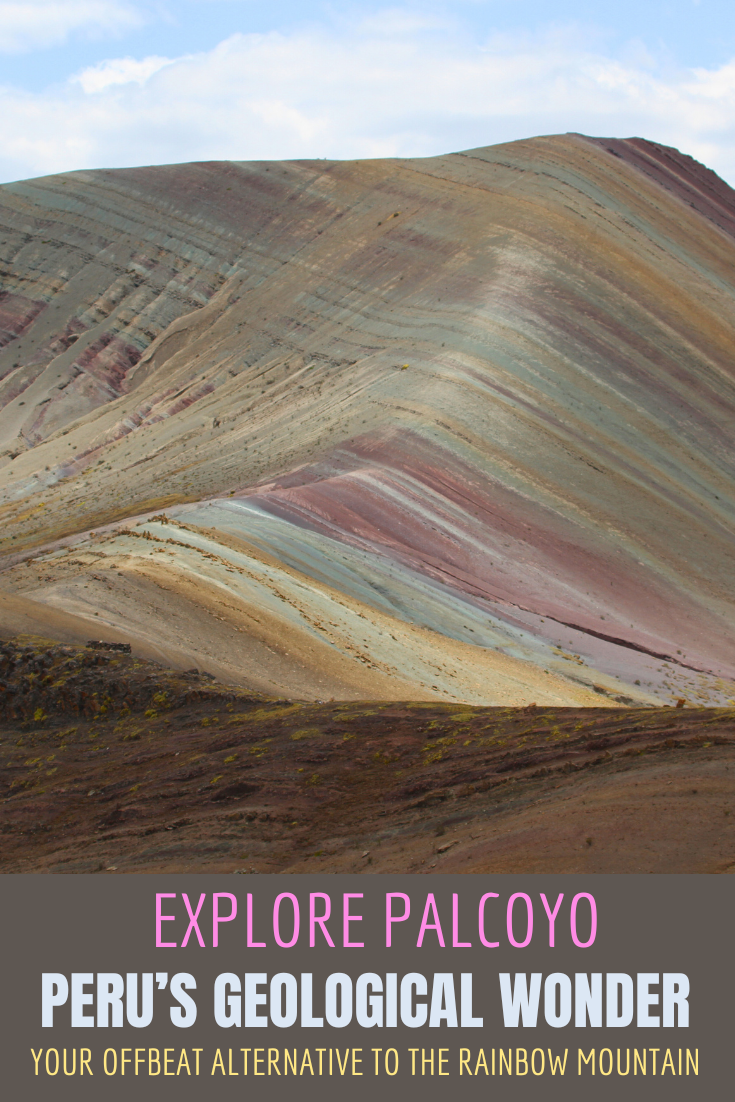
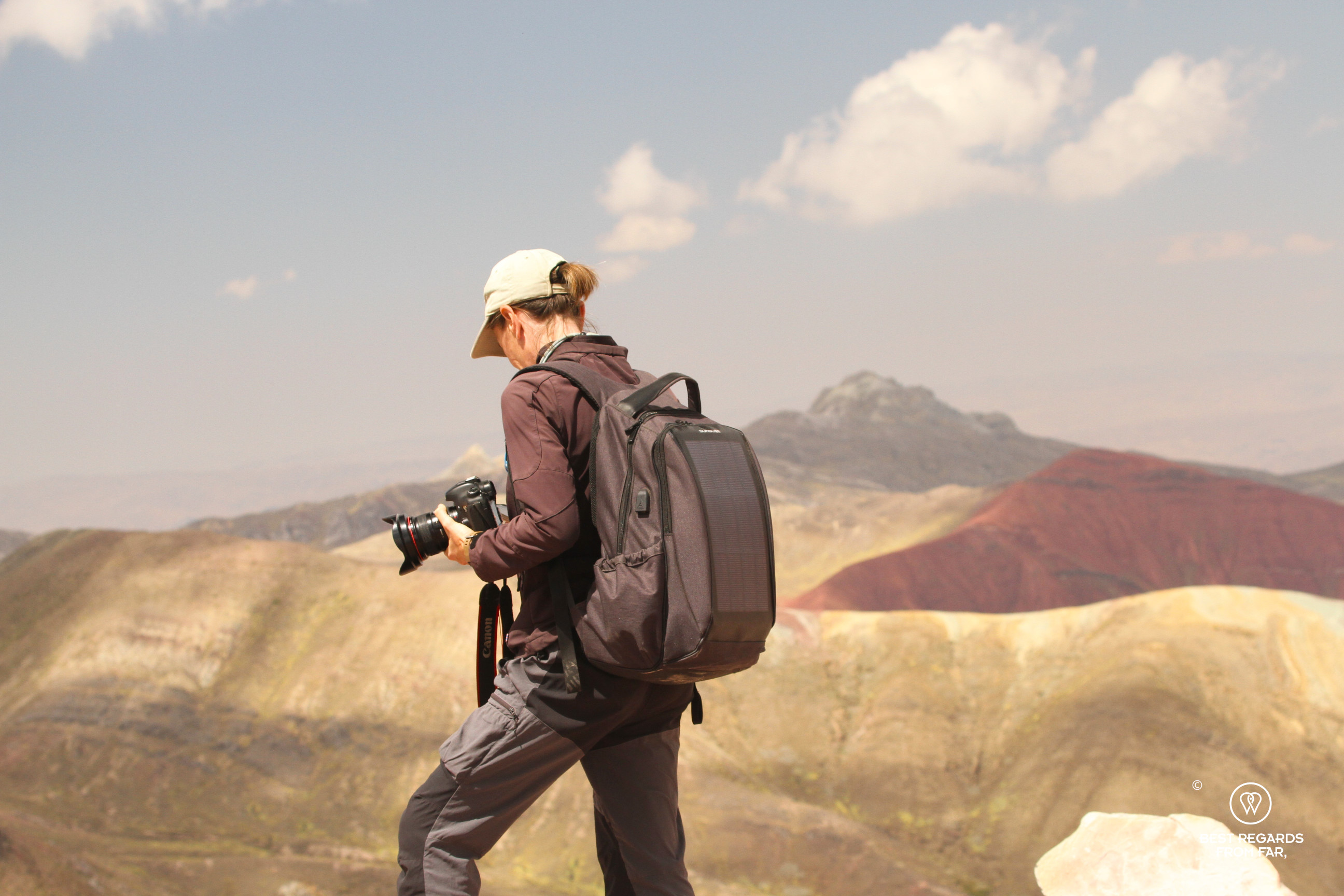
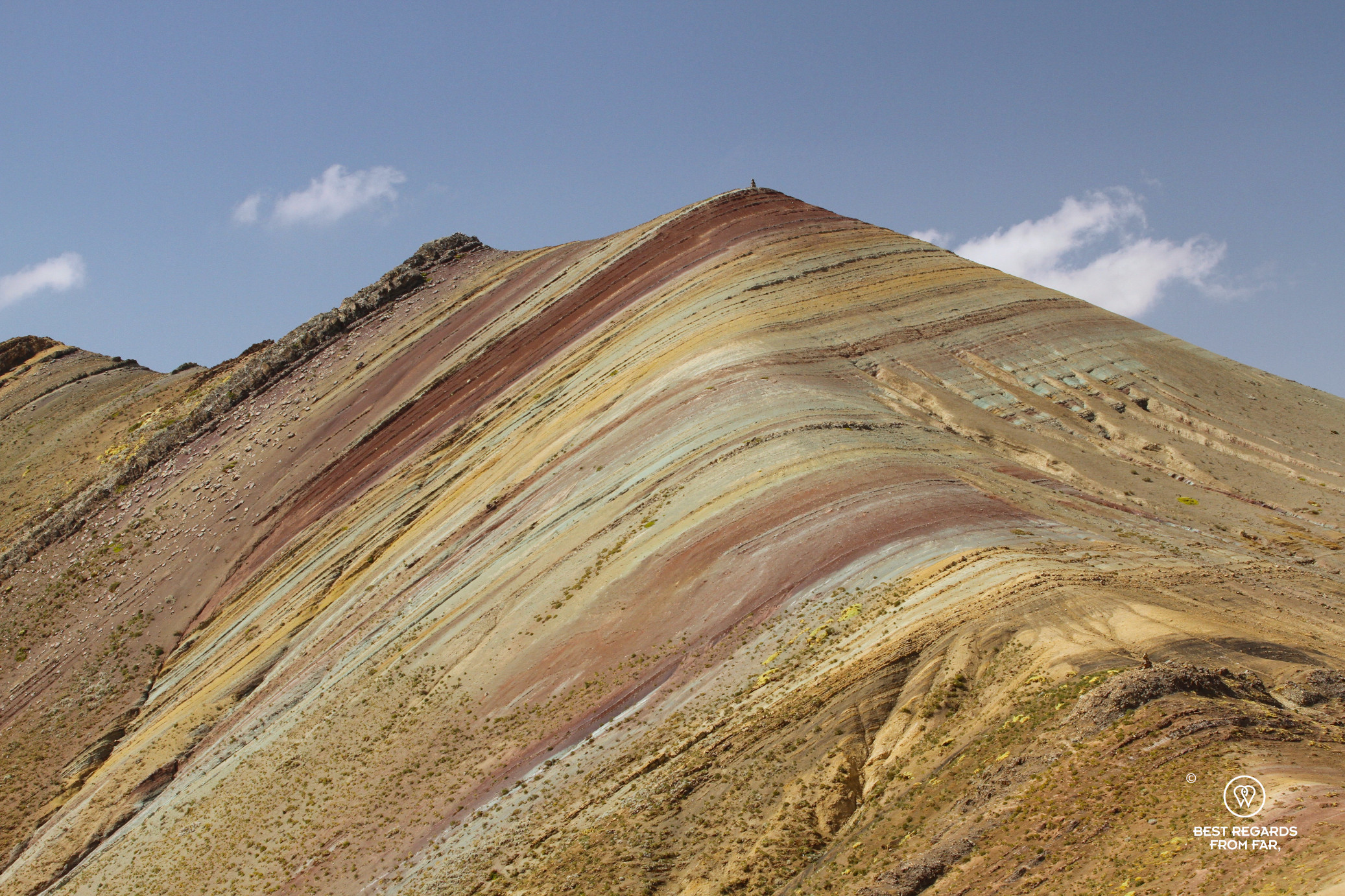
Peru’s geological embroidery began to weave itself over 200 million years ago when the Andes Mountains started taking shape. Around 65 million years ago, sedimentary layers accumulated over each other in a long gone body of water; and 25 million years ago, tectonic forces led to the subduction of the Nazca plate underneath the South American plate, resulting in their uplift and tilt. The tectonic activity also brought volcanic activity, introducing rare and diverse minerals to the Andes Mountains. Just like the colorful textiles found on Peruvian markets, the mountains of Palcoyo adorn a wide range of colors, the result of weathering, mineralogy, and the oxidation of these sedimentary layers over time. Millions of years of geological history unfold, as we slowly gain altitude on foot following a short and steep path to reach a 5,040-meter (16,535 ft) high viewpoint.


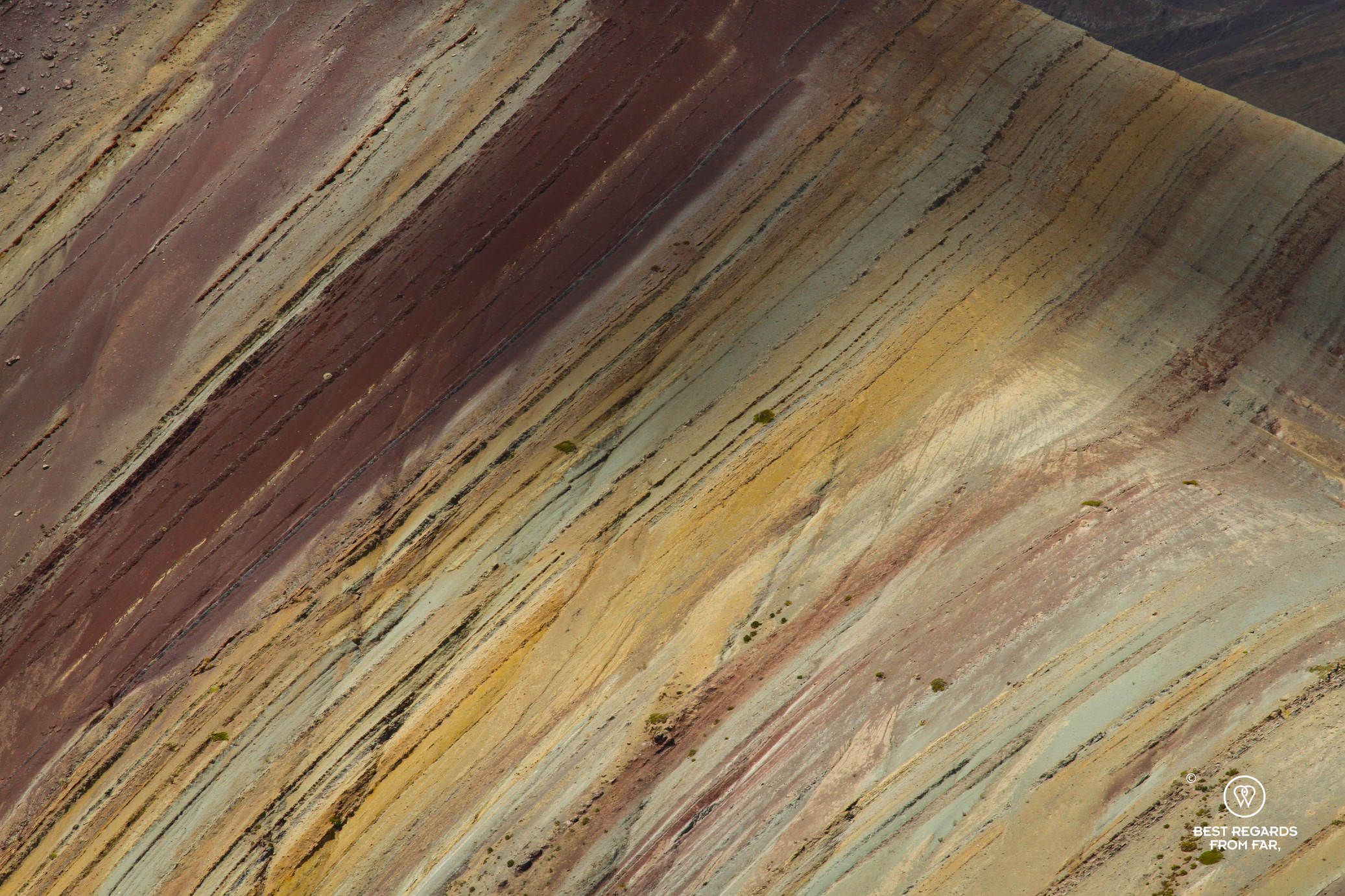
The vibrant hues of this mountainous landscape are due to the mineral composition of the sedimentary rocks when they got uplifted, creating the conditions to oxidize: from the red iron oxide rust to brownish tones introduced by oxidized limonite, and the bright yellow coloration from iron sulfide minerals, each shade has a geological tale to tell. Green layers owe their color to iron magnesium and copper oxide, while the pink hues emerge from a mixture of red clay, mudstones, and sand. The white layers are composed of quartz and limestone, while purple tones come from clay, calcium carbonate, and silicates, and earthy browns indicate a high concentration of magnesium.

Palcoyo:
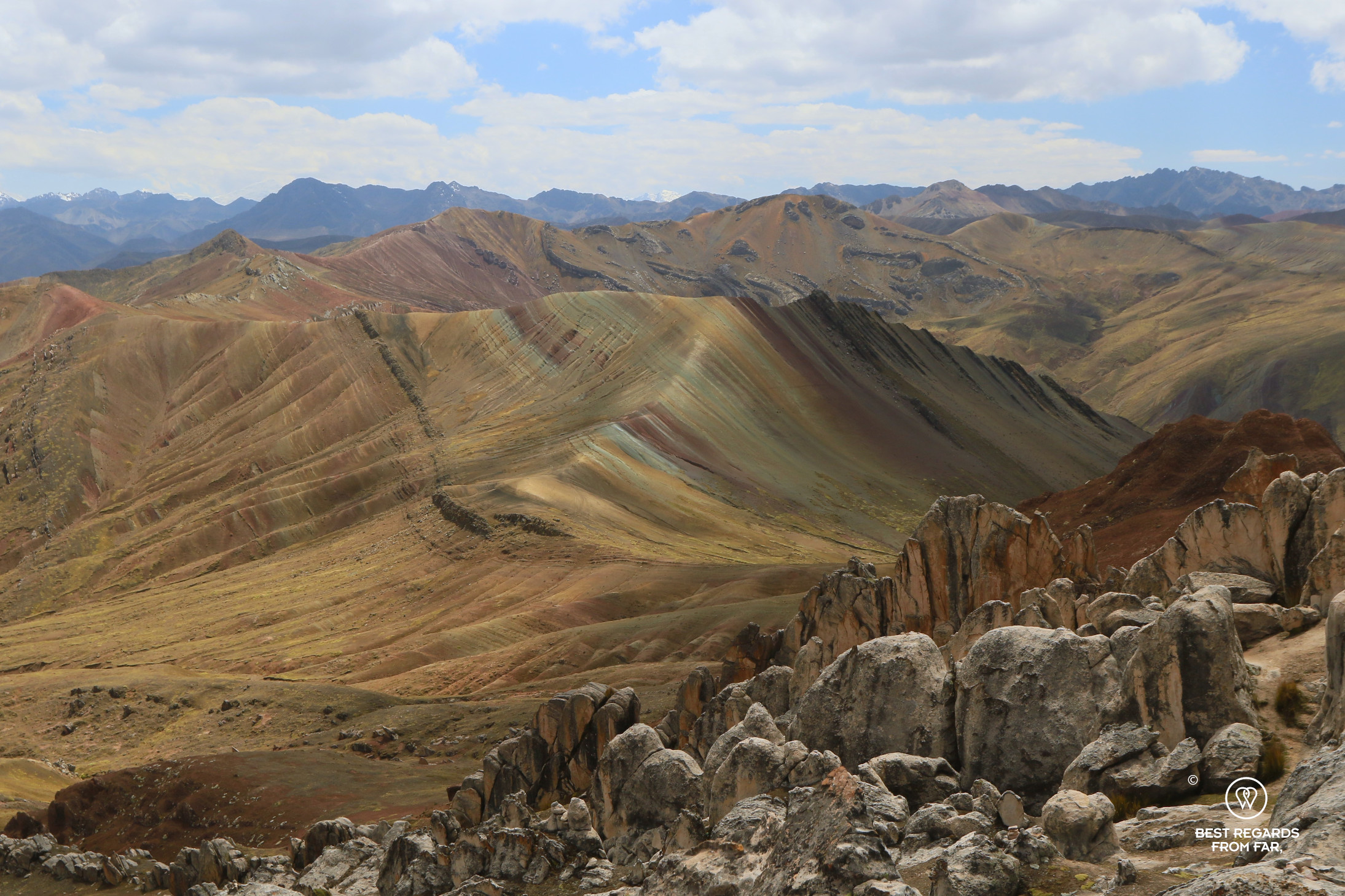
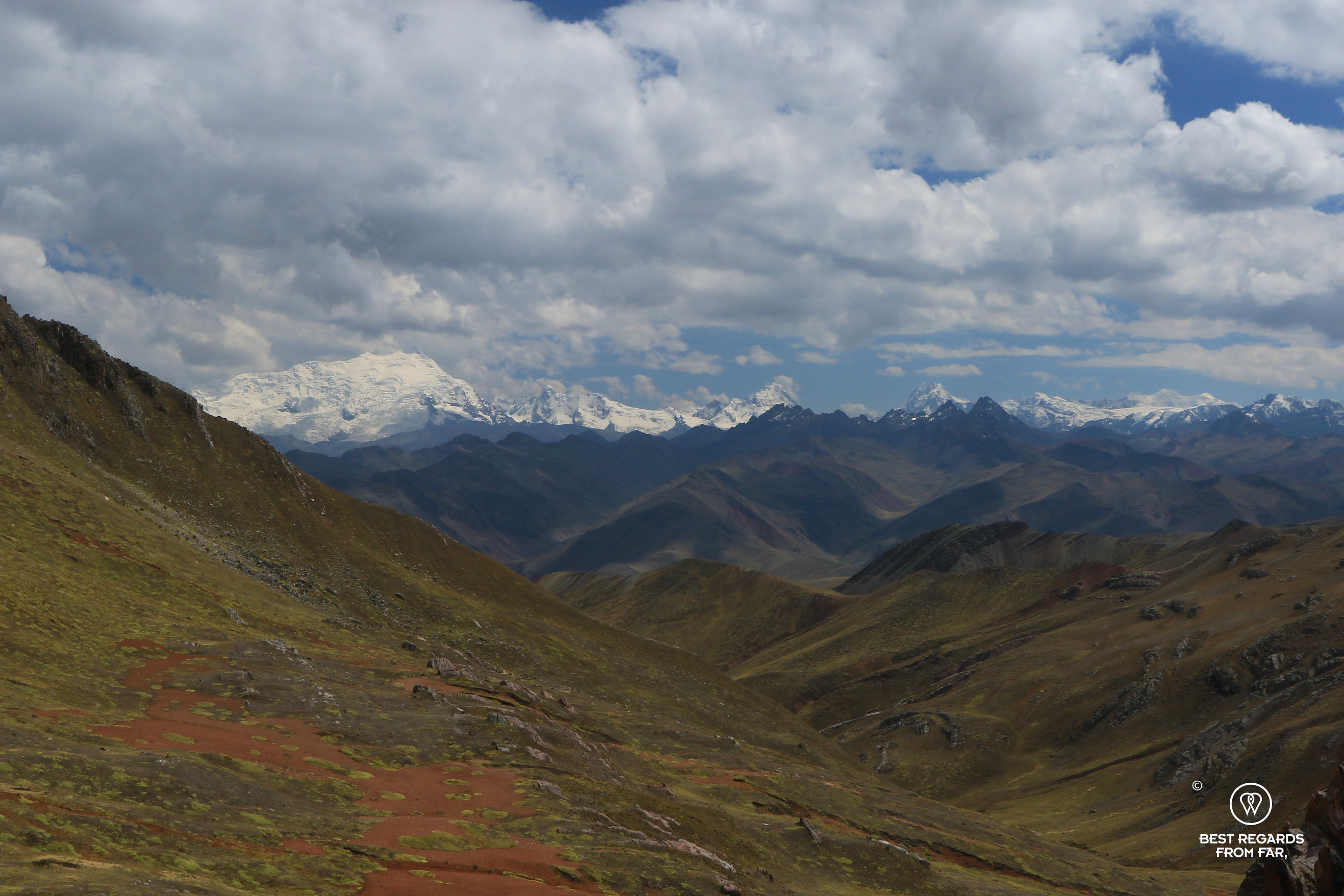
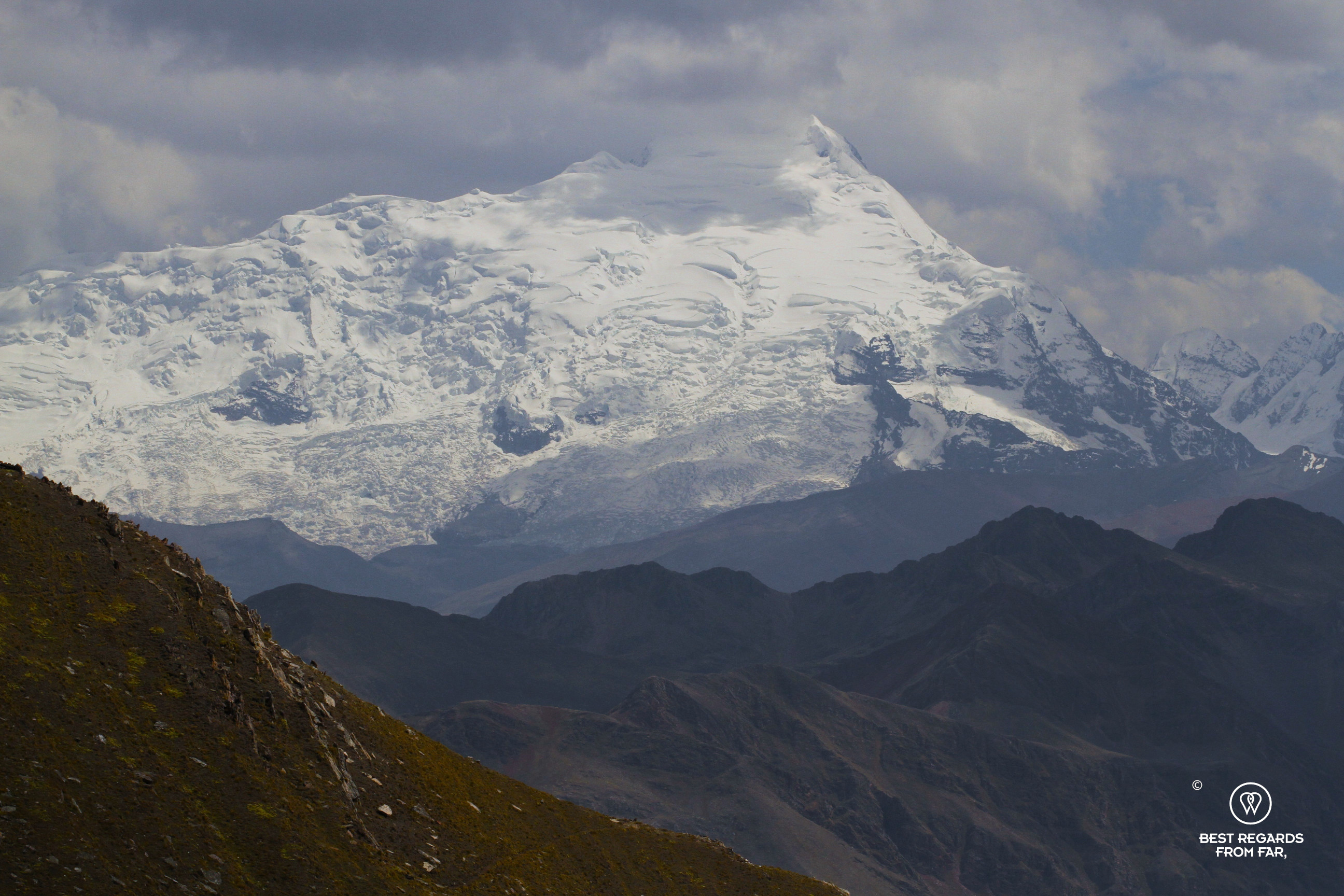
In the Vilcanota mountain range, only a few kilometers away from the famous Rainbow Mountain, Palcoyo stands with the majestic snow-capped Vilcabamba Sierra in the background. Atop the trail, the wonderful viewpoint opens up with the Ausangate Peak (6,348m / 20,827ft, the fifth highest mountain in Peru) dominating. Its white summit contrast fiercely against the deep blue sky and the patchwork of colors of the landscape surrounding us.
According to the belief of indigenous people, mountains are alive and need to be respected, as our knowledgeable guide Wilfredo Huillca Torres explains. In the past, many sacrifices used to be performed on the Ausangate as it was thought it was the source of all the water for the Cusco area, former capital of the Incas. Today, rituals still take place on the most worshiped mountain around Cusco.
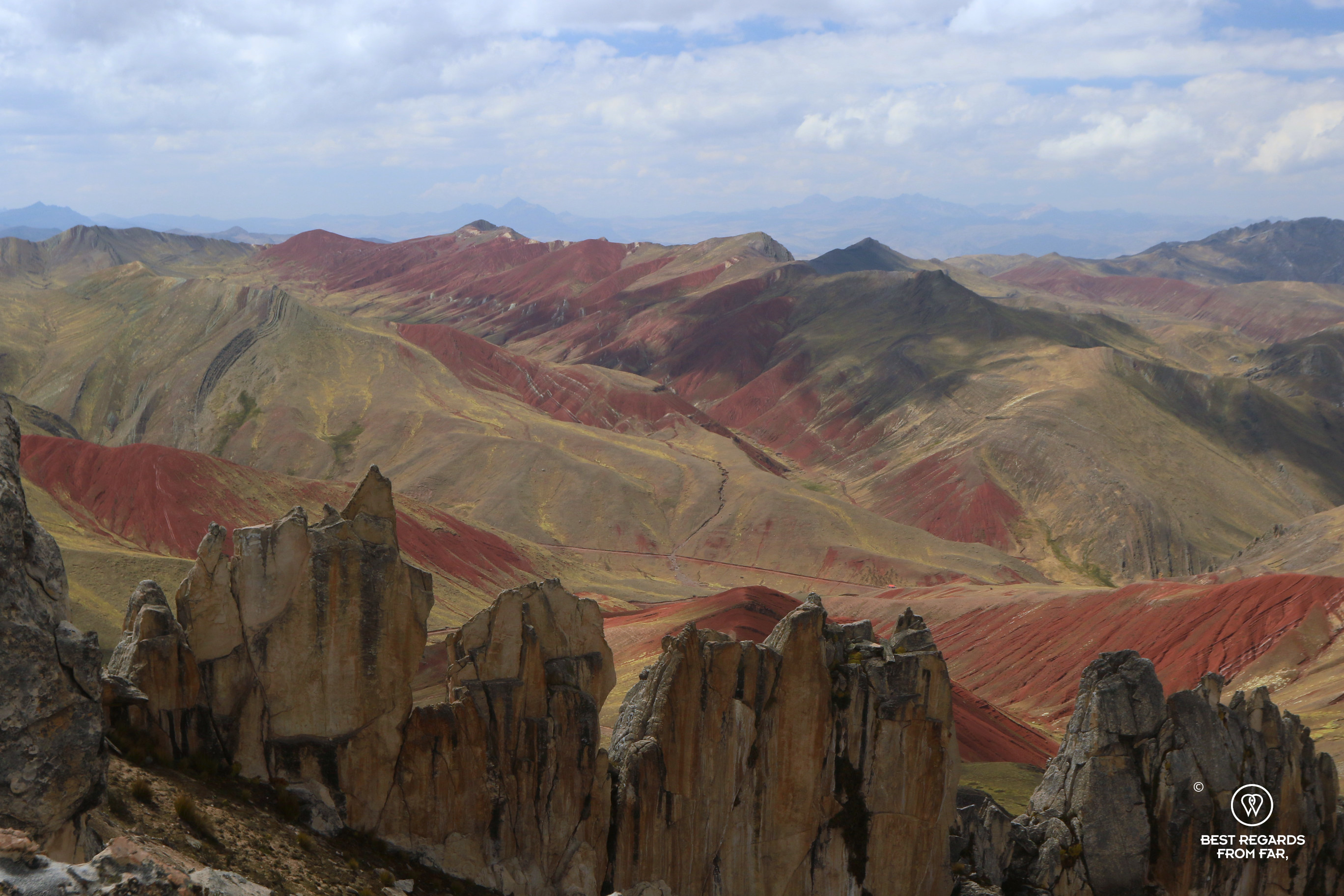
After carefully making our way down on an abrupt downhill, we enter the Stone Forest, another geological marvel of Palcoyo. Erosion has shaped these large natural sculptures into whimsical silhouettes. They perfectly frame the red valley that rolls to our feet below and that we are about to explore.
Petrified waves:
At a much smaller scale, we pass by some incredible petrified waves. Scientists are still questioning how wave ripples form as fossils. A research led by Dr. Taylor Perron, associate professor of geology and associate head of MIT’s Department of Earth, Atmospheric and Planetary Sciences (EAPS) starts uncovering the mystery of how wave ripples could have become petrified. For instance, if the water level suddenly dropped, it could have left a sand bed’s ripples exposed to the air, drying them out and hardening them to some extent, so that they retained their patterns even as more sediment slowly layered itself on top of them over millions of years. Similarly, if a finer sediment like silt covers a sand bed, such as after a large storm, these sediments could have blanketed the existing delicate ripples, armoring them and keeping the waves from eroding the ripples before more sediment buries them. Later, the rock overlaying the ripples can naturally erode away, exposing the preserved ripples at the surface again. In a nutshell, we are looking at a snapshot of the moment when these wave ripples were buried, millions of years ago!
Alpacas, llamas & vicuñas:
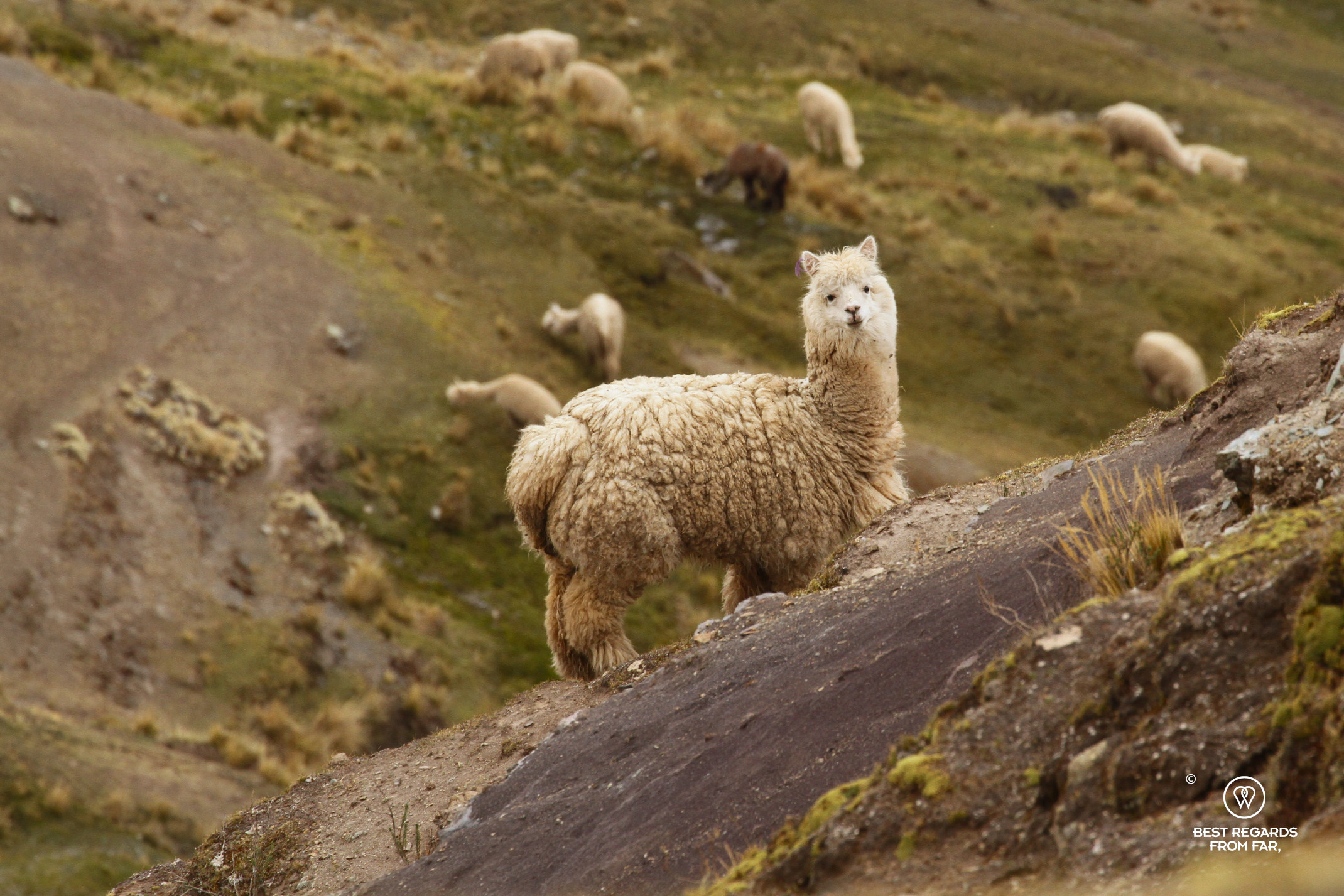
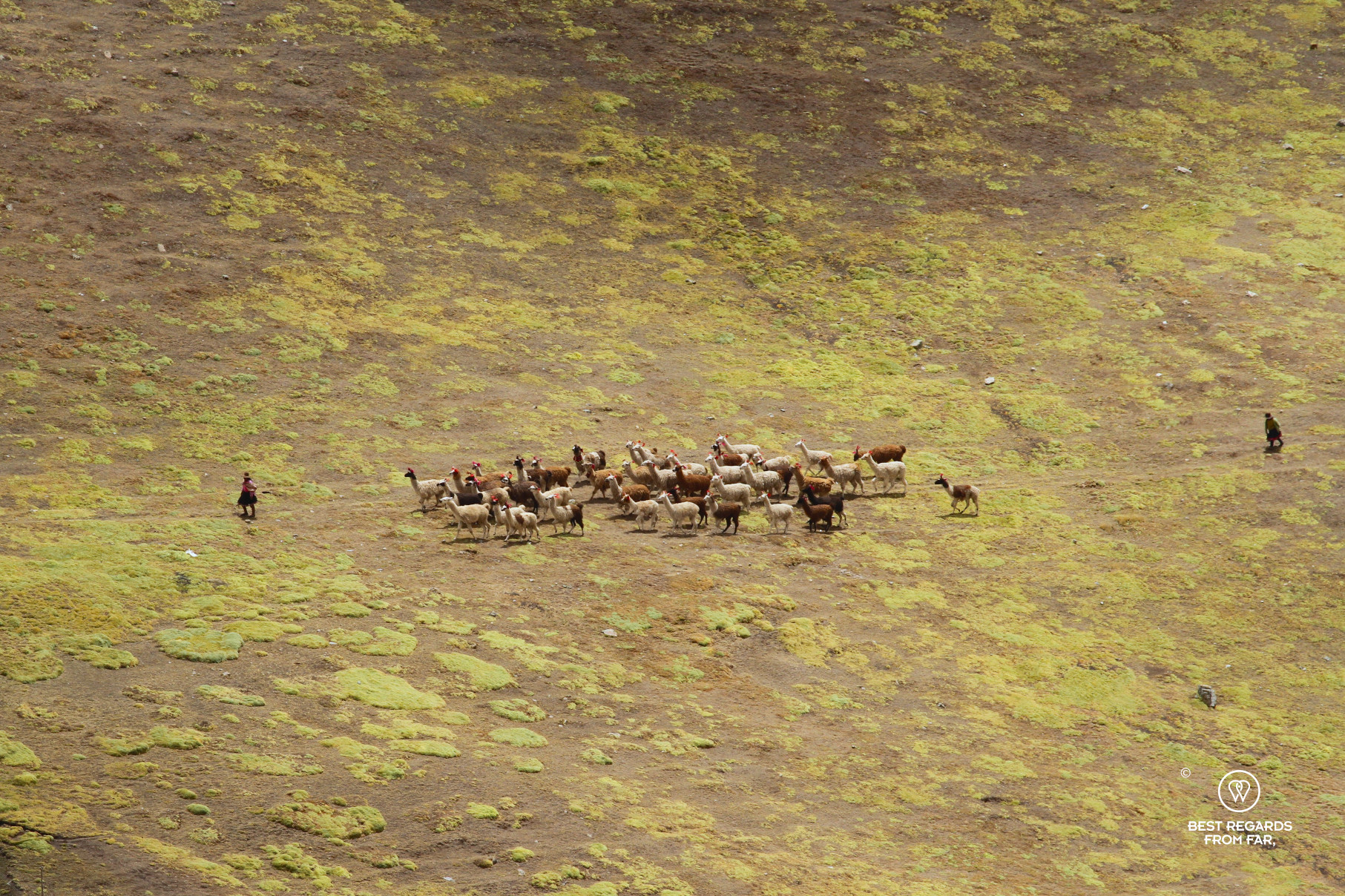
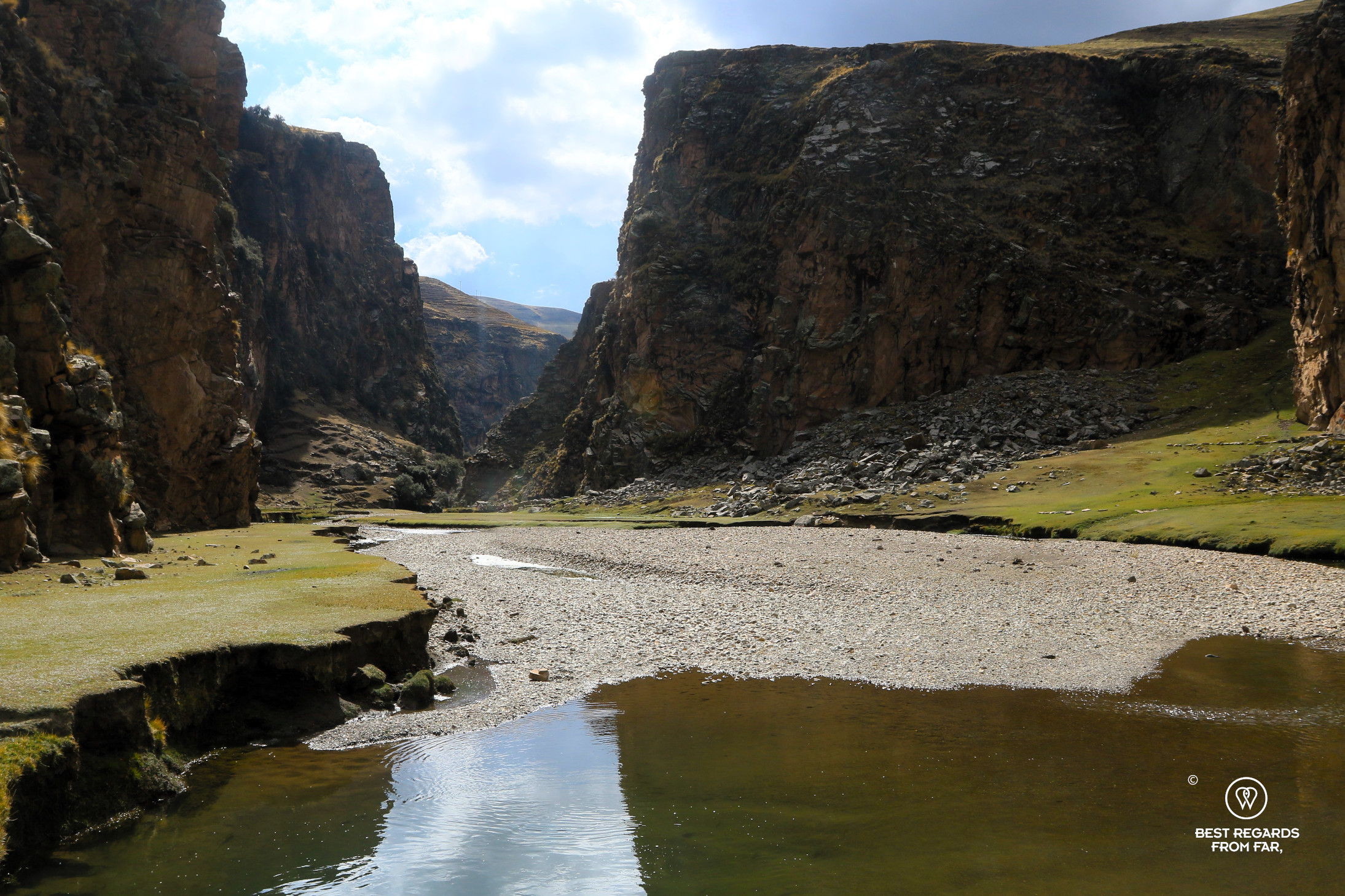
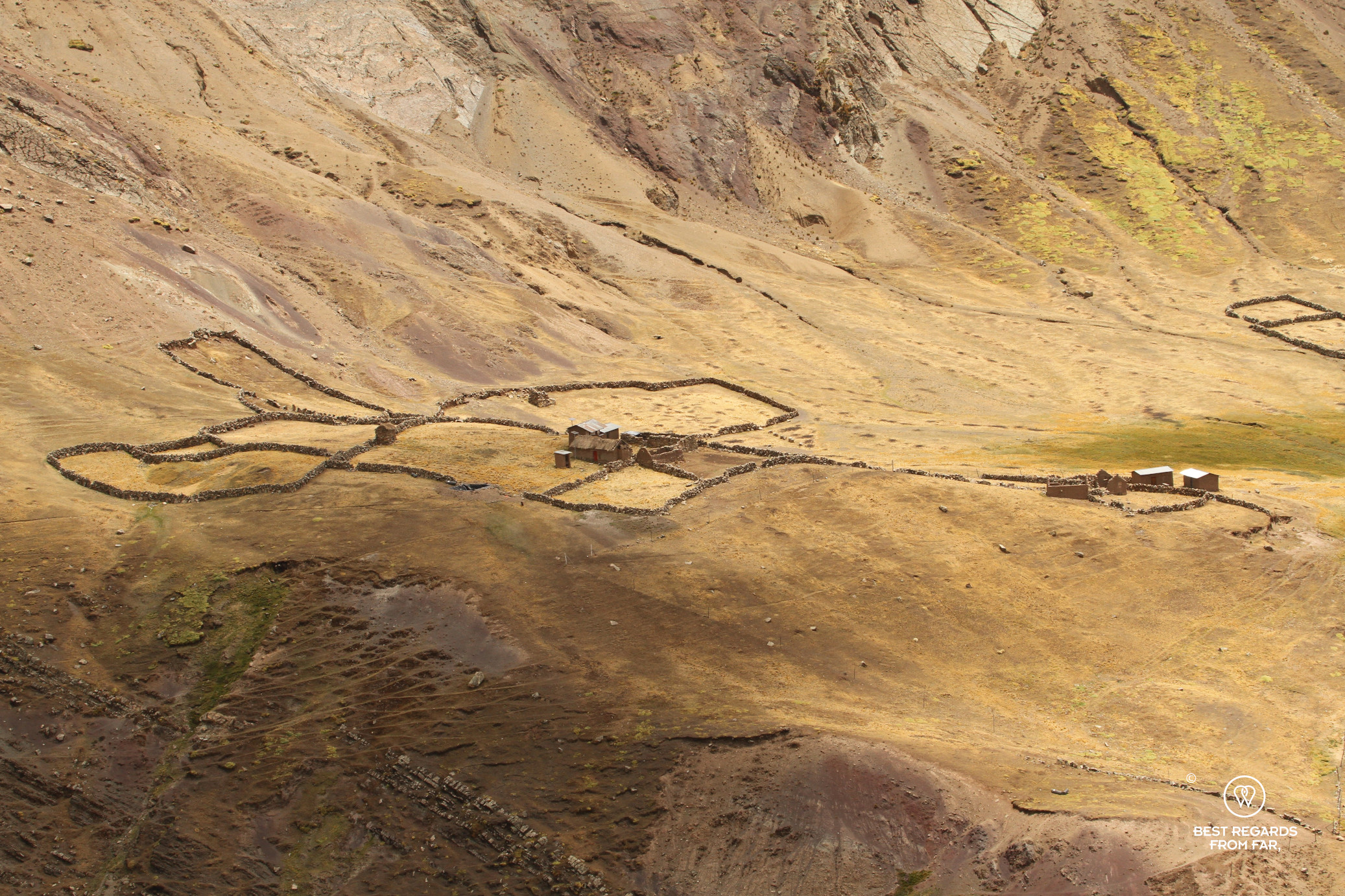
A pleasant downhill hike, is the occasion to not only enjoy the geological wonders of Palcoyo, but to also experience a slice of life in the Andes. Alpaca herds graze on mountain slopes on straw and grass. Local villagers from Ananiso, the end of our trail and start of the grandiose Ananiso Canyon, check on their herds on foot. Meat and wool of alpacas represent a sustainable source of income in this barren landscape where hardly anything grows. Llamas, kept for personal consumption only, share the rugged terrain. Occasionally, the elusive wild vicuña makes an appearance: the only camelid that is still wild in Peru, llamas and alpacas being all domesticated, they are protected and cherished for its refined and expensive wool. Once in a while a special authorization can be obtained to shear their precious coat.

***
As such a geological gem with so many photogenic rock formation processes in the open, it is quite incredible that Palcoyo is not more visited. It may be due to the fact that Palcoyo’s existence only came to light two decades ago, a result of climate change revealing its colorful minerals as the ice cap melted. Thankfully, this late discovery has been contributing to preserving the site and the traditional way of living with herds of camelids roaming these emblematic mountains.
Travel tips:
- The Rainbow Mountain sees about a third of the visitors to Machu Picchu that had to be limited to 4,000 by UNESCO in order to keep its UNESCO World Heritage Site status! In a nutshell: it is not an enjoyable experience any longer with a lack of collaboration between the local communities claiming the site. As a consequence, we strongly recommend to visit Palcoyo instead.
- Amongst the agencies proposing Palcoyo, Escapate Peru has an ethical approach that is unfortunately too rare in Cusco where many agencies focus on quick cash.
- Check out this interactive map for the specific details to help you plan your trip and more articles (zoom out) about the area!
For more in Peru, click on these images:





 Best regards from far,