Text & photographs: Claire Lessiau & Marcella van Alphen
On March 2nd, 2012, a herd of African elephants started walking to pay their respect. They walked for two days to arrive on March 4th. For three years in a row, every March 4th, the herd returned to that very same house tucked away deep in the African bush. Elephants mourn their dead, returning to where bones of one of them lay and linger around for hours; except that this time, they were mourning a man, Lawrence Anthony who had passed away unexpectedly while he was abroad on the 2nd of March 2012. Lawrence, founder and late owner of the Thula Thula game reserve in KwaZulu Natal, South Africa, had saved this rogue herd of elephants, and each of them knew it. Despite all the struggles, with this elephant herd breaking through the fence of the park, one flipping his car over and killing a rhino, and many more described in his acclaimed book The Elephant Whisperer, Lawrence did not give up on his beloved elephants. The Thula Thula game reserve that he established with his wife Françoise Malby has remained their home. To this day, the elephants of Thula Thula (Zulu for peace and tranquillity) seem to know that they are part of Françoise’s family, and the private game reserve on the former hunting grounds of the Zulu King Shaka, provides a unique safari experience to its visitors with close encounters.
Pin it for later!

An elephant in my kitchen
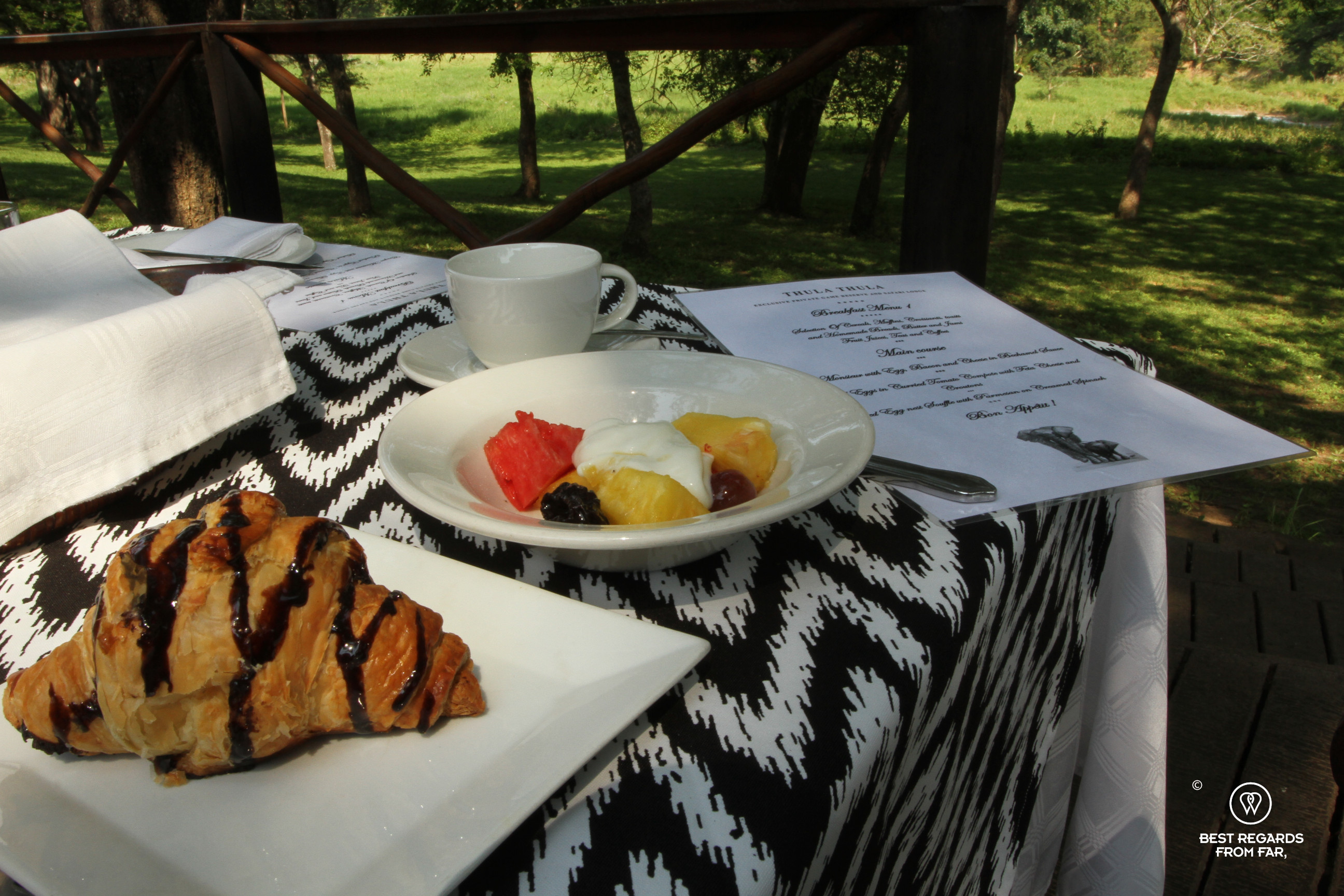
It is a hot afternoon when we sit for lunch on the large terrace of the Elephant Lodge in the welcoming shade of large acacias. The vervet monkeys observe our every move with great interest, hoping to steal a bit of food at the slightest opportunity. In her strong French accent, the ex-Parisian Françoise Malby-Anthony enthusiastically shares her many stories about her elephants, interrupting herself to recommend the best dishes on the menu, some of them French-inspired.
She describes how Frankie, the former matriarch of the herd visited her house – that was supposed to be off limits to the herd – by literally tiptoeing over a 10,000-Volt grill laid on the ground, making a point!



In another astonishing story, she vividly describes how one night she found a 7-day-old baby elephant in her kitchen and the challenges she faced of returning the young elephant (which she named Tom) to the herd with the help of her dedicated staff.
Some may accuse Françoise of anthropomorphism, yet, her love for these animals runs deep. And beyond, “It was a wish of Lawrence and me to protect the rhinos”, she explains as the delicious and well-presented homemade cappuccino ice-cream is brought to us for dessert.


From rhino orphanage to rehabilitation centre
Françoise has courageously pursued the work of her late husband Lawrence in managing the park.
Both, her and Lawrence were deeply affected when Heidi, their beloved white rhino got poached in 2009. With the help of a donation by the animal welfare organisation “Four Paws”, Françoise opened the doors of a rhino orphanage by the end of 2014. Soon they had four rhino orphans, three white rhinos and one black rhino which required specific care and around-the-clock attention. Most of the baby rhinos were severely traumatized after witnessing their mothers being slaughtered by poachers and could not be left alone. The first two orphaned rhinos Ntombi and Thabo from the Kruger Park, were successfully reintroduced into Thula Thula and still roam the reserve today after an extensive rehabilitation program.
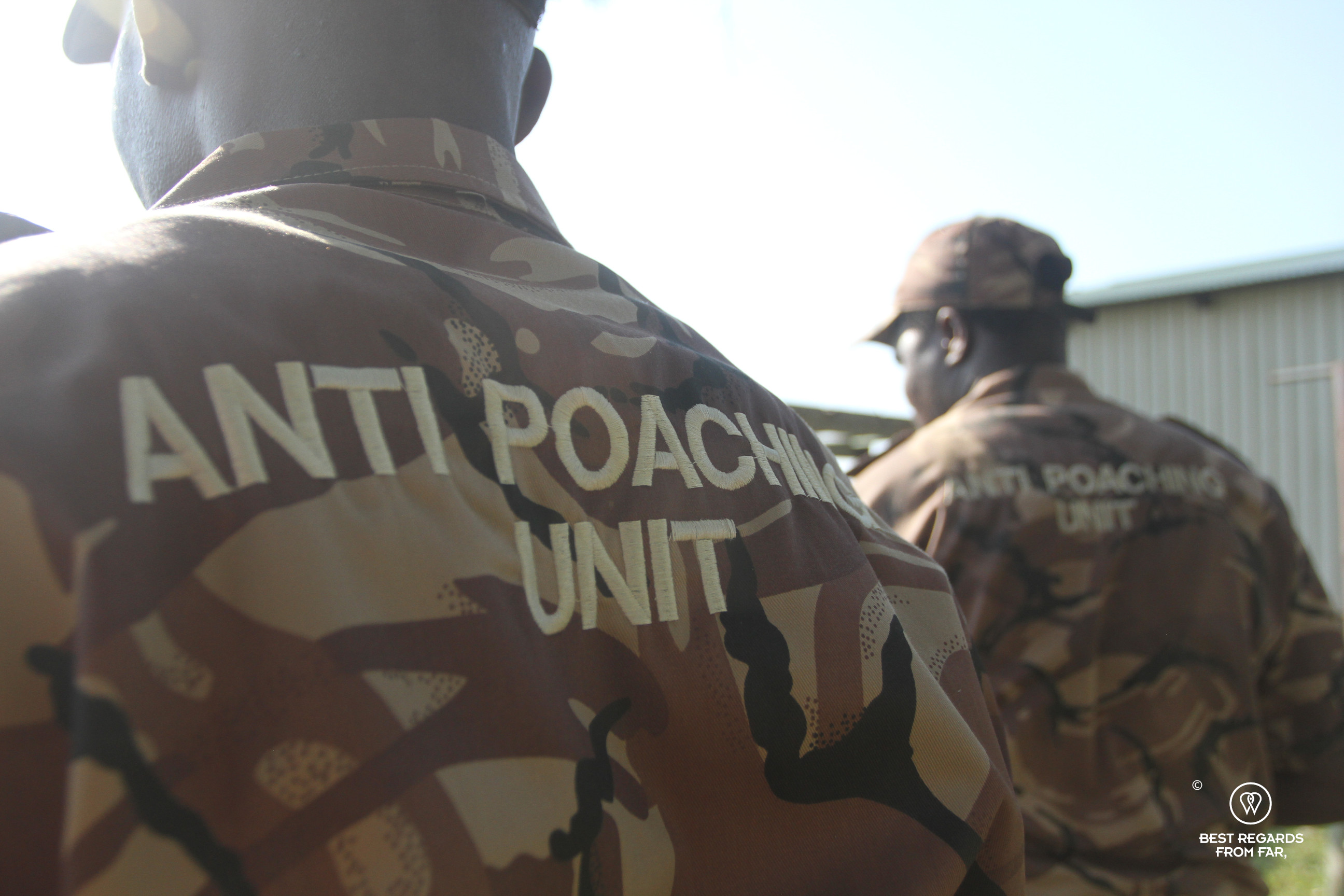
“Without a horn though… Deciding to dehorn them broke my heart”, Françoise explains while her face saddens. “Since poaching numbers have increased, 24/7 security is in place with an Anti-Poaching Unit as well as frequent dehorning procedures. Sadly enough it is a necessity these days to keep our rhinos alive”, she adds while explaining more about the terrible poaching situation in South Africa.

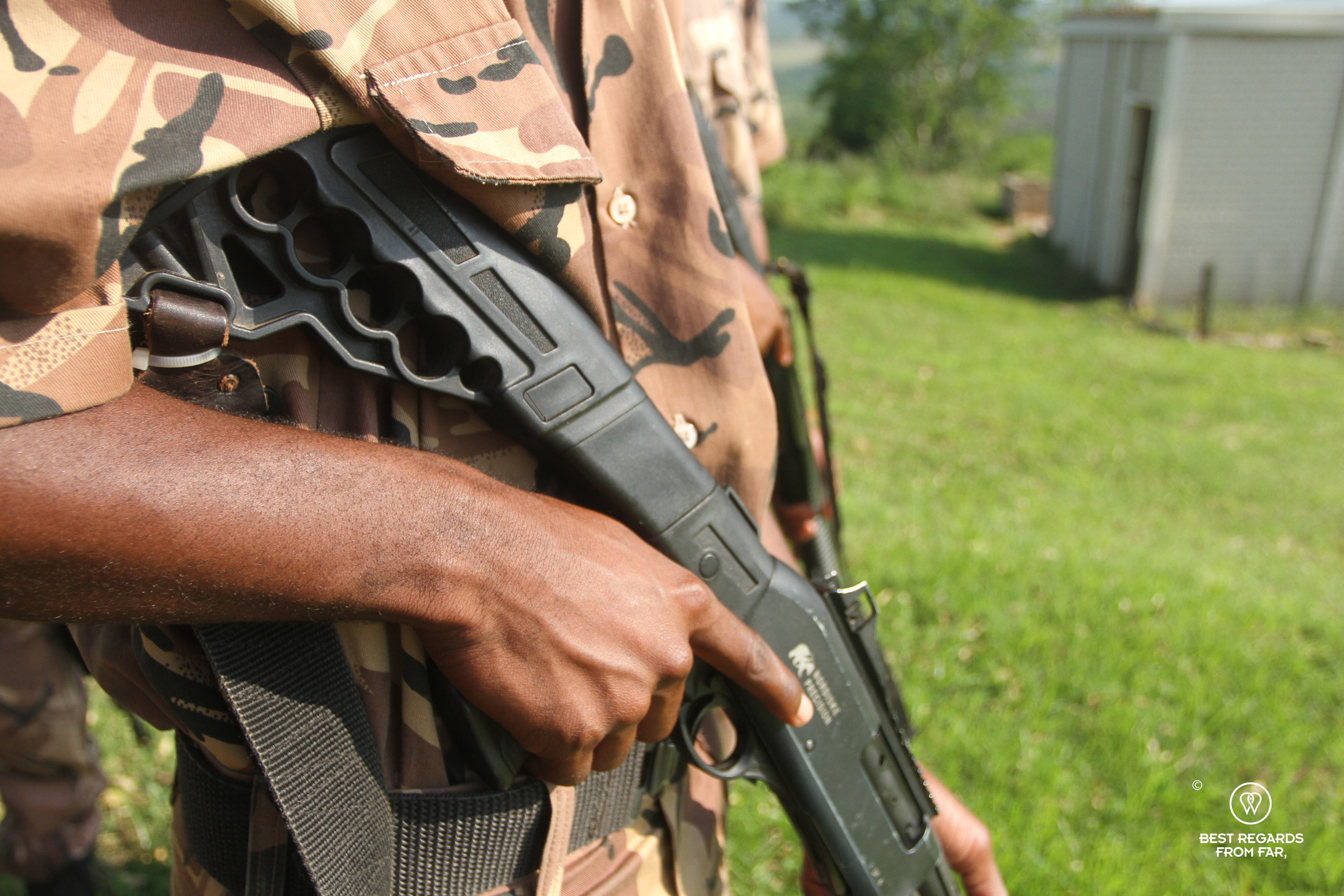
It is early 2017 when the rhino orphanage becomes the target of poachers. Six rhino calves and one baby hippo are present when poachers brutally kill one of the baby rhinos and hack off the horn of another which they do not even bother to kill as the bullet has wounded the rhino severely enough for it to not move. When they are done butchering its face with an axe, they poke out the eyes of the defenceless baby rhino and leave quickly with the horns.
Françoise races to the crime scene in the middle of the night to find the security guard and three caretakers in total shock after being assaulted and put at gunpoint. Despite all the security efforts made, the terrible and shocking attack results in the closure of the rhino orphanage.
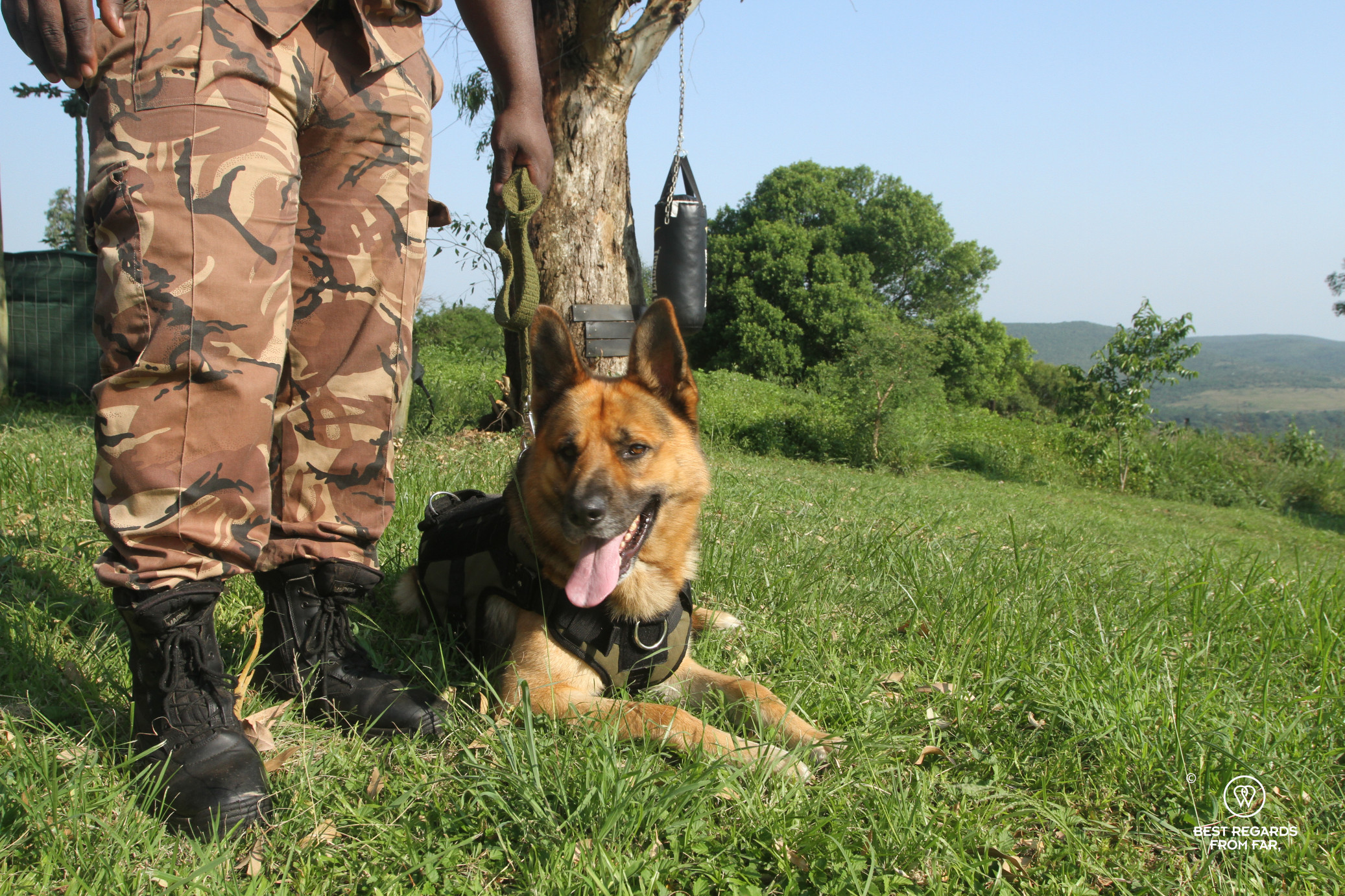
But Françoise is determined to rehabilitate more animals and to provide a safe haven for them in her beloved Thula Thula. Secured with motion detector beams picking up the slightest movement, infrared night vision cameras, a high-tech alarm system connected to the fence around the rehab centre and the presence of armed private security, the Thula Thula Wildlife Rehabilitation Centre is now run to care for a variety of animals, like the banded mongoose or the young genets we briefly observe while touring the facility.

Today’s rehabilitation centre
If Françoise wants to help every animal, the rehabilitation centre needs to operate within reason. Most of the animals cared for at the rehab centre were injured or orphaned due to human cause: snares, car accidents, the illegal pet market for wildlife, burns caused by man-made fires, etc.
As soon as an animal arrives, the priority is to avoid stress as it is the main cause of death in these centres where wildlife that is completely unfamiliar with human activities, voices, and smells is brought in. As it should, interactions with wildlife are kept to a minimum. The sleek centre is well-designed with inside enclosures called bomas where animals can receive the care they need before being moved to the outside bomas when they are strong enough. There, there is plenty of space for the rehabilitated animals to get used to the smells of the reserve, hide, and make contact with other animals.
Wildebeests, giraffes, many antelopes, mongoose, birds of prey just to name a few, have all been successfully rehabilitated here and released into the reserve.


Volunteer Academy
Apart from enjoying the reserve on sunrise and sunset game drives as a guest while staying in the tented camp or the more luxurious lodge, one can join the Volunteer Academy. Françoise explains; “My goal is to educate the people about nature conservation while they can have a good time in the African bush. Different tasks await them and each afternoon an educational game drive has them experience the ins and outs of the bush.”
The volunteering work goes from fixing potholes on the dirt-roads to scooping up rhino dung to fertilize the grass at the well-maintained camp, or carrying out bush encroachment to get rid of alien species, and maintaining some of the enclosures of the rehabilitation centre, and preparing protein-rich meals for the animals currently in rehab.


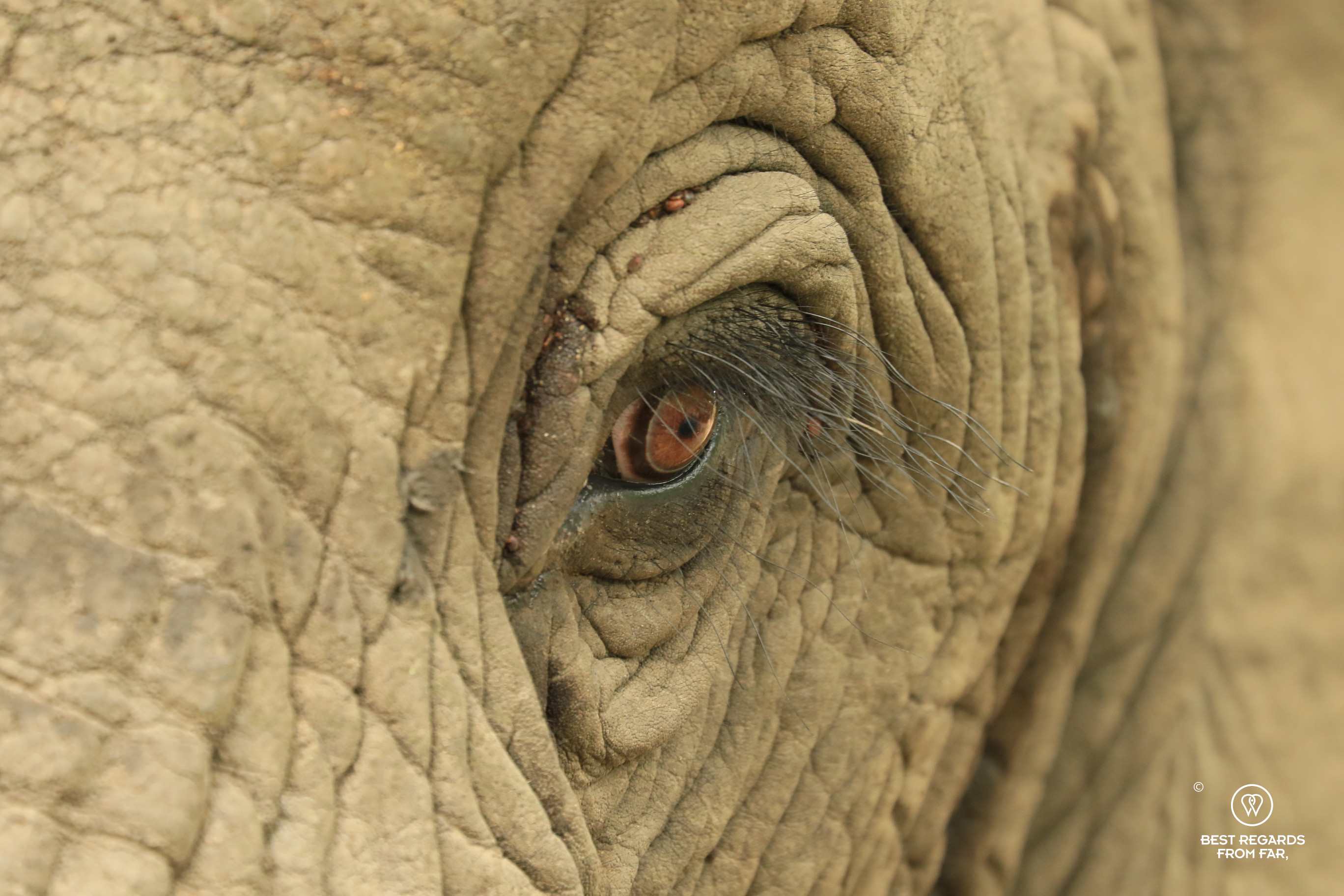
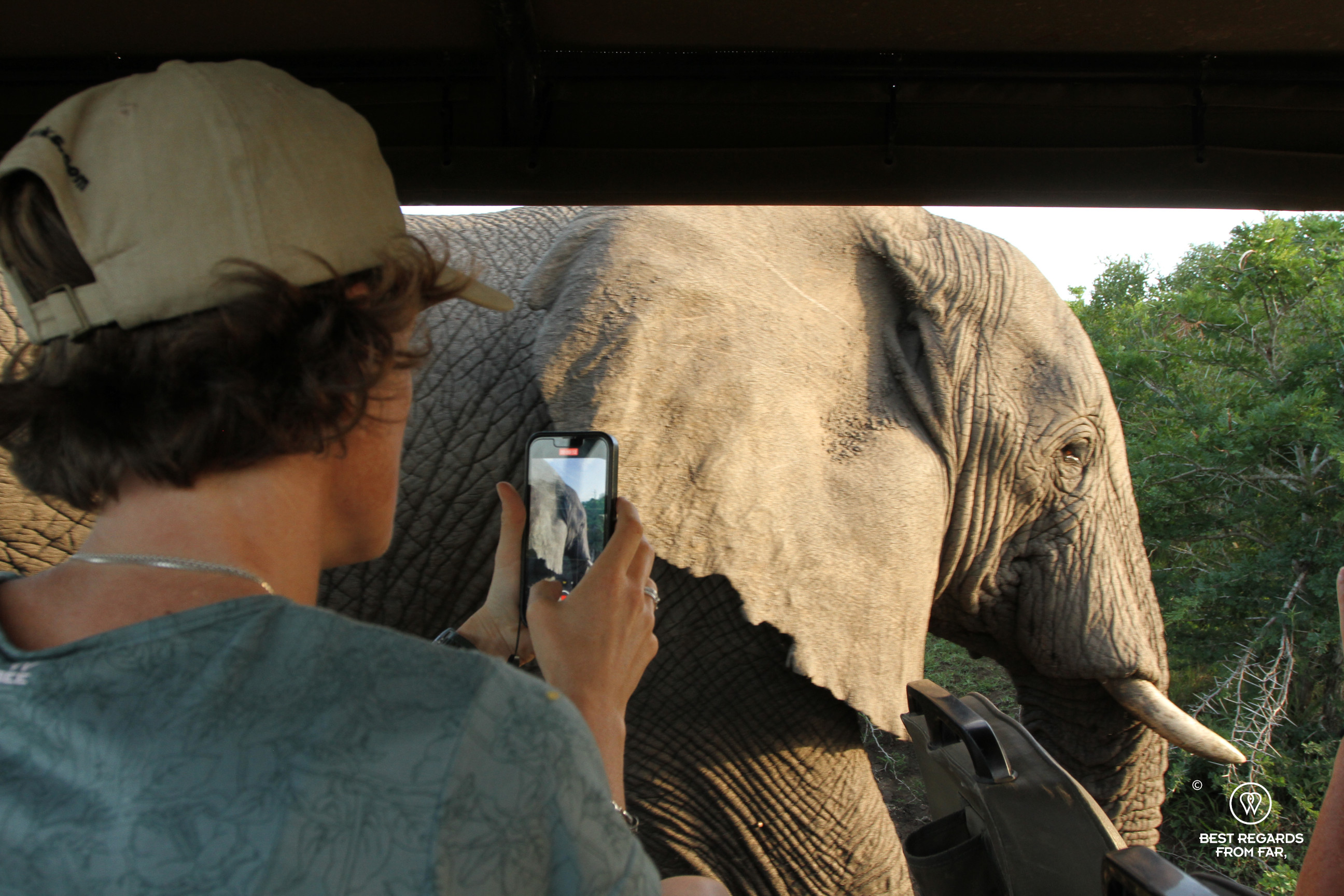
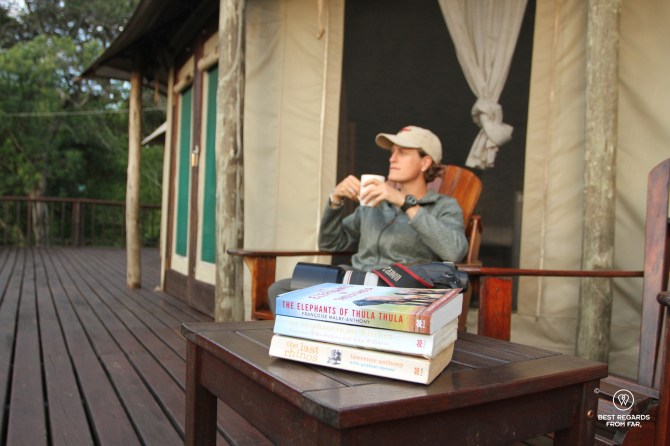
With the Volunteers Camp’s library focusing almost exclusively on Lawrence and Françoise’ books, all the volunteers are very familiar with the Thula Thula elephant herd, and their daily highlight is the afternoon game drive to enjoy the close encounters with the elephants in the fairly small 4,300-hectare reserve.
If getting used to Lawrence and the staff was a requirement for this elephant herd to not be put down when they arrived in Thula Thula, today the close familiarity remains with the next generations in order to provide extremely close encounters, a surreal experience that cannot be lived like this in any other game reserve in Africa – and that should not be expected in the wild.


Today & tomorrow
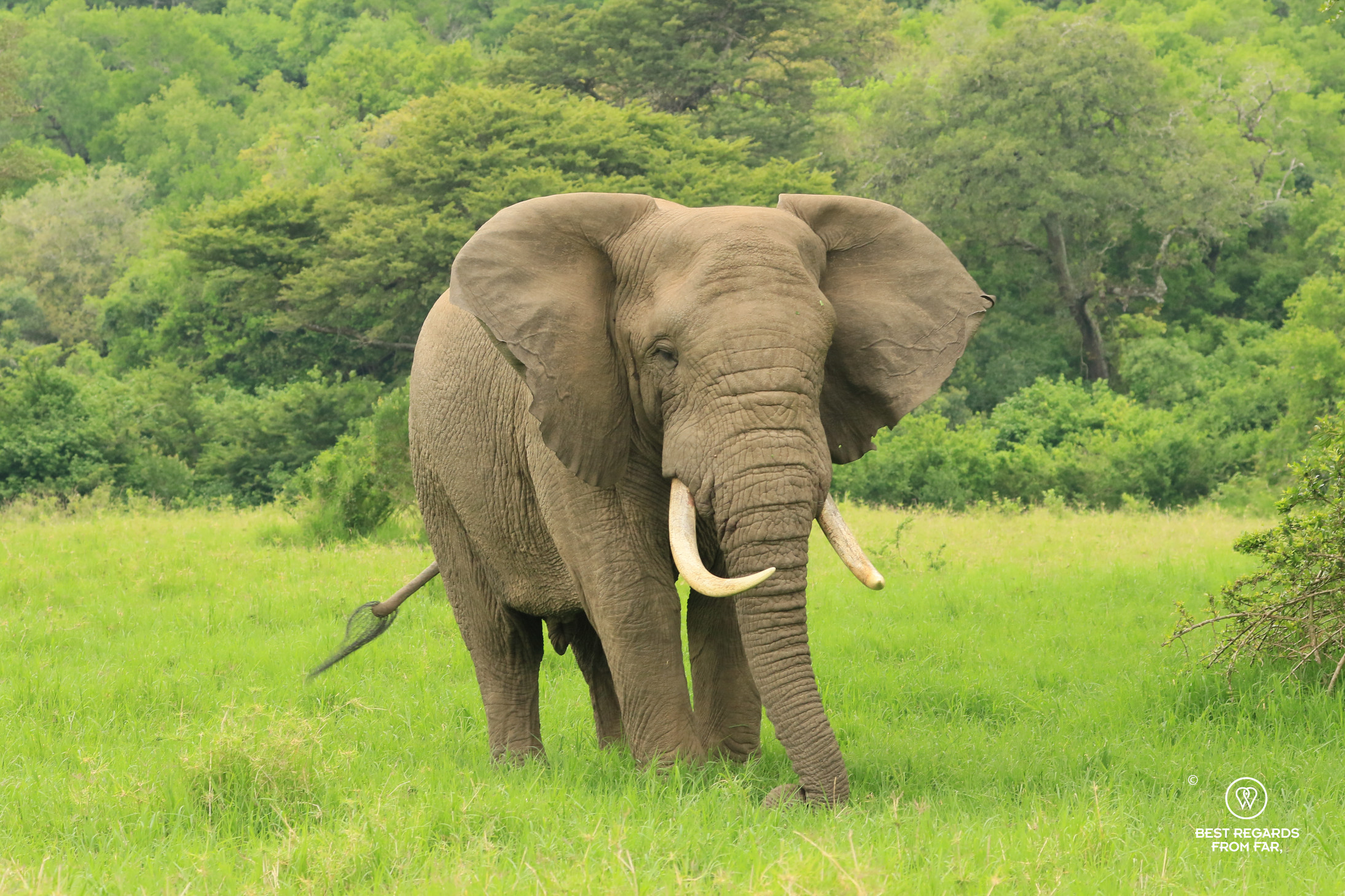
Volunteers and guests alike seem to all flock to Thula Thula for the same reason: these close encounters with Africa’s most famous elephant herd and to get a glimpse of the first matriarch Nana, who takes a prominent place in The Elephant Whisperer. I stare at her while she is peacefully feeding and scratching her bum on a tree stump right next to the vehicle. We feel that Lawrence’s legacy is well alive when looking at this tranquil giant who once was so violent as a traumatized and rogue elephant. With Lawrence not giving up on her and speaking to her for weeks she became the brave matriarch leading her herd to finally settle in the reserve.
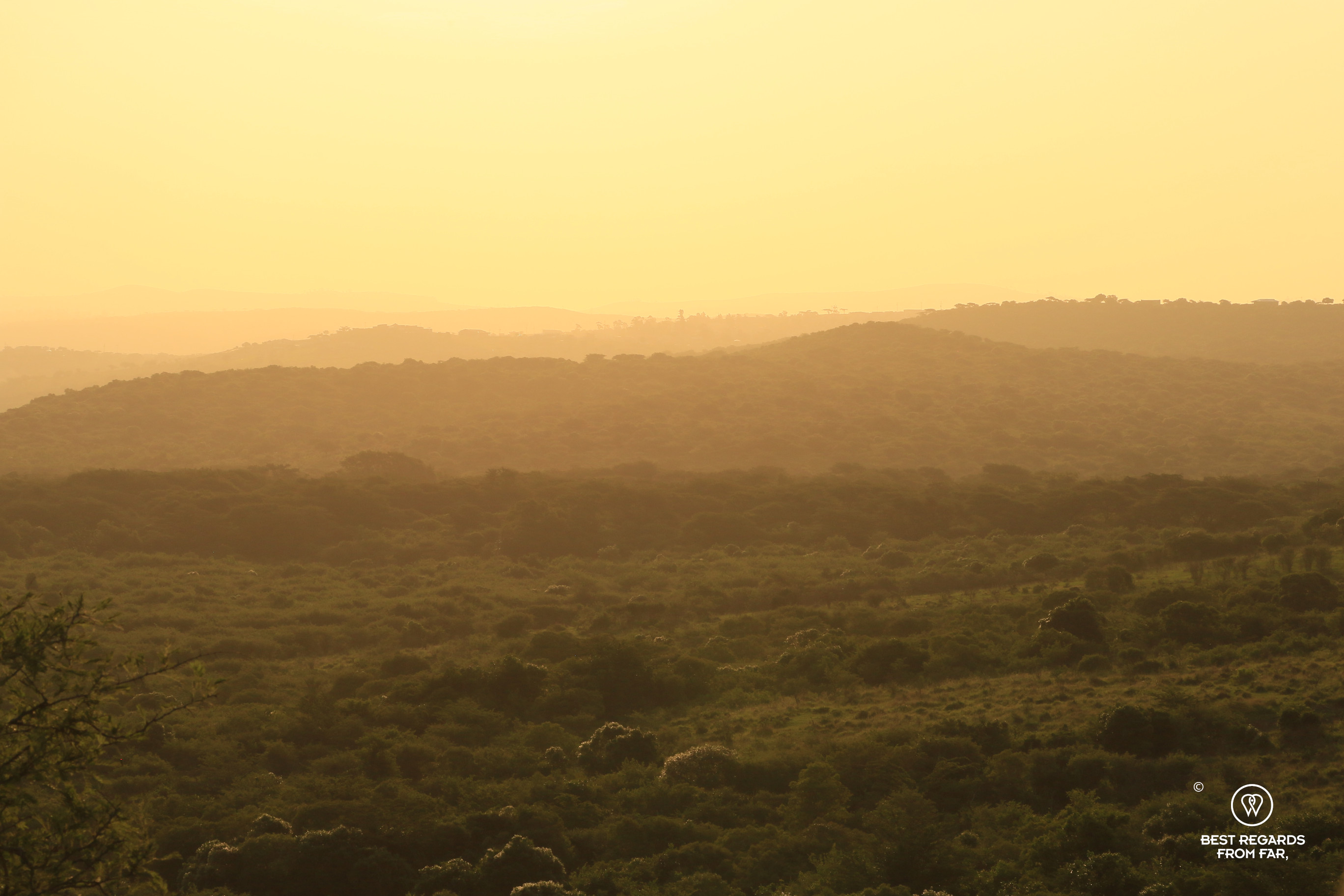
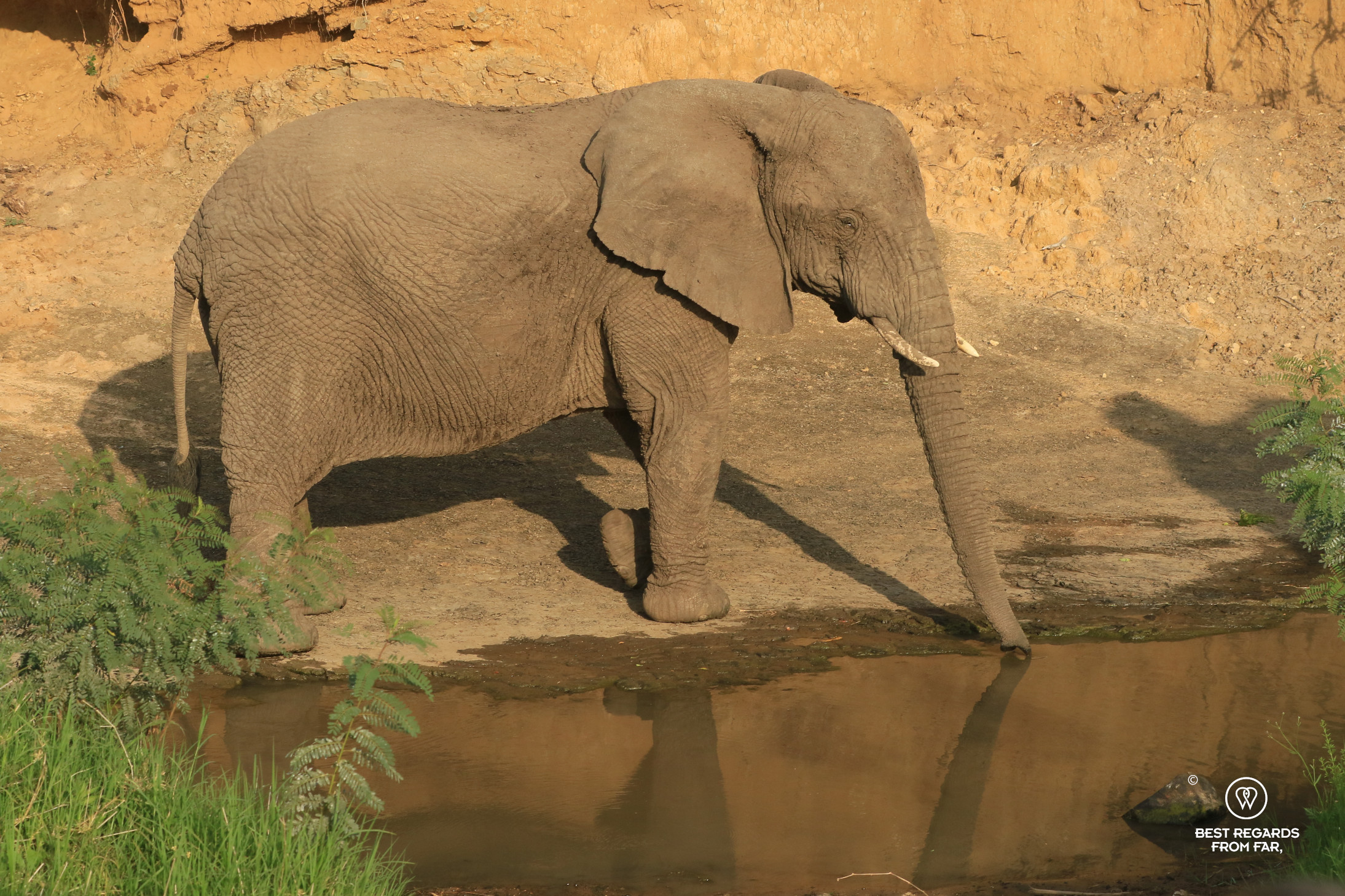
Today Frankie’s daughter, Marula, leads the herd after Nana has passed down her wisdom. From 7 elephants, the herd now counts 29, having embraced some more traumatized elephants along the way. As the number of animals has increased, Françoise is expanding the park, creating more room for Africa’s emblematic giants and other animals.
It is on these former hunting grounds where today the hard work of a few, human and elephants alike, pave the way for future generations of wildlife to thrive and humans to reconnect.




Travel tips:
- The Thula Thula Private Game Reserve provides different standards from the more upscale Elephant Safari Lodge with its excellent food to the comfortable Luxury Tented Camp, or the basic Volunteer Academy Camp.
- To prepare your visit to Thula Thula, make sure to read The Elephant Whisperer by Lawrence Anthony, soon to be adapted as a movie. His widow Françoise Malby Anthony has continued telling the stories of her dear elephants in The Elephant in my Kitchen and her latest, The Elephants of Thula Thula.
- The Anti-Poaching Unit (APU) does more than protecting rhinos 24/7. About 10 snares a day get removed by the APU that patrols the fence continuously. Please bear in mind that these brave men and women (whom are hardly paid and remain invisible to the public) risk their lives daily to fight the ongoing war against poachers with machine guns. Today, they are present in probably all South African parks, public or private.
Overlooking Thula Thula Game Reserve from the tented camp, South Africa 
Taking a bath in the luxury tented camp of the Thula Thula Game Reserve, South Africa 
Swimming pool of the tented camp at the Thula Thula Game Reserve, South Africa 
Inside the luxury lodge of the Thula Thula Game Reserve, South Africa 
The lodge at Thula Thula Game Reserve, South Africa 
Breakfast soufflé at the lodge,Thula Thula Game Reserve, South Africa 
Reading Lawrence Anthony’s books form the volunteer camp at the Thula Thula Game Reserve
- Check out this interactive map for the specific details to help you plan your trip and more articles and photos (zoom out) about the area! Here is a short tutorial to download it.
For more wildlife inspiration in South Africa, click on the images below:



 Best regards from far,
One Comment Add yours