Article updated on May 5, 2025
Text: Claire Lessiau & Marcella van Alphen
Photographs: Claire Lessiau & Marcella van Alphen
A trip to Cape Town seems to systematically include at least a day in the vineyards, very often on exclusive wine estates around Stellenbosch or Franschhoek, about an hour away from the city. It is true that the quality of the wines combined to the beauty of the vineyards calls for an exploration. Stellenbosch can be overwhelming with its hundreds of wine farms. Franschhoek tends to oversell luxurious vineyard experiences rather than high quality wine tastings. Our favourite wine route is much closer, right in one of the most beautiful suburbs of Cape Town, in the cradle of South Africa’s wine making. Only a twenty-minute drive via Victoria Road lining the stunning Atlantic coastline, cooler climate award-winning wines are produced on about 400 hectares. Let’s explore this intimate wine route…
Save this pin!

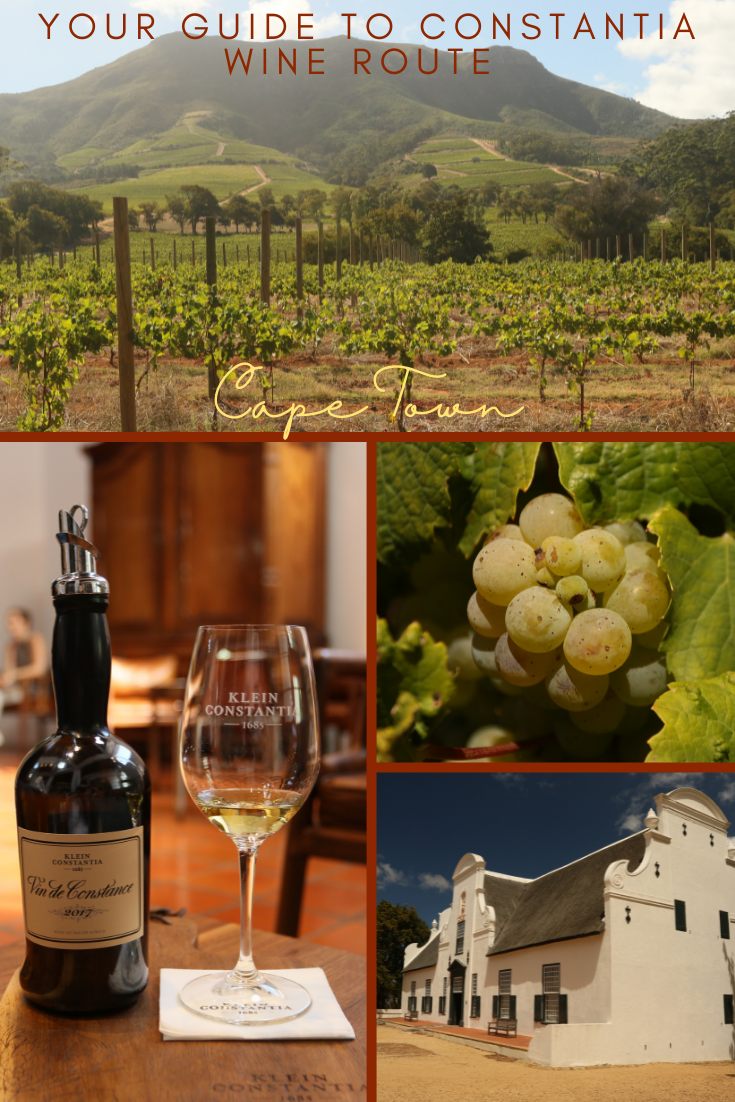
The Constantia Wine Route
The wine history of the oldest New World wine country really started to be written in 1685 here, in the Constantia Region, a few kilometres from the refreshment station of the Cape of Good Hope.
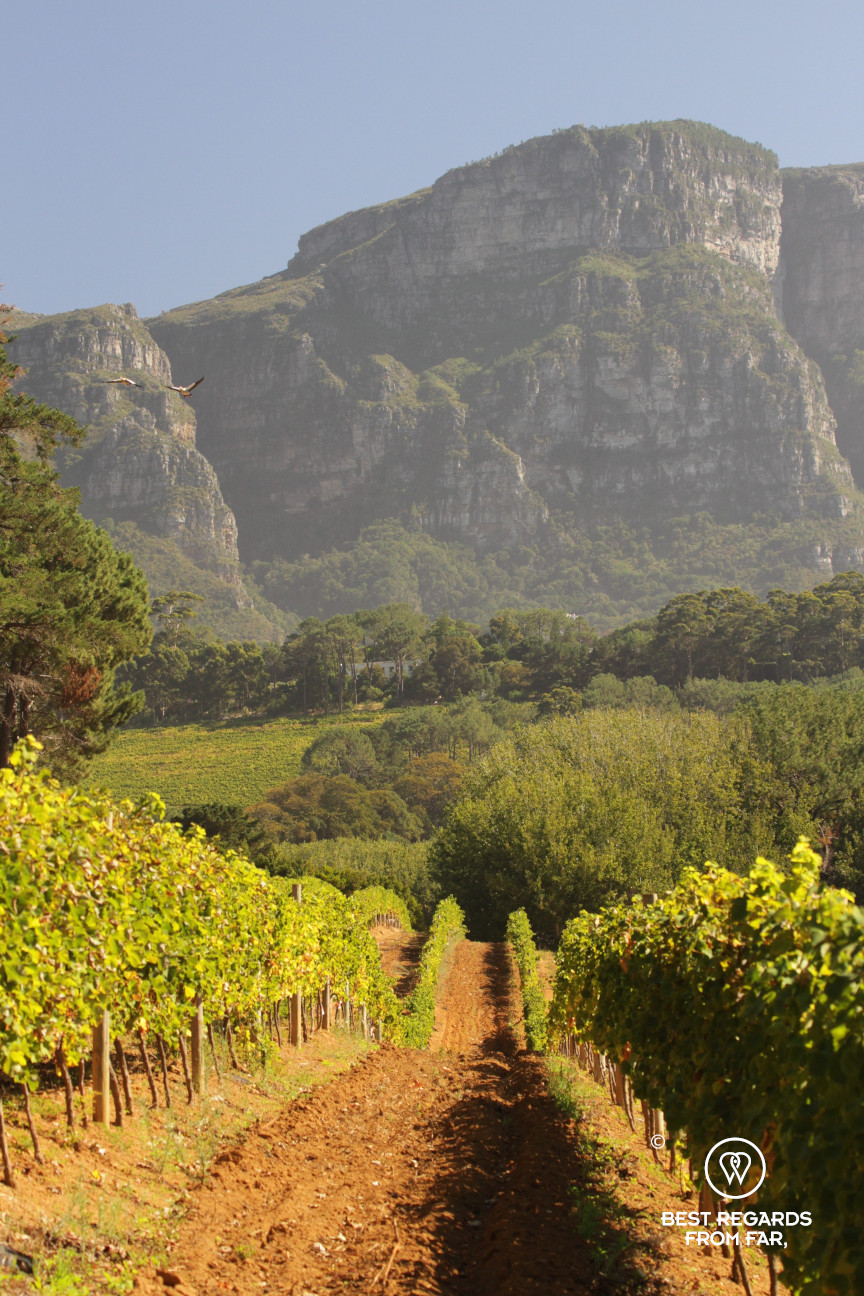
Over the years, the land of Constantia Valley has been split and today, fifteen wine farms remain: Groot Constantia, Klein Constantia, Constantia Glen, Beau Constantia, Buitenverwachting, Steenberg, Constantia Uitsig, Eagle’s Nest, Silvermist, Constantia Royale, and High Constantia. They all benefit from the close proximity of the Atlantic Ocean providing cool moist-laden breezes and cloud cover to mature the grapes perfectly and giving them delicate aromas in a country where warm weather predominates—Stellenbosch, Franschhoek or Robertson for instance. If these farms are close to each other, the wide topographical variations of the area from high mountain slopes to flat valley floors, the diversity of the soils, and the different orientations lead to high-quality wines, each with its own character, like the estates on which they are produced.
Groot Constantia
Groot Constantia is the oldest wine producing farm in the Southern Hemisphere.
Its iconic Cape Dutch manor house (even if the way it was renovated makes local historical architects jump), wine cellar designed by French architect Louis Thibault, and alleys planted with centennial oak trees hint at its rich history.
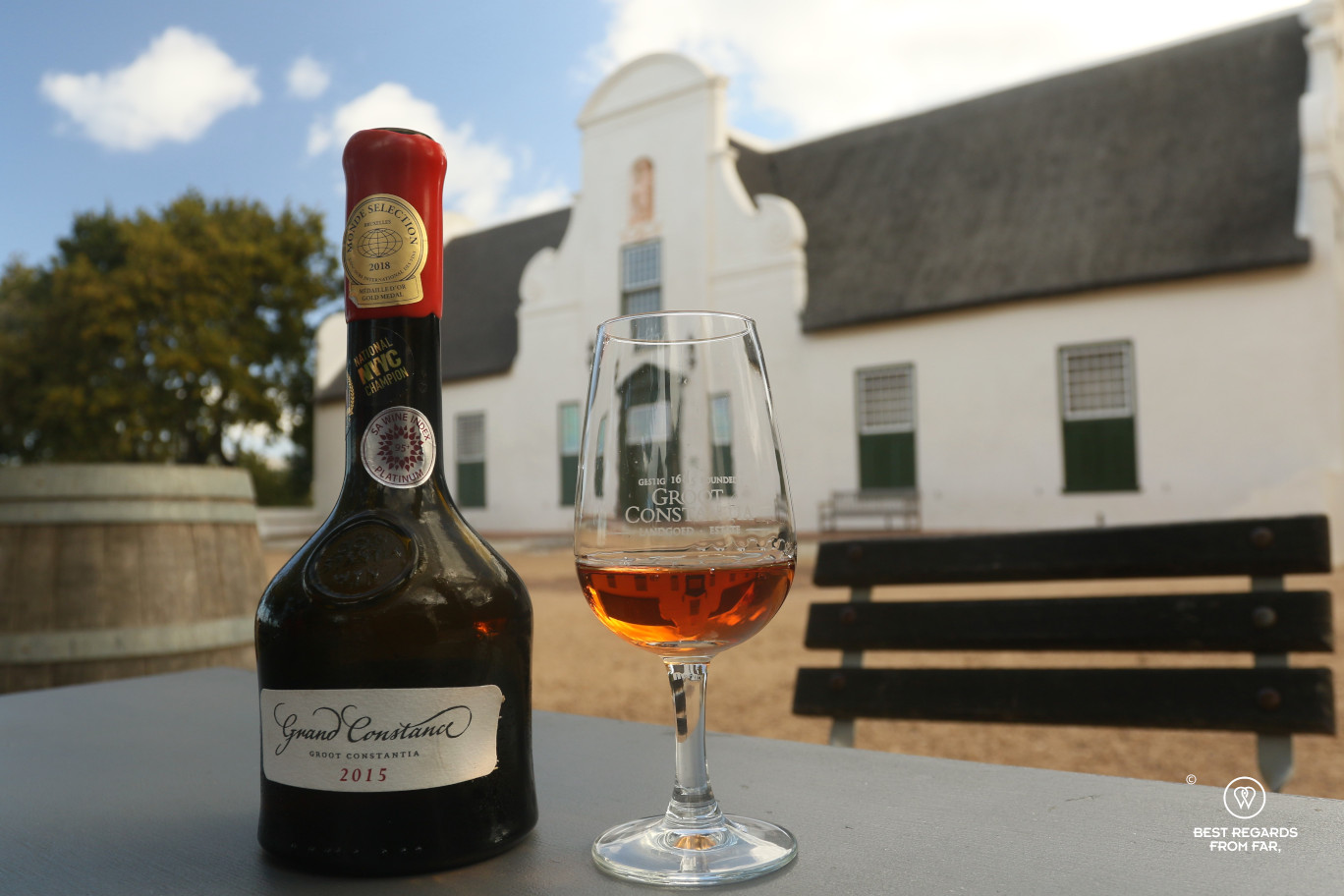
It all started with the determination of the second commander of the Cape Colony: Simon van der Stel. He could convince the Dutch VOC to grant him some farmland—what will become the Constantia region—to thank him for his years of hard-work at the head of the colony. He did not ask for any farmland: over the years, he had studied the area and had gotten many soil samples in order to select the best possible terroir for a wine farm. The first wine produced here in 1685 was quite far from the quality of today’s wines, but after years of perseverance and innovation continued by subsequent owners and more specifically Hendrick Cloete, the Constantia wines became famous worldwide. More specifically, the sweet wine—today sold as “Grand Constance”—were enjoyed by Napoleon, Frederick the Great of Prussia, Louis Philippe, Queen Victoria and Baudelaire to only name a few.


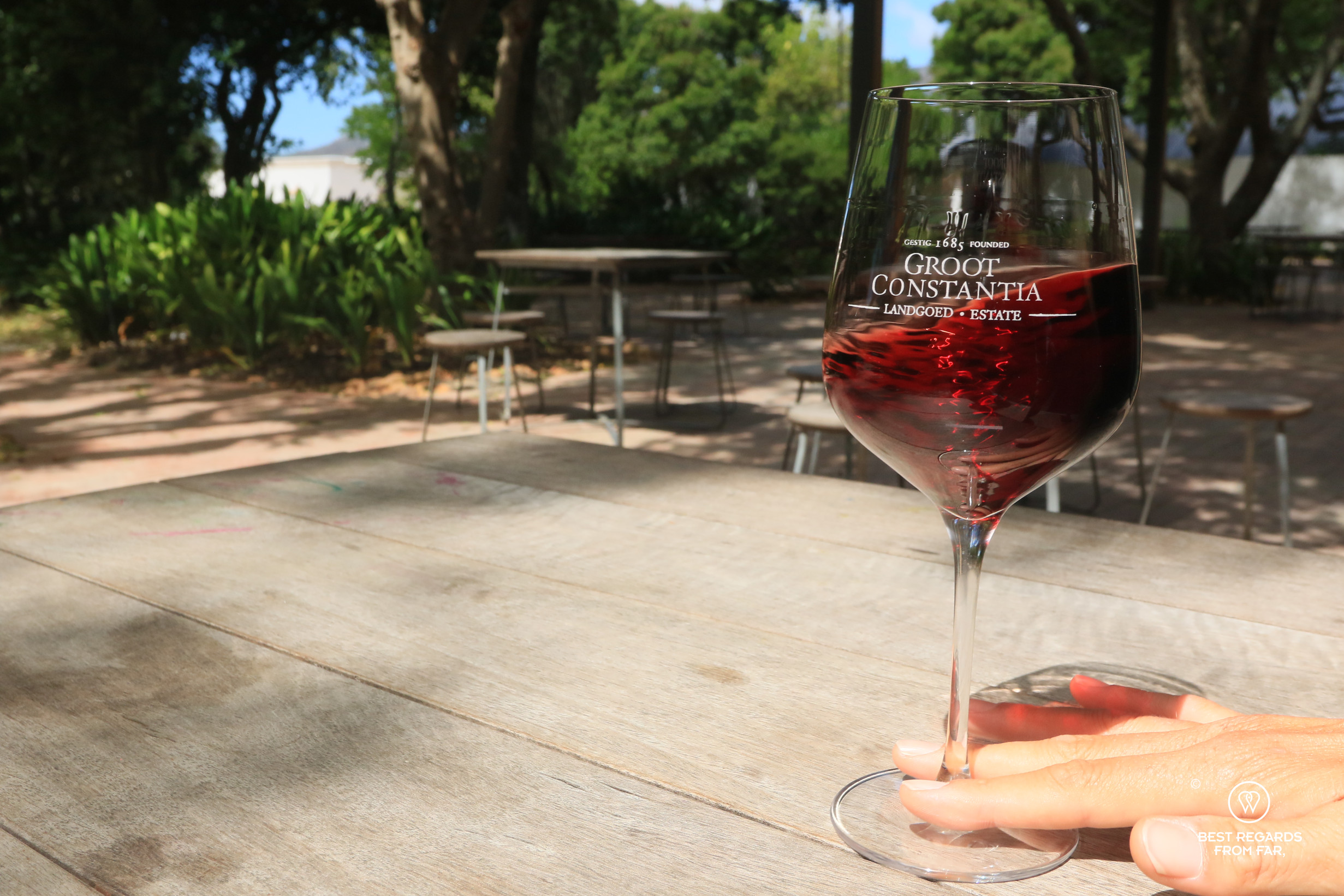
Nine different soils types coexist and 90 hectares are under vines, making it the largest vineyard of the Constantia wine region. Many varietals are planted between 60 meters (200ft) and 280 meters (920ft) of altitude: Cabernet Franc, Cabernet Sauvignon, Merlot, Pinotage and Shiraz accounting for 70% of the grapes for red wines, and Muscat de Frontignan, Chardonnay, Sémillon and Sauvignon Blanc for the white wines. All aged in French oak barrels, the wines of Groot Constantia remain a solid reference, and their majority is exported.
Today, the land is owned by a non-for-profit trust in order to keep this heritage accessible to the public, and Groot Constantia is the most open farm of the area where it feels good to hang out, stroll under the oak trees or sit in the grass before enjoying a wine tasting.
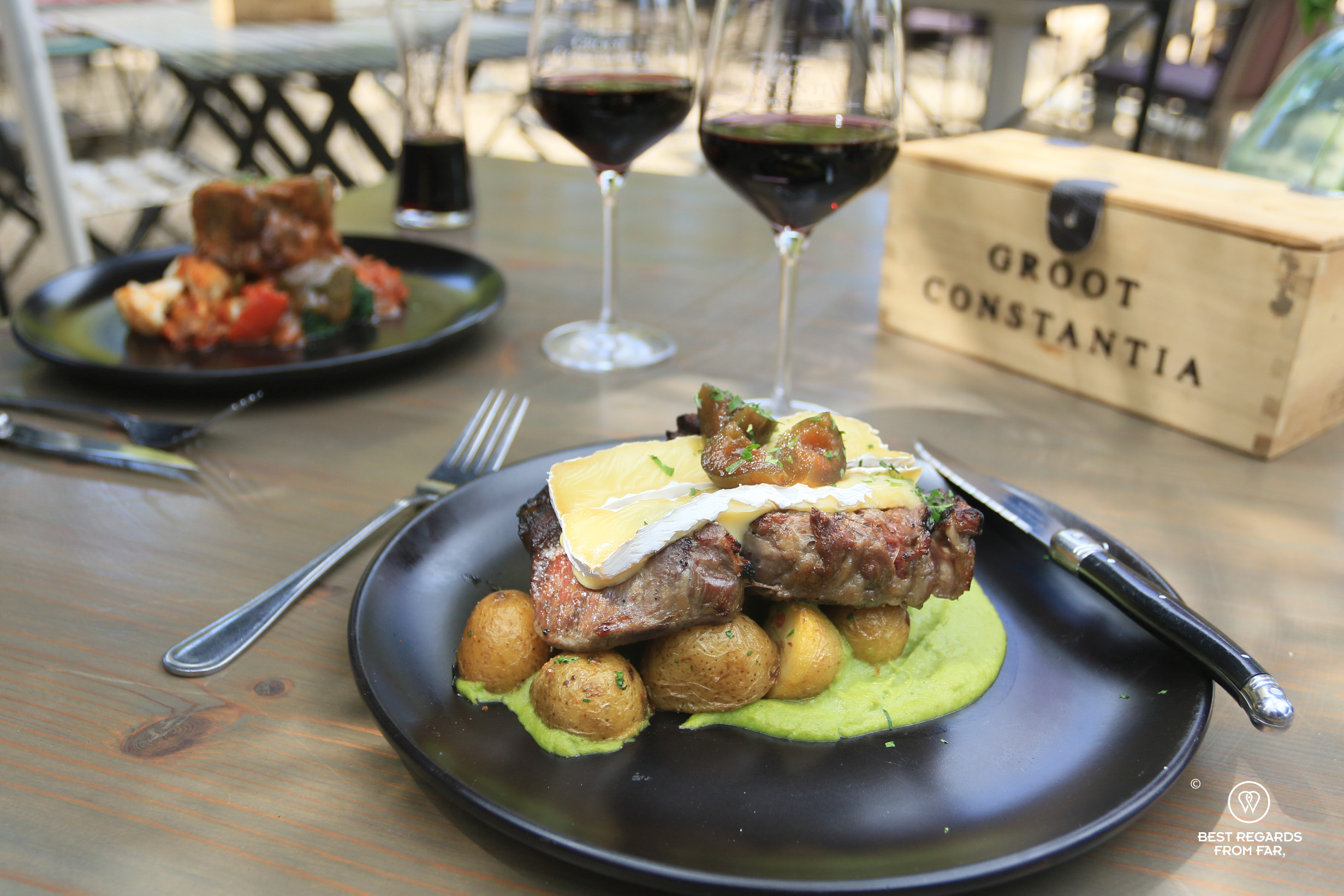
Its restaurants also have the most seating of the Constantia wine route, from Jonkerhuis to Simon’s with either its spacious shady terrace or bold interior of flowers and chandeliers. In the spirit of the wine farm, the menu is also accessible with a very extensive choice catering for all tastes. At Simon’s, the crispy bobotie parcels—a modern take on the traditional local’s Cape Malay’s favourite—and the crispy lemon confit prawns pair well with the Groot Constantia Brut Rosé MCC. As we favour wines from the vineyard, and as Groot Constantia has an excellent selection of reds (unusual along the Constantia wine route), meat options are an excellent choice. The generous dry aged rib-eye cooked to perfection and topped by melting brie cheese accompanies the Groot Constantia Pinotage, while the slow roasted, meting-in-the-mouth Karoo lamb shoulder with a vegetable fricassee and roasting jus highlights the Groot Constantia Shiraz. Whichever way, one thing is a must for sure, it is to end on a glass of Groot Constantia dessert wine, the Grand Constance, a dessert in itself.
What we love:
- The estate with the Cape Dutch houses and alleys planted with centennial oak trees.
- The interesting cellar visit.
- The Grand Constance dessert wine, and its reds, more specifically the Shiraz, Pinotage, and Gouverneur Reserve.
- Simon’s is one of the only restaurants on the Constantia wine route open for breakfast at early as 7 am.
Pay attention to:
- It gets very busy on weekends, especially in the summer and this can ruin the experience.
- The Hop On Hop Off bus stops there.
- Overall, the wine tasting can feel less exclusive than on other estates.
- When it comes to restaurants, even if the venue is large, to avoid disappointment, make sure to book ahead at Simon’s!


Klein Constantia
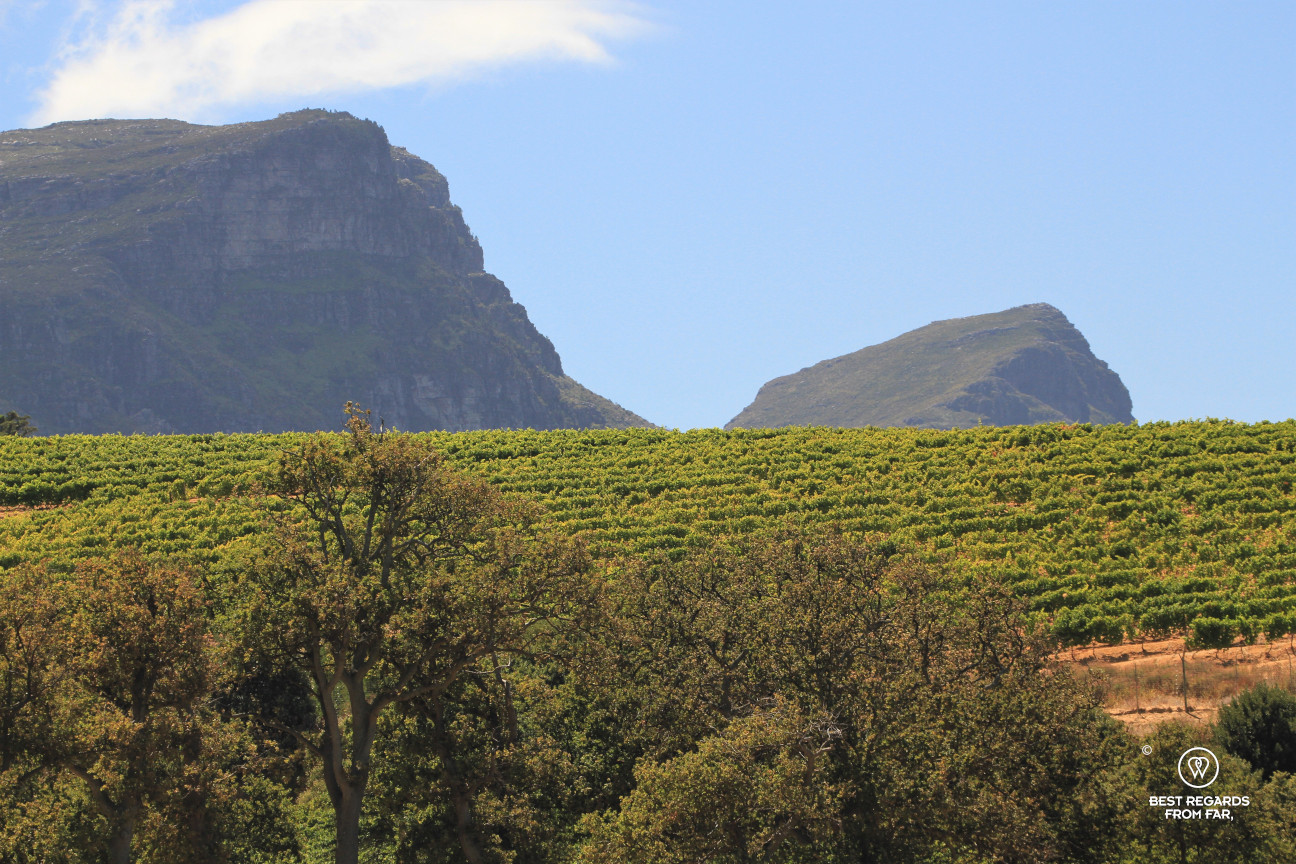
The estate of Klein Constantia is nested in the valley with the vines stretching up the mountainside. 68 hectares of the 146-hectare farm are under vine between 70 and 350 meters of altitude, leading to no less than ten different microclimates.
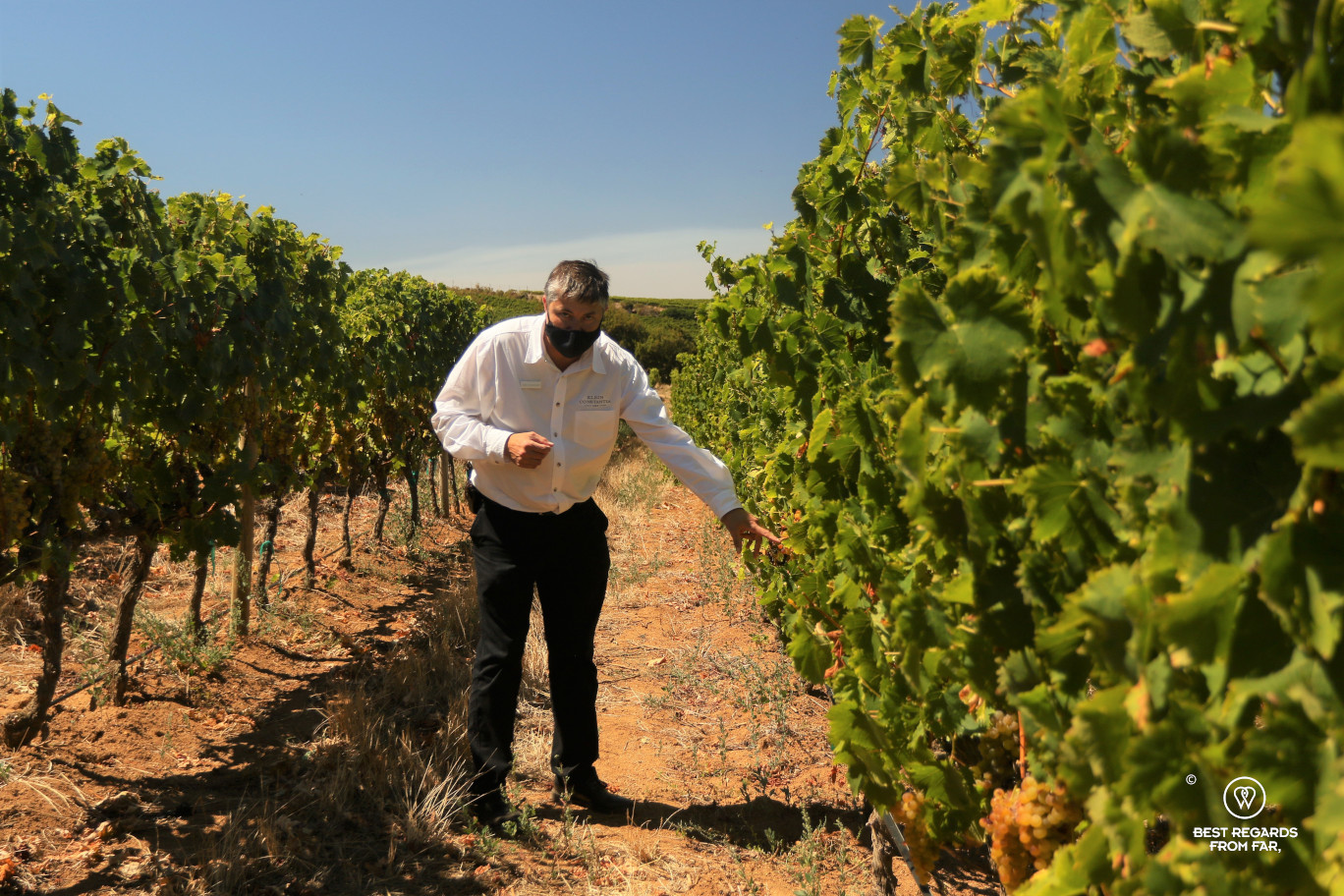
Alan Wickstrom, the Front House Manager who has been working on the estate for 22 years and has a real passion for it, describes the philosophy of Klein Constantia: beyond exceptional wines globally acclaimed by the most prestigious organizations, he and his team are devoted to “providing the ultimate guest experience”. After exploring the vineyard in an open Land Rover, we are sipping the Métis Sauvignon Blanc of Klein Constantia overlooking False Bay. The various patches where nine different varietals are grown cover the slopes: Sauvignon Blanc above us, and amongst others, Muscat de Frontignan below us. At Klein Constantia, white varietals are predominant with the south-facing slopes cooled by the ocean winds.
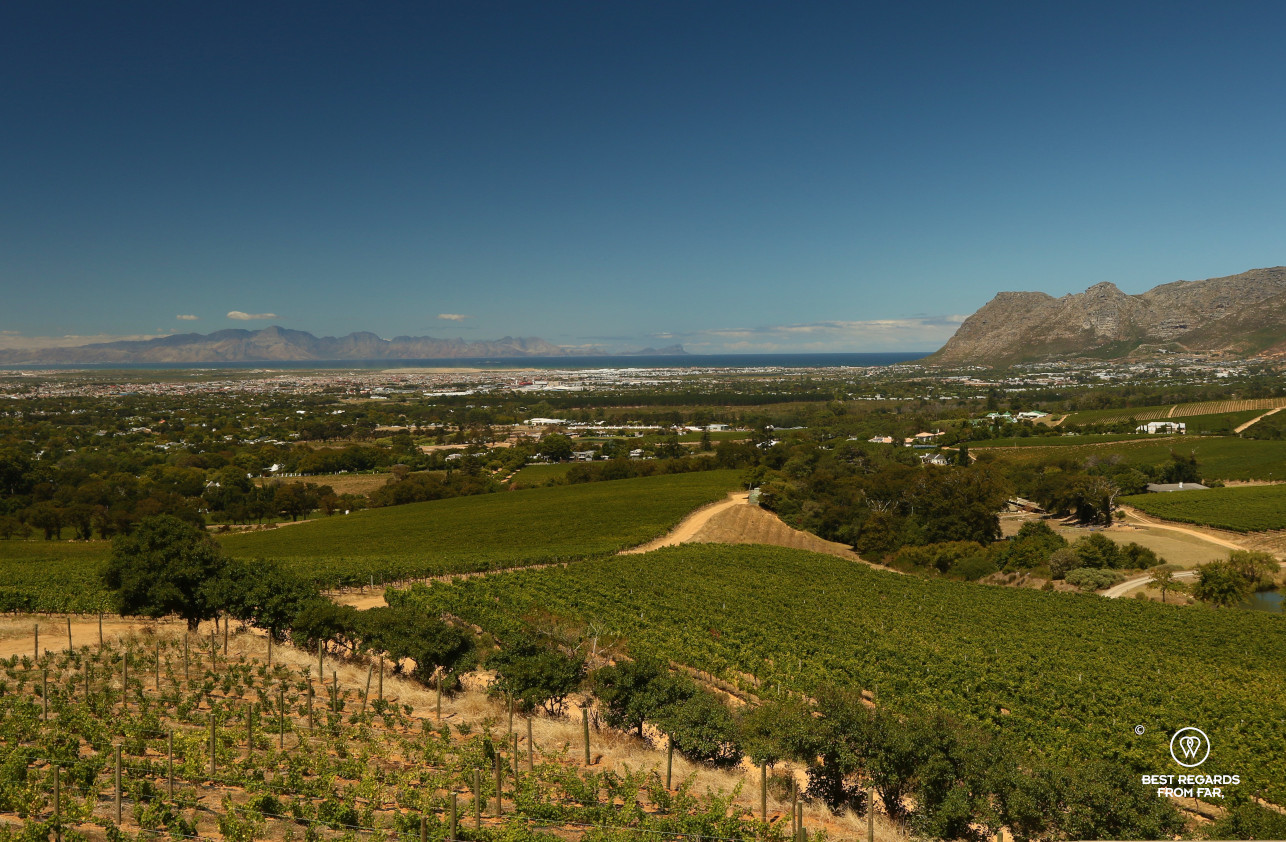


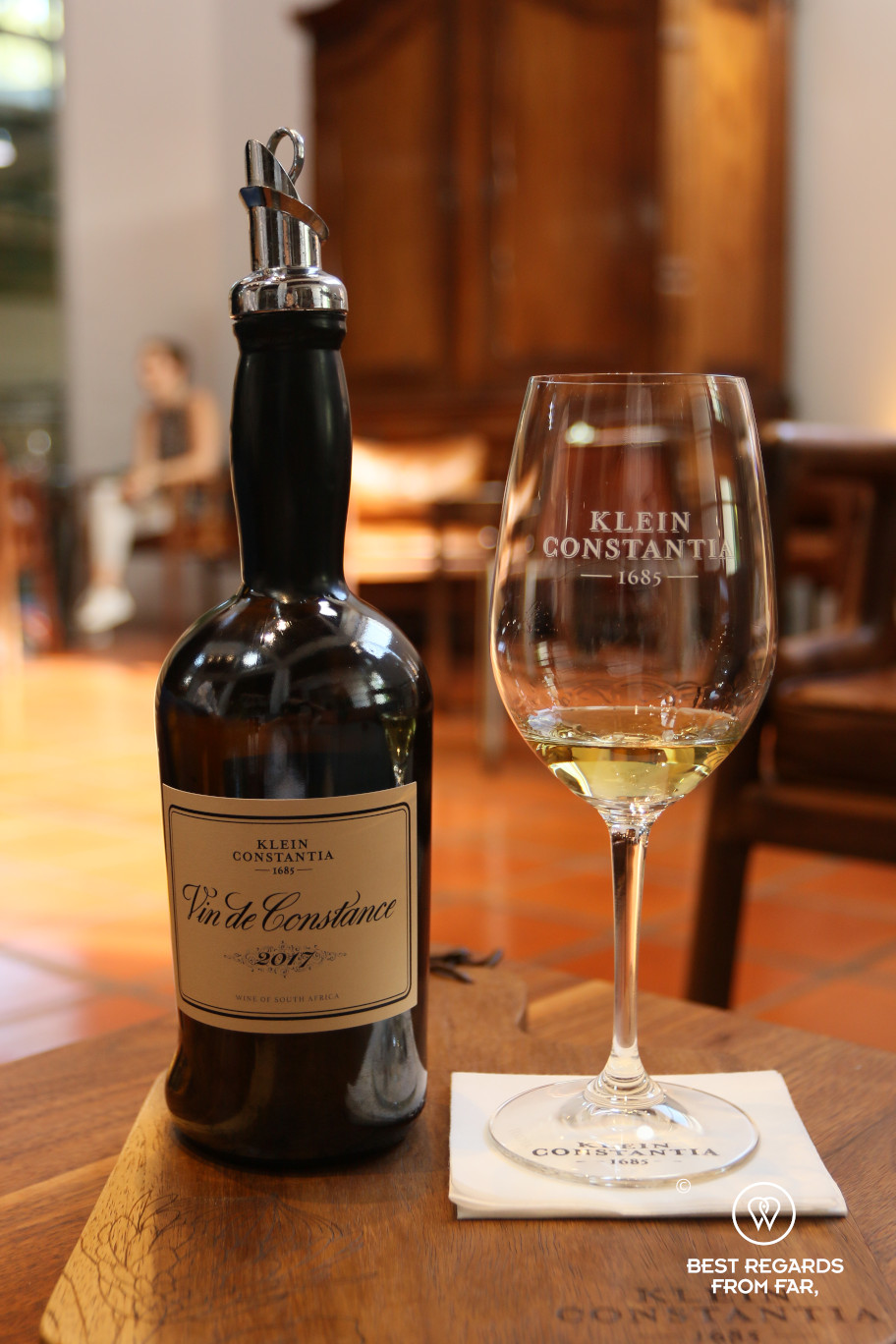
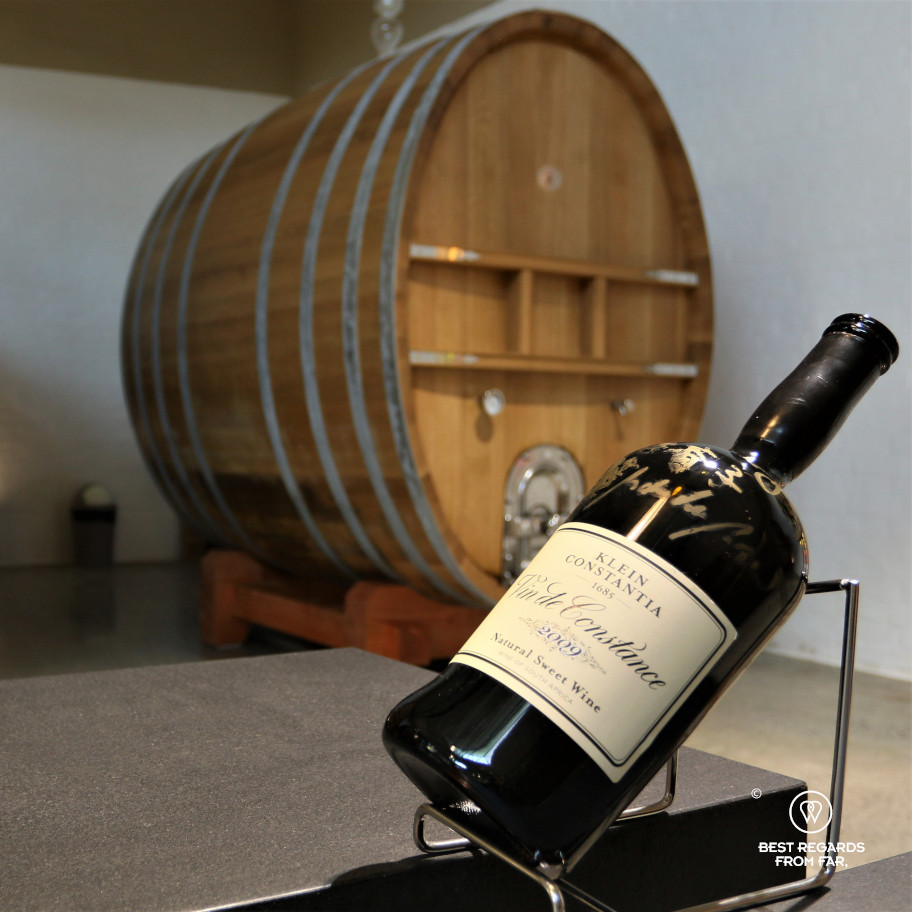
The Muscat de Frontignan is particularly important here as the estate is renowned for its sweet Vin de Constance (that scored 98/100 on Platter’s – see travel tips below). It is not short of a miracle that we can taste this elixir today. While the sweet wine of Constantia had been a favourite of European royals and intellectuals, in the mid-19th century, many winemakers went bankrupt. The abolition of slavery drove up labour costs, while the vineyards were hit by powdery mildew and phylloxera. Import rules to the UK also became more favourable to French wines and between 1880 and 1980, the Constantia wines were dormant. Luckily, by studying ancient text left by former owners, adapting to modern techniques, and finding by luck a 250-year-old Muscat de Frontignan on the farm from which the vines were propagated, the Vin de Constance got reborn!
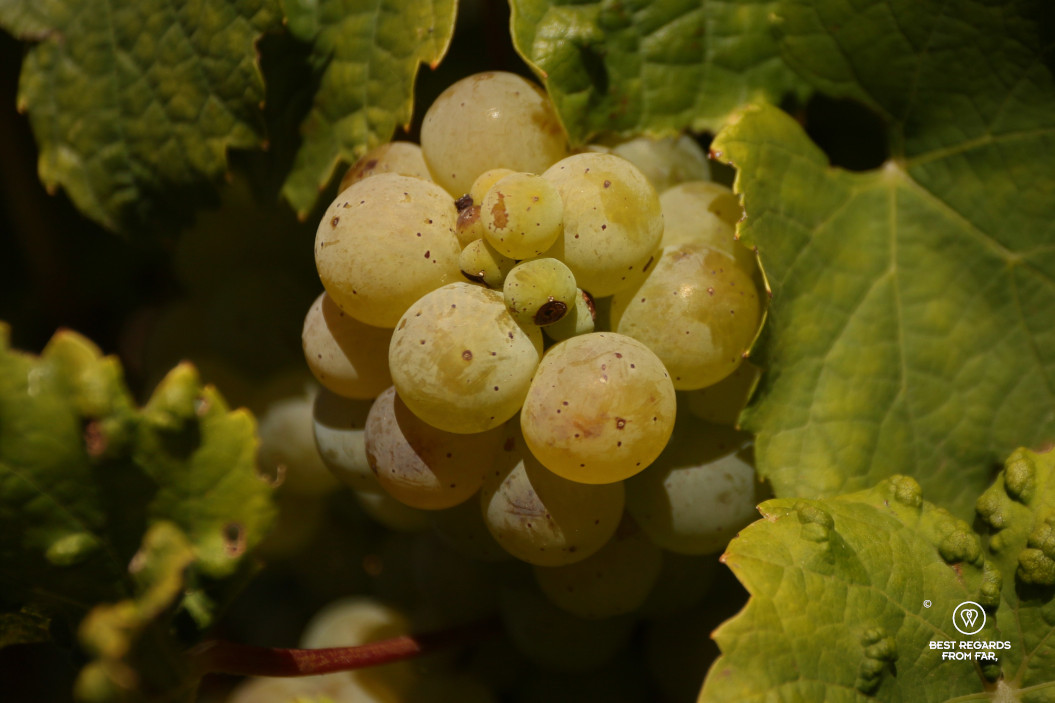
As we walk between the perfectly pruned lines, we observe the grapes: the vine is not simply harvested, but the grapes are picked individually and workers have to come back 20 to 30 times onto the same vine during the harvest in order to pick the raisins when the ripeness is just right. Harvesting five kilograms a day is almost a record when picking for Vin de Constance! We carefully pick a few grapes to better apprehend the ripening and its impact on the flavours.
Combining this respect for the history of the farm to today’s state-of-the-art technology to track photosynthesis in the leaves to better predict the evolution of the bunch, using sustainable practices and carefully training its staff, Klein Constantia has been producing elegant and balanced wines. The young winemaker Matthew Day has a recognised talent and the tasting encompasses wines with a minimum score of 93 out of 100 on Platter’s!
What we love:
- The very personalized experience.
- The wine safari amongst the vineyards with its very hands-on approach to appreciate the wine making process better.
- All of the wines, and more specifically the Vin de Constance.
Pay attention to:


Constantia Glen
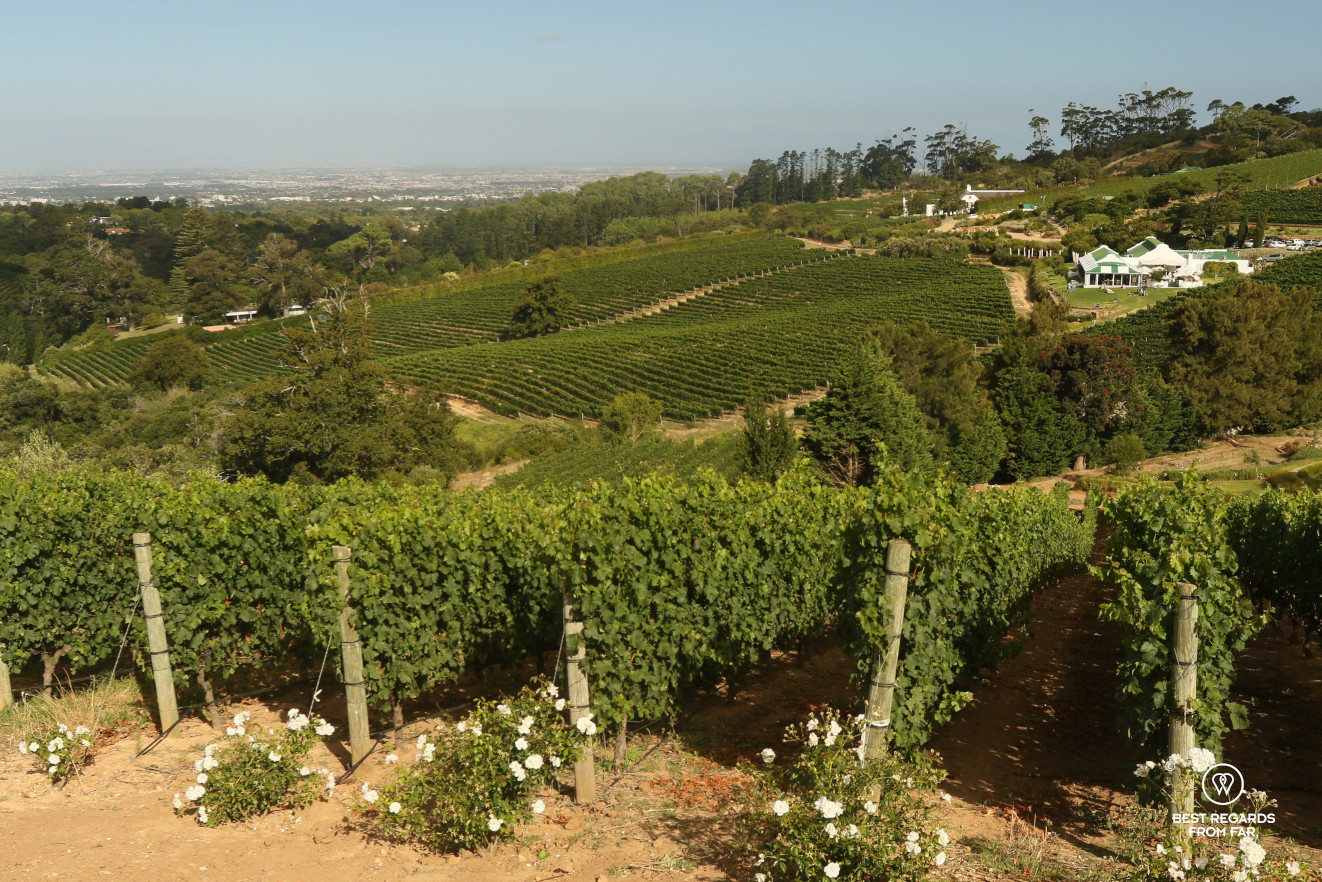
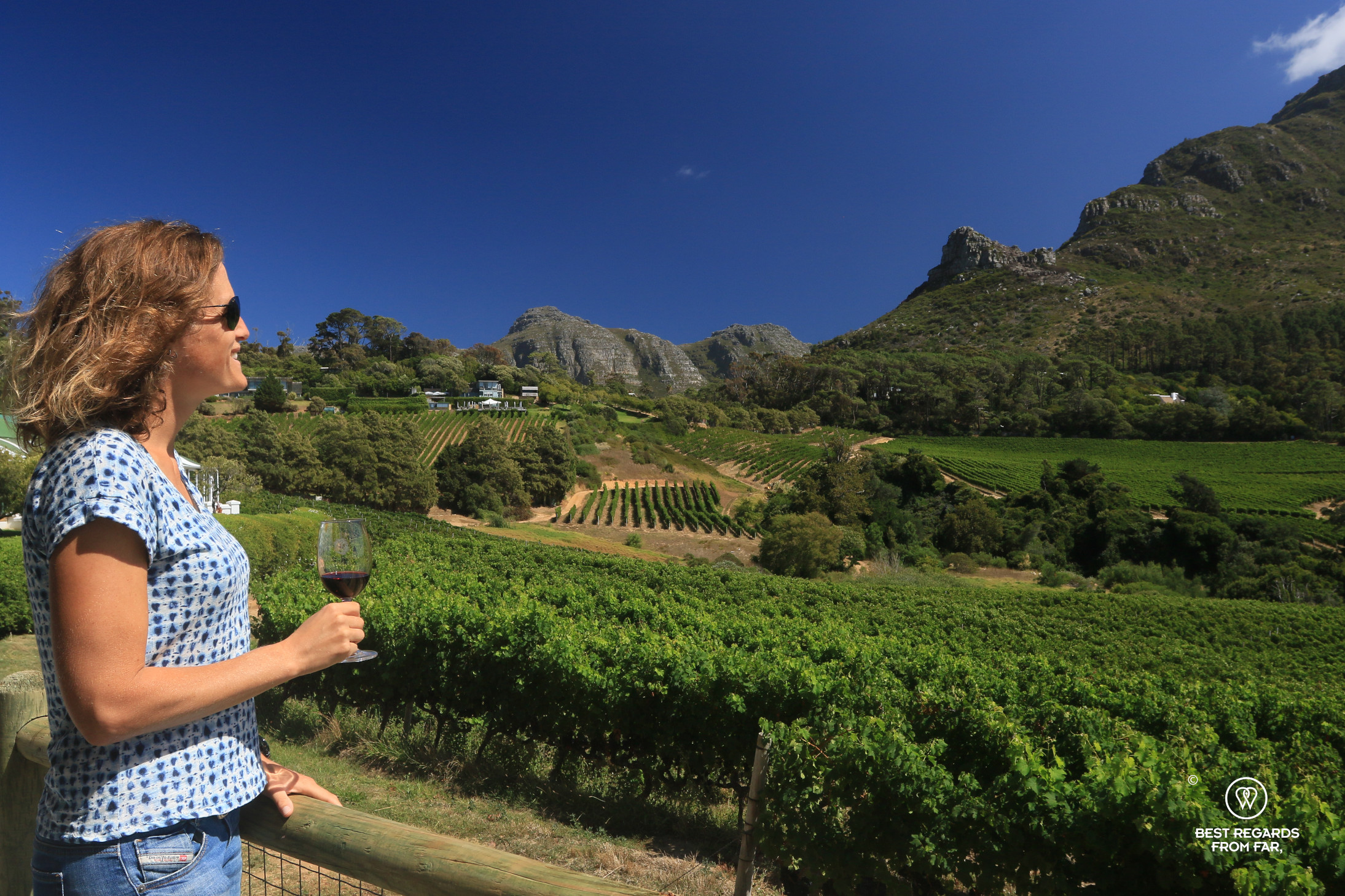
As we are seating on the terrace of the restaurant overlooking the vineyards, the owner of Glen Constantia, Alexander Waibel, shows us the domain. In this cool climate for South Africa, the sun sets behind Constantia Neck and offers the 30 hectares under vine the most hours of sun of all of the estates along the Constantia wine route. In an area dominated by white varietals, and more specifically Sauvignon Blanc, this unique location creates the ideal conditions to perfectly ripen the red cultivars, representing two thirds of the varietals grown in Constantia Glen. When most of the country produces warmer climate wines, where the sugar content tends to overshoot the phenolic ripeness, this unique feature allows for long ripening times (up to 110 to 120 days) for the flavours to fully develop. The red Glen Constantia wines are elegant and complex wines in the Bordeaux style, praised by Alexander.
The winemaker Justin van Wyk humbly describes his role: “I’m the cook, the cellar is the kitchen, and what I make depends on the quality of my ingredients.” Here, the viticulturist and the wine maker work hand in hand to produce the best possible grapes to express the terroir of the vineyard. Knowing that a generation ago the estate was a pine forest with an acidic soil, it is quite an achievement to have turned this land into this vineyard from which only wines scoring 93+ are produced.

The passion of Alexander Waibel for wine is not foreign to such an achievement, nor is his commitment to impeccable quality: “being in the oldest, smallest, and coolest wine area of South Africa, we can craft very specific wines that are unique in the country, elegant and complex, and that can withstand the test of time”.
While fine dining restaurants in Cape Town start proposing more and more pairing encompassing aged wines, the best place to enjoy these bottles is definitely on the vineyard. Whether on the terrace a few feet away from the vines, in the cosy interior, patio, or on the grass that is ideal for picnics, sipping these wines while overlooking the Constantia region towered by the back of Table Mountain makes them even more enjoyable.
What we love:
- The view!
- The low-key restaurant amongst the vineyards with dishes designed to accompany the wines, and the option for picnics with a generous cold cut and cheese board for instance.
- The simple portfolio: 2 red wines, 2 white wines named after the number of varietals in the wine.
- The excellent wines from the domain, with a great aging potential.
Pay attention to:
- Bookings are essential.


Beau Constantia
As we are starting to taste the wines in the modern wine tasting room overlooking the highest vineyards of the Constantia region, we observe the workers making their way through the lines of vines. Today is the first day of the harvests in Beau. Starting with the white cultivars, they will make their way all across the vineyard in the next few weeks, once the winemaker Megan van der Merwe is satisfied with the sugar and acidity levels of the flavourful grapes. A wide variety of grapes are grown on this recent vineyard (9 different ones, 80% red) that was planted only in 2003 after a wildfire cleared the slopes of its fynbos. The first wines of this family-owned boutique vineyard – including an award-winning Viognier – were produced in 2010. With only 11.5 hectares under vine, the small production of Beau remains exclusive. Only 50,000 bottles a year on average are produced (grapes are also bought from elsewhere in the Western Cape more specifically for the Pas de Nom Creative Batch), and only 1,150 of the 100% Syrah Stella wine, the star of their range. This makes the wine tasting all the more exciting!
The highlights are the Pas de Nom Creative Batch that uses a wide variety of grapes bought in the Western Cape, and expresses the wild creativity of the winemaker with a fresh explosion of flavours, and the three elegant reds (Aidan, Lucca and Stella), hand-crafted with the grapes grown along these slopes and matured in French oak barrels for 18 months.
What we love:
- The view!
- Ideally located just above the Chefs Warehouse Beau Constantia where these elegant wines will definitely find their match amongst the amazing tapas to share.
Pay attention to:
- Bookings are essential.
- Parking is limited.
- No cellar visit (Beau does not own its cellar at the moment and uses the one of Constantia Glen).


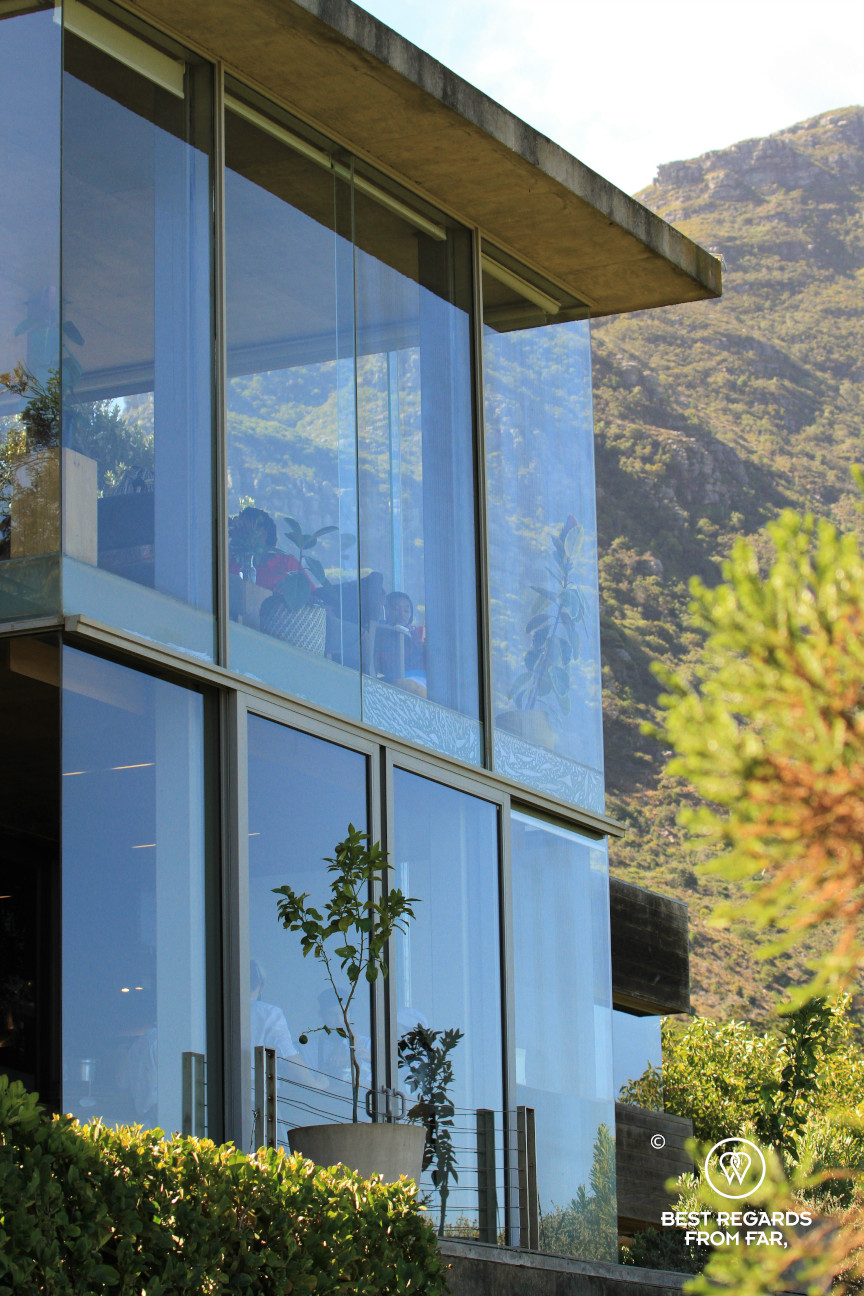


Constantia Uitsig
Constantia Uitsig that borders the domain of Klein Constantia, is one of the domains that allows not only for a diverse wine discovery but also for a wide variety of restaurant options to choose from. Beyond the wines, the estate aims at becoming a place where to spend the day, wine tasting of course, and also walking the rose garden, having fun in the bike park, sharing a picnic or hopping form restaurant to restaurant.
Innovation and tradition meet in the brand-new cellar where wines are crafted by the winemaker Estian. The 1685 Constantia range, made exclusively of grapes grown on the 2-hectare estate, beautifully reflects the unique terroir of Constantia. The Ex Oppido range encompasses grapes from a selection of other farms in other South African wine regions that are cherry picked.
The Ex Oppido range includes a stunning XII Mensis Cap Classique, a bubbly made of 80% Chardonnay and 20% Pinot Noir, sourced from Robertson’s slate and chalky soils. The award-winning wine undergoes bottle fermentation for 9 to 12 months, offering a fresh, fruity palate with crisp acidity.


Estian experiments with different areas of the vineyard and tanks, from stainless steel to cement and oak. The Constantia Uitsig Sauvignon Blanc is partially fermented in cement tanks. Tropical fruits of pineapple on the nose come out beautifully while the finish is refreshing. The wine is best drank young and perfect on hot summer days. The Constantia Uitsig Semillion shows more on the palate than on the nose, and the maturing in both oak barrel and cement adds a layer of complexity to the wine that shows a good aging potential. Its subtle flavours of fynbos and only a tiny hint of wood are balanced, making it a versatile choice for food pairings as well. These two come together in the Nature Vista wine, a blend of 60% Sauvignon Blanc and 40% Semillon, is also matured in French oak, giving it richness and depth, perfect for those who appreciate a more refined style.
To conclude for the whites, the award-winning Chardonnay Reserve naturally fermented in French oak barrels is a textured wine with hints of sweetness and wood, which complements its crisp acidity.
With the variety of cabernet sauvignon, merlot, cabernet franc, malbec and petit verdot from the vineyard, the wonderful double gold Bordeaux-style blend which is simply called Constantia is complex and full bodied with notes of tobacco leaves replaced by an explosion of black current and ripe berries.
The Blockhouse Kitchen with its different spaces, some more family-friendly than others, specializes in fresh, locally sourced ingredients that pair beautifully with the Constantia Uitsig’s wines.
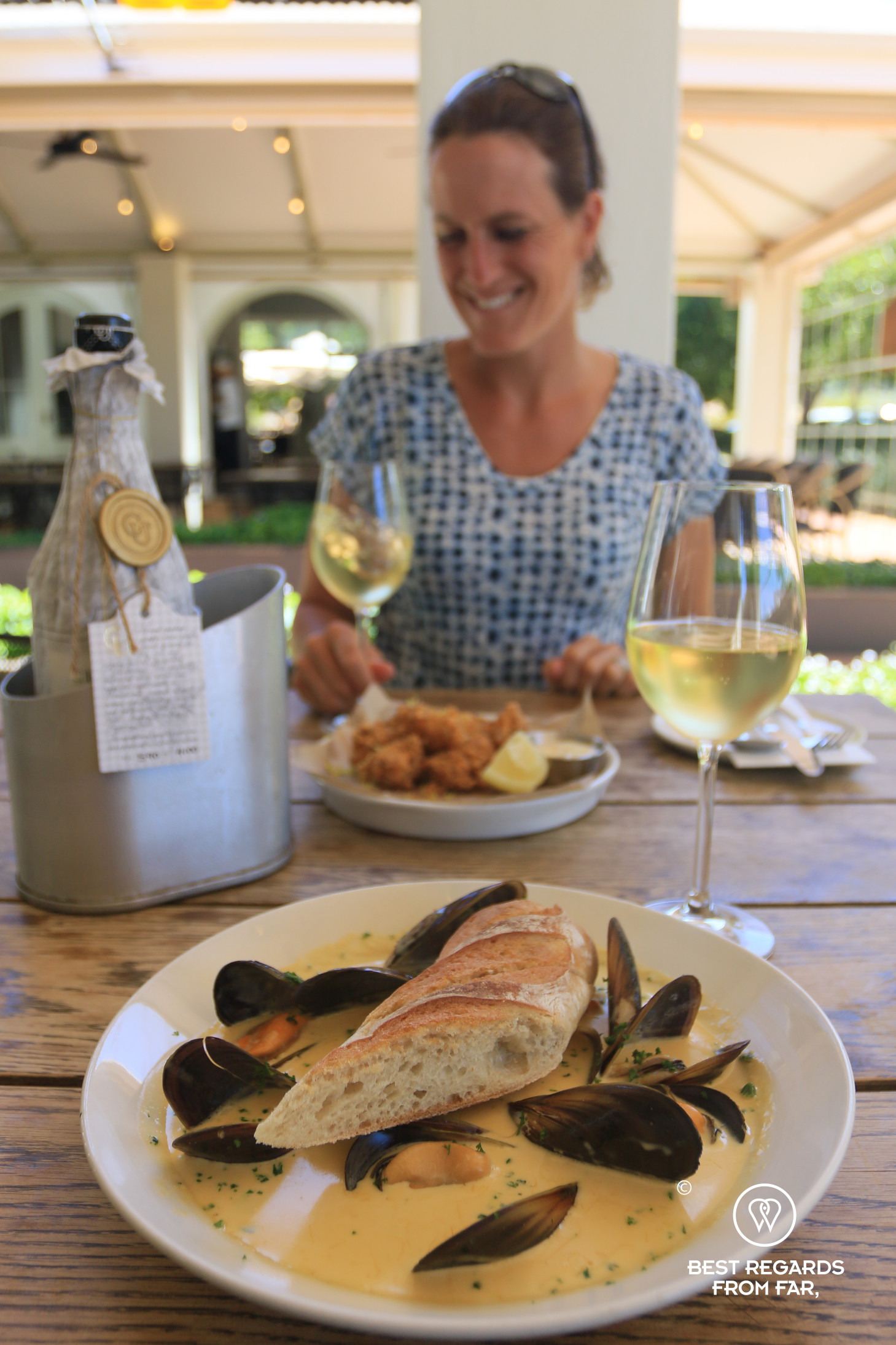
The West Coast mussels in a parsley, cream, sauvignon blanc, and garlic sauce is a must-try dish, and you will certainly see yourself finishing all of its delicious creamy sauce with the baguette. The delicate acidity of the estate’s Sauvignon Blanc cuts perfectly through the creamy flavours. The fried salt and pepper squid in their light and crunchy batter pair beautifully with the subtle woodiness and crisp aftertaste of the Chardonnay Reserve. The grilled hake, served with colourful sweet cherry tomatoes and olives in a beurre blanc as well as the miso grilled pork belly work equally well with the elegant premium wine.
For a more low-key vibe, the Italian fairs of La Grotto with its delicious pizzas, pastas, and salads made with fresh ingredients are a good bet. Some choices to highlight the excellent Constatnia red blend range from the prosciutto pizza, topped with pomodoro, mozzarella, Parma ham, rocket, and Grana Padano to the homemade ravioli is a must, soaked in a rich and creamy Grana Padano sauce and topped with spinach—an instantaneous culinary trip to Tuscany!
What we love:
- The Contantia Chardonnay Reserve!
- The rose garden allows for a short digestive stroll.
- The many food options, including the excellent Blockhouse Kitchen that is also open daily from 8 am for breakfasts.
Pay attention to:
- Walk-ins are fine but to make sure you get a table for your tasting in the intimate tasting room make sure to book your wine tasting at Constantia Uitsig.


Constantia Royale
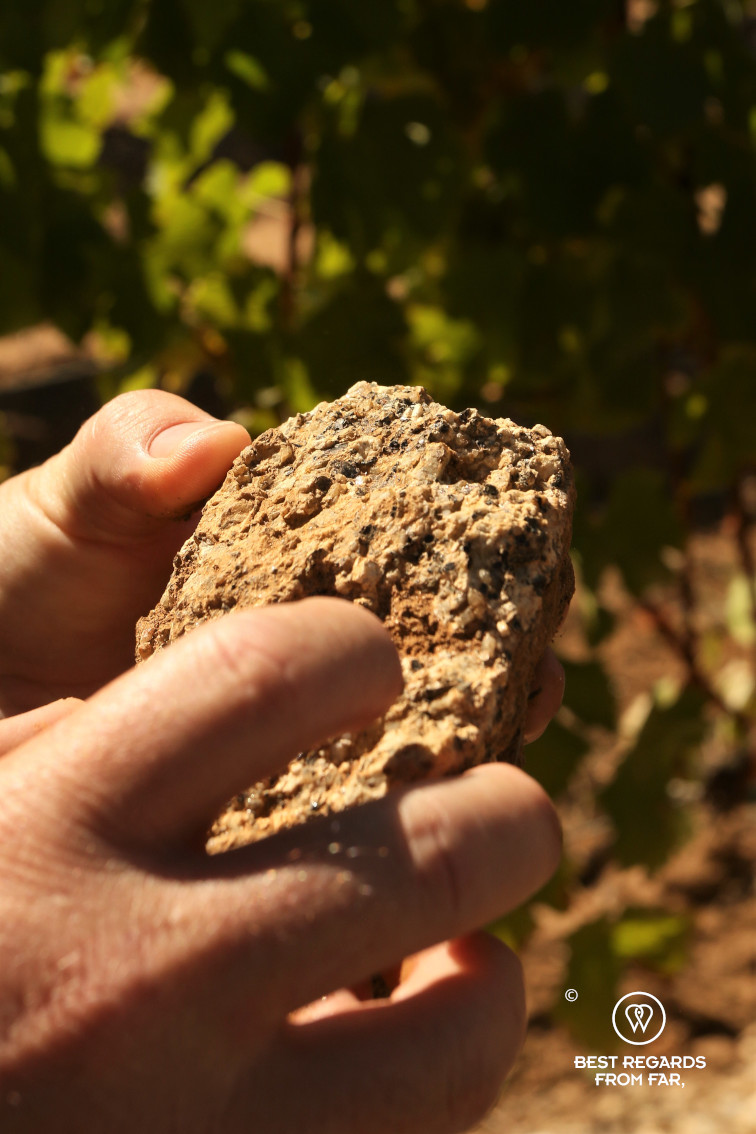
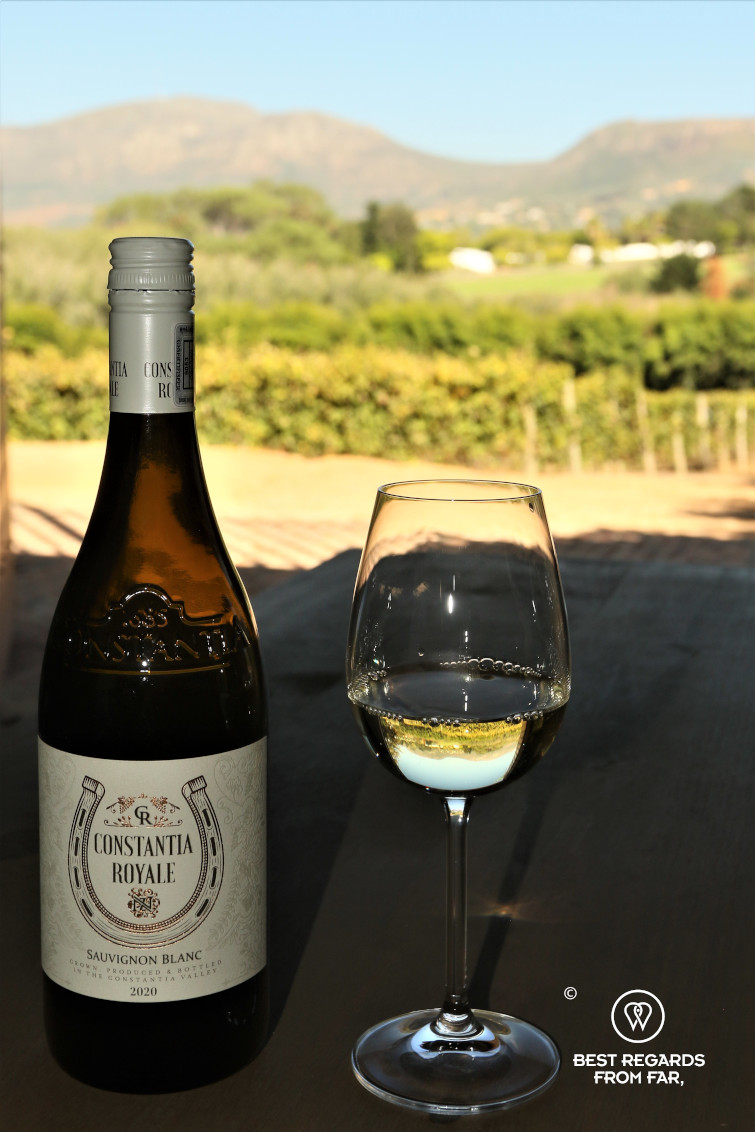
Originally part of the Alphen farm, grapes have been growing on the land of Constantia Royale for more than 300 years. In the 1960’s, the current owners purchased the land and today, the family-owned farm of 17 hectares has 7 under vine. The estate wine Sauvignon Blanc (blended with a bit of Sémillon) is produced in a close-by cellar, as a big part of the land focuses on stables with world-class installations for show jumping (Lynn Rowand, current owner, is a show jumping champion). Passing the elegant stables to walk along an olive groove and into the vineyards, a nice breeze cools us down despite the 150-meter elevation of the Constantia wine route’s lowest vineyard. Most of the Sauvignon Blanc is planted on soil characteristic of the Constantia area where granite boulders give the soil and the grapes their minerality.
What we love:
- The no-fuss atmosphere of the non-commercialized wine farm.
Pay attention to:
- You must make an appointment to visit.
- Your tasting will focus exclusively on Sauvignon Blanc.

Cape Point Vineyards
Off the Constantia wine route, yet a short ride away, it would be a shame to miss out on this gem of a vineyard… Just a small breeze away from the white sands of Noordhoek Beach and its turquoise coastal line, and at the foot of the dramatic Chapman’s Peak Drive, lies Cape Point Vineyards. With fresh and saline coastal winds blowing cooler air from the sea onto the vines that are planted along the clay slopes of Chapman’s Peak barely 3 kilometres (1.8 miles) from the shoreline, the grapes of Cape Point Vineyards enjoy a wide array of conditions to express their potential. The difference in altitude and sun hours give the Sauvignon Blanc grapes
The wine tasting is enhanced by the Discover Noordhoek Wine & Saldhana Oysters pairing: three of the award-winning Sauvignon Blanc wines including World’s best each paired with a refined oyster seasoned to highlight the specific wine. The Cape Point Noordhoek Sauvignon Blanc 2023 fermented in stainless-steel with grapes planted higher on the slope and shaded by Chapman’s Peak expresses a hint of fynbos and nori on the nose, such a gorgeous and unique combination. Mineral, and more complex, the Cape Point Reserve Sauvignon Blanc 2023 with its notes of kelp and salty sea breeze pairs of well with a scallion ginger oyster.


Grapes at Cape Point Vineyard will stay rather small because of the cool ocean breeze. To give the wines more body, the winemaker has done an incredible job playing around with different barrels and grape varietals and has created a blend consisting of 10% Sauvignon gris, 20% of Sémillon that he has matured in a French oak barrel for 5 months and then blended with 70% Sauvignon Blanc that has matured in stainless steel. The result? A sophisticated white Bordeaux style blend with rich textures known as the Cape Point Isliedh 2023, honouring the Scottish roots of the owners. With an impressive 96 rating at Tim Atkins the award-winning wine is complex, rich, floral and has a long-lasting mineral finish and pairs sublimely with the baked spinach oyster.
While many food options are available from the Thursday food market to picnics, sushi and braai, the more upscale a la carte restaurant is the ideal place to experience a gorgeous menu crafted by Chef Bradley Mathias to highlight the wines of the estate.
Perfectly cooked scallops with a soft boiled quail egg and the sweetness of peas and sweet corn blend perfectly with the Noordhoek Sauvignon Blanc with its crisp green apples on the nose. The wine is also ideal to pair with the locally caught Cape salmon with roasted cherry tomatoes and potatoes thanks to its unique refreshing coastal hints.
The meat of the biltong spiced ribeye served on warm bone marrow melts in the mouth and the bold pairing with the Sauvignon Blanc Reserve works brilliantly.
To end, the chocolate mouse served with a vodka caramel ice cream is a real killer and the cherry on the cake of an amazing fine-dining experience in a truly sublime setting!
What we love:
- The setting, the view, the attention to detail, the wine and the food! It is a not-to-be-missed gem from which sunsets are golden.
What to pay attention to:
- Make sure to book your table.
- A weekly food market is hosted on Thursday nights.


Travel tip:
- The Constantia wine area combines the experience to the quality of the wine in an area that is easy to comprehend, and very easy to reach from Cape Town.
- To get the best wine experience if you are new to South African wines, check out John Platter’s Wine Guide. It is a renowned and competent guide for South African wines that are blind tasted and graded with a 5-star system as well as an out of 100 score (50/100 being the lesser possible score).
- Only if the grapes are grown in the Constantia area, can the distinctive Constantia 1685 bottle can be used.
- To best enjoy Cape Town, stay at The Kensington Place and walk to the trendy Kloof Street restaurants.

Kensington Place hotel breakfast, Cape Town 
Kensington Place hotel breakfast, Cape Town 
Kensington Place hotel breakfast, Cape Town 
Kensington Place hotel breakfast, Cape Town 
Kensington Place hotel swimming pool, Cape Town 
Kensington Place hotel cappuccino, Cape Town 
Kensington Place hotel room, Cape Town 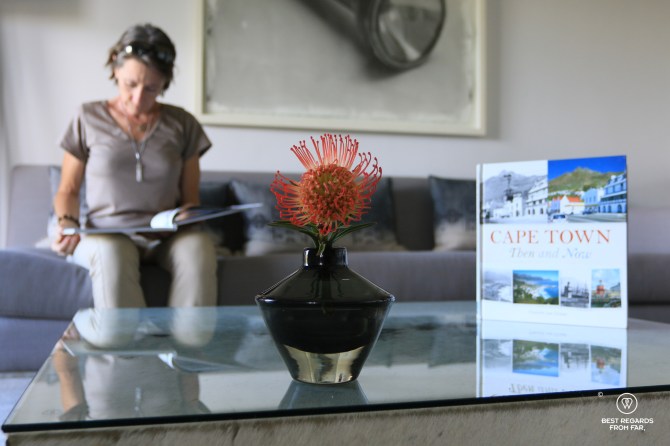
Kensington Place hotel room, Cape Town
- Check out this interactive map for the specific details to help you plan your trip and more articles and photos (zoom out) about the area! Here is a short tutorial to download it.
 Best regards from far,
Love this!!!
Sent from my iPhone
>
We’ll take you there anytime!! 😀