Article updated on December 28, 2024
Text & photographs: Claire Lessiau & Marcella van Alphen
Battambang, Cambodia’s second-largest city with a thriving agriculture, is an authentic destination that is ideal to dig into the traditional crafts of the country. Join us as we take you through a series of seven short articles, each uncovering the secrets of one of these crafts.
Rice noodles are a favorite staple in many Asian countries, with dishes like pho for breakfast or a rice noodle base for lunch and dinner being commonplace. To serve this high demand, most noodles are produced in factories. However, it is still possible to buy them fresh and hand-made. In Battambang, a few families living in the rice noodle district have been passing down this culinary know-how for many generations.
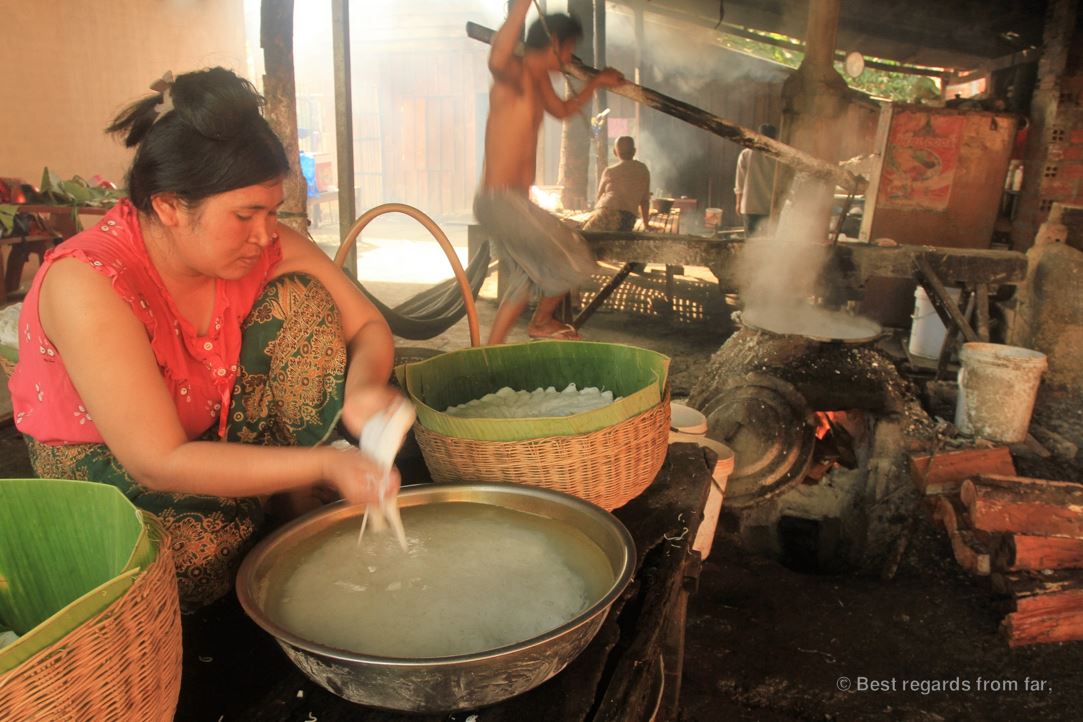
The process begins with rice, which is soaked in water for three to four hours until the grains soften. Once ready, the rice is ground into a fine flour. The next step involves extracting the moisture from the rice flour paste by applying weight, squeezing out excess water. What remains is a thick, dense chunk of paste, which is then boiled and stirred until it forms a dough. This dough is pressed through a filter with small holes to shape the noodles, which then fall directly into a boiling pot of water for their second cook. After being boiled, the noodles are immediately immersed into cold water to cool and prevent them from sticking together. The noodles are then given a few more cold baths before being portioned out and prepared for sale.


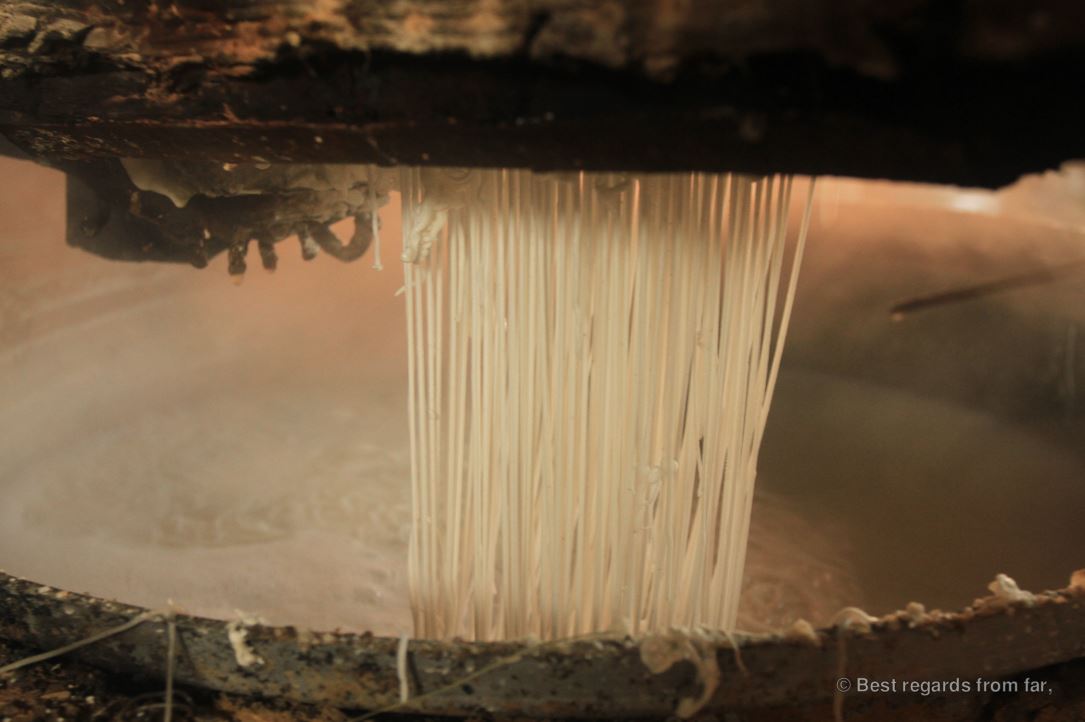
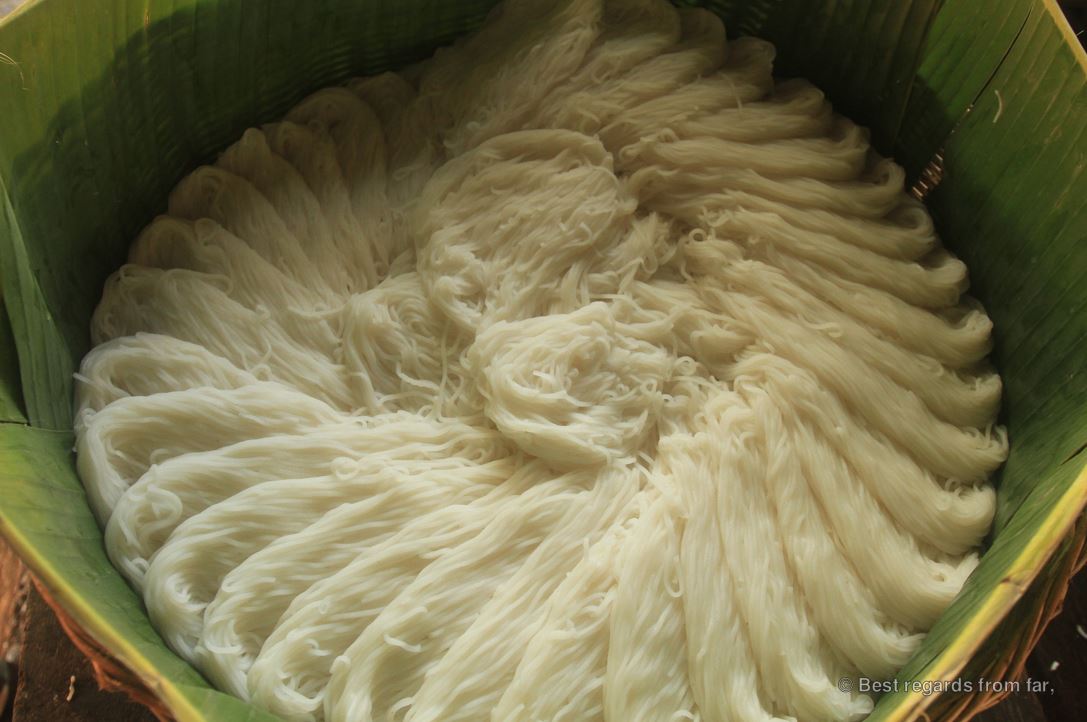
The best time to visit the rice noodle district is early in the morning, when all the family members are busy with their respective tasks to ensure fresh noodles are ready for sale by late morning. By then, about 100 kilograms of noodles are typically made, but these hand-crafted noodles have a short shelf life—only 24 hours—making freshness paramount for discerning consumers. While factory-made noodles can last longer and are becoming more common, there is simply no comparison to the taste of freshly made noodles. Once you have tasted the difference, there is no going back!
Travel tips:
- To make the most of your visit, we strongly recommend you to take a local guide as most craft-people do not speak English and are actually working hard to make a living, so they should not be disturbed. The local guide knows the usage and will tip appropriately.
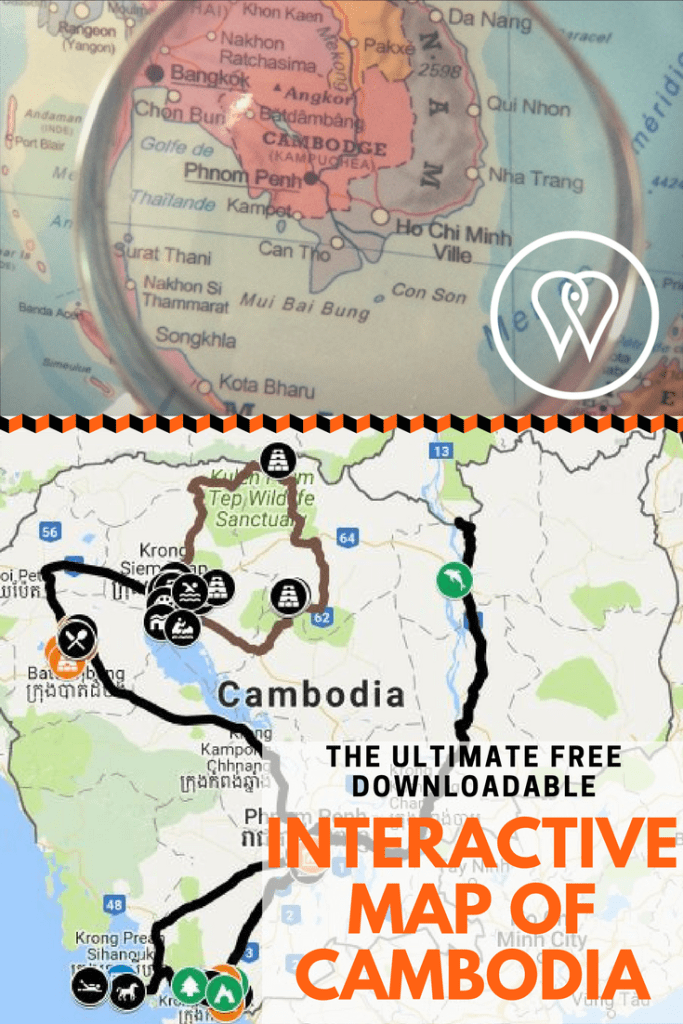
- Check out this interactive map for the specific details to help you plan your trip and more articles and photos (zoom out) about the area!
For more inspiration about Cambodia, click on these pins:




 Best regards from far,
Nice article. I’m getting quite peckish just by reading your article, even thought it’s only 7 in the morning.
Thanks Steven! We must admit that the noodle breakfasts are pretty good and kept us going for almost the entire day 🙂 the rice noodles are by far our favourite.
What patience … as for any good kitchen and that it must be good. Indeed, there is no coming back as for the salad of the millionaire (heart of palm) in Mauritius.
Yes, the fresh stuff is definitely the best! It makes one very picky 😉
How great do these noodles look!!!
And they taste even better 🙂