Article updated on January 19, 2024
Text & photos: Claire Lessiau
A huge cracking sound wakes me up in the middle of the night. I jump from the futon mattress and open my eyes widely to see a bright light illuminating the Japanese-style room. About 5 seconds later another loud thunder resonates, covering the noise of the heavy rainfalls. I am relieved and worried at the same time. Relieved, as we should have been spending our first night in the wild at Kuro-dake in the remote Daisetsuzan National Park, Japan’s largest, and the comfort of the ryokan is much better given the storm. Worried, because in a few hours, we will start our 5-day hike and I fear experiencing such a thunderstorm in the mountains of Hokkaido Island, especially in the Southern section of the Grand Traverse hiking trail where there are no shelters.
Pin it for later!

Hiking season – June to September – collides with typhoon season – May to October – in Japan, and careful and thorough weather checks are a must before venturing in the outdoors. With the peak of the typhoon season in August and September, when typhoons are also stronger, it is not surprising that our window is narrow. A typhoon is moving away from Hokkaido, while another one is coming in during this mig-August. The rangers of the Daisetsuzan National Park concur: it is this morning, or not at all. After a couple of days of rain, the weather should clear up.

After a hearty and delicious breakfast, we warmly thank the owners of our ryokan and head out with our 16-kilograms (35 pounds) backpacks, half filled with instant ramens and water, plus my 2-kilogram (4.4 pounds) professional Canon camera.
The Daisetsuzan Grand Traverse may be only 75-kilometre (47-mile) long, but it is a very demanding trail, recommended only for experienced hikers. It requires methodical preparation (please refer to travel tips) and careful packing to conquer challenging elevations along mountain ridges in a very remote area and in all types of weather. Even if August is the warmest month and the average altitude only 2,000 metres (6,000 feet – only, compared to the Japanese Alps), waterproof bags, rain covers, gloves and down jackets are necessary. Bear bells, water filters, and tents are another must…

The wilderness of Hokkaido is a component that cannot be neglected: the Daisetsuzan National Park is very minimalist. Along the Grand Traverse hiking trail, a long section with no shelters imposes a warm tent. Most huts are unmanned, so food must be carried. Water is mostly found in snow patches that are scarce by mid-August. Because of potential parasites due to animal faeces, it must be boiled or filtered, resulting in an additional gas tank or a water filter. Last but not least, bears represent a real threat in Hokkaido. Isolating the odorous goods such as food and toothpaste in zip-lock bags gives us a false sense of security. Hanging this bag in a tree with a rope and carabiner at night is not an option, as there are no trees along the trail… We have to count on our very annoying bear bell ringing with every step we take to keep them at a distance.


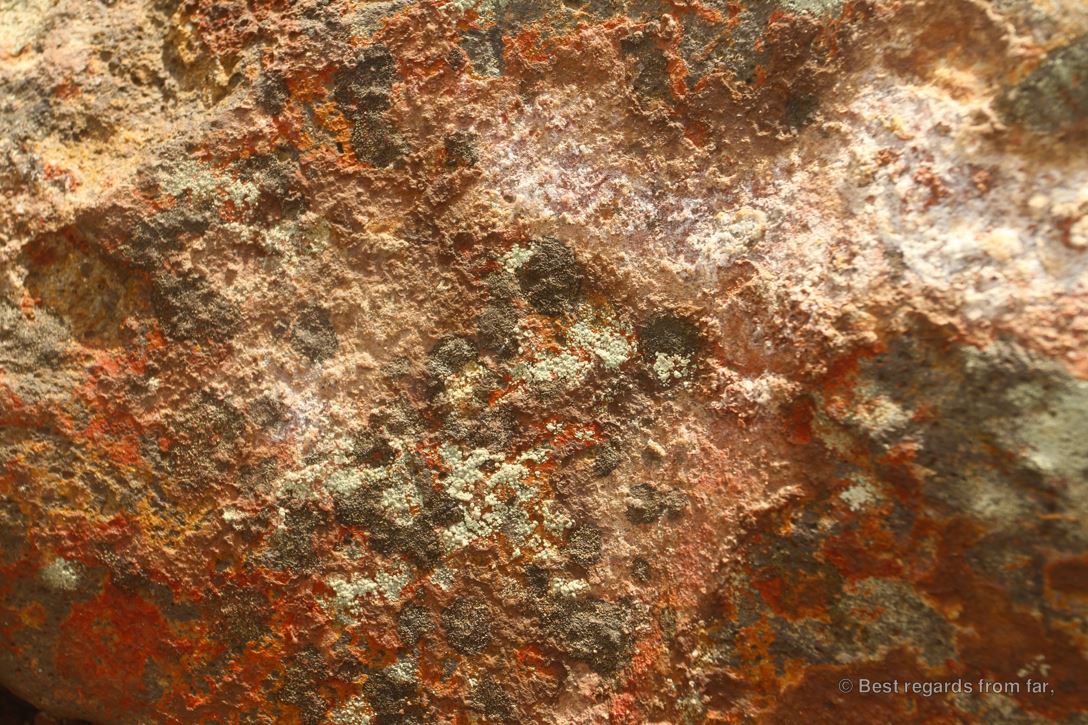
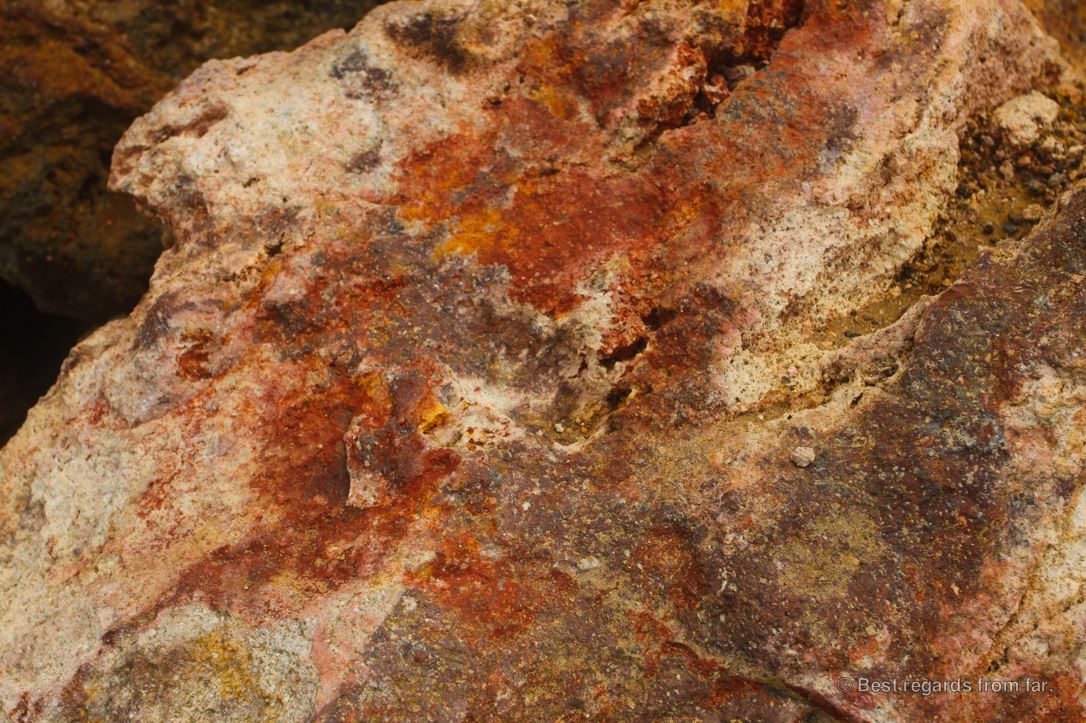
With all of this preparation, including days of studying the Japanese-only park map carefully and noting down the main directions to be able to recognize them on sign posts, we ride the ropeway up to start the hike at mid-slope of the first mountain from an altitude of 1,600 metres (4,800 feet). It is a bit heart-breaking, but according to rangers and die-hard hikers, it does save some energy at the beginning of the multiday hike and comes highly recommended. We circle around the Sapphire Pond with day hikers to observe the active Asahi-dake volcano. Past the Sugatami Lake, we loose the crowds and the trail becomes steep, going up along the mountain ridge with fantastic views on the fumaroles and colourful volcanic stones: red, orange, yellow, pink, black, grey, white, green moss… Reaching the 2,291-metre (7,516-foot) summit is quite demanding, all the more so that the volcanic pebbles we evolve on make us feel like hiking up on abrasive sand.
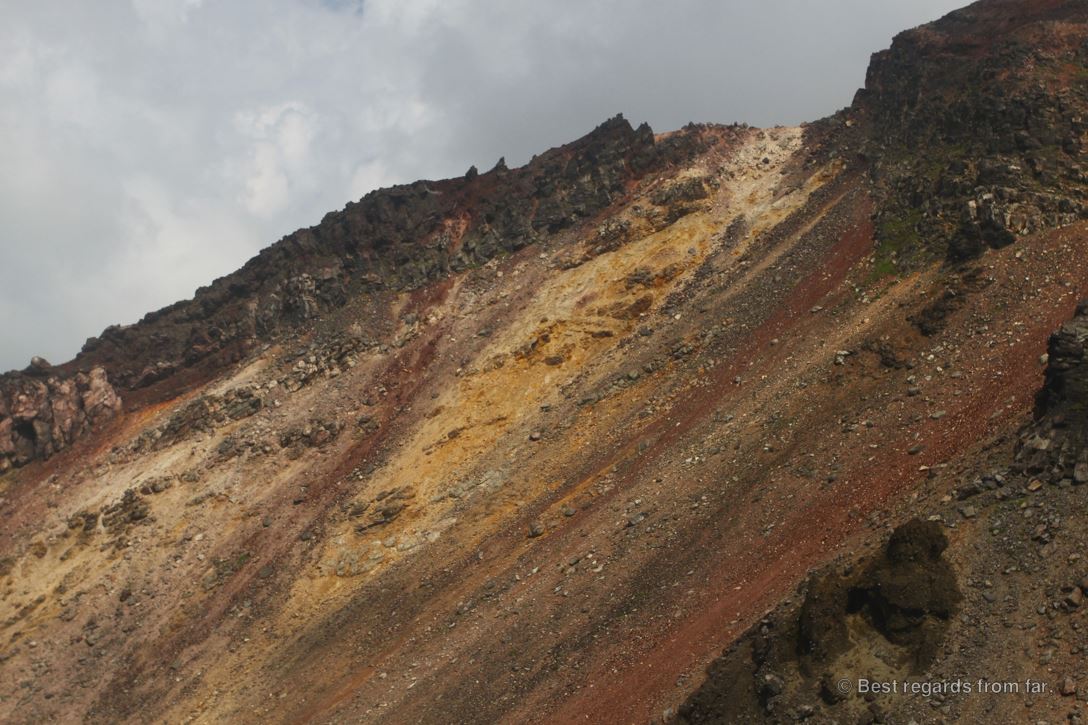

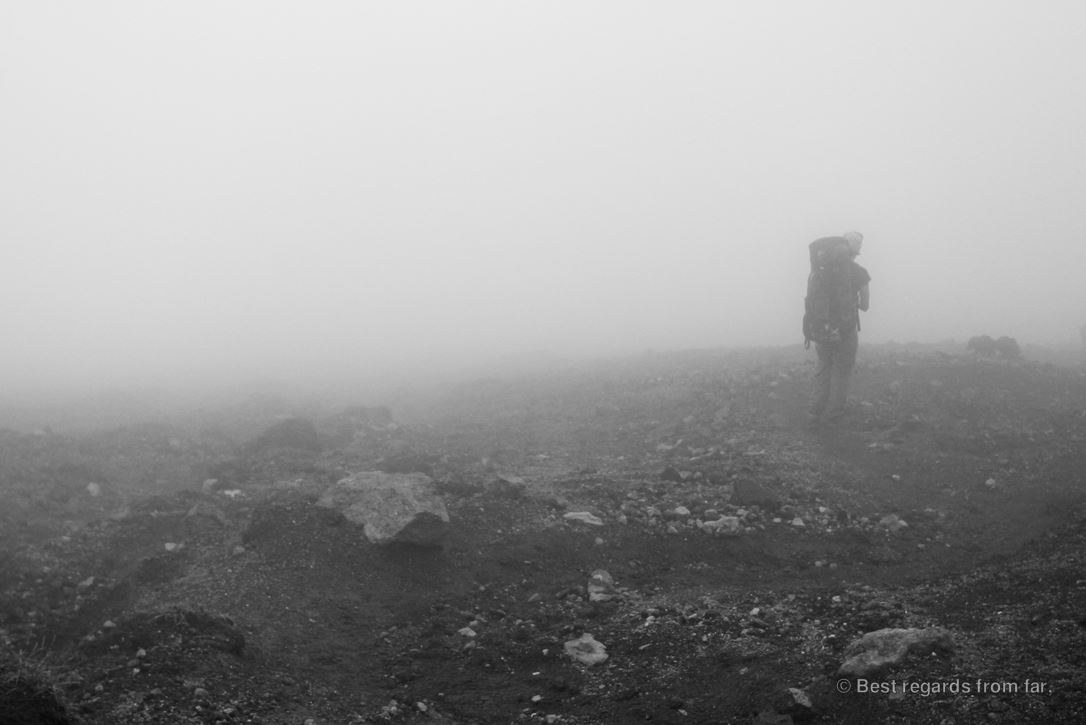
A couple of hours later, we reach the summit of Asahi-dake, the highest peak of Hokkaido. We are just on time to meet the clouds coming along with a very impressive thunderstorm. All hell breaks loose within minutes: the thunder is cracking loudly; rainfalls are heavy and the storm is getting closer fast! Counting seconds to get an idea of how close lightening is striking makes us realise that it is moving very, very fast. We are not in a safe spot: high up on a mountain ridge, with metal poles marking the trail, and backpacks with metal structures and hiking poles… No shelters are in sight. Only the wilderness of the Daisetsuzan, and on the side where we come from, the cable car in the distance. The odds could not be worse… We decide to run down the very steep slope on the other side of Asahi-dake towards the first campsite in Kuro-dake. Once a bit lower, we drop our backpacks and hiking poles, and squat to stay low to the ground for about one hour in a violent rain turning into hail. The water flowrate clearly exceeds the limits of our technical rain jackets.
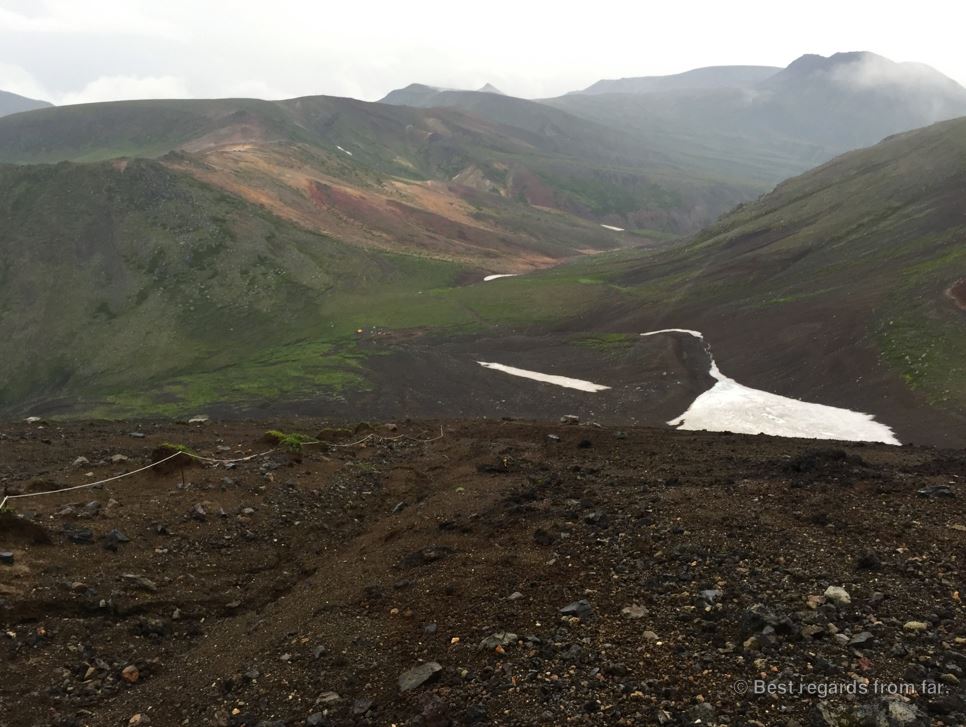

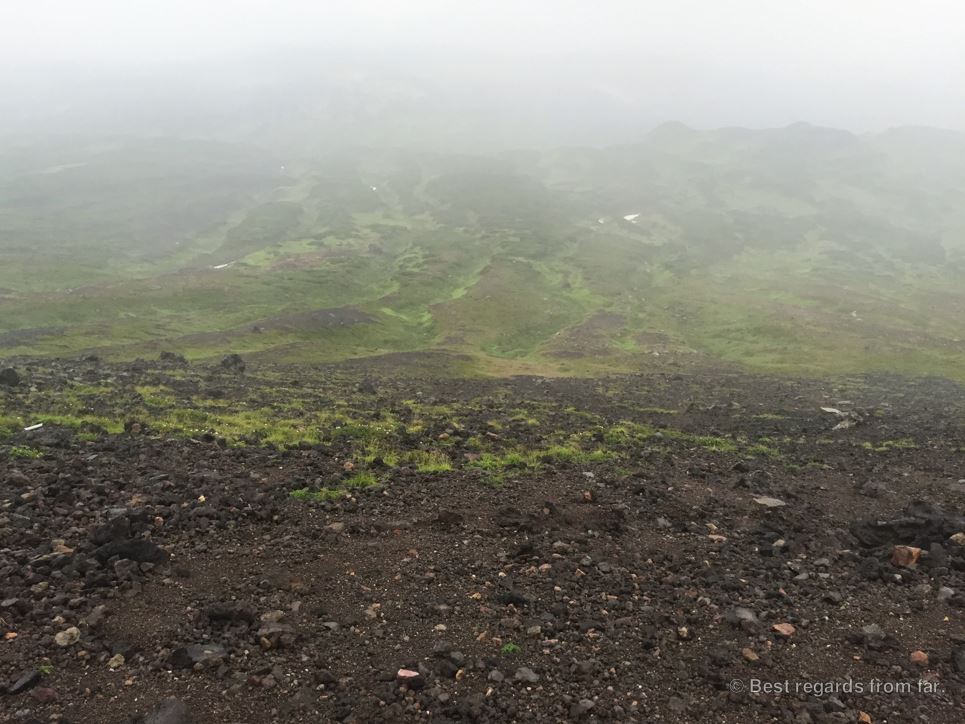
It is decision time: either we keep going to Kuro-dake as planned, or we turn back now, giving up our 5-day adventure. Weather applications are pretty useless without a cell phone signal. We run a bit each in opposite directions, trying to see if there is any opening in the sky, barely noticing the beautiful vistas on the Daisetsuzan mountain range. We meet again, still hesitating to the sound of thunder. I see a horrified expression on Marcella’s face: my long dark hair is standing straight up in the storm. I am next! Positive electrical charges are rising through me and attracting the negative ones accumulating at the bottom of the storm, creating all the conditions for an electrical transfer to happen: lightning. The only way out is to find an indoor shelter: Kuro-dake being another four hours away, quickly, we decide to head back. The adrenalin helps us rush up the steep slope to swing back onto the Asahi-dake side. Then, we run down to the cable car as mad women. At mid-slope, a few close-by and very loud cracks catch up on us. A hissing sound… A metal trail marker 2 metres (6 feet) away from us just got hit by lightning. I feel the warmth on my face for a split second, and I pause briefly in my insane race against the elements, staring at the pole and realising how close it got. I resume running down, twice as fast!

Three days later, we are driving by the Kuro-dake ropeway (another way to start the Daisetsuzan Grand Traverse trail) on our way to Shiretoko National Park through another violent storm. A helicopter flies by. The authorities have started a rescue operation to evacuate all hikers from the mountains because of worsening weather conditions. Renouncing is never an easy decision to take, and most of the time, one remains wondering if it was the right call. Despite being downhearted by not completing our well-prepared 5-day trek, we got closure knowing that we did make the right choice.
Travel tips:
- Preparing the Daisetsuzan Grand Traverse is essential. Do not refer to the “Hiking in Japan” by the Lonely Planet – renowned to be inaccurate for that hike (and based on our experience, it is fairly inaccurate for any hike).
- Once onsite, make sure you talk to rangers before venturing out to enquire about the latest conditions. The visitor’s centre of Asahidake onsen focuses more on short daily outings.
- Check out this interactive map for the specific details to help you plan your trip and more articles and photos (zoom out) about the area!
For everything about Japan, click here!
For more, click on one of these images:






 Best regards from far,
Wat jammer dat wat jullie mooiste hike moest worden zo eindigde. Gelukkig dat jullie het kunnen navertellen op jullie blog.
great pics and nice write up too.
You posted a blog about Daisetsusan at last! I’m a woman talked together at dinner time in Lodge Nutaukapushipe. My husband and I were worried about you because when we checked out, you seemed to wait to decide whether to go to 5days hike and the next day TV news in Tokyo reported that 50 people were forced to give up going down Tokachidake ,which we climbed 2days ago and you’re going to arrive at some days later, because of hard rain.Reading your blog with much interest ,I saw the scenes of your exprerience at Asahidake and felt a fear . Enjoy your super trip in Japan!
Hi Otani, super sweet of you to check out our blog to get news about us and to leave such a nice comment in English. We waited an extra day for the weather to be better but as you could read it did not work out well. We are still in Hokkaido (Sapporo) and it has been rainy for almost two weeks. We had no idea another 50 people had to give up hiking Tokachi-dake! We are happy nobody got injured and we realise once more that the force of nature can not be underestimated.
It was really nice meeting you. We enjoyed our stay at the Nutaukapushipe so much that we wrote a blog about it which will be posted soon.
Thanks again for reading us!!
Dear Marcella and Claire.
Your 6 weeks tour in Japan is almost finished. With much interest and pleasure i took notice of all your blogs. It was very interesting to read about all the activities you did. In this way i also got a good impression from your trip.
Moreover i have respect the way you did organize this all individually together in a totally different culture and unknown language.
Look forward to the blogs from your next journey anywhere in the world.
Adri
Dear Adri,
Thank you for your sincere comment. We are happy to read that you have read our blogs with much interest. We will keep up writing and taking people on board with us!
Claire and Marcella