Text: Marcella van Alphen
Photographs: Claire Lessiau & Marcella van Alphen
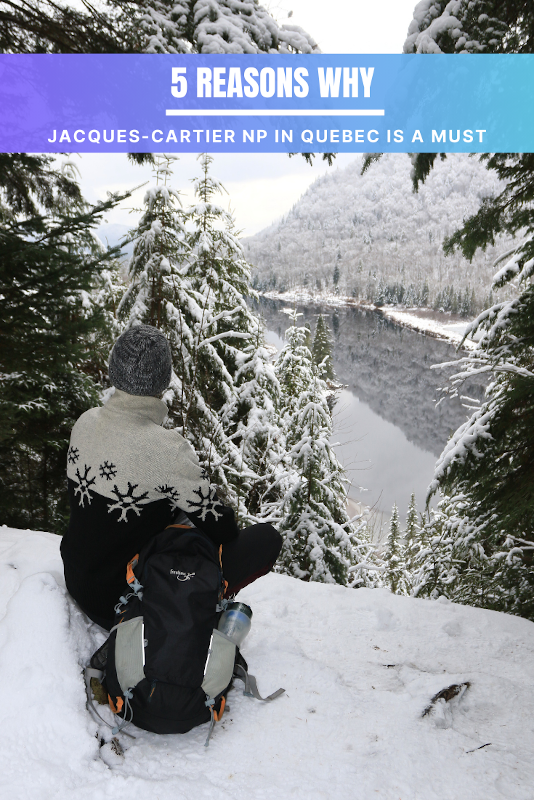
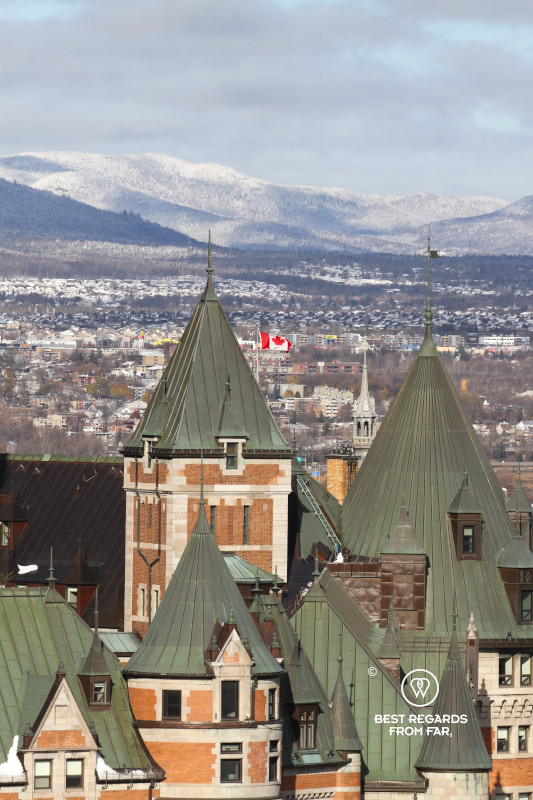
Quebec City attracts visitors due to its photogenic Old Town, compelling history, cobble-stoned streets, warm hospitality, and Quebecker cuisine. Beyond its interesting UNESCO World Heritage center —actually, the Old Town was the first city to become UNESCO Site North of Mexico as the cradle of French civilization in North America— a captivating wilderness lies just a few miles away waiting to be explored. For the ones looking for some peace and quiet and immersion in nature, the nearby Parc National de la Jacques-Cartier is an absolute must! Here is why, through a series of fun fact that reveal how special this national park is.
Like it? Pin it for later!
Just 40 Minutes from the Capital of Quebec
Imagine a city trip that can be seamlessly combined with a visit to a national park offering rugged landscapes, well-maintained hiking trails, fun canoeing adventures, winter activities, and an interactive visitor center, all within easy reach.
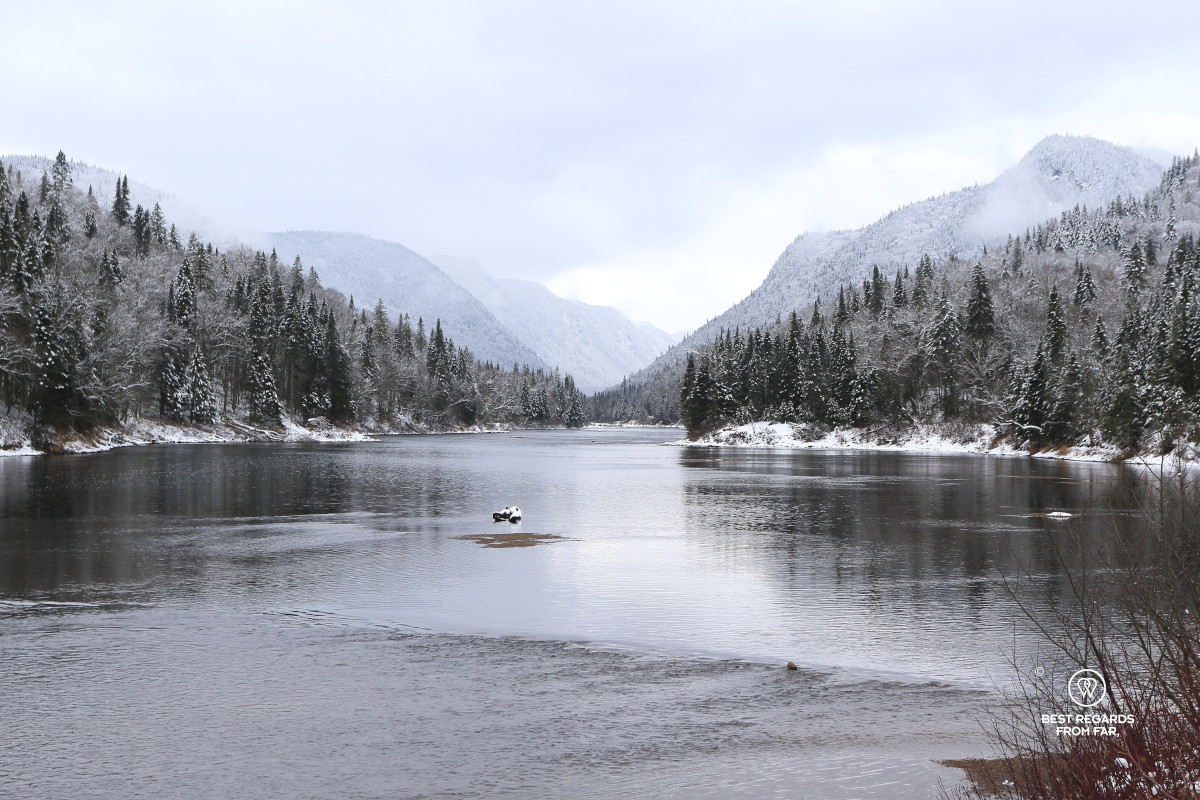
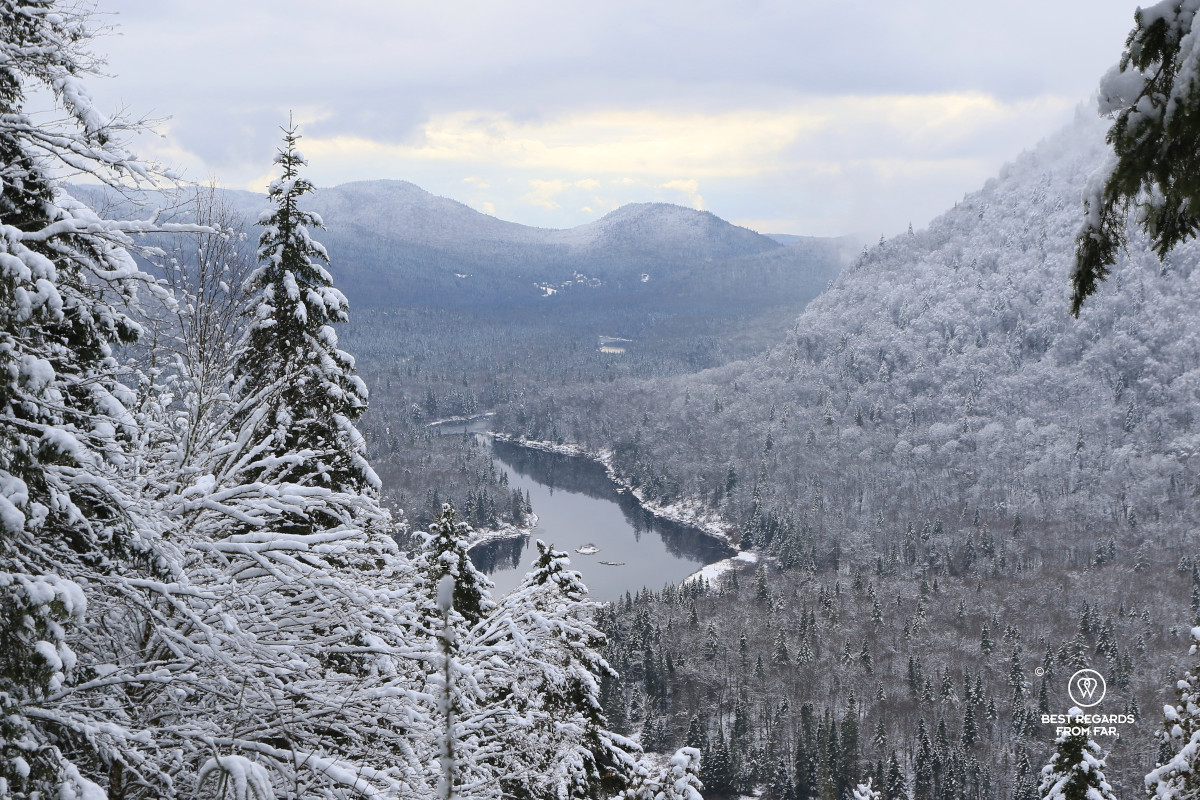
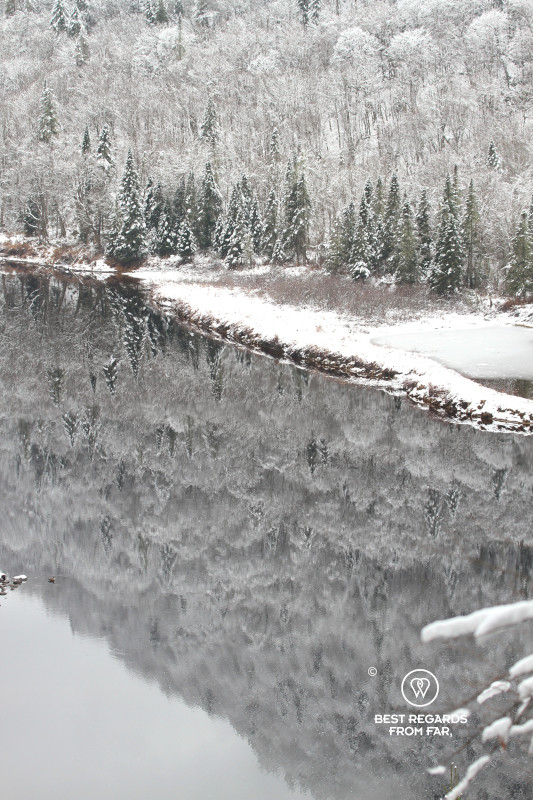
Located just a 40-minute drive from Quebec City, Jacques-Cartier National Park consists largely of vast valleys that have been formed by retracting glaciers. The Laurentian Mountains stretch from Quebec City all the way to Labrador. Formed almost one billion years ago, they are one of world’s oldest mountain ranges. Once as high as today’s Himalayas, most peaks do no longer exceed the 1,000 meters (3,280 ft).
Long before Cartier these Lands Were Frequently Roamed
The park and river get their name from the famous French explorer Jacques Cartier, who crossed this area in the early 16th century while trying to find a Northwest passage to Asia. Indigenous people already knew the importance of this waterway.
Prior to Cartier’s arrival, these lands were home to the Innuatsh (Montagnais) and Huron Nations. Long before hikers roamed these paths, the Laurentian Mountains served as winter hunting grounds for the Innuatsh of the Lac Saint-Jean region. Long before modern-day explorers canoed this river, each spring, they paddled down the Jacques-Cartier to what is now Québec City to trade furs for European goods. Later, the Huron-Wendat traveled via Rivière à l’Épaule to access the same plateau. These were long-known land and water routes that were later adapted to the logging industry.
The Park Is Worth Visiting All-Year-Round
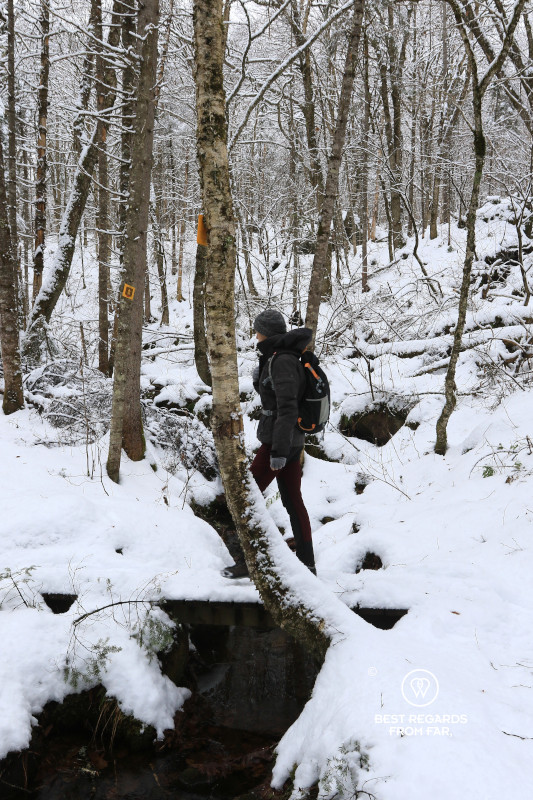
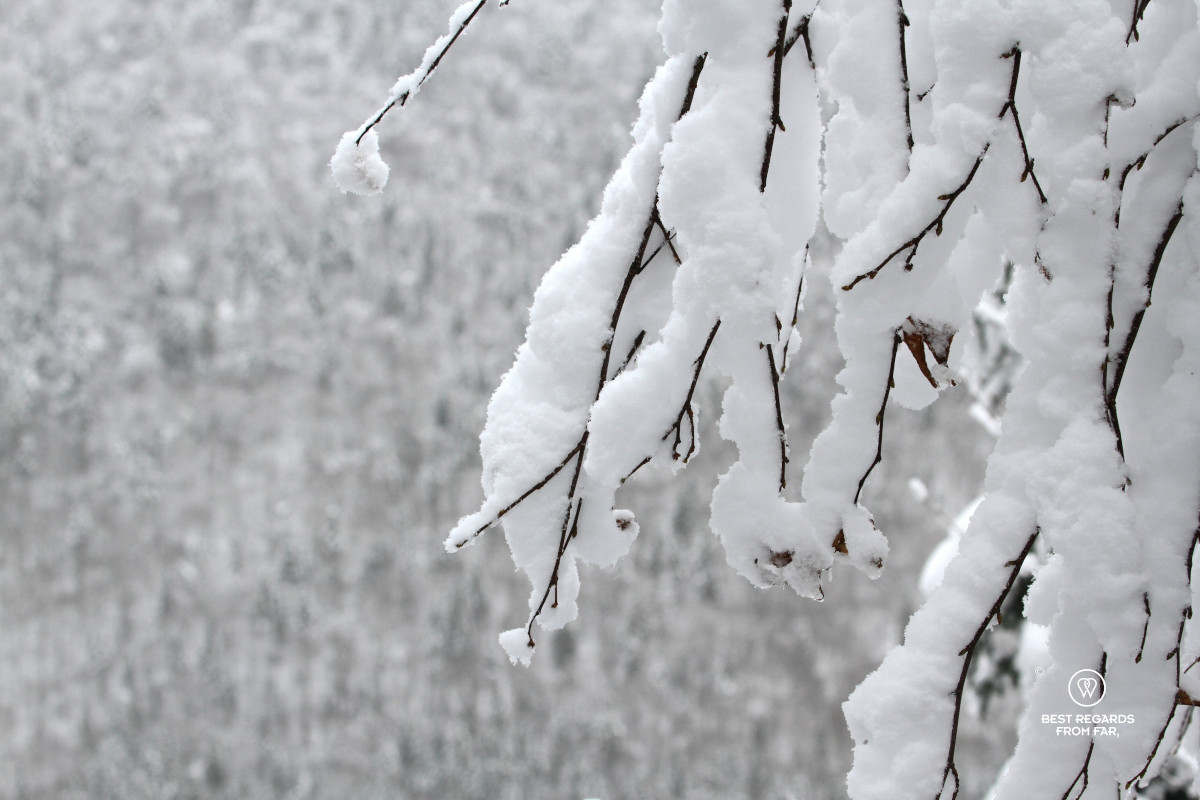
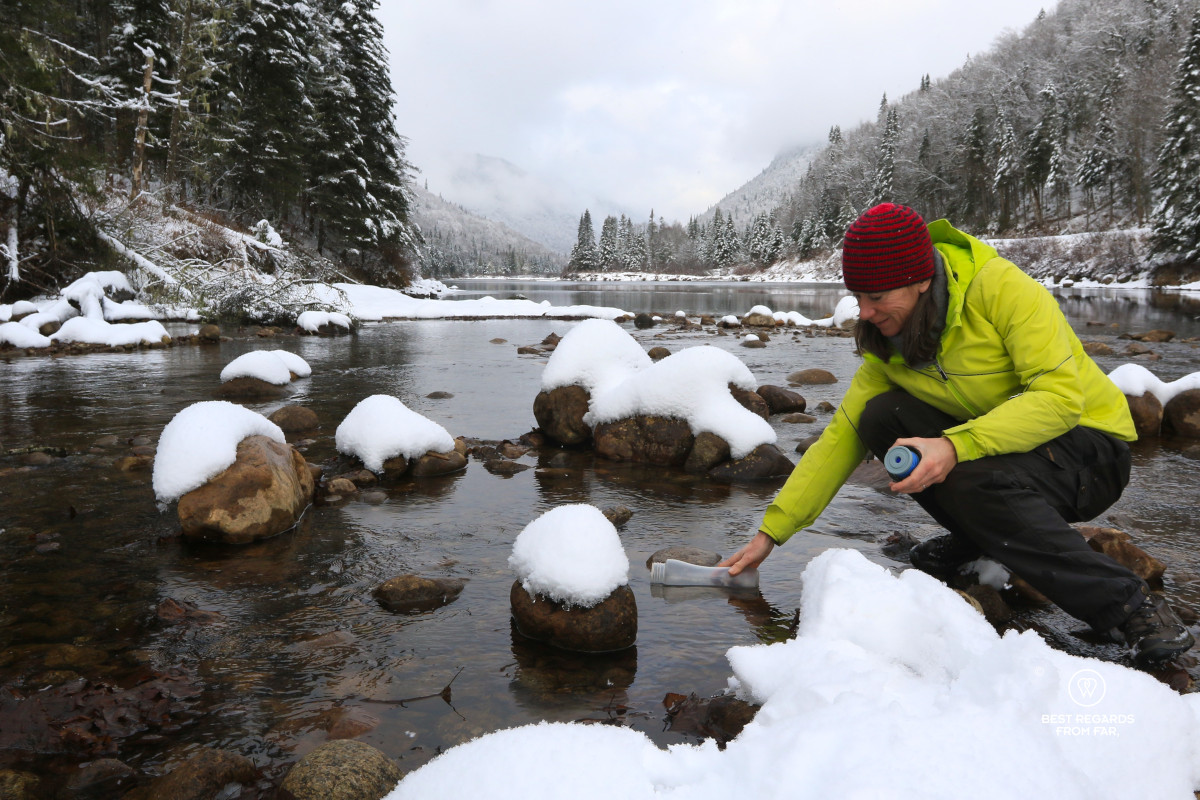
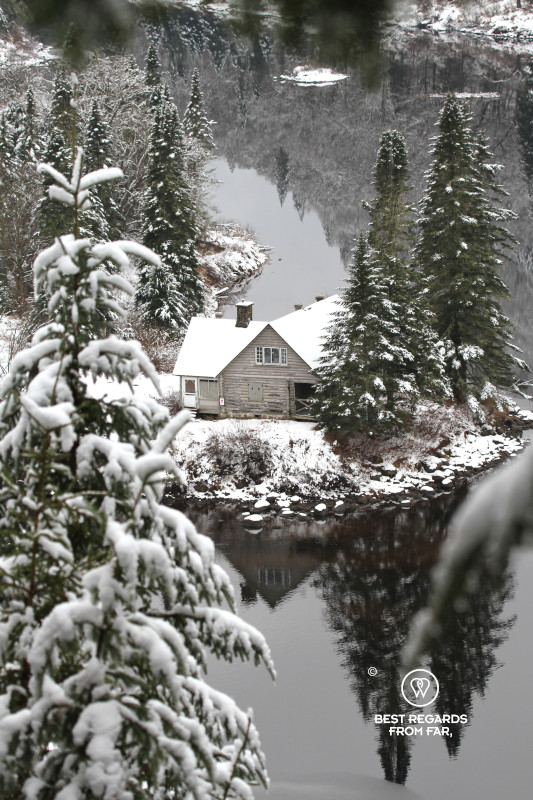
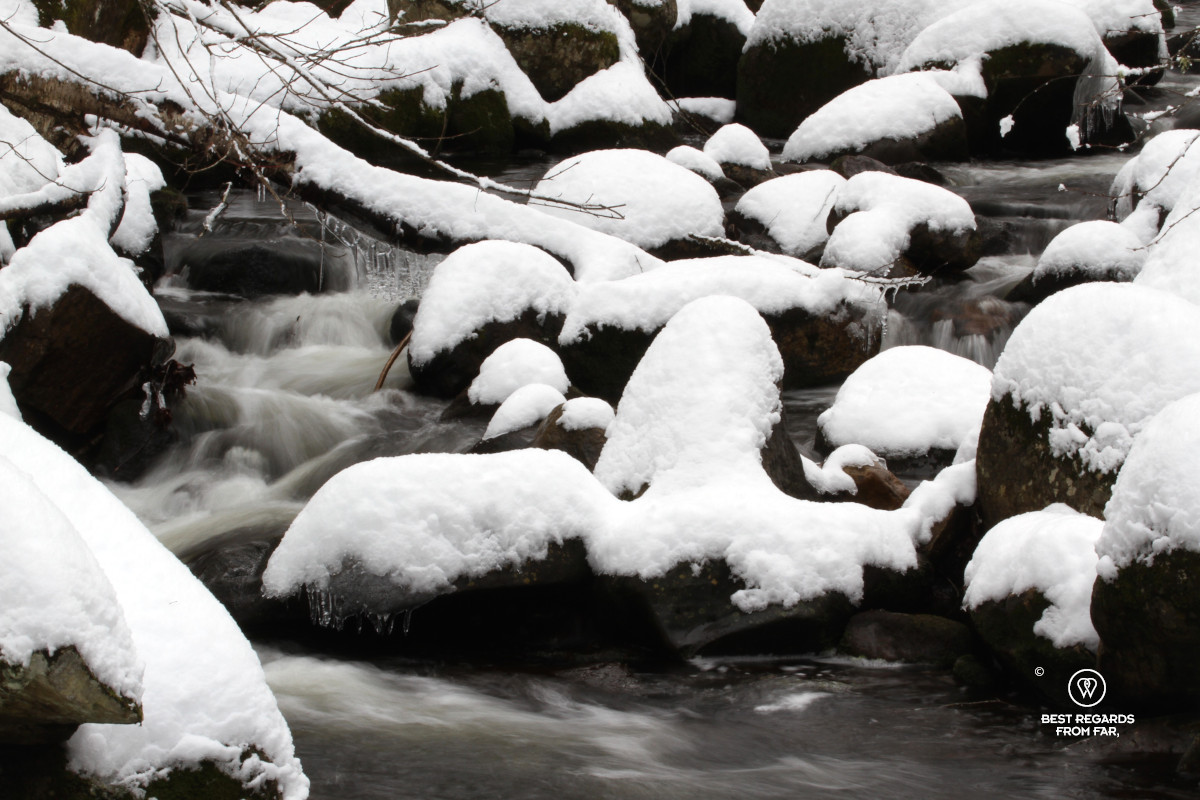
Thanks to a sheltered microclimate and thick, well-drained soil, the vegetation in the park has become lush. Evergreen Balsam fir dominates here with their piney aromatic needles adding to the experience of hiking on crisp and cold winter mornings. Trails can be tackled with snow shoes or cross-country skis on those days when a blanket of snow softens the sounds and slows down life.
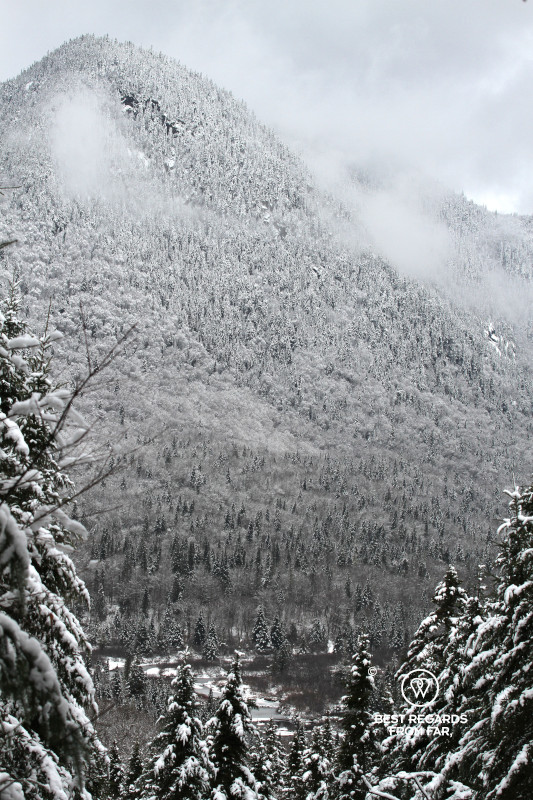
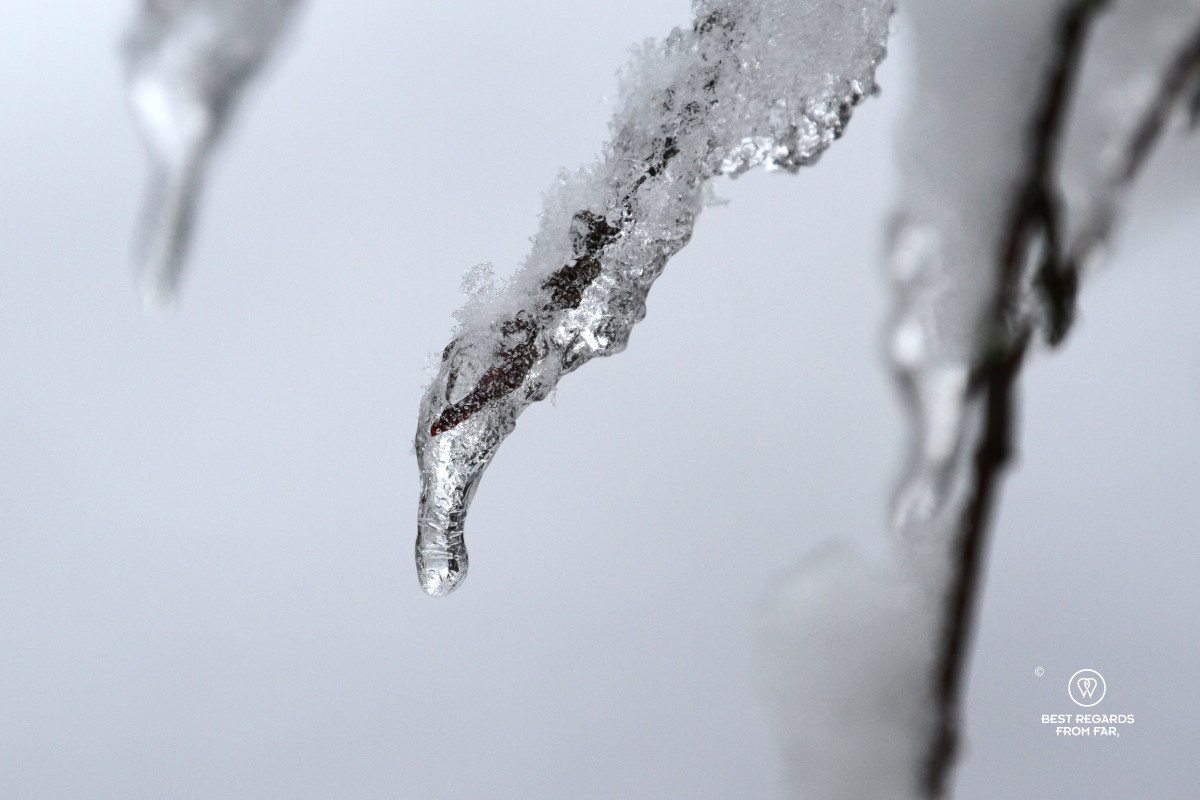
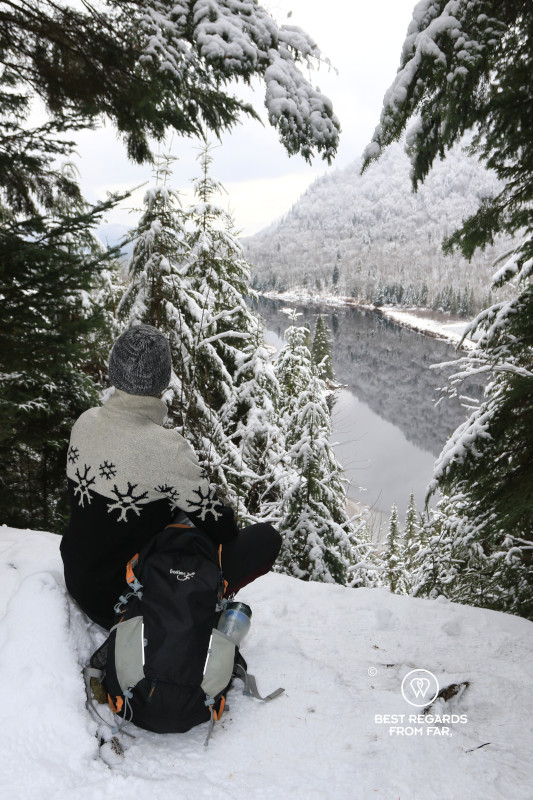
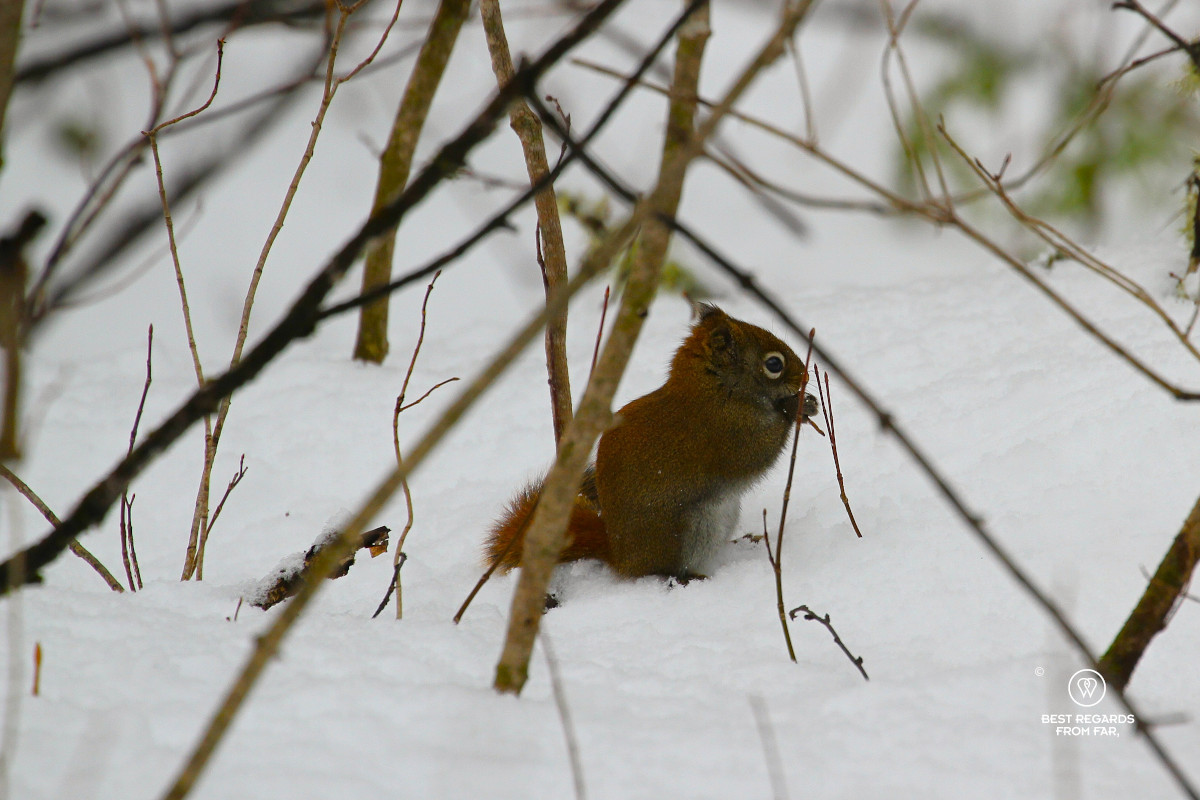
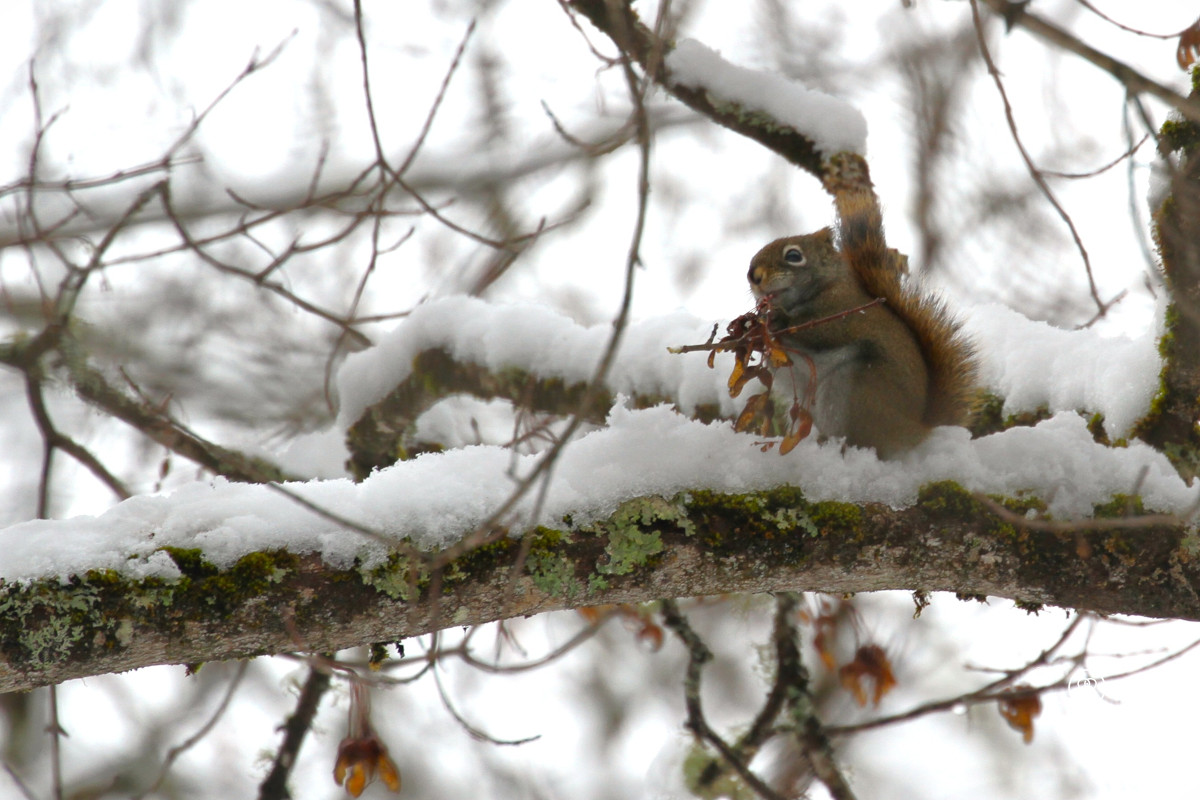
Spring lets visitor see the park come alive again with buds opening, fresh leaves emerging and the rivers roaring thanks to the melted snow. Long summer days allow for a deeper exploration into the park that locals love to do by canoe, bringing picnics along for just a day trip, or the full camping gear for overnighters. The fall is one of the best moments with the leaves of the many Sugar maples and Yellow birch trees turning in their fiery yellow and orange autumn colors, one of the best fall foliage experiences in North America when the forest gets ready for winter and grey and red squirrels run around to stack their food ferociously.
A Wilderness Teeming with Wildlife
The abundance of mature trees sustains a rich animal life: white-tailed deer, wolves, black bears, caribous, red foxes, porcupines, and countless small rodents to just name a few. In the snow, signs are everywhere: in tracks that wildlife left while crossing the trails, bark stripped from branches, or cracked open nuts. These subtle traces reveal a world that often remains unseen, unless you slow down enough or walk with an observing eye.
From May to October, the Jacques Cartier River becomes a moose pasture. Females and their young wade into the shallows to graze on eelgrass swaying in the current. Otters fish, birds wade, and raccoons pace up and down the banks in search for food, while beavers tirelessly shape branches into dams that redirect the flow of water.
Locally Extinct, Salmons are Making a Come Back
The Jacques-Cartier River is undergoing quite a change. Atlantic salmon disappeared not too long ago from these waters, disturbed by the intensive log driving that supported the timber industry, dams, overfishing, and a century of industrial pressure that damaged their spawning grounds. By 1920, they were gone after having used the river as their breeding grounds for more than a thousand years.
A new hydroelectric project planned to flood the valley in the 1970s was met with fierce opposition, and in 1981 the park was created instead. A salmon reintroduction program was launched in the 1980s and salmons were helped to pass the dams. The breakage of the downstream old Donnacona dam in 2014 changed the river’s future and that of the salmons. With the river now accessible and thanks to the reintroduction program, salmons are now finding their way up again to their breeding and spawning grounds.
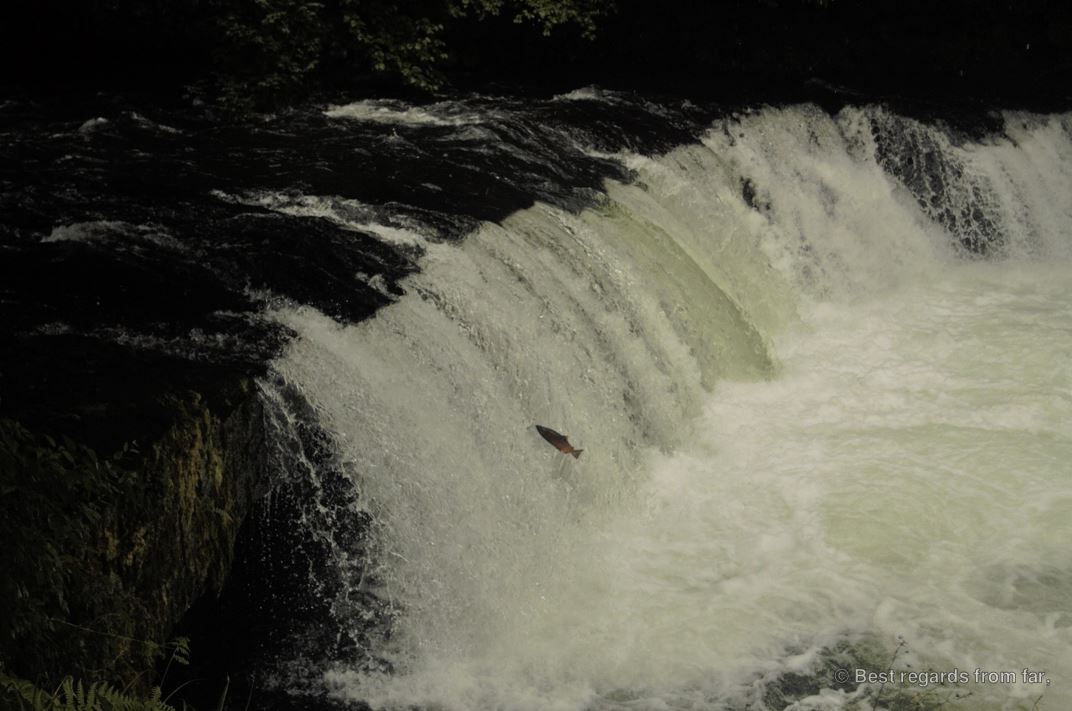
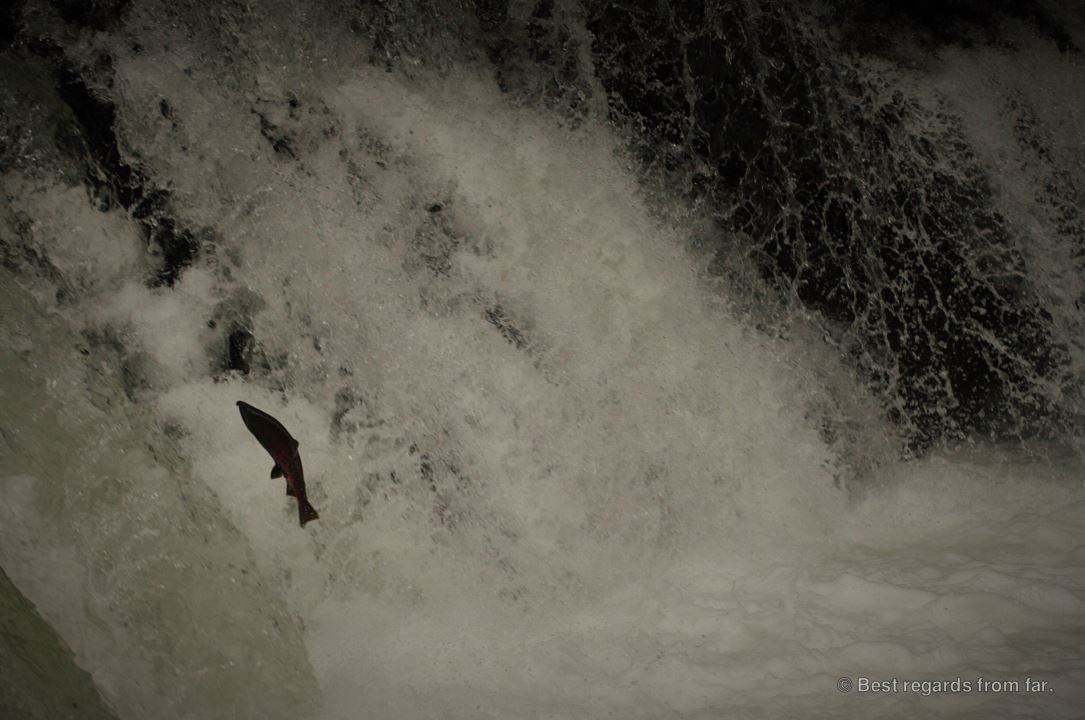
Walking along the bank hoping to get a glimpse of the salmons, it is fascinating to realize that they get born here, drift down the river, some traveling as far as Greenland or Iceland before returning years later—guided first by electromagnetic fields, then by an extraordinary sense of smell—to this very river and place of birth.
***
The day’s hiking ends and we round off our discussions with our local guide about the logging industry, the wildlife, and the landscape, and we warm ourselves with a glass of coureur des bois, a local Baileys-like drink scented and flavored with sweet maple.
Travel tips:
- For an easy and interesting way to explore the park, go with Quatre Natures as transport from and to Quebec City is included, your permit arranged for and guides know the trails like the back of their hand, allowing you to focus on taking in the beauty of these landscapes. Ideal during a short city trip!
- For all our water filtration needs, we have thoroughly tested and approved the ÖKO water filters.
- Check out our interactive map for more in the area (black pins lead to an article):
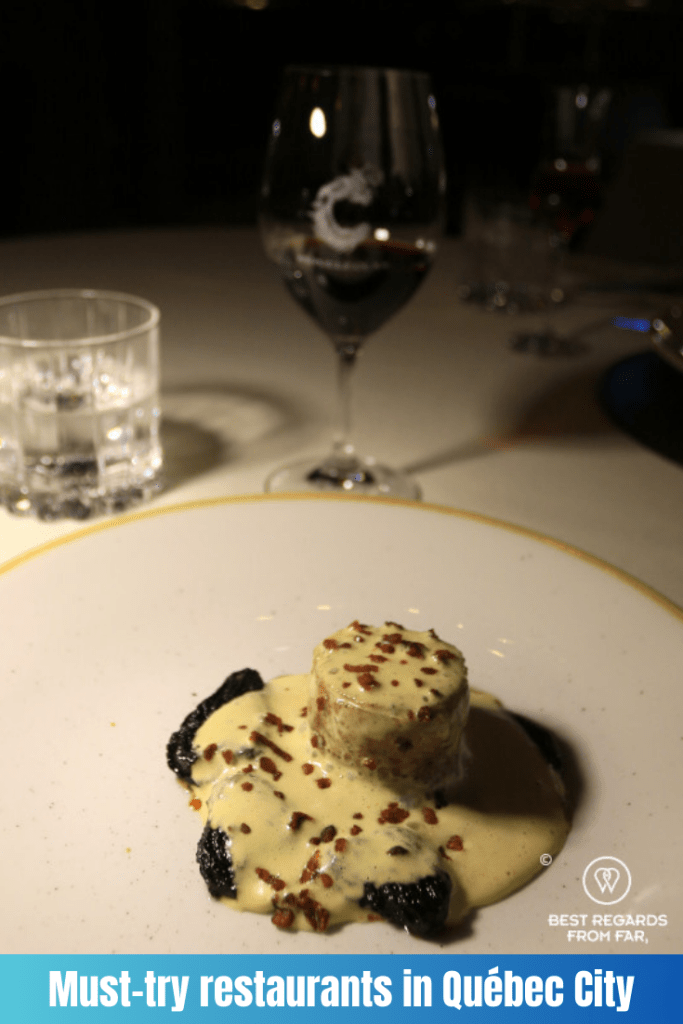
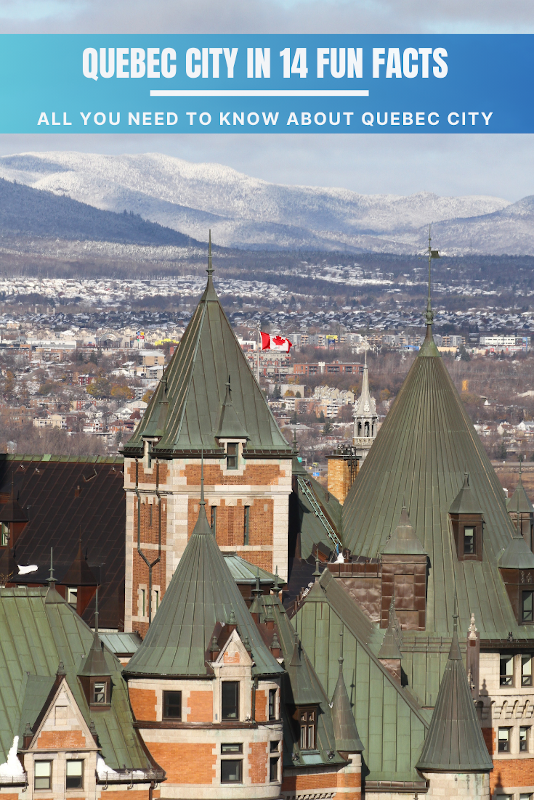
For more in & around Quebec City, click on these images:
 Best regards from far,
Loved it ! Your story brought back many fun memories.Hugs,HRSent from my iPhone
Thanks for your comment Heather! Did you make it to the Jacques Cartier NP while in Quebec?