Text: Marcella van Alphen
Photographs: Marcella van Alphen & Claire Lessiau
There is a special kind of freedom in exploring Andalusia on a scooter—the scent of the sea mixing with the warm mountain air, the winding roads unfolding ahead, and the discovery of off-the-beaten-path corners far from the tourist buses. This loop from Malaga offers the perfect blend of natural wonders, history, and local charm: from majestic caves to secret beaches, from quiet hiking trails to authentic villages where time seems to have stood still.
Pin it for later!
From Malaga to Nerja: The Scenic Coastal Route
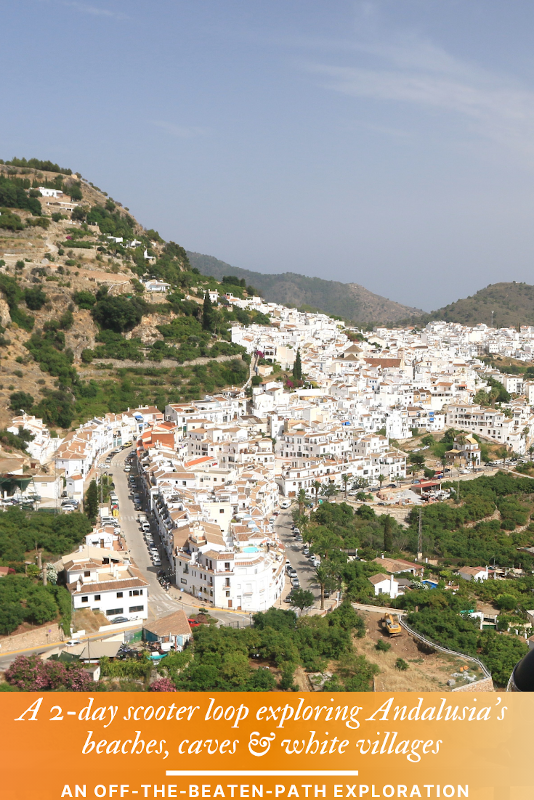
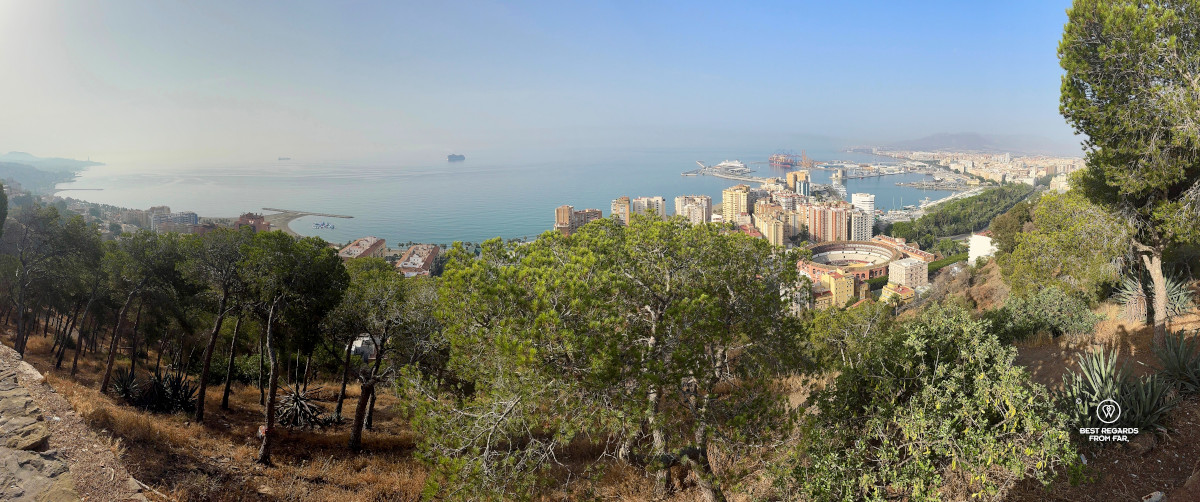
With the medieval fortress of Malaga towering over us, we ride along the palm-lined beachfront where runners train, teenagers play soccer, and families set up parasols for a day on the beach. We follow the Mediterranean coastline curve eastwards. The coastal road takes us past former fishing villages, inviting cafés, and sandy coves. Options for a dip in the sea are plentiful, all the more that our scooters can easily be parked anywhere. We stop in Torre del Mar for a short seaside stroll, then continue to Caleta de Vélez, where fishermen unload the day’s catch from their boats. The road meanders along cliffs until we reach the cute coastal town of Nerja that has become one of higher-end vacationing spots along the Costa del Sol.
Nerja & Its Whimsical Cave
Nerja’s old town, with its whitewashed houses and flower-filled balconies, is worth a bit more exploration — but the real gem lies underground at the Nerja Cave (Cuevas de Nerja), one of Spain’s most important prehistorical wonders.
We descend into the cool, constant 19°C (66°F) air of the caves, a vast underground world formed in the limestone of the Sierra de Almijara over millions of years. Rainwater, made slightly acidic by carbon dioxide, has slowly dissolved the rocks into galleries and massive chambers. Millions of years of constant sculpting by the forces of nature have ornated them with stalactites including one of the largest in the world withe a heigth of 32 meters (105ft) and stalagmites (some over 800,000 years old), delicate curtains, and columns.
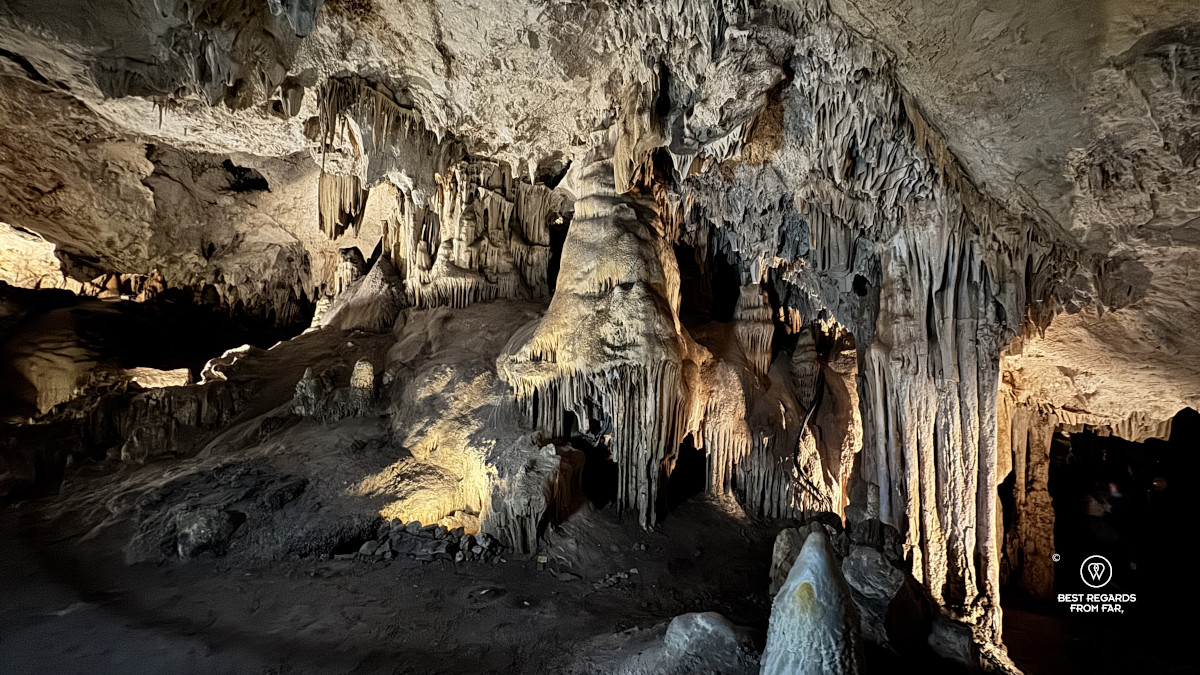
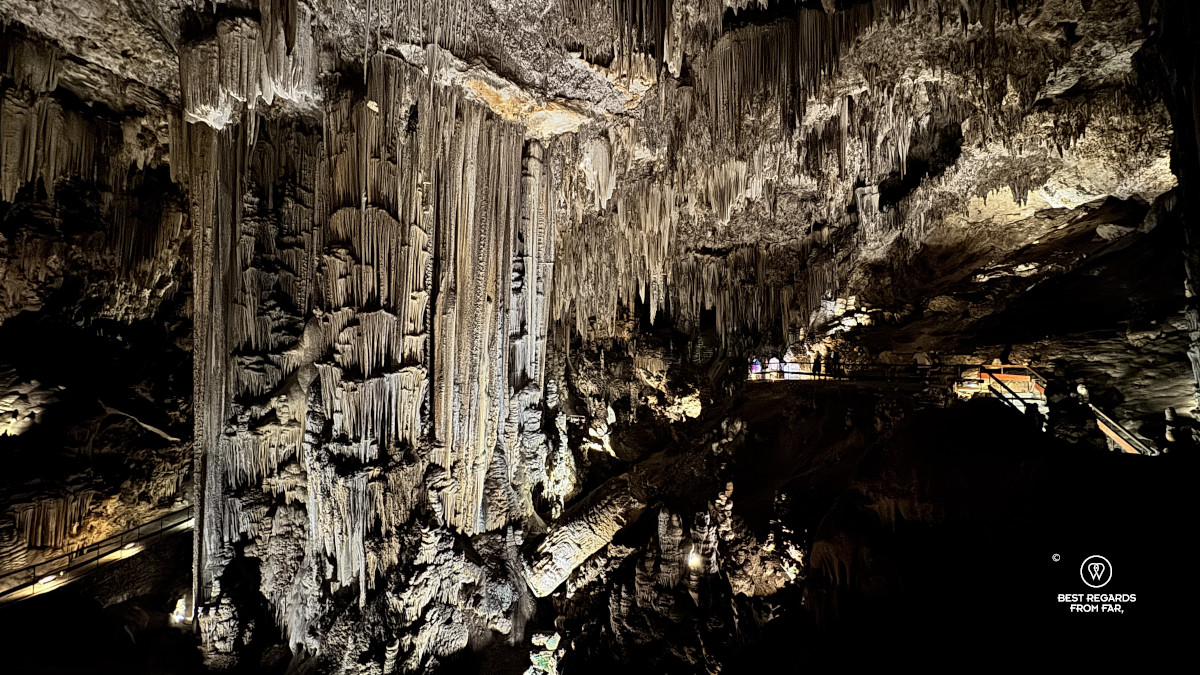
Discovered accidentally in 1959 by a group of local boys, the cave has revealed precious archaeological finds. Excavations show that humans used it from about 35,000 years ago to around 3,600 years ago, first as shelter, later as a place for creating cave paintings and engravings, and eventually as a burial site. Early inhabitants manufactured stone and bone tools, prepared and preserved food, and crafted ornaments. Lighting in the deepest chambers once came from resin torches placed in carved cupules, illuminating intricate artwork. Many of the finds — from tools to skeletal remains — can be seen in the nearby Nerja Museum.
Walking the pathways today, surrounded by immense formations and millennia of history, it is easy to understand why the Nerja Cave is considered both a geological wonder and one of Europe’s most significant prehistoric sites.
Playa de las Alberquillas: A Wild Escape
Just east of Nerja lies one of the Costa del Sol’s rare untouched beaches. Playa de las Alberquillas is a pebbled beach backed by rugged cliffs, reachable via a steep trail limiting its frequentation. There are no bars, no sunbeds, no umbrellas, no music — just the sound of waves and the sight of seabirds swooping overhead and the small smooth waves of the Mediterranean Sea. Ideal to savour a picnic, it proves to be perfect to escape into the water during the heat of the day.

Frigiliana: One of the Most Famous White Villages of Andalusia
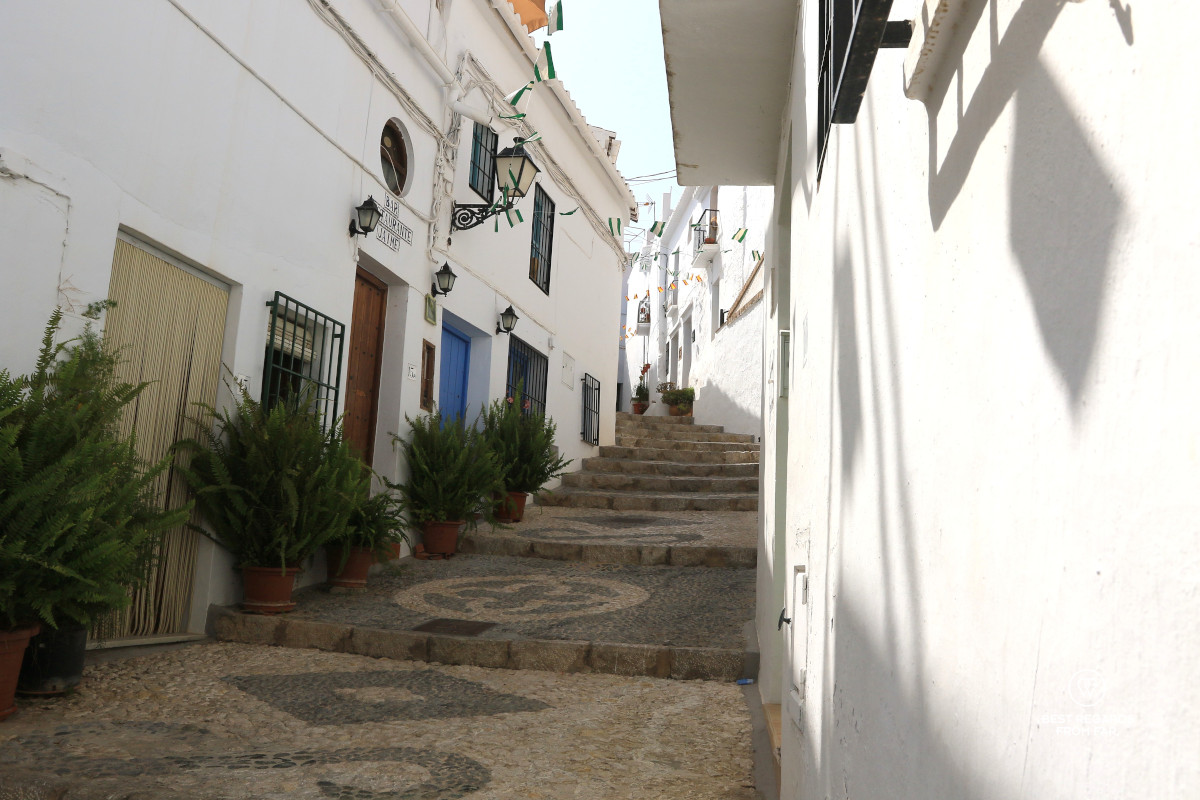
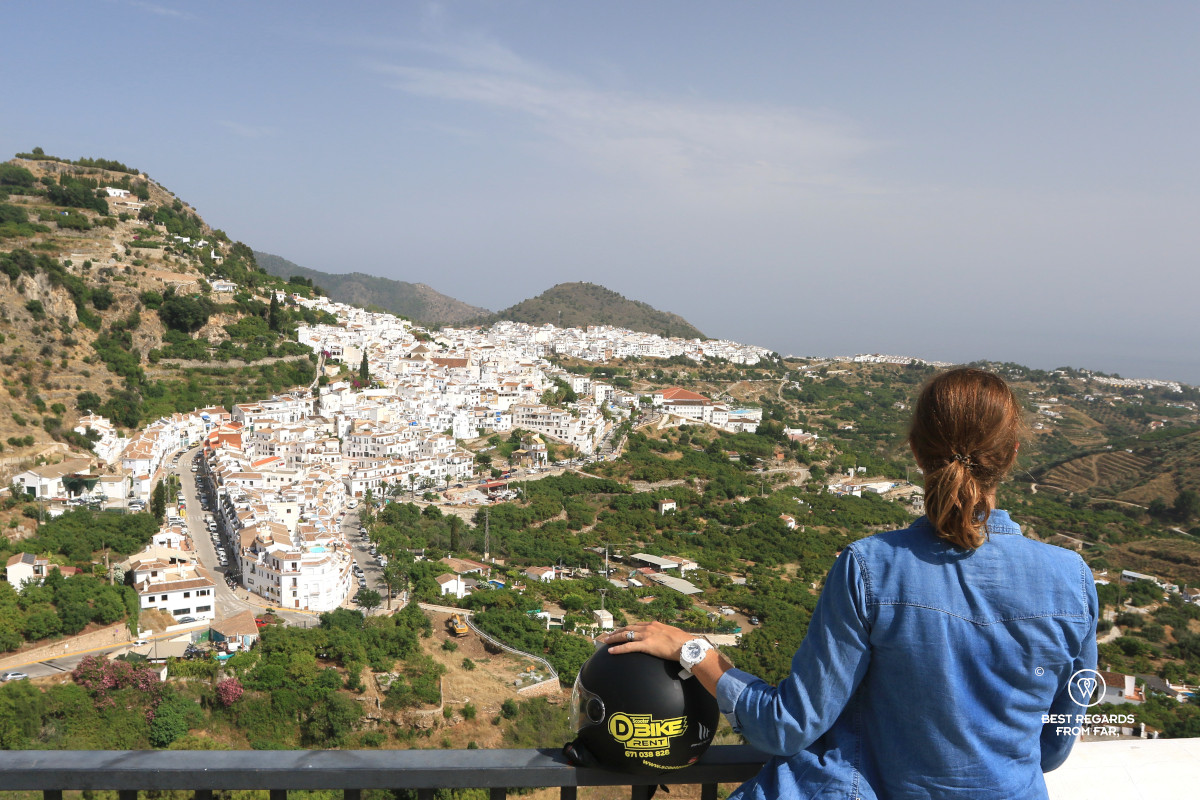
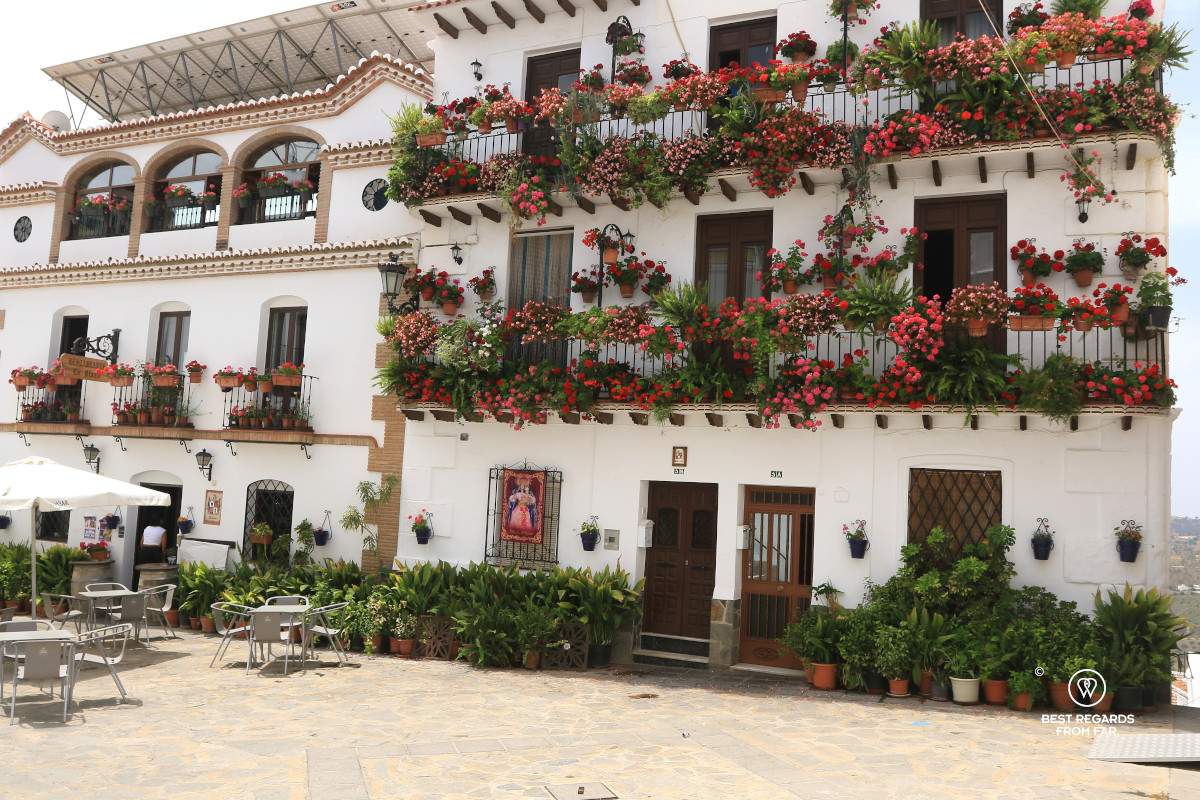
A short ride inland leads us to Frigiliana at an altitude of 320 meters (1,005ft) above sea level, often referred to as one of Spain’s most beautiful white villages. We maneuvre our scooters to the heart of the village from where we walk up along its steep cobbled streets and zigzag between townhouses decorated with bright geraniums.
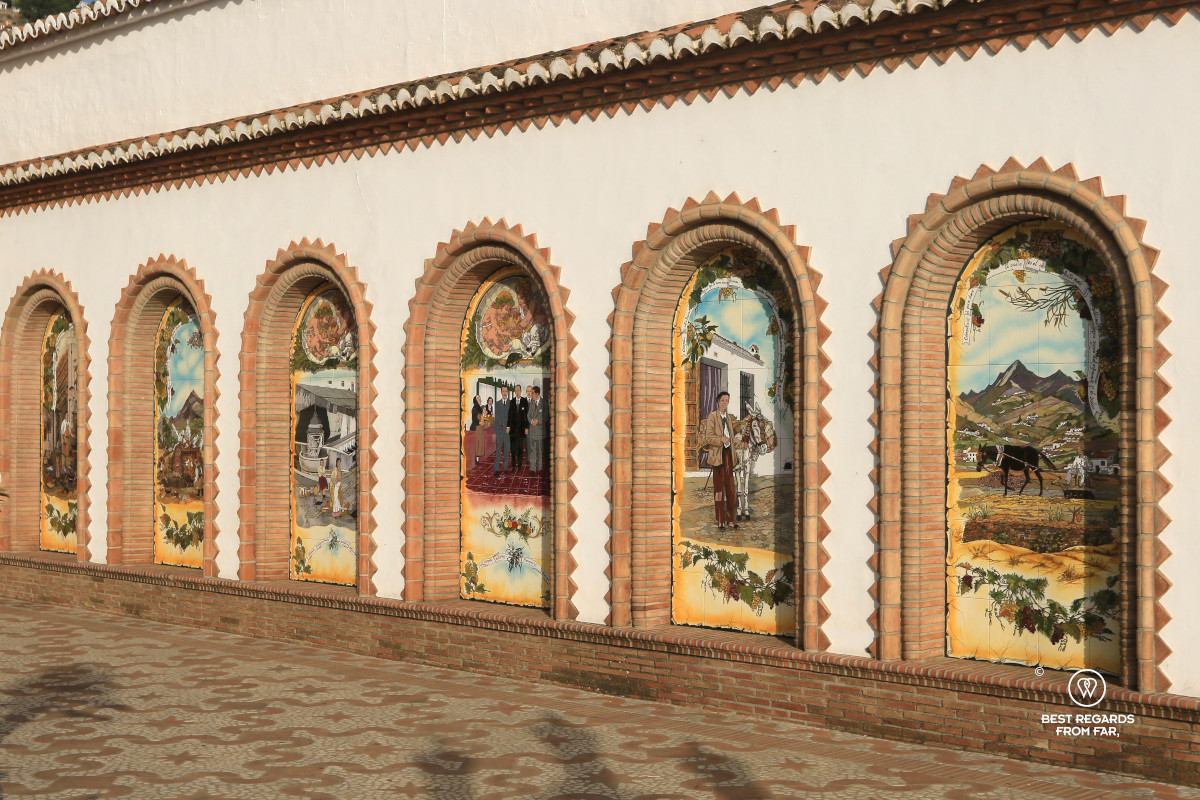
The village flourished under Islamic rule during the medieval times where its inhabitants grew sugarcane. The old Moorish quarter is just perfect for a late afternoon stroll and to observe the decorative ceramic panels that depict the Christian reconquest.
Competa: The Offbeat White Village
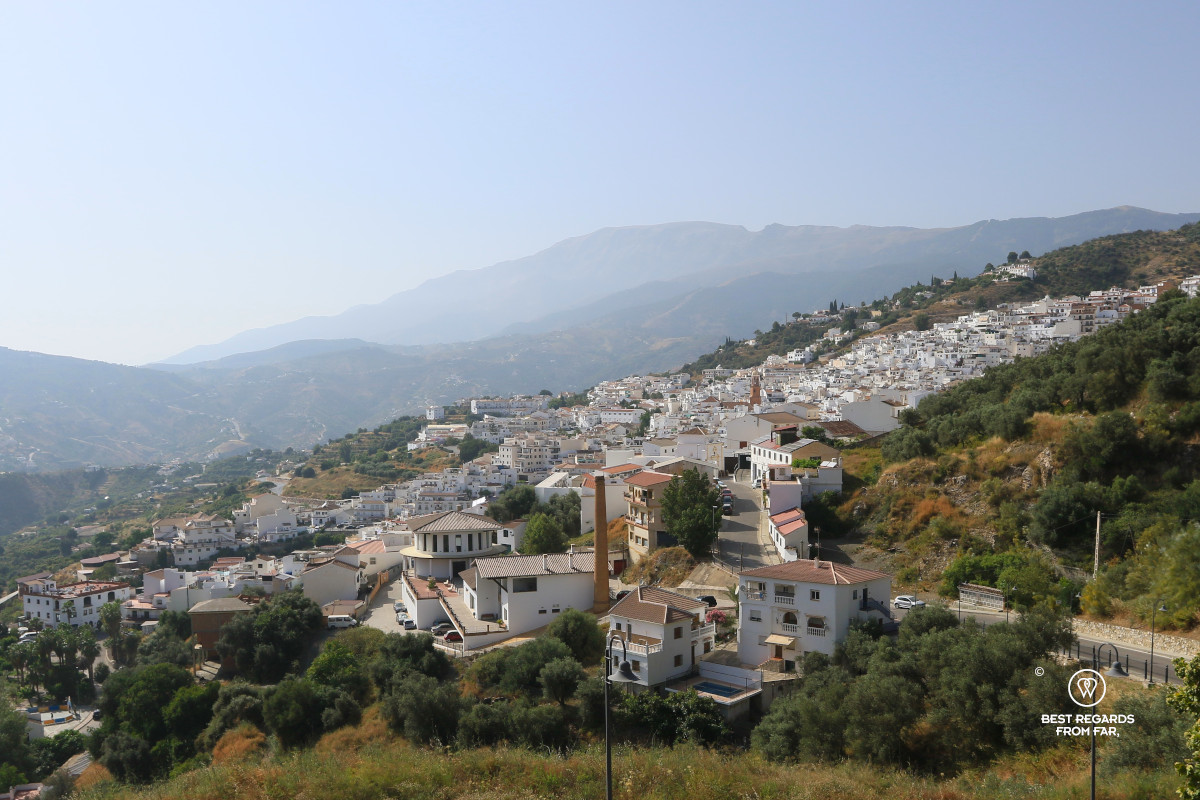
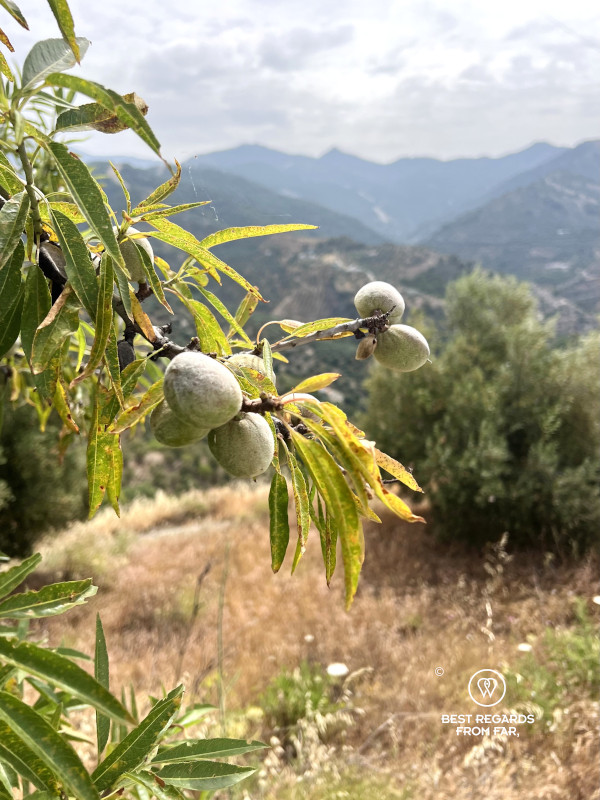
From Frigiliana onwards the landscapes get even more scenic. And while most tourist turn back, we continue to follow the winding road lined with avocado, almond, mango, and olive groves. The specific climate of the coast is a heaven for tropical fruit orchards. Bougainvillea add patches of bright colors while honeysuckles delicately perfume the warm spring air. A few bends further the picturesque village of Competa looms in the distance, tucked on a steep slope towered over by the Moreno Peak of the Sierra Almijara serving as a backdrop.
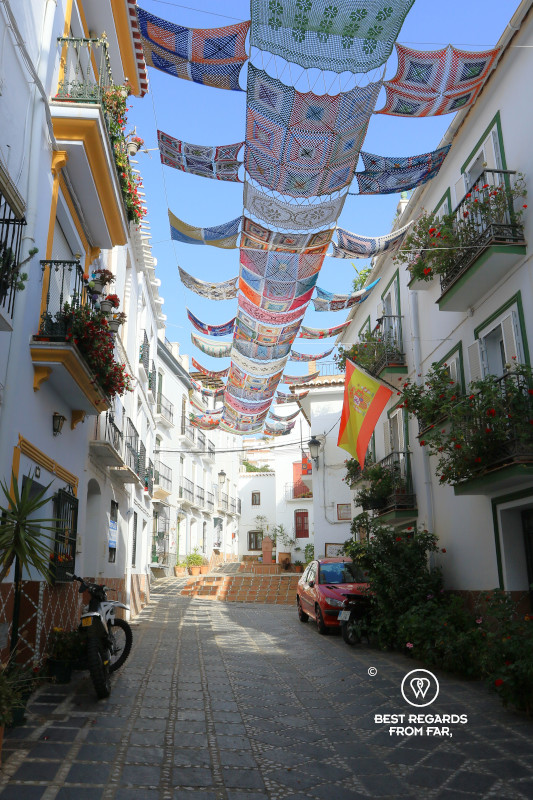
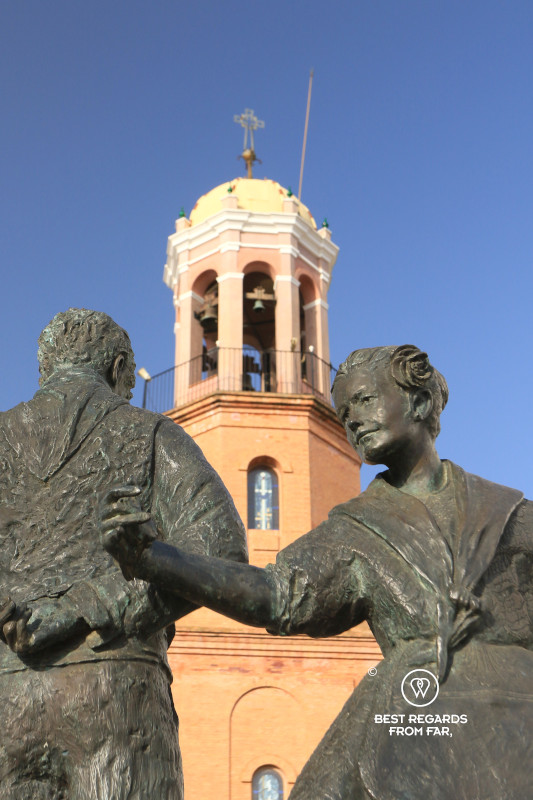
Dating back to Moorish times, Competa surrendered to the Catholic monarchs in 1487, and its century-old traditions of agriculture still thrive. We carefully navigate our scooters along alleys so narrow that no car can pass and are greeted by locals with warm smiles. The village has become home to a small but vibrant international community enjoying its healthy mountain air, unspoiled scenery and excellent climate throughout. Yet, the Andalusian soul of Competa has remained intact. La Plaza Almijara in the center of the town has become a meeting place for locals, to have a cup of coffee or a glass of wine on one of the terraces.
Competa: Where To Stay
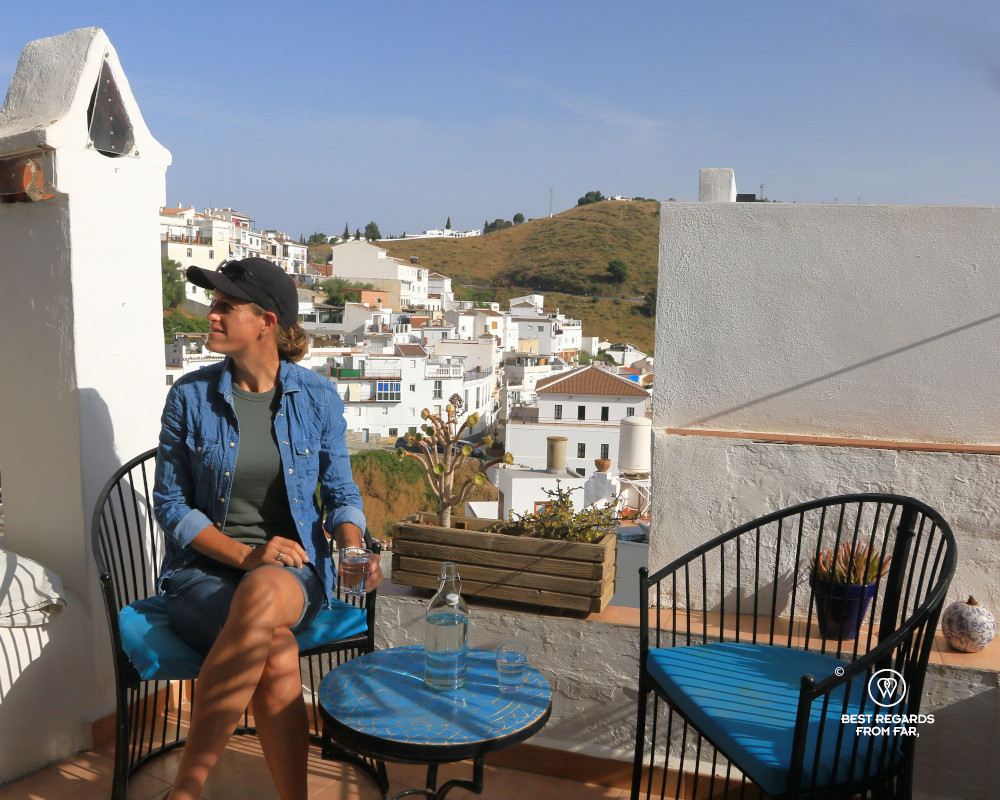
We check into Casa Maroma, a boutique B&B just steps from Plaza Almijara. The traditional Andalusian house offers lovely mountain views that stretch for miles on one side and vistas on the skyline of the photogenic whitewashed Andalusian village even better enjoyed from its rooftop terrace.
After a day of exploring, unwinding on the rooftop terrace sipping a glass of local wine and enjoying some tapas we watch the sun set behind Competa pondering which hikes to take the next day.



Morning Hike & Return to Malaga
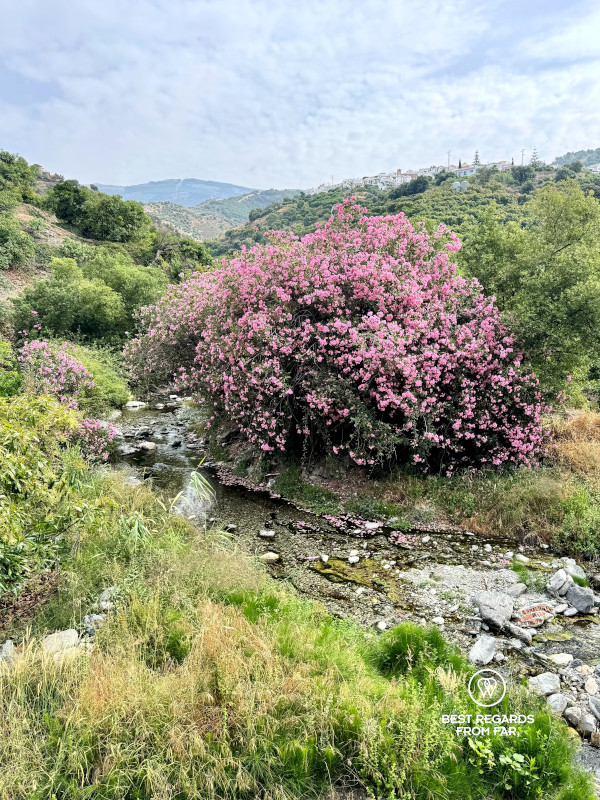
The colorful breakfast at Casa Maroma is the ideal start of the day before taking a short scooter ride to the small village of Archez. Walking its narrow alleys lined with Mudejar architecture we merge onto a narrow hiking trail amongst olive groves, wild oleanders, river streams and orchards. We come across no one else, a true bliss in the otherwise over touristy Spanish Costa del Sol. After soaking up enough vistas and sun it is already time to hop onto our scooters to head back towards Malaga via winding mountain roads and more picturesque villages.

***
From the cooler and dark Nerja’s caves to the wild serenity of hidden beaches, from the Moorish architecture of Frigiliana to the picturesque town of Competa and its maze of hiking trails, this two-day scooter loop offers a taste of the surroundings of Malaga at their most authentic; a place to enjoy traditions, nature, and offbeat destinations.
Travel tips:
- Make sure to book ahead to secure your room at the boutique B&B Casa Maroma.
- D Bike Rental Malaga offers reliable scooters with an excellent pick-up and drop-off service.
- Traveling during high-season? Book your tickets for the Nerja Cave online to avoid queuing.
- Check out this interactive map for the specific details to help you plan your trip and more articles (zoom out) about the area!
 Best regards from far,
Very cool! Sent from my iPad
Thanks Heather 🙂