Text: Claire Lessiau & Marcella van Alphen
Photographs: Claire Lessiau & Marcella van Alphen
Every time I leave vibrant Cape Town and head inland, I am struck by how quickly the landscape changes. Instead of joining the flow along the well-trodden Garden Route, we venture deeper into the warm heart of the Western Cape along the far quieter R62, trading the cool Atlantic breeze for the hot air of the Klein Karoo. The road winds along the Breede Rivier Valley known for its extensive agriculture, wine estates, fruits orchards and mountainous scenery. The world’s longest wine route, along which family-run small-scale producers and larger wineries have opened their cellars, leads to the scenic Cogmanskloof Pass. The dramatic rock tunnel at its end marks the entrance to the picturesque town of Montagu where nature, cuisine, and culture converge for a well-balanced weekend getaway.
Pin it for later!

Day 1: World’s Longest Wine Route, Succulents & History
Sheilam Cactus & Succulent Nursery: A Mandatory Stop On The Road
The Sheilam Nursery is our first stop for the weekend on the outskirts of Robertson!
Its extensive collection of plants flourishes with the mountains of the semi-arid Klein Karoo as an intense backdrop. Founded by L. Malherbe in the 1950’s as a hobby and owned by the Schwegmann family since 1967, Sheilam now showcases one of the world’s finest collections of succulents, cacti and cycads with over 2,000 species from all over the world.
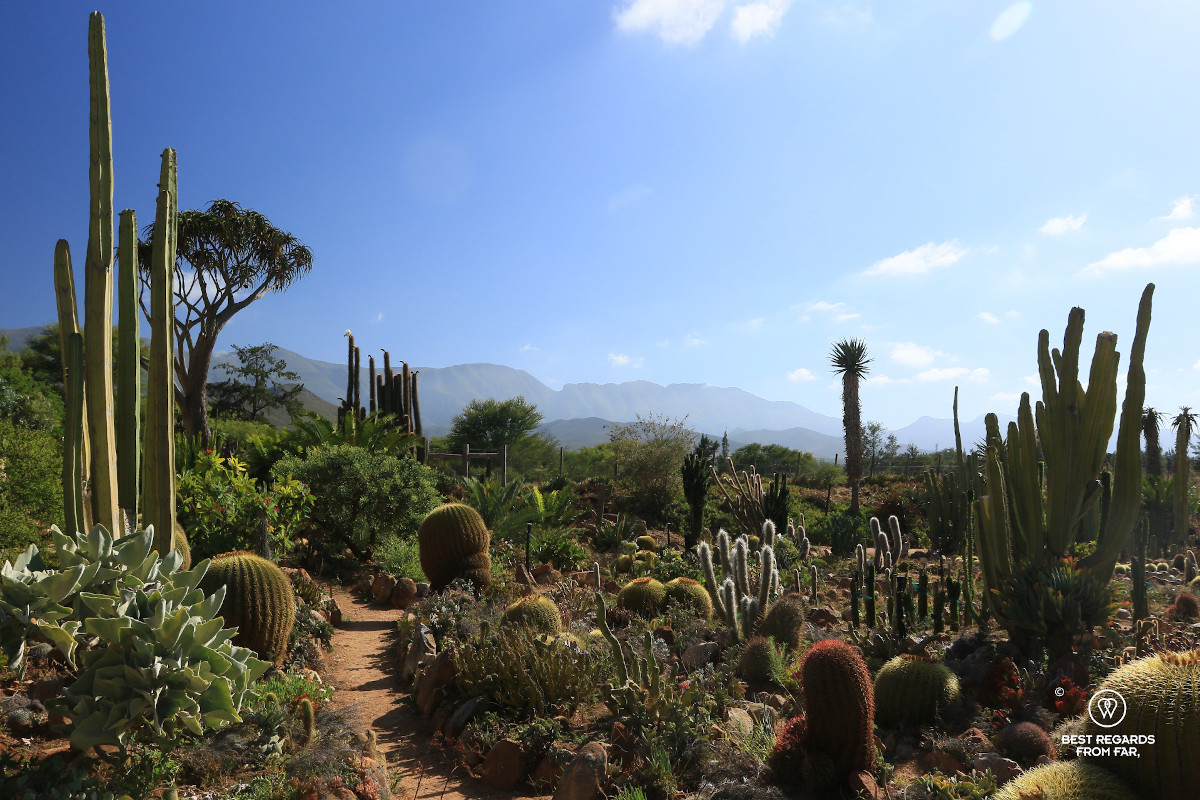

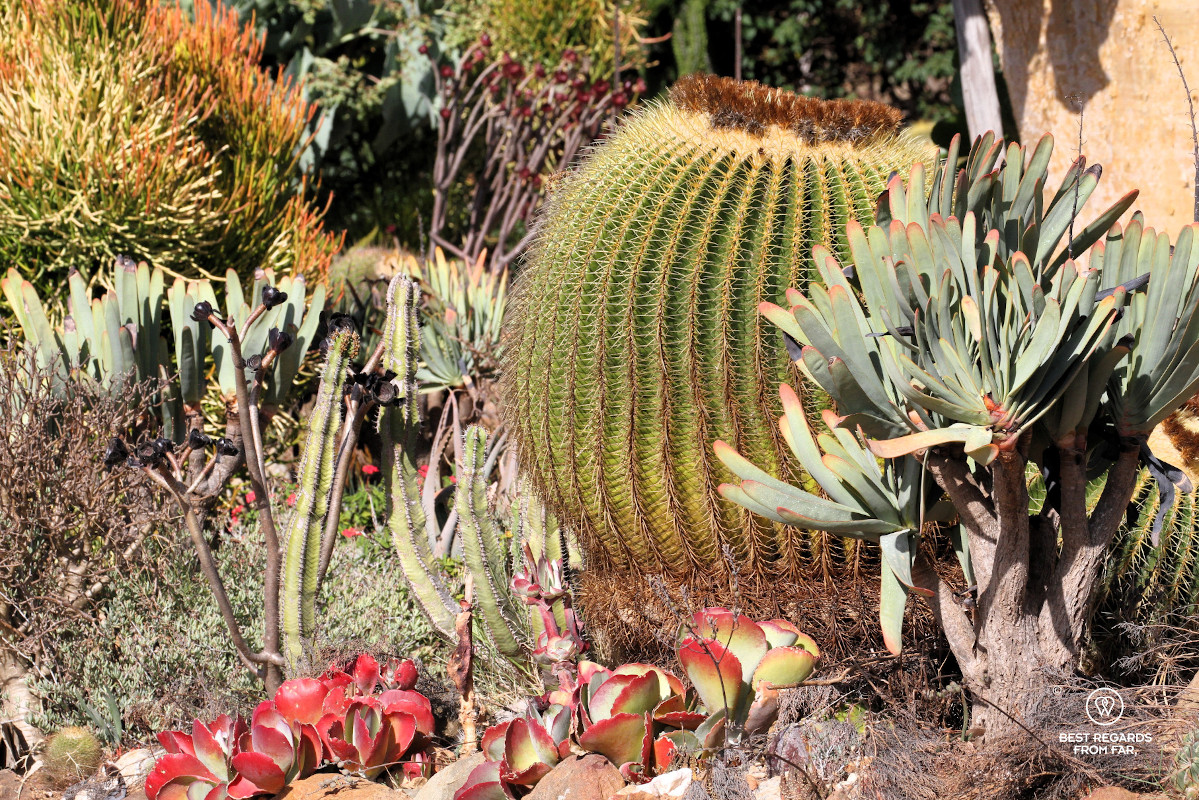
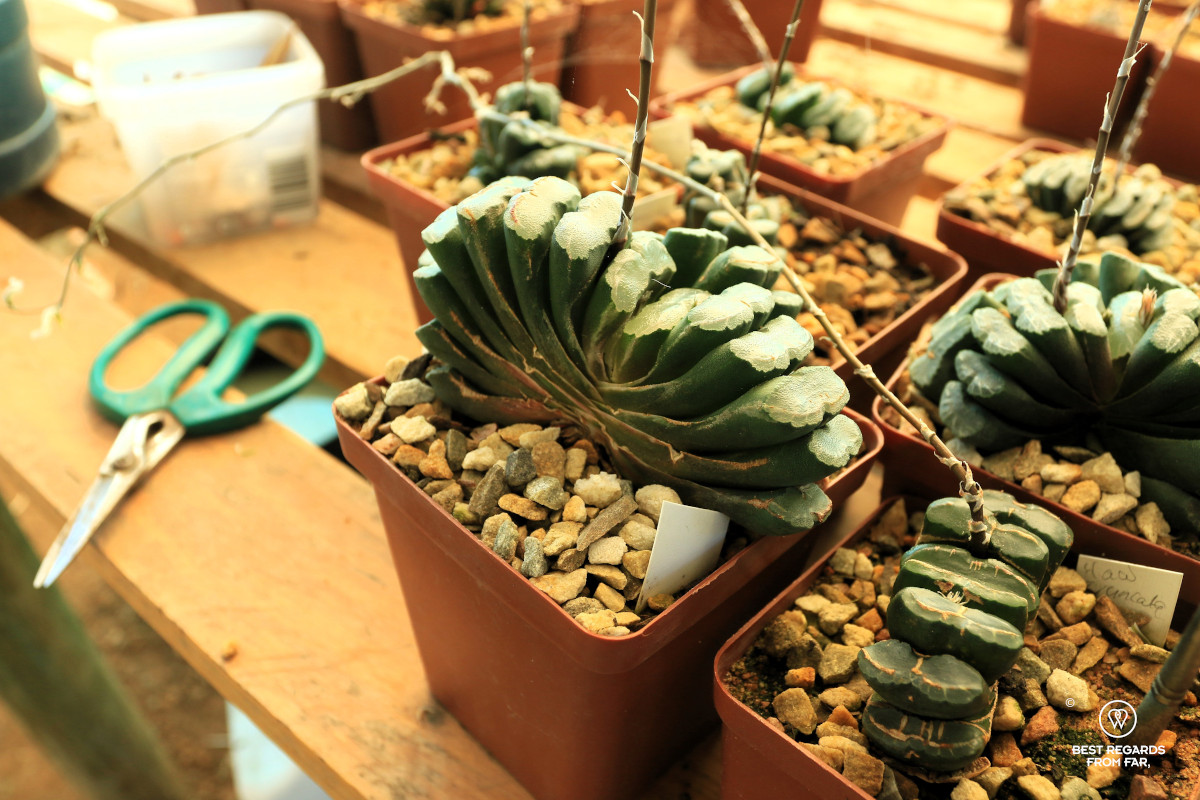
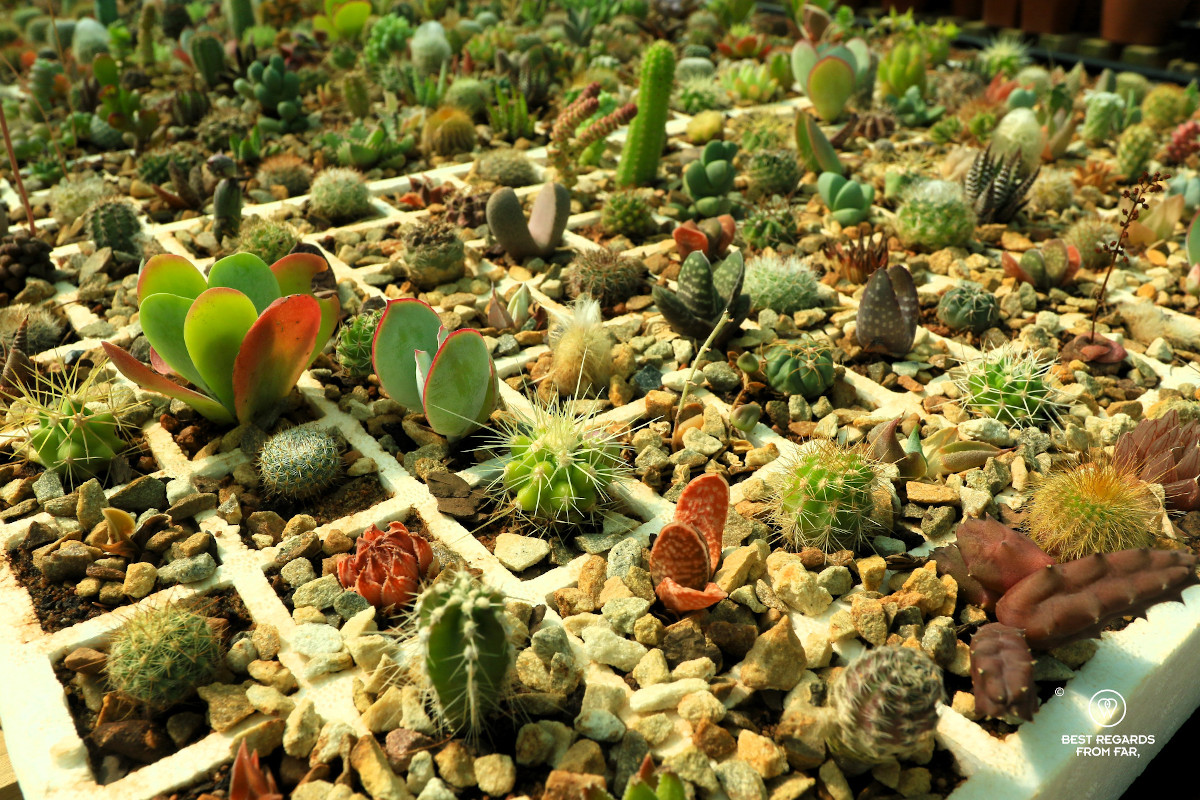
A guided tour with the passionate and very knowledgeable Minette Schwegmann reveals a hidden world of survival techniques that plants have developed to face harsh climates. From camouflage techniques to water storing adaptations, these plants are extraordinary examples of resilience. Rare specimens like the Pachypodium namaquanum, or “Halfmens,” steeped in Nama folklore–a native clan Namibia–and known to grow just 2 to 3 millimetres per year (0.08 to 0.12 inches) stand out. Others, such as the Dioscorea elephantipes, are just as fascinating, as the plant mimics a tortoise shell to protect its precious water storage, while the striking Boophone disticha is both beautiful and steeped in traditional Xhosa medicinal practice—the main Afro group from the Cape area. Passing the Old Man of Peru and a few Mother-in-Law’s-Chair, a visit to the greenhouse to check out stone plants (Klipplante), horses’ teeth and a wide variety of tiny and colourful cacti blooming is an opportunity to also discuss poaching and habitat loss.
Climate change has rendered some of these species even more fragile. With fewer seeds and longer flowering cycles, protection measures like shade nets have been implemented at the Sheilam Nursery are now essential. Learning about their fascinating adaptations creates a deep respect for these marvels of the plant kingdom.

Travel tips:
- Make sure to take a book in advance and take a guided tour to learn more about the intricate world of cacti, cycads and succulents at the Sheilam Nursery.
- Keep in mind that you can also buy plants from the Sheilam Nursery, onsite or online.
Van Loveren: Wine Tasting Along World’s Longest Wine Route
Just a stone’s throw away from the nursery, we are welcomed at the Van Loveren Wine Estate which rich family history dates back to 1699 when Christina Van Loveren and her husband Willem Van Zyl arrived from Amsterdam. Spanning 3,500 hectares (8,649 acres), with 1,500 hectares (3,707 acres) under vine in the Robertson Valley, the estate produces an impressive array of wines, from crisp whites like Sauvignon Blanc and Chenin Blanc grown in the sandy soils of the region, to robust reds such as Shiraz and Cabernet Sauvignon, cultivated in the rocky, sun-drenched terroir.
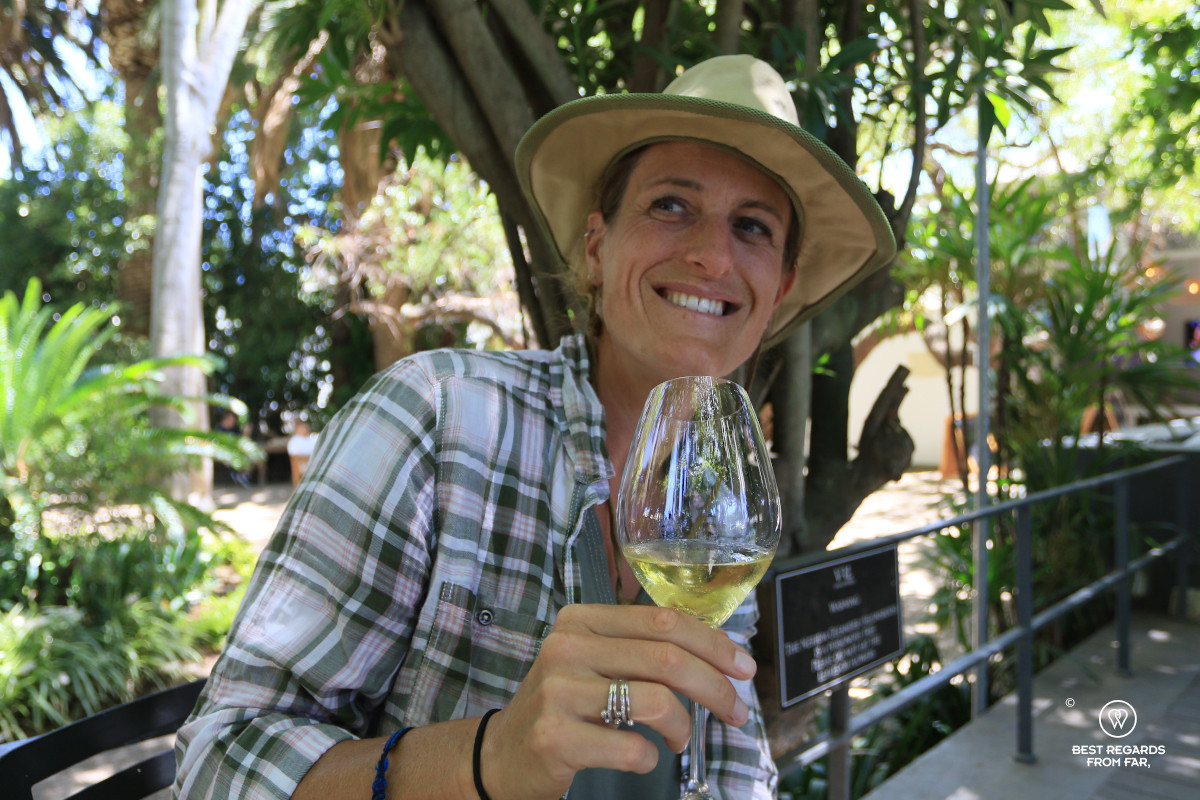
Since it started producing varietals for the Stellenbosch wineries, the estate has evolved greatly and is now famed for its commitment to quality, with their signature Christina range standing out.
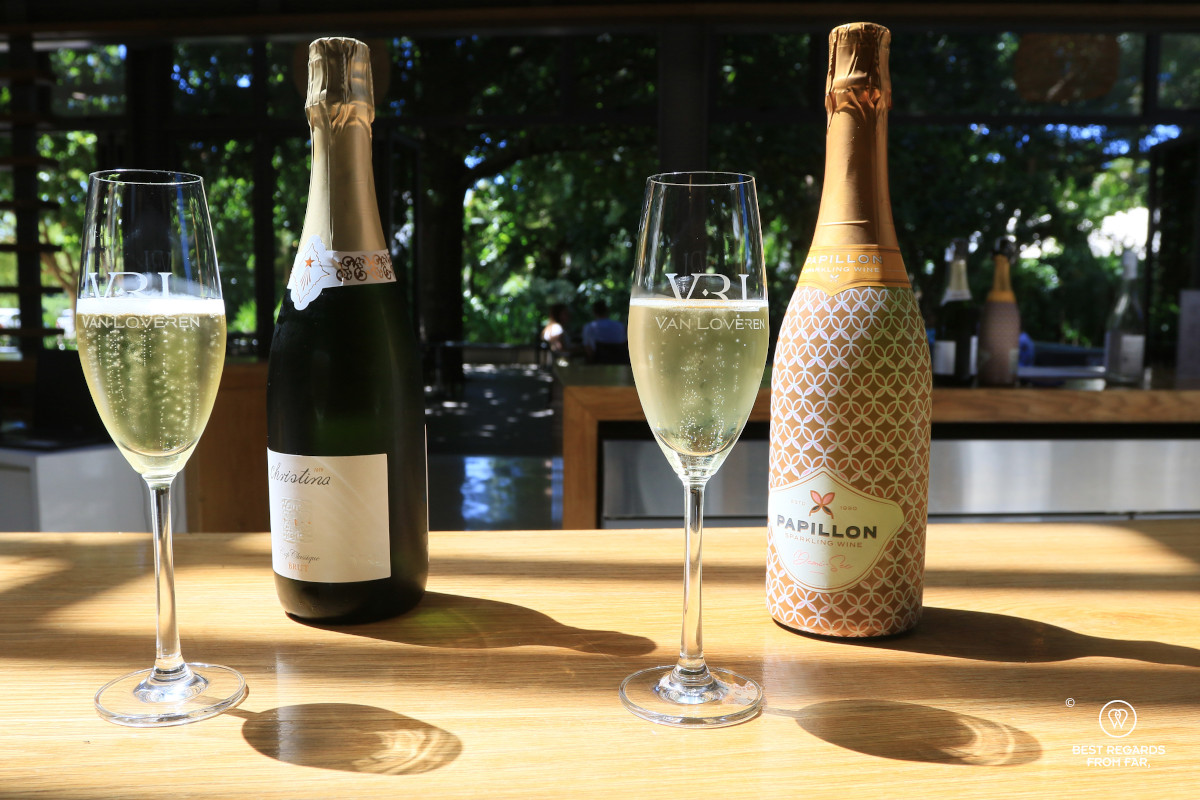
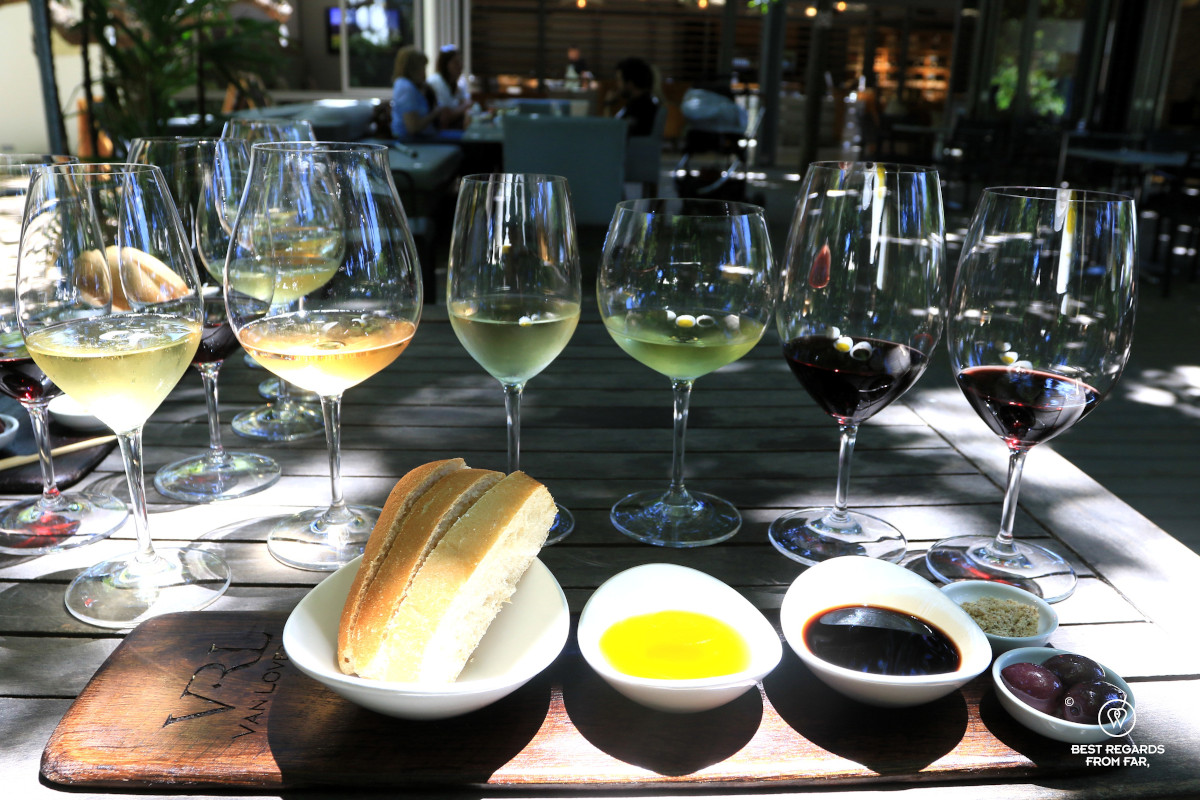
The Christina Master tasting is the perfect opportunity to experience the top of the VRL range as the estate is nicknamed—with “R” standing for Retief, the last name of the current owners of the domain and descendants of Christina and Willem. Among these, the Christina Sauvignon Blanc is fermented in traditional clay pots, where it matures for almost a year, absorbing the unique properties of the clay to maintain freshness and structure. The Christina Chardonnay is aged in French oak barrels for five months, producing a bold, full-bodied wine that can be aged further. Van Loveren’s winemakers also experiment with new methods in small tanks, including a Pinotage aged in African Java barrels, which imparts a distinctive sweetness due to the oil-rich wood. The award-winning Method Cap Classique crafted in the traditional Champagne way and fermented in the bottle is a must-taste from the Brut Clap Classique with 90 percent Chardonnay and 10 percent Pinot noir to the 100 percent Pinot noir Brut rosé.
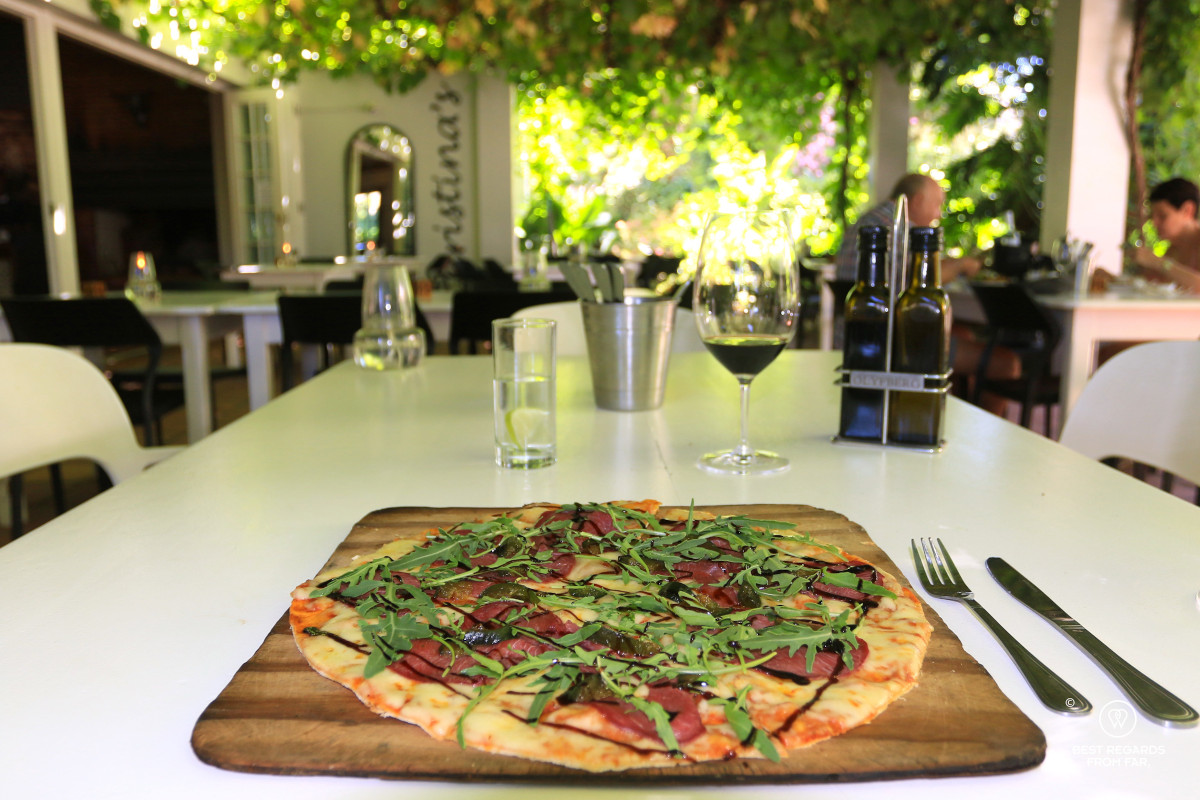
A visit to the estate is a true journey for the senses, with a variety of tasting experiences on offer, all to be enjoyed in the lush garden. Guests can explore the cellar, where wines are fermented and aged in everything from modern fiberglass tanks to traditional concrete vessels, maintaining a balance between innovation and time-honoured methods. Visitors can sample wines paired with gourmet meals at the estate’s bistro, including a wood-fired oven pizza topped with springbok carpaccio and a delicious Christina burger with bacon and cheese, perfect for complementing the full-bodied reds like the Christina Cabernet Sauvignon and Syrah.
Whether on a cellar tour or savouring a meal in the bistro, Van Loveren offers a complete wine experience that highlights both their family history and commitment to excellence.


Travel tips:
- Make sure to book your wine tasting ahead of time. The Christina Master Tasting comes highly recommended and hop on a cellar tour to see the process of wine making at South Africa’s leading family-owned winery.
- If you leave Cape Town in the morning and visit the Sheilam Nursery first, Van Loveren is the ideal lunch spot. Book your table at Christina’s Bistro and enjoy the gorgeous garden and comfy food.
Historical Montagu By Bike
About twenty minutes from Robertson, the cute and laid-back Montagu is waiting to be explored.
Its history stretches way beyond its colonial past. Khoikhoi herders and San hunter-gatherers once roamed this valley, leaving behind sacred sites like initiation caves where their fingerprints can still be seen on their walls. The modern settlement began with Louis Fourie, a French farmer who settled in the late 18th century. His pioneering efforts laid the foundations of the local agricultural prosperity that itself led to the development of the town—officially so in 1851.
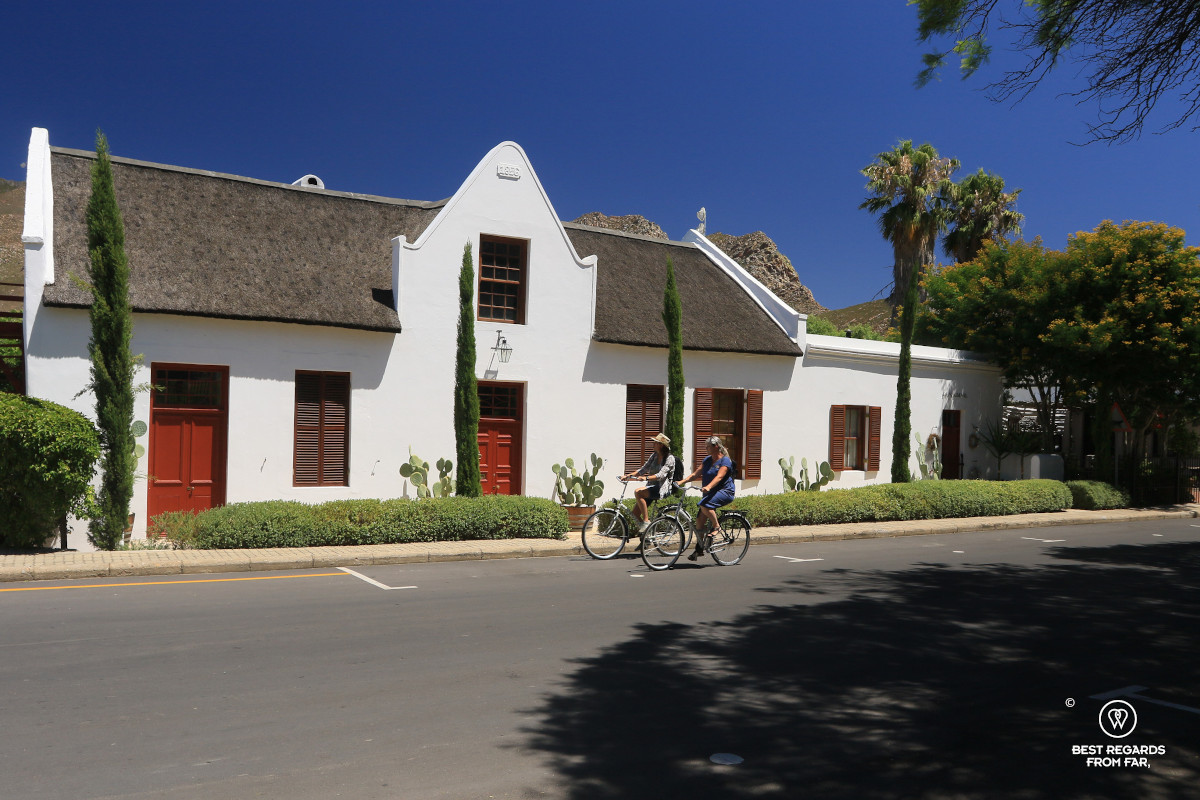

Settlers flocked in and started farming fruits such as apricots, grapes, peaches, and plums which to this days remain the main driver of the local economy, as attested by the famous local dried fruit brand Montagu. A family of wagon makers came in, a school and church were built and the town boomed. Exploring by bike with local guide Bouwien from Flying Feet, we pedal past a wide variety of architectural styles along the town’s main historic road. From the classic Cape Dutch architecture—characterized by its green woodwork, whitewashed walls, and thatched roofs, brought to the Western Cape by Dutch settlers between the late 1700s and early 1800s—to the Georgian-style homes with their castle-like façades and sash windows built by the British who later settled in the area, Montagu’s diverse styles tell the story of its development. The decorative broekie lace verandas and large windows of Victorian-era houses reflect the town’s prosperity during its agricultural boom, while the more refined elegance of Edwardian-style homes, which followed in the early 1900s, signals a shift in taste and time.
As Bouwien guides us through the streets, she shares the stories of the people who lived in these homes and helped shape Montagu into the town it is today. Every house, she reminds us, holds a piece of its history, and the one place we are about to enter next is the most unique in town, and in South Africa for that matter!


Travel tips:
- Join Flying Feet for a guided cycling or walking tour to appreciate Montagu’s better.
Montagu Country Hotel: A Step Back In Time
The Montagu Country Hotel along the R62 has welcomed guests since the late 1800s in the historic centre of town. The original Victorian structure was replaced with an Art Deco construction in 1932, making it the only Art Deco hotel in South Africa. Owned by long-time manager P-J and his wife Colene Basson, the hotel is run and has been revamped with a keen eye for detail, a great attention to comfort from the lovely garden to the swimming pool and spa running with the water from the local hot spring, and the staff is even more welcoming than one might expect. The Montagu Country Hotel remains one of the last privately owned country hotels in South Africa and offers authenticity, character, and comfort; the ideal base to take in the vibes of town from.
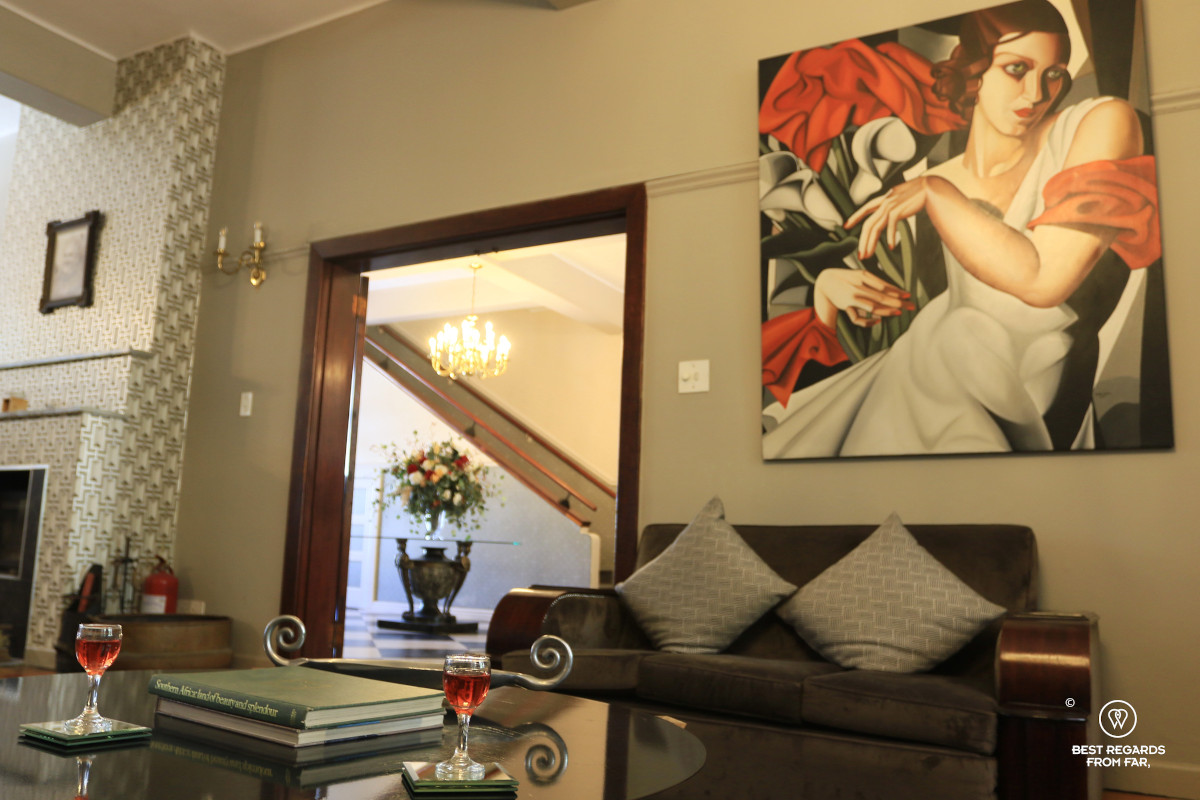
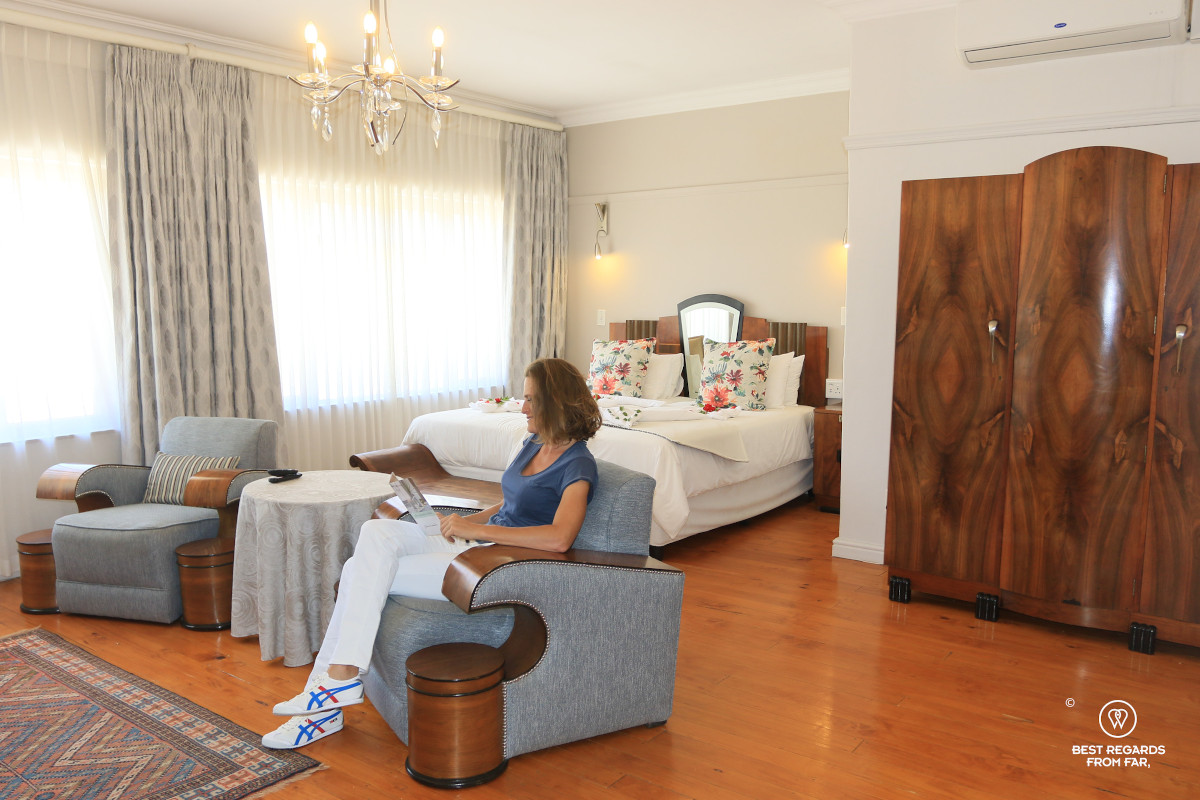
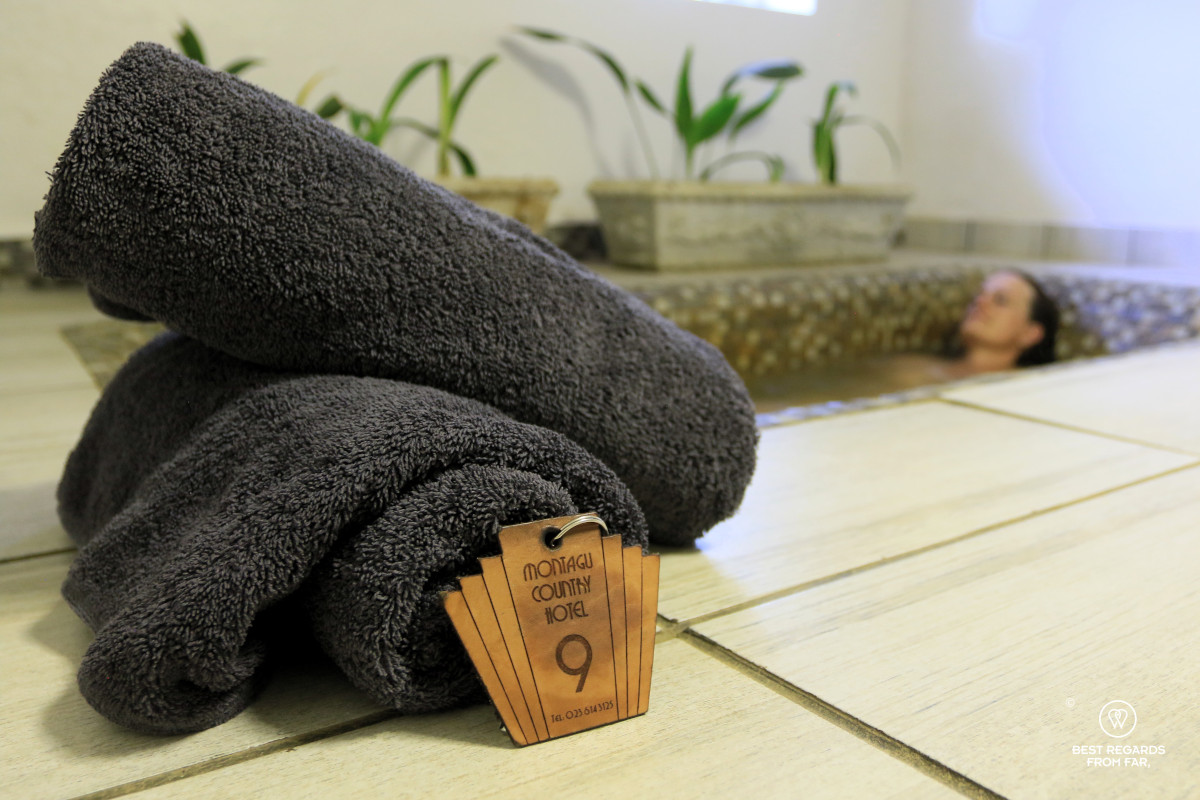
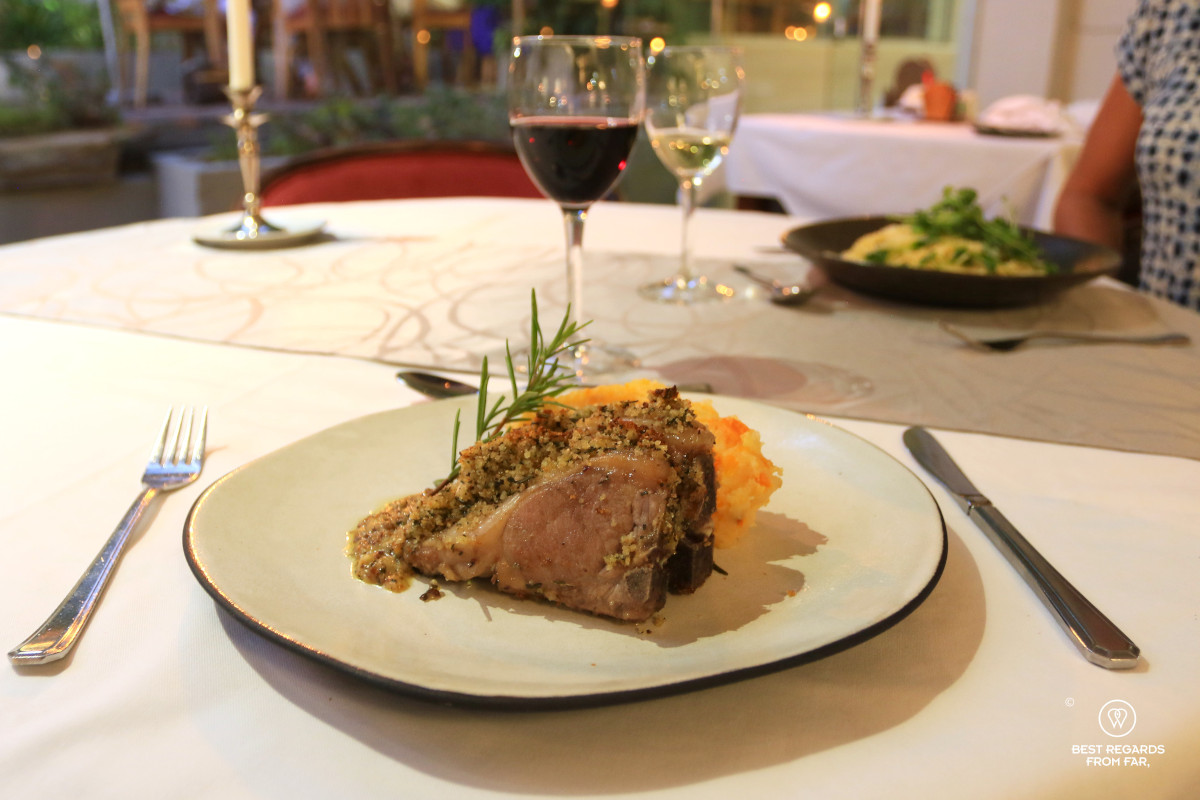
After a long day of exploring, dinner at the in-house Charleston Restaurant is a culinary highlight and excellent way to conclude our day. Refined dishes such as beetroot carpaccio with Chevin goat cheese, Cape Malay curried hake with mini vetkoek (a savoury doughnut), and lamb chops of the sought after Karoo lamb. Chef Gail Meyer infuses every plate with creativity, passion, generosity and genuine love for her work that comes across in every dish. To satisfy our sweet tooth, the malva pudding is the best we have had in South Africa (and we have ordered a few!), and a must-taste!


Travel tip:
- Check out the Fair Trade certified Montagu Country Hotel to book your stay.
Day 2: Rock-climbing, Mountain Biking & Fine Dining
Exploring South Africa’s Rock Climbing Mecca with Tony Lourens
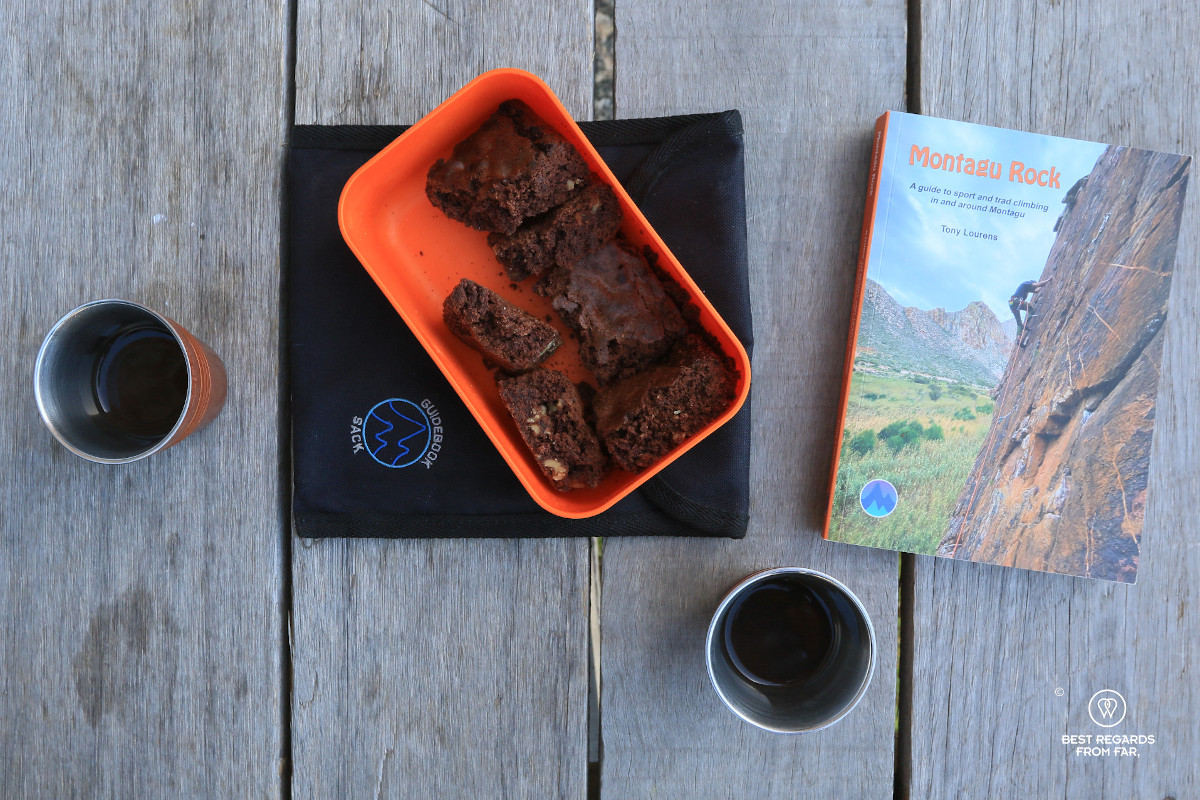
Montagu is South Africa’s rock climber’s Mecca, boasting over 600 bolted routes set against stunning quartzite cliffs framed by dramatic mountain backdrops. The perfect guide for this adventure is Tony Lourens—a registered mountain and climbing guide with an extensive worldwide experience, route pioneer who has bolted many of the 600 mentioned, and author of the local climbing guidebook.


Just a five-minute drive from town, Tony leads us to some impressive riverside crags near Cogmanskloof, perfectly shaded from the blazing sun. Here, ‘The Bold and the Beautiful’ crag features wooden platforms, which were installed by Tony and some of the local climbers, providing solid footing for belaying climbers. With agility, he ascends one of the 13 routes—several of which he bolted personally—as we carefully observe his every move.
When it is my turn, I begin slowly but steadily, feeling the solid grip of the quartzite under my hands and feet. Confidence builds with every step. “Don’t forget to take in the view once you’re up!” Tony calls out as he secures me from the platform. Focused on navigating a tricky section, I almost forget—but once I reach the top and steady myself, I turn around to take in the breathtaking panorama of the Langeberg Mountain range, bathed in the morning sun.
We take turns tackling different routes, which range in difficulty from 4 to 6b, before settling down to enjoy a freshly brewed coffee Tony prepares with his beloved percolator—a wink to his Italian roots. Over coffee, he points out other climbs on the opposite riverbank, his enthusiasm contagious as he recounts a recent ascent covering 350 vertical meters and nine pitches. “Let’s try something more challenging,” he suggests, energized by the delicious homemade brownie his wife had baked for us.
Nearby, at the popular Legoland crag, we push ourselves further, exploring more demanding routes. With a wide diversity of ways that vary in difficulty and scenery, there are endless opportunities for climbing adventure. The changing vistas and rare endemic succulents along the walls make it impossible not to want more time here—more time to climb, explore, and succumb to Montagu’s rugged charm.



Travel tips:
- For a rock climbing adventure in Montagu, make sure to reach out to Tony Lourens from Montagu Outdoor Adventures. Tony also organises rock climbing adventures on Table Mountain in Cape Town and to the Cederberg Mountains that he knows like the back of his hand!
Mountain Biking Through the Fynbos
After cooling down by the pool of the Montagu Country Hotel during the heat of the day, the late afternoon is perfect for a mountain biking adventure. Well-marked and very well-maintained, a clear network of exhilarating single tracks offers the ideal balance between a challenging workout and a way to appreciate the region’s beauty from another perspective.


Venturing out through the fynbos along a leg-burning and smooth path, we enjoy the views on Montagu that become more beautiful with the altitude. Engaging descents with sharp switchbacks demand our full focus. For seasoned riders or curious beginners, the well-engineered mountain biking trails of Montagu cater to all levels, and whichever route, the constant remains the striking landscapes.
Travel tips:
- Flying feet rents out hard tail mountain bikes.
For A Dinner In Town: BluVines
After a full day of outdoor exploration BluVines is the ideal place to enjoy some of the region’s specialties, including the local wines by the family-owned Goedverwacht Estate during an interesting pairing experience, while Chef Sean brings a Mediterranean touch to Karoo flavours.
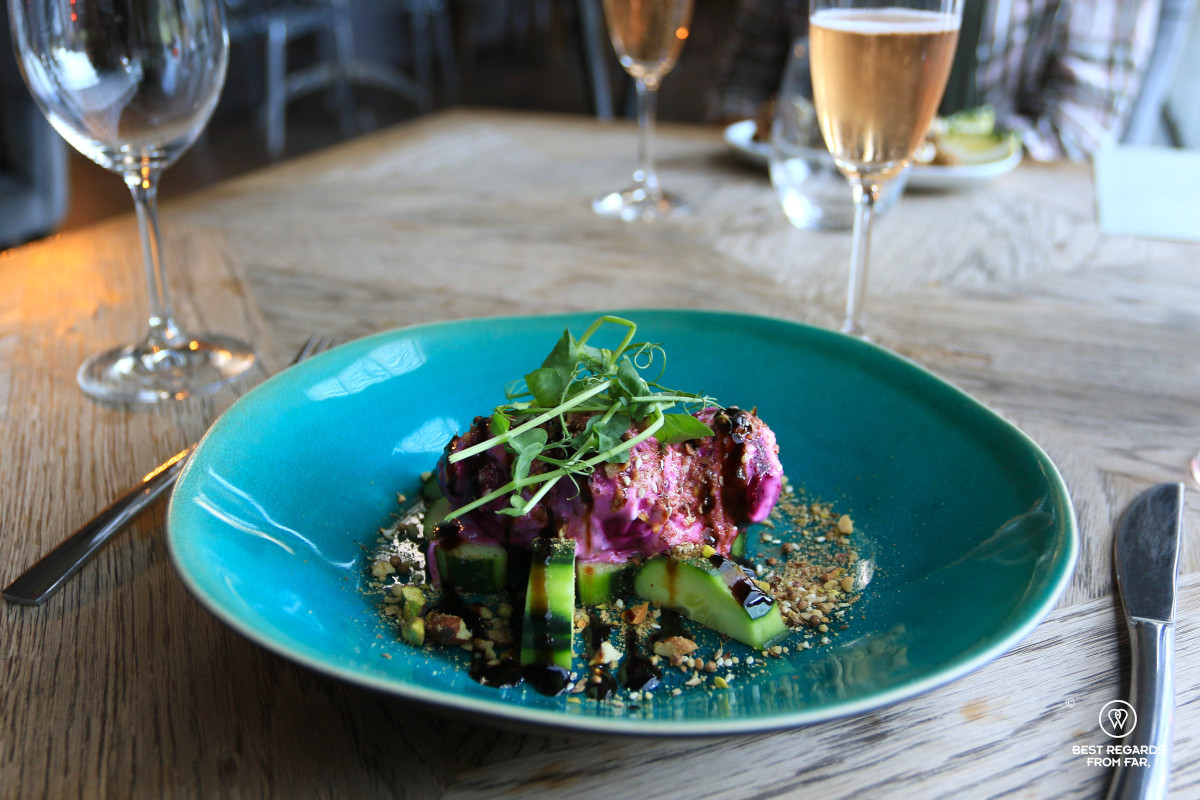

Pickled beetroot salad paired with a festive sparkling rosé, or peri-peri fried squid heads paired with a velvety Merlot to balance the spices are a great introduction. The lemon-butter kingklip—a meaty white fish from the South African coast—alongside a tropical Sauvignon Blanc or a Karoo lamb shank paired with the Goedverwacht award-winning triangle, a blend of 50 percent Cabernet Sauvignon, 28 percent Merlot and 22 percent Petit Verdot are excellent choices of mains showcasing the variety and excellence of local products. The wines from Goedverwacht—now run by the third generation—include a standout wooded Chardonnay and the award-winning Blaupunkt, named after the highest peak in the region that we are also indulging with during this extensive pairing.
The BluVines’ stylish interiors decorated with art from Capetonian artists highlighting a bar imported straight from Paris add flair, while the veranda offers mountain views for lazy summer evenings.
Travel tips:
- Do not leave Montagu without trying the Michelangelo award-winning blends paired with the delicious dishes and make sure to book ahead at BluVines.
Day 3: Sunrise Hike & A Vintage Farewell
Sunrise with A View
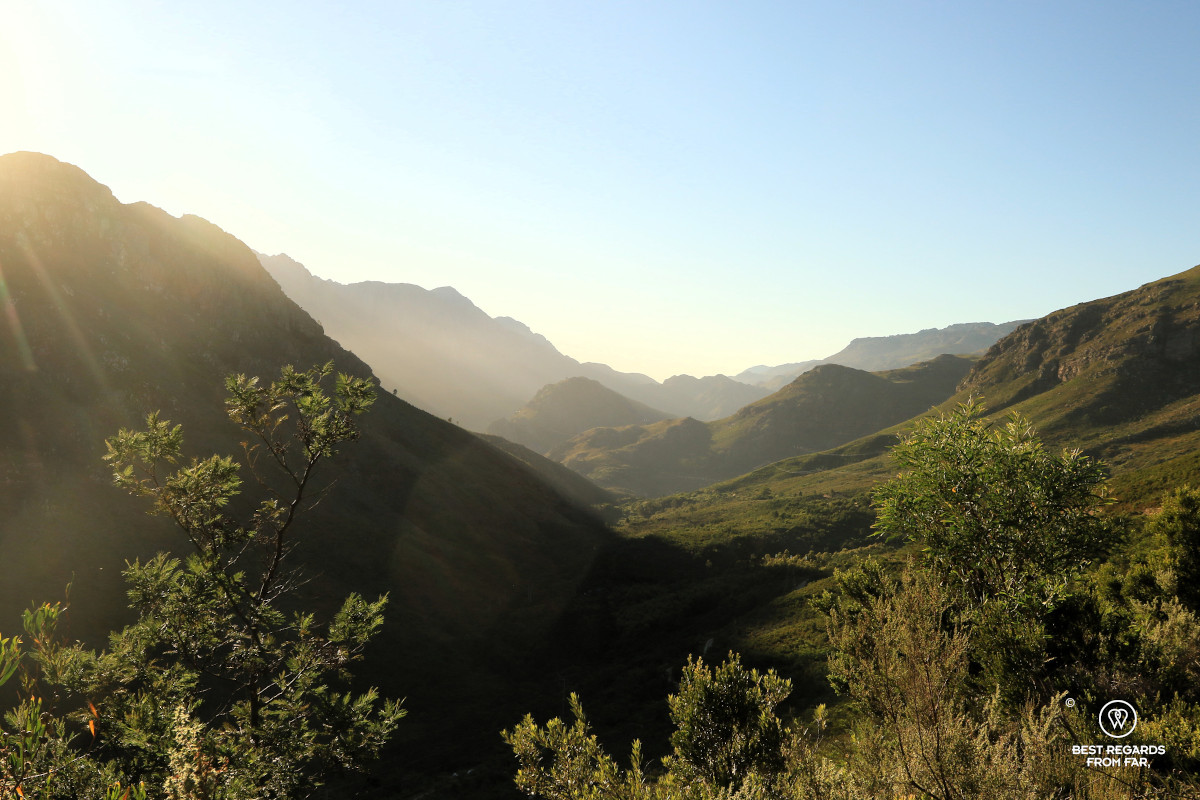
To greet the day in true Klein Karoo style, we rise before dawn for a guided hike with local field guide Pati van Dyk. Her knowledge of Montagu’s flora and geology is matched only by her deep passion for preserving it. As the sun rises, casting golden light over the Langeberg Moutains, we walk through rugged terrain rich with endemic fynbos and learn how these plants have adapted to the semi-arid climate.

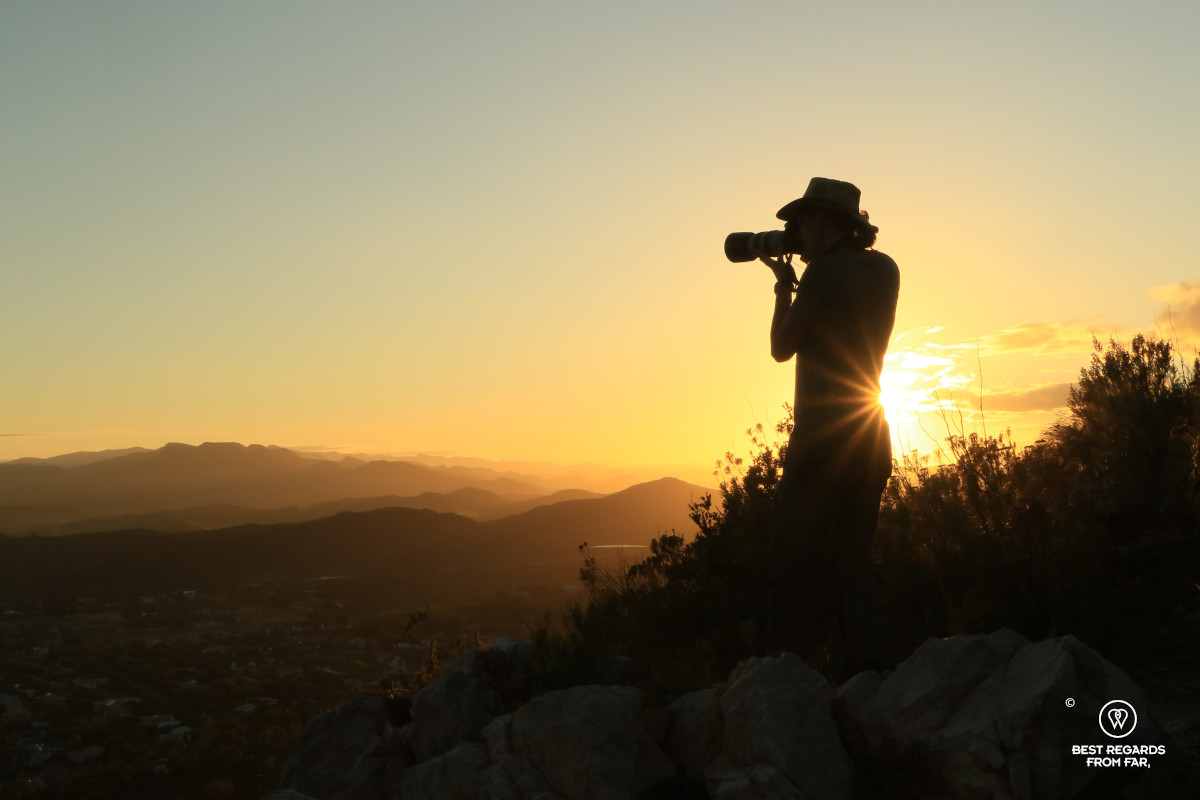
Pati points out delicate succulents, aromatic herbs, and quartz fields—patches of gleaming white stones that reflect sunlight and help fragile seedlings survive the harsh conditions. We pass through habitats where creatures like duiker, steenbok, and even the elusive Cape mountain leopard roam, though this morning they remain hidden.
Our goal is Aasvoëlkrans, the Vulture’s Cliff, which offers a sweeping view of Montagu nestled below, surrounded by layers of folded mountains in the distance. The silence is profound, broken only by the wind and the occasional bird call. As we descend, the warming air intensifies the fragrance of the vegetation—a sensory reminder of the richness the fynbos holds—a good stimulation for our appetite before breakfast at the Montagu Country Hotel.

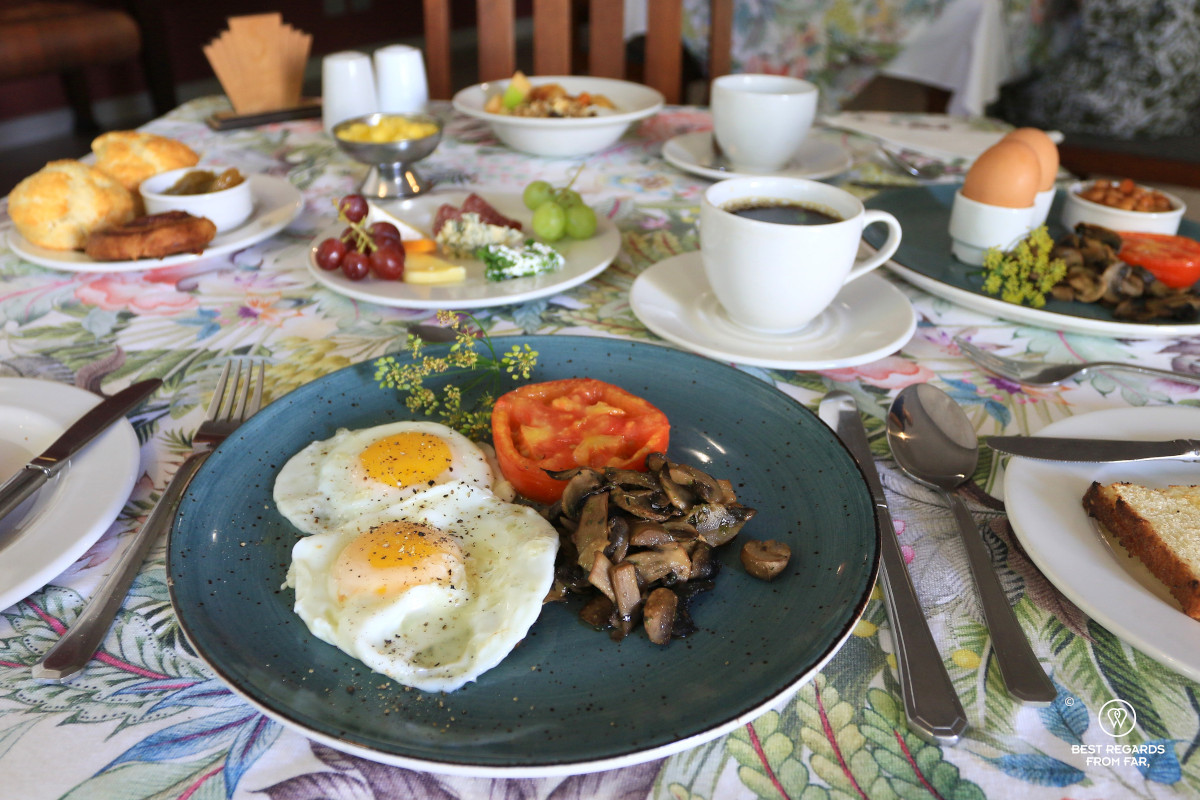
Travel tips:
- The hike to the top of the Aasvoëlkrans viewpoint can be done solo but to gain insight into Montagu’s geology and unique ecosystems, book a walk through Flying Feet!
Cruise Through Town in a Cadillac Like a Movie Star
To cap off our Montagu escape, we hop into a gleaming vintage Cadillac parked stylishly just in front of the Art Deco façade of our hotel. Whether it is a 1956 sky-blue convertible or a candy-apple red 1964 classic, this retro ride offers an unforgettable way to tour the town.
Proud owner P-J shares stories as we cruise down Long Street, home to no fewer than 21 national monuments, each reflecting a different era of Montagu’s past. Small-scale farming still threads through the town, the fields watered by the Kingna and Keisie Rivers before they merge to form the Cogmans River.

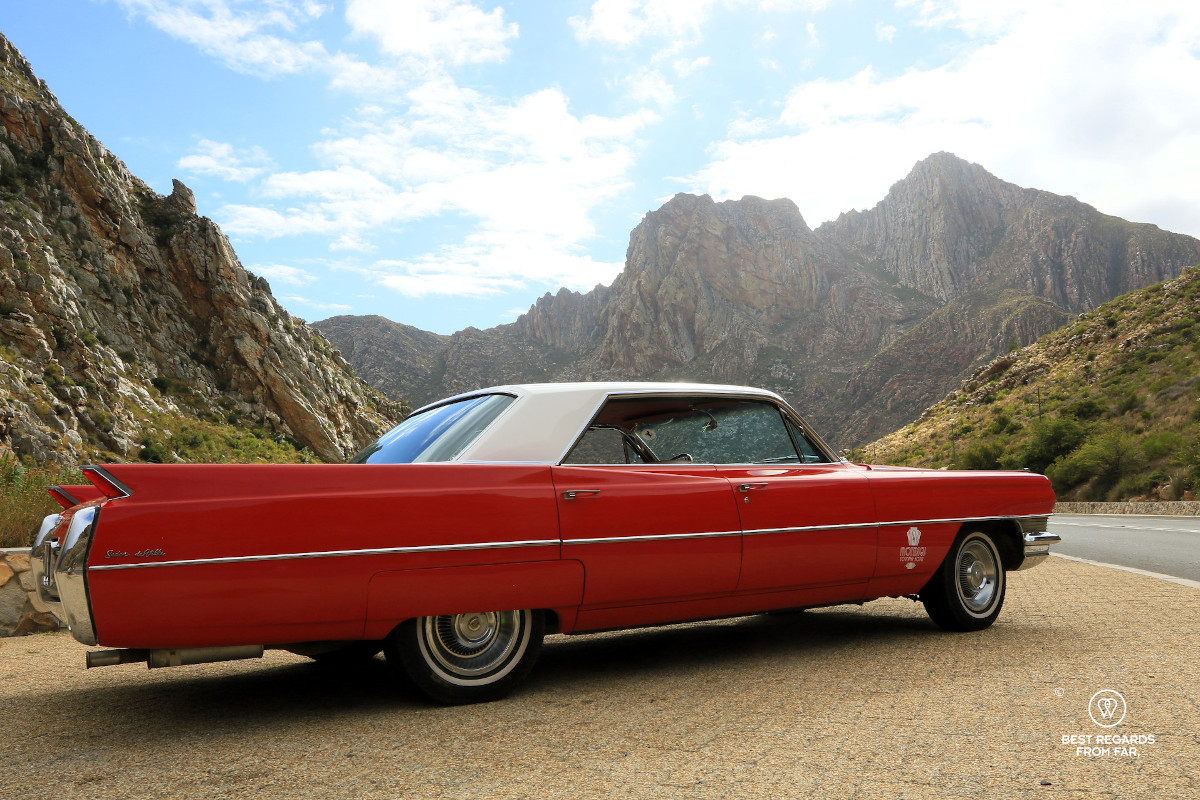
Travel tips:
- Whether you want to feel like a movie star or are interested in American Vintage cars, enquire at the hotel about their Cadillac Tours, from rides in town to wine tours around Montagu.
***
It is hard to leave Montagu behind after such an extraordinary weekend full of explorations and indulgences. Seemingly a sleepy town at first sight, Montagu, with its dramatic landscapes and above all its people, has become a place full of exciting activities to return to, only barely more than two hours from Cape Town.

Travel tips:
- Check out our interactive map for more in the area (black pins lead to an article):
For more in & around Cape Town, click on these images:



 Best regards from far,
Bonjours,mes amis!
Catching up on desk work after a very busy couple of months travelling, playing Bowls etc!!
I just opened your message from Montagu, and I had to agree, it is a fabulous place to stay. We were there in the 90’s living in Botswana, for an MG gathering, so we did all the vineyards, and all the sight seeing bits! Then had to drive home, and we left Montagu at 5 am, and arrived in Lobatse at 20:00, I did all the driving because MoraG did not drive a manual car, it was about 1500 kms, and the longest non stop drive of my life, but we made it!! Joyeux memoires!
Take care Ladies
Love
Chris
Wow! What a story Chris!! That must have been quite a drive! Super nice to hear from you 🙂
Take good care of you and Merle and hope to see you soon!
Big hugs from us both.
Hi Merci bien! A ce moment je suis buvant un vin de Van Loveren, qui sâappelle âPerle de Jeanâ, un Pinot Grigio en memoire de Jean Retief! Achete du Makro, câest merveilleux!
Bonne Chance,
Meilleurs Sentiments,
Chris
Lucky you!! Enjoy 🙂