Text: Claire Lessiau
Photographs: Claire Lessiau & Marcella van Alphen
Even if M’Goun (4,071 meters or 13,356ft) is Morocco’s third highest summit while Toubkal with its 4,167 meters (13,671ft) is the highest peak of the kingdom and of North Africa, the adventure and experience to reach M’Goun far surpasses the over-frequented Toubkal…
Pin it for later!
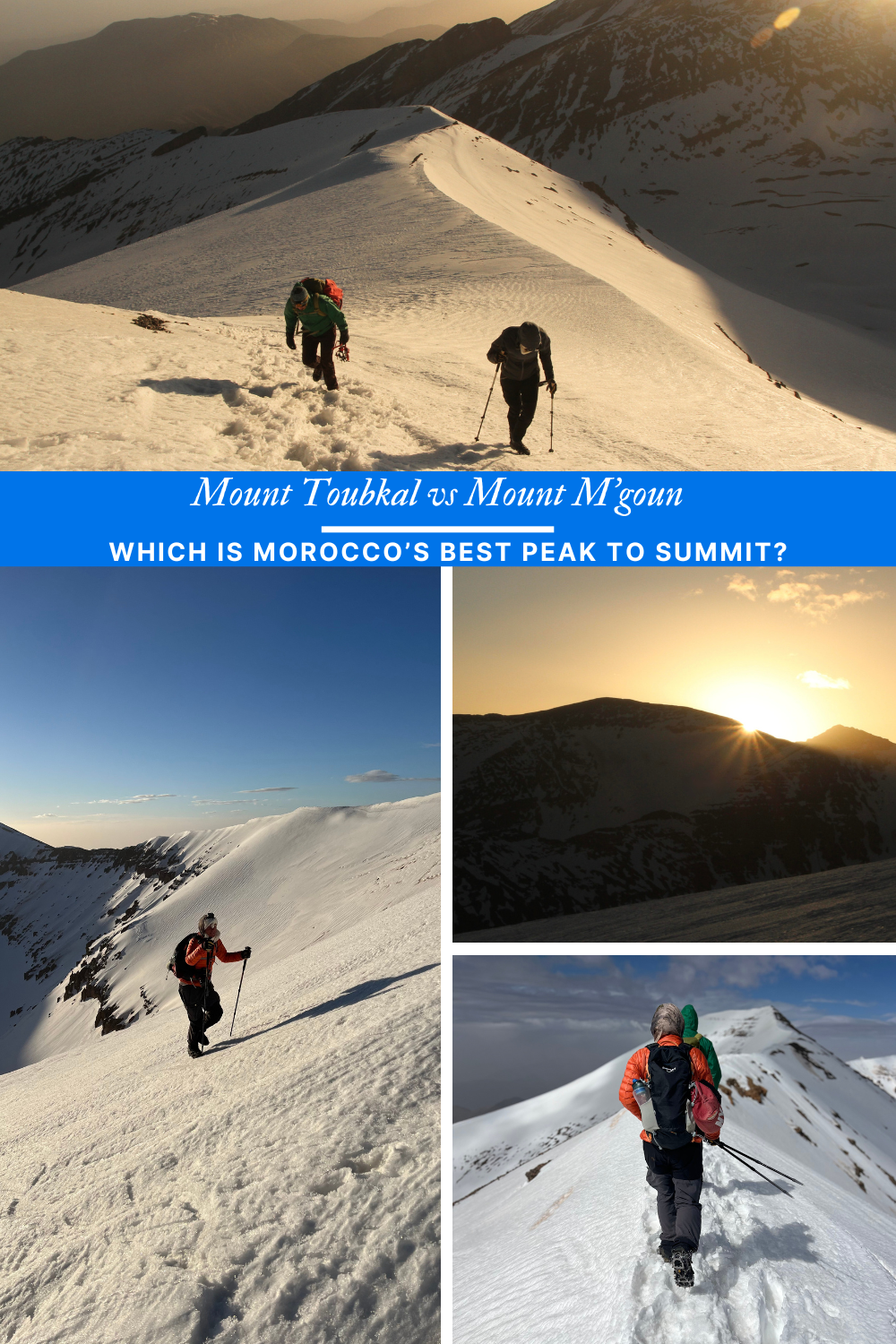
Ascending M’Goun
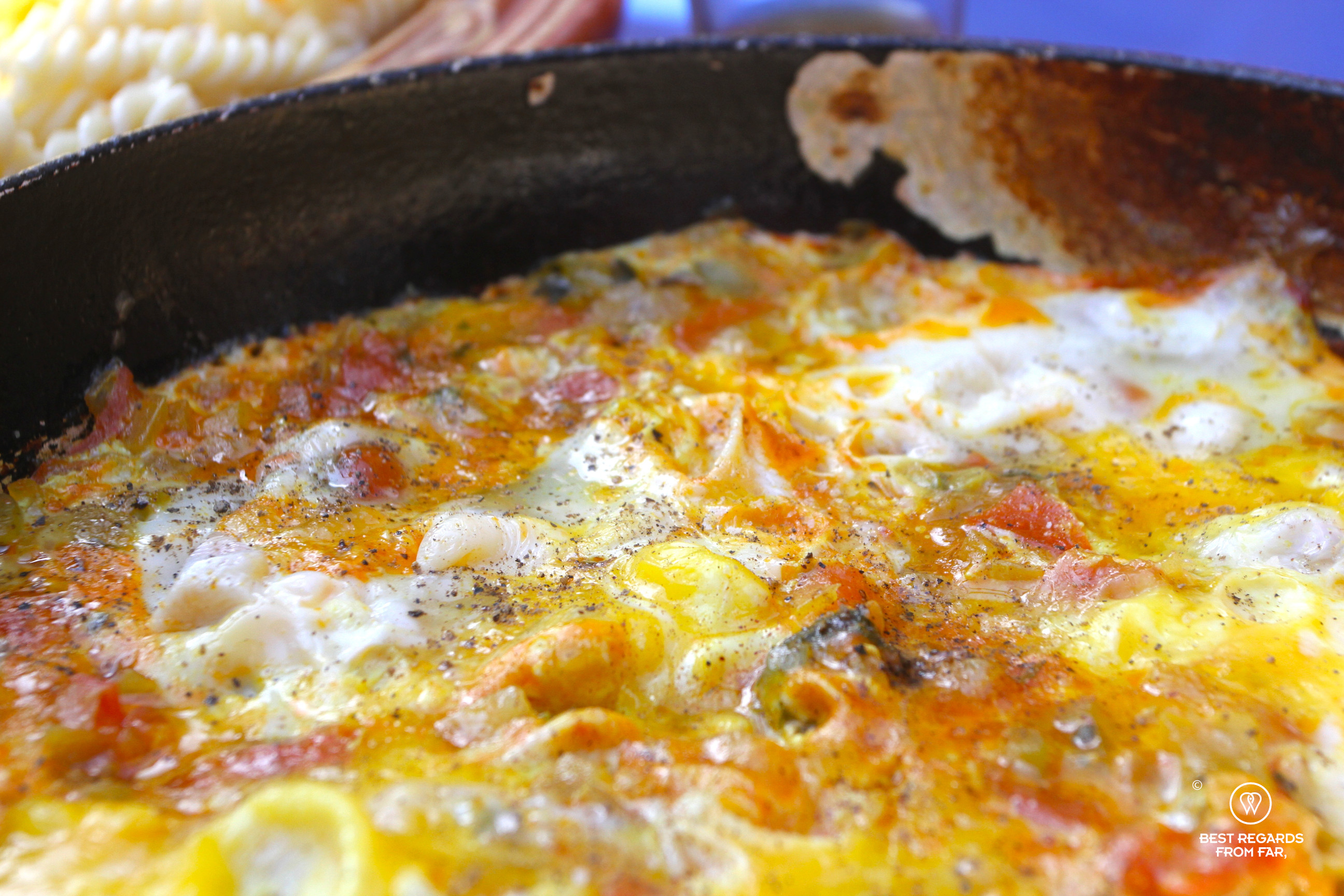
Abdullah has prepared yet another fantastic Moroccan breakfast. We savor the freshly baked flat barley breads and the warm oily msemen with a local honey and fig jam, taking some strength for the days ahead. We have just hiked through the Valley of the Roses and have enjoyed a rest day in the bucolic Happy Valley where the lovely Dar Arfa guesthouse is located. Now, it is time to head to the Arrouss Valley, only a short drive away, the starting point of our trek to the summit of Mount M’Goun, Morocco’s third highest peak, and a renowned long hike along its treacherous and splendid ridge line.
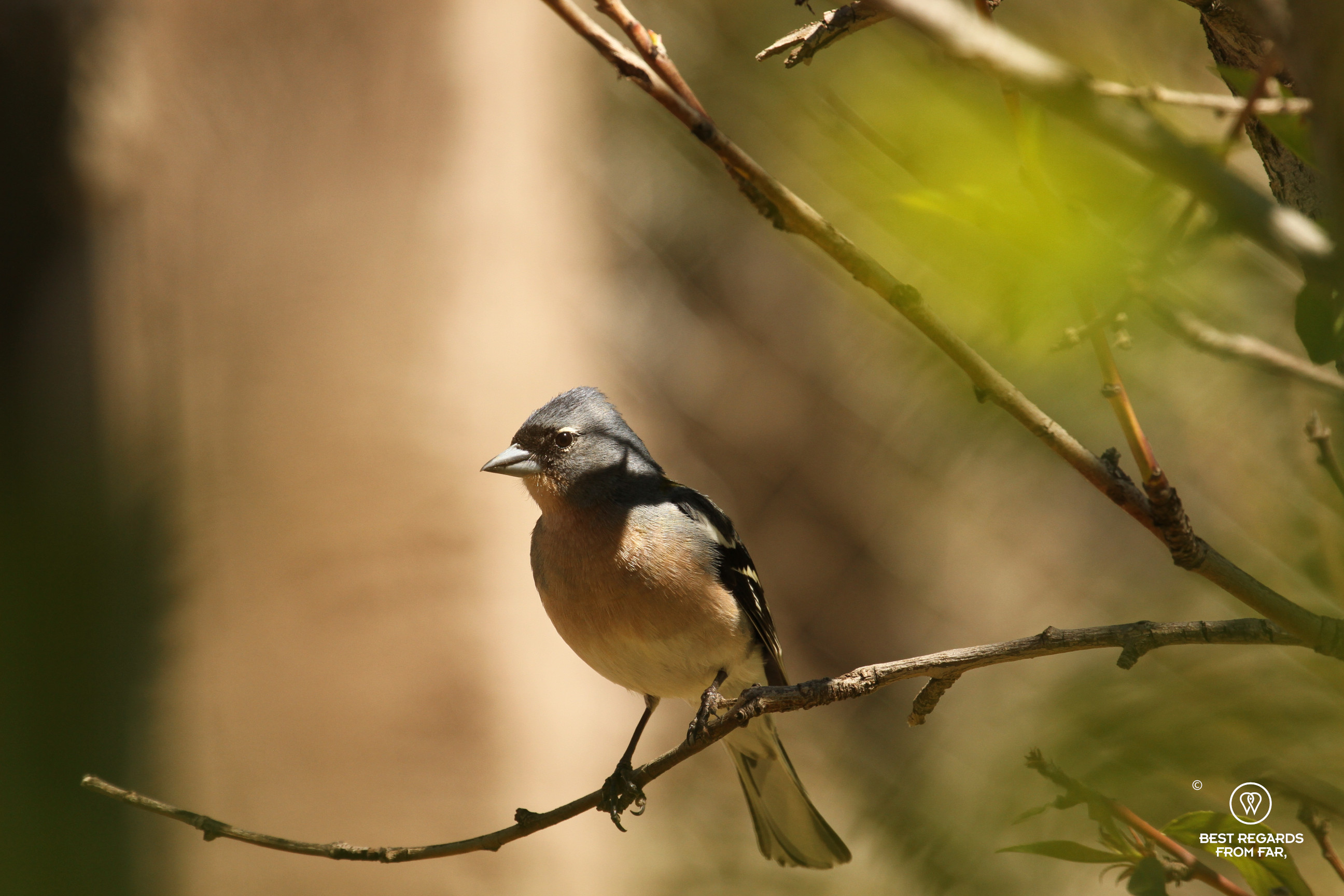

We grab our gear from our room named after a neighboring peak and hand it to our certified nature guide Hassan Boutahar who has arranged all the logistics, including a mule to carry most of the load.
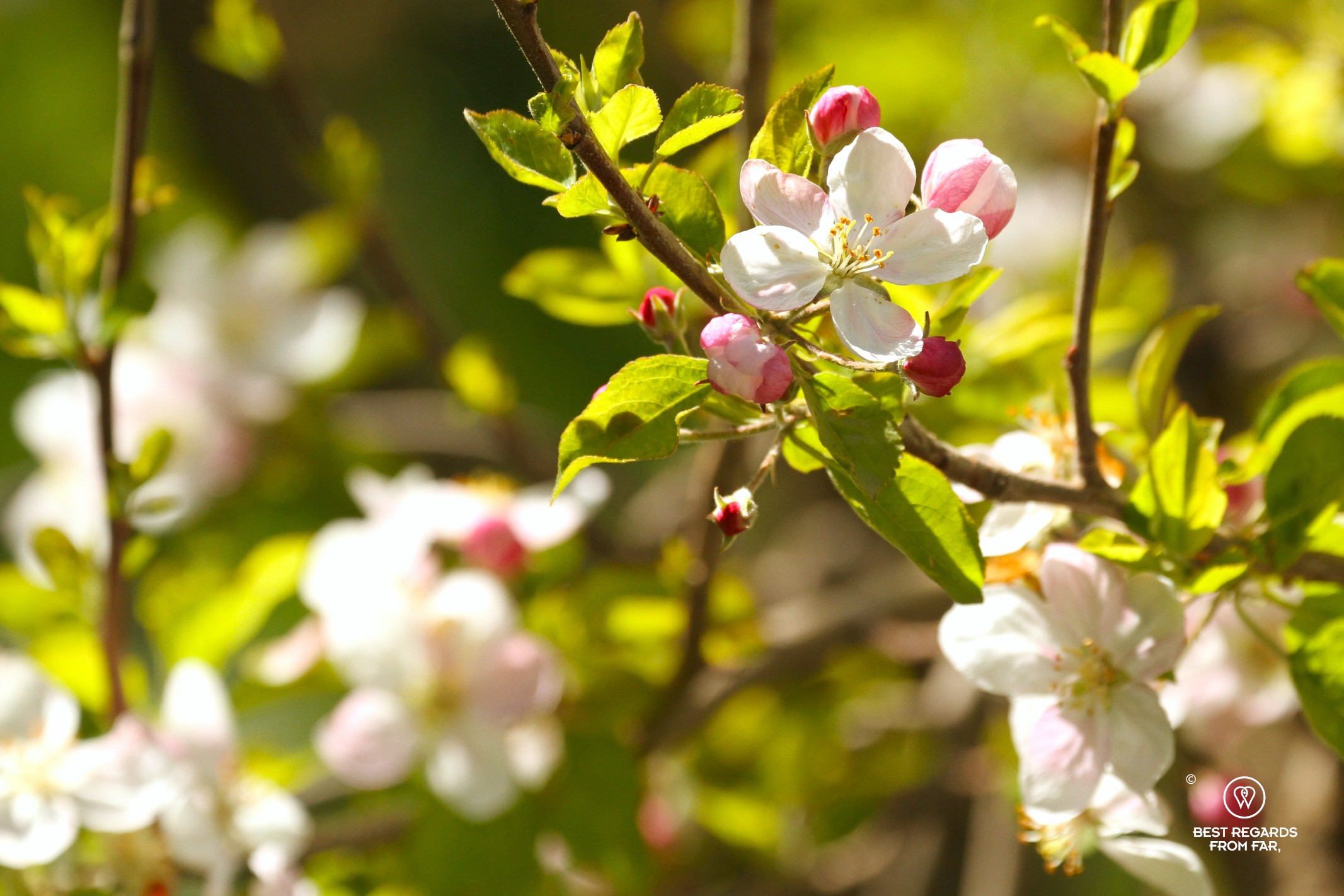
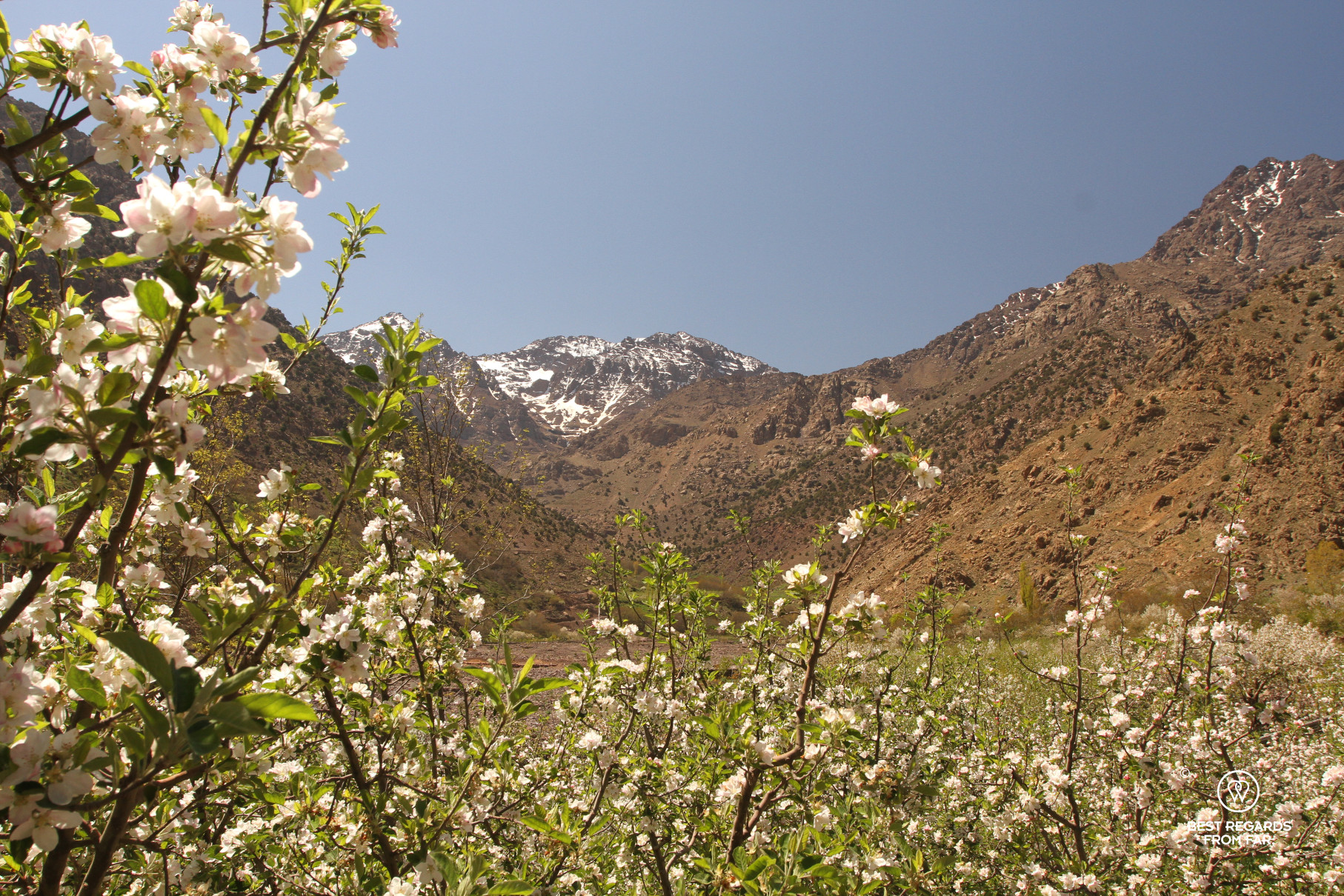
Leaving the guesthouse, the narrow road of the Ait Bouguemez Valley is lined with blooming apple trees, the main crop in this valley along subsistence farming such as barley. Soon, we arrive at the village of Arrouss where our muleteer and his young mule are waiting for us.
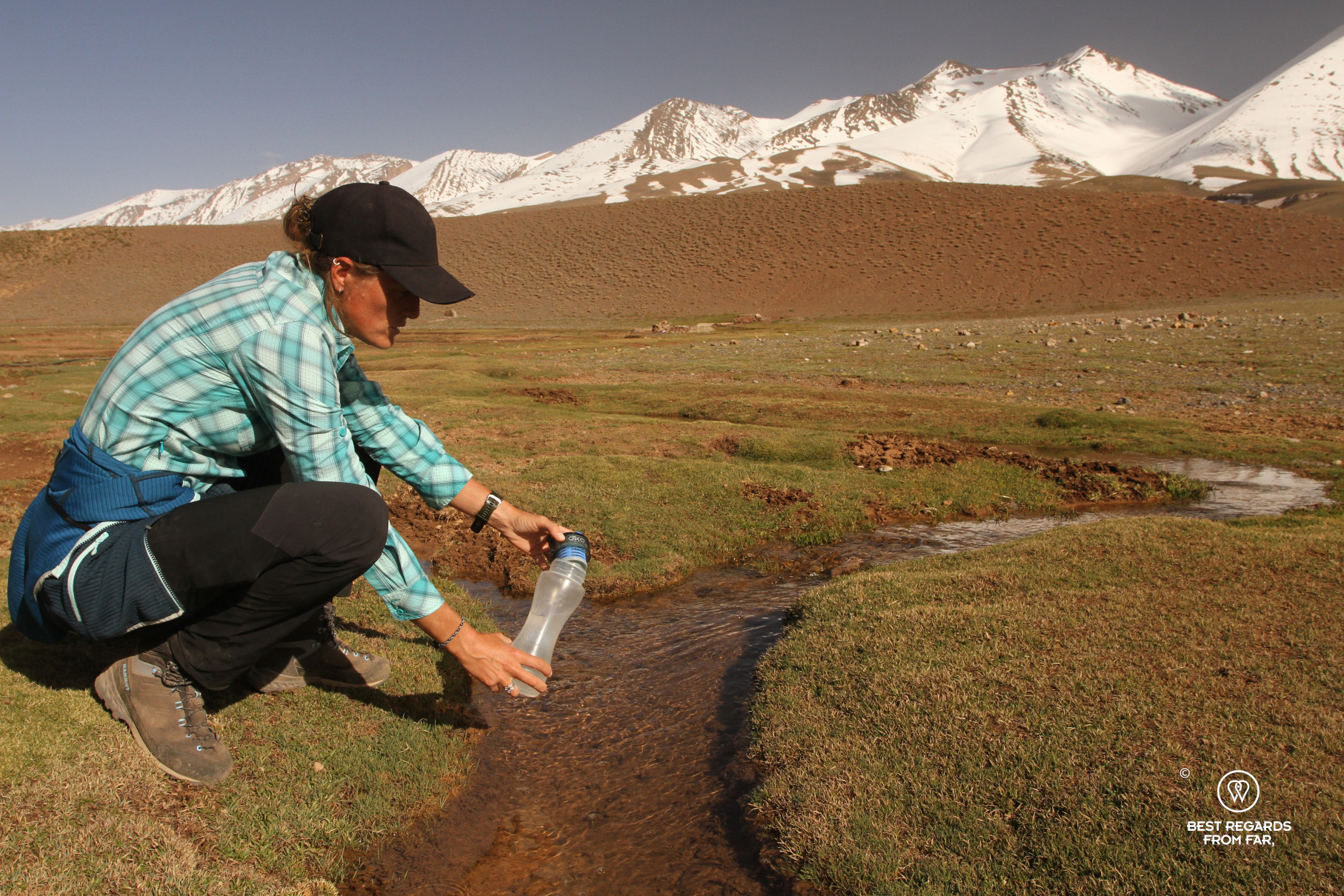
Carrying only a day pack, we head towards the mountains on a trail that follows the irrigation canal and the river and winds amongst holm oaks, buxus, and junipers.
Berber men riding mules overtake us. They are heading to their fields higher in the mountain. Today, the surface irrigation canals—called souguia here in Morocco—have to be checked and this is an important communal task. A man from every family owning fields up in this green valley has to be present and help. Supporting each other and participating in communal tasks is vital still very much part of the daily life in these mountainous areas where life used to be nomadic. In a couple of days, a new irrigation system will be built by the community, diverting the river into a newly dug canal using stones and branches. For now, while waiting for the others, these men are socializing around a hot and sweet mint tea in a private refuge that provides a welcoming rest for us about 5 kilometers (3.1miles) in. In Berber hospitality, we are served bread, olive oil, and honey with our tea served high up to express who welcome we are.


Once above 2,700 meters (8,858ft), trees disappear in favor of spiky shrubs before the first patches of snow appear at around 3,000 meters (9,843ft) during this early spring. After about 5 years of drought in this area, local farmers are very happy with this year’s rains, and even more so with the amount of snow remaining up in the mountains. As the snow melts, valleys will keep being watered well into the summer. Our guide Hassan looks a bit concerned. The first patch of snow we have just crossed costed us a fair amount of time as we sank knee-deep.
Reaching 3,500 meters (11,483ft), we understand his doubts. Our objective for the next day appears very clearly: Hassan’s favorite peak, Mount M’Goun towers above the Tessaout Valley. As we share a lunch of cooked vegetables and meatballs with onions in a flat bread, Hassan visually outlines our plan for tomorrow, and it will not be only a patch of snow like today. Most of the ascent will be on a white blanket.


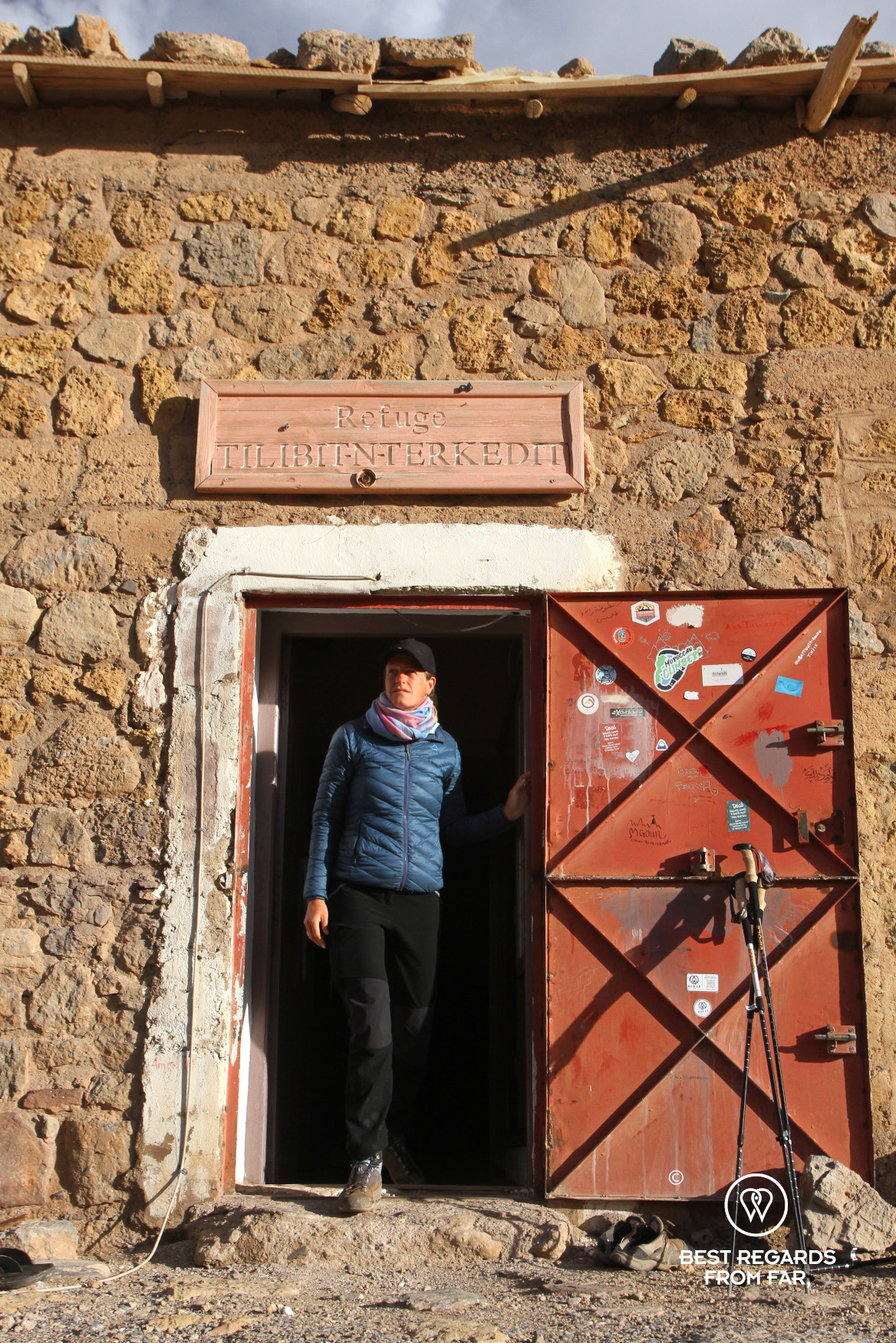
We plunge into the valley of the Tessaout River, an unexpected flat and green land surrounded by mountains where the Tarkeddite refuge is located. Very basic, at 2,900 meters (9,514ft), it is the ideal location to catch a few hours of sleep before ascending M’Goun Peak.



The 3 a.m. wake up feels very early. The breakfast is ready, and by 4 a.m. we venture into the night, following the slow and steady pace of Hassan. The temperature is below freezing and the sky is clear: the Milky Way and the stars twinkle above our heads. We soon reach the snow line, and as the slope gets steeper, we gear up with crampons. It is late April, still a bit early in the season for M’Goun. Luckily, the cold temperatures have hardened the snow and we manage to stay on top of its icy crust. The first group who was up here only a few days ago did not have that luck looking at their deep tracks.
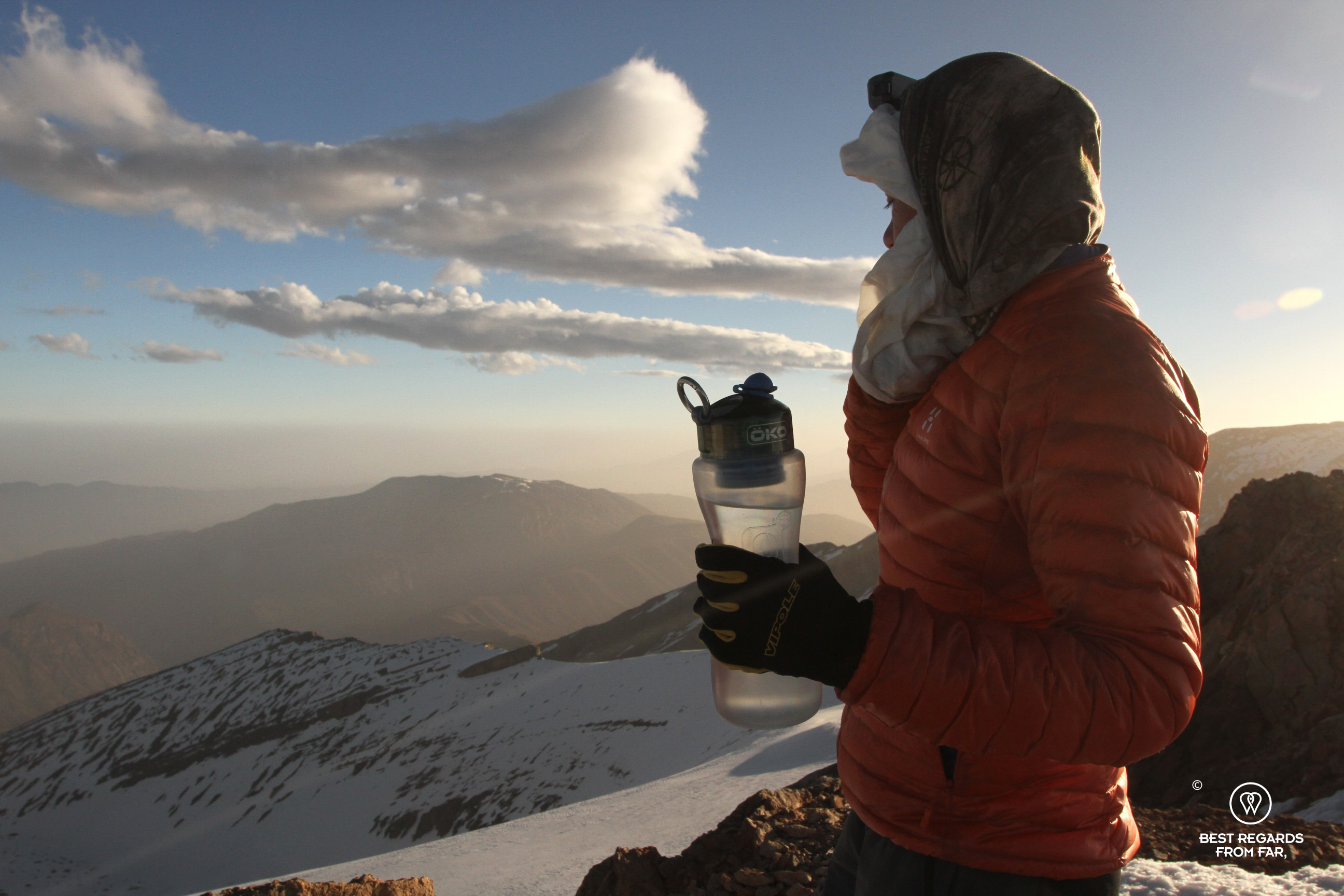
A thin moon crescent rises above the snow-packed ridge line. The stars slowly disappear and the sky clears up. The sun rises from behind M’Goun bathing us in its warm light. Another steep up and we reach the ridge line close to 4,000 meters (13,123ft) that will lead us all the way to the summit of M’Goun, another 5 kilometers (3.1miles) further. Hassan presents dates and nuts before we continue. Soon, the Berber name of the mountain, Amsoud, becomes self-explanatory. The mountain of the wind as it translates does not disappoint! Bitter-cold gusts bite our faces and penetrate through our technical gloves. Pieces of icy snow fly around and hit our legs. Our hands are frozen. We tie up our silk liners around our heads as turbans to protect ourselves better. With the wind against us, it is hard and exhausting to make progress. We still pause to look at some sea fossils that have been lifted up to this altitude by the incredible forces of nature.


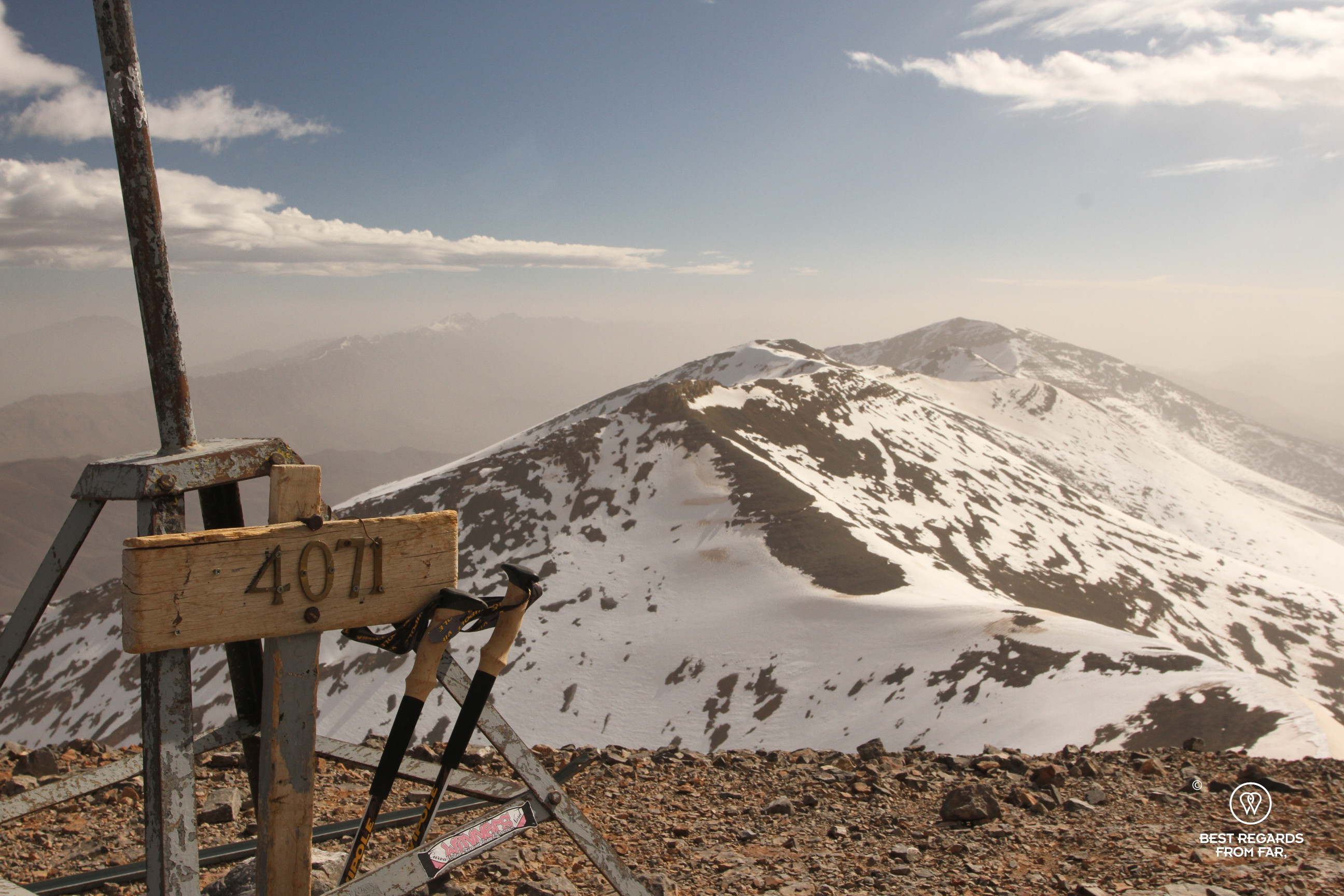
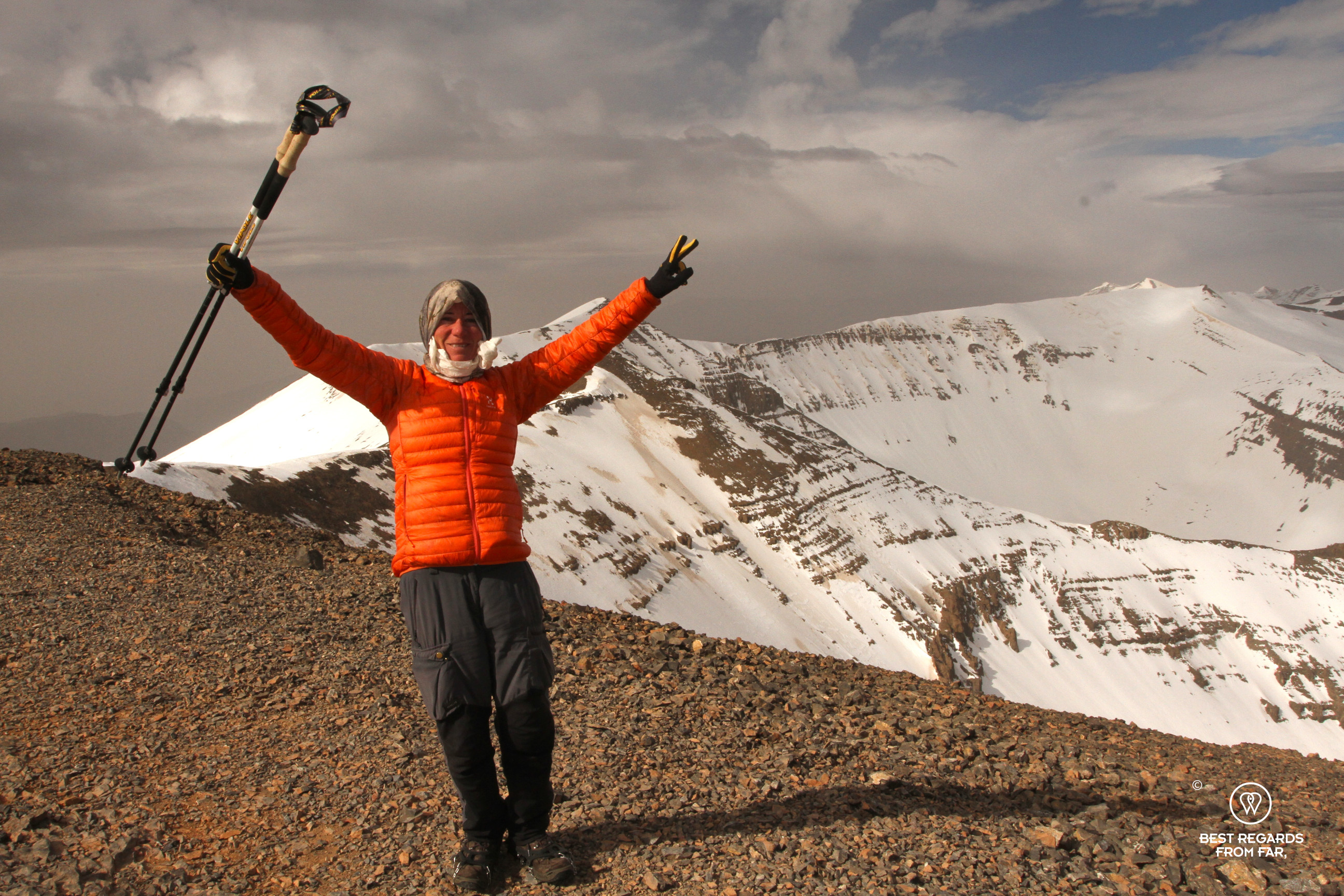
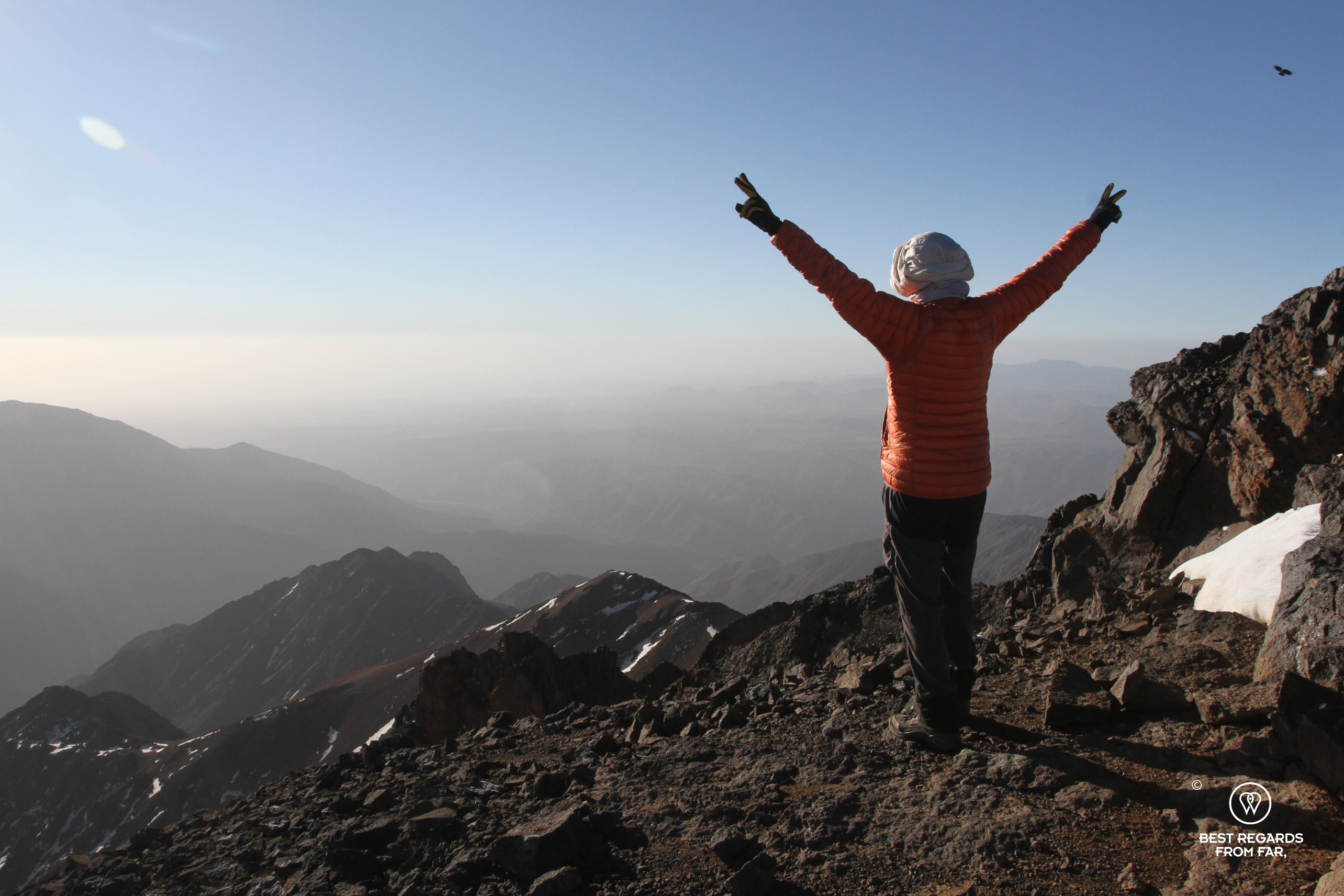
We eventually arrive at 4,071 meters (13,356ft) above sea level. We are on the summit of Mount M’Goun, the highest of the Central Atlas Mountains and the third highest of Morocco. As we take in the panoramic view, Hassan points at the clouds that are building up. We start making our way back the same way, and as we were hoping for the sun to warm us up now that it is mid-morning, it is playing hide and seek with the clouds and we make sure to keep moving in an attempt to stay warm. The ridge line that oscillates around the 4,000-meter (13,123ft) altitude line takes us some time to follow back.
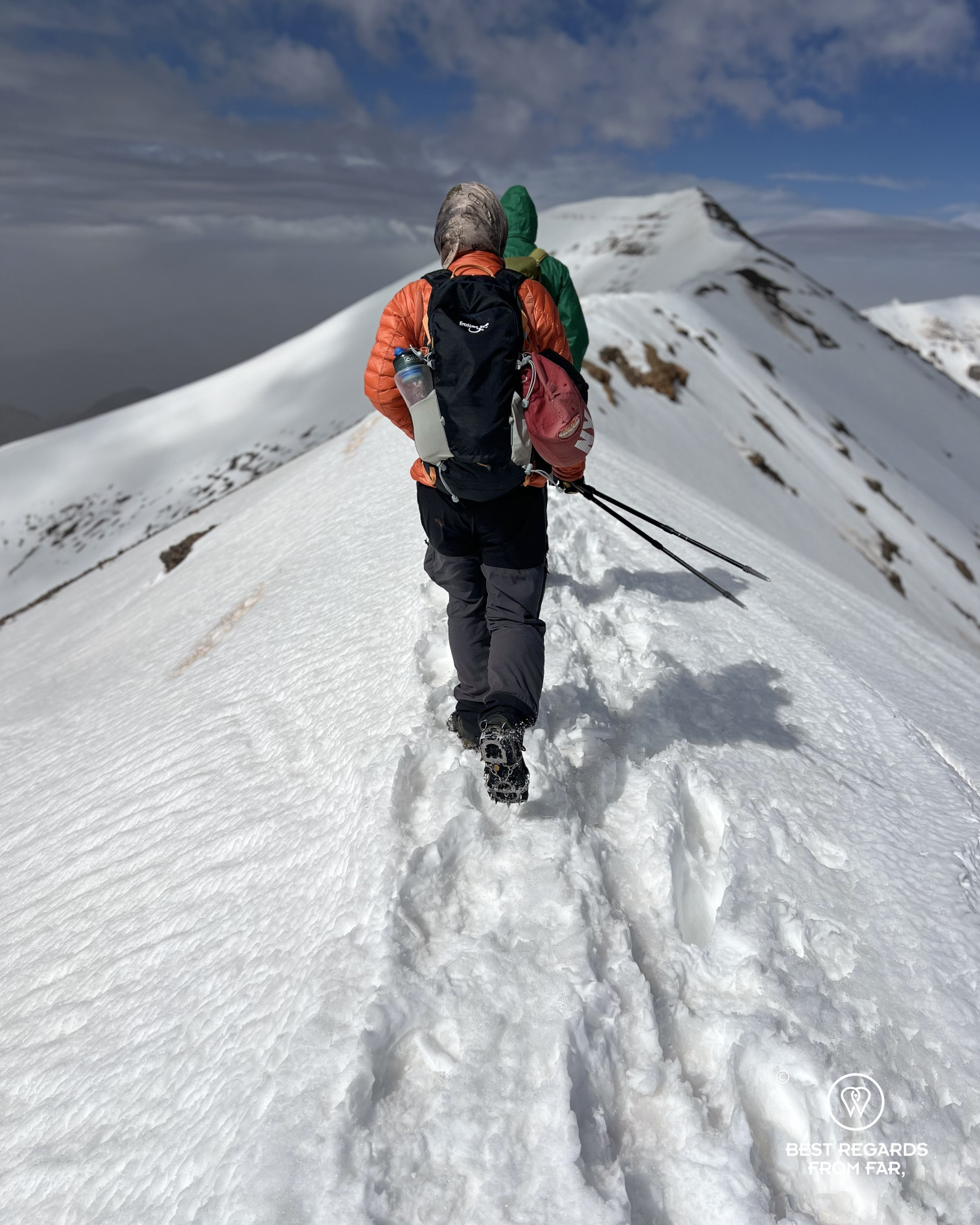
Thankfully, as soon as we leave the ridge line, the way down is a lot faster, especially sliding on our bums as with a sledge in some of the steep high sections. Lower down, we find a flat spot in the sun with some dry rocks sticking out inviting us for a lunch break. The timing is impeccable as we eventually arrive back at the refuge as the snow starts falling! The mandatory tea helps up fully warm up and rehydrate, as we guess the summits we conquered now hidden in the clouds. Redwan who mans the refuge prepares a comfort dinner for us with a barley soup with olive oil and cumin, a good chicken tajine, and fruits. After all, even if it seems quite easy by now, we still have to return down to the valley the next day!


Toubkal vs. M’Goun
Easily reached from the touristic Marrakech, Toubkal fascinates as it is not only Morocco’s highest peak, but also the highest in North Africa.
These two factors added to the fact that the trail to its summit is rather short for a 4,000-plus-meter (13,000-plus-feet) peak make Toubkal a bucket list item for many. This becomes obvious as we reach the cute village of Imlil with its spanning views on the High Atlas Mountains that look familiar—probably a distant memory of some scenes of the movie 7 years in Tibet. We park in the hamlet of Azib Assougolor from where we start our trek. A constant mule traffic passes by, giving a hint of how busy the mountain gets, even if we are still early in the season in this late April.
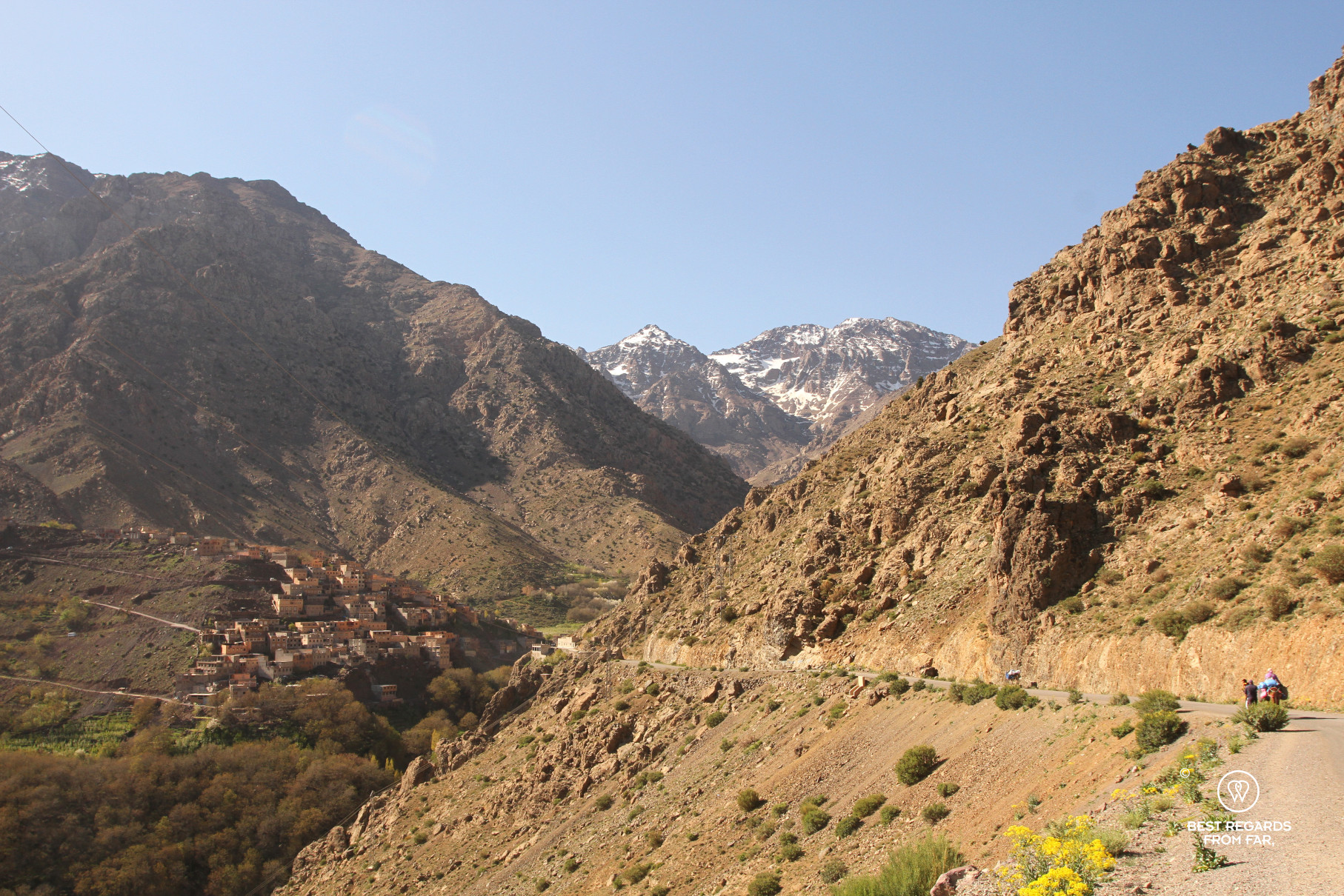

Dotted with shacks exhibiting sodas, junk food, energy bars, and a few woolen bonnets, the trail winds its way up along the Rheraya River and passes by beautiful waterfalls in the distance. The gradual climb takes us 1,300 meters (4,265ft) higher over almost 9 kilometers (5.6 miles) to the refuges that are the base camps to reach the summit of Toubkal.
Unfortunately, despite the heavy mule traffic and the cash machine that the refuges have turned into, trash management remains an issue in the first national park of Morocco created in 1942. Plans at the moment aim at making more money by expanding the refuges rather than making them more sustainable.
Far from the hospitable refuge of M’Goun, masses of hikers press themselves from noisy dining areas to crowded dorms. The mountain spirit is not quite palpable. Mostly inexperienced, at dawn some head out in jeans or sneakers, a few without gloves and within half an hour from the refuge, some have already turned around. Most continue in long and slow-moving lines headed by a mandatory guide. The ascent takes a couple of hours in a very mineral landscape dotted by patches of snow. We eventually reach the summit, and manage to find our own pride rock slaloming around groups snapping selfies. From the roof of North Africa, the views on the mountains of the High Atlas bathed by the early morning light are worth the climb. The cold wind prompts us to track back quickly to the refuge to rest a bit and grab an early lunch before heading back down to the valley, and sleeping in a riad of Marrakech that same night.


Travel tips:
- M’Goun is a dangerous mountain with conditions that can change fast. Make sure to take a certified nature guide to attempt the summit.
- With more than 20 years of experience, Morocco Hike Tours can craft not only the trek to M’Goun or Toubkal, but any trekking trip in Morocco, including following some of the few remaining mountain nomads.
- We highly recommend to plan for a couple of nights at the Dar Arfa guesthouse in the Happy Valley to enjoy the peacefulness of this beautiful area and genuine Moroccan hospitality.
- Even though less technical, a guide is mandatory to climb Toubkal Peak, and this rule is enforced at a police checkpoint.
- Check out our interactive map for more in the area (black pins lead to an article):
For more in Morocco, click on these images!


 Best regards from far,
OMG !!!
Long time ago !!!
In 2014 you was in El Salvador. Central America. And you are in Morocco !!!
I live now in Spain. Madrid and Im happy 4 you success !!!