Text: Claire Lessiau
Photographs: Claire Lessiau & Marcella van Alphen
The fragrance of orange blossoms fills the air as I stroll across the main square of Chefchaouen, passing along the wall of the kasbah. The sun sets, casting a warm glow on the surrounding Rif Mountains, while the muezzin calls to break the daily fast from the minaret of the mosque during this month of Ramadan. His voice resonates across the square, where Muslims seated at set tables wait just a few moments longer before eating their soups and breads…
Let these 9 fun and interesting facts inspire you to go beyond the blue façades of this picturesque city…
Pin it for later!

1. Chefchaouen Wasn’t Built as a City, But a Military Outpost
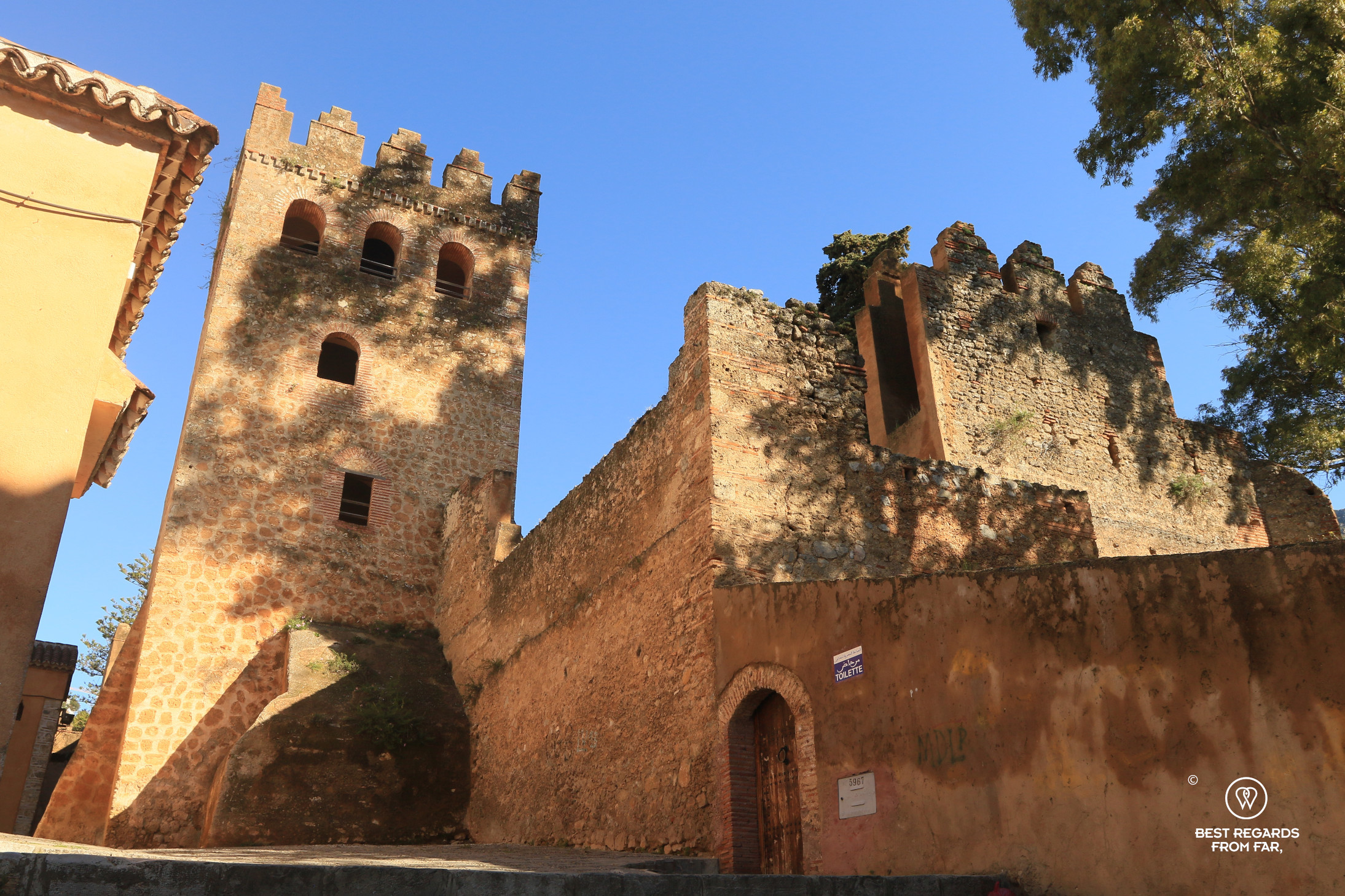
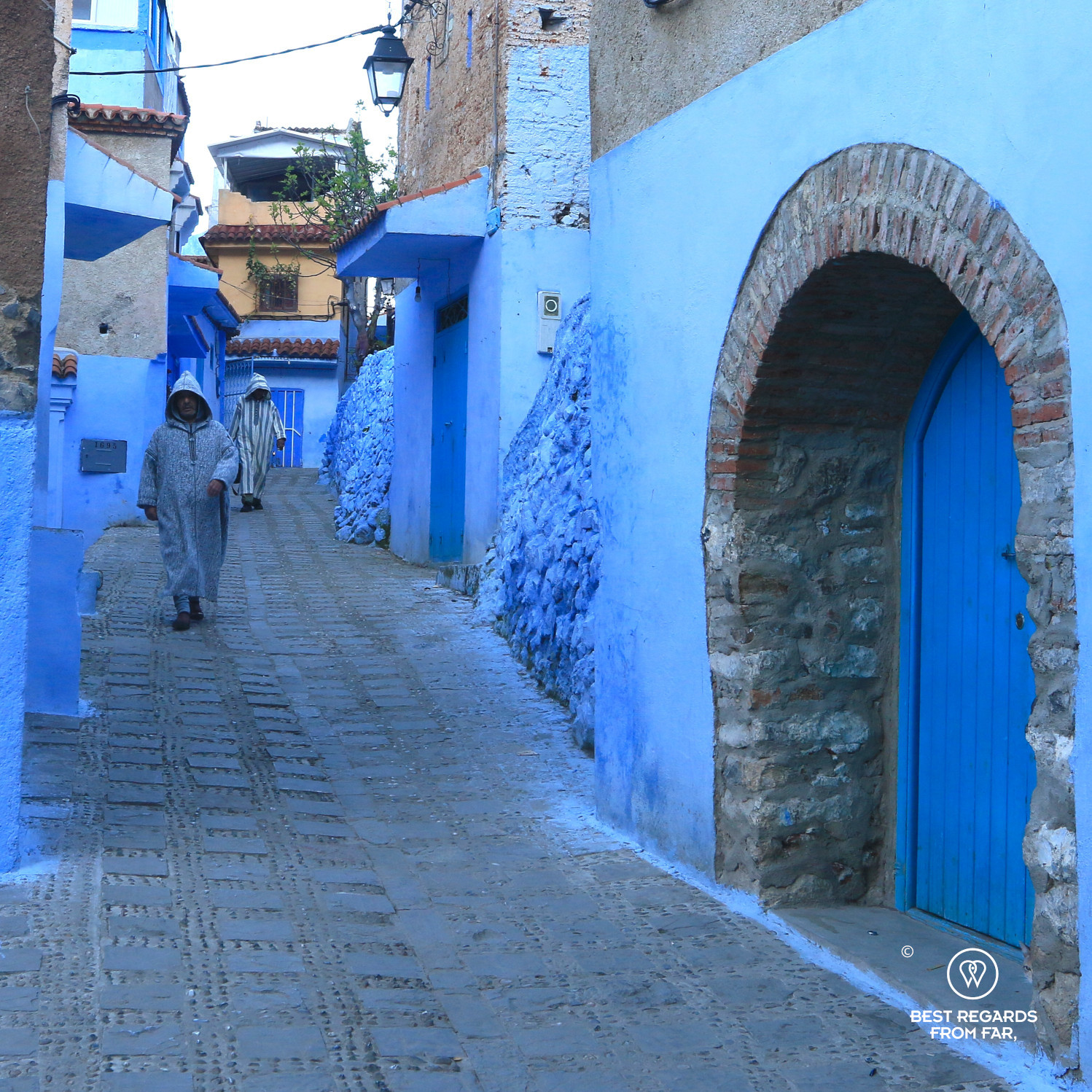
The heart of Chefchaouen, this very square, dates back to the 15th century. It was here that Moulay Ali Ben Rachid constructed a fort in 1471 to defend against the Portuguese, who had already seized Tangier and other strategic coastal cities. This fort, or kasbah, housed a jail, a stable, soldiers’ quarters, the emir’s residence, and an Andalusian garden. Today, the Portuguese Tower, mostly built by prisoners, stands as the tallest civil structure in the old town. From this military outpost grew the city, with narrow, maze-like alleys that would have also hindered invaders.

2. Chefchaouen Was Once Known as “Little Granada”
In the late 15th century, the region was populated by Berber tribes in the mountains, and some settled in the city—and also gave it its name (see fact #9), but not its nickname though.
With the Spanish Reconquista and the fall of Granada in 1492, many Jews and Muslims migrated from Andalusia in southern Spain to northern Morocco. As they were expelled from the Catholic kingdom, Chefchaouen became a sanctuary for these refugees. Moriscos—former Muslims and their descendants who were forced to convert to Christianity and who also ultimately faced exile—joined them as well as the Mudéjars, Muslims who had remained in Spain, and Spanish and Portuguese Jews—or the Jews who had converted to Christianity following the late 14th-century Spanish antisemitism, and who still faced oppression and discrimination (the bloody 1478 Spanish Inquisition was established to check whether these new Christians were indeed proper Christians).
Their arrival transformed Chefchaouen into a vibrant cultural hub. Hoping to create another Andalusia with its refined crafts and sophisticated culture, they nicknamed the town of Chefchaouen “Little Granada”.


3. Despite What You May Hear, There Is Absolutely No Reason Why the City Turned Blue
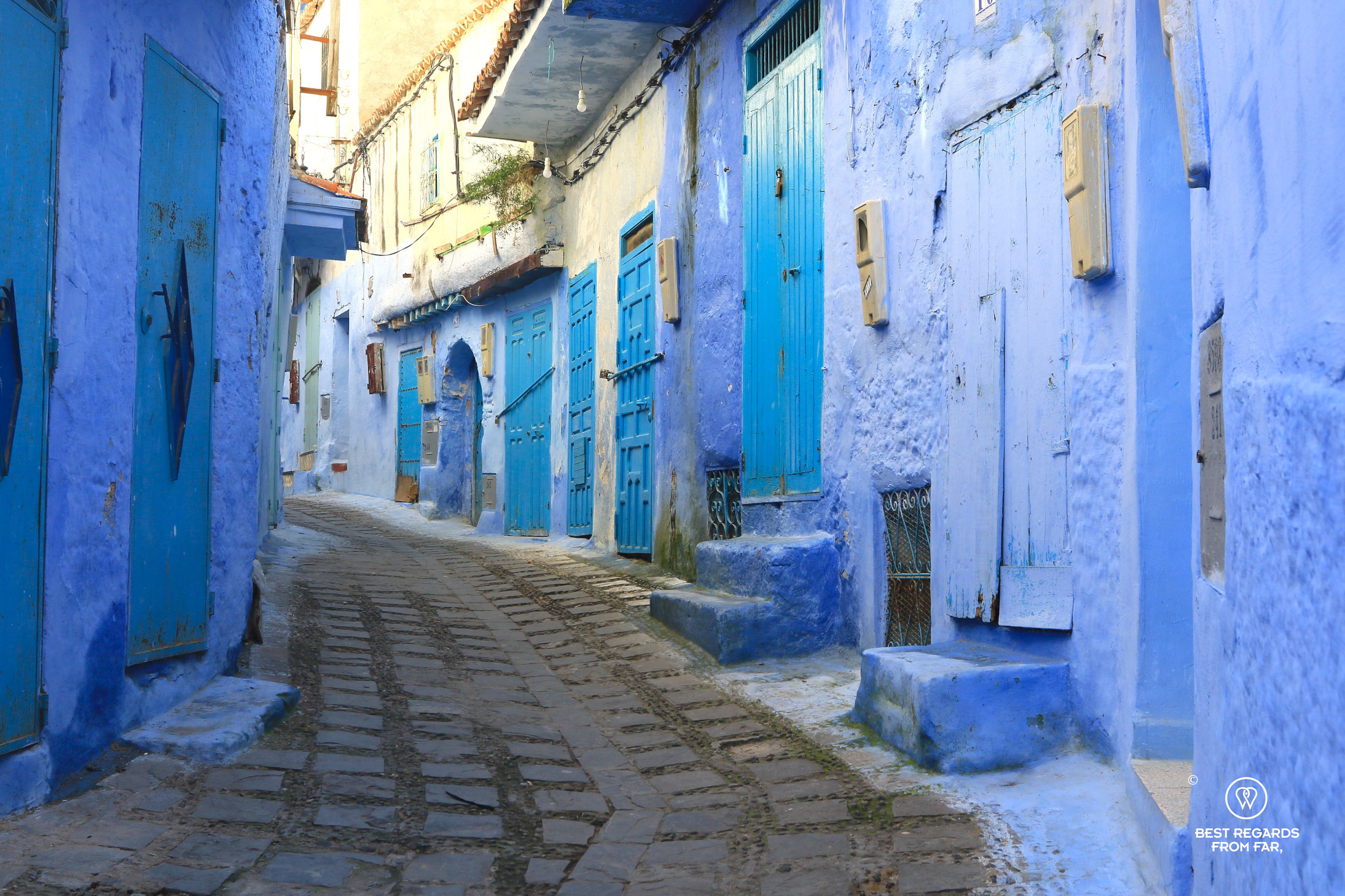
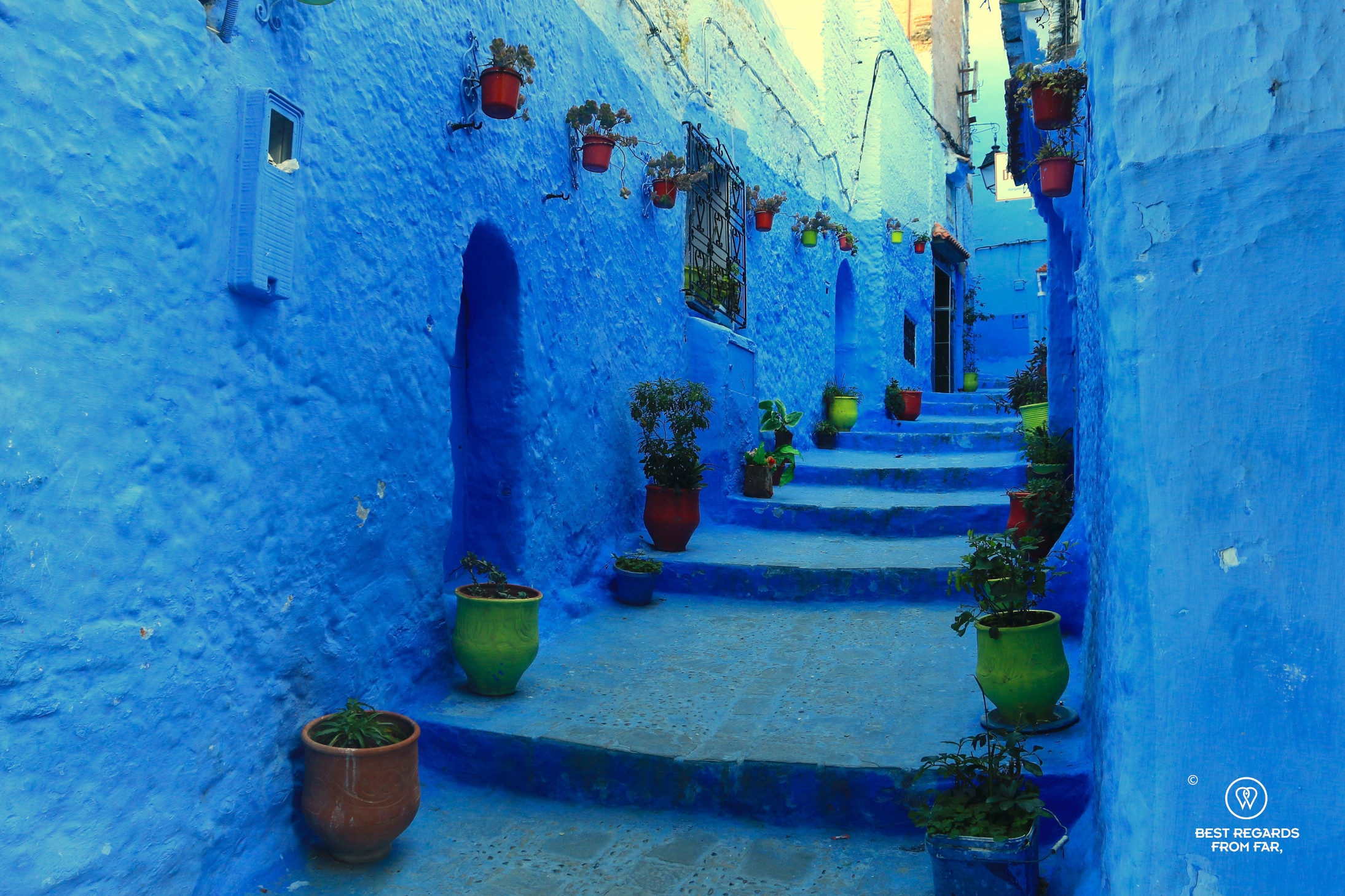
There may be different theories, such as the one that the Jews living in the medina painted their houses light blue to remind themselves of God’s might while the Muslims painted theirs white, and somehow the blue took over. Another frequently heard theory is that the color blue stands for the resilience of the refugees who crossed the blue Mediterranean Sea under the sky, setting up for a new life here in Chefchaouen.
As our guide Fatima El Habti recalls, her mother simply liked the color and chose it for their house.
Today, with the instant popularity of Instagramable places, blue has become the way to go in Chefchaouen as inhabitants are keen to welcome visitors to their city.

4. Women Traditionally Painted the Houses
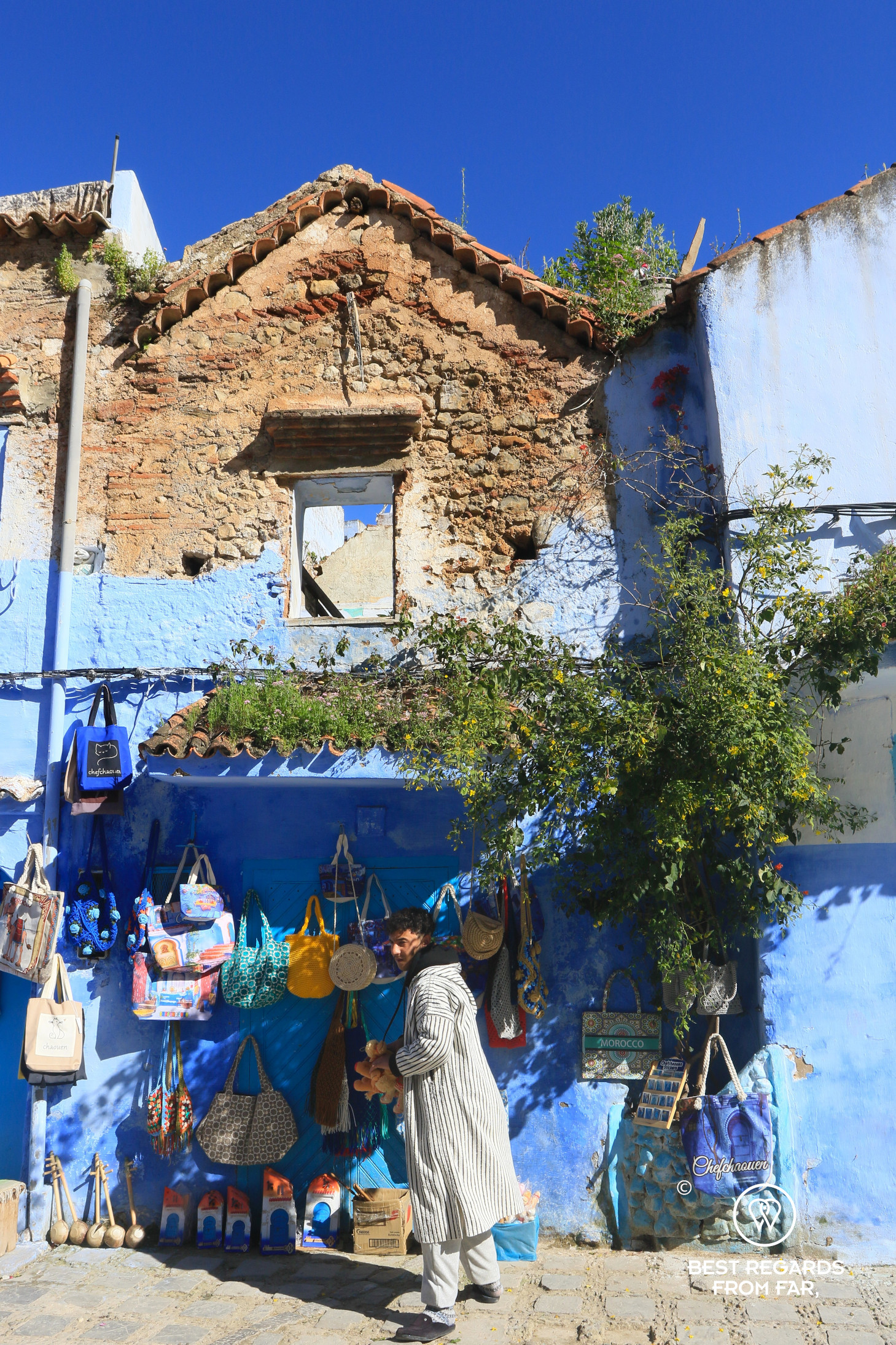
As Chefchaouen applies for UNESCO World Heritage status, its medina is undergoing careful restoration to its original state. In the old times, only women painted the exterior of their houses. Out of modesty, they would not climb up a ladder: only the first floor was painted, while upper levels remained untouched, revealing the original building materials—stone, brick, and lime.

5. Chefchaouen Is Famous for its Weaving Tradition
Weaving is a well rooted craft in Chefchaouen, where regional outfits remain very present. Berber men wear woolen djellabas and the jbelah, the traditional straw hat with its pompom is often seen. Maybe even more present on market days—Mondays and Thursdays—in the Bab Souk neighborhood of the blue city where Berbers from the countryside sell their goods, the mendil is the typical cloth of Berber women from the Rif region. More than a simple piece of fabric to wrap around the waist, the color of the mendil reveals the tribe, and the way it is knotted, the marital status—if knotted in the front, the woman is single.
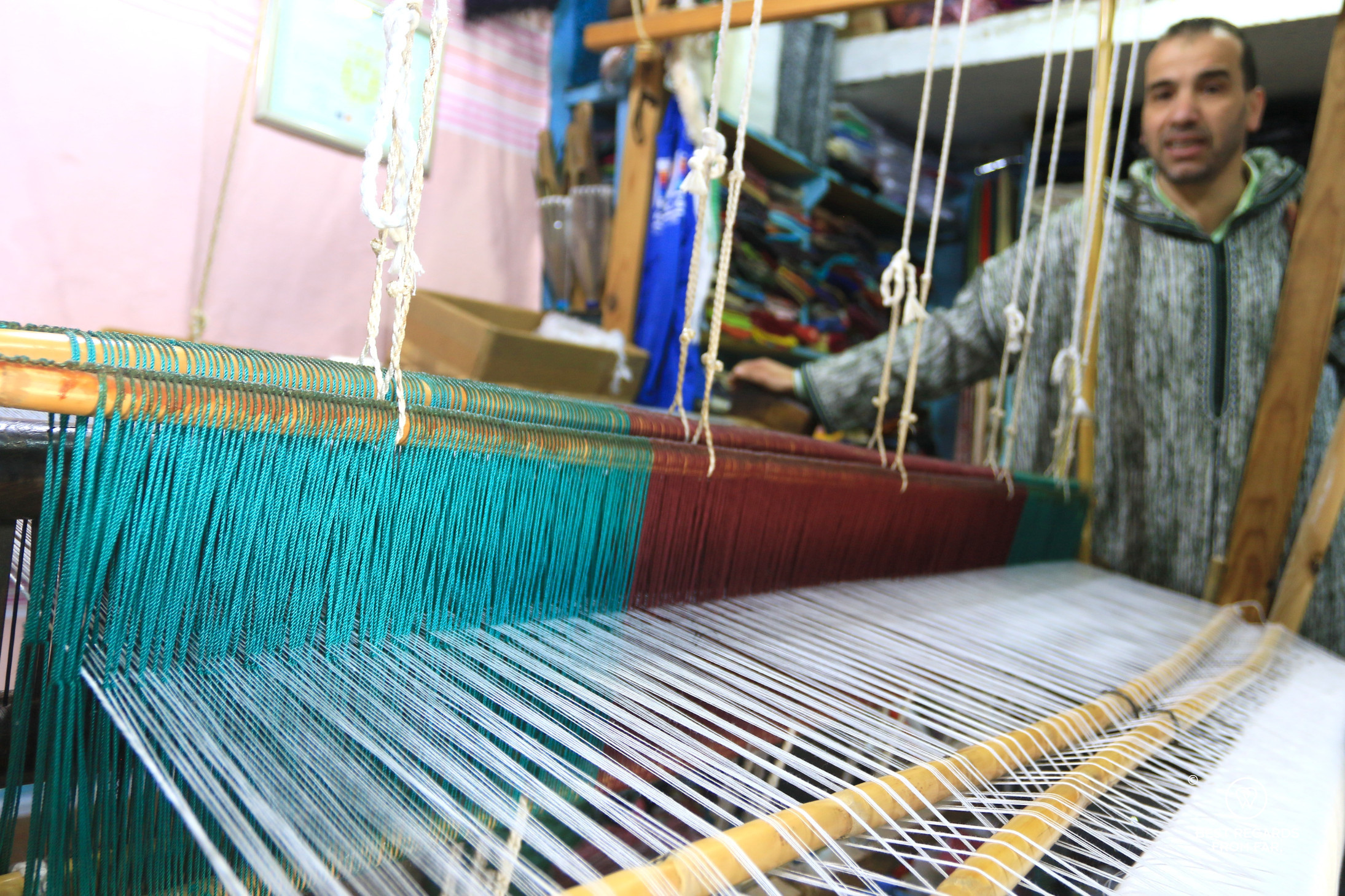


While today many shops sell mass-produced textiles, or cheat to mimic the traditional woolen Berber djellaba using cheaper and faster to weave cotton, it is still possible to find some high-quality handcrafted pieces. As Rachid Chliah, a recognized artisan, explains, it takes three days to weave a jellaba on his traditional loom, not taking into account the finishing decorations…
6. One-Stop Shop for Authentic Handmade Crafts
Various local and international initiatives have aimed at creating jobs while preserving century-old crafts and their know-how. This is how the “Ensemble Artisanal”, a stone’s throw away from the kasbah, got born. Within its walls, all sorts of Moroccan handmade goods are sold, from wood paintings to textiles, leather, and mosaics…

One of the standout shops is the Talassemtane coopérative artisanale de femmes, or Talassemtane Women’s Cooperative. In the respect of ancient weaving techniques, it produces traditional clothes as well as products adapted to modern life such as laptop sleeves. Beyond creating a livelihood for these women, their initiative also gives them a sense of pride and has turned into a success story. Not only has the cooperative that started over 20 years ago grown, incorporating more women, but it has also given fantastic opportunities for self-growth: one of the cooperative’s founding members who was close to illiterate now teaches the craft in the villages surrounding Chefchaouen.
7. Chefchaouen Is Also a Hub for Cannabis Tourism
Cannabis, known locally as kif, has been grown in the Rif Mountains for centuries as one of the few crops that thrives in the region’s unique climate. In this region where jobs are hard to find, marijuana represents a sizable part of the economy and the livelihood of many families, forcing the government to decriminalize its growing. With Chefchaouen counting about 50,000 inhabitants, it is estimated that cannabis provides a livelihood to about 90,000 families in the northwest mountains of Morocco. In fact, the country is also one of world’s top producers of hashish.
A debate has recently led to the legalization of the medicinal, cosmetic, and industrial uses of cannabis in Morocco. This has led in 2024 to the first legal export of cannabis to Europe. Recreational use is still illegal in the kingdom, yet the plant has attracted many tourists to Chefchaouen for a few decades. Young men often approach tourists hushing “hashish” to sell the resin or some cannabis, or even tours to plantations and hashish-manufacturing facilities.
8. Chefchaouen Had its Respected Pirate Queen, Sayyida al-Hurra
Daughter of the founder of Chefchaouen, Sayyida al-Hurra was brought up with a first-class education and the nostalgia of Andalusia she knew only from tales. She left Chefchaouen, the center of resistance against the Iberian encroachment, for Tetouan when she got married to its governor. At that time, Morocco was losing ground in the war with the Catholic Iberian Peninsula and also in the world trade, as sea routes to the Far East provided an alternative to the Moroccan land. Sayyida al-Hurra quickly became the co-ruler of Tetouan that grew into an important economic, naval, and military center as it was the only major port city in Morocco that was not occupied by neither the Spanish nor the Portuguese. Upon the death of her husband, she became the sole ruler of the city which was the base for pirate activity: beyond revenge, it provided quick revenue, propelling Tetouan to new heights. Sayyida was the leader of the pirates in the western Mediterranean. Teaming up with the infamous Barbarossa brothers in the east, they ruled over the Mediterranean Sea and were greatly feared.
In 1541, she married the Wattasid sultan of Morocco. The tradition calls for a wedding of the ruler of the country in the imperial city of Fez (article to be published soon). Yet, this is the only time in Moroccan history that a sultan had to leave his capital to get married in Tetouan as Sayyida al-Hurra would not leave her headquarter.
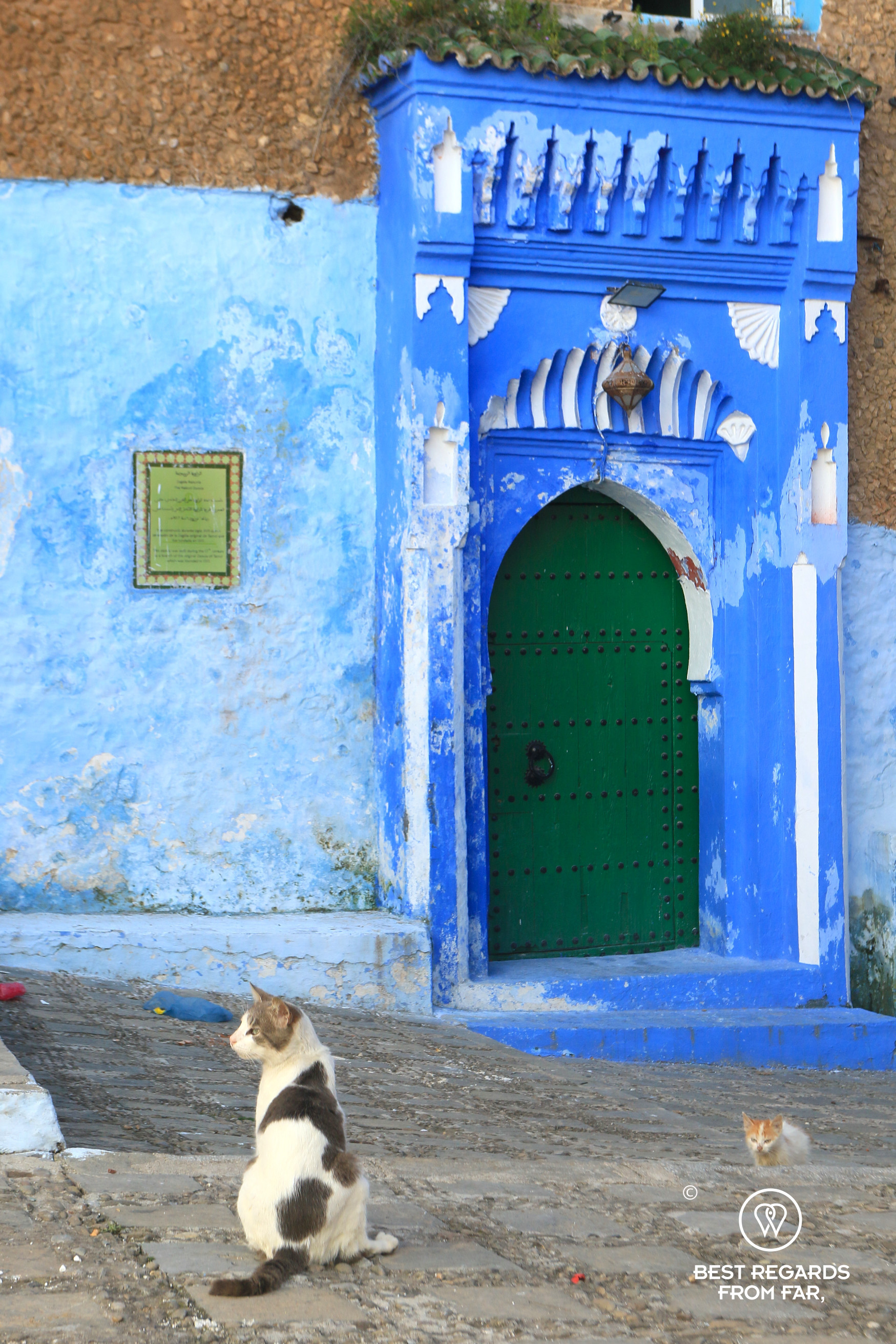
She eventually got betrayed by her son-in-law a few years later whom seized power from her, and returned to Chefchaouen where she died, and where her tomb lies, adjacent to the kasbah behind a green door.
9. Look at the Peaks!
With chef meaning “to look”and chaouen referring to horns in Berber, the name of the city prompts visitors to turn their gaze to the mountains, and more specifically to the two peaks towering the blue city.
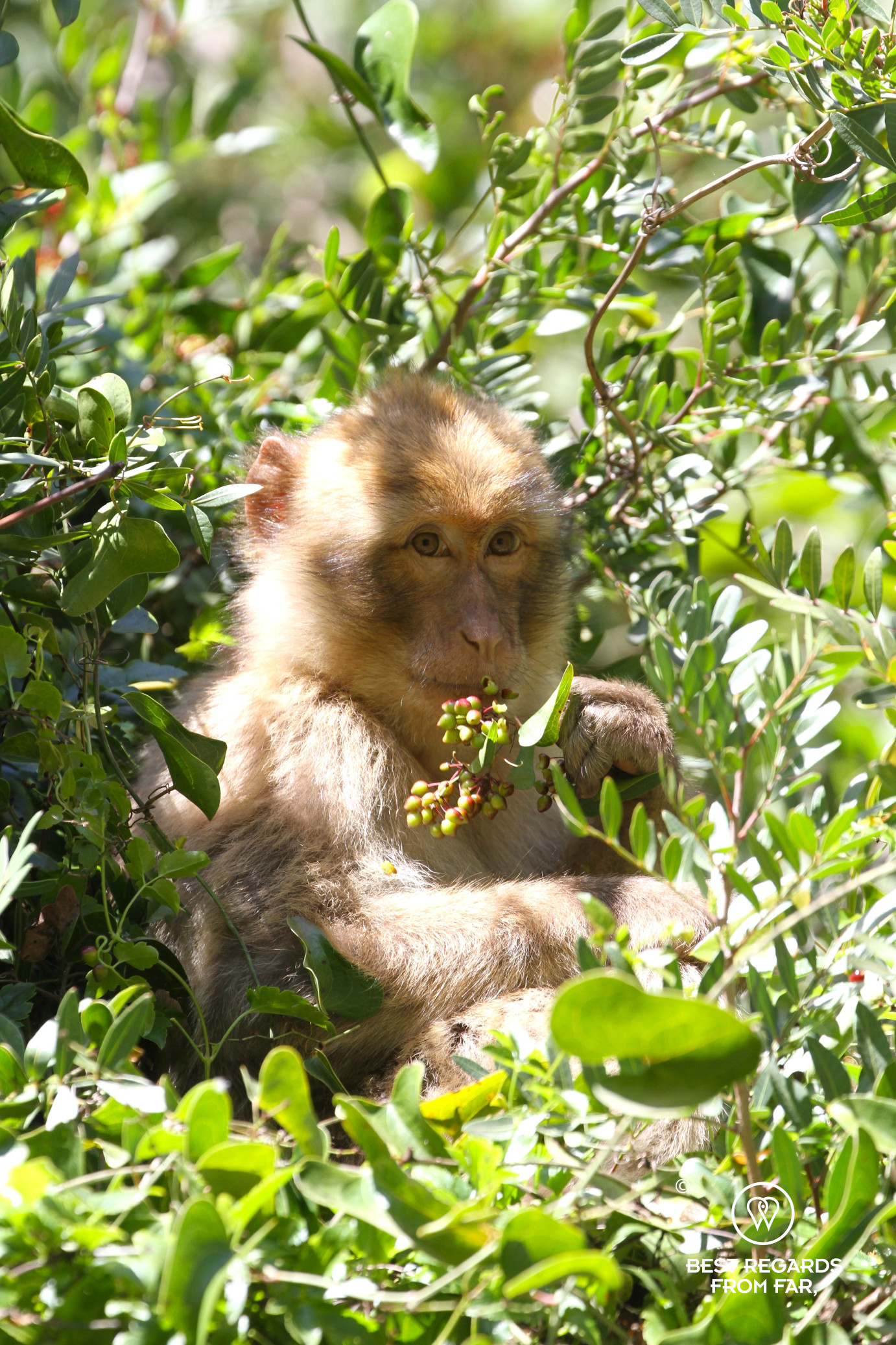
Mostly off-the-beaten path, beyond these peaks, majestic landscapes, endemic forests, playful macaques, Berber villages, dramatic waterfalls, and pristine turquoise rock pools await the curious hiker who ventures out of the blue city of Chefchaouen.


Travel tips:
- For a captivating visit of Chefchaouen, make sure to book your tour of the blue city with the excellent and official licensed guide Fatima El Habti (fatima@gitetalassemtane.com).
- For a practical stay, the Parador Hotel borders the pedestrian zone of Chefchaouen while still reachable by car.
- To stay connected and to avoid expensive roaming fees we used an eSim from Sim Local which made this trip through Morocco a whole lot easier!
- Check out our interactive map for more in the area (black pins lead to an article):
For more in Morocco, click on these images!


 Best regards from far,
Very cool article! I