Text: Claire Lessiau
Photographs: Claire Lessiau & Marcella van Alphen
Pin it for later!
1. Thompson’s house: a US spy cloaked in silk?
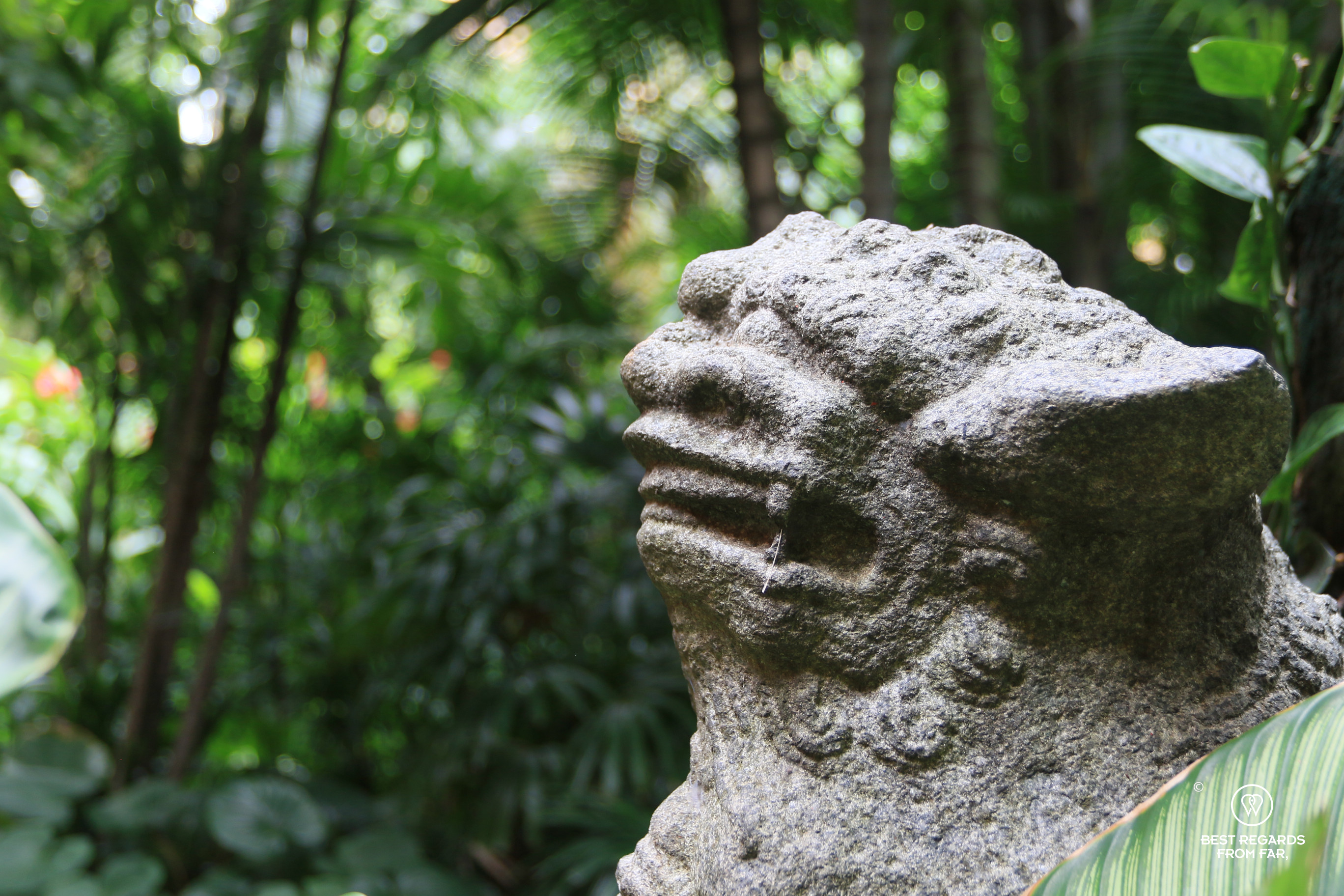
Off the main street, down a quiet narrow lane, a lush tropical garden full of ferns and orchids, planted with frangipani and palm trees, and where lotuses grow on a pond opens up on the dark teak wood Thompson’s house. In the heart of busy and bustling Bangkok, a stone’s throw away from the luxurious shopping malls of Siam Square, the quietness and peacefulness is only briefly disturbed by the noise of the water taxis running up and down the khlong – or canal – that serves the back side of the house. Today the Jim Thompson Museum, the estate was built by the silk businessman and possibly American spy in the 1950’s.
In the luxurious house, European furniture and Carrara marble highlight the refinement of the antique China vases, wooden Burmese Buddha statues, and oriental decors. East and West meet in the utmost refinement and taste. The avid art collector and architect even imported parts of the house itself from the former capital of Siam, Ayuttaya.
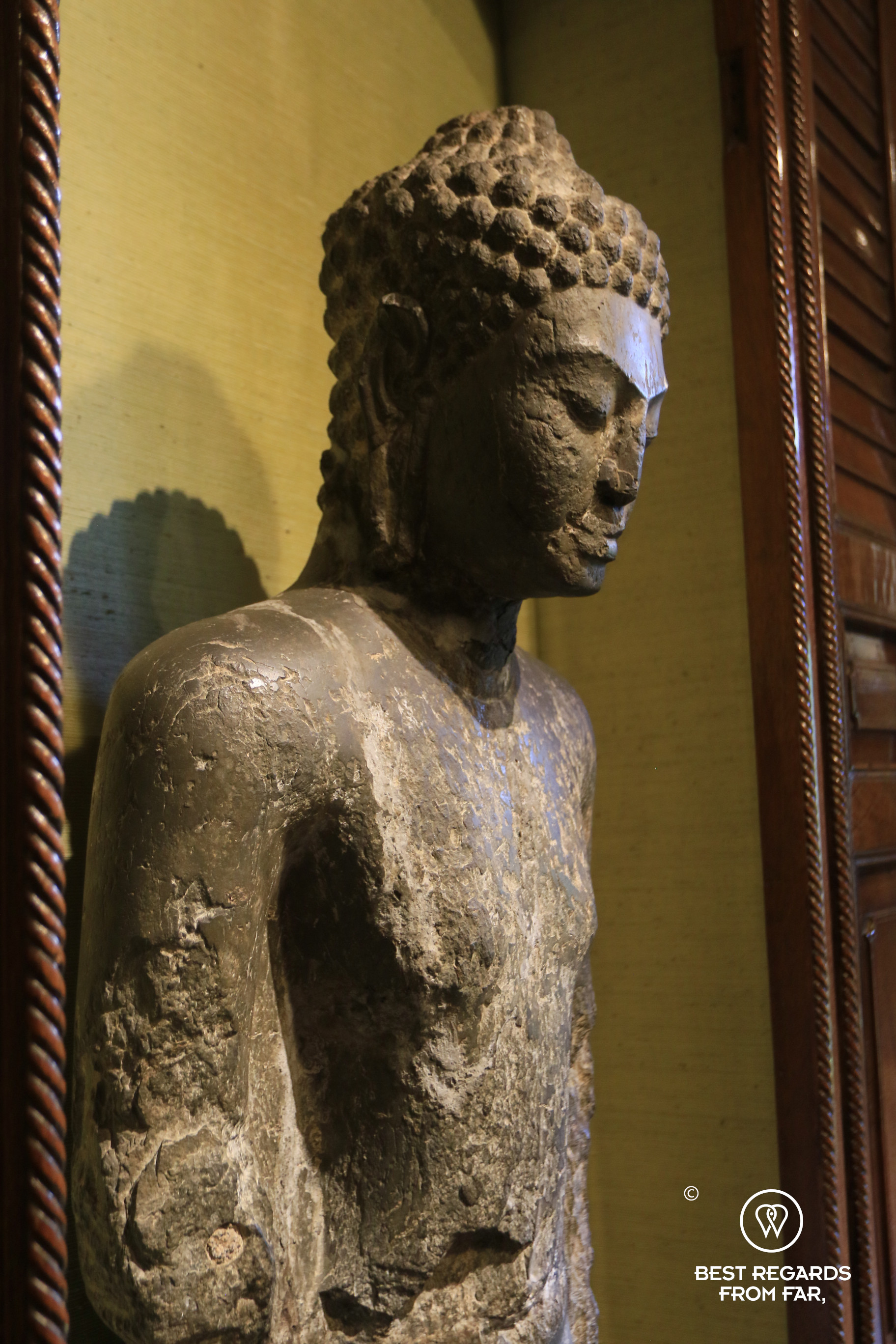
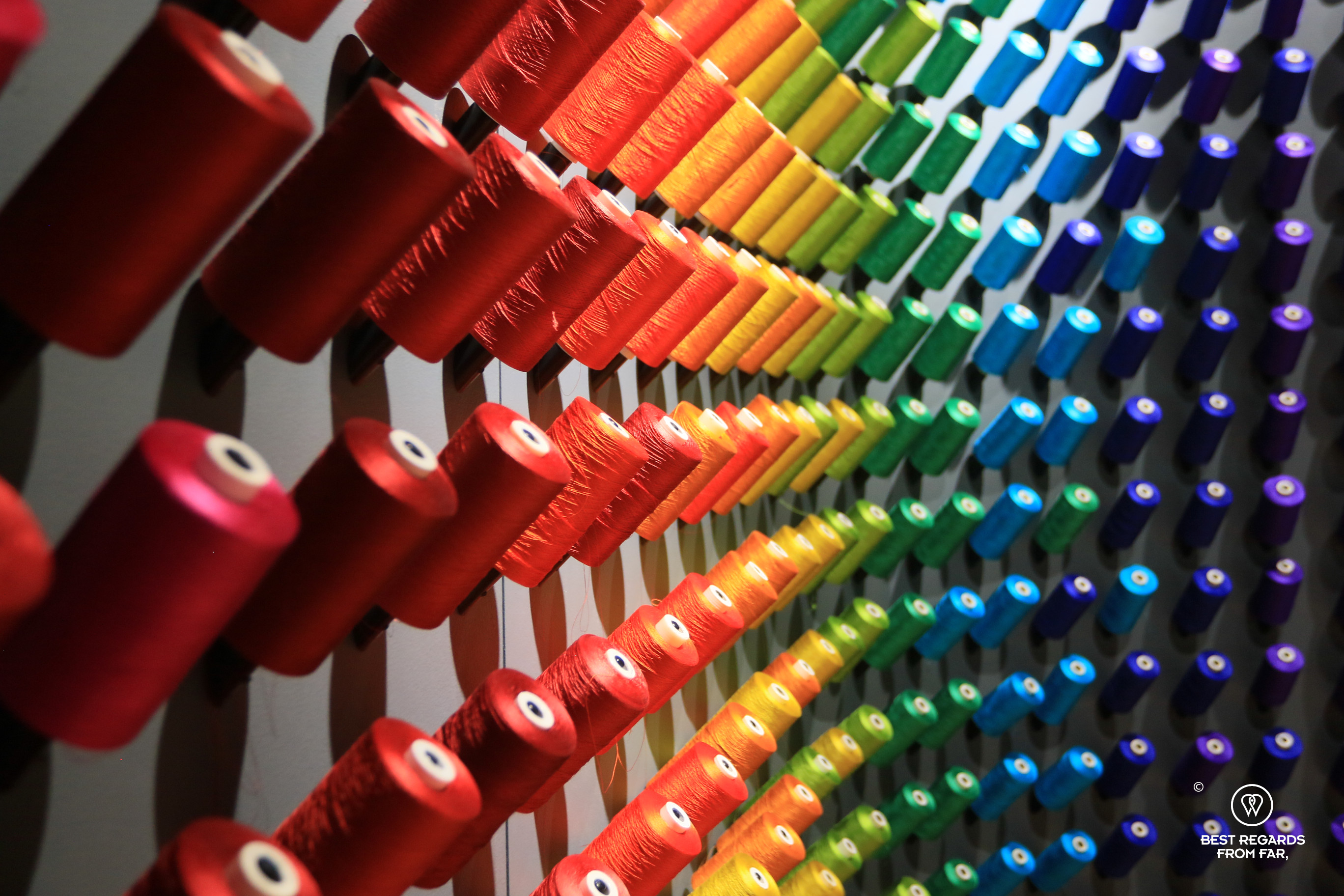

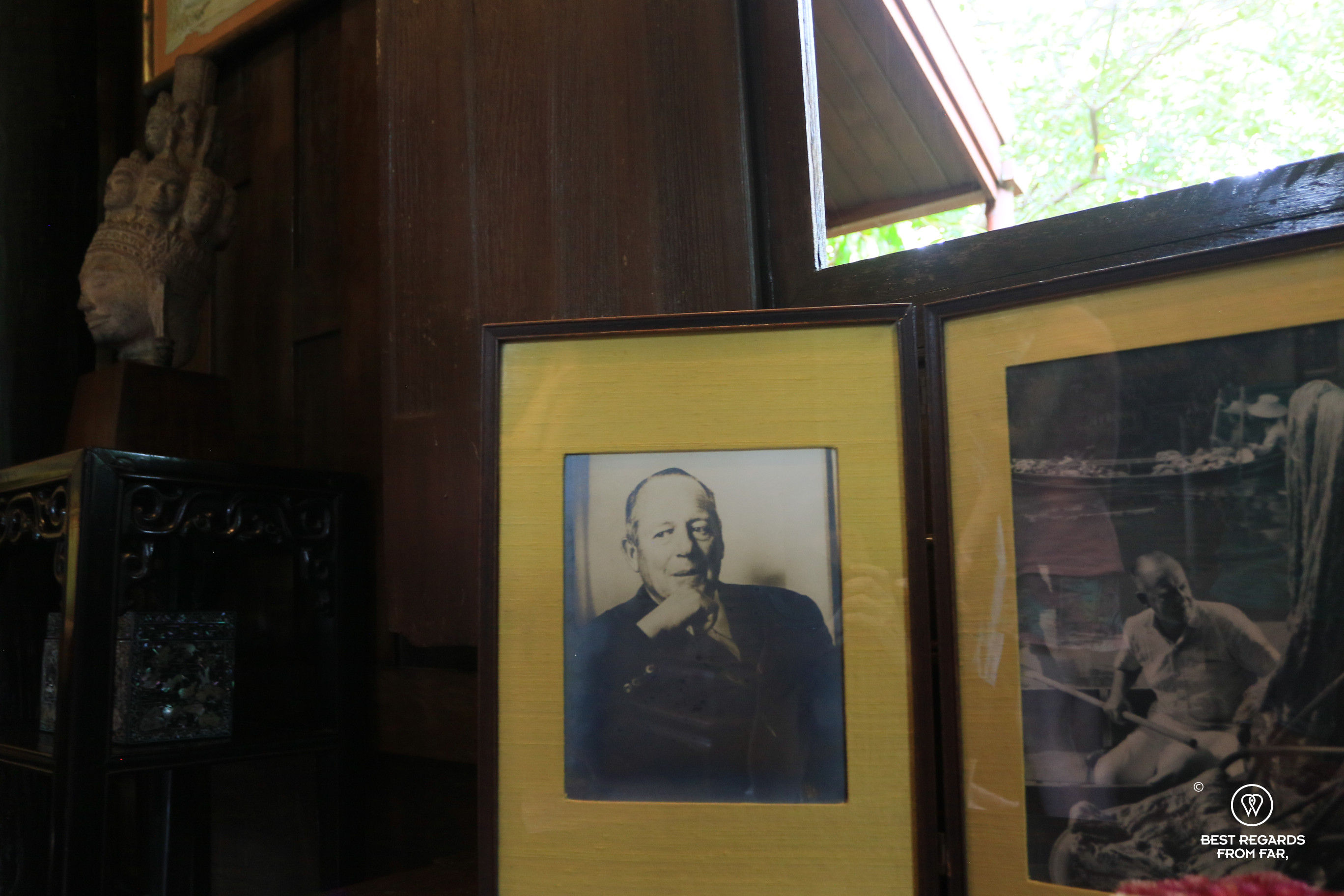
In Jim Thompson’s bedroom, a few of his portraits remind the man shrouded in mystery. An agent of the US Office of Strategic Service (OSS, today’s CIA) during World War II, Thompson (1906-1967) served in Northern Africa, Sri Lanka, and Thailand to support the Thai liberation movement. He set up the local Bangkok OSS office after the Japanese occupation ended in 1945. After the war, he settled in Thailand. From a wealthy and influential East Coast textile family, in 1948, he went back to his roots, buying shares in the Thai Silk Company Limited that was on the verge of collapsing. Reviving Thai silk by taking it from Hollywood to Broadway via Vogue, and supplying the Thai Queen Sirikit, a true model and advocate for the delicate fabric, Thompson saved the local industry. He provided jobs to the Cham weavers of the Muslim Ban Khrua community who used to live opposite the canal behind his house, and to many rural women weaving from home until well after his disappearance.
The Thai Silk King disappeared an afternoon of 1967 in the Cameron Highlands of Malaysia where he went for a walk to never come back. His supposed death is shrouded in mystery and contradictions…

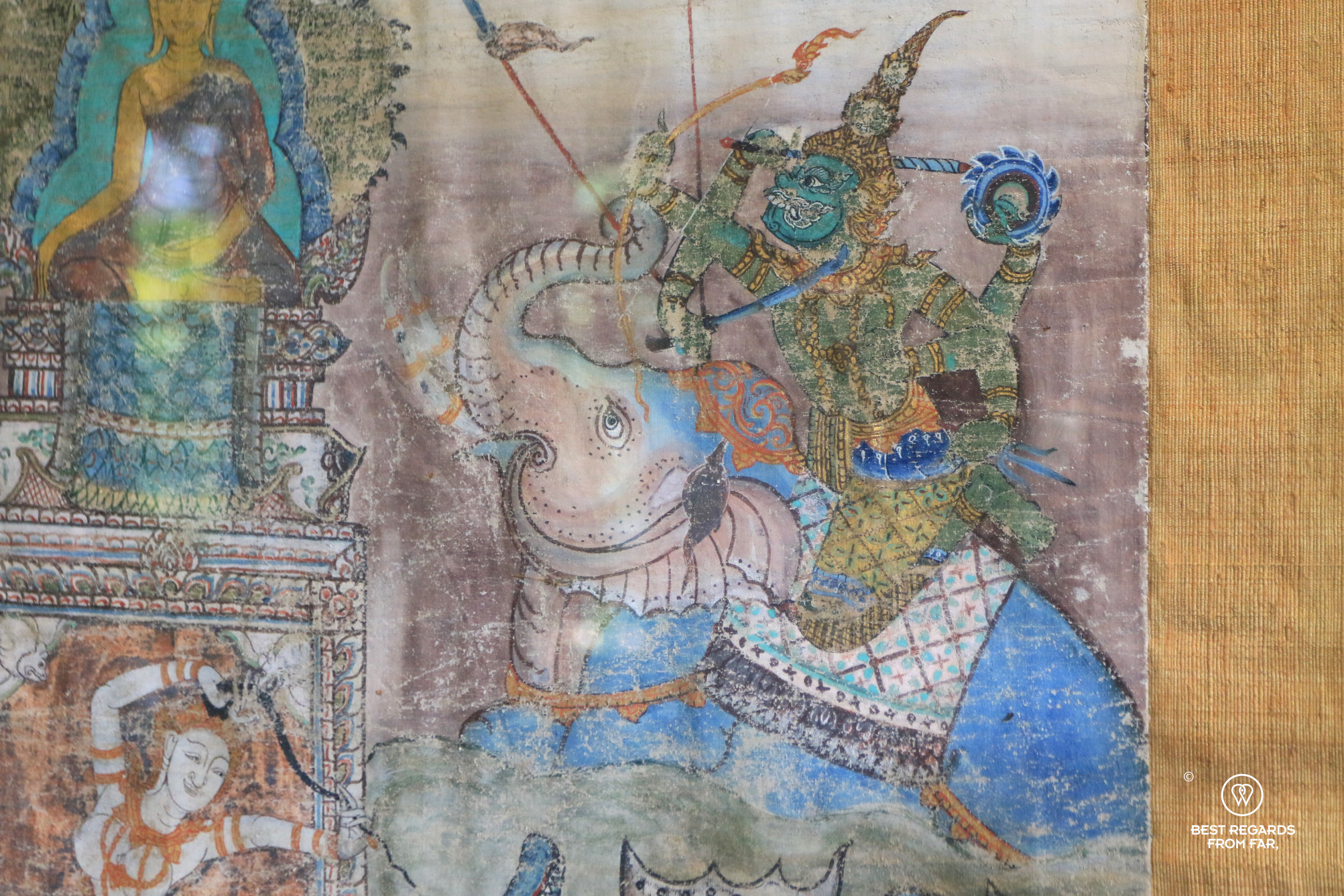
2. The Grand Palace: Thailand’s most visited site & most revered Buddha.
Past the yaksha (the guardian god who often guards gates), the gigantic Grand Palace complex impresses with its many buildings, glistening glass and porcelain, impressive mosaic, and evocative murals, telling the stories of ancient Siam. The Grand Palace had been the official residence of the Kings of Siam, today’s Thailand between its construction in 1782 and 1925.
King Rama I, the founder of the Chakri dynasty that is still ruling Thailand today moved his capital to Bangkok and chose the Rattanakosin Island to build his palace. As he ran short of building materials fast, he had structures (but not temples) dismantled in Ayutthaya – the former capital of Siam – and brought in. The gigantic complex took decades to be completed. The initial Italian style Renaissance buildings were topped off by Siamese roofing and mondops (traditional constructions ending in a spire).

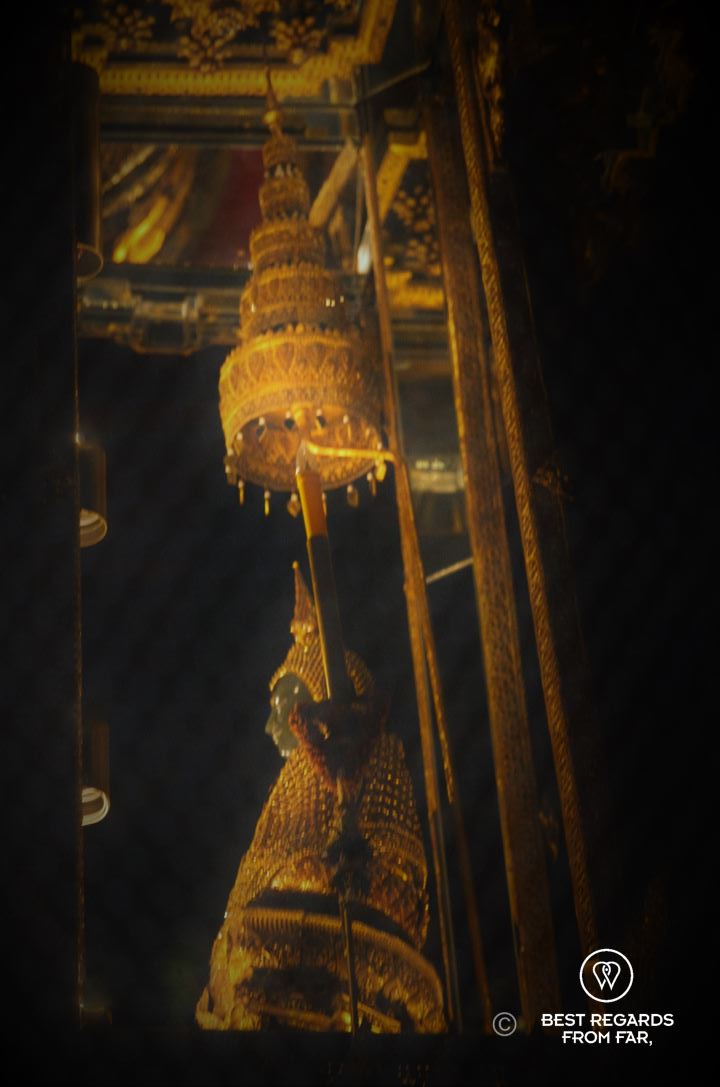
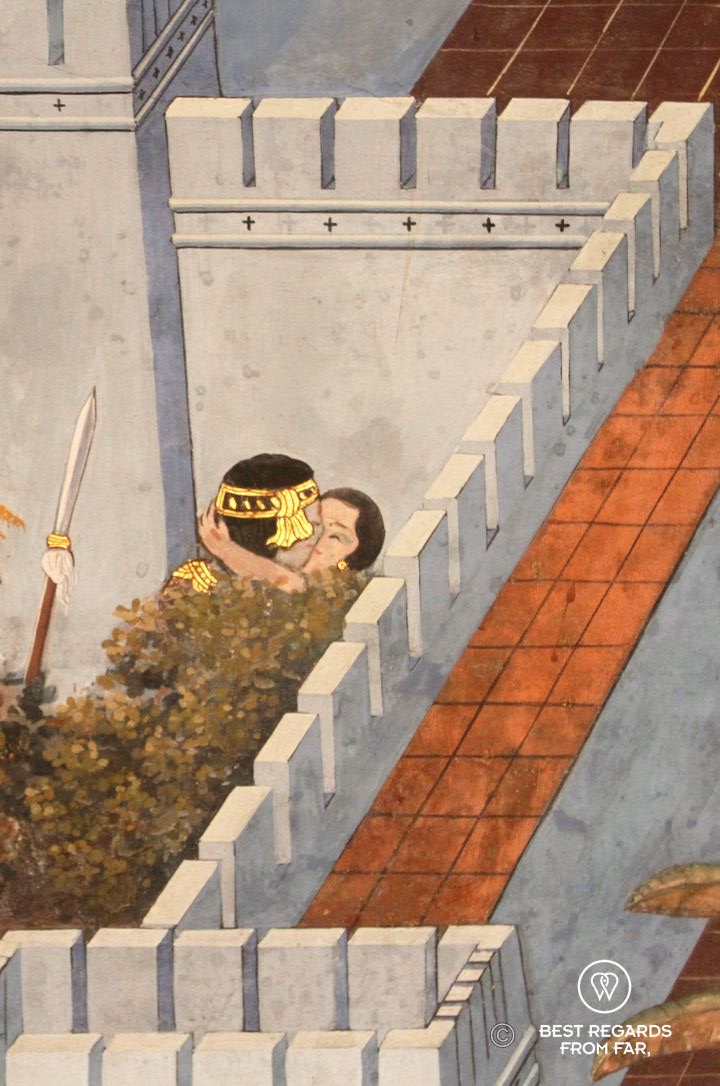


The Grand Palace has served as royal residence, war ministry, Thai mint, Royal Court, administrative and government seat, and is today Thailand’s most visited site. It is also the spiritual heart of the country hosting the most important Buddha of Thailand in a royal chapel inside Wat Phrae Kaew (the temple of the emerald Buddha), the 15th-century Emerald Buddha statue (that is made of a block of gemstone that is made of… jade, or maybe not! Find out by checking out this article about the Grand Palace!).
Don’t even try to get close: only the King of Thailand is allowed to touch it, and does so three times a year to change its cloak for the new season (rain, summer, and winter).
If the Inner Court that used to be the home of women and boys of the Royal family is not guarded by all-female guards anymore, it is still completely closed off to the public.
3. The largest Chinatown in the world (& solid gold Buddha).
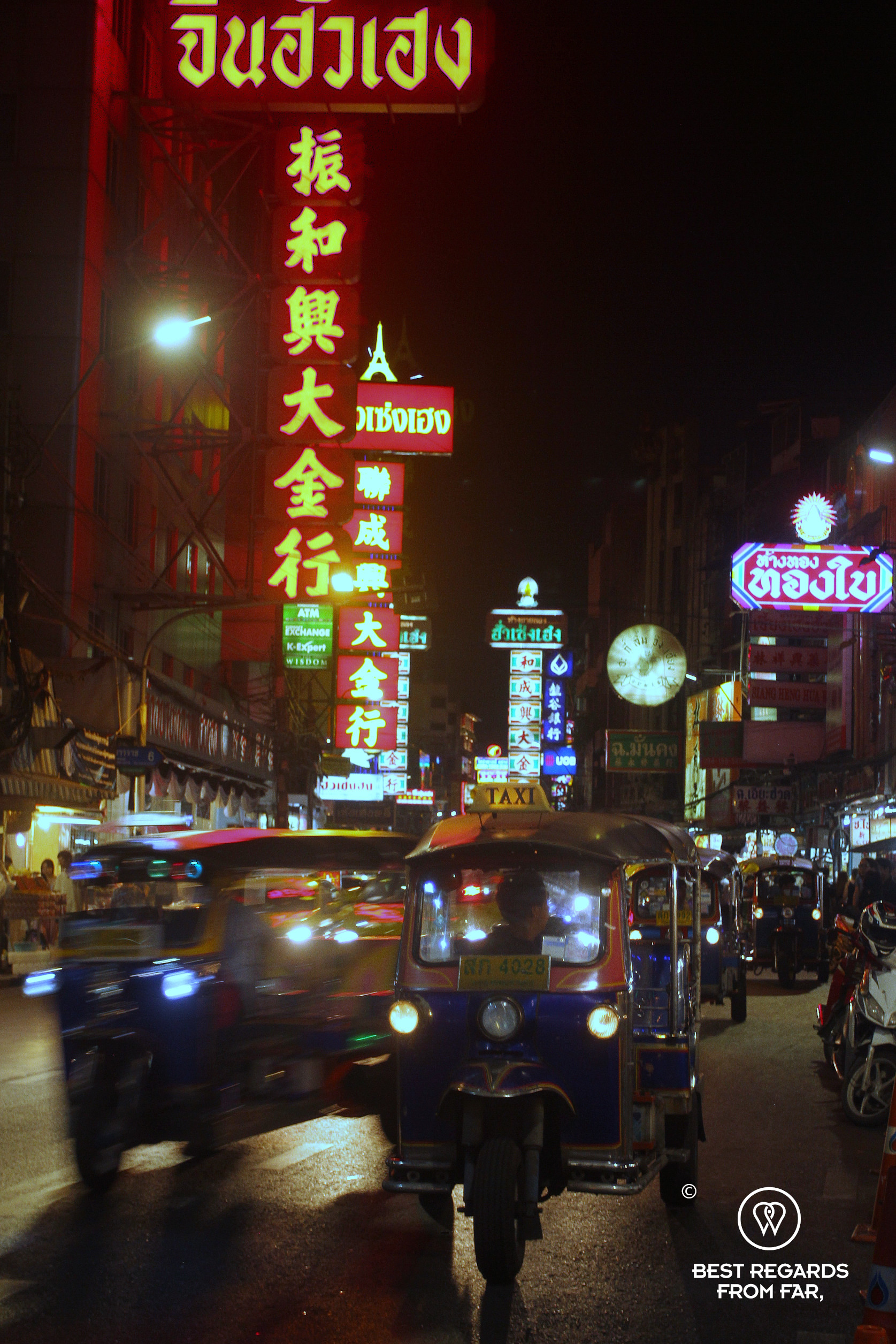
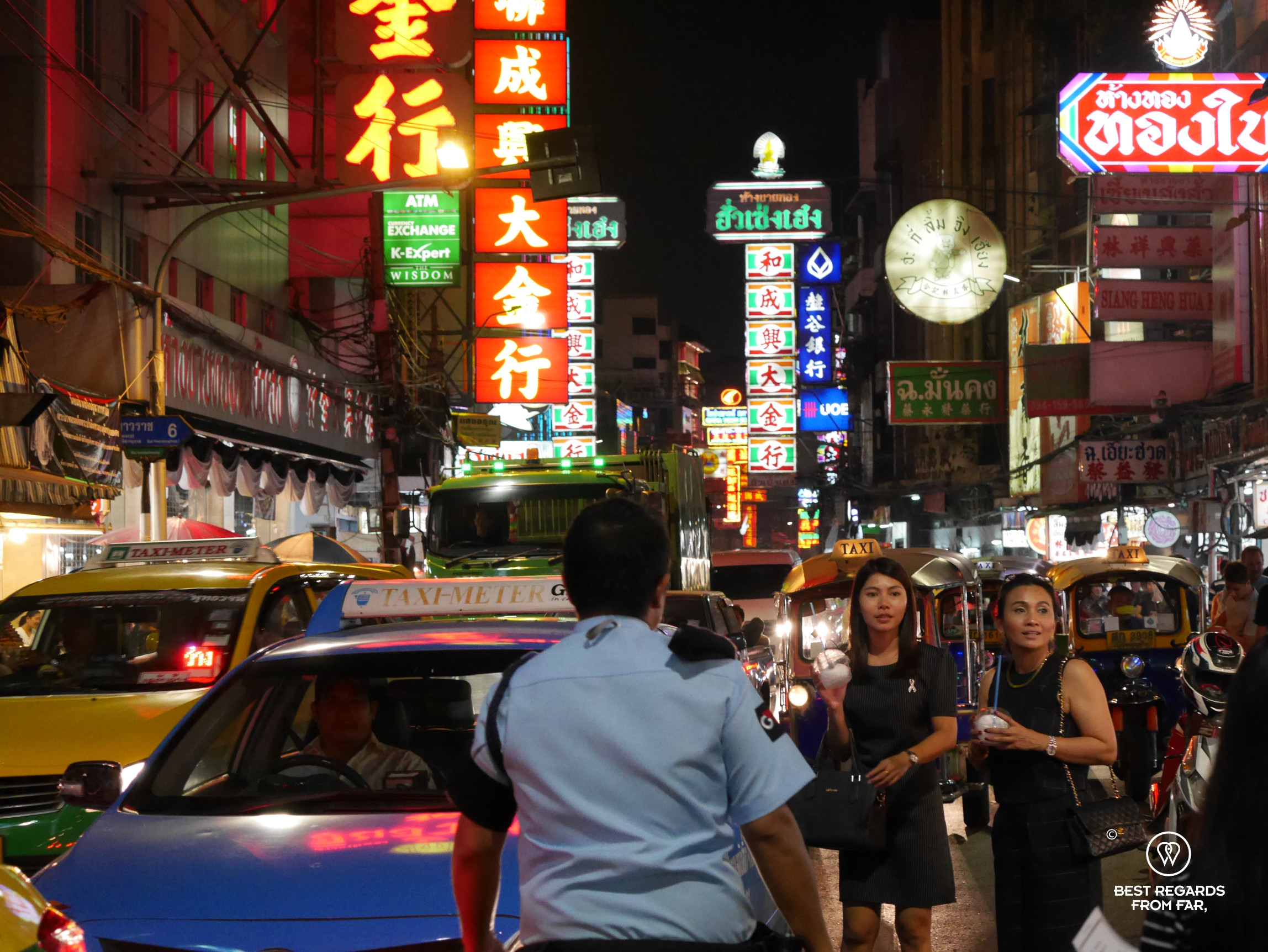
It all started with King Rama I moving to Rattanakosin Island to build his palace (see Fact #2). Before the construction started, a community of Chinese people lived on the island and were displaced to today’s Chinatown.
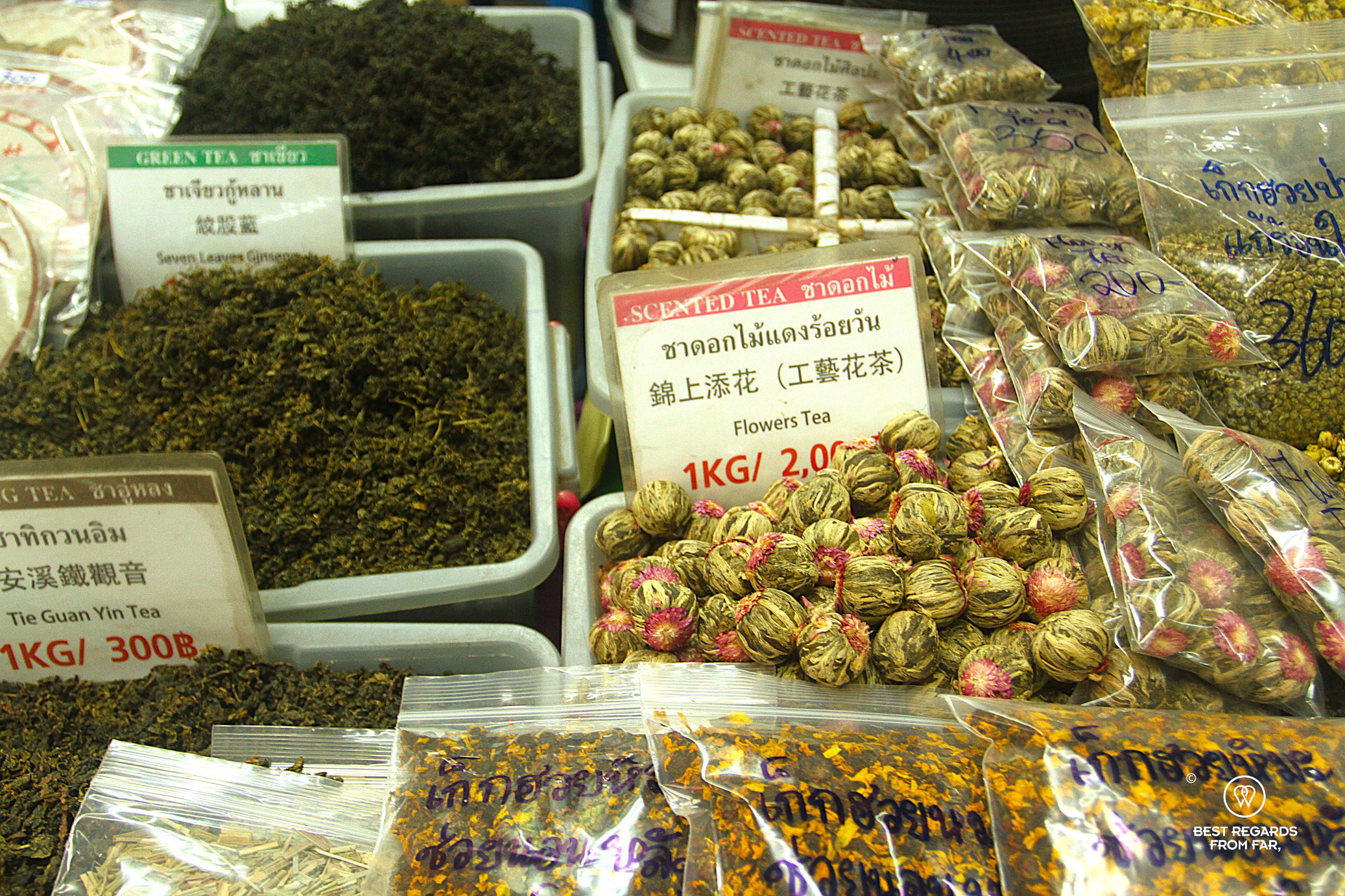
With over a million inhabitants, the noisy and busy narrow alleyways, markets, and shops of all kind compose the largest Chinatown in the world. In its most important temple, Wat Traimit, the largest solid gold Buddha statue in the world can be seen.
4. Traditional Monk bowls are fast disappearing.
The muffled clang echoes through the narrow alleyways of Ban Baht village. The whole enclave in the heart of Bangkok used to live from alms bowl-making. Essential for monks, it is in these bowls, one of their very few material possessions, that they receive food and money donations. Today, most monks get their alms bowls from factories. Only a few craftsmen remain, continuously hammering steel into bowls with a small mallet. It is thanks to tourists seeking the bowls as souvenirs that the millennium-old tradition survives.

5. The khlongs make Bangkok the Venice of the East.
Sometimes referred to as the Venice of the East, Bangkok is shaped by the Chao Praya River that is connected by a large network of canals.
On most of them, water buses shaped as very long long-tail boats run constantly. Used mostly by locals, they are a fun and efficient way of getting around.
Often seen in the khlongs (or canals), water monitors can be impressive and get pretty close to passers-by especially in Lumphini Park in Silom, or in any street after a rainstorm.
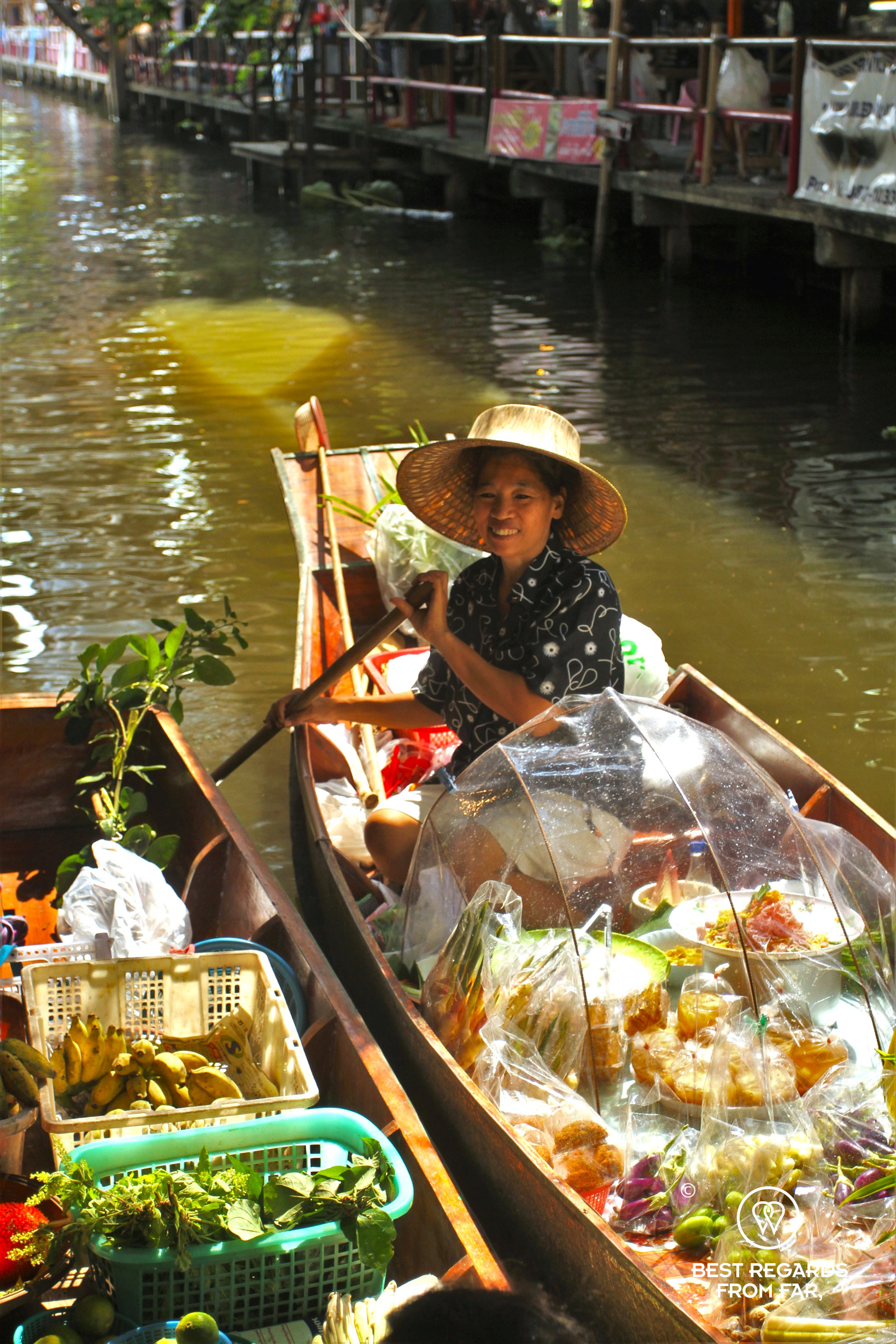

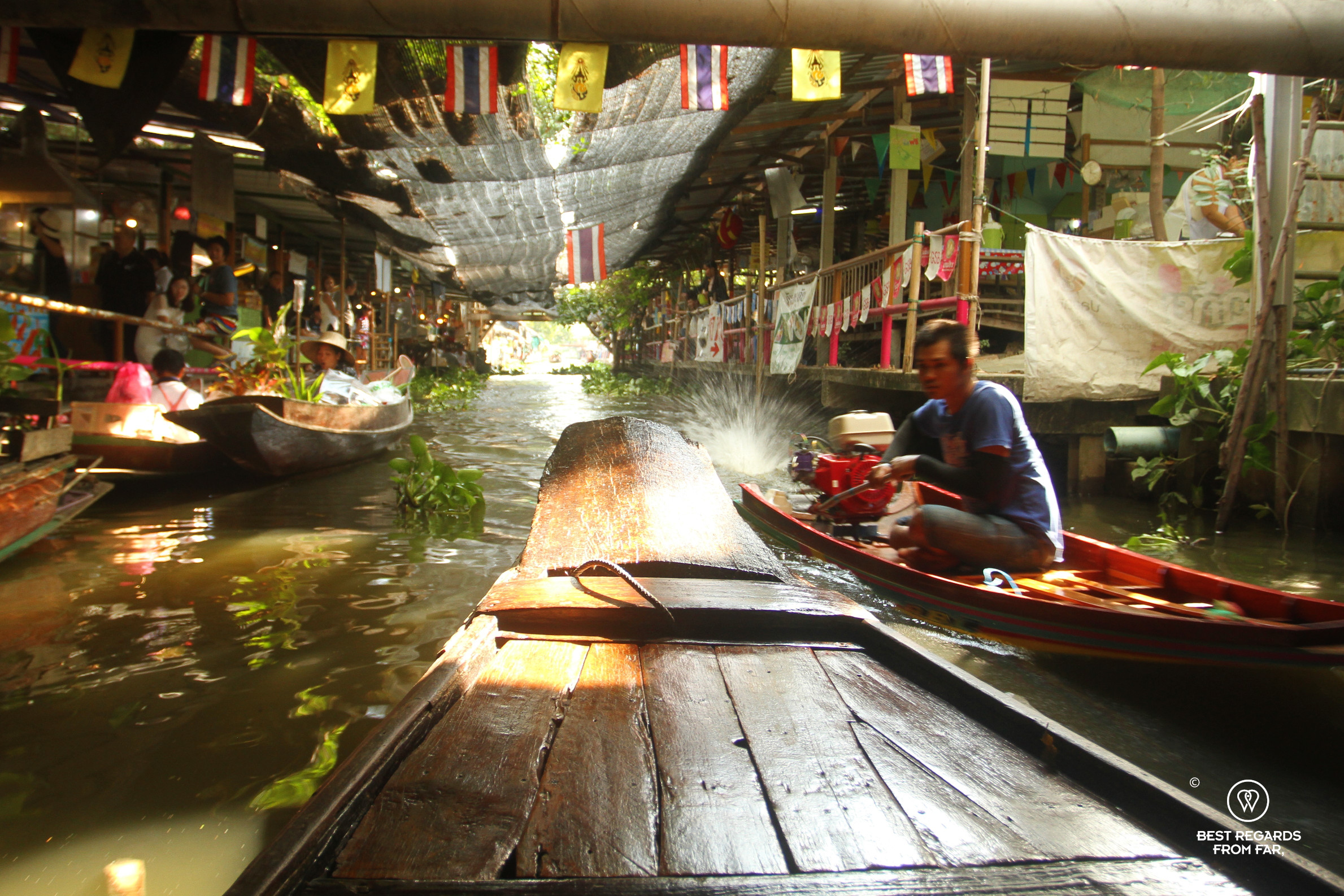
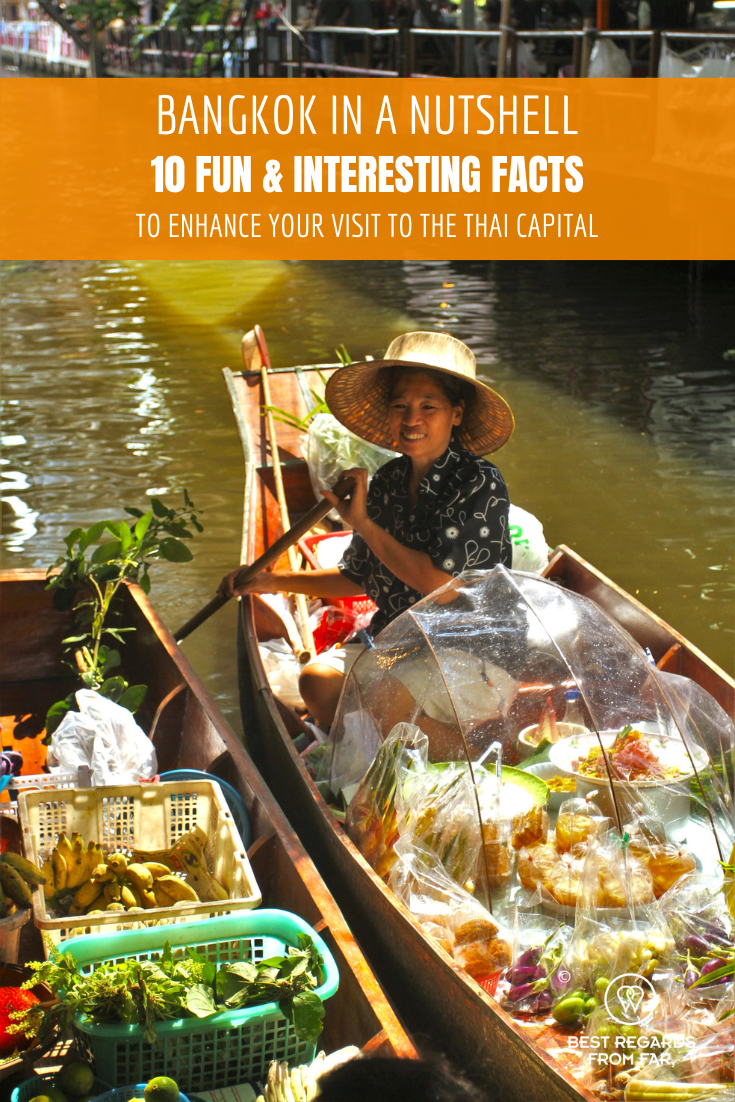
On other canals, floating markets take place such as on the Khlong Lat Mayom, about 15 kilometres (10 miles) west of the centre of Bangkok. Women sell tropical fruits and vegetables of all sorts, while others have a full kitchen fastened to their boats to sell “canal food”. Sometimes, a young Thai speeds through the canal of Lat Mayom with his pimped long-tail, as a teenager would do a wheelie on a scooter, under the smiling eyes of often toothless men, skillfully navigating traditional rowboats for the pleasure of weekenders.
The market continues inland where on weekends Thai families walk the narrow sideways, feeding bread to the fish in the canal, or strolling through the many food stalls. Delicious smells emanate from the food courts – fried fish, grilled meat, lemongrass, coriander, hot chilies, sweetened coconut milk… – to the frying sound of fresh spring rolls, the sizzling noise of jus dripping on red charcoal, the roar of blenders mixing fruit smoothies, and the cacophony of market vendors attracting passers-by.
6. Roam world’s largest market.
Chatuchak weekend market is the world’s largest market hosting no less than 15,000 stalls divided into 27 sections. Almost everything can be found here, from pets to clothes, Buddha statues to leather goods, and food courts and drinks of all kinds.
Very touristy, it is also a local’s favorite with no less than about 300,000 daily visitors!
7. The Thai King, the wealthiest monarch on Earth.
Respect to the king is a key value shared by Thai people.
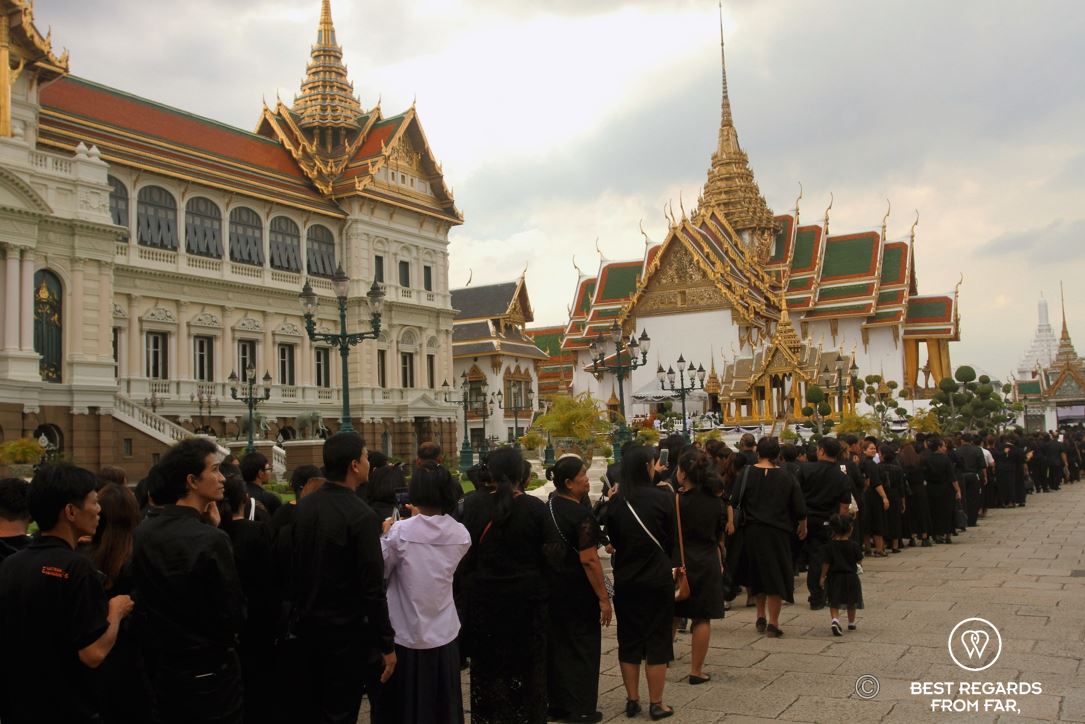
For instance, it is forbidden to step on the local currency, the Thai Bath, as the image of the king is represented on them.
It is also very disrespectful to tower a member of the royal family. When any member of the royal family visits downtown Bangkok, people walking on overhead passes simply freeze, and so does the SkyTrain… so when riding the very clean and efficient mass transport SkyTrain, do not be surprised if it stops for no apparent reason!
If the national anthem is played before performances, in some cities, it is also played every day at a specific time. Life in the bustling streets freezes as everyone stops, and life resumes a minute or so later. However, since King Rama IX who was very revered by Thai people passed away in 2016, his successor Rama X has not been as appreciated and it is common to see some people walk while the anthem is played.
As a side note, King Maha Vajiralongkorn titled Rama X is also the wealthiest monarch on Earth with a net worth estimated to be between US$30 billion and US$43 billion… His wealth is made of mostly real estate, including prime locations in Bangkok, and equities.
8. Temple heaven!
With an estimated 40,000 Buddhist temples in Thailand, Bangkok does not fall short of wats to visit.
Actually, all the temples represented on Thai Baht coins stand in the capital, amongst hundreds of others.


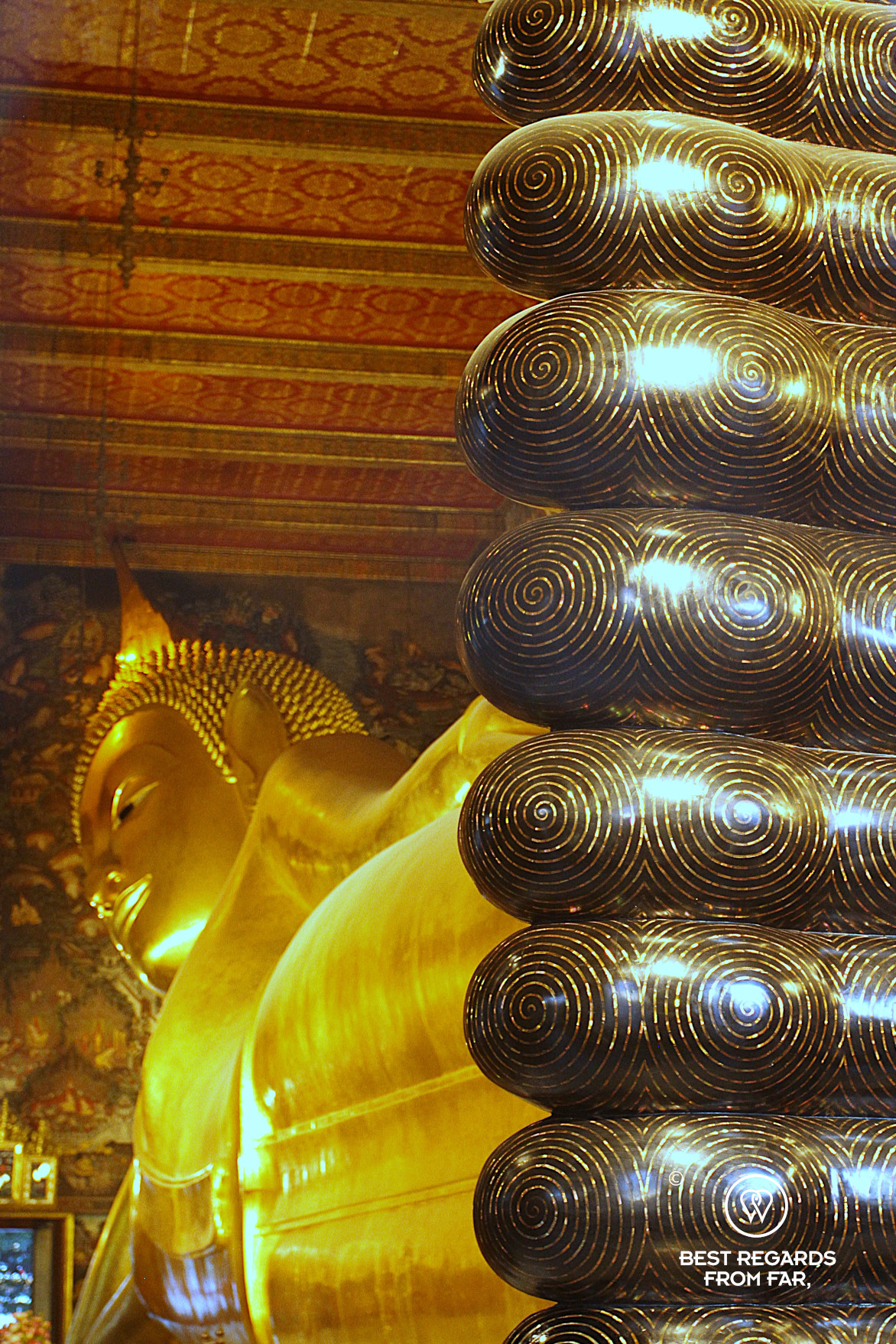
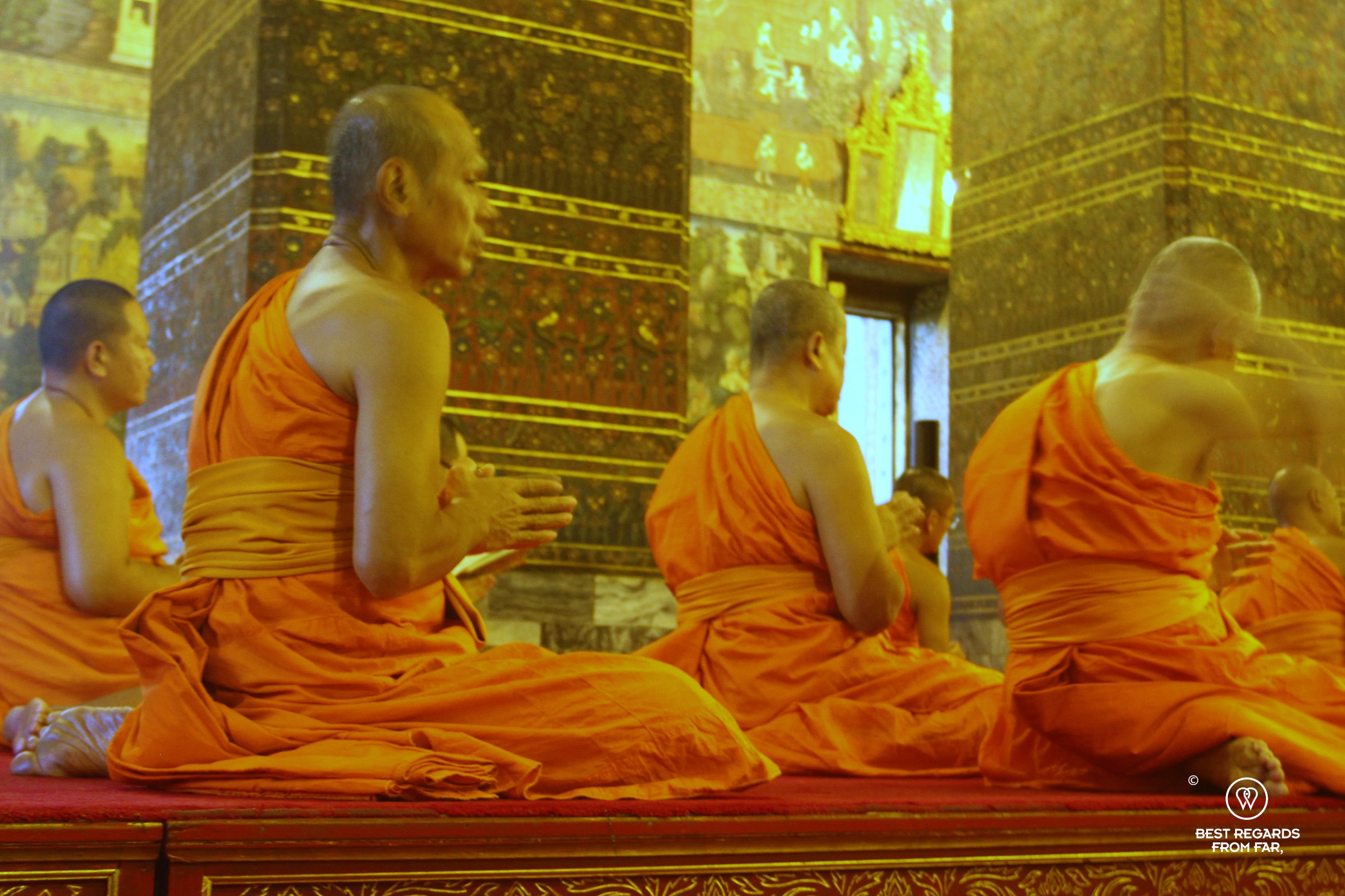
One of the most refined temples is the unmissable Wat Pho with its magnificent reclining Buddha is one of the most important for Thai people and Buddhists. It is also one of the oldest Buddhist temples in the country, dating back to before Bangkok was even established as the capital of Thailand.
9. Bangkok has the longest name of any city in the world.
Try it: “กรุงเทพมหานคร อมรรัตนโกสินทร์ มหินทรายุธยา มหาดิลกภพ นพรัตนราชธานีบูรีรมย์ อุดมราชนิเวศน์มหาสถาน อมรพิมานอวตารสถิต สักกะทัตติยวิษณุกรรมประสิทธิ์“.
Or maybe easier: “Krung Thep Mahanakhon Amon Rattanakosin Mahinthara Ayuthaya Mahadilok Phop Noppharat Ratchathani Burirom Udomratchaniwet Mahasathan Amon Piman Awatan Sathit Sakkathattiya Witsanukam Prasit” that roughly translate into “City of angels, great city of immortals, the magnificent city of the nine gems, seat of the king, city of royal palaces, home of gods incarnated, erected by Vishvakarman at Indra’s behest”?
Luckily, locals shorten it to Krungthep for ‘city of angels’.
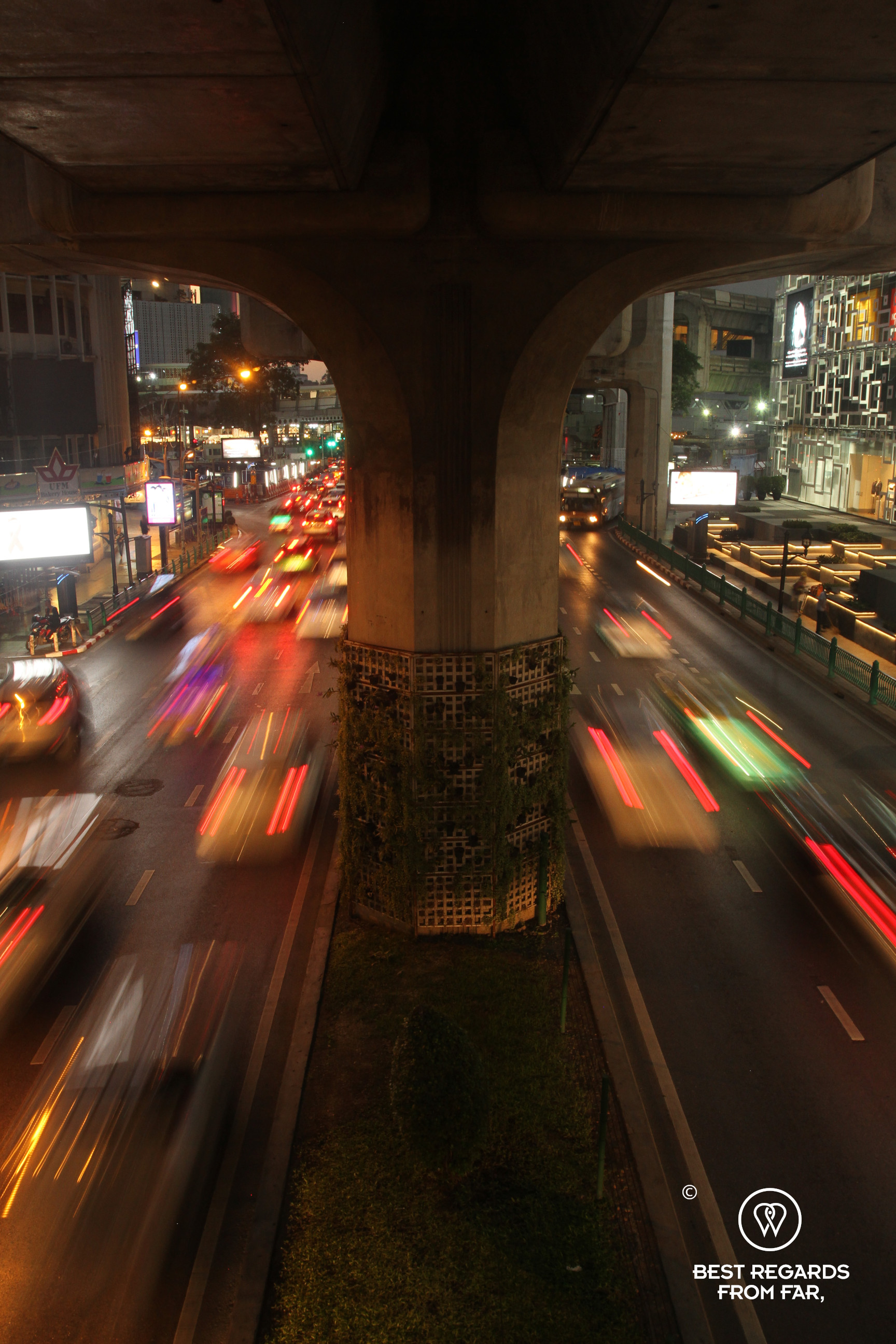

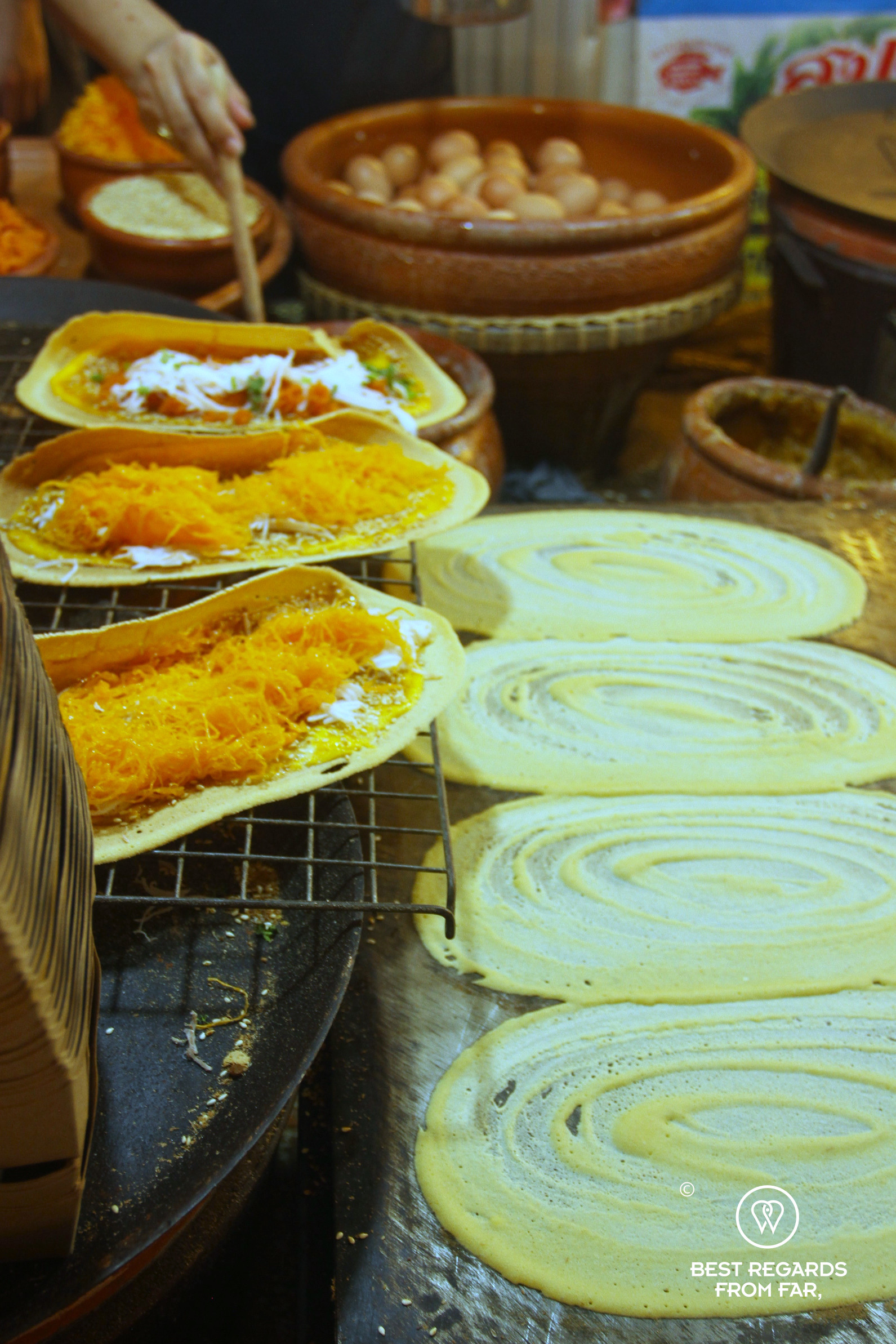
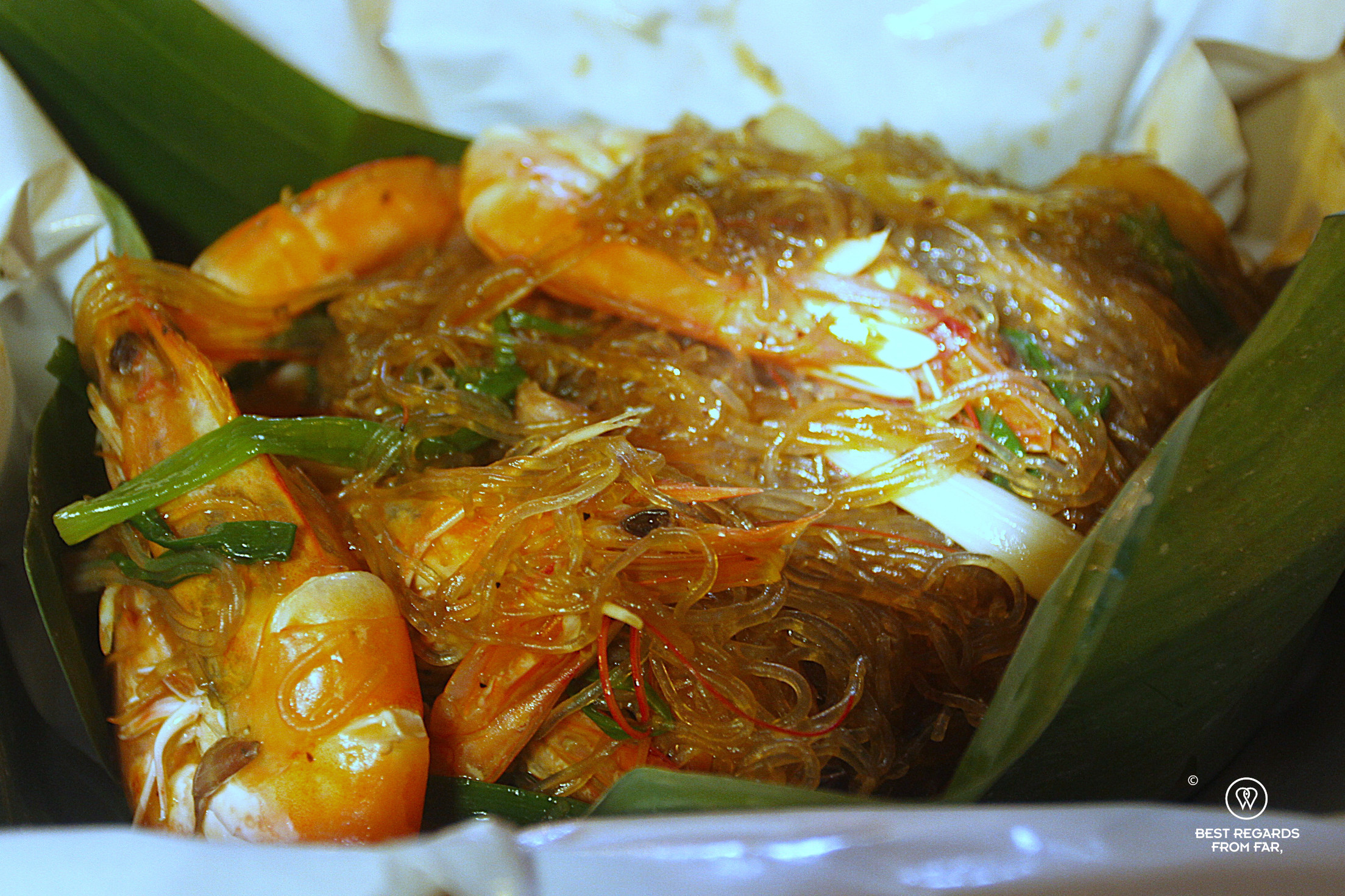
10. Street food paradise: go fast before no more!
The Thai government has decided to turn its incredible street-food scene into something more taxable and supposedly more hygienic.
So far, if areas have been cleared of street vendors, there are still plenty of street food stalls left to feed from, contributing greatly to Bangkok’s reputation as a foodies’ paradise.

Travel tips:
- Floating markets have become an attraction, and most of them are very touristy and often quite far from the center of Bangkok, unlike the Khlong Lat Mayom floating market.
- The Khlong Lat Mayom floating market is a weekend market operating on Saturdays and Sundays until 3:30pm. There are several boat services to explore the surrounding canals, from long-tails with big engines and about 25 seats to traditional 8-seaters that are row-operated, hence quieter.
- Planning on spending a few days in Bangkok? Check out this 5 day Bangkok itinerary.
- This article is now featured on https://www.gpsmycity.com. To download this article for offline reading or travel directions to the attractions highlighted in this article, go to Walking Tours and Articles in (Bangkok) on GPSmyCity.
- Check out this interactive map for the specific details to help you plan your trip and more articles and photos (zoom out) about the area:
More about Thailand:



 Best regards from far,
I enjoyed my trip to Bangkok! Your pictures brought back so many nice memories. Thank you!Sent from my iPad