Text & photographs: Claire Lessiau & Marcella van Alphen
Surrounded by humongous trees resembling the walking trees from the Lord of the Rings, I abruptly stop when I hear an unfamiliar sound in the canopy towering us in the dense coastal rainforest of the remote Tanjung Datu National Park. I exchange a glance with our private guide Lemon who silently points to the direction where the sound came from. Could it be the critically endangered Sarawak langur that we have been trying to find for the past few hours during this hike in the westernmost Malaysian side of Borneo?
Like it? Pin it!


More movements in the canopy allow me to focus on the right spot and surprisingly, a tiny orange ball of fur catches my eye. It is a baby silvery langur sheltered by the arms of its mother who does not seem to be very at ease with our presence. She stays high up in the tree tops and quickly hides behind thicker branches.
At the border with Indonesia, poaching has been a real issue in this area of Borneo explaining the shyness of these monkeys who are not used to too many visitors either in one of the most pristine national parks of the island.
We continue our walk with Lemon who teaches us how to navigate in the rainforest as the thick canopy makes it hard to follow the sun. Yet, lianas desperately point towards it and as Lemon explains in his soft and deep voice, each first turn of a liana indicates the East, as it is verified with our compass.


Besides our search for the elusive wildlife, the vegetation is remarkable and we learn about the different soft woods used for machete holders and hard woods such as the tall Maranti tree that is very sought after for building material. In this astonishing variety of trees, the now protected Barahonia tree, known as the sea almond that is only found in the fast disappearing coastal forests, is plentiful here in Tanjung Datu and its leaves are the substantial diet for the different types of langurs.
This may explain why the remote national park is home to many endangered primates: the silvery langur, proboscis monkey, Bornean gibbon, and the critically endangered Sarawak langur.


The next morning, after a basic yet resting night in the park’s shelter to the sound of the ocean, we are woken up by the whimsical calls of the gibbons at sunrise. Shortly after, the helmeted hornbill’s laughs echo in the forest. As we start another walk to a refreshing waterfall, a fast moving creature in the treetops catches my eye. Rushed, I snap a blurry picture in which the critically endangered Sarawak langur stares into the camera for less than a split second before it disappears as fast as lightning in the thick canopy, getting a glimpse at Borneo’s most elusive primate!
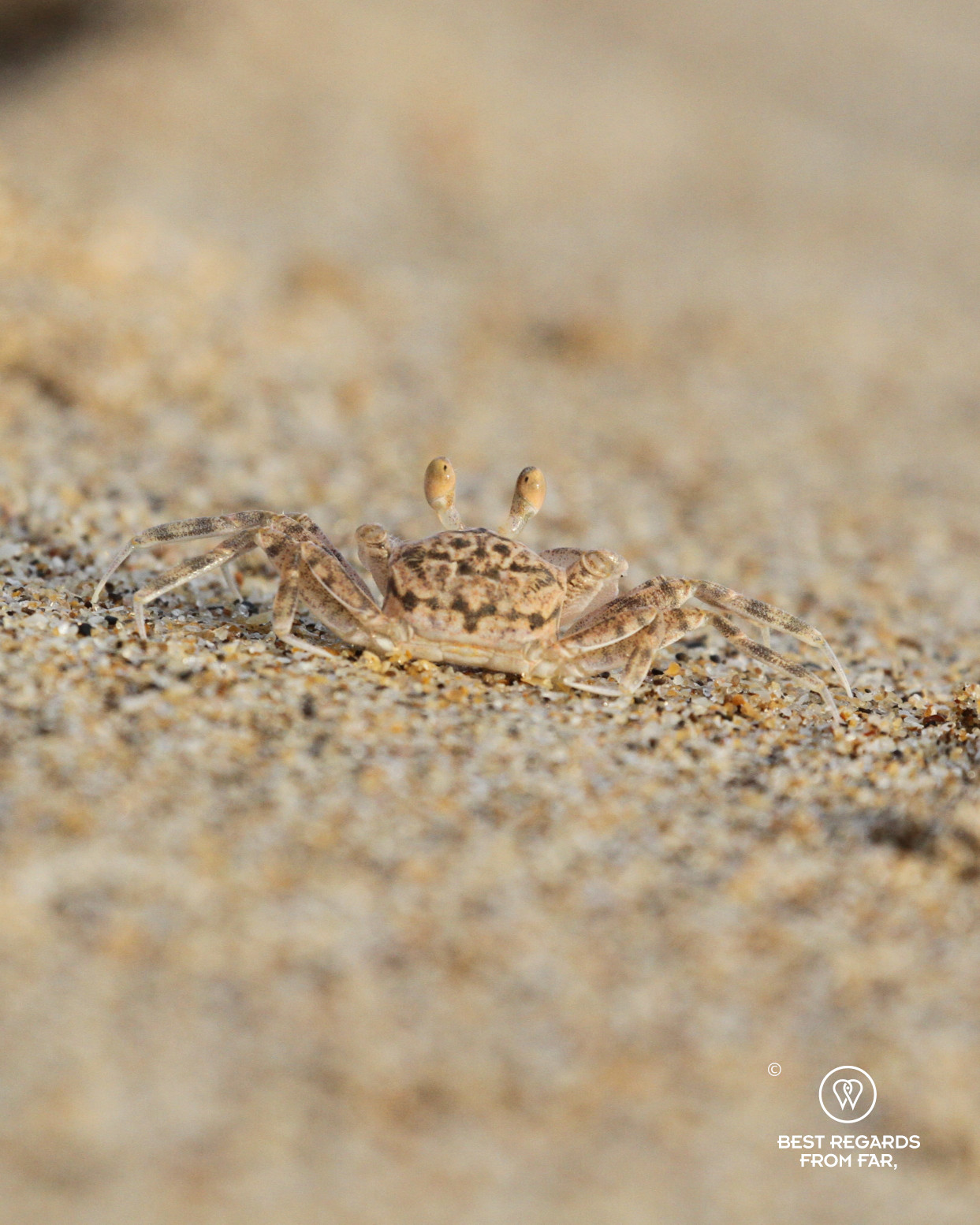
If the forest of Tanjung Datu and its wildlife are enchanting, its wild beach that we share each morning with macaques and monitor lizards is a slice of paradise. As we walk the beach, turtle tracks reveal the presence of the prehistoric amphibians that come to shore to lay eggs. The park’s staff patrols the beach every night to transfer the eggs to the nursery to protect these sea creatures that are also endangered.


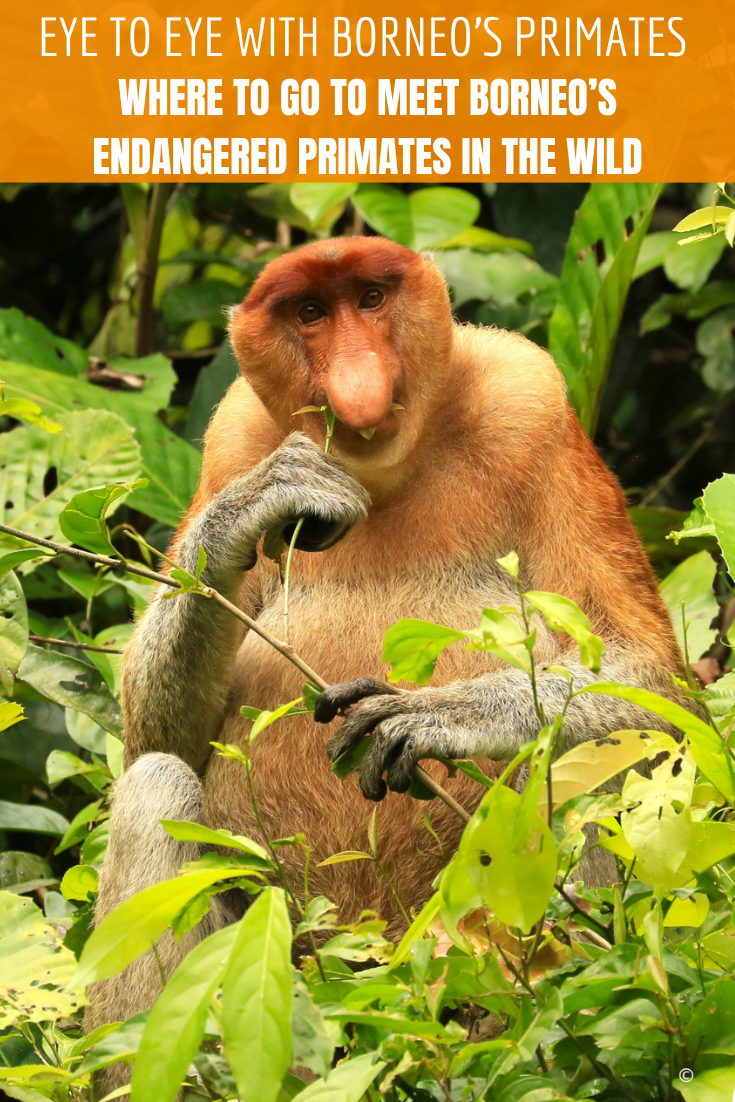
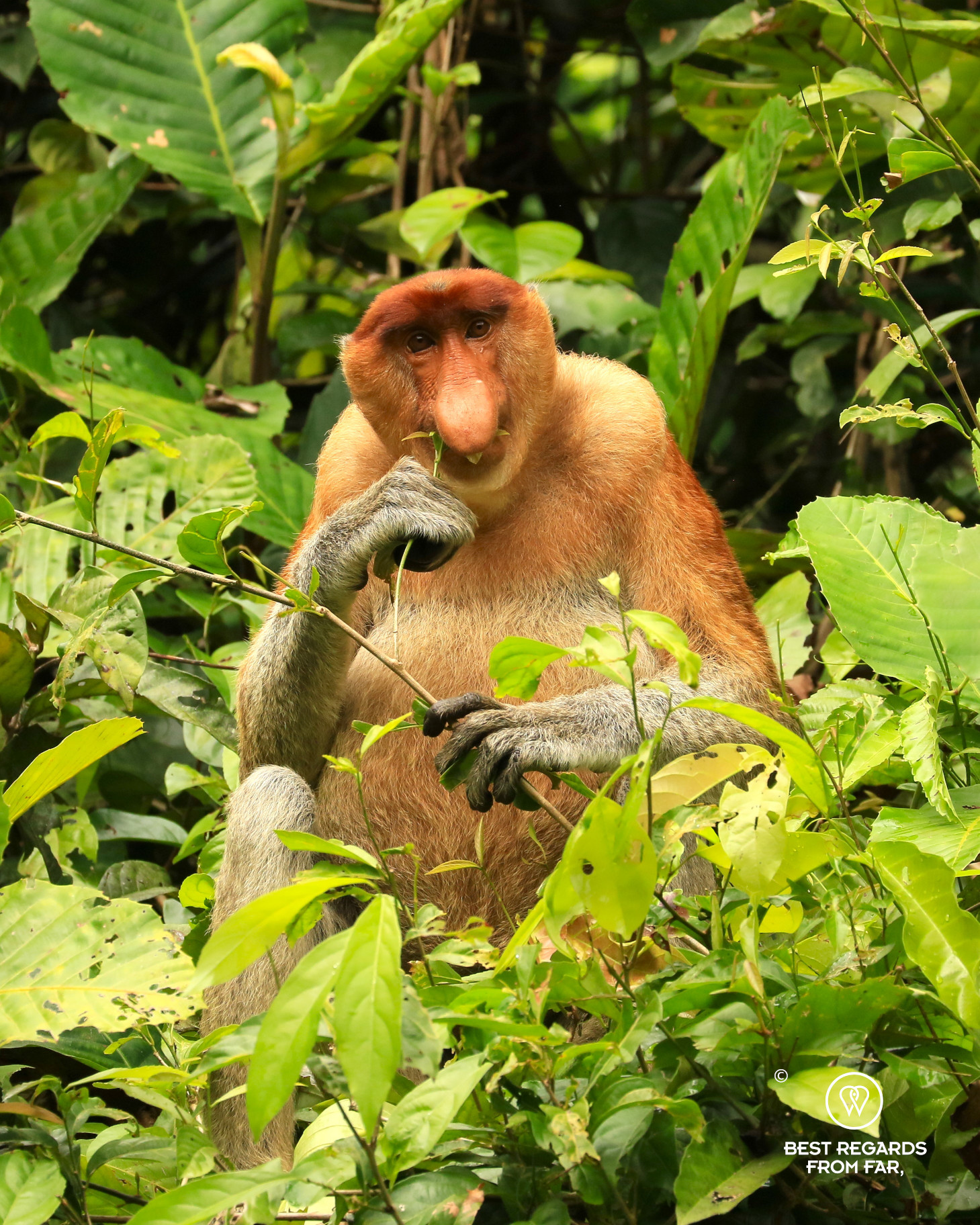
A lot closer to Kuching, the capital of Sarawak, Bako National Park is known to be one of the best locations to spot the proboscis monkey. A lot more visited than Tanjung Datu, it is only reachable by boat, and Lemon manages to spot our first Proboscis monkeys from the brackish water in which the mangrove forest finds its roots. Highly endangered, the poster-primate of Borneo does well in the protected Bako National Park, jumping from tree top to tree top above the water. Males clearly stand out with their very large and prominent noses that echo their calls and make them attractive for females.


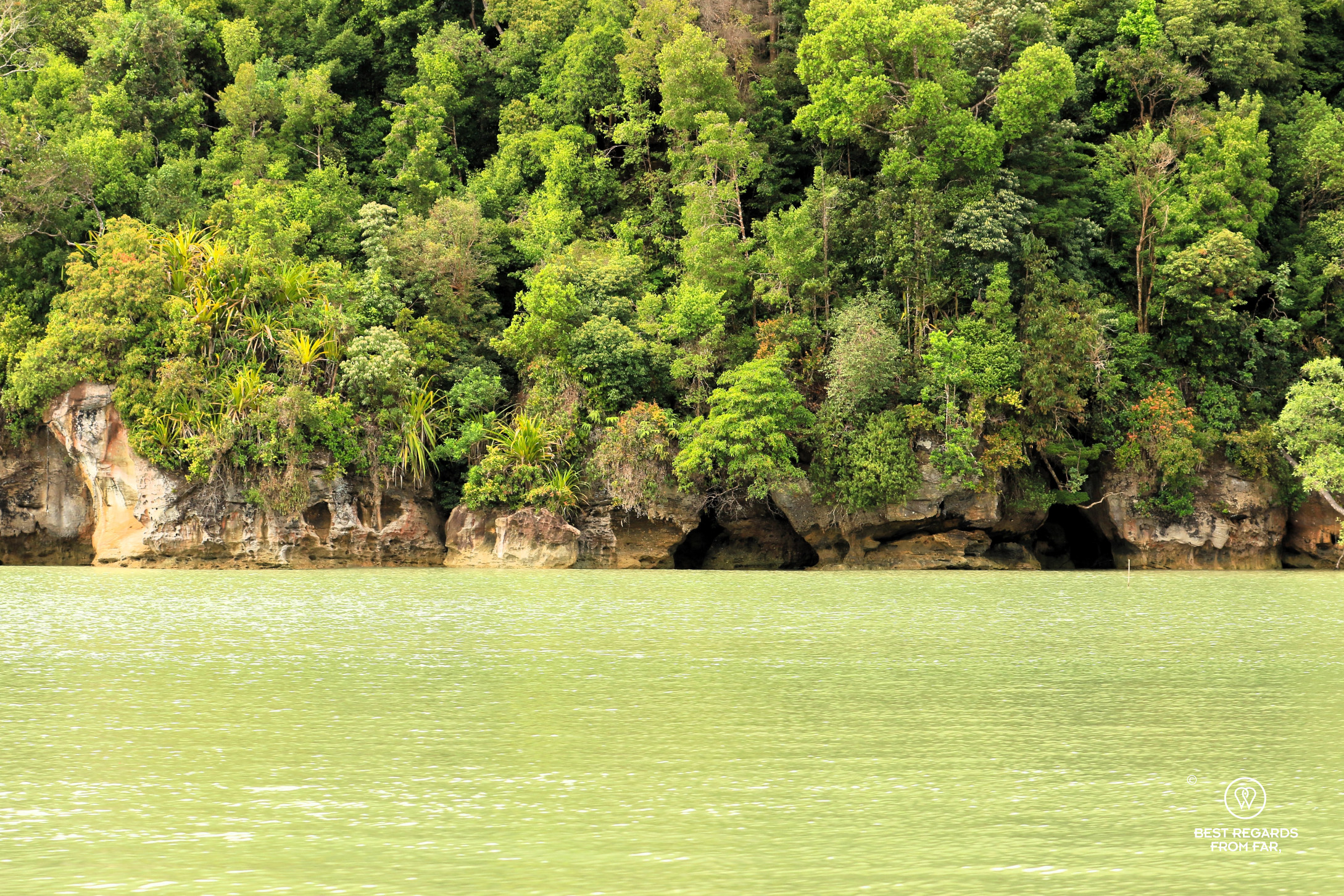
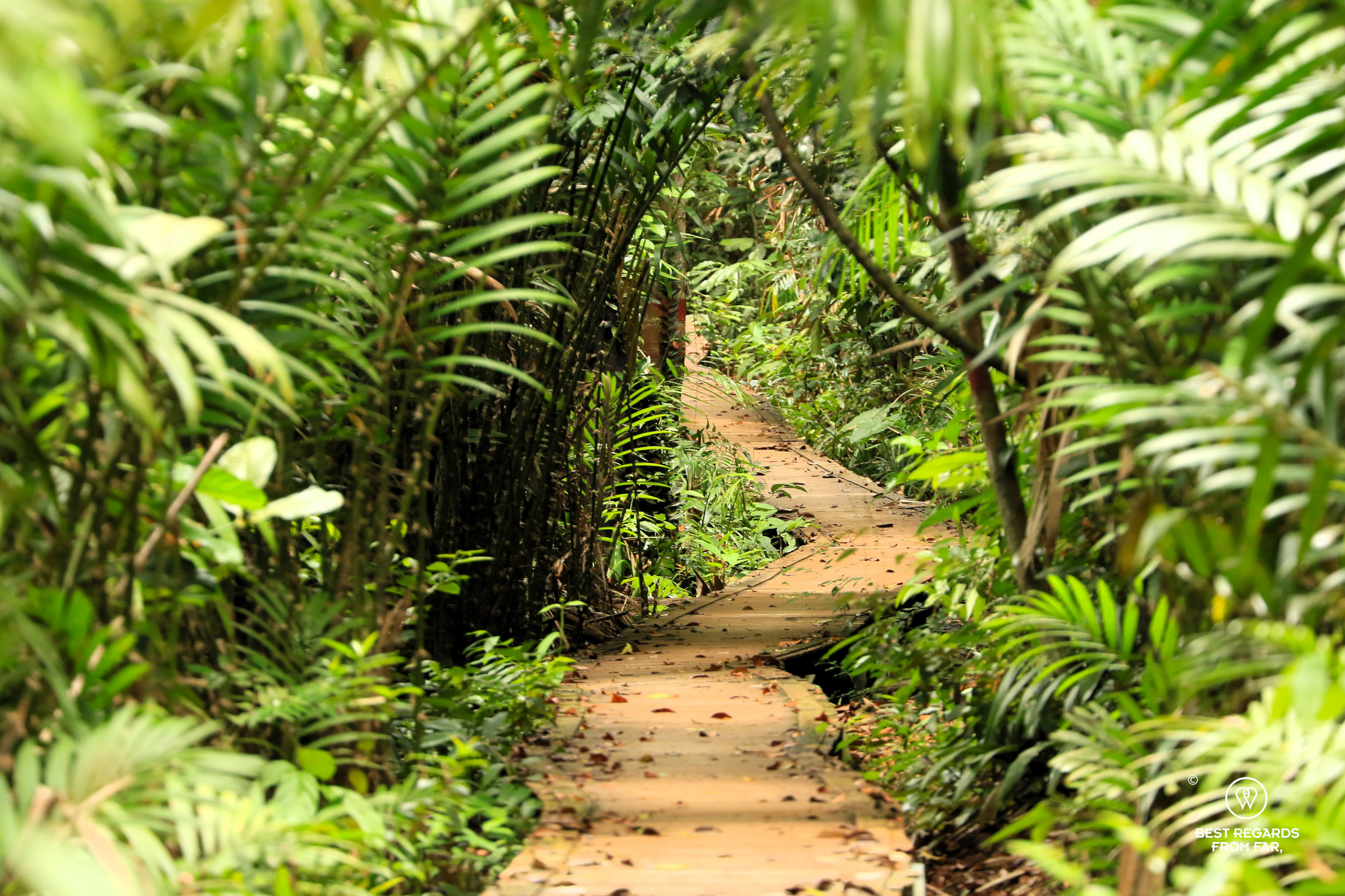
Further into the park, a network of trails and boardwalks allows us to observe a wide variety of flora and fauna.
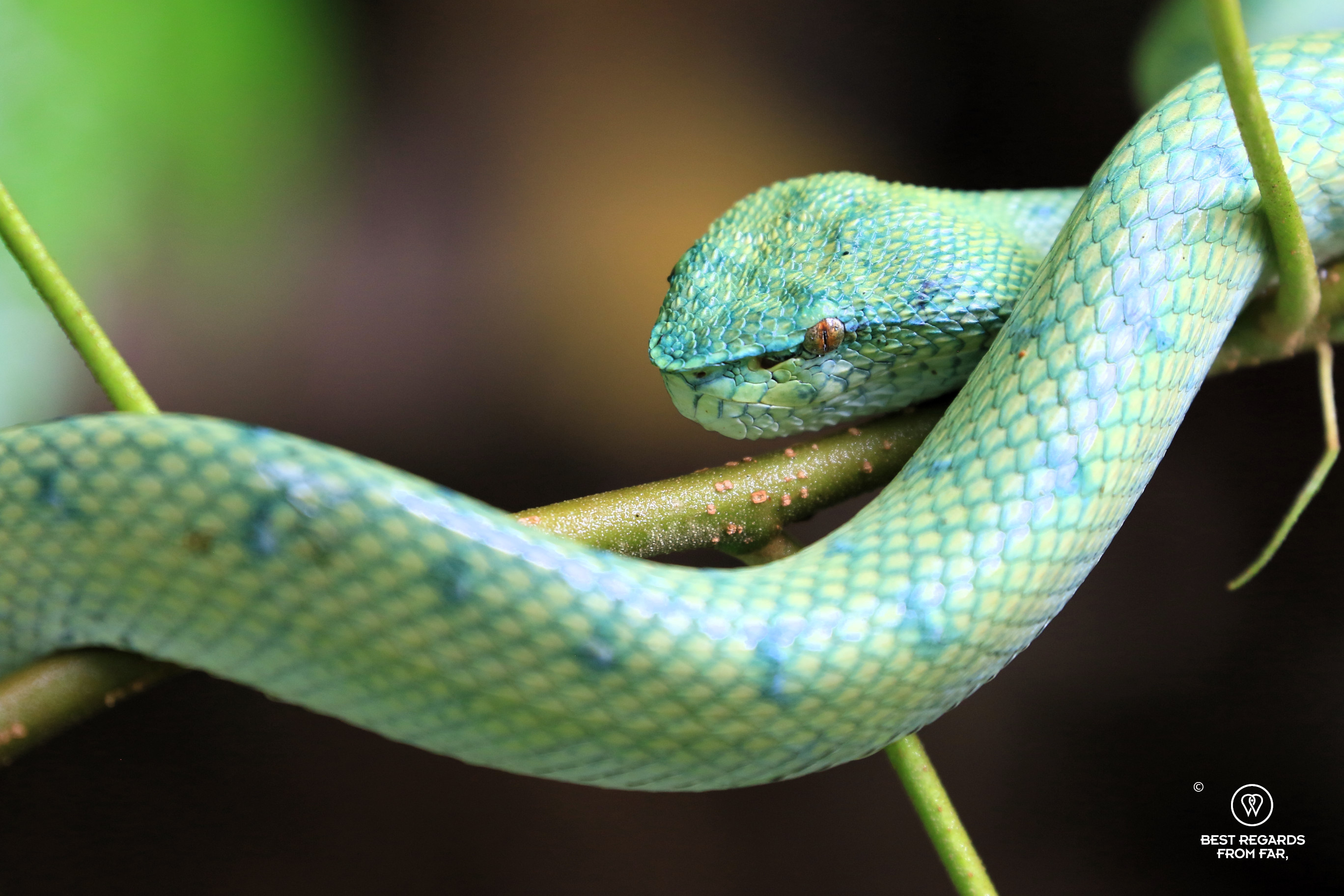
A well-camouflaged large blueish pit viper waits motionless on a branch for a pray to pass by. Further, we observe stingless bees who are nesting in a tree trunk. Along the shore, a troop of silvery langurs casually feeds undisturbed by our presence on the boardwalk as more used to humans in the most visited park of Sarawak. Young ones cling on to their mothers’ bellies and stare at us with curiosity and big eyes. Higher up, young Proboscis monkeys, already agile, jump from branch to branch to snatch the freshest leaves under the inquisitive looks of their protective mothers. Focusing on their fingers, their physical aquatic adaptation that is unique amongst primates is clearly visible in the form of fins in-between.

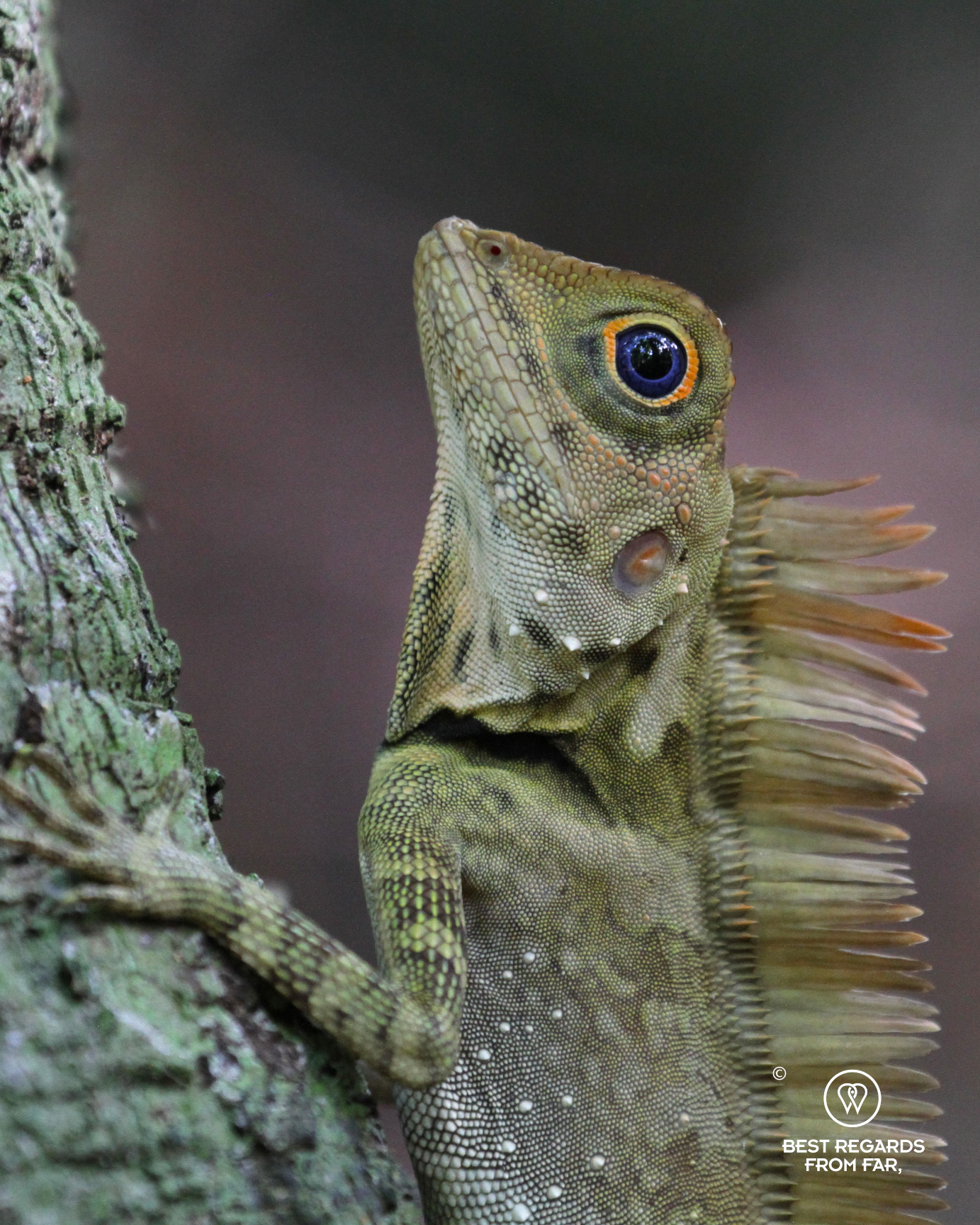
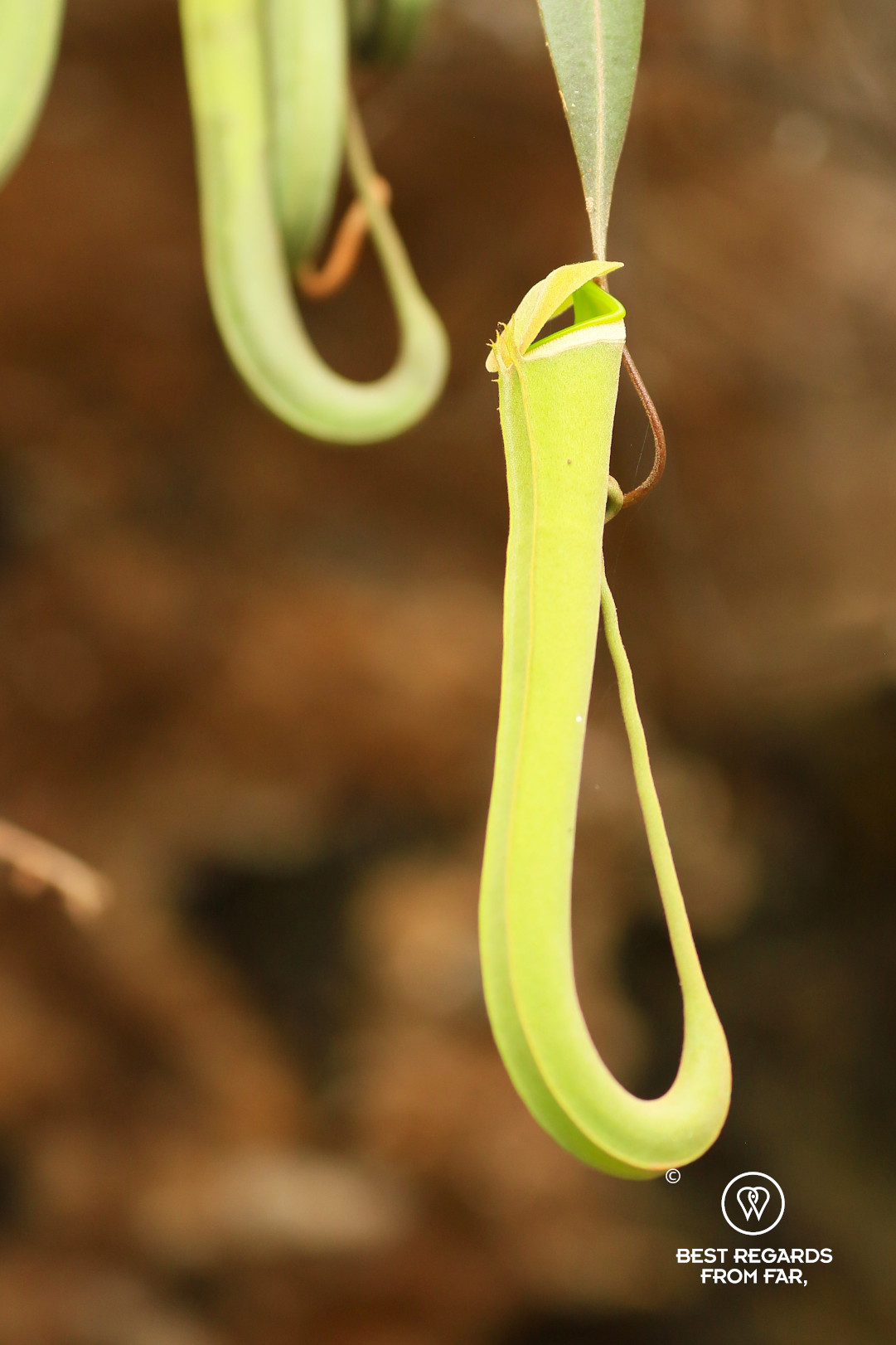
The landscapes of Bako with its limestone formations and sandstone natural sculptures towering the South China Sea are also remarkable. Clinging to the rocks with only a little soil, the endemic pitcher plants also wait patiently for any insect that would get fooled and trapped into its digestive system. Just like for the immobile pit viper, it is a game of patience.


Here in Borneo, patience is often rewarded, just like it was in Nanga Sumpa in search for the critically endangered orangutans. If many come to Borneo to get a glimpse of the red ape, many other iconic primates are to be found in the rainforest.
On an island shared between three countries, including the fourth most populated in the world – Indonesia – and where oil palm plantations are omnipresent, Sarawak has been setting the example to protect its fragile ecosystem. Let’s hope this is only a start and that the rest of Borneo will follow while providing a livelihood for local populations.
Travel tips:
- Both parks offer a totally different experience and complement each other greatly.
- Borneo Adventure is an ethical tour operator based out of Kuching that has pioneered walking safaris and overnighters by the beach in Tanjung Datu, and your best bet to explore these parks as well as Borneo.
- Check out our interactive map for more in the area (black pins lead to an article):
For more in Malaysia, click on the images below:

 Best regards from far,